

Base Year Value ()
x.x %
x.x %
CAGR ()
x.x %
x.x %
Forecast Year Value ()
x.x %
x.x %
Historical Data Period
Largest Region
Forecast Period
Markt für Hochleistungslegierungen nach Materialtyp (Nichteisenmetalle, Verbundwerkstoffe, Edelmetalle, feuerfeste Materialien, Edelstahl, Sonstiges), nach Basismetalltyp (Aluminium, Nickel, Stahl, Magnesium, Titan), nach Produkttyp (hitzebeständige Legierungen, korrosionsbeständige Legierungen, verschleißfeste Legierungen), nach Endverbraucher (Luftfahrt, Energie, Öl und Gas, Elektrik und Elektronik, Automobil) und Region, globale Trends und Prognosen von 2022 bis 2029
Instant access to hundreds of data points and trends
- Market estimates from 2014-2029
- Competitive analysis, industry segmentation, financial benchmarks
- Incorporates SWOT, Porter's Five Forces and risk management frameworks
- PDF report or online database with Word, Excel and PowerPoint export options
- 100% money back guarantee
Marktübersicht für Hochleistungslegierungen
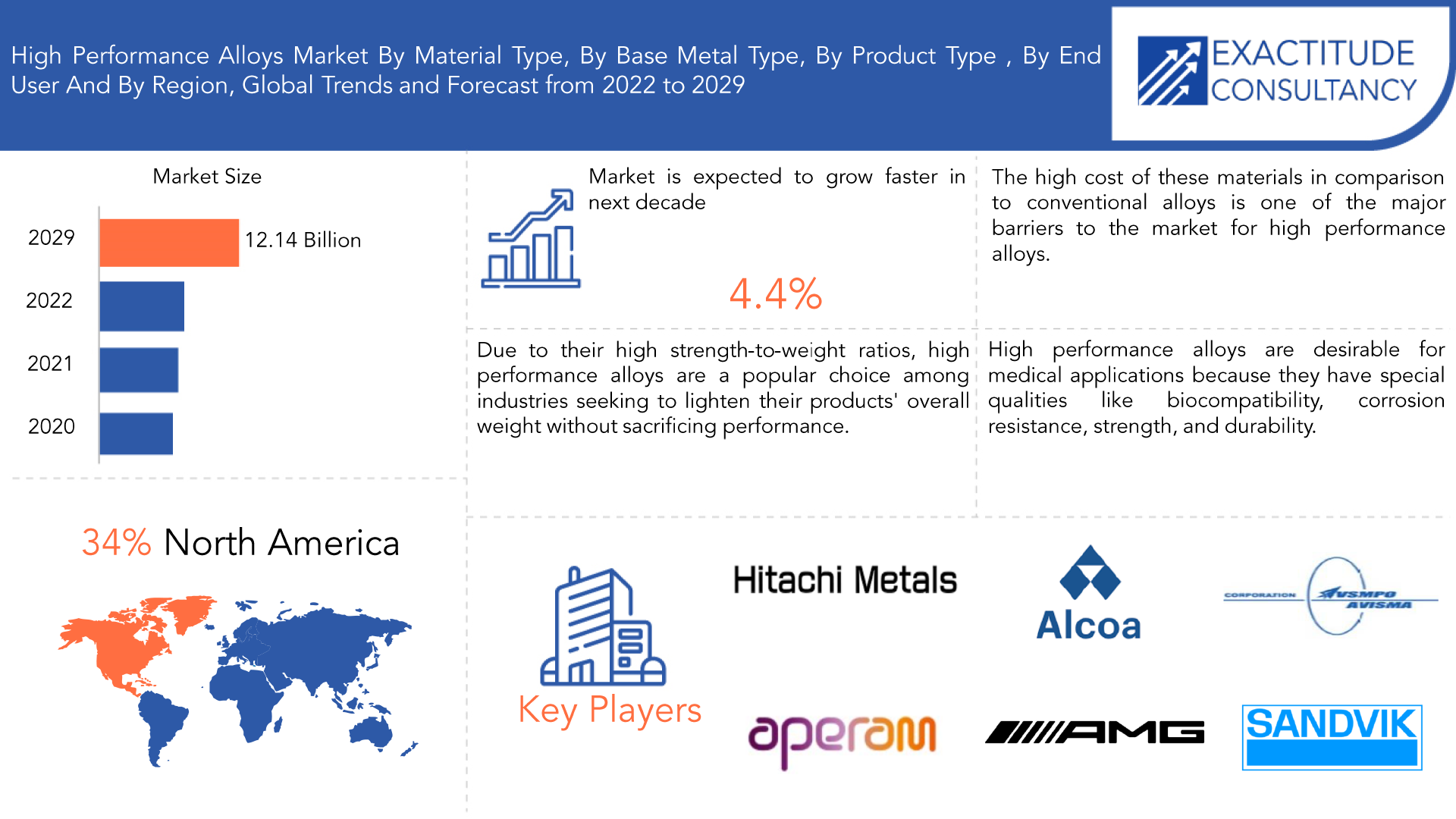
Der Markt für Hochleistungslegierungen wird voraussichtlich von 2022 bis 2029 um durchschnittlich 4,4 % jährlich wachsen. Es wird erwartet, dass er von 8,6 Milliarden US-Dollar im Jahr 2021 auf über 12,14 Milliarden US-Dollar im Jahr 2029 ansteigt.
Eine Klasse von Materialien, die als Hochleistungslegierungen bekannt sind, wird hergestellt, um bemerkenswerte mechanische Eigenschaften wie hohe Festigkeit, Zähigkeit, Korrosionsbeständigkeit und Hochtemperaturstabilität zu haben. Mehrere Branchen, darunter die Luft- und Raumfahrt, die Automobilindustrie, die chemische Verarbeitung, medizinische Geräte und die Stromerzeugung, verwenden diese Legierungen.
Titanlegierungen sind für ihre überragende Korrosionsbeständigkeit, ihr hohes Verhältnis von Festigkeit zu Gewicht und ihre Fähigkeit, hohen Temperaturen standzuhalten, bekannt . Sie werden häufig sowohl in der Medizin als auch in der Luft- und Raumfahrt eingesetzt. Ausgezeichnete Hochtemperaturfestigkeit, Korrosionsbeständigkeit und Kriechfestigkeit sind Eigenschaften von nickelbasierten Materialien. Sie werden üblicherweise in Kernkraftwerken, der chemischen Verarbeitung und in Gasturbinentriebwerken eingesetzt. Rostfreie Stähle sind für ihre Korrosionsbeständigkeit und hohe Festigkeit bekannt. Neben der Lebensmittel- und Getränkeindustrie werden sie häufig beim Bau von Gebäuden, Brücken und anderen Konstruktionen eingesetzt. Kobalthaltige Legierungen sind für ihre außergewöhnliche Verschleißfestigkeit und Hochtemperaturfestigkeit bekannt. Sie werden häufig in chirurgischen Implantaten, Turbinen und Schneidinstrumenten verwendet. Aluminiumlegierungen sind für ihre außergewöhnliche Korrosionsbeständigkeit, geringe Dichte und ihr hohes Verhältnis von Festigkeit zu Gewicht bekannt. Sie werden häufig für strukturelle Zwecke und in der Luft- und Raumfahrtindustrie eingesetzt.
| ATTRIBUT | DETAILS |
| Studiendauer | 2020–2029 |
| Basisjahr | 2021 |
| Geschätztes Jahr | 2022 |
| Voraussichtliches Jahr | 2022–2029 |
| Historischer Zeitraum | 2018-2020 |
| Einheit | Wert (Milliarden USD), (Kilotonnen) |
| Segmentierung | Nach Materialtyp, nach Basismetalltyp, nach Produkttyp, nach Endbenutzer |
| Nach Materialtyp |
|
| Nach Basismetalltyp |
|
| Nach Produkttyp |
|
| Nach Endbenutzer |
|
| By Region |
|
The market for high performance alloys is significantly fueled by the rising need for lightweight materials. Due to their high strength-to-weight ratios, high performance alloys are a popular choice among industries seeking to lighten their products' overall weight without sacrificing performance. One of the largest markets for high performance alloys is the automotive sector. In order to increase fuel efficiency and lower emissions, lightweight materials, notably high-performance alloys, are being employed more frequently in automobile applications. This is crucial because governments all around the world are enforcing tighter fuel economy rules. The growing popularity of electric vehicles is another factor driving the demand for lightweight materials (EVs). Lightweight materials are necessary for EVs to increase range and battery life. To minimize weight and enhance performance, high performance alloys are employed in EV applications, including battery casings and other components.
The market for high performance alloys is significantly influenced by the rising need for renewable energy. Several renewable energy applications, such as wind turbines, solar panels, and other renewable energy technologies, require high performance alloys. High performance alloys are utilized in wind turbine blades, shafts, and other parts to survive the challenging conditions and high pressures involved in wind energy production. Excellent strength, corrosion resistance, and fatigue resistance are features of high-performance alloys that are essential for the long-term performance and dependability of wind turbines.
Similar to this, high performance alloys are used in solar panels' frames, mounting systems, and other parts to survive the high temperatures, corrosion, and mechanical strains involved in producing solar energy. Excellent strength, corrosion resistance, and thermal stability are features of high-performance alloys that are essential for the durability and dependability of solar panels.
The high cost of these materials in comparison to conventional alloys is one of the major barriers to the market for high performance alloys. High performance alloys can be much more expensive than ordinary alloys since they are created from a combination of rare and expensive metals, such as titanium, nickel, and cobalt. This high price may prevent some businesses, especially those with high volume production demands where cost is crucial, from adopting high performance alloys. The high cost of high-performance alloys may make their use unjustifiable in sectors like construction where cost is a major factor. The market may also be restricted by the intricate production procedures needed to generate high performance alloys. High performance alloys need to be manufactured using complex techniques that can be time- and money-consuming, like melting, casting, and forging. Because of this, high performance alloys may not be as readily available or as affordable for smaller businesses.
The market for high performance alloys is poised for significant growth as a result of emerging applications in the medical sector. High performance alloys are desirable for medical applications because they have special qualities like biocompatibility, corrosion resistance, strength, and durability. Orthopedic implants, including hip and knee replacements, spinal implants, and trauma fixation devices, utilize high performance alloys. Orthopedic implants consisting of high-performance alloys are in great demand because to the ageing population, rising rates of osteoarthritis and other degenerative joint diseases, and rising demand for minimally invasive surgery. Dental implants, an alternative to conventional dental prosthesis like dentures and bridges, also make use of high-performance metals. Dental implants using high performance alloys have better biocompatibility, strength, and durability. Medical devices including pacemakers, implanted sensors, and surgical instruments are all made of these alloys. Improved biocompatibility, strength, and durability, which are essential for long-term performance and patient safety, are provided by the use of these alloys in medical devices.
Die COVID-19-Epidemie hat Auswirkungen auf eine Reihe internationaler Marktaktivitäten. Das Marktwachstum während des Prognosezeitraums wird von einer Vielzahl von Faktoren beeinflusst. Das Marktwachstum wurde durch Versorgungsprobleme, schlechte Produktion und gesunkene Nachfrage beeinträchtigt. Diese arbeitsintensiven Hersteller produzieren die Hochleistungslegierungen. Darüber hinaus kam es zu einem Rückgang der Verwendung von Hochleistungslegierungen. Die Endkunden des Marktes hatten mit rückläufigen Nachfragetrends zu kämpfen. Der Markt für Hochleistungslegierungen wurde auch durch die Nachfrage aus dem Öl- und Gassektor beeinflusst. Aufgrund des Rückgangs der Reisetätigkeit und des allgemeinen wirtschaftlichen Abschwungs hat die Pandemie zu einem Rückgang der Nachfrage nach Hochleistungslegierungen in verschiedenen Sektoren geführt, darunter der Luft- und Raumfahrt und der Automobilindustrie. Die Pandemie hat auch Schwankungen bei den Metallpreisen verursacht, was sich auf die Kosten der bei der Herstellung von Hochleistungslegierungen verwendeten Rohstoffe ausgewirkt hat. Der Ausbruch hat auch Innovationen bei der Schaffung neuer Anwendungen und Technologien für Hochleistungslegierungen ausgelöst, insbesondere im medizinischen Sektor. Hochleistungslegierungen werden beispielsweise zur Herstellung von COVID-19-Testgeräten und medizinischer Ausrüstung wie Beatmungsgeräten verwendet.
[Bildunterschrift id="attachment_18284" align="aligncenter" width="1920"]
Frequently Asked Questions
• What is the worth of high performance alloys market?
High Performance Alloys is expected to reach above USD 12.14 billion by 2029 from USD 8.6 billion in 2021.
• What is the size of the North America high performance alloys industry?
North America held more than 34 % of the High Performance Alloys market revenue share in 2021 and will witness expansion in the forecast period.
• What are some of the market's driving forces?
The market for high performance alloys is significantly fueled by the rising need for lightweight materials. Due to their high strength-to-weight ratios, high performance alloys are a popular choice among industries seeking to lighten their products' overall weight without sacrificing performance. One of the largest markets for high performance alloys is the automotive sector.
• Which are the top companies to hold the market share in high performance alloys market?
The high performance alloys market key players include Hitachi Metals. Ltd, Alcoa Corporation, Corporation VSMPO-AVISMA, Aperam, AMG, Sandvik AB, ATI, CRS Holdings, LLC, ThyssenKrupp AG, Haynes International, Precision Castparts Corp, Voestalpine AG.
• What is the leading product type of high performance alloys market?
Based on the product type, market is sub segmented into heat resistant alloys, corrosion resistant alloys and wear resistant alloys. Many different industries, including oil and gas, chemical processing, and marine, employ corrosion-resistant alloys because it is crucial for them to be able to withstand corrosion and keep their mechanical qualities in challenging conditions.
• Which is the largest regional market for high performance alloys market?
The high-performance alloys market in North America is largest and is supported by demand from sectors like aerospace, defense, oil & gas, automotive, and healthcare. The United States is the biggest market in the region and one of the major markets worldwide for high-performance alloys.
High Performance Alloys Market Segment Analysis
The high performance alloys market is segmented based on material type, base metal type, product type and end user.
Based on material type market is sub segmented into non-ferrous metal, composite-clad materials, precious metals, refractory materials and stainless steel. The market for high-performance alloys includes the non-ferrous alloys category as a significant component. Non-ferrous alloys are noted for their superior strength, corrosion resistance, and thermal conductivity because iron is not one of their main constituents. Titanium alloys, nickel alloys, aluminum alloy, copper alloys are some of the examples of non-ferrous alloys.
In the base metal type category of the high-performance alloys market, nickel-based alloys are anticipated to command the biggest market share. This is a result of the widespread usage of alloys based on nickel in numerous industries, such as aerospace, energy production, and chemical processing. Nickel-based alloys are suited for use in hostile settings because of their high strength, excellent corrosion resistance, and outstanding heat resistance. The market for high-performance alloys also includes titanium-based alloys, which are particularly useful in aerospace and medical applications due to their excellent corrosion resistance, high strength-to-weight ratio, and biocompatibility.
Based on the product type, market is sub segmented into heat resistant alloys, corrosion resistant alloys and wear resistant alloys. Many different industries, including oil and gas, chemical processing, and marine, employ corrosion-resistant alloys because it is crucial for them to be able to withstand corrosion and keep their mechanical qualities in challenging conditions.
Aerospace and defense industry holds the largest share in the end-user segment of the high-performance alloys market. In aircraft engines, airframes, and other components requiring high strength, lightweight materials with good corrosion resistance and other high-performance qualities, the aerospace and defense industry makes substantial use of high-performance alloys. Other significant end consumers of high-performance alloys outside aerospace and defense include the automobile, chemical processing, oil and gas, and medical industries.
[caption id="attachment_18286" align="aligncenter" width="1920"]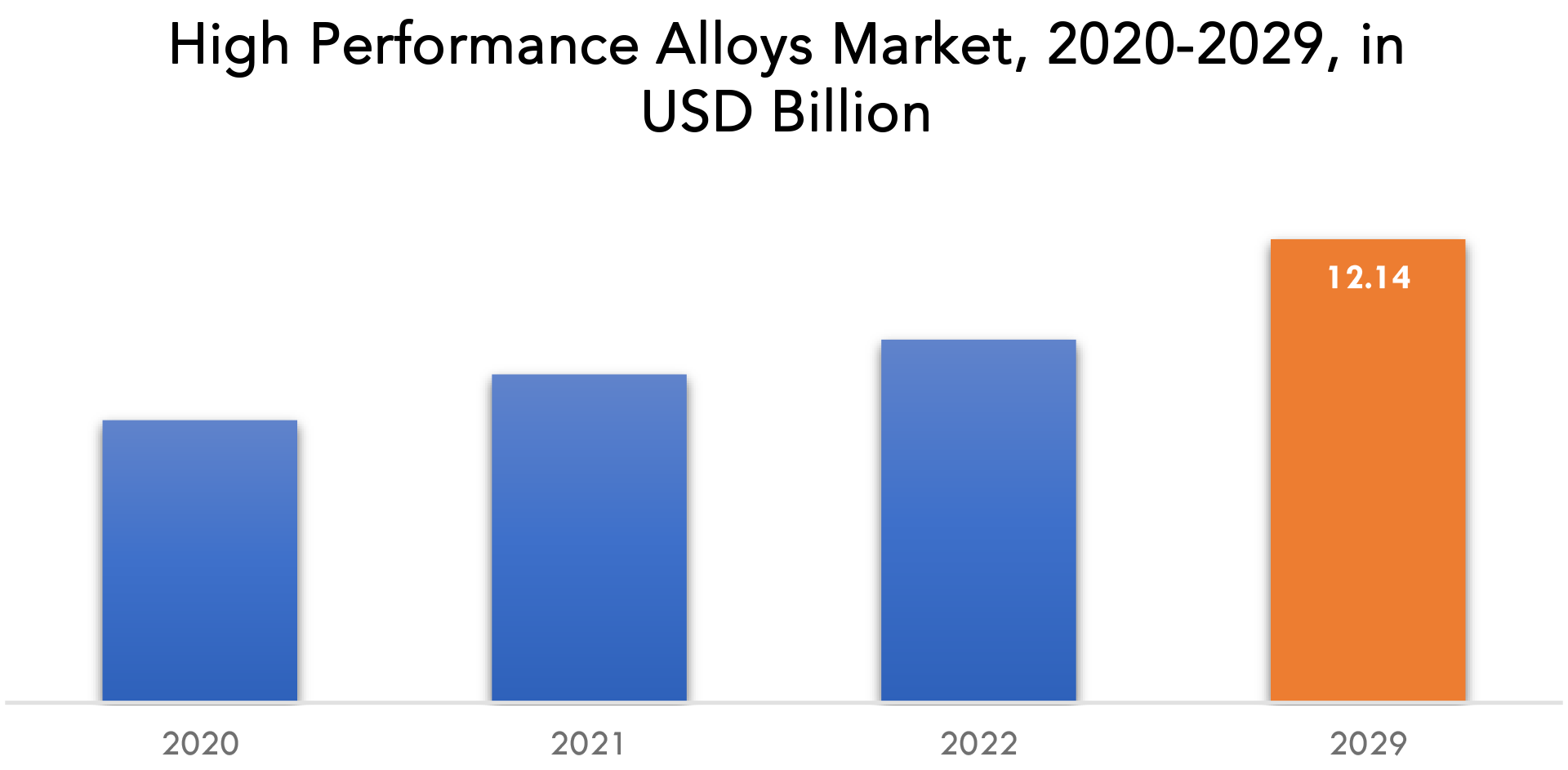
High Performance Alloys Market Players
The high performance alloys market key players include Hitachi Metals. Ltd, Alcoa Corporation, VSMPO-AVISMA Corporation, Aperam, AMG, Sandvik AB, ATI, CRS Holdings, LLC, ThyssenKrupp AG, Haynes International, Precision Castparts Corp, Voestalpine AG. Recent news March 24, 2022: Apple announced that it will use zero-carbon aluminum produced by ELYSIS in the new iPhone SE. This is the first time the aluminum will be produced and sold at industrial scale, representing another major milestone in advancing the ELYSIS technology invented by Alcoa. September 13, 2022: Alcoa Corporation announced new innovations in alloy development and deployment, further strengthening its position as a supplier of advanced aluminum alloys. The Company’s innovations include the introduction of a new high-strength, 6000 series alloy, A210 ExtruStrong, that delivers benefits across a wide range of extruded applications, including transport, construction, industrial, and consumer goods.Who Should Buy? Or Key stakeholders
- High Performance Alloys Suppliers
- Raw Materials Manufacturers
- Automotive manufacturers
- Aerospace Industries
- Research Organizations
- Investors
- Regulatory Authorities
- Commercial Robots
High Performance Alloys Market Regional Analysis
The high performance alloys market by region includes North America, Asia-Pacific (APAC), Europe, South America, and Middle East & Africa (MEA).
- North America: includes the US, Canada, Mexico
- Asia Pacific: includes China, Japan, South Korea, India, Australia, ASEAN and Rest of APAC
- Europe: includes UK, Germany, France, Italy, Spain, Russia, and Rest of Europe
- South America: includes Brazil, Argentina and Rest of South America
- Middle East & Africa: includes Turkey, UAE, Saudi Arabia, South Africa, and Rest of MEA
The high-performance alloys market in North America is largest and is supported by demand from sectors like aerospace, defense, oil & gas, automotive, and healthcare. The United States is the biggest market in the region and one of the major markets worldwide for high-performance alloys. High-performance alloys are widely utilized in the aerospace industry in aircraft engines, airframes, landing gear, and other parts that need strong, lightweight materials with excellent corrosion resistance and other high-performance characteristics. Some notable aerospace businesses, including Boeing and Lockheed Martin, are based in the United States, which helps to fuel the demand for high-performance alloys in the area. They are employed in missile parts, armor and protection systems, and other essential defense applications. The United States is the top spender on defense in the world, and a sizeable portion of that spending is devoted to the study and creation of cutting-edge defense technology, such as high-performance alloys.
The market for high-performance alloys in the Asia Pacific region is considerable and is being propelled by rising industrialization, expanding infrastructure, and rising demand from end-use industries like aerospace, automotive, and medical. The region is anticipated to expand more quickly than other regions, and it is anticipated to surpass other regions as the world's largest market for high-performance alloys. In the Asia Pacific region, the automobile sector is a prominent end-user of high-performance alloys due to the rising need for these materials in engine parts, exhaust systems, and other parts that need to be strong, corrosive- and temperature-resistant.
[caption id="attachment_18287" align="aligncenter" width="1920"]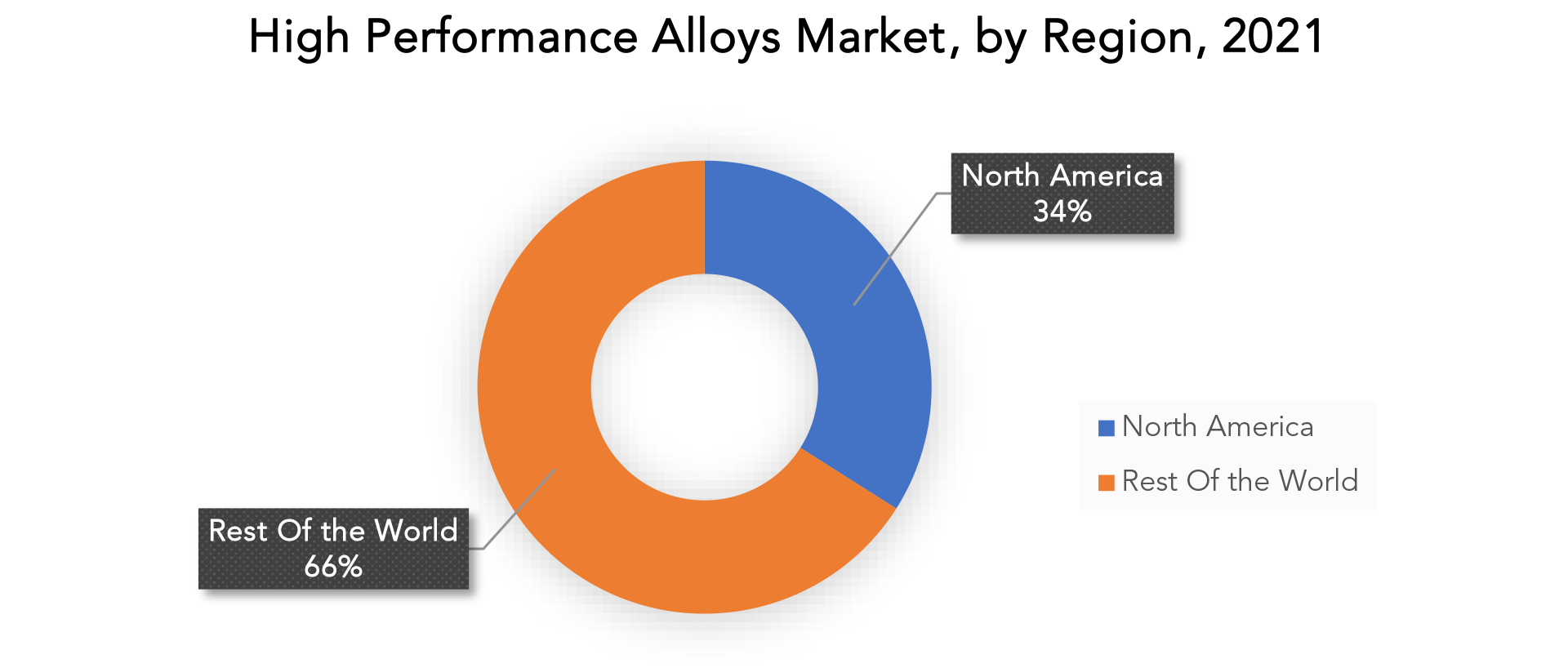
Key Market Segments: High Performance Alloys Market
High Performance Alloys Market by Material Type, 2020-2029, (USD Billion), (Kilotons)- Non-Ferrous Metal
- Composite-Clad Materials
- Precious Metals
- Refractory Materials
- Stainless Steel
- Others
- Aluminum
- Nickel
- Steel
- Magnesium
- Titanium
- Heat Resistant Alloys
- Corrosion Resistant Alloys
- Wear Resistant Alloys
- Aerospace
- Power
- Oil And Gas
- Electrical And Electronics
- Automotive
- North America
- Asia Pacific
- Europe
- South America
- Middle East And Africa
Exactitude Consultancy Services Key Objectives
- Increasing sales and market share
- Developing new technology
- Improving profitability
- Entering new markets
- Enhancing brand reputation
Key Questions Answered
- What is the expected growth rate of the high performance alloys market over the next 7 years?
- Who are the major players in the high performance alloys market and what is their market share?
- What are the end-user industries driving demand for market and what is their outlook?
- What are the opportunities for growth in emerging markets such as Asia-Pacific, Middle East, and Africa?
- How is the economic environment affecting the high performance alloys market, including factors such as interest rates, inflation, and exchange rates?
- What is the expected impact of government policies and regulations on the high performance alloys market?
- What is the current and forecasted size and growth rate of the global high performance alloys market?
- What are the key drivers of growth in the high performance alloys market?
- Who are the major players in the market and what is their market share?
- What are the distribution channels and supply chain dynamics in the high performance alloys market?
- What are the technological advancements and innovations in the high performance alloys market and their impact on product development and growth?
- What are the regulatory considerations and their impact on the market?
- What are the challenges faced by players in the high performance alloys market and how are they addressing these challenges?
- What are the opportunities for growth and expansion in the high performance alloys market?
- What are the service offerings and specifications of leading players in the market?
- EINFÜHRUNG
- MARKTDEFINITION
- MARKTSEGMENTIERUNG
- FORSCHUNGSZEITPLAN
- ANNAHMEN UND EINSCHRÄNKUNGEN
- FORSCHUNGSMETHODIK
- DATENMINING
- Sekundärforschung
- PRIMÄRFORSCHUNG
- RAT VON FACHEXPERTEN
- QUALITÄTSPRÜFUNGEN
- ABSCHLIESSENDE ÜBERPRÜFUNG
- DATENTRIANGULATION
- Bottom-Up-Ansatz
- TOP-DOWN-ANSATZ
- FORSCHUNGSABLAUF
- DATENQUELLEN
- DATENMINING
- ZUSAMMENFASSUNG
- MARKTÜBERSICHT
- GLOBALER AUSBLICK FÜR HOCHLEISTUNGSLEGIERUNGEN
- MARKTTREIBER
- Marktbeschränkungen
- Marktchancen
- AUSWIRKUNGEN VON COVID-19 AUF DEN MARKT FÜR HOCHLEISTUNGSLEGIERUNGEN
- PORTERS FÜNF-KRÄFTE-MODELL
- Bedrohung durch Neueinsteiger
- Bedrohung durch Ersatzprodukte
- Verhandlungsmacht der Lieferanten
- VERHANDLUNGSMACHT DER KUNDEN
- WETTBEWERBSGRAD
- ANALYSE DER BRANCHENWERTSCHÖPFUNGSKETTE
- GLOBALER AUSBLICK FÜR HOCHLEISTUNGSLEGIERUNGEN
- GLOBALER MARKT FÜR HOCHLEISTUNGSLEGIERUNGEN NACH MATERIALART (MILLIARDEN USD) (KILOTONS) 2020-2029
- Nichteisenmetalle
- Verbundwerkstoffe
- EDELMETALLE
- FEUERFESTE MATERIALIEN
- EDELSTAHL
- ANDERE
- GLOBALER MARKT FÜR HOCHLEISTUNGSLEGIERUNGEN NACH BASISMETALLART, (MILLIARDEN USD) (KILOTONS), 2020-2029
- ALUMINIUM
- NICKEL
- STAHL
- MAGNESIUM
- TITAN
- GLOBALER MARKT FÜR HOCHLEISTUNGSLEGIERUNGEN NACH PRODUKTTYP, (MILLIARDEN USD) (KILOTONS), 2020-2029
- HITZEBESTÄNDIGE LEGIERUNGEN
- KORROSIONSBESTÄNDIGE LEGIERUNGEN
- VERSCHLEISSFESTE LEGIERUNGEN
- GLOBALER MARKT FÜR HOCHLEISTUNGSLEGIERUNGEN NACH ENDVERWENDER, (MILLIARDEN USD) (KILOTONS), 2020-2029
- LUFT- UND RAUMFAHRT
- LEISTUNG
- ÖL UND GAS
- ELEKTRIK UND ELEKTRONIK
- AUTOMOBIL
- GLOBALER MARKT FÜR HOCHLEISTUNGSLEGIERUNGEN NACH REGION, (MILLIARDEN USD) (KILOTONS), 2020–2029
- NORDAMERIKA
- UNS
- KANADA
- MEXIKO
- SÜDAMERIKA
- BRASILIEN
- ARGENTINIEN
- KOLUMBIEN
- RESTLICHES SÜDAMERIKA
- EUROPA
- DEUTSCHLAND
- Vereinigtes Königreich
- FRANKREICH
- ITALIEN
- SPANIEN
- RUSSLAND
- RESTLICHES EUROPA
- ASIA PACIFIC
- INDIA
- CHINA
- JAPAN
- SOUTH KOREA
- AUSTRALIA
- SOUTH-EAST ASIA
- REST OF ASIA PACIFIC
- MIDDLE EAST AND AFRICA
- UAE
- SAUDI ARABIA
- SOUTH AFRICA
- REST OF MIDDLE EAST AND AFRICA
- NORDAMERIKA
- COMPANY PROFILES* (BUSINESS OVERVIEW, COMPANY SNAPSHOT, PRODUCTS OFFERED, RECENT DEVELOPMENTS)
- HITACHI METALS. LTD
- ALCOA CORPORATION
- VSMPO-AVISMA CORPORATION
- APERAM
- AMG
- SANDVIK AB
- ATI
- CRS HOLDINGS, LLC
- THYSSENKRUPP AG
- HAYNES INTERNATIONAL
- PRECISION CASTPARTS CORP
- VOESTALPINE AG. *THE COMPANY LIST IS INDICATIVE
LIST OF TABLES
TABLE 1 GLOBAL HIGH PERFORMANCE ALLOYS MARKET BY BASE METAL TYPE (USD BILLION) 2020-2029
TABLE 2 GLOBAL HIGH PERFORMANCE ALLOYS MARKET BY BASE METAL TYPE (KILOTONS) 2020-2029
TABLE 3 GLOBAL HIGH PERFORMANCE ALLOYS MARKET BY END USER(USD BILLION) 2020-2029
TABLE 4 GLOBAL HIGH PERFORMANCE ALLOYS MARKET BY END USER(KILOTONS) 2020-2029
TABLE 5 GLOBAL HIGH PERFORMANCE ALLOYS MARKET BY MATERIAL TYPE (USD BILLION) 2020-2029
TABLE 6 GLOBAL HIGH PERFORMANCE ALLOYS MARKET BY MATERIAL TYPE (KILOTONS) 2020-2029
TABLE 7 GLOBAL HIGH PERFORMANCE ALLOYS MARKET BY PRODUCT TYPE (USD BILLION) 2020-2029
TABLE 8 GLOBAL HIGH PERFORMANCE ALLOYS MARKET BY PRODUCT TYPE (KILOTONS) 2020-2029
TABLE 9 GLOBAL HIGH PERFORMANCE ALLOYS MARKET BY REGION (USD BILLION) 2020-2029
TABLE 10 GLOBAL HIGH PERFORMANCE ALLOYS MARKET BY REGION (KILOTONS) 2020-2029
TABLE 11 NORTH AMERICA HIGH PERFORMANCE ALLOYS MARKET BY COUNTRY (USD BILLION) 2020-2029
TABLE 12 NORTH AMERICA HIGH PERFORMANCE ALLOYS MARKET BY COUNTRY (KILOTONS) 2020-2029
TABLE 13 NORTH AMERICA HIGH PERFORMANCE ALLOYS MARKET BY BASE METAL TYPE (USD BILLION) 2020-2029
TABLE 14 NORTH AMERICA HIGH PERFORMANCE ALLOYS MARKET BY BASE METAL TYPE (KILOTONS) 2020-2029
TABLE 15 NORTH AMERICA HIGH PERFORMANCE ALLOYS MARKET BY END USER(USD BILLION) 2020-2029
TABLE 16 NORTH AMERICA HIGH PERFORMANCE ALLOYS MARKET BY END USER(KILOTONS) 2020-2029
TABLE 17 NORTH AMERICA HIGH PERFORMANCE ALLOYS MARKET BY MATERIAL TYPE (USD BILLION) 2020-2029
TABLE 18 NORTH AMERICA HIGH PERFORMANCE ALLOYS MARKET BY MATERIAL TYPE (KILOTONS) 2020-2029
TABLE 19 NORTH AMERICA HIGH PERFORMANCE ALLOYS MARKET BY PRODUCT TYPE (USD BILLION) 2020-2029
TABLE 20 NORTH AMERICA HIGH PERFORMANCE ALLOYS MARKET BY PRODUCT TYPE (KILOTONS) 2020-2029
TABLE 21 US HIGH PERFORMANCE ALLOYS MARKET BY BASE METAL TYPE (USD BILLION) 2020-2029
TABLE 22 US HIGH PERFORMANCE ALLOYS MARKET BY BASE METAL TYPE (KILOTONS) 2020-2029
TABLE 23 US HIGH PERFORMANCE ALLOYS MARKET BY END USER(USD BILLION) 2020-2029
TABLE 24 US HIGH PERFORMANCE ALLOYS MARKET BY END USER(KILOTONS) 2020-2029
TABLE 25 US HIGH PERFORMANCE ALLOYS MARKET BY MATERIAL TYPE (USD BILLION) 2020-2029
TABLE 26 US HIGH PERFORMANCE ALLOYS MARKET BY MATERIAL TYPE (KILOTONS) 2020-2029
TABLE 27 US HIGH PERFORMANCE ALLOYS MARKET BY PRODUCT TYPE (USD BILLION) 2020-2029
TABLE 28 US HIGH PERFORMANCE ALLOYS MARKET BY PRODUCT TYPE (KILOTONS) 2020-2029
TABLE 29 CANADA HIGH PERFORMANCE ALLOYS MARKET BY BASE METAL TYPE (USD BILLION) 2020-2029
TABLE 30 CANADA HIGH PERFORMANCE ALLOYS MARKET BY BASE METAL TYPE (KILOTONS) 2020-2029
TABLE 31 CANADA HIGH PERFORMANCE ALLOYS MARKET BY END USER(USD BILLION) 2020-2029
TABLE 32 CANADA HIGH PERFORMANCE ALLOYS MARKET BY END USER(KILOTONS) 2020-2029
TABLE 33 CANADA HIGH PERFORMANCE ALLOYS MARKET BY MATERIAL TYPE (USD BILLION) 2020-2029
TABLE 34 CANADA HIGH PERFORMANCE ALLOYS MARKET BY MATERIAL TYPE (KILOTONS) 2020-2029
TABLE 35 CANADA HIGH PERFORMANCE ALLOYS MARKET BY PRODUCT TYPE (USD BILLION) 2020-2029
TABLE 36 CANADA HIGH PERFORMANCE ALLOYS MARKET BY PRODUCT TYPE (KILOTONS) 2020-2029
TABLE 37 MEXICO HIGH PERFORMANCE ALLOYS MARKET BY BASE METAL TYPE (USD BILLION) 2020-2029
TABLE 38 MEXICO HIGH PERFORMANCE ALLOYS MARKET BY BASE METAL TYPE (KILOTONS) 2020-2029
TABLE 39 MEXICO HIGH PERFORMANCE ALLOYS MARKET BY END USER(USD BILLION) 2020-2029
TABLE 40 MEXICO HIGH PERFORMANCE ALLOYS MARKET BY END USER(KILOTONS) 2020-2029
TABLE 41 MEXICO HIGH PERFORMANCE ALLOYS MARKET BY MATERIAL TYPE (USD BILLION) 2020-2029
TABLE 42 MEXICO HIGH PERFORMANCE ALLOYS MARKET BY MATERIAL TYPE (KILOTONS) 2020-2029
TABLE 43 MEXICO HIGH PERFORMANCE ALLOYS MARKET BY PRODUCT TYPE (USD BILLION) 2020-2029
TABLE 44 MEXICO HIGH PERFORMANCE ALLOYS MARKET BY PRODUCT TYPE (KILOTONS) 2020-2029
TABLE 45 SOUTH AMERICA HIGH PERFORMANCE ALLOYS MARKET BY COUNTRY (USD BILLION) 2020-2029
TABLE 46 SOUTH AMERICA HIGH PERFORMANCE ALLOYS MARKET BY COUNTRY (KILOTONS) 2020-2029
TABLE 47 SOUTH AMERICA HIGH PERFORMANCE ALLOYS MARKET BY BASE METAL TYPE (USD BILLION) 2020-2029
TABLE 48 SOUTH AMERICA HIGH PERFORMANCE ALLOYS MARKET BY BASE METAL TYPE (KILOTONS) 2020-2029
TABLE 49 SOUTH AMERICA HIGH PERFORMANCE ALLOYS MARKET BY END USER(USD BILLION) 2020-2029
TABLE 50 SOUTH AMERICA HIGH PERFORMANCE ALLOYS MARKET BY END USER(KILOTONS) 2020-2029
TABLE 51 SOUTH AMERICA HIGH PERFORMANCE ALLOYS MARKET BY MATERIAL TYPE (USD BILLION) 2020-2029
TABLE 52 SOUTH AMERICA HIGH PERFORMANCE ALLOYS MARKET BY MATERIAL TYPE (KILOTONS) 2020-2029
TABLE 53 SOUTH AMERICA HIGH PERFORMANCE ALLOYS MARKET BY PRODUCT TYPE (USD BILLION) 2020-2029
TABLE 54 SOUTH AMERICA HIGH PERFORMANCE ALLOYS MARKET BY PRODUCT TYPE (KILOTONS) 2020-2029
TABLE 55 BRAZIL HIGH PERFORMANCE ALLOYS MARKET BY BASE METAL TYPE (USD BILLION) 2020-2029
TABLE 56 BRAZIL HIGH PERFORMANCE ALLOYS MARKET BY BASE METAL TYPE (KILOTONS) 2020-2029
TABLE 57 BRAZIL HIGH PERFORMANCE ALLOYS MARKET BY END USER(USD BILLION) 2020-2029
TABLE 58 BRAZIL HIGH PERFORMANCE ALLOYS MARKET BY END USER(KILOTONS) 2020-2029
TABLE 59 BRAZIL HIGH PERFORMANCE ALLOYS MARKET BY MATERIAL TYPE (USD BILLION) 2020-2029
TABLE 60 BRAZIL HIGH PERFORMANCE ALLOYS MARKET BY MATERIAL TYPE (KILOTONS) 2020-2029
TABLE 61 BRAZIL HIGH PERFORMANCE ALLOYS MARKET BY PRODUCT TYPE (USD BILLION) 2020-2029
TABLE 62 BRAZIL HIGH PERFORMANCE ALLOYS MARKET BY PRODUCT TYPE (KILOTONS) 2020-2029
TABLE 63 ARGENTINA HIGH PERFORMANCE ALLOYS MARKET BY BASE METAL TYPE (USD BILLION) 2020-2029
TABLE 64 ARGENTINA HIGH PERFORMANCE ALLOYS MARKET BY BASE METAL TYPE (KILOTONS) 2020-2029
TABLE 65 ARGENTINA HIGH PERFORMANCE ALLOYS MARKET BY END USER(USD BILLION) 2020-2029
TABLE 66 ARGENTINA HIGH PERFORMANCE ALLOYS MARKET BY END USER(KILOTONS) 2020-2029
TABLE 67 ARGENTINA HIGH PERFORMANCE ALLOYS MARKET BY MATERIAL TYPE (USD BILLION) 2020-2029
TABLE 68 ARGENTINA HIGH PERFORMANCE ALLOYS MARKET BY MATERIAL TYPE (KILOTONS) 2020-2029
TABLE 69 ARGENTINA HIGH PERFORMANCE ALLOYS MARKET BY PRODUCT TYPE (USD BILLION) 2020-2029
TABLE 70 ARGENTINA HIGH PERFORMANCE ALLOYS MARKET BY PRODUCT TYPE (KILOTONS) 2020-2029
TABLE 71 COLOMBIA HIGH PERFORMANCE ALLOYS MARKET BY BASE METAL TYPE (USD BILLION) 2020-2029
TABLE 72 COLOMBIA HIGH PERFORMANCE ALLOYS MARKET BY BASE METAL TYPE (KILOTONS) 2020-2029
TABLE 73 COLOMBIA HIGH PERFORMANCE ALLOYS MARKET BY END USER(USD BILLION) 2020-2029
TABLE 74 COLOMBIA HIGH PERFORMANCE ALLOYS MARKET BY END USER(KILOTONS) 2020-2029
TABLE 75 COLOMBIA HIGH PERFORMANCE ALLOYS MARKET BY MATERIAL TYPE (USD BILLION) 2020-2029
TABLE 76 COLOMBIA HIGH PERFORMANCE ALLOYS MARKET BY MATERIAL TYPE (KILOTONS) 2020-2029
TABLE 77 COLOMBIA HIGH PERFORMANCE ALLOYS MARKET BY PRODUCT TYPE (USD BILLION) 2020-2029
TABLE 78 COLOMBIA HIGH PERFORMANCE ALLOYS MARKET BY PRODUCT TYPE (KILOTONS) 2020-2029
TABLE 79 REST OF SOUTH AMERICA HIGH PERFORMANCE ALLOYS MARKET BY BASE METAL TYPE (USD BILLION) 2020-2029
TABLE 80 REST OF SOUTH AMERICA HIGH PERFORMANCE ALLOYS MARKET BY BASE METAL TYPE (KILOTONS) 2020-2029
TABLE 81 REST OF SOUTH AMERICA HIGH PERFORMANCE ALLOYS MARKET BY END USER(USD BILLION) 2020-2029
TABLE 82 REST OF SOUTH AMERICA HIGH PERFORMANCE ALLOYS MARKET BY END USER(KILOTONS) 2020-2029
TABLE 83 REST OF SOUTH AMERICA HIGH PERFORMANCE ALLOYS MARKET BY MATERIAL TYPE (USD BILLION) 2020-2029
TABLE 84 REST OF SOUTH AMERICA HIGH PERFORMANCE ALLOYS MARKET BY MATERIAL TYPE (KILOTONS) 2020-2029
TABLE 85 REST OF SOUTH AMERICA HIGH PERFORMANCE ALLOYS MARKET BY PRODUCT TYPE (USD BILLION) 2020-2029
TABLE 86 REST OF SOUTH AMERICA HIGH PERFORMANCE ALLOYS MARKET BY PRODUCT TYPE (KILOTONS) 2020-2029
TABLE 87 ASIA-PACIFIC HIGH PERFORMANCE ALLOYS MARKET BY COUNTRY (USD BILLION) 2020-2029
TABLE 88 ASIA-PACIFIC HIGH PERFORMANCE ALLOYS MARKET BY COUNTRY (KILOTONS) 2020-2029
TABLE 89 ASIA-PACIFIC HIGH PERFORMANCE ALLOYS MARKET BY BASE METAL TYPE (USD BILLION) 2020-2029
TABLE 90 ASIA-PACIFIC HIGH PERFORMANCE ALLOYS MARKET BY BASE METAL TYPE (KILOTONS) 2020-2029
TABLE 91 ASIA-PACIFIC HIGH PERFORMANCE ALLOYS MARKET BY END USER(USD BILLION) 2020-2029
TABLE 92 ASIA-PACIFIC HIGH PERFORMANCE ALLOYS MARKET BY END USER(KILOTONS) 2020-2029
TABLE 93 ASIA-PACIFIC HIGH PERFORMANCE ALLOYS MARKET BY MATERIAL TYPE (USD BILLION) 2020-2029
TABLE 94 ASIA-PACIFIC HIGH PERFORMANCE ALLOYS MARKET BY MATERIAL TYPE (KILOTONS) 2020-2029
TABLE 95 ASIA-PACIFIC HIGH PERFORMANCE ALLOYS MARKET BY PRODUCT TYPE (USD BILLION) 2020-2029
TABLE 96 ASIA-PACIFIC HIGH PERFORMANCE ALLOYS MARKET BY PRODUCT TYPE (KILOTONS) 2020-2029
TABLE 97 INDIA HIGH PERFORMANCE ALLOYS MARKET BY BASE METAL TYPE (USD BILLION) 2020-2029
TABLE 98 INDIA HIGH PERFORMANCE ALLOYS MARKET BY BASE METAL TYPE (KILOTONS) 2020-2029
TABLE 99 INDIA HIGH PERFORMANCE ALLOYS MARKET BY END USER(USD BILLION) 2020-2029
TABLE 100 INDIA HIGH PERFORMANCE ALLOYS MARKET BY END USER(KILOTONS) 2020-2029
TABLE 101 INDIA HIGH PERFORMANCE ALLOYS MARKET BY MATERIAL TYPE (USD BILLION) 2020-2029
TABLE 102 INDIA HIGH PERFORMANCE ALLOYS MARKET BY MATERIAL TYPE (KILOTONS) 2020-2029
TABLE 103 INDIA HIGH PERFORMANCE ALLOYS MARKET BY PRODUCT TYPE (USD BILLION) 2020-2029
TABLE 104 INDIA HIGH PERFORMANCE ALLOYS MARKET BY PRODUCT TYPE (KILOTONS) 2020-2029
TABLE 105 CHINA HIGH PERFORMANCE ALLOYS MARKET BY BASE METAL TYPE (USD BILLION) 2020-2029
TABLE 106 CHINA HIGH PERFORMANCE ALLOYS MARKET BY BASE METAL TYPE (KILOTONS) 2020-2029
TABLE 107 CHINA HIGH PERFORMANCE ALLOYS MARKET BY END USER(USD BILLION) 2020-2029
TABLE 108 CHINA HIGH PERFORMANCE ALLOYS MARKET BY END USER(KILOTONS) 2020-2029
TABLE 109 CHINA HIGH PERFORMANCE ALLOYS MARKET BY MATERIAL TYPE (USD BILLION) 2020-2029
TABLE 110 CHINA HIGH PERFORMANCE ALLOYS MARKET BY MATERIAL TYPE (KILOTONS) 2020-2029
TABLE 111 CHINA HIGH PERFORMANCE ALLOYS MARKET BY PRODUCT TYPE (USD BILLION) 2020-2029
TABLE 112 CHINA HIGH PERFORMANCE ALLOYS MARKET BY PRODUCT TYPE (KILOTONS) 2020-2029
TABLE 113 JAPAN HIGH PERFORMANCE ALLOYS MARKET BY BASE METAL TYPE (USD BILLION) 2020-2029
TABLE 114 JAPAN HIGH PERFORMANCE ALLOYS MARKET BY BASE METAL TYPE (KILOTONS) 2020-2029
TABLE 115 JAPAN HIGH PERFORMANCE ALLOYS MARKET BY END USER(USD BILLION) 2020-2029
TABLE 116 JAPAN HIGH PERFORMANCE ALLOYS MARKET BY END USER(KILOTONS) 2020-2029
TABLE 117 JAPAN HIGH PERFORMANCE ALLOYS MARKET BY MATERIAL TYPE (USD BILLION) 2020-2029
TABLE 118 JAPAN HIGH PERFORMANCE ALLOYS MARKET BY MATERIAL TYPE (KILOTONS) 2020-2029
TABLE 119 JAPAN HIGH PERFORMANCE ALLOYS MARKET BY PRODUCT TYPE (USD BILLION) 2020-2029
TABLE 120 JAPAN HIGH PERFORMANCE ALLOYS MARKET BY PRODUCT TYPE (KILOTONS) 2020-2029
TABLE 121 SOUTH KOREA HIGH PERFORMANCE ALLOYS MARKET BY BASE METAL TYPE (USD BILLION) 2020-2029
TABLE 122 SOUTH KOREA HIGH PERFORMANCE ALLOYS MARKET BY BASE METAL TYPE (KILOTONS) 2020-2029
TABLE 123 SOUTH KOREA HIGH PERFORMANCE ALLOYS MARKET BY END USER(USD BILLION) 2020-2029
TABLE 124 SOUTH KOREA HIGH PERFORMANCE ALLOYS MARKET BY END USER(KILOTONS) 2020-2029
TABLE 125 SOUTH KOREA HIGH PERFORMANCE ALLOYS MARKET BY MATERIAL TYPE (USD BILLION) 2020-2029
TABLE 126 SOUTH KOREA HIGH PERFORMANCE ALLOYS MARKET BY MATERIAL TYPE (KILOTONS) 2020-2029
TABLE 127 SOUTH KOREA HIGH PERFORMANCE ALLOYS MARKET BY PRODUCT TYPE (USD BILLION) 2020-2029
TABLE 128 SOUTH KOREA HIGH PERFORMANCE ALLOYS MARKET BY PRODUCT TYPE (KILOTONS) 2020-2029
TABLE 129 AUSTRALIA HIGH PERFORMANCE ALLOYS MARKET BY BASE METAL TYPE (USD BILLION) 2020-2029
TABLE 130 AUSTRALIA HIGH PERFORMANCE ALLOYS MARKET BY BASE METAL TYPE (KILOTONS) 2020-2029
TABLE 131 AUSTRALIA HIGH PERFORMANCE ALLOYS MARKET BY END USER(USD BILLION) 2020-2029
TABLE 132 AUSTRALIA HIGH PERFORMANCE ALLOYS MARKET BY END USER(KILOTONS) 2020-2029
TABLE 133 AUSTRALIA HIGH PERFORMANCE ALLOYS MARKET BY MATERIAL TYPE (USD BILLION) 2020-2029
TABLE 134 AUSTRALIA HIGH PERFORMANCE ALLOYS MARKET BY MATERIAL TYPE (KILOTONS) 2020-2029
TABLE 135 AUSTRALIA HIGH PERFORMANCE ALLOYS MARKET BY PRODUCT TYPE (USD BILLION) 2020-2029
TABLE 136 AUSTRALIA HIGH PERFORMANCE ALLOYS MARKET BY PRODUCT TYPE (KILOTONS) 2020-2029
TABLE 137 SOUTH-EAST ASIA HIGH PERFORMANCE ALLOYS MARKET BY BASE METAL TYPE (USD BILLION) 2020-2029
TABLE 138 SOUTH-EAST ASIA HIGH PERFORMANCE ALLOYS MARKET BY BASE METAL TYPE (KILOTONS) 2020-2029
TABLE 139 SOUTH-EAST ASIA HIGH PERFORMANCE ALLOYS MARKET BY END USER(USD BILLION) 2020-2029
TABLE 140 SOUTH-EAST ASIA HIGH PERFORMANCE ALLOYS MARKET BY END USER(KILOTONS) 2020-2029
TABLE 141 SOUTH-EAST ASIA HIGH PERFORMANCE ALLOYS MARKET BY MATERIAL TYPE (USD BILLION) 2020-2029
TABLE 142 SOUTH-EAST ASIA HIGH PERFORMANCE ALLOYS MARKET BY MATERIAL TYPE (KILOTONS) 2020-2029
TABLE 143 SOUTH-EAST ASIA HIGH PERFORMANCE ALLOYS MARKET BY PRODUCT TYPE (USD BILLION) 2020-2029
TABLE 144 SOUTH-EAST ASIA HIGH PERFORMANCE ALLOYS MARKET BY PRODUCT TYPE (KILOTONS) 2020-2029
TABLE 145 REST OF ASIA PACIFIC HIGH PERFORMANCE ALLOYS MARKET BY BASE METAL TYPE (USD BILLION) 2020-2029
TABLE 146 REST OF ASIA PACIFIC HIGH PERFORMANCE ALLOYS MARKET BY BASE METAL TYPE (KILOTONS) 2020-2029
TABLE 147 REST OF ASIA PACIFIC HIGH PERFORMANCE ALLOYS MARKET BY END USER(USD BILLION) 2020-2029
TABLE 148 REST OF ASIA PACIFIC HIGH PERFORMANCE ALLOYS MARKET BY END USER(KILOTONS) 2020-2029
TABLE 149 REST OF ASIA PACIFIC HIGH PERFORMANCE ALLOYS MARKET BY MATERIAL TYPE (USD BILLION) 2020-2029
TABLE 150 REST OF ASIA PACIFIC HIGH PERFORMANCE ALLOYS MARKET BY MATERIAL TYPE (KILOTONS) 2020-2029
TABLE 151 REST OF ASIA PACIFIC HIGH PERFORMANCE ALLOYS MARKET BY PRODUCT TYPE (USD BILLION) 2020-2029
TABLE 152 REST OF ASIA PACIFIC HIGH PERFORMANCE ALLOYS MARKET BY PRODUCT TYPE (KILOTONS) 2020-2029
TABLE 153 EUROPE HIGH PERFORMANCE ALLOYS MARKET BY COUNTRY (USD BILLION) 2020-2029
TABLE 154 EUROPE HIGH PERFORMANCE ALLOYS MARKET BY COUNTRY (KILOTONS) 2020-2029
TABLE 155 ASIA-PACIFIC HIGH PERFORMANCE ALLOYS MARKET BY BASE METAL TYPE (USD BILLION) 2020-2029
TABLE 156 ASIA-PACIFIC HIGH PERFORMANCE ALLOYS MARKET BY BASE METAL TYPE (KILOTONS) 2020-2029
TABLE 157 ASIA-PACIFIC HIGH PERFORMANCE ALLOYS MARKET BY END USER(USD BILLION) 2020-2029
TABLE 158 ASIA-PACIFIC HIGH PERFORMANCE ALLOYS MARKET BY END USER(KILOTONS) 2020-2029
TABLE 159 ASIA-PACIFIC HIGH PERFORMANCE ALLOYS MARKET BY MATERIAL TYPE (USD BILLION) 2020-2029
TABLE 160 ASIA-PACIFIC HIGH PERFORMANCE ALLOYS MARKET BY MATERIAL TYPE (KILOTONS) 2020-2029
TABLE 161 ASIA-PACIFIC HIGH PERFORMANCE ALLOYS MARKET BY PRODUCT TYPE (USD BILLION) 2020-2029
TABLE 162 ASIA-PACIFIC HIGH PERFORMANCE ALLOYS MARKET BY PRODUCT TYPE (KILOTONS) 2020-2029
TABLE 163 GERMANY HIGH PERFORMANCE ALLOYS MARKET BY BASE METAL TYPE (USD BILLION) 2020-2029
TABLE 164 GERMANY HIGH PERFORMANCE ALLOYS MARKET BY BASE METAL TYPE (KILOTONS) 2020-2029
TABLE 165 GERMANY HIGH PERFORMANCE ALLOYS MARKET BY END USER(USD BILLION) 2020-2029
TABLE 166 GERMANY HIGH PERFORMANCE ALLOYS MARKET BY END USER(KILOTONS) 2020-2029
TABLE 167 GERMANY HIGH PERFORMANCE ALLOYS MARKET BY MATERIAL TYPE (USD BILLION) 2020-2029
TABLE 168 GERMANY HIGH PERFORMANCE ALLOYS MARKET BY MATERIAL TYPE (KILOTONS) 2020-2029
TABLE 169 GERMANY HIGH PERFORMANCE ALLOYS MARKET BY PRODUCT TYPE (USD BILLION) 2020-2029
TABLE 170 GERMANY HIGH PERFORMANCE ALLOYS MARKET BY PRODUCT TYPE (KILOTONS) 2020-2029
TABLE 171 UK HIGH PERFORMANCE ALLOYS MARKET BY BASE METAL TYPE (USD BILLION) 2020-2029
TABLE 172 UK HIGH PERFORMANCE ALLOYS MARKET BY BASE METAL TYPE (KILOTONS) 2020-2029
TABLE 173 UK HIGH PERFORMANCE ALLOYS MARKET BY END USER(USD BILLION) 2020-2029
TABLE 174 UK HIGH PERFORMANCE ALLOYS MARKET BY END USER(KILOTONS) 2020-2029
TABLE 175 UK HIGH PERFORMANCE ALLOYS MARKET BY MATERIAL TYPE (USD BILLION) 2020-2029
TABLE 176 UK HIGH PERFORMANCE ALLOYS MARKET BY MATERIAL TYPE (KILOTONS) 2020-2029
TABLE 177 UK HIGH PERFORMANCE ALLOYS MARKET BY PRODUCT TYPE (USD BILLION) 2020-2029
TABLE 178 UK HIGH PERFORMANCE ALLOYS MARKET BY PRODUCT TYPE (KILOTONS) 2020-2029
TABLE 179 FRANCE HIGH PERFORMANCE ALLOYS MARKET BY BASE METAL TYPE (USD BILLION) 2020-2029
TABLE 180 FRANCE HIGH PERFORMANCE ALLOYS MARKET BY BASE METAL TYPE (KILOTONS) 2020-2029
TABLE 181 FRANCE HIGH PERFORMANCE ALLOYS MARKET BY END USER(USD BILLION) 2020-2029
TABLE 182 FRANCE HIGH PERFORMANCE ALLOYS MARKET BY END USER(KILOTONS) 2020-2029
TABLE 183 FRANCE HIGH PERFORMANCE ALLOYS MARKET BY MATERIAL TYPE (USD BILLION) 2020-2029
TABLE 184 FRANCE HIGH PERFORMANCE ALLOYS MARKET BY MATERIAL TYPE (KILOTONS) 2020-2029
TABLE 185 FRANCE HIGH PERFORMANCE ALLOYS MARKET BY PRODUCT TYPE (USD BILLION) 2020-2029
TABLE 186 FRANCE HIGH PERFORMANCE ALLOYS MARKET BY PRODUCT TYPE (KILOTONS) 2020-2029
TABLE 187 ITALY HIGH PERFORMANCE ALLOYS MARKET BY BASE METAL TYPE (USD BILLION) 2020-2029
TABLE 188 ITALY HIGH PERFORMANCE ALLOYS MARKET BY BASE METAL TYPE (KILOTONS) 2020-2029
TABLE 189 ITALY HIGH PERFORMANCE ALLOYS MARKET BY END USER(USD BILLION) 2020-2029
TABLE 190 ITALY HIGH PERFORMANCE ALLOYS MARKET BY END USER(KILOTONS) 2020-2029
TABLE 191 ITALY HIGH PERFORMANCE ALLOYS MARKET BY MATERIAL TYPE (USD BILLION) 2020-2029
TABLE 192 ITALY HIGH PERFORMANCE ALLOYS MARKET BY MATERIAL TYPE (KILOTONS) 2020-2029
TABLE 193 ITALY HIGH PERFORMANCE ALLOYS MARKET BY PRODUCT TYPE (USD BILLION) 2020-2029
TABLE 194 ITALY HIGH PERFORMANCE ALLOYS MARKET BY PRODUCT TYPE (KILOTONS) 2020-2029
TABLE 195 SPAIN HIGH PERFORMANCE ALLOYS MARKET BY BASE METAL TYPE (USD BILLION) 2020-2029
TABLE 196 SPAIN HIGH PERFORMANCE ALLOYS MARKET BY BASE METAL TYPE (KILOTONS) 2020-2029
TABLE 197 SPAIN HIGH PERFORMANCE ALLOYS MARKET BY END USER(USD BILLION) 2020-2029
TABLE 198 SPAIN HIGH PERFORMANCE ALLOYS MARKET BY END USER(KILOTONS) 2020-2029
TABLE 199 SPAIN HIGH PERFORMANCE ALLOYS MARKET BY MATERIAL TYPE (USD BILLION) 2020-2029
TABLE 200 SPAIN HIGH PERFORMANCE ALLOYS MARKET BY MATERIAL TYPE (KILOTONS) 2020-2029
TABLE 201 SPAIN HIGH PERFORMANCE ALLOYS MARKET BY PRODUCT TYPE (USD BILLION) 2020-2029
TABLE 202 SPAIN HIGH PERFORMANCE ALLOYS MARKET BY PRODUCT TYPE (KILOTONS) 2020-2029
TABLE 203 RUSSIA HIGH PERFORMANCE ALLOYS MARKET BY BASE METAL TYPE (USD BILLION) 2020-2029
TABLE 204 RUSSIA HIGH PERFORMANCE ALLOYS MARKET BY BASE METAL TYPE (KILOTONS) 2020-2029
TABLE 205 RUSSIA HIGH PERFORMANCE ALLOYS MARKET BY END USER(USD BILLION) 2020-2029
TABLE 206 RUSSIA HIGH PERFORMANCE ALLOYS MARKET BY END USER(KILOTONS) 2020-2029
TABLE 207 RUSSIA HIGH PERFORMANCE ALLOYS MARKET BY MATERIAL TYPE (USD BILLION) 2020-2029
TABLE 208 RUSSIA HIGH PERFORMANCE ALLOYS MARKET BY MATERIAL TYPE (KILOTONS) 2020-2029
TABLE 209 RUSSIA HIGH PERFORMANCE ALLOYS MARKET BY PRODUCT TYPE (USD BILLION) 2020-2029
TABLE 210 RUSSIA HIGH PERFORMANCE ALLOYS MARKET BY PRODUCT TYPE (KILOTONS) 2020-2029
TABLE 211 REST OF EUROPE HIGH PERFORMANCE ALLOYS MARKET BY BASE METAL TYPE (USD BILLION) 2020-2029
TABLE 212 REST OF EUROPE HIGH PERFORMANCE ALLOYS MARKET BY BASE METAL TYPE (KILOTONS) 2020-2029
TABLE 213 REST OF EUROPE HIGH PERFORMANCE ALLOYS MARKET BY END USER(USD BILLION) 2020-2029
TABLE 214 REST OF EUROPE HIGH PERFORMANCE ALLOYS MARKET BY END USER(KILOTONS) 2020-2029
TABLE 215 REST OF EUROPE HIGH PERFORMANCE ALLOYS MARKET BY MATERIAL TYPE (USD BILLION) 2020-2029
TABLE 216 REST OF EUROPE HIGH PERFORMANCE ALLOYS MARKET BY MATERIAL TYPE (KILOTONS) 2020-2029
TABLE 217 REST OF EUROPE HIGH PERFORMANCE ALLOYS MARKET BY PRODUCT TYPE (USD BILLION) 2020-2029
TABLE 218 REST OF EUROPE HIGH PERFORMANCE ALLOYS MARKET BY PRODUCT TYPE (KILOTONS) 2020-2029
TABLE 219 MIDDLE EAST AND AFRICA HIGH PERFORMANCE ALLOYS MARKET BY COUNTRY (USD BILLION) 2020-2029
TABLE 220 MIDDLE EAST AND AFRICA HIGH PERFORMANCE ALLOYS MARKET BY COUNTRY (KILOTONS) 2020-2029
TABLE 221 MIDDLE EAST AND AFRICA HIGH PERFORMANCE ALLOYS MARKET BY BASE METAL TYPE (USD BILLION) 2020-2029
TABLE 222 MIDDLE EAST AND AFRICA HIGH PERFORMANCE ALLOYS MARKET BY BASE METAL TYPE (KILOTONS) 2020-2029
TABLE 223 MIDDLE EAST AND AFRICA HIGH PERFORMANCE ALLOYS MARKET BY END USER(USD BILLION) 2020-2029
TABLE 224 MIDDLE EAST AND AFRICA HIGH PERFORMANCE ALLOYS MARKET BY END USER(KILOTONS) 2020-2029
TABLE 225 MIDDLE EAST AND AFRICA HIGH PERFORMANCE ALLOYS MARKET BY MATERIAL TYPE (USD BILLION) 2020-2029
TABLE 226 MIDDLE EAST AND AFRICA HIGH PERFORMANCE ALLOYS MARKET BY MATERIAL TYPE (KILOTONS) 2020-2029
TABLE 227 MIDDLE EAST AND AFRICA HIGH PERFORMANCE ALLOYS MARKET BY PRODUCT TYPE (USD BILLION) 2020-2029
TABLE 228 MIDDLE EAST AND AFRICA HIGH PERFORMANCE ALLOYS MARKET BY PRODUCT TYPE (KILOTONS) 2020-2029
TABLE 229 UAE HIGH PERFORMANCE ALLOYS MARKET BY BASE METAL TYPE (USD BILLION) 2020-2029
TABLE 230 UAE HIGH PERFORMANCE ALLOYS MARKET BY BASE METAL TYPE (KILOTONS) 2020-2029
TABLE 231 UAE HIGH PERFORMANCE ALLOYS MARKET BY END USER(USD BILLION) 2020-2029
TABLE 232 UAE HIGH PERFORMANCE ALLOYS MARKET BY END USER(KILOTONS) 2020-2029
TABLE 233 UAE HIGH PERFORMANCE ALLOYS MARKET BY MATERIAL TYPE (USD BILLION) 2020-2029
TABLE 234 UAE HIGH PERFORMANCE ALLOYS MARKET BY MATERIAL TYPE (KILOTONS) 2020-2029
TABLE 235 UAE HIGH PERFORMANCE ALLOYS MARKET BY PRODUCT TYPE (USD BILLION) 2020-2029
TABLE 236 UAE HIGH PERFORMANCE ALLOYS MARKET BY PRODUCT TYPE (KILOTONS) 2020-2029
TABLE 237 SAUDI ARABIA HIGH PERFORMANCE ALLOYS MARKET BY BASE METAL TYPE (USD BILLION) 2020-2029
TABLE 238 SAUDI ARABIA HIGH PERFORMANCE ALLOYS MARKET BY BASE METAL TYPE (KILOTONS) 2020-2029
TABLE 239 SAUDI ARABIA HIGH PERFORMANCE ALLOYS MARKET BY END USER(USD BILLION) 2020-2029
TABLE 240 SAUDI ARABIA HIGH PERFORMANCE ALLOYS MARKET BY END USER(KILOTONS) 2020-2029
TABLE 241 SAUDI ARABIA HIGH PERFORMANCE ALLOYS MARKET BY MATERIAL TYPE (USD BILLION) 2020-2029
TABLE 242 SAUDI ARABIA HIGH PERFORMANCE ALLOYS MARKET BY MATERIAL TYPE (KILOTONS) 2020-2029
TABLE 243 SAUDI ARABIA HIGH PERFORMANCE ALLOYS MARKET BY PRODUCT TYPE (USD BILLION) 2020-2029
TABLE 244 SAUDI ARABIA HIGH PERFORMANCE ALLOYS MARKET BY PRODUCT TYPE (KILOTONS) 2020-2029
TABLE 245 SOUTH AFRICA HIGH PERFORMANCE ALLOYS MARKET BY BASE METAL TYPE (USD BILLION) 2020-2029
TABLE 246 SOUTH AFRICA HIGH PERFORMANCE ALLOYS MARKET BY BASE METAL TYPE (KILOTONS) 2020-2029
TABLE 247 SOUTH AFRICA HIGH PERFORMANCE ALLOYS MARKET BY END USER(USD BILLION) 2020-2029
TABLE 248 SOUTH AFRICA HIGH PERFORMANCE ALLOYS MARKET BY END USER(KILOTONS) 2020-2029
TABLE 249 SOUTH AFRICA HIGH PERFORMANCE ALLOYS MARKET BY MATERIAL TYPE (USD BILLION) 2020-2029
TABLE 250 SOUTH AFRICA HIGH PERFORMANCE ALLOYS MARKET BY MATERIAL TYPE (KILOTONS) 2020-2029
TABLE 251 SOUTH AFRICA HIGH PERFORMANCE ALLOYS MARKET BY PRODUCT TYPE (USD BILLION) 2020-2029
TABLE 252 SOUTH AFRICA HIGH PERFORMANCE ALLOYS MARKET BY PRODUCT TYPE (KILOTONS) 2020-2029
TABLE 253 REST OF MIDDLE EAST AND AFRICA HIGH PERFORMANCE ALLOYS MARKET BY BASE METAL TYPE (USD BILLION) 2020-2029
TABLE 254 REST OF MIDDLE EAST AND AFRICA HIGH PERFORMANCE ALLOYS MARKET BY BASE METAL TYPE (KILOTONS) 2020-2029
TABLE 255 REST OF MIDDLE EAST AND AFRICA HIGH PERFORMANCE ALLOYS MARKET BY END USER(USD BILLION) 2020-2029
TABLE 256 REST OF MIDDLE EAST AND AFRICA HIGH PERFORMANCE ALLOYS MARKET BY END USER(KILOTONS) 2020-2029
TABLE 257 REST OF MIDDLE EAST AND AFRICA HIGH PERFORMANCE ALLOYS MARKET BY MATERIAL TYPE (USD BILLION) 2020-2029
TABLE 258 REST OF MIDDLE EAST AND AFRICA HIGH PERFORMANCE ALLOYS MARKET BY MATERIAL TYPE (KILOTONS) 2020-2029
TABLE 259 REST OF MIDDLE EAST AND AFRICA HIGH PERFORMANCE ALLOYS MARKET BY PRODUCT TYPE (USD BILLION) 2020-2029
TABLE 260 REST OF MIDDLE EAST AND AFRICA HIGH PERFORMANCE ALLOYS MARKET BY PRODUCT TYPE (KILOTONS) 2020-2029
LIST OF FIGURES
FIGURE 1 MARKET DYNAMICS
FIGURE 2 MARKET SEGMENTATION
FIGURE 3 REPORT TIMELINES: YEARS CONSIDERED
FIGURE 4 DATA TRIANGULATION
FIGURE 5 BOTTOM-UP APPROACH
FIGURE 6 TOP-DOWN APPROACH
FIGURE 7 RESEARCH FLOW
FIGURE 8 GLOBAL HIGH PERFORMANCE ALLOYS BY MATERIAL TYPE, USD BILLION, 2020-2029
FIGURE 9 GLOBAL HIGH PERFORMANCE ALLOYS BY BASE METAL TYPE, USD BILLION, 2020-2029
FIGURE 10 GLOBAL HIGH PERFORMANCE ALLOYS BY PRODUCT TYPE, USD BILLION, 2020-2029
FIGURE 11 GLOBAL HIGH PERFORMANCE ALLOYS BY END-USER, USD BILLION, 2020-2029
FIGURE 12 GLOBAL HIGH PERFORMANCE ALLOYS BY REGION, USD BILLION, 2020-2029
FIGURE 13 GLOBAL HIGH PERFORMANCE ALLOYS BY MATERIAL TYPE, USD BILLION, 2021
FIGURE 14 GLOBAL HIGH PERFORMANCE ALLOYS BY BASE METAL TYPE, USD BILLION, 2021
FIGURE 15 GLOBAL HIGH PERFORMANCE ALLOYS BY PRODUCT TYPE, USD BILLION, 2021
FIGURE 16 GLOBAL HIGH PERFORMANCE ALLOYS BY END-USER, USD BILLION, 2021
FIGURE 17 GLOBAL HIGH PERFORMANCE ALLOYS BY REGION, USD BILLION, 2021
FIGURE 18 PORTER’S FIVE FORCES MODEL
FIGURE 19 MARKET SHARE ANALYSIS
FIGURE 20 HITACHI METALS. LTD: COMPANY SNAPSHOT
FIGURE 21 ALCOA CORPORATION: COMPANY SNAPSHOT
FIGURE 22 VSMPO-AVISMA CORPORATION: COMPANY SNAPSHOT
FIGURE 23 APERAM: COMPANY SNAPSHOT
FIGURE 24 AMG: COMPANY SNAPSHOT
FIGURE 25 SANDVIK AB: COMPANY SNAPSHOT
FIGURE 26 ATI: COMPANY SNAPSHOT
FIGURE 27 CRS HOLDINGS: COMPANY SNAPSHOT
FIGURE 28 THYSSENKRUPP AG: COMPANY SNAPSHOT
FIGURE 29 HAYNES INTERNATIONAL: COMPANY SNAPSHOT
FIGURE 29 PRECISION CASTPARTS CORP: COMPANY SNAPSHOT
FIGURE 29 VOESTALPINE AG: COMPANY SNAPSHOT
DOWNLOAD FREE SAMPLE REPORT
License Type
SPEAK WITH OUR ANALYST
Want to know more about the report or any specific requirement?
WANT TO CUSTOMIZE THE REPORT?
Our Clients Speak
We asked them to research ‘ Equipment market’ all over the world, and their whole arrangement was helpful to us. thehealthanalytics.com insightful analysis and reports contributed to our current analysis and in creating a future strategy. Besides, the te
Yosuke Mitsui
Senior Associate Construction Equipment Sales & Marketing
We asked them to research ‘Equipment market’ all over the world, and their whole arrangement was helpful to us. thehealthanalytics.com insightful analysis and reports contributed to our current analysis and in creating a future strategy. Besides, the te