

Base Year Value ()
x.x %
x.x %
CAGR ()
x.x %
x.x %
Forecast Year Value ()
x.x %
x.x %
Historical Data Period
Largest Region
Forecast Period
Markt für opake Polymere nach Typ (Feststoffgehalt 30 %, Feststoffgehalt 40 %), nach Anwendung (Farben und Beschichtungen, Körperpflege, Reinigungsmittel) und Region, globale Trends und Prognose von 2022 bis 2029
Instant access to hundreds of data points and trends
- Market estimates from 2014-2029
- Competitive analysis, industry segmentation, financial benchmarks
- Incorporates SWOT, Porter's Five Forces and risk management frameworks
- PDF report or online database with Word, Excel and PowerPoint export options
- 100% money back guarantee
Marktübersicht für opake Polymere
Der Markt für opake Polymere wird voraussichtlich von 2022 bis 2029 um durchschnittlich 10,8 % jährlich wachsen. Es wird erwartet, dass er von 2,22 Mrd. USD im Jahr 2020 auf über 5,59 Mrd. USD im Jahr 2029 ansteigt.
Durch die Verbesserung der Deckkraft des Primärpigments bildet ein opakes Polymer, ein wässriges Emulsionspolymer, keine Filme und senkt die Rohstoffkosten für Handelsbeschichtungen. Die Leistung von Innen- und Außenfarben kann durch ein opakes Polymer verbessert werden. Durch den Ersatz eines Teils des Titandioxids und des Pigmentverlängerers in einer Innenfarbe durch opake Polymere wird diese weniger anfällig für Reinigungsschäden. In lösungsmittelhaltigen Alkydharzformulierungen für die Architektur können opake Polymere verwendet werden, um TiO2 teilweise zu ersetzen. Weiße, Helligkeit und Opazität werden alle durch opake Polymere erreicht, wenn sie in eine Beschichtung eingearbeitet werden.
Der Preisanstieg bei TiO2-Pigmenten und die steigende Nachfrage nach dekorativen und architektonischen Farben und Beschichtungen sind die Haupttreiber dieser Expansion. Für die Herstellung von Farben und Lacken erfreuen sich opake Polymere auf Basis von Styrolacrylat immer größerer Beliebtheit. Der Markt für opake Polymere wächst aufgrund des steigenden Bedarfs der Bauindustrie an dekorativen und architektonischen Farben. Sowohl in Industrie- als auch in Entwicklungsländern ist in den letzten Jahren der Verbrauch opaker Polymere gestiegen.
Einer der Hauptgründe, der das Wachstum des Marktes für opake Polymere im Prognosezeitraum ankurbeln dürfte, ist die steigende Nachfrage nach Baufarben und -beschichtungen. Darüber hinaus werden Körperpflegeprodukte, die opake Polymere enthalten, für Haut, Lippen, Nägel, Haare und äußere Geschlechtsorgane verwendet, sowie Mundhygieneprodukte für Zähne und Mundschleimhaut. Opake Polymere in Körperpflegeprodukten beugen der Hautalterung vor, indem sie Falten und Fältchen beseitigen und der Haut ein jugendliches Aussehen verleihen. Die opak wirkenden Polymere, die zur Herstellung von Seifen und Shampoos verwendet werden, werden auch zur Herstellung von Feuchtigkeitscremes, Zahnpasta, Kosmetiktüchern, Lotionen und anderen Körperpflegeprodukten verwendet. Daher ist der steigende Bedarf der Körperpflegeindustrie an opak wirkenden Polymeren ein entscheidender Faktor, der das Marktwachstum im Prognosezeitraum ankurbeln dürfte.
[Bildunterschrift id="attachment_25710" align="aligncenter" width="1920"]
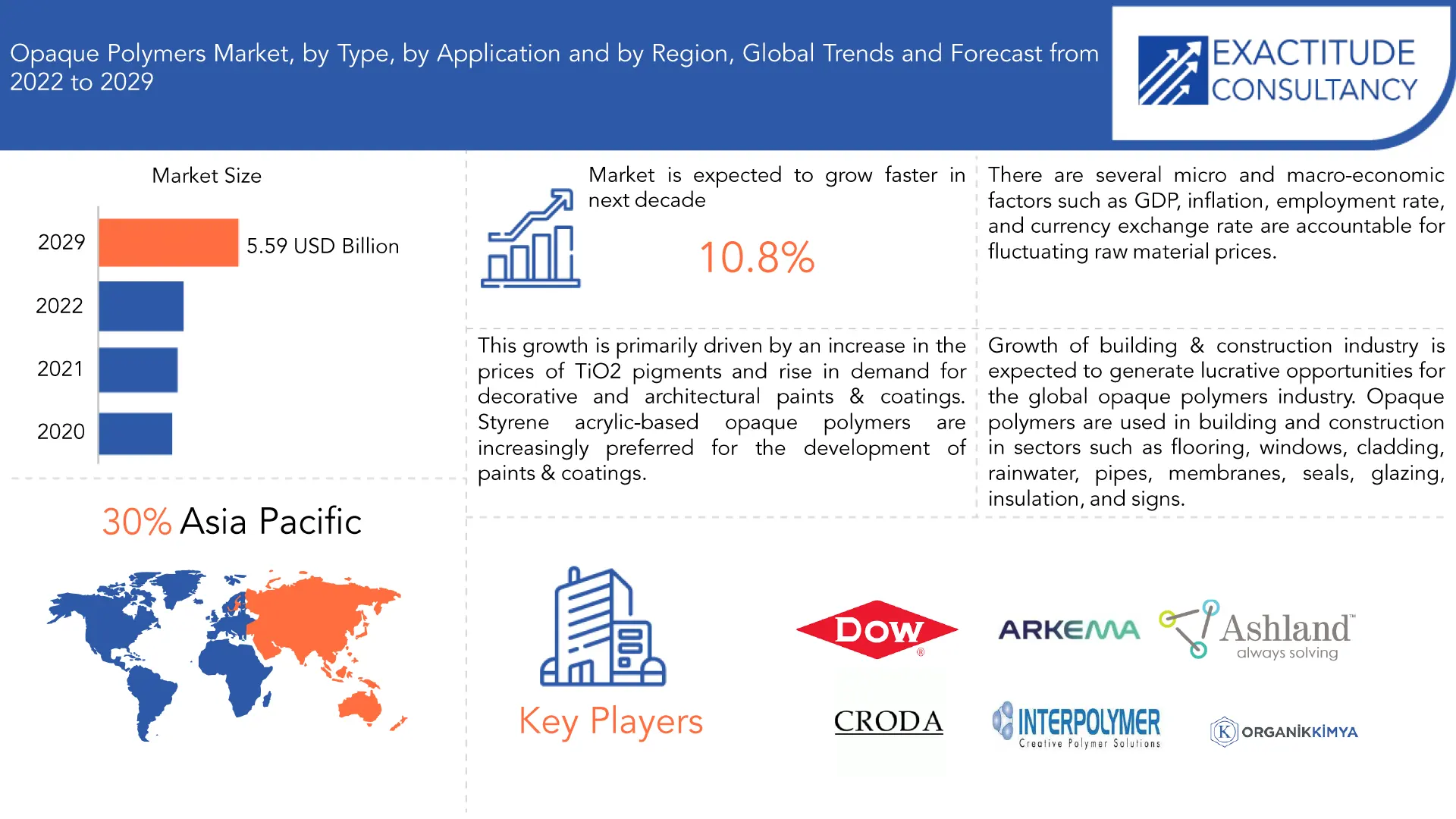
The GDP, inflation, employment rate, and currency exchange rate are only a few of the micro- and macroeconomic factors that influence raw material prices. The geopolitical conflicts between nations, trade wars, the unfavorable environment, and virus infections are the primary drivers of micro- and macro-economic forces. The disruption of the global logistics and supply chain is caused by these reasons. Due to this interruption, the costs of raw materials will increase, which will also have a negative effect on demand, affecting the entire market. The prices of crude oil and other chemical commodities are erratic in the year 2020 as of right now due to of the escalating trade war between the US and China and the political conflict involving the US, Iraq, and Saudi Arabia.
For the global opaque polymers market, the expansion of the building and construction sector is predicted to bring about profitable opportunities. Building and construction applications for opaque polymers include floors, windows, cladding, rainwater, pipes, membranes, seals, glazing, insulation, and signage. The building and construction industries also employ opaque polymers for paints, sealants, adhesives, foams, paints, and thermoplastic elastomers. Due to their superior qualities compared to inorganic materials, such as waterproofing, anti-corrosion, wear resistance, lightweight, good strength, sound insulation, heat insulation, good electrical insulation, and vibrant colors, opaque polymers are being used more and more in the construction industry.
On the market for opaque polymers, the COVID-19 epidemic had a negligible effect. Along with the import and export of personal care items, it also had an impact on the supply of paints and coatings. The paints and coatings sector suffered from the effects of COVID-19. For instance, the paint and coatings business recorded a USD 61.58 million loss, a 2.1% year-over-year decline, which decreased the market for opaque polymers. However, as markets were expanded, production units for paints and coatings started to grow; by 2021, it's predicted that this market will be worth USD 184 billion. This is anticipated to increase demand for opaque polymers both now and in the future.
| ATTRIBUTE | DETAILS |
| Study period | 2020-2029 |
| Base year | 2021 |
| Estimated year | 2022 |
| Forecasted year | 2022-2029 |
| Historical period | 2018-2020 |
| Unit | Value (USD Billion), (Kilotons). |
| Segmentation | By Type, By Application, By Region. |
| By Type |
|
| By Application |
|
| By Region |
|
Frequently Asked Questions
• What is the worth of opaque polymers market?
The opaque polymers market is expected to grow at 10.8 % CAGR from 2022 to 2029. It is expected to reach above USD 5.59 billion by 2029 from USD 2.22 billion in 2020.
• What is the size of the Asia Pacific opaque polymers industry?
Asia Pacific held more than 60 % of the opaque polymers market revenue share in 2021 and will witness expansion in the forecast period.
• What are some of the market's driving forces?
One of the primary reasons expected to propel the growth of the opaque polymers market during the projected period is the increase in demand for architectural paints and coatings.
• Which are the top companies to hold the market share in opaque polymers market?
The opaque polymers market key players includes The DOW Chemical Company, Arkema, Ashland Global Holdings Inc., Interpolymer Corporation, Organik Kimya A.S., Croda International PLC, En-Tech Polymer Co., Ltd., Hankuck Latices Co., Ltd., Indulor Chemie GmbH, Visen Industries Limited.
• What is the leading application of opaque polymers market?
In 2016, the market for opaque polymers was dominated by the application segment for paints and coatings. During the forecast period, both in terms of value and volume, this application segment is anticipated to increase at the greatest CAGR.
• Which is the largest regional market for opaque polymers market?
During the projection period, Asia-Pacific is anticipated to grow strongly. In Asia-Pacific, the number of updated products with greater efficacy is rising, the retail sector is expanding, and multinational industry actors are steadily increasing their investments.
Opaque Polymers Market Segment Analysis
The opaque polymers market is segmented based on type and application.
The opaque polymers market has been divided into two types based on solid content: 30% and 40%. In terms of volume, the category with solid content of 30% made up 65.2% of the opaque polymers market in 2016. In addition, the market for opaque polymers' 30% solid content type is the one that is expanding the quickest. Due to these polymers take longer to cure, there is a significant demand for solid content 30% opaque polymers in paints and coatings applications, which is responsible for this growth. Additionally, detergent and personal care product formulas contain opaque polymers with a solid content of 40%.
Paints & coatings, personal care, and detergents are the three application-based divisions of the opaque polymers market. In 2016, the market for opaque polymers was dominated by the application segment for paints and coatings. During the forecast period, both in terms of value and volume, this application segment is anticipated to increase at the greatest CAGR. The market for opaque polymers in paints & coatings application is expanding due to the construction industry's increasing need for ornamental paints.
[caption id="attachment_25719" align="aligncenter" width="1920"]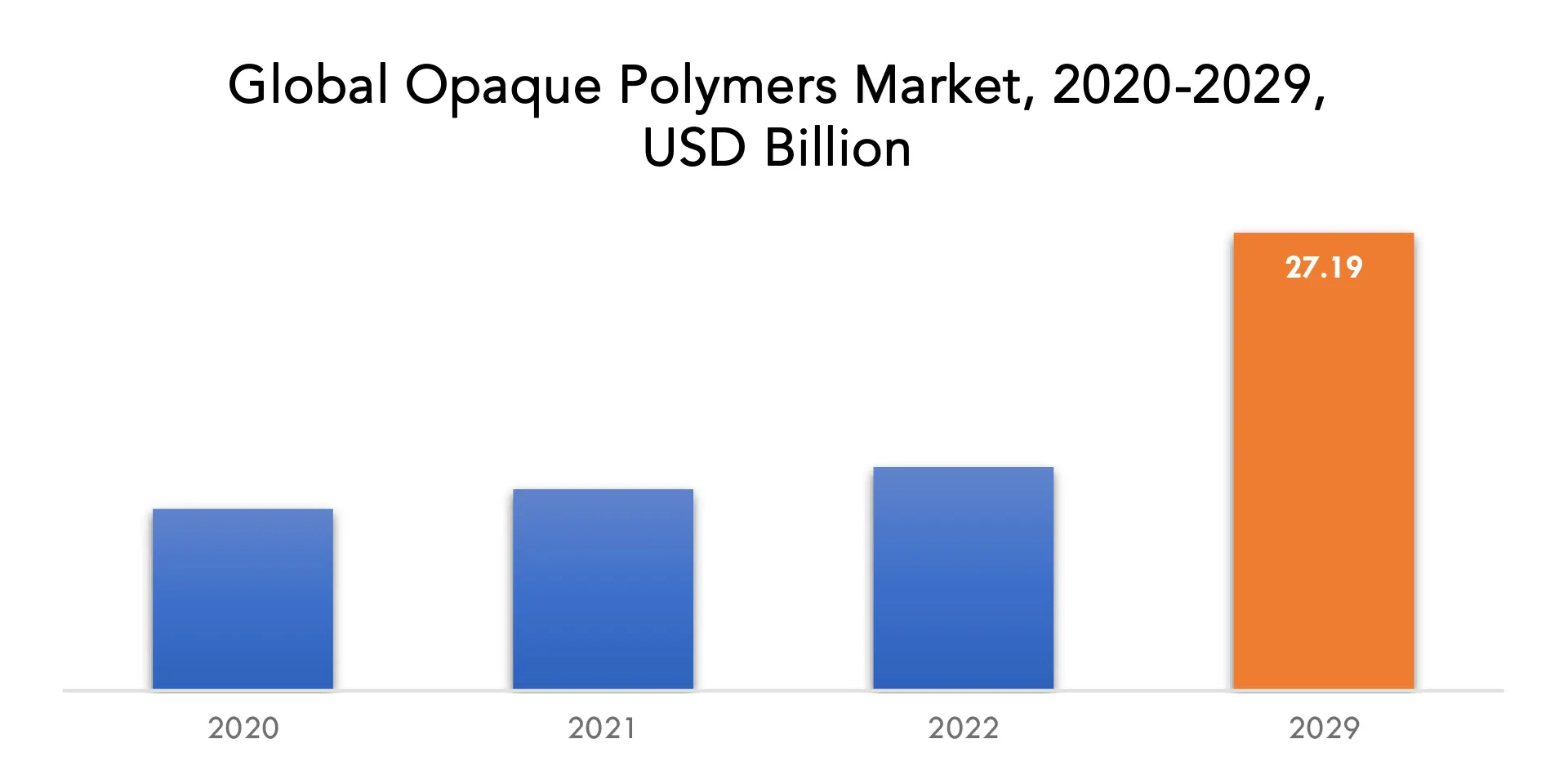
Opaque Polymers Market Players
The Opaque Polymers Market key players includes The DOW Chemical Company, Arkema, Ashland Global Holdings Inc., Interpolymer Corporation, Organik Kimya A.S., Croda International PLC, En-Tech Polymer Co., Ltd., Hankuck Latices Co., Ltd., Indulor Chemie GmbH, Visen Industries Limited. Recent Developments: 17 May 2023: Arkema acquired Polytec PT, specialized in adhesives for batteries and electronics. 27 April 2023: Arkema launched “EASY3D”, its online on-demand additive manufacturing platform. The platform allows the user to select the ideal 3D printing material based upon a proprietary algorithmic selection tool and to order parts online from Arkema’s trusted suppliers – all with just a few clicks.Who Should Buy? Or Key Stakeholders
- Manufacturers of Opaque Polymers
- Traders, Distributors, and Suppliers of Opaque Polymers
- Regional Manufacturers Associations and General Chemical Associations
- Government & Regional Agencies and Research Organizations
- Investment Research Firms
- Others
Opaque Polymers Market Regional Analysis
The opaque polymers market by region includes North America, Asia-Pacific (APAC), Europe, South America, and Middle East & Africa (MEA).
- North America: includes the US, Canada, Mexico
- Asia Pacific: includes China, Japan, South Korea, India, Australia, ASEAN and Rest of APAC
- Europe: includes UK, Germany, France, Italy, Spain, Russia, and Rest of Europe
- South America: includes Brazil, Argentina and Rest of South America
- Middle East & Africa: includes Turkey, UAE, Saudi Arabia, South Africa, and Rest of MEA
During the projection period, Asia-Pacific is anticipated to grow strongly. In Asia-Pacific, the number of updated products with greater efficacy is rising, the retail sector is expanding, and multinational industry actors are steadily increasing their investments. The use of opaque polymers in personal care products for both newborns and adults is growing in popularity. Furthermore, China is the market leader for personal care products in East Asia, and Korean and Japanese businesses account for more than half of the market share for cosmetics in China. Personal care sales in China are also dominated by Chinese firms. As a result, it is anticipated that the growth of the Asia-Pacific opaque polymers market will be aided by rising consumer demand for personal care products.
Due to opaque polymer is in higher demand in nations like the United States and Canada, the North American region is anticipated to develop significantly in the global market. Some of the world's largest producers of paints and coatings are supported by the United States. Architectural coatings were exported from the nation for more than USD 11.7 billion in 2018, and this figure rose in 2019. Industrial coatings worth USD 7.7 billion were also marketed by the nation to other industries. The need for opaque polymers is expanding in the nation as a result of rising demand from the transportation and construction industries.
[caption id="attachment_25721" align="aligncenter" width="1920"]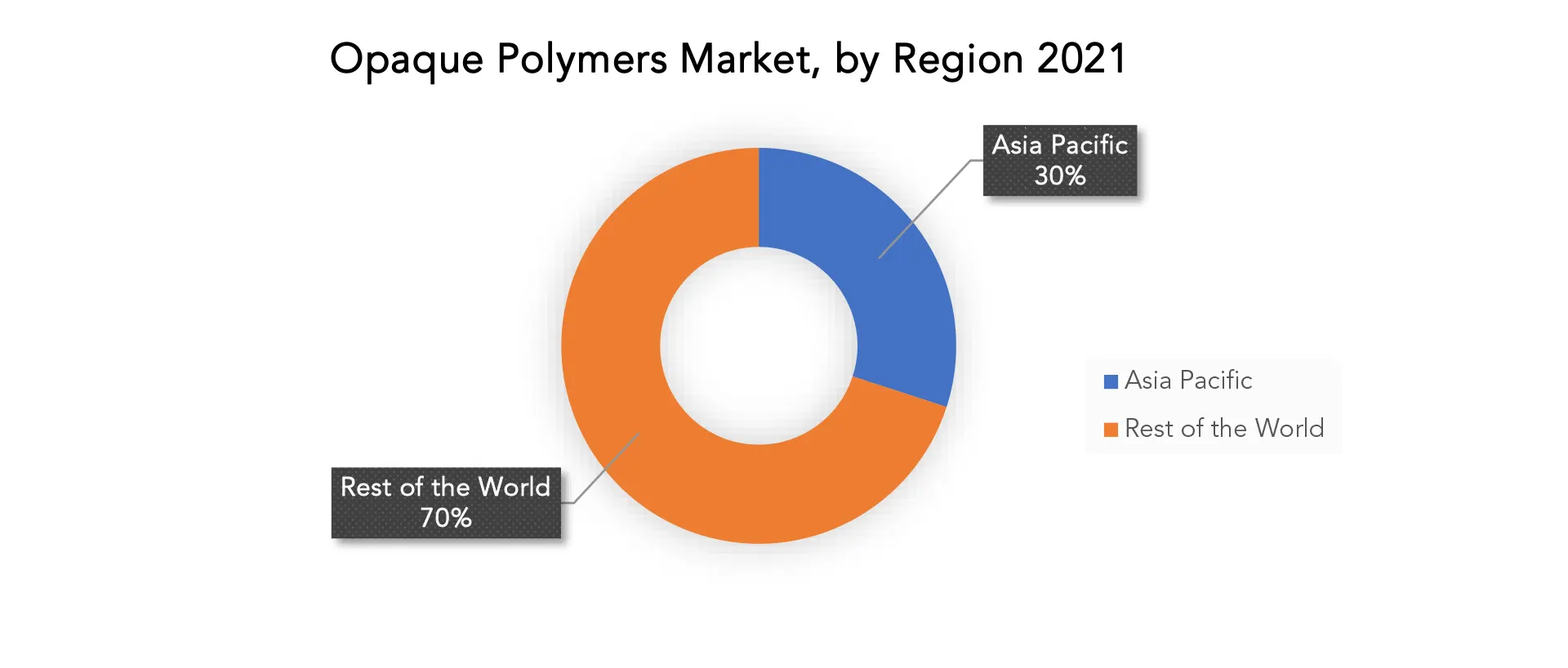
Key Market Segments: Opaque Polymers Market
Opaque polymers Market By Type, 2020-2029, (USD Billion), (Kilotons).- Solid Content 30%
- Solid Content 40%
- Paints & Coatings
- Personal Care
- Detergents
- North America
- Asia Pacific
- Europe
- South America
- Middle East And Africa
Exactitude Consultancy Services Key Objectives
- Increasing sales and market share
- Developing new technology
- Improving profitability
- Entering new markets
- Enhancing brand reputation
Key Question Answered
- What is the expected growth rate of the opaque polymers market over the next 7 years?
- Who are the major players in the opaque polymers market and what is their market share?
- What are the end-user industries driving demand for market and what is their outlook?
- What are the opportunities for growth in emerging markets such as Asia-Pacific, Middle East, and Africa?
- How is the economic environment affecting the opaque polymers market, including factors such as interest rates, inflation, and exchange rates?
- What is the expected impact of government policies and regulations on the opaque polymers market?
- What is the current and forecasted size and growth rate of the global opaque polymers market?
- What are the key drivers of growth in the opaque polymers market?
- What are the distribution channels and supply chain dynamics in the opaque polymers market?
- What are the technological advancements and innovations in the opaque polymers market and their impact on material development and growth?
- What are the regulatory considerations and their impact on the market?
- What are the challenges faced by players in the opaque polymers market and how are they addressing these challenges?
- What are the opportunities for growth and expansion in the opaque polymers market?
- What are the products offerings and specifications of leading players in the market?
- What is the pricing trend of opaque polymers in the market and what is the impact of raw application prices on the price trend?
- INTRODUCTION
- MARKET DEFINITION
- MARKET SEGMENTATION
- RESEARCH TIMELINES
- ASSUMPTIONS AND LIMITATIONS
- RESEARCH METHODOLOGY
- DATA MINING
- SECONDARY RESEARCH
- PRIMARY RESEARCH
- SUBJECT-MATTER EXPERTS’ ADVICE
- QUALITY CHECKS
- FINAL REVIEW
- DATA TRIANGULATION
- BOTTOM-UP APPROACH
- TOP-DOWN APPROACH
- RESEARCH FLOW
- DATA SOURCES
- DATA MINING
- EXECUTIVE SUMMARY
- MARKET OVERVIEW
- GLOBAL OPAQUE POLYMERS MARKET OUTLOOK
- MARKET DRIVERS
- MARKET RESTRAINTS
- MARKET OPPORTUNITIES
- IMPACT OF COVID-19 ON OPAQUE POLYMERS MARKET
- PORTER’S FIVE FORCES MODEL
- THREAT FROM NEW ENTRANTS
- THREAT FROM SUBSTITUTES
- BARGAINING POWER OF SUPPLIERS
- BARGAINING POWER OF CUSTOMERS
- DEGREE OF COMPETITION
- INDUSTRY VALUE CHAIN ANALYSIS
- GLOBAL OPAQUE POLYMERS MARKET OUTLOOK
- GLOBAL OPAQUE POLYMERS MARKET BY TYPE, 2020-2029, (USD BILLION), (KILOTONS)
- SOLID CONTENT 30%
- SOLID CONTENT 40%
- GLOBAL OPAQUE POLYMERS MARKET BY APPLICATION, 2020-2029, (USD BILLION), (KILOTONS)
- PAINTS & COATINGS
- PERSONAL CARE
- DETERGENTS
- GLOBAL OPAQUE POLYMERS MARKET BY REGION, 2020-2029, (USD BILLION), (KILOTONS)
- NORTH AMERICA
- US
- CANADA
- MEXICO
- SOUTH AMERICA
- BRAZIL
- ARGENTINA
- COLOMBIA
- REST OF SOUTH AMERICA
- EUROPE
- GERMANY
- UK
- FRANCE
- ITALY
- SPAIN
- RUSSIA
- REST OF EUROPE
- ASIA PACIFIC
- INDIA
- CHINA
- JAPAN
- SOUTH KOREA
- AUSTRALIA
- SOUTH-EAST ASIA
- REST OF ASIA PACIFIC
- MIDDLE EAST AND AFRICA
- UAE
- SAUDI ARABIA
- SOUTH AFRICA
- REST OF MIDDLE EAST AND AFRICA
- NORTH AMERICA
- COMPANY PROFILES* (BUSINESS OVERVIEW, COMPANY SNAPSHOT, PRODUCTS OFFERED, RECENT DEVELOPMENTS)
- THE DOW CHEMICAL COMPANY
- ARKEMA
- ASHLAND GLOBAL HOLDINGS INC.
- INTERPOLYMER CORPORATION
- ORGANIK KIMYA A.S.
- CRODA INTERNATIONAL PLC
- EN-TECH POLYMER CO., LTD.
- HANKUCK LATICES CO., LTD.
- INDULOR CHEMIE GMBH
- VISEN INDUSTRIES LIMITED. *THE COMPANY LIST IS INDICATIVE
LIST OF TABLES
TABLE 1 GLOBAL OPAQUE POLYMERS MARKET BY TYPE (USD BILLION), 2020-2029
TABLE 2 GLOBAL OPAQUE POLYMERS MARKET BY TYPE (KILOTONS), 2020-2029
TABLE 3 GLOBAL OPAQUE POLYMERS MARKET BY APPLICATION (USD BILLION), 2020-2029
TABLE 4 GLOBAL OPAQUE POLYMERS MARKET BY APPLICATION (KILOTONS), 2020-2029
TABLE 5 GLOBAL OPAQUE POLYMERS MARKET BY REGION (USD BILLION), 2020-2029
TABLE 6 GLOBAL OPAQUE POLYMERS MARKET BY REGION (KILOTONS), 2020-2029
TABLE 7 NORTH AMERICA OPAQUE POLYMERS MARKET BY TYPE (USD BILLION), 2020-2029
TABLE 8 NORTH AMERICA OPAQUE POLYMERS MARKET BY TYPE (KILOTONS), 2020-2029
TABLE 9 NORTH AMERICA OPAQUE POLYMERS MARKET BY APPLICATION (USD BILLION), 2020-2029
TABLE 10 NORTH AMERICA OPAQUE POLYMERS MARKET BY APPLICATION (KILOTONS), 2020-2029
TABLE 11 NORTH AMERICA OPAQUE POLYMERS MARKET BY COUNTRY (USD BILLION), 2020-2029
TABLE 12 NORTH AMERICA OPAQUE POLYMERS MARKET BY COUNTRY (KILOTONS), 2020-2029
TABLE 13 US OPAQUE POLYMERS MARKET BY TYPE (USD BILLION), 2020-2029
TABLE 14 US OPAQUE POLYMERS MARKET BY TYPE (KILOTONS), 2020-2029
TABLE 15 US OPAQUE POLYMERS MARKET BY APPLICATION (USD BILLION), 2020-2029
TABLE 16 US OPAQUE POLYMERS MARKET BY APPLICATION (KILOTONS), 2020-2029
TABLE 17 CANADA OPAQUE POLYMERS MARKET BY TYPE (USD BILLION), 2020-2029
TABLE 18 CANADA OPAQUE POLYMERS MARKET BY TYPE (KILOTONS), 2020-2029
TABLE 19 CANADA OPAQUE POLYMERS MARKET BY APPLICATION (USD BILLION), 2020-2029
TABLE 20 CANADA OPAQUE POLYMERS MARKET BY APPLICATION (KILOTONS), 2020-2029
TABLE 21 MEXICO OPAQUE POLYMERS MARKET BY TYPE (USD BILLION), 2020-2029
TABLE 22 MEXICO OPAQUE POLYMERS MARKET BY TYPE (KILOTONS), 2020-2029
TABLE 23 MEXICO OPAQUE POLYMERS MARKET BY APPLICATION (USD BILLION), 2020-2029
TABLE 24 MEXICO OPAQUE POLYMERS MARKET BY APPLICATION (KILOTONS), 2020-2029
TABLE 25 SOUTH AMERICA OPAQUE POLYMERS MARKET BY TYPE (USD BILLION), 2020-2029
TABLE 26 SOUTH AMERICA OPAQUE POLYMERS MARKET BY TYPE (KILOTONS), 2020-2029
TABLE 27 SOUTH AMERICA OPAQUE POLYMERS MARKET BY COUNTRY (USD BILLION), 2020-2029
TABLE 28 SOUTH AMERICA OPAQUE POLYMERS MARKET BY COUNTRY (KILOTONS), 2020-2029
TABLE 29 SOUTH AMERICA OPAQUE POLYMERS MARKET BY APPLICATION (USD BILLION), 2020-2029
TABLE 30 SOUTH AMERICA OPAQUE POLYMERS MARKET BY APPLICATION (KILOTONS), 2020-2029
TABLE 31 BRAZIL OPAQUE POLYMERS MARKET BY TYPE (USD BILLION), 2020-2029
TABLE 32 BRAZIL OPAQUE POLYMERS MARKET BY TYPE (KILOTONS), 2020-2029
TABLE 33 BRAZIL OPAQUE POLYMERS MARKET BY APPLICATION (USD BILLION), 2020-2029
TABLE 34 BRAZIL OPAQUE POLYMERS MARKET BY APPLICATION (KILOTONS), 2020-2029
TABLE 35 ARGENTINA OPAQUE POLYMERS MARKET BY TYPE (USD BILLION), 2020-2029
TABLE 36 ARGENTINA OPAQUE POLYMERS MARKET BY TYPE (KILOTONS), 2020-2029
TABLE 37 ARGENTINA OPAQUE POLYMERS MARKET BY APPLICATION (USD BILLION), 2020-2029
TABLE 38 ARGENTINA OPAQUE POLYMERS MARKET BY APPLICATION (KILOTONS), 2020-2029
TABLE 39 COLOMBIA OPAQUE POLYMERS MARKET BY TYPE (USD BILLION), 2020-2029
TABLE 40 COLOMBIA OPAQUE POLYMERS MARKET BY TYPE (KILOTONS), 2020-2029
TABLE 41 COLOMBIA OPAQUE POLYMERS MARKET BY APPLICATION (USD BILLION), 2020-2029
TABLE 42 COLOMBIA OPAQUE POLYMERS MARKET BY APPLICATION (KILOTONS), 2020-2029
TABLE 43 REST OF SOUTH AMERICA OPAQUE POLYMERS MARKET BY TYPE (USD BILLION), 2020-2029
TABLE 44 REST OF SOUTH AMERICA OPAQUE POLYMERS MARKET BY TYPE (KILOTONS), 2020-2029
TABLE 45 REST OF SOUTH AMERICA OPAQUE POLYMERS MARKET BY APPLICATION (USD BILLION), 2020-2029
TABLE 46 REST OF SOUTH AMERICA OPAQUE POLYMERS MARKET BY APPLICATION (KILOTONS), 2020-2029
TABLE 47 ASIA-PACIFIC OPAQUE POLYMERS MARKET BY TYPE (USD BILLION), 2020-2029
TABLE 48 ASIA-PACIFIC OPAQUE POLYMERS MARKET BY TYPE (KILOTONS), 2020-2029
TABLE 49 ASIA-PACIFIC OPAQUE POLYMERS MARKET BY APPLICATION (USD BILLION), 2020-2029
TABLE 50 ASIA-PACIFIC OPAQUE POLYMERS MARKET BY APPLICATION (KILOTONS), 2020-2029
TABLE 51 ASIA-PACIFIC OPAQUE POLYMERS MARKET BY COUNTRY (USD BILLION), 2020-2029
TABLE 52 ASIA-PACIFIC OPAQUE POLYMERS MARKET BY COUNTRY (KILOTONS), 2020-2029
TABLE 53 INDIA OPAQUE POLYMERS MARKET BY TYPE (USD BILLION), 2020-2029
TABLE 54 INDIA OPAQUE POLYMERS MARKET BY TYPE (KILOTONS), 2020-2029
TABLE 55 INDIA OPAQUE POLYMERS MARKET BY APPLICATION (USD BILLION), 2020-2029
TABLE 56 INDIA OPAQUE POLYMERS MARKET BY APPLICATION (KILOTONS), 2020-2029
TABLE 57 CHINA OPAQUE POLYMERS MARKET BY TYPE (USD BILLION), 2020-2029
TABLE 58 CHINA OPAQUE POLYMERS MARKET BY TYPE (KILOTONS), 2020-2029
TABLE 59 CHINA OPAQUE POLYMERS MARKET BY APPLICATION (USD BILLION), 2020-2029
TABLE 60 CHINA OPAQUE POLYMERS MARKET BY APPLICATION (KILOTONS), 2020-2029
TABLE 61 JAPAN OPAQUE POLYMERS MARKET BY TYPE (USD BILLION), 2020-2029
TABLE 62 JAPAN OPAQUE POLYMERS MARKET BY TYPE (KILOTONS), 2020-2029
TABLE 63 JAPAN OPAQUE POLYMERS MARKET BY APPLICATION (USD BILLION), 2020-2029
TABLE 64 JAPAN OPAQUE POLYMERS MARKET BY APPLICATION (KILOTONS), 2020-2029
TABLE 65 SOUTH KOREA OPAQUE POLYMERS MARKET BY TYPE (USD BILLION), 2020-2029
TABLE 66 SOUTH KOREA OPAQUE POLYMERS MARKET BY TYPE (KILOTONS), 2020-2029
TABLE 67 SOUTH KOREA OPAQUE POLYMERS MARKET BY APPLICATION (USD BILLION), 2020-2029
TABLE 68 SOUTH KOREA OPAQUE POLYMERS MARKET BY APPLICATION (KILOTONS), 2020-2029
TABLE 69 AUSTRALIA OPAQUE POLYMERS MARKET BY TYPE (USD BILLION), 2020-2029
TABLE 70 AUSTRALIA OPAQUE POLYMERS MARKET BY TYPE (KILOTONS), 2020-2029
TABLE 71 AUSTRALIA OPAQUE POLYMERS MARKET BY APPLICATION (USD BILLION), 2020-2029
TABLE 72 AUSTRALIA OPAQUE POLYMERS MARKET BY APPLICATION (KILOTONS), 2020-2029
TABLE 73 SOUTH EAST ASIA OPAQUE POLYMERS MARKET BY TYPE (USD BILLION), 2020-2029
TABLE 74 SOUTH EAST ASIA OPAQUE POLYMERS MARKET BY TYPE (KILOTONS), 2020-2029
TABLE 75 SOUTH EAST ASIA OPAQUE POLYMERS MARKET BY APPLICATION (USD BILLION), 2020-2029
TABLE 76 SOUTH EAST ASIA OPAQUE POLYMERS MARKET BY APPLICATION (KILOTONS), 2020-2029
TABLE 77 REST OF ASIA PACIFIC OPAQUE POLYMERS MARKET BY TYPE (USD BILLION), 2020-2029
TABLE 78 REST OF ASIA PACIFIC OPAQUE POLYMERS MARKET BY TYPE (KILOTONS), 2020-2029
TABLE 79 REST OF ASIA PACIFIC OPAQUE POLYMERS MARKET BY APPLICATION (USD BILLION), 2020-2029
TABLE 80 REST OF ASIA PACIFIC OPAQUE POLYMERS MARKET BY APPLICATION (KILOTONS), 2020-2029
TABLE 81 EUROPE OPAQUE POLYMERS MARKET BY TYPE (USD BILLION), 2020-2029
TABLE 82 EUROPE OPAQUE POLYMERS MARKET BY TYPE (KILOTONS), 2020-2029
TABLE 83 EUROPE OPAQUE POLYMERS MARKET BY APPLICATION (USD BILLION), 2020-2029
TABLE 84 EUROPE OPAQUE POLYMERS MARKET BY APPLICATION (KILOTONS), 2020-2029
TABLE 85 EUROPE OPAQUE POLYMERS MARKET BY COUNTRY (USD BILLION), 2020-2029
TABLE 86 EUROPE OPAQUE POLYMERS MARKET BY COUNTRY (KILOTONS), 2020-2029
TABLE 87 GERMANY OPAQUE POLYMERS MARKET BY TYPE (USD BILLION), 2020-2029
TABLE 88 GERMANY OPAQUE POLYMERS MARKET BY TYPE (KILOTONS), 2020-2029
TABLE 89 GERMANY OPAQUE POLYMERS MARKET BY APPLICATION (USD BILLION), 2020-2029
TABLE 90 GERMANY OPAQUE POLYMERS MARKET BY APPLICATION (KILOTONS), 2020-2029
TABLE 91 UK OPAQUE POLYMERS MARKET BY TYPE (USD BILLION), 2020-2029
TABLE 92 UK OPAQUE POLYMERS MARKET BY TYPE (KILOTONS), 2020-2029
TABLE 93 UK OPAQUE POLYMERS MARKET BY APPLICATION (USD BILLION), 2020-2029
TABLE 94 UK OPAQUE POLYMERS MARKET BY APPLICATION (KILOTONS), 2020-2029
TABLE 95 FRANCE OPAQUE POLYMERS MARKET BY TYPE (USD BILLION), 2020-2029
TABLE 96 FRANCE OPAQUE POLYMERS MARKET BY TYPE (KILOTONS), 2020-2029
TABLE 97 FRANCE OPAQUE POLYMERS MARKET BY APPLICATION (USD BILLION), 2020-2029
TABLE 98 FRANCE OPAQUE POLYMERS MARKET BY APPLICATION (KILOTONS), 2020-2029
TABLE 99 ITALY OPAQUE POLYMERS MARKET BY TYPE (USD BILLION), 2020-2029
TABLE 100 ITALY OPAQUE POLYMERS MARKET BY TYPE (KILOTONS), 2020-2029
TABLE 101 ITALY OPAQUE POLYMERS MARKET BY APPLICATION (USD BILLION), 2020-2029
TABLE 102 ITALY OPAQUE POLYMERS MARKET BY APPLICATION (KILOTONS), 2020-2029
TABLE 103 SPAIN OPAQUE POLYMERS MARKET BY TYPE (USD BILLION), 2020-2029
TABLE 104 SPAIN OPAQUE POLYMERS MARKET BY TYPE (KILOTONS), 2020-2029
TABLE 105 SPAIN OPAQUE POLYMERS MARKET BY APPLICATION (USD BILLION), 2020-2029
TABLE 106 SPAIN OPAQUE POLYMERS MARKET BY APPLICATION (KILOTONS), 2020-2029
TABLE 107 RUSSIA OPAQUE POLYMERS MARKET BY TYPE (USD BILLION), 2020-2029
TABLE 108 RUSSIA OPAQUE POLYMERS MARKET BY TYPE (KILOTONS), 2020-2029
TABLE 109 RUSSIA OPAQUE POLYMERS MARKET BY APPLICATION (USD BILLION), 2020-2029
TABLE 110 RUSSIA OPAQUE POLYMERS MARKET BY APPLICATION (KILOTONS), 2020-2029
TABLE 111 REST OF EUROPE OPAQUE POLYMERS MARKET BY TYPE (USD BILLION), 2020-2029
TABLE 112 REST OF EUROPE OPAQUE POLYMERS MARKET BY TYPE (KILOTONS), 2020-2029
TABLE 113 REST OF EUROPE OPAQUE POLYMERS MARKET BY APPLICATION (USD BILLION), 2020-2029
TABLE 114 REST OF EUROPE OPAQUE POLYMERS MARKET BY APPLICATION (KILOTONS), 2020-2029
TABLE 115 MIDDLE EAST AND AFRICA OPAQUE POLYMERS MARKET BY TYPE (USD BILLION), 2020-2029
TABLE 116 MIDDLE EAST AND AFRICA OPAQUE POLYMERS MARKET BY TYPE (KILOTONS), 2020-2029
TABLE 117 MIDDLE EAST AND AFRICA OPAQUE POLYMERS MARKET BY APPLICATION (USD BILLION), 2020-2029
TABLE 118 MIDDLE EAST AND AFRICA OPAQUE POLYMERS MARKET BY APPLICATION (KILOTONS), 2020-2029
TABLE 119 MIDDLE EAST AND AFRICA OPAQUE POLYMERS MARKET BY COUNTRY (USD BILLION), 2020-2029
TABLE 120 MIDDLE EAST AND AFRICA OPAQUE POLYMERS MARKET BY COUNTRY (KILOTONS), 2020-2029
TABLE 121 UAE OPAQUE POLYMERS MARKET BY TYPE (USD BILLION), 2020-2029
TABLE 122 UAE OPAQUE POLYMERS MARKET BY TYPE (KILOTONS), 2020-2029
TABLE 123 UAE OPAQUE POLYMERS MARKET BY APPLICATION (USD BILLION), 2020-2029
TABLE 124 UAE OPAQUE POLYMERS MARKET BY APPLICATION (KILOTONS), 2020-2029
TABLE 125 SAUDI ARABIA OPAQUE POLYMERS MARKET BY TYPE (USD BILLION), 2020-2029
TABLE 126 SAUDI ARABIA OPAQUE POLYMERS MARKET BY TYPE (KILOTONS), 2020-2029
TABLE 127 SAUDI ARABIA OPAQUE POLYMERS MARKET BY APPLICATION (USD BILLION), 2020-2029
TABLE 128 SAUDI ARABIA OPAQUE POLYMERS MARKET BY APPLICATION (KILOTONS), 2020-2029
TABLE 129 SOUTH AFRICA OPAQUE POLYMERS MARKET BY TYPE (USD BILLION), 2020-2029
TABLE 130 SOUTH AFRICA OPAQUE POLYMERS MARKET BY TYPE (KILOTONS), 2020-2029
TABLE 131 SOUTH AFRICA OPAQUE POLYMERS MARKET BY APPLICATION (USD BILLION), 2020-2029
TABLE 132 SOUTH AFRICA OPAQUE POLYMERS MARKET BY APPLICATION (KILOTONS), 2020-2029
TABLE 133 REST OF MIDDLE EAST AND AFRICA OPAQUE POLYMERS MARKET BY TYPE (USD BILLION), 2020-2029
TABLE 134 REST OF MIDDLE EAST AND AFRICA OPAQUE POLYMERS MARKET BY TYPE (KILOTONS), 2020-2029
TABLE 135 REST OF MIDDLE EAST AND AFRICA OPAQUE POLYMERS MARKET BY APPLICATION (USD BILLION), 2020-2029
TABLE 136 REST OF MIDDLE EAST AND AFRICA OPAQUE POLYMERS MARKET BY APPLICATION (KILOTONS), 2020-2029
LIST OF FIGURES
FIGURE 1 MARKET DYNAMICS
FIGURE 2 MARKET SEGMENTATION
FIGURE 3 REPORT TIMELINES: YEARS CONSIDERED
FIGURE 4 DATA TRIANGULATION
FIGURE 5 BOTTOM-UP APPROACH
FIGURE 6 TOP-DOWN APPROACH
FIGURE 7 RESEARCH FLOW
FIGURE 8 GLOBAL OPAQUE POLYMERS BY TYPE, USD BILLION, 2020-2029
FIGURE 9 GLOBAL OPAQUE POLYMERS BY APPLICATION, USD BILLION, 2020-2029
FIGURE 10 GLOBAL OPAQUE POLYMERS BY REGION, USD BILLION, 2020-2029
FIGURE 11 PORTER’S FIVE FORCES MODEL
FIGURE 12 GLOBAL OPAQUE POLYMERS BY TYPE, USD BILLION, 2021
FIGURE 13 GLOBAL OPAQUE POLYMERS BY APPLICATION, USD BILLION, 2021
FIGURE 14 GLOBAL OPAQUE POLYMERS BY REGION, USD BILLION, 2021
FIGURE 15 MARKET SHARE ANALYSIS
FIGURE 16 THE DOW CHEMICAL COMPANY: COMPANY SNAPSHOT
FIGURE 17 ARKEMA: COMPANY SNAPSHOT
FIGURE 18 ASHLAND GLOBAL HOLDINGS INC.: COMPANY SNAPSHOT
FIGURE 19 INTERPOLYMER CORPORATION: COMPANY SNAPSHOT
FIGURE 20 ORGANIK KIMYA A.S.: COMPANY SNAPSHOT
FIGURE 21 CRODA INTERNATIONAL PLC: COMPANY SNAPSHOT
FIGURE 22 EN-TECH POLYMER CO., LTD.: COMPANY SNAPSHOT
FIGURE 23 HANKUCK LATICES CO., LTD.: COMPANY SNAPSHOT
FIGURE 24 INDULOR CHEMIE GMBH: COMPANY SNAPSHOT
FIGURE 25 VISEN INDUSTRIES LIMITED: COMPANY SNAPSHOT
DOWNLOAD FREE SAMPLE REPORT
License Type
SPEAK WITH OUR ANALYST
Want to know more about the report or any specific requirement?
WANT TO CUSTOMIZE THE REPORT?
Our Clients Speak
We asked them to research ‘ Equipment market’ all over the world, and their whole arrangement was helpful to us. thehealthanalytics.com insightful analysis and reports contributed to our current analysis and in creating a future strategy. Besides, the te
Yosuke Mitsui
Senior Associate Construction Equipment Sales & Marketing
We asked them to research ‘Equipment market’ all over the world, and their whole arrangement was helpful to us. thehealthanalytics.com insightful analysis and reports contributed to our current analysis and in creating a future strategy. Besides, the te