

Base Year Value ()
x.x %
x.x %
CAGR ()
x.x %
x.x %
Forecast Year Value ()
x.x %
x.x %
Historical Data Period
Largest Region
Forecast Period
Mercado de películas de laminación térmica por tipo (películas de laminación térmica basadas en BOPP, películas de laminación térmica basadas en BOPET, películas de laminación térmica basadas en BOPA, otras) por aplicación (impresión industrial, impresión comercial, otras) y por región (América del Norte, Europa, Asia Pacífico, América del Sur, Oriente Medio y África) Tendencias globales y pronóstico de 2023 a 2029
Instant access to hundreds of data points and trends
- Market estimates from 2014-2029
- Competitive analysis, industry segmentation, financial benchmarks
- Incorporates SWOT, Porter's Five Forces and risk management frameworks
- PDF report or online database with Word, Excel and PowerPoint export options
- 100% money back guarantee
Descripción general del mercado de películas de laminación térmica
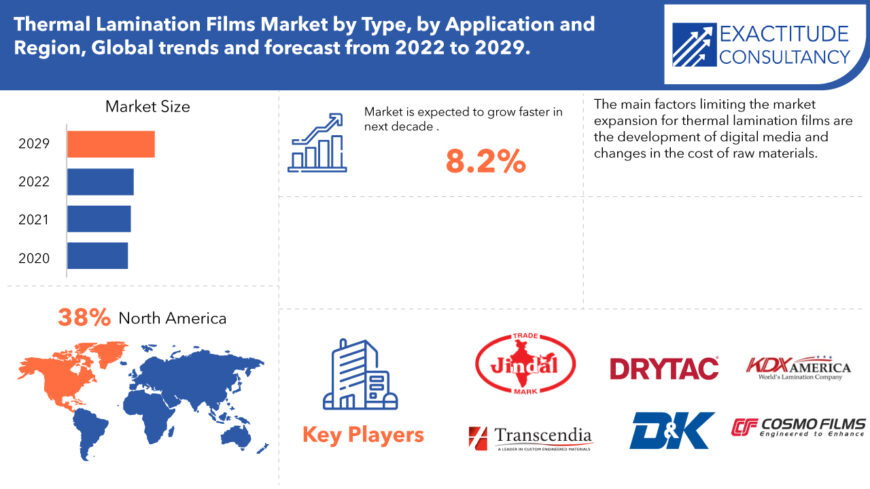
Se espera que el mercado de películas de laminación térmica crezca a una tasa anual compuesta del 8,2 % entre 2023 y 2029. Se espera que alcance más de 2250 millones de dólares en 2029 desde 1110 millones de dólares en 2022.
Las películas que se utilizan para la laminación térmica son películas ornamentales que tienen adhesivos térmicos recubiertos por extrusión. Estas películas se adhieren a la superficie del papel impreso cuando se calientan, derritiendo los adhesivos . En general, hay tres tipos diferentes de películas de laminación térmica: las hechas de polipropileno orientado biaxialmente (BOPP), las hechas de tereftalato de polietileno orientado biaxialmente (BOPET) y las hechas de nailon-6 orientado biaxialmente (BOPA). Los adhesivos termofusibles, como LDPE o EVA (etileno acetato de vinilo), resina de poliolefina y otros se utilizan para recubrir estas películas. Las películas que se utilizan para la laminación térmica tienen buena resistencia a los rayos UV, fuertes propiedades de tracción y unión y resistencia al rayado. Ofrece acabados específicos además de acabados ornamentales como brillo y mate.
Estas películas también tienen una gran demanda en el sector de la impresión comercial. El aislamiento de tejados se realiza con películas de laminación térmica basadas en BOPP que se han expandido con poliestireno, ya que son más económicas que el aislamiento de aluminio. Como el sector de la impresión no tiene fin, la demanda de películas de laminación térmica aumenta constantemente.
| ATRIBUTO | DETALLES |
| Periodo de estudio | 2022-2029 |
| Año base | 2021 |
| Año estimado | 2022 |
| Año pronosticado | 2023-2029 |
| Periodo histórico | 2018-2022 |
| Unidad | Valor (miles de millones de USD) |
| Segmentación | Por tipo, por aplicación, por región. |
| Por tipo |
|
| Por aplicación |
|
| Por región |
|
Las cubiertas blandas de libros, tarjetas de felicitación , portadas de revistas, álbumes de fotos, cubiertas de cuadernos, carteles, embalajes , bolsas de regalo y otros artículos se laminan con frecuencia utilizando películas de laminación térmica. El espesor de las láminas de laminación térmica varía de 20 micrones a 250 micrones. Las películas utilizadas para laminación térmica se utilizan para envasar alimentos y bebidas. Con el aumento de los productos alimenticios envasados, se prevé que aumente la demanda de estas películas. El área industrial comercial, en particular para la publicidad de productos, tiene una necesidad considerable de películas de laminación térmica para aplicaciones de embalaje ornamental.
Estas películas también tienen una gran demanda en el sector de la impresión comercial. El aislamiento de tejados se realiza con películas de laminación térmica basadas en BOPP que se han expandido con poliestireno, ya que son más económicas que el aislamiento de aluminio. Como el sector de la impresión no tiene fin, la demanda de películas de laminación térmica aumenta constantemente.
[título id="attachment_12191" align="aligncenter" width="870"]
Frequently Asked Questions
• What is the worth of global thermal lamination films market?
The thermal lamination films market size had crossed USD 1.11 Billion in 2022 and will observe a CAGR of more than 8.2% up to 2029
• Which market segments are covered in the report on the thermal lamination films market?
Based on Product Type, End-Users, and Application, the thermal lamination films market report's divisions are broken down.
• What is the CAGR of thermal lamination films market?
The global thermal lamination films market registered a CAGR of 8.2% from 2022 to 2029. The industry segment was the highest revenue contributor to the market.
• Which are the top companies to hold the market share in thermal lamination films market?
Key players profiled in the report include Jindal Poly Films Ltd, COSMO Films (GBC), Polyplex, Transcendia, Shagun film enterprises, Flex Films, Taghleef Industries SLU, Drytac Corporation, J-Film Corporation, Beijing Kangde Xin Composite Material Company LLC (KDX America), Guangdong EKO Film Manufacture Co., Ltd., D&K Group Inc., GMP Co., Ltd, and others.
Thermal Lamination Films Market Segment Analysis
The thermal lamination films market is segmented by type into BOPP based thermal lamination films, BOPET based thermal lamination films, BOPA based thermal lamination films and others. Polypropylene that has been biaxially oriented serves as the foundation for BOPP products. Extrusion depositing an adhesive on the film and either wet or dry adhering it to the substrate results in lamination. BOPET based thermal lamination film is laminated with paper and paper boards using heat and pressure after being extruded coated on one side with low temperature melting polymer. Biaxially oriented polypropylene (BOPP) lamination film polypropylene that has been biaxially oriented serves as the foundation for BOPP products. Extrusion depositing an adhesive on the film and either wet or dry adhering it to the substrate results in lamination. The thermal lamination films market is further segmented by application into Industrial Printing, Commercial Printing, Others. Journals, cosmetics, booklets, brochures, textbook covers, shopping bags, and more are among the items that BOPP thermal laminating films are used for. Despite being a widely used thermal film, it is expensive. Typically, it is utilized for two-sided printing. [caption id="attachment_12200" align="aligncenter" width="680"]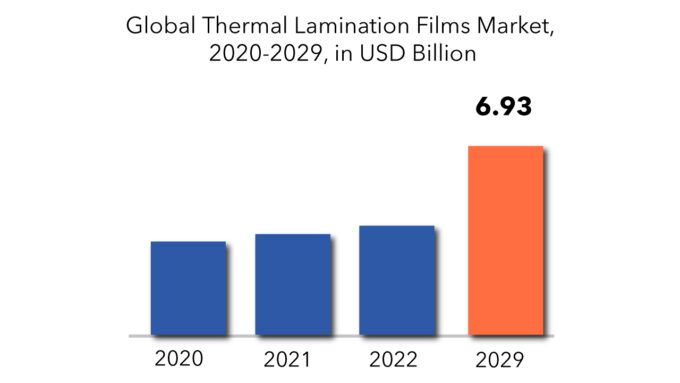
Thermal Lamination Films Market Players
The major players operating in the global thermal lamination films industry include Jindal Poly Films Ltd, COSMO Films (GBC), Polyplex, Transcendia, Shagun film enterprises, Flex Films, Taghleef Industries SLU, Drytac Corporation, J-Film Corporation, Beijing Kangde Xin Composite Material Company LLC (KDX America), Guangdong EKO Film Manufacture Co., Ltd., D&K Group Inc., GMP Co., Ltd, and others. 21-09-20 Cosmo Films Launches BOPP Clear Thermal Lamination Film with Antimicrobial Properties. Cosmo Films Ltd., a global leader in specialty films for packaging, lamination & labeling applications and synthetic paper, has developed a novel BOPP based clear thermal lamination antimicrobial film.Who Should Buy? Or Key stakeholders
- Research and development
- Manufacturing
- End Use industries
- Automotive
- Food and Beverages
- Pharmaceutical
- Aviation
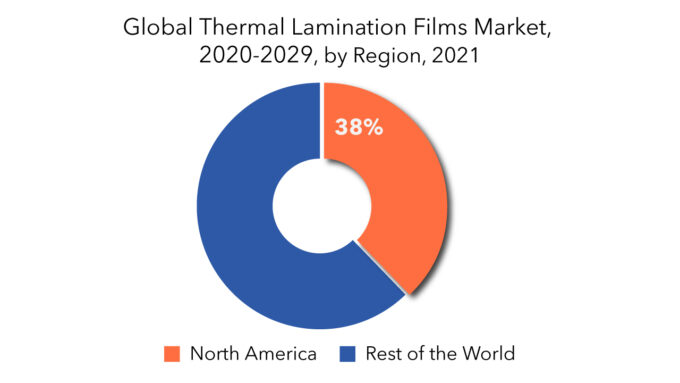
Thermal Lamination Films Market Regional Analysis
Geographically, the thermal lamination films market is segmented into North America, South America, Europe, APAC and MEA.- North America: includes the US, Canada, Mexico
- Europe: includes UK, Germany, France, Italy, Spain, Russia, and Rest of Europe
- Asia Pacific: includes China, Japan, South Korea, India, Australia, ASEAN and Rest of APAC
- South America: includes Brazil, Argentina and Rest of South America
- Middle East & Africa: includes Turkey, UAE, Saudi Arabia, South Africa, and Rest of MEA
Key Market Segments: Thermal Lamination Films Market
Thermal Lamination Films Market by Type, 2022-2029, (USD Million)- BOPP Based Thermal Lamination Films
- BOPET Based Thermal Lamination Films
- BOPA Based Thermal Lamination Films
- Others
- Industrial Printing
- Commercial Printing
- Others
- North America
- Europe
- Asia Pacific
- South America
- Middle East And Africa
[video width="1920" height="1080" mp4="https://gwsdigital.com/exactitudeconsultancy/wp-content/uploads/2023/01/Thermal-Lamination-Films-Market.mp4" poster="https://gwsdigital.com/exactitudeconsultancy/wp-content/uploads/2022/02/exactitude-1-3.jpg"][/video]
Key Question Answered
- What is the current scenario of the global thermal lamination films market?
- What are the emerging technologies for the development of thermal lamination films devices?
- What are the historical size and the present size of the market segments and their future potential?
- What are the major catalysts for the market and their impact during the short, medium, and long term?
- What are the evolving opportunities for the players in the market?
- Which are the key regions from the investment perspective?
- What are the key strategies being adopted by the major players to up their market shares?
DOWNLOAD FREE SAMPLE REPORT
License Type
SPEAK WITH OUR ANALYST
Want to know more about the report or any specific requirement?
WANT TO CUSTOMIZE THE REPORT?
Our Clients Speak
We asked them to research ‘ Equipment market’ all over the world, and their whole arrangement was helpful to us. thehealthanalytics.com insightful analysis and reports contributed to our current analysis and in creating a future strategy. Besides, the te
Yosuke Mitsui
Senior Associate Construction Equipment Sales & Marketing
We asked them to research ‘Equipment market’ all over the world, and their whole arrangement was helpful to us. thehealthanalytics.com insightful analysis and reports contributed to our current analysis and in creating a future strategy. Besides, the te