

Base Year Value ()
x.x %
x.x %
CAGR ()
x.x %
x.x %
Forecast Year Value ()
x.x %
x.x %
Historical Data Period
Largest Region
Forecast Period
Mercado de lentes AR por tipo (FOV 15°, FOV 23-30°, FOV 40°), aplicación (juegos, militar, educación, transporte, fabricación, medicina) y región (Norteamérica, Europa, Asia Pacífico, Sudamérica, Oriente Medio y África), tendencias globales y pronóstico de 2023 a 2028
Instant access to hundreds of data points and trends
- Market estimates from 2014-2029
- Competitive analysis, industry segmentation, financial benchmarks
- Incorporates SWOT, Porter's Five Forces and risk management frameworks
- PDF report or online database with Word, Excel and PowerPoint export options
- 100% money back guarantee
Descripción general del mercado de lentes AR
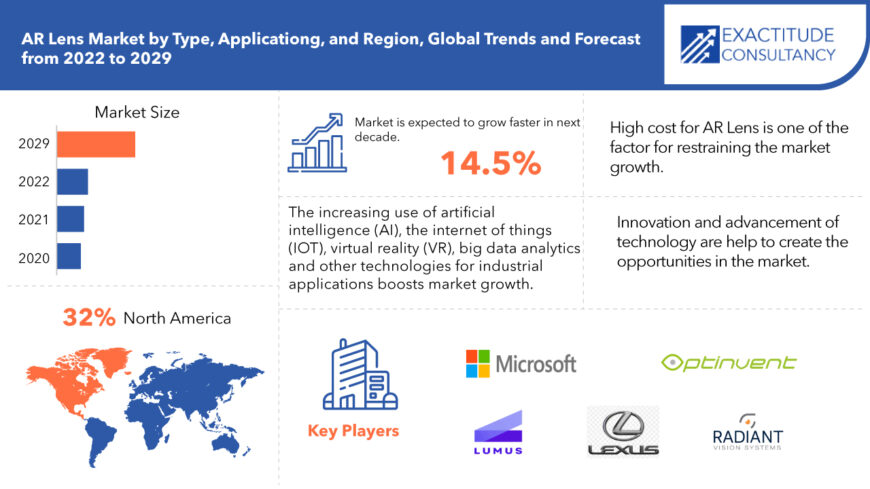
Se espera que el mercado global de lentes AR crezca a una tasa de crecimiento anual compuesta (CAGR) del 14,5 % entre 2023 y 2028. Se espera que alcance más de USD 910 millones para 2028 desde USD 280 millones en 2022.
Se espera que el mercado global de lentes de contacto aumentadas crezca rápidamente debido al creciente mercado de RA en todo el mundo. Estas lentes se utilizan en la industria del entretenimiento para experiencias interactivas como la transmisión de un concierto, así como en la industria de la educación para experiencias colaborativas. Las lentes se pueden utilizar en una variedad de aplicaciones móviles, incluida la navegación, los juegos , la educación y la atención médica. Teniendo en cuenta todos estos factores, se espera que el mercado de lentes de contacto de realidad aumentada y virtual se expanda significativamente.
Las lentes de cámara son un componente importante de las experiencias de realidad aumentada que ofrecen los Head-up Displays y los Head-Mounted Displays . La creciente inversión en lentes de realidad aumentada y realidad virtual, combinada con la creciente demanda de AR VR en la atención médica, el comercio minorista y la industria de consumo, está impulsando el crecimiento del ecosistema del mercado de lentes de realidad aumentada y realidad virtual.
| ATRIBUTO | DETALLES |
| Periodo de estudio | 2022-2028 |
| Año base | 2022 |
| Año estimado | 2023 |
| Año pronosticado | 2023-2028 |
| Periodo histórico | 2018-2021 |
| Unidad | Valor (millones de USD) |
| Segmentación | Por tipo, por aplicación, por región |
| Por tipo |
|
| Por aplicación |
|
| Por región |
|
Las empresas del ecosistema del mercado de lentes de realidad aumentada invierten constantemente en tecnologías para hacer que las lentes sean más livianas, delgadas y rentables. Digilens, uno de los principales actores del mercado, presentó una lente de plástico asequible y duradera capaz de competir con el vidrio de precisión en términos de brillo, claridad y color. Las empresas también están formando alianzas estratégicas con proveedores de materias primas y fabricantes de productos.
Los fabricantes también están considerando tecnologías avanzadas como la impresión 3D para la producción de lentes de realidad aumentada y realidad virtual. Luxexcel, un fabricante holandés de impresoras 3D de lentes, recibió una inversión de capital de US$4,7 millones de Innovation Industries en octubre de 2017.
El mercado de lentes de contacto de realidad aumentada y virtual estará liderado por el segmento de lentes de contacto AR. El mercado de lentes de contacto de realidad aumentada está respaldado por un mercado de realidad aumentada en rápido crecimiento. Las crecientes inversiones de los gigantes de la tecnología están impulsando el mercado de lentes de contacto aumentadas. En particular, la creciente demanda de arquitectura de realidad aumentada, el rápido crecimiento en la industria de viajes y turismo y la expansión de oportunidades en la industria empresarial están impulsando el mercado de lentes de contacto AR. Como resultado de estos factores, las lentes de contacto AR seguirán dominando el mercado.
El brote de COVID-19 ha traído consigo una recesión global que ha afectado a varias industrias. Además de este impacto, la pandemia de COVID ha creado algunas nuevas oportunidades comerciales para el mercado de lentes de realidad aumentada. Debido a la pandemia, el panorama competitivo general y la dinámica del mercado de lentes de realidad aumentada se han visto alterados. Todas estas disrupciones e impactos se analizan de manera cuantificable en este informe, que está respaldado por tendencias del mercado, eventos y análisis de cambios en los ingresos. El análisis del impacto de COVID también incluye ajustes estratégicos para los actores de nivel 1, 2 y 3 del mercado de lentes de realidad aumentada.
Factores como la creciente demanda de productos electrónicos de consumo, la mayor demanda de dispositivos y aplicaciones de RA en el ámbito de la atención sanitaria, el comercio minorista, el entretenimiento de juegos, el comercio electrónico y otros están impulsando el crecimiento del mercado. El uso cada vez mayor de RA en aplicaciones automotrices, como dispositivos HMD y dispositivos HUD para control de crucero, cambio de carril, navegación y otras aplicaciones, impulsará significativamente el mercado de lentes de contacto de RA. Se espera que el uso de lentes Fresnel en dispositivos HMD de RA, en particular, impulse la industria de lentes de contacto de RA.
[título id="attachment_12611" align="alignnone" width="870"]
Frequently Asked Questions
● What is the worth of AR lens market?
The global AR lens market is expected to grow at 14.5% CAGR from 2019 to 2028. It is expected to reach above USD 910 million by 2028 from USD 280 million in 2019.
● What is the size of the North America AR lens market industry?
North America held more than 32% of the AR lens market revenue share in 2021 and will witness expansion in the forecast period.
● What are some of the market's driving forces?
Factors such as rising consumer electronics demand, increased demand for AR devices and applications in healthcare, retail, gaming entertainment, e-commerce, and others are driving market growth. The increasing use of AR in automotive applications such as HMD devices and HUD devices for cruise control, lane departure, navigation, and other applications will drive the AR Contact Lens market significantly.
● Which are the top companies to hold the market share in AR lens market?
The AR lens market key players include Microsoft, LX-AR, Lumus, Optinvent, Optics Division, Radiant Vision Systems, Huynew, Crystal Optech, Vuzix, North Ocean Photonics, Holoptics(Luminit), Beijing Ned, Lochn Optics.
● What is the leading application of AR lens market?
The leading application of AR lens market in 2020 was gaming. It has the biggest market share.
● Which is the largest regional market for AR lens market?
North America held the largest market share of AR lens market.
AR Lens Market Segment Analysis
Based on product, the AR Lens market is segmented into FOV 15°, FOV 23-30°, FOV 40° and other. The maximum area of a sample that a camera can image is referred to as the field of view (FOV). It is related to two factors: the focal length of the lens and the size of the sensor. The AR Lens products segment dominated the AR Lens Market. Diabetes incidences are expected to rise, and new product launches will drive segment growth.
The augmented reality contact lens segment accounted for the majority of the augmented and virtual reality contact lens market. Furthermore, it is expected to see significant market growth. Augmented reality technology is written in a specialised programming language that allows the creator to include embedded animation as well as visual knowledge in the computer programme. AR implementations typically include a global positioning system (GPS) for smartphones to locate and track the user's exact location. Some AR software is used in military training, which may include the identification of artefacts and the identification of movements.
On the basis of application, the AR Lens market is segmented into Gaming, Military, Education, Transportation, Manufacturing, Medicine. The growing use of AR Lenses in gaming, military, education, transportation, manufacturing, medicine, and other industries is propelling the global AR Lens market forward.
In most mixed reality games in the physical world, simulated items and characters are activated by geo-location or unique symbols, such as QR codes. In some augmented reality games, such as Temple Treasure Hunt, players can create their own quest paths, which can be a scenario for a team-building exercise, a group, or simply a way to brighten up the of day-to-day drive to work. Game developers, entertainment studios, music and theatre producers, and others do not shy away from incorporating cutting-edge technology to create an exciting performance that draws millions of spectators and tourists.
[caption id="attachment_12677" align="aligncenter" width="680"]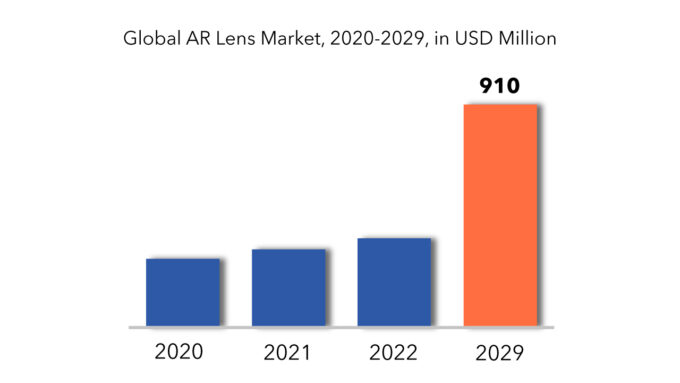
AR Lens Market Players
The AR lens market key players include Microsoft, LX-AR, Lumus, Optinvent, Optics Division, Radiant Vision Systems, Huynew, Crystal Optech, Vuzix, North Ocean Photonics, Holoptics (Luminit), Beijing Ned, Lochn Optics.
- From October 11th to 14th, the 2020 International Conference on Display Technology (ICDT 2020) was held in Wuhan. As the only independent brand display technology conference held outside the United States by the Society for Information Display (SID), this conference gathered Experts and scholars from the display industry at home and abroad, well-known companies in the industry, and countless industry professionals participated online to explore the technological development trend of the display industry.
Who Should Buy? Or Key Stakeholders
- Gaming Companies
- Lens Company
- Education Firm
- Government and research organizations
- Investment research firms
- Others
AR Lens Market Regional Analysis
The AR lens market by region includes North America, Asia-Pacific (APAC), Europe, South America, and Middle East & Africa (MEA).
- North America: includes the US, Canada, Mexico
- Asia Pacific: includes China, Japan, South Korea, India, Australia, ASEAN and Rest of APAC
- Europe: includes UK, Germany, France, Italy, Spain, Russia, and Rest of Europe
- South America: includes Brazil, Argentina and Rest of South America
- Middle East & Africa: includes Turkey, UAE, Saudi Arabia, South Africa, and Rest of MEA
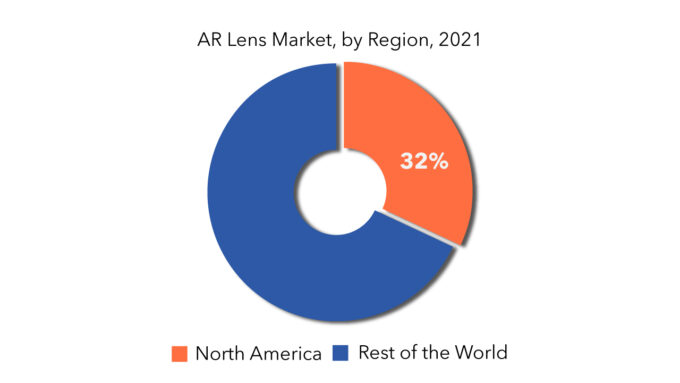
North America dominates the augmented contact lens market. The market in this region is primarily driven by increased adoption of AR technology and increased R&D investment by major players. During the forecast period, Asia Pacific is expected to have the highest market growth. With a growing technological user base in the region, particularly in developing countries such as India and China. Furthermore, the region will experience industrial expansion as a result of new technological advancements, which will drive the augmented contact lens market. As a result of these factors, Asia Pacific will grow at the fastest CAGR during the forecast period.
Key Market Segments: AR Lens Market
AR Lens Market by Type, 2022-2028, (In USD Million)- FOV 15°
- FOV 23-30°
- FOV 40°
- Gaming
- Military
- Education
- Transportation
- Manufacturing
- Medicine
- North America
- Europe
- Asia Pacific
- South America
- Middle East and Africa
[video width="1920" height="1080" mp4="https://gwsdigital.com/exactitudeconsultancy/wp-content/uploads/2023/01/AR-Lens-Market.mp4" poster="https://gwsdigital.com/exactitudeconsultancy/wp-content/uploads/2022/02/exactitude-1-3.jpg"][/video]
- Introducción
- Definición de mercado
- Segmentación del mercado
- Cronología de la investigación
- Supuestos y limitaciones
- Metodología de la investigación
- Minería de datos
- Investigación secundaria
- Investigación primaria
- Asesoramiento de expertos en la materia
- Controles de calidad
- Revisión final
- Triangulación de datos
- Enfoque de abajo hacia arriba
- Enfoque de arriba hacia abajo
- Flujo de investigación
- Fuentes de datos
- Minería de datos
- Resumen ejecutivo
- Descripción general del mercado
- Perspectivas del mercado mundial de lentes AR
- Factores impulsores del mercado
- Restricciones del mercado
- Oportunidades de mercado
- Impacto de Covid-19 en el mercado de lentes AR
- Modelo de las cinco fuerzas de Porter
- Amenaza de nuevos participantes
- Amenaza de sustitutos
- Poder de negociación de los proveedores
- Poder de negociación de los clientes
- Grado de competencia
- Análisis de la cadena de valor de la industria
- Perspectivas del mercado mundial de lentes AR
- Mercado mundial de lentes AR por tipo
- Campo de visión 15°
- Campo de visión 23-30°
- Campo de visión 40°
- Mercado global de lentes AR por aplicación
- Juego de azar
- Militar
- Educación
- Transporte
- Fabricación
- Medicamento
- Mercado mundial de lentes AR, por región
- América del norte
- A nosotros
- Canadá
- México
- Sudamerica
- Brasil
- Argentina
- Colombia
- Resto de Sudamérica
- Europa
- Alemania
- Reino Unido
- Francia
- Italia
- España
- Rusia
- Resto de Europa
- Asia Pacífico
- India
- Porcelana
- Japón
- Corea del Sur
- Australia
- Sudeste asiático
- Resto de Asia Pacífico
- Middle East and Africa
- UAE
- Saudi Arabia
- South Africa
- Rest Of Middle East and Africa
- América del norte
- Company Profiles*(Business Overview, Company Snapshot, Products Offered, Recent Developments)
- Microsoft
- LX-AR
- Lumus
- Optinvent
- Optics Division
- Radiant Vision Systems
- Huynew
- Crystal Optech
- Vuzix
- North Ocean Photonics
- Holoptics(Luminit)
- Beijing Ned
- Lochn Optics *The Company List Is Indicative
LIST OF TABLES
TABLE 1 GLOBAL AR LENS MARKET BY TYPE (USD MILLIONS) 2019-2028
TABLE 2 GLOBAL AR LENS MARKET BY TYPE (THOUSAND UNITS) 2019-2028
TABLE 3 GLOBAL AR LENS MARKET BY APPLICATION (USD MILLIONS) 2019-2028
TABLE 4 GLOBAL AR LENS MARKET BY APPLICATION (THOUSAND UNITS) 2019-2028
TABLE 5 GLOBAL AR LENS MARKET BY REGION (USD MILLIONS) 2019-2028
TABLE 6 GLOBAL AR LENS MARKET BY REGION (THOUSAND UNITS) 2019-2028
TABLE 7 US AR LENS MARKET BY TYPE (USD MILLIONS) 2019-2028
TABLE 8 US AR LENS MARKET BY TYPE (THOUSAND UNITS) 2019-2028
TABLE 9 US AR LENS MARKET BY APPLICATION (USD MILLIONS) 2019-2028
TABLE 10 US AR LENS MARKET BY APPLICATION (THOUSAND UNITS) 2019-2028
TABLE 11 CANADA AR LENS MARKET BY TYPE (USD MILLIONS) 2019-2028
TABLE 12 CANADA AR LENS MARKET BY TYPE (THOUSAND UNITS) 2019-2028
TABLE 13 CANADA AR LENS MARKET BY APPLICATION (USD MILLIONS) 2019-2028
TABLE 14 CANADA AR LENS MARKET BY APPLICATION (THOUSAND UNITS) 2019-2028
TABLE 15 MEXICO AR LENS MARKET BY TYPE (USD MILLIONS) 2019-2028
TABLE 16 MEXICO AR LENS MARKET BY TYPE (THOUSAND UNITS) 2019-2028
TABLE 17 MEXICO AR LENS MARKET BY APPLICATION (USD MILLIONS) 2019-2028
TABLE 18 MEXICO AR LENS MARKET BY APPLICATION (THOUSAND UNITS) 2019-2028
TABLE 19 BRAZIL AR LENS MARKET BY TYPE (USD MILLIONS) 2019-2028
TABLE 20 BRAZIL AR LENS MARKET BY TYPE (THOUSAND UNITS) 2019-2028
TABLE 21 BRAZIL AR LENS MARKET BY APPLICATION (USD MILLIONS) 2019-2028
TABLE 22 BRAZIL AR LENS MARKET BY APPLICATION (THOUSAND UNITS) 2019-2028
TABLE 23 ARGENTINA AR LENS MARKET BY TYPE (USD MILLIONS) 2019-2028
TABLE 24 ARGENTINA AR LENS MARKET BY TYPE (THOUSAND UNITS) 2019-2028
TABLE 25 ARGENTINA AR LENS MARKET BY APPLICATION (USD MILLIONS) 2019-2028
TABLE 26 ARGENTINA AR LENS MARKET BY APPLICATION (THOUSAND UNITS) 2019-2028
TABLE 27 COLOMBIA AR LENS MARKET BY TYPE (USD MILLIONS) 2019-2028
TABLE 28 COLOMBIA AR LENS MARKET BY TYPE (THOUSAND UNITS) 2019-2028
TABLE 29 COLOMBIA AR LENS MARKET BY APPLICATION (USD MILLIONS) 2019-2028
TABLE 30 COLOMBIA AR LENS MARKET BY APPLICATION (THOUSAND UNITS) 2019-2028
TABLE 31 REST OF SOUTH AMERICA AR LENS MARKET BY TYPE (USD MILLIONS) 2019-2028
TABLE 32 REST OF SOUTH AMERICA AR LENS MARKET BY TYPE (THOUSAND UNITS) 2019-2028
TABLE 33 REST OF SOUTH AMERICA AR LENS MARKET BY APPLICATION (USD MILLIONS) 2019-2028
TABLE 34 REST OF SOUTH AMERICA AR LENS MARKET BY APPLICATION (THOUSAND UNITS) 2019-2028
TABLE 35 INDIA AR LENS MARKET BY TYPE (USD MILLIONS) 2019-2028
TABLE 36 INDIA AR LENS MARKET BY TYPE (THOUSAND UNITS) 2019-2028
TABLE 37 INDIA AR LENS MARKET BY APPLICATION (USD MILLIONS) 2019-2028
TABLE 38 INDIA AR LENS MARKET BY APPLICATION (THOUSAND UNITS) 2019-2028
TABLE 39 CHINA AR LENS MARKET BY TYPE (USD MILLIONS) 2019-2028
TABLE 40 CHINA AR LENS MARKET BY TYPE (THOUSAND UNITS) 2019-2028
TABLE 41 CHINA AR LENS MARKET BY APPLICATION (USD MILLIONS) 2019-2028
TABLE 42 CHINA AR LENS MARKET BY APPLICATION (THOUSAND UNITS) 2019-2028
TABLE 43 JAPAN AR LENS MARKET BY TYPE (USD MILLIONS) 2019-2028
TABLE 44 JAPAN AR LENS MARKET BY TYPE (THOUSAND UNITS) 2019-2028
TABLE 45 JAPAN AR LENS MARKET BY APPLICATION (USD MILLIONS) 2019-2028
TABLE 46 JAPAN AR LENS MARKET BY APPLICATION (THOUSAND UNITS) 2019-2028
TABLE 47 SOUTH KOREA AR LENS MARKET BY TYPE (USD MILLIONS) 2019-2028
TABLE 48 SOUTH KOREA AR LENS MARKET BY TYPE (THOUSAND UNITS) 2019-2028
TABLE 49 SOUTH KOREA AR LENS MARKET BY APPLICATION (USD MILLIONS) 2019-2028
TABLE 50 SOUTH KOREA AR LENS MARKET BY APPLICATION (THOUSAND UNITS) 2019-2028
TABLE 51 AUSTRALIA AR LENS MARKET BY TYPE (USD MILLIONS) 2019-2028
TABLE 52 AUSTRALIA AR LENS MARKET BY TYPE (THOUSAND UNITS) 2019-2028
TABLE 53 AUSTRALIA AR LENS MARKET BY APPLICATION (USD MILLIONS) 2019-2028
TABLE 54 AUSTRALIA AR LENS MARKET BY APPLICATION (THOUSAND UNITS) 2019-2028
TABLE 55 SOUTH-EAST ASIA AR LENS MARKET BY TYPE (USD MILLIONS) 2019-2028
TABLE 56 SOUTH-EAST ASIA AR LENS MARKET BY TYPE (THOUSAND UNITS) 2019-2028
TABLE 57 SOUTH-EAST ASIA AR LENS MARKET BY APPLICATION (USD MILLIONS) 2019-2028
TABLE 58 SOUTH-EAST ASIA AR LENS MARKET BY APPLICATION (THOUSAND UNITS) 2019-2028
TABLE 59 REST OF ASIA PACIFIC AR LENS MARKET BY TYPE (USD MILLIONS) 2019-2028
TABLE 60 REST OF ASIA PACIFIC AR LENS MARKET BY TYPE (THOUSAND UNITS) 2019-2028
TABLE 61 REST OF ASIA PACIFIC AR LENS MARKET BY APPLICATION (USD MILLIONS) 2019-2028
TABLE 62 REST OF ASIA PACIFIC AR LENS MARKET BY APPLICATION (THOUSAND UNITS) 2019-2028
TABLE 63 GERMANY AR LENS MARKET BY TYPE (USD MILLIONS) 2019-2028
TABLE 64 GERMANY AR LENS MARKET BY TYPE (THOUSAND UNITS) 2019-2028
TABLE 65 GERMANY AR LENS MARKET BY APPLICATION (USD MILLIONS) 2019-2028
TABLE 66 GERMANY AR LENS MARKET BY APPLICATION (THOUSAND UNITS) 2019-2028
TABLE 67 UK AR LENS MARKET BY TYPE (USD MILLIONS) 2019-2028
TABLE 68 UK AR LENS MARKET BY TYPE (THOUSAND UNITS) 2019-2028
TABLE 69 UK AR LENS MARKET BY APPLICATION (USD MILLIONS) 2019-2028
TABLE 70 UK AR LENS MARKET BY APPLICATION (THOUSAND UNITS) 2019-2028
TABLE 71 FRANCE AR LENS MARKET BY TYPE (USD MILLIONS) 2019-2028
TABLE 72 FRANCE AR LENS MARKET BY TYPE (THOUSAND UNITS) 2019-2028
TABLE 73 FRANCE AR LENS MARKET BY APPLICATION (USD MILLIONS) 2019-2028
TABLE 74 FRANCE AR LENS MARKET BY APPLICATION (THOUSAND UNITS) 2019-2028
TABLE 75 ITALY AR LENS MARKET BY TYPE (USD MILLIONS) 2019-2028
TABLE 76 ITALY AR LENS MARKET BY TYPE (THOUSAND UNITS) 2019-2028
TABLE 77 ITALY AR LENS MARKET BY APPLICATION (USD MILLIONS) 2019-2028
TABLE 78 ITALY AR LENS MARKET BY APPLICATION (THOUSAND UNITS) 2019-2028
TABLE 79 SPAIN AR LENS MARKET BY TYPE (USD MILLIONS) 2019-2028
TABLE 80 SPAIN AR LENS MARKET BY TYPE (THOUSAND UNITS) 2019-2028
TABLE 81 SPAIN AR LENS MARKET BY APPLICATION (USD MILLIONS) 2019-2028
TABLE 82 SPAIN AR LENS MARKET BY APPLICATION (THOUSAND UNITS) 2019-2028
TABLE 83 RUSSIA AR LENS MARKET BY TYPE (USD MILLIONS) 2019-2028
TABLE 84 RUSSIA AR LENS MARKET BY TYPE (THOUSAND UNITS) 2019-2028
TABLE 85 RUSSIA AR LENS MARKET BY APPLICATION (USD MILLIONS) 2019-2028
TABLE 86 RUSSIA AR LENS MARKET BY APPLICATION (THOUSAND UNITS) 2019-2028
TABLE 87 REST OF EUROPE AR LENS MARKET BY TYPE (USD MILLIONS) 2019-2028
TABLE 88 REST OF EUROPE AR LENS MARKET BY TYPE (THOUSAND UNITS) 2019-2028
TABLE 89 REST OF EUROPE AR LENS MARKET BY APPLICATION (USD MILLIONS) 2019-2028
TABLE 90 REST OF EUROPE AR LENS MARKET BY APPLICATION (THOUSAND UNITS) 2019-2028
TABLE 91 UAE AR LENS MARKET BY TYPE (USD MILLIONS) 2019-2028
TABLE 92 UAE AR LENS MARKET BY TYPE (THOUSAND UNITS) 2019-2028
TABLE 93 UAE AR LENS MARKET BY APPLICATION (USD MILLIONS) 2019-2028
TABLE 94 UAE AR LENS MARKET BY APPLICATION (THOUSAND UNITS) 2019-2028
TABLE 95 SAUDI ARABIA AR LENS MARKET BY TYPE (USD MILLIONS) 2019-2028
TABLE 96 SAUDI ARABIA AR LENS MARKET BY TYPE (THOUSAND UNITS) 2019-2028
TABLE 97 SAUDI ARABIA AR LENS MARKET BY APPLICATION (USD MILLIONS) 2019-2028
TABLE 98 SAUDI ARABIA AR LENS MARKET BY APPLICATION (THOUSAND UNITS) 2019-2028
TABLE 99 SOUTH AFRICA AR LENS MARKET BY TYPE (USD MILLIONS) 2019-2028
TABLE 100 SOUTH AFRICA AR LENS MARKET BY TYPE (THOUSAND UNITS) 2019-2028
TABLE 101 SOUTH AFRICA AR LENS MARKET BY APPLICATION (USD MILLIONS) 2019-2028
TABLE 102 SOUTH AFRICA AR LENS MARKET BY APPLICATION (THOUSAND UNITS) 2019-2028
TABLE 103 REST OF MIDDLE EAST AND AFRICA AR LENS MARKET BY TYPE (USD MILLIONS) 2019-2028
TABLE 104 REST OF MIDDLE EAST AND AFRICA AR LENS MARKET BY TYPE (THOUSAND UNITS) 2019-2028
TABLE 105 REST OF MIDDLE EAST AND AFRICA AR LENS MARKET BY APPLICATION (USD MILLIONS) 2019-2028
TABLE 106 REST OF MIDDLE EAST AND AFRICA AR LENS MARKET BY APPLICATION (THOUSAND UNITS) 2019-2028
LIST OF FIGURES
FIGURE 1 MARKET DYNAMICS
FIGURE 2 MARKET SEGMENTATION
FIGURE 3 REPORT TIMELINES: YEARS CONSIDERED
FIGURE 4 DATA TRIANGULATION
FIGURE 5 BOTTOM-UP APPROACH
FIGURE 6 TOP-DOWN APPROACH
FIGURE 7 RESEARCH FLOW
FIGURE 8 GLOBAL AR LENS MARKET BY PRODUCT, USD MILLION, 2019-2028
FIGURE 9 GLOBAL AR LENS MARKET BY APPLICATION USD MILLION, 2019-2028
FIGURE 10 GLOBAL AR LENS MARKET BY REGION, USD MILLION, 2019-2028
FIGURE 11 PORTER’S FIVE FORCES MODEL
FIGURE 12 NORTH AMERICA AR LENS MARKET SNAPSHOT
FIGURE 13 EUROPE AR LENS MARKET SNAPSHOT
FIGURE 14 ASIA PACIFIC AR LENS MARKET SNAPSHOT
FIGURE 15 SOUTH AMERICA AR LENS MARKET SNAPSHOT
FIGURE 16 MIDDLE EAST & AFRICA AR LENS MARKET SNAPSHOT
FIGURE 17 MICROSOFT: COMPANY SNAPSHOT
FIGURE 18 LX-AR: COMPANY SNAPSHOT
FIGURE 19 LUMUS: COMPANY SNAPSHOT
FIGURE 20 OPTINVENT: COMPANY SNAPSHOT
FIGURE 21 OPTICS DIVISION: COMPANY SNAPSHOT
FIGURE 22 RADIANT VISION SYSTEMS: COMPANY SNAPSHOT
FIGURE 23 HUYNEW: COMPANY SNAPSHOT
FIGURE 24 CRYSTAL OPTECH: COMPANY SNAPSHOT
FIGURE 25 VUZIX: COMPANY SNAPSHOT
FIGURE 26 NORTH OCEAN PHOTONICS: COMPANY SNAPSHOT
FIGURE 27 HOLOPTICS(LUMINIT): COMPANY SNAPSHOT
FIGURE 28 BEIJING NED: COMPANY SNAPSHOT
FIGURE 29 LOCHN OPTICS: COMPANY SNAPSHOT
DOWNLOAD FREE SAMPLE REPORT
License Type
SPEAK WITH OUR ANALYST
Want to know more about the report or any specific requirement?
WANT TO CUSTOMIZE THE REPORT?
Our Clients Speak
We asked them to research ‘ Equipment market’ all over the world, and their whole arrangement was helpful to us. thehealthanalytics.com insightful analysis and reports contributed to our current analysis and in creating a future strategy. Besides, the te
Yosuke Mitsui
Senior Associate Construction Equipment Sales & Marketing
We asked them to research ‘Equipment market’ all over the world, and their whole arrangement was helpful to us. thehealthanalytics.com insightful analysis and reports contributed to our current analysis and in creating a future strategy. Besides, the te