

Base Year Value ()
x.x %
x.x %
CAGR ()
x.x %
x.x %
Forecast Year Value ()
x.x %
x.x %
Historical Data Period
Largest Region
Forecast Period
Mercado global de terapias basadas en células madre autólogas y no basadas en células madre por tipo (células madre autólogas y células no madre autólogas), por aplicación (cáncer, trastornos neurodegenerativos, enfermedades cardiovasculares, enfermedades ortopédicas) y región, tendencias globales y pronóstico de 2023 a 2029.
Instant access to hundreds of data points and trends
- Market estimates from 2014-2029
- Competitive analysis, industry segmentation, financial benchmarks
- Incorporates SWOT, Porter's Five Forces and risk management frameworks
- PDF report or online database with Word, Excel and PowerPoint export options
- 100% money back guarantee
Descripción general del mercado de terapias basadas en células madre autólogas y no basadas en células madre
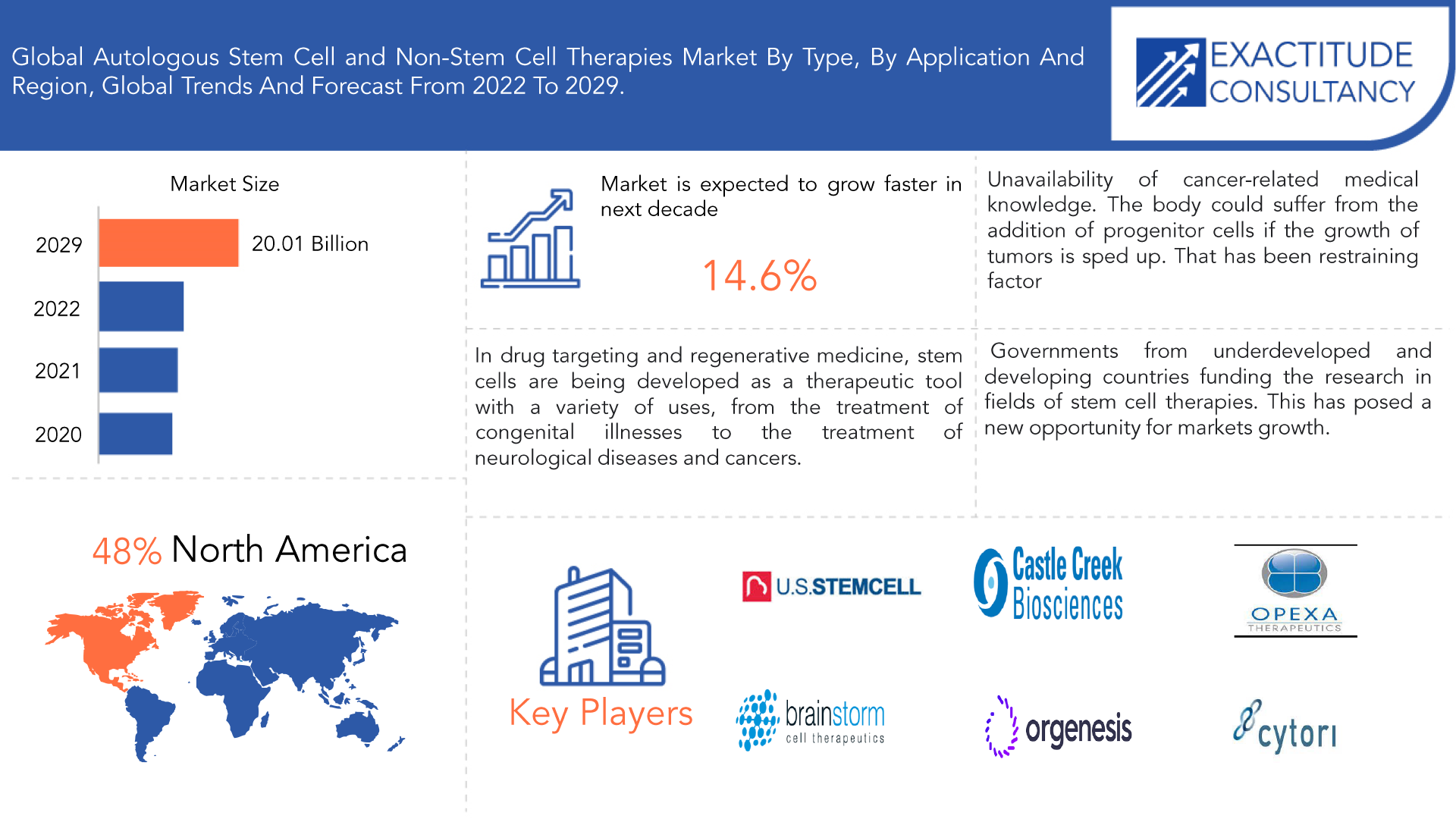
Se espera que el mercado global de terapias basadas en células madre autólogas y no basadas en células madre crezca a una tasa de crecimiento anual compuesta (CAGR) del 14,60 % entre 2020 y 2029. Se espera que alcance más de USD 20 010 millones para 2029 desde USD 5870 millones en 2020.
En el trasplante autólogo de células madre , también denominado autotrasplante de células madre autólogas, autógeno o autotrasplante de células madre, las células indiferenciadas o células madre se extraen de una persona, se reúnen y luego se devuelven a la misma persona. En ciertos casos, las células cardíacas se utilizan con éxito para reparar el daño causado por ataques cardíacos, a pesar de que las células madre hematopoyéticas (las precursoras de las células sanguíneas) son las más utilizadas en el trasplante de células madre hematopoyéticas. Existen dos tipos de trasplante de células madre: el trasplante alogénico de células madre y el trasplante autólogo de células madre. En este último, el donante y el receptor de células madre son personas diferentes.
| ATRIBUTO | DETALLES |
| Periodo de estudio | 2020-2029 |
| Año base | 2021 |
| Año estimado | 2022 |
| Año pronosticado | 2022-2029 |
| Periodo histórico | 2018-2020 |
| Unidad | Valor (miles de millones de USD) |
| Segmentación | Por tipo, aplicación y región. |
| Por tipo |
|
| Por aplicación |
|
| Por región |
|
Se ha demostrado que la tecnología de células madre es un campo en rápida evolución con importantes aplicaciones en ingeniería de tejidos, terapia génica, terapias celulares , medicina regenerativa, biología celular del desarrollo y nanotecnología, entre otros campos. Las células madre pueden asumir el papel de células y tejidos en el tratamiento de una variedad de enfermedades, incluida la enfermedad de Parkinson, la artritis y la lesión de la médula espinal, entre otras. Con capacidades que incluyen la autorrenovación, la pluripotencia y la diferenciación, las células madre desempeñan un papel clave en la regeneración de tejidos y órganos. En la medicina regenerativa y de focalización de fármacos, las células madre se están desarrollando como una herramienta terapéutica con una variedad de usos, desde el tratamiento de enfermedades congénitas hasta el tratamiento de enfermedades neurológicas y cánceres. Las células madre ahora tienen un futuro firme en la medicina debido a estos avances técnicos.
Falta de conocimientos médicos sobre el cáncer. El organismo podría verse afectado por la adición de células progenitoras si se acelera el crecimiento de los tumores. Por ello, actualmente se requieren más estudios e investigaciones para desarrollar terapias celulares para enfermedades relacionadas con el cáncer. La calidad de las células madre es muy importante cuando se trata de células madre. En comparación con las personas más jóvenes, los adultos mayores tienen una menor capacidad para producir células madre de la médula ósea. La probabilidad de que un paciente produzca una gran cantidad de células madre disminuye a partir de cierta edad.
Los gobiernos de países subdesarrollados y en desarrollo financian la investigación en el campo de las terapias con células madre. Estas naciones tienen una atención sanitaria deficiente y esto ofrece una gran oportunidad, ya que se prevé que la necesidad de servicios sanitarios avanzados y equipos médicos novedosos en los respectivos sistemas sanitarios de estas naciones se verá impulsada por razones como el aumento de la población geriátrica, la creciente incidencia de enfermedades específicas y la creciente demanda de procedimientos quirúrgicos. En los próximos años, se prevé que esto presente a los participantes en el mercado de terapias basadas en células madre autólogas y no basadas en células madre perspectivas de crecimiento prospectivas.
Casi todas las industrias se vieron afectadas por el COVID-19, un desastre de salud pública mundial que nunca antes se había visto. Durante el transcurso del período de pronóstico, se espera que los efectos tengan un efecto a largo plazo en la expansión de varias industrias de uso final. Pero para el mercado de terapias basadas en células madre autólogas y no basadas en células madre, fue un mercado diferente al que se vio durante el período de pandemia. La razón del crecimiento durante la pandemia es la mayor adopción de terapias basadas en células madre autólogas y no basadas en células madre en muchos ensayos clínicos para encontrar una solución para la investigación de Covid 19 que se motivó a utilizar este método para que brinde una solución segura a largo plazo para Covid 19.
[título id="attachment_14685" align="aligncenter" width="1920"]
Frequently Asked Questions
• What is the worth of the Global Autologous Stem Cell and Non-Stem Cell Based Therapies Market?
The Global Autologous Stem Cell and Non-Stem Cell Based Therapies Market is expected to grow at 14.6 % CAGR from 2020 to 2029. It is expected to reach above USD 20.01 Billion by 2029 from USD 5.87 Billion in 2020.
• What is the size of the North America Autologous Stem Cell and Non-Stem Cell Based Therapies Market?
North America held more than 48% of the Autologous Stem Cell and Non-Stem Cell Based Therapies Market revenue share in 2020 and will witness tremendous expansion during the forecast period.
• What are some of the market's driving forces?
One of the primary drivers is the increasing prevalence of chronic diseases such as cancer, cardiovascular diseases, and neurological disorders, which require innovative and effective treatments. Stem cell therapies have the potential to address unmet medical needs and provide new treatment options for these conditions.
• Which are the top companies to hold the market share in the Autologous Stem Cell and Non-Stem Cell Based Therapies Market?
The Autologous Stem Cell and Non-Stem Cell Based Therapies Market key players include BrainStorm Cell Limited, Cytori Therapeutics Inc., Dendreon Pharmaceuticals LLC., Fibrocell Science Inc., Opexa Therapeutics Inc., Orgenesis Inc, Regeneus Ltd, U.S. Stem Cell Inc., Castle Creek Biosciences Inc., Gilead Sciences Inc.
• What is the leading Application of the Autologous Stem Cell and Non-Stem Cell Based Therapies Market?
The Health Care sector is major sector where the application of Autologous Stem Cell and Non-Stem Cell Based Therapies has seen more.
• Which is the largest regional market for Autologous Stem Cell and Non-Stem Cell Based Therapies Market?
The Markets largest share is in the North America region.
Autologous Stem Cell and Non-Stem Cell Based Therapies Market Segment Analysis
In segmentation there are 2 types by type and by application. The use of stem cell therapies for the treatment of cancer and the rising incidence of the disease are anticipated to drive market expansion. Cancer rates may increase, according to the World Cancer Report. It also demonstrates how public health initiatives, healthy lifestyle choices, and government policies can arrest this trend and eliminate up to one-third of cancer cases globally. Ignoring elements like smoking, eating poorly, being physically inactive, and having fewer children in economically developing nations, the increase in mortality is primarily related to population growth and ageing. Stem cell treatment, which encompasses all operations that utilize stem cells, has shown a viable solution in the fight against cancer. due to the possibility that by narrowing the off-target events, its enhanced target on tumors may enhance the therapeutic efficacy of other medicines. Preclinical trials are currently testing a wide range of stem cell-based approaches for the treatment of cancer, and they offer both enormous promise and important obstacles.
By type, there are 2 types autologous stem cells and autologous non-stem cell-based therapies. In autologous stem cell therapy or stem cell transplants, healthy blood stem cells from the patient's own body are used to treat or replace diseased or damaged bone marrow. Autologous platelet-rich plasma (PRP), a non-stem cell-based therapy that contains fibrin and high quantities of growth factors, may promote the healing of chronic wounds. Here autologous stem cell therapy is dominant.
[caption id="attachment_14686" align="aligncenter" width="1920"]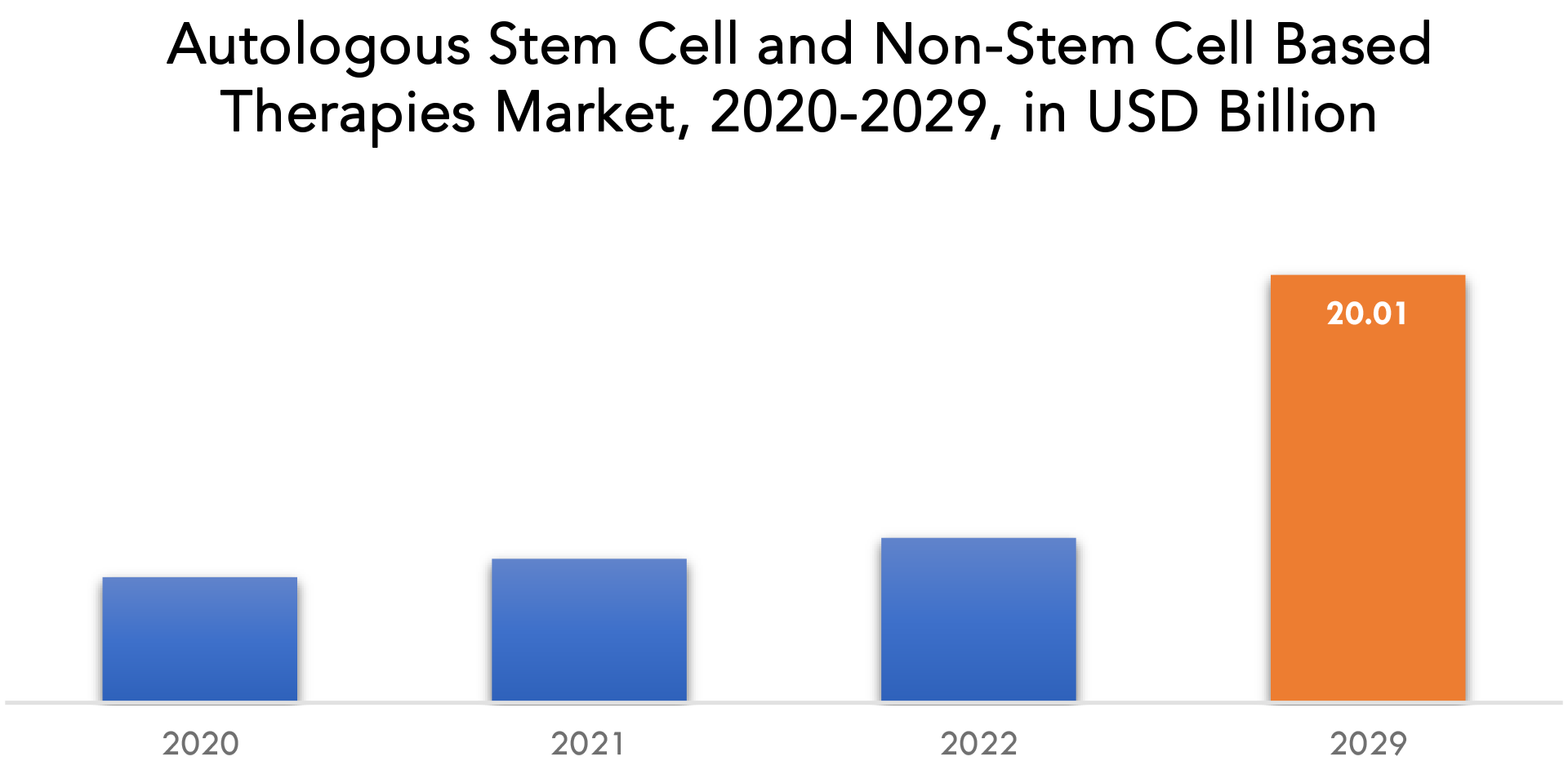
Autologous Stem Cell and Non-Stem Cell Based Therapies Market Players
The Autologous Stem Cell and Non-Stem Cell Based Therapies Market key players include BrainStorm Cell Limited, Cytori Therapeutics Inc., Dendreon Pharmaceuticals LLC., Fibrocell Science Inc., Opexa Therapeutics Inc., Orgenesis Inc, Regeneus Ltd., U.S. Stem Cell Inc., Castle Creek Biosciences Inc., Gilead Sciences Inc.
For corporate expansion, these key leaders are implementing strategic formulations such as new product development and commercialization, commercial expansion, and distribution agreements. Moreover, these participants are substantially spending on product development, which is fueling revenue generation.
Industry Development:- Jan 2023 BrainStorm Cell Therapeutics Inc. (NASDAQ: BCLI), a leading developer of adult stem cell therapeutics for neurodegenerative diseases, today announced that BCLI will donate biospecimens from NurOwn's placebo-controlled Phase 3 ALS trial to the Northeast Amyotrophic Lateral Sclerosis Consortium (NEALS) biorepository for use by the research community. The specimens are being submitted to the biorepository in connection with a$500,000 grant previously awarded to BrainStorm by The ALS Association and I AM ALS, to support biomarker research.
- Jan 2022 Opexa Therapeutics, Inc. (NASDAQ: OPXA) is a publically traded biotechnology company developing personalized immunotherapies with the potential to treat major illnesses, including multiple sclerosis (MS) as well as other autoimmune diseases, such as neuromyelitis optica (NMO). These therapies are based on Opexa’s proprietary T-cell technology. The Company’s leading therapy candidate, Tcelna®, is a personalized T-cell immunotherapy that is in a Phase IIb clinical development program (the Abili-T trial) for the treatment of Secondary Progressive MS.
Who Should Buy? Or Key stakeholders
- Investors
- Raw Materials Manufacturer
- Healthcare Companies
- Research Organizations
- Regulatory Authorities
- Institutional & retail players
- Others
Autologous Stem Cell and Non-Stem Cell Based Therapies Market Regional Analysis
The Autologous Stem Cell and Non-Stem Cell Based Therapies Market by region includes North America, Asia-Pacific (APAC), Europe, South America, and Middle East & Africa (MEA).- North America: includes the US, Canada, Mexico
- Asia Pacific: includes China, Japan, South Korea, India, Australia, ASEAN, and Rest of APAC
- Europe: includes the UK, Germany, France, Italy, Spain, Russia, and the Rest of Europe
- South America: includes Brazil, Argentina, and Rest of South America
- Middle East & Africa: includes Turkey, UAE, Saudi Arabia, South Africa, and the Rest of MEA
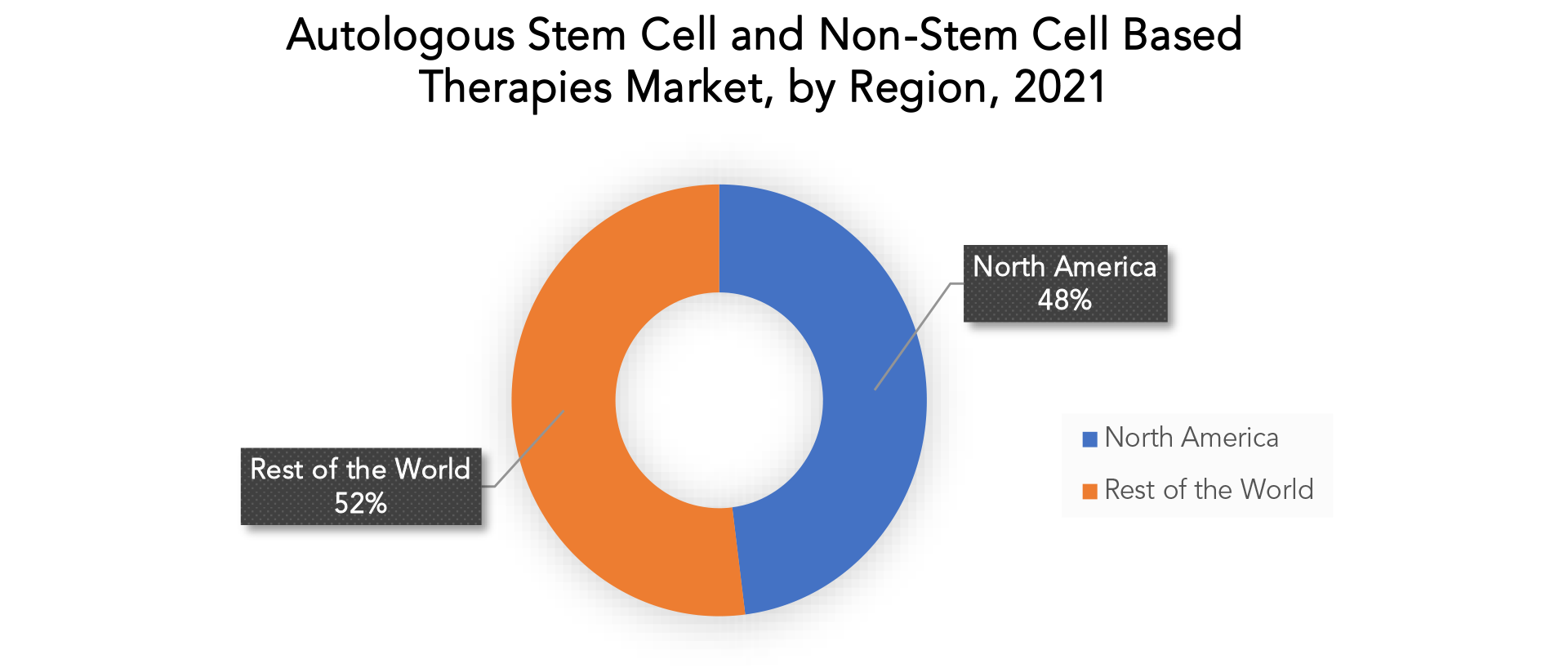
The largest portion of the market for autologous stem cell and non-stem cell-based therapies was accounted for by North America. This is why the hazards associated with the treatment are kept to a minimum. The fact that these medications may effectively treat a large range of infectious disorders also contributes to their high demand. As there is no need for a third-party donor with autologous stem cell and non-stem cell therapies, the procedure is more convenient and less contagious. These elements are probably going to help the North American market expand.
The region with the highest growth is anticipated to be Asia Pacific, nevertheless. Countries like China, India, Malaysia, and Vietnam will lead the demand in this region. As autologous stem cell and non-stem cell therapies help with the effective management of cardiovascular disorders as well, the demand is projected to increase. The Asia Pacific autologous stem cell and non-stem cell based therapies market is anticipated to rise as a result of expanding healthcare infrastructure as well as increased market player collaboration and acquisition.
Key Market Segments: Autologous Stem Cell and Non-Stem Cell Based Therapies Market
Autologous Stem Cell and Non-Stem Cell Based Therapies Market By Type, 2020-2029, (USD Billion).- Autologous Stem Cell
- Autologous Non-Stem Cell
- Cancer
- Neurodegenerative Disorders
- Cardiovascular Disease
- Orthopedic Diseases
- North America
- Asia Pacific
- Europe
- South America
- Middle East and Africa
Exactitude Consultancy Services Key Objectives:
- Increasing sales and market share
- Developing new technology
- Improving profitability
- Entering new markets
- Enhancing brand reputation
Key Question Answered
- What is the expected growth rate of the Autologous Stem Cell and Non-Stem Cell Based Therapies market over the next 7 years?
- Who are the major players in the Autologous Stem Cell and Non-Stem Cell Based Therapies market and what is their market share?
- What are the end-user industries driving demand for market and what is their outlook?
- What are the opportunities for growth in emerging markets such as Asia-pacific, middle east, and Africa?
- How is the economic environment affecting the Autologous Stem Cell and Non-Stem Cell Based Therapies market, including factors such as interest rates, inflation, and exchange rates?
- What is the expected impact of government policies and regulations on the Autologous Stem Cell and Non-Stem Cell Based Therapies market?
- What is the current and forecasted size and growth rate of the global Autologous Stem Cell and Non-Stem Cell Based Therapies market?
- What are the key drivers of growth in the Autologous Stem Cell and Non-Stem Cell Based Therapies market?
- What are the distribution channels and supply chain dynamics in the Autologous Stem Cell and Non-Stem Cell Based Therapies market?
- What are the technological advancements and innovations in the Autologous Stem Cell and Non-Stem Cell Based Therapies market and their impact on product development and growth?
- What are the regulatory considerations and their impact on the market?
- What are the challenges faced by players in the Autologous Stem Cell and Non-Stem Cell Based Therapies market and how are they addressing these challenges?
- What are the opportunities for growth and expansion in the Autologous Stem Cell and Non-Stem Cell Based Therapies market?
- What are the product offerings and specifications of leading players in the market?
- What is the pricing trend of Autologous Stem Cell and Non-Stem Cell Based Therapies in the market and what is the impact of raw material prices on the price trend?
- Introducción
- Market Definition
- Market Segmentation
- Research Timelines
- Assumptions and Limitations
- Research Methodology
- Data Mining
- Secondary Research
- Primary Research
- Subject-Matter Experts’ Advice
- Quality Checks
- Final Review
- Data Triangulation
- Bottom-Up Approach
- Top-Down Approach
- Research Flow
- Data Sources
- Data Mining
- Executive Summary
- Market Overview
- Global Autologous Stem Cell and Non-Stem Cell Based Therapies Market outlook
- Market Drivers
- Market Restraints
- Market Opportunities
- Impact of Covid-19 on Autologous Stem Cell and Non-Stem Cell Based Therapies Market
- Porter’s five forces model
- Threat from new entrants
- Threat from substitutes
- Bargaining power of suppliers
- Bargaining power of customers
- Degree of competition
- Industry value chain Analysis
- Global Autologous Stem Cell and Non-Stem Cell Based Therapies Market outlook
- GLOBAL AUTOLOGOUS STEM CELL AND NON-STEM CELL BASED THERAPIES MARKET BY TYPE, 2020-2029, (USD BILLION).
- Autologous Stem Cell
- Autologous Non-Stem Cell
- GLOBAL AUTOLOGOUS STEM CELL AND NON-STEM CELL BASED THERAPIES MARKET BY APPLICATION, 2020-2029, (USD BILLION).
- Cancer
- Neurodegenerative Disorders
- Cardiovascular Disease
- Orthopedic Diseases
- GLOBAL AUTOLOGOUS STEM CELL AND NON-STEM CELL BASED THERAPIES MARKET BY REGION, 2020-2029, (USD BILLION).
- North America
- US
- Canada
- Mexico
- South America
- Brazil
- Argentina
- Colombia
- Rest Of South America
- Europe
- Germany
- UK
- France
- Italy
- Spain
- Russia
- Rest Of Europe
- Asia Pacific
- India
- China
- Japan
- South Korea
- Australia
- South-East Asia
- Rest Of Asia Pacific
- Middle East and Africa
- UAE
- Saudi Arabia
- South Africa
- Rest Of Middle East and Africa
- North America
- Company Profiles*
(Business Overview, Company Snapshot, Products Offered, Recent Developments)
- BrainStorm Cell Limited
- Cytori Therapeutic Inc.
- Dendreon Pharmaceutical LLC
- Fibrocell Science Inc
- Opexa Therapeutic Inc.
- Orgenesis Inc
- Regeneus Ltd.
- S. Stem Cell Inc.
- Castle Creek Biosciences Inc.
- Gilead Sciences Inc.
*The Company List Is Indicative
LIST OF TABLES
TABLE 1 GLOBAL AUTOLOGOUS STEM CELL AND NON-STEM CELL BASED THERAPIES MARKET BY TYPE (USD BILLION), 2020-2029
TABLE 2 GLOBAL AUTOLOGOUS STEM CELL AND NON-STEM CELL BASED THERAPIES MARKET BY APPLICATION (USD BILLION), 2020-2029
TABLE 3 GLOBAL AUTOLOGOUS STEM CELL AND NON-STEM CELL BASED THERAPIES MARKET BY REGION (USD BILLIONS), 2020-2029
TABLE 4 NORTH AMERICA AUTOLOGOUS STEM CELL AND NON-STEM CELL BASED THERAPIES MARKET BY TYPE (USD BILLIONS), 2020-2029
TABLE 5 NORTH AMERICA AUTOLOGOUS STEM CELL AND NON-STEM CELL BASED THERAPIES MARKET BY APPLICATION (USD BILLION), 2020-2029
TABLE 6 NORTH AMERICA AUTOLOGOUS STEM CELL AND NON-STEM CELL BASED THERAPIES MARKET BY COUNTRY (USD BILLION), 2020-2029
TABLE 7 US AUTOLOGOUS STEM CELL AND NON-STEM CELL BASED THERAPIES MARKET BY TYPE (USD BILLIONS), 2020-2029
TABLE 8 US AUTOLOGOUS STEM CELL AND NON-STEM CELL BASED THERAPIES MARKET BY APPLICATION (USD BILLION), 2020-2029
TABLE 9 CANADA AUTOLOGOUS STEM CELL AND NON-STEM CELL BASED THERAPIES MARKET BY TYPE (BILLIONS), 2020-2029
TABLE 10 CANADA AUTOLOGOUS STEM CELL AND NON-STEM CELL BASED THERAPIES MARKET BY APPLICATION (USD BILLION), 2020-2029
TABLE 11 MEXICO AUTOLOGOUS STEM CELL AND NON-STEM CELL BASED THERAPIES MARKET BY TYPE (USD BILLIONS), 2020-2029
TABLE 12 MEXICO AUTOLOGOUS STEM CELL AND NON-STEM CELL BASED THERAPIES MARKET BY APPLICATION (USD BILLION), 2020-2029
TABLE 13 SOUTH AMERICA AUTOLOGOUS STEM CELL AND NON-STEM CELL BASED THERAPIES MARKET BY TYPE (USD BILLIONS), 2020-2029
TABLE 14 SOUTH AMERICA AUTOLOGOUS STEM CELL AND NON-STEM CELL BASED THERAPIES MARKET BY APPLICATION (USD BILLION), 2020-2029
TABLE 15 SOUTH AMERICA AUTOLOGOUS STEM CELL AND NON-STEM CELL BASED THERAPIES MARKET BY COUNTRY (USD BILLION), 2020-2029
TABLE 16 BRAZIL AUTOLOGOUS STEM CELL AND NON-STEM CELL BASED THERAPIES MARKET BY TYPE (USD BILLIONS), 2020-2029
TABLE 17 BRAZIL AUTOLOGOUS STEM CELL AND NON-STEM CELL BASED THERAPIES MARKET BY APPLICATION (USD BILLION), 2020-2029
TABLE 18 ARGENTINA AUTOLOGOUS STEM CELL AND NON-STEM CELL BASED THERAPIES MARKET BY TYPE (USD BILLIONS), 2020-2029
TABLE 19 ARGENTINA AUTOLOGOUS STEM CELL AND NON-STEM CELL BASED THERAPIES MARKET BY APPLICATION (USD BILLION), 2020-2029
TABLE 20 REST OF SOUTH AMERICA AUTOLOGOUS STEM CELL AND NON-STEM CELL BASED THERAPIES MARKET BY TYPE (USD BILLIONS), 2020-2029
TABLE 21 REST OF SOUTH AMERICA AUTOLOGOUS STEM CELL AND NON-STEM CELL BASED THERAPIES MARKET BY APPLICATION (USD BILLION), 2020-2029
TABLE 22 ASIA -PACIFIC AUTOLOGOUS STEM CELL AND NON-STEM CELL BASED THERAPIES MARKET BY TYPE (USD BILLIONS), 2020-2029
TABLE 23 ASIA -PACIFIC AUTOLOGOUS STEM CELL AND NON-STEM CELL BASED THERAPIES MARKET BY APPLICATION (USD BILLION), 2020-2029
TABLE 24 ASIA -PACIFIC AUTOLOGOUS STEM CELL AND NON-STEM CELL BASED THERAPIES MARKET BY COUNTRY (USD BILLION), 2020-2029
TABLE 25 INDIA AUTOLOGOUS STEM CELL AND NON-STEM CELL BASED THERAPIES MARKET BY TYPE (USD BILLIONS), 2020-2029
TABLE 26 INDIA AUTOLOGOUS STEM CELL AND NON-STEM CELL BASED THERAPIES MARKET BY APPLICATION (USD BILLION), 2020-2029
TABLE 27 CHINA AUTOLOGOUS STEM CELL AND NON-STEM CELL BASED THERAPIES MARKET BY TYPE (USD BILLIONS), 2020-2029
TABLE 28 CHINA AUTOLOGOUS STEM CELL AND NON-STEM CELL BASED THERAPIES MARKET BY APPLICATION (USD BILLION), 2020-2029
TABLE 29 JAPAN AUTOLOGOUS STEM CELL AND NON-STEM CELL BASED THERAPIES MARKET BY TYPE (USD BILLIONS), 2020-2029
TABLE 30 JAPAN AUTOLOGOUS STEM CELL AND NON-STEM CELL BASED THERAPIES MARKET BY APPLICATION (USD BILLION), 2020-2029
TABLE 31 SOUTH KOREA AUTOLOGOUS STEM CELL AND NON-STEM CELL BASED THERAPIES MARKET BY TYPE (USD BILLIONS), 2020-2029
TABLE 32 SOUTH KOREA AUTOLOGOUS STEM CELL AND NON-STEM CELL BASED THERAPIES MARKET BY APPLICATION (USD BILLION), 2020-2029
TABLE 33 AUSTRALIA AUTOLOGOUS STEM CELL AND NON-STEM CELL BASED THERAPIES MARKET BY TYPE (USD BILLIONS), 2020-2029
TABLE 34 AUSTRALIA HYBRID FUNCTIONBY APPLICATION (USD BILLION), 2020-2029
TABLE 35 AUSTRALIA AUTOLOGOUS STEM CELL AND NON-STEM CELL BASED THERAPIES MARKET BY FUNCTION (USD BILLIONS), 2020-2029
TABLE 36 AUSTRALIA AUTOLOGOUS STEM CELL AND NON-STEM CELL BASED THERAPIES MARKET BY organization size (USD BILLION), 2020-2029
TABLE 37 REST OF ASIA PACIFIC AUTOLOGOUS STEM CELL AND NON-STEM CELL BASED THERAPIES MARKET BY TYPE (USD BILLIONS), 2020-2029
TABLE 38 REST OF ASIA PACIFIC HYBRID FUNCTIONBY APPLICATION (USD BILLION), 2020-2029
TABLE 39 EUROPE AUTOLOGOUS STEM CELL AND NON-STEM CELL BASED THERAPIES MARKET BY TYPE (USD BILLIONS), 2020-2029
TABLE 40 EUROPE AUTOLOGOUS STEM CELL AND NON-STEM CELL BASED THERAPIES MARKET BY APPLICATION (USD BILLION), 2020-2029
TABLE 41 EUROPE AUTOLOGOUS STEM CELL AND NON-STEM CELL BASED THERAPIES MARKET BY COUNTRY (USD BILLION), 2020-2029
TABLE 42 GERMANY AUTOLOGOUS STEM CELL AND NON-STEM CELL BASED THERAPIES MARKET BY TYPE (USD BILLIONS), 2020-2029
TABLE 43 GERMANY AUTOLOGOUS STEM CELL AND NON-STEM CELL BASED THERAPIES MARKET BY APPLICATION (USD BILLION), 2020-2029
TABLE 44 UK AUTOLOGOUS STEM CELL AND NON-STEM CELL BASED THERAPIES MARKET BY TYPE (USD BILLIONS), 2020-2029
TABLE 45 UK AUTOLOGOUS STEM CELL AND NON-STEM CELL BASED THERAPIES MARKET BY APPLICATION (USD BILLION), 2020-2029
TABLE 46 FRANCE AUTOLOGOUS STEM CELL AND NON-STEM CELL BASED THERAPIES MARKET BY TYPE (USD BILLIONS), 2020-2029
TABLE 47 FRANCE AUTOLOGOUS STEM CELL AND NON-STEM CELL BASED THERAPIES MARKET BY APPLICATION (USD BILLION), 2020-2029
TABLE 48 ITALY AUTOLOGOUS STEM CELL AND NON-STEM CELL BASED THERAPIES MARKET BY TYPE (USD BILLIONS), 2020-2029
TABLE 49 ITALY AUTOLOGOUS STEM CELL AND NON-STEM CELL BASED THERAPIES MARKET BY APPLICATION (USD BILLION), 2020-2029
TABLE 50 SPAIN AUTOLOGOUS STEM CELL AND NON-STEM CELL BASED THERAPIES MARKET BY TYPE (USD BILLIONS), 2020-2029
TABLE 51 SPAIN AUTOLOGOUS STEM CELL AND NON-STEM CELL BASED THERAPIES MARKET BY APPLICATION (USD BILLION), 2020-2029
TABLE 52 REST OF EUROPE AUTOLOGOUS STEM CELL AND NON-STEM CELL BASED THERAPIES MARKET BY TYPE (USD BILLIONS), 2020-2029
TABLE 53 REST OF EUROPE AUTOLOGOUS STEM CELL AND NON-STEM CELL BASED THERAPIES MARKET BY APPLICATION (USD BILLION), 2020-2029
TABLE 54 MIDDLE EAST AND AFRICA AUTOLOGOUS STEM CELL AND NON-STEM CELL BASED THERAPIES MARKET BY TYPE (USD BILLIONS), 2020-2029
TABLE 55 MIDDLE EAST AND AFRICA AUTOLOGOUS STEM CELL AND NON-STEM CELL BASED THERAPIES MARKET BY APPLICATION (USD BILLION), 2020-2029
TABLE 56 MIDDLE EAST ABD AFRICA AUTOLOGOUS STEM CELL AND NON-STEM CELL BASED THERAPIES MARKET BY COUNTRY (USD BILLION), 2020-2029
TABLE 57 UAE AUTOLOGOUS STEM CELL AND NON-STEM CELL BASED THERAPIES MARKET BY TYPE (USD BILLIONS), 2020-2029
TABLE 58 UAE AUTOLOGOUS STEM CELL AND NON-STEM CELL BASED THERAPIES MARKET BY APPLICATION (USD BILLION), 2020-2029
TABLE 59 SOUTH AFRICA AUTOLOGOUS STEM CELL AND NON-STEM CELL BASED THERAPIES MARKET BY TYPE (USD BILLIONS), 2020-2029
TABLE 60 SOUTH AFRICA AUTOLOGOUS STEM CELL AND NON-STEM CELL BASED THERAPIES MARKET BY APPLICATION (USD BILLION), 2020-2029
TABLE 61 REST OF MIDDLE EAST AND AFRICA AUTOLOGOUS STEM CELL AND NON-STEM CELL BASED THERAPIES MARKET BY TYPE (USD BILLIONS), 2020-2029
TABLE 62 REST OF MIDDLE EAST AND AFRICA AUTOLOGOUS STEM CELL AND NON-STEM CELL BASED THERAPIES MARKET BY APPLICATION (USD BILLION), 2020-2029
LIST OF FIGURES
FIGURE 1 MARKET DYNAMICS
FIGURE 2 MARKET SEGMENTATION
FIGURE 3 REPORT TIMELINES: YEARS CONSIDERED
FIGURE 4 DATA TRIANGULATION
FIGURE 5 BOTTOM-UP APPROACH
FIGURE 6 TOP-DOWN APPROACH
FIGURE 7 RESEARCH FLOW
FIGURE 8 GLOBAL AUTOLOGOUS STEM CELL AND NON-STEM CELL BASED THERAPIES BY TYPE, USD BILLION, 2020-2029
FIGURE 9 GLOBAL AUTOLOGOUS STEM CELL AND NON-STEM CELL BASED THERAPIES BY APPLICATION, USD BILLION, 2020-2029
FIGURE 10 GLOBAL AUTOLOGOUS STEM CELL AND NON-STEM CELL BASED THERAPIES BY REGION, USD BILLION, 2020-2029
FIGURE 11 PORTER’S FIVE FORCES MODEL
FIGURE 12 GLOBAL AUTOLOGOUS STEM CELL AND NON-STEM CELL BASED THERAPIES BY TYPE, USD BILLION, 2021
FIGURE 13 GLOBAL AUTOLOGOUS STEM CELL AND NON-STEM CELL BASED THERAPIES BY APPLICATION, USD BILLION, 2021
FIGURE 14 GLOBAL AUTOLOGOUS STEM CELL AND NON-STEM CELL BASED THERAPIES BY REGION, USD BILLION, 2021
FIGURE 15 MARKET SHARE ANALYSIS
FIGURE 16 BRAINSTORM CELL LIMITED: COMPANY SNAPSHOT
FIGURE 17 CYTORI THERAPEUTICS INC.: COMPANY SNAPSHOT
FIGURE 18 DENDREON PHARMACEUTICALS LLC.: COMPANY SNAPSHOT
FIGURE 19 FIBROCELL SCIENCE INC.: COMPANY SNAPSHOT
FIGURE 20 OPEXA THERAPEUTICS INC.: COMPANY SNAPSHOT
FIGURE 21 ORGENESIS INC.: COMPANY SNAPSHOT
FIGURE 22 REGENEUS LTD.: COMPANY SNAPSHOT
FIGURE 23 U.S. STEMM CELL INC.: COMPANY SNAPSHOT
FIGURE 24 CASTLE CREEK BIOSCIENCES INC.: COMPANY SNAPSHOT
FIGURE 25 GILEAD SCIENCES INC.: COMPANY SNAPSHOT
DOWNLOAD FREE SAMPLE REPORT
License Type
SPEAK WITH OUR ANALYST
Want to know more about the report or any specific requirement?
WANT TO CUSTOMIZE THE REPORT?
Our Clients Speak
We asked them to research ‘ Equipment market’ all over the world, and their whole arrangement was helpful to us. thehealthanalytics.com insightful analysis and reports contributed to our current analysis and in creating a future strategy. Besides, the te
Yosuke Mitsui
Senior Associate Construction Equipment Sales & Marketing
We asked them to research ‘Equipment market’ all over the world, and their whole arrangement was helpful to us. thehealthanalytics.com insightful analysis and reports contributed to our current analysis and in creating a future strategy. Besides, the te