

Base Year Value ()
x.x %
x.x %
CAGR ()
x.x %
x.x %
Forecast Year Value ()
x.x %
x.x %
Historical Data Period
Largest Region
Forecast Period
Mercado mundial de alcoholes grasos por tipo (cadena corta, puro y de corte medio, cadena larga, cadena superior), por aplicación (jabones y detergentes, cuidado personal, lubricantes, aminas) y región, tendencias globales y pronóstico de 2022 a 2029
Instant access to hundreds of data points and trends
- Market estimates from 2014-2029
- Competitive analysis, industry segmentation, financial benchmarks
- Incorporates SWOT, Porter's Five Forces and risk management frameworks
- PDF report or online database with Word, Excel and PowerPoint export options
- 100% money back guarantee
Descripción general del mercado de alcoholes grasos
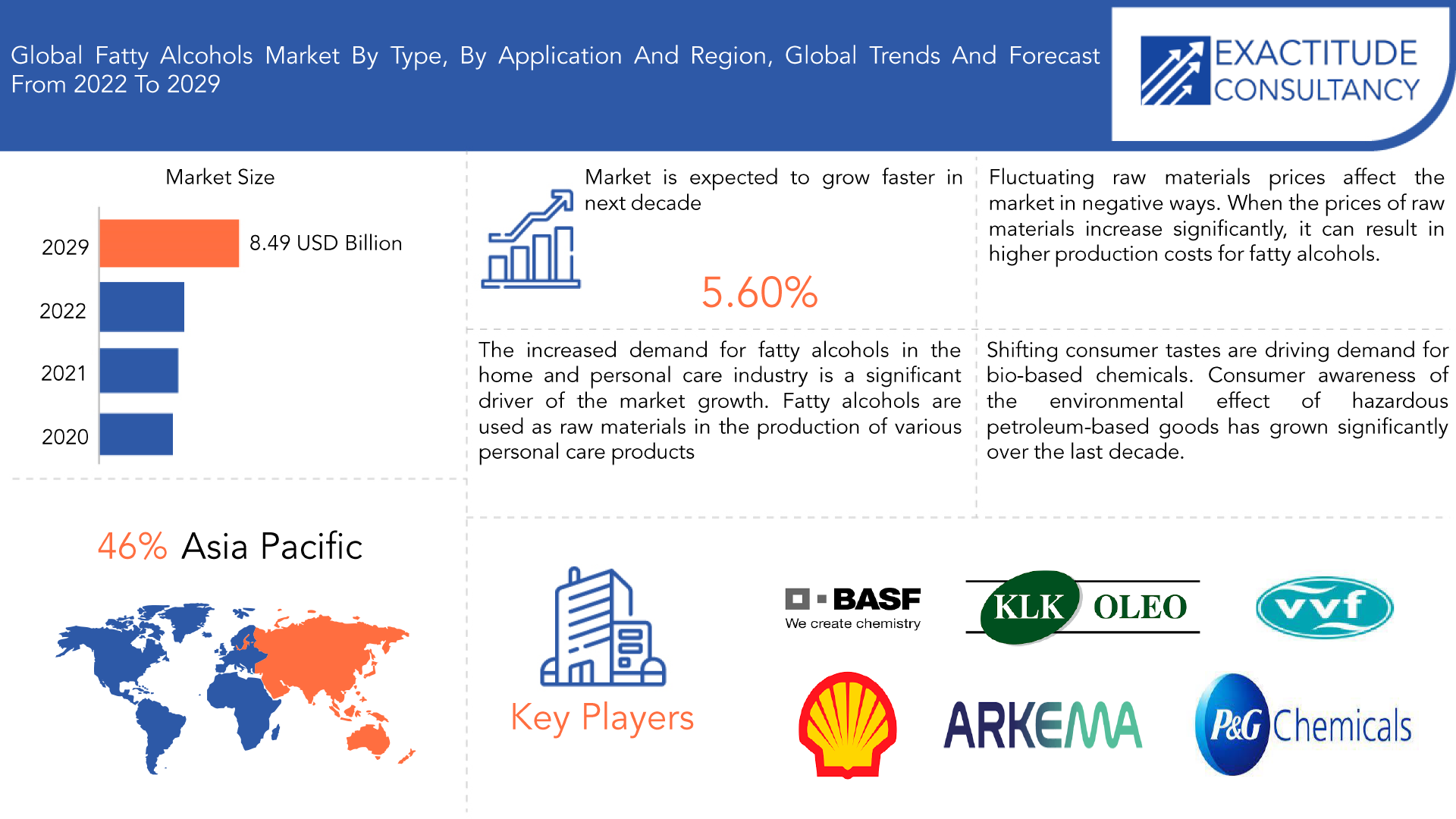
Se espera que el mercado mundial de alcoholes grasos crezca a una tasa compuesta anual del 5,60 % entre 2020 y 2029. Se espera que alcance más de 8490 millones de dólares en 2029 desde los 5200 millones de dólares en 2020.
Los alcoholes grasos son una clase de compuestos orgánicos que se derivan de grasas y aceites naturales. Se caracterizan por tener una larga cadena de carbono con un grupo hidroxilo (-OH) en un extremo, y se producen típicamente por la hidrogenación de grasas y aceites naturales. Los alcoholes grasos tienen una amplia gama de aplicaciones, incluyendo como emolientes y emulsionantes en productos de cuidado personal, como surfactantes en detergentes y como materias primas para la producción de otros productos químicos. En general, se consideran respetuosos con el medio ambiente y sostenibles, ya que se derivan de recursos renovables y son biodegradables .
| ATRIBUTO | DETALLES |
| Periodo de estudio | 2020-2029 |
| Año base | 2021 |
| Año estimado | 2022 |
| Año pronosticado | 2022-2029 |
| Periodo histórico | 2018-2020 |
| Unidad | Valor (miles de millones de USD), (kilotones) |
| Segmentación | Por producto, usuario final y región. |
| Por tipo |
|
| Por aplicación |
|
| Por región |
|
La creciente demanda de alcoholes grasos en la industria del cuidado personal y del hogar es un importante impulsor del crecimiento del mercado. Los alcoholes grasos se utilizan como materias primas en la producción de diversos productos de cuidado personal, como champús, acondicionadores, humectantes y otros productos. Ofrecen varios beneficios como emulsificación , espesamiento, humectación y suavidad, lo que los hace adecuados para su uso en diferentes tipos de productos. Otro impulsor importante del crecimiento del mercado es la creciente demanda de productos de cuidado personal naturales y sostenibles. Los consumidores son cada vez más conscientes de los productos que utilizan y buscan productos que sean ecológicos, sostenibles y derivados de fuentes naturales. Los alcoholes grasos se derivan de fuentes naturales como los aceites vegetales y ofrecen varios beneficios como biodegradabilidad, baja toxicidad y renovabilidad, lo que los convierte en una opción ideal para productos de cuidado personal naturales y sostenibles.
Cuando los precios de las materias primas aumentan significativamente, pueden aumentar los costos de producción de los alcoholes grasos, lo que puede generar precios más altos para los usuarios finales, como los fabricantes de productos de cuidado personal. Esto puede afectar negativamente la demanda de alcoholes grasos y frenar el crecimiento del mercado. Además, la oferta de materias primas también puede verse afectada por las fluctuaciones de los precios. Si el precio de una materia prima en particular aumenta, puede provocar un cambio en la demanda hacia otras materias primas, lo que puede resultar en una escasez de la materia prima afectada. Esto puede resultar en una disminución en la oferta de alcoholes grasos, lo que también puede frenar el crecimiento del mercado.
Los cambios en los gustos de los consumidores están impulsando la demanda de productos químicos de origen biológico . La conciencia de los consumidores sobre el efecto ambiental de los productos derivados del petróleo ha aumentado significativamente durante la última década. Las crecientes preocupaciones ambientales están impulsando a los clientes a comprar productos ecológicos. Estos incentivos están obligando a las empresas químicas a adoptar materias primas de origen biológico en la producción de sus productos.
Se espera que la pandemia de COVID-19 tenga una influencia sustancial en el mercado debido a la caída en los sectores manufactureros. Debido a las repercusiones inesperadas del coronavirus, las grandes corporaciones se vieron obligadas a suspender temporalmente la producción para limitar su propagación. El cierre de estas plantas tendría un impacto significativo en la facturación y la participación de mercado de la empresa. Los niveles de producción de muchos países se han reducido sustancialmente como resultado de los cierres. Existen limitaciones en la cadena de suministro del mercado debido a las dificultades de transporte de materiales. Se espera que las causas mencionadas reduzcan la demanda.
[título id="attachment_18273" align="aligncenter" width="1920"]
Frequently Asked Questions
• What is the worth of the Global Fatty Alcohols Market?
The Global Fatty Alcohols Market is expected to grow at 5.60% CAGR from 2020 to 2029. It is expected to reach above USD 8.49 Billion by 2029 from USD 5.20 Billion in 2020.
• What is the size of the North America Fatty Alcohols Market?
North America held more than 46% of the Fatty Alcohols Market revenue share in 2020 and will witness tremendous expansion during the forecast period.
• What are some of the market's driving forces?
The increased demand for fatty alcohols in the home and personal care industry is a significant driver of the market growth. Fatty alcohols are used as raw materials in the production of various personal care products, such as shampoos, conditioners, moisturizers, and other products. They offer several benefits such as emulsification, thickening, moisturizing, and mildness, making them suitable for use in different types of products.
• Which are the top companies to hold the market share in the Fatty Alcohols Market?
The Fatty Alcohols Market key players include BASF, Univar Inc, KLK Oleo, VVF LLC, P & G Chemicals, Ecogreen Oleochemicals, Kao Corporation, Sasol Limited, Royal Dutch Shell Plc, Arkema SA
• What is the leading Application of the Fatty Alcohols Market?
The manufacturing sector is major sector where the application of Fatty Alcohols has seen more.
• Which is the largest regional market for Fatty Alcohols Market?
The Markets largest share is in the Asia Pacific region.
Fatty Alcohols Market Segment Analysis
The market is divided into four types: pure and mid cut, long chain, and short chain, higher chain. The market is dominated by the Long Chain sector. The increased need for fatty alcohols in the manufacturing of detergents, soaps, and emollients is due to the rise of the long-chain sector. In the detergent business, fatty alcohols are utilized as emulsifiers, emollients, and surfactants. They are also utilized in the manufacture of soaps and cosmetics.
In terms of application, the market is divided into soaps and detergents, personal care, lubricants, amines. Throughout the projected period, the soaps and detergents category are likely to command a major share of the market. Increases in the level of life in developing nations, as well as increased attention to personal cleanliness, are expected to support the expansion of this category. Additionally, increased demand for home and industrial cleaners to maintain a sanitary environment is likely to drive the industry. Personal care is expected to be the second-largest category over the projection period. Personal care items such as shampoos, lotions, and essential oils are in high demand from Asia Pacific due to increased consumer spending power.
[caption id="attachment_18274" align="aligncenter" width="1920"]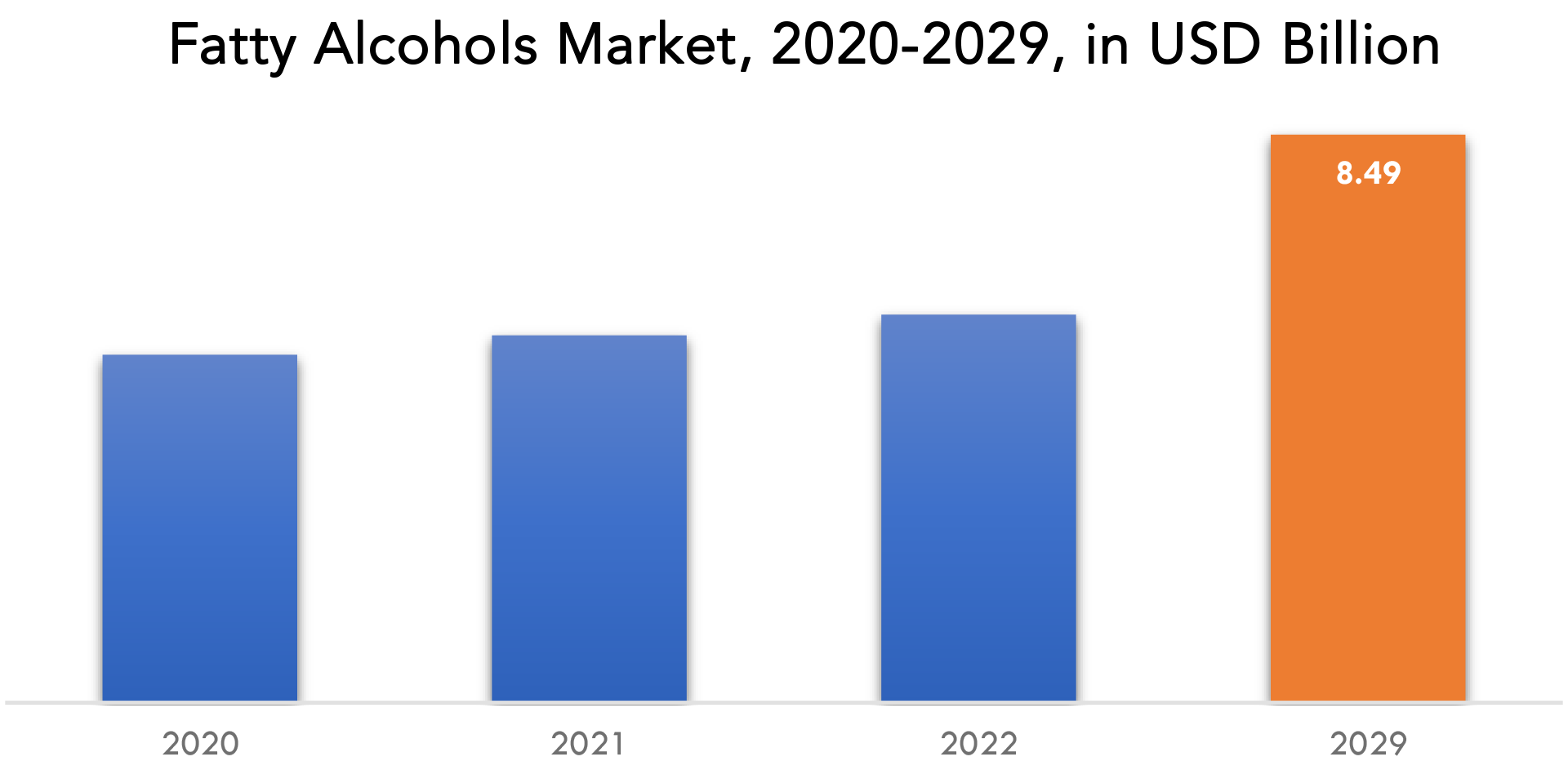
Fatty Alcohols Market Key Players
The fatty alcohols market key players include BASF, Univar Inc, KLK Oleo, VVF LLC, P & G Chemicals, Ecogreen Oleochemicals, Kao Corporation, Sasol Limited, Royal Dutch Shell Plc, Arkema SA
For corporate expansion, these key leaders are implementing strategic formulations such as new product development and commercialization, commercial expansion, and distribution agreements. Moreover, these participants are substantially spending on product development, which is fueling revenue generation.
Industry Development:
March 2021 - KLK OLEO just expanded its business footprint to the Americas with a new sales office at Woodbury, NY, USA. KLK OLEO Americas (KLKOA) will oversee the sales and marketing in the United States, Canada and South America. And continuously maintain and build customer relationships for the KLK OLEO group product portfolio. November 2022 - Kao Corporation have developed a decoration processing technology that can design products according to the consumers' needs and a dynamic cell production technology that enables efficient high-mix low-volume manufacturing by optimization of floating linear technology*1 in collaboration with B&R K.K. and Kyoto Seisakusho Co., Ltd. The new never-before-seen production system will begin operation in 2023.Who Should Buy? Or Key stakeholders
- Investors
- Raw Materials Manufacturer
- Healthcare Companies
- Cosmetics Companies
- Supplier & Distributors
- Research Organizations
- Regulatory Authorities
- Institutional & retail players
- Others
Fatty Alcohols Market Regional Analysis
The Fatty Alcohols Market by region includes North America, Asia-Pacific (APAC), Europe, South America, and Middle East & Africa (MEA).
- North America: includes the US, Canada, Mexico
- Asia Pacific: includes China, Japan, South Korea, India, Australia, ASEAN, and Rest of APAC
- Europe: includes the UK, Germany, France, Italy, Spain, Russia, and the Rest of Europe
- South America: includes Brazil, Argentina, and Rest of South America
- Middle East & Africa: includes Turkey, UAE, Saudi Arabia, South Africa, and the Rest of MEA
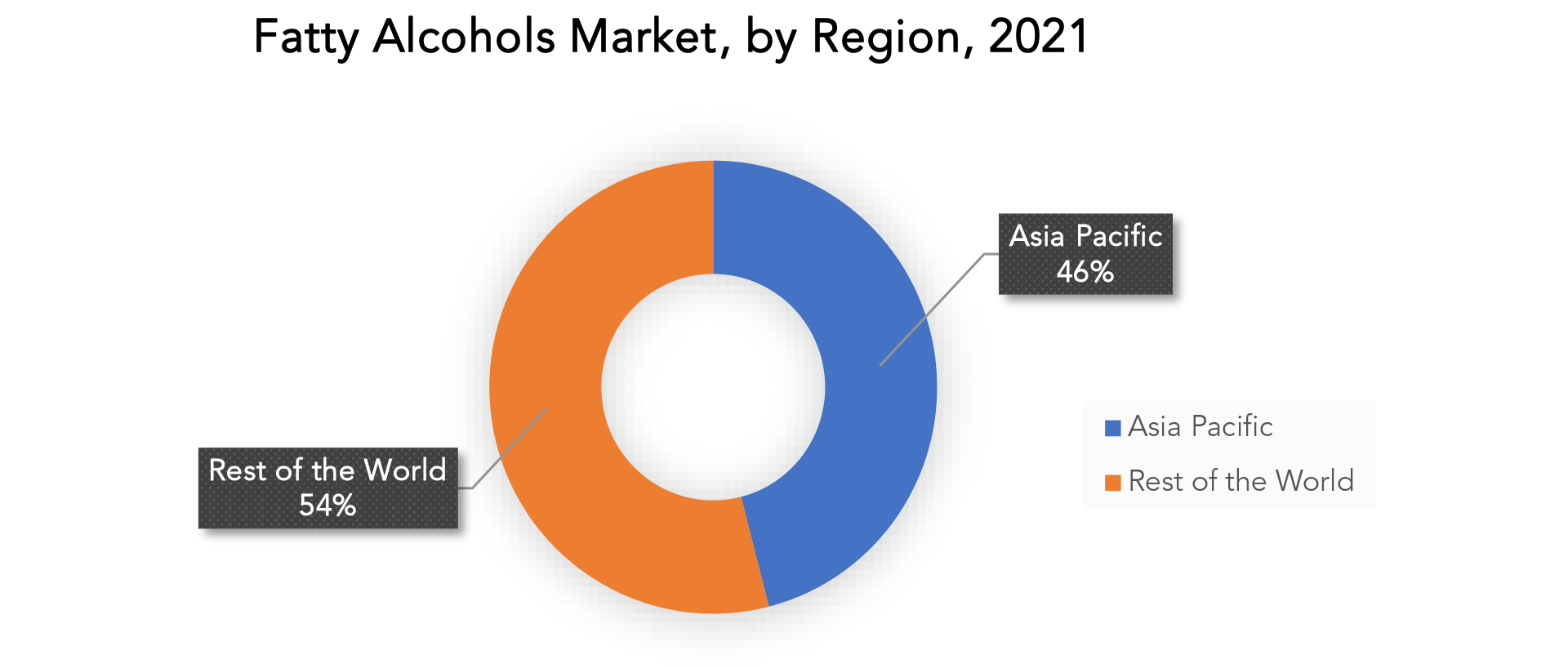
The Asia Pacific area consumes and produces the most of fatty alcohols, accounting for the majority of the worldwide market. Increased demand from end-use sectors such as personal care, home care, and industrial goods, as well as large-scale manufacturing by prominent manufacturers, are driving market expansion. The region's embrace of natural and sustainable products, as well as favorable government regulations encouraging the use of renewable resources, have all contributed to the market's expansion. China, India, Japan, and South Korea are key consumers in the Asia Pacific fatty alcohols market because to their big population, developing economy, and increasing need for personal care and home care products.
The North American fatty alcohols market is the second-largest in the world, driven by the increasing demand for personal care products and the growing trend towards natural and sustainable products. The United States is the largest consumer and producer of fatty alcohols in the region, with several leading manufacturers. The region's favorable government policies and the presence of key end-use industries have enabled the growth of the market. Additionally, the development of new and innovative applications of fatty alcohols in the industrial sector is expected to drive the market's growth further.
Key Market Segments: Fatty Alcohols Market
Fatty Alcohols Market By Type, 2020-2029, (USD Billion), (Kilotons)- Short Chain
- Pure And Mid Cut
- Long Chain
- Higher Chain
- Soaps & Detergents
- Personal Care
- Lubricants
- Amines
- North America
- Asia Pacific
- Europe
- South America
- Middle East And Africa
Exactitude Consultancy Services Key Objectives:
- Increasing sales and market share
- Developing new technology
- Improving profitability
- Entering new markets
- Enhancing brand reputation
Key Question Answered
- What is the expected growth rate of the fatty alcohols market over the next 7 years?
- Who are the major players in the fatty alcohols market and what is their market share?
- What are the end-user industries driving demand for market and what is their outlook?
- What are the opportunities for growth in emerging markets such as Asia-pacific, middle east, and Africa?
- How is the economic environment affecting the fatty alcohols market, including factors such as interest rates, inflation, and exchange rates?
- What is the expected impact of government policies and regulations on the fatty alcohols market?
- What is the current and forecasted size and growth rate of the global fatty alcohols market?
- What are the key drivers of growth in the fatty alcohols market?
- What are the distribution channels and supply chain dynamics in the fatty alcohols market?
- What are the technological advancements and innovations in the fatty alcohols market and their impact on product development and growth?
- What are the regulatory considerations and their impact on the market?
- What are the challenges faced by players in the fatty alcohols market and how are they addressing these challenges?
- What are the opportunities for growth and expansion in the fatty alcohols market?
- What are the product offerings and specifications of leading players in the market?
- What is the pricing trend of fatty alcohols in the market and what is the impact of raw material prices on the price trend?
- INTRODUCCIÓN
- DEFINICIÓN DE MERCADO
- SEGMENTACIÓN DEL MERCADO
- CRONOGRAMAS DE INVESTIGACIÓN
- SUPUESTOS Y LIMITACIONES
- METODOLOGÍA DE LA INVESTIGACIÓN
- MINERÍA DE DATOS
- INVESTIGACIÓN SECUNDARIA
- INVESTIGACIÓN PRIMARIA
- ASESORAMIENTO DE EXPERTOS EN LA MATERIA
- CONTROLES DE CALIDAD
- REVISIÓN FINAL
- TRIANGULACIÓN DE DATOS
- ENFOQUE DE ABAJO HACIA ARRIBA
- ENFOQUE DE ARRIBA HACIA ABAJO
- FLUJO DE INVESTIGACIÓN
- FUENTES DE DATOS
- MINERÍA DE DATOS
- RESUMEN EJECUTIVO
- PANORAMA DEL MERCADO
- PERSPECTIVAS DEL MERCADO MUNDIAL DE ALCOHOLES GRASOS
- IMPULSORES DEL MERCADO
- RESTRICCIONES DEL MERCADO
- OPORTUNIDADES DE MERCADO
- IMPACTO DEL COVID-19 EN EL MERCADO DE ALCOHOLES GRASOS
- MODELO DE LAS CINCO FUERZAS DE PORTER
- AMENAZA DE NUEVOS INGRESANTES
- AMENAZA DE SUSTITUTOS
- PODER DE NEGOCIACIÓN DE LOS PROVEEDORES
- PODER DE NEGOCIACIÓN DE LOS CLIENTES
- GRADO DE COMPETENCIA
- ANÁLISIS DE LA CADENA DE VALOR DE LA INDUSTRIA
- PERSPECTIVAS DEL MERCADO MUNDIAL DE ALCOHOLES GRASOS
- MERCADO MUNDIAL DE ALCOHOLES GRASOS POR TIPO, 2020-2029, (MILES DE MILLONES DE USD), (KILOTONELADAS)
- CADENA CORTA
- PURO Y DE CORTE MEDIO
- CADENA LARGA
- CADENA SUPERIOR
- MERCADO GLOBAL DE ALCOHOLES GRASOS POR APLICACIÓN, 2020-2029, (MILES DE MILLONES DE USD), (KILOTONELADAS)
- JABÓN Y DETERGENTES
- CUIDADO PERSONAL
- LUBRICANTES
- AMINAS
- MERCADO MUNDIAL DE ALCOHOLES GRASOS POR REGIÓN, 2020-2029, (MILES DE MILLONES DE USD), (KILOTONELADAS)
- AMÉRICA DEL NORTE
- A NOSOTROS
- CANADÁ
- MÉXICO
- SUDAMERICA
- BRASIL
- ARGENTINA
- COLOMBIA
- RESTO DE SUDAMÉRICA
- EUROPA
- ALEMANIA
- Reino Unido
- FRANCIA
- ITALY
- SPAIN
- RUSSIA
- REST OF EUROPE
- ASIA PACIFIC
- INDIA
- CHINA
- JAPAN
- SOUTH KOREA
- AUSTRALIA
- SOUTH-EAST ASIA
- REST OF ASIA PACIFIC
- MIDDLE EAST AND AFRICA
- UAE
- SAUDI ARABIA
- SOUTH AFRICA
- REST OF MIDDLE EAST AND AFRICA
- AMÉRICA DEL NORTE
- COMPANY PROFILES*
(BUSINESS OVERVIEW, COMPANY SNAPSHOT, PRODUCTS OFFERED, RECENT DEVELOPMENTS)
- BASF
- UNIVAR INC.
- KLK OLEO
- VVF LLC
- P & G CHEMICALS
- ECOGREEN OLEOCHEMICALS
- KAO CORPORATION
- SASOL LIMITED
- ROYAL DUTCH SHELL PLC
- ARKEMA SA
*THE COMPANY LIST IS INDICATIVE
LIST OF TABLES
TABLE 1 GLOBAL FATTY ALCOHOLS MARKET BY TYPE (USD BILLION), 2020-2029
TABLE 2 GLOBAL FATTY ALCOHOLS MARKET BY TYPE (KILOTONS), 2020-2029
TABLE 3 GLOBAL FATTY ALCOHOLS MARKET BY APPLICATION (USD BILLION), 2020-2029
TABLE 4 GLOBAL FATTY ALCOHOLS MARKET BY APPLICATION (KILOTONS), 2020-2029
TABLE 5 GLOBAL FATTY ALCOHOLS MARKET BY REGION (USD BILLION), 2020-2029
TABLE 6 GLOBAL FATTY ALCOHOLS MARKET BY REGION (KILOTONS), 2020-2029
TABLE 7 NORTH AMERICA FATTY ALCOHOLS MARKET BY TYPE (USD BILLION), 2020-2029
TABLE 8 NORTH AMERICA FATTY ALCOHOLS MARKET BY TYPE (KILOTONS), 2020-2029
TABLE 9 NORTH AMERICA FATTY ALCOHOLS MARKET BY APPLICATION (USD BILLION), 2020-2029
TABLE 10 NORTH AMERICA FATTY ALCOHOLS MARKET BY APPLICATION (KILOTONS), 2020-2029
TABLE 11 NORTH AMERICA FATTY ALCOHOLS MARKET BY COUNTRY (USD BILLION), 2020-2029
TABLE 12 NORTH AMERICA FATTY ALCOHOLS MARKET BY COUNTRY (KILOTONS), 2020-2029
TABLE 13 US FATTY ALCOHOLS MARKET BY TYPE (USD BILLION), 2020-2029
TABLE 14 US FATTY ALCOHOLS MARKET BY TYPE (KILOTONS), 2020-2029
TABLE 15 US FATTY ALCOHOLS MARKET BY APPLICATION (USD BILLION), 2020-2029
TABLE 16 US FATTY ALCOHOLS MARKET BY APPLICATION (KILOTONS), 2020-2029
TABLE 17 CANADA FATTY ALCOHOLS MARKET BY TYPE (USD BILLION), 2020-2029
TABLE 18 CANADA FATTY ALCOHOLS MARKET BY TYPE (KILOTONS), 2020-2029
TABLE 19 CANADA FATTY ALCOHOLS MARKET BY APPLICATION (USD BILLION), 2020-2029
TABLE 20 CANADA FATTY ALCOHOLS MARKET BY APPLICATION (KILOTONS), 2020-2029
TABLE 21 MEXICO FATTY ALCOHOLS MARKET BY TYPE (USD BILLION), 2020-2029
TABLE 22 MEXICO FATTY ALCOHOLS MARKET BY TYPE (KILOTONS), 2020-2029
TABLE 23 MEXICO FATTY ALCOHOLS MARKET BY APPLICATION (USD BILLION), 2020-2029
TABLE 24 MEXICO FATTY ALCOHOLS MARKET BY APPLICATION (KILOTONS), 2020-2029
TABLE 25 SOUTH AMERICA FATTY ALCOHOLS MARKET BY TYPE (USD BILLION), 2020-2029
TABLE 26 SOUTH AMERICA FATTY ALCOHOLS MARKET BY TYPE (KILOTONS), 2020-2029
TABLE 27 SOUTH AMERICA FATTY ALCOHOLS MARKET BY COUNTRY (USD BILLION), 2020-2029
TABLE 28 SOUTH AMERICA FATTY ALCOHOLS MARKET BY COUNTRY (KILOTONS), 2020-2029
TABLE 29 SOUTH AMERICA FATTY ALCOHOLS MARKET BY APPLICATION (USD BILLION), 2020-2029
TABLE 30 SOUTH AMERICA FATTY ALCOHOLS MARKET BY APPLICATION (KILOTONS), 2020-2029
TABLE 31 BRAZIL FATTY ALCOHOLS MARKET BY TYPE (USD BILLION), 2020-2029
TABLE 32 BRAZIL FATTY ALCOHOLS MARKET BY TYPE (KILOTONS), 2020-2029
TABLE 33 BRAZIL FATTY ALCOHOLS MARKET BY APPLICATION (USD BILLION), 2020-2029
TABLE 34 BRAZIL FATTY ALCOHOLS MARKET BY APPLICATION (KILOTONS), 2020-2029
TABLE 35 ARGENTINA FATTY ALCOHOLS MARKET BY TYPE (USD BILLION), 2020-2029
TABLE 36 ARGENTINA FATTY ALCOHOLS MARKET BY TYPE (KILOTONS), 2020-2029
TABLE 37 ARGENTINA FATTY ALCOHOLS MARKET BY APPLICATION (USD BILLION), 2020-2029
TABLE 38 ARGENTINA FATTY ALCOHOLS MARKET BY APPLICATION (KILOTONS), 2020-2029
TABLE 39 COLOMBIA FATTY ALCOHOLS MARKET BY TYPE (USD BILLION), 2020-2029
TABLE 40 COLOMBIA FATTY ALCOHOLS MARKET BY TYPE (KILOTONS), 2020-2029
TABLE 41 COLOMBIA FATTY ALCOHOLS MARKET BY APPLICATION (USD BILLION), 2020-2029
TABLE 42 COLOMBIA FATTY ALCOHOLS MARKET BY APPLICATION (KILOTONS), 2020-2029
TABLE 43 REST OF SOUTH AMERICA FATTY ALCOHOLS MARKET BY TYPE (USD BILLION), 2020-2029
TABLE 44 REST OF SOUTH AMERICA FATTY ALCOHOLS MARKET BY TYPE (KILOTONS), 2020-2029
TABLE 45 REST OF SOUTH AMERICA FATTY ALCOHOLS MARKET BY APPLICATION (USD BILLION), 2020-2029
TABLE 46 REST OF SOUTH AMERICA FATTY ALCOHOLS MARKET BY APPLICATION (KILOTONS), 2020-2029
TABLE 47 ASIA-PACIFIC FATTY ALCOHOLS MARKET BY TYPE (USD BILLION), 2020-2029
TABLE 48 ASIA-PACIFIC FATTY ALCOHOLS MARKET BY TYPE (KILOTONS), 2020-2029
TABLE 49 ASIA-PACIFIC FATTY ALCOHOLS MARKET BY APPLICATION (USD BILLION), 2020-2029
TABLE 50 ASIA-PACIFIC FATTY ALCOHOLS MARKET BY APPLICATION (KILOTONS), 2020-2029
TABLE 51 ASIA-PACIFIC FATTY ALCOHOLS MARKET BY COUNTRY (USD BILLION), 2020-2029
TABLE 52 ASIA-PACIFIC FATTY ALCOHOLS MARKET BY COUNTRY (KILOTONS), 2020-2029
TABLE 53 INDIA FATTY ALCOHOLS MARKET BY TYPE (USD BILLION), 2020-2029
TABLE 54 INDIA FATTY ALCOHOLS MARKET BY TYPE (KILOTONS), 2020-2029
TABLE 55 INDIA FATTY ALCOHOLS MARKET BY APPLICATION (USD BILLION), 2020-2029
TABLE 56 INDIA FATTY ALCOHOLS MARKET BY APPLICATION (KILOTONS), 2020-2029
TABLE 57 CHINA FATTY ALCOHOLS MARKET BY TYPE (USD BILLION), 2020-2029
TABLE 58 CHINA FATTY ALCOHOLS MARKET BY TYPE (KILOTONS), 2020-2029
TABLE 59 CHINA FATTY ALCOHOLS MARKET BY APPLICATION (USD BILLION), 2020-2029
TABLE 60 CHINA FATTY ALCOHOLS MARKET BY APPLICATION (KILOTONS), 2020-2029
TABLE 61 JAPAN FATTY ALCOHOLS MARKET BY TYPE (USD BILLION), 2020-2029
TABLE 62 JAPAN FATTY ALCOHOLS MARKET BY TYPE (KILOTONS), 2020-2029
TABLE 63 JAPAN FATTY ALCOHOLS MARKET BY APPLICATION (USD BILLION), 2020-2029
TABLE 64 JAPAN FATTY ALCOHOLS MARKET BY APPLICATION (KILOTONS), 2020-2029
TABLE 65 SOUTH KOREA FATTY ALCOHOLS MARKET BY TYPE (USD BILLION), 2020-2029
TABLE 66 SOUTH KOREA FATTY ALCOHOLS MARKET BY TYPE (KILOTONS), 2020-2029
TABLE 67 SOUTH KOREA FATTY ALCOHOLS MARKET BY APPLICATION (USD BILLION), 2020-2029
TABLE 68 SOUTH KOREA FATTY ALCOHOLS MARKET BY APPLICATION (KILOTONS), 2020-2029
TABLE 69 AUSTRALIA FATTY ALCOHOLS MARKET BY TYPE (USD BILLION), 2020-2029
TABLE 70 AUSTRALIA FATTY ALCOHOLS MARKET BY TYPE (KILOTONS), 2020-2029
TABLE 71 AUSTRALIA FATTY ALCOHOLS MARKET BY APPLICATION (USD BILLION), 2020-2029
TABLE 72 AUSTRALIA FATTY ALCOHOLS MARKET BY APPLICATION (KILOTONS), 2020-2029
TABLE 73 SOUTH EAST ASIA FATTY ALCOHOLS MARKET BY TYPE (USD BILLION), 2020-2029
TABLE 74 SOUTH EAST ASIA FATTY ALCOHOLS MARKET BY TYPE (KILOTONS), 2020-2029
TABLE 75 SOUTH EAST ASIA FATTY ALCOHOLS MARKET BY APPLICATION (USD BILLION), 2020-2029
TABLE 76 SOUTH EAST ASIA FATTY ALCOHOLS MARKET BY APPLICATION (KILOTONS), 2020-2029
TABLE 77 REST OF ASIA PACIFIC FATTY ALCOHOLS MARKET BY TYPE (USD BILLION), 2020-2029
TABLE 78 REST OF ASIA PACIFIC FATTY ALCOHOLS MARKET BY TYPE (KILOTONS), 2020-2029
TABLE 79 REST OF ASIA PACIFIC FATTY ALCOHOLS MARKET BY APPLICATION (USD BILLION), 2020-2029
TABLE 80 REST OF ASIA PACIFIC FATTY ALCOHOLS MARKET BY APPLICATION (KILOTONS), 2020-2029
TABLE 81 EUROPE FATTY ALCOHOLS MARKET BY TYPE (USD BILLION), 2020-2029
TABLE 82 EUROPE FATTY ALCOHOLS MARKET BY TYPE (KILOTONS), 2020-2029
TABLE 83 EUROPE FATTY ALCOHOLS MARKET BY APPLICATION (USD BILLION), 2020-2029
TABLE 84 EUROPE FATTY ALCOHOLS MARKET BY APPLICATION (KILOTONS), 2020-2029
TABLE 85 EUROPE FATTY ALCOHOLS MARKET BY COUNTRY (USD BILLION), 2020-2029
TABLE 86 EUROPE FATTY ALCOHOLS MARKET BY COUNTRY (KILOTONS), 2020-2029
TABLE 87 GERMANY FATTY ALCOHOLS MARKET BY TYPE (USD BILLION), 2020-2029
TABLE 88 GERMANY FATTY ALCOHOLS MARKET BY TYPE (KILOTONS), 2020-2029
TABLE 89 GERMANY FATTY ALCOHOLS MARKET BY APPLICATION (USD BILLION), 2020-2029
TABLE 90 GERMANY FATTY ALCOHOLS MARKET BY APPLICATION (KILOTONS), 2020-2029
TABLE 91 UK FATTY ALCOHOLS MARKET BY TYPE (USD BILLION), 2020-2029
TABLE 92 UK FATTY ALCOHOLS MARKET BY TYPE (KILOTONS), 2020-2029
TABLE 93 UK FATTY ALCOHOLS MARKET BY APPLICATION (USD BILLION), 2020-2029
TABLE 94 UK FATTY ALCOHOLS MARKET BY APPLICATION (KILOTONS), 2020-2029
TABLE 95 FRANCE FATTY ALCOHOLS MARKET BY TYPE (USD BILLION), 2020-2029
TABLE 96 FRANCE FATTY ALCOHOLS MARKET BY TYPE (KILOTONS), 2020-2029
TABLE 97 FRANCE FATTY ALCOHOLS MARKET BY APPLICATION (USD BILLION), 2020-2029
TABLE 98 FRANCE FATTY ALCOHOLS MARKET BY APPLICATION (KILOTONS), 2020-2029
TABLE 99 ITALY FATTY ALCOHOLS MARKET BY TYPE (USD BILLION), 2020-2029
TABLE 100 ITALY FATTY ALCOHOLS MARKET BY TYPE (KILOTONS), 2020-2029
TABLE 101 ITALY FATTY ALCOHOLS MARKET BY APPLICATION (USD BILLION), 2020-2029
TABLE 102 ITALY FATTY ALCOHOLS MARKET BY APPLICATION (KILOTONS), 2020-2029
TABLE 103 SPAIN FATTY ALCOHOLS MARKET BY TYPE (USD BILLION), 2020-2029
TABLE 104 SPAIN FATTY ALCOHOLS MARKET BY TYPE (KILOTONS), 2020-2029
TABLE 105 SPAIN FATTY ALCOHOLS MARKET BY APPLICATION (USD BILLION), 2020-2029
TABLE 106 SPAIN FATTY ALCOHOLS MARKET BY APPLICATION (KILOTONS), 2020-2029
TABLE 107 RUSSIA FATTY ALCOHOLS MARKET BY TYPE (USD BILLION), 2020-2029
TABLE 108 RUSSIA FATTY ALCOHOLS MARKET BY TYPE (KILOTONS), 2020-2029
TABLE 109 RUSSIA FATTY ALCOHOLS MARKET BY APPLICATION (USD BILLION), 2020-2029
TABLE 110 RUSSIA FATTY ALCOHOLS MARKET BY APPLICATION (KILOTONS), 2020-2029
TABLE 111 REST OF EUROPE FATTY ALCOHOLS MARKET BY TYPE (USD BILLION), 2020-2029
TABLE 112 REST OF EUROPE FATTY ALCOHOLS MARKET BY TYPE (KILOTONS), 2020-2029
TABLE 113 REST OF EUROPE FATTY ALCOHOLS MARKET BY APPLICATION (USD BILLION), 2020-2029
TABLE 114 REST OF EUROPE FATTY ALCOHOLS MARKET BY APPLICATION (KILOTONS), 2020-2029
TABLE 115 MIDDLE EAST AND AFRICA FATTY ALCOHOLS MARKET BY TYPE (USD BILLION), 2020-2029
TABLE 116 MIDDLE EAST AND AFRICA FATTY ALCOHOLS MARKET BY TYPE (KILOTONS), 2020-2029
TABLE 117 MIDDLE EAST AND AFRICA FATTY ALCOHOLS MARKET BY APPLICATION (USD BILLION), 2020-2029
TABLE 118 MIDDLE EAST AND AFRICA FATTY ALCOHOLS MARKET BY APPLICATION (KILOTONS), 2020-2029
TABLE 119 MIDDLE EAST AND AFRICA FATTY ALCOHOLS MARKET BY COUNTRY (USD BILLION), 2020-2029
TABLE 120 MIDDLE EAST AND AFRICA FATTY ALCOHOLS MARKET BY COUNTRY (KILOTONS), 2020-2029
TABLE 121 UAE FATTY ALCOHOLS MARKET BY TYPE (USD BILLION), 2020-2029
TABLE 122 UAE FATTY ALCOHOLS MARKET BY TYPE (KILOTONS), 2020-2029
TABLE 123 UAE FATTY ALCOHOLS MARKET BY APPLICATION (USD BILLION), 2020-2029
TABLE 124 UAE FATTY ALCOHOLS MARKET BY APPLICATION (KILOTONS), 2020-2029
TABLE 125 SAUDI ARABIA FATTY ALCOHOLS MARKET BY TYPE (USD BILLION), 2020-2029
TABLE 126 SAUDI ARABIA FATTY ALCOHOLS MARKET BY TYPE (KILOTONS), 2020-2029
TABLE 127 SAUDI ARABIA FATTY ALCOHOLS MARKET BY APPLICATION (USD BILLION), 2020-2029
TABLE 128 SAUDI ARABIA FATTY ALCOHOLS MARKET BY APPLICATION (KILOTONS), 2020-2029
TABLE 129 SOUTH AFRICA FATTY ALCOHOLS MARKET BY TYPE (USD BILLION), 2020-2029
TABLE 130 SOUTH AFRICA FATTY ALCOHOLS MARKET BY TYPE (KILOTONS), 2020-2029
TABLE 131 SOUTH AFRICA FATTY ALCOHOLS MARKET BY APPLICATION (USD BILLION), 2020-2029
TABLE 132 SOUTH AFRICA FATTY ALCOHOLS MARKET BY APPLICATION (KILOTONS), 2020-2029
TABLE 133 REST OF MIDDLE EAST AND AFRICA FATTY ALCOHOLS MARKET BY TYPE (USD BILLION), 2020-2029
TABLE 134 REST OF MIDDLE EAST AND AFRICA FATTY ALCOHOLS MARKET BY TYPE (KILOTONS), 2020-2029
TABLE 135 REST OF MIDDLE EAST AND AFRICA FATTY ALCOHOLS MARKET BY APPLICATION (USD BILLION), 2020-2029
TABLE 136 REST OF MIDDLE EAST AND AFRICA FATTY ALCOHOLS MARKET BY APPLICATION (KILOTONS), 2020-2029
LIST OF FIGURES
FIGURE 1 MARKET DYNAMICS
FIGURE 2 MARKET SEGMENTATION
FIGURE 3 REPORT TIMELINES: YEARS CONSIDERED
FIGURE 4 DATA TRIANGULATION
FIGURE 5 BOTTOM-UP APPROACH
FIGURE 6 TOP-DOWN APPROACH
FIGURE 7 RESEARCH FLOW
FIGURE 8 GLOBAL FATTY ALCOHOLS MARKET BY TYPE, USD BILLION, 2020-2029
FIGURE 9 GLOBAL FATTY ALCOHOLS MARKET BY APPLICATION, USD BILLION, 2020-2029
FIGURE 10 GLOBAL FATTY ALCOHOLS MARKET BY REGION, USD BILLION, 2020-2029
FIGURE 11 PORTER’S FIVE FORCES MODEL
FIGURE 12 GLOBAL FATTY ALCOHOLS MARKET BY TYPE, USD BILLION, 2021
FIGURE 13 GLOBAL FATTY ALCOHOLS MARKET BY APPLICATION, USD BILLION, 2021
FIGURE 14 GLOBAL FATTY ALCOHOLS MARKET BY REGION, USD BILLION, 2021
FIGURE 15 MARKET SHARE ANALYSIS
FIGURE 16 BASF: COMPANY SNAPSHOT
FIGURE 17 UNIVAR INC.: COMPANY SNAPSHOT
FIGURE 18 KLK OLEO: COMPANY SNAPSHOT
FIGURE 19 VVF LLC: COMPANY SNAPSHOT
FIGURE 20 P & G CHEMICALS: COMPANY SNAPSHOT
FIGURE 21 ECOGREEN OLEOCHEMICALS: COMPANY SNAPSHOT
FIGURE 22 KAO CORPORATION: COMPANY SNAPSHOT
FIGURE 23 SASOL LIMITED: COMPANY SNAPSHOT
FIGURE 24 ROYAL DUTCH SHELL PLC: COMPANY SNAPSHOT
FIGURE 25 ARKEMA SA: COMPANY SNAPSHOT
DOWNLOAD FREE SAMPLE REPORT
License Type
SPEAK WITH OUR ANALYST
Want to know more about the report or any specific requirement?
WANT TO CUSTOMIZE THE REPORT?
Our Clients Speak
We asked them to research ‘ Equipment market’ all over the world, and their whole arrangement was helpful to us. thehealthanalytics.com insightful analysis and reports contributed to our current analysis and in creating a future strategy. Besides, the te
Yosuke Mitsui
Senior Associate Construction Equipment Sales & Marketing
We asked them to research ‘Equipment market’ all over the world, and their whole arrangement was helpful to us. thehealthanalytics.com insightful analysis and reports contributed to our current analysis and in creating a future strategy. Besides, the te