

Base Year Value ()
x.x %
x.x %
CAGR ()
x.x %
x.x %
Forecast Year Value ()
x.x %
x.x %
Historical Data Period
Largest Region
Forecast Period
Mercado global de iluminación LED por producto (lámparas LED, accesorios LED), por usuario final (industrial, comercial, residencial), por aplicación (iluminación interior, iluminación exterior) y región, tendencias globales y pronóstico de 2022 a 2029.
Instant access to hundreds of data points and trends
- Market estimates from 2014-2029
- Competitive analysis, industry segmentation, financial benchmarks
- Incorporates SWOT, Porter's Five Forces and risk management frameworks
- PDF report or online database with Word, Excel and PowerPoint export options
- 100% money back guarantee
Descripción general del mercado de iluminación LED
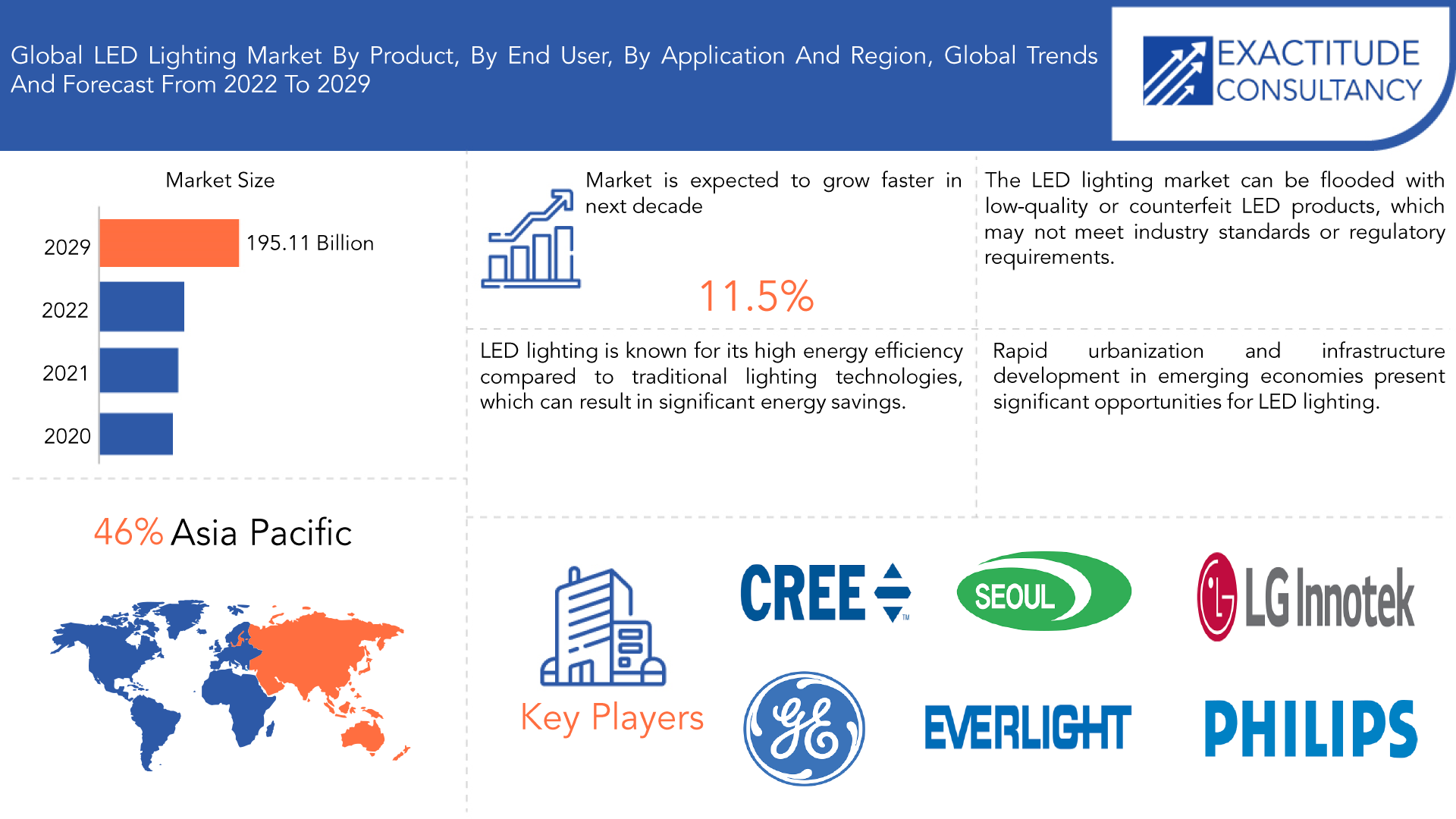
Se espera que el mercado de iluminación LED crezca a una tasa compuesta anual del 11,50 % entre 2022 y 2029. Se espera que alcance más de 195 110 millones de dólares en 2029 desde los 73 250 millones de dólares en 2020.
La iluminación LED, o iluminación con diodos emisores de luz, es un tipo de tecnología de iluminación que utiliza diodos semiconductores para emitir luz cuando pasa una corriente eléctrica a través de ellos. Los LED son energéticamente eficientes, duraderos y versátiles, lo que los hace populares para una amplia gama de aplicaciones de iluminación. Los LED funcionan convirtiendo la energía eléctrica directamente en luz a través de un proceso llamado electroluminiscencia. Cuando se aplica un voltaje al diodo, los electrones del material semiconductor se recombinan con los huecos de electrones, liberando energía en forma de luz. El color de la luz emitida por un LED se puede controlar ajustando la composición del material semiconductor.
La conservación de la energía y la sostenibilidad medioambiental son factores clave del mercado de la iluminación LED. A medida que aumenta la conciencia y el énfasis en la conservación de la energía y la sostenibilidad, existe una creciente demanda de iluminación LED como una solución de iluminación ecológica y de bajo consumo energético. Las regulaciones e incentivos gubernamentales, los avances en la tecnología LED, la disminución de los costes, la demanda de los consumidores de iluminación inteligente, la expansión de aplicaciones más allá de la iluminación tradicional y la urbanización son factores que contribuyen a la adopción de la iluminación LED. Los LED ofrecen una alta eficiencia energética, una larga vida útil y un menor impacto medioambiental en comparación con las tecnologías de iluminación tradicionales, en consonancia con los objetivos de conservación de la energía y sostenibilidad medioambiental. Estos factores están dando forma al crecimiento y desarrollo del mercado de la iluminación LED a nivel mundial, ya que cada vez más consumidores y empresas priorizan las opciones de iluminación responsables con el medio ambiente.
| ATRIBUTO | DETALLES |
| Periodo de estudio | 2020-2029 |
| Año base | 2021 |
| Año estimado | 2022 |
| Año pronosticado | 2022-2029 |
| Periodo histórico | 2018-2020 |
| Unidad | Valor (Miles de millones de USD), (Miles de unidades). |
| Segmentación | Por producto, Por aplicación, Por aplicación, Por región |
| Por producto |
|
| Por el usuario final |
|
| Por aplicación |
|
| Por región |
|
Poor quality LED lighting products can have several negative impacts, including performance issues, shorter lifespan, safety risks, lack of reliability, and negative impact on brand reputation. These concerns may arise due to subpar components, inadequate manufacturing processes, poor thermal management, or lack of adherence to industry standards and certifications. To address quality concerns in the LED lighting market, it is crucial for manufacturers, suppliers, and end-users to prioritize adherence to industry standards, certifications, and best practices in LED manufacturing, testing, and quality control. Investing in high-quality components, robust thermal management, and stringent manufacturing processes can ensure reliable and durable LED lighting products. Educating consumers and businesses about the importance of choosing high-quality LED lighting products and working with reputable manufacturers and suppliers can also help mitigate quality concerns and foster market growth. Additionally, industry collaborations, regulatory oversight, and certification programs can play a role in ensuring the quality and performance of LED lighting products in the market.
Smart lighting and IoT integration are a significant opportunity in the LED lighting market. The convergence of LED lighting with Internet of Things (IoT) technology allows for remote control, automation, and customization of lighting systems. This enables energy optimization, advanced functionalities, and connected lighting solutions. The adoption of smart lighting for residential, commercial, and outdoor applications is expected to grow as demand increases for energy-efficient and intelligent lighting solutions that can be integrated into smart homes, buildings, and cities. This presents an opportunity for LED lighting manufacturers to develop innovative smart lighting products and solutions to meet the evolving needs of the market.
The COVID-19 pandemic had negative impacts on the LED lighting market, including supply chain disruptions, reduced demand in some sectors, and economic uncertainties. Lockdowns, travel restrictions, and workforce limitations disrupted the global supply chain, leading to delays and shortages of LED lighting components and finished products. The closures of businesses, offices, hotels, and other commercial spaces during lockdowns resulted in reduced demand for LED lighting in these sectors. Delayed or cancelled construction projects and reduced consumer spending on non-essential items also impacted the demand for LED lighting in residential applications. The economic uncertainties caused by the pandemic, including reduced consumer purchasing power and budget constraints, further dampened the demand for LED lighting products. These negative impacts highlight the challenges faced by the LED lighting market during the pandemic, which may continue to have lingering effects in the post-pandemic recovery phase.
[título id="attachment_22020" align="aligncenter" width="1920"]
Frequently Asked Questions
What is the worth of LED lighting market?
The LED lighting market is expected to grow at 11.50% CAGR from 2022 to 2029. It is expected to reach above USD 195.11 Billion by 2029 from USD 73.25 Billion in 2020.
What is the size of the Asia Pacific the LED lighting market?
Asia Pacific held more than 46% of the LED lighting market revenue share in 2021 and will witness expansion in the forecast period.
What are some of the market's driving forces?
LED lighting is known for its high energy efficiency compared to traditional lighting technologies, which can result in significant energy savings. Growing awareness and focus on energy conservation and environmental sustainability have led to increased demand for LED lighting as a greener and more sustainable lighting solution.
Which are the top companies to hold the market share in LED lighting market?
The LED lighting market key players include Cree Inc., Everlight Electronics Co. Ltd., General Electric Company, LG Innotek Co. Ltd., Heliospectra, Lumileds Holding B.V., Nichia Corporation, Koninklijke Philips N.V., Osram Licht AG, Seoul Semiconductor Co. Ltd.
What is the leading application of LED lighting market?
The construction is major sector where the application of LED lighting has seen more.
Which is the largest regional market for LED lighting market?
Asia Pacific region dominated the market with highest revenue share.
LED Lighting Market Segment Analysis
LED lamps refer to the replacement bulbs that are designed to retrofit traditional incandescent, halogen, or fluorescent lamps with LED technology. LED lamps are available in various shapes and sizes, including A-type (bulb-shaped), PAR (parabolic aluminized reflector) lamps, and MR16 (multifaceted reflector) lamps, among others. LED lamps are popular due to their long lifespan, energy efficiency, and versatility for use in various applications, such as residential, commercial, and outdoor lighting.
The residential sector includes homes, apartments, and other residential buildings. Within this segment, A-type LED lamps (bulb-shaped) are a dominant sub-segment. A-type LED lamps are designed to retrofit traditional incandescent or CFL bulbs in residential lighting fixtures, such as table lamps, floor lamps, and ceiling fixtures. They are popular due to their energy efficiency, long lifespan, and ease of installation.
Indoor LED lighting finds applications in various settings such as residential, commercial, and industrial spaces. This includes lighting for homes, offices, retail stores, hospitals, schools, hotels, warehouses, factories, and other indoor environments. LED lamps, fixtures, downlights, troffers, strip lights, and other types of indoor LED lighting products are used to provide general illumination, accent lighting, task lighting, and decorative lighting in indoor spaces.
[caption id="attachment_22044" align="aligncenter" width="1920"]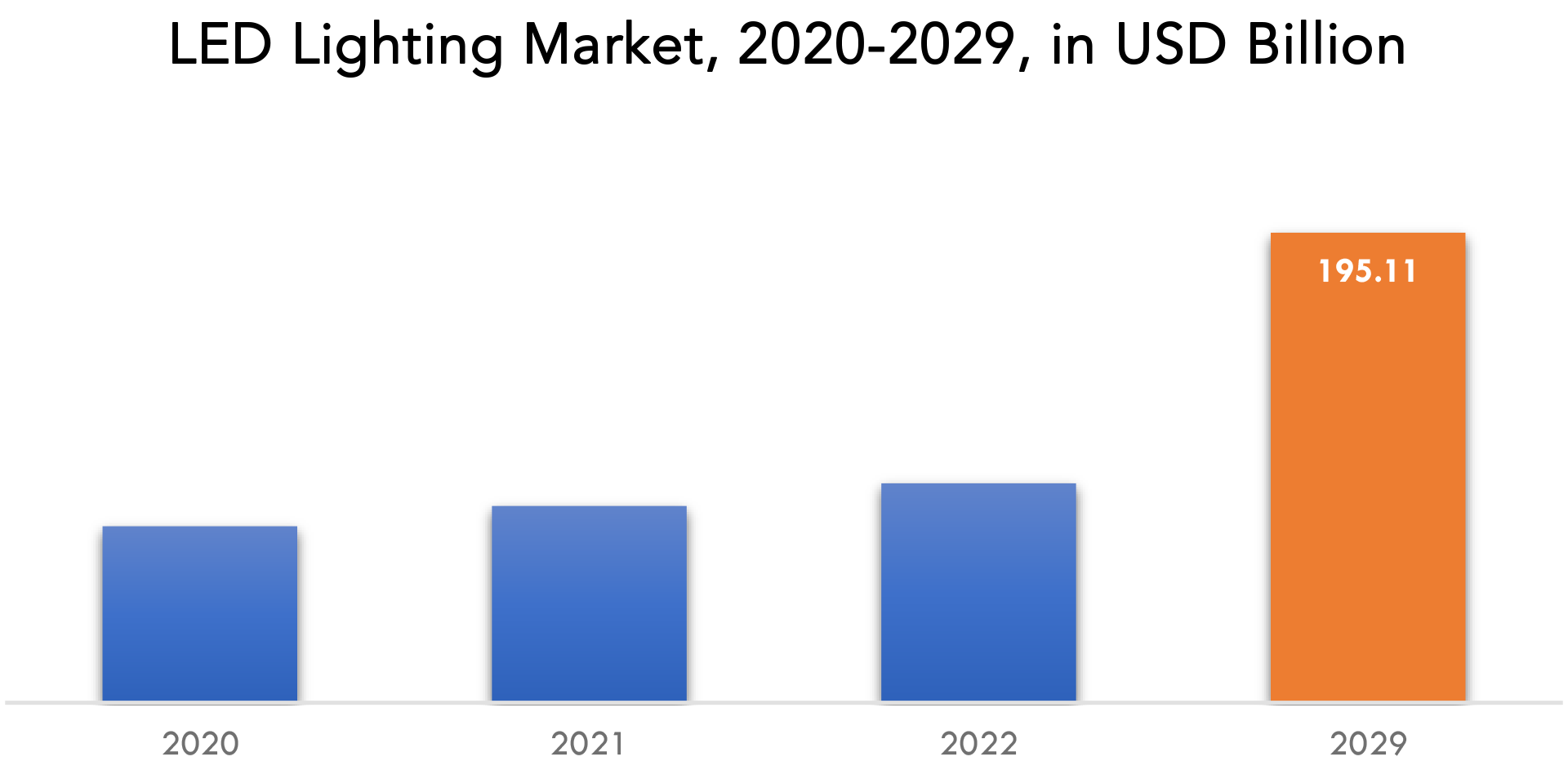
LED Lighting Market Players
The LED lighting market key players include Cree, Inc., Everlight Electronics Co., Ltd., General Electric Company, LG Innotek Co. Ltd., Heliospectra, Lumileds Holding B.V., Nichia Corporation, Koninklijke Philips N.V., Osram Licht AG, Seoul Semiconductor Co. Ltd. Industrial Development: February 2023 - Heliospectra introduced MITRA Flex, a revolutionary flexible far-red light for application-based growing. The new solutions provide customers with three spectra in one without sacrificing power, making it ideal for specialized and application-based growing, such as far-red light treatments at the end of the day or the end of production, or to guarantee a healthy crop all year long, even during low light seasons. January 2023 - Nichia Corporation and Infineon Technologies AG announced the launch of the industry's first fully integrated micro-LED (µPLS light engine) light engine for high-definition (HD) adaptive driving beam applications. The µPLS light engine uses Nichia's unique in-house LED chip, micro-LED technology, and an integrated LED driver IC from Infineon that can drive all 16,384 micro-LEDs individually using pulse-width modulation (PWM) control.Who Should Buy? Or Key stakeholders
- Construction Companies
- LED Manufacturer
- Government Organizations
- Raw Material Manufacturer
- Supplier and Distributor
- Research Organizations
- Investors
- Regulatory Authorities
- Others
LED Lighting Market Regional Analysis
The LED Lighting Market by region includes North America, Asia-Pacific (APAC), Europe, South America, and Middle East & Africa (MEA).- North America: includes the US, Canada, Mexico
- Asia Pacific: includes China, Japan, South Korea, India, Australia, ASEAN and Rest of APAC
- Europe: includes UK, Germany, France, Italy, Spain, Russia, and Rest of Europe
- South America: includes Brazil, Argentina and Rest of South America
- Middle East & Africa: includes Turkey, UAE, Saudi Arabia, South Africa, and Rest of MEA
The Asia Pacific region has emerged as a dominant market in the LED lighting industry. Factors such as rapid urbanization, increasing infrastructure development, and growing industrialization in countries like China, India, Japan, and South Korea have fueled the demand for LED lighting products in the region. The Asia Pacific market has been driven by favorable government initiatives promoting energy-efficient lighting solutions and the presence of key LED lighting manufacturers. Additionally, rising awareness among consumers about the benefits of LED lighting, such as lower energy consumption, longer lifespan, and reduced maintenance costs, has further propelled the market's growth in the Asia Pacific region. As a result, the Asia Pacific region has been a significant market for LED lighting, with a strong market share in the global LED lighting industry.
North America has been a significant market for LED lighting, with the US and Canada driving demand. Stringent energy efficiency regulations, incentives for energy-efficient lighting, and increasing consumer awareness about the benefits of LED lighting have contributed to the region's market growth. LED lighting products are widely adopted in various applications, including residential, commercial, and industrial, in North America. As a result, North America has played a pivotal role in the global LED lighting market, showcasing substantial market presence and demand for LED lighting solutions.
[caption id="attachment_22050" align="aligncenter" width="1920"]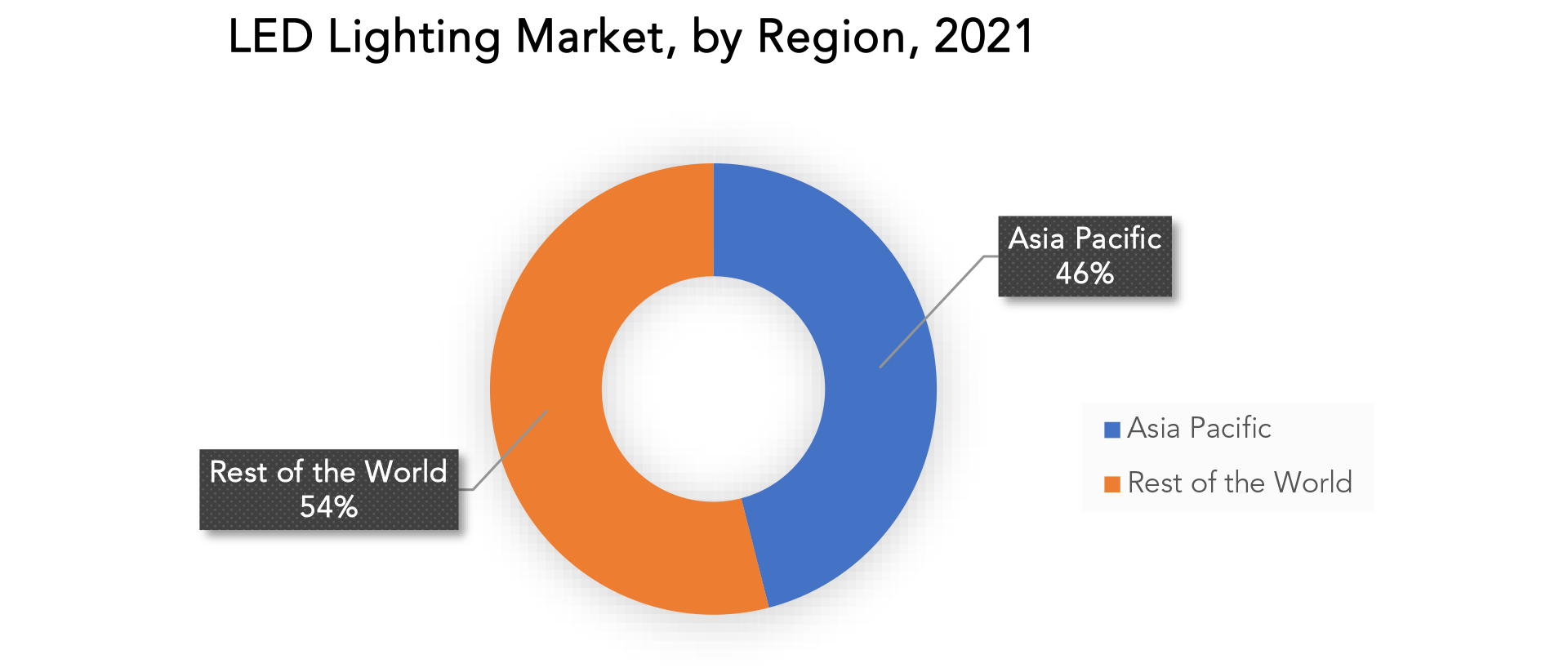
Key Market Segments: LED Lighting Market
LED Lighting Market By Product, 2020-2029, (USD Billion), (Thousand Units).- LED Lamps
- LED Fixtures
- Industrial
- Commercial
- Residential
- Indoor Lighting
- Outdoor Lighting
- North America
- Asia Pacific
- Europe
- South America
- Middle East And Africa
Key Question Answered
- What is the expected growth rate of the LED lighting market over the next 7 years?
- Who are the major players in the LED lighting market and what is their market share?
- What are the end-user industries driving demand for market and what is their outlook?
- What are the opportunities for growth in emerging markets such as Asia-pacific, middle east, and Africa?
- How is the economic environment affecting the LED lighting market, including factors such as interest rates, inflation, and exchange rates?
- What is the expected impact of government policies and regulations on the LED lighting market?
- What is the current and forecasted size and growth rate of the global LED lighting market?
- What are the key drivers of growth in the LED lighting market?
- Who are the major players in the market and what is their market share?
- What are the distribution channels and supply chain dynamics in the LED lighting market?
- What are the technological advancements and innovations in the LED lighting market and their impact on product development and growth?
- What are the regulatory considerations and their impact on the market?
- What are the challenges faced by players in the LED lighting market and how are they addressing these challenges?
- What are the opportunities for growth and expansion in the LED lighting market?
- What are the products offerings and specifications of leading players in the market?
Exactitude Consultancy Services Key Objectives:
- Increasing sales and market share
- Developing new technology
- Improving profitability
- Entering new markets
- Enhancing brand reputation
- INTRODUCCIÓN
- DEFINICIÓN DE MERCADO
- SEGMENTACIÓN DEL MERCADO
- CRONOGRAMAS DE INVESTIGACIÓN
- SUPUESTOS Y LIMITACIONES
- METODOLOGÍA DE LA INVESTIGACIÓN
- MINERÍA DE DATOS
- INVESTIGACIÓN SECUNDARIA
- INVESTIGACIÓN PRIMARIA
- ASESORAMIENTO DE EXPERTOS EN LA MATERIA
- CONTROLES DE CALIDAD
- REVISIÓN FINAL
- TRIANGULACIÓN DE DATOS
- ENFOQUE DE ABAJO HACIA ARRIBA
- ENFOQUE DE ARRIBA HACIA ABAJO
- FLUJO DE INVESTIGACIÓN
- FUENTES DE DATOS
- MINERÍA DE DATOS
- RESUMEN EJECUTIVO
- PANORAMA DEL MERCADO
- PERSPECTIVAS DEL MERCADO MUNDIAL DE ILUMINACIÓN LED
- IMPULSORES DEL MERCADO
- RESTRICCIONES DEL MERCADO
- OPORTUNIDADES DE MERCADO
- IMPACTO DEL COVID-19 EN EL MERCADO DE ILUMINACIÓN LED
- MODELO DE LAS CINCO FUERZAS DE PORTER
- AMENAZA DE NUEVOS INGRESANTES
- AMENAZA DE SUSTITUTOS
- PODER DE NEGOCIACIÓN DE LOS PROVEEDORES
- PODER DE NEGOCIACIÓN DE LOS CLIENTES
- GRADO DE COMPETENCIA
- ANÁLISIS DE LA CADENA DE VALOR DE LA INDUSTRIA
- PERSPECTIVAS DEL MERCADO MUNDIAL DE ILUMINACIÓN LED
- MERCADO GLOBAL DE ILUMINACIÓN LED POR PRODUCTO, 2020-2029, (MIL MILLONES DE USD), (MILES DE UNIDADES)
- LÁMPARAS LED
- LUMINARIAS LED
- MERCADO GLOBAL DE ILUMINACIÓN LED POR USUARIO FINAL, 2020-2029, (MIL MILLONES DE USD), (MILES DE UNIDADES)
- INDUSTRIAL
- COMERCIAL
- RESIDENCIAL
- MERCADO GLOBAL DE ILUMINACIÓN LED POR APLICACIÓN, 2020-2029, (MIL MILLONES DE USD), (MILES DE UNIDADES)
- ILUMINACIÓN INTERIOR
- ILUMINACIÓN EXTERIOR
- MERCADO GLOBAL DE ILUMINACIÓN LED POR REGIÓN, 2020-2029, (MIL MILLONES DE USD), (MILES DE UNIDADES)
- AMÉRICA DEL NORTE
- A NOSOTROS
- CANADÁ
- MÉXICO
- SUDAMERICA
- BRASIL
- ARGENTINA
- COLOMBIA
- RESTO DE SUDAMÉRICA
- EUROPA
- ALEMANIA
- Reino Unido
- FRANCIA
- ITALIA
- ESPAÑA
- RUSIA
- RESTO DE EUROPA
- ASIA PACÍFICO
- INDIA
- PORCELANA
- JAPÓN
- COREA DEL SUR
- AUSTRALIA
- ASIA SUDESTE
- RESTO DE ASIA PACÍFICO
- ORIENTE MEDIO Y ÁFRICA
- Emiratos Árabes Unidos
- ARABIA SAUDITA
- SUDÁFRICA
- RESTO DE ORIENTE MEDIO Y ÁFRICA
- AMÉRICA DEL NORTE
- PERFILES DE EMPRESAS* (DESCRIPCIÓN GENERAL DEL NEGOCIO, RESEÑA DE LA EMPRESA, PRODUCTOS OFRECIDOS, DESARROLLOS RECIENTES)
- CREE INC.
- Compañía Electrónica Everlight Ltd.
- COMPAÑÍA GENERAL ELÉCTRICA
- LG INNOTEK CO. LTD.
- Helioespectros
- LUMILEDS HOLDING BV
- CORPORACIÓN NICHIA
- CONFIANZA PHILIPS NV
- OSRAM LIGHT AG (Inglés)
- SEOUL SEMICONDUCTOR CO. LTD. *LA LISTA DE EMPRESAS ES ORIENTATIVA
LISTA DE TABLAS
TABLE 1 GLOBAL LED LIGHTING MARKET BY PRODUCT (USD BILLION) 2020-2029
TABLE 2 GLOBAL LED LIGHTING MARKET BY PRODUCT (THOUSAND UNITS) 2020-2029
TABLE 3 GLOBAL LED LIGHTING MARKET BY END USER (USD BILLION) 2020-2029
TABLE 4 GLOBAL LED LIGHTING MARKET BY END USER (THOUSAND UNITS) 2020-2029
TABLE 5 GLOBAL LED LIGHTING MARKET BY APPLICATION (USD BILLION) 2020-2029
TABLE 6 GLOBAL LED LIGHTING MARKET BY APPLICATION (THOUSAND UNITS) 2020-2029
TABLE 7 GLOBAL LED LIGHTING MARKET BY REGION (USD BILLION) 2020-2029
TABLE 8 GLOBAL LED LIGHTING MARKET BY REGION (THOUSAND UNITS) 2020-2029
TABLE 9 NORTH AMERICA LED LIGHTING MARKET BY COUNTRY (USD BILLION) 2020-2029
TABLE 10 NORTH AMERICA LED LIGHTING MARKET BY COUNTRY (THOUSAND UNITS) 2020-2029
TABLE 11 NORTH AMERICA LED LIGHTING MARKET BY PRODUCT (USD BILLION) 2020-2029
TABLE 12 NORTH AMERICA LED LIGHTING MARKET BY PRODUCT (THOUSAND UNITS) 2020-2029
TABLE 13 NORTH AMERICA LED LIGHTING MARKET BY END USER (USD BILLION) 2020-2029
TABLE 14 NORTH AMERICA LED LIGHTING MARKET BY END USER (THOUSAND UNITS) 2020-2029
TABLE 15 NORTH AMERICA LED LIGHTING MARKET BY APPLICATION (USD BILLION) 2020-2029
TABLE 16 NORTH AMERICA LED LIGHTING MARKET BY APPLICATION (THOUSAND UNITS) 2020-2029
TABLE 17 US LED LIGHTING MARKET BY PRODUCT (USD BILLION) 2020-2029
TABLE 18 US LED LIGHTING MARKET BY PRODUCT (THOUSAND UNITS) 2020-2029
TABLE 19 US LED LIGHTING MARKET BY END USER (USD BILLION) 2020-2029
TABLE 20 US LED LIGHTING MARKET BY END USER (THOUSAND UNITS) 2020-2029
TABLE 21 US LED LIGHTING MARKET BY APPLICATION (USD BILLION) 2020-2029
TABLE 22 US LED LIGHTING MARKET BY APPLICATION (THOUSAND UNITS) 2020-2029
TABLE 23 CANADA LED LIGHTING MARKET BY PRODUCT (USD BILLION) 2020-2029
TABLE 24 CANADA LED LIGHTING MARKET BY PRODUCT (THOUSAND UNITS) 2020-2029
TABLE 25 CANADA LED LIGHTING MARKET BY END USER (USD BILLION) 2020-2029
TABLE 26 CANADA LED LIGHTING MARKET BY END USER (THOUSAND UNITS) 2020-2029
TABLE 27 CANADA LED LIGHTING MARKET BY APPLICATION (USD BILLION) 2020-2029
TABLE 28 CANADA LED LIGHTING MARKET BY APPLICATION (THOUSAND UNITS) 2020-2029
TABLE 29 MEXICO LED LIGHTING MARKET BY PRODUCT (USD BILLION) 2020-2029
TABLE 30 MEXICO LED LIGHTING MARKET BY PRODUCT (THOUSAND UNITS) 2020-2029
TABLE 31 MEXICO LED LIGHTING MARKET BY END USER (USD BILLION) 2020-2029
TABLE 32 MEXICO LED LIGHTING MARKET BY END USER (THOUSAND UNITS) 2020-2029
TABLE 33 MEXICO LED LIGHTING MARKET BY APPLICATION (USD BILLION) 2020-2029
TABLE 34 MEXICO LED LIGHTING MARKET BY APPLICATION (THOUSAND UNITS) 2020-2029
TABLE 35 SOUTH AMERICA LED LIGHTING MARKET BY COUNTRY (USD BILLION) 2020-2029
TABLE 36 SOUTH AMERICA LED LIGHTING MARKET BY COUNTRY (THOUSAND UNITS) 2020-2029
TABLE 37 SOUTH AMERICA LED LIGHTING MARKET BY PRODUCT (USD BILLION) 2020-2029
TABLE 38 SOUTH AMERICA LED LIGHTING MARKET BY PRODUCT (THOUSAND UNITS) 2020-2029
TABLE 39 SOUTH AMERICA LED LIGHTING MARKET BY END USER (USD BILLION) 2020-2029
TABLE 40 SOUTH AMERICA LED LIGHTING MARKET BY END USER (THOUSAND UNITS) 2020-2029
TABLE 41 SOUTH AMERICA LED LIGHTING MARKET BY APPLICATION (USD BILLION) 2020-2029
TABLE 42 SOUTH AMERICA LED LIGHTING MARKET BY APPLICATION (THOUSAND UNITS) 2020-2029
TABLE 43 BRAZIL LED LIGHTING MARKET BY PRODUCT (USD BILLION) 2020-2029
TABLE 44 BRAZIL LED LIGHTING MARKET BY PRODUCT (THOUSAND UNITS) 2020-2029
TABLE 45 BRAZIL LED LIGHTING MARKET BY END USER (USD BILLION) 2020-2029
TABLE 46 BRAZIL LED LIGHTING MARKET BY END USER (THOUSAND UNITS) 2020-2029
TABLE 47 BRAZIL LED LIGHTING MARKET BY APPLICATION (USD BILLION) 2020-2029
TABLE 48 BRAZIL LED LIGHTING MARKET BY APPLICATION (THOUSAND UNITS) 2020-2029
TABLE 49 ARGENTINA LED LIGHTING MARKET BY PRODUCT (USD BILLION) 2020-2029
TABLE 50 ARGENTINA LED LIGHTING MARKET BY PRODUCT (THOUSAND UNITS) 2020-2029
TABLE 51 ARGENTINA LED LIGHTING MARKET BY END USER (USD BILLION) 2020-2029
TABLE 52 ARGENTINA LED LIGHTING MARKET BY END USER (THOUSAND UNITS) 2020-2029
TABLE 53 ARGENTINA LED LIGHTING MARKET BY APPLICATION (USD BILLION) 2020-2029
TABLE 54 ARGENTINA LED LIGHTING MARKET BY APPLICATION (THOUSAND UNITS) 2020-2029
TABLE 55 COLOMBIA LED LIGHTING MARKET BY PRODUCT (USD BILLION) 2020-2029
TABLE 56 COLOMBIA LED LIGHTING MARKET BY PRODUCT (THOUSAND UNITS) 2020-2029
TABLE 57 COLOMBIA LED LIGHTING MARKET BY END USER (USD BILLION) 2020-2029
TABLE 58 COLOMBIA LED LIGHTING MARKET BY END USER (THOUSAND UNITS) 2020-2029
TABLE 59 COLOMBIA LED LIGHTING MARKET BY APPLICATION (USD BILLION) 2020-2029
TABLE 60 COLOMBIA LED LIGHTING MARKET BY APPLICATION (THOUSAND UNITS) 2020-2029
TABLE 61 REST OF SOUTH AMERICA LED LIGHTING MARKET BY PRODUCT (USD BILLION) 2020-2029
TABLE 62 REST OF SOUTH AMERICA LED LIGHTING MARKET BY PRODUCT (THOUSAND UNITS) 2020-2029
TABLE 63 REST OF SOUTH AMERICA LED LIGHTING MARKET BY END USER (USD BILLION) 2020-2029
TABLE 64 REST OF SOUTH AMERICA LED LIGHTING MARKET BY END USER (THOUSAND UNITS) 2020-2029
TABLE 65 REST OF SOUTH AMERICA LED LIGHTING MARKET BY APPLICATION (USD BILLION) 2020-2029
TABLE 66 REST OF SOUTH AMERICA LED LIGHTING MARKET BY APPLICATION (THOUSAND UNITS) 2020-2029
TABLE 67 ASIA-PACIFIC LED LIGHTING MARKET BY COUNTRY (USD BILLION) 2020-2029
TABLE 68 ASIA-PACIFIC LED LIGHTING MARKET BY COUNTRY (THOUSAND UNITS) 2020-2029
TABLE 69 ASIA-PACIFIC LED LIGHTING MARKET BY PRODUCT (USD BILLION) 2020-2029
TABLE 70 ASIA-PACIFIC LED LIGHTING MARKET BY PRODUCT (THOUSAND UNITS) 2020-2029
TABLE 71 ASIA-PACIFIC LED LIGHTING MARKET BY END USER (USD BILLION) 2020-2029
TABLE 72 ASIA-PACIFIC LED LIGHTING MARKET BY END USER (THOUSAND UNITS) 2020-2029
TABLE 73 ASIA-PACIFIC LED LIGHTING MARKET BY APPLICATION (USD BILLION) 2020-2029
TABLE 74 ASIA-PACIFIC LED LIGHTING MARKET BY APPLICATION (THOUSAND UNITS) 2020-2029
TABLE 75 INDIA LED LIGHTING MARKET BY PRODUCT (USD BILLION) 2020-2029
TABLE 76 INDIA LED LIGHTING MARKET BY PRODUCT (THOUSAND UNITS) 2020-2029
TABLE 77 INDIA LED LIGHTING MARKET BY END USER (USD BILLION) 2020-2029
TABLE 78 INDIA LED LIGHTING MARKET BY END USER (THOUSAND UNITS) 2020-2029
TABLE 79 INDIA LED LIGHTING MARKET BY APPLICATION (USD BILLION) 2020-2029
TABLE 80 INDIA LED LIGHTING MARKET BY APPLICATION (THOUSAND UNITS) 2020-2029
TABLE 81 CHINA LED LIGHTING MARKET BY PRODUCT (USD BILLION) 2020-2029
TABLE 82 CHINA LED LIGHTING MARKET BY PRODUCT (THOUSAND UNITS) 2020-2029
TABLE 83 CHINA LED LIGHTING MARKET BY END USER (USD BILLION) 2020-2029
TABLE 84 CHINA LED LIGHTING MARKET BY END USER (THOUSAND UNITS) 2020-2029
TABLE 85 CHINA LED LIGHTING MARKET BY APPLICATION (USD BILLION) 2020-2029
TABLE 86 CHINA LED LIGHTING MARKET BY APPLICATION (THOUSAND UNITS) 2020-2029
TABLE 87 JAPAN LED LIGHTING MARKET BY PRODUCT (USD BILLION) 2020-2029
TABLE 88 JAPAN LED LIGHTING MARKET BY PRODUCT (THOUSAND UNITS) 2020-2029
TABLE 89 JAPAN LED LIGHTING MARKET BY END USER (USD BILLION) 2020-2029
TABLE 90 JAPAN LED LIGHTING MARKET BY END USER (THOUSAND UNITS) 2020-2029
TABLE 91 JAPAN LED LIGHTING MARKET BY APPLICATION (USD BILLION) 2020-2029
TABLE 92 JAPAN LED LIGHTING MARKET BY APPLICATION (THOUSAND UNITS) 2020-2029
TABLE 93 SOUTH KOREA LED LIGHTING MARKET BY PRODUCT (USD BILLION) 2020-2029
TABLE 94 SOUTH KOREA LED LIGHTING MARKET BY PRODUCT (THOUSAND UNITS) 2020-2029
TABLE 95 SOUTH KOREA LED LIGHTING MARKET BY END USER (USD BILLION) 2020-2029
TABLE 96 SOUTH KOREA LED LIGHTING MARKET BY END USER (THOUSAND UNITS) 2020-2029
TABLE 97 SOUTH KOREA LED LIGHTING MARKET BY APPLICATION (USD BILLION) 2020-2029
TABLE 98 SOUTH KOREA LED LIGHTING MARKET BY APPLICATION (THOUSAND UNITS) 2020-2029
TABLE 99 AUSTRALIA LED LIGHTING MARKET BY PRODUCT (USD BILLION) 2020-2029
TABLE 100 AUSTRALIA LED LIGHTING MARKET BY PRODUCT (THOUSAND UNITS) 2020-2029
TABLE 101 AUSTRALIA LED LIGHTING MARKET BY END USER (USD BILLION) 2020-2029
TABLE 102 AUSTRALIA LED LIGHTING MARKET BY END USER (THOUSAND UNITS) 2020-2029
TABLE 103 AUSTRALIA LED LIGHTING MARKET BY APPLICATION (USD BILLION) 2020-2029
TABLE 104 AUSTRALIA LED LIGHTING MARKET BY APPLICATION (THOUSAND UNITS) 2020-2029
TABLE 105 SOUTH-EAST ASIA LED LIGHTING MARKET BY PRODUCT (USD BILLION) 2020-2029
TABLE 106 SOUTH-EAST ASIA LED LIGHTING MARKET BY PRODUCT (THOUSAND UNITS) 2020-2029
TABLE 107 SOUTH-EAST ASIA LED LIGHTING MARKET BY END USER (USD BILLION) 2020-2029
TABLE 108 SOUTH-EAST ASIA LED LIGHTING MARKET BY END USER (THOUSAND UNITS) 2020-2029
TABLE 109 SOUTH-EAST ASIA LED LIGHTING MARKET BY APPLICATION (USD BILLION) 2020-2029
TABLE 110 SOUTH-EAST ASIA LED LIGHTING MARKET BY APPLICATION (THOUSAND UNITS) 2020-2029
TABLE 111 REST OF ASIA PACIFIC LED LIGHTING MARKET BY PRODUCT (USD BILLION) 2020-2029
TABLE 112 REST OF ASIA PACIFIC LED LIGHTING MARKET BY PRODUCT (THOUSAND UNITS) 2020-2029
TABLE 113 REST OF ASIA PACIFIC LED LIGHTING MARKET BY END USER (USD BILLION) 2020-2029
TABLE 114 REST OF ASIA PACIFIC LED LIGHTING MARKET BY END USER (THOUSAND UNITS) 2020-2029
TABLE 115 REST OF ASIA PACIFIC LED LIGHTING MARKET BY APPLICATION (USD BILLION) 2020-2029
TABLE 116 REST OF ASIA PACIFIC LED LIGHTING MARKET BY APPLICATION (THOUSAND UNITS) 2020-2029
TABLE 117 EUROPE LED LIGHTING MARKET BY COUNTRY (USD BILLION) 2020-2029
TABLE 118 EUROPE LED LIGHTING MARKET BY COUNTRY (THOUSAND UNITS) 2020-2029
TABLE 119 EUROPE LED LIGHTING MARKET BY PRODUCT (USD BILLION) 2020-2029
TABLE 120 EUROPE LED LIGHTING MARKET BY PRODUCT (THOUSAND UNITS) 2020-2029
TABLE 121 EUROPE LED LIGHTING MARKET BY END USER (USD BILLION) 2020-2029
TABLE 122 EUROPE LED LIGHTING MARKET BY END USER (THOUSAND UNITS) 2020-2029
TABLE 123 EUROPE LED LIGHTING MARKET BY APPLICATION (USD BILLION) 2020-2029
TABLE 124 EUROPE LED LIGHTING MARKET BY APPLICATION (THOUSAND UNITS) 2020-2029
TABLE 125 GERMANY LED LIGHTING MARKET BY PRODUCT (USD BILLION) 2020-2029
TABLE 126 GERMANY LED LIGHTING MARKET BY PRODUCT (THOUSAND UNITS) 2020-2029
TABLE 127 GERMANY LED LIGHTING MARKET BY END USER (USD BILLION) 2020-2029
TABLE 128 GERMANY LED LIGHTING MARKET BY END USER (THOUSAND UNITS) 2020-2029
TABLE 129 GERMANY LED LIGHTING MARKET BY APPLICATION (USD BILLION) 2020-2029
TABLE 130 GERMANY LED LIGHTING MARKET BY APPLICATION (THOUSAND UNITS) 2020-2029
TABLE 131 UK LED LIGHTING MARKET BY PRODUCT (USD BILLION) 2020-2029
TABLE 132 UK LED LIGHTING MARKET BY PRODUCT (THOUSAND UNITS) 2020-2029
TABLE 133 UK LED LIGHTING MARKET BY END USER (USD BILLION) 2020-2029
TABLE 134 UK LED LIGHTING MARKET BY END USER (THOUSAND UNITS) 2020-2029
TABLE 135 UK LED LIGHTING MARKET BY APPLICATION (USD BILLION) 2020-2029
TABLE 136 UK LED LIGHTING MARKET BY APPLICATION (THOUSAND UNITS) 2020-2029
TABLE 137 FRANCE LED LIGHTING MARKET BY PRODUCT (USD BILLION) 2020-2029
TABLE 138 FRANCE LED LIGHTING MARKET BY PRODUCT (THOUSAND UNITS) 2020-2029
TABLE 139 FRANCE LED LIGHTING MARKET BY END USER (USD BILLION) 2020-2029
TABLE 140 FRANCE LED LIGHTING MARKET BY END USER (THOUSAND UNITS) 2020-2029
TABLE 141 FRANCE LED LIGHTING MARKET BY APPLICATION (USD BILLION) 2020-2029
TABLE 142 FRANCE LED LIGHTING MARKET BY APPLICATION (THOUSAND UNITS) 2020-2029
TABLE 143 ITALY LED LIGHTING MARKET BY PRODUCT (USD BILLION) 2020-2029
TABLE 144 ITALY LED LIGHTING MARKET BY PRODUCT (THOUSAND UNITS) 2020-2029
TABLE 145 ITALY LED LIGHTING MARKET BY END USER (USD BILLION) 2020-2029
TABLE 146 ITALY LED LIGHTING MARKET BY END USER (THOUSAND UNITS) 2020-2029
TABLE 147 ITALY LED LIGHTING MARKET BY APPLICATION (USD BILLION) 2020-2029
TABLE 148 ITALY LED LIGHTING MARKET BY APPLICATION (THOUSAND UNITS) 2020-2029
TABLE 149 SPAIN LED LIGHTING MARKET BY PRODUCT (USD BILLION) 2020-2029
TABLE 150 SPAIN LED LIGHTING MARKET BY PRODUCT (THOUSAND UNITS) 2020-2029
TABLE 151 SPAIN LED LIGHTING MARKET BY END USER (USD BILLION) 2020-2029
TABLE 152 SPAIN LED LIGHTING MARKET BY END USER (THOUSAND UNITS) 2020-2029
TABLE 153 SPAIN LED LIGHTING MARKET BY APPLICATION (USD BILLION) 2020-2029
TABLE 154 SPAIN LED LIGHTING MARKET BY APPLICATION (THOUSAND UNITS) 2020-2029
TABLE 155 RUSSIA LED LIGHTING MARKET BY PRODUCT (USD BILLION) 2020-2029
TABLE 156 RUSSIA LED LIGHTING MARKET BY PRODUCT (THOUSAND UNITS) 2020-2029
TABLE 157 RUSSIA LED LIGHTING MARKET BY END USER (USD BILLION) 2020-2029
TABLE 158 RUSSIA LED LIGHTING MARKET BY END USER (THOUSAND UNITS) 2020-2029
TABLE 159 RUSSIA LED LIGHTING MARKET BY APPLICATION (USD BILLION) 2020-2029
TABLE 160 RUSSIA LED LIGHTING MARKET BY APPLICATION (THOUSAND UNITS) 2020-2029
TABLE 161 REST OF EUROPE LED LIGHTING MARKET BY PRODUCT (USD BILLION) 2020-2029
TABLE 162 REST OF EUROPE LED LIGHTING MARKET BY PRODUCT (THOUSAND UNITS) 2020-2029
TABLE 163 REST OF EUROPE LED LIGHTING MARKET BY END USER (USD BILLION) 2020-2029
TABLE 164 REST OF EUROPE LED LIGHTING MARKET BY END USER (THOUSAND UNITS) 2020-2029
TABLE 165 REST OF EUROPE LED LIGHTING MARKET BY APPLICATION (USD BILLION) 2020-2029
TABLE 166 REST OF EUROPE LED LIGHTING MARKET BY APPLICATION (THOUSAND UNITS) 2020-2029
TABLE 167 MIDDLE EAST AND AFRICA LED LIGHTING MARKET BY COUNTRY (USD BILLION) 2020-2029
TABLE 168 MIDDLE EAST AND AFRICA LED LIGHTING MARKET BY COUNTRY (THOUSAND UNITS) 2020-2029
TABLE 169 MIDDLE EAST AND AFRICA LED LIGHTING MARKET BY PRODUCT (USD BILLION) 2020-2029
TABLE 170 MIDDLE EAST AND AFRICA LED LIGHTING MARKET BY PRODUCT (THOUSAND UNITS) 2020-2029
TABLE 171 MIDDLE EAST AND AFRICA LED LIGHTING MARKET BY END USER (USD BILLION) 2020-2029
TABLE 172 MIDDLE EAST AND AFRICA LED LIGHTING MARKET BY END USER (THOUSAND UNITS) 2020-2029
TABLE 173 MIDDLE EAST AND AFRICA LED LIGHTING MARKET BY APPLICATION (USD BILLION) 2020-2029
TABLE 174 MIDDLE EAST AND AFRICA LED LIGHTING MARKET BY APPLICATION (THOUSAND UNITS) 2020-2029
TABLE 175 UAE LED LIGHTING MARKET BY PRODUCT (USD BILLION) 2020-2029
TABLE 176 UAE LED LIGHTING MARKET BY PRODUCT (THOUSAND UNITS) 2020-2029
TABLE 177 UAE LED LIGHTING MARKET BY END USER (USD BILLION) 2020-2029
TABLE 178 UAE LED LIGHTING MARKET BY END USER (THOUSAND UNITS) 2020-2029
TABLE 179 UAE LED LIGHTING MARKET BY APPLICATION (USD BILLION) 2020-2029
TABLE 180 UAE LED LIGHTING MARKET BY APPLICATION (THOUSAND UNITS) 2020-2029
TABLE 181 SAUDI ARABIA LED LIGHTING MARKET BY PRODUCT (USD BILLION) 2020-2029
TABLE 182 SAUDI ARABIA LED LIGHTING MARKET BY PRODUCT (THOUSAND UNITS) 2020-2029
TABLE 183 SAUDI ARABIA LED LIGHTING MARKET BY END USER (USD BILLION) 2020-2029
TABLE 184 SAUDI ARABIA LED LIGHTING MARKET BY END USER (THOUSAND UNITS) 2020-2029
TABLE 185 SAUDI ARABIA LED LIGHTING MARKET BY APPLICATION (USD BILLION) 2020-2029
TABLE 186 SAUDI ARABIA LED LIGHTING MARKET BY APPLICATION (THOUSAND UNITS) 2020-2029
TABLE 187 SOUTH AFRICA LED LIGHTING MARKET BY PRODUCT (USD BILLION) 2020-2029
TABLE 188 SOUTH AFRICA LED LIGHTING MARKET BY PRODUCT (THOUSAND UNITS) 2020-2029
TABLE 189 SOUTH AFRICA LED LIGHTING MARKET BY END USER (USD BILLION) 2020-2029
TABLE 190 SOUTH AFRICA LED LIGHTING MARKET BY END USER (THOUSAND UNITS) 2020-2029
TABLE 191 SOUTH AFRICA LED LIGHTING MARKET BY APPLICATION (USD BILLION) 2020-2029
TABLE 192 SOUTH AFRICA LED LIGHTING MARKET BY APPLICATION (THOUSAND UNITS) 2020-2029
TABLE 193 REST OF MIDDLE EAST AND AFRICA LED LIGHTING MARKET BY PRODUCT (USD BILLION) 2020-2029
TABLE 194 REST OF MIDDLE EAST AND AFRICA LED LIGHTING MARKET BY PRODUCT (THOUSAND UNITS) 2020-2029
TABLE 195 REST OF MIDDLE EAST AND AFRICA LED LIGHTING MARKET BY END USER (USD BILLION) 2020-2029
TABLE 196 REST OF MIDDLE EAST AND AFRICA LED LIGHTING MARKET BY END USER (THOUSAND UNITS) 2020-2029
TABLE 197 REST OF MIDDLE EAST AND AFRICA LED LIGHTING MARKET BY APPLICATION (USD BILLION) 2020-2029
TABLE 198 REST OF MIDDLE EAST AND AFRICA LED LIGHTING MARKET BY APPLICATION (THOUSAND UNITS) 2020-2029
LIST OF FIGURES
FIGURE 1 MARKET DYNAMICS
FIGURE 2 MARKET SEGMENTATION
FIGURE 3 REPORT TIMELINES: YEARS CONSIDERED
FIGURE 4 DATA TRIANGULATION
FIGURE 5 BOTTOM-UP APPROACH
FIGURE 6 TOP-DOWN APPROACH
FIGURE 7 RESEARCH FLOW
FIGURE 8 GLOBAL LED LIGHTING MARKET BY PRODUCT, USD BILLION, 2020-2029
FIGURE 9 GLOBAL LED LIGHTING MARKET BY END USER, USD BILLION, 2020-2029
FIGURE 10 GLOBAL LED LIGHTING MARKET BY APPLICATION, USD BILLION, 2020-2029
FIGURE 11 GLOBAL LED LIGHTING MARKET BY REGION, USD BILLION, 2020-2029
FIGURE 12 PORTER’S FIVE FORCES MODEL
FIGURE 13 GLOBAL LED LIGHTING MARKET BY PRODUCT, USD BILLION, 2021
FIGURE 14 GLOBAL LED LIGHTING MARKET BY END USER, USD BILLION, 2021
FIGURE 15 GLOBAL LED LIGHTING MARKET BY APPLICATION, USD BILLION, 2021
FIGURE 16 GLOBAL LED LIGHTING MARKET BY REGION, USD BILLION, 2021
FIGURE 17 NORTH AMERICA LED LIGHTING MARKET SNAPSHOT
FIGURE 18 EUROPE LED LIGHTING MARKET SNAPSHOT
FIGURE 19 SOUTH AMERICA LED LIGHTING MARKET SNAPSHOT
FIGURE 20 ASIA PACIFIC LED LIGHTING MARKET SNAPSHOT
FIGURE 21 MIDDLE EAST ASIA AND AFRICA LED LIGHTING MARKET SNAPSHOT
FIGURE 22 MARKET SHARE ANALYSIS
FIGURE 23 CREE INC.: COMPANY SNAPSHOT
FIGURE 24 EVERLIGHT ELECTRONICS CO. LTD.: COMPANY SNAPSHOT
FIGURE 25 GENERAL ELECTRIC COMPANY: COMPANY SNAPSHOT
FIGURE 26 LG INNOTEK CO. LTD.: COMPANY SNAPSHOT
FIGURE 27 HELIOSPECTRA: COMPANY SNAPSHOT
FIGURE 28 LUMILEDS HOLDING B.V.: COMPANY SNAPSHOT
FIGURE 29 NICHIA CORPORATION: COMPANY SNAPSHOT
FIGURE 30 KONINKLIJKE PHILIPS N.V.: COMPANY SNAPSHOT
FIGURE 31 OSRAM LICHT AG: COMPANY SNAPSHOT
FIGURE 32 SEOUL SEMICONDUCTOR CO. LTD.: COMPANY SNAPSHOT
DOWNLOAD FREE SAMPLE REPORT
License Type
SPEAK WITH OUR ANALYST
Want to know more about the report or any specific requirement?
WANT TO CUSTOMIZE THE REPORT?
Our Clients Speak
We asked them to research ‘ Equipment market’ all over the world, and their whole arrangement was helpful to us. thehealthanalytics.com insightful analysis and reports contributed to our current analysis and in creating a future strategy. Besides, the te
Yosuke Mitsui
Senior Associate Construction Equipment Sales & Marketing
We asked them to research ‘Equipment market’ all over the world, and their whole arrangement was helpful to us. thehealthanalytics.com insightful analysis and reports contributed to our current analysis and in creating a future strategy. Besides, the te