

Base Year Value ()
x.x %
x.x %
CAGR ()
x.x %
x.x %
Forecast Year Value ()
x.x %
x.x %
Historical Data Period
Largest Region
Forecast Period
Tamaño del mercado de sensores de visión por tipo (cinturón de precarga, cinturón de precarga preenrollado), por aplicación (automóvil de pasajeros, vehículo comercial), por usuario final (cinturón de seguridad convencional y cinturón de seguridad inflable) y por región Tendencias globales y pronóstico de 2022 a 2029
Instant access to hundreds of data points and trends
- Market estimates from 2014-2029
- Competitive analysis, industry segmentation, financial benchmarks
- Incorporates SWOT, Porter's Five Forces and risk management frameworks
- PDF report or online database with Word, Excel and PowerPoint export options
- 100% money back guarantee
Descripción general del mercado de sensores de visión
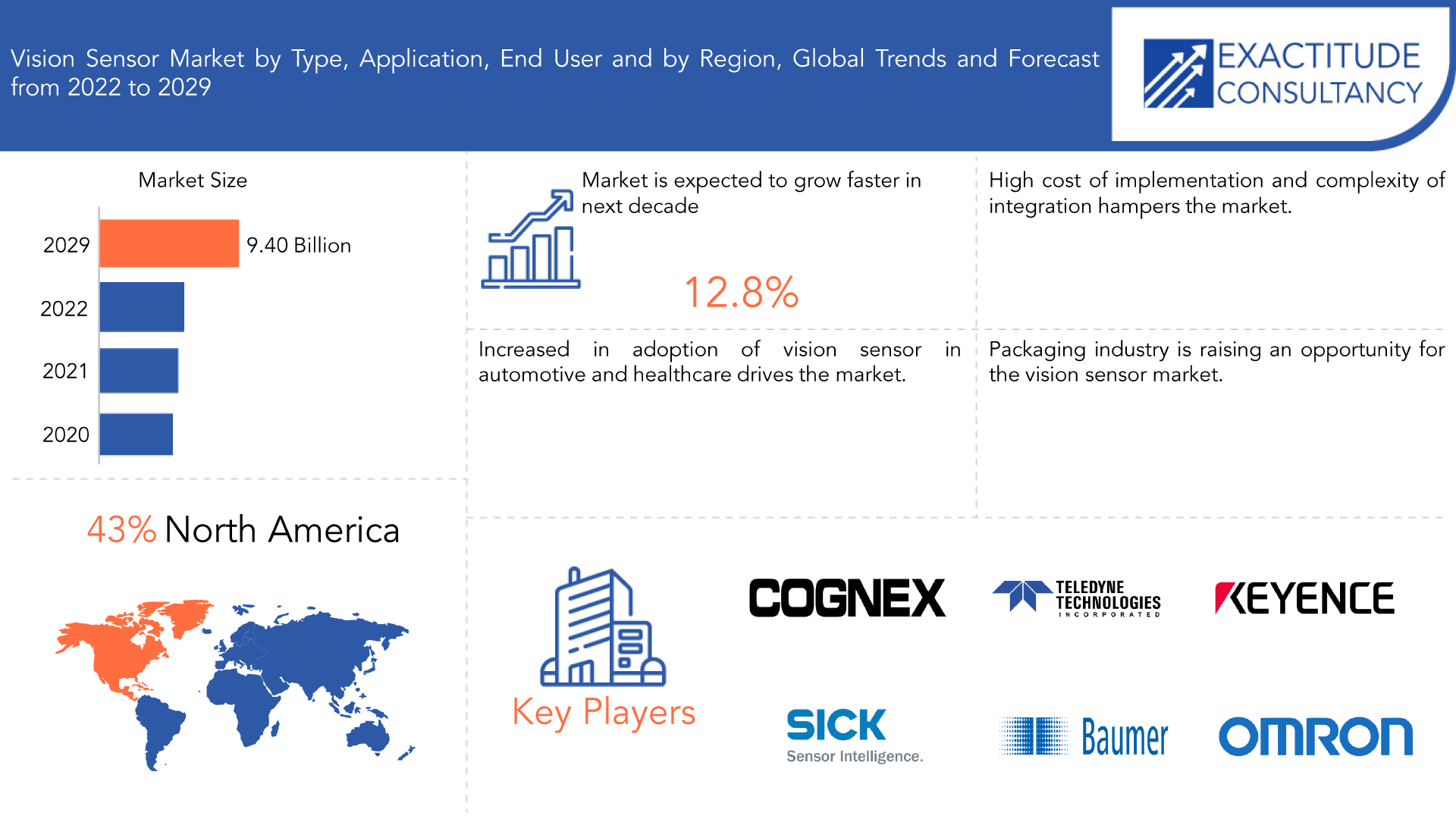
Se espera que el mercado global de sensores de visión crezca a una CAGR del 12,8 % entre 2022 y 2029, desde USD 3180 millones en 2020.
Las inspecciones se realizan mediante sensores de visión que primero reconocen el componente en la imagen y luego lo escanean en busca de características específicas. Una vez que se ha determinado el campo de visión (FOV), un operador puede utilizar herramientas visuales para evaluar una serie de características en busca de su presencia, integridad u orientación en una sola imagen. Para cada objetivo, se pueden examinar varios elementos que se pueden distinguir por el color. Los sensores de visión responden bien a la imprevisibilidad y la desalineación deliberadas. Los sensores de visión artificial pueden ayudar a los fabricantes a mejorar la productividad y la rentabilidad al reducir los errores y aumentar el rendimiento. Debido a sus numerosas herramientas visuales y la capacidad de realizar numerosas inspecciones en cada objetivo, los sensores de visión también pueden acortar los tiempos de ciclo y mejorar la calidad del producto.
Estos sensores son distintos de otros sensores de uso general y se utilizan en diversas empresas y fábricas para determinar la presencia y la orientación general de objetos mediante imágenes capturadas por cámaras. Se encuentran preinstalados con sistemas o aplicaciones específicos que ayudan a determinar el estado de funcionamiento o falla de un producto.
| ATRIBUTO | DETALLES |
| Periodo de estudio | 2020-2029 |
| Año base | 2021 |
| Año estimado | 2022 |
| Año pronosticado | 2022-2029 |
| Periodo histórico | 2018-2020 |
| Unidad | Valor (Miles de millones de USD) (Miles de unidades) |
| Segmentación | Por tipo, por aplicación, por usuario final, por región. |
| Por tipo |
|
| Por aplicación |
|
| Por usuario final |
|
| Por región |
|
El crecimiento de las industrias de la electrónica y los semiconductores, así como la fuerte demanda de productos electrónicos de consumo, están impulsando el mercado de sensores de visión. La mayor demanda de sensores de visión en la industria automotriz para su uso en la detección y medición de piezas es otro factor importante que se espera que impulse la expansión del mercado. La innovación de productos en sensores de visión, como las capacidades operativas en entornos hostiles y los sensores de visión 3D de empresas clave, también se espera que impulsen el crecimiento del mercado. La tecnología de automatización avanzada en rápido crecimiento y la industria automotriz en expansión.
Se espera que los sensores de visión tengan una gran demanda en la industria automotriz debido a la creciente necesidad de estos sensores en aplicaciones de identificación, inspección y localización. Algunas de las aplicaciones cruciales que aumentarán la demanda de sensores de visión en esta industria incluyen la inspección de varias piezas y componentes, la detección de componentes defectuosos, la desalineación de piezas y componentes y el control de brazos robóticos para realizar tareas difíciles en la línea de ensamblaje.
La corporación DENSO, con sede en Kariya (Japón), un proveedor líder mundial de componentes para automóviles, ha creado un pequeño sensor de visión estereoscópica que mejora la seguridad de los automóviles pequeños. El sistema de prevención de colisiones Smart Assist III para el nuevo Daihatsu Tanto utiliza este sensor, que es el sensor de visión estereoscópica para automóviles más pequeño jamás creado.
Sin embargo, las menores tasas de adopción de sensores de visión en los países en desarrollo, los mayores costos de instalación y mantenimiento y la escasez de profesionales capacitados están impidiendo el crecimiento de los ingresos en el mercado mundial de sensores de visión. En los países en desarrollo y subdesarrollados, la instalación de sensores de visión en plantas de fabricación es costosa y difícil de implementar. Además, el costo de mantenimiento es significativamente mayor cuando se utilizan sensores de visión. Se espera que estos factores limiten el crecimiento del mercado.
[título id="attachment_22198" align="aligncenter" width="1110"]
Frequently Asked Questions
What is the worth of global Vision Sensor market?
The Vision Sensor market reached USD 3.18 billion in 2020 and is expected to grow at a CAGR of more than 12.8% through 2029, owing to the increasing development in the automotive industry.
What are the upcoming trends of Vision Sensor market, globally?
The upcoming trend in the Vision Sensor market is an opportunity for market growth.
What is the CAGR of Vision Sensor market?
The global Vision Sensor market registered a CAGR of 12.8% from 2022 to 2029.
Which are the top companies to hold the market share in Vision Sensor market?
Key players profiled in the report include Cognex Corporation, Teledyne Technologies Inc., Keyence Corporation, Sick AG, Baumer, OMRON Corporation, Datalogic S.p.A., SensoPart Industriesensorik GmbH, Isra Vision GmbH, and Qualitas Technologies.
Which is the largest regional market for Vision Sensor market?
The North America Vision Sensor market is expected to grow at a 43% CAGR during the forecast period (2022 - 2029).
Vision Sensor Market Segment Analysis
The global market for vision sensors is segmented less into 3D and 3D based on type. Over the forecast period, the revenue from the less-than-3D segment is anticipated to represent the largest share. Systems for seeing in more than one dimension are possible. Instead of analysing the entire image, 1D vision systems focus on a single line of the digital signal at a time. The detection and classification of flaws in goods produced using continuous processes, such as paper, metals, plastics, and non-woven, is one of the most widely used applications of 1D machine vision.
For 2D systems, a wide range of resolutions are available. Common, general-purpose applications typically have resolutions of no more than 5 MP (Megapixels). Furthermore, 2D vision systems can be used for a variety of tasks such as positioning, inspection, measurement, and reading. When the texture or colour of an object is critical to solving a problem, this technology is especially useful in applications requiring high contrast. These are the factors driving this segment's revenue growth.
The market for code-reading vision sensors will expand at the highest CAGR during the forecast period. In the upcoming years, code reading will be an essential skill in sectors like food & beverage, packaging, and logistics. Products will be marked and identified, as well as tracked on a conveyer belt or during transit to the intended location, using 1D or 2D code readers, fixed or handheld code readers. During the forecast period, there is expected to be a positive impact on the growth of the vision sensor market for code reading applications due to the rising demand for vision sensors from the automotive, food, and packaging industries.
Given the growing need for these sensors in inspection, identification, and localization applications, the automotive industry is anticipated to be the primary end-user industry for vision sensors. One of the main uses that will increase demand for vision sensors in this industry is the inspection of various parts and components, the detection of defective components, the misalignment of parts and components, and the control of robotic arms to carry out difficult tasks on the assembly line. The growing use of factory automation to reduce manufacturing time and costs spent on inspection will drive up demand for these sensors in North America, APAC, and Europe.
[caption id="attachment_22223" align="aligncenter" width="1920"]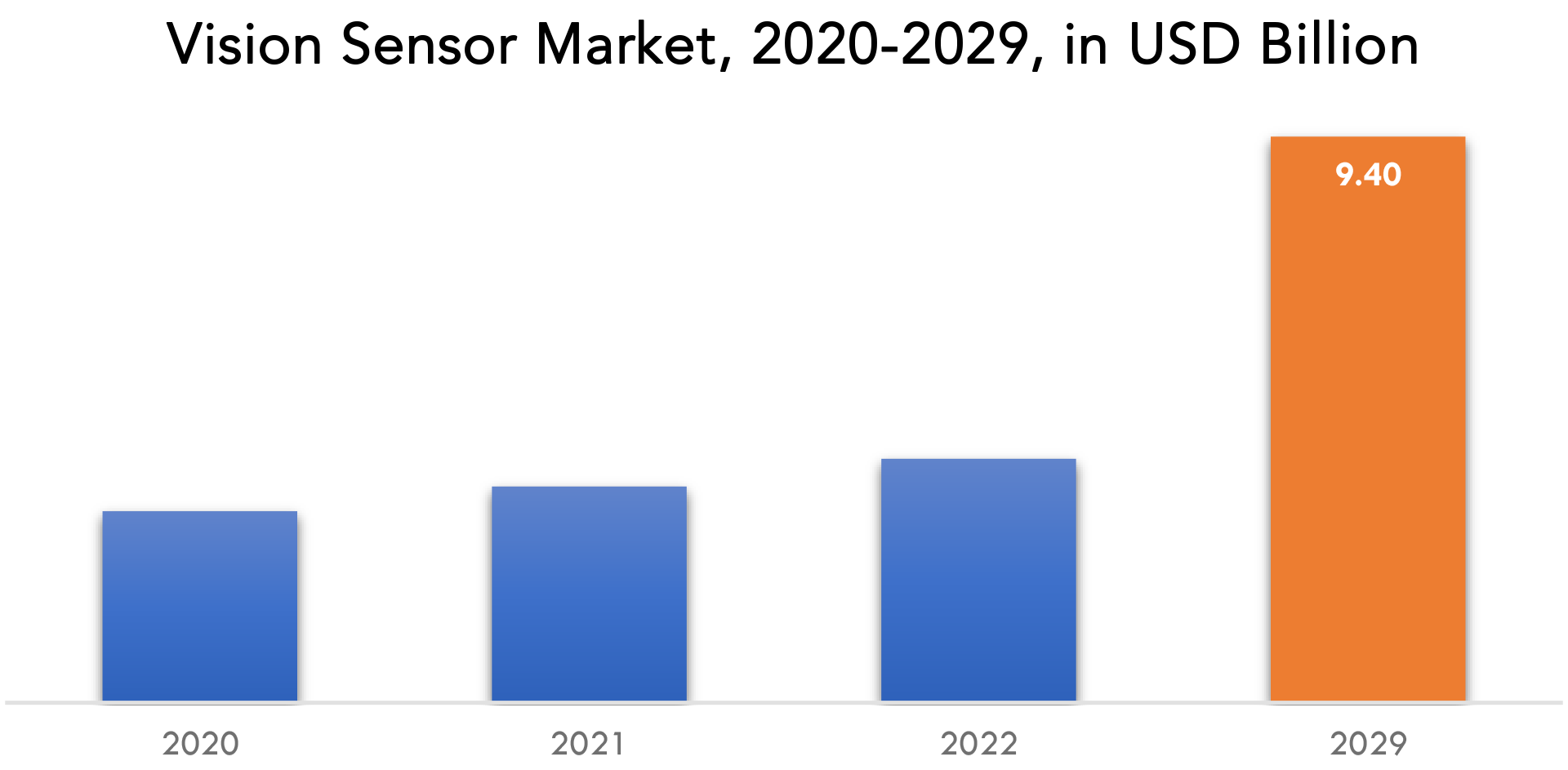
Vision Sensor Market Players
Key players involved in Vision Sensor market are Cognex Corporation, Teledyne Technologies Inc., Keyence Corporation, Sick AG, Baumer, OMRON Corporation, Datalogic S.p.A., SensoPart Industriesensorik GmbH, Isra Vision GmbH, and Qualitas Technologies. Mergers and acquisitions, joint ventures, capacity expansions, significant distribution, and branding decisions by established industry players to boost market share and regional presence. They are also engaged in continuous R&D activities to develop new Product Types and are focused on expanding the Product Type portfolio. This is expected to increase competition and pose a threat to new market entrants.
Recent Developments
- June 12, 2023- OMRON Corporation (HQ: Shimogyo-ku, Kyoto; President & CEO: Junta Tsujinaga) will become the first control components manufacturer*1 to quantify the carbon footprint*2 (CFP) of control panels, with an aim to reduce it in half (compared to FY2016) through its products by FY2025
Who Should Buy? Or Key stakeholders
- Research and development
- Manufacturing
- End Use industries
- Automotive
- Government
- Healthcare
- Production Industry and manufacturing
Vision Sensor Market Regional Analysis
Geographically, the Vision Sensor market is segmented into North America, South America, Europe, APAC and MEA.
- North America: includes the US, Canada, Mexico
- Europe: includes UK, Germany, France, Italy, Spain, Russia, and Rest of Europe
- Asia Pacific: includes China, Japan, South Korea, India, Australia, ASEAN and Rest of APAC
- South America: includes Brazil, Argentina and Rest of South America
- Middle East & Africa: includes Turkey, UAE, Saudi Arabia, South Africa, and Rest of MEA
Vision sensors are expected to grow significantly in the Asia-Pacific region. The increase in spending on industry automation to reduce manufacturing costs, minimize time to market, and improve quality standards across various end-user industries such as automotive, electronics, food & beverages, and packaging are major factors driving the growth of vision sensors in the Asia-Pacific region. Manufacturers are attempting to implement automation techniques in order to reduce costs, save time, and improve product quality. During the forecast period, these factors will continue to drive demand for vision sensors in these industries in the APAC region.
In 2021, the market in North America accounted for the largest revenue share. As smart vision sensors are used more frequently across a range of end-use industries, demand for vision sensors has risen quickly. The use of smart vision sensors in industrial settings has attracted a lot of attention in recent years. In industrial settings, smart vision sensors are used to support judgement calls for localized pass/fail, networked management, and I/O part rejection. As a result, system footprints are minimized, simplifying and streamlining machine vision applications. Most of these sensors help manufacturers and system integrators customize for things like feature location, object measurement, and image enhancement, among other things.
The Europe market is expected to grow at a significant and consistent rate during the forecast period, owing to the rapid adoption of IoT in the manufacturing sector and rising demand for industrial automation. Rapid growth in automotive manufacturing in this region may result in the rapid adoption of industrial automation in the manufacturing process. A software tool library built into vision sensors enables the execution of a wide range of inspections, including multiple types of inspections, during the manufacturing process. This is expected to boost demand for vision sensors and drive revenue growth in the region.
[caption id="attachment_22231" align="aligncenter" width="1920"]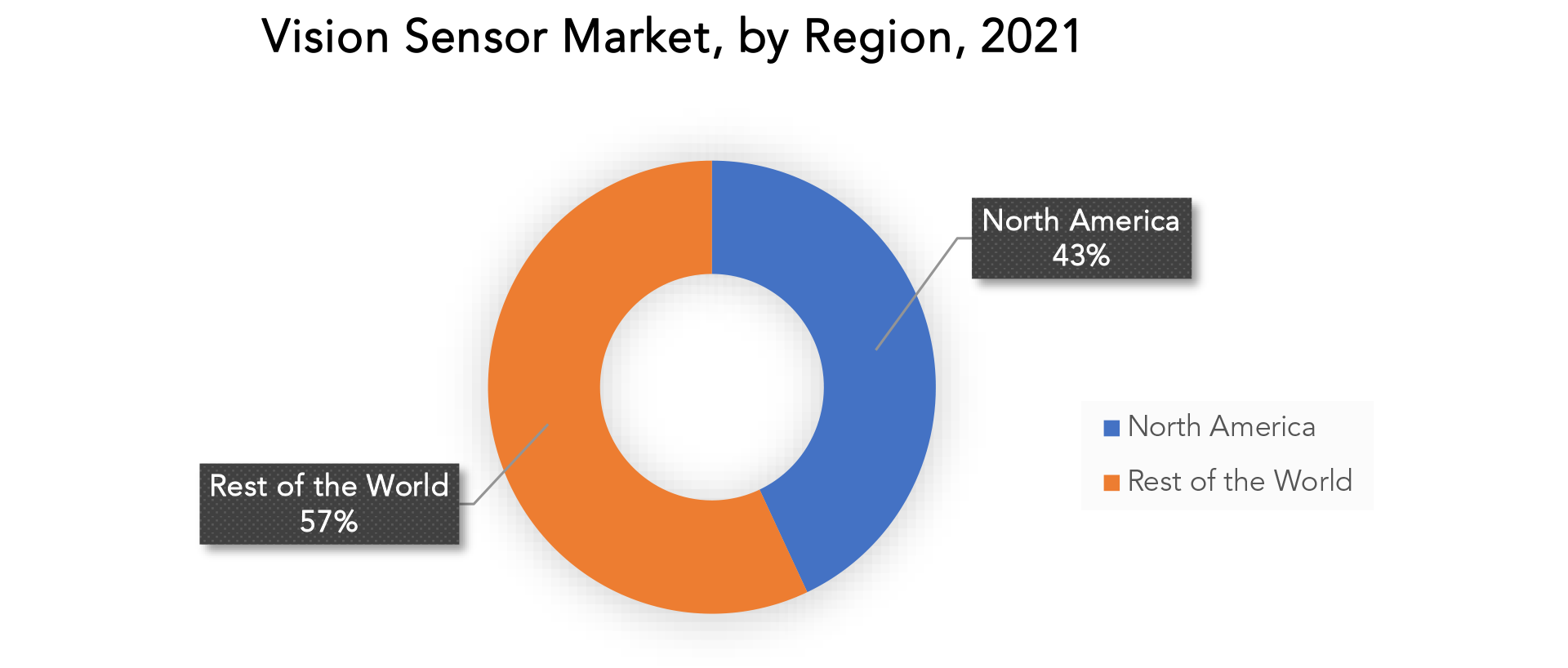
Key Market Segments: Vision Sensor Market
Vision Sensor Market Type, 2020-2029, (USD Billion) (Thousand Units)- Less Than 3d Vision Sensors
- 3d Vision Sensors
- Others
- Inspection
- Gauging
- Code Reading
- Automotive
- Electronics & Semiconductor
- Pharmaceuticals
- Food & Packaging
- North America
- Europe
- Asia Pacific
- South America
- Middle East And Africa
Exactitude Consultancy Services Key Objectives:
- Increasing sales and market share
- Developing new End-user
- Improving profitability
- Entering new markets
- Enhancing brand reputation
Key Question Answered
- What is the expected growth rate of the Vision Sensor market over the next 7years?
- Who are the major players in the Vision Sensor market and what is their market share?
- What are the end-user industries driving demand for market and what is their outlook?
- What are the opportunities for growth in emerging markets such as Asia-Pacific, Middle East, and Africa?
- How is the economic environment affecting the Vision Sensor market, including factors such as interest rates, inflation, and exchange rates?
- What is the expected impact of government policies and regulations on the Vision Sensor market?
- What is the current and forecasted size and growth rate of the global Vision Sensor market?
- What are the key drivers of growth in the Vision Sensor market?
- Who are the major players in the market and what is their market share?
- What are the distribution channels and supply chain dynamics in the Vision Sensor market?
- What are the technological advancements and innovations in the Vision Sensor market and their impact on product development and growth?
- What are the regulatory considerations and their impact on the market?
- What are the challenges faced by players in the Vision Sensor market and how are they addressing these challenges?
- What are the opportunities for growth and expansion in the Vision Sensor market?
- What are the service offerings and specifications of leading players in the market?
- INTRODUCCIÓN
- DEFINICIÓN DE MERCADO
- SEGMENTACIÓN DEL MERCADO
- CRONOGRAMAS DE INVESTIGACIÓN
- SUPUESTOS Y LIMITACIONES
- METODOLOGÍA DE LA INVESTIGACIÓN
- MINERÍA DE DATOS
- INVESTIGACIÓN SECUNDARIA
- INVESTIGACIÓN PRIMARIA
- ASESORAMIENTO DE EXPERTOS EN LA MATERIA
- CONTROLES DE CALIDAD
- REVISIÓN FINAL
- TRIANGULACIÓN DE DATOS
- ENFOQUE DE ABAJO HACIA ARRIBA
- ENFOQUE DE ARRIBA HACIA ABAJO
- FLUJO DE INVESTIGACIÓN
- FUENTES DE DATOS
- MINERÍA DE DATOS
- RESUMEN EJECUTIVO
- PANORAMA DEL MERCADO
- PERSPECTIVA DE VENTAS DEL MERCADO GLOBAL DE SENSORES VISIBLES
- IMPULSORES DEL MERCADO
- RESTRICCIONES DEL MERCADO
- OPORTUNIDADES DE MERCADO
- IMPACTO DEL MERCADO DE SENSORES DE VISIÓN POR COVID-19
- MODELO DE LAS CINCO FUERZAS DE PORTER
- AMENAZA DE NUEVOS INGRESANTES
- AMENAZA DE SUSTITUTOS
- PODER DE NEGOCIACIÓN DE LOS PROVEEDORES
- PODER DE NEGOCIACIÓN DE LOS CLIENTES
- GRADO DE COMPETENCIA
- ANÁLISIS DE LA CADENA DE VALOR DE LA INDUSTRIA
- PERSPECTIVA DE VENTAS DEL MERCADO GLOBAL DE SENSORES VISIBLES
- MERCADO GLOBAL DE SENSORES DE VISIÓN POR TIPO, 2020-2029, (MIL MILLONES DE USD) (MILES DE UNIDADES)
- SENSORES DE VISIÓN MENOS QUE 3D
- SENSORES DE VISIÓN 3D
- OTROS
- MERCADO GLOBAL DE SENSORES DE VISIÓN POR APLICACIÓN, 2020-2029, (MIL MILLONES DE USD) (MILES DE UNIDADES)
- INSPECCIÓN
- MEDICIÓN
- LECTURA DE CÓDIGOS
- MERCADO GLOBAL DE SENSORES DE VISIÓN POR USUARIO FINAL, 2020-2029, (MIL MILLONES DE USD) (MILES DE UNIDADES)
- AUTOMOTOR
- ELECTRÓNICA Y SEMICONDUCTORES
- PRODUCTOS FARMACÉUTICOS
- ALIMENTOS Y EMBALAJES
- MERCADO GLOBAL DE SENSORES DE VISIÓN POR REGIÓN, 2020-2029, (MIL MILLONES DE USD) (MILES DE UNIDADES)
- AMÉRICA DEL NORTE
- A NOSOTROS
- CANADÁ
- MÉXICO
- SUDAMERICA
- BRASIL
- ARGENTINA
- COLOMBIA
- RESTO DE SUDAMÉRICA
- EUROPA
- ALEMANIA
- Reino Unido
- FRANCIA
- ITALIA
- ESPAÑA
- RUSIA
- RESTO DE EUROPA
- ASIA PACÍFICO
- INDIA
- PORCELANA
- JAPÓN
- COREA DEL SUR
- AUSTRALIA
- ASIA SUDESTE
- RESTO DE ASIA PACÍFICO
- ORIENTE MEDIO Y ÁFRICA
- Emiratos Árabes Unidos
- SAUDI ARABIA
- SOUTH AFRICA
- REST OF MIDDLE EAST AND AFRICA
- AMÉRICA DEL NORTE
COMPANY PROFILES*(BUSINESS OVERVIEW, COMPANY SNAPSHOT, PRODUCTS OFFERED, RECENT DEVELOPMENTS)
9.1. COGNEX CORPORATION
9.2. TELEDYNE TECHNOLOGIES INC.
9.3. KEYENCE CORPORATION
9.4. SICK AG
9.5. BAUMER
9.6. OMRON CORPORATION
9.7. DATALOGIC S.P.A.
9.8. SENSOPART INDUSTRIESENSORIK GMBH
9.9. ISRA VISION GMBH
9.10. QUALITAS TECHNOLOGIES*THE COMPANY LIST IS INDICATIVE
LIST OF TABLES
TABLE 1 GLOBAL VISION SENSOR MARKET BY TYPE (USD BILLION) 2020-2029
TABLE 2 GLOBAL VISION SENSOR MARKET BY TYPE (THOUSAND UNITS) 2020-2029
TABLE 3 GLOBAL VISION SENSOR MARKET BY APPLICATION (USD BILLION) 2020-2029
TABLE 4 GLOBAL VISION SENSOR MARKET BY APPLICATION (THOUSAND UNITS) 2020-2029
TABLE 5 GLOBAL VISION SENSOR MARKET BY END USER (USD BILLION) 2020-2029
TABLE 6 GLOBAL VISION SENSOR MARKET BY END USER (THOUSAND UNITS) 2020-2029
TABLE 7 GLOBAL VISION SENSOR MARKET BY REGION (USD BILLION) 2020-2029
TABLE 8 GLOBAL VISION SENSOR MARKET BY REGION (THOUSAND UNITS) 2020-2029
TABLE 9 NORTH AMERICA VISION SENSOR MARKET BY TYPE (USD BILLION) 2020-2029
TABLE 10 NORTH AMERICA VISION SENSOR MARKET BY TYPE (THOUSAND UNITS) 2020-2029
TABLE 11 NORTH AMERICA VISION SENSOR MARKET BY APPLICATION (USD BILLION) 2020-2029
TABLE 12 NORTH AMERICA VISION SENSOR MARKET BY APPLICATION (THOUSAND UNITS) 2020-2029
TABLE 13 NORTH AMERICA VISION SENSOR MARKET BY END USER (USD BILLION) 2020-2029
TABLE 14 NORTH AMERICA VISION SENSOR MARKET BY END USER (THOUSAND UNITS) 2020-2029
TABLE 15 NORTH AMERICA VISION SENSOR MARKET BY COUNTRY (USD BILLION) 2020-2029
TABLE 16 NORTH AMERICA VISION SENSOR MARKET BY COUNTRY (THOUSAND UNITS) 2020-2029
TABLE 17 US VISION SENSOR MARKET BY TYPE (USD BILLION) 2020-2029
TABLE 18 US VISION SENSOR MARKET BY TYPE (THOUSAND UNITS) 2020-2029
TABLE 19 US VISION SENSOR MARKET BY APPLICATION (USD BILLION) 2020-2029
TABLE 20 US VISION SENSOR MARKET BY APPLICATION (THOUSAND UNITS) 2020-2029
TABLE 21 US VISION SENSOR MARKET BY END USER (USD BILLION) 2020-2029
TABLE 22 US VISION SENSOR MARKET BY END USER (THOUSAND UNITS) 2020-2029
TABLE 23 CANADA VISION SENSOR MARKET BY TYPE (USD BILLION) 2020-2029
TABLE 24 CANADA VISION SENSOR MARKET BY TYPE (THOUSAND UNITS) 2020-2029
TABLE 25 CANADA VISION SENSOR MARKET BY APPLICATION (USD BILLION) 2020-2029
TABLE 26 CANADA VISION SENSOR MARKET BY APPLICATION (THOUSAND UNITS) 2020-2029
TABLE 27 CANADA VISION SENSOR MARKET BY END USER (USD BILLION) 2020-2029
TABLE 28 CANADA VISION SENSOR MARKET BY END USER (THOUSAND UNITS) 2020-2029
TABLE 29 MEXICO VISION SENSOR MARKET BY TYPE (USD BILLION) 2020-2029
TABLE 30 MEXICO VISION SENSOR MARKET BY TYPE (THOUSAND UNITS) 2020-2029
TABLE 31 MEXICO VISION SENSOR MARKET BY APPLICATION (USD BILLION) 2020-2029
TABLE 32 MEXICO VISION SENSOR MARKET BY APPLICATION (THOUSAND UNITS) 2020-2029
TABLE 33 MEXICO VISION SENSOR MARKET BY END USER (USD BILLION) 2020-2029
TABLE 34 MEXICO VISION SENSOR MARKET BY END USER (THOUSAND UNITS) 2020-2029
TABLE 35 SOUTH AMERICA VISION SENSOR MARKET BY TYPE (USD BILLION) 2020-2029
TABLE 36 SOUTH AMERICA VISION SENSOR MARKET BY TYPE (THOUSAND UNITS) 2020-2029
TABLE 37 SOUTH AMERICA VISION SENSOR MARKET BY APPLICATION (USD BILLION) 2020-2029
TABLE 38 SOUTH AMERICA VISION SENSOR MARKET BY APPLICATION (THOUSAND UNITS) 2020-2029
TABLE 39 SOUTH AMERICA VISION SENSOR MARKET BY END USER (USD BILLION) 2020-2029
TABLE 40 SOUTH AMERICA VISION SENSOR MARKET BY END USER (THOUSAND UNITS) 2020-2029
TABLE 41 SOUTH AMERICA VISION SENSOR MARKET BY COUNTRY (USD BILLION) 2020-2029
TABLE 42 SOUTH AMERICA VISION SENSOR MARKET BY COUNTRY (THOUSAND UNITS) 2020-2029
TABLE 43 BRAZIL VISION SENSOR MARKET BY TYPE (USD BILLION) 2020-2029
TABLE 44 BRAZIL VISION SENSOR MARKET BY TYPE (THOUSAND UNITS) 2020-2029
TABLE 45 BRAZIL VISION SENSOR MARKET BY APPLICATION (USD BILLION) 2020-2029
TABLE 46 BRAZIL VISION SENSOR MARKET BY APPLICATION (THOUSAND UNITS) 2020-2029
TABLE 47 BRAZIL VISION SENSOR MARKET BY END USER (USD BILLION) 2020-2029
TABLE 48 BRAZIL VISION SENSOR MARKET BY END USER (THOUSAND UNITS) 2020-2029
TABLE 49 ARGENTINA VISION SENSOR MARKET BY TYPE (USD BILLION) 2020-2029
TABLE 50 ARGENTINA VISION SENSOR MARKET BY TYPE (THOUSAND UNITS) 2020-2029
TABLE 51 ARGENTINA VISION SENSOR MARKET BY APPLICATION (USD BILLION) 2020-2029
TABLE 52 ARGENTINA VISION SENSOR MARKET BY APPLICATION (THOUSAND UNITS) 2020-2029
TABLE 53 ARGENTINA VISION SENSOR MARKET BY END USER (USD BILLION) 2020-2029
TABLE 54 ARGENTINA VISION SENSOR MARKET BY END USER (THOUSAND UNITS) 2020-2029
TABLE 55 COLOMBIA VISION SENSOR MARKET BY TYPE (USD BILLION) 2020-2029
TABLE 56 COLOMBIA VISION SENSOR MARKET BY TYPE (THOUSAND UNITS) 2020-2029
TABLE 57 COLOMBIA VISION SENSOR MARKET BY APPLICATION (USD BILLION) 2020-2029
TABLE 58 COLOMBIA VISION SENSOR MARKET BY APPLICATION (THOUSAND UNITS) 2020-2029
TABLE 59 COLOMBIA VISION SENSOR MARKET BY END USER (USD BILLION) 2020-2029
TABLE 60 COLOMBIA VISION SENSOR MARKET BY END USER (THOUSAND UNITS) 2020-2029
TABLE 61 REST OF SOUTH AMERICA VISION SENSOR MARKET BY TYPE (USD BILLION) 2020-2029
TABLE 62 REST OF SOUTH AMERICA VISION SENSOR MARKET BY TYPE (THOUSAND UNITS) 2020-2029
TABLE 63 REST OF SOUTH AMERICA VISION SENSOR MARKET BY APPLICATION (USD BILLION) 2020-2029
TABLE 64 REST OF SOUTH AMERICA VISION SENSOR MARKET BY APPLICATION (THOUSAND UNITS) 2020-2029
TABLE 65 REST OF SOUTH AMERICA VISION SENSOR MARKET BY END USER (USD BILLION) 2020-2029
TABLE 66 REST OF SOUTH AMERICA VISION SENSOR MARKET BY END USER (THOUSAND UNITS) 2020-2029
TABLE 67 ASIA PACIFIC VISION SENSOR MARKET BY TYPE (USD BILLION) 2020-2029
TABLE 68 ASIA PACIFIC VISION SENSOR MARKET BY TYPE (THOUSAND UNITS) 2020-2029
TABLE 69 ASIA PACIFIC VISION SENSOR MARKET BY APPLICATION (USD BILLION) 2020-2029
TABLE 70 ASIA PACIFIC VISION SENSOR MARKET BY APPLICATION (THOUSAND UNITS) 2020-2029
TABLE 71 ASIA PACIFIC VISION SENSOR MARKET BY END USER (USD BILLION) 2020-2029
TABLE 72 ASIA PACIFIC VISION SENSOR MARKET BY END USER (THOUSAND UNITS) 2020-2029
TABLE 73 ASIA PACIFIC VISION SENSOR MARKET BY COUNTRY (USD BILLION) 2020-2029
TABLE 74 ASIA PACIFIC VISION SENSOR MARKET BY COUNTRY (THOUSAND UNITS) 2020-2029
TABLE 75 INDIA VISION SENSOR MARKET BY TYPE (USD BILLION) 2020-2029
TABLE 76 INDIA VISION SENSOR MARKET BY TYPE (THOUSAND UNITS) 2020-2029
TABLE 77 INDIA VISION SENSOR MARKET BY APPLICATION (USD BILLION) 2020-2029
TABLE 78 INDIA VISION SENSOR MARKET BY APPLICATION (THOUSAND UNITS) 2020-2029
TABLE 79 INDIA VISION SENSOR MARKET BY END USER (USD BILLION) 2020-2029
TABLE 80 INDIA VISION SENSOR MARKET BY END USER (THOUSAND UNITS) 2020-2029
TABLE 81 CHINA VISION SENSOR MARKET BY TYPE (USD BILLION) 2020-2029
TABLE 82 CHINA VISION SENSOR MARKET BY TYPE (THOUSAND UNITS) 2020-2029
TABLE 83 CHINA VISION SENSOR MARKET BY APPLICATION (USD BILLION) 2020-2029
TABLE 84 CHINA VISION SENSOR MARKET BY APPLICATION (THOUSAND UNITS) 2020-2029
TABLE 85 CHINA VISION SENSOR MARKET BY END USER (USD BILLION) 2020-2029
TABLE 86 CHINA VISION SENSOR MARKET BY END USER (THOUSAND UNITS) 2020-2029
TABLE 87 JAPAN VISION SENSOR MARKET BY TYPE (USD BILLION) 2020-2029
TABLE 88 JAPAN VISION SENSOR MARKET BY TYPE (THOUSAND UNITS) 2020-2029
TABLE 89 JAPAN VISION SENSOR MARKET BY APPLICATION (USD BILLION) 2020-2029
TABLE 90 JAPAN VISION SENSOR MARKET BY APPLICATION (THOUSAND UNITS) 2020-2029
TABLE 91 JAPAN VISION SENSOR MARKET BY END USER (USD BILLION) 2020-2029
TABLE 92 JAPAN VISION SENSOR MARKET BY END USER (THOUSAND UNITS) 2020-2029
TABLE 93 SOUTH KOREA VISION SENSOR MARKET BY TYPE (USD BILLION) 2020-2029
TABLE 94 SOUTH KOREA VISION SENSOR MARKET BY TYPE (THOUSAND UNITS) 2020-2029
TABLE 95 SOUTH KOREA VISION SENSOR MARKET BY APPLICATION (USD BILLION) 2020-2029
TABLE 96 SOUTH KOREA VISION SENSOR MARKET BY APPLICATION (THOUSAND UNITS) 2020-2029
TABLE 97 SOUTH KOREA VISION SENSOR MARKET BY END USER (USD BILLION) 2020-2029
TABLE 98 SOUTH KOREA VISION SENSOR MARKET BY END USER (THOUSAND UNITS) 2020-2029
TABLE 99 AUSTRALIA VISION SENSOR MARKET BY TYPE (USD BILLION) 2020-2029
TABLE 100 AUSTRALIA VISION SENSOR MARKET BY TYPE (THOUSAND UNITS) 2020-2029
TABLE 101 AUSTRALIA VISION SENSOR MARKET BY APPLICATION (USD BILLION) 2020-2029
TABLE 102 AUSTRALIA VISION SENSOR MARKET BY APPLICATION (THOUSAND UNITS) 2020-2029
TABLE 103 AUSTRALIA VISION SENSOR MARKET BY END USER (USD BILLION) 2020-2029
TABLE 104 AUSTRALIA VISION SENSOR MARKET BY END USER (THOUSAND UNITS) 2020-2029
TABLE 105 SOUTH EAST ASIA VISION SENSOR MARKET BY TYPE (USD BILLION) 2020-2029
TABLE 106 SOUTH EAST ASIA VISION SENSOR MARKET BY TYPE (THOUSAND UNITS) 2020-2029
TABLE 107 SOUTH EAST ASIA VISION SENSOR MARKET BY APPLICATION (USD BILLION) 2020-2029
TABLE 108 SOUTH EAST ASIA VISION SENSOR MARKET BY APPLICATION (THOUSAND UNITS) 2020-2029
TABLE 109 SOUTH EAST ASIA VISION SENSOR MARKET BY END USER (USD BILLION) 2020-2029
TABLE 110 SOUTH EAST ASIA VISION SENSOR MARKET BY END USER (THOUSAND UNITS) 2020-2029
TABLE 111 REST OF ASIA PACIFIC VISION SENSOR MARKET BY TYPE (USD BILLION) 2020-2029
TABLE 112 REST OF ASIA PACIFIC VISION SENSOR MARKET BY TYPE (THOUSAND UNITS) 2020-2029
TABLE 113 REST OF ASIA PACIFIC VISION SENSOR MARKET BY APPLICATION (USD BILLION) 2020-2029
TABLE 114 REST OF ASIA PACIFIC VISION SENSOR MARKET BY APPLICATION (THOUSAND UNITS) 2020-2029
TABLE 115 REST OF ASIA PACIFIC VISION SENSOR MARKET BY END USER (USD BILLION) 2020-2029
TABLE 116 REST OF ASIA PACIFIC VISION SENSOR MARKET BY END USER (THOUSAND UNITS) 2020-2029
TABLE 117 EUROPE VISION SENSOR MARKET BY TYPE (USD BILLION) 2020-2029
TABLE 118 EUROPE VISION SENSOR MARKET BY TYPE (THOUSAND UNITS) 2020-2029
TABLE 119 EUROPE VISION SENSOR MARKET BY APPLICATION (USD BILLION) 2020-2029
TABLE 120 EUROPE VISION SENSOR MARKET BY APPLICATION (THOUSAND UNITS) 2020-2029
TABLE 121 EUROPE VISION SENSOR MARKET BY END USER (USD BILLION) 2020-2029
TABLE 122 EUROPE VISION SENSOR MARKET BY END USER (THOUSAND UNITS) 2020-2029
TABLE 123 EUROPE VISION SENSOR MARKET BY COUNTRY (USD BILLION) 2020-2029
TABLE 124 EUROPE VISION SENSOR MARKET BY COUNTRY (THOUSAND UNITS) 2020-2029
TABLE 125 GERMANY VISION SENSOR MARKET BY TYPE (USD BILLION) 2020-2029
TABLE 126 GERMANY VISION SENSOR MARKET BY TYPE (THOUSAND UNITS) 2020-2029
TABLE 127 GERMANY VISION SENSOR MARKET BY APPLICATION (USD BILLION) 2020-2029
TABLE 128 GERMANY VISION SENSOR MARKET BY APPLICATION (THOUSAND UNITS) 2020-2029
TABLE 129 GERMANY VISION SENSOR MARKET BY END USER (USD BILLION) 2020-2029
TABLE 130 GERMANY VISION SENSOR MARKET BY END USER (THOUSAND UNITS) 2020-2029
TABLE 131 UK VISION SENSOR MARKET BY TYPE (USD BILLION) 2020-2029
TABLE 132 UK VISION SENSOR MARKET BY TYPE (THOUSAND UNITS) 2020-2029
TABLE 133 UK VISION SENSOR MARKET BY APPLICATION (USD BILLION) 2020-2029
TABLE 134 UK VISION SENSOR MARKET BY APPLICATION (THOUSAND UNITS) 2020-2029
TABLE 135 UK VISION SENSOR MARKET BY END USER (USD BILLION) 2020-2029
TABLE 136 UK VISION SENSOR MARKET BY END USER (THOUSAND UNITS) 2020-2029
TABLE 137 FRANCE VISION SENSOR MARKET BY TYPE (USD BILLION) 2020-2029
TABLE 138 FRANCE VISION SENSOR MARKET BY TYPE (THOUSAND UNITS) 2020-2029
TABLE 139 FRANCE VISION SENSOR MARKET BY APPLICATION (USD BILLION) 2020-2029
TABLE 140 FRANCE VISION SENSOR MARKET BY APPLICATION (THOUSAND UNITS) 2020-2029
TABLE 141 FRANCE VISION SENSOR MARKET BY END USER (USD BILLION) 2020-2029
TABLE 142 FRANCE VISION SENSOR MARKET BY END USER (THOUSAND UNITS) 2020-2029
TABLE 143 ITALY VISION SENSOR MARKET BY TYPE (USD BILLION) 2020-2029
TABLE 144 ITALY VISION SENSOR MARKET BY TYPE (THOUSAND UNITS) 2020-2029
TABLE 145 ITALY VISION SENSOR MARKET BY APPLICATION (USD BILLION) 2020-2029
TABLE 146 ITALY VISION SENSOR MARKET BY APPLICATION (THOUSAND UNITS) 2020-2029
TABLE 147 ITALY VISION SENSOR MARKET BY END USER (USD BILLION) 2020-2029
TABLE 148 ITALY VISION SENSOR MARKET BY END USER (THOUSAND UNITS) 2020-2029
TABLE 149 SPAIN VISION SENSOR MARKET BY TYPE (USD BILLION) 2020-2029
TABLE 150 SPAIN VISION SENSOR MARKET BY TYPE (THOUSAND UNITS) 2020-2029
TABLE 151 SPAIN VISION SENSOR MARKET BY APPLICATION (USD BILLION) 2020-2029
TABLE 152 SPAIN VISION SENSOR MARKET BY APPLICATION (THOUSAND UNITS) 2020-2029
TABLE 153 SPAIN VISION SENSOR MARKET BY END USER (USD BILLION) 2020-2029
TABLE 154 SPAIN VISION SENSOR MARKET BY END USER (THOUSAND UNITS) 2020-2029
TABLE 155 RUSSIA VISION SENSOR MARKET BY TYPE (USD BILLION) 2020-2029
TABLE 156 RUSSIA VISION SENSOR MARKET BY TYPE (THOUSAND UNITS) 2020-2029
TABLE 157 RUSSIA VISION SENSOR MARKET BY APPLICATION (USD BILLION) 2020-2029
TABLE 158 RUSSIA VISION SENSOR MARKET BY APPLICATION (THOUSAND UNITS) 2020-2029
TABLE 159 RUSSIA VISION SENSOR MARKET BY END USER (USD BILLION) 2020-2029
TABLE 160 RUSSIA VISION SENSOR MARKET BY END USER (THOUSAND UNITS) 2020-2029
TABLE 161 REST OF EUROPE VISION SENSOR MARKET BY TYPE (USD BILLION) 2020-2029
TABLE 162 REST OF EUROPE VISION SENSOR MARKET BY TYPE (THOUSAND UNITS) 2020-2029
TABLE 163 REST OF EUROPE VISION SENSOR MARKET BY APPLICATION (USD BILLION) 2020-2029
TABLE 164 REST OF EUROPE VISION SENSOR MARKET BY APPLICATION (THOUSAND UNITS) 2020-2029
TABLE 165 REST OF EUROPE VISION SENSOR MARKET BY END USER (USD BILLION) 2020-2029
TABLE 166 REST OF EUROPE VISION SENSOR MARKET BY END USER (THOUSAND UNITS) 2020-2029
TABLE 167 MIDDLE EAST & AFRICA VISION SENSOR MARKET BY TYPE (USD BILLION) 2020-2029
TABLE 168 MIDDLE EAST & AFRICA VISION SENSOR MARKET BY TYPE (THOUSAND UNITS) 2020-2029
TABLE 169 MIDDLE EAST & AFRICA VISION SENSOR MARKET BY APPLICATION (USD BILLION) 2020-2029
TABLE 170 MIDDLE EAST & AFRICA VISION SENSOR MARKET BY APPLICATION (THOUSAND UNITS) 2020-2029
TABLE 171 MIDDLE EAST & AFRICA VISION SENSOR MARKET BY END USER (USD BILLION) 2020-2029
TABLE 172 MIDDLE EAST & AFRICA VISION SENSOR MARKET BY END USER (THOUSAND UNITS) 2020-2029
TABLE 173 MIDDLE EAST & AFRICA VISION SENSOR MARKET BY COUNTRY (USD BILLION) 2020-2029
TABLE 174 MIDDLE EAST & AFRICA VISION SENSOR MARKET BY COUNTRY (THOUSAND UNITS) 2020-2029
TABLE 175 UAE VISION SENSOR MARKET BY TYPE (USD BILLION) 2020-2029
TABLE 176 UAE VISION SENSOR MARKET BY TYPE (THOUSAND UNITS) 2020-2029
TABLE 177 UAE VISION SENSOR MARKET BY APPLICATION (USD BILLION) 2020-2029
TABLE 178 UAE VISION SENSOR MARKET BY APPLICATION (THOUSAND UNITS) 2020-2029
TABLE 179 UAE VISION SENSOR MARKET BY END USER (USD BILLION) 2020-2029
TABLE 180 UAE VISION SENSOR MARKET BY END USER (THOUSAND UNITS) 2020-2029
TABLE 181 SAUDI ARABIA VISION SENSOR MARKET BY TYPE (USD BILLION) 2020-2029
TABLE 182 SAUDI ARABIA VISION SENSOR MARKET BY TYPE (THOUSAND UNITS) 2020-2029
TABLE 183 SAUDI ARABIA VISION SENSOR MARKET BY APPLICATION (USD BILLION) 2020-2029
TABLE 184 SAUDI ARABIA VISION SENSOR MARKET BY APPLICATION (THOUSAND UNITS) 2020-2029
TABLE 185 SAUDI ARABIA VISION SENSOR MARKET BY END USER (USD BILLION) 2020-2029
TABLE 186 SAUDI ARABIA VISION SENSOR MARKET BY END USER (THOUSAND UNITS) 2020-2029
TABLE 187 SOUTH AFRICA VISION SENSOR MARKET BY TYPE (USD BILLION) 2020-2029
TABLE 188 SOUTH AFRICA VISION SENSOR MARKET BY TYPE (THOUSAND UNITS) 2020-2029
TABLE 189 SOUTH AFRICA VISION SENSOR MARKET BY APPLICATION (USD BILLION) 2020-2029
TABLE 190 SOUTH AFRICA VISION SENSOR MARKET BY APPLICATION (THOUSAND UNITS) 2020-2029
TABLE 191 SOUTH AFRICA VISION SENSOR MARKET BY END USER (USD BILLION) 2020-2029
TABLE 192 SOUTH AFRICA VISION SENSOR MARKET BY END USER (THOUSAND UNITS) 2020-2029
TABLE 193 REST OF MIDDLE EAST & AFRICA VISION SENSOR MARKET BY TYPE (USD BILLION) 2020-2029
TABLE 194 REST OF MIDDLE EAST & AFRICA VISION SENSOR MARKET BY TYPE (THOUSAND UNITS) 2020-2029
TABLE 195 REST OF MIDDLE EAST & AFRICA VISION SENSOR MARKET BY APPLICATION (USD BILLION) 2020-2029
TABLE 196 REST OF MIDDLE EAST & AFRICA VISION SENSOR MARKET BY APPLICATION (THOUSAND UNITS) 2020-2029
TABLE 197 REST OF MIDDLE EAST & AFRICA VISION SENSOR MARKET BY END USER (USD BILLION) 2020-2029
TABLE 198 REST OF MIDDLE EAST & AFRICA VISION SENSOR MARKET BY END USER (THOUSAND UNITS) 2020-2029
LIST OF FIGURES
FIGURE 1 MARKET DYNAMICS
FIGURE 2 MARKET SEGMENTATION
FIGURE 3 REPORT TIMELINES: YEARS CONSIDERED
FIGURE 4 DATA TRIANGULATION
FIGURE 5 BOTTOM-UP APPROACH
FIGURE 6 TOP-DOWN APPROACH
FIGURE 7 RESEARCH FLOW
FIGURE 8 GLOBAL VISION SENSOR MARKET BY TYPE, USD BILLION, 2020-2029
FIGURE 9 GLOBAL VISION SENSOR MARKET BY APPLICATION, USD BILLION, 2020-2029
FIGURE10 GLOBAL VISION SENSOR MARKET BY END USER, USD BILLION, 2020-2029
FIGURE 11 GLOBAL VISION SENSOR MARKET BY REGION, USD BILLION, 2020-2029
FIGURE 12 PORTER’S FIVE FORCES MODEL
FIGURE 13 GLOBAL VISION SENSOR MARKET BY TYPE (USD BILLION), 2021
FIGURE 14 GLOBAL VISION SENSOR MARKET BY APPLICATION (USD BILLION), 2021
FIGURE 15 GLOBAL VISION SENSOR MARKET BY END USER (USD BILLION), 2021
FIGURE 16 GLOBAL VISION SENSOR MARKET BY REGION (USD BILLION), 2021
FIGURE 17 MARKET SHARE ANALYSIS
FIGURE 18 OMRON CORPORATION: COMPANY SNAPSHOT
FIGURE 19 COGNEX CORPORATION: COMPANY SNAPSHOT
FIGURE 20 TELEDYNE TECHNOLOGIES INC.: COMPANY SNAPSHOT
FIGURE 21 KEYENCE CORPORATION: COMPANY SNAPSHOT
FIGURE 22 SICK AG: COMPANY SNAPSHOT
FIGURE 23 BAUMER: COMPANY SNAPSHOT
FIGURE 24 DATALOGIC S.P.A.: COMPANY SNAPSHOT
FIGURE 25 SENSOPART INDUSTRIESENSORIK GMBH: COMPANY SNAPSHOT
FIGURE 26 ISRA VISION GMBH: COMPANY SNAPSHOT
FIGURE 27 QUALITAS TECHNOLOGIES: COMPANY SNAPSHOT
DOWNLOAD FREE SAMPLE REPORT
License Type
SPEAK WITH OUR ANALYST
Want to know more about the report or any specific requirement?
WANT TO CUSTOMIZE THE REPORT?
Our Clients Speak
We asked them to research ‘ Equipment market’ all over the world, and their whole arrangement was helpful to us. thehealthanalytics.com insightful analysis and reports contributed to our current analysis and in creating a future strategy. Besides, the te
Yosuke Mitsui
Senior Associate Construction Equipment Sales & Marketing
We asked them to research ‘Equipment market’ all over the world, and their whole arrangement was helpful to us. thehealthanalytics.com insightful analysis and reports contributed to our current analysis and in creating a future strategy. Besides, the te