

Base Year Value ()
x.x %
x.x %
CAGR ()
x.x %
x.x %
Forecast Year Value ()
x.x %
x.x %
Historical Data Period
Largest Region
Forecast Period
Mercado de control industrial y automatización de fábricas por componente (robots industriales, visión artificial, analizador de procesos, instrumentos de campo, interfaz hombre-máquina, PC industrial, sensores industriales, impresión 3D industrial, monitoreo de vibraciones), por solución ((SCADA, PLC, DCS, MES, seguridad industrial, PA) por industria (industria de procesos e industria discreta) y región, tendencias globales y pronóstico de 2022 a 2029
Instant access to hundreds of data points and trends
- Market estimates from 2014-2029
- Competitive analysis, industry segmentation, financial benchmarks
- Incorporates SWOT, Porter's Five Forces and risk management frameworks
- PDF report or online database with Word, Excel and PowerPoint export options
- 100% money back guarantee
Descripción general del mercado de control industrial y automatización de fábricas:
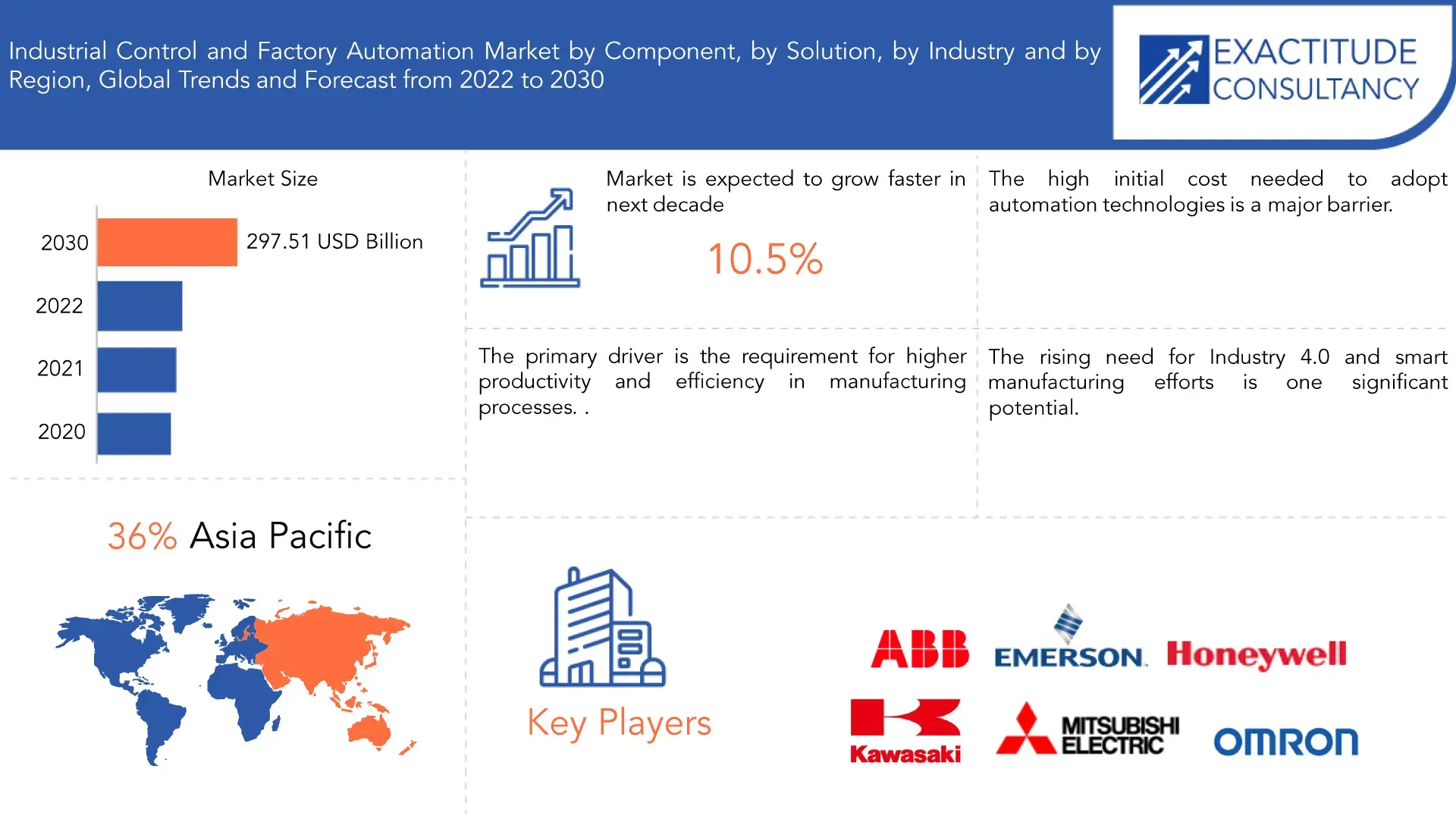
Se espera que el mercado de control industrial y automatización de fábricas crezca a una tasa compuesta anual del 10,5 % entre 2022 y 2029. Se espera que alcance más de USD 297,51 mil millones en 2029 desde USD 129,1 mil millones en 2020.
La integración de tecnología y sistemas de vanguardia en los procesos de producción con el fin de aumentar la productividad, la eficiencia y la seguridad se conoce como control industrial y automatización de fábricas. Los controladores lógicos programables (PLC), los sistemas de control de supervisión y adquisición de datos (SCADA), los robots , los sensores y las redes de comunicación son solo algunas de las muchas tecnologías que entran en esta categoría. Los sistemas de control industrial se utilizan para monitorear y regular una serie de aspectos de las actividades de fabricación, incluidos el inventario, los procesos y las máquinas. Permiten la recopilación, el análisis y la toma de decisiones de datos en tiempo real , lo que permite una reacción rápida a las circunstancias cambiantes y mejora el rendimiento general de la producción. La automatización de fábricas aumenta la productividad y la calidad del producto al tiempo que reduce el error humano y los costos laborales al automatizar procesos repetitivos y aburridos.
Las principales ventajas del control industrial y la automatización de fábricas son el aumento de la productividad, el uso óptimo de los recursos, una mayor calidad de los productos y una mayor seguridad de los trabajadores. La automatización permite aumentar las tasas de producción, reducir los tiempos de los ciclos y agilizar los flujos de trabajo, lo que aumenta la producción y acelera el tiempo de comercialización. Los sistemas de automatización también pueden maximizar el uso de energía, materias primas y mantenimiento de los equipos, lo que ahorra dinero y promueve la sostenibilidad ambiental.
| ATRIBUTO | DETALLES |
| Periodo de estudio | 2020-2029 |
| Año base | 2021 |
| Año estimado | 2022 |
| Año pronosticado | 2022-2029 |
| Periodo histórico | 2018-2020 |
| Unidad | Valor (miles de millones de USD) |
| Segmentación | Por componente, por solución, por industria |
| Por componente |
|
| Por solución |
|
| Por industria |
|
| Por región |
|
The primary driver is the requirement for higher productivity and efficiency in manufacturing processes. Automation technologies allow for more efficient workflows, quicker production rates, and less downtime, which boosts productivity and reduces costs. Additionally, the use of automation is being fueled by the increase in labor prices and the lack of skilled people. Automated technologies can take the place of manual labor in manufacturing, reducing labor-related issues and ensuring dependable and consistent output. The development of industrial control and factory automation is also being fueled by technological advancements like the Internet of Things (IoT), AI, and robotics. Intelligent decision-making, data analysis, and seamless networking are made possible by these technologies, which improve process control and optimization. Lastly, the need to reduce hazards in manufacturing environments and the growing emphasis on safety standards are driving the demand for automation solutions.
The high initial cost needed to adopt automation technologies is a major barrier. For small and medium-sized businesses in particular, the expense of obtaining and installing cutting-edge equipment, integrating various technologies, and training staff can be significant. The adoption of automation technologies may be hampered by this cost consideration, particularly for businesses with limited financial resources. The difficulty of integrating automation systems with current manufacturing infrastructure is another constraint. Many factories still use outdated machinery and procedures that are difficult to automate using current technologies. It might be difficult and time-consuming to retrofit old systems or guarantee flawless interoperability across various components.
The rising need for Industry 4.0 and smart manufacturing efforts is one significant potential. The adoption of automation technology is essential as sectors push for greater connection, data-driven decision-making, and real-time monitoring. This creates new potential for solution providers by opening up paths for the implementation of sophisticated control systems, robots, and IoT-enabled devices. Improved operational effectiveness and cost optimization present another possibility. Processes can be optimized, downtime can be decreased, and resource usage can be improved through the use of automation technologies. A favorable market climate is being created as manufacturers increasingly see the potential for sizable cost savings and greater productivity through the use of automation technologies.
Entre los efectos más importantes de la pandemia se encuentra la interrupción de los sistemas de suministro globales. Debido a las restricciones de viajes, la reducción de la fuerza laboral y las limitaciones al comercio internacional, la industria manufacturera se encontró con dificultades. Como resultado, los proyectos de automatización y las compras de equipos se retrasaron, lo que afectó la expansión del mercado. Sin embargo, la pandemia también puso de relieve la importancia de la automatización para mantener la resiliencia y la continuidad de las empresas.
[título id="attachment_24984" align="aligncenter" width="1920"]
Frequently Asked Questions
•What is the worth of Industrial Control and Factory Automation market?
The industrial control and factory automation market is expected to grow at 10.5 % CAGR from 2022 to 2029. It is expected to reach above USD 297.51 billion by 2029 from USD 129.1 billion in 2020.
•What is the size of the North America industrial control and factory automation industry?
Asia Pacific held more than 35.9 % of the Industrial Control and Factory Automation market revenue share in 2021 and will witness expansion in the forecast period.
•What are some of the market's driving forces?
The primary driver is the requirement for higher productivity and efficiency in manufacturing processes.
•Which are the top companies to hold the market share in industrial control and factory automation market?
The Industrial Control and Factory Automation market key players include ABB Ltd.; Emerson Electric Co.; Honeywell International, Inc.; Kawasaki Heavy Industries, Ltd.; Mitsubishi Electric Corporation; OMRON Corporation; Rockwell Automation, Inc.; Schneider Electric; Siemens AG; Yokogawa Electric Corporation.
•What is the leading Industry of industrial control and factory automation market?
Based on industry, the process sector dominates the discrete industry in terms of market share for industrial controls and factory automation.
•Which is the largest regional market for industrial control and factory automation market?
Asia Pacific is the largest regional market for industrial control and factory automation market.
Industrial Control and Factory Automation Market Segment Analysis:
The industrial control and factory automation market is segmented based on component, solution, industry.
Industrial sensors are in reality a crucial component with a significant share of the market in the industrial control and factory automation market, according to the data on the market that is currently accessible. Real-time data collection and essential input for automation, monitoring, and control systems in numerous industries are made possible by industrial sensors. Temperature sensors, pressure sensors, proximity sensors, level sensors, flow sensors, and a host of other sensor types are included in the category of industrial sensors. For detecting and monitoring physical variables and environmental conditions in manufacturing processes, these sensors are crucial.
Distributed Control Systems (DCS) do hold a major share of the market in the industrial control and factory automation markets, according to the data on the market that is currently accessible. In companies with continuous, complicated processes, DCS systems are commonly used since they are essential for managing and observing business activities. Distributed architecture offered by DCS systems enables centralized management and monitoring of diverse plant operations and subsystems. To maximize process effectiveness, boost productivity, and guarantee operational dependability, they provide real-time data integration, sophisticated control algorithms, and seamless communication capabilities.
Based on industry, the process sector dominates the discrete industry in terms of market share for industrial controls and factory automation. Sectors include oil and gas, chemicals, pharmaceuticals, food and beverage, power generation, and water treatment are included in the process industry. These industries frequently use batch and continuous processes to turn raw ingredients into final goods. In order to monitor and optimize complicated processes, control variables like temperature, pressure, and flow, and guarantee compliance with safety and quality standards, the process industry needs sophisticated control systems.
[caption id="attachment_24999" align="aligncenter" width="1920"]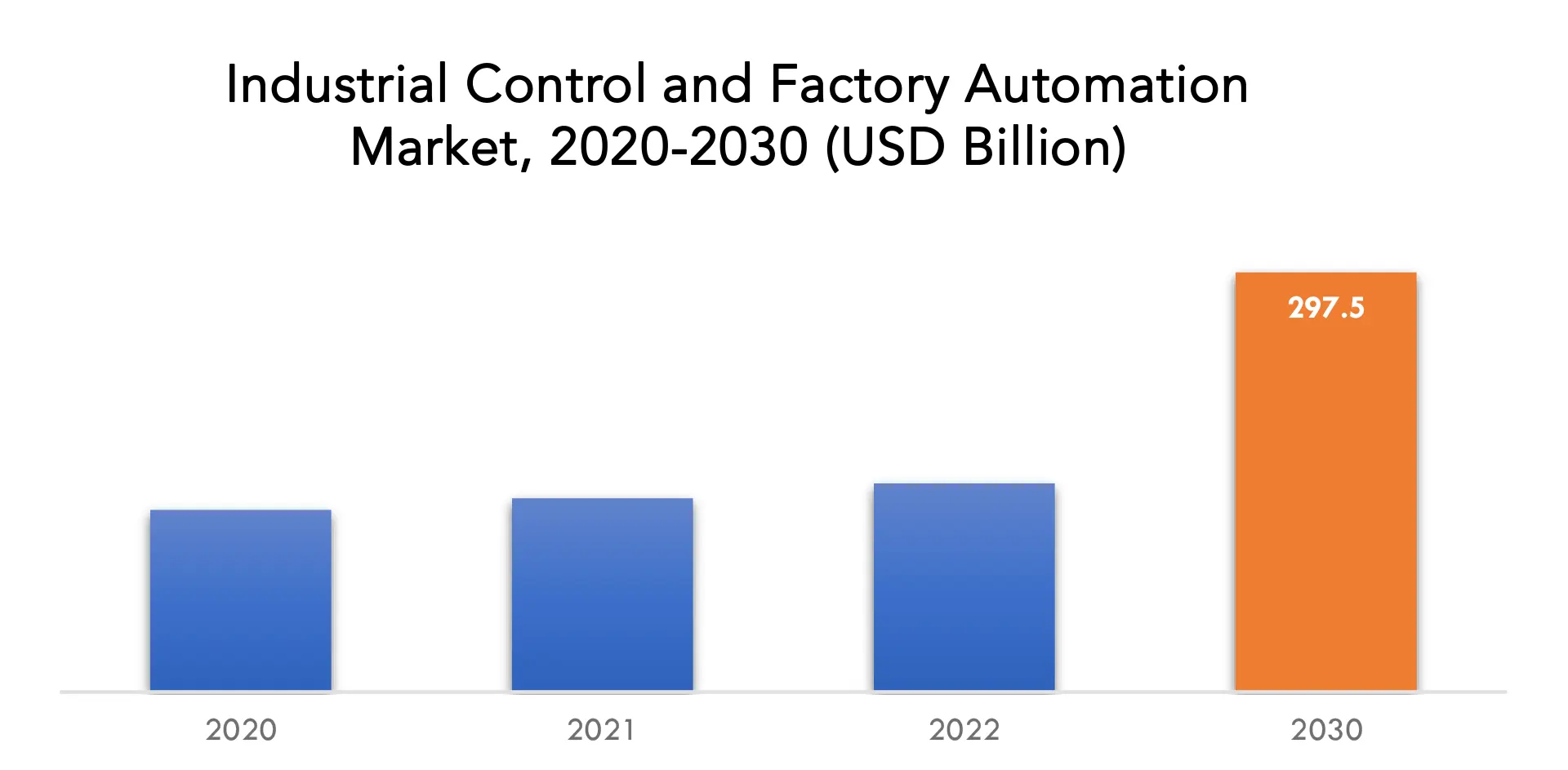
Industrial Control and Factory Automation Market Players:
The Industrial Control and Factory Automation market key players include ABB Ltd., Emerson Electric Co., Honeywell International, Kawasaki Heavy Industries, Mitsubishi Electric Corporation, OMRON Corporation, Rockwell Automation, Schneider Electric, Siemens AG, Yokogawa Electric Corporation.
Recent Developments: June 22, 2023: Stora Enso, a leading global provider of renewable solutions in packaging, biomaterials and wooden constructions, selected ABB for supplying sectional drive systems for their Oulu mill in Northern Finland, where their former paper line will be converted into a consumer board line for folding box board and coated unbleached kraft. May 30, 2023: Global software and technology leader Emerson helped the Swedish cleantech company HaloSep to optimize their unique process that turns hazardous incinerator flue gas residue from waste-to-energy plants into usable materials.Who Should Buy? Or Key stakeholders:
- Industrial Control and Factory Automation Suppliers
- Raw Materials Manufacturers
- Research Organizations
- Investors
- Regulatory Authorities
- Others
Industrial Control and Factory Automation Market Regional Analysis:
The Industrial Control and Factory Automation market by region includes North America, Asia-Pacific (APAC), Europe, South America, and Middle East & Africa (MEA).
- North America: includes the US, Canada, Mexico
- Asia Pacific: includes China, Japan, South Korea, India, Australia, ASEAN and Rest of APAC
- Europe: includes UK, Germany, France, Italy, Spain, Russia, and Rest of Europe
- South America: includes Brazil, Argentina and Rest of South America
- Middle East & Africa: includes Turkey, UAE, Saudi Arabia, South Africa, and Rest of MEA
Several reasons drive the Asia Pacific industrial control and factory automation industry. The region's expanding manufacturing sector is a major driver, especially in nations like China, Japan, and South Korea. In order to improve production, efficiency, and quality control, industries are increasingly looking for automation solutions. The market, however, also has limitations. One significant obstacle is the significant upfront cost of deploying automation technologies, which could inhibit smaller businesses. Widespread adoption is also hampered by worries about job displacement and the necessity for specialized workers. the Asia Pacific market offers significant opportunities. The rise of technologies such as the Industrial Internet of Things (IIoT) and artificial intelligence (AI) presents immense potential. The region's focus on smart manufacturing and Industry 4.0 initiatives creates a favorable environment for adopting advanced automation solutions. Moreover, the need for process optimization, cost reduction, and regulatory compliance provides further opportunities for solution providers.
[caption id="attachment_25003" align="aligncenter" width="1920"]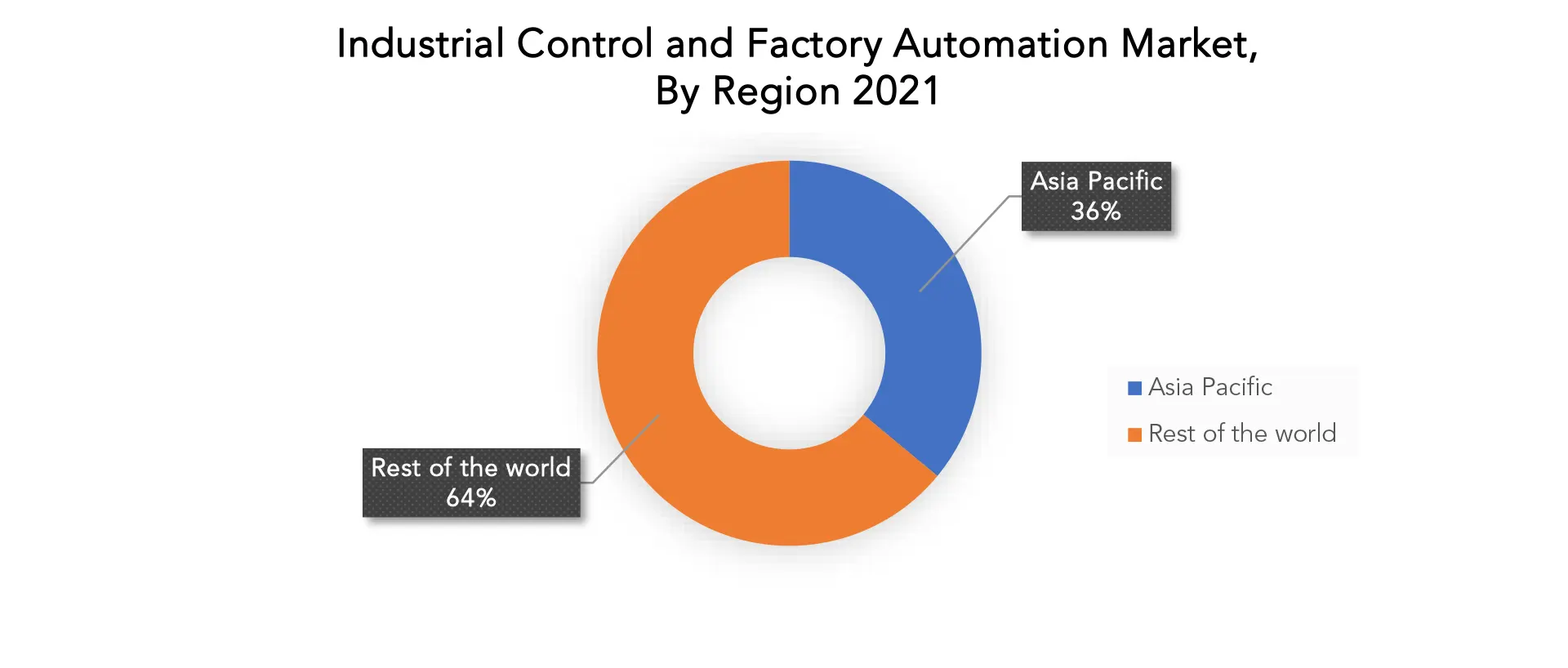
Key Market Segments: Industrial Control and Factory Automation Market
Industrial Control And Factory Automation Market By Component, 2020-2029, (USD Billion)- Industrial Robots
- Machine Vision
- Process Analyzer
- Field Instruments
- Human Machine Interface
- Industrial PC
- Industrial Sensors
- Industrial 3D Printing
- Vibration Monitoring
- SCADA
- PLC
- DCS
- MES
- Industrial Safety
- PA
- Process Industry
- Discrete Industry
- North America
- Asia Pacific
- Europe
- South America
- Middle East And Africa
Exactitude Consultancy Services Key Objectives:
- Increasing sales and market share
- Developing new technology
- Improving profitability
- Entering new markets
- Enhancing brand reputation
Key Questions Answered:
- What is the expected growth rate of the industrial control and factory automation market over the next 7 years?
- Who are the major players in the industrial control and factory automation market and what is their market share?
- What are the end-user industries driving demand for market and what is their outlook?
- What are the opportunities for growth in emerging markets such as Asia-Pacific, Middle East, and Africa?
- How is the economic environment affecting the industrial control and factory automation market, including factors such as interest rates, inflation, and exchange rates?
- What is the expected impact of government policies and regulations on the industrial control and factory automation market?
- What is the current and forecasted size and growth rate of the global industrial control and factory automation market?
- What are the key drivers of growth in the industrial control and factory automation market?
- Who are the major players in the market and what is their market share?
- What are the distribution channels and supply chain dynamics in the industrial control and factory automation market?
- What are the technological advancements and innovations in the industrial control and factory automation market and their impact on product development and growth?
- What are the regulatory considerations and their impact on the market?
- What are the challenges faced by players in the industrial control and factory automation market and how are they addressing these challenges?
- What are the opportunities for growth and expansion in the industrial control and factory automation market?
- What are the service offerings and specifications of leading players in the market?
- INTRODUCCIÓN
- DEFINICIÓN DE MERCADO
- SEGMENTACIÓN DEL MERCADO
- CRONOGRAMAS DE INVESTIGACIÓN
- SUPUESTOS Y LIMITACIONES
- METODOLOGÍA DE LA INVESTIGACIÓN
- MINERÍA DE DATOS
- INVESTIGACIÓN SECUNDARIA
- INVESTIGACIÓN PRIMARIA
- ASESORAMIENTO DE EXPERTOS EN LA MATERIA
- CONTROLES DE CALIDAD
- REVISIÓN FINAL
- TRIANGULACIÓN DE DATOS
- ENFOQUE DE ABAJO HACIA ARRIBA
- ENFOQUE DE ARRIBA HACIA ABAJO
- FLUJO DE INVESTIGACIÓN
- FUENTES DE DATOS
- MINERÍA DE DATOS
- RESUMEN EJECUTIVO
- PANORAMA DEL MERCADO
- PERSPECTIVAS DEL MERCADO MUNDIAL DE CONTROL INDUSTRIAL Y AUTOMATIZACIÓN DE FÁBRICAS
- IMPULSORES DEL MERCADO
- RESTRICCIONES DEL MERCADO
- OPORTUNIDADES DE MERCADO
- IMPACTO DEL COVID-19 EN EL MERCADO DE CONTROL INDUSTRIAL Y AUTOMATIZACIÓN DE FÁBRICAS
- MODELO DE LAS CINCO FUERZAS DE PORTER
- AMENAZA DE NUEVOS INGRESANTES
- AMENAZA DE SUSTITUTOS
- PODER DE NEGOCIACIÓN DE LOS PROVEEDORES
- PODER DE NEGOCIACIÓN DE LOS CLIENTES
- GRADO DE COMPETENCIA
- ANÁLISIS DE LA CADENA DE VALOR DE LA INDUSTRIA
- PERSPECTIVAS DEL MERCADO MUNDIAL DE CONTROL INDUSTRIAL Y AUTOMATIZACIÓN DE FÁBRICAS
- MERCADO GLOBAL DE CONTROL INDUSTRIAL Y AUTOMATIZACIÓN DE FÁBRICAS POR COMPONENTE (MILES DE MILLONES DE USD)
- ROBOTS INDUSTRIALES
- VISIÓN ARTIFICIAL
- ANALIZADOR DE PROCESOS
- INSTRUMENTOS DE CAMPO
- INTERFAZ HUMANO-MÁQUINA
- PC INDUSTRIAL
- SENSORES INDUSTRIALES
- IMPRESIÓN 3D INDUSTRIAL
- MONITOREO DE VIBRACIONES
- MERCADO GLOBAL DE CONTROL INDUSTRIAL Y AUTOMATIZACIÓN DE FÁBRICAS POR SOLUCIÓN (MILES DE MILLONES DE USD)
- Sistema de control de acceso controlado (SCADA)
- SOCIEDAD ANÓNIMA
- Estado Civil
- MES
- SEGURIDAD INDUSTRIAL
- Pensilvania
- MERCADO GLOBAL DE CONTROL INDUSTRIAL Y AUTOMATIZACIÓN DE FÁBRICAS POR INDUSTRIA (MILES DE MILLONES DE USD)
- INDUSTRIA DE PROCESOS
- INDUSTRIA DISCRETA
- MERCADO GLOBAL DE CONTROL INDUSTRIAL Y AUTOMATIZACIÓN DE FÁBRICAS POR REGIÓN (MIL MILLONES DE USD)
- AMÉRICA DEL NORTE
- A NOSOTROS
- CANADÁ
- MÉXICO
- SUDAMERICA
- BRASIL
- ARGENTINA
- COLOMBIA
- RESTO DE SUDAMÉRICA
- EUROPA
- ALEMANIA
- Reino Unido
- FRANCIA
- ITALIA
- ESPAÑA
- RUSIA
- RESTO DE EUROPA
- ASIA PACÍFICO
- INDIA
- PORCELANA
- JAPÓN
- COREA DEL SUR
- AUSTRALIA
- ASIA SUDESTE
- RESTO DE ASIA PACÍFICO
- ORIENTE MEDIO Y ÁFRICA
- Emiratos Árabes Unidos
- ARABIA SAUDITA
- SUDÁFRICA
- RESTO DE ORIENTE MEDIO Y ÁFRICA
- AMÉRICA DEL NORTE
- PERFILES DE EMPRESAS* (DESCRIPCIÓN GENERAL DEL NEGOCIO, RESEÑA DE LA EMPRESA, PRODUCTOS OFRECIDOS, DESARROLLOS RECIENTES)
- Compañía: ABB LTD.
- Compañía Eléctrica Emerson
- HONEYWELL INTERNACIONAL, INC.
- INDUSTRIAS PESADAS KAWASAKI, LTD.
- CORPORACIÓN ELÉCTRICA MITSUBISHI
- CORPORACIÓN OMRON
- AUTOMATIZACIÓN ROCKWELL, INC.
- SCHNEIDER ELÉCTRICO
- Siemens AG
- YOKOGAWA ELECTRIC CORPORATION *LA LISTA DE EMPRESAS ES INDICATIVA
LISTA DE TABLAS
TABLE 1 GLOBAL INDUSTRIAL CONTROL AND FACTORY AUTOMATION MARKET BY COMPONENT (USD BILLION), 2020-2029
TABLE 2 GLOBAL INDUSTRIAL CONTROL AND FACTORY AUTOMATION MARKET BY SOLUTION (USD BILLION), 2020-2029
TABLE 3 GLOBAL INDUSTRIAL CONTROL AND FACTORY AUTOMATION MARKET BY INDUSTRY (USD BILLION), 2020-2029
TABLE 4 GLOBAL INDUSTRIAL CONTROL AND FACTORY AUTOMATION MARKET BY REGION (USD BILLION), 2020-2029
TABLE 5 NORTH AMERICA INDUSTRIAL CONTROL AND FACTORY AUTOMATION MARKET BY COMPONENT (USD BILLION), 2020-2029
TABLE 6 NORTH AMERICA INDUSTRIAL CONTROL AND FACTORY AUTOMATION MARKET BY COUNTRY (USD BILLION), 2020-2029
TABLE 7 US INDUSTRIAL CONTROL AND FACTORY AUTOMATION MARKET BY COMPONENT (USD BILLION), 2020-2029
TABLE 8 US INDUSTRIAL CONTROL AND FACTORY AUTOMATION MARKET BY SOLUTION(USD BILLION), 2020-2029
TABLE 9 US INDUSTRIAL CONTROL AND FACTORY AUTOMATION MARKET BY INDUSTRY (USD BILLION), 2020-2029
TABLE 10 CANADA INDUSTRIAL CONTROL AND FACTORY AUTOMATION MARKET BY COMPONENT (BILLION), 2020-2029
TABLE 11 CANADA INDUSTRIAL CONTROL AND FACTORY AUTOMATION MARKET BY SOLUTION(USD BILLION), 2020-2029
TABLE 12 CANADA INDUSTRIAL CONTROL AND FACTORY AUTOMATION MARKET BY INDUSTRY (USD BILLION), 2020-2029
TABLE 13 MEXICO INDUSTRIAL CONTROL AND FACTORY AUTOMATION MARKET BY COMPONENT (USD BILLION), 2020-2029
TABLE 14 MEXICO INDUSTRIAL CONTROL AND FACTORY AUTOMATION MARKET BY SOLUTION(USD BILLION), 2020-2029
TABLE 15 MEXICO INDUSTRIAL CONTROL AND FACTORY AUTOMATION MARKET BY INDUSTRY (USD BILLION), 2020-2029
TABLE 16 SOUTH AMERICA INDUSTRIAL CONTROL AND FACTORY AUTOMATION MARKET BY COMPONENT (USD BILLION), 2020-2029
TABLE 17 SOUTH AMERICA INDUSTRIAL CONTROL AND FACTORY AUTOMATION MARKET BY SOLUTION(USD BILLION), 2020-2029
TABLE 18 SOUTH AMERICA INDUSTRIAL CONTROL AND FACTORY AUTOMATION MARKET BY INDUSTRY (USD BILLION), 2020-2029
TABLE 19 SOUTH AMERICA INDUSTRIAL CONTROL AND FACTORY AUTOMATION MARKET BY COUNTRY (USD BILLION), 2020-2029
TABLE 20 BRAZIL INDUSTRIAL CONTROL AND FACTORY AUTOMATION MARKET BY COMPONENT (USD BILLION), 2020-2029
TABLE 21 BRAZIL INDUSTRIAL CONTROL AND FACTORY AUTOMATION MARKET BY SOLUTION(USD BILLION), 2020-2029
TABLE 22 BRAZIL INDUSTRIAL CONTROL AND FACTORY AUTOMATION MARKET BY INDUSTRY (USD BILLION), 2020-2029
TABLE 23 ARGENTINA INDUSTRIAL CONTROL AND FACTORY AUTOMATION MARKET BY COMPONENT (USD BILLION), 2020-2029
TABLE 24 ARGENTINA INDUSTRIAL CONTROL AND FACTORY AUTOMATION MARKET BY SOLUTION(USD BILLION), 2020-2029
TABLE 25 ARGENTINA INDUSTRIAL CONTROL AND FACTORY AUTOMATION MARKET BY INDUSTRY (USD BILLION), 2020-2029
TABLE 26 COLOMBIA INDUSTRIAL CONTROL AND FACTORY AUTOMATION MARKET BY COMPONENT (USD BILLION), 2020-2029
TABLE 27 COLOMBIA INDUSTRIAL CONTROL AND FACTORY AUTOMATION MARKET BY SOLUTION(USD BILLION), 2020-2029
TABLE 28 COLOMBIA INDUSTRIAL CONTROL AND FACTORY AUTOMATION MARKET BY INDUSTRY (USD BILLION), 2020-2029
TABLE 29 REST OF SOUTH AMERICA INDUSTRIAL CONTROL AND FACTORY AUTOMATION MARKET BY COMPONENT (USD BILLION), 2020-2029
TABLE 30 REST OF SOUTH AMERICA INDUSTRIAL CONTROL AND FACTORY AUTOMATION MARKET BY SOLUTION(USD BILLION), 2020-2029
TABLE 31 REST OF SOUTH AMERICA INDUSTRIAL CONTROL AND FACTORY AUTOMATION MARKET BY INDUSTRY (USD BILLION), 2020-2029
TABLE 32 ASIA-PACIFIC INDUSTRIAL CONTROL AND FACTORY AUTOMATION MARKET BY COMPONENT (USD BILLION), 2020-2029
TABLE 33 ASIA-PACIFIC INDUSTRIAL CONTROL AND FACTORY AUTOMATION MARKET BY SOLUTION(USD BILLION), 2020-2029
TABLE 34 ASIA-PACIFIC INDUSTRIAL CONTROL AND FACTORY AUTOMATION MARKET BY INDUSTRY (USD BILLION), 2020-2029
TABLE 35 ASIA-PACIFIC INDUSTRIAL CONTROL AND FACTORY AUTOMATION MARKET BY COUNTRY (USD BILLION), 2020-2029
TABLE 36 INDIA INDUSTRIAL CONTROL AND FACTORY AUTOMATION MARKET BY COMPONENT (USD BILLION), 2020-2029
TABLE 37 INDIA INDUSTRIAL CONTROL AND FACTORY AUTOMATION MARKET BY SOLUTION(USD BILLION), 2020-2029
TABLE 38 INDIA INDUSTRIAL CONTROL AND FACTORY AUTOMATION MARKET BY INDUSTRY (USD BILLION), 2020-2029
TABLE 39 CHINA INDUSTRIAL CONTROL AND FACTORY AUTOMATION MARKET BY COMPONENT (USD BILLION), 2020-2029
TABLE 40 CHINA INDUSTRIAL CONTROL AND FACTORY AUTOMATION MARKET BY SOLUTION(USD BILLION), 2020-2029
TABLE 41 CHINA INDUSTRIAL CONTROL AND FACTORY AUTOMATION MARKET BY INDUSTRY (USD BILLION), 2020-2029
TABLE 42 JAPAN INDUSTRIAL CONTROL AND FACTORY AUTOMATION MARKET BY COMPONENT (USD BILLION), 2020-2029
TABLE 43 JAPAN INDUSTRIAL CONTROL AND FACTORY AUTOMATION MARKET BY SOLUTION(USD BILLION), 2020-2029
TABLE 44 SOUTH KOREA INDUSTRIAL CONTROL AND FACTORY AUTOMATION MARKET BY COMPONENT (USD BILLION), 2020-2029
TABLE 45 SOUTH KOREA INDUSTRIAL CONTROL AND FACTORY AUTOMATION MARKET BY SOLUTION(USD BILLION), 2020-2029
TABLE 46 SOUTH KOREA INDUSTRIAL CONTROL AND FACTORY AUTOMATION MARKET BY INDUSTRY (USD BILLION), 2020-2029
TABLE 47 SOUTH KOREA INDUSTRIAL CONTROL AND FACTORY AUTOMATION MARKET BY INDUSTRY (KILOTONS), 2020-2029
TABLE 48 AUSTRALIA INDUSTRIAL CONTROL AND FACTORY AUTOMATION MARKET BY COMPONENT (USD BILLION), 2020-2029
TABLE 49 AUSTRALIA CLINICAL LABORATORY SERVICESBY COMPONENT (KILOTONS), 2020-2029
TABLE 50 AUSTRALIA INDUSTRIAL CONTROL AND FACTORY AUTOMATION MARKET BY SOLUTION(USD BILLION), 2020-2029
TABLE 51 AUSTRALIA INDUSTRIAL CONTROL AND FACTORY AUTOMATION MARKET BY INDUSTRY (USD BILLION), 2020-2029
TABLE 52 SOUTH EAST ASIA INDUSTRIAL CONTROL AND FACTORY AUTOMATION MARKET BY COMPONENT (USD BILLION), 2020-2029
TABLE 53 SOUTH EAST ASIA INDUSTRIAL CONTROL AND FACTORY AUTOMATION MARKET BY SOLUTION(USD BILLION), 2020-2029
TABLE 54 SOUTH EAST ASIA INDUSTRIAL CONTROL AND FACTORY AUTOMATION MARKET BY INDUSTRY (USD BILLION), 2020-2029
TABLE 55 REST OF ASIA PACIFIC INDUSTRIAL CONTROL AND FACTORY AUTOMATION MARKET BY COMPONENT (USD BILLION), 2020-2029
TABLE 56 REST OF ASIA PACIFIC INDUSTRIAL CONTROL AND FACTORY AUTOMATION MARKET BY SOLUTION(USD BILLION), 2020-2029
TABLE 57 REST OF ASIA PACIFIC INDUSTRIAL CONTROL AND FACTORY AUTOMATION MARKET BY INDUSTRY (USD BILLION), 2020-2029
TABLE 58 EUROPE INDUSTRIAL CONTROL AND FACTORY AUTOMATION MARKET BY COMPONENT (USD BILLION), 2020-2029
TABLE 59 EUROPE INDUSTRIAL CONTROL AND FACTORY AUTOMATION MARKET BY SOLUTION(USD BILLION), 2020-2029
TABLE 60 EUROPE INDUSTRIAL CONTROL AND FACTORY AUTOMATION MARKET BY INDUSTRY (USD BILLION), 2020-2029
TABLE 61 EUROPE INDUSTRIAL CONTROL AND FACTORY AUTOMATION MARKET BY COUNTRY (USD BILLION), 2020-2029
TABLE 62 GERMANY INDUSTRIAL CONTROL AND FACTORY AUTOMATION MARKET BY COMPONENT (USD BILLION), 2020-2029
TABLE 63 GERMANY INDUSTRIAL CONTROL AND FACTORY AUTOMATION MARKET BY SOLUTION(USD BILLION), 2020-2029
TABLE 64 GERMANY INDUSTRIAL CONTROL AND FACTORY AUTOMATION MARKET BY INDUSTRY (USD BILLION), 2020-2029
TABLE 65 UK INDUSTRIAL CONTROL AND FACTORY AUTOMATION MARKET BY COMPONENT (USD BILLION), 2020-2029
TABLE 66 UK INDUSTRIAL CONTROL AND FACTORY AUTOMATION MARKET BY SOLUTION(USD BILLION), 2020-2029
TABLE 67 UK INDUSTRIAL CONTROL AND FACTORY AUTOMATION MARKET BY INDUSTRY (USD BILLION), 2020-2029
TABLE 68 FRANCE INDUSTRIAL CONTROL AND FACTORY AUTOMATION MARKET BY COMPONENT (USD BILLION), 2020-2029
TABLE 69 FRANCE INDUSTRIAL CONTROL AND FACTORY AUTOMATION MARKET BY SOLUTION(USD BILLION), 2020-2029
TABLE 70 FRANCE INDUSTRIAL CONTROL AND FACTORY AUTOMATION MARKET BY INDUSTRY (USD BILLION), 2020-2029
TABLE 71 ITALY INDUSTRIAL CONTROL AND FACTORY AUTOMATION MARKET BY COMPONENT (USD BILLION), 2020-2029
TABLE 72 ITALY INDUSTRIAL CONTROL AND FACTORY AUTOMATION MARKET BY SOLUTION(USD BILLION), 2020-2029
TABLE 73 ITALY INDUSTRIAL CONTROL AND FACTORY AUTOMATION MARKET BY INDUSTRY (USD BILLION), 2020-2029
TABLE 74 SPAIN INDUSTRIAL CONTROL AND FACTORY AUTOMATION MARKET BY COMPONENT (USD BILLION), 2020-2029
TABLE 75 SPAIN INDUSTRIAL CONTROL AND FACTORY AUTOMATION MARKET BY SOLUTION(USD BILLION), 2020-2029
TABLE 76 SPAIN INDUSTRIAL CONTROL AND FACTORY AUTOMATION MARKET BY INDUSTRY (USD BILLION), 2020-2029
TABLE 77 RUSSIA INDUSTRIAL CONTROL AND FACTORY AUTOMATION MARKET BY COMPONENT (USD BILLION), 2020-2029
TABLE 78 RUSSIA INDUSTRIAL CONTROL AND FACTORY AUTOMATION MARKET BY SOLUTION(USD BILLION), 2020-2029
TABLE 79 RUSSIA INDUSTRIAL CONTROL AND FACTORY AUTOMATION MARKET BY INDUSTRY (USD BILLION), 2020-2029
TABLE 80 REST OF EUROPE INDUSTRIAL CONTROL AND FACTORY AUTOMATION MARKET BY COMPONENT (USD BILLION), 2020-2029
TABLE 81 REST OF EUROPE INDUSTRIAL CONTROL AND FACTORY AUTOMATION MARKET BY SOLUTION(USD BILLION), 2020-2029
TABLE 82 REST OF EUROPE INDUSTRIAL CONTROL AND FACTORY AUTOMATION MARKET BY INDUSTRY (USD BILLION), 2020-2029
TABLE 83 MIDDLE EAST AND AFRICA INDUSTRIAL CONTROL AND FACTORY AUTOMATION MARKET BY COMPONENT (USD BILLION), 2020-2029
TABLE 84 MIDDLE EAST AND AFRICA INDUSTRIAL CONTROL AND FACTORY AUTOMATION MARKET BY SOLUTION(USD BILLION), 2020-2029
TABLE 85 MIDDLE EAST AND AFRICA INDUSTRIAL CONTROL AND FACTORY AUTOMATION MARKET BY INDUSTRY (USD BILLION), 2020-2029
TABLE 86 MIDDLE EAST AND AFRICA INDUSTRIAL CONTROL AND FACTORY AUTOMATION MARKET BY COUNTRY (USD BILLION), 2020-2029
TABLE 87 UAE INDUSTRIAL CONTROL AND FACTORY AUTOMATION MARKET BY COMPONENT (USD BILLION), 2020-2029
TABLE 88 UAE INDUSTRIAL CONTROL AND FACTORY AUTOMATION MARKET BY SOLUTION(USD BILLION), 2020-2029
TABLE 89 UAE INDUSTRIAL CONTROL AND FACTORY AUTOMATION MARKET BY INDUSTRY (USD BILLION), 2020-2029
TABLE 90 SAUDI ARABIA INDUSTRIAL CONTROL AND FACTORY AUTOMATION MARKET BY COMPONENT (USD BILLION), 2020-2029
TABLE 91 SAUDI ARABIA INDUSTRIAL CONTROL AND FACTORY AUTOMATION MARKET BY SOLUTION(USD BILLION), 2020-2029
TABLE 92 SAUDI ARABIA INDUSTRIAL CONTROL AND FACTORY AUTOMATION MARKET BY INDUSTRY (USD BILLION), 2020-2029
TABLE 93 SOUTH AFRICA INDUSTRIAL CONTROL AND FACTORY AUTOMATION MARKET BY COMPONENT (USD BILLION), 2020-2029
TABLE 94 SOUTH AFRICA INDUSTRIAL CONTROL AND FACTORY AUTOMATION MARKET BY SOLUTION(USD BILLION), 2020-2029
TABLE 95 SOUTH AFRICA INDUSTRIAL CONTROL AND FACTORY AUTOMATION MARKET BY INDUSTRY (USD BILLION), 2020-2029
TABLE 96 REST OF MIDDLE EAST AND AFRICA INDUSTRIAL CONTROL AND FACTORY AUTOMATION MARKET BY COMPONENT (USD BILLION), 2020-2029
TABLE 97 REST OF MIDDLE EAST AND AFRICA INDUSTRIAL CONTROL AND FACTORY AUTOMATION MARKET BY SOLUTION(USD BILLION), 2020-2029
TABLE 98 REST OF MIDDLE EAST AND AFRICA INDUSTRIAL CONTROL AND FACTORY AUTOMATION MARKET BY INDUSTRY (USD BILLION), 2020-2029
LIST OF FIGURES
FIGURE 1 MARKET DYNAMICS
FIGURE 2 MARKET SEGMENTATION
FIGURE 3 REPORT TIMELINES: YEARS CONSIDERED
FIGURE 4 DATA TRIANGULATION
FIGURE 5 BOTTOM-UP APPROACH
FIGURE 6 TOP-DOWN APPROACH
FIGURE 7 RESEARCH FLOW
FIGURE 8 GLOBAL CLOUD INDUSTRY SECURITY BY COMPONENT, USD BILLION, 2020-2029
FIGURE 9 GLOBAL CLOUD INDUSTRY SECURITY BY SOLUTION, USD BILLION, 2020-2029
FIGURE 10 GLOBAL CLOUD INDUSTRY SECURITY BY INDUSTRY, USD BILLION, 2020-2029
FIGURE 11 GLOBAL CLOUD INDUSTRY SECURITY BY REGION, USD BILLION, 2020-2029
FIGURE 12 PORTER’S FIVE FORCES MODEL
FIGURE 13 GLOBAL CLOUD INDUSTRY SECURITY MARKET BY REGION, USD BILLION, 2021
FIGURE 14 GLOBAL CLOUD INDUSTRY SECURITY MARKET BY COMPONENT, USD BILLION, 2021
FIGURE 15 GLOBAL CLOUD INDUSTRY SECURITY MARKET BY SOLUTION, USD BILLION, 2021
FIGURE 16 GLOBAL CLOUD INDUSTRY SECURITY MARKET BY INDUSTRY, USD BILLION, 2021
FIGURE 17 MARKET SHARE ANALYSIS
FIGURE 18 ABB LTD: COMPANY SNAPSHOT
FIGURE 19 EMERSON ELECTRIC CO: COMPANY SNAPSHOT
FIGURE 20 HONEYWELL INTERNATIONAL, INC: COMPANY SNAPSHOT
FIGURE 21 KAWASAKI HEAVY INDUSTRIES, LTD: COMPANY SNAPSHOT
FIGURE 22 MITSUBISHI ELECTRIC CORPORATION: COMPANY SNAPSHOT
FIGURE 23 OMRON CORPORATION: COMPANY SNAPSHOT
FIGURE 24 ROCKWELL AUTOMATION, INC: COMPANY SNAPSHOT
FIGURE 25 SCHNEIDER ELECTRIC: COMPANY SNAPSHOT
FIGURE 26 SIEMENS AG: COMPANY SNAPSHOT
FIGURE 27 YOKOGAWA ELECTRIC CORPORATION: COMPANY SNAPSHOT
DOWNLOAD FREE SAMPLE REPORT
License Type
SPEAK WITH OUR ANALYST
Want to know more about the report or any specific requirement?
WANT TO CUSTOMIZE THE REPORT?
Our Clients Speak
We asked them to research ‘ Equipment market’ all over the world, and their whole arrangement was helpful to us. thehealthanalytics.com insightful analysis and reports contributed to our current analysis and in creating a future strategy. Besides, the te
Yosuke Mitsui
Senior Associate Construction Equipment Sales & Marketing
We asked them to research ‘Equipment market’ all over the world, and their whole arrangement was helpful to us. thehealthanalytics.com insightful analysis and reports contributed to our current analysis and in creating a future strategy. Besides, the te