

Base Year Value ()
x.x %
x.x %
CAGR ()
x.x %
x.x %
Forecast Year Value ()
x.x %
x.x %
Historical Data Period
Largest Region
Forecast Period
Mercado de biocerámicas y piezocerámicas por material (cerámicas bioinertes, bioactivas y biorreabsorbibles, cerámicas piezoeléctricas), aplicación (implantes dentales y ortopédicos, instrumentos quirúrgicos y de diagnóstico, dispositivos electrónicos implantables) y región, tendencias globales y pronóstico de 2022 a 2029
Instant access to hundreds of data points and trends
- Market estimates from 2014-2029
- Competitive analysis, industry segmentation, financial benchmarks
- Incorporates SWOT, Porter's Five Forces and risk management frameworks
- PDF report or online database with Word, Excel and PowerPoint export options
- 100% money back guarantee
Descripción general del mercado de biocerámicas y piezocerámicas
Se espera que la participación de mercado de biocerámicas y piezocerámicas crezca un 6 % CAGR entre 2022 y 2029. Se espera que alcance más de USD 27,54 mil millones para 2029 desde USD 16,3 mil millones en 2020.
El mercado de biocerámicas y piezocerámicas abarca una amplia gama de materiales cerámicos diseñados específicamente para aplicaciones biomédicas, que van desde implantes óseos hasta prótesis dentales. Las biocerámicas, conocidas por su biocompatibilidad y bioactividad, desempeñan un papel crucial en las cirugías ortopédicas y dentales , ofreciendo soluciones para la regeneración y restauración ósea. Las piezocerámicas, por otro lado, exhiben propiedades piezoeléctricas únicas, lo que las convierte en componentes valiosos en dispositivos médicos como transductores y sensores de ultrasonidos para fines diagnósticos y terapéuticos. La convergencia de los avances en la ciencia de los materiales y la ingeniería biomédica ha impulsado el crecimiento de este mercado, impulsado por la creciente demanda de soluciones innovadoras en el cuidado de la salud.
[título id="attachment_5240" align="aligncenter" width="870"]
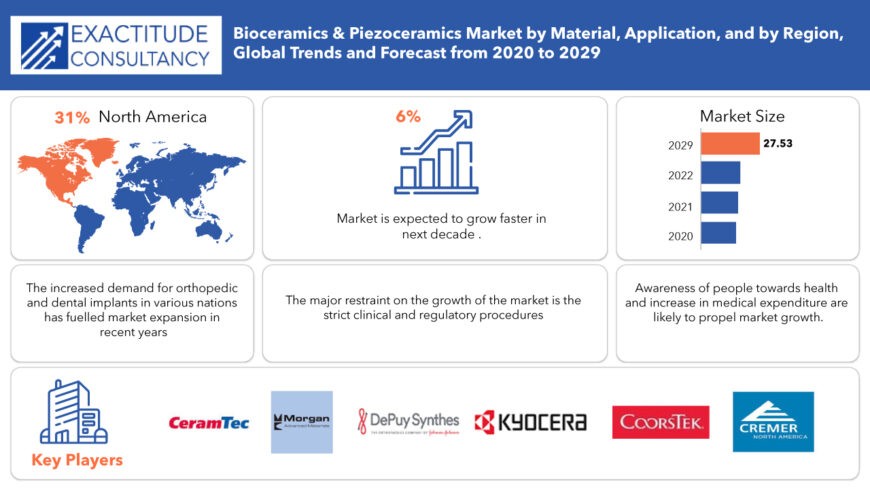
Un factor principal que impulsa el mercado de biocerámicas y piezocerámicas es la creciente prevalencia de trastornos musculoesqueléticos y afecciones dentales, junto con el envejecimiento de la población en todo el mundo. Con un número cada vez mayor de personas que buscan intervenciones ortopédicas y tratamientos dentales, existe un aumento paralelo en la demanda de implantes biocerámicos y cerámicas dentales. Además, el creciente alcance de aplicaciones de piezocerámicas en dispositivos médicos, particularmente en equipos de diagnóstico por imágenes y terapéuticos, aumenta aún más el crecimiento del mercado. Además, los esfuerzos de investigación en curso destinados a mejorar las propiedades mecánicas, la biocompatibilidad y la funcionalidad de estos materiales cerámicos contribuyen a su adopción generalizada en varios sectores de la atención médica.
En el panorama regulatorio, el mercado de biocerámicas y piezocerámicas opera dentro de un marco regido por estándares y pautas estrictas para garantizar la seguridad, eficacia y calidad del producto. Los organismos reguladores como la Administración de Alimentos y Medicamentos (FDA) en los Estados Unidos y la Agencia Europea de Medicamentos (EMA) en Europa imponen requisitos rigurosos para el desarrollo, la fabricación y la comercialización de cerámicas biomédicas. El cumplimiento de estas regulaciones es imperativo para que los actores del mercado obtengan las aprobaciones y certificaciones necesarias para la comercialización.
[título id="attachment_5245" align="aligncenter" width="847"]
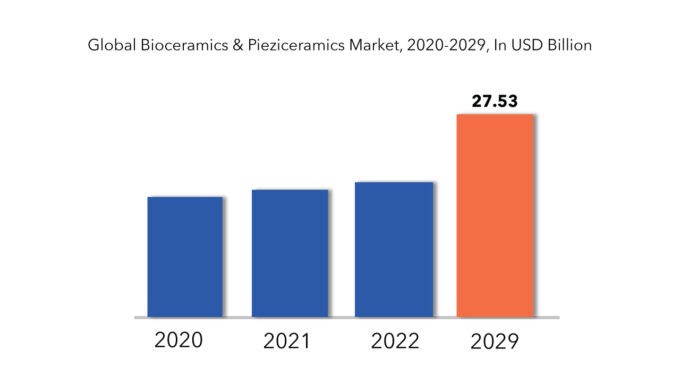
Debido a que la zirconia (ZrO2) y la alúmina (Al2O3) son químicamente estables, son las cerámicas bioinertes más utilizadas en el campo médico. Debido a que son biocompatibles, no tóxicas, no inflamatorias, no alérgicas, no cancerígenas y biofuncionales, las cerámicas bioinertes se emplean en aplicaciones de tejido óseo. A medida que aumenta la necesidad de aplicaciones de uso final, como implantes dentales y ortopédicos, estas cerámicas son la forma más común de material cerámico médico. Hay otros tres tipos de cerámicas que se utilizan con frecuencia además de las cerámicas bioinertes. Entre ellos se encuentran los materiales bioactivos, biorreabsorbibles y piezocerámicos. En muchas aplicaciones, estas cerámicas suelen denominarse cerámicas finas.
Está claro que el desarrollo de dispositivos basados en cerámica es un proceso costoso y que requiere mucho tiempo. Además, los aparatos médicos que se implantan en el cuerpo deben someterse a pruebas clínicas. Estos problemas están frenando la expansión del mercado.
Bioceramics and Piezoceramics Market Segment Analysis
On the basis of material, the bioceramics and piezoceramics market is segmented into Bio-Inert, Bio-Active, & Bio-Resorbable Ceramics, Piezo Ceramics.
On the basis of applications, the market of bioceramics and piezoceramics are segmented into Dental & Orthopedic Implants, Surgical, & Diagnostic instruments, Implantable Electronic Devices.
Bio inert ceramics are alumina and zirconia. They are used in total hip prostheses and in tooth implants. Previously surgical metals alloys are used for such processes but they get replaced by bio-inert ceramics as later have better properties. The main advantage of using ceramics over metals is that they have lower wear rates at the articulating surfaces and release very low concentrations of inert wear particles. Excessive wear rates can contribute to loosening and eventual implantation failure.
Bio active ceramics are grouped as calcium phosphate ceramics, bioactive glasses, and glass-ceramics. Calcium phosphates are the major constituents of bone minerals. Bioactive glasses or bioglass particularly help in repairing and replacing diseased or damaged bones. Bioglass can bond to soft tissue as well as a bone to heal the wound or injury. Glass-ceramics are used in some compression load-bearing applications, such as vertebral prostheses and iliac crest replacement.
In dentistry, bioceramics are used for dental implants and root canal treatments. They are also used for Scaffolds, bone grafts, and covering material for dental implants.
The orthopedic sector of Bioglass is mainly influenced by the old age population. Changes in the global old population will open up prospects for biomedical treatments such as bone grafting and dental surgery. The enormous senior population has grown substantially in the last 20 years, resulting in an increase in the number of tissue and spinal procedures. Bioglass fibers can successfully adhere to both hard and soft tissues. Furthermore, it has the potential to improve the success rate of bone replacements by activating the release of nutrients that aid in bone regeneration. Bioglass fibers dissolve actively in tissues and activate ion-releasing processes to induce new bone forms, enhancing their usage in biomedical services such as restorative fillings. Furthermore, as people get older, they face a variety of dangers, including dental and orthopedic issues. Many bioglass fibre market prospects and uses are likely to accelerate due to rapid technological advancements in bone-grafting engineering.
Bioceramics are used in surgical and diagnostic instruments such as suture welding, aspirators, nebulizers, and ultrasonic cleaners. Piezoceramics are everywhere in medical devices, they are part of medical and dental hand pieces.
Bioceramics and Piezoceramics Market Key Players
Some of the key players in the bioceramics and piezoceramics market are CeramTec GmbH, Morgan Advanced Materials, DePuy Synthes, Kyocera Corporation, CoorsTek Inc., Zimmer-Biomet holdings Inc., Nobel Biocare, Peter Cremer North America, Carotino Group, Procter & Gamble (P&G) Chemicals, Klk Oleo, NGK Spark Plug Co., Ltd., Saint–Gobain Ceramic Materials, H.C. Starck GmbH and Others.
To increase their market position, these businesses have implemented a variety of growth tactics. These companies are using expansion, new product development, mergers and acquisitions, and collaboration as important growth strategies to improve their product portfolio and geographical presence in order to meet the rising demand from emerging economies.
- CoorsTek CeraSurf is a state-of-the-art material used for ceramic bearing surfaces in total hip arthroplasty
Who Should Buy? Or Key stakeholders
- Manufacturers
- Traders
- Distributors
- Suppliers
- R&D institutions
- Environment, Health and Safety Professionals
- Healthcare industry
- Government and Research Organization
- Investors
- Others
Bioceramics and Piezoceramics Market Regional Analysis
The Bioceramics and Piezoceramics Market by region includes North America, Asia-Pacific (APAC), Europe, South America, and Middle East & Africa (MEA).
- North America: includes the US, Canada, Mexico
- Asia Pacific: includes China, Japan, South Korea, India, Australia, ASEAN, and the Rest of APAC
- Europe: includes UK, Germany, France, Italy, Spain, Russia, and the Rest of Europe
- South America: includes Brazil, Argentina, and the Rest of South America
- Middle East & Africa: includes Turkey, UAE, Saudi Arabia, South Africa, and the Rest of MEA
The Asia Pacific holds a significant share of the global bioceramics and piezoceramics market owing to many healthcare policies and development of the healthcare industry of China, India, Japan, Indonesia, and South Korea. The market of this region is driven by growth in awareness about health, an increase in healthcare expenditures, an increasing number of populations, rapid urbanization, improving the lifestyle of the people, etc. There is an increase in the utilization of bioceramics and piezoceramics in dental implants, surgical and diagnostic instruments, orthopedic implants and others in these countries. The factors that are driving the market growth in this region are competitive manufacturing costs, end-use applications, and a high economy. The European and North American markets are also growing for the above reasons.
[caption id="attachment_5250" align="alignleft" width="680"]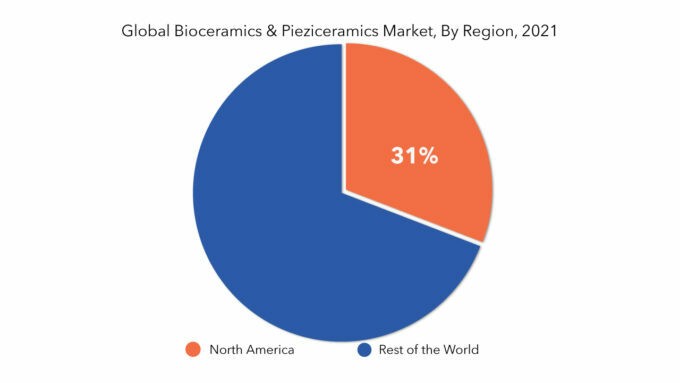
Key Takeaways
- The Bioceramics and piezoceramics market share is expected to grow 6% CAGR.
- Based on material, Bio-Resorbable Ceramics is expected to dominate the market.
- Based on application, Dental is expected to dominate the market.
- The Asia Pacific holds a significant share of the global bioceramics and piezoceramics market.
- One major market trend in the Bioceramics and Piezoceramics Market is the increasing demand for advanced healthcare solutions driving the growth of bioceramics for medical applications and piezoceramics for diverse technological advancements.
Key Market Segments: Bioceramics and Piezoceramics
Bioceramics And Piezoceramics Market By Material, 2020-2029, (USD Billion) (Kilotons)- Bio-Inert
- Bio-Active
- Bio-Resorbable Ceramics
- Piezoceramics
- Dental
- Orthopedic Implants
- Surgical
- Diagnostic Instrument
- Implantable Electronic Devices
- North America
- Europe
- Asia Pacific
- South America
- Middle East And Africa
Key Question Answered
- What will the market size be in 2021 and what will the growth rate be?
- What are the key market trends?
- What is driving this market?
- Who are the key vendors in this market space?
- What is the major end-use industry?
- Introducción
- Definición de mercado
- Segmentación del mercado
- Cronología de la investigación
- Supuestos y limitaciones
- Metodología de la investigación
- Minería de datos
- Investigación secundaria
- Investigación primaria
- Asesoramiento de expertos en la materia
- Controles de calidad
- Revisión final
- Triangulación de datos
- Enfoque de abajo hacia arriba
- Enfoque de arriba hacia abajo
- Flujo de investigación
- Fuentes de datos
- Minería de datos
- Resumen ejecutivo
- Descripción general del mercado
- Perspectivas del mercado mundial de biocerámicas y piezocerámicas
- Factores impulsores del mercado
- Restricciones del mercado
- Oportunidades de mercado
- Impacto de la COVID-19 en el mercado mundial de biocerámicas y piezocerámicas
- Perspectivas del mercado mundial de biocerámicas y piezocerámicas
- Mercado mundial de biocerámicas y piezocerámicas por material (millones de USD) (kilotones)
- Bioinerte
- Cerámicas bioactivas y biorreabsorbibles
- Cerámica piezoeléctrica
- Mercado mundial de biocerámicas y piezocerámicas por aplicación (millones de USD) (kilotones)
- Implantes dentales y ortopédicos
- Instrumentos quirúrgicos y de diagnóstico
- Dispositivos electrónicos implantables
- Mercado mundial de biocerámicas y piezocerámicas por región (millones de USD) (kilotones)
- Introducción
- Asia-Pacífico
- Porcelana
- India
- Japón
- Corea del Sur
- Australia
- Sudeste asiático
- Resto de Asia-Pacífico
- América del norte
- Estados Unidos
- Canadá
- México
- Europa
- Alemania
- Reino Unido
- Francia
- Italia
- España
- Rusia
- Resto de Europa
- Sudamerica
- Brasil
- Argentina
- Colombia
- Resto de Sudamérica
- Oriente Medio y África
- Emiratos Árabes Unidos
- Arabia Saudita
- Sudáfrica
- Resto de Oriente Medio y África
- Company Profiles* (Business Overview, Company Snapshot, Products Offered, Recent Developments)
- CeramTec GmbH
- Morgan Advanced Materials
- DePuy Synthes
- Kyocera Corporation
- CoorsTek Inc.
- Zimmer-Biomet holdings Inc.
- Nobel Biocare
- NGK Spark Plug Co., Ltd.
- Saint–Gobain Ceramic Materials
- C. Starck GmbH
- Others *The Company List Is Indicative
LIST OF TABLES
TABLE 1 GLOBAL BIOCERAMICS & PIEZOCERAMICS MARKET BY MATERIAL (USD MILLIONS), 2020-2029
TABLE 2 GLOBAL BIOCERAMICS & PIEZOCERAMICS MARKET BY MATERIAL (KILOTONS), 2020-2029
TABLE 3 GLOBALBIOCERAMICS & PIEZOCERAMICS MARKET BY APPLICATION (USD MILLIONS), 2020-2029
TABLE 4 GLOBAL BIOCERAMICS & PIEZOCERAMICS MARKET BY APPLICATION (KILOTONS), 2020-2029
TABLE 5 GLOBAL BIOCERAMICS & PIEZOCERAMICS MARKET BY REGION (USD MILLIONS), 2020-2029
TABLE 6 GLOBAL BIOCERAMICS & PIEZOCERAMICS MARKET BY REGION (KILOTONS), 2020-2029
TABLE 7 NORTH AMERICA BIOCERAMICS & PIEZOCERAMICS MARKET BY COUNTRY (USD MILLIONS), 2020-2029
TABLE 8 NORTH AMERICA BIOCERAMICS & PIEZOCERAMICS MARKET BY COUNTRY (KILOTONS), 2020-2029
TABLE 9 NORTH AMERICA BIOCERAMICS & PIEZOCERAMICS MARKET BY MATERIAL (USD MILLIONS), 2020-2029
TABLE 10 NORTH AMERICA BIOCERAMICS & PIEZOCERAMICS MARKET BY MATERIAL (KILOTONS), 2020-2029
TABLE 11 NORTH AMERICA BIOCERAMICS & PIEZOCERAMICS MARKET BY APPLICATION (USD MILLIONS), 2020-2029
TABLE 12 NORTH AMERICA BIOCERAMICS & PIEZOCERAMICS MARKET BY APPLICATION (KILOTONS), 2020-2029
TABLE 13 US BIOCERAMICS & PIEZOCERAMICS MARKET BY MATERIAL (USD MILLIONS), 2020-2029
TABLE 14 US BIOCERAMICS & PIEZOCERAMICS MARKET BY MATERIAL (KILOTONS), 2020-2029
TABLE 15 US BIOCERAMICS & PIEZOCERAMICS MARKET BY APPLICATION (USD MILLIONS), 2020-2029
TABLE 16 US BIOCERAMICS & PIEZOCERAMICS MARKET BY APPLICATION (KILOTONS), 2020-2029
TABLE 17 CANADA BIOCERAMICS & PIEZOCERAMICS MARKET BY MATERIAL (MILLIONS), 2020-2029
TABLE 18 CANADA BIOCERAMICS & PIEZOCERAMICS MARKET BY MATERIAL (KILOTONS), 2020-2029
TABLE 19 CANADA BIOCERAMICS & PIEZOCERAMICS MARKET BY APPLICATION (USD MILLIONS), 2020-2029
TABLE 20 CANADA BIOCERAMICS & PIEZOCERAMICS MARKET BY APPLICATION (KILOTONS), 2020-2029
TABLE 21 MEXICO BIOCERAMICS & PIEZOCERAMICS MARKET BY MATERIAL (USD MILLIONS), 2020-2029
TABLE 22 MEXICO BIOCERAMICS & PIEZOCERAMICS MARKET BY MATERIAL (KILOTONS), 2020-2029
TABLE 23 MEXICO BIOCERAMICS & PIEZOCERAMICS MARKET BY APPLICATION (USD MILLIONS), 2020-2029
TABLE 24 MEXICO BIOCERAMICS & PIEZOCERAMICS MARKET BY APPLICATION (KILOTONS), 2020-2029
TABLE 25 SOUTH AMERICA BIOCERAMICS & PIEZOCERAMICS MARKET BY COUNTRY (USD MILLIONS), 2020-2029
TABLE 26 SOUTH AMERICA BIOCERAMICS & PIEZOCERAMICS MARKET BY COUNTRY (KILOTONS), 2020-2029
TABLE 27 SOUTH AMERICA BIOCERAMICS & PIEZOCERAMICS MARKET BY MATERIAL (USD MILLIONS), 2020-2029
TABLE 28 SOUTH AMERICA BIOCERAMICS & PIEZOCERAMICS MARKET BY MATERIAL (KILOTONS), 2020-2029
TABLE 29 SOUTH AMERICA BIOCERAMICS & PIEZOCERAMICS MARKET BY APPLICATION (USD MILLIONS), 2020-2029
TABLE 30 SOUTH AMERICA BIOCERAMICS & PIEZOCERAMICS MARKET BY APPLICATION (KILOTONS), 2020-2029
TABLE 31 BRAZIL BIOCERAMICS & PIEZOCERAMICS MARKET BY MATERIAL (USD MILLIONS), 2020-2029
TABLE 32 BRAZIL BIOCERAMICS & PIEZOCERAMICS MARKET BY MATERIAL (KILOTONS), 2020-2029
TABLE 33 BRAZIL BIOCERAMICS & PIEZOCERAMICS MARKET BY APPLICATION (USD MILLIONS), 2020-2029
TABLE 34 BRAZIL BIOCERAMICS & PIEZOCERAMICS MARKET BY APPLICATION (KILOTONS), 2020-2029
TABLE 35 ARGENTINA BIOCERAMICS & PIEZOCERAMICS MARKET BY MATERIAL (USD MILLIONS), 2020-2029
TABLE 36 ARGENTINA BIOCERAMICS & PIEZOCERAMICS MARKET BY MATERIAL (KILOTONS), 2020-2029
TABLE 37 ARGENTINA BIOCERAMICS & PIEZOCERAMICS MARKET BY APPLICATION (USD MILLIONS), 2020-2029
TABLE 38 ARGENTINA BIOCERAMICS & PIEZOCERAMICS MARKET BY APPLICATION (KILOTONS), 2020-2029
TABLE 39 COLOMBIA BIOCERAMICS & PIEZOCERAMICS MARKET BY MATERIAL (USD MILLIONS), 2020-2029
TABLE 40 COLOMBIA BIOCERAMICS & PIEZOCERAMICS MARKET BY MATERIAL (KILOTONS), 2020-2029
TABLE 41 COLOMBIA BIOCERAMICS & PIEZOCERAMICS MARKET BY APPLICATION (USD MILLIONS), 2020-2029
TABLE 42 COLOMBIA BIOCERAMICS & PIEZOCERAMICS MARKET BY APPLICATION (KILOTONS), 2020-2029
TABLE 43 REST OF SOUTH AMERICA BIOCERAMICS & PIEZOCERAMICS MARKET BY MATERIAL (USD MILLIONS), 2020-2029
TABLE 44 REST OF SOUTH AMERICA BIOCERAMICS & PIEZOCERAMICS MARKET BY MATERIAL (KILOTONS), 2020-2029
TABLE 45 REST OF SOUTH AMERICA BIOCERAMICS & PIEZOCERAMICS MARKET BY APPLICATION (USD MILLIONS), 2020-2029
TABLE 46 REST OF SOUTH AMERICA BIOCERAMICS & PIEZOCERAMICS MARKET BY APPLICATION (KILOTONS), 2020-2029
TABLE 47 ASIA-PACIFIC BIOCERAMICS & PIEZOCERAMICS MARKET BY COUNTRY (USD MILLIONS), 2020-2029
TABLE 48 ASIA-PACIFIC BIOCERAMICS & PIEZOCERAMICS MARKET BY COUNTRY (KILOTONS), 2020-2029
TABLE 49 ASIA-PACIFIC BIOCERAMICS & PIEZOCERAMICS MARKET BY MATERIAL (USD MILLIONS), 2020-2029
TABLE 50 ASIA-PACIFIC BIOCERAMICS & PIEZOCERAMICS MARKET BY MATERIAL (KILOTONS), 2020-2029
TABLE 51 ASIA-PACIFIC BIOCERAMICS & PIEZOCERAMICS MARKET BY APPLICATION (USD MILLIONS), 2020-2029
TABLE 52 ASIA-PACIFIC BIOCERAMICS & PIEZOCERAMICS MARKET BY APPLICATION (KILOTONS), 2020-2029
TABLE 53 INDIA BIOCERAMICS & PIEZOCERAMICS MARKET BY MATERIAL (USD MILLIONS), 2020-2029
TABLE 54 INDIA BIOCERAMICS & PIEZOCERAMICS MARKET BY MATERIAL (KILOTONS), 2020-2029
TABLE 55 INDIA BIOCERAMICS & PIEZOCERAMICS MARKET BY APPLICATION (USD MILLIONS), 2020-2029
TABLE 56 INDIA BIOCERAMICS & PIEZOCERAMICS MARKET BY APPLICATION (KILOTONS), 2020-2029
TABLE 57 CHINA BIOCERAMICS & PIEZOCERAMICS MARKET BY MATERIAL (USD MILLIONS), 2020-2029
TABLE 58 CHINA BIOCERAMICS & PIEZOCERAMICS MARKET BY MATERIAL (KILOTONS), 2020-2029
TABLE 59 CHINA BIOCERAMICS & PIEZOCERAMICS MARKET BY MATERIAL (USD MILLION), 2020-2029
TABLE 60 CHINA BIOCERAMICS & PIEZOCERAMICS MARKET BY APPLICATION (KILOTONS), 2020-2029
TABLE 61 JAPAN BIOCERAMICS & PIEZOCERAMICS MARKET BY APPLICATION (USD MILLION), 2020-2029
TABLE 62 JAPAN BIOCERAMICS & PIEZOCERAMICS MARKET BY MATERIAL (KILOTONS), 2020-2029
TABLE 63 JAPAN BIOCERAMICS & PIEZOCERAMICS MARKET BY MATERIAL (USD MILLION), 2020-2029
TABLE 64 JAPAN BIOCERAMICS & PIEZOCERAMICS MARKET BY APPLICATION (KILOTONS), 2020-2029
TABLE 65 SOUTH KOREA BIOCERAMICS & PIEZOCERAMICS MARKET BY APPLICATION (USD MILLION), 2020-2029
TABLE 66 SOUTH KOREA BIOCERAMICS & PIEZOCERAMICS MARKET BY MATERIAL (KILOTONS), 2020-2029
TABLE 67 SOUTH KOREA BIOCERAMICS & PIEZOCERAMICS MARKET BY MATERIAL USD MILLION), 2020-2029
TABLE 68 SOUTH KOREA BIOCERAMICS & PIEZOCERAMICS MARKET BY APPLICATION (KILOTONS), 2020-2029
TABLE 69 AUSTRALIA BIOCERAMICS & PIEZOCERAMICS MARKET BY APPLICATION (USD MILLION) 2020-2029
TABLE 70 AUSTRALIA BIOCERAMICS & PIEZOCERAMICS MARKET BY MATERIAL (KILOTONS), 2020-2029
TABLE 71 AUSTRALIA BIOCERAMICS & PIEZOCERAMICS MARKET BY MATERIAL (USD MILLION), 2020-2029
TABLE 72 AUSTRALIA BIOCERAMICS & PIEZOCERAMICS MARKET BY APPLICATION (KILOTONS), 2020-2029
TABLE 73 SOUTH EAST ASIA BIOCERAMICS & PIEZOCERAMICS MARKET BY APPLICATION (USD MILLION), 2020-2029
TABLE 74 SOUTH EAST ASIA BIOCERAMICS & PIEZOCERAMICS MARKET BY MATERIAL (KILOTONS), 2020-2029
TABLE 75 SOUTH EAST ASIA BIOCERAMICS & PIEZOCERAMICS MARKET BY MATERIAL (USD MILLION), 2020-2029
TABLE 76 SOUTH EAST ASIA BIOCERAMICS & PIEZOCERAMICS MARKET BY APPLICATION (KILOTONS), 2020-2029
TABLE 77 REST OF ASIA PACIFIC BIOCERAMICS & PIEZOCERAMICS MARKET BY APPLICATION (USD MILLION), 2020-2029
TABLE 78 REST OF ASIA PACIFIC BIOCERAMICS & PIEZOCERAMICS MARKET BY MATERIAL (KILOTONS), 2020-2029
TABLE 79 REST OF ASIA PACIFIC BIOCERAMICS & PIEZOCERAMICS MARKET BY MATERIAL (USD MILLION), 2020-2029
TABLE 80 REST OF ASIA PACIFIC BIOCERAMICS & PIEZOCERAMICS MARKET BY APPLICATION (KILOTONS), 2020-2029
TABLE 81 EUROPE BIOCERAMICS & PIEZOCERAMICS MARKET BY APPLICATION (USD MILLION), 2020-2029
TABLE 82 EUROPE BIOCERAMICS & PIEZOCERAMICS MARKET BY COUNTRY (KILOTONS), 2020-2029
TABLE 83 EUROPE BIOCERAMICS & PIEZOCERAMICS MARKET BY COUNTRY (USD MILLION), 2020-2029
TABLE 84 EUROPE BIOCERAMICS & PIEZOCERAMICS MARKET BY MATERIAL (KILOTONS), 2020-2029
TABLE 85 EUROPE BIOCERAMICS & PIEZOCERAMICS MARKET BY MATERIAL (USD MILLION ), 2020-2029
TABLE 86 EUROPE BIOCERAMICS & PIEZOCERAMICS MARKET BY APPLICATION (KILOTONS), 2020-2029
TABLE 87 GERMANY BIOCERAMICS & PIEZOCERAMICS MARKET BY APPLICATION USD MILLION), 2020-2029
TABLE 88 GERMANY BIOCERAMICS & PIEZOCERAMICS MARKET BY MATERIAL (KILOTONS), 2020-2029
TABLE 89 GERMANY BIOCERAMICS & PIEZOCERAMICS MARKET BY MATERIAL (USD MILLION), 2020-2029
TABLE 90 GERMANY BIOCERAMICS & PIEZOCERAMICS MARKET BY APPLICATION (USD MILLIONS), 2020-2029
TABLE 91 UK BIOCERAMICS & PIEZOCERAMICS MARKET BY APPLICATION (USD MILLION), 2020-2029
TABLE 92 UK BIOCERAMICS & PIEZOCERAMICS MARKET BY MATERIAL (KILOTONS), 2020-2029
TABLE 93 UK BIOCERAMICS & PIEZOCERAMICS MARKET BY APPLICATION (USD MILLION), 2020-2029
TABLE 94 UK BIOCERAMICS & PIEZOCERAMICS MARKET BY APPLICATION (KILOTONS), 2020-2029
TABLE 95 FRANCE BIOCERAMICS & PIEZOCERAMICS MARKET BY APPLICATION (USD MILLION), 2020-2029
TABLE 96 FRANCE BIOCERAMICS & PIEZOCERAMICS MARKET BY MATERIAL (KILOTONS), 2020-2029
TABLE 97 FRANCE BIOCERAMICS & PIEZOCERAMICS MARKET BY MATERIAL (USD MILLION), 2020-2029
TABLE 98 FRANCE BIOCERAMICS & PIEZOCERAMICS MARKET BY APPLICATION (KILOTONS), 2020-2029
TABLE 99 ITALY BIOCERAMICS & PIEZOCERAMICS MARKET BY APPLICATION (USD MILLION), 2020-2029
TABLE 100 ITALY BIOCERAMICS & PIEZOCERAMICS MARKET BY MATERIAL (KILOTONS), 2020-2029
TABLE 101 ITALY BIOCERAMICS & PIEZOCERAMICS MARKET BY MATERIAL (USD MILLION), 2020-2029
TABLE 102 ITALY BIOCERAMICS & PIEZOCERAMICS MARKET BY APPLICATION (KILOTONS), 2020-2029
TABLE 103 SPAIN BIOCERAMICS & PIEZOCERAMICS MARKET BY APPLICATION (USD MILLION), 2020-2029
TABLE 104 SPAIN BIOCERAMICS & PIEZOCERAMICS MARKET BY MATERIAL (KILOTONS), 2020-2029
TABLE 105 SPAIN BIOCERAMICS & PIEZOCERAMICS MARKET BY MATERIAL (USD MILLION), 2020-2029
TABLE 106 SPAIN BIOCERAMICS & PIEZOCERAMICS MARKET BY APPLICATION (KILOTONS), 2020-2029
TABLE 107 RUSSIA BIOCERAMICS & PIEZOCERAMICS MARKET BY APPLICATION (USD MILLION), 2020-2029
TABLE 108 RUSSIA BIOCERAMICS & PIEZOCERAMICS MARKET BY MATERIAL (KILOTONS), 2020-2029
TABLE 109 RUSSIA BIOCERAMICS & PIEZOCERAMICS MARKET BY MATERIAL (USD MILLION), 2020-2029
TABLE 110 RUSSIA BIOCERAMICS & PIEZOCERAMICS MARKET BY APPLICATION (KILOTONS), 2020-2029
TABLE 111 REST OF EUROPE BIOCERAMICS & PIEZOCERAMICS MARKET BY MATERIAL (USD MILLIONS), 2020-2029
TABLE 112 REST OF EUROPE BIOCERAMICS & PIEZOCERAMICS MARKET BY MATERIAL (KILOTONS), 2020-2029
TABLE 113 REST OF EUROPE BIOCERAMICS & PIEZOCERAMICS MARKET BY APPLICATION (USD MILLIONS), 2020-2029
TABLE 114 REST OF EUROPE BIOCERAMICS & PIEZOCERAMICS MARKET BY APPLICATION (KILOTONS), 2020-2029
TABLE 115 MIDDLE EAST AND AFRICA BIOCERAMICS & PIEZOCERAMICS MARKET BY COUNTRY (USD MILLIONS), 2020-2029
TABLE 116 MIDDLE EAST AND AFRICA BIOCERAMICS & PIEZOCERAMICS MARKET BY COUNTRY (KILOTONS), 2020-2029
TABLE 117 MIDDLE EAST AND AFRICA BIOCERAMICS & PIEZOCERAMICS MARKET BY MATERIAL (USD MILLIONS), 2020-2029
TABLE 118 MIDDLE EAST AND AFRICA BIOCERAMICS & PIEZOCERAMICS MARKET BY MATERIAL (KILOTONS), 2020-2029
TABLE 119 MIDDLE EAST AND AFRICA BIOCERAMICS & PIEZOCERAMICS MARKET BY APPLICATION (USD MILLIONS), 2020-2029
TABLE 120 MIDDLE EAST AND AFRICA BIOCERAMICS & PIEZOCERAMICS MARKET BY APPLICATION (KILOTONS), 2020-2029
TABLE 121 UAE BIOCERAMICS & PIEZOCERAMICS MARKET BY MATERIAL (USD MILLIONS), 2020-2029
TABLE 122 UAE BIOCERAMICS & PIEZOCERAMICS MARKET BY MATERIAL (KILOTONS), 2020-2029
TABLE 123 UAE BIOCERAMICS & PIEZOCERAMICS MARKET BY APPLICATION (USD MILLIONS), 2020-2029
TABLE 124 UAE BIOCERAMICS & PIEZOCERAMICS MARKET BY APPLICATION (KILOTONS), 2020-2029
TABLE 125 SAUDI ARABIA BIOCERAMICS & PIEZOCERAMICS MARKET BY MATERIAL (USD MILLIONS), 2020-2029
TABLE 126 SAUDI ARABIA BIOCERAMICS & PIEZOCERAMICS MARKET BY MATERIAL (KILOTONS), 2020-2029
TABLE 127 SAUDI ARABIA BIOCERAMICS & PIEZOCERAMICS MARKET BY APPLICATION (USD MILLIONS), 2020-2029
TABLE 128 SAUDI ARABIA BIOCERAMICS & PIEZOCERAMICS MARKET BY APPLICATION (KILOTONS), 2020-2029
TABLE 129 SOUTH AFRICA BIOCERAMICS & PIEZOCERAMICS MARKET BY MATERIAL (USD MILLIONS), 2020-2029
TABLE 130 SOUTH AFRICA BIOCERAMICS & PIEZOCERAMICS MARKET BY MATERIAL (KILOTONS), 2020-2029
TABLE 131 SOUTH AFRICA BIOCERAMICS & PIEZOCERAMICS MARKET BY APPLICATION (USD MILLIONS), 2020-2029
TABLE 132 SOUTH AFRICA BIOCERAMICS & PIEZOCERAMICS MARKET BY APPLICATION (KILOTONS), 2020-2029
TABLE 133 REST OF MIDDLE EAST AND AFRICA BIOCERAMICS & PIEZOCERAMICS MARKET BY MATERIAL (USD MILLIONS), 2020-2029
TABLE 134 REST OF MIDDLE EAST AND AFRICA BIOCERAMICS & PIEZOCERAMICS MARKET BY MATERIAL (KILOTONS), 2020-2029
TABLE 135 REST OF MIDDLE EAST AND AFRICA BIOCERAMICS & PIEZOCERAMICS MARKET BY APPLICATION (USD MILLIONS), 2020-2029
TABLE 136 REST OF MIDDLE EAST AND AFRICA BIOCERAMICS & PIEZOCERAMICS MARKET BY APPLICATION (KILOTONS), 2020-2029
LIST OF FIGURES
FIGURE 1 MARKET DYNAMICS
FIGURE 2 MARKET SEGMENTATION
FIGURE 3 REPORT TIMELINES: YEARS CONSIDERED
FIGURE 4 DATA TRIANGULATION
FIGURE 5 BOTTOM-UP APPROACH
FIGURE 6 TOP-DOWN APPROACH
FIGURE 7 RESEARCH FLOW
FIGURE 8 GLOBAL BIOCERAMICS & PIEZOCERAMICS MARKET BY MATERIAL, USD MILLION, KILOTONS 2020-2029
FIGURE 9 GLOBAL BIOCERAMICS & PIEZOCERAMICS MARKET BY APPLICATION USD MILLION, KILOTONS 2020-2029
FIGURE 10 GLOBAL BIOCERAMICS & PIEZOCERAMICS MARKET BY REGION, USD MILLION, KILOTONS 2020-2029
FIGURE 11 PORTER’S FIVE FORCES MODEL
FIGURE 12 GLOBAL BIOCERAMICS & PIEZOCERAMICS MARKET BY MATERIAL, USD MILLION, KILOTONS 2020-2029
FIGURE 13 GLOBAL BIOCERAMICS & PIEZOCERAMICS MARKET BY APPLICATION, USD MILLION, KILOTONS 2020-2029
FIGURE 14 GLOBAL BIOCERAMICS & PIEZOCERAMICS MARKET BY REGION, USD MILLION, KILOTONS 2020-2029
FIGURE 15 GLOBAL BIOCERAMICS & PIEZOCERAMICS MARKET BY REGION 2021
FIGURE 16 MARKET SHARE ANALYSIS
FIGURE 17 CERAMTEC GMBH: COMPANY SNAPSHOT
FIGURE 18 MORGAN ADVANCED MATERIALS: COMPANY SNAPSHOT
FIGURE 19 DEPUYT SENTHES: COMPANY SNAPSHOT
FIGURE 20 KYOCERA CORPORATION: COMPANY SNAPSHOT
FIGURE 21 COORSTEK INC.: COMPANY SNAPSHOT
FIGURE 22 ZIMMER-BIOMET HOLDINGS INC.: COMPANY SNAPSHOT
FIGURE 23 NGK SPARK PLUG CO., LTD.: COMPANY SNAPSHOT
FIGURE 24 SAINT–GOBAIN CERAMIC MATERIALS: COMPANY SNAPSHOT
FIGURE 25 H.C. STARCK GMBH: COMPANY SNAPSHOT
DOWNLOAD FREE SAMPLE REPORT
License Type
SPEAK WITH OUR ANALYST
Want to know more about the report or any specific requirement?
WANT TO CUSTOMIZE THE REPORT?
Our Clients Speak
We asked them to research ‘ Equipment market’ all over the world, and their whole arrangement was helpful to us. thehealthanalytics.com insightful analysis and reports contributed to our current analysis and in creating a future strategy. Besides, the te
Yosuke Mitsui
Senior Associate Construction Equipment Sales & Marketing
We asked them to research ‘Equipment market’ all over the world, and their whole arrangement was helpful to us. thehealthanalytics.com insightful analysis and reports contributed to our current analysis and in creating a future strategy. Besides, the te