

Base Year Value ()
x.x %
x.x %
CAGR ()
x.x %
x.x %
Forecast Year Value ()
x.x %
x.x %
Historical Data Period
Largest Region
Forecast Period
Mercado de oncología intervencionista por producto (radiofrecuencia, microondas, embolización, guías), por procedimiento (ablación térmica, no térmica, TACE, TARE, TAE), por cáncer (hígado, pulmón, riñón, metástasis ósea), por usuario final (hospital, centro de cirugía ambulatoria) y región (Norteamérica, Europa, Asia Pacífico, Sudamérica, Oriente Medio y África), tendencias globales y pronóstico de 2022 a 2029
Instant access to hundreds of data points and trends
- Market estimates from 2014-2029
- Competitive analysis, industry segmentation, financial benchmarks
- Incorporates SWOT, Porter's Five Forces and risk management frameworks
- PDF report or online database with Word, Excel and PowerPoint export options
- 100% money back guarantee
Panorama del mercado de la oncología intervencionista
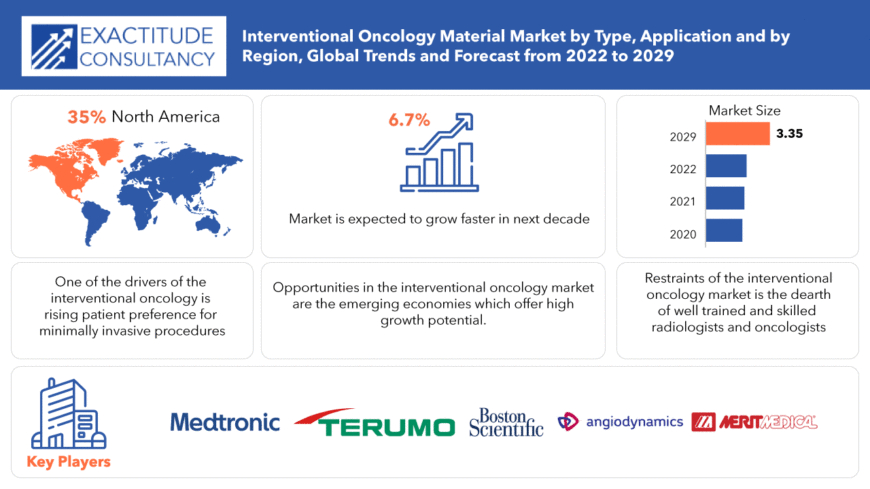
Se espera que el mercado mundial de oncología intervencionista crezca a una tasa anual compuesta del 6,7 % entre 2022 y 2029. Se espera que alcance más de 3350 millones de dólares en 2029, frente a los 1900 millones de dólares de 2020.
La oncología intervencionista abarca un espectro de prácticas médicas que implican el diagnóstico, el tratamiento y los cuidados paliativos del cáncer mediante procedimientos mínimamente invasivos realizados con guía por imágenes. Se prevé que la creciente incidencia del cáncer en la población y la consiguiente presión sobre los recursos sanitarios atribuible a estas enfermedades impulsen la demanda de metodologías y estrategias innovadoras de oncología intervencionista para el manejo de la enfermedad .
Por ejemplo, en junio de 2023, los datos publicados por los Centros para el Control y la Prevención de Enfermedades (CDC) de EE. UU. indicaron 1.603.844 nuevos casos de cáncer y 602.347 muertes relacionadas con el cáncer en EE. UU. durante 2020. Además, un aumento en los diagnósticos de cáncer y un mayor esfuerzo de investigación entre las partes interesadas de la industria destinado a desarrollar nuevas terapias para diversos tipos de cáncer están preparados para catalizar el crecimiento en el mercado mundial de oncología intervencionista durante el período de pronóstico.
| ATRIBUTO | DETALLES |
| Periodo de estudio | 2020-2029 |
| Año base | 2021 |
| Año estimado | 2022 |
| Año pronosticado | 2022-2029 |
| Periodo histórico | 2018-2020 |
| Unidad | Valor (miles de millones de USD), (Miles de unidades) |
| Segmentación | Por producto, por procedimiento, por cáncer, por usuario final, por región |
| Por producto |
|
| Por procedimiento |
|
| Por cáncer |
|
| Por el usuario final |
|
| Por región |
|
Además, el mercado mundial de oncología intervencionista experimentó una desaceleración en su trayectoria de crecimiento debido a la pandemia de COVID-19. Esta disminución se precipitó por las medidas de confinamiento gubernamentales, que llevaron al aplazamiento o cancelación de tratamientos oncológicos y, en consecuencia, a la reducción de las visitas de los pacientes a hospitales y clínicas. En los últimos años, ha habido un aumento notable de la demanda de procedimientos mínimamente invasivos debido a sus ventajas inherentes sobre las modalidades de tratamiento tradicionales.
Entre los principales beneficios se incluyen la disminución de las complicaciones operatorias, estancias hospitalarias más cortas, reducción de las molestias posoperatorias, incisiones más pequeñas que producen beneficios estéticos, menor riesgo de infección y períodos de recuperación más rápidos. Estos procedimientos aprovechan tecnologías avanzadas para el diagnóstico y tratamiento de diversas enfermedades, incluido el cáncer, ofreciendo un medio pragmático de extirpación de tumores y extracción de ganglios linfáticos con mínimas cicatrices. Además, las técnicas mínimamente invasivas facilitan la biopsia de tejidos y los estudios de estadificación precisos, lo que aumenta la precisión del diagnóstico y la eficacia del tratamiento.
[título id="attachment_9525" align="alignleft" width="870"]
Frequently Asked Questions
• What is the worth of the global Interventional Oncology market?
The Interventional Oncology market size had crossed USD 1.9 billion in 2020 and will observe a CAGR of more than % up to 2029 driven by the rising technological advancements.
• What is the size of the North America Interventional Oncology industry?
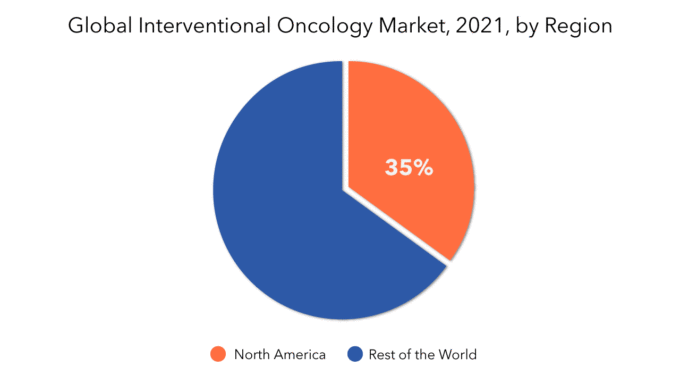
North America held more than 35% of the Interventional Oncology market revenue share in 2021 and will witness expansion. In 2020, the worldwide interventional oncology market was headed by Boston Scientific (US). To expand its market presence and product offerings, the firm primarily relies on growth techniques such as acquisitions and expansions. The company's acquisition of BTG will help it grow its chemoembolization, radioembolization, and ablation therapy options. Boston Scientific seeks to get regulatory and reimbursement approvals on a regular basis. By increasing its position in the global healthcare sector, the firm invests in fast-growing areas as well as new markets as part of its long-term growth plan.
• What are the drivers, restraints and opportunities for the Interventional Oncology market, globally?
One of the drivers of interventional oncology is rising patient preference for minimally invasive procedures. One of the restraints of the interventional oncology market is the dearth of well trained and skilled radiologists and oncologists. One of the biggest opportunities in the interventional oncology market are the emerging economies which offer high growth potential.
• Which are the top companies to hold the market share in the Interventional Oncology market?
Medtronic, Boston Scientific, BD, Terumo, Merit Medical, Angio Dynamics, J&J, Teleflex, Cook Medical, HealthTronics, MedWaves, Sanarus, IMBiotechnologies, Trod Medical, IceCure Medical, Mermaid Medicals, Interface Biomaterials BV, Guerbet, ABK Biomedical are the key players in the interventional oncology market.
• Which is the largest regional market for Interventional Oncology market?
North America, followed by Europe, was the largest regional component of the entire market in 2020. The high incidence of chronic illnesses, expanding geriatric population, increasing use of minimally invasive treatments, and the presence of significant companies in the region all contribute to the region's big market share.
• Which region is expected to experience the greatest CAGR during the forecast period?
With a CAGR of 9.6% over the projection period, Asia Pacific is the fastest-growing regional category in the interventional oncology market. The APAC interventional oncology market is growing due to rising healthcare expenditure, an increase in the number of hospitals and CROs in India and China, an expanding research base in India, China, and Japan, government efforts to increase funding, and supportive regulations for the development and commercialization of advanced interventional oncology products.
Interventional Oncology Market Segment Analysis
The Interventional Oncology market is divided on the basis of Product into Radiofrequency, Microwave, embolization, guidewires. Embolization devices will account for a portion of the interventional oncology market in 2020. Non-radioactive embolic agents and radioembolic agents are examples of embolic devices. Although these devices were originally developed to treat hepatocellular carcinoma, they have since been widely used to treat a variety of other cancers. These devices are utilised when ablation procedures cannot be used to treat tumours or when the tumour size is considerable. They're also employed in palliative operations and as a pre-operative therapy to help with liver resection outcomes. On the basis of type of Procedure, it can be divided into Thermal, Non-Thermal Ablation, TACE, TARE, TAE. On the basis of cancer, this market is divided into liver, lung, kidney, bone metastasis. In 2020, liver cancer had the biggest proportion of the interventional oncology market. Interventional oncology is important in the treatment of liver cancer because surgical removal of the tumour may not leave the tissue healthy enough for the liver to function properly. Thus, interventional oncology techniques can successfully treat primary liver tumours or liver tumours caused by metastatic malignancies. As a result, interventional oncology is used in more than half of all primary and metastatic liver cancer therapies. On the basis of end-user, it can be categorized into hospital, ASC.
[caption id="attachment_9528" align="alignleft" width="680"]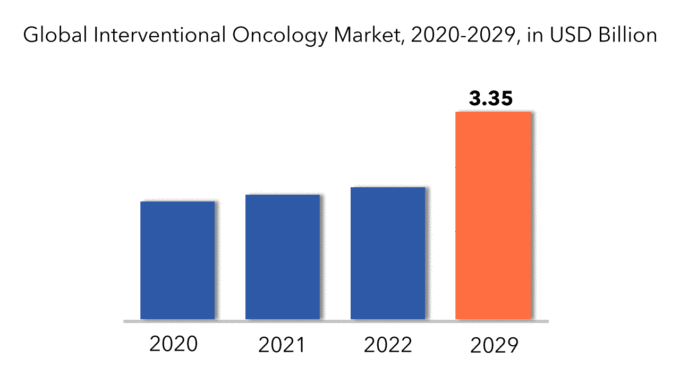
Interventional Oncology Market Players
Medtronic, Boston Scientific, BD, Terumo, Merit Medical, Angio Dynamics, J&J, Teleflex, Cook Medical, HealthTronics, MedWaves, Sanarus, IMBiotechnologies, Trod Medical, IceCure Medical, Mermaid Medicals, Interface Biomaterials BV, Guerbet, ABK Biomedical are the key players in the interventional oncology market.
Who Should Buy? Or Key Stakeholders
- Hospitals
- Clinics
- Government Healthcare organisations
- Government healthcare departments
- Information technology companies
- Others
Key Takeaways
- The global interventional oncology market is expected to grow at 6.7% CAGR.
- On the basis of Product, embolization devices will account for a portion of the interventional oncology market.
- On the basis of type of procedure, it can be divided into Thermal, Non-Thermal Ablation, TACE, TARE, TAE.
- On the basis of cancer, liver cancer had the biggest proportion of the interventional oncology market.
- North America dominated the market in the regional share.
- The integration of minimally invasive techniques like radiofrequency ablation and embolization therapies is a major trend in the interventional oncology market, offering precise tumor targeting and reduced patient recovery times.
Interventional Oncology Market Regional Analysis
The Interventional Oncology market by region includes North America, Asia-Pacific (APAC), Europe, South America, and Middle East & Africa (MEA).
- North America: includes the US, Canada, Mexico
- Asia Pacific: includes China, Japan, South Korea, India, Australia, ASEAN and Rest of APAC
- Europe: includes UK, Germany, France, Italy, Spain, Russia, and Rest of Europe
- South America: includes Brazil, Argentina and Rest of South America
- Middle East & Africa: includes Turkey, UAE, Saudi Arabia, South Africa, and Rest of MEA
Key Market Segments: Interventional Oncology Market
Interventional Oncology Market by Product, 2020-2029, (USD Million)- Radiofrequency
- Microwave
- Embolization
- Guidewires
- Thermal
- Non-Thermal Ablation
- TACE
- TARE
- TAE
- Liver
- Lung
- Kidney
- Bone Metastasis
- Hospital
- ASC
- North America
- Europe
- Asia Pacific
- South America
- Middle East And Africa
Key Question Answered
- What is the current size of the Interventional Oncology market?
- What are the key factors influencing the growth of Interventional Oncology?
- What are the major applications for Interventional Oncology?
- Who are the major key players in the Interventional Oncology market?
- Which region will provide more business opportunities for Interventional Oncology in future?
- Which segment holds the maximum share of the Interventional Oncology market?
- Introducción
- Definición de mercado
- Segmentación del mercado
- Cronología de la investigación
- Supuestos y limitaciones
- Metodología de la investigación
- Minería de datos
- Investigación secundaria
- Investigación primaria
- Asesoramiento de expertos en la materia
- Controles de calidad
- Revisión final
- Triangulación de datos
- Enfoque de abajo hacia arriba
- Enfoque de arriba hacia abajo
- Flujo de investigación
- Fuentes de datos
- Minería de datos
- Resumen ejecutivo
- Descripción general del mercado
- Perspectivas del mercado mundial de oncología intervencionista
- Factores impulsores del mercado
- Restricciones del mercado
- Oportunidades de mercado
- Impacto de la COVID-19 en el mercado mundial de oncología intervencionista
- Perspectivas del mercado mundial de oncología intervencionista
- Mercado mundial de oncología intervencionista por producto (millones de USD)
- Frecuencia de radio
- Microonda
- Embolización
- Alambres guía
- Mercado mundial de oncología intervencionista por procedimiento (millones de USD)
- Térmico
- Ablación no térmica
- TACE
- TARA
- TAE
- Mercado mundial de oncología intervencionista por cáncer (millones de USD)
- Hígado
- Pulmón
- Riñón
- Metástasis ósea
- Mercado mundial de oncología intervencionista por usuario final (millones de USD)
- Hospital
- CSA
- Mercado mundial de oncología intervencionista por región (millones de USD)
- Introducción
- Asia-Pacífico
- Porcelana
- India
- Japón
- Corea del Sur
- Australia
- Sudeste asiático
- Resto de Asia-Pacífico
- América del norte
- Estados Unidos
- Canadá
- México
- Europa
- Alemania
- Reino Unido
- Francia
- Italia
- España
- Rusia
- Resto de Europa
- Sudamerica
- Brasil
- Argentina
- Colombia
- Resto de Sudamérica
- Oriente Medio y África
- Emiratos Árabes Unidos
- Arabia Saudita
- Sudáfrica
- Resto de Oriente Medio y África
- Perfiles de empresas* (descripción general de la empresa, descripción general de la empresa, productos ofrecidos, desarrollos recientes)
- Medtronic
- Científico de Boston
- Terumo
- Mérito médico
- Dinámica angiográfica
- J&J
- Teleflex
- Cocinero médico
- SaludTronics
- Ondas médicas
*La lista de empresas es orientativa
LISTA DE TABLAS
TABLE 1 GLOBAL INTERVENTIONAL ONCOLOGY MARKET BY PRODUCT (USD MILLIONS) 2020-2029
TABLE 2 GLOBAL INTERVENTIONAL ONCOLOGY MARKET BY END USER (USD MILLIONS) 2020-2029
TABLE 3 GLOBAL INTERVENTIONAL ONCOLOGY MARKET BY PROCEDURE (USD MILLIONS) 2020-2029
TABLE 4 GLOBAL INTERVENTIONAL ONCOLOGY MARKET BY CANCER (USD MILLIONS) 2020-2029
TABLE 5 US INTERVENTIONAL ONCOLOGY MARKET BY PRODUCT (USD MILLIONS) 2020-2029
TABLE 6 US INTERVENTIONAL ONCOLOGY MARKET BY END USER (USD MILLIONS) 2020-2029
TABLE 7 US INTERVENTIONAL ONCOLOGY MARKET BY PROCEDURE (USD MILLIONS) 2020-2029
TABLE 8 US INTERVENTIONAL ONCOLOGY MARKET BY CANCER (USD MILLIONS) 2020-2029
TABLE 9 CANADA INTERVENTIONAL ONCOLOGY MARKET BY PRODUCT (USD MILLIONS) 2020-2029
TABLE 10 CANADA INTERVENTIONAL ONCOLOGY MARKET BY END USER (USD MILLIONS) 2020-2029
TABLE 11 CANADA INTERVENTIONAL ONCOLOGY MARKET BY PROCEDURE (USD MILLIONS) 2020-2029
TABLE 12 CANADA INTERVENTIONAL ONCOLOGY MARKET BY CANCER (USD MILLIONS) 2020-2029
TABLE 13 MEXICO INTERVENTIONAL ONCOLOGY MARKET BY PRODUCT (USD MILLIONS) 2020-2029
TABLE 14 MEXICO INTERVENTIONAL ONCOLOGY MARKET BY END USER (USD MILLIONS) 2020-2029
TABLE 15 MEXICO INTERVENTIONAL ONCOLOGY MARKET BY PROCEDURE (USD MILLIONS) 2020-2029
TABLE 16 MEXICO INTERVENTIONAL ONCOLOGY MARKET BY CANCER (USD MILLIONS) 2020-2029
TABLE 17 BRAZIL INTERVENTIONAL ONCOLOGY MARKET BY PRODUCT (USD MILLIONS) 2020-2029
TABLE 18 BRAZIL INTERVENTIONAL ONCOLOGY MARKET BY END USER (USD MILLIONS) 2020-2029
TABLE 19 BRAZIL INTERVENTIONAL ONCOLOGY MARKET BY PROCEDURE (USD MILLIONS) 2020-2029
TABLE 20 BRAZIL INTERVENTIONAL ONCOLOGY MARKET BY CANCER (USD MILLIONS) 2020-2029
TABLE 21 ARGENTINA INTERVENTIONAL ONCOLOGY MARKET BY PRODUCT (USD MILLIONS) 2020-2029
TABLE 22 ARGENTINA INTERVENTIONAL ONCOLOGY MARKET BY END USER (USD MILLIONS) 2020-2029
TABLE 23 ARGENTINA INTERVENTIONAL ONCOLOGY MARKET BY PROCEDURE (USD MILLIONS) 2020-2029
TABLE 24 ARGENTINA INTERVENTIONAL ONCOLOGY MARKET BY CANCER (USD MILLIONS) 2020-2029
TABLE 25 COLOMBIA INTERVENTIONAL ONCOLOGY MARKET BY PRODUCT (USD MILLIONS) 2020-2029
TABLE 26 COLOMBIA INTERVENTIONAL ONCOLOGY MARKET BY END USER (USD MILLIONS) 2020-2029
TABLE 27 COLOMBIA INTERVENTIONAL ONCOLOGY MARKET BY PROCEDURE (USD MILLIONS) 2020-2029
TABLE 28 COLOMBIA INTERVENTIONAL ONCOLOGY MARKET BY CANCER (USD MILLIONS) 2020-2029
TABLE 29 REST OF SOUTH AMERICA INTERVENTIONAL ONCOLOGY MARKET BY PRODUCT (USD MILLIONS) 2020-2029
TABLE 30 REST OF SOUTH AMERICA INTERVENTIONAL ONCOLOGY MARKET BY END USER (USD MILLIONS) 2020-2029
TABLE 31 REST OF SOUTH AMERICA INTERVENTIONAL ONCOLOGY MARKET BY PROCEDURE (USD MILLIONS) 2020-2029
TABLE 32 REST OF SOUTH AMERICA INTERVENTIONAL ONCOLOGY MARKET BY CANCER (USD MILLIONS) 2020-2029
TABLE 33 INDIA INTERVENTIONAL ONCOLOGY MARKET BY PRODUCT (USD MILLIONS) 2020-2029
TABLE 34 INDIA INTERVENTIONAL ONCOLOGY MARKET BY END USER (USD MILLIONS) 2020-2029
TABLE 35 INDIA INTERVENTIONAL ONCOLOGY MARKET BY PROCEDURE (USD MILLIONS) 2020-2029
TABLE 36 INDIA INTERVENTIONAL ONCOLOGY MARKET BY CANCER (USD MILLIONS) 2020-2029
TABLE 37 CHINA INTERVENTIONAL ONCOLOGY MARKET BY PRODUCT (USD MILLIONS) 2020-2029
TABLE 38 CHINA INTERVENTIONAL ONCOLOGY MARKET BY END USER (USD MILLIONS) 2020-2029
TABLE 39 CHINA INTERVENTIONAL ONCOLOGY MARKET BY PROCEDURE (USD MILLIONS) 2020-2029
TABLE 40 CHINA INTERVENTIONAL ONCOLOGY MARKET BY CANCER (USD MILLIONS) 2020-2029
TABLE 41 JAPAN INTERVENTIONAL ONCOLOGY MARKET BY PRODUCT (USD MILLIONS) 2020-2029
TABLE 42 JAPAN INTERVENTIONAL ONCOLOGY MARKET BY END USER (USD MILLIONS) 2020-2029
TABLE 43 JAPAN INTERVENTIONAL ONCOLOGY MARKET BY PROCEDURE (USD MILLIONS) 2020-2029
TABLE 44 JAPAN INTERVENTIONAL ONCOLOGY MARKET BY CANCER (USD MILLIONS) 2020-2029
TABLE 45 SOUTH KOREA INTERVENTIONAL ONCOLOGY MARKET BY PRODUCT (USD MILLIONS) 2020-2029
TABLE 46 SOUTH KOREA INTERVENTIONAL ONCOLOGY MARKET BY END USER (USD MILLIONS) 2020-2029
TABLE 47 SOUTH KOREA INTERVENTIONAL ONCOLOGY MARKET BY PROCEDURE (USD MILLIONS) 2020-2029
TABLE 48 SOUTH KOREA INTERVENTIONAL ONCOLOGY MARKET BY CANCER (USD MILLIONS) 2020-2029
TABLE 49 AUSTRALIA INTERVENTIONAL ONCOLOGY MARKET BY PRODUCT (USD MILLIONS) 2020-2029
TABLE 50 AUSTRALIA INTERVENTIONAL ONCOLOGY MARKET BY END USER (USD MILLIONS) 2020-2029
TABLE 51 AUSTRALIA INTERVENTIONAL ONCOLOGY MARKET BY PROCEDURE (USD MILLIONS) 2020-2029
TABLE 52 AUSTRALIA INTERVENTIONAL ONCOLOGY MARKET BY CANCER (USD MILLIONS) 2020-2029
TABLE 53 SOUTH-EAST ASIA INTERVENTIONAL ONCOLOGY MARKET BY PRODUCT (USD MILLIONS) 2020-2029
TABLE 54 SOUTH-EAST ASIA INTERVENTIONAL ONCOLOGY MARKET BY END USER (USD MILLIONS) 2020-2029
TABLE 55 SOUTH-EAST ASIA INTERVENTIONAL ONCOLOGY MARKET BY PROCEDURE (USD MILLIONS) 2020-2029
TABLE 56 SOUTH-EAST ASIA INTERVENTIONAL ONCOLOGY MARKET BY CANCER (USD MILLIONS) 2020-2029
TABLE 57 REST OF ASIA PACIFIC INTERVENTIONAL ONCOLOGY MARKET BY PRODUCT (USD MILLIONS) 2020-2029
TABLE 58 REST OF ASIA PACIFIC INTERVENTIONAL ONCOLOGY MARKET BY END USER (USD MILLIONS) 2020-2029
TABLE 59 REST OF ASIA PACIFIC INTERVENTIONAL ONCOLOGY MARKET BY PROCEDURE (USD MILLIONS) 2020-2029
TABLE 60 REST OF ASIA PACIFIC INTERVENTIONAL ONCOLOGY MARKET BY CANCER (USD MILLIONS) 2020-2029
TABLE 61 GERMANY INTERVENTIONAL ONCOLOGY MARKET BY PRODUCT (USD MILLIONS) 2020-2029
TABLE 62 GERMANY INTERVENTIONAL ONCOLOGY MARKET BY END USER (USD MILLIONS) 2020-2029
TABLE 63 GERMANY INTERVENTIONAL ONCOLOGY MARKET BY PROCEDURE (USD MILLIONS) 2020-2029
TABLE 64 GERMANY INTERVENTIONAL ONCOLOGY MARKET BY CANCER (USD MILLIONS) 2020-2029
TABLE 65 UK INTERVENTIONAL ONCOLOGY MARKET BY PRODUCT (USD MILLIONS) 2020-2029
TABLE 66 UK INTERVENTIONAL ONCOLOGY MARKET BY END USER (USD MILLIONS) 2020-2029
TABLE 67 UK INTERVENTIONAL ONCOLOGY MARKET BY PROCEDURE (USD MILLIONS) 2020-2029
TABLE 68 UK INTERVENTIONAL ONCOLOGY MARKET BY CANCER (USD MILLIONS) 2020-2029
TABLE 69 FRANCE INTERVENTIONAL ONCOLOGY MARKET BY PRODUCT (USD MILLIONS) 2020-2029
TABLE 70 FRANCE INTERVENTIONAL ONCOLOGY MARKET BY END USER (USD MILLIONS) 2020-2029
TABLE 71 FRANCE INTERVENTIONAL ONCOLOGY MARKET BY PROCEDURE (USD MILLIONS) 2020-2029
TABLE 72 FRANCE INTERVENTIONAL ONCOLOGY MARKET BY CANCER (USD MILLIONS) 2020-2029
TABLE 73 ITALY INTERVENTIONAL ONCOLOGY MARKET BY PRODUCT (USD MILLIONS) 2020-2029
TABLE 74 ITALY INTERVENTIONAL ONCOLOGY MARKET BY END USER (USD MILLIONS) 2020-2029
TABLE 75 ITALY INTERVENTIONAL ONCOLOGY MARKET BY PROCEDURE (USD MILLIONS) 2020-2029
TABLE 76 ITALY INTERVENTIONAL ONCOLOGY MARKET BY CANCER (USD MILLIONS) 2020-2029
TABLE 77 SPAIN INTERVENTIONAL ONCOLOGY MARKET BY PRODUCT (USD MILLIONS) 2020-2029
TABLE 78 SPAIN INTERVENTIONAL ONCOLOGY MARKET BY END USER (USD MILLIONS) 2020-2029
TABLE 79 SPAIN INTERVENTIONAL ONCOLOGY MARKET BY PROCEDURE (USD MILLIONS) 2020-2029
TABLE 80 SPAIN INTERVENTIONAL ONCOLOGY MARKET BY CANCER (USD MILLIONS) 2020-2029
TABLE 81 RUSSIA INTERVENTIONAL ONCOLOGY MARKET BY PRODUCT (USD MILLIONS) 2020-2029
TABLE 82 RUSSIA INTERVENTIONAL ONCOLOGY MARKET BY END USER (USD MILLIONS) 2020-2029
TABLE 83 RUSSIA INTERVENTIONAL ONCOLOGY MARKET BY PROCEDURE (USD MILLIONS) 2020-2029
TABLE 84 RUSSIA INTERVENTIONAL ONCOLOGY MARKET BY CANCER (USD MILLIONS) 2020-2029
TABLE 85 REST OF EUROPE INTERVENTIONAL ONCOLOGY MARKET BY PRODUCT (USD MILLIONS) 2020-2029
TABLE 86 REST OF EUROPE INTERVENTIONAL ONCOLOGY MARKET BY END USER (USD MILLIONS) 2020-2029
TABLE 87 REST OF EUROPE INTERVENTIONAL ONCOLOGY MARKET BY PROCEDURE (USD MILLIONS) 2020-2029
TABLE 88 REST OF EUROPE INTERVENTIONAL ONCOLOGY MARKET BY CANCER (USD MILLIONS) 2020-2029
TABLE 89 UAE INTERVENTIONAL ONCOLOGY MARKET BY PRODUCT (USD MILLIONS) 2020-2029
TABLE 90 UAE INTERVENTIONAL ONCOLOGY MARKET BY END USER (USD MILLIONS) 2020-2029
TABLE 91 UAE INTERVENTIONAL ONCOLOGY MARKET BY PROCEDURE (USD MILLIONS) 2020-2029
TABLE 92 UAE INTERVENTIONAL ONCOLOGY MARKET BY CANCER (USD MILLIONS) 2020-2029
TABLE 93 SAUDI ARABIA INTERVENTIONAL ONCOLOGY MARKET BY PRODUCT (USD MILLIONS) 2020-2029
TABLE 94 SAUDI ARABIA INTERVENTIONAL ONCOLOGY MARKET BY END USER (USD MILLIONS) 2020-2029
TABLE 95 SAUDI ARABIA INTERVENTIONAL ONCOLOGY MARKET BY PROCEDURE (USD MILLIONS) 2020-2029
TABLE 96 SAUDI ARABIA INTERVENTIONAL ONCOLOGY MARKET BY CANCER (USD MILLIONS) 2020-2029
TABLE 97 SOUTH AFRICA INTERVENTIONAL ONCOLOGY MARKET BY PRODUCT (USD MILLIONS) 2020-2029
TABLE 98 SOUTH AFRICA INTERVENTIONAL ONCOLOGY MARKET BY END USER (USD MILLIONS) 2020-2029
TABLE 99 SOUTH AFRICA INTERVENTIONAL ONCOLOGY MARKET BY PROCEDURE (USD MILLIONS) 2020-2029
TABLE 100 SOUTH AFRICA INTERVENTIONAL ONCOLOGY MARKET BY CANCER (USD MILLIONS) 2020-2029
TABLE 101 REST OF MIDDLE EAST AND AFRICA INTERVENTIONAL ONCOLOGY MARKET BY PRODUCT (USD MILLIONS) 2020-2029
TABLE 102 REST OF MIDDLE EAST AND AFRICA INTERVENTIONAL ONCOLOGY MARKET BY END USER (USD MILLIONS) 2020-2029
TABLE 103 REST OF MIDDLE EAST AND AFRICA INTERVENTIONAL ONCOLOGY MARKET BY PROCEDURE (USD MILLIONS) 2020-2029
TABLE 104 REST OF MIDDLE EAST AND AFRICA INTERVENTIONAL ONCOLOGY MARKET BY CANCER (USD MILLIONS) 2020-2029
LIST OF FIGURES
FIGURE 1 MARKET DYNAMICS
FIGURE 2 MARKET SEGMENTATION
FIGURE 3 REPORT TIMELINES: YEARS CONSIDERED
FIGURE 4 DATA TRIANGULATION
FIGURE 5 BOTTOM-UP APPROACH
FIGURE 6 TOP-DOWN APPROACH
FIGURE 7 RESEARCH FLOW
FIGURE 8 GLOBAL INTERVENTIONAL ONCOLOGY MARKET BY PROCEDURE, USD MILLION, 2019-2028
FIGURE 9 GLOBAL INTERVENTIONAL ONCOLOGY MARKET BY END USER, USD MILLION, 2019-2028
FIGURE 10 GLOBAL INTERVENTIONAL ONCOLOGY MARKET BY PRODUCT, USD MILLION, 2019-2028
FIGURE 11 GLOBAL INTERVENTIONAL ONCOLOGY MARKET BY CANCER, USD MILLION, 2019-2028
FIGURE 12 GLOBAL INTERVENTIONAL ONCOLOGY MARKET BY REGION, USD MILLION, 2019-2028
FIGURE 13 PORTER’S FIVE FORCES MODEL
FIGURE 14 GLOBAL INTERVENTIONAL ONCOLOGY MARKET BY PROCEDURE, 2020
FIGURE 15 GLOBAL INTERVENTIONAL ONCOLOGY MARKET BY END USER 2020
FIGURE 16 GLOBAL INTERVENTIONAL ONCOLOGY MARKET BY PRODUCT 2020
FIGURE 17 GLOBAL INTERVENTIONAL ONCOLOGY MARKET BY CANCER 2020
FIGURE 18 INTERVENTIONAL ONCOLOGY MARKET BY REGION 2020
FIGURE 19 MARKET SHARE ANALYSIS
FIGURE 20 MEDTRONIC: COMPANY SNAPSHOT
FIGURE 21 BOSTON SCIENTIFIC: COMPANY SNAPSHOT
FIGURE 22 TERUMO: COMPANY SNAPSHOT
FIGURE 23 MERIT MEDICAL: COMPANY SNAPSHOT
FIGURE 24 ANGIO DYNAMICS: COMPANY SNAPSHOT
FIGURE 25 J&J: COMPANY SNAPSHOT
FIGURE 26 TELEFLEX: COMPANY SNAPSHOT
FIGURE 27 COOK MEDICAL: COMPANY SNAPSHOT
FIGURE 28 HEALTHTRONICS: COMPANY SNAPSHOT
FIGURE 29 MEDWAVES: COMPANY SNAPSHOT
DOWNLOAD FREE SAMPLE REPORT
License Type
SPEAK WITH OUR ANALYST
Want to know more about the report or any specific requirement?
WANT TO CUSTOMIZE THE REPORT?
Our Clients Speak
We asked them to research ‘ Equipment market’ all over the world, and their whole arrangement was helpful to us. thehealthanalytics.com insightful analysis and reports contributed to our current analysis and in creating a future strategy. Besides, the te
Yosuke Mitsui
Senior Associate Construction Equipment Sales & Marketing
We asked them to research ‘Equipment market’ all over the world, and their whole arrangement was helpful to us. thehealthanalytics.com insightful analysis and reports contributed to our current analysis and in creating a future strategy. Besides, the te