

Base Year Value ()
x.x %
x.x %
CAGR ()
x.x %
x.x %
Forecast Year Value ()
x.x %
x.x %
Historical Data Period
Largest Region
Forecast Period
Mercado de recubrimientos de alimentos por tipo (recubridores y aplicadores, aplicadores de mejoradores, aplicadores de harina, aplicadores de masa, aplicadores de condimentos, otros recubridores y aplicadores, bañadores), aplicación (productos cárnicos y de mar, productos de confitería, productos de panadería, cereales de panadería, snacks), modo de funcionamiento (automático, semiautomático), forma del ingrediente (seco, líquido), región (Norteamérica, Asia Pacífico, Europa, Sudamérica, Oriente Medio y África), tendencias globales y pronóstico de 2022 a 2029
Instant access to hundreds of data points and trends
- Market estimates from 2014-2029
- Competitive analysis, industry segmentation, financial benchmarks
- Incorporates SWOT, Porter's Five Forces and risk management frameworks
- PDF report or online database with Word, Excel and PowerPoint export options
- 100% money back guarantee
Descripción general del mercado de recubrimientos para alimentos
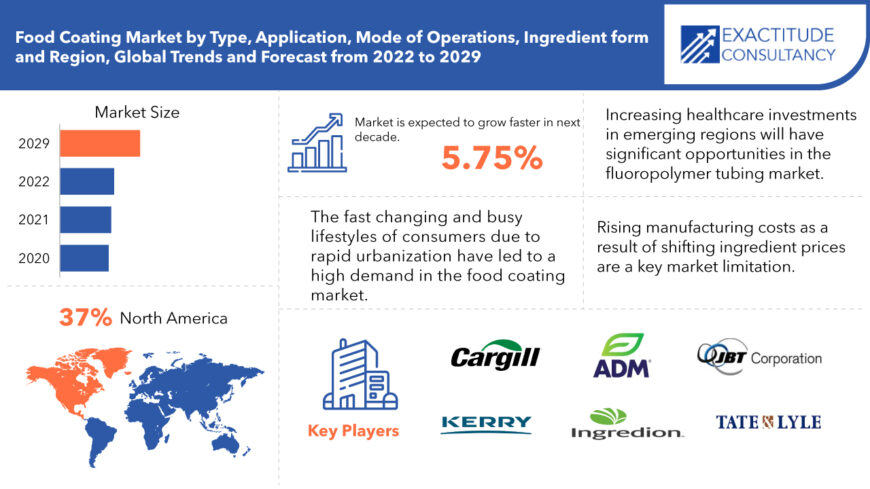
Se espera que el mercado mundial de recubrimientos alimentarios crezca a una tasa anual compuesta del 5,75 % entre 2020 y 2029. Se espera que alcance más de 3720 millones de USD en 2029, frente a los 2250 millones de USD en 2020.
La creciente demanda de soluciones alimentarias prácticas y que permitan ahorrar tiempo, impulsada por el estilo de vida acelerado y ajetreado que prevalece entre los consumidores urbanos, ha generado un mercado sustancial de ingredientes y equipos para recubrir alimentos. Los productos cárnicos, de confitería y de panadería listos para comer y cocinar han ganado popularidad debido a su fácil preparación, su contenido nutricional y su prolongada estabilidad en los estantes. Además, la creciente inclinación hacia los alimentos ricos en proteínas, el aumento del consumo de alimentos congelados y la creciente prevalencia de los hábitos de picoteo han avivado aún más la demanda de dichos productos.
En el procesamiento de carne, la selección de equipos se basa en el tipo específico de carne que se procesa, lo que implica una amalgama de varias metodologías de tratamiento físico y químico. Cabe destacar que el Departamento de Agricultura de los EE. UU . (USDA) informó una producción récord de 4,5 mil millones de libras de carne roja y aves de corral solo en abril de 2022, lo que requiere capacidades de procesamiento ampliadas y, por lo tanto, amplifica la demanda de equipos de recubrimiento de alimentos como aplicadores de pan y masa. Asimismo, los bocadillos y los productos de panadería necesitan equipos de recubrimiento para mejorar el sabor, glasear y cubrir para aumentar el gusto, la textura y la longevidad en los estantes. Los equipos de recubrimiento de alimentos sirven para mitigar el desperdicio de ingredientes, agilizar los tiempos de procesamiento y reducir los costos.
| ATRIBUTO | DETALLES |
| Periodo de estudio | 2020-2029 |
| Año base | 2021 |
| Año estimado | 2022 |
| Año pronosticado | 2022-2029 |
| Periodo histórico | 2018-2020 |
| Unidad | Millones de USD |
| Segmentación | Por tipo, aplicación, forma del ingrediente, modo de operación |
| Por tipo |
|
| Por aplicación |
|
| Por forma de ingrediente |
|
| Por modo de operación |
|
| Por región |
|
En respuesta a los requisitos cambiantes de los fabricantes de alimentos, los fabricantes de equipos de recubrimiento de alimentos priorizan los esfuerzos de investigación y desarrollo centrados en diversas innovaciones tecnológicas pertinentes a la funcionalidad del equipo. Entre los atributos deseados por los fabricantes de alimentos, los más importantes son las capacidades de manipulación mejoradas para productos alimenticios a gran escala, una vida útil más prolongada del producto, mayores capacidades de producción y un desperdicio mínimo de ingredientes. Los avances tecnológicos, incluidos los refinamientos en las fórmulas de recubrimiento, las técnicas de producción y el diseño de equipos, tienen el potencial de mejorar significativamente la eficiencia y el calibre de los productos alimenticios recubiertos, fomentando así la expansión del mercado.
[título id="attachment_7173" align="aligncenter" width="870"]
Frequently Asked Questions
• What are the drivers in food coating market, globally?
The fast changing and busy lifestyles of consumers due to rapid urbanization is a key driver driving the food coating market expansion.
• What is the CAGR of food coating market?
The global food coating market registered a CAGR of 5.75% from 2022 to 2029.
• Which are the top companies to hold the market share in the food coating market?
Key players profiled in the report include Cargill, Kerry Group, Archer Daniels Midland Company, Ingredion Incorporated, JBT Corporation, Tate & Lyle PLC, PGP International, Newly Weds Foods, Bowmen Ingredients, Marel, GEA Group, Buhler AG
• What is the leading application in food coating market?
The meat and sea food products category accounted for the greatest revenue share in the food coating market in 2020 and will maintain its lead throughout the forecast period.
• Which is the largest regional market for food coating market?
North America holds the largest regional market for the Food Coating market.
Food Coating Market Segment Analysis
Based on type the food coating market is divided into coaters & applicators, breeder applicators, flour applicators, batter applicators, seasoning applicators, other coaters & applicators, and enrobers. The coaters and applicators segment dominated the market. This segment's market expansion is being driven by rising demand for snack goods such as frozen breaded meat products, seasoned vegetable chips with specialty flavors, and luxury confectionery products enrobed in chocolate.
On the basis of application, the food coating market is segmented into meat & seafood products, confectionery products, bakery products, bakery cereals, and snacks. The meat and seafood category is predicted to account for the majority of the market. The market is primarily driven by widespread use in North America. The coating on meat and seafood keeps them from spoiling. This enables the addition of savory tastes as well as the crispy texture of meat and fish products. Furthermore, America's growing consumption of crispy, fried chicken covered in batter and crumbs are propelling the market for this application forward.
On the basis of application, the food Based on Mode of Operation the food coating market is divided into automatic, and semi-automatic. In the next five years, the semi-automatic category is expected to increase at the fastest rate. Semi-automatic food coating equipment is frequently employed by small- and medium-sized firms, as their production scale is restricted. Semi-automated equipment is used in developing nations in the Asia Pacific and South American areas that have a considerable number of small and medium makers of food processing items. The deployment of semi-automated technology in these places has been driven by limited investment capacity and high labor availability.
On the basis of ingredient form, the food coating market is segmented into dry, and liquid. Liquid coating is used in the manufacture of baked goods, flavored nuts, ice cream coatings, granola bars, and confectioneries such as candy bars. Coatings are fat-based compositions that are melted and applied by manufacturers to solid food goods such as nuts, cakes, doughnuts, cookies, sugar wafers, ice cream bars, and fruit pieces to add taste. Liquid food coating components such as batter, for example, are utilized in goods such as chicken nuggets and wings. Batter coatings give color, taste, and texture to these items while also extending their shelf life, increasing demand for liquid food coating components in the region.
[caption id="attachment_7175" align="alignnone" width="680"]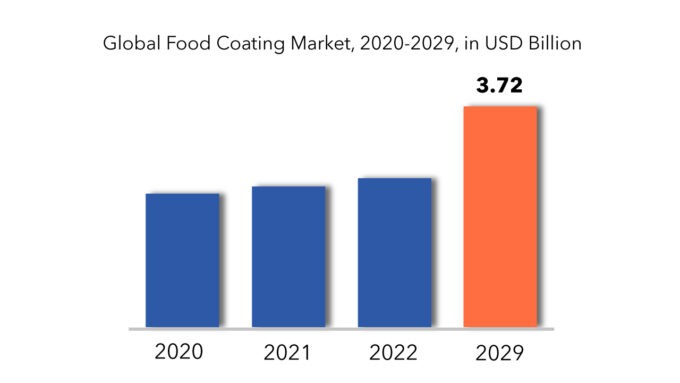
Food Coating Market Players
From large companies to small ones, many companies are actively working in the food coating market. These key players include Cargill, Kerry Group, Archer Daniels Midland Company, Ingredion Incorporated, JBT Corporation, Tate & Lyle PLC, PGP International, Newly Weds Foods, Bowmen Ingredients, Marel, GEA Group, Buhler AG, and others.
Companies are mainly in food coating they are competing closely with each other. Innovation is one of the most important key strategies as it has to be for any market. However, companies in the market have also opted for and successfully driven inorganic growth strategies like mergers & acquisitions, and so on.
- May 12, 2022, Kerry research into plant-based alternatives reveals sustainability and health are top drivers for flexitarians, but taste is key to consumer preference
- In March 2018, Tate & Lyle PLC collaborated with HORN (California), a renowned distributor of specialised ingredients and raw materials in North America. HORN sells Tate & Lyle's specialised ingredients created for the nutrition market in the United States as part of this collaboration. This will allow for reciprocal growth and better access to new items in the markets served by the firm.
Who Should Buy? Or Key Stakeholders
- Suppliers
- Manufacturing companies
- Research institutes
Key Takeaways:
- The global Food Coating Market is expected to grow at a 5.75% CAGR.
- Based on type, the coaters and applicators segment dominated the market.
- Based on application, the meat and seafood category is predicted to account for the majority of the market.
- Based on ingredient form, the Semi-Automatic category is predicted to account for the majority of the market.
- Based on mode of operations, liquid category is predicted to account for the majority of the market.
- Markets major share is occupied by North America.
- The food coating market is experiencing growth driven by increasing demand for processed and convenience foods.
Food Coating Market Regional Analysis
The food coating market by region includes North America, Europe, Middle East & Africa (MEA), Asia-Pacific (APAC), and South America.
- North America: includes the US, Canada, Mexico
- Asia Pacific: includes China, Japan, South Korea, India, Australia, ASEAN and Rest of APAC
- Europe: includes UK, Germany, France, Italy, Spain, Russia, and Rest of Europe
- South America: includes Brazil, Argentina and Rest of South America
- Middle East & Africa: includes Turkey, UAE, Saudi Arabia, South Africa, and the Rest of MEA
Its major share is occupied by North America, Europe, Middle East & Africa (MEA), and Asia Pacific. North America shares 37% of the total market.
[caption id="attachment_7176" align="alignnone" width="680"]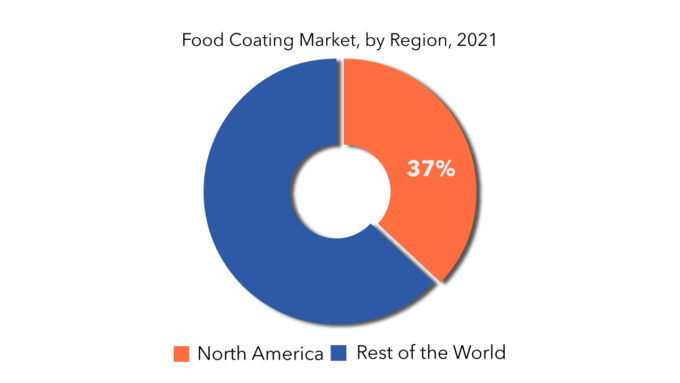
Key Market Segments: Food Coating Market
Food Coating Market by Type, 2020-2029, (USD Millions)- Coaters & Applicators
- Breader Applicators
- Flour Applicators
- Batter Applicators
- Seasoning Applicators
- Other Coaters & Applicators
- Enrobers
- Meat & Seafood Products
- Confectionery Products
- Bakery Products
- Bakery Cereals
- Snacks
- Automatic
- Semi-Automatic
- Dry
- Liquid
- North America
- Europe
- Asia Pacific
- South America
- Middle East and Africa
Key Question Answered
- What is the worth of global food coating market?
- What are the new trends and advancements in the food coating market?
- Which product categories are expected to have the highest growth rate in the food coating market?
- Which are the key factors driving the food coating market?
- What will the market growth rate, growth momentum, or acceleration the market carries during the forecast period?
- Introducción
- Definición de mercado
- Segmentación del mercado
- Cronología de la investigación
- Supuestos y limitaciones
- Metodología de la investigación
- Minería de datos
- Investigación secundaria
- Investigación primaria
- Asesoramiento de expertos en la materia
- Controles de calidad
- Revisión final
- Triangulación de datos
- Enfoque de abajo hacia arriba
- Enfoque de arriba hacia abajo
- Flujo de investigación
- Fuentes de datos
- Minería de datos
- Resumen ejecutivo
- Descripción general del mercado
- Perspectivas del mercado mundial de recubrimientos alimentarios
- Factores impulsores del mercado
- Restricciones del mercado
- Oportunidades de mercado
- Impacto de Covid-19 en el mercado mundial de recubrimientos alimentarios
- Perspectivas del mercado mundial de recubrimientos alimentarios
- Mercado mundial de recubrimientos alimentarios por aplicación (millones de USD)
- Productos de carne y mariscos
- Productos de Confitería
- Productos de panadería
- Cereales de panadería
- Bocadillos
- Mercado mundial de recubrimientos alimentarios por tipo (millones de USD)
- Recubridores y aplicadores
- Aplicadores de panificadora
- Aplicadores de harina
- Aplicadores de masa
- Aplicadores de condimentos
- Otros aplicadores y recubridores
- Bañadores
- Mercado mundial de recubrimientos alimentarios por modo de operación (millones de USD)
- Automático
- Semiautomático
- Mercado mundial de recubrimientos alimentarios por forma de ingrediente (millones de USD)
- Seco
- Líquido
- Mercado mundial de recubrimientos alimentarios por región (millones de USD)
- Introducción
- Asia-Pacífico
- Porcelana
- India
- Japón
- Corea del Sur
- Australia
- Sudeste asiático
- Resto de Asia-Pacífico
- América del norte
- Estados Unidos
- Canadá
- México
- Europa
- Alemania
- Reino Unido
- Francia
- Italia
- España
- Rusia
- Resto de Europa
- Sudamerica
- Brasil
- Argentina
- Colombia
- Resto de Sudamérica
- Oriente Medio y África
- Emiratos Árabes Unidos
- Arabia Saudita
- Sudáfrica
- Resto de Oriente Medio y África
- Perfiles de empresas* (descripción general de la empresa, descripción general de la empresa, modo de operaciones ofrecido, desarrollos recientes)
10.1. Cargill 10.2. Kerry Group 10.3. Archer Daniels Midland Company 10.4. Ingredion Incorporated 10.5. JBT Corporation 10.6. Tate & Lyle PLC 10.7. PGP International 10.8. Newly Weds Foods 10.9. Bowmen Ingredients 10.10. Marel 10.11. GEA Group 10.12. Buhler AG *La lista de empresas es indicativa
LISTA DE TABLAS
TABLE 1 GLOBAL FOOD COATING MARKET BY FABRIC MATERIAL (USD MILLIONS) 2020-2029
TABLE 2 GLOBAL FOOD COATING MARKET BY FILTER MEDIA (USD MILLIONS) 2020-2029
TABLE 3 GLOBAL FOOD COATING MARKET BY END USER (USD MILLIONS) 2020-2029
TABLE 4 GLOBAL FOOD COATING MARKET BY REGION (USD MILLIONS) 2020-2029
TABLE 5 US FOOD COATING MARKET BY FABRIC MATERIAL (USD MILLIONS) 2020-2029
TABLE 6 US FOOD COATING MARKET BY FILTER MEDIA (USD MILLIONS) 2020-2029
TABLE 7 US FOOD COATING MARKET BY END USER (USD MILLIONS) 2020-2029
TABLE 8 CANADA FOOD COATING MARKET BY FABRIC MATERIAL (USD MILLIONS) 2020-2029
TABLE 9 CANADA FOOD COATING MARKET BY FILTER MEDIA (USD MILLIONS) 2020-2029
TABLE 10 CANADA FOOD COATING MARKET BY END USER (USD MILLIONS) 2020-2029
TABLE 11 MEXICO FOOD COATING MARKET BY FABRIC MATERIAL (USD MILLIONS) 2020-2029
TABLE 12 MEXICO FOOD COATING MARKET BY FILTER MEDIA (USD MILLIONS) 2020-2029
TABLE 13 MEXICO FOOD COATING MARKET BY END USER (USD MILLIONS) 2020-2029
TABLE 14 BRAZIL FOOD COATING MARKET BY FABRIC MATERIAL (USD MILLIONS) 2020-2029
TABLE 15 BRAZIL FOOD COATING MARKET BY FILTER MEDIA (USD MILLIONS) 2020-2029
TABLE 16 BRAZIL FOOD COATING MARKET BY END USER (USD MILLIONS) 2020-2029
TABLE 17 ARGENTINA FOOD COATING MARKET BY FABRIC MATERIAL (USD MILLIONS) 2020-2029
TABLE 18 ARGENTINA FOOD COATING MARKET BY FILTER MEDIA (USD MILLIONS) 2020-2029
TABLE 19 ARGENTINA FOOD COATING MARKET BY END USER (USD MILLIONS) 2020-2029
TABLE 20 COLOMBIA FOOD COATING MARKET BY FABRIC MATERIAL (USD MILLIONS) 2020-2029
TABLE 21 COLOMBIA FOOD COATING MARKET BY FILTER MEDIA (USD MILLIONS) 2020-2029
TABLE 22 COLOMBIA FOOD COATING MARKET BY END USER (USD MILLIONS) 2020-2029
TABLE 23 REST OF SOUTH AMERICA FOOD COATING MARKET BY FABRIC MATERIAL (USD MILLIONS) 2020-2029
TABLE 24 REST OF SOUTH AMERICA FOOD COATING MARKET BY FILTER MEDIA (USD MILLIONS) 2020-2029
TABLE 25 REST OF SOUTH AMERICA FOOD COATING MARKET BY END USER (USD MILLIONS) 2020-2029
TABLE 26 INDIA FOOD COATING MARKET BY FABRIC MATERIAL (USD MILLIONS) 2020-2029
TABLE 27 INDIA FOOD COATING MARKET BY FILTER MEDIA (USD MILLIONS) 2020-2029
TABLE 28 INDIA FOOD COATING MARKET BY END USER (USD MILLIONS) 2020-2029
TABLE 29 CHINA FOOD COATING MARKET BY FABRIC MATERIAL (USD MILLIONS) 2020-2029
TABLE 30 CHINA FOOD COATING MARKET BY FILTER MEDIA (USD MILLIONS) 2020-2029
TABLE 31 CHINA FOOD COATING MARKET BY END USER (USD MILLIONS) 2020-2029
TABLE 32 JAPAN FOOD COATING MARKET BY FABRIC MATERIAL (USD MILLIONS) 2020-2029
TABLE 33 JAPAN FOOD COATING MARKET BY FILTER MEDIA (USD MILLIONS) 2020-2029
TABLE 34 JAPAN FOOD COATING MARKET BY END USER (USD MILLIONS) 2020-2029
TABLE 35 SOUTH KOREA FOOD COATING MARKET BY FABRIC MATERIAL (USD MILLIONS) 2020-2029
TABLE 36 SOUTH KOREA FOOD COATING MARKET BY FILTER MEDIA (USD MILLIONS) 2020-2029
TABLE 37 SOUTH KOREA FOOD COATING MARKET BY END USER (USD MILLIONS) 2020-2029
TABLE 38 AUSTRALIA FOOD COATING MARKET BY FABRIC MATERIAL (USD MILLIONS) 2020-2029
TABLE 39 AUSTRALIA FOOD COATING MARKET BY FILTER MEDIA (USD MILLIONS) 2020-2029
TABLE 40 AUSTRALIA FOOD COATING MARKET BY END USER (USD MILLIONS) 2020-2029
TABLE 41 SOUTH-EAST ASIA FOOD COATING MARKET BY FABRIC MATERIAL (USD MILLIONS) 2020-2029
TABLE 42 SOUTH-EAST ASIA FOOD COATING MARKET BY FILTER MEDIA (USD MILLIONS) 2020-2029
TABLE 43 SOUTH-EAST ASIA FOOD COATING MARKET BY END USER (USD MILLIONS) 2020-2029
TABLE 44 REST OF ASIA PACIFIC FOOD COATING MARKET BY FABRIC MATERIAL (USD MILLIONS) 2020-2029
TABLE 45 REST OF ASIA PACIFIC FOOD COATING MARKET BY FILTER MEDIA (USD MILLIONS) 2020-2029
TABLE 46 REST OF ASIA PACIFIC FOOD COATING MARKET BY END USER (USD MILLIONS) 2020-2029
TABLE 47 GERMANY FOOD COATING MARKET BY FABRIC MATERIAL (USD MILLIONS) 2020-2029
TABLE 48 GERMANY FOOD COATING MARKET BY FILTER MEDIA (USD MILLIONS) 2020-2029
TABLE 49 GERMANY FOOD COATING MARKET BY END USER (USD MILLIONS) 2020-2029
TABLE 50 UK FOOD COATING MARKET BY FABRIC MATERIAL (USD MILLIONS) 2020-2029
TABLE 51 UK FOOD COATING MARKET BY FILTER MEDIA (USD MILLIONS) 2020-2029
TABLE 52 UK FOOD COATING MARKET BY END USER (USD MILLIONS) 2020-2029
TABLE 53 FRANCE FOOD COATING MARKET BY FABRIC MATERIAL (USD MILLIONS) 2020-2029
TABLE 54 FRANCE FOOD COATING MARKET BY FILTER MEDIA (USD MILLIONS) 2020-2029
TABLE 55 FRANCE FOOD COATING MARKET BY END USER (USD MILLIONS) 2020-2029
TABLE 56 ITALY FOOD COATING MARKET BY FABRIC MATERIAL (USD MILLIONS) 2020-2029
TABLE 57 ITALY FOOD COATING MARKET BY FILTER MEDIA (USD MILLIONS) 2020-2029
TABLE 58 ITALY FOOD COATING MARKET BY END USER (USD MILLIONS) 2020-2029
TABLE 59 SPAIN FOOD COATING MARKET BY FABRIC MATERIAL (USD MILLIONS) 2020-2029
TABLE 60 SPAIN FOOD COATING MARKET BY FILTER MEDIA (USD MILLIONS) 2020-2029
TABLE 61 SPAIN FOOD COATING MARKET BY END USER (USD MILLIONS) 2020-2029
TABLE 62 RUSSIA FOOD COATING MARKET BY FABRIC MATERIAL (USD MILLIONS) 2020-2029
TABLE 63 RUSSIA FOOD COATING MARKET BY FILTER MEDIA (USD MILLIONS) 2020-2029
TABLE 64 RUSSIA FOOD COATING MARKET BY END USER (USD MILLIONS) 2020-2029
TABLE 65 REST OF EUROPE FOOD COATING MARKET BY FABRIC MATERIAL (USD MILLIONS) 2020-2029
TABLE 66 REST OF EUROPE FOOD COATING MARKET BY FILTER MEDIA (USD MILLIONS) 2020-2029
TABLE 67 REST OF EUROPE FOOD COATING MARKET BY END USER (USD MILLIONS) 2020-2029
TABLE 68 UAE FOOD COATING MARKET BY FABRIC MATERIAL (USD MILLIONS) 2020-2029
TABLE 69 UAE FOOD COATING MARKET BY FILTER MEDIA (USD MILLIONS) 2020-2029
TABLE 70 UAE FOOD COATING MARKET BY END USER (USD MILLIONS) 2020-2029
TABLE 71 SAUDI ARABIA FOOD COATING MARKET BY FABRIC MATERIAL (USD MILLIONS) 2020-2029
TABLE 72 SAUDI ARABIA FOOD COATING MARKET BY FILTER MEDIA (USD MILLIONS) 2020-2029
TABLE 73 SAUDI ARABIA FOOD COATING MARKET BY END USER (USD MILLIONS) 2020-2029
TABLE 74 SOUTH AFRICA FOOD COATING MARKET BY FABRIC MATERIAL (USD MILLIONS) 2020-2029
TABLE 75 SOUTH AFRICA FOOD COATING MARKET BY FILTER MEDIA (USD MILLIONS) 2020-2029
TABLE 76 SOUTH AFRICA FOOD COATING MARKET BY END USER (USD MILLIONS) 2020-2029
TABLE 77 REST OF MIDDLE EAST AND AFRICA FOOD COATING MARKET BY FABRIC MATERIAL (USD MILLIONS) 2020-2029
TABLE 78 REST OF MIDDLE EAST AND AFRICA FOOD COATING MARKET BY FILTER MEDIA (USD MILLIONS) 2020-2029
TABLE 79 REST OF MIDDLE EAST AND AFRICA FOOD COATING MARKET BY END USER (USD MILLIONS) 2020-2029
LIST OF FIGURES
FIGURE 1 MARKET DYNAMICS
FIGURE 2 MARKET SEGMENTATION
FIGURE 3 REPORT TIMELINES: YEARS CONSIDERED
FIGURE 4 DATA TRIANGULATION
FIGURE 5 BOTTOM-UP APPROACH
FIGURE 6 TOP-DOWN APPROACH
FIGURE 7 RESEARCH FLOW
FIGURE 8 GLOBAL FOOD COATING MARKET BY MODE OF OPERATION, USD MILLION, 2020-2029
FIGURE 9 GLOBAL FOOD COATING MARKET BY TYPE, USD MILLION, 2020-2029
FIGURE 10 GLOBAL FOOD COATING MARKET BY INGREDIENT FORM, USD MILLION, 2020-2029
FIGURE 11 GLOBAL FOOD COATING MARKET BY APPLICATION, USD MILLION, 2020-2029
FIGURE 12 GLOBAL FOOD COATING MARKET BY REGION, USD MILLION, 2020-2029
FIGURE 13 PORTER’S FIVE FORCES MODEL
FIGURE 14 FOOD COATING MARKET BY REGION 2020
FIGURE 15 MARKET SHARE ANALYSIS
FIGURE 16 CARGILL: COMPANY SNAPSHOT
FIGURE 17 KERRY GROUP: COMPANY SNAPSHOT
FIGURE 18 ARCHER DANIELS MIDLAND COMPANY: COMPANY SNAPSHOT
FIGURE 19 INGREDION INCORPORATED: COMPANY SNAPSHOT
FIGURE 20 JBT CORPORATION: COMPANY SNAPSHOT
FIGURE 21 TATE & LYLE PLC: COMPANY SNAPSHOT
FIGURE 22 PGP INTERNATIONAL: COMPANY SNAPSHOT
FIGURE 23 NEWLY WEDS FOODS: COMPANY SNAPSHOT
FIGURE 24 BOWMEN INGREDIENTS: COMPANY SNAPSHOT
FIGURE 25 MAREL: COMPANY SNAPSHOT
FIGURE 26 GEA GROUP: COMPANY SNAPSHOT
FIGURE 27 BUHLER AG: COMPANY SNAPSHOT
DOWNLOAD FREE SAMPLE REPORT
License Type
SPEAK WITH OUR ANALYST
Want to know more about the report or any specific requirement?
WANT TO CUSTOMIZE THE REPORT?
Our Clients Speak
We asked them to research ‘ Equipment market’ all over the world, and their whole arrangement was helpful to us. thehealthanalytics.com insightful analysis and reports contributed to our current analysis and in creating a future strategy. Besides, the te
Yosuke Mitsui
Senior Associate Construction Equipment Sales & Marketing
We asked them to research ‘Equipment market’ all over the world, and their whole arrangement was helpful to us. thehealthanalytics.com insightful analysis and reports contributed to our current analysis and in creating a future strategy. Besides, the te