

Base Year Value ()
x.x %
x.x %
CAGR ()
x.x %
x.x %
Forecast Year Value ()
x.x %
x.x %
Historical Data Period
Largest Region
Forecast Period
Mercado de caucho industrial por tipo (caucho sintético, caucho natural), aplicación (automotriz, construcción, fabricación industrial, modificación de polímeros, otros) y región, tendencias globales y pronóstico de 2022 a 2029
Instant access to hundreds of data points and trends
- Market estimates from 2014-2029
- Competitive analysis, industry segmentation, financial benchmarks
- Incorporates SWOT, Porter's Five Forces and risk management frameworks
- PDF report or online database with Word, Excel and PowerPoint export options
- 100% money back guarantee
Descripción general del mercado del caucho industrial
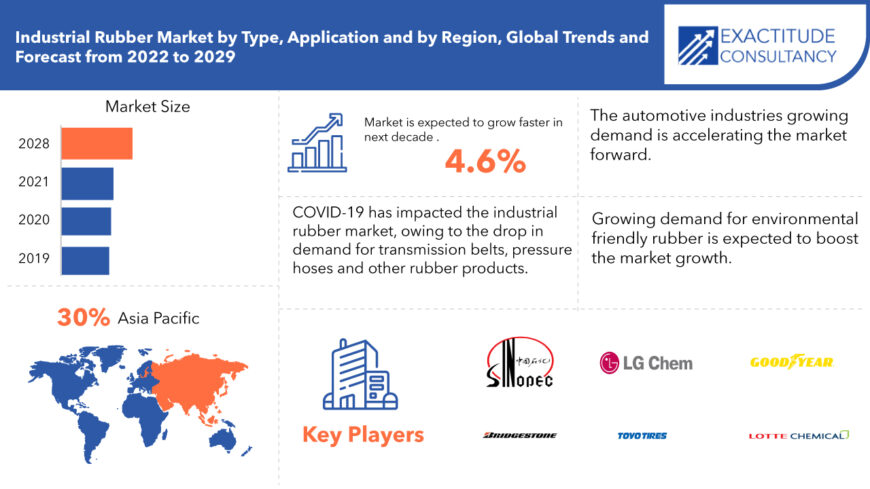
Se espera que el mercado mundial del caucho industrial crezca a una tasa anual compuesta del 4,6 % entre 2020 y 2029. Se espera que alcance más de 46 330 millones de dólares en 2029 desde 30 910 millones de dólares en 2020.
El aumento del consumo de alimentos y bebidas procesados y envasados , junto con la necesidad imperiosa de mitigar el deterioro, está impulsando un aumento de la demanda de sistemas de refrigeración industrial. Las preocupaciones en torno al calentamiento global han obligado a los fabricantes a priorizar los refrigerantes naturales frente a alternativas perjudiciales. En los últimos años, el mercado de equipos auténticos basados en refrigerantes ha florecido debido a la relación coste-beneficio y la neutralidad medioambiental de los refrigerantes naturales. Se prevé que los avances previstos en los sistemas de cadena de frío a nivel mundial tengan un impacto significativo en el mercado en el próximo período.
| ATRIBUTO | DETALLES |
| Periodo de estudio | 2020-2029 |
| Año base | 2021 |
| Año estimado | 2022 |
| Año pronosticado | 2022-2029 |
| Periodo histórico | 2018-2020 |
| Unidad | Valor (miles de millones de USD), (kilotones) |
| Segmentación | Por TIPO, Por Aplicación, Por Región |
| Por tipo |
|
| Por aplicación |
|
| Por región |
|
Los sistemas de refrigeración industrial se utilizan en diversos sectores, como el farmacéutico, el de procesamiento de alimentos y bebidas y el químico. Estos sistemas se utilizan habitualmente en instalaciones como almacenes frigoríficos, plantas de fabricación de bebidas, instalaciones de procesamiento de productos lácteos, pistas de hielo y operaciones industriales pesadas, y facilitan la extracción de calor de materiales y procesos a gran escala al reducir las temperaturas a niveles específicos.
Las ventas de comestibles a través del comercio electrónico están experimentando un rápido crecimiento en todo el mundo, superando las ventas tradicionales de comestibles en tiendas físicas. La infraestructura de la cadena de frío desempeña un papel fundamental en la mitigación de las pérdidas poscosecha mediante el uso de tecnologías como evaporadores, enfriadores pasivos y refrigeradores de absorción. El crecimiento del mercado se ve impulsado aún más por las altas temperaturas y las condiciones climáticas adversas, en particular en las regiones agrícolas. Sin embargo, la adopción de la cadena de frío en los países en desarrollo sigue siendo limitada debido a las limitaciones en la asignación presupuestaria para equipos avanzados.
Leading market entities are prioritizing technological advancements to offer streamlined solutions. For instance, in June 2022, Emerson Electric Co. achieved a significant milestone by installing 200.0 million Copeland compressors globally. These compressors are utilized in both commercial and residential air conditioning systems, delivering optimal performance while minimizing global warming potential (GWP) and enhancing efficiency.
Frequently Asked Questions
• What is the worth of global industrial rubber market?
The industrial rubber market size had crossed USD 30.91 billion in 2020 and will observe a CAGR of more than 4.6 % up to 2029 driven by the increasingly being used in the automotive, building & construction, industrial manufacturing, polymer modification, wire & cable, electrical & electronics, bitumen modification, coating, sealant, & adhesive, medical & healthcare, and other applications.
• What is the size of the Asia Pacific industrial rubber industry?
Asia Pacific held more than 38% of the industrial rubber market revenue share in 2020 and will witness expansion with the increased demand for industrial rubber from automotive, building & construction, industrial manufacturing, and other applications.
• What are some of the market's driving forces?
Increased sales for the automotive industry is expected to boost the industrial rubber market significantly.
• Which are the top companies to hold the market share in industrial rubber market?
Key players profiled in the report include Sinopec Corporation, Lg Chem Ltd., The Goodyear Tire & Rubber Company, Toyo Tire & Rubber Co., Ltd., Bridgestone Corporation, Lotte Chemical Corporation, Arkema S.A., Braskem S.A., Celanese Corporation, United Rubber Industries India Private Limited
• What is the leading application of industrial rubber market?
The automobile industry is expected to be the industrial rubber market's largest application category. Due to their rigidity and abrasion resistance, industrial rubbers are also replacing other materials in a number of applications, making them suitable for metal, glass, and wood parts used in automotive and other industrial applications.
• Which is the largest regional market for industrial rubber market?
The region's largest share is in Asia Pacific. The market is being driven by rising demand for industrial rubber from automotive, building & construction, industrial manufacturing, and other applications in countries like China and India.
Industrial Rubber Market Segment Analysis
The global industrial rubber market is segmented based on type, application. By type, the market is bifurcated into synthetic rubber, natural rubber. During the projected period, synthetic rubber is expected to be the most popular form of industrial rubber. The widespread use of synthetic rubber in various applications is responsible for the segment's growth. Synthetic rubber is widely utilized in the automotive industry as an abrasion-resistant alternative to natural rubber. In carpet manufacture, latex-based synthetic rubber is utilized as a rubbery glue. Drive couplings, haul-off pads, conveyor belts, adhesives, roll coverings, and a variety of other molded rubber goods are among the additional uses for synthetic rubber.
By application, the market is divided into automotive, building & construction, industrial manufacturing, polymer modification, others. In terms of value, the automotive industry is predicted to be the largest application segment of the industrial rubber market. Industrial rubbers are also replacing other materials in a variety of applications due to their rigidity and abrasion resistance, making them appropriate for metal, glass, and wood parts used in automotive and other industrial applications. Synthetic rubber is the most often used type of industrial rubber in the automobile industry due to its ease of manufacturing and superior performance.
[caption id="attachment_7433" align="alignnone" width="680"]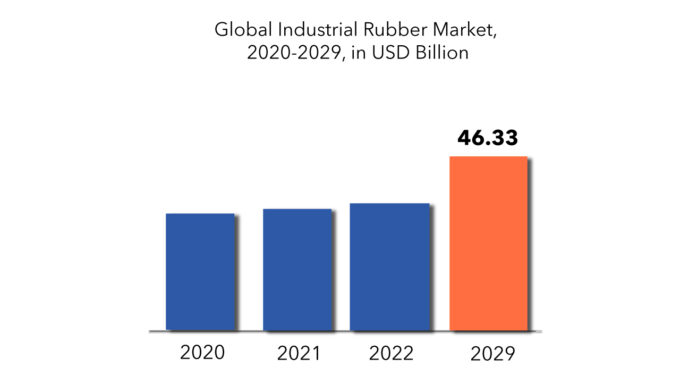
Industrial Rubber Market Players
The industrial rubber market key players include Sinopec Corporation, Lg Chem Ltd., The Goodyear Tire & Rubber Company, Toyo Tire & Rubber Co., Ltd., Bridgestone Corporation, Lotte Chemical Corporation, Arkema S.A., Braskem S.A., Celanese Corporation, United Rubber Industries India Private Limited
For corporate expansion, these key leaders are implementing strategic formulations such as new product development and commercialization, commercial expansion, and distribution agreements. Moreover, these participants are substantially spending in product development, which is fueling revenue generation.
Who Should Buy? Or Key Stakeholders
- Industrial rubber Supplier
- Raw Materials Manufacturers
- Research Organizations
- Investors
- Regulatory Authorities
- Others
Key Takeaways:
- The global industrial rubber market is expected to grow at 4.6 % CAGR.
- Based on type, synthetic rubber is expected to be the most popular form of industrial rubber.
- Based on application, the automotive industry is predicted to be the largest application segment of the industrial rubber market.
- Asia Pacific is the dominating region.
- The industrial rubber market is witnessing steady growth driven by increasing demand across automotive, construction, and manufacturing sectors.
Industrial Rubber Market Regional Analysis
The industrial rubber market by region includes North America, Asia-Pacific (APAC), Europe, South America, and Middle East & Africa (MEA).
- North America: includes the US, Canada, Mexico
- Asia Pacific: includes China, Japan, South Korea, India, Australia, ASEAN and Rest of APAC
- Europe: includes UK, Germany, France, Italy, Spain, Russia, and Rest of Europe
- South America: includes Brazil, Argentina and Rest of South America
- Middle East & Africa: includes Turkey, UAE, Saudi Arabia, South Africa, and Rest of MEA
One of the most important areas of the Asian-Pacific economy is the rubber industry. China, India, and Japan are all making substantial contributions to the market's expansion. India is the world's fourth-largest natural rubber producer. India's rubber sector has advanced significantly in order to meet the growing demands of the domestic market. Currently, the country is transforming into a major exporter of rubber products. The industrial rubber industry is projected to benefit from all of these reasons.
[caption id="attachment_7434" align="alignnone" width="680"]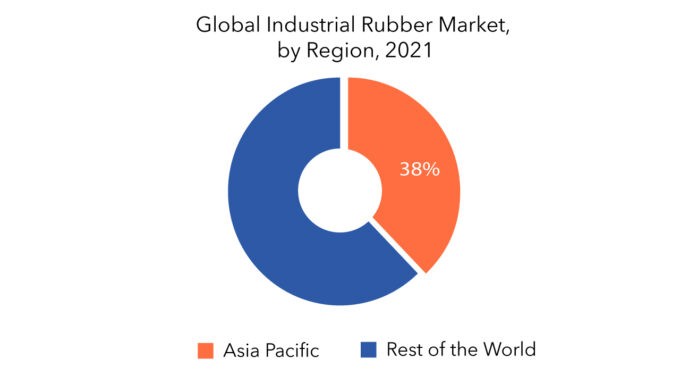
Key Market Segments: Industrial Rubber Market
Industrial Rubber Market by Type, 2020-2029, (USD Billion), (Kilotons)- Synthetic Rubber
- Natural Rubber
- Automotive
- Building & Construction
- Industrial Manufacturing
- Polymer Modification
- Others
- North America
- Asia Pacific
- Europe
- Latin America
- Middle East And Africa
Key Question Answered
- What is the current size of the industrial rubber market?
- What are the key factors influencing the growth of industrial rubber?
- What are the major applications for industrial rubber?
- Who are the major key players in the industrial rubber market?
- Which region will provide more business opportunities for industrial rubber in future?
- Which segment holds the maximum share of the industrial rubber market?
- Introduction
- Market Definition
- Market Segmentation
- Research Timelines
- Assumptions and Limitations
- Research Methodology
- Data Mining
- Secondary Research
- Primary Research
- Subject-Matter Experts’ Advice
- Quality Checks
- Final Review
- Data Triangulation
- Bottom-Up Approach
- Top-Down Approach
- Research Flow
- Data Sources
- Data Mining
- Executive Summary
- Market Overview
- Global Industrial Rubber Market Outlook
- Market Drivers
- Market Restraints
- Market Opportunities
- Impact of Covid-19 On Industrial Rubber Market
- Porter’s five forces model
- Threat from new entrants
- Threat from substitutes
- Bargaining power of suppliers
- Bargaining power of customers
- Degree of competition
- Industry value chain Analysis
- Global Industrial Rubber Market Outlook
- Global Industrial Rubber Market by Type, 2020-2029, (USD MILLIONS), (KILOTONS)
- Synthetic Rubber
- Natural Rubber
- Global Industrial Rubber Market by Application, 2020-2029, (USD MILLION), (KILOTONS)
- Automotive
- Building & Construction
- Industrial Manufacturing
- Polymer Modification
- Others
- Global Industrial Rubber Market by Region, 2020-2029, (USD MILLION), (KILOTONS)
- North America
- US
- Canada
- Mexico
- South America
- Brazil
- Argentina
- Colombia
- Rest Of South America
- Europe
- Germany
- UK
- France
- Italy
- Spain
- Russia
- Rest Of Europe
- Asia Pacific
- India
- China
- Japan
- South Korea
- Australia
- South-East Asia
- Rest Of Asia Pacific
- Middle East and Africa
- UAE
- Saudi Arabia
- South Africa
- Rest Of Middle East and Africa
- North America
- Company Profiles* (Business Overview, Company Snapshot, Products Offered, Recent Developments)
- Sinopec Corporation
- Lg Chem Ltd
- The Goodyear Tire & Rubber Company
- Toyo Tire & Rubber Co
- Bridgestone Corporation
- Lotte Chemical Corporation
- Arkema S.A.
- Braskem S.A.
- Celanese Corporation
- United Rubber Industries India Private Limited
*The Company List Is Indicative
LIST OF TABLES
TABLE 1 GLOBAL INDUSTRIAL RUBBER MARKET BY TYPE (USD MILLIONS) 2020-2029
TABLE 2 GLOBAL INDUSTRIAL RUBBER MARKET BY TYPE (KILOTONS) 2020-2029
TABLE 3 GLOBAL INDUSTRIAL RUBBER MARKET BY APPLICATION (USD MILLIONS) 2020-2029
TABLE 4 GLOBAL INDUSTRIAL RUBBER MARKET BY APPLICATION (KILOTONS) 2020-2029
TABLE 5 GLOBAL INDUSTRIAL RUBBER MARKET BY REGION (USD MILLIONS) 2020-2029
TABLE 6 GLOBAL INDUSTRIAL RUBBER MARKET BY REGION (KILOTONS) 2020-2029
TABLE 7 US INDUSTRIAL RUBBER MARKET BY TYPE (USD MILLIONS) 2020-2029
TABLE 8 US INDUSTRIAL RUBBER MARKET BY TYPE (KILOTONS) 2020-2029
TABLE 9 US INDUSTRIAL RUBBER MARKET BY APPLICATION (USD MILLIONS) 2020-2029
TABLE 10 US INDUSTRIAL RUBBER MARKET BY APPLICATION (KILOTONS) 2020-2029
TABLE 11 CANADA INDUSTRIAL RUBBER MARKET BY TYPE (USD MILLIONS) 2020-2029
TABLE 12 CANADA INDUSTRIAL RUBBER MARKET BY TYPE (KILOTONS) 2020-2029
TABLE 13 CANADA INDUSTRIAL RUBBER MARKET BY APPLICATION (USD MILLIONS) 2020-2029
TABLE 14 CANADA INDUSTRIAL RUBBER MARKET BY APPLICATION (KILOTONS) 2020-2029
TABLE 15 MEXICO INDUSTRIAL RUBBER MARKET BY TYPE (USD MILLIONS) 2020-2029
TABLE 16 MEXICO INDUSTRIAL RUBBER MARKET BY TYPE (KILOTONS) 2020-2029
TABLE 17 MEXICO INDUSTRIAL RUBBER MARKET BY APPLICATION (USD MILLIONS) 2020-2029
TABLE 18 MEXICO INDUSTRIAL RUBBER MARKET BY APPLICATION (KILOTONS) 2020-2029
TABLE 19 BRAZIL INDUSTRIAL RUBBER MARKET BY TYPE (USD MILLIONS) 2020-2029
TABLE 20 BRAZIL INDUSTRIAL RUBBER MARKET BY TYPE (KILOTONS) 2020-2029
TABLE 21 BRAZIL INDUSTRIAL RUBBER MARKET BY APPLICATION (USD MILLIONS) 2020-2029
TABLE 22 BRAZIL INDUSTRIAL RUBBER MARKET BY APPLICATION (KILOTONS) 2020-2029
TABLE 23 ARGENTINA INDUSTRIAL RUBBER MARKET BY TYPE (USD MILLIONS) 2020-2029
TABLE 24 ARGENTINA INDUSTRIAL RUBBER MARKET BY TYPE (KILOTONS) 2020-2029
TABLE 25 ARGENTINA INDUSTRIAL RUBBER MARKET BY APPLICATION (USD MILLIONS) 2020-2029
TABLE 26 ARGENTINA INDUSTRIAL RUBBER MARKET BY APPLICATION (KILOTONS) 2020-2029
TABLE 27 COLOMBIA INDUSTRIAL RUBBER MARKET BY TYPE (USD MILLIONS) 2020-2029
TABLE 28 COLOMBIA INDUSTRIAL RUBBER MARKET BY TYPE (KILOTONS) 2020-2029
TABLE 29 COLOMBIA INDUSTRIAL RUBBER MARKET BY APPLICATION (USD MILLIONS) 2020-2029
TABLE 30 COLOMBIA INDUSTRIAL RUBBER MARKET BY APPLICATION (KILOTONS) 2020-2029
TABLE 31 REST OF SOUTH AMERICA INDUSTRIAL RUBBER MARKET BY TYPE (USD MILLIONS) 2020-2029
TABLE 32 REST OF SOUTH AMERICA INDUSTRIAL RUBBER MARKET BY TYPE (KILOTONS) 2020-2029
TABLE 33 REST OF SOUTH AMERICA INDUSTRIAL RUBBER MARKET BY APPLICATION (USD MILLIONS) 2020-2029
TABLE 34 REST OF SOUTH AMERICA INDUSTRIAL RUBBER MARKET BY APPLICATION (KILOTONS) 2020-2029
TABLE 35 INDIA INDUSTRIAL RUBBER MARKET BY TYPE (USD MILLIONS) 2020-2029
TABLE 36 INDIA INDUSTRIAL RUBBER MARKET BY TYPE (KILOTONS) 2020-2029
TABLE 37 INDIA INDUSTRIAL RUBBER MARKET BY APPLICATION (USD MILLIONS) 2020-2029
TABLE 38 INDIA INDUSTRIAL RUBBER MARKET BY APPLICATION (KILOTONS) 2020-2029
TABLE 39 CHINA INDUSTRIAL RUBBER MARKET BY TYPE (USD MILLIONS) 2020-2029
TABLE 40 CHINA INDUSTRIAL RUBBER MARKET BY TYPE (KILOTONS) 2020-2029
TABLE 41 CHINA INDUSTRIAL RUBBER MARKET BY APPLICATION (USD MILLIONS) 2020-2029
TABLE 42 CHINA INDUSTRIAL RUBBER MARKET BY APPLICATION (KILOTONS) 2020-2029
TABLE 43 JAPAN INDUSTRIAL RUBBER MARKET BY TYPE (USD MILLIONS) 2020-2029
TABLE 44 JAPAN INDUSTRIAL RUBBER MARKET BY TYPE (KILOTONS) 2020-2029
TABLE 45 JAPAN INDUSTRIAL RUBBER MARKET BY APPLICATION (USD MILLIONS) 2020-2029
TABLE 46 JAPAN INDUSTRIAL RUBBER MARKET BY APPLICATION (KILOTONS) 2020-2029
TABLE 47 SOUTH KOREA INDUSTRIAL RUBBER MARKET BY TYPE (USD MILLIONS) 2020-2029
TABLE 48 SOUTH KOREA INDUSTRIAL RUBBER MARKET BY TYPE (KILOTONS) 2020-2029
TABLE 49 SOUTH KOREA INDUSTRIAL RUBBER MARKET BY APPLICATION (USD MILLIONS) 2020-2029
TABLE 50 SOUTH KOREA INDUSTRIAL RUBBER MARKET BY APPLICATION (KILOTONS) 2020-2029
TABLE 51 AUSTRALIA INDUSTRIAL RUBBER MARKET BY TYPE (USD MILLIONS) 2020-2029
TABLE 52 AUSTRALIA INDUSTRIAL RUBBER MARKET BY TYPE (KILOTONS) 2020-2029
TABLE 53 AUSTRALIA INDUSTRIAL RUBBER MARKET BY APPLICATION (USD MILLIONS) 2020-2029
TABLE 54 AUSTRALIA INDUSTRIAL RUBBER MARKET BY APPLICATION (KILOTONS) 2020-2029
TABLE 55 SOUTH-EAST ASIA INDUSTRIAL RUBBER MARKET BY TYPE (USD MILLIONS) 2020-2029
TABLE 56 SOUTH-EAST ASIA INDUSTRIAL RUBBER MARKET BY TYPE (KILOTONS) 2020-2029
TABLE 57 SOUTH-EAST ASIA INDUSTRIAL RUBBER MARKET BY APPLICATION (USD MILLIONS) 2020-2029
TABLE 58 SOUTH-EAST ASIA INDUSTRIAL RUBBER MARKET BY APPLICATION (KILOTONS) 2020-2029
TABLE 59 REST OF ASIA PACIFIC INDUSTRIAL RUBBER MARKET BY TYPE (USD MILLIONS) 2020-2029
TABLE 60 REST OF ASIA PACIFIC INDUSTRIAL RUBBER MARKET BY TYPE (KILOTONS) 2020-2029
TABLE 61 REST OF ASIA PACIFIC INDUSTRIAL RUBBER MARKET BY APPLICATION (USD MILLIONS) 2020-2029
TABLE 62 REST OF ASIA PACIFIC INDUSTRIAL RUBBER MARKET BY APPLICATION (KILOTONS) 2020-2029
TABLE 63 GERMANY INDUSTRIAL RUBBER MARKET BY TYPE (USD MILLIONS) 2020-2029
TABLE 64 GERMANY INDUSTRIAL RUBBER MARKET BY TYPE (KILOTONS) 2020-2029
TABLE 65 GERMANY INDUSTRIAL RUBBER MARKET BY APPLICATION (USD MILLIONS) 2020-2029
TABLE 66 GERMANY INDUSTRIAL RUBBER MARKET BY APPLICATION (KILOTONS) 2020-2029
TABLE 67 UK INDUSTRIAL RUBBER MARKET BY TYPE (USD MILLIONS) 2020-2029
TABLE 68 UK INDUSTRIAL RUBBER MARKET BY TYPE (KILOTONS) 2020-2029
TABLE 69 UK INDUSTRIAL RUBBER MARKET BY APPLICATION (USD MILLIONS) 2020-2029
TABLE 70 UK INDUSTRIAL RUBBER MARKET BY APPLICATION (KILOTONS) 2020-2029
TABLE 71 FRANCE INDUSTRIAL RUBBER MARKET BY TYPE (USD MILLIONS) 2020-2029
TABLE 72 FRANCE INDUSTRIAL RUBBER MARKET BY TYPE (KILOTONS) 2020-2029
TABLE 73 FRANCE INDUSTRIAL RUBBER MARKET BY APPLICATION (USD MILLIONS) 2020-2029
TABLE 74 FRANCE INDUSTRIAL RUBBER MARKET BY APPLICATION (KILOTONS) 2020-2029
TABLE 75 ITALY INDUSTRIAL RUBBER MARKET BY TYPE (USD MILLIONS) 2020-2029
TABLE 76 ITALY INDUSTRIAL RUBBER MARKET BY TYPE (KILOTONS) 2020-2029
TABLE 77 ITALY INDUSTRIAL RUBBER MARKET BY APPLICATION (USD MILLIONS) 2020-2029
TABLE 78 ITALY INDUSTRIAL RUBBER MARKET BY APPLICATION (KILOTONS) 2020-2029
TABLE 79 SPAIN INDUSTRIAL RUBBER MARKET BY TYPE (USD MILLIONS) 2020-2029
TABLE 80 SPAIN INDUSTRIAL RUBBER MARKET BY TYPE (KILOTONS) 2020-2029
TABLE 81 SPAIN INDUSTRIAL RUBBER MARKET BY APPLICATION (USD MILLIONS) 2020-2029
TABLE 82 SPAIN INDUSTRIAL RUBBER MARKET BY APPLICATION (KILOTONS) 2020-2029
TABLE 83 RUSSIA INDUSTRIAL RUBBER MARKET BY TYPE (USD MILLIONS) 2020-2029
TABLE 84 RUSSIA INDUSTRIAL RUBBER MARKET BY TYPE (KILOTONS) 2020-2029
TABLE 85 RUSSIA INDUSTRIAL RUBBER MARKET BY APPLICATION (USD MILLIONS) 2020-2029
TABLE 86 RUSSIA INDUSTRIAL RUBBER MARKET BY APPLICATION (KILOTONS) 2020-2029
TABLE 87 REST OF EUROPE INDUSTRIAL RUBBER MARKET BY TYPE (USD MILLIONS) 2020-2029
TABLE 88 REST OF EUROPE INDUSTRIAL RUBBER MARKET BY TYPE (KILOTONS) 2020-2029
TABLE 89 REST OF EUROPE INDUSTRIAL RUBBER MARKET BY APPLICATION (USD MILLIONS) 2020-2029
TABLE 90 REST OF EUROPE INDUSTRIAL RUBBER MARKET BY APPLICATION (KILOTONS) 2020-2029
TABLE 91 UAE INDUSTRIAL RUBBER MARKET BY TYPE (USD MILLIONS) 2020-2029
TABLE 92 UAE INDUSTRIAL RUBBER MARKET BY TYPE (KILOTONS) 2020-2029
TABLE 93 UAE INDUSTRIAL RUBBER MARKET BY APPLICATION (USD MILLIONS) 2020-2029
TABLE 94 UAE INDUSTRIAL RUBBER MARKET BY APPLICATION (KILOTONS) 2020-2029
TABLE 95 SAUDI ARABIA INDUSTRIAL RUBBER MARKET BY TYPE (USD MILLIONS) 2020-2029
TABLE 96 SAUDI ARABIA INDUSTRIAL RUBBER MARKET BY TYPE (KILOTONS) 2020-2029
TABLE 97 SAUDI ARABIA INDUSTRIAL RUBBER MARKET BY APPLICATION (USD MILLIONS) 2020-2029
TABLE 98 SAUDI ARABIA INDUSTRIAL RUBBER MARKET BY APPLICATION (KILOTONS) 2020-2029
TABLE 99 SOUTH AFRICA INDUSTRIAL RUBBER MARKET BY TYPE (USD MILLIONS) 2020-2029
TABLE 100 SOUTH AFRICA INDUSTRIAL RUBBER MARKET BY TYPE (KILOTONS) 2020-2029
TABLE 101 SOUTH AFRICA INDUSTRIAL RUBBER MARKET BY APPLICATION (USD MILLIONS) 2020-2029
TABLE 102 SOUTH AFRICA INDUSTRIAL RUBBER MARKET BY APPLICATION (KILOTONS) 2020-2029
TABLE 103 REST OF MIDDLE EAST AND AFRICA INDUSTRIAL RUBBER MARKET BY TYPE (USD MILLIONS) 2020-2029
TABLE 104 REST OF MIDDLE EAST AND AFRICA INDUSTRIAL RUBBER MARKET BY TYPE (KILOTONS) 2020-2029
TABLE 105 REST OF MIDDLE EAST AND AFRICA INDUSTRIAL RUBBER MARKET BY APPLICATION (USD MILLIONS) 2020-2029
TABLE 106 REST OF MIDDLE EAST AND AFRICA INDUSTRIAL RUBBER MARKET BY APPLICATION (KILOTONS) 2020-2029
LIST OF FIGURES
FIGURE 1 MARKET DYNAMICS
FIGURE 2 MARKET SEGMENTATION
FIGURE 3 REPORT TIMELINES: YEARS CONSIDERED
FIGURE 4 DATA TRIANGULATION
FIGURE 5 BOTTOM-UP APPROACH
FIGURE 6 TOP-DOWN APPROACH
FIGURE 7 RESEARCH FLOW
FIGURE 8 GLOBAL INDUSTRIAL RUBBER MARKET BY TYPE, USD MILLION, 2020-2029
FIGURE 9 GLOBAL INDUSTRIAL RUBBER MARKET BY APPLICATION, USD MILLION, 2020-2029
FIGURE 10 GLOBAL INDUSTRIAL RUBBER MARKET BY REGION, USD MILLION, 2020-2029
FIGURE 11 PORTER’S FIVE FORCES MODEL
FIGURE 12 NORTH AMERICA INDUSTRIAL RUBBER MARKET SNAPSHOT
FIGURE 13 EUROPE INDUSTRIAL RUBBER MARKET SNAPSHOT
FIGURE 14 SOUTH AMERICA INDUSTRIAL RUBBER MARKET SNAPSHOT
FIGURE 15 ASIA PACIFIC INDUSTRIAL RUBBER MARKET SNAPSHOT
FIGURE 16 MIDDLE EAST ASIA AND AFRICA INDUSTRIAL RUBBER MARKET SNAPSHOT
FIGURE 17 MARKET SHARE ANALYSIS
FIGURE 18 SINOPEC CORPORATION: COMPANY SNAPSHOT
FIGURE 19 LG CHEM LTD: COMPANY SNAPSHOT
FIGURE 20 THE GOODYEAR TIRE & RUBBER COMPANY: COMPANY SNAPSHOT
FIGURE 21 TOYO TIRE & RUBBER CO: COMPANY SNAPSHOT
FIGURE 22 BRIDGESTONE CORPORATION: COMPANY SNAPSHOT
FIGURE 23 LOTTE CHEMICAL CORPORATION: COMPANY SNAPSHOT
FIGURE 24 ARKEMA S.A.: COMPANY SNAPSHOT
FIGURE 25 BRASKEM S.A.: COMPANY SNAPSHOT
FIGURE 26 CELANESE CORPORATION: COMPANY SNAPSHOT
FIGURE 27 UNITED RUBBER INDUSTRIES INDIA PRIVATE LIMITED: COMPANY SNAPSHOT
DOWNLOAD FREE SAMPLE REPORT
License Type
SPEAK WITH OUR ANALYST
Want to know more about the report or any specific requirement?
WANT TO CUSTOMIZE THE REPORT?
Our Clients Speak
We asked them to research ‘ Equipment market’ all over the world, and their whole arrangement was helpful to us. thehealthanalytics.com insightful analysis and reports contributed to our current analysis and in creating a future strategy. Besides, the te
Yosuke Mitsui
Senior Associate Construction Equipment Sales & Marketing
We asked them to research ‘Equipment market’ all over the world, and their whole arrangement was helpful to us. thehealthanalytics.com insightful analysis and reports contributed to our current analysis and in creating a future strategy. Besides, the te