

Base Year Value ()
x.x %
x.x %
CAGR ()
x.x %
x.x %
Forecast Year Value ()
x.x %
x.x %
Historical Data Period
Largest Region
Forecast Period
Marché du PEEK par type de produit (rempli de verre, rempli de carbone, non rempli), application (électricité et électronique, aérospatiale, automobile, médical, pétrole et gaz), canal de distribution (en ligne, hors ligne) et par région Tendances et prévisions mondiales de 2022 à 2029
Instant access to hundreds of data points and trends
- Market estimates from 2014-2029
- Competitive analysis, industry segmentation, financial benchmarks
- Incorporates SWOT, Porter's Five Forces and risk management frameworks
- PDF report or online database with Word, Excel and PowerPoint export options
- 100% money back guarantee
Aperçu du marché PEEK
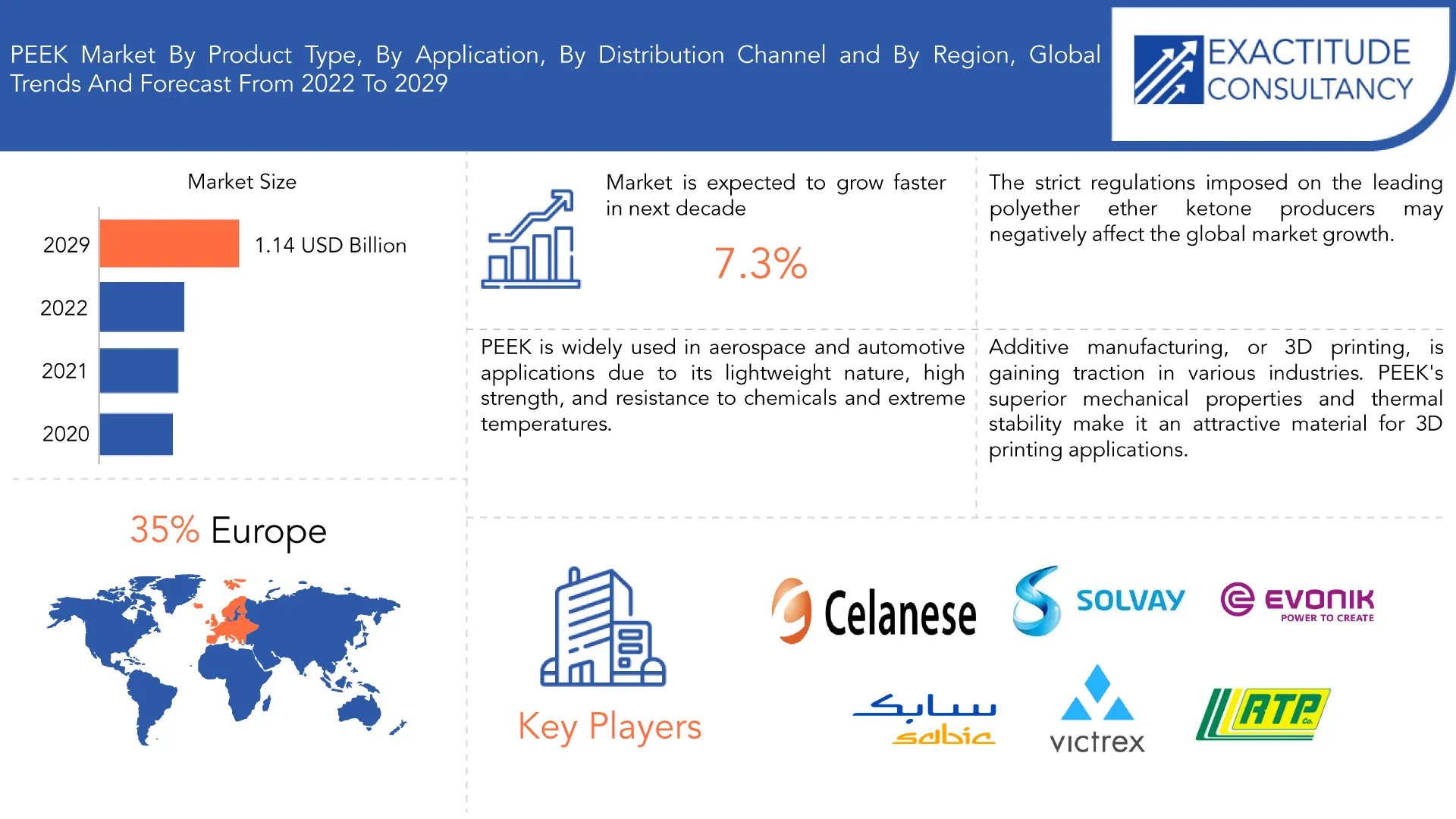
Le marché mondial du PEEK devrait atteindre 1,14 milliard USD d'ici 2029, contre 0,66 milliard USD en 2020, à un TCAC de 7,3 % de 2022 à 2029.
Le polyétheréthercétone (PEEK) est un thermoplastique semi-cristallin, inerte et thermiquement stable. Il est utilisé dans l'industrie nucléaire, l'aéronautique, les interfaces résistantes à la température et les implants médicaux. Il possède des qualités particulières, notamment la résistance aux températures élevées , l'hydrolyse, l'autolubrification, la simplicité de production et une résistance mécanique élevée. Lorsqu'il est exposé à la flamme, le PEEK libère une quantité limitée de fumée ou d'émissions de gaz nocifs. La plage de sa température de fusion peut être traitée par moulage par injection, par extrusion, par formage par pulvérisation ou par des techniques de pressage. Il fond à une température relativement élevée par rapport aux autres thermoplastiques.
Le PEEK est un matériau polymère thermoplastique hautes performances qui est également utilisé dans les implants médicaux tels que les implants dentaires , orthopédiques et rachidiens. Les implants en PEEK (polyétheréthercétone) présentent divers avantages par rapport aux implants métalliques ou céramiques standard, notamment leur biocompatibilité, leur légèreté et leur radiotransparence. Les implants en PEEK offrent d'excellentes qualités mécaniques, telles qu'une résistance et une rigidité élevées, ce qui les rend adaptés aux applications porteuses.
[caption id="attachment_25977" align="aligncenter" width="1920"]
Le polyéther éther cétone a gagné en importance dans de nombreux domaines, notamment l'aérospatiale, l'automobile, l'électricité et l'électronique et la médecine. Les polymères PEEK peuvent être utilisés pour remplacer l'aluminium et d'autres métaux dans une variété de composants aéronautiques. Il est également utilisé dans les moteurs vitaux, les pièces extérieures et intérieures des avions, et il résiste aux températures élevées et aux dommages causés par la pluie. Avec la popularité croissante des compartiments moteur compacts, le PEEK offre une réduction du poids et du bruit dans le secteur automobile, ce qui se traduit par une substitution du métal. La conception des engrenages, les rondelles et autres composants actifs utilisés dans les boîtes de vitesses, les freins et les systèmes de climatisation sont parmi les applications les plus courantes. Dans le domaine médical, le polyéther éther cétone est utilisé comme matériau privilégié pour les implants.
Growing environmental concerns, such as significant carbon emissions, have resulted in a desire for minimum fuel. This issue has prompted automotive makers to focus on increasing fuel economy via the total weight of autos. One effective way to reduce vehicle weight is to replace metals in automobiles with environmentally friendly and efficient substitutes. In such instances, polyether ether ketone may emerge as a popular metal alternative in the vehicle industry. This aspect is expected to drive expansion in the worldwide polyether ether ketone market in the coming years.
The comparatively high cost of PEEK in comparison to other thermoplastics is one of the key limitations influencing the industry. PEEK manufacture is complicated and requires specialized raw ingredients such as 4,4'-Difluorobenzophenone (DFBP) and hydroquinone (HQ). These reasons lead to the increased PEEK manufacturing costs. As a result, the higher price point restricts its adoption, particularly in price-sensitive businesses. However, as the industry evolves and production quantities rise, economies of scale and advances in manufacturing processes are steadily lowering PEEK's cost. In the future, this trend is projected to make PEEK more accessible to a larger range of applications.
The electrical and electronics sector presents a promising opportunity for the expansion of the PEEK market. PEEK's excellent electrical insulation properties, combined with its thermal stability and resistance to high temperatures, make it an ideal material for various electrical and electronics applications. As the demand for miniaturized electronic devices, connectors, and circuit boards grows, PEEK can play a crucial role in meeting the industry's requirements.
| ATTRIBUTE | DETAILS |
| Study period | 2022-2029 |
| Base year | 2022 |
| Estimated year | 2023 |
| Forecasted year | 2023-2029 |
| Historical period | 2018-2022 |
| Unit | Value (USD Billion) Volume (Kilotons) |
| Segmentation | By Product Type, By Application, By Distribution Channel, By Region |
| By Product Type |
|
| By Application |
|
| By Distribution Channel |
|
| By Region |
|
Frequently Asked Questions
• What is the worth of the PEEK market?
The global PEEK market is projected to reach USD 1.14 billion by 2029 from USD 0.66 billion in 2020, at a CAGR of 7.3 % from 2022 to 2029.
• What is the share of the Europe PEEK industry?
Europe dominates the PEEK market, with a market share of over 35%.
• Which are the top companies to hold the market share in the PEEK market?
Celanese Corporation, Solvay SA, Darter Plastics Inc., Evonik Industries, Prototype & Plastic Mold Co. Inc., SABIC, Jrlon Inc., Victrex plc, RTP Company, Stern Industries Inc., Panjin Zhongrun High Performance Polymers Co. Ltd, Caledonian Ferguson Timpson Ltd are among the leading players in the global PEEK market.
• What is the CAGR of PEEK market?
The global PEEK market registered a CAGR of 7.3 % from 2022 to 2029.
• What are the key factors driving the market?
The rising usage of PEEK in automobile parts such as engines, gaskets, transmission rings, friction rings and thrust washers is one of the primary reasons predicted to drive market expansion over the forecast period.
PEEK Market Segment Analysis
The global PEEK market is segmented by product type, application, distribution channel and region.
Based on product type, the PEEK market is segmented into glass filled, carbon filled, unfilled, others. Glass-filled PEEK is expected to maintain its market dominance throughout the projection period, followed by carbon filled. The addition of glass fibers enhances the material's stiffness, strength, and dimensional stability while maintaining a relatively low coefficient of friction. Glass filled PEEK finds applications in industries where high mechanical performance and resistance to wear and abrasion are crucial, such as automotive, aerospace, and industrial equipment manufacturing.
Carbon filled PEEK is a PEEK variant that incorporates carbon fibers into the polymer matrix. This reinforcement improves the material's mechanical strength, stiffness, and resistance to wear and creep. Carbon filled PEEK exhibits excellent thermal conductivity and dimensional stability, making it suitable for applications in high-temperature environments. Industries such as aerospace, automotive, and oil and gas often utilize carbon filled PEEK
Based on application, the PEEK market is classified into electrical & electronics, aerospace, automotive, medical, oil & gas, others. The market will be driven by automotive, industrial, and general construction applications in 2021. Over the forecast period, product demand from modern application categories are likely to rise due to evolving packaging challenges and severe environmental standards. Automakers, on the other hand, are concentrating on enhancing eco-friendliness by lowering vehicle weight.
Based on distribution channel, the PEEK market is bifurcated into online, offline. The online form of distribution is expected to increase at a higher rate throughout the projection period, since it provides greater exposure to the product, particularly given the prevalence of internet access and smart devices. Furthermore, it serves as an additional channel for product promotion and sales, resulting in lower marketing expenses than traditional sales channels. A fair product evaluation offers customers/clients the confidence to buy, hence increasing their profitability. The PEEK polymer business is heavily reliant on offline labour.
[caption id="attachment_25981" align="aligncenter" width="1920"]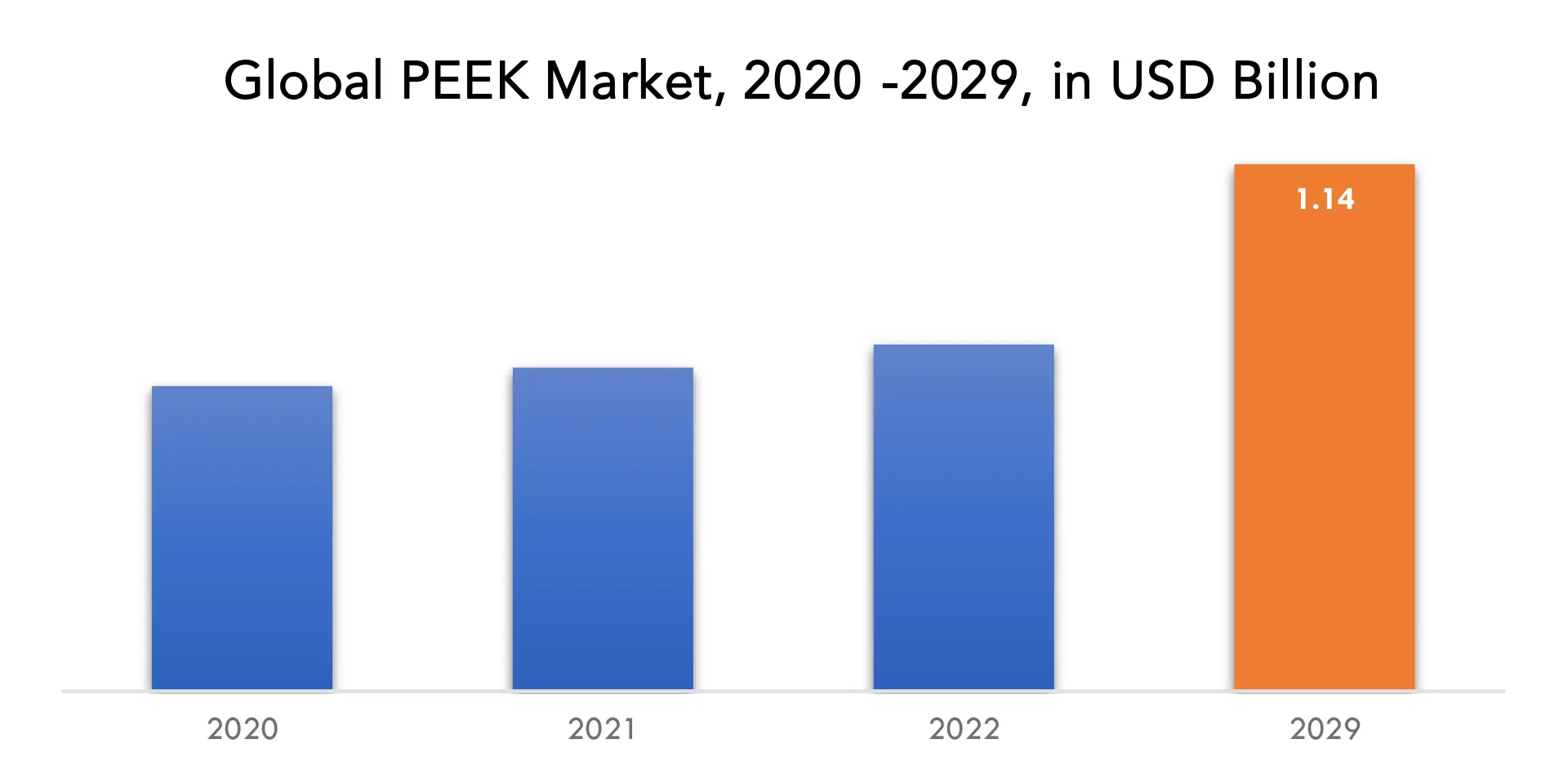
PEEK Market Players
The global PEEK market key players include Celanese Corporation, Solvay SA, Darter Plastics Inc., Evonik Industries, Prototype & Plastic Mold Co. Inc., SABIC, Jrlon Inc., Victrex plc, RTP Company, Stern Industries Inc., Panjin Zhongrun High Performance Polymers Co. Ltd, Caledonian Ferguson Timpson Ltd. Recent News:- May 23, 2023: Solvay, a global market leader in specialty materials, announced the launch of KetaSpire® KT-857, a new polyetheretherketone (PEEK) extrusion compound designed especially for copper magnet wire insulation in electric motors.
- Mar 8, 2023: Invibio Biomaterial Solutions, part of Victrex plc, a pioneer in the development of PEEK biomaterial solutions, announced the launch of PEEK-OPTIMA™ AM Filament, an implantable PEEK polymer that is optimized for additive manufacturing.
Who Should Buy? Or Key stakeholders
- Polyether ether ketone manufacturers
- Traders and distributors of polyether ether ketone
- Research and development institutes
- Potential investors
- Raw material suppliers
- Nationalized laboratory
- Others
PEEK Market Regional Analysis
The PEEK market by region includes North America, Asia-Pacific (APAC), Europe, South America, and Middle East & Africa (MEA).
- North America: includes the US, Canada, Mexico
- Asia Pacific: includes China, Japan, South Korea, India, Australia, ASEAN and Rest of APAC
- Europe: includes UK, Germany, France, Italy, Spain, Russia, and Rest of Europe
- South America: includes Brazil, Argentina and Rest of South America
- Middle East & Africa: includes Turkey, UAE, Saudi Arabia, South Africa, and Rest of MEA
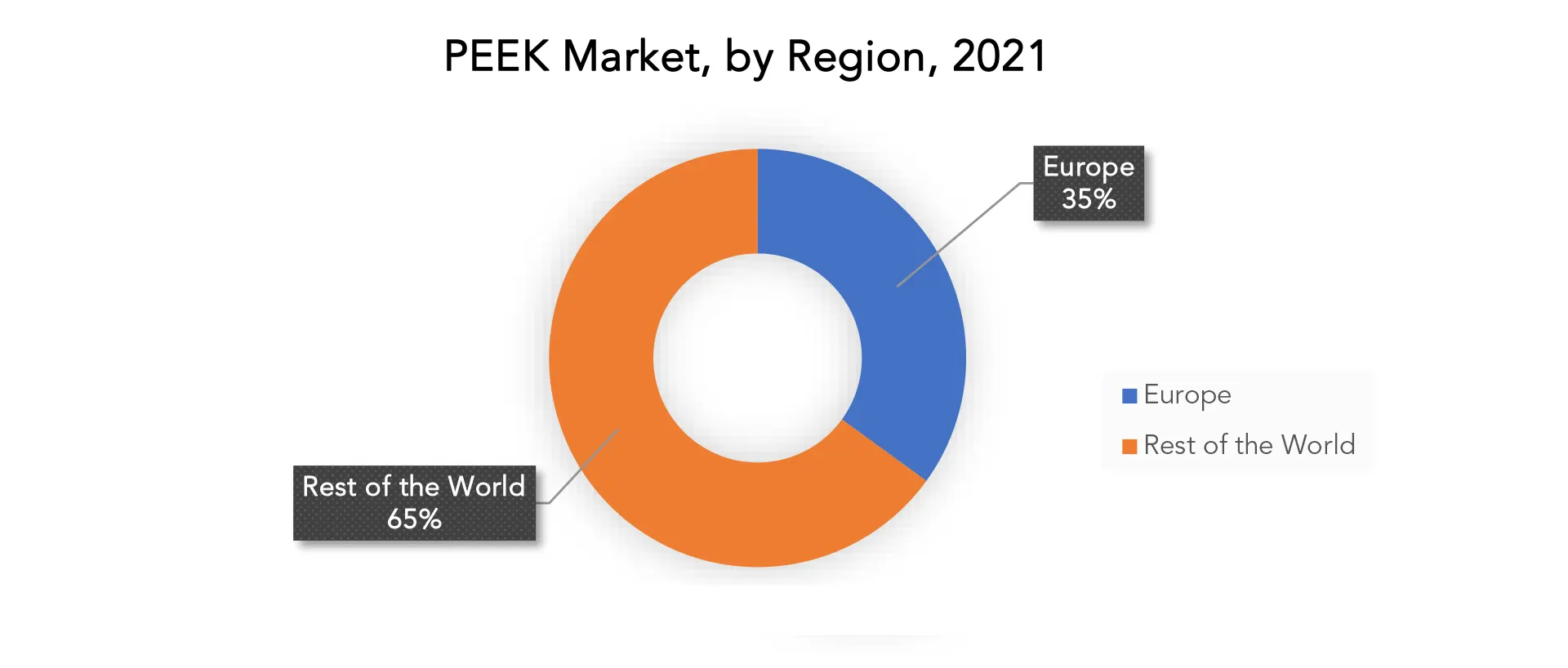
Europe lead the worldwide market due to its strict regulatory environment. These stringent requirements, mostly aimed at reducing environmental and fuel consumption, raised demand in the transportation industry, resulting in regional supremacy. Europe dominated the polyether ether ketone market, accounting for 35 % of sales in 2021. The principal PEEK end-use industries in Europe include automotive, insulation, electronics & electrical, industrial, and general engineering. great-temperature coverings and insulation, such as insulating wires, pressure-sensitive tapes, and FPC used in electronics, automotive, and aerospace, necessitate great heat resistance to safeguard the labelled barcode and other information. Growth in these areas adds to the expansion of the European PEEK market. One of the major contributors to the EU economy is the automotive sector.
The increased demand for PEEK in industries like as aerospace, automotive, electrical & electronics, medical, and oil & gas has contributed to the North American region's market dominance, headed by the United States. Growing demand for passenger automobiles in response to government regulations aimed at reducing GHG emissions drives market demand.
The Asia Pacific PEEK market is expected to develop at the quickest rate during the projected period, owing to rising demand in countries like as China, India, and South Korea. The strong growth rate of the APAC area is attributed to an increase in disposable income, rapid industrialization, and the expansion of the automobile and healthcare sectors.
Key Market Segments: PEEK Market
PEEK Market by Product Type 2022-2029, (USD Billion) (Kilotons)- Glass Filled
- Carbon Filled
- Unfilled
- Electrical & Electronics
- Aerospace
- Automotive
- Medical
- Oil & Gas
- Online
- Offline
- North America
- Europe
- Asia Pacific
- South America
- Middle East and Africa
Exactitude Consultancy Services Key Objectives:
- Increasing sales and market share
- Developing new technology
- Improving profitability
- Entering new markets
- Enhancing brand reputation
Key Question Answered
- What is the expected growth rate of the PEEK market over the next 7 years?
- Who are the major players in the PEEK market and what is their market share?
- What are the end-user industries driving demand for market and what is their outlook?
- What are the opportunities for growth in emerging markets such as Asia-Pacific, Middle East, and Africa?
- How is the economic environment affecting the PEEK market, including factors such as interest rates, inflation, and exchange rates?
- What is the expected impact of government policies and regulations on the PEEK market?
- What is the current and forecasted size and growth rate of the global PEEK market?
- What are the key drivers of growth in the PEEK market?
- What are the distribution channels and supply chain dynamics in the PEEK market?
- What are the technological advancements and innovations in the PEEK market and their impact on product development and growth?
- What are the regulatory considerations and their impact on the market?
- What are the challenges faced by players in the PEEK market and how are they addressing these challenges?
- What are the opportunities for growth and expansion in the PEEK market?
- What are the product offerings and specifications of leading players in the market?
- What is the pricing trend of PEEK in the market and what is the impact of raw material prices on the price trend?
- INTRODUCTION
- MARKET DEFINITION
- MARKET SEGMENTATION
- RESEARCH TIMELINES
- ASSUMPTIONS AND LIMITATIONS
- RESEARCH METHODOLOGY
- DATA MINING
- SECONDARY RESEARCH
- PRIMARY RESEARCH
- SUBJECT-MATTER EXPERTS’ ADVICE
- QUALITY CHECKS
- FINAL REVIEW
- DATA TRIANGULATION
- BOTTOM-UP APPROACH
- TOP-DOWN APPROACH
- RESEARCH FLOW
- DATA SOURCES
- DATA MINING
- EXECUTIVE SUMMARY
- MARKET OVERVIEW
- GLOBAL PEEK MARKET OUTLOOK
- MARKET DRIVERS
- MARKET RESTRAINTS
- MARKET OPPORTUNITIES
- IMPACT OF COVID-19 ON PEEK MARKET
- PORTER’S FIVE FORCES MODEL
- THREAT FROM NEW ENTRANTS
- THREAT FROM SUBSTITUTES
- BARGAINING POWER OF SUPPLIERS
- BARGAINING POWER OF CUSTOMERS
- DEGREE OF COMPETITION
- INDUSTRY VALUE CHAIN ANALYSIS
- GLOBAL PEEK MARKET OUTLOOK
- GLOBAL PEEK MARKET BY PRODUCT TYPE, 2020-2029, (USD BILLION) (KILOTONS)
- CARBON FIBER
- GLASS FIBER
- GLOBAL PEEK MARKET BY APPLICATION, 2020-2029, (USD BILLION) (KILOTONS)
- UNSATURATED POLYESTER RESIN
- VINYL ESTER
- POLYURETHANE
- EPOXY RESINS
- GLOBAL PEEK MARKET BY DISTRIBUTION CHANNEL, 2020-2029, (USD BILLION) (KILOTONS)
- INDUSTRIAL
- HOUSING
- CIVIL ENGINEERING
- CONSUMERS
- GLOBAL PEEK MARKET BY REGION, 2020-2029, (USD BILLION) (KILOTONS)
- NORTH AMERICA
- US
- CANADA
- MEXICO
- SOUTH AMERICA
- BRAZIL
- ARGENTINA
- COLOMBIA
- REST OF SOUTH AMERICA
- EUROPE
- GERMANY
- UK
- FRANCE
- ITALY
- SPAIN
- RUSSIA
- REST OF EUROPE
- ASIA PACIFIC
- INDIA
- CHINA
- JAPAN
- SOUTH KOREA
- AUSTRALIA
- SOUTH-EAST ASIA
- REST OF ASIA PACIFIC
- MIDDLE EAST AND AFRICA
- UAE
- SAUDI ARABIA
- SOUTH AFRICA
- REST OF MIDDLE EAST AND AFRICA
- NORTH AMERICA
- COMPANY PROFILES*
(BUSINESS OVERVIEW, COMPANY SNAPSHOT, PRODUCT OFFERED, RECENT DEVELOPMENTS)
9.1. CELANESE CORPORATION
9.2. SOLVAY SA
9.3. DARTER PLASTICS INC.
9.4. EVONIK INDUSTRIES
9.5. PROTOTYPE & PLASTIC MOLD CO. INC.
9.6. SABIC
9.7. VICTREX PLC
9.8. RTP COMPANY
9.9. STERN INDUSTRIES INC
9.10. PANJIN ZHONGRUN HIGH PERFORMANCE POLYMERS CO. LTD
9.11. CALEDONIAN FERGUSON TIMPSON LTD
*THE COMPANY LIST IS INDICATIVE
LIST OF TABLES
TABLE 1 GLOBAL PEEK MARKET BY PRODUCT TYPE (USD BILLION) 2020-2029
TABLE 2 GLOBAL PEEK MARKET BY PRODUCT TYPE (KILOTONS) 2020-2029
TABLE 3 GLOBAL PEEK MARKET BY APPLICATION (USD BILLION) 2020-2029
TABLE 4 GLOBAL PEEK MARKET BY APPLICATION (KILOTONS) 2020-2029
TABLE 5 GLOBAL PEEK MARKET BY DISTRIBUTION CHANNEL (USD BILLION) 2020-2029
TABLE 6 GLOBAL PEEK MARKET BY DISTRIBUTION CHANNEL (KILOTONS) 2020-2029
TABLE 7 GLOBAL PEEK MARKET BY REGION (USD BILLION) 2020-2029
TABLE 8 GLOBAL PEEK MARKET BY REGION (KILOTONS) 2020-2029
TABLE 9 NORTH AMERICA PEEK MARKET BY COUNTRY (USD BILLION) 2020-2029
TABLE 10 NORTH AMERICA PEEK MARKET BY COUNTRY (KILOTONS) 2020-2029
TABLE 11 NORTH AMERICA PEEK MARKET BY PRODUCT TYPE (USD BILLION) 2020-2029
TABLE 12 NORTH AMERICA PEEK MARKET BY PRODUCT TYPE (KILOTONS) 2020-2029
TABLE 13 NORTH AMERICA PEEK MARKET BY APPLICATION (USD BILLION) 2020-2029
TABLE 14 NORTH AMERICA PEEK MARKET BY APPLICATION (KILOTONS) 2020-2029
TABLE 15 NORTH AMERICA PEEK MARKET BY DISTRIBUTION CHANNEL (USD BILLION) 2020-2029
TABLE 16 NORTH AMERICA PEEK MARKET BY DISTRIBUTION CHANNEL (KILOTONS) 2020-2029
TABLE 17 US PEEK MARKET BY PRODUCT TYPE (USD BILLION) 2020-2029
TABLE 18 US PEEK MARKET BY PRODUCT TYPE (KILOTONS) 2020-2029
TABLE 19 US PEEK MARKET BY APPLICATION (USD BILLION) 2020-2029
TABLE 20 US PEEK MARKET BY APPLICATION (KILOTONS) 2020-2029
TABLE 21 US PEEK MARKET BY DISTRIBUTION CHANNEL (USD BILLION) 2020-2029
TABLE 22 US PEEK MARKET BY DISTRIBUTION CHANNEL (KILOTONS) 2020-2029
TABLE 23 CANADA PEEK MARKET BY PRODUCT TYPE (USD BILLION) 2020-2029
TABLE 24 CANADA PEEK MARKET BY PRODUCT TYPE (KILOTONS) 2020-2029
TABLE 25 CANADA PEEK MARKET BY APPLICATION (USD BILLION) 2020-2029
TABLE 26 CANADA PEEK MARKET BY APPLICATION (KILOTONS) 2020-2029
TABLE 27 CANADA PEEK MARKET BY DISTRIBUTION CHANNEL (USD BILLION) 2020-2029
TABLE 28 CANADA PEEK MARKET BY DISTRIBUTION CHANNEL (KILOTONS) 2020-2029
TABLE 29 MEXICO PEEK MARKET BY PRODUCT TYPE (USD BILLION) 2020-2029
TABLE 30 MEXICO PEEK MARKET BY PRODUCT TYPE (KILOTONS) 2020-2029
TABLE 31 MEXICO PEEK MARKET BY APPLICATION (USD BILLION) 2020-2029
TABLE 32 MEXICO PEEK MARKET BY APPLICATION (KILOTONS) 2020-2029
TABLE 33 MEXICO PEEK MARKET BY DISTRIBUTION CHANNEL (USD BILLION) 2020-2029
TABLE 34 MEXICO PEEK MARKET BY DISTRIBUTION CHANNEL (KILOTONS) 2020-2029
TABLE 35 SOUTH AMERICA PEEK MARKET BY COUNTRY (USD BILLION) 2020-2029
TABLE 36 SOUTH AMERICA PEEK MARKET BY COUNTRY (KILOTONS) 2020-2029
TABLE 37 SOUTH AMERICA PEEK MARKET BY PRODUCT TYPE (USD BILLION) 2020-2029
TABLE 38 SOUTH AMERICA PEEK MARKET BY PRODUCT TYPE (KILOTONS) 2020-2029
TABLE 39 SOUTH AMERICA PEEK MARKET BY APPLICATION (USD BILLION) 2020-2029
TABLE 40 SOUTH AMERICA PEEK MARKET BY APPLICATION (KILOTONS) 2020-2029
TABLE 41 SOUTH AMERICA PEEK MARKET BY DISTRIBUTION CHANNEL (USD BILLION) 2020-2029
TABLE 42 SOUTH AMERICA PEEK MARKET BY DISTRIBUTION CHANNEL (KILOTONS) 2020-2029
TABLE 43 BRAZIL PEEK MARKET BY PRODUCT TYPE (USD BILLION) 2020-2029
TABLE 44 BRAZIL PEEK MARKET BY PRODUCT TYPE (KILOTONS) 2020-2029
TABLE 45 BRAZIL PEEK MARKET BY APPLICATION (USD BILLION) 2020-2029
TABLE 46 BRAZIL PEEK MARKET BY APPLICATION (KILOTONS) 2020-2029
TABLE 47 BRAZIL PEEK MARKET BY DISTRIBUTION CHANNEL (USD BILLION) 2020-2029
TABLE 48 BRAZIL PEEK MARKET BY DISTRIBUTION CHANNEL (KILOTONS) 2020-2029
TABLE 49 ARGENTINA PEEK MARKET BY PRODUCT TYPE (USD BILLION) 2020-2029
TABLE 50 ARGENTINA PEEK MARKET BY PRODUCT TYPE (KILOTONS) 2020-2029
TABLE 51 ARGENTINA PEEK MARKET BY APPLICATION (USD BILLION) 2020-2029
TABLE 52 ARGENTINA PEEK MARKET BY APPLICATION (KILOTONS) 2020-2029
TABLE 53 ARGENTINA PEEK MARKET BY DISTRIBUTION CHANNEL (USD BILLION) 2020-2029
TABLE 54 ARGENTINA PEEK MARKET BY DISTRIBUTION CHANNEL (KILOTONS) 2020-2029
TABLE 55 COLOMBIA PEEK MARKET BY PRODUCT TYPE (USD BILLION) 2020-2029
TABLE 56 COLOMBIA PEEK MARKET BY PRODUCT TYPE (KILOTONS) 2020-2029
TABLE 57 COLOMBIA PEEK MARKET BY APPLICATION (USD BILLION) 2020-2029
TABLE 58 COLOMBIA PEEK MARKET BY APPLICATION (KILOTONS) 2020-2029
TABLE 59 COLOMBIA PEEK MARKET BY DISTRIBUTION CHANNEL (USD BILLION) 2020-2029
TABLE 60 COLOMBIA PEEK MARKET BY DISTRIBUTION CHANNEL (KILOTONS) 2020-2029
TABLE 61 REST OF SOUTH AMERICA PEEK MARKET BY PRODUCT TYPE (USD BILLION) 2020-2029
TABLE 62 REST OF SOUTH AMERICA PEEK MARKET BY PRODUCT TYPE (KILOTONS) 2020-2029
TABLE 63 REST OF SOUTH AMERICA PEEK MARKET BY APPLICATION (USD BILLION) 2020-2029
TABLE 64 REST OF SOUTH AMERICA PEEK MARKET BY APPLICATION (KILOTONS) 2020-2029
TABLE 65 REST OF SOUTH AMERICA PEEK MARKET BY DISTRIBUTION CHANNEL (USD BILLION) 2020-2029
TABLE 66 REST OF SOUTH AMERICA PEEK MARKET BY DISTRIBUTION CHANNEL (KILOTONS) 2020-2029
TABLE 67 ASIA-PACIFIC PEEK MARKET BY COUNTRY (USD BILLION) 2020-2029
TABLE 68 ASIA-PACIFIC PEEK MARKET BY COUNTRY (KILOTONS) 2020-2029
TABLE 69 ASIA-PACIFIC PEEK MARKET BY PRODUCT TYPE (USD BILLION) 2020-2029
TABLE 70 ASIA-PACIFIC PEEK MARKET BY PRODUCT TYPE (KILOTONS) 2020-2029
TABLE 71 ASIA-PACIFIC PEEK MARKET BY APPLICATION (USD BILLION) 2020-2029
TABLE 72 ASIA-PACIFIC PEEK MARKET BY APPLICATION (KILOTONS) 2020-2029
TABLE 73 ASIA-PACIFIC PEEK MARKET BY DISTRIBUTION CHANNEL (USD BILLION) 2020-2029
TABLE 74 ASIA-PACIFIC PEEK MARKET BY DISTRIBUTION CHANNEL (KILOTONS) 2020-2029
TABLE 75 INDIA PEEK MARKET BY PRODUCT TYPE (USD BILLION) 2020-2029
TABLE 76 INDIA PEEK MARKET BY PRODUCT TYPE (KILOTONS) 2020-2029
TABLE 77 INDIA PEEK MARKET BY APPLICATION (USD BILLION) 2020-2029
TABLE 78 INDIA PEEK MARKET BY APPLICATION (KILOTONS) 2020-2029
TABLE 79 INDIA PEEK MARKET BY DISTRIBUTION CHANNEL (USD BILLION) 2020-2029
TABLE 80 INDIA PEEK MARKET BY DISTRIBUTION CHANNEL (KILOTONS) 2020-2029
TABLE 81 CHINA PEEK MARKET BY PRODUCT TYPE (USD BILLION) 2020-2029
TABLE 82 CHINA PEEK MARKET BY PRODUCT TYPE (KILOTONS) 2020-2029
TABLE 83 CHINA PEEK MARKET BY APPLICATION (USD BILLION) 2020-2029
TABLE 84 CHINA PEEK MARKET BY APPLICATION (KILOTONS) 2020-2029
TABLE 85 CHINA PEEK MARKET BY DISTRIBUTION CHANNEL (USD BILLION) 2020-2029
TABLE 86 CHINA PEEK MARKET BY DISTRIBUTION CHANNEL (KILOTONS) 2020-2029
TABLE 87 JAPAN PEEK MARKET BY PRODUCT TYPE (USD BILLION) 2020-2029
TABLE 88 JAPAN PEEK MARKET BY PRODUCT TYPE (KILOTONS) 2020-2029
TABLE 89 JAPAN PEEK MARKET BY APPLICATION (USD BILLION) 2020-2029
TABLE 90 JAPAN PEEK MARKET BY APPLICATION (KILOTONS) 2020-2029
TABLE 91 JAPAN PEEK MARKET BY DISTRIBUTION CHANNEL (USD BILLION) 2020-2029
TABLE 92 JAPAN PEEK MARKET BY DISTRIBUTION CHANNEL (KILOTONS) 2020-2029
TABLE 93 SOUTH KOREA PEEK MARKET BY PRODUCT TYPE (USD BILLION) 2020-2029
TABLE 94 SOUTH KOREA PEEK MARKET BY PRODUCT TYPE (KILOTONS) 2020-2029
TABLE 95 SOUTH KOREA PEEK MARKET BY APPLICATION (USD BILLION) 2020-2029
TABLE 96 SOUTH KOREA PEEK MARKET BY APPLICATION (KILOTONS) 2020-2029
TABLE 97 SOUTH KOREA PEEK MARKET BY DISTRIBUTION CHANNEL (USD BILLION) 2020-2029
TABLE 98 SOUTH KOREA PEEK MARKET BY DISTRIBUTION CHANNEL (KILOTONS) 2020-2029
TABLE 99 AUSTRALIA PEEK MARKET BY PRODUCT TYPE (USD BILLION) 2020-2029
TABLE 100 AUSTRALIA PEEK MARKET BY PRODUCT TYPE (KILOTONS) 2020-2029
TABLE 101 AUSTRALIA PEEK MARKET BY APPLICATION (USD BILLION) 2020-2029
TABLE 102 AUSTRALIA PEEK MARKET BY APPLICATION (KILOTONS) 2020-2029
TABLE 103 AUSTRALIA PEEK MARKET BY DISTRIBUTION CHANNEL (USD BILLION) 2020-2029
TABLE 104 AUSTRALIA PEEK MARKET BY DISTRIBUTION CHANNEL (KILOTONS) 2020-2029
TABLE 105 SOUTH-EAST ASIA PEEK MARKET BY PRODUCT TYPE (USD BILLION) 2020-2029
TABLE 106 SOUTH-EAST ASIA PEEK MARKET BY PRODUCT TYPE (KILOTONS) 2020-2029
TABLE 107 SOUTH-EAST ASIA PEEK MARKET BY APPLICATION (USD BILLION) 2020-2029
TABLE 108 SOUTH-EAST ASIA PEEK MARKET BY APPLICATION (KILOTONS) 2020-2029
TABLE 109 SOUTH-EAST ASIA PEEK MARKET BY DISTRIBUTION CHANNEL (USD BILLION) 2020-2029
TABLE 110 SOUTH-EAST ASIA PEEK MARKET BY DISTRIBUTION CHANNEL (KILOTONS) 2020-2029
TABLE 111 REST OF ASIA PACIFIC PEEK MARKET BY PRODUCT TYPE (USD BILLION) 2020-2029
TABLE 112 REST OF ASIA PACIFIC PEEK MARKET BY PRODUCT TYPE (KILOTONS) 2020-2029
TABLE 113 REST OF ASIA PACIFIC PEEK MARKET BY APPLICATION (USD BILLION) 2020-2029
TABLE 114 REST OF ASIA PACIFIC PEEK MARKET BY APPLICATION (KILOTONS) 2020-2029
TABLE 115 REST OF ASIA PACIFIC PEEK MARKET BY DISTRIBUTION CHANNEL (USD BILLION) 2020-2029
TABLE 116 REST OF ASIA PACIFIC PEEK MARKET BY DISTRIBUTION CHANNEL (KILOTONS) 2020-2029
TABLE 117 EUROPE PEEK MARKET BY COUNTRY (USD BILLION) 2020-2029
TABLE 118 EUROPE PEEK MARKET BY COUNTRY (KILOTONS) 2020-2029
TABLE 119 EUROPE PEEK MARKET BY PRODUCT TYPE (USD BILLION) 2020-2029
TABLE 120 EUROPE PEEK MARKET BY PRODUCT TYPE (KILOTONS) 2020-2029
TABLE 121 EUROPE PEEK MARKET BY APPLICATION (USD BILLION) 2020-2029
TABLE 122 EUROPE PEEK MARKET BY APPLICATION (KILOTONS) 2020-2029
TABLE 123 EUROPE PEEK MARKET BY DISTRIBUTION CHANNEL (USD BILLION) 2020-2029
TABLE 124 EUROPE PEEK MARKET BY DISTRIBUTION CHANNEL (KILOTONS) 2020-2029
TABLE 125 GERMANY PEEK MARKET BY PRODUCT TYPE (USD BILLION) 2020-2029
TABLE 126 GERMANY PEEK MARKET BY PRODUCT TYPE (KILOTONS) 2020-2029
TABLE 127 GERMANY PEEK MARKET BY APPLICATION (USD BILLION) 2020-2029
TABLE 128 GERMANY PEEK MARKET BY APPLICATION (KILOTONS) 2020-2029
TABLE 129 GERMANY PEEK MARKET BY DISTRIBUTION CHANNEL (USD BILLION) 2020-2029
TABLE 130 GERMANY PEEK MARKET BY DISTRIBUTION CHANNEL (KILOTONS) 2020-2029
TABLE 131 UK PEEK MARKET BY PRODUCT TYPE (USD BILLION) 2020-2029
TABLE 132 UK PEEK MARKET BY PRODUCT TYPE (KILOTONS) 2020-2029
TABLE 133 UK PEEK MARKET BY APPLICATION (USD BILLION) 2020-2029
TABLE 134 UK PEEK MARKET BY APPLICATION (KILOTONS) 2020-2029
TABLE 135 UK PEEK MARKET BY DISTRIBUTION CHANNEL (USD BILLION) 2020-2029
TABLE 136 UK PEEK MARKET BY DISTRIBUTION CHANNEL (KILOTONS) 2020-2029
TABLE 137 FRANCE PEEK MARKET BY PRODUCT TYPE (USD BILLION) 2020-2029
TABLE 138 FRANCE PEEK MARKET BY PRODUCT TYPE (KILOTONS) 2020-2029
TABLE 139 FRANCE PEEK MARKET BY APPLICATION (USD BILLION) 2020-2029
TABLE 140 FRANCE PEEK MARKET BY APPLICATION (KILOTONS) 2020-2029
TABLE 141 FRANCE PEEK MARKET BY DISTRIBUTION CHANNEL (USD BILLION) 2020-2029
TABLE 142 FRANCE PEEK MARKET BY DISTRIBUTION CHANNEL (KILOTONS) 2020-2029
TABLE 143 ITALY PEEK MARKET BY PRODUCT TYPE (USD BILLION) 2020-2029
TABLE 144 ITALY PEEK MARKET BY PRODUCT TYPE (KILOTONS) 2020-2029
TABLE 145 ITALY PEEK MARKET BY APPLICATION (USD BILLION) 2020-2029
TABLE 146 ITALY PEEK MARKET BY APPLICATION (KILOTONS) 2020-2029
TABLE 147 ITALY PEEK MARKET BY DISTRIBUTION CHANNEL (USD BILLION) 2020-2029
TABLE 148 ITALY PEEK MARKET BY DISTRIBUTION CHANNEL (KILOTONS) 2020-2029
TABLE 149 SPAIN PEEK MARKET BY PRODUCT TYPE (USD BILLION) 2020-2029
TABLE 150 SPAIN PEEK MARKET BY PRODUCT TYPE (KILOTONS) 2020-2029
TABLE 151 SPAIN PEEK MARKET BY APPLICATION (USD BILLION) 2020-2029
TABLE 152 SPAIN PEEK MARKET BY APPLICATION (KILOTONS) 2020-2029
TABLE 153 SPAIN PEEK MARKET BY DISTRIBUTION CHANNEL (USD BILLION) 2020-2029
TABLE 154 SPAIN PEEK MARKET BY DISTRIBUTION CHANNEL (KILOTONS) 2020-2029
TABLE 155 RUSSIA PEEK MARKET BY PRODUCT TYPE (USD BILLION) 2020-2029
TABLE 156 RUSSIA PEEK MARKET BY PRODUCT TYPE (KILOTONS) 2020-2029
TABLE 157 RUSSIA PEEK MARKET BY APPLICATION (USD BILLION) 2020-2029
TABLE 158 RUSSIA PEEK MARKET BY APPLICATION (KILOTONS) 2020-2029
TABLE 159 RUSSIA PEEK MARKET BY DISTRIBUTION CHANNEL (USD BILLION) 2020-2029
TABLE 160 RUSSIA PEEK MARKET BY DISTRIBUTION CHANNEL (KILOTONS) 2020-2029
TABLE 161 REST OF EUROPE PEEK MARKET BY PRODUCT TYPE (USD BILLION) 2020-2029
TABLE 162 REST OF EUROPE PEEK MARKET BY PRODUCT TYPE (KILOTONS) 2020-2029
TABLE 163 REST OF EUROPE PEEK MARKET BY APPLICATION (USD BILLION) 2020-2029
TABLE 164 REST OF EUROPE PEEK MARKET BY APPLICATION (KILOTONS) 2020-2029
TABLE 165 REST OF EUROPE PEEK MARKET BY DISTRIBUTION CHANNEL (USD BILLION) 2020-2029
TABLE 166 REST OF EUROPE PEEK MARKET BY DISTRIBUTION CHANNEL (KILOTONS) 2020-2029
TABLE 167 MIDDLE EAST AND AFRICA PEEK MARKET BY COUNTRY (USD BILLION) 2020-2029
TABLE 168 MIDDLE EAST AND AFRICA PEEK MARKET BY COUNTRY (KILOTONS) 2020-2029
TABLE 169 MIDDLE EAST AND AFRICA PEEK MARKET BY PRODUCT TYPE (USD BILLION) 2020-2029
TABLE 170 MIDDLE EAST AND AFRICA PEEK MARKET BY PRODUCT TYPE (KILOTONS) 2020-2029
TABLE 171 MIDDLE EAST AND AFRICA PEEK MARKET BY APPLICATION (USD BILLION) 2020-2029
TABLE 172 MIDDLE EAST AND AFRICA PEEK MARKET BY APPLICATION (KILOTONS) 2020-2029
TABLE 173 MIDDLE EAST AND AFRICA PEEK MARKET BY DISTRIBUTION CHANNEL (USD BILLION) 2020-2029
TABLE 174 MIDDLE EAST AND AFRICA PEEK MARKET BY DISTRIBUTION CHANNEL (KILOTONS) 2020-2029
TABLE 175 UAE PEEK MARKET BY PRODUCT TYPE (USD BILLION) 2020-2029
TABLE 176 UAE PEEK MARKET BY PRODUCT TYPE (KILOTONS) 2020-2029
TABLE 177 UAE PEEK MARKET BY APPLICATION (USD BILLION) 2020-2029
TABLE 178 UAE PEEK MARKET BY APPLICATION (KILOTONS) 2020-2029
TABLE 179 UAE PEEK MARKET BY DISTRIBUTION CHANNEL (USD BILLION) 2020-2029
TABLE 180 UAE PEEK MARKET BY DISTRIBUTION CHANNEL (KILOTONS) 2020-2029
TABLE 181 SAUDI ARABIA PEEK MARKET BY PRODUCT TYPE (USD BILLION) 2020-2029
TABLE 182 SAUDI ARABIA PEEK MARKET BY PRODUCT TYPE (KILOTONS) 2020-2029
TABLE 183 SAUDI ARABIA PEEK MARKET BY APPLICATION (USD BILLION) 2020-2029
TABLE 184 SAUDI ARABIA PEEK MARKET BY APPLICATION (KILOTONS) 2020-2029
TABLE 185 SAUDI ARABIA PEEK MARKET BY DISTRIBUTION CHANNEL (USD BILLION) 2020-2029
TABLE 186 SAUDI ARABIA PEEK MARKET BY DISTRIBUTION CHANNEL (KILOTONS) 2020-2029
TABLE 187 SOUTH AFRICA PEEK MARKET BY PRODUCT TYPE (USD BILLION) 2020-2029
TABLE 188 SOUTH AFRICA PEEK MARKET BY PRODUCT TYPE (KILOTONS) 2020-2029
TABLE 189 SOUTH AFRICA PEEK MARKET BY APPLICATION (USD BILLION) 2020-2029
TABLE 190 SOUTH AFRICA PEEK MARKET BY APPLICATION (KILOTONS) 2020-2029
TABLE 191 SOUTH AFRICA PEEK MARKET BY DISTRIBUTION CHANNEL (USD BILLION) 2020-2029
TABLE 192 SOUTH AFRICA PEEK MARKET BY DISTRIBUTION CHANNEL (KILOTONS) 2020-2029
TABLE 193 REST OF MIDDLE EAST AND AFRICA PEEK MARKET BY PRODUCT TYPE (USD BILLION) 2020-2029
TABLE 194 REST OF MIDDLE EAST AND AFRICA PEEK MARKET BY PRODUCT TYPE (KILOTONS) 2020-2029
TABLE 195 REST OF MIDDLE EAST AND AFRICA PEEK MARKET BY APPLICATION (USD BILLION) 2020-2029
TABLE 196 REST OF MIDDLE EAST AND AFRICA PEEK MARKET BY APPLICATION (KILOTONS) 2020-2029
TABLE 197 REST OF MIDDLE EAST AND AFRICA PEEK MARKET BY DISTRIBUTION CHANNEL (USD BILLION) 2020-2029
TABLE 198 REST OF MIDDLE EAST AND AFRICA PEEK MARKET BY DISTRIBUTION CHANNEL (KILOTONS) 2020-2029
LIST OF FIGURES
FIGURE 1 MARKET DYNAMICS
FIGURE 2 MARKET SEGMENTATION
FIGURE 3 REPORT TIMELINES: YEARS CONSIDERED
FIGURE 4 DATA TRIANGULATION
FIGURE 5 BOTTOM-UP APPROACH
FIGURE 6 TOP-DOWN APPROACH
FIGURE 7 RESEARCH FLOW
FIGURE 8 GLOBAL PEEK MARKET BY PRODUCT TYPE (USD BILLION) 2020-2029
FIGURE 9 GLOBAL PEEK MARKET BY APPLICATION (USD BILLION) 2020-2029
FIGURE 10 GLOBAL PEEK MARKET BY DISTRIBUTION CHANNEL (USD BILLION) 2020-2029
FIGURE 11 GLOBAL PEEK MARKET BY REGION (USD BILLION) 2020-2029
FIGURE 12 PORTER’S FIVE FORCES MODEL
FIGURE 13 GLOBAL PEEK MARKET BY PRODUCT TYPE (USD BILLION) 2021
FIGURE 14 GLOBAL PEEK MARKET BY APPLICATION (USD BILLION) 2021
FIGURE 15 GLOBAL PEEK MARKET BY DISTRIBUTION CHANNEL (USD BILLION) 2021
FIGURE 16 GLOBAL PEEK MARKET BY REGION (USD BILLION) 2021
FIGURE 17 MARKET SHARE ANALYSIS
FIGURE 18 CELANESE CORPORATION: COMPANY SNAPSHOT
FIGURE 19 SOLVAY SA: COMPANY SNAPSHOT
FIGURE 20 DARTER PLASTICS INC.: COMPANY SNAPSHOT
FIGURE 21 EVONIK INDUSTRIES: COMPANY SNAPSHOT
FIGURE 22 PROTOTYPE & PLASTIC MOLD CO. INC.: COMPANY SNAPSHOT
FIGURE 23 SABIC: COMPANY SNAPSHOT
FIGURE 24 VICTREX PLC: COMPANY SNAPSHOT
FIGURE 25 JRLON INC.: COMPANY SNAPSHOT
FIGURE 26 RTP COMPANY: COMPANY SNAPSHOT
FIGURE 27 STERN INDUSTRIES INC.: COMPANY SNAPSHOT
FIGURE 28 PANJIN ZHONGRUN HIGH PERFORMANCE POLYMERS CO. LTD: COMPANY SNAPSHOT
FIGURE 29 CALEDONIAN FERGUSON TIMPSON LTD: COMPANY SNAPSHOT
DOWNLOAD FREE SAMPLE REPORT
License Type
SPEAK WITH OUR ANALYST
Want to know more about the report or any specific requirement?
WANT TO CUSTOMIZE THE REPORT?
Our Clients Speak
We asked them to research ‘ Equipment market’ all over the world, and their whole arrangement was helpful to us. thehealthanalytics.com insightful analysis and reports contributed to our current analysis and in creating a future strategy. Besides, the te
Yosuke Mitsui
Senior Associate Construction Equipment Sales & Marketing
We asked them to research ‘Equipment market’ all over the world, and their whole arrangement was helpful to us. thehealthanalytics.com insightful analysis and reports contributed to our current analysis and in creating a future strategy. Besides, the te