

Base Year Value ()
x.x %
x.x %
CAGR ()
x.x %
x.x %
Forecast Year Value ()
x.x %
x.x %
Historical Data Period
Largest Region
Forecast Period
Mercato dei rivestimenti per materiale (vinile, fibrocemento, legno, altri), per settore di utilizzo finale (residenziale, non residenziale) e regione (Nord America, Europa, Asia Pacifico, Sud America, Medio Oriente e Africa), tendenze globali e previsioni dal 2022 al 2029
Instant access to hundreds of data points and trends
- Market estimates from 2014-2029
- Competitive analysis, industry segmentation, financial benchmarks
- Incorporates SWOT, Porter's Five Forces and risk management frameworks
- PDF report or online database with Word, Excel and PowerPoint export options
- 100% money back guarantee
Panoramica del mercato dei rivestimenti
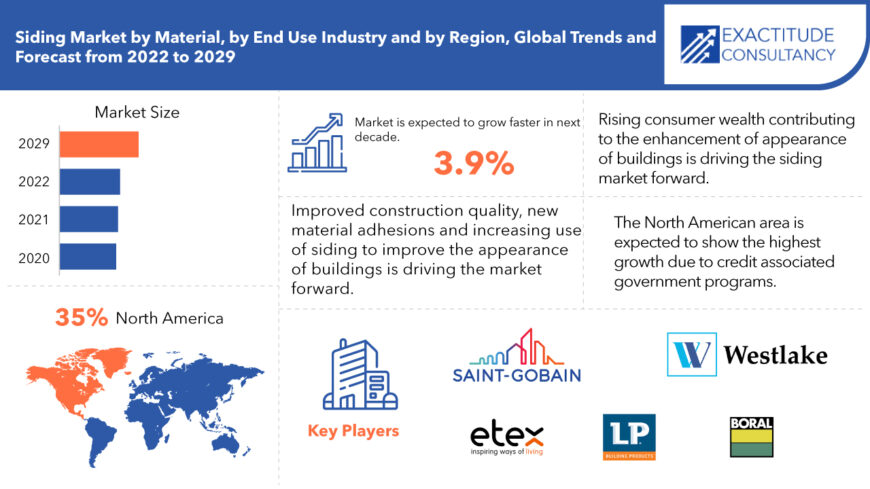
Si prevede che il mercato globale dei rivestimenti crescerà al 3,9% di CAGR dal 2022 al 2029. Si prevede che raggiungerà oltre 142,48 miliardi di USD entro il 2029 da 101,86 miliardi di USD nel 2020.
Il materiale protettivo utilizzato nella parete esterna per proteggere la struttura dal sole, dal vento e dalla pioggia è noto come rivestimento. Viene utilizzato per mantenere stabile la temperatura dell'edificio impedendo la perdita di calore. Il rivestimento è disponibile in vari stili, tra cui rivestimento orizzontale a sovrapposizione, rivestimento verticale a tavole, assicelle e scandole. Lo splendore architettonico degli edifici è esaltato dal rivestimento. Il rivestimento è suddiviso in numerose categorie in base ai materiali utilizzati, come legno, vinile, pietra, fibra e rivestimento composito. È riconosciuto come materiale di rivestimento per pareti esterne utilizzato per decorare e proteggere dalle intemperie in grandi strutture. Nelle strutture residenziali e nei piccoli appartamenti, questi materiali di rivestimento sono molto richiesti.
| ATTRIBUTO | DETTAGLI |
| Periodo di studio | 2020-2029 |
| Anno base | 2021 |
| Anno stimato | 2022 |
| Anno previsto | 2022-2029 |
| Periodo storico | 2018-2020 |
| Unità | Valore (milioni di USD), (milioni di piedi quadrati) |
| Segmentazione | Per materiale, per settore di utilizzo finale, per regione |
| Per materiale |
|
| Per settore di utilizzo finale |
|
| Per regione |
|
Si ritiene che l'uso del rivestimento nelle pareti esterne di queste strutture sia il motore di crescita chiave per il settore dei rivestimenti a causa del significativo sviluppo degli edifici residenziali in tutto il mondo. Il crescente sviluppo delle infrastrutture in numerosi paesi sta spingendo in avanti il settore dei rivestimenti. Il mercato dei rivestimenti, in particolare dei rivestimenti in legno e fibra, è guidato dalla crescita della popolazione e dalla domanda di sviluppo di edifici residenziali e commerciali. Aumento della domanda nel settore edile di materiali di rivestimento che possano tollerare l'esposizione chimica e possano essere utilizzati come materiali di protezione dalle intemperie per resistere ai cambiamenti delle condizioni meteorologiche.
Inoltre, la crescente ricchezza dei consumatori e la crescente tendenza a impiegare rivestimenti per migliorare l'aspetto degli edifici potrebbero essere importanti fattori di sviluppo per il mercato dei rivestimenti. Inoltre, l'ampia scelta di materiali di rivestimento disponibili, come legno, fibre, plastica e altri, amplia le possibilità del mercato. Di conseguenza, queste opzioni fungono anche da fattore di crescita per il settore dei rivestimenti. Tuttavia, una mancanza di conoscenza sui materiali di rivestimento potrebbe essere un grosso ostacolo per il settore dei rivestimenti.
[caption id="allegato_10011" align="aligncenter" width="870"]
Frequently Asked Questions
• What is the worth of global Siding market?
The Siding market size had crossed USD 101.86 billion in 2020 and will observe a CAGR of more than 3.9% up to 2029 driven by the rising technological advancements.
• What is the share of the North America Siding industry?
North America held more than 35% of the Siding market revenue share in 2021 and will witness expansion.
• What are the drivers, restraints and challenges for Siding market, globally?
Usage of siding in the external walls in residential building is a key driver for the siding market. Rising consumer wealth contributing to the enhancement of appearance of buildings is driving the siding market forward. The North American area is expected to show the highest growth due to credit associated government programs. Improved construction quality, new material adhesions and increasing use of siding to improve the appearance of buildings is driving the market forward.
• Which are the top companies to hold the market share in Siding market?
Compagnie de Saint-Gobain S.A., Westlake Chemical, Louisiana Pacific Corporation, Etex Group, Boral Limited, James Hardie Industries PLC, Nichiha Corporation, Cornerstone Building Brands, SHERA are the key players in the siding market. These companies have developed methods to improve their product portfolios, market presence, and growth prospects in the siding industry.
• Which is the largest regional market for Siding market?
North America is the largest market for the Siding market.
• On the basis of material, which segment witnessed the highest growth in the Siding market?
Fiber cement siding dominated the market in terms of material. It is mostly used for siding in residential and non-residential structures, and it has a 50-year lifespan. Fiber cement siding is cost-effective and may be put in areas with harsh weather. Because of its unusual makeup, it may expand and compress.
Siding Market Segment Analysis
The siding market can be divided on the basis of material into vinyl, fiber cement, wood and others. Fiber cement siding dominated the market in terms of material. It is mostly used for siding in residential and non-residential structures, and it has a 50-year lifespan. Fiber cement siding is cost-effective and may be put in areas with harsh weather. Because of its unusual makeup, it may expand and compress. The fibre in the cement makes it stronger and longer-lasting. It also inhibits the formation of surface fractures. Fiber cement is used to replace asbestos cement, which has been linked to cancer in humans.
On the basis of end use industry into residential and non-residential segments. Siding improves a building's visual appeal while also providing features like durability and protection from intense weathering, which has fueled the residential sector. Other advantages, including as fire resistance and good thermal efficiency, will drive up demand for siding. Fiber cement, vinyl, bricks, and wood are the most popular materials for residential siding. Fiber cement siding is popular for residential siding because of its low cost, great durability, and aesthetic appeal. The favourable and flexible financing policies implemented by governments across all areas are boosting the sales of residential building projects, which is fueling the growth of the residential segment in the siding market.
[caption id="attachment_10012" align="alignleft" width="680"]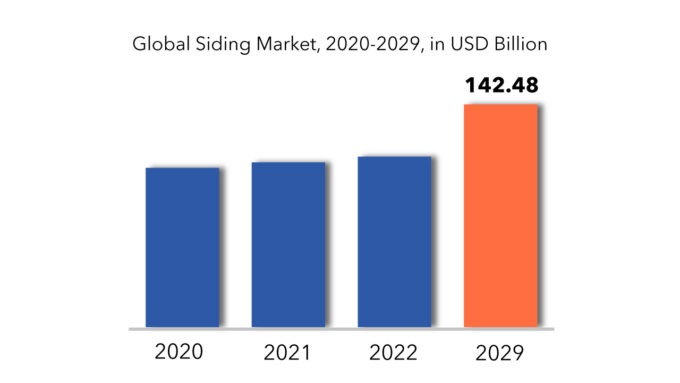
Siding Market Players
Compagnie de Saint-Gobain S.A., Westlake Chemical, Louisiana Pacific Corporation, Etex Group, Boral Limited, James Hardie Industries PLC, Nichiha Corporation, Cornerstone Building Brands, SHERA are the key players in the siding market. These companies have developed methods to improve their product portfolios, market presence, and growth prospects in the siding industry.
- Westlake Chemical purchased NAKAN, a worldwide compounding solutions company, in January 2019 to expand its manufacturing and research facilities in China, Germany, France, Japan, Mexico, Italy, the United States, Vietnam, and Spain. NAKAN's products are used in a variety of sectors, including automotive, medical, and building and construction.
- LP Building Solutions announced the addition of two new products to its portfolio in January 2019, LP SmartSide Smooth Trim & Siding and LP WeatherLogic Air & Water Barrier. These goods are part of a line of solution-oriented solutions for homeowners and construction professionals.
Who Should Buy? Or Key Stakeholders
- Siding Manufacturers
- Siding traders
- Government Contractors
- Architects and Engineers
- Market Consulting Firms
- Regulatory Bodies
- Research Organizations
Siding Market Regional Analysis
The Siding market by region includes North America, Asia-Pacific (APAC), Europe, South America, and Middle East & Africa (MEA).
- North America: includes the US, Canada, Mexico
- Asia Pacific: includes China, Japan, South Korea, India, Australia, ASEAN and Rest of APAC
- Europe: includes UK, Germany, France, Italy, Spain, Russia, and Rest of Europe
- South America: includes Brazil, Argentina and Rest of South America
- Middle East & Africa: includes Turkey, UAE, Saudi Arabia, South Africa, and Rest of MEA
In 2020, the North American area retained the biggest market share, thanks to a comeback in the residential and non-residential building sectors. In addition, the siding market in this area is expected to increase at the fastest rate in terms of value from 2022 to 2029. The region's sidings market is predicted to grow as a result of a slew of government programmes, including the Home Renovation Tax Credit and the Home Energy Loan Program (HELP), which encourage homeowners to install energy-efficient siding.
[caption id="attachment_10013" align="alignleft" width="680"]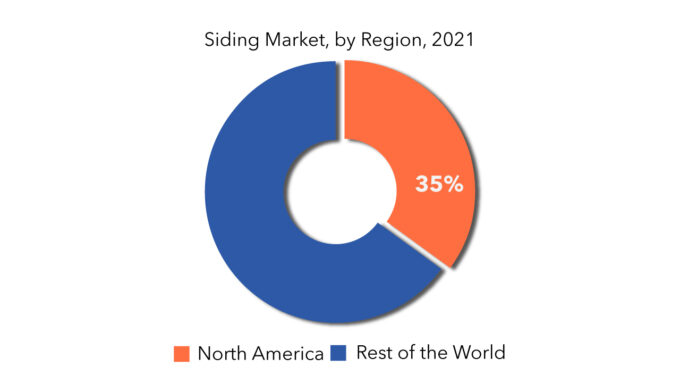
Key Market Segments: Siding Market
Siding Market by Material, 2020-2029, (USD Million), (Million Square Feet)- Vinyl
- Fiber Cement
- Wood
- Others (Stucco, Brick, and Stone)
- Residential
- Non-Residential
- North America
- Europe
- Asia Pacific
- South America
- Middle East and Africa
Key Question Answered
- What is the current size of the Siding market?
- What are the key factors influencing the growth of Siding?
- What are the major end use industries for Siding?
- Who are the major key players in the Siding market?
- Which region will provide more business opportunities for Siding in future?
- Which segment holds the maximum share of the Siding market?
- Introduzione
- Definizione di mercato
- Segmentazione del mercato
- Cronologie della ricerca
- Presupposti e limitazioni
- Metodologia di ricerca
- Estrazione dei dati
- Ricerca secondaria
- Ricerca primaria
- Consigli degli esperti in materia
- Controlli di qualità
- Revisione finale
- Triangolazione dei dati
- Approccio dal basso verso l'alto
- Approccio dall'alto verso il basso
- Flusso di ricerca
- Fonti dei dati
- Estrazione dei dati
- Sintesi
- Panoramica del mercato
- Prospettive del mercato globale dei rivestimenti
- Fattori trainanti del mercato
- Limitazioni di mercato
- Opportunità di mercato
- Impatto del Covid-19 sul mercato dei rivestimenti
- Modello delle cinque forze di Porter
- Minaccia da parte dei nuovi entranti
- Minaccia da sostituti
- Potere contrattuale dei fornitori
- Potere contrattuale dei clienti
- Grado di concorrenza
- Analisi della catena del valore del settore
- Prospettive del mercato globale dei rivestimenti
- Mercato globale dei rivestimenti per materiale (milioni di USD) (milioni di piedi quadrati)
- Vinile
- Fibrocemento
- Legna
- Altri (stucco, mattoni e pietra)
- Mercato globale dei rivestimenti per settore di utilizzo finale (milioni di USD) (milioni di piedi quadrati)
- Residenziale
- Non residenziale
- Mercato globale dei rivestimenti per regione (milioni di USD) (milioni di piedi quadrati)
- America del Nord
- NOI
- Canada
- Messico
- Sud America
- Brasile
- Argentina
- Colombia
- Resto del Sud America
- Europa
- Germania
- Regno Unito
- Francia
- Italia
- Spagna
- Russia
- Resto d'Europa
- Asia Pacifico
- India
- Cina
- Giappone
- Corea del Sud
- Australia
- Asia sud-orientale
- Resto dell'Asia Pacifica
- Medio Oriente e Africa
- Emirati Arabi Uniti
- Arabia Saudita
- Sudafrica
- Resto del Medio Oriente e Africa
- America del Nord
- Profili aziendali* (panoramica aziendale, istantanea aziendale, materiali offerti, sviluppi recenti)
- Compagnia di Saint-Gobain SA
- Prodotti chimici Westlake
- Società per azioni della Louisiana Pacific
- Gruppo Etex
- Boral limitato
- Società per azioni James Hardie
- Società Nichiha
- Marchi di edifici di pietra angolare
- SHERA *L'elenco delle aziende è indicativo
ELENCO DELLE TABELLE
TABLE 1 GLOBAL SIDING MARKET BY MATERIAL (USD MILLIONS) 2020-2029
TABLE 2 GLOBAL SIDING MARKET BY MATERIAL (MILLION SQUARE FEET) 2020-2029
TABLE 3 GLOBAL SIDING MARKET BY END USE INDUSTRY (USD MILLIONS) 2020-2029
TABLE 4 GLOBAL SIDING MARKET BY END USE INDUSTRY (MILLION SQUARE FEET) 2020-2029
TABLE 5 GLOBAL SIDING MARKET BY REGION (USD MILLIONS) 2020-2029
TABLE 6 GLOBAL SIDING MARKET BY REGION (MILLION SQUARE FEET) 2020-2029
TABLE 7 US SIDING MARKET BY MATERIAL (USD MILLIONS) 2020-2029
TABLE 8 US SIDING MARKET BY MATERIAL (MILLION SQUARE FEET) 2020-2029
TABLE 9 US SIDING MARKET BY END USE INDUSTRY (USD MILLIONS) 2020-2029
TABLE 10 US SIDING MARKET BY END USE INDUSTRY (MILLION SQUARE FEET) 2020-2029
TABLE 11 CANADA SIDING MARKET BY MATERIAL (USD MILLIONS) 2020-2029
TABLE 12 CANADA SIDING MARKET BY MATERIAL (MILLION SQUARE FEET) 2020-2029
TABLE 13 CANADA SIDING MARKET BY END USE INDUSTRY (USD MILLIONS) 2020-2029
TABLE 14 CANADA SIDING MARKET BY END USE INDUSTRY (MILLION SQUARE FEET) 2020-2029
TABLE 15 MEXICO SIDING MARKET BY MATERIAL (USD MILLIONS) 2020-2029
TABLE 16 MEXICO SIDING MARKET BY MATERIAL (MILLION SQUARE FEET) 2020-2029
TABLE 17 MEXICO SIDING MARKET BY END USE INDUSTRY (USD MILLIONS) 2020-2029
TABLE 18 MEXICO SIDING MARKET BY END USE INDUSTRY (MILLION SQUARE FEET) 2020-2029
TABLE 19 BRAZIL SIDING MARKET BY MATERIAL (USD MILLIONS) 2020-2029
TABLE 20 BRAZIL SIDING MARKET BY MATERIAL (MILLION SQUARE FEET) 2020-2029
TABLE 21 BRAZIL SIDING MARKET BY END USE INDUSTRY (USD MILLIONS) 2020-2029
TABLE 22 BRAZIL SIDING MARKET BY END USE INDUSTRY (MILLION SQUARE FEET) 2020-2029
TABLE 23 ARGENTINA SIDING MARKET BY MATERIAL (USD MILLIONS) 2020-2029
TABLE 24 ARGENTINA SIDING MARKET BY MATERIAL (MILLION SQUARE FEET) 2020-2029
TABLE 25 ARGENTINA SIDING MARKET BY END USE INDUSTRY (USD MILLIONS) 2020-2029
TABLE 26 ARGENTINA SIDING MARKET BY END USE INDUSTRY (MILLION SQUARE FEET) 2020-2029
TABLE 27 COLOMBIA SIDING MARKET BY MATERIAL (USD MILLIONS) 2020-2029
TABLE 28 COLOMBIA SIDING MARKET BY MATERIAL (MILLION SQUARE FEET) 2020-2029
TABLE 29 COLOMBIA SIDING MARKET BY END USE INDUSTRY (USD MILLIONS) 2020-2029
TABLE 30 COLOMBIA SIDING MARKET BY END USE INDUSTRY (MILLION SQUARE FEET) 2020-2029
TABLE 31 REST OF SOUTH AMERICA SIDING MARKET BY MATERIAL (USD MILLIONS) 2020-2029
TABLE 32 REST OF SOUTH AMERICA SIDING MARKET BY MATERIAL (MILLION SQUARE FEET) 2020-2029
TABLE 33 REST OF SOUTH AMERICA SIDING MARKET BY END USE INDUSTRY (USD MILLIONS) 2020-2029
TABLE 34 REST OF SOUTH AMERICA SIDING MARKET BY END USE INDUSTRY (MILLION SQUARE FEET) 2020-2029
TABLE 35 INDIA SIDING MARKET BY MATERIAL (USD MILLIONS) 2020-2029
TABLE 36 INDIA SIDING MARKET BY MATERIAL (MILLION SQUARE FEET) 2020-2029
TABLE 37 INDIA SIDING MARKET BY END USE INDUSTRY (USD MILLIONS) 2020-2029
TABLE 38 INDIA SIDING MARKET BY END USE INDUSTRY (MILLION SQUARE FEET) 2020-2029
TABLE 39 CHINA SIDING MARKET BY MATERIAL (USD MILLIONS) 2020-2029
TABLE 40 CHINA SIDING MARKET BY MATERIAL (MILLION SQUARE FEET) 2020-2029
TABLE 41 CHINA SIDING MARKET BY END USE INDUSTRY (USD MILLIONS) 2020-2029
TABLE 42 CHINA SIDING MARKET BY END USE INDUSTRY (MILLION SQUARE FEET) 2020-2029
TABLE 43 JAPAN SIDING MARKET BY MATERIAL (USD MILLIONS) 2020-2029
TABLE 44 JAPAN SIDING MARKET BY MATERIAL (MILLION SQUARE FEET) 2020-2029
TABLE 45 JAPAN SIDING MARKET BY END USE INDUSTRY (USD MILLIONS) 2020-2029
TABLE 46 JAPAN SIDING MARKET BY END USE INDUSTRY (MILLION SQUARE FEET) 2020-2029
TABLE 47 SOUTH KOREA SIDING MARKET BY MATERIAL (USD MILLIONS) 2020-2029
TABLE 48 SOUTH KOREA SIDING MARKET BY MATERIAL (MILLION SQUARE FEET) 2020-2029
TABLE 49 SOUTH KOREA SIDING MARKET BY END USE INDUSTRY (USD MILLIONS) 2020-2029
TABLE 50 SOUTH KOREA SIDING MARKET BY END USE INDUSTRY (MILLION SQUARE FEET) 2020-2029
TABLE 51 AUSTRALIA SIDING MARKET BY MATERIAL (USD MILLIONS) 2020-2029
TABLE 52 AUSTRALIA SIDING MARKET BY MATERIAL (MILLION SQUARE FEET) 2020-2029
TABLE 53 AUSTRALIA SIDING MARKET BY END USE INDUSTRY (USD MILLIONS) 2020-2029
TABLE 54 AUSTRALIA SIDING MARKET BY END USE INDUSTRY (MILLION SQUARE FEET) 2020-2029
TABLE 55 SOUTH-EAST ASIA SIDING MARKET BY MATERIAL (USD MILLIONS) 2020-2029
TABLE 56 SOUTH-EAST ASIA SIDING MARKET BY MATERIAL (MILLION SQUARE FEET) 2020-2029
TABLE 57 SOUTH-EAST ASIA SIDING MARKET BY END USE INDUSTRY (USD MILLIONS) 2020-2029
TABLE 58 SOUTH-EAST ASIA SIDING MARKET BY END USE INDUSTRY (MILLION SQUARE FEET) 2020-2029
TABLE 59 REST OF ASIA PACIFIC SIDING MARKET BY MATERIAL (USD MILLIONS) 2020-2029
TABLE 60 REST OF ASIA PACIFIC SIDING MARKET BY MATERIAL (MILLION SQUARE FEET) 2020-2029
TABLE 61 REST OF ASIA PACIFIC SIDING MARKET BY END USE INDUSTRY (USD MILLIONS) 2020-2029
TABLE 62 REST OF ASIA PACIFIC SIDING MARKET BY END USE INDUSTRY (MILLION SQUARE FEET) 2020-2029
TABLE 63 GERMANY SIDING MARKET BY MATERIAL (USD MILLIONS) 2020-2029
TABLE 64 GERMANY SIDING MARKET BY MATERIAL (MILLION SQUARE FEET) 2020-2029
TABLE 65 GERMANY SIDING MARKET BY END USE INDUSTRY (USD MILLIONS) 2020-2029
TABLE 66 GERMANY SIDING MARKET BY END USE INDUSTRY (MILLION SQUARE FEET) 2020-2029
TABLE 67 UK SIDING MARKET BY MATERIAL (USD MILLIONS) 2020-2029
TABLE 68 UK SIDING MARKET BY MATERIAL (MILLION SQUARE FEET) 2020-2029
TABLE 69 UK SIDING MARKET BY END USE INDUSTRY (USD MILLIONS) 2020-2029
TABLE 70 UK SIDING MARKET BY END USE INDUSTRY (MILLION SQUARE FEET) 2020-2029
TABLE 71 FRANCE SIDING MARKET BY MATERIAL (USD MILLIONS) 2020-2029
TABLE 72 FRANCE SIDING MARKET BY MATERIAL (MILLION SQUARE FEET) 2020-2029
TABLE 73 FRANCE SIDING MARKET BY END USE INDUSTRY (USD MILLIONS) 2020-2029
TABLE 74 FRANCE SIDING MARKET BY END USE INDUSTRY (MILLION SQUARE FEET) 2020-2029
TABLE 75 ITALY SIDING MARKET BY MATERIAL (USD MILLIONS) 2020-2029
TABLE 76 ITALY SIDING MARKET BY MATERIAL (MILLION SQUARE FEET) 2020-2029
TABLE 77 ITALY SIDING MARKET BY END USE INDUSTRY (USD MILLIONS) 2020-2029
TABLE 78 ITALY SIDING MARKET BY END USE INDUSTRY (MILLION SQUARE FEET) 2020-2029
TABLE 79 SPAIN SIDING MARKET BY MATERIAL (USD MILLIONS) 2020-2029
TABLE 80 SPAIN SIDING MARKET BY MATERIAL (MILLION SQUARE FEET) 2020-2029
TABLE 81 SPAIN SIDING MARKET BY END USE INDUSTRY (USD MILLIONS) 2020-2029
TABLE 82 SPAIN SIDING MARKET BY END USE INDUSTRY (MILLION SQUARE FEET) 2020-2029
TABLE 83 RUSSIA SIDING MARKET BY MATERIAL (USD MILLIONS) 2020-2029
TABLE 84 RUSSIA SIDING MARKET BY MATERIAL (MILLION SQUARE FEET) 2020-2029
TABLE 85 RUSSIA SIDING MARKET BY END USE INDUSTRY (USD MILLIONS) 2020-2029
TABLE 86 RUSSIA SIDING MARKET BY END USE INDUSTRY (MILLION SQUARE FEET) 2020-2029
TABLE 87 REST OF EUROPE SIDING MARKET BY MATERIAL (USD MILLIONS) 2020-2029
TABLE 88 REST OF EUROPE SIDING MARKET BY MATERIAL (MILLION SQUARE FEET) 2020-2029
TABLE 89 REST OF EUROPE SIDING MARKET BY END USE INDUSTRY (USD MILLIONS) 2020-2029
TABLE 90 REST OF EUROPE SIDING MARKET BY END USE INDUSTRY (MILLION SQUARE FEET) 2020-2029
TABLE 91 UAE SIDING MARKET BY MATERIAL (USD MILLIONS) 2020-2029
TABLE 92 UAE SIDING MARKET BY MATERIAL (MILLION SQUARE FEET) 2020-2029
TABLE 93 UAE SIDING MARKET BY END USE INDUSTRY (USD MILLIONS) 2020-2029
TABLE 94 UAE SIDING MARKET BY END USE INDUSTRY (MILLION SQUARE FEET) 2020-2029
TABLE 95 SAUDI ARABIA SIDING MARKET BY MATERIAL (USD MILLIONS) 2020-2029
TABLE 96 SAUDI ARABIA SIDING MARKET BY MATERIAL (MILLION SQUARE FEET) 2020-2029
TABLE 97 SAUDI ARABIA SIDING MARKET BY END USE INDUSTRY (USD MILLIONS) 2020-2029
TABLE 98 SAUDI ARABIA SIDING MARKET BY END USE INDUSTRY (MILLION SQUARE FEET) 2020-2029
TABLE 99 SOUTH AFRICA SIDING MARKET BY MATERIAL (USD MILLIONS) 2020-2029
TABLE 100 SOUTH AFRICA SIDING MARKET BY MATERIAL (MILLION SQUARE FEET) 2020-2029
TABLE 101 SOUTH AFRICA SIDING MARKET BY END USE INDUSTRY (USD MILLIONS) 2020-2029
TABLE 102 SOUTH AFRICA SIDING MARKET BY END USE INDUSTRY (MILLION SQUARE FEET) 2020-2029
TABLE 103 REST OF MIDDLE EAST AND AFRICA SIDING MARKET BY MATERIAL (USD MILLIONS) 2020-2029
TABLE 104 REST OF MIDDLE EAST AND AFRICA SIDING MARKET BY MATERIAL (MILLION SQUARE FEET) 2020-2029
TABLE 105 REST OF MIDDLE EAST AND AFRICA SIDING MARKET BY END USE INDUSTRY (USD MILLIONS) 2020-2029
TABLE 106 REST OF MIDDLE EAST AND AFRICA SIDING MARKET BY END USE INDUSTRY (MILLION SQUARE FEET) 2020-2029
LIST OF FIGURES
FIGURE 1 MARKET DYNAMICS
FIGURE 2 MARKET SEGMENTATION
FIGURE 3 REPORT TIMELINES: YEARS CONSIDERED
FIGURE 4 DATA TRIANGULATION
FIGURE 5 BOTTOM-UP APPROACH
FIGURE 6 TOP-DOWN APPROACH
FIGURE 7 RESEARCH FLOW
FIGURE 8 GLOBAL SIDING MARKET BY MATERIAL, USD MILLION, 2020-2029
FIGURE 9 GLOBAL SIDING MARKET BY END-USER INDUSTRY, USD MILLION, 2020-2029
FIGURE 10 GLOBAL SIDING MARKET BY REGION, USD MILLION, 2020-2029
FIGURE 11 PORTER’S FIVE FORCES MODEL
FIGURE 12 NORTH AMERICA SIDING MARKET SNAPSHOT
FIGURE 13 EUROPE SIDING MARKET SNAPSHOT
FIGURE 14 ASIA PACIFIC SIDING MARKET SNAPSHOT
FIGURE 15 SOUTH AMERICA SIDING MARKET SNAPSHOT
FIGURE 16 MIDDLE EAST & AFRICA SIDING MARKET SNAPSHOT
FIGURE 17 COMPAGNIE DE SAINT-GOBAIN S.A.: COMPANY SNAPSHOT
FIGURE 18 WESTLAKE CHEMICAL: COMPANY SNAPSHOT
FIGURE 19 LOUISIANA PACIFIC CORPORATION: COMPANY SNAPSHOT
FIGURE 20 ETEX GROUP: COMPANY SNAPSHOT
FIGURE 21 BORAL LIMITED: COMPANY SNAPSHOT
FIGURE 22 JAMES HARDIE INDUSTRIES PLC: COMPANY SNAPSHOT
FIGURE 23 NICHIHA CORPORATION: COMPANY SNAPSHOT
FIGURE 24 CORNERSTONE BUILDING BRANDS: COMPANY SNAPSHOT
FIGURE 25 SHERA: COMPANY SNAPSHOT
DOWNLOAD FREE SAMPLE REPORT
License Type
SPEAK WITH OUR ANALYST
Want to know more about the report or any specific requirement?
WANT TO CUSTOMIZE THE REPORT?
Our Clients Speak
We asked them to research ‘ Equipment market’ all over the world, and their whole arrangement was helpful to us. thehealthanalytics.com insightful analysis and reports contributed to our current analysis and in creating a future strategy. Besides, the te
Yosuke Mitsui
Senior Associate Construction Equipment Sales & Marketing
We asked them to research ‘Equipment market’ all over the world, and their whole arrangement was helpful to us. thehealthanalytics.com insightful analysis and reports contributed to our current analysis and in creating a future strategy. Besides, the te