

Base Year Value ()
x.x %
x.x %
CAGR ()
x.x %
x.x %
Forecast Year Value ()
x.x %
x.x %
Historical Data Period
Largest Region
Forecast Period
Mercato dei tubi medicali per prodotto (silicone, polifins, cloruro di polivinile, policarbonati, fluoropolimeri, altri), per struttura (monolume, coestruso, multilume, tubo conico, tubo intrecciato, altri), per applicazione (tubo per smaltimento alla rinfusa, sistemi di somministrazione di farmaci, cateteri, apparecchiature di laboratorio biofarmaceutiche, altri) e regione, tendenze globali e previsioni dal 2022 al 2029
Instant access to hundreds of data points and trends
- Market estimates from 2014-2029
- Competitive analysis, industry segmentation, financial benchmarks
- Incorporates SWOT, Porter's Five Forces and risk management frameworks
- PDF report or online database with Word, Excel and PowerPoint export options
- 100% money back guarantee
Panoramica del mercato dei tubi medicali
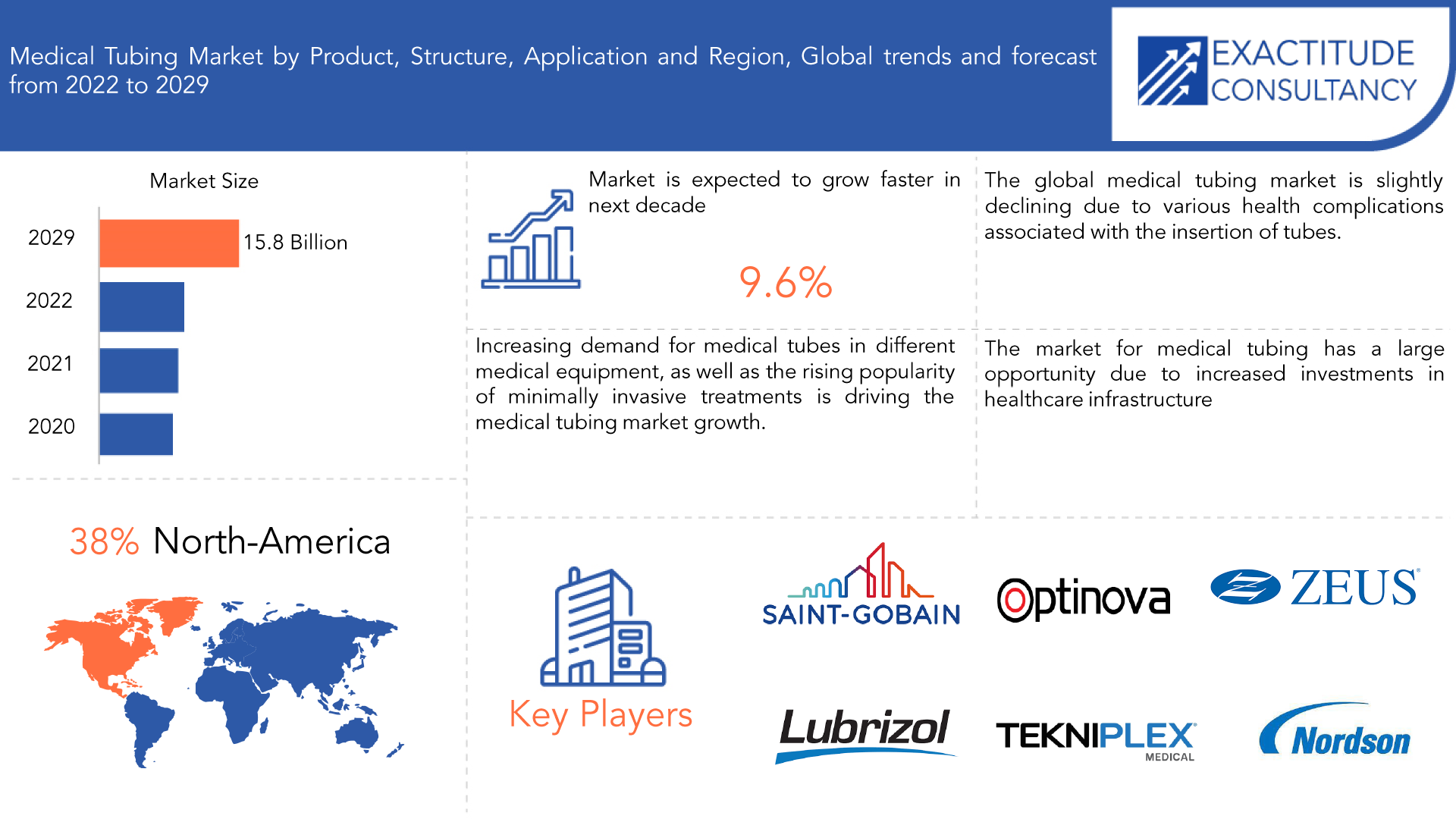
Si prevede che il mercato dei tubi medicali crescerà al 9,6% di CAGR dal 2022 al 2029. Si prevede che raggiungerà oltre 15,8 miliardi di USD entro il 2029 dai 7,6 miliardi di USD del 2021.
I tubi medicali sono destinati a una varietà di usi che consentono ai medici di somministrare fluidi e dispositivi, nonché di consentire il movimento dei gas. I tubi medicali sono comunemente utilizzati per supportare ventilatori e flebo, ma sono utilizzati anche per supportare dispositivi di accesso e come meccanismo di distribuzione per altre apparecchiature.
I tubi vengono inseriti attraverso le corde vocali nella trachea leggermente sopra la trachea, con l'altra estremità collegata a un ventilatore, per aiutare il paziente a respirare. Allo stesso modo, i disturbi urologici sono in aumento con l'aumento della frequenza del diabete e dell'ipertensione. I cateteri urinari sono utilizzati dalla popolazione anziana che soffre di problemi urologici per raccogliere e drenare l'urina dalla vescica. Inoltre, poiché le persone anziane che soffrono di demenza o Alzheimer non sono in grado di mangiare o bere, un sondino viene inserito attraverso il naso del paziente o una piccola incisione addominale per fornire nutrimento in forma liquida. Si prevede inoltre che il rapido aumento della popolazione geriatrica contribuirà alla crescente necessità di tubi medici, che sosterranno la crescente domanda di apparecchiature mediche come ventilatori e cateteri, supportando la crescita dei ricavi di mercato durante il periodo di previsione.
| ATTRIBUTO | DETTAGLI |
| Periodo di studio | 2020-2029 |
| Anno base | 2021 |
| Anno stimato | 2022 |
| Anno previsto | 2022-2029 |
| Periodo storico | 2018-2020 |
| Unità | Valore (miliardi di USD), Valore (migliaia di unità) |
| Segmentazione | Per prodotto, per struttura, per app, per regione |
| Per prodotto |
|
| Per struttura |
|
| Per applicazione |
|
| Per regione |
|
The growing popularity of minimally invasive treatments, in which tubes are placed through small incisions into the body to monitor and diagnose afflicted organs with less damage to the body than open surgery, is likely to boost market revenue growth further. The rising use of less invasive surgical techniques, which is likely to promote market development, is driving up demand for medical tubes.
Medical tubes are frequently utilized for a variety of purposes, including fluid and medication delivery, minimally invasive surgery, interventional treatment, ventilators, and intravenous therapy (IVs). Medical tubing is used to drive catheters in cardiac catheterizations, which are used to diagnose and treat certain heart conditions such as narrowing blood vessels, clogged arteries, measuring pressure and oxygen levels in different parts of the heart, checking pump functions, biopsy, diagnosing congenital heart defects, and identifying heart valve issues. The rising frequency of cardiorespiratory disorders has increased demand for medical equipment that makes extensive use of medical grade tubes. This is projected to boost market expansion by increasing demand for medical tubes in various medical devices. Moreover, increased expenditures in robotics and automation have resulted in the development of robotic-assisted minimally invasive surgical devices. The development of improved robotic surgical systems, which are widely used in healthcare institutions, is likely to fuel market revenue growth over the forecast period.
Medical tubing market growth is being stifled by health consequences such as diarrhea, skin disintegration or anatomic disturbance, dislodged or blocked feeding tube, and metabolic hazards such as hyperglycemia and hypophosphatemia. Another major factor impeding market expansion is the rising prevalence of Catheter-Associated Urinary Tract Infections (CAUTI) among adult patients utilizing Indwelling Urinary Catheter (IUC). Moreover, pain and other difficulties connected with tube insertion and removal are projected to stymie market expansion. Additionally, rigorous regulations to maintain the safety of medical tube products are projected to limit market development.
La recente rapida crescita del settore sanitario è stata facilitata dall'aumento degli investimenti diretti esteri (IDE), da normative di rimborso vantaggiose e dalla spesa governativa e privata. Poiché il settore sanitario nei paesi in via di sviluppo sta subendo cambiamenti sostanziali a seguito di mutevoli preferenze dei consumatori, crescente conoscenza sanitaria e invecchiamento della popolazione, ci sono molte opportunità per i tubi medicali nei settori sanitario e dei dispositivi medici. L'aumento degli investimenti governativi nelle infrastrutture sanitarie, l'aumento delle condizioni economiche e l'espansione del potere d'acquisto dei consumatori contribuiscono tutti all'espansione del mercato nei paesi in via di sviluppo. Di conseguenza, il mercato dei tubi medicali ha una grande opportunità grazie all'aumento degli investimenti nelle infrastrutture sanitarie.
Il COVID-19 ha avuto poca influenza sul settore mondiale dei tubi di grado medico. I tubi di grado medico sono utilizzati in una varietà di applicazioni, come tubi monouso sfusi, cateteri e cannule, sistemi di somministrazione di farmaci e usi specializzati. Come risultato della rapida diffusione del COVID-19, l'uso e la domanda di tubi di grado medico come tubi respiratori, tubi di somministrazione di farmaci, sondini nasogastrici, nebulizzatori e altre apparecchiature mediche sono aumentati in modo significativo. A causa dei lockdown e del commercio transfrontaliero minimo, il COVID-19 ha avuto una grave influenza sulla catena di fornitura del mercato, spingendo numerose nazioni a modificare le proprie regole sui dispositivi medici. Tuttavia, con la revoca delle restrizioni commerciali e dei lockdown, il mercato sta ora prendendo piede e vengono presentati nuovi articoli.
[caption id="allegato_16727" align="aligncenter" width="1920"]
Frequently Asked Questions
• What is the projected market size & growth rate of the medical tubing market?
Medical tubing market was valued at USD 8.3 billion in 2022 and is projected to reach USD 15.8 billion by 2029, growing at a CAGR of 9.6% from 2022 to 2029.
• What are the key driving factors for the growth of the medical tubing market?
The demand for minimally invasive medical procedures, an increase in the geriatric population, modifications in medical tubing, government initiatives to provide better healthcare facilities are driving the market growth.
• What are the top players operating in the medical tubing market?
The major players are Saint-Gobain Group, The Lubrizol Corporation, Optinova, Tekni-Plex, Zeus Industrial Products Inc., Nordson Corporation, Putnam Plastics, W. L. Gore & Associates Inc., Raumedic Ag, Teknor Apex, Teleflex Incorporated, Freudenberg Medical, Avient Corporation, Coloplast Corp., Boston Scientific Corporation, and Elkem Asa.
• What segments are covered in the medical tubing market report?
The global medical tubing market is segmented on the basis of product, structure, application, and geography.
• What are some restraints for growth of medical grade tubing market?
High cost of production and stringent medical standards is hampering growth of global medical grade tubing market.
Medical Tubing Market Segment Analysis
The medical tubing market is segmented based on product, structure, application and region, global trends and forecast.
By product market is segmented into silicone, polyfins, polyvinyl chlorides, polycarbonates, fluoropolymers, others; by structure market is segmented into single-lumen, co-extruded, multi-lumen, tapered tubing, braided tubing, others; by application market is segmented into bulk disposal tubing, drug delivery systems, catheters biopharmaceutical laboratory equipment, others.
In 2021, the Polyvinyl Chloride (PVC) sector led the industry, accounting for 29.3% of worldwide sales. The increased usage of single-use pre-sterilized medical equipment has increased demand for PVC-based medical devices. Irradiation and ethylene oxide sterilization procedures can also be used to sterilize PVC. Silicon tubing used in medical equipment is often of better grade and produced by a continuous vulcanization and extrusion process. It has improved chemical resistance and a wide range of sterilizing choices, as well as better stability across a wide temperature range. Polycarbonates are in high demand in medical tubing because they may be sterilized using any efficient method. Fluoropolymers are non-toxic, inert, biocompatible, and sterilizable. Sutures, syringes, bio-containment vessels, and catheters made of fluoropolymers are a desirable material in next-generation medical devices.
Based on structure, the multi-lumen sector has the biggest market share. Flushing and aspiration, healing and cooling, monitoring flow rates, and medication infusion are all done with multi-lumen tubing in catheters and endoscopes. Growing demand for multi-lumen tubing is driving revenue growth in this market because to its good dielectric qualities, temperature resistance, high lubricity, light tolerances, and biocompatibility. Depending on the resins used in multi-lumen tube production, customization possibilities enable the manufacture of multi-lumen products that are robust and abrasion-resistant while yet retaining a high degree of flexibility for easier handling. These benefits are boosting end-user demand and supporting this segment's revenue development.In 2021, the bulk disposable tubing segment led the market, accounting for 35% of worldwide sales. Urological goods, surgical tools, syringes, and needles are examples of bulk disposable devices. The increased emphasis on minimizing infection transmission from one patient to the next is expected to fuel category growth throughout the projected period. Catheters are thin tubes made of medical-grade materials that are used in a range of medical applications. The growing number of chronic illnesses requiring hospitalization in the worldwide population has boosted demand for catheters. Because of the emergence of COVID-19, there has been an increase in coronavirus research, which has increased demand for biopharmaceutical laboratory equipment. The continuous and steady supply of laboratory equipment is expected to boost the growth of the medical tubing market. From 2022 to 2029, the medication delivery systems segment is expected to grow at the quickest rate of more than 9.6%.
[caption id="attachment_16728" align="aligncenter" width="1920"]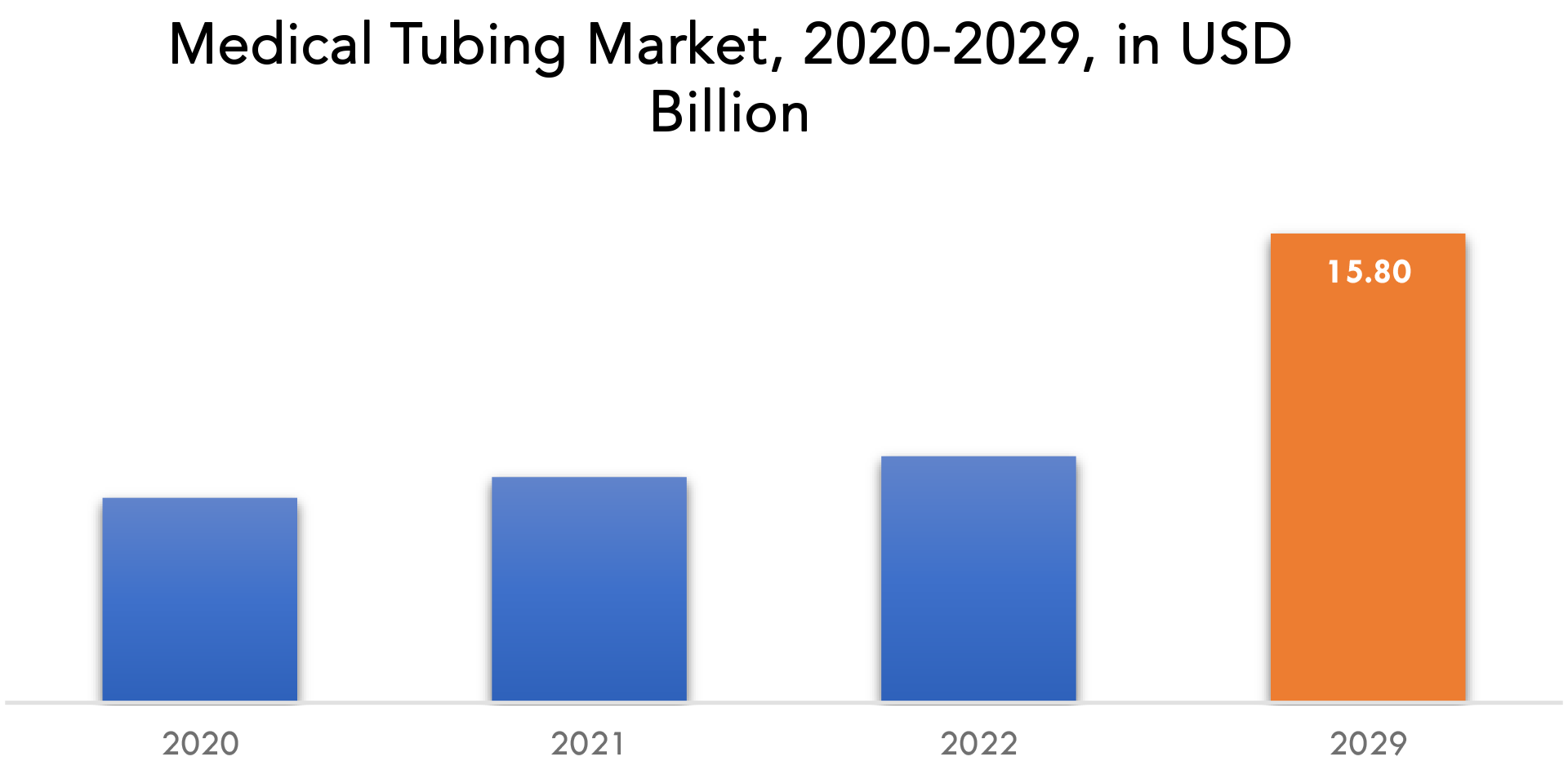
Medical Tubing Market Players
The Medical Tubing Market key players include Saint-Gobain Group, The Lubrizol Corporation, Optinova, Tekni-Plex, Zeus Industrial Products Inc., Nordson Corporation, Putnam Plastics, W. L. Gore & Associates Inc., RAUMEDIC AG, Avient Corporation, Coloplast Corp., Boston Scientific Corporation, and Elkem ASA, and others.
Recent Developments 06 February 2023: AGC and Saint-Gobain, two of the top flat glass producers in the world when it comes to sustainability, announce that they are working together to create a groundbreaking pilot flat glass line that will drastically cut its direct CO2 emissions. 15 November 2022: Lubrizol 3D Printing Solutions and colorFabb announced the joint development of new varioShoreTPU* materials to increase foaming capabilities and present extra functionalities for additive manufacturing.Who Should Buy? Or Key stakeholders
- Research and development
- Manufacturing
- Medical equipment suppliers and distributors
- Diagnostic Centers and Hospitals
- Pharmaceutical and Biotechnology Companies
- Contract Research Organizations (CROs)
- Healthcare sector
- Specialty Clinic
- Others
Medical Tubing Market Regional Analysis
The Medical Tubing Market by region includes North America, Asia-Pacific (APAC), Europe, South America, and Middle East & Africa (MEA).
- North America: includes the US, Canada, Mexico, Rest of North America
- Asia Pacific: includes China, Japan, South Korea, India, Australia, and Rest of APAC
- Europe: includes UK, Germany, France, Italy, Russia, Spain, and Rest of Europe
- South America: includes Brazil, Argentina, Colombia and Rest of South America
- Middle East & Africa: includes UAE, Israel, Saudi Arabia, South Africa, and Rest of MEA
North America dominated the market and contributed 37.8% of worldwide revenue in 2021 as a result of the industrial dynamism and abundant supply of commodities in its nations. The existence of a sizable senior population in developed nations like the U.S. and Canada, an advanced healthcare infrastructure, and patients with comparatively higher disposable income levels are some key factors driving the region's healthcare market.
The demand for products in Europe is anticipated to be driven by the region's developed medical infrastructure and rising healthcare costs. Over the projection period, it is also projected that steady demand for minimally invasive and diagnostic equipment that uses medical tubes would boost market expansion.
Due to the increased demand for improved healthcare goods, which has compelled medical equipment makers to prioritize the creation of novel ways to reach a wide variety of people, Asia Pacific is thought to be the area with the quickest growth. The demand for healthcare services will also increase as a result of an increase in elderly population and growing desire for minimally invasive operations.
The need for healthcare services is increasing throughout Central and South America as a result of a number of causes, including an ageing population due to higher life expectancies, decreased birth rates, and an increase in the prevalence of chronic illnesses. Public-private partnerships are also becoming more prevalent in the industry. Hence, the expansion of the healthcare sector together with bettering healthcare infrastructure would likely fuel regional market expansion.
[caption id="attachment_16730" align="aligncenter" width="1920"]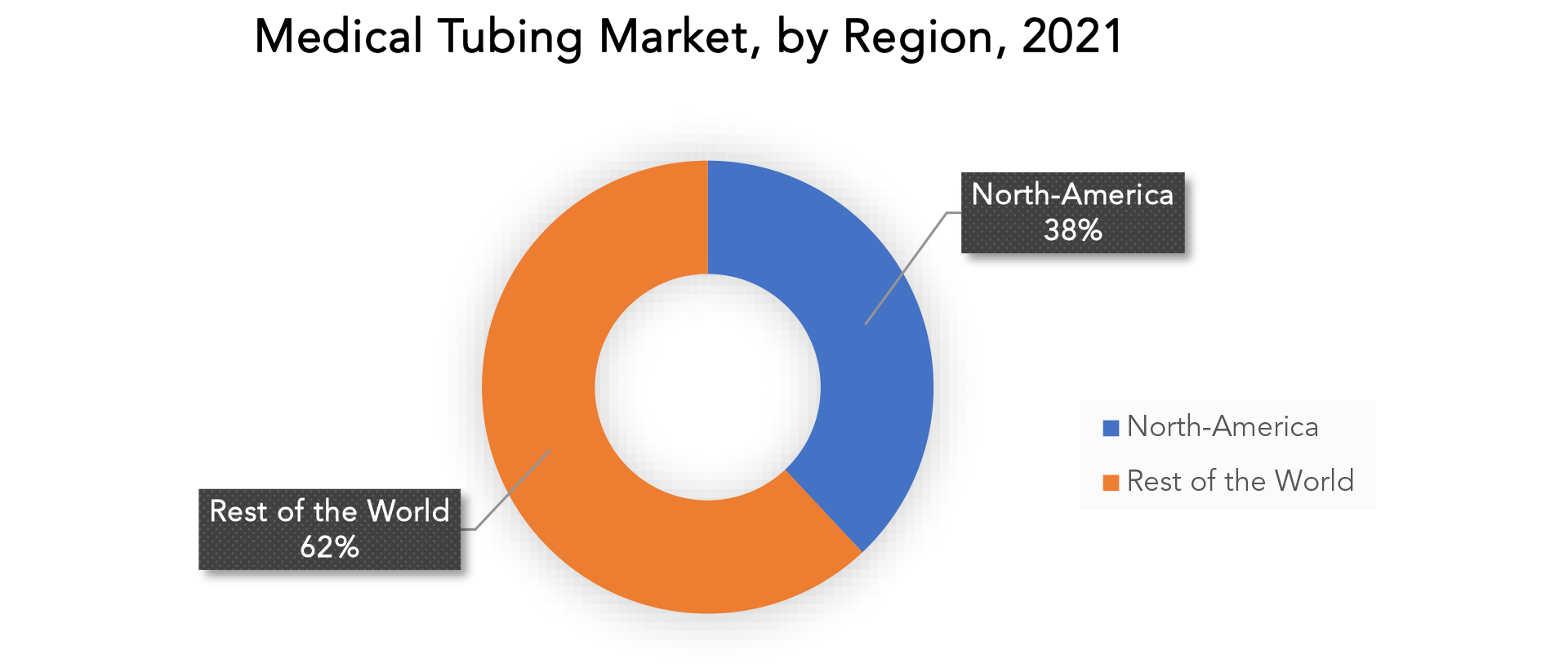
Key Market Segments: Medical Tubing Market
Medical Tubing Market by Product, 2020-2029, (USD Billion, Thousand Units)- Silicone
- Polyfins
- Polyvinyl Chloride
- Polycarbonates
- Fluoropolymers
- Others
- Single-Lumen
- Co-Extruded
- Multi-Lumen
- Tapered Tubing
- Braided Tubing
- Others
- Bulk Disposal Tubing
- Drug Delivery Systems
- Catheters
- Biopharmaceutical Laboratory Equipment
- Other
- North America
- Asia Pacific
- Europe
- South America
- Middle East And Africa
Exactitude Consultancy Services Key Objectives
- Increasing sales and market share
- Developing new technology
- Improving profitability
- Entering new markets
- Enhancing brand reputation
Key Question Answered
- What is the expected growth rate of the medical tubing market over the next 7 years?
- What are the end-user industries driving demand for market and what is their outlook?
- What are the opportunities for growth in emerging markets such as asia-pacific, middle east, and africa?
- How is the economic environment affecting the medical tubing market, including factors such as interest rates, inflation, and exchange rates?
- What is the expected impact of government policies and regulations on the medical tubing market?
- What is the current and forecasted size and growth rate of the global medical tubing market?
- What are the key drivers of growth in the medical tubing market?
- Who are the major players in the market and what is their market share?
- What are the distribution channels and supply chain dynamics in the medical tubing market?
- What are the technological advancements and innovations in the medical tubing market and their impact on product development and growth?
- What are the regulatory considerations and their impact on the market?
- What are the challenges faced by players in the medical tubing market and how are they addressing these challenges?
- What are the opportunities for growth and expansion in the medical tubing market?
- What are the service offerings and specifications of leading players in the market?
- What is the pricing trend of medical tubing in the market and what is the impact of raw material prices on the price trend?
- INTRODUZIONE
- DEFINIZIONE DI MERCATO
- SEGMENTAZIONE DEL MERCATO
- TEMPI DI RICERCA
- ASSUNZIONI E LIMITAZIONI
- METODOLOGIA DI RICERCA
- ESTRAZIONE DATI
- RICERCA SECONDARIA
- RICERCA PRIMARIA
- PARERI DEGLI ESPERTI IN MATERIA
- CONTROLLI DI QUALITÀ
- RECENSIONE FINALE
- TRIANGOLAZIONE DEI DATI
- APPROCCIO DAL BASSO VERSO L'ALTO
- APPROCCIO TOP-DOWN
- FLUSSO DI RICERCA
- FONTI DEI DATI
- ESTRAZIONE DATI
- SINTESI
- PANORAMICA DEL MERCATO
- PROSPETTIVE DEL MERCATO GLOBALE DEI TUBI MEDICI
- FATTORI DI MERCATO
- LIMITAZIONI DI MERCATO
- OPPORTUNITÀ DI MERCATO
- IMPATTO DEL COVID-19 SUL MERCATO DEI TUBI MEDICI
- MODELLO DELLE CINQUE FORZE DI PORTER
- MINACCIA DAI NUOVI ENTRANSI
- MINACCIA DA SOSTITUTI
- POTERE CONTRATTUALE DEI FORNITORI
- POTERE CONTRATTUALE DEI CLIENTI
- GRADO DI COMPETIZIONE
- ANALISI DELLA CATENA DEL VALORE DEL SETTORE
- PROSPETTIVE DEL MERCATO GLOBALE DEI TUBI MEDICI
- MERCATO GLOBALE DEI TUBI MEDICI PER PRODOTTO (MILIARDI DI USD, MIGLIAIA DI UNITÀ), 2020-2029
- SILICONE
- POLIFINE
- CLORURO DI POLIVINILE
- POLICARBONATI
- FLUOROPOLIMERI
- ALTRI
- MERCATO GLOBALE DEI TUBI MEDICI PER STRUTTURA (MILIARDI DI USD, MIGLIAIA DI UNITÀ), 2020-2029
- LUMEN SINGOLO
- CO-ESTRUSI
- MULTILUMEN
- TUBO CONICO
- TUBO INTRECCIATO
- ALTRI
- MERCATO GLOBALE DEI TUBI MEDICI PER SETTORE APPLICATIVO (MILIARDI DI USD, MIGLIAIA DI UNITÀ), 2020-2029
- LUMEN SINGOLO
- CO-ESTRUSI
- MULTILUMEN
- TUBO CONICO
- TUBO INTRECCIATO
- ALTRI
- MERCATO GLOBALE DEI TUBI MEDICI PER REGIONE (MILIARDI DI USD, MIGLIAIA DI UNITÀ), 2020-2029
- AMERICA DEL NORD
- NOI
- CANADA
- MESSICO
- RESTO DEL NORD AMERICA
- SUD AMERICA
- BRASILE
- ARGENTINA
- COLOMBIA
- RESTO DEL SUD AMERICA
- EUROPA
- GERMANIA
- Regno Unito
- FRANCIA
- ITALIA
- SPAGNA
- RUSSIA
- REST OF EUROPE
- ASIA PACIFIC
- INDIA
- CHINA
- JAPAN
- SOUTH KOREA
- AUSTRALIA
- REST OF ASIA PACIFIC
- MIDDLE EAST AND AFRICA
- UAE
- ISRAEL
- SAUDI ARABIA
- SOUTH AFRICA
- REST OF MIDDLE EAST AND AFRICA
- AMERICA DEL NORD
- COMPANY PROFILES* (BUSINESS OVERVIEW, COMPANY SNAPSHOT, PRODUCTS OFFERED, RECENT DEVELOPMENTS)
- SAINT-GOBAIN GROUP
- THE LUBRIZOL CORPORATION
- OPTINOVA
- TEKNI-PLEX
- ZEUS INDUSTRIAL PRODUCTS INC.
- NORDSON CORPORATION
- PUTNAM PLASTICS
- L. GORE & ASSOCIATES INC.
- RAUMEDIC AG
- AVIENT CORPORATION
- COLOPLAST CORP.
- BOSTON SCIENTIFIC CORPORATION
- ELKEM ASA *THE COMPANY LIST IS INDICATIVE
LIST OF TABLES
TABLE 1 GLOBAL MEDICAL TUBING MARKET BY PRODUCT (USD BILLION), 2020-2029
TABLE 2 GLOBAL MEDICAL TUBING MARKET BY PRODUCT (THOUSAND UNITS), 2020-2029
TABLE 3 GLOBAL MEDICAL TUBING MARKETBY STRUCTURE (USD BILLION), 2020-2029
TABLE 4 GLOBAL MEDICAL TUBING MARKET BY STRUCTURE (THOUSAND UNITS), 2020-2029
TABLE 5 GLOBAL MEDICAL TUBING MARKET BY APPLICATION (USD BILLION), 2020-2029
TABLE 6 GLOBAL MEDICAL TUBING MARKET BY APPLICATION (THOUSAND UNITS), 2020-2029
TABLE 7 GLOBAL MEDICAL TUBING MARKET BY REGION (USD BILLION), 2020-2029
TABLE 8 GLOBAL MEDICAL TUBING MARKET BY REGION (THOUSAND UNITS), 2020-2029
TABLE 9 NORTH AMERICA MEDICAL TUBING MARKET BY PRODUCT (USD BILLION), 2020-2029
TABLE 10 NORTH AMERICA MEDICAL TUBING MARKET BY PRODUCT (THOUSAND UNITS), 2020-2029
TABLE 11 NORTH AMERICA MEDICAL TUBING MARKETBY STRUCTURE (USD BILLION), 2020-2029
TABLE 12 NORTH AMERICA MEDICAL TUBING MARKET BY STRUCTURE (THOUSAND UNITS), 2020-2029
TABLE 13 NORTH AMERICA MEDICAL TUBING MARKET BY APPLICATION (USD BILLION), 2020-2029
TABLE 14 NORTH AMERICA MEDICAL TUBING MARKET BY APPLICATION (THOUSAND UNITS), 2020-2029
TABLE 15 NORTH AMERICA MEDICAL TUBING MARKET BY COUNTRY (USD BILLION), 2020-2029
TABLE 16 NORTH AMERICA MEDICAL TUBING MARKET BY COUNTRY (USD BILLION), 2020-2029
TABLE 17 US MEDICAL TUBING MARKET BY PRODUCT (USD BILLION), 2020-2029
TABLE 18 US MEDICAL TUBING MARKET BY PRODUCT (THOUSAND UNITS), 2020-2029
TABLE 19 US MEDICAL TUBING MARKETBY STRUCTURE (USD BILLION), 2020-2029
TABLE 20 US MEDICAL TUBING MARKET BY STRUCTURE (THOUSAND UNITS), 2020-2029
TABLE 21 US MEDICAL TUBING MARKET BY APPLICATION (USD BILLION), 2020-2029
TABLE 22 US MEDICAL TUBING MARKET BY APPLICATION (THOUSAND UNITS), 2020-2029
TABLE 23 CANADA MEDICAL TUBING MARKET BY PRODUCT (BILLION), 2020-2029
TABLE 24 CANADA MEDICAL TUBING MARKET BY PRODUCT (THOUSAND UNITS), 2020-2029
TABLE 25 CANADA MEDICAL TUBING MARKETBY STRUCTURE (USD BILLION), 2020-2029
TABLE 26 CANADA MEDICAL TUBING MARKET BY STRUCTURE (THOUSAND UNITS), 2020-2029
TABLE 27 CANADA MEDICAL TUBING MARKET BY APPLICATION (USD BILLION), 2020-2029
TABLE 28 CANADA MEDICAL TUBING MARKET BY APPLICATION (THOUSAND UNITS), 2020-2029
TABLE 29 MEXICO MEDICAL TUBING MARKET BY PRODUCT (USD BILLION), 2020-2029
TABLE 30 MEXICO MEDICAL TUBING MARKET BY PRODUCT (THOUSAND UNITS), 2020-2029
TABLE 31 MEXICO MEDICAL TUBING MARKETBY STRUCTURE (USD BILLION), 2020-2029
TABLE 32 MEXICO MEDICAL TUBING MARKET BY STRUCTURE (THOUSAND UNITS), 2020-2029
TABLE 33 MEXICO MEDICAL TUBING MARKET BY APPLICATION (USD BILLION), 2020-2029
TABLE 34 MEXICO MEDICAL TUBING MARKET BY APPLICATION (THOUSAND UNITS), 2020-2029
TABLE 35 REST OF NORTH AMERICA MEDICAL TUBING MARKET BY PRODUCT (USD BILLION), 2020-2029
TABLE 36 REST OF NORTH AMERICA MEDICAL TUBING MARKET BY PRODUCT (THOUSAND UNITS), 2020-2029
TABLE 37 REST OF NORTH AMERICA MEDICAL TUBING MARKETBY STRUCTURE (USD BILLION), 2020-2029
TABLE 38 REST OF NORTH AMERICA MEDICAL TUBING MARKET BY STRUCTURE (THOUSAND UNITS), 2020-2029
TABLE 39 REST OF NORTH AMERICA MEDICAL TUBING MARKET BY APPLICATIONN (USD BILLION), 2020-2029
TABLE 40 REST OF NORTH AMERICA MEDICAL TUBING MARKET BY APPLICATIONN (THOUSAND UNITS), 2020-2029
TABLE 41 SOUTH AMERICA MEDICAL TUBING MARKET BY PRODUCT (USD BILLION), 2020-2029
TABLE 42 SOUTH AMERICA MEDICAL TUBING MARKET BY PRODUCT (THOUSAND UNITS), 2020-2029
TABLE 43 SOUTH AMERICA MEDICAL TUBING MARKETBY STRUCTURE (USD BILLION), 2020-2029
TABLE 44 SOUTH AMERICA MEDICAL TUBING MARKET BY STRUCTURE (THOUSAND UNITS), 2020-2029
TABLE 45 SOUTH AMERICA MEDICAL TUBING MARKET BY APPLICATION (USD BILLION), 2020-2029
TABLE 46 SOUTH AMERICA MEDICAL TUBING MARKET BY APPLICATION (THOUSAND UNITS), 2020-2029
TABLE 47 SOUTH AMERICA MEDICAL TUBING MARKET BY COUNTRY (USD BILLION), 2020-2029
TABLE 48 SOUTH AMERICA MEDICAL TUBING MARKET BY COUNTRY (USD BILLION), 2020-2029
TABLE 49 BRAZIL MEDICAL TUBING MARKET BY PRODUCT (USD BILLION), 2020-2029
TABLE 50 BRAZIL MEDICAL TUBING MARKET BY PRODUCT (THOUSAND UNITS), 2020-2029
TABLE 51 BRAZIL MEDICAL TUBING MARKETBY STRUCTURE (USD BILLION), 2020-2029
TABLE 52 BRAZIL MEDICAL TUBING MARKET BY STRUCTURE (THOUSAND UNITS), 2020-2029
TABLE 53 BRAZIL MEDICAL TUBING MARKET BY APPLICATION (USD BILLION), 2020-2029
TABLE 54 BRAZIL MEDICAL TUBING MARKET BY APPLICATION (THOUSAND UNITS), 2020-2029
TABLE 55 ARGENTINA MEDICAL TUBING MARKET BY PRODUCT (USD BILLION), 2020-2029
TABLE 56 ARGENTINA MEDICAL TUBING MARKET BY PRODUCT (THOUSAND UNITS), 2020-2029
TABLE 57 ARGENTINA MEDICAL TUBING MARKETBY STRUCTURE (USD BILLION), 2020-2029
TABLE 58 ARGENTINA MEDICAL TUBING MARKET BY STRUCTURE (THOUSAND UNITS), 2020-2029
TABLE 59 ARGENTINA MEDICAL TUBING MARKET BY APPLICATION (USD BILLION), 2020-2029
TABLE 60 ARGENTINA MEDICAL TUBING MARKET BY APPLICATION (THOUSAND UNIT), 2020-2029
TABLE 61 COLOMBIA MEDICAL TUBING MARKET BY PRODUCT (USD BILLION), 2020-2029
TABLE 62 COLOMBIA MEDICAL TUBING MARKET BY PRODUCT (THOUSAND UNITS), 2020-2029
TABLE 63 COLOMBIA MEDICAL TUBING MARKETBY STRUCTURE (USD BILLION), 2020-2029
TABLE 64 COLOMBIA MEDICAL TUBING MARKET BY STRUCTURE (THOUSAND UNITS), 2020-2029
TABLE 65 COLOMBIA MEDICAL TUBING MARKET BY APPLICATION (USD BILLION), 2020-2029
TABLE 66 COLOMBIA MEDICAL TUBING MARKET BY APPLICATION (THOUSAND UNIT), 2020-2029
TABLE 67 REST OF SOUTH AMERICA MEDICAL TUBING MARKET BY PRODUCT (USD BILLION), 2020-2029
TABLE 68 REST OF SOUTH AMERICA MEDICAL TUBING MARKET BY PRODUCT (THOUSAND UNITS), 2020-2029
TABLE 69 REST OF SOUTH AMERICA MEDICAL TUBING MARKETBY STRUCTURE (USD BILLION), 2020-2029
TABLE 70 REST OF SOUTH AMERICA MEDICAL TUBING MARKET BY STRUCTURE (THOUSAND UNITS), 2020-2029
TABLE 71 REST OF SOUTH AMERICA MEDICAL TUBING MARKET BY APPLICATIONN (USD BILLION), 2020-2029
TABLE 72 REST OF SOUTH AMERICA MEDICAL TUBING MARKET BY APPLICATIONN (THOUSAND UNIT), 2020-2029
TABLE 73 ASIA -PACIFIC MEDICAL TUBING MARKET BY PRODUCT (USD BILLION), 2020-2029
TABLE 74 ASIA -PACIFIC MEDICAL TUBING MARKET BY PRODUCT (THOUSAND UNITS), 2020-2029
TABLE 75 ASIA -PACIFIC MEDICAL TUBING MARKETBY STRUCTURE (USD BILLION), 2020-2029
TABLE 76 ASIA -PACIFIC MEDICAL TUBING MARKET BY STRUCTURE (THOUSAND UNITS), 2020-2029
TABLE 77 ASIA -PACIFIC MEDICAL TUBING MARKET BY APPLICATION (USD BILLION), 2020-2029
TABLE 78 ASIA -PACIFIC MEDICAL TUBING MARKET BY APPLICATION (THOUSAND UNIT), 2020-2029
TABLE 79 ASIA -PACIFIC MEDICAL TUBING MARKET BY COUNTRY (USD BILLION), 2020-2029
TABLE 80 ASIA -PACIFIC MEDICAL TUBING MARKET BY COUNTRY (THOUSAND UNIT), 2020-2029
TABLE 81 INDIA MEDICAL TUBING MARKET BY PRODUCT (USD BILLION), 2020-2029
TABLE 82 INDIA MEDICAL TUBING MARKET BY PRODUCT (THOUSAND UNITS), 2020-2029
TABLE 83 INDIA MEDICAL TUBING MARKETBY STRUCTURE (USD BILLION), 2020-2029
TABLE 84 INDIA MEDICAL TUBING MARKET BY STRUCTURE (THOUSAND UNITS), 2020-2029
TABLE 85 INDIA MEDICAL TUBING MARKET BY APPLICATION (USD BILLION), 2020-2029
TABLE 86 INDIA MEDICAL TUBING MARKET BY APPLICATION (THOUSAND UNIT), 2020-2029
TABLE 87 CHINA MEDICAL TUBING MARKET BY PRODUCT (USD BILLION), 2020-2029
TABLE 88 CHINA MEDICAL TUBING MARKET BY PRODUCT (THOUSAND UNITS), 2020-2029
TABLE 89 CHINA MEDICAL TUBING MARKETBY STRUCTURE (USD BILLION), 2020-2029
TABLE 90 CHINA MEDICAL TUBING MARKET BY STRUCTURE (THOUSAND UNITS), 2020-2029
TABLE 91 CHINA MEDICAL TUBING MARKET BY APPLICATION (USD BILLION), 2020-2029
TABLE 92 CHINA MEDICAL TUBING MARKET BY APPLICATION (THOUSAND UNIT), 2020-2029
TABLE 93 JAPAN MEDICAL TUBING MARKET BY PRODUCT (USD BILLION), 2020-2029
TABLE 94 JAPAN MEDICAL TUBING MARKET BY PRODUCT (THOUSAND UNITS), 2020-2029
TABLE 95 JAPAN MEDICAL TUBING MARKETBY STRUCTURE (USD BILLION), 2020-2029
TABLE 96 JAPAN MEDICAL TUBING MARKET BY STRUCTURE (THOUSAND UNITS), 2020-2029
TABLE 97 JAPAN MEDICAL TUBING MARKET BY APPLICATION (USD BILLION), 2020-2029
TABLE 98 JAPAN MEDICAL TUBING MARKET BY APPLICATION (THOUSAND UNIT), 2020-2029
TABLE 99 SOUTH KOREA MEDICAL TUBING MARKET BY PRODUCT (USD BILLION), 2020-2029
TABLE 100 SOUTH KOREA MEDICAL TUBING MARKET BY PRODUCT (THOUSAND UNITS), 2020-2029
TABLE 101 SOUTH KOREA MEDICAL TUBING MARKETBY STRUCTURE (USD BILLION), 2020-2029
TABLE 102 SOUTH KOREA MEDICAL TUBING MARKET BY STRUCTURE (THOUSAND UNITS), 2020-2029
TABLE 103 SOUTH KOREA MEDICAL TUBING MARKET BY APPLICATION (USD BILLION), 2020-2029
TABLE 104 SOUTH KOREA MEDICAL TUBING MARKET BY APPLICATION THOUSAND UNIT), 2020-2029
TABLE 105 AUSTRALIA MEDICAL TUBING MARKET BY PRODUCT (USD BILLION), 2020-2029
TABLE 106 AUSTRALIA HYBRID BY STRUCTUREBY PRODUCT (THOUSAND UNITS), 2020-2029
TABLE 107 AUSTRALIA MEDICAL TUBING MARKETBY STRUCTURE (USD BILLION), 2020-2029
TABLE 108 AUSTRALIA MEDICAL TUBING MARKET BY STRUCTURE (THOUSAND UNITS), 2020-2029
TABLE 109 AUSTRALIA MEDICAL TUBING MARKET BY APPLICATION (USD BILLION), 2020-2029
TABLE 110 AUSTRALIA MEDICAL TUBING MARKET BY APPLICATION (THOUSAND UNIT), 2020-2029
TABLE 111 REST OF ASIA PACIFIC MEDICAL TUBING MARKET BY PRODUCT (USD BILLION), 2020-2029
TABLE 112 REST OF ASIA PACIFIC HYBRID BY STRUCTUREBY PRODUCT (THOUSAND UNITS), 2020-2029
TABLE 113 REST OF ASIA PACIFIC MEDICAL TUBING MARKETBY STRUCTURE (USD BILLION), 2020-2029
TABLE 114 REST OF ASIA PACIFIC MEDICAL TUBING MARKET BY STRUCTURE (THOUSAND UNITS), 2020-2029
TABLE 115 REST OF ASIA PACIFIC MEDICAL TUBING MARKET BY APPLICATION (USD BILLION), 2020-2029
TABLE 116 REST OF ASIA PACIFIC MEDICAL TUBING MARKET BY APPLICATION (THOUSAND UNIT), 2020-2029
TABLE 117 EUROPE MEDICAL TUBING MARKET BY PRODUCT (USD BILLION), 2020-2029
TABLE 118 EUROPE MEDICAL TUBING MARKET BY PRODUCT (THOUSAND UNITS), 2020-2029
TABLE 119 EUROPE MEDICAL TUBING MARKETBY STRUCTURE (USD BILLION), 2020-2029
TABLE 120 EUROPE MEDICAL TUBING MARKET BY STRUCTURE (THOUSAND UNITS), 2020-2029
TABLE 121 EUROPE MEDICAL TUBING MARKET BY APPLICATION (USD BILLION), 2020-2029
TABLE 122 EUROPE MEDICAL TUBING MARKET BY APPLICATION (THOUSAND UNIT), 2020-2029
TABLE 123 EUROPE MEDICAL TUBING MARKET BY COUNTRY (USD BILLION), 2020-2029
TABLE 124 EUROPE MEDICAL TUBING MARKET BY COUNTRY (THOUSAND UNIT), 2020-2029
TABLE 125 GERMANY MEDICAL TUBING MARKET BY PRODUCT (USD BILLION), 2020-2029
TABLE 126 GERMANY MEDICAL TUBING MARKET BY PRODUCT (THOUSAND UNITS), 2020-2029
TABLE 127 GERMANY MEDICAL TUBING MARKETBY STRUCTURE (USD BILLION), 2020-2029
TABLE 128 GERMANY MEDICAL TUBING MARKET BY STRUCTURE (THOUSAND UNITS), 2020-2029
TABLE 129 GERMANY MEDICAL TUBING MARKET BY APPLICATION (USD BILLION), 2020-2029
TABLE 130 GERMANY MEDICAL TUBING MARKET BY APPLICATION (THOUSAND UNIT), 2020-2029
TABLE 131 UK MEDICAL TUBING MARKET BY PRODUCT (USD BILLION), 2020-2029
TABLE 132 UK MEDICAL TUBING MARKET BY PRODUCT (THOUSAND UNITS), 2020-2029
TABLE 133 UK MEDICAL TUBING MARKETBY STRUCTURE (USD BILLION), 2020-2029
TABLE 134 UK MEDICAL TUBING MARKET BY STRUCTURE (THOUSAND UNITS), 2020-2029
TABLE 135 UK MEDICAL TUBING MARKET BY APPLICATION (USD BILLION), 2020-2029
TABLE 136 UK MEDICAL TUBING MARKET BY APPLICATION (USD BILLION), 2020-2029
TABLE 137 FRANCE MEDICAL TUBING MARKET BY PRODUCT (USD BILLION), 2020-2029
TABLE 138 FRANCE MEDICAL TUBING MARKET BY PRODUCT (THOUSAND UNITS), 2020-2029
TABLE 139 FRANCE MEDICAL TUBING MARKETBY STRUCTURE (USD BILLION), 2020-2029
TABLE 140 FRANCE MEDICAL TUBING MARKET BY STRUCTURE (THOUSAND UNITS), 2020-2029
TABLE 141 FRANCE MEDICAL TUBING MARKET BY APPLICATION (USD BILLION), 2020-2029
TABLE 142 FRANCE MEDICAL TUBING MARKET BY APPLICATION (THOUSAND UNIT), 2020-2029
TABLE 143 ITALY MEDICAL TUBING MARKET BY PRODUCT (USD BILLION), 2020-2029
TABLE 144 ITALY MEDICAL TUBING MARKET BY PRODUCT (THOUSAND UNITS), 2020-2029
TABLE 145 ITALY MEDICAL TUBING MARKETBY STRUCTURE (USD BILLION), 2020-2029
TABLE 146 ITALY MEDICAL TUBING MARKET BY STRUCTURE (THOUSAND UNITS), 2020-2029
TABLE 147 ITALY MEDICAL TUBING MARKET BY APPLICATION (USD BILLION), 2020-2029
TABLE 148 ITALY MEDICAL TUBING MARKET BY APPLICATION (THOUSAND UNIT), 2020-2029
TABLE 149 SPAIN MEDICAL TUBING MARKET BY PRODUCT (USD BILLION), 2020-2029
TABLE 150 SPAIN MEDICAL TUBING MARKET BY PRODUCT (THOUSAND UNITS), 2020-2029
TABLE 151 SPAIN MEDICAL TUBING MARKETBY STRUCTURE (USD BILLION), 2020-2029
TABLE 152 SPAIN MEDICAL TUBING MARKET BY STRUCTURE (THOUSAND UNITS), 2020-2029
TABLE 153 SPAIN MEDICAL TUBING MARKET BY APPLICATION (USD BILLION), 2020-2029
TABLE 154 SPAIN MEDICAL TUBING MARKET BY APPLICATION (THOUSAND UNIT), 2020-2029
TABLE 155 RUSSIA MEDICAL TUBING MARKET BY PRODUCT (USD BILLION), 2020-2029
TABLE 156 RUSSIA MEDICAL TUBING MARKET BY PRODUCT (THOUSAND UNITS), 2020-2029
TABLE 157 RUSSIA MEDICAL TUBING MARKETBY STRUCTURE (USD BILLION), 2020-2029
TABLE 158 RUSSIA MEDICAL TUBING MARKET BY STRUCTURE (THOUSAND UNITS), 2020-2029
TABLE 159 RUSSIA MEDICAL TUBING MARKET BY APPLICATION (USD BILLION), 2020-2029
TABLE 160 RUSSIA MEDICAL TUBING MARKET BY APPLICATION (THOUSAND UNIT), 2020-2029
TABLE 161 REST OF EUROPE MEDICAL TUBING MARKET BY PRODUCT (USD BILLION), 2020-2029
TABLE 162 REST OF EUROPE MEDICAL TUBING MARKET BY PRODUCT (THOUSAND UNITS), 2020-2029
TABLE 163 REST OF EUROPE MEDICAL TUBING MARKETBY STRUCTURE (USD BILLION), 2020-2029
TABLE 164 REST OF EUROPE MEDICAL TUBING MARKET BY STRUCTURE (THOUSAND UNITS), 2020-2029
TABLE 165 REST OF EUROPE MEDICAL TUBING MARKET BY APPLICATIONN (USD BILLION), 2020-2029
TABLE 166 REST OF EUROPE MEDICAL TUBING MARKET BY APPLICATIONN (THOUSAND UNIT), 2020-2029
TABLE 167 MIDDLE EAST AND AFRICA MEDICAL TUBING MARKET BY PRODUCT (USD BILLION), 2020-2029
TABLE 168 MIDDLE EAST AND AFRICA MEDICAL TUBING MARKET BY PRODUCT (THOUSAND UNITS), 2020-2029
TABLE 169 MIDDLE EAST AND AFRICA MEDICAL TUBING MARKETBY STRUCTURE (USD BILLION), 2020-2029
TABLE 170 MIDDLE EAST AND AFRICA MEDICAL TUBING MARKET BY STRUCTURE (THOUSAND UNITS), 2020-2029
TABLE 171 MIDDLE EAST AND AFRICA MEDICAL TUBING MARKET BY APPLICATION (USD BILLION), 2020-2029
TABLE 172 MIDDLE EAST AND AFRICA MEDICAL TUBING MARKET BY APPLICATION (THOUSAND UNIT), 2020-2029
TABLE 173 MIDDLE EAST ABD AFRICA MEDICAL TUBING MARKET BY COUNTRY (USD BILLION), 2020-2029
TABLE 174 MIDDLE EAST ABD AFRICA MEDICAL TUBING MARKET BY COUNTRY (THOUSAND UNIT), 2020-2029
TABLE 175 UAE MEDICAL TUBING MARKET BY PRODUCT (USD BILLION), 2020-2029
TABLE 176 UAE MEDICAL TUBING MARKET BY PRODUCT (THOUSAND UNITS), 2020-2029
TABLE 177 UAE MEDICAL TUBING MARKETBY STRUCTURE (USD BILLION), 2020-2029
TABLE 178 UAE MEDICAL TUBING MARKET BY STRUCTURE (THOUSAND UNITS), 2020-2029
TABLE 179 UAE MEDICAL TUBING MARKET BY APPLICATION (USD BILLION), 2020-2029
TABLE 180 UAE MEDICAL TUBING MARKET BY APPLICATION (THOUSAND UNIT), 2020-2029
TABLE 181 ISRAEL MEDICAL TUBING MARKET BY PRODUCT (USD BILLION), 2020-2029
TABLE 182 ISRAEL MEDICAL TUBING MARKET BY PRODUCT (THOUSAND UNITS), 2020-2029
TABLE 183 ISRAEL MEDICAL TUBING MARKETBY STRUCTURE (USD BILLION), 2020-2029
TABLE 184 ISRAEL MEDICAL TUBING MARKET BY STRUCTURE (THOUSAND UNITS), 2020-2029
TABLE 185 ISRAEL MEDICAL TUBING MARKET BY APPLICATION (USD BILLION), 2020-2029
TABLE 186 ISRAEL MEDICAL TUBING MARKET BY APPLICATION (THOUSAND UNIT), 2020-2029
TABLE 187 SAUDI ARABIA MEDICAL TUBING MARKET BY PRODUCT (USD BILLION), 2020-2029
TABLE 188 SAUDI ARABIA MEDICAL TUBING MARKET BY PRODUCT (THOUSAND UNITS), 2020-2029
TABLE 189 SAUDI ARABIA MEDICAL TUBING MARKETBY STRUCTURE (USD BILLION), 2020-2029
TABLE 190 SAUDI ARABIA MEDICAL TUBING MARKET BY STRUCTURE (THOUSAND UNITS), 2020-2029
TABLE 191 SAUDI ARABIA MEDICAL TUBING MARKET BY APPLICATION (USD BILLION), 2020-2029
TABLE 192 SAUDI ARABIA MEDICAL TUBING MARKET BY APPLICATION (THOUSAND UNIT), 2020-2029
TABLE 193 SOUTH AFRICA MEDICAL TUBING MARKET BY PRODUCT (USD BILLION), 2020-2029
TABLE 194 SOUTH AFRICA MEDICAL TUBING MARKET BY PRODUCT (THOUSAND UNITS), 2020-2029
TABLE 195 SOUTH AFRICA MEDICAL TUBING MARKETBY STRUCTURE (USD BILLION), 2020-2029
TABLE 196 SOUTH AFRICA MEDICAL TUBING MARKET BY STRUCTURE (THOUSAND UNITS), 2020-2029
TABLE 197 SOUTH AFRICA MEDICAL TUBING MARKET BY APPLICATION (USD BILLION), 2020-2029
TABLE 198 SOUTH AFRICA MEDICAL TUBING MARKET BY APPLICATION (THOUSAND UNIT), 2020-2029
TABLE 199 REST OF MIDDLE EAST AND AFRICA MEDICAL TUBING MARKET BY PRODUCT (USD BILLION), 2020-2029
TABLE 200 REST OF MIDDLE EAST AND AFRICA MEDICAL TUBING MARKET BY PRODUCT (THOUSAND UNITS), 2020-2029
TABLE 201 REST OF MIDDLE EAST AND AFRICA MEDICAL TUBING MARKETBY STRUCTURE (USD BILLION), 2020-2029
TABLE 202 REST OF MIDDLE EAST AND AFRICA MEDICAL TUBING MARKET BY STRUCTURE (THOUSAND UNITS), 2020-2029
TABLE 203 REST OF MIDDLE EAST AND AFRICA MEDICAL TUBING MARKET BY APPLICATION (USD BILLION), 2020-2029
TABLE 204 REST OF MIDDLE EAST AND AFRICA MEDICAL TUBING MARKET BY APPLICATION (THOUSAND UNIT), 2020-2029
LIST OF FIGURES
FIGURE 1 MARKET DYNAMICS
FIGURE 2 MARKET SEGMENTATION
FIGURE 3 REPORT TIMELINES: YEARS CONSIDERED
FIGURE 4 DATA TRIANGULATION
FIGURE 5 BOTTOM-UP APPROACH
FIGURE 6 TOP-DOWN APPROACH
FIGURE 7 RESEARCH FLOW
FIGURE 8 GLOBAL MEDICAL TUBING MARKET BY PRODUCT, USD BILLION, 2020-2029
FIGURE 9 GLOBAL MEDICAL TUBING MARKET BY STRUCTURE, USD BILLION, 2020-2029
FIGURE 10 GLOBAL MEDICAL TUBING MARKET BY APPLICATION, 2020-2029
FIGURE 11 GLOBAL MEDICAL TUBING MARKET BY REGION, USD BILLION, 2020-2029
FIGURE 12 PORTER’S FIVE FORCES MODEL
FIGURE 13 GLOBAL MEDICAL TUBING MARKET BY PRODUCT, USD BILLION, 2021
FIGURE 14 GLOBAL MEDICAL TUBING MARKET BY STRUCTURE, USD BILLION, 2021
FIGURE 15 GLOBAL MEDICAL TUBING MARKET BY APPLICATION, USD BILLION, 2021
FIGURE 16 GLOBAL MEDICAL TUBING MARKET BY REGION 2021
FIGURE 17 MARKET SHARE ANALYSIS
FIGURE 18 SAINT-GOBAIN GROUP: COMPANY SNAPSHOT
FIGURE 19 THE LUBRIZOL CORPORATION: COMPANY SNAPSHOT
FIGURE 20 OPTINOVA: COMPANY SNAPSHOT
FIGURE 21 TEKNI-PLEX: COMPANY SNAPSHOT
FIGURE 22 ZEUS INDUSTRIAL PRODUCTS INC.: COMPANY SNAPSHOT
FIGURE 23 NORDSON CORPORATION: COMPANY SNAPSHOT
FIGURE 24 PUTNAM PLASTICS: COMPANY SNAPSHOT
FIGURE 25 W. L. GORE & ASSOCIATES INC.: COMPANY SNAPSHOT
FIGURE 26 RAUMEDIC AG: COMPANY SNAPSHOT
FIGURE 27 AVIENT CORPORATION: COMPANY SNAPSHOT
FIGURE 28 COLOPLAST CORP.: COMPANY SNAPSHOT
FIGURE 29 BOSTON SCIENTIFIC CORPORATION: COMPANY SNAPSHOT
FIGURE 30 ELKEM ASA: COMPANY SNAPSHOT
DOWNLOAD FREE SAMPLE REPORT
License Type
SPEAK WITH OUR ANALYST
Want to know more about the report or any specific requirement?
WANT TO CUSTOMIZE THE REPORT?
Our Clients Speak
We asked them to research ‘ Equipment market’ all over the world, and their whole arrangement was helpful to us. thehealthanalytics.com insightful analysis and reports contributed to our current analysis and in creating a future strategy. Besides, the te
Yosuke Mitsui
Senior Associate Construction Equipment Sales & Marketing
We asked them to research ‘Equipment market’ all over the world, and their whole arrangement was helpful to us. thehealthanalytics.com insightful analysis and reports contributed to our current analysis and in creating a future strategy. Besides, the te