

Base Year Value ()
x.x %
x.x %
CAGR ()
x.x %
x.x %
Forecast Year Value ()
x.x %
x.x %
Historical Data Period
Largest Region
Forecast Period
Mercato della nanorobotica per tipo di prodotto (nanomanipolatore, bio-nanorobotica, guidato magneticamente, basato su batteri), applicazione (nanomedicina, biomedica, meccanica, altri), utente finale (ospedali, centri diagnostici, laboratori di ricerca, altri) e per regione Tendenze globali e previsioni dal 2022 al 2029
Instant access to hundreds of data points and trends
- Market estimates from 2014-2029
- Competitive analysis, industry segmentation, financial benchmarks
- Incorporates SWOT, Porter's Five Forces and risk management frameworks
- PDF report or online database with Word, Excel and PowerPoint export options
- 100% money back guarantee
Panoramica del mercato della nanorobotica
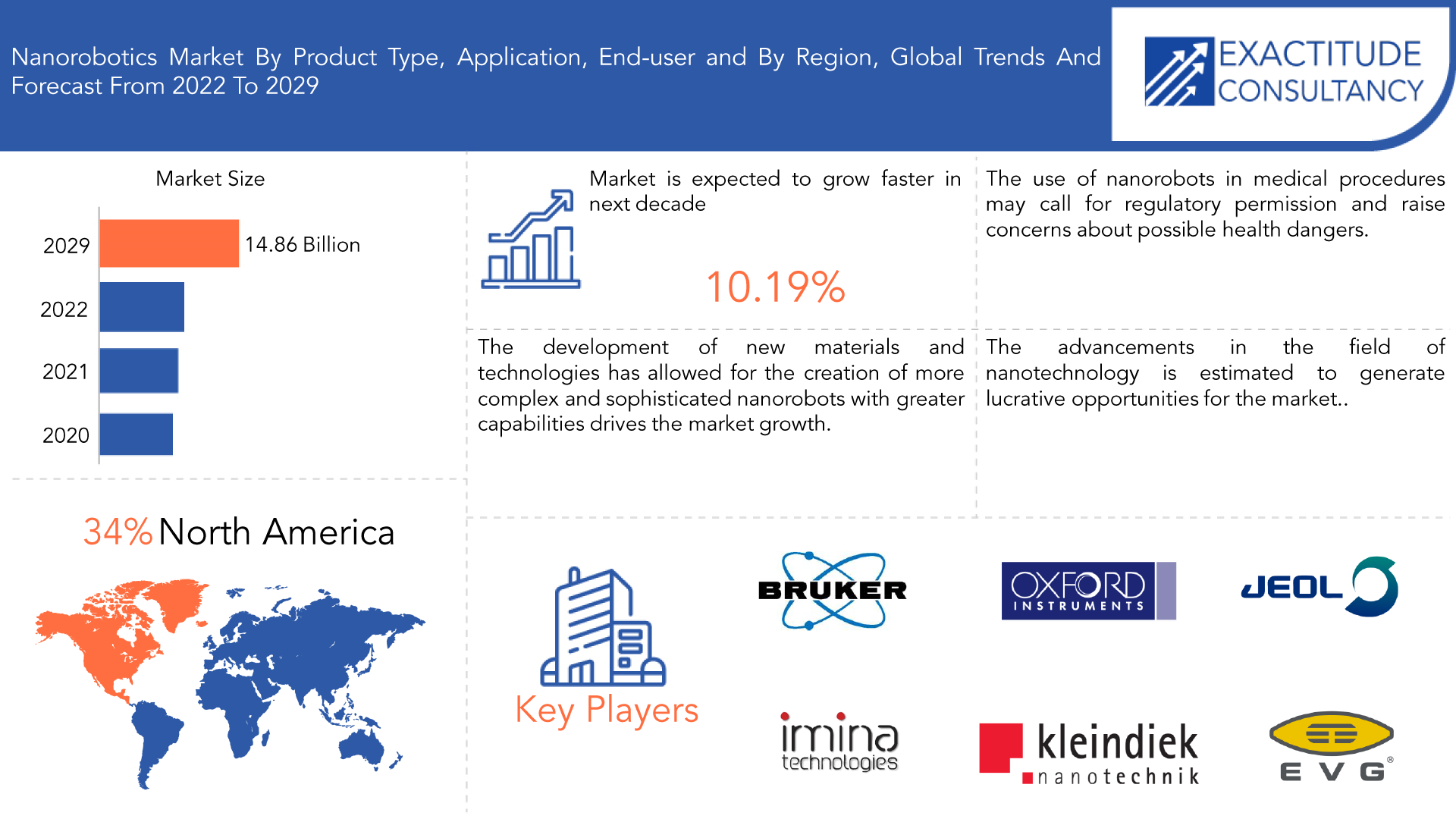
Si prevede che il mercato globale della nanorobotica raggiungerà i 14,86 miliardi di dollari entro il 2029, rispetto ai 6,15 miliardi di dollari del 2020, con un CAGR del 10,19% dal 2022 al 2029.
La nanorobotica è un campo della robotica che riguarda la progettazione, la costruzione e il funzionamento di robot su scala nanometrica, ovvero su scala di atomi e molecole. I nanorobot, noti anche come nanobot, sono macchine molto piccole in grado di svolgere un'ampia gamma di compiti, come la somministrazione di farmaci, la diagnosi di malattie e il monitoraggio ambientale.
Lo sviluppo della nanorobotica è stato guidato dai progressi nella scienza dei materiali, nella nanotecnologia e nell'ingegneria informatica. I ricercatori in questo campo si concentrano sulla creazione di nanorobot in grado di spostare, comunicare e manipolare oggetti su scala nanometrica. Uno dei settori più promettenti della nanorobotica è il campo della medicina. I nanorobot possono essere utilizzati per somministrare farmaci direttamente alle cellule tumorali o per riparare i tessuti danneggiati. Possono anche essere utilizzati per rilevare e diagnosticare malattie in una fase precoce.
La nanorobotica ha anche applicazioni nel monitoraggio ambientale e nello sviluppo di nuovi materiali. Ad esempio, i nanorobot potrebbero essere utilizzati per rilevare e rimuovere gli inquinanti dall'ambiente o per creare nuovi materiali con proprietà uniche.
| ATTRIBUTO | DETTAGLI |
| Periodo di studio | 2020-2029 |
| Anno base | 2022 |
| Anno stimato | 2022 |
| Anno previsto | 2022-2029 |
| Periodo storico | 2018-2020 |
| Unità | Valore (miliardi di USD) |
| Segmentazione | Per tipo di prodotto, per applicazione, per utente finale, per regione. |
| Per tipo di prodotto |
|
| Per applicazione |
|
| Da parte dell'utente finale |
|
| Per regione |
|
Le estese applicazioni della nanorobotica nel settore medico sono uno dei fattori principali che guidano la crescita del mercato. I nanorobot possono essere utilizzati come anticorpi o agenti antivirali in pazienti con sistemi immunitari indeboliti o malattie che non rispondono alle terapie mediche standard, secondo recenti ricerche. Di conseguenza, la terapia genica, la rilevazione del cancro e il trattamento coinvolgono tutti i nanorobot. Servono come dispositivi ausiliari per l'elaborazione di varie reazioni chimiche negli organi interessati e sono anche utilizzati in una varietà di operazioni odontoiatriche. I nanorobot sono anche utilizzati per monitorare e regolare i livelli di glucosio nel sangue nei pazienti diabetici. La riparazione dei tessuti danneggiati e la disostruzione delle arterie colpite dalla placca sono due ulteriori usi medicinali dei nanorobot che stanno rafforzando l'espansione del mercato della nanorobotica.
Il potenziale per un uso diffuso dei nanorobot nel settore medico è una delle principali opportunità. I nanorobot possono eseguire procedure chirurgiche con estrema precisione e somministrare farmaci a cellule specifiche, entrambe le cose possono migliorare i risultati per i pazienti e ridurre i costi sanitari. Il potenziale per la produzione di nuovi materiali e tecnologie, che consentirebbero lo sviluppo di nanorobot più avanzati ed efficaci, è un'ulteriore opportunità. Nuovi e creativi utilizzi per queste piccole macchine sono resi possibili da sviluppi in aree come i nanomateriali, i sensori e l'intelligenza artificiale.
Le questioni di regolamentazione e sicurezza sono tra le maggiori difficoltà. Ad esempio, l'uso di nanorobot nelle procedure mediche potrebbe richiedere un permesso normativo e sollevare preoccupazioni circa possibili pericoli per la salute. Affinché queste piccole macchine possano essere adottate con successo in una serie di settori, la loro sicurezza deve essere garantita. Gli elevati costi di produzione e le sfide legate alla miniaturizzazione sono alcune delle principali limitazioni affrontate dal settore.
Tuttavia, si prevede che il mercato globale dei sistemi nanorobotici trarrà beneficio dalla crescita dell'intelligenza di sciame e dall'introduzione di nanorobot controllati mentalmente. Inoltre, il mercato globale si espanderà a un ritmo più rapido a causa delle crescenti preoccupazioni relative alla salute, della maggiore accettazione di dispositivi medici automatizzati e dei miglioramenti nelle caratteristiche dei sistemi nanorobotici.
[caption id="allegato_16933" align="aligncenter" width="622"]
Frequently Asked Questions
• What is the worth of global nanorobotics market?
The global nanorobotics market is projected to reach USD 14.86 billion by 2029 from USD 6.15 billion in 2020, at a CAGR of 10.19 % from 2022 to 2029.
• What are the factors driving the adoption of nanorobotics market, globally?
The growth of government investment and support for nanorobotics is propelling their acceptance.
• What is the CAGR of nanorobotics market?
The global Nanorobotics market registered a CAGR of 10.19 % from 2022 to 2029.
• Which are the top companies to hold the market share in nanorobotics market?
Key players profiled in the report include Bruker, Oxford Instruments, Toronto Nano Instrumentation, JEOL Ltd., Imina Technologies, Klocke Nanotechnik, Thermo-Fisher Scientific Inc., Ginkgo Bioworks, Agilent Technologies, Park Systems, Kliendiek Nanotechnik, EV Group, Xidex, Synthace, Smaract, Nanonics Imaging, Novascan Technologies, Angstrom Advanced, Hummingbird Scientific, NT-MDT Spectrum Instruments, and WITec.
• Which is the largest regional market for nanorobotics market?
North America is anticipated to hold a significant market share over the forecast period. The significant increase in funding for nanorobotics from the National Science Foundation and the Defense Advanced Research Projects Agency (DARPA) is one of the causes fueling the region's growth (NSF). The market in the region is anticipated to benefit from the growing acceptance of nanotechnology and the high cost of healthcare.
Nanorobotics Market Segment Analysis
The global nanorobotics market is segmented by product type, application, end-user and region. Based on type, the nanorobotics market is classified into Nanomanipulator, bio-nanorobotics, magnetically guided, bacteria-based. Nano manipulators made up the segment with the biggest revenue share in 2020 due to their potential to be Nano positioned. Among the first nanorobotics devices to be made commercially available, Nano manipulators are used to manipulate molecules and atoms. Microchips, living cells, disease pathogens, carbon nanotubes, polymers, and metal particles can all have their properties assessed using Nano manipulators.
While magnetically guided nanorobotics provide high degrees of mobility in complex procedures and demand has been rising for numerous applications, the revenue for this category is anticipated to expand at a noticeably quick rate over the projected period. Nanorobotics is used to transport and deliver live cells to specific locations in the body, and rising adoption of nanorobotics in other related procedures is leading to increased focus on ensuring more accurate targeting, which is expected to further drive revenue growth of this segment in the future.
Based on application, the global nanorobotics market is segmented into nanomedicine, biomedical, mechanical, and others. Nanomedicine segment accounted for largest revenue share in 2021 due to commercialization of nanomedicine in the healthcare industry. Large-scale applications of nanomedicine include active implants, drug transport, in vitro diagnostics, in vivo imaging, biomaterial, and medication therapy. In numerous ongoing clinical trials for inflammatory, musculoskeletal, cardiovascular, and neurological illnesses, nanomedicine technology is being used. The use of nanomedicine is prevalent in many fields, including the creation of vaccines, drug delivery, wearable technology, diagnostic and imaging instruments, and antibacterial agents. Future advances in nanomedicine are predicted to result in better gadgets, more efficient medication development, and early detection of a variety of disorders.
[caption id="attachment_16937" align="aligncenter" width="1920"]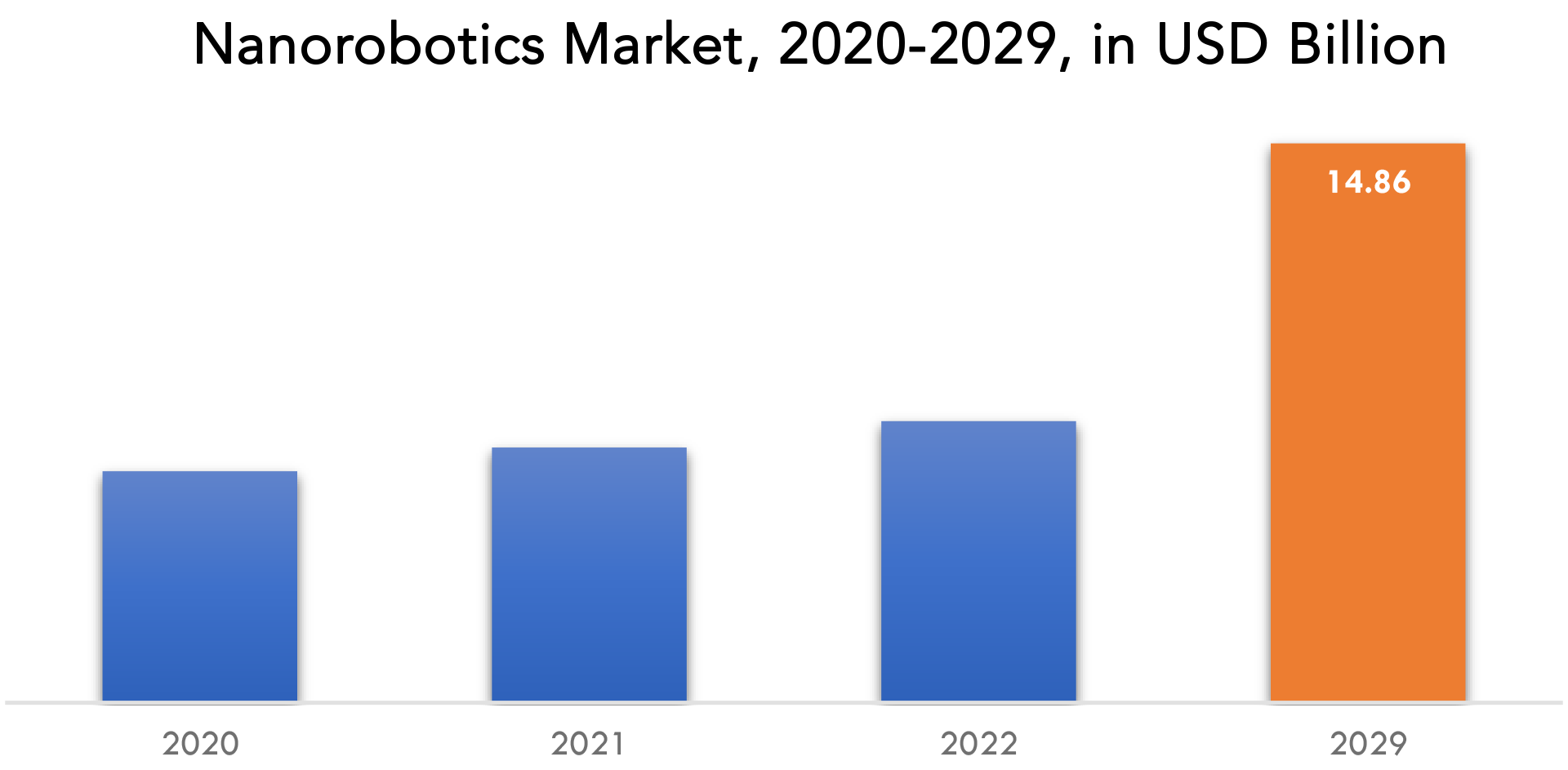
Nanorobotics Market Players
The global nanorobotics market key players include Bruker, Oxford Instruments, Toronto Nano Instrumentation, JEOL Ltd., Imina Technologies, Klocke Nanotechnik, Thermo-Fisher Scientific Inc., Ginkgo Bioworks, Agilent Technologies, Park Systems, Kliendiek Nanotechnik, EV Group, Xidex, Synthace, Smaract, Nanonics Imaging, Novascan Technologies, Angstrom Advanced, Hummingbird Scientific, NT-MDT Spectrum Instruments, and WITec. Recent Developments: Feb. 6, 2023: Ginkgo Bioworks, which is developing the top platform for cell programming and biosecurity, and Bioweg, a manufacturer of highly useful and adaptable bio-based materials, announced a partnership to improve the production of bacterial cellulose and to create novel cellulose variants with improved performance for a range of end markets. February 1, 2023: JEOL Ltd. announces the release of the "JIB-PS500i" FIB-SEM system. More resolution and precision are needed for evaluation techniques like morphological observation and elemental analysis due to the finer structure of new materials and the increasing complexity of operations. 11 February 2021: Tescan Orsay Holding launched TESCAN Nanomanipulator, a fully integrated solution that supports lift-out as well as micro- and nanoscale manipulation under both room temperature and cryo conditions, on TESCAN SEM and FIB-SEM instruments.
Who Should Buy? Or Key stakeholders
- Regional agencies and research organizations
- Healthcare companies
- Hospitals
- Equipment Suppliers/ Buyers
- Service Providers/ Buyers
- Industry Investors/Investment Bankers
- Education & Research Institutes
- Research Professionals
- Emerging Companies
- Manufacturers
- End –Users
Nanorobotics Market Regional Analysis
The nanorobotics market by region includes North America, Asia-Pacific (APAC), Europe, South America, and Middle East & Africa (MEA).
- North America: includes the US, Canada, Mexico
- Asia Pacific: includes China, Japan, South Korea, India, Australia, ASEAN and Rest of APAC
- Europe: includes UK, Germany, France, Italy, Spain, Russia, and Rest of Europe
- South America: includes Brazil, Argentina and Rest of South America
- Middle East & Africa: includes Turkey, UAE, Saudi Arabia, South Africa, and Rest of MEA
North America is predicted to maintain its dominance of the market. On the strength of favorable government policies that reduce the financial costs associated with purchasing nanorobotics equipment. The region's well-established healthcare system and the intense rivalry to improve patient satisfaction have led to a rapid uptake of nanorobotics. Also, a high concentration of nanorobotics producers in this area combined with the simplicity of distributing the technology is anticipated to favor the expansion of the nanorobotics market in the years to come.
Asia Pacific is expected to experience the fastest growth during the forecast period. The region's market for nanorobotics systems will expand as disposable income rises and the elderly population expands significantly. Also, a lot of businesses are investing considerably in this area in an effort to penetrate this expanding industry, which is expected to accelerate the market's expansion.
Europe accounted for a sizably considerable portion of global income in 2020 due to the region's growing elderly population and increased government spending to build more modern healthcare infrastructure and facilities. The promise of nanorobotics and its use in the treatment of specific diseases was also among the first recognized by Europe. The region's high levels of governmental and private investment are also anticipated to have a significant impact on the expansion of the European market.
[caption id="attachment_16938" align="aligncenter" width="1920"]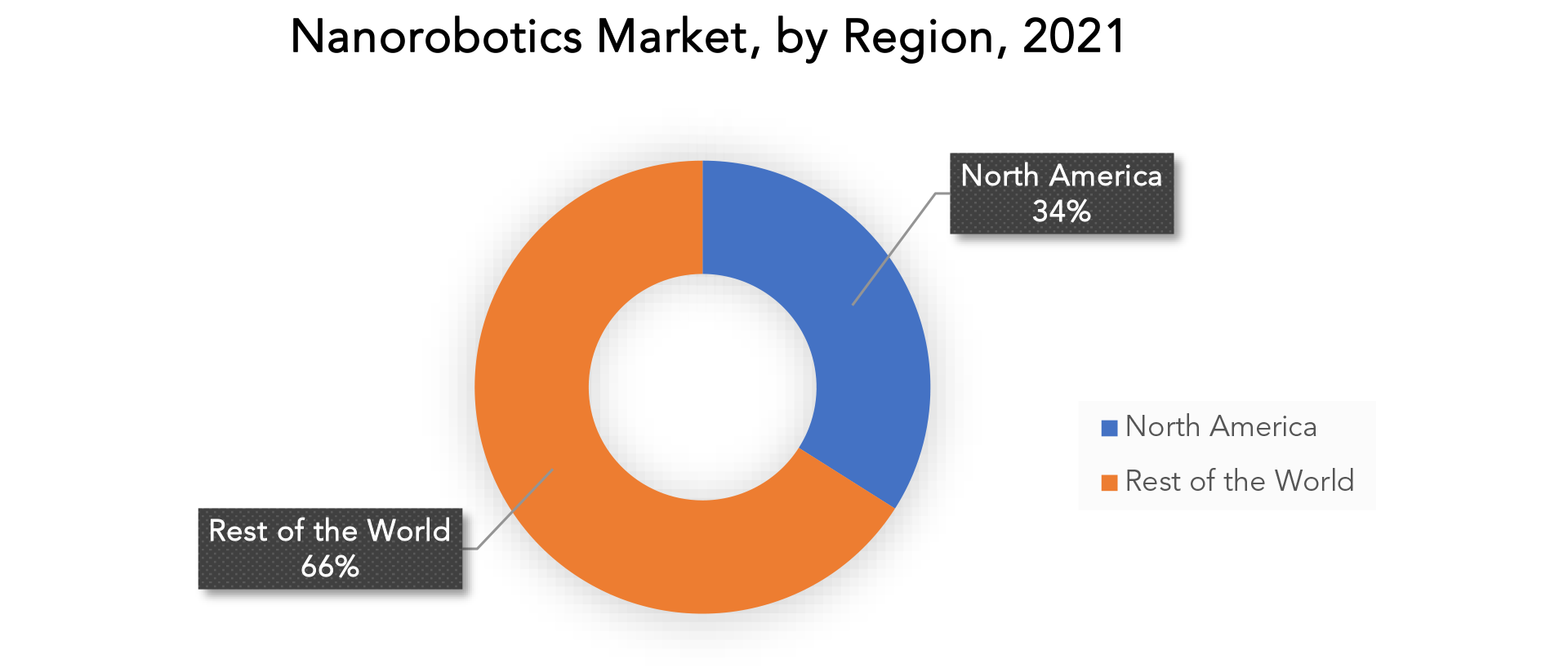
Key Market Segments: Nanorobotics Market
Nanorobotics Market By Product Type, 2020-2029, (USD Billion)- Nanomanipulator
- Electron Microscope
- Scanning Probe Microscope
- Bio-Nanorobotics
- Magnetically Guided
- Bacteria-Based
- Nanomedicine
- Biomedical
- Mechanical
- Others
- Hospitals
- Diagnostic Centers
- Research Laboratories
- Others
- North America
- Europe
- Asia Pacific
- South America
- Middle East And Africa
Important Countries In All Regions Are Covered.
Exactitude Consultancy Services Key Objectives:
- Increasing sales and market share
- Developing new technology
- Improving profitability
- Entering new markets
- Enhancing brand reputation
Key Question Answered
- What is the expected growth rate of the nanorobotics market over the next 7 years?
- Who are the major players in the nanorobotics market and what is their market share?
- What are the end-user industries driving demand for market and what is their outlook?
- What are the opportunities for growth in emerging markets such as Asia-Pacific, Middle East, and Africa?
- How is the economic environment affecting the nanorobotics market, including factors such as interest rates, inflation, and exchange rates?
- What is the expected impact of government policies and regulations on the nanorobotics market?
- What is the current and forecasted size and growth rate of the global nanorobotics market?
- What are the key drivers of growth in the nanorobotics market?
- What are the distribution channels and supply chain dynamics in the nanorobotics market?
- What are the technological advancements and innovations in the nanorobotics market and their impact on product development and growth?
- What are the regulatory considerations and their impact on the market?
- What are the challenges faced by players in the nanorobotics market and how are they addressing these challenges?
- What are the opportunities for growth and expansion in the nanorobotics market?
- What are the service offerings and specifications of leading players in the market?
- INTRODUZIONE
- DEFINIZIONE DI MERCATO
- SEGMENTAZIONE DEL MERCATO
- TEMPI DI RICERCA
- ASSUNZIONI E LIMITAZIONI
- METODOLOGIA DI RICERCA
- ESTRAZIONE DATI
- RICERCA SECONDARIA
- RICERCA PRIMARIA
- PARERI DEGLI ESPERTI IN MATERIA
- CONTROLLI DI QUALITÀ
- RECENSIONE FINALE
- TRIANGOLAZIONE DEI DATI
- APPROCCIO DAL BASSO VERSO L'ALTO
- APPROCCIO TOP-DOWN
- FLUSSO DI RICERCA
- FONTI DEI DATI
- ESTRAZIONE DATI
- SINTESI
- PANORAMICA DEL MERCATO
- PROSPETTIVE DEL MERCATO GLOBALE DELLA NANOROBOTICA
- FATTORI DI MERCATO
- LIMITAZIONI DI MERCATO
- OPPORTUNITÀ DI MERCATO
- IMPATTO DEL COVID-19 SUL MERCATO DELLA NANOROBOTICA
- MODELLO DELLE CINQUE FORZE DI PORTER
- MINACCIA DAI NUOVI ENTRANSI
- MINACCIA DA SOSTITUTI
- POTERE CONTRATTUALE DEI FORNITORI
- POTERE CONTRATTUALE DEI CLIENTI
- GRADO DI COMPETIZIONE
- INDUSTRY VALUE CHAIN ANALYSIS
- PROSPETTIVE DEL MERCATO GLOBALE DELLA NANOROBOTICA
- GLOBAL NANOROBOTICS MARKET BY PRODUCT TYPE, 2020-2029, (USD BILLION)
- NANOMANIPULATOR
- ELECTRON MICROSCOPE
- SCANNING PROBE MICROSCOPE
- BIO-NANOROBOTICS
- MAGNETICALLY GUIDED
- BACTERIA-BASED
- NANOMANIPULATOR
- GLOBAL NANOROBOTICS MARKET BY APPLICATION, 2020-2029, (USD BILLION)
- NANOMEDICINE
- BIOMEDICAL
- MECHANICAL
- OTHERS
- GLOBAL NANOROBOTICS MARKET BY END-USER, 2020-2029, (USD BILLION)
- HOSPITALS
- DIAGNOSTIC CENTERS
- RESEARCH LABORATORIES
- OTHERS
- GLOBAL NANOROBOTICS MARKET BY REGION, 2020-2029, (USD BILLION)
- NORTH AMERICA
- US
- CANADA
- MEXICO
- SOUTH AMERICA
- BRAZIL
- ARGENTINA
- COLOMBIA
- REST OF SOUTH AMERICA
- EUROPE
- GERMANY
- UK
- FRANCE
- ITALY
- SPAIN
- RUSSIA
- REST OF EUROPE
- ASIA PACIFIC
- INDIA
- CHINA
- JAPAN
- SOUTH KOREA
- AUSTRALIA
- SOUTH-EAST ASIA
- REST OF ASIA PACIFIC
- MIDDLE EAST AND AFRICA
- UAE
- SAUDI ARABIA
- SOUTH AFRICA
- REST OF MIDDLE EAST AND AFRICA
- NORTH AMERICA
- COMPANY PROFILES* (BUSINESS OVERVIEW, COMPANY SNAPSHOT, PRODUCT OFFERED, RECENT DEVELOPMENTS)
9.1. BRUKER
9.2. OXFORD INSTRUMENTS
9.3. TORONTO NANO INSTRUMENTATION
9.4. JEOL LTD.
9.5. IMINA TECHNOLOGIES
9.6. KLOCKE NANOTECHNIK
9.7. THERMO-FISHER SCIENTIFIC INC.
9.8. GINKGO BIOWORKS
9.9. AGILENT TECHNOLOGIES
9.10. PARK SYSTEMS
9.11. KLIENDIEK NANOTECHNIK
9.12. EV GROUP
9.13. XIDEX
9.14. SYNTHACE
9.15. SMARACT
9.16. NANONICS IMAGING
9.17. NOVASCAN TECHNOLOGIES
9.18. HUMMINGBIRD SCIENTIFIC
9.19. NT-MDT SPECTRUM INSTRUMENTS
9.20. WITEC.*THE COMPANY LIST IS INDICATIVE
LIST OF TABLES
TABLE 1 GLOBAL NANOROBOTICS MARKET BY PRODUCT TYPE (USD BILLION) 2020-2029
TABLE 2 GLOBAL NANOROBOTICS MARKET BY APPLICATION (USD BILLION) 2020-2029
TABLE 3 GLOBAL NANOROBOTICS MARKET BY END-USER (USD BILLION) 2020-2029
TABLE 4 GLOBAL NANOROBOTICS MARKET BY REGION (USD BILLION) 2020-2029
TABLE 5 NORTH AMERICA NANOROBOTICS MARKET BY PRODUCT TYPE (USD BILLION) 2020-2029
TABLE 6 NORTH AMERICA NANOROBOTICS MARKET BY APPLICATION (USD BILLION) 2020-2029
TABLE 7 NORTH AMERICA NANOROBOTICS MARKET BY END-USER (USD BILLION) 2020-2029
TABLE 8 NORTH AMERICA NANOROBOTICS MARKET BY COUNTRY (USD BILLION) 2020-2029
TABLE 9 US NANOROBOTICS MARKET BY PRODUCT TYPE (USD BILLION) 2020-2029
TABLE 10 US NANOROBOTICS MARKET BY APPLICATION (USD BILLION) 2020-2029
TABLE 11 US NANOROBOTICS MARKET BY END-USER (USD BILLION) 2020-2029
TABLE 12 US NANOROBOTICS MARKET BY REGION (USD BILLION) 2020-2029
TABLE 13 CANADA NANOROBOTICS MARKET BY PRODUCT TYPE (USD BILLION) 2020-2029
TABLE 14 CANADA NANOROBOTICS MARKET BY APPLICATION (USD BILLION) 2020-2029
TABLE 15 CANADA NANOROBOTICS MARKET BY END-USER (USD BILLION) 2020-2029
TABLE 16 CANADA NANOROBOTICS MARKET BY REGION (USD BILLION) 2020-2029
TABLE 17 MEXICO NANOROBOTICS MARKET BY PRODUCT TYPE (USD BILLION) 2020-2029
TABLE 18 MEXICO NANOROBOTICS MARKET BY APPLICATION (USD BILLION) 2020-2029
TABLE 19 MEXICO NANOROBOTICS MARKET BY END-USER (USD BILLION) 2020-2029
TABLE 20 MEXICO NANOROBOTICS MARKET BY REGION (USD BILLION) 2020-2029
TABLE 21 SOUTH AMERICA NANOROBOTICS MARKET BY PRODUCT TYPE (USD BILLION) 2020-2029
TABLE 22 SOUTH AMERICA NANOROBOTICS MARKET BY APPLICATION (USD BILLION) 2020-2029
TABLE 23 SOUTH AMERICA NANOROBOTICS MARKET BY END-USER (USD BILLION) 2020-2029
TABLE 24 SOUTH AMERICA NANOROBOTICS MARKET BY COUNTRY (USD BILLION) 2020-2029
TABLE 25 BRAZIL NANOROBOTICS MARKET BY PRODUCT TYPE (USD BILLION) 2020-2029
TABLE 26 BRAZIL NANOROBOTICS MARKET BY APPLICATION (USD BILLION) 2020-2029
TABLE 27 BRAZIL NANOROBOTICS MARKET BY END-USER (USD BILLION) 2020-2029
TABLE 28 BRAZIL NANOROBOTICS MARKET BY REGION (USD BILLION) 2020-2029
TABLE 29 ARGENTINA NANOROBOTICS MARKET BY PRODUCT TYPE (USD BILLION) 2020-2029
TABLE 30 ARGENTINA NANOROBOTICS MARKET BY APPLICATION (USD BILLION) 2020-2029
TABLE 31 ARGENTINA NANOROBOTICS MARKET BY END-USER (USD BILLION) 2020-2029
TABLE 32 ARGENTINA NANOROBOTICS MARKET BY REGION (USD BILLION) 2020-2029
TABLE 33 COLOMBIA NANOROBOTICS MARKET BY PRODUCT TYPE (USD BILLION) 2020-2029
TABLE 34 COLOMBIA NANOROBOTICS MARKET BY APPLICATION (USD BILLION) 2020-2029
TABLE 35 COLOMBIA NANOROBOTICS MARKET BY END-USER (USD BILLION) 2020-2029
TABLE 36 COLOMBIA NANOROBOTICS MARKET BY REGION (USD BILLION) 2020-2029
TABLE 37 REST OF SOUTH AMERICA NANOROBOTICS MARKET BY PRODUCT TYPE (USD BILLION) 2020-2029
TABLE 38 REST OF SOUTH AMERICA NANOROBOTICS MARKET BY APPLICATION (USD BILLION) 2020-2029
TABLE 39 REST OF SOUTH AMERICA NANOROBOTICS MARKET BY END-USER (USD BILLION) 2020-2029
TABLE 40 REST OF SOUTH AMERICA NANOROBOTICS MARKET BY REGION (USD BILLION) 2020-2029
TABLE 41 ASIA-PACIFIC NANOROBOTICS MARKET BY PRODUCT TYPE (USD BILLION) 2020-2029
TABLE 42 ASIA-PACIFIC NANOROBOTICS MARKET BY APPLICATION (USD BILLION) 2020-2029
TABLE 43 ASIA-PACIFIC NANOROBOTICS MARKET BY END-USER (USD BILLION) 2020-2029
TABLE 44 ASIA-PACIFIC NANOROBOTICS MARKET BY COUNTRY (USD BILLION) 2020-2029
TABLE 45 INDIA NANOROBOTICS MARKET BY PRODUCT TYPE (USD BILLION) 2020-2029
TABLE 46 INDIA NANOROBOTICS MARKET BY APPLICATION (USD BILLION) 2020-2029
TABLE 47 INDIA NANOROBOTICS MARKET BY END-USER (USD BILLION) 2020-2029
TABLE 48 INDIA NANOROBOTICS MARKET BY REGION (USD BILLION) 2020-2029
TABLE 49 CHINA NANOROBOTICS MARKET BY PRODUCT TYPE (USD BILLION) 2020-2029
TABLE 50 CHINA NANOROBOTICS MARKET BY APPLICATION (USD BILLION) 2020-2029
TABLE 51 CHINA NANOROBOTICS MARKET BY END-USER (USD BILLION) 2020-2029
TABLE 52 CHINA NANOROBOTICS MARKET BY REGION (USD BILLION) 2020-2029
TABLE 53 JAPAN NANOROBOTICS MARKET BY PRODUCT TYPE (USD BILLION) 2020-2029
TABLE 54 JAPAN NANOROBOTICS MARKET BY APPLICATION (USD BILLION) 2020-2029
TABLE 55 JAPAN NANOROBOTICS MARKET BY END-USER (USD BILLION) 2020-2029
TABLE 56 JAPAN NANOROBOTICS MARKET BY REGION (USD BILLION) 2020-2029
TABLE 57 SOUTH KOREA NANOROBOTICS MARKET BY PRODUCT TYPE (USD BILLION) 2020-2029
TABLE 58 SOUTH KOREA NANOROBOTICS MARKET BY APPLICATION (USD BILLION) 2020-2029
TABLE 59 SOUTH KOREA NANOROBOTICS MARKET BY END-USER (USD BILLION) 2020-2029
TABLE 60 SOUTH KOREA NANOROBOTICS MARKET BY REGION (USD BILLION) 2020-2029
TABLE 61 AUSTRALIA NANOROBOTICS MARKET BY PRODUCT TYPE (USD BILLION) 2020-2029
TABLE 62 AUSTRALIA NANOROBOTICS MARKET BY APPLICATION (USD BILLION) 2020-2029
TABLE 63 AUSTRALIA NANOROBOTICS MARKET BY END-USER (USD BILLION) 2020-2029
TABLE 64 AUSTRALIA NANOROBOTICS MARKET BY REGION (USD BILLION) 2020-2029
TABLE 65 SOUTH-EAST ASIA NANOROBOTICS MARKET BY PRODUCT TYPE (USD BILLION) 2020-2029
TABLE 66 SOUTH-EAST ASIA NANOROBOTICS MARKET BY APPLICATION (USD BILLION) 2020-2029
TABLE 67 SOUTH-EAST ASIA NANOROBOTICS MARKET BY END-USER (USD BILLION) 2020-2029
TABLE 68 SOUTH-EAST ASIA NANOROBOTICS MARKET BY REGION (USD BILLION) 2020-2029
TABLE 69 REST OF ASIA PACIFIC NANOROBOTICS MARKET BY PRODUCT TYPE (USD BILLION) 2020-2029
TABLE 70 REST OF ASIA PACIFIC NANOROBOTICS MARKET BY APPLICATION (USD BILLION) 2020-2029
TABLE 71 REST OF ASIA PACIFIC NANOROBOTICS MARKET BY END-USER (USD BILLION) 2020-2029
TABLE 72 REST OF ASIA PACIFIC NANOROBOTICS MARKET BY REGION (USD BILLION) 2020-2029
TABLE 73 EUROPE NANOROBOTICS MARKET BY PRODUCT TYPE (USD BILLION) 2020-2029
TABLE 74 EUROPE NANOROBOTICS MARKET BY APPLICATION (USD BILLION) 2020-2029
TABLE 75 EUROPE NANOROBOTICS MARKET BY END-USER (USD BILLION) 2020-2029
TABLE 76 EUROPE NANOROBOTICS MARKET BY COUNTRY (USD BILLION) 2020-2029
TABLE 77 GERMANY NANOROBOTICS MARKET BY PRODUCT TYPE (USD BILLION) 2020-2029
TABLE 78 GERMANY NANOROBOTICS MARKET BY APPLICATION (USD BILLION) 2020-2029
TABLE 79 GERMANY NANOROBOTICS MARKET BY END-USER (USD BILLION) 2020-2029
TABLE 80 GERMANY NANOROBOTICS MARKET BY REGION (USD BILLION) 2020-2029
TABLE 81 UK NANOROBOTICS MARKET BY PRODUCT TYPE (USD BILLION) 2020-2029
TABLE 82 UK NANOROBOTICS MARKET BY APPLICATION (USD BILLION) 2020-2029
TABLE 83 UK NANOROBOTICS MARKET BY END-USER (USD BILLION) 2020-2029
TABLE 84 UK NANOROBOTICS MARKET BY REGION (USD BILLION) 2020-2029
TABLE 85 FRANCE NANOROBOTICS MARKET BY PRODUCT TYPE (USD BILLION) 2020-2029
TABLE 86 FRANCE NANOROBOTICS MARKET BY APPLICATION (USD BILLION) 2020-2029
TABLE 87 FRANCE NANOROBOTICS MARKET BY END-USER (USD BILLION) 2020-2029
TABLE 88 FRANCE NANOROBOTICS MARKET BY REGION (USD BILLION) 2020-2029
TABLE 89 ITALY NANOROBOTICS MARKET BY PRODUCT TYPE (USD BILLION) 2020-2029
TABLE 90 ITALY NANOROBOTICS MARKET BY APPLICATION (USD BILLION) 2020-2029
TABLE 91 ITALY NANOROBOTICS MARKET BY END-USER (USD BILLION) 2020-2029
TABLE 92 ITALY NANOROBOTICS MARKET BY REGION (USD BILLION) 2020-2029
TABLE 93 SPAIN NANOROBOTICS MARKET BY PRODUCT TYPE (USD BILLION) 2020-2029
TABLE 94 SPAIN NANOROBOTICS MARKET BY APPLICATION (USD BILLION) 2020-2029
TABLE 95 SPAIN NANOROBOTICS MARKET BY END-USER (USD BILLION) 2020-2029
TABLE 96 SPAIN NANOROBOTICS MARKET BY REGION (USD BILLION) 2020-2029
TABLE 97 RUSSIA NANOROBOTICS MARKET BY PRODUCT TYPE (USD BILLION) 2020-2029
TABLE 98 RUSSIA NANOROBOTICS MARKET BY APPLICATION (USD BILLION) 2020-2029
TABLE 99 RUSSIA NANOROBOTICS MARKET BY END-USER (USD BILLION) 2020-2029
TABLE 100 RUSSIA NANOROBOTICS MARKET BY REGION (USD BILLION) 2020-2029
TABLE 101 REST OF EUROPE NANOROBOTICS MARKET BY PRODUCT TYPE (USD BILLION) 2020-2029
TABLE 102 REST OF EUROPE NANOROBOTICS MARKET BY APPLICATION (USD BILLION) 2020-2029
TABLE 103 REST OF EUROPE NANOROBOTICS MARKET BY END-USER (USD BILLION) 2020-2029
TABLE 104 REST OF EUROPE NANOROBOTICS MARKET BY REGION (USD BILLION) 2020-2029
TABLE 105 MIDDLE EAST AND AFRICA NANOROBOTICS MARKET BY PRODUCT TYPE (USD BILLION) 2020-2029
TABLE 106 MIDDLE EAST AND AFRICA NANOROBOTICS MARKET BY APPLICATION (USD BILLION) 2020-2029
TABLE 107 MIDDLE EAST AND AFRICA NANOROBOTICS MARKET BY END-USER (USD BILLION) 2020-2029
TABLE 108 MIDDLE EAST AND AFRICA NANOROBOTICS MARKET BY COUNTRY (USD BILLION) 2020-2029
TABLE 109 UAE NANOROBOTICS MARKET BY PRODUCT TYPE (USD BILLION) 2020-2029
TABLE 110 UAE NANOROBOTICS MARKET BY APPLICATION (USD BILLION) 2020-2029
TABLE 111 UAE NANOROBOTICS MARKET BY END-USER (USD BILLION) 2020-2029
TABLE 112 UAE NANOROBOTICS MARKET BY REGION (USD BILLION) 2020-2029
TABLE 113 SAUDI ARABIA NANOROBOTICS MARKET BY PRODUCT TYPE (USD BILLION) 2020-2029
TABLE 114 SAUDI ARABIA NANOROBOTICS MARKET BY APPLICATION (USD BILLION) 2020-2029
TABLE 115 SAUDI ARABIA NANOROBOTICS MARKET BY END-USER (USD BILLION) 2020-2029
TABLE 116 SAUDI ARABIA NANOROBOTICS MARKET BY REGION (USD BILLION) 2020-2029
TABLE 117 SOUTH AFRICA NANOROBOTICS MARKET BY PRODUCT TYPE (USD BILLION) 2020-2029
TABLE 118 SOUTH AFRICA NANOROBOTICS MARKET BY APPLICATION (USD BILLION) 2020-2029
TABLE 119 SOUTH AFRICA NANOROBOTICS MARKET BY END-USER (USD BILLION) 2020-2029
TABLE 120 SOUTH AFRICA NANOROBOTICS MARKET BY REGION (USD BILLION) 2020-2029
TABLE 121 REST OF MIDDLE EAST AND AFRICA NANOROBOTICS MARKET BY PRODUCT TYPE (USD BILLION) 2020-2029
TABLE 122 REST OF MIDDLE EAST AND AFRICA NANOROBOTICS MARKET BY APPLICATION (USD BILLION) 2020-2029
TABLE 123 REST OF MIDDLE EAST AND AFRICA NANOROBOTICS MARKET BY END-USER (USD BILLION) 2020-2029
TABLE 124 REST OF MIDDLE EAST AND AFRICA NANOROBOTICS MARKET BY REGION (USD BILLION) 2020-2029
LIST OF FIGURES
FIGURE 1 MARKET DYNAMICS
FIGURE 2 MARKET SEGMENTATION
FIGURE 3 REPORT TIMELINES: YEARS CONSIDERED
FIGURE 4 DATA TRIANGULATION
FIGURE 5 BOTTOM-UP APPROACH
FIGURE 6 TOP-DOWN APPROACH
FIGURE 7 RESEARCH FLOW
FIGURE 8 GLOBAL NANOROBOTICS MARKET BY PRODUCT TYPE (USD BILLION) 2020-2029
FIGURE 9 GLOBAL NANOROBOTICS MARKET BY APPLICATION (USD BILLION) 2020-2029
FIGURE 10 GLOBAL NANOROBOTICS MARKET BY END-USER (USD BILLION) 2020-2029
FIGURE 11 GLOBAL NANOROBOTICS MARKET BY REGION (USD BILLION) 2020-2029
FIGURE 12 PORTER’S FIVE FORCES MODEL
FIGURE 13 GLOBAL NANOROBOTICS MARKET BY PRODUCT TYPE (USD BILLION) 2021
FIGURE 14 GLOBAL NANOROBOTICS MARKET BY APPLICATION (USD BILLION) 2021
FIGURE 15 GLOBAL NANOROBOTICS MARKET BY END-USER (USD BILLION) 2021
FIGURE 16 GLOBAL NANOROBOTICS MARKET BY REGION (USD BILLION) 2021
FIGURE 17 NORTH AMERICA NANOROBOTICS MARKET SNAPSHOT
FIGURE 18 EUROPE NANOROBOTICS MARKET SNAPSHOT
FIGURE 19 SOUTH AMERICA NANOROBOTICS MARKET SNAPSHOT
FIGURE 20 ASIA PACIFIC NANOROBOTICS MARKET SNAPSHOT
FIGURE 21 MIDDLE EAST ASIA AND AFRICA NANOROBOTICS MARKET SNAPSHOT
FIGURE 22 MARKET SHARE ANALYSIS
FIGURE 23 BRUKER: COMPANY SNAPSHOT
FIGURE 24 OXFORD INSTRUMENTS: COMPANY SNAPSHOT
FIGURE 25 TORONTO NANO INSTRUMENTATION: COMPANY SNAPSHOT
FIGURE 26 JEOL LTD.: COMPANY SNAPSHOT
FIGURE 27 IMINA TECHNOLOGIES: COMPANY SNAPSHOT
FIGURE 28 KLOCKE NANOTECHNIK: COMPANY SNAPSHOT
FIGURE 29 THERMO-FISHER SCIENTIFIC INC.: COMPANY SNAPSHOT
FIGURE 30 GINKGO BIOWORKS: COMPANY SNAPSHOT
FIGURE 31 AGILENT TECHNOLOGIES: COMPANY SNAPSHOT
FIGURE 32 PARK SYSTEMS: COMPANY SNAPSHOT
FIGURE 33 KLIENDIEK NANOTECHNIK: COMPANY SNAPSHOT
FIGURE 34 EV GROUP: COMPANY SNAPSHOT
FIGURE 35 XIDEX: COMPANY SNAPSHOT
FIGURE 36 SYNTHACE: COMPANY SNAPSHOT
FIGURE 37 SMARACT: COMPANY SNAPSHOT
FIGURE 38 NANONICS IMAGING: COMPANY SNAPSHOT
FIGURE 39 NOVASCAN TECHNOLOGIES: COMPANY SNAPSHOT
FIGURE 40 ANGSTROM ADVANCED: COMPANY SNAPSHOT
FIGURE 41 HUMMINGBIRD SCIENTIFIC: COMPANY SNAPSHOT
FIGURE 42 NT-MDT SPECTRUM INSTRUMENTS: COMPANY SNAPSHOT
FIGURE 43 WITEC.: COMPANY SNAPSHOT
DOWNLOAD FREE SAMPLE REPORT
License Type
SPEAK WITH OUR ANALYST
Want to know more about the report or any specific requirement?
WANT TO CUSTOMIZE THE REPORT?
Our Clients Speak
We asked them to research ‘ Equipment market’ all over the world, and their whole arrangement was helpful to us. thehealthanalytics.com insightful analysis and reports contributed to our current analysis and in creating a future strategy. Besides, the te
Yosuke Mitsui
Senior Associate Construction Equipment Sales & Marketing
We asked them to research ‘Equipment market’ all over the world, and their whole arrangement was helpful to us. thehealthanalytics.com insightful analysis and reports contributed to our current analysis and in creating a future strategy. Besides, the te