

Base Year Value ()
x.x %
x.x %
CAGR ()
x.x %
x.x %
Forecast Year Value ()
x.x %
x.x %
Historical Data Period
Largest Region
Forecast Period
Mercato della telepresenza (videoconferenza) per componente (hardware, software, servizi) per distribuzione (on-premise, cloud) per applicazione (consumatore, azienda), per tipo di sistema (telepresenza statica, sistemi di telepresenza remota) per settore (settore aziendale, settore sanitario, settore commerciale) e regione, tendenze globali e previsioni dal 2022 al 2029
Instant access to hundreds of data points and trends
- Market estimates from 2014-2029
- Competitive analysis, industry segmentation, financial benchmarks
- Incorporates SWOT, Porter's Five Forces and risk management frameworks
- PDF report or online database with Word, Excel and PowerPoint export options
- 100% money back guarantee
Panoramica del mercato della telepresenza (videoconferenza)
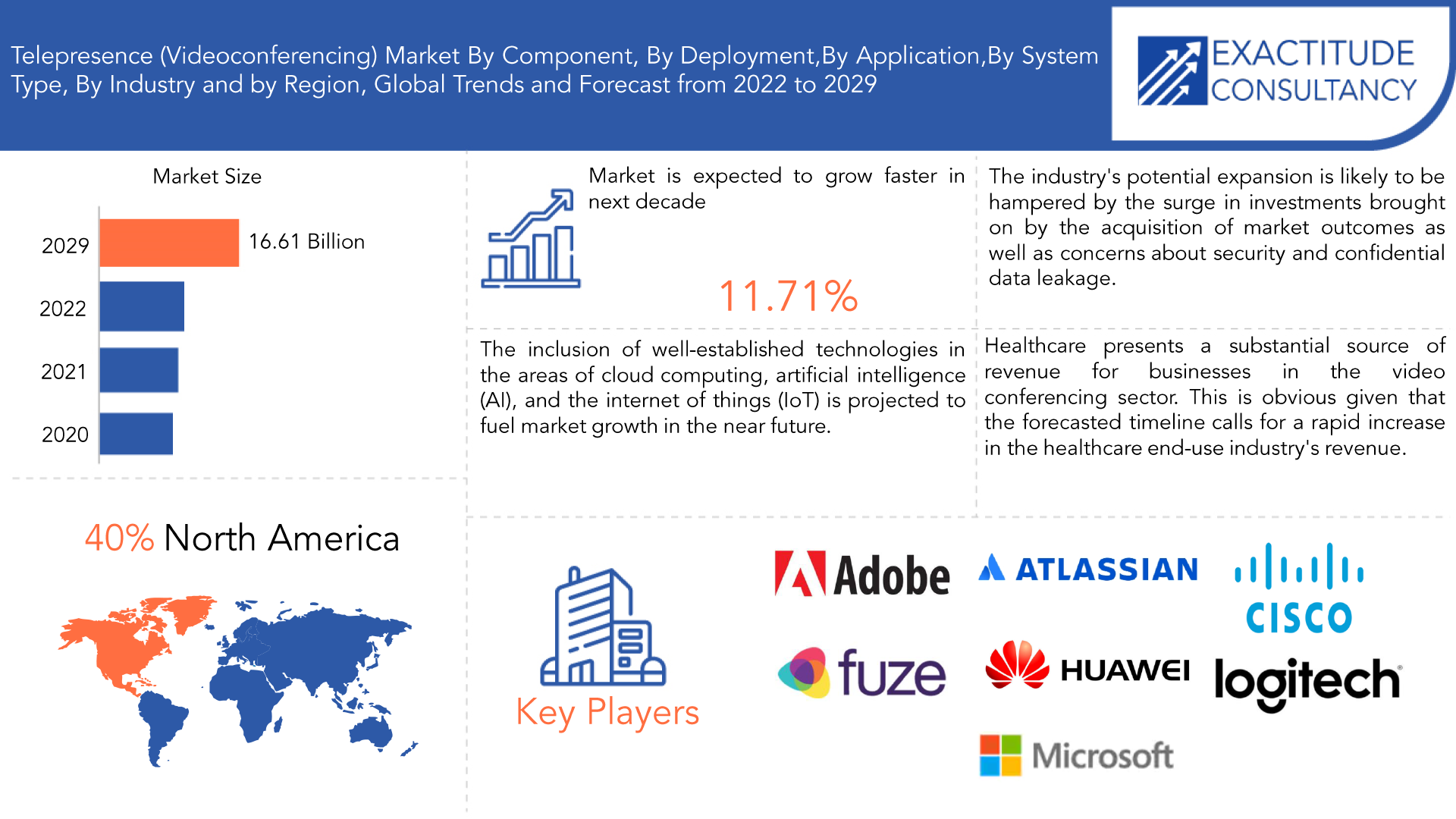
Si prevede che il mercato della telepresenza (videoconferenza) crescerà a un CAGR dell'11,71% dal 2022 al 2029. Si prevede che raggiungerà oltre 16,61 miliardi di USD entro il 2029 dai 4,83 miliardi di USD del 2021.
Un gruppo di tecnologie note collettivamente come telepresenza consente a una persona di apparire o sembrare presente tramite telerobotica in un luogo diverso dalla sua posizione effettiva. Affinché la telepresenza dia agli utenti l'impressione di trovarsi in un altro luogo, determinati stimoli devono interagire con i loro sensi. Inoltre, agli utenti potrebbe essere dato il potere di influenzare la posizione remota. La posizione, i movimenti, le azioni, la voce, ecc. dell'utente possono essere rilevati in questo scenario per trasmettere e riprodurre nel luogo remoto per ottenere questo effetto. Le informazioni possono quindi essere trasferite tra l'utente e la posizione remota in entrambe le direzioni.
Con l'aiuto della tecnologia di videoconferenza, le persone possono condurre conferenze faccia a faccia senza doversi preoccupare di recarsi nello stesso luogo. Poiché riduce i tempi, i costi e i fastidi legati ai viaggi di lavoro, la tecnologia è utile per coloro che conducono affari in altre città o paesi. Riunioni di routine, trattative di transazioni commerciali e colloqui con i candidati sono alcune delle cose che possono essere fatte tramite videoconferenza. La videoconferenza aumenta la produzione, riduce i tempi di attesa, taglia i costi di viaggio e migliora il lavoro di squadra. Senza la costante necessità di viaggiare per una conversazione faccia a faccia, la videoconferenza consente la capacità di incoraggiare tutti questi vantaggi.
| ATTRIBUTO | DETTAGLI |
| Periodo di studio | 2020-2029 |
| Anno base | 2021 |
| Anno stimato | 2022 |
| Anno previsto | 2022-2029 |
| Periodo storico | 2018-2020 |
| Unità | Valore (miliardi di USD) |
| Segmentazione | Per componente, per distribuzione, per applicazione, per tipo di sistema, per settore, per regione |
| Per componente |
|
| Per distribuzione |
|
| Per applicazione |
|
| Per tipo di sistema |
|
| Per settore |
|
| Per regione |
|
Direct video connections between offices of multinational corporations can enhance teamwork. Using video conferencing, training sessions are conducted, allowing the instructor to virtually instruct a distance learning class from anywhere. The educational institutions also use video conferencing to provide distant students access to a normal classroom environment. The COVID 19 lockout has increased the need for video conferencing among multinational corporations (MNCs). The top video conferencing apps are Google Meet, Zoom, Blue Jeans, Skype, Signal, and Jitsi.
The inclusion of well-established technologies in the areas of cloud computing, artificial intelligence (AI), and the internet of things (IoT) is projected to fuel market growth in the near future. Also, the growing need for collaboration tools powered by cloud technology, virtual administration, and video communication are significant variables impacting market expansion favorably. In an effort to make decisions more quickly and effectively and avoid the high costs of travel, businesses and organizations are adopting video collaboration solutions.
The rising urbanization that is causing the use of video conferencing is fueling the market growth. There are numerous connectivity options for business video conferencing, depending on the bandwidth. With more bandwidth, the video quality gets better. VC programmers can utilize the entire amount of IP bandwidth, even if the majority of conventional video conferencing systems only provide up to 2 Mbps. Key providers' attempts to develop video conferencing solutions will aid in market expansion.
The use of 5G, which uses Voice over Internet Protocol (VoIP), will lead to profitable potential in the market expansion. 5G will boost network speed by 20 times over the present 4G technology. Infrared holographic conferencing and Ultra HD video calling are just two of the telepresence innovations that 5G is now demonstrating. Moreover, 360-Degree video calling has begun.
Healthcare presents a substantial source of revenue for businesses in the video conferencing sector. This is obvious given that the forecasted timeline calls for a rapid increase in the healthcare end-use industry's revenue. Using video conferencing for post-discharge programs by clinics is the next step for the industry. A key factor that is anticipated to drive the global expansion of the video conferencing market is the ability to conduct contractual business in a global context. In order to take advantage of local infrastructure, expertise availability, and cost reductions in material purchases, firms from a variety of industries aim to operate from multiple branches in different regions of the world.
La potenziale espansione del settore sarà probabilmente ostacolata dall'impennata degli investimenti causata dall'acquisizione di risultati di mercato, nonché dalle preoccupazioni sulla sicurezza e sulla fuga di dati riservati. Si prevede che la mancanza di esperienza tra ingegneri e sviluppatori software, insieme alle capacità limitanti dei sistemi, limiteranno l'espansione del settore. Grazie alla capacità del mercato di eseguire più attività contemporaneamente tra numerose applicazioni, sta crescendo rapidamente. L'espansione del mercato tra le PMI sarebbe limitata dall'elevato costo dell'adozione di soluzioni hardware. L'adozione di soluzioni hardware e software per la protezione dei dati per proteggere il trasferimento dei dati è un altro motivo dell'elevato costo di distribuzione. Tuttavia, si prevede che la privacy dei dati e la sicurezza dell'identità e delle informazioni possano impedire il progresso del settore. Tuttavia, la funzionalità limitata di queste soluzioni e la mancanza di conoscenza tra ingegneri e sviluppatori software ostacolerebbero il settore.
Numerosi eventi aziendali sono stati annullati a causa dell'epidemia di COVID-19, come conferenze internazionali, fiere ed eventi di investimento come debutti e presentazioni di prodotti. Pertanto, le aziende utilizzano opzioni di comunicazione in live streaming, come eventi ospitati da Teams, Zoom e altri, il che ha influenzato l'espansione del mercato. I governi e le forze dell'ordine si sono concentrati sullo sfruttamento di queste tecnologie per condurre operazioni a seguito del blocco mondiale. La maggior parte delle organizzazioni governative e commerciali ha adottato una politica di lavoro da casa per fermare la diffusione del virus. Per tenere traccia delle riunioni e delle attività pertinenti al loro lavoro, si sono affidati sempre di più a strumenti di collaborazione video. Ciò ha alimentato la crescita del mercato. Dopo la pandemia, queste applicazioni sono ancora richieste a causa del sistema di lavoro ibrido di alcune aziende.
[caption id="allegato_17843" align="aligncenter" width="1920"]
Frequently Asked Questions
• What is the size of Telepresence (Videoconferencing) Market?
The Telepresence (Videoconferencing) Market is expected to grow at %11.71 CAGR from 2022 to 2029. It is expected to reach above USD 16.61 billion by 2029 from USD 4.83 billion in 2021.
• What is the size of the North America telepresence ( videoconferencing) market?
North America held more than 40 % of the Telepresence (Videoconferencing) Market revenue share in 2021 and will witness expansion in the forecast period.
• What are some of the market's driving forces?
The inclusion of well-established technologies in the areas of cloud computing, artificial intelligence (AI), and the internet of things (IoT) is projected to fuel market growth in the near future. Also, the growing need for collaboration tools powered by cloud technology, virtual administration, and video communication are significant variables impacting market expansion favorably.
• Which are the top companies to hold the market share in telepresence (videoconferencing) market?
The Telepresence (Videoconferencing) Market key players include Adobe Systems Incorporated, Atlassian Corporation Plc., Cisco Systems, Inc., Fuze, Inc., Huawei Technologies Co., Ltd., JOYCE CR, S.R.O., Logitech International S.A., LogMeIn, Inc., Microsoft Corporation, Orange Business Services.
• Which is the leading industry of telepresence (videoconferencing) market?
Among the industrial subsegments, enterprise industry accounts for the highest market share due to adoption of these technologies across small and large businesses. The benefits of using telepresence such as effective communication, better employee interaction are driving the segment growth.
• Which is the largest regional market for telepresence (videoconferencing) market?
In 2021, the North American region's revenue share was about 40%. The market for telepresence is expanding in the US and Canada due to the presence of large, influential companies like Cisco Systems, Inc., Microsoft Corporation, Zoom Video Communications, Inc., and many more, as well as the quick uptake of technological innovations. During multi-point and point-to-point meetings, Cisco Telepresence in the US makes it possible to share presentations.
Telepresence (Videoconferencing) Market Segment Analysis
The telepresence (videoconferencing) market is segmented based on component, deployment, application, system type, industry and region.
Based on the component, the market is segmented into hardware, software and services. The hardware segment accounted for the highest market share in 2021. The factors affecting the segment growth are increased usage of laptops, smartphones and desktops equipped with high resolution cameras. The segment growth can also be attributed to increasing adoption of robotic telepresence. As these can be accessed from the convenience of one’s home or workplace they are in demand.
The deployment segment is divided into on-premise and cloud. The on-premise segment held the largest market in 2021 owing to the increased acceptance of this deployment approach by large enterprises. This is caused because of growing data security concerns. Also, the increased use of cloud technology is expected to drive the segment growth in the forecast period.
On the basis of application, the Telepresence (Videoconferencing) Market is segmented into consumer and enterprise segments. The enterprise segment accounted for a larger revenue of more than 86 % due to the rising product adoption as a medium of communication and cooperation among employees. Due to pandemic the use of video conferencing solutions in corporations was high.
Based on the system type, market is sub segmented into static telepresence and remote telepresence systems. The static telepresence segment is expected to hold a relatively large revenue share in the global market because of the increasing demand for immersive telepresence. Immersive telepresence enhances the experience of the meetings thus becoming a replacement for routine business travel.
Among the industrial subsegments, enterprise industry accounts for the highest market share due to adoption of these technologies across small and large businesses. The benefits of using telepresence such as effective communication, better employee interaction are driving the segment growth.
[caption id="attachment_17845" align="aligncenter" width="1920"]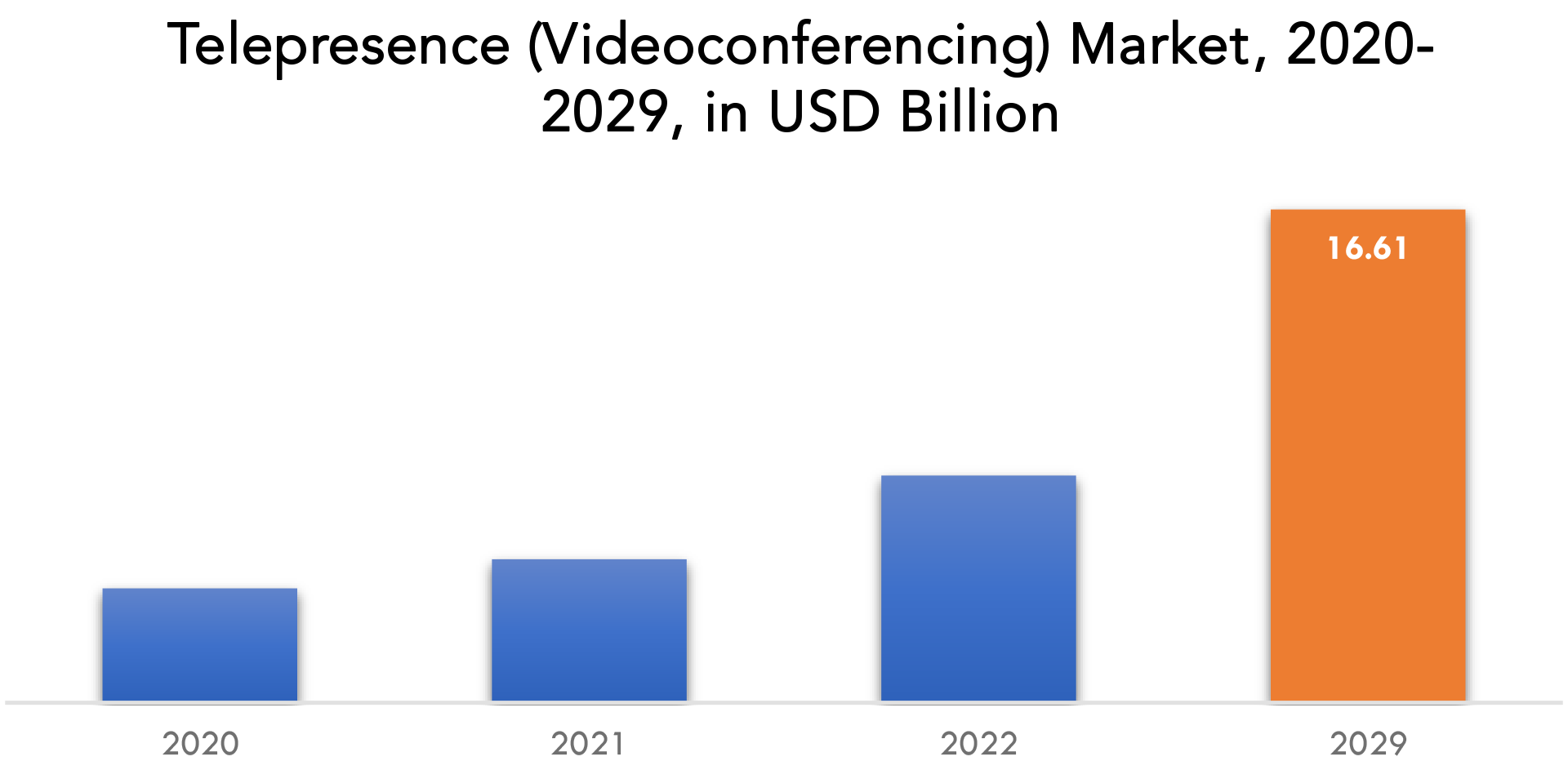
Telepresence (Videoconferencing) Market Key Players
The telepresence (videoconferencing) market key players include Adobe Systems Incorporated, Atlassian Corporation Plc., Cisco Systems, Inc., Fuze, Inc., Huawei Technologies Co., Ltd., JOYCE CR, S.R.O., Logitech International S.A., LogMeIn, Inc., Microsoft Corporation, Orange Business Services.
Industry Development:
February 22, 2022 : Orange Business Services today announced that it is transforming snack-food giant Mondelēz International with an all-digital communications platform based on Microsoft Teams. Cadbury, Chips Ahoy!, Oreo, and Ritz are just some of the Mondelēz International brands whose operations will now be unified on a single, global platform. January 18, 2023 : Logitech (SIX: LOGN) (NASDAQ: LOGI) unveiled its Brio 300 series, a line of compact, plug-and-play webcams with Full-HD 1080p resolution, auto light correction and a noise-reducing mic, for more natural and productive video call experiences at an attractive price.Who Should Buy? Or Key stakeholders
- Telepresence service providers
- IT industries
- Small and Medium Enterprises
- Large Enterprises
- Healthcare sector
- Research Organizations
- Investors
- Regulatory Authorities
- Others
Telepresence (Videoconferencing) Market Regional Analysis
The telepresence (videoconferencing) market by region includes North America, Asia-Pacific (APAC), Europe, South America, and Middle East & Africa (MEA).
- North America: includes the US, Canada, Mexico
- Asia Pacific: includes China, Japan, South Korea, India, Australia, ASEAN and Rest of APAC
- Europe: includes UK, Germany, France, Italy, Spain, Russia, and Rest of Europe
- South America: includes Brazil, Argentina and Rest of South America
- Middle East & Africa: includes Turkey, UAE, Saudi Arabia, South Africa, and Rest of MEA
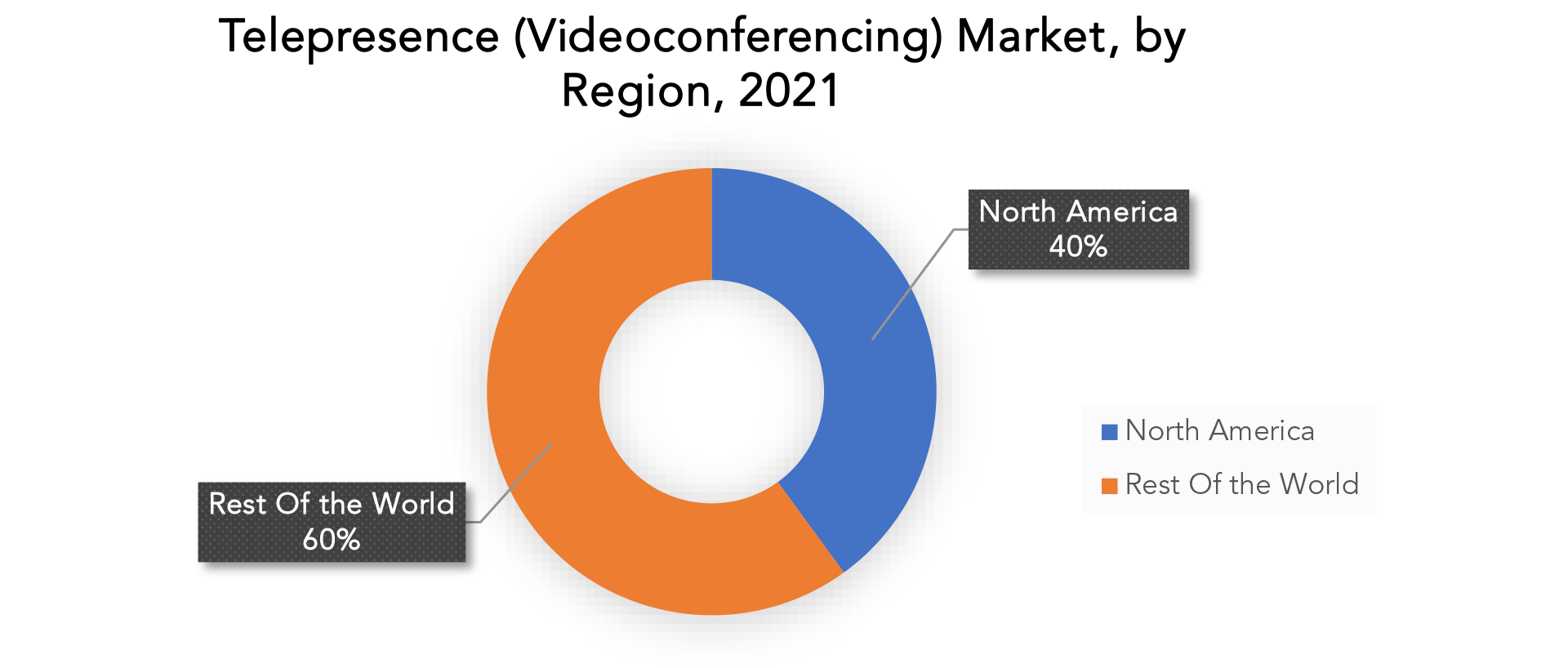
In 2021, the North American region's revenue share was about 40%. The market for telepresence is expanding in the US and Canada due to the presence of large, influential companies like Cisco Systems, Inc., Microsoft Corporation, Zoom Video Communications, Inc., and many more, as well as the quick uptake of technological innovations. During multi-point and point-to-point meetings, Cisco Telepresence in the US makes it possible to share presentations. Due to Auto Collaborate, a unique feature, users in every room can quickly view data or video and hear audio output from the following sources. Also, they have developed telepresence rooms, which are private, reserved spaces for employing telepresence technology during video conferences. These locations have a secluded aesthetic and aural environment. Small, medium, and large rooms may hold six to eighteen people, respectively.
It is anticipated that Asia Pacific would experience exponential growth. The surge is attributable to the development in demand for video communications solutions for automated operations in the education and research industries. The region is projected to exhibit enormous market growth potential because it is home to a sizable number of SMEs and numerous headquarters of top global 1000 companies.
Throughout the forecast period, revenues from the Europe market are expected to grow moderately, which can be attributed to growing government initiatives to encourage technological advancements in the healthcare sectors of the region's nations. For example, the UK might create a global standard for medical technology. Already, the country is home to some of the top healthtech businesses in the world, which contribute creative solutions and increase awareness of their strong scientific and research basis abroad.
Key Market Segments: Telepresence (Videoconferencing) Market
Telepresence (Videoconferencing) Market By Component, 2020-2029, (USD Billion)- Hardware
- Software
- Services
- On-Premise
- Cloud
- Consumer
- Enterprise
- Static Telepresence
- Remote Telepresence Systems
- Enterprise Industry
- Healthcare Industry
- Commercial Industry
- North America
- Asia Pacific
- Europe
- South America
- Middle East And Africa
Exactitude Consultancy Services Key Objectives:
- Increasing sales and market share
- Developing new technology
- Improving profitability
- Entering new markets
- Enhancing brand reputation
Key Questions Answered: -
- What is the expected growth rate of the telepresence (videoconferencing) market over the next 7 years?
- Who are the major players in the telepresence (videoconferencing) market and what is their market share?
- What are the end-user industries driving demand for market and what is their outlook?
- What are the opportunities for growth in emerging markets such as Asia-Pacific, Middle East, and Africa?
- How is the economic environment affecting the telepresence (videoconferencing) market, including factors such as interest rates, inflation, and exchange rates?
- What is the expected impact of government policies and regulations on the telepresence (videoconferencing) market?
- What is the current and forecasted size and growth rate of the global telepresence (videoconferencing) market?
- What are the key drivers of growth in the telepresence (videoconferencing) market?
- Who are the major players in the market and what is their market share?
- What are the distribution channels and supply chain dynamics in the telepresence (videoconferencing) market?
- What are the technological advancements and innovations in the telepresence (videoconferencing) market and their impact on product development and growth?
- What are the regulatory considerations and their impact on the market?
- What are the challenges faced by players in the telepresence (videoconferencing) market and how are they addressing these challenges?
- What are the opportunities for growth and expansion in the telepresence (videoconferencing) market?
- What are the service offerings and specifications of leading players in the market?
- INTRODUZIONE
- DEFINIZIONE DI MERCATO
- SEGMENTAZIONE DEL MERCATO
- TEMPI DI RICERCA
- ASSUNZIONI E LIMITAZIONI
- METODOLOGIA DI RICERCA
- ESTRAZIONE DATI
- RICERCA SECONDARIA
- RICERCA PRIMARIA
- PARERI DEGLI ESPERTI IN MATERIA
- CONTROLLI DI QUALITÀ
- RECENSIONE FINALE
- TRIANGOLAZIONE DEI DATI
- APPROCCIO DAL BASSO VERSO L'ALTO
- APPROCCIO TOP-DOWN
- FLUSSO DI RICERCA
- FONTI DEI DATI
- ESTRAZIONE DATI
- SINTESI
- PANORAMICA DEL MERCATO
- PROSPETTIVE DEL MERCATO GLOBALE DELLA TELEPRESENZA (VIDEOCONFERENZA)
- FATTORI DI MERCATO
- LIMITAZIONI DI MERCATO
- OPPORTUNITÀ DI MERCATO
- IMPATTO DEL COVID-19 SUL MERCATO DELLA TELEPRESENZA (VIDEOCONFERENZA)
- MODELLO DELLE CINQUE FORZE DI PORTER
- MINACCIA DAI NUOVI ENTRANSI
- MINACCIA DA SOSTITUTI
- POTERE CONTRATTUALE DEI FORNITORI
- POTERE CONTRATTUALE DEI CLIENTI
- GRADO DI COMPETIZIONE
- ANALISI DELLA CATENA DEL VALORE DEL SETTORE
- PROSPETTIVE DEL MERCATO GLOBALE DELLA TELEPRESENZA (VIDEOCONFERENZA)
- MERCATO GLOBALE DELLA TELEPRESENZA (VIDEOCONFERENZA) PER COMPONENTE, 2020-2029, (MILIARDI DI USD)
- HARDWARE
- SOFTWARE
- SERVIZI
- MERCATO GLOBALE DELLA TELEPRESENZA (VIDEOCONFERENZA) PER DISTRIBUZIONE, 2020-2029, (MILIARDI DI USD)
- IN SEDE
- NUVOLA
- MERCATO GLOBALE DELLA TELEPRESENZA (VIDEOCONFERENZA) PER APPLICAZIONE, 2020-2029, (MILIARDI DI USD)
- CONSUMER
- ENTERPRISE
- GLOBAL TELEPRESENCE (VIDEOCONFERENCING) MARKET BY SYSTEM TYPE, 2020-2029, (USD BILLION)
- STATIC TELEPRESENCE
- REMOTE TELEPRESENCE SYSTEMS
- GLOBAL TELEPRESENCE (VIDEOCONFERENCING) MARKET BY INDUSTRY, 2020-2029, (USD BILLION)
- ENTERPRISE INDUSTRY
- HEALTHCARE INDUSTRY
- COMMERCIAL INDUSTRY
- GLOBAL TELEPRESENCE (VIDEOCONFERENCING) MARKET BY REGION, 2020-2029, (USD BILLION)
- NORTH AMERICA
- US
- CANADA
- MEXICO
- SOUTH AMERICA
- BRAZIL
- ARGENTINA
- COLOMBIA
- REST OF SOUTH AMERICA
- EUROPE
- GERMANY
- UK
- FRANCE
- ITALY
- SPAIN
- RUSSIA
- REST OF EUROPE
- ASIA PACIFIC
- INDIA
- CHINA
- JAPAN
- SOUTH KOREA
- AUSTRALIA
- SOUTH-EAST ASIA
- REST OF ASIA PACIFIC
- MIDDLE EAST AND AFRICA
- UAE
- SAUDI ARABIA
- SOUTH AFRICA
- REST OF MIDDLE EAST AND AFRICA
- NORTH AMERICA
- COMPANY PROFILES*
(BUSINESS OVERVIEW, COMPANY SNAPSHOT, PRODUCTS OFFERED, RECENT DEVELOPMENTS)
- ADOBE SYSTEMS INCORPORATED
- ATLASSIAN CORPORATION PLC.
- CISCO SYSTEMS, INC.
- FUZE, INC.
- HUAWEI TECHNOLOGIES CO., LTD.
- JOYCE CR, S.R.O.
- LOGITECH INTERNATIONAL S.A.
- LOGMEIN, INC.
- MICROSOFT CORPORATION
- ORANGE BUSINESS SERVICES.
*THE COMPANY LIST IS INDICATIVE
LIST OF TABLES
TABLE 1 GLOBAL TELEPRESENCE (VIDEOCONFERENCING) MARKET BY COMPONENT(USD BILLION), 2020-2029
TABLE 2 GLOBAL TELEPRESENCE (VIDEOCONFERENCING) MARKET BY DEPLOYMENT (USD BILLION), 2020-2029
TABLE 3 GLOBAL TELEPRESENCE (VIDEOCONFERENCING) MARKET BY APPLICATION (USD BILLION), 2020-2029
TABLE 4 GLOBAL TELEPRESENCE (VIDEOCONFERENCING) MARKET BY SYSTEM TYPE (USD BILLION), 2020-2029
TABLE 5 GLOBAL TELEPRESENCE (VIDEOCONFERENCING) MARKET BY INDUSTRY (USD BILLION), 2020-2029
TABLE 6 GLOBAL TELEPRESENCE (VIDEOCONFERENCING) MARKET BY REGION (USD BILLION), 2020-2029
TABLE 7 NORTH AMERICA TELEPRESENCE (VIDEOCONFERENCING) MARKET BY COMPONENT(USD BILLION), 2020-2029
TABLE 8 NORTH AMERICA TELEPRESENCE (VIDEOCONFERENCING) MARKET BY DEPLOYMENT (USD BILLION), 2020-2029
TABLE 9 NORTH AMERICA TELEPRESENCE (VIDEOCONFERENCING) MARKET BY APPLICATION (USD BILLION), 2020-2029
TABLE 10 NORTH AMERICA TELEPRESENCE (VIDEOCONFERENCING) MARKET BY INDUSTRY (USD BILLION), 2020-2029
TABLE 11 NORTH AMERICA TELEPRESENCE (VIDEOCONFERENCING) MARKET BY SYSTEM TYPE (USD BILLION), 2020-2029
TABLE 12 NORTH AMERICA TELEPRESENCE (VIDEOCONFERENCING) MARKET BY COUNTRY (USD BILLION), 2020-2029
TABLE 13 US TELEPRESENCE (VIDEOCONFERENCING) MARKET BY COMPONENT(USD BILLION), 2020-2029
TABLE 14 US TELEPRESENCE (VIDEOCONFERENCING) MARKET BY DEPLOYMENT (USD BILLION), 2020-2029
TABLE 15 US TELEPRESENCE (VIDEOCONFERENCING) MARKET BY APPLICATION (USD BILLION), 2020-2029
TABLE 16 US TELEPRESENCE (VIDEOCONFERENCING) MARKET BY SYSTEM TYPE (USD BILLION), 2020-2029
TABLE 17 US TELEPRESENCE (VIDEOCONFERENCING) MARKET BY INDUSTRY (USD BILLION), 2020-2029
TABLE 18 CANADA TELEPRESENCE (VIDEOCONFERENCING) MARKET BY COMPONENT(BILLION), 2020-2029
TABLE 19 CANADA TELEPRESENCE (VIDEOCONFERENCING) MARKET BY DEPLOYMENT (USD BILLION), 2020-2029
TABLE 20 CANADA TELEPRESENCE (VIDEOCONFERENCING) MARKET BY APPLICATION (USD BILLION), 2020-2029
TABLE 21 CANADA TELEPRESENCE (VIDEOCONFERENCING) MARKET BY SYSTEM TYPE (USD BILLION), 2020-2029
TABLE 22 CANADA TELEPRESENCE (VIDEOCONFERENCING) MARKET BY INDUSTRY (USD BILLION), 2020-2029
TABLE 23 MEXICO TELEPRESENCE (VIDEOCONFERENCING) MARKET BY COMPONENT(USD BILLION), 2020-2029
TABLE 24 MEXICO TELEPRESENCE (VIDEOCONFERENCING) MARKET BY DEPLOYMENT (USD BILLION), 2020-2029
TABLE 25 MEXICO TELEPRESENCE (VIDEOCONFERENCING) MARKET BY APPLICATION (USD BILLION), 2020-2029
TABLE 26 MEXICO TELEPRESENCE (VIDEOCONFERENCING) MARKET BY SYSTEM TYPE (USD BILLION), 2020-2029
TABLE 27 MEXICO TELEPRESENCE (VIDEOCONFERENCING) MARKET BY INDUSTRY (USD BILLION), 2020-2029
TABLE 28 SOUTH AMERICA TELEPRESENCE (VIDEOCONFERENCING) MARKET BY COMPONENT(USD BILLION), 2020-2029
TABLE 29 SOUTH AMERICA TELEPRESENCE (VIDEOCONFERENCING) MARKET BY DEPLOYMENT (USD BILLION), 2020-2029
TABLE 30 SOUTH AMERICA TELEPRESENCE (VIDEOCONFERENCING) MARKET BY APPLICATION (USD BILLION), 2020-2029
TABLE 31 SOUTH AMERICA TELEPRESENCE (VIDEOCONFERENCING) MARKET BY SYSTEM TYPE (USD BILLION), 2020-2029
TABLE 32 SOUTH AMERICA TELEPRESENCE (VIDEOCONFERENCING) MARKET BY INDUSTRY (USD BILLION), 2020-2029
TABLE 33 SOUTH AMERICA TELEPRESENCE (VIDEOCONFERENCING) MARKET BY COUNTRY (USD BILLION), 2020-2029
TABLE 34 BRAZIL TELEPRESENCE (VIDEOCONFERENCING) MARKET BY COMPONENT(USD BILLION), 2020-2029
TABLE 35 BRAZIL TELEPRESENCE (VIDEOCONFERENCING) MARKET BY DEPLOYMENT (USD BILLION), 2020-2029
TABLE 36 BRAZIL TELEPRESENCE (VIDEOCONFERENCING) MARKET BY APPLICATION (USD BILLION), 2020-2029
TABLE 37 BRAZIL TELEPRESENCE (VIDEOCONFERENCING) MARKET BY SYSTEM TYPE (USD BILLION), 2020-2029
TABLE 38 BRAZIL TELEPRESENCE (VIDEOCONFERENCING) MARKET BY INDUSTRY (USD BILLION), 2020-2029
TABLE 39 ARGENTINA TELEPRESENCE (VIDEOCONFERENCING) MARKET BY COMPONENT(USD BILLION), 2020-2029
TABLE 40 ARGENTINA TELEPRESENCE (VIDEOCONFERENCING) MARKET BY DEPLOYMENT (USD BILLION), 2020-2029
TABLE 41 ARGENTINA TELEPRESENCE (VIDEOCONFERENCING) MARKET BY APPLICATION (USD BILLION), 2020-2029
TABLE 42 AREGENTINA TELEPRESENCE (VIDEOCONFERENCING) MARKET BY SYSTEM TYPE (USD BILLION), 2020-2029
TABLE 43 AREGENTINA TELEPRESENCE (VIDEOCONFERENCING) MARKET BY INDUSTRY (USD BILLION), 2020-2029
TABLE 44 COLOMBIA TELEPRESENCE (VIDEOCONFERENCING) MARKET BY COMPONENT(USD BILLION), 2020-2029
TABLE 45 COLOMBIA TELEPRESENCE (VIDEOCONFERENCING) MARKET BY DEPLOYMENT (USD BILLION), 2020-2029
TABLE 46 COLOMBIA TELEPRESENCE (VIDEOCONFERENCING) MARKET BY APPLICATION (USD BILLION), 2020-2029
TABLE 47 COLOMBIA TELEPRESENCE (VIDEOCONFERENCING) MARKET BY SYSTEM TYPE (USD BILLION), 2020-2029
TABLE 48 COLOMBIA TELEPRESENCE (VIDEOCONFERENCING) MARKET BY INDUSTRY (USD BILLION), 2020-2029
TABLE 49 REST OF SOUTH AMERICA TELEPRESENCE (VIDEOCONFERENCING) MARKET BY COMPONENT(USD BILLION), 2020-2029
TABLE 50 REST OF SOUTH AMERICA TELEPRESENCE (VIDEOCONFERENCING) MARKET BY DEPLOYMENT (USD BILLION), 2020-2029
TABLE 51 REST OF SOUTH AMERICA TELEPRESENCE (VIDEOCONFERENCING) MARKET BY APPLICATION (USD BILLION), 2020-2029
TABLE 52 REST OF SOUTH AMERICA TELEPRESENCE (VIDEOCONFERENCING) MARKET BY SYSTEM TYPE (USD BILLION), 2020-2029
TABLE 53 REST OF SOUTH AMERICA TELEPRESENCE (VIDEOCONFERENCING) MARKET BY INDUSTRY (USD BILLION), 2020-2029
TABLE 54 ASIA-PACIFIC TELEPRESENCE (VIDEOCONFERENCING) MARKET BY COMPONENT(USD BILLION), 2020-2029
TABLE 55 ASIA-PACIFIC TELEPRESENCE (VIDEOCONFERENCING) MARKET BY DEPLOYMENT (USD BILLION), 2020-2029
TABLE 56 ASIA-PACIFIC TELEPRESENCE (VIDEOCONFERENCING) MARKET BY APPLICATION (USD BILLION), 2020-2029
TABLE 57 ASIA-PACIFIC TELEPRESENCE (VIDEOCONFERENCING) MARKET BY SYSTEM TYPE (USD BILLION), 2020-2029
TABLE 58 ASIA-PACIFIC TELEPRESENCE (VIDEOCONFERENCING) MARKET BY INDUSTRY (USD BILLION), 2020-2029
TABLE 59 ASIA-PACIFIC TELEPRESENCE (VIDEOCONFERENCING) MARKET BY COUNTRY (USD BILLION), 2020-2029
TABLE 60 INDIA TELEPRESENCE (VIDEOCONFERENCING) MARKET BY COMPONENT(USD BILLION), 2020-2029
TABLE 61 INDIA TELEPRESENCE (VIDEOCONFERENCING) MARKET BY DEPLOYMENT (USD BILLION), 2020-2029
TABLE 62 INDIA TELEPRESENCE (VIDEOCONFERENCING) MARKET BY APPLICATION (USD BILLION), 2020-2029
TABLE 63 INDIA TELEPRESENCE (VIDEOCONFERENCING) MARKET BY SYSTEM TYPE (USD BILLION), 2020-2029
TABLE 64 INDIA TELEPRESENCE (VIDEOCONFERENCING) MARKET BY INDUSTRY (USD BILLION), 2020-2029
TABLE 65 CHINA TELEPRESENCE (VIDEOCONFERENCING) MARKET BY COMPONENT(USD BILLION), 2020-2029
TABLE 66 CHINA TELEPRESENCE (VIDEOCONFERENCING) MARKET BY DEPLOYMENT (USD BILLION), 2020-2029
TABLE 67 CHINA TELEPRESENCE (VIDEOCONFERENCING) MARKET BY APPLICATION (USD BILLION), 2020-2029
TABLE 68 CHINA TELEPRESENCE (VIDEOCONFERENCING) MARKET BY SYSTEM TYPE (USD BILLION), 2020-2029
TABLE 69 CHINA TELEPRESENCE (VIDEOCONFERENCING) MARKET BY INDUSTRY (USD BILLION), 2020-2029
TABLE 70 JAPAN TELEPRESENCE (VIDEOCONFERENCING) MARKET BY COMPONENT(USD BILLION), 2020-2029
TABLE 71 JAPAN TELEPRESENCE (VIDEOCONFERENCING) MARKET BY DEPLOYMENT (USD BILLION), 2020-2029
TABLE 72 JAPAN TELEPRESENCE (VIDEOCONFERENCING) MARKET BY APPLICATION (USD BILLION), 2020-2029
TABLE 73 JAPAN TELEPRESENCE (VIDEOCONFERENCING) MARKET BY SYSTEM TYPE (USD BILLION), 2020-2029
TABLE 74 JAPAN TELEPRESENCE (VIDEOCONFERENCING) MARKET BY INDUSTRY (USD BILLION), 2020-2029
TABLE 75 SOUTH KOREA TELEPRESENCE (VIDEOCONFERENCING) MARKET BY COMPONENT(USD BILLION), 2020-2029
TABLE 76 SOUTH KOREA TELEPRESENCE (VIDEOCONFERENCING) MARKET BY DEPLOYMENT (USD BILLION), 2020-2029
TABLE 77 SOUTH KOREA TELEPRESENCE (VIDEOCONFERENCING) MARKET BY APPLICATION (USD BILLION), 2020-2029
TABLE 78 SOUTH KOREA TELEPRESENCE (VIDEOCONFERENCING) MARKET BY SYSTEM TYPE (USD BILLION), 2020-2029
TABLE 79 SOUTH KOREA TELEPRESENCE (VIDEOCONFERENCING) MARKET BY INDUSTRY (USD BILLION), 2020-2029
TABLE 80 AUSTRALIA TELEPRESENCE (VIDEOCONFERENCING) MARKET BY COMPONENT(USD BILLION), 2020-2029
TABLE 81 AUSTRALIA TELEPRESENCE (VIDEOCONFERENCING) MARKET BY DEPLOYMENT (USD BILLION), 2020-2029
TABLE 82 AUSTRALIA TELEPRESENCE (VIDEOCONFERENCING) MARKET BY APPLICATION (USD BILLION), 2020-2029
TABLE 83 AUSTRALIA TELEPRESENCE (VIDEOCONFERENCING) MARKET BY SYSTEM TYPE (USD BILLION), 2020-2029
TABLE 84 AUSTRALIA TELEPRESENCE (VIDEOCONFERENCING) MARKET BY INDUSTRY (USD BILLION), 2020-2029
TABLE 85 SOUTH EAST ASIA TELEPRESENCE (VIDEOCONFERENCING) MARKET BY COMPONENT(USD BILLION), 2020-2029
TABLE 86 SOUTH EAST ASIA TELEPRESENCE (VIDEOCONFERENCING) MARKET BY DEPLOYMENT (USD BILLION), 2020-2029
TABLE 87 SOUTH EAST ASIA TELEPRESENCE (VIDEOCONFERENCING) MARKET BY APPLICATION (USD BILLION), 2020-2029
TABLE 88 SOUTH EAST ASIA TELEPRESENCE (VIDEOCONFERENCING) MARKET BY SYSTEM TYPE (USD BILLION), 2020-2029
TABLE 89 SOUTH EAST ASIA TELEPRESENCE (VIDEOCONFERENCING) MARKET BY INDUSTRY (USD BILLION), 2020-2029
TABLE 90 REST OF ASIA PACIFIC TELEPRESENCE (VIDEOCONFERENCING) MARKET BY COMPONENT(USD BILLION), 2020-2029
TABLE 91 REST OF ASIA PACIFIC TELEPRESENCE (VIDEOCONFERENCING) MARKET BY DEPLOYMENT (USD BILLION), 2020-2029
TABLE 92 REST OF ASIA PACIFIC TELEPRESENCE (VIDEOCONFERENCING) MARKET BY APPLICATION (USD BILLION), 2020-2029
TABLE 93 REST OF ASIA PACIFIC TELEPRESENCE (VIDEOCONFERENCING) MARKET BY SYSTEM TYPE (USD BILLION), 2020-2029
TABLE 94 REST OF ASIA PACIFIC TELEPRESENCE (VIDEOCONFERENCING) MARKET BY INDUSTRY (USD BILLION), 2020-2029
TABLE 95 EUROPE TELEPRESENCE (VIDEOCONFERENCING) MARKET BY COMPONENT(USD BILLION), 2020-2029
TABLE 96 EUROPE TELEPRESENCE (VIDEOCONFERENCING) MARKET BY DEPLOYMENT (USD BILLION), 2020-2029
TABLE 97 EUROPE TELEPRESENCE (VIDEOCONFERENCING) MARKET BY APPLICATION (USD BILLION), 2020-2029
TABLE 98 EUROPE TELEPRESENCE (VIDEOCONFERENCING) MARKET BY SYSTEM TYPE (USD BILLION), 2020-2029
TABLE 99 EUROPE TELEPRESENCE (VIDEOCONFERENCING) MARKET BY INDUSTRY (USD BILLION), 2020-2029
TABLE 100 EUROPE TELEPRESENCE (VIDEOCONFERENCING) MARKET BY COUNTRY (USD BILLION), 2020-2029
TABLE 101 GERMANY TELEPRESENCE (VIDEOCONFERENCING) MARKET BY COMPONENT(USD BILLION), 2020-2029
TABLE 102 GERMANY TELEPRESENCE (VIDEOCONFERENCING) MARKET BY DEPLOYMENT (USD BILLION), 2020-2029
TABLE 103 GERMANY TELEPRESENCE (VIDEOCONFERENCING) MARKET BY APPLICATION (USD BILLION), 2020-2029
TABLE 104 GERMANY TELEPRESENCE (VIDEOCONFERENCING) MARKET BY SYSTEM TYPE (USD BILLION), 2020-2029
TABLE 105 GERMANY TELEPRESENCE (VIDEOCONFERENCING) MARKET BY INDUSTRY (USD BILLION), 2020-2029
TABLE 106 UK TELEPRESENCE (VIDEOCONFERENCING) MARKET BY COMPONENT(USD BILLION), 2020-2029
TABLE 107 UK TELEPRESENCE (VIDEOCONFERENCING) MARKET BY DEPLOYMENT (USD BILLION), 2020-2029
TABLE 108 UK TELEPRESENCE (VIDEOCONFERENCING) MARKET BY APPLICATION (USD BILLION), 2020-2029
TABLE 109 UK TELEPRESENCE (VIDEOCONFERENCING) MARKET BY SYSTEM TYPE (USD BILLION), 2020-2029
TABLE 110 UK TELEPRESENCE (VIDEOCONFERENCING) MARKET BY INDUSTRY (USD BILLION), 2020-2029
TABLE 111 FRANCE TELEPRESENCE (VIDEOCONFERENCING) MARKET BY COMPONENT(USD BILLION), 2020-2029
TABLE 112 FRANCE TELEPRESENCE (VIDEOCONFERENCING) MARKET BY DEPLOYMENT (USD BILLION), 2020-2029
TABLE 113 FRANCE TELEPRESENCE (VIDEOCONFERENCING) MARKET BY APPLICATION (USD BILLION), 2020-2029
TABLE 114 FRANCE TELEPRESENCE (VIDEOCONFERENCING) MARKET BY SYSTEM TYPE (USD BILLION), 2020-2029
TABLE 115 FRANCE TELEPRESENCE (VIDEOCONFERENCING) MARKET BY INDUSTRY (USD BILLION), 2020-2029
TABLE 116 ITALY TELEPRESENCE (VIDEOCONFERENCING) MARKET BY COMPONENT(USD BILLION), 2020-2029
TABLE 117 ITALY TELEPRESENCE (VIDEOCONFERENCING) MARKET BY DEPLOYMENT (USD BILLION), 2020-2029
TABLE 118 ITALY TELEPRESENCE (VIDEOCONFERENCING) MARKET BY APPLICATION (USD BILLION), 2020-2029
TABLE 119 ITALY TELEPRESENCE (VIDEOCONFERENCING) MARKET BY SYSTEM TYPE (USD BILLION), 2020-2029
TABLE 120 ITALY TELEPRESENCE (VIDEOCONFERENCING) MARKET BY INDUSTRY (USD BILLION), 2020-2029
TABLE 121 SPAIN TELEPRESENCE (VIDEOCONFERENCING) MARKET BY COMPONENT(USD BILLION), 2020-2029
TABLE 122 SPAIN TELEPRESENCE (VIDEOCONFERENCING) MARKET BY DEPLOYMENT (USD BILLION), 2020-2029
TABLE 123 SPAIN TELEPRESENCE (VIDEOCONFERENCING) MARKET BY APPLICATION (USD BILLION), 2020-2029
TABLE 124 SPAIN TELEPRESENCE (VIDEOCONFERENCING) MARKET BY SYSTEM TYPE (USD BILLION), 2020-2029
TABLE 125 SPAIN TELEPRESENCE (VIDEOCONFERENCING) MARKET BY INDUSTRY (USD BILLION), 2020-2029
TABLE 126 RUSSIA TELEPRESENCE (VIDEOCONFERENCING) MARKET BY COMPONENT(USD BILLION), 2020-2029
TABLE 127 RUSSIA TELEPRESENCE (VIDEOCONFERENCING) MARKET BY DEPLOYMENT (USD BILLION), 2020-2029
TABLE 128 RUSSIA TELEPRESENCE (VIDEOCONFERENCING) MARKET BY APPLICATION (USD BILLION), 2020-2029
TABLE 129 RUSSIA TELEPRESENCE (VIDEOCONFERENCING) MARKET BY SYSTEM TYPE (USD BILLION), 2020-2029
TABLE 130 RUSSIA TELEPRESENCE (VIDEOCONFERENCING) MARKET BY INDUSTRY (USD BILLION), 2020-2029
TABLE 131 REST OF EUROPE TELEPRESENCE (VIDEOCONFERENCING) MARKET BY COMPONENT(USD BILLION), 2020-2029
TABLE 132 REST OF EUROPE TELEPRESENCE (VIDEOCONFERENCING) MARKET BY DEPLOYMENT (USD BILLION), 2020-2029
TABLE 133 REST OF EUROPE TELEPRESENCE (VIDEOCONFERENCING) MARKET BY APPLICATION (USD BILLION), 2020-2029
TABLE 134 REST OF EUROPE TELEPRESENCE (VIDEOCONFERENCING) MARKET BY SYSTEM TYPE (USD BILLION), 2020-2029
TABLE 135 REST OF EUROPE TELEPRESENCE (VIDEOCONFERENCING) MARKET BY INDUSTRY (USD BILLION), 2020-2029
TABLE 136 MIDDLE EAST AND AFRICA TELEPRESENCE (VIDEOCONFERENCING) MARKET BY COMPONENT(USD BILLION), 2020-2029
TABLE 137 MIDDLE EAST AND AFRICA TELEPRESENCE (VIDEOCONFERENCING) MARKET BY DEPLOYMENT (USD BILLION), 2020-2029
TABLE 138 MIDDLE EAST AND AFRICA TELEPRESENCE (VIDEOCONFERENCING) MARKET BY APPLICATION (USD BILLION), 2020-2029
TABLE 139 MIDDLE EAST AND AFRICA TELEPRESENCE (VIDEOCONFERENCING) MARKET BY SYSTEM TYPE (USD BILLION), 2020-2029
TABLE 140 MIDDLE EAST AND AFRICA TELEPRESENCE (VIDEOCONFERENCING) MARKET BY INDUSTRY (USD BILLION), 2020-2029
TABLE 141 MIDDLE EAST AND AFRICA TELEPRESENCE (VIDEOCONFERENCING) MARKET BY COUNTRY (USD BILLION), 2020-2029
TABLE 142 UAE TELEPRESENCE (VIDEOCONFERENCING) MARKET BY COMPONENT(USD BILLION), 2020-2029
TABLE 143 UAE TELEPRESENCE (VIDEOCONFERENCING) MARKET BY DEPLOYMENT (USD BILLION), 2020-2029
TABLE 144 UAE TELEPRESENCE (VIDEOCONFERENCING) MARKET BY APPLICATION (USD BILLION), 2020-2029
TABLE 145 UAE TELEPRESENCE (VIDEOCONFERENCING) MARKET BY SYSTEM TYPE (USD BILLION), 2020-2029
TABLE 146 UAE TELEPRESENCE (VIDEOCONFERENCING) MARKET BY INDUSTRY (USD BILLION), 2020-2029
TABLE 147 SAUDI ARABIA TELEPRESENCE (VIDEOCONFERENCING) MARKET BY COMPONENT(USD BILLION), 2020-2029
TABLE 148 SAUDI ARABIA TELEPRESENCE (VIDEOCONFERENCING) MARKET BY DEPLOYMENT (USD BILLION), 2020-2029
TABLE 149 SAUDI ARABIA TELEPRESENCE (VIDEOCONFERENCING) MARKET BY APPLICATION (USD BILLION), 2020-2029
TABLE 150 SAUDI ARABIA TELEPRESENCE (VIDEOCONFERENCING) MARKET BY SYSTEM TYPE (USD BILLION), 2020-2029
TABLE 151 SAUDI ARABIA TELEPRESENCE (VIDEOCONFERENCING) MARKET BY INDUSTRY (USD BILLION), 2020-2029
TABLE 152 SOUTH AFRICA TELEPRESENCE (VIDEOCONFERENCING) MARKET BY COMPONENT(USD BILLION), 2020-2029
TABLE 153 SOUTH AFRICA TELEPRESENCE (VIDEOCONFERENCING) MARKET BY DEPLOYMENT (USD BILLION), 2020-2029
TABLE 154 SOUTH AFRICA TELEPRESENCE (VIDEOCONFERENCING) MARKET BY APPLICATION (USD BILLION), 2020-2029
TABLE 155 SOUTH AFRICA TELEPRESENCE (VIDEOCONFERENCING) MARKET BY SYSTEM TYPE (USD BILLION), 2020-2029
TABLE 156 SOUTH AFRICA TELEPRESENCE (VIDEOCONFERENCING) MARKET BY INDUSTRY (USD BILLION), 2020-2029
TABLE 157 REST OF MIDDLE EAST AND AFRICA TELEPRESENCE (VIDEOCONFERENCING) MARKET BY COMPONENT(USD BILLION), 2020-2029
TABLE 158 REST OF MIDDLE EAST AND AFRICA TELEPRESENCE (VIDEOCONFERENCING) MARKET BY DEPLOYMENT (USD BILLION), 2020-2029
TABLE 159 REST OF MIDDLE EAST AND AFRICA TELEPRESENCE (VIDEOCONFERENCING) MARKET BY APPLICATION (USD BILLION), 2020-2029
TABLE 160 REST OF MIDDLE EAST AND AFRICA TELEPRESENCE (VIDEOCONFERENCING) MARKET BY SYSTEM TYPE (USD BILLION), 2020-2029
TABLE 161 REST OF MIDDLE EAST AND AFRICA TELEPRESENCE (VIDEOCONFERENCING) MARKET BY INDUSTRY (USD BILLION), 2020-2029
LIST OF FIGURES
FIGURE 1 MARKET DYNAMICS
FIGURE 2 MARKET SEGMENTATION
FIGURE 3 REPORT TIMELINES: YEARS CONSIDERED
FIGURE 4 DATA TRIANGULATION
FIGURE 5 BOTTOM-UP APPROACH
FIGURE 6 TOP-DOWN APPROACH
FIGURE 7 RESEARCH FLOW
FIGURE 8 GLOBAL TELEPRESENCE BY COMPONENT, USD BILLION, 2020-2029
FIGURE 9 GLOBAL TELEPRESENCE BY DEPLOYMENT, USD BILLION, 2020-2029
FIGURE 10 GLOBAL TELEPRESENCE BY APPLICATION, USD BILLION, 2020-2029
FIGURE 11 GLOBAL TELEPRESENCE BY SYSTEM TYPE, USD BILLION, 2020-2029
FIGURE 12 GLOBAL TELEPRESENCE BY INDUSTRY, USD BILLION, 2020-2029
FIGURE 13 GLOBAL TELEPRESENCE BY REGION, USD BILLION, 2020-2029
FIGURE 14 PORTER’S FIVE FORCES MODEL
FIGURE 15 GLOBAL TELEPRESENCE (VIDEOCONFERENCING) MARKET BY COMPONENT 2021
FIGURE 16 GLOBAL TELEPRESENCE (VIDEOCONFERENCING) MARKET BY DEPLOYMENT 2021
FIGURE 17 GLOBAL TELEPRESENCE (VIDEOCONFERENCING) MARKET BY APPLICATION 2021
FIGURE 18 GLOBAL TELEPRESENCE (VIDEOCONFERENCING) MARKET BY SYSTEM TYPE 2021
FIGURE 19 GLOBAL TELEPRESENCE (VIDEOCONFERENCING) MARKET BY INDUSTRY 2021
FIGURE 20 GLOBAL TELEPRESENCE (VIDEOCONFERENCING) MARKET BY REGION 2021
FIGURE 21 MARKET SHARE ANALYSIS
FIGURE 22 ADOBE SYSTEMS INCORPORATED: COMPANY SNAPSHOT
FIGURE 23 ATLASSIAN CORPORATION PLC.: COMPANY SNAPSHOT
FIGURE 24 CISCO SYSTEMS, INC: COMPANY SNAPSHOT
FIGURE 25 FUZE, INC: COMPANY SNAPSHOT
FIGURE 26 HUAWEI TECHNOLOGIES CO., LTD.: COMPANY SNAPSHOT
FIGURE 27 JOYCE CR, S.R.O..: COMPANY SNAPSHOT
FIGURE 28 LOGITECH INTERNATIONAL S.A.: COMPANY SNAPSHOT
FIGURE 29 LOGMEIN, INC.: COMPANY SNAPSHOT
FIGURE 30 MICROSOFT CORPORATION: COMPANY SNAPSHOT
FIGURE 31 ORANGE BUSINESS SERVICES: COMPANY SNAPSHOT
DOWNLOAD FREE SAMPLE REPORT
License Type
SPEAK WITH OUR ANALYST
Want to know more about the report or any specific requirement?
WANT TO CUSTOMIZE THE REPORT?
Our Clients Speak
We asked them to research ‘ Equipment market’ all over the world, and their whole arrangement was helpful to us. thehealthanalytics.com insightful analysis and reports contributed to our current analysis and in creating a future strategy. Besides, the te
Yosuke Mitsui
Senior Associate Construction Equipment Sales & Marketing
We asked them to research ‘Equipment market’ all over the world, and their whole arrangement was helpful to us. thehealthanalytics.com insightful analysis and reports contributed to our current analysis and in creating a future strategy. Besides, the te