

Base Year Value ()
x.x %
x.x %
CAGR ()
x.x %
x.x %
Forecast Year Value ()
x.x %
x.x %
Historical Data Period
Largest Region
Forecast Period
Mercato del vetro ad alta efficienza energetica per rivestimenti (rivestimento duro, rivestimento morbido), vetratura (vetro singolo, vetro doppio, vetro triplo), settore di utilizzo finale (edilizia e costruzioni, automotive, pannelli solari, altri) e regione (Nord America, Asia Pacifico, Europa, Sud America, Medio Oriente e Africa). Tendenze globali e previsioni dal 2022 al 2029
Instant access to hundreds of data points and trends
- Market estimates from 2014-2029
- Competitive analysis, industry segmentation, financial benchmarks
- Incorporates SWOT, Porter's Five Forces and risk management frameworks
- PDF report or online database with Word, Excel and PowerPoint export options
- 100% money back guarantee
Panoramica del mercato del vetro ad alta efficienza energetica
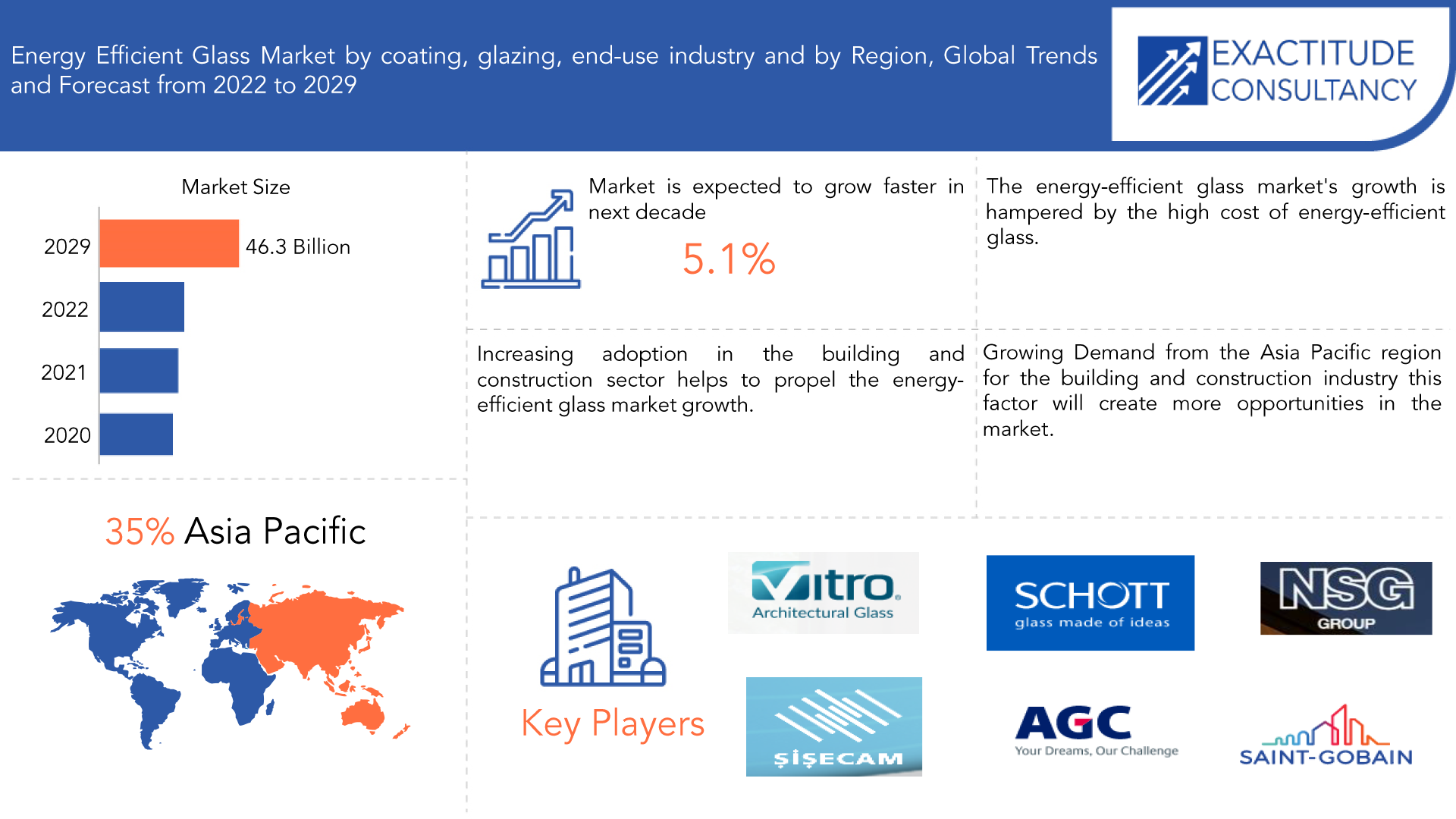
Si prevede che il mercato globale del vetro a risparmio energetico crescerà al 5,1% di CAGR dal 2020 al 2029. Si prevede che raggiungerà oltre 46,3 miliardi di USD entro il 2029 dai 27,7 miliardi di USD del 2020.
Il vetro a risparmio energetico è un tipo di vetro progettato per ridurre la quantità di calore che viene trasferito attraverso di esso, il che aiuta ad abbassare i costi energetici e ad aumentare l'efficienza energetica degli edifici. Esistono diversi tipi di vetro a risparmio energetico disponibili sul mercato, Vetro Low-E (a bassa emissività): questo vetro ha un rivestimento sottile che riflette il calore nella stanza, pur consentendo alla luce naturale di entrare; Vetro isolante: questo vetro è composto da due o più lastre di vetro separate da uno spazio vuoto o riempito di gas, che riduce il trasferimento di calore ; Vetro colorato: questo vetro ha un colore colorato che aiuta a ridurre la quantità di calore che entra in un edificio; Vetro riflettente: questo vetro ha un rivestimento riflettente che riflette la luce solare e riscalda lontano dall'edificio; Vetro spettralmente selettivo: questo vetro blocca selettivamente determinate lunghezze d'onda della luce, il che aiuta a ridurre la quantità di calore che entra nell'edificio pur consentendo alla luce naturale di entrare.
| ATTRIBUTO | DETTAGLI |
| Periodo di studio | 2020-2029 |
| Anno base | 2021 |
| Anno stimato | 2022 |
| Anno previsto | 2022-2029 |
| Periodo storico | 2018-2020 |
| Unità | Valore (miliardi di USD), (METRI QUADRATI) |
| Segmentazione | Per rivestimento, per vetratura, per settore di utilizzo finale, per regione |
| Per rivestimento |
|
| Con la vetratura |
|
| Per settore di utilizzo finale |
|
| Per regione |
|
Il vetro a risparmio energetico può essere utilizzato in una varietà di applicazioni, tra cui finestre, lucernari e porte. Utilizzando il vetro a risparmio energetico, gli edifici possono ridurre la loro dipendenza da sistemi di riscaldamento e raffreddamento , il che può aiutare a ridurre il consumo di energia e abbassare i costi delle utenze. Inoltre, il vetro a risparmio energetico può aiutare a ridurre l'impatto ambientale degli edifici riducendo le emissioni di gas serra associate all'uso di energia.
Il vetro a risparmio energetico può aiutare a ridurre il consumo energetico negli edifici riducendo il trasferimento di calore, il che può abbassare i costi di riscaldamento e raffreddamento. Riducendo il trasferimento di calore, il vetro a risparmio energetico può aiutare a mantenere una temperatura più confortevole negli edifici, il che può migliorare l'ambiente interno complessivo. Il vetro a risparmio energetico può aiutare a ridurre l'impatto ambientale degli edifici riducendo le emissioni di gas serra associate all'uso di energia. Il vetro isolante può fornire un isolamento migliorato, il che può aiutare a ridurre l'inquinamento acustico e migliorare l'efficienza energetica complessiva di un edificio. Alcuni tipi di vetro a risparmio energetico, come il vetro Low-E, possono aiutare a ridurre la quantità di luce ultravioletta e infrarossa che entra in un edificio, il che può aiutare a ridurre lo scolorimento di mobili, tappeti e altri materiali. Il vetro a risparmio energetico può comunque consentire alla luce naturale di entrare in un edificio riducendo al contempo la quantità di calore che entra, il che può aiutare a ridurre la necessità di illuminazione artificiale durante il giorno.
Il principale motore che spinge il mercato del vetro a risparmio energetico è la crescente consapevolezza dell'idea di edifici verdi. Le preoccupazioni globali sulle emissioni di carbonio stanno crescendo, il che sta anche stimolando il mercato del vetro a risparmio energetico. Nonostante ciò, si prevede che il mercato acquisirà valore dal picco di sviluppo e attività di costruzione nell'area Asia-Pacifico. L'aumento delle emissioni globali di carbonio è uno dei fattori chiave che si prevede spingeranno il mercato del vetro a risparmio energetico durante il periodo di previsione. Si prevede inoltre che il mercato del vetro a risparmio energetico si svilupperà a seguito della crescente domanda di vetro e del crescente utilizzo di rivestimenti rigidi come sostituti.
Le norme e i programmi governativi per incoraggiare l'efficienza energetica negli edifici stanno portando a un aumento della domanda di vetro a risparmio energetico da parte del settore edile. La crescente consapevolezza dei vantaggi dell'uso di questi vetri nella riduzione dei costi di raffreddamento sta facendo aumentare la domanda di vetri a controllo solare da parte dei settori dell'architettura e dell'automotive. Esiste un mercato crescente per i prodotti in vetro intelligente che possono alterare la loro trasparenza o invisibilità in risposta a fattori esterni come luce, temperatura o variazioni di tensione.
Un aumento nell'uso di vetro di sicurezza laminato nei veicoli e altri usi finali dovuto alla sua resistenza ai danni causati da vento, pioggia, grandine, neve e oggetti volanti. Questi sono i fattori che contribuiscono a spingere la crescita del mercato del vetro a risparmio energetico.
[caption id="allegato_18506" align="aligncenter" width="1920"]
Frequently Asked Questions
• What is the worth of the global Energy Efficient Glass market?
The global energy-efficient glass market is expected to grow at 5.1 % CAGR from 2020 to 2029. It is expected to reach above USD 46.3 billion by 2029 from USD 27.7 billion in 2020.
• What is the size of Asia Pacific in the Energy Efficient Glass industry?
Asia Pacific accounted for the largest market in the energy-efficient glass market. Asia Pacific held more than 35 % of the energy-efficient glass market revenue share in 2020.
• What is the growth rate of the Energy-efficient Glass Market?
The Energy-efficient Glass Market is growing at a CAGR of 5.1 % over the next 7 years.
• What are the driving factors in the energy-efficient glass Market?
Increasing Prominence of Green Buildings, Development in awareness about the concept of green buildings these are some factors that helps to propel the energy-efficient glass market growth.
Energy Efficient Glass Market Segment Analysis
The global energy-efficient glass market is segmented based on the coating, glazing, and end-use industry. By coating, the market is bifurcated into Hard Coat, Soft Coat. By glazing the market is bifurcated into triple glazing, double glazing, and single glazing. By end-use industry, the market is bifurcated into building & construction, automotive, solar panel, and others.
Based on glazing triple glazing energy efficiency glass segment is dominating in the market. Triple glazing is a type of energy-efficient glass that consists of three panes of glass instead of the traditional two. The space between the panes of glass is filled with gas, typically argon or krypton, which provides enhanced insulation and reduces heat transfer. Triple glazing provides a higher level of insulation than double glazing, which can help to reduce heating and cooling costs and improve the overall energy efficiency of a building. The additional layer of glass in triple glazing can help to reduce noise pollution, making it ideal for buildings in noisy urban areas or near busy roads. The market for triple-glazing energy-efficient glass is anticipated to grow at the highest rate over the forecast period. Due to triple glazing energy efficient glass' excellent low emission capabilities, building contractors have switched from using double glazing energy efficient glass, which is responsible for the segment's rapid development in the market.
Based on the end-use industry building and construction industry segment is dominating the energy-efficient glass market. Because of the rising demand for energy-efficient buildings, energy-efficient glass products like low-emissivity glass, insulated glass, and smart glass are being used more frequently. These solutions provide improved thermal insulation, lower energy use, and greater occupant comfort, all of which are factors that are becoming more and more crucial in the building sector. Demand for energy-efficient building materials, such as glass, is rising as a result of rising government and regulatory pressure to embrace sustainable building practices. As a result, it is anticipated that in the upcoming years, the energy-efficient glass segment will continue to hold the largest segmental share in the worldwide building glass market.
[caption id="attachment_18510" align="aligncenter" width="1920"]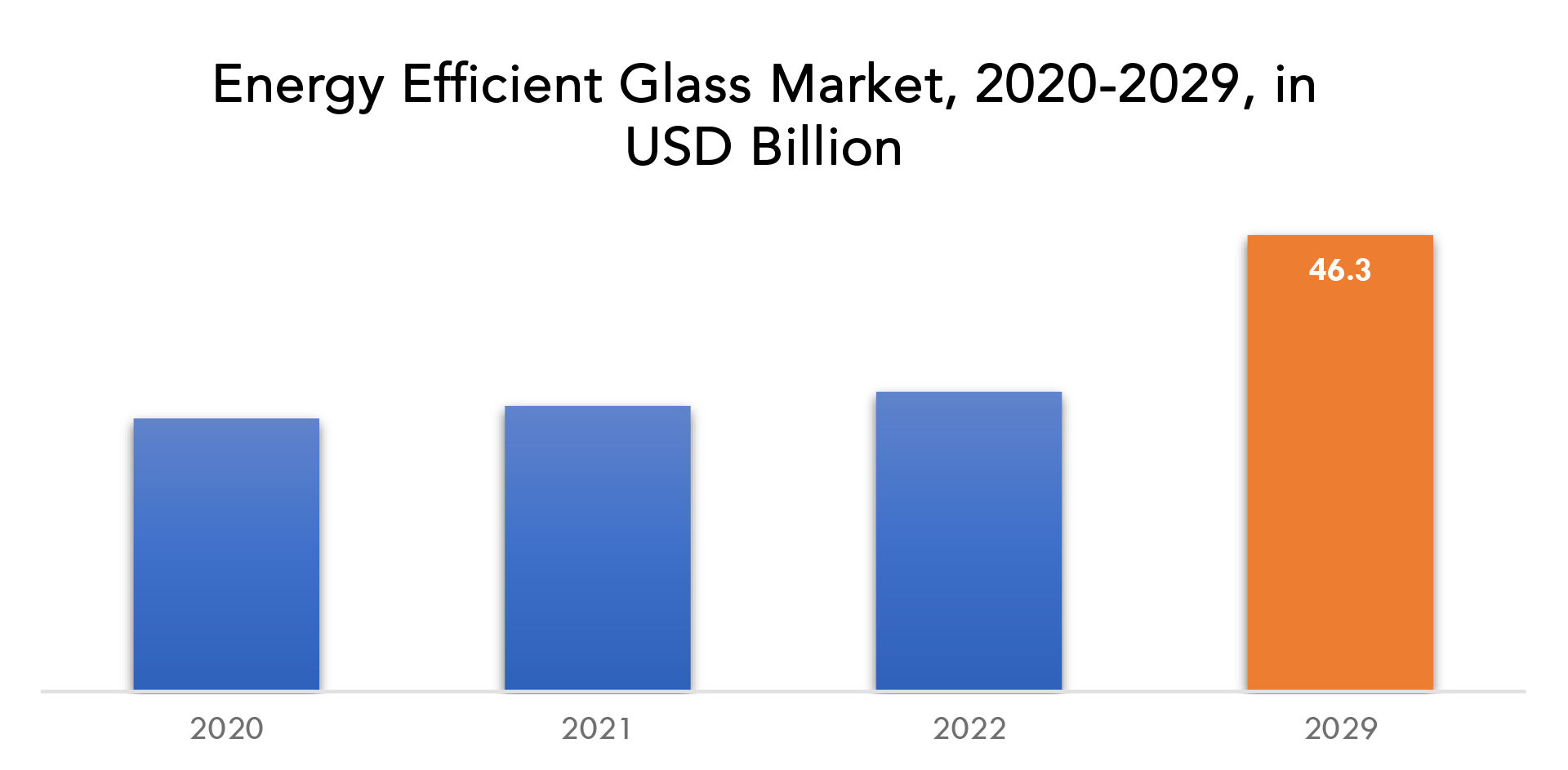
Energy Efficient Glass Market Key Players
The Energy Efficient Glass market key players include Saint-Gobain, AGC, Nippon Sheet Glass, SCHOTT AG, Sisecam Group, Guardian, Vitro Architectural Glass, Morley Glass & Glazing, Kaphs S.A., Sedak GmbH & Co. Kg, Metro Performance Glass, CSG Holding Co., Ltd. Taiwan Glass Ind Corp., Abrisa Technologies, Bendheim, Central Glass Co., Ltd., Gsc Glass Ltd, Arnold Glas, Fuso Glass India Pvt. Ltd.
Recent News 21st April 2022: E. ON and AGC Glass Europe launched their partnership back in 2019 and have already implemented energy efficiency projects in various European countries. In addition, the construction of further photovoltaic plants with up to 20 megawatts capacity is planned in Hungary and the Czech Republic. 3rd December 2021: Guardian Glass Europe has launched the latest product in their leading SunGuard® extra Selective range – Guardian SunGuard® SNX 70. SunGuard SNX 70 is a new triple silver-coated glass that boasts outstanding solar control and light transmission approaching 70% – plus high thermal insulation. Yet it also has a uniquely clean, natural appearance and a subtle reflective quality that achieves a strikingly uniform aesthetic across design contours and different viewing angles.Who Should Buy? Or Key stakeholders
- Energy Efficient Glass Supplier
- Research Organizations
- Building and Construction Industry
- Investors
- Automotive Industry
- Manufacturing Industry
- Academic & Research Institutes
- Regulatory Authorities
- Others
Energy Efficient Glass Market Regional Analysis
The energy efficient glass market by region includes North America, Asia-Pacific (APAC), Europe, South America, and Middle East & Africa (MEA).
- North America: includes the US, Canada, Mexico
- Asia Pacific: includes China, Japan, South Korea, India, Australia, ASEAN, and the Rest of APAC
- Europe: includes the UK, Germany, France, Italy, Spain, Russia, the and Rest of Europe
- South America: includes Brazil, Argentina, and the Rest of South America
- Middle East & Africa: includes Turkey, UAE, Saudi Arabia, South Africa, and the Rest of MEA
Asia Pacific accounted for the largest market in energy efficient glass market. The region's industrial development has been fueled by expanding wealth, rising disposable income, rising urbanization, and rising population growth. International businesses have been encouraged to set up production facilities in the area by several government programs, including FDI. As a result, APAC has become a manufacturing powerhouse for goods related to construction, appliances, and automobiles. All these factors are projected to propel the usage of energy-efficient glass in various end-use industries.
The Asia Pacific region is experiencing rapid urbanization, with a growing population and increasing urbanization rates. This has led to an increase in demand for energy-efficient buildings and infrastructure, which has driven the demand for energy-efficient glass. Many governments in the Asia Pacific region have introduced policies and regulations aimed at promoting energy efficiency in buildings. This has created a favorable environment for the adoption of energy-efficient glass in the region. The growing middle class in the Asia Pacific region has led to an increase in demand for energy-efficient homes and buildings. This has driven the demand for energy-efficient glass in the residential and commercial sectors. There is a growing awareness of the benefits of energy efficiency in the Asia Pacific region, particularly in countries like China, Japan, and South Korea. This has led to an increase in demand for energy-efficient glass as a means of improving the energy efficiency of buildings. The Asia Pacific region has a strong manufacturing base for energy-efficient glass, with many of the world's leading manufacturers based in the region. This has helped to drive down the cost of energy-efficient glass, making it more accessible to consumers and businesses in the region.
Overall, the combination of favorable government policies, increasing demand for energy efficiency, and a strong manufacturing base has made the Asia Pacific region a dominant player in the energy-efficient glass market.
[caption id="attachment_18513" align="aligncenter" width="1920"]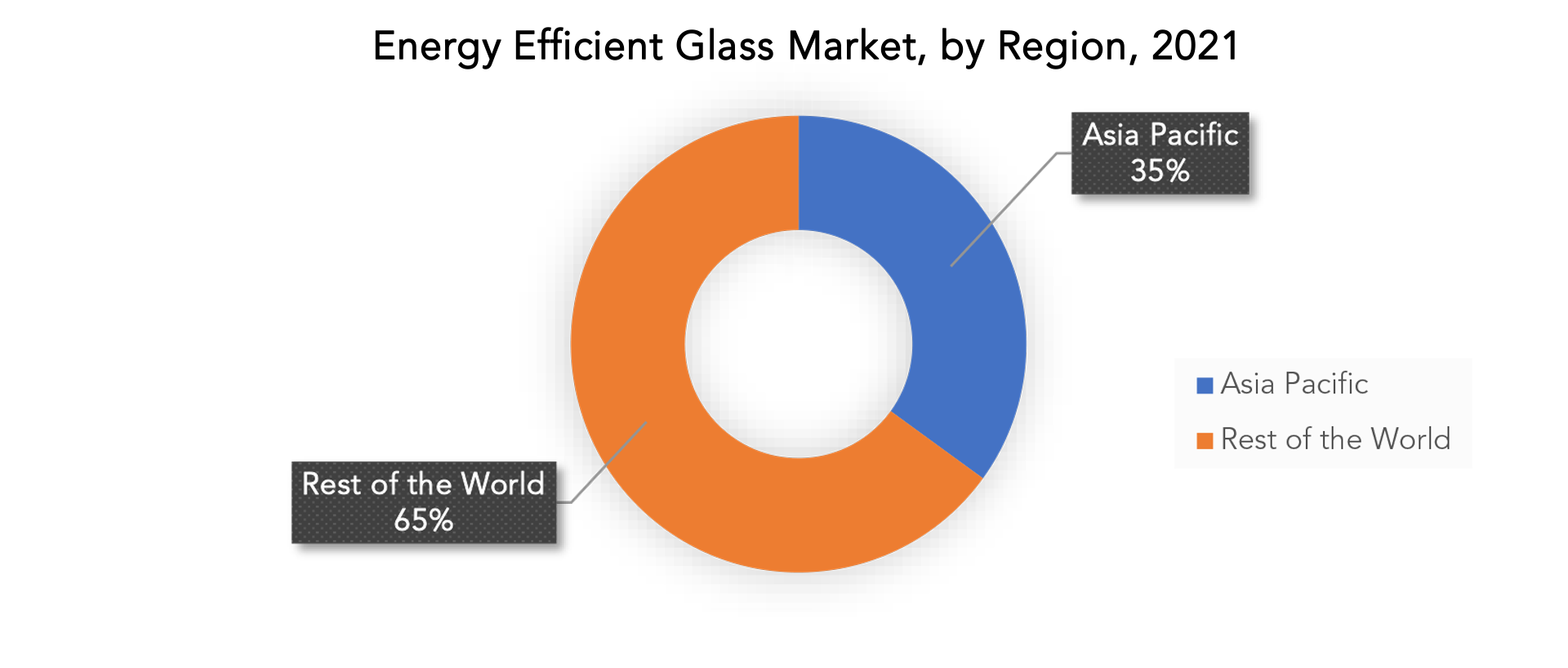
Key Market Segments: Energy Efficient Glass Market
Energy Efficient Glass Market by Coating, 2020-2029, (USD Billion), (Square Meters)- Hard-Coat
- Soft Coat
- Tripple Glazing
- Double Glazing
- Single Glazing
- Building And Construction
- Automotive
- Solar Panels
- Others
- North America
- Asia Pacific
- Europe
- South America
- Middle East And Africa
Exactitude Consultancy Services Key Objectives
- Increasing sales and market share
- Developing new technology
- Improving profitability
- Entering new markets
- Enhancing brand reputation
Key Question Answered
- What is the current size of the energy-efficient glass market?
- What is the expected growth rate of the energy-efficient glass market over the next 7 years?
- Who are the major players in the energy-efficient glass market and what is their market share?
- What are the end-user industries driving demand for the market and what is their outlook?
- What are the opportunities for growth in emerging markets such as Asia-pacific, the middle east, and Africa?
- How is the economic environment affecting the energy-efficient glass market, including factors such as interest rates, inflation, and exchange rates?
- What is the expected impact of government policies and regulations on the energy-efficient glass market?
- What is the current and forecasted size and growth rate of the global energy-efficient glass market?
- What are the key drivers of growth in the energy-efficient glass market?
- Who are the major players in the market and what is their market share?
- What are the distribution channels and supply chain dynamics in the energy efficient glass market?
- What are the technological advancements and innovations in the energy efficient glass market and their impact on product development and growth?
- What are the regulatory considerations and their impact on the market?
- What are the challenges faced by players in the energy efficient glass market and how are they addressing these challenges?
- What are the opportunities for growth and expansion in the energy efficient glass market?
- What are the service offerings specifications of leading players in the market?
- What is the pricing trend of energy efficient glass in the market?
- INTRODUZIONE
- DEFINIZIONE DI MERCATO
- SEGMENTAZIONE DEL MERCATO
- TEMPI DI RICERCA
- ASSUNZIONI E LIMITAZIONI
- METODOLOGIA DI RICERCA
- ESTRAZIONE DATI
- RICERCA SECONDARIA
- RICERCA PRIMARIA
- PARERI DEGLI ESPERTI IN MATERIA
- CONTROLLI DI QUALITÀ
- RECENSIONE FINALE
- TRIANGOLAZIONE DEI DATI
- APPROCCIO DAL BASSO VERSO L'ALTO
- APPROCCIO TOP-DOWN
- FLUSSO DI RICERCA
- FONTI DEI DATI
- ESTRAZIONE DATI
- SINTESI
- PANORAMICA DEL MERCATO
- PROSPETTIVE DEL MERCATO GLOBALE DEL VETRO AD EFFICIENZA ENERGETICA
- MARKET DRIVERS
- MARKET RESTRAINTS
- MARKET OPPORTUNITIES
- IMPACT OF COVID-19 ON THE ENERGY-EFFICIENT GLASS MARKET
- PORTER’S FIVE FORCES MODEL
- THREAT FROM NEW ENTRANTS
- THREAT FROM SUBSTITUTES
- BARGAINING POWER OF SUPPLIERS
- BARGAINING POWER OF CUSTOMERS
- DEGREE OF COMPETITION
- INDUSTRY VALUE CHAIN ANALYSIS
- PROSPETTIVE DEL MERCATO GLOBALE DEL VETRO AD EFFICIENZA ENERGETICA
- GLOBAL ENERGY-EFFICIENT GLASS MARKET BY COATING, 2020-2029, (USD BILLION), (SQUARE METERS)
- HARD COAT
- SOFT COAT
- GLOBAL ENERGY-EFFICIENT GLASS MARKET BY GLAZING, 2020-2029, (USD BILLION), (SQUARE METERS)
- SINGLE GLAZING
- DOUBLE GLAZING
- TRIPLE GLAZING
- GLOBAL ENERGY-EFFICIENT GLASS MARKET BY END-USE INDUSTRY, 2020-2029, (USD BILLION), (SQUARE METERS)
- BUILDING & CONSTRUCTION
- AUTOMOTIVE
- SOLAR PANEL
- OTHERS
- GLOBAL ENERGY-EFFICIENT GLASS MARKET BY REGION, 2020-2029, (USD BILLION), (SQUARE METERS)
- NORTH AMERICA
- US
- CANADA
- MEXICO
- SOUTH AMERICA
- BRAZIL
- ARGENTINA
- COLOMBIA
- REST OF SOUTH AMERICA
- EUROPE
- GERMANY
- UK
- FRANCE
- ITALY
- SPAIN
- RUSSIA
- REST OF EUROPE
- ASIA PACIFIC
- INDIA
- CHINA
- JAPAN
- SOUTH KOREA
- AUSTRALIA
- SOUTH-EAST ASIA
- REST OF ASIA PACIFIC
- MIDDLE EAST AND AFRICA
- UAE
- SAUDI ARABIA
- SOUTH AFRICA
- REST OF MIDDLE EAST AND AFRICA
- NORTH AMERICA
- COMPANY PROFILES* (BUSINESS OVERVIEW, COMPANY SNAPSHOT, PRODUCTS OFFERED, RECENT DEVELOPMENTS)
- SAINT-GOBAIN
- AGC
- NIPPON SHEET GLASS
- SCHOTT AG
- SISECAM GROUP
- GUARDIAN
- VITRO ARCHITECTURAL GLASS
- MORLEY GLASS & GLAZING
- KAPHS S.A.
- SEDAK GMBH & CO. KG *THE COMPANY LIST IS INDICATIVE
LIST OF TABLES
TABLE 1 GLOBAL ENERGY EFFICIENT GLASS MARKET BY COATING (USD BILLION) 2020-2029
TABLE 2 GLOBAL ENERGY EFFICIENT GLASS MARKET BY COATING (SQUARE METERS) 2020-2029
TABLE 3 GLOBAL ENERGY EFFICIENT GLASS MARKET BY END-USE INDUSTRY (USD BILLION) 2020-2029
TABLE 4 GLOBAL ENERGY EFFICIENT GLASS MARKET BY END-USE INDUSTRY (SQUARE METERS) 2020-2029
TABLE 5 GLOBAL ENERGY EFFICIENT GLASS MARKET BY GLAZING (USD BILLION) 2020-2029
TABLE 6 GLOBAL ENERGY EFFICIENT GLASS MARKET BY GLAZING (SQUARE METERS) 2020-2029
TABLE 7 GLOBAL ENERGY EFFICIENT GLASS MARKET BY REGION (USD BILLION) 2020-2029
TABLE 8 GLOBAL ENERGY EFFICIENT GLASS MARKET BY REGION (SQUARE METERS) 2020-2029
TABLE 9 NORTH AMERICA ENERGY EFFICIENT GLASS MARKET BY COUNTRY (USD BILLION) 2020-2029
TABLE 10 NORTH AMERICA ENERGY EFFICIENT GLASS MARKET BY COUNTRY (SQUARE METERS) 2020-2029
TABLE 11 NORTH AMERICA ENERGY EFFICIENT GLASS MARKET BY COATING (USD BILLION) 2020-2029
TABLE 12 NORTH AMERICA ENERGY EFFICIENT GLASS MARKET BY COATING (SQUARE METERS) 2020-2029
TABLE 13 NORTH AMERICA ENERGY EFFICIENT GLASS MARKET BY END-USE INDUSTRY (USD BILLION) 2020-2029
TABLE 14 NORTH AMERICA ENERGY EFFICIENT GLASS MARKET BY END-USE INDUSTRY (SQUARE METERS) 2020-2029
TABLE 15 NORTH AMERICA ENERGY EFFICIENT GLASS MARKET BY GLAZING (USD BILLION) 2020-2029
TABLE 16 NORTH AMERICA ENERGY EFFICIENT GLASS MARKET BY GLAZING (SQUARE METERS) 2020-2029
TABLE 17 US ENERGY EFFICIENT GLASS MARKET BY COATING (USD BILLION) 2020-2029
TABLE 18 US ENERGY EFFICIENT GLASS MARKET BY COATING (SQUARE METERS) 2020-2029
TABLE 19 US ENERGY EFFICIENT GLASS MARKET BY END-USE INDUSTRY (USD BILLION) 2020-2029
TABLE 20 US ENERGY EFFICIENT GLASS MARKET BY END-USE INDUSTRY (SQUARE METERS) 2020-2029
TABLE 21 US ENERGY EFFICIENT GLASS MARKET BY GLAZING (USD BILLION) 2020-2029
TABLE 22 US ENERGY EFFICIENT GLASS MARKET BY GLAZING (SQUARE METERS) 2020-2029
TABLE 23 CANADA ENERGY EFFICIENT GLASS MARKET BY COATING (USD BILLION) 2020-2029
TABLE 24 CANADA ENERGY EFFICIENT GLASS MARKET BY COATING (SQUARE METERS) 2020-2029
TABLE 25 CANADA ENERGY EFFICIENT GLASS MARKET BY END-USE INDUSTRY (USD BILLION) 2020-2029
TABLE 26 CANADA ENERGY EFFICIENT GLASS MARKET BY END-USE INDUSTRY (SQUARE METERS) 2020-2029
TABLE 27 CANADA ENERGY EFFICIENT GLASS MARKET BY GLAZING (USD BILLION) 2020-2029
TABLE 28 CANADA ENERGY EFFICIENT GLASS MARKET BY GLAZING (SQUARE METERS) 2020-2029
TABLE 29 MEXICO ENERGY EFFICIENT GLASS MARKET BY COATING (USD BILLION) 2020-2029
TABLE 30 MEXICO ENERGY EFFICIENT GLASS MARKET BY COATING (SQUARE METERS) 2020-2029
TABLE 31 MEXICO ENERGY EFFICIENT GLASS MARKET BY END-USE INDUSTRY (USD BILLION) 2020-2029
TABLE 32 MEXICO ENERGY EFFICIENT GLASS MARKET BY END-USE INDUSTRY (SQUARE METERS) 2020-2029
TABLE 33 MEXICO ENERGY EFFICIENT GLASS MARKET BY GLAZING (USD BILLION) 2020-2029
TABLE 34 MEXICO ENERGY EFFICIENT GLASS MARKET BY GLAZING (SQUARE METERS) 2020-2029
TABLE 35 SOUTH AMERICA ENERGY EFFICIENT GLASS MARKET BY COUNTRY (USD BILLION) 2020-2029
TABLE 36 SOUTH AMERICA ENERGY EFFICIENT GLASS MARKET BY COUNTRY (SQUARE METERS) 2020-2029
TABLE 37 SOUTH AMERICA ENERGY EFFICIENT GLASS MARKET BY COATING (USD BILLION) 2020-2029
TABLE 38 SOUTH AMERICA ENERGY EFFICIENT GLASS MARKET BY COATING (SQUARE METERS) 2020-2029
TABLE 39 SOUTH AMERICA ENERGY EFFICIENT GLASS MARKET BY END-USE INDUSTRY (USD BILLION) 2020-2029
TABLE 40 SOUTH AMERICA ENERGY EFFICIENT GLASS MARKET BY END-USE INDUSTRY (SQUARE METERS) 2020-2029
TABLE 41 SOUTH AMERICA ENERGY EFFICIENT GLASS MARKET BY GLAZING (USD BILLION) 2020-2029
TABLE 42 SOUTH AMERICA ENERGY EFFICIENT GLASS MARKET BY GLAZING (SQUARE METERS) 2020-2029
TABLE 43 BRAZIL ENERGY EFFICIENT GLASS MARKET BY COATING (USD BILLION) 2020-2029
TABLE 44 BRAZIL ENERGY EFFICIENT GLASS MARKET BY COATING (SQUARE METERS) 2020-2029
TABLE 45 BRAZIL ENERGY EFFICIENT GLASS MARKET BY END-USE INDUSTRY (USD BILLION) 2020-2029
TABLE 46 BRAZIL ENERGY EFFICIENT GLASS MARKET BY END-USE INDUSTRY (SQUARE METERS) 2020-2029
TABLE 47 BRAZIL ENERGY EFFICIENT GLASS MARKET BY GLAZING (USD BILLION) 2020-2029
TABLE 48 BRAZIL ENERGY EFFICIENT GLASS MARKET BY GLAZING (SQUARE METERS) 2020-2029
TABLE 49 ARGENTINA ENERGY EFFICIENT GLASS MARKET BY COATING (USD BILLION) 2020-2029
TABLE 50 ARGENTINA ENERGY EFFICIENT GLASS MARKET BY COATING (SQUARE METERS) 2020-2029
TABLE 51 ARGENTINA ENERGY EFFICIENT GLASS MARKET BY END-USE INDUSTRY (USD BILLION) 2020-2029
TABLE 52 ARGENTINA ENERGY EFFICIENT GLASS MARKET BY END-USE INDUSTRY (SQUARE METERS) 2020-2029
TABLE 53 ARGENTINA ENERGY EFFICIENT GLASS MARKET BY GLAZING (USD BILLION) 2020-2029
TABLE 54 ARGENTINA ENERGY EFFICIENT GLASS MARKET BY GLAZING (SQUARE METERS) 2020-2029
TABLE 55 COLOMBIA ENERGY EFFICIENT GLASS MARKET BY COATING (USD BILLION) 2020-2029
TABLE 56 COLOMBIA ENERGY EFFICIENT GLASS MARKET BY COATING (SQUARE METERS) 2020-2029
TABLE 57 COLOMBIA ENERGY EFFICIENT GLASS MARKET BY END-USE INDUSTRY (USD BILLION) 2020-2029
TABLE 58 COLOMBIA ENERGY EFFICIENT GLASS MARKET BY END-USE INDUSTRY (SQUARE METERS) 2020-2029
TABLE 59 COLOMBIA ENERGY EFFICIENT GLASS MARKET BY GLAZING (USD BILLION) 2020-2029
TABLE 60 COLOMBIA ENERGY EFFICIENT GLASS MARKET BY GLAZING (SQUARE METERS) 2020-2029
TABLE 61 REST OF SOUTH AMERICA ENERGY EFFICIENT GLASS MARKET BY COATING (USD BILLION) 2020-2029
TABLE 62 REST OF SOUTH AMERICA ENERGY EFFICIENT GLASS MARKET BY COATING (SQUARE METERS) 2020-2029
TABLE 63 REST OF SOUTH AMERICA ENERGY EFFICIENT GLASS MARKET BY END-USE INDUSTRY (USD BILLION) 2020-2029
TABLE 64 REST OF SOUTH AMERICA ENERGY EFFICIENT GLASS MARKET BY END-USE INDUSTRY (SQUARE METERS) 2020-2029
TABLE 65 REST OF SOUTH AMERICA ENERGY EFFICIENT GLASS MARKET BY GLAZING (USD BILLION) 2020-2029
TABLE 66 REST OF SOUTH AMERICA ENERGY EFFICIENT GLASS MARKET BY GLAZING (SQUARE METERS) 2020-2029
TABLE 67 ASIA-PACIFIC ENERGY EFFICIENT GLASS MARKET BY COUNTRY (USD BILLION) 2020-2029
TABLE 68 ASIA-PACIFIC ENERGY EFFICIENT GLASS MARKET BY COUNTRY (SQUARE METERS) 2020-2029
TABLE 69 ASIA-PACIFIC ENERGY EFFICIENT GLASS MARKET BY COATING (USD BILLION) 2020-2029
TABLE 70 ASIA-PACIFIC ENERGY EFFICIENT GLASS MARKET BY COATING (SQUARE METERS) 2020-2029
TABLE 71 ASIA-PACIFIC ENERGY EFFICIENT GLASS MARKET BY END-USE INDUSTRY (USD BILLION) 2020-2029
TABLE 72 ASIA-PACIFIC ENERGY EFFICIENT GLASS MARKET BY END-USE INDUSTRY (SQUARE METERS) 2020-2029
TABLE 73 ASIA-PACIFIC ENERGY EFFICIENT GLASS MARKET BY GLAZING (USD BILLION) 2020-2029
TABLE 74 ASIA-PACIFIC ENERGY EFFICIENT GLASS MARKET BY GLAZING (SQUARE METERS) 2020-2029
TABLE 75 INDIA ENERGY EFFICIENT GLASS MARKET BY COATING (USD BILLION) 2020-2029
TABLE 76 INDIA ENERGY EFFICIENT GLASS MARKET BY COATING (SQUARE METERS) 2020-2029
TABLE 77 INDIA ENERGY EFFICIENT GLASS MARKET BY END-USE INDUSTRY (USD BILLION) 2020-2029
TABLE 78 INDIA ENERGY EFFICIENT GLASS MARKET BY END-USE INDUSTRY (SQUARE METERS) 2020-2029
TABLE 79 INDIA ENERGY EFFICIENT GLASS MARKET BY GLAZING (USD BILLION) 2020-2029
TABLE 80 INDIA ENERGY EFFICIENT GLASS MARKET BY GLAZING (SQUARE METERS) 2020-2029
TABLE 81 CHINA ENERGY EFFICIENT GLASS MARKET BY COATING (USD BILLION) 2020-2029
TABLE 82 CHINA ENERGY EFFICIENT GLASS MARKET BY COATING (SQUARE METERS) 2020-2029
TABLE 83 CHINA ENERGY EFFICIENT GLASS MARKET BY END-USE INDUSTRY (USD BILLION) 2020-2029
TABLE 84 CHINA ENERGY EFFICIENT GLASS MARKET BY END-USE INDUSTRY (SQUARE METERS) 2020-2029
TABLE 85 CHINA ENERGY EFFICIENT GLASS MARKET BY GLAZING (USD BILLION) 2020-2029
TABLE 86 CHINA ENERGY EFFICIENT GLASS MARKET BY GLAZING (SQUARE METERS) 2020-2029
TABLE 87 JAPAN ENERGY EFFICIENT GLASS MARKET BY COATING (USD BILLION) 2020-2029
TABLE 88 JAPAN ENERGY EFFICIENT GLASS MARKET BY COATING (SQUARE METERS) 2020-2029
TABLE 89 JAPAN ENERGY EFFICIENT GLASS MARKET BY END-USE INDUSTRY (USD BILLION) 2020-2029
TABLE 90 JAPAN ENERGY EFFICIENT GLASS MARKET BY END-USE INDUSTRY (SQUARE METERS) 2020-2029
TABLE 91 JAPAN ENERGY EFFICIENT GLASS MARKET BY GLAZING (USD BILLION) 2020-2029
TABLE 92 JAPAN ENERGY EFFICIENT GLASS MARKET BY GLAZING (SQUARE METERS) 2020-2029
TABLE 93 SOUTH KOREA ENERGY EFFICIENT GLASS MARKET BY COATING (USD BILLION) 2020-2029
TABLE 94 SOUTH KOREA ENERGY EFFICIENT GLASS MARKET BY COATING (SQUARE METERS) 2020-2029
TABLE 95 SOUTH KOREA ENERGY EFFICIENT GLASS MARKET BY END-USE INDUSTRY (USD BILLION) 2020-2029
TABLE 96 SOUTH KOREA ENERGY EFFICIENT GLASS MARKET BY END-USE INDUSTRY (SQUARE METERS) 2020-2029
TABLE 97 SOUTH KOREA ENERGY EFFICIENT GLASS MARKET BY GLAZING (USD BILLION) 2020-2029
TABLE 98 SOUTH KOREA ENERGY EFFICIENT GLASS MARKET BY GLAZING (SQUARE METERS) 2020-2029
TABLE 99 AUSTRALIA ENERGY EFFICIENT GLASS MARKET BY COATING (USD BILLION) 2020-2029
TABLE 100 AUSTRALIA ENERGY EFFICIENT GLASS MARKET BY COATING (SQUARE METERS) 2020-2029
TABLE 101 AUSTRALIA ENERGY EFFICIENT GLASS MARKET BY END-USE INDUSTRY (USD BILLION) 2020-2029
TABLE 102 AUSTRALIA ENERGY EFFICIENT GLASS MARKET BY END-USE INDUSTRY (SQUARE METERS) 2020-2029
TABLE 103 AUSTRALIA ENERGY EFFICIENT GLASS MARKET BY GLAZING (USD BILLION) 2020-2029
TABLE 104 AUSTRALIA ENERGY EFFICIENT GLASS MARKET BY GLAZING (SQUARE METERS) 2020-2029
TABLE 105 SOUTH-EAST ASIA ENERGY EFFICIENT GLASS MARKET BY COATING (USD BILLION) 2020-2029
TABLE 106 SOUTH-EAST ASIA ENERGY EFFICIENT GLASS MARKET BY COATING (SQUARE METERS) 2020-2029
TABLE 107 SOUTH-EAST ASIA ENERGY EFFICIENT GLASS MARKET BY END-USE INDUSTRY (USD BILLION) 2020-2029
TABLE 108 SOUTH-EAST ASIA ENERGY EFFICIENT GLASS MARKET BY END-USE INDUSTRY (SQUARE METERS) 2020-2029
TABLE 109 SOUTH-EAST ASIA ENERGY EFFICIENT GLASS MARKET BY GLAZING (USD BILLION) 2020-2029
TABLE 110 SOUTH-EAST ASIA ENERGY EFFICIENT GLASS MARKET BY GLAZING (SQUARE METERS) 2020-2029
TABLE 111 REST OF ASIA PACIFIC ENERGY EFFICIENT GLASS MARKET BY COATING (USD BILLION) 2020-2029
TABLE 112 REST OF ASIA PACIFIC ENERGY EFFICIENT GLASS MARKET BY COATING (SQUARE METERS) 2020-2029
TABLE 113 REST OF ASIA PACIFIC ENERGY EFFICIENT GLASS MARKET BY END-USE INDUSTRY (USD BILLION) 2020-2029
TABLE 114 REST OF ASIA PACIFIC ENERGY EFFICIENT GLASS MARKET BY END-USE INDUSTRY (SQUARE METERS) 2020-2029
TABLE 115 REST OF ASIA PACIFIC ENERGY EFFICIENT GLASS MARKET BY GLAZING (USD BILLION) 2020-2029
TABLE 116 REST OF ASIA PACIFIC ENERGY EFFICIENT GLASS MARKET BY GLAZING (SQUARE METERS) 2020-2029
TABLE 117 EUROPE ENERGY EFFICIENT GLASS MARKET BY COUNTRY (USD BILLION) 2020-2029
TABLE 118 EUROPE ENERGY EFFICIENT GLASS MARKET BY COUNTRY (SQUARE METERS) 2020-2029
TABLE 119 EUROPE ENERGY EFFICIENT GLASS MARKET BY COATING (USD BILLION) 2020-2029
TABLE 120 EUROPE ENERGY EFFICIENT GLASS MARKET BY COATING (SQUARE METERS) 2020-2029
TABLE 121 EUROPE ENERGY EFFICIENT GLASS MARKET BY END-USE INDUSTRY (USD BILLION) 2020-2029
TABLE 122 EUROPE ENERGY EFFICIENT GLASS MARKET BY END-USE INDUSTRY (SQUARE METERS) 2020-2029
TABLE 123 EUROPE ENERGY EFFICIENT GLASS MARKET BY GLAZING (USD BILLION) 2020-2029
TABLE 124 EUROPE ENERGY EFFICIENT GLASS MARKET BY GLAZING (SQUARE METERS) 2020-2029
TABLE 125 GERMANY ENERGY EFFICIENT GLASS MARKET BY COATING (USD BILLION) 2020-2029
TABLE 126 GERMANY ENERGY EFFICIENT GLASS MARKET BY COATING (SQUARE METERS) 2020-2029
TABLE 127 GERMANY ENERGY EFFICIENT GLASS MARKET BY END-USE INDUSTRY (USD BILLION) 2020-2029
TABLE 128 GERMANY ENERGY EFFICIENT GLASS MARKET BY END-USE INDUSTRY (SQUARE METERS) 2020-2029
TABLE 129 GERMANY ENERGY EFFICIENT GLASS MARKET BY GLAZING (USD BILLION) 2020-2029
TABLE 130 GERMANY ENERGY EFFICIENT GLASS MARKET BY GLAZING (SQUARE METERS) 2020-2029
TABLE 131 UK ENERGY EFFICIENT GLASS MARKET BY COATING (USD BILLION) 2020-2029
TABLE 132 UK ENERGY EFFICIENT GLASS MARKET BY COATING (SQUARE METERS) 2020-2029
TABLE 133 UK ENERGY EFFICIENT GLASS MARKET BY END-USE INDUSTRY (USD BILLION) 2020-2029
TABLE 134 UK ENERGY EFFICIENT GLASS MARKET BY END-USE INDUSTRY (SQUARE METERS) 2020-2029
TABLE 135 UK ENERGY EFFICIENT GLASS MARKET BY GLAZING (USD BILLION) 2020-2029
TABLE 136 UK ENERGY EFFICIENT GLASS MARKET BY GLAZING (SQUARE METERS) 2020-2029
TABLE 137 FRANCE ENERGY EFFICIENT GLASS MARKET BY COATING (USD BILLION) 2020-2029
TABLE 138 FRANCE ENERGY EFFICIENT GLASS MARKET BY COATING (SQUARE METERS) 2020-2029
TABLE 139 FRANCE ENERGY EFFICIENT GLASS MARKET BY END-USE INDUSTRY (USD BILLION) 2020-2029
TABLE 140 FRANCE ENERGY EFFICIENT GLASS MARKET BY END-USE INDUSTRY (SQUARE METERS) 2020-2029
TABLE 141 FRANCE ENERGY EFFICIENT GLASS MARKET BY GLAZING (USD BILLION) 2020-2029
TABLE 142 FRANCE ENERGY EFFICIENT GLASS MARKET BY GLAZING (SQUARE METERS) 2020-2029
TABLE 143 ITALY ENERGY EFFICIENT GLASS MARKET BY COATING (USD BILLION) 2020-2029
TABLE 144 ITALY ENERGY EFFICIENT GLASS MARKET BY COATING (SQUARE METERS) 2020-2029
TABLE 145 ITALY ENERGY EFFICIENT GLASS MARKET BY END-USE INDUSTRY (USD BILLION) 2020-2029
TABLE 146 ITALY ENERGY EFFICIENT GLASS MARKET BY END-USE INDUSTRY (SQUARE METERS) 2020-2029
TABLE 147 ITALY ENERGY EFFICIENT GLASS MARKET BY GLAZING (USD BILLION) 2020-2029
TABLE 148 ITALY ENERGY EFFICIENT GLASS MARKET BY GLAZING (SQUARE METERS) 2020-2029
TABLE 149 SPAIN ENERGY EFFICIENT GLASS MARKET BY COATING (USD BILLION) 2020-2029
TABLE 150 SPAIN ENERGY EFFICIENT GLASS MARKET BY COATING (SQUARE METERS) 2020-2029
TABLE 151 SPAIN ENERGY EFFICIENT GLASS MARKET BY END-USE INDUSTRY (USD BILLION) 2020-2029
TABLE 152 SPAIN ENERGY EFFICIENT GLASS MARKET BY END-USE INDUSTRY (SQUARE METERS) 2020-2029
TABLE 153 SPAIN ENERGY EFFICIENT GLASS MARKET BY GLAZING (USD BILLION) 2020-2029
TABLE 154 SPAIN ENERGY EFFICIENT GLASS MARKET BY GLAZING (SQUARE METERS) 2020-2029
TABLE 155 RUSSIA ENERGY EFFICIENT GLASS MARKET BY COATING (USD BILLION) 2020-2029
TABLE 156 RUSSIA ENERGY EFFICIENT GLASS MARKET BY COATING (SQUARE METERS) 2020-2029
TABLE 157 RUSSIA ENERGY EFFICIENT GLASS MARKET BY END-USE INDUSTRY (USD BILLION) 2020-2029
TABLE 158 RUSSIA ENERGY EFFICIENT GLASS MARKET BY END-USE INDUSTRY (SQUARE METERS) 2020-2029
TABLE 159 RUSSIA ENERGY EFFICIENT GLASS MARKET BY GLAZING (USD BILLION) 2020-2029
TABLE 160 RUSSIA ENERGY EFFICIENT GLASS MARKET BY GLAZING (SQUARE METERS) 2020-2029
TABLE 161 REST OF EUROPE ENERGY EFFICIENT GLASS MARKET BY COATING (USD BILLION) 2020-2029
TABLE 162 REST OF EUROPE ENERGY EFFICIENT GLASS MARKET BY COATING (SQUARE METERS) 2020-2029
TABLE 163 REST OF EUROPE ENERGY EFFICIENT GLASS MARKET BY END-USE INDUSTRY (USD BILLION) 2020-2029
TABLE 164 REST OF EUROPE ENERGY EFFICIENT GLASS MARKET BY END-USE INDUSTRY (SQUARE METERS) 2020-2029
TABLE 165 REST OF EUROPE ENERGY EFFICIENT GLASS MARKET BY GLAZING (USD BILLION) 2020-2029
TABLE 166 REST OF EUROPE ENERGY EFFICIENT GLASS MARKET BY GLAZING (SQUARE METERS) 2020-2029
TABLE 167 MIDDLE EAST AND AFRICA ENERGY EFFICIENT GLASS MARKET BY COUNTRY (USD BILLION) 2020-2029
TABLE 168 MIDDLE EAST AND AFRICA ENERGY EFFICIENT GLASS MARKET BY COUNTRY (SQUARE METERS) 2020-2029
TABLE 169 MIDDLE EAST AND AFRICA ENERGY EFFICIENT GLASS MARKET BY COATING (USD BILLION) 2020-2029
TABLE 170 MIDDLE EAST AND AFRICA ENERGY EFFICIENT GLASS MARKET BY COATING (SQUARE METERS) 2020-2029
TABLE 171 MIDDLE EAST AND AFRICA ENERGY EFFICIENT GLASS MARKET BY END-USE INDUSTRY (USD BILLION) 2020-2029
TABLE 172 MIDDLE EAST AND AFRICA ENERGY EFFICIENT GLASS MARKET BY END-USE INDUSTRY (SQUARE METERS) 2020-2029
TABLE 173 MIDDLE EAST AND AFRICA ENERGY EFFICIENT GLASS MARKET BY GLAZING (USD BILLION) 2020-2029
TABLE 174 MIDDLE EAST AND AFRICA ENERGY EFFICIENT GLASS MARKET BY GLAZING (SQUARE METERS) 2020-2029
TABLE 175 UAE ENERGY EFFICIENT GLASS MARKET BY COATING (USD BILLION) 2020-2029
TABLE 176 UAE ENERGY EFFICIENT GLASS MARKET BY COATING (SQUARE METERS) 2020-2029
TABLE 177 UAE ENERGY EFFICIENT GLASS MARKET BY END-USE INDUSTRY (USD BILLION) 2020-2029
TABLE 178 UAE ENERGY EFFICIENT GLASS MARKET BY END-USE INDUSTRY (SQUARE METERS) 2020-2029
TABLE 179 UAE ENERGY EFFICIENT GLASS MARKET BY GLAZING (USD BILLION) 2020-2029
TABLE 180 UAE ENERGY EFFICIENT GLASS MARKET BY GLAZING (SQUARE METERS) 2020-2029
TABLE 181 SAUDI ARABIA ENERGY EFFICIENT GLASS MARKET BY COATING (USD BILLION) 2020-2029
TABLE 182 SAUDI ARABIA ENERGY EFFICIENT GLASS MARKET BY COATING (SQUARE METERS) 2020-2029
TABLE 183 SAUDI ARABIA ENERGY EFFICIENT GLASS MARKET BY END-USE INDUSTRY (USD BILLION) 2020-2029
TABLE 184 SAUDI ARABIA ENERGY EFFICIENT GLASS MARKET BY END-USE INDUSTRY (SQUARE METERS) 2020-2029
TABLE 185 SAUDI ARABIA ENERGY EFFICIENT GLASS MARKET BY GLAZING (USD BILLION) 2020-2029
TABLE 186 SAUDI ARABIA ENERGY EFFICIENT GLASS MARKET BY GLAZING (SQUARE METERS) 2020-2029
TABLE 187 SOUTH AFRICA ENERGY EFFICIENT GLASS MARKET BY COATING (USD BILLION) 2020-2029
TABLE 188 SOUTH AFRICA ENERGY EFFICIENT GLASS MARKET BY COATING (SQUARE METERS) 2020-2029
TABLE 189 SOUTH AFRICA ENERGY EFFICIENT GLASS MARKET BY END-USE INDUSTRY (USD BILLION) 2020-2029
TABLE 190 SOUTH AFRICA ENERGY EFFICIENT GLASS MARKET BY END-USE INDUSTRY (SQUARE METERS) 2020-2029
TABLE 191 SOUTH AFRICA ENERGY EFFICIENT GLASS MARKET BY GLAZING (USD BILLION) 2020-2029
TABLE 192 SOUTH AFRICA ENERGY EFFICIENT GLASS MARKET BY GLAZING (SQUARE METERS) 2020-2029
TABLE 193 REST OF MIDDLE EAST AND AFRICA ENERGY EFFICIENT GLASS MARKET BY COATING (USD BILLION) 2020-2029
TABLE 194 REST OF THE MIDDLE EAST AND AFRICA ENERGY EFFICIENT GLASS MARKET BY COATING (SQUARE METERS) 2020-2029
TABLE 195 REST OF THE MIDDLE EAST AND AFRICA ENERGY EFFICIENT GLASS MARKET BY END-USE INDUSTRY (USD BILLION) 2020-2029
TABLE 196 REST OF THE MIDDLE EAST AND AFRICA ENERGY EFFICIENT GLASS MARKET BY END-USE INDUSTRY (SQUARE METERS) 2020-2029
TABLE 197 REST OF MIDDLE EAST AND AFRICA ENERGY EFFICIENT GLASS MARKET BY GLAZING (USD BILLION) 2020-2029
TABLE 198 REST OF MIDDLE EAST AND AFRICA ENERGY EFFICIENT GLASS MARKET BY GLAZING (SQUARE METERS) 2020-2029
LIST OF FIGURES
FIGURE 1 MARKET DYNAMICS
FIGURE 2 MARKET SEGMENTATION
FIGURE 3 REPORT TIMELINES: YEARS CONSIDERED
FIGURE 4 DATA TRIANGULATION
FIGURE 5 BOTTOM-UP APPROACH
FIGURE 6 TOP-DOWN APPROACH
FIGURE 7 RESEARCH FLOW
FIGURE 8 GLOBAL ENERGY-EFFICIENT GLASS MARKET BY COATING, USD BILLION, 2020-2029
FIGURE 9 GLOBAL ENERGY-EFFICIENT GLASS MARKET BY GLAZING, USD BILLION, 2020-2029
FIGURE 10 GLOBAL ENERGY-EFFICIENT GLASS MARKET BY END-USE INDUSTRY, USD BILLION, 2020-2029
FIGURE 11 GLOBAL ENERGY-EFFICIENT GLASS MARKET BY REGION, USD BILLION, 2020-2029
FIGURE 12 PORTER’S FIVE FORCES MODEL
FIGURE 13 GLOBAL ENERGY-EFFICIENT GLASS MARKET BY COATING, USD BILLION, 2021
FIGURE 14 GLOBAL ENERGY-EFFICIENT GLASS MARKET BY GLAZING, USD BILLION, 2021
FIGURE 15 GLOBAL ENERGY-EFFICIENT GLASS MARKET BY END-USE INDUSTRY, USD BILLION, 2021
FIGURE 16 GLOBAL ENERGY-EFFICIENT GLASS MARKET BY REGION, USD BILLION, 2021
FIGURE 17 NORTH AMERICA ENERGY-EFFICIENT GLASS MARKET SNAPSHOT
FIGURE 18 EUROPE ENERGY-EFFICIENT GLASS MARKET SNAPSHOT
FIGURE 19 SOUTH AMERICA ENERGY-EFFICIENT GLASS MARKET SNAPSHOT
FIGURE 20 ASIA PACIFIC ENERGY-EFFICIENT GLASS MARKET SNAPSHOT
FIGURE 21 MIDDLE EAST ASIA AND AFRICA ENERGY-EFFICIENT GLASS MARKET SNAPSHOT
FIGURE 22 MARKET SHARE ANALYSIS
FIGURE 23 SAINT-GOBAIN: COMPANY SNAPSHOT
FIGURE 24 AGC: COMPANY SNAPSHOT
FIGURE 25 SCHOTT AG: COMPANY SNAPSHOT
FIGURE 26 GUARDIAN: COMPANY SNAPSHOT
FIGURE 27 VITRO ARCHITECTURAL GLASS: COMPANY SNAPSHOT
FIGURE 28 MORLEY GLASS & GLAZING: COMPANY SNAPSHOT
FIGURE 29 KAPHS S.A.: COMPANY SNAPSHOT
FIGURE 30 SEDAK GMBH & CO. KG: COMPANY SNAPSHOT
FIGURE 31 METRO PERFORMANCE GLASS: COMPANY SNAPSHOT
FIGURE 32 CSG HOLDING CO., LTD.: COMPANY SNAPSHOT
DOWNLOAD FREE SAMPLE REPORT
License Type
SPEAK WITH OUR ANALYST
Want to know more about the report or any specific requirement?
WANT TO CUSTOMIZE THE REPORT?
Our Clients Speak
We asked them to research ‘ Equipment market’ all over the world, and their whole arrangement was helpful to us. thehealthanalytics.com insightful analysis and reports contributed to our current analysis and in creating a future strategy. Besides, the te
Yosuke Mitsui
Senior Associate Construction Equipment Sales & Marketing
We asked them to research ‘Equipment market’ all over the world, and their whole arrangement was helpful to us. thehealthanalytics.com insightful analysis and reports contributed to our current analysis and in creating a future strategy. Besides, the te