

Base Year Value ()
x.x %
x.x %
CAGR ()
x.x %
x.x %
Forecast Year Value ()
x.x %
x.x %
Historical Data Period
Largest Region
Forecast Period
Mercato del glicole monoetilenico (MEG) per applicazione (fibra, PET, pellicola, antigelo e refrigerante, altri), per settore di utilizzo finale (tessile, imballaggio, plastica, automobilistico e trasporti, altri) e regione, tendenze globali e previsioni dal 2022 al 2029
Instant access to hundreds of data points and trends
- Market estimates from 2014-2029
- Competitive analysis, industry segmentation, financial benchmarks
- Incorporates SWOT, Porter's Five Forces and risk management frameworks
- PDF report or online database with Word, Excel and PowerPoint export options
- 100% money back guarantee
Panoramica del mercato del glicole monoetilenico (MEG)
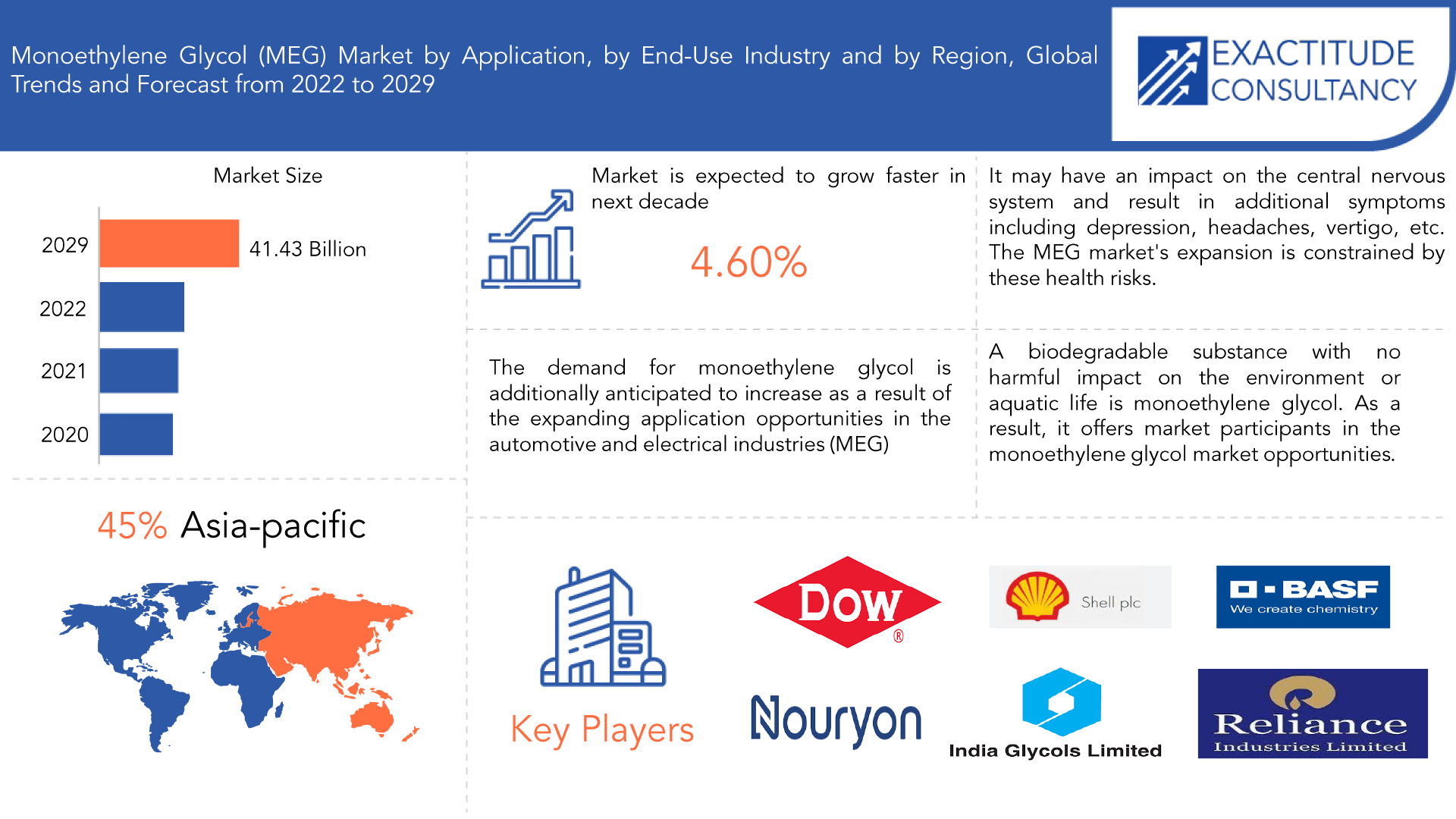
Si prevede che il mercato del glicole monoetilenico (MEG) crescerà a un CAGR del 4,60% dal 2022 al 2029. Si prevede che raggiungerà oltre 41,43 miliardi di USD entro il 2029 dai 27,64 miliardi di USD del 2020.
Il composto dal sapore dolce, incolore e inodore noto come glicole etilenico è anche noto come glicole monoetilenico. L'etilene, un sottoprodotto del gas naturale e del petrolio greggio, è la fonte del glicole monoetilenico. È un elemento grezzo fondamentale utilizzato in diverse applicazioni industriali. È utilizzato come refrigerante composito, agente disidratante, antigelo, antighiaccio e trasmettitore chimico per aeroplani. Il MEG è prodotto tramite un processo industriale dall'ossido di etilene dopo essere stato idratato termicamente.
Il MEG è utilizzato in bottiglie, imballaggi e polietilene tereftalato . Il glicole monoetilenico, un componente di antigelo, refrigeranti, antighiaccio per aeromobili e antighiaccio, è utilizzato nel secondo mercato più grande per l'antigelo. Si prevede che la domanda di fibra di poliestere sarà guidata dai gusti moderni della moda e dagli elevati standard di vita dei clienti, il che aumenterà immediatamente le dimensioni del mercato del prodotto per tutto il periodo previsto. La sostanza ha numerose applicazioni industriali, tra cui quelle per antigelo, inibitori di idrati nelle condotte del gas, refrigeranti e come agente di trasferimento di calore. Si prevede che queste applicazioni offriranno a una varietà di settori di utilizzo finale ampie opportunità. La fluttuazione nei costi delle materie prime e la disponibilità di petrolio greggio e altre materie prime sono uno dei principali ostacoli all'espansione del mercato del glicole monoetilenico (MEG). Diversi utenti finali sono alla ricerca di alternative al glicole monoetilenico (MEG) che abbiano prestazioni migliori in termini di materiali a causa di preoccupazioni sulla sua sostenibilità.
| ATTRIBUTO | DETTAGLI |
| Periodo di studio | 2020-2029 |
| Anno base | 2021 |
| Anno stimato | 2022 |
| Anno previsto | 2022-2029 |
| Periodo storico | 2018-2020 |
| Unità | Valore (miliardi di USD) (chilotoni) |
| Segmentazione | Per applicazione, per settore di utilizzo finale, per regione |
| Per applicazione |
|
| Per settore di utilizzo finale |
|
| Per regione |
|
Né l'ambiente né la vita acquatica sono danneggiati dalla sostanza biodegradabile glicole monoetilenico. Di conseguenza, è un buon sostituto per altri articoli, il che apre prospettive per i partecipanti del settore nel mercato del glicole monoetilenico. A causa della crescente domanda di poliestere e polietilene tereftalato (PET) nell'industria tessile e delle materie plastiche, anche il mercato del glicole monoetilenico si sta espandendo a livello globale. Un mercato in crescita per le applicazioni in polietilene tereftalato (PET) e glicole monoetilenico è stato stimolato dallo sviluppo dell'industria delle materie plastiche.
A causa del crollo del settore tessile causato dalla pandemia, la domanda di MEG è diminuita in modo significativo. La domanda di abbigliamento è diminuita drasticamente a causa delle persone rimaste a casa e della chiusura dei negozi al dettaglio. Di conseguenza, la domanda di fibre di poliestere, il mercato principale per l'uso finale di MEG, è diminuita. La pandemia ha avuto un impatto sulla catena di fornitura mondiale. I ritardi nei trasporti e le difficoltà logistiche sono stati causati dai lockdown e dalle chiusure delle frontiere. Ciò ha causato un calo della capacità produttiva e una carenza di risorse grezze.
Il mercato MEG ha subito forti fluttuazioni di prezzo a causa dell'epidemia. I prezzi sono diminuiti a causa del calo della domanda, ma sono aumentati a causa delle interruzioni della catena di fornitura. Da allora, è diventato difficile per i produttori pianificare e controllare i costi di produzione. La domanda di MEG è diminuita nell'industria tessile a causa della pandemia, ma è aumentata nella produzione di disinfettanti per le mani e altri disinfettanti. Di conseguenza, MEG ha ora una nuova fonte di domanda, compensando in qualche modo il calo della domanda da parte dell'industria tessile.
[caption id="allegato_18736" align="aligncenter" width="1920"]
Frequently Asked Questions
What is the worth of monoethylene glycol (MEG) Market?
The monoethylene glycol (MEG) market is expected to grow at 4.60% CAGR from 2022 to 2029. It is expected to reach above USD 41.43 billion by 2029 from USD 27.64 billion in 2020.
What is the size of the Asia Pacific in monoethylene glycol (MEG) Market?
Asia Pacific held more than 45% of the monoethylene glycol (MEG) Market revenue share in 2021 and will witness expansion in the forecast period.
What are some of the monoethylene glycol (MEG) Market's driving forces?
One of the key factors propelling the expansion of the global monoethylene glycol market is the rise in demand for polyester fiber, antifreeze, and polyethylene terephthalate (PET) resin. Also, Since monoethylene glycol is biodegradable, it has less of an impact on aquatic life. This element also contributes to the expansion of the global market for monoethylene glycol.
Which are the top companies to hold the Market share in monoethylene glycol (MEG) Market?
The Market research report covers the analysis of Market players. Key companies profiled in the report include Dow, Shell PLC, BASF SE, Nouryon, SABIC, India Glycols Ltd., Reliance Industries Ltd., Eastman Chemical Company, ME Global, Braskem
Which is the largest regional Market for monoethylene glycol (MEG) Market?
The greatest revenue share was accounted for by Asia Pacific. In terms of both production and consumption, the Monoethylene Glycol (MEG) market is dominated by the Asia Pacific region. The region accounts for the highest proportion of the worldwide MEG market, driven by the increased demand from various end-use sectors such as textiles, packaging, automotive, and construction. There are several variables that can be linked to the expansion of the Asia Pacific MEG market, including rising disposable income, urbanization, and population growth, all of which have increased demand for consumer goods and infrastructural growth.
Monoethylene Glycol (MEG) Market Segment Analysis
Monoethylene glycol (MEG) market is segmented based on application, end-use industry, and region.
Based on application, a significant portion of the market was made up of fiber. Due to MEG's employment in the creation of PET and polyester fibres, fiber is where MEG is most used. Almost half of all fibres consumed worldwide are made of polyester. The textile and apparel industry, clothing production, home furnishings, carpets and rugs, fiberfill, and non-woven fabrics all make extensive use of it. The market for polyester staple fiber is expanding as a result of the expanding automotive and building & construction sectors. The textile industry's huge potential for using polyester is driving the MEG market's expansion.
Based on end-use industry, a significant portion of the market was made up of textile. MEG is an essential component of the raw materials required to make polyester fibres and resins, which are subsequently used to create a variety of textiles, such as fabrics for industrial applications, home furnishings, and garments. Since to their low cost, durability, and ease of maintenance, polyester fibres have seen a consistent increase in demand over time. Natural fibres like cotton and wool, which are more expensive and use up more resources in production, are progressively being replaced with polyester fibres.
[caption id="attachment_18737" align="aligncenter" width="1920"]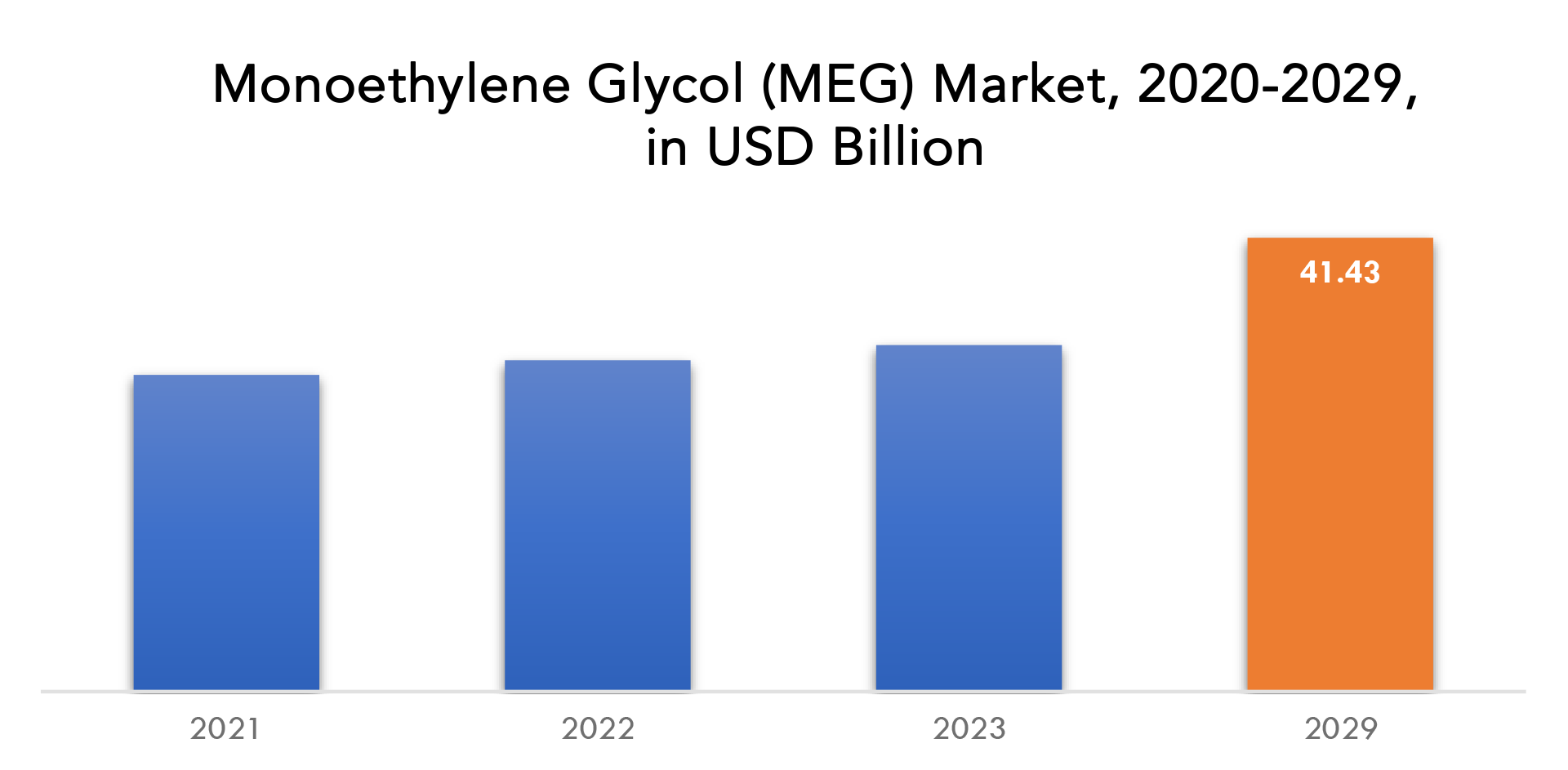
Monoethylene Glycol (MEG) Market Players
The Market research report covers the analysis of Market players. Key companies profiled in the report include Dow, Shell PLC, BASF SE, Nouryon, SABIC, India Glycols Ltd., Reliance Industries Ltd., Eastman Chemical Company, ME Global, Braskem- On March 2023, Dow expands portfolio of silicone-based products for photovoltaic assembly
- On December 2022, Shell and Eneco win bid to develop 760 MW offshore wind power in the Netherlands at Hollandse Kust (west) VI
Who Should Buy? Or Key Stakeholders
- Research and Development Institutes
- Regulatory Authorities
- Automotive Companies
- Industrial
- Potential Investors
- Plastic Industry
- Chemical Industry
- Others
Monoethylene Glycol (MEG) Market Regional Analysis
The monoethylene glycol (MEG) market by region includes north america, asia-pacific (APAC), europe, south america, and middle east & africa (MEA).
- North America: includes the US, Canada, Mexico
- Asia Pacific: includes China, Japan, South Korea, India, Australia, ASEAN, and Rest of APAC
- Europe: includes UK, Germany, France, Italy, Spain, Russia, and Rest of Europe
- South America: includes Brazil, Argentina, and Rest of South America
- Middle East & Africa: includes Turkey, UAE, Saudi Arabia, South Africa, and Rest of MEA
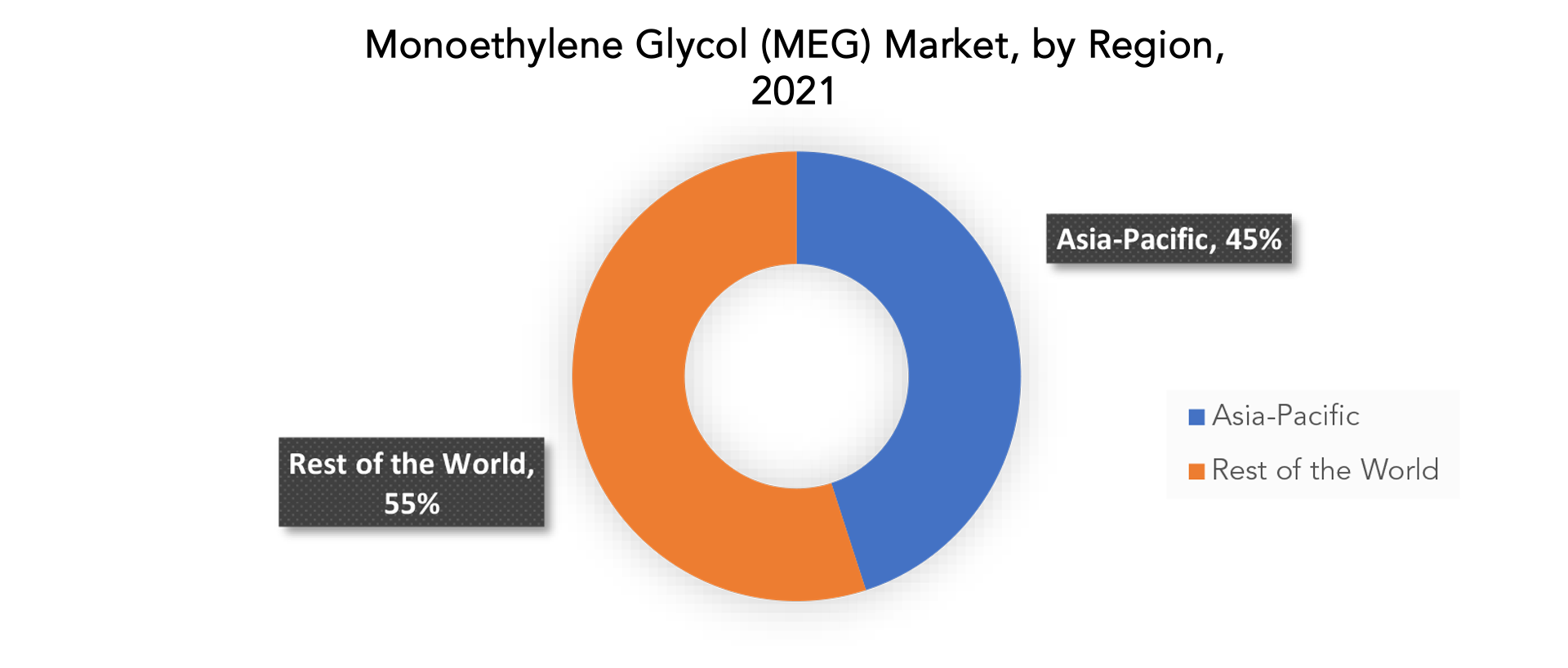
The greatest revenue share in 2021 over 45% was accounted for by Asia Pacific. In terms of both production and consumption, the Monoethylene Glycol (MEG) market is dominated by the Asia Pacific region. The region accounts for the highest proportion of the worldwide MEG market, driven by the increased demand from various end-use sectors such as textiles, packaging, automotive, and construction. China accounts for around 50% of the world's MEG production and consumption, making it the leading producer and user worldwide. India, South Korea, Japan, and Taiwan are among of the other significant MEG producers and users in the Asia Pacific region. There are several variables that can be linked to the expansion of the Asia Pacific MEG market, including rising disposable income, urbanization, and population growth, all of which have increased demand for consumer goods and infrastructural growth. The region's low cost of labour and supportive government policies has also drawn foreign investment into a variety of sectors, increasing demand for MEG. The Asia Pacific region is likely to continue dominating the MEG market in the future years due to its strong economic growth and the increasing demand for polyester fibres and resins in various end-use industries.
Key Market Segments: Monoethylene Glycol (MEG) Market
Monoethylene Glycol (Meg) Market By Application, 2020-2029, (USD Billion), (Kilotons)- Fiber
- Pet
- Film
- Antifreeze & Coolant
- Others
- Textile
- Packaging
- Plastic
- Automotive And Transportation
- Others
- North America
- Asia Pacific
- Europe
- South America
- Middle East And Africa
Exactitude Consultancy Services Key Objectives:
- Increasing sales and Market share
- Developing new technology
- Improving profitability
- Entering new markets
- Enhancing brand reputation
Key Question Answered
- What is the expected growth rate of the monoethylene glycol (MEG) market over the next 7 years?
- Who are the major players in the monoethylene glycol (MEG) market and what is their market share?
- What are the end-user industries driving demand for market and what is their outlook?
- What are the opportunities for growth in emerging markets such as asia-pacific, middle east, and africa?
- How is the economic environment affecting the monoethylene glycol (MEG) market, including factors such as interest rates, inflation, and exchange rates?
- What is the expected impact of government policies and regulations on the monoethylene glycol (MEG) market?
- What is the current and forecasted size and growth rate of the global monoethylene glycol (MEG) market?
- What are the key drivers of growth in the monoethylene glycol (MEG) market?
- Who are the major players in the market and what is their market share?
- What are the distribution channels and supply chain dynamics in the monoethylene glycol (MEG) market?
- What are the technological advancements and innovations in the monoethylene glycol (MEG) market and their impact on product development and growth?
- What are the regulatory considerations and their impact on the market?
- What are the challenges faced by players in the monoethylene glycol (MEG) market and how are they addressing these challenges?
- What are the opportunities for growth and expansion in the monoethylene glycol (MEG) market?
- What are the products offerings and specifications of leading players in the market?
- INTRODUZIONE
- DEFINIZIONE DI MERCATO
- SEGMENTAZIONE DEL MERCATO
- TEMPI DI RICERCA
- ASSUNZIONI E LIMITAZIONI
- METODOLOGIA DI RICERCA
- ESTRAZIONE DATI
- RICERCA SECONDARIA
- RICERCA PRIMARIA
- PARERI DEGLI ESPERTI IN MATERIA
- CONTROLLI DI QUALITÀ
- RECENSIONE FINALE
- TRIANGOLAZIONE DEI DATI
- APPROCCIO DAL BASSO VERSO L'ALTO
- APPROCCIO TOP-DOWN
- FLUSSO DI RICERCA
- FONTI DEI DATI
- ESTRAZIONE DATI
- SINTESI
- PANORAMICA DEL MERCATO
- PROSPETTIVE DEL MERCATO GLOBALE DEL MONOETILENE GLICOLE (MEG)
- FATTORI DI MERCATO
- LIMITAZIONI DI MERCATO
- OPPORTUNITÀ DI MERCATO
- IMPATTO DEL COVID-19 SUL MERCATO DEL GLICOLE MONOETILENICO (MEG)
- MODELLO DELLE CINQUE FORZE DI PORTER
- MINACCIA DAI NUOVI ENTRANSI
- MINACCIA DA SOSTITUTI
- POTERE CONTRATTUALE DEI FORNITORI
- POTERE CONTRATTUALE DEI CLIENTI
- GRADO DI COMPETIZIONE
- ANALISI DELLA CATENA DEL VALORE DEL SETTORE
- PROSPETTIVE DEL MERCATO GLOBALE DEL MONOETILENE GLICOLE (MEG)
- MERCATO GLOBALE DEL MONOETILENGLICOLE (MEG) PER APPLICAZIONE, 2020-2029, (MILIARDI DI USD), (KILOTONI)
- FIBRA
- ANIMALE DOMESTICO
- FILM
- ANTIGELO E REFRIGERANTE
- ALTRI
- MERCATO GLOBALE DEL MONOETILENGLICOLE (MEG) PER SETTORE DI UTILIZZO FINALE, 2020-2029, (MILIARDI DI USD), (KILOTONI)
- TESSUTI
- CONFEZIONE
- PLASTICA
- AUTOMOBILISTICA E TRASPORTI
- ALTRI
- MERCATO GLOBALE DEL MONOETILENGLICOLE (MEG) PER REGIONE, 2020-2029, (MILIARDI DI USD), (KILOTONI)
- AMERICA DEL NORD
- NOI
- CANADA
- MESSICO
- SUD AMERICA
- BRASILE
- ARGENTINA
- COLOMBIA
- REST OF SOUTH AMERICA
- EUROPE
- GERMANY
- UK
- FRANCE
- ITALY
- SPAIN
- RUSSIA
- REST OF EUROPE
- ASIA PACIFIC
- INDIA
- CHINA
- JAPAN
- SOUTH KOREA
- AUSTRALIA
- SOUTH-EAST ASIA
- REST OF ASIA PACIFIC
- MIDDLE EAST AND AFRICA
- UAE
- SAUDI ARABIA
- SOUTH AFRICA
- REST OF MIDDLE EAST AND AFRICA
- AMERICA DEL NORD
- COMPANY PROFILES* (BUSINESS OVERVIEW, COMPANY SNAPSHOT, PRODUCTS OFFERED, RECENT DEVELOPMENTS)
- DOW
- SHELL PLC
- BASF SE
- NOURYON
- SABIC
- INDIA GLYCOLS LTD.,
- RELIANCE INDUSTRIES LTD
- EASTMAN CHEMICAL COMPANY
- ME GLOBAL
- BRASKEM *THE COMPANY LIST IS INDICATIVE
LIST OF TABLES
TABLE 1 GLOBAL MONOETHYLENE GLYCOL (MEG) MARKET BY APPLICATION (USD BILLION), 2020-2029
TABLE 2 GLOBAL MONOETHYLENE GLYCOL (MEG) MARKET BY APPLICATION (KILOTONS), 2020-2029
TABLE 3 GLOBAL MONOETHYLENE GLYCOL (MEG) MARKET BY END-USE INDUSTRY (USD BILLION), 2020-2029
TABLE 4 GLOBAL MONOETHYLENE GLYCOL (MEG) MARKET BY END-USE INDUSTRY (KILOTONS), 2020-2029
TABLE 5 GLOBAL MONOETHYLENE GLYCOL (MEG) MARKET BY REGION (USD BILLION), 2020-2029
TABLE 6 GLOBAL MONOETHYLENE GLYCOL (MEG) MARKET BY REGION (KILOTONS), 2020-2029
TABLE 7 NORTH AMERICA MONOETHYLENE GLYCOL (MEG) MARKET BY APPLICATION (USD BILLION), 2020-2029
TABLE 8 NORTH AMERICA MONOETHYLENE GLYCOL (MEG) MARKET BY APPLICATION (KILOTONS), 2020-2029
TABLE 9 NORTH AMERICA MONOETHYLENE GLYCOL (MEG) MARKET BY END-USE INDUSTRY (USD BILLION), 2020-2029
TABLE 10 NORTH AMERICA MONOETHYLENE GLYCOL (MEG) MARKET BY END-USE INDUSTRY (KILOTONS), 2020-2029
TABLE 11 NORTH AMERICA MONOETHYLENE GLYCOL (MEG) MARKET BY COUNTRY (USD BILLION), 2020-2029
TABLE 12 NORTH AMERICA MONOETHYLENE GLYCOL (MEG) MARKET BY COUNTRY (KILOTONS), 2020-2029
TABLE 13 US MONOETHYLENE GLYCOL (MEG) MARKET BY APPLICATION (USD BILLION), 2020-2029
TABLE 14 US MONOETHYLENE GLYCOL (MEG) MARKET BY APPLICATION (KILOTONS), 2020-2029
TABLE 15 US MONOETHYLENE GLYCOL (MEG) MARKET BY END-USE INDUSTRY (USD BILLION), 2020-2029
TABLE 16 US MONOETHYLENE GLYCOL (MEG) MARKET BY END-USE INDUSTRY (KILOTONS), 2020-2029
TABLE 17 CANADA MONOETHYLENE GLYCOL (MEG) MARKET BY APPLICATION (USD BILLION), 2020-2029
TABLE 18 CANADA MONOETHYLENE GLYCOL (MEG) MARKET BY APPLICATION (KILOTONS), 2020-2029
TABLE 19 CANADA MONOETHYLENE GLYCOL (MEG) MARKET BY END-USE INDUSTRY (USD BILLION), 2020-2029
TABLE 20 CANADA MONOETHYLENE GLYCOL (MEG) MARKET BY END-USE INDUSTRY (KILOTONS), 2020-2029
TABLE 21 MEXICO MONOETHYLENE GLYCOL (MEG) MARKET BY APPLICATION (USD BILLION), 2020-2029
TABLE 22 MEXICO MONOETHYLENE GLYCOL (MEG) MARKET BY APPLICATION (KILOTONS), 2020-2029
TABLE 23 MEXICO MONOETHYLENE GLYCOL (MEG) MARKET BY END-USE INDUSTRY (USD BILLION), 2020-2029
TABLE 24 MEXICO MONOETHYLENE GLYCOL (MEG) MARKET BY END-USE INDUSTRY (KILOTONS), 2020-2029
TABLE 25 SOUTH AMERICA MONOETHYLENE GLYCOL (MEG) MARKET BY APPLICATION (USD BILLION), 2020-2029
TABLE 26 SOUTH AMERICA MONOETHYLENE GLYCOL (MEG) MARKET BY APPLICATION (KILOTONS), 2020-2029
TABLE 27 SOUTH AMERICA MONOETHYLENE GLYCOL (MEG) MARKET BY END-USE INDUSTRY (USD BILLION), 2020-2029
TABLE 28 SOUTH AMERICA MONOETHYLENE GLYCOL (MEG) MARKET BY END-USE INDUSTRY (KILOTONS), 2020-2029
TABLE 29 SOUTH AMERICA MONOETHYLENE GLYCOL (MEG) MARKET BY COUNTRY (USD BILLION), 2020-2029
TABLE 30 SOUTH AMERICA MONOETHYLENE GLYCOL (MEG) MARKET BY COUNTRY (KILOTONS), 2020-2029
TABLE 31 BRAZIL MONOETHYLENE GLYCOL (MEG) MARKET BY APPLICATION (USD BILLION), 2020-2029
TABLE 32 BRAZIL MONOETHYLENE GLYCOL (MEG) MARKET BY APPLICATION (KILOTONS), 2020-2029
TABLE 33 BRAZIL MONOETHYLENE GLYCOL (MEG) MARKET BY END-USE INDUSTRY (USD BILLION), 2020-2029
TABLE 34 BRAZIL MONOETHYLENE GLYCOL (MEG) MARKET BY END-USE INDUSTRY (KILOTONS), 2020-2029
TABLE 35 ARGENTINA MONOETHYLENE GLYCOL (MEG) MARKET BY APPLICATION (USD BILLION), 2020-2029
TABLE 36 ARGENTINA MONOETHYLENE GLYCOL (MEG) MARKET BY APPLICATION (KILOTONS), 2020-2029
TABLE 37 ARGENTINA MONOETHYLENE GLYCOL (MEG) MARKET BY END-USE INDUSTRY (USD BILLION), 2020-2029
TABLE 38 ARGENTINA MONOETHYLENE GLYCOL (MEG) MARKET BY END-USE INDUSTRY (KILOTONS), 2020-2029
TABLE 39 COLOMBIA MONOETHYLENE GLYCOL (MEG) MARKET BY APPLICATION (USD BILLION), 2020-2029
TABLE 40 COLOMBIA MONOETHYLENE GLYCOL (MEG) MARKET BY APPLICATION (KILOTONS), 2020-2029
TABLE 41 COLOMBIA MONOETHYLENE GLYCOL (MEG) MARKET BY END-USE INDUSTRY (USD BILLION), 2020-2029
TABLE 42 COLOMBIA MONOETHYLENE GLYCOL (MEG) MARKET BY END-USE INDUSTRY (KILOTONS), 2020-2029
TABLE 43 REST OF SOUTH AMERICA MONOETHYLENE GLYCOL (MEG) MARKET BY APPLICATION (USD BILLION), 2020-2029
TABLE 44 REST OF SOUTH AMERICA MONOETHYLENE GLYCOL (MEG) MARKET BY APPLICATION (KILOTONS), 2020-2029
TABLE 45 REST OF SOUTH AMERICA MONOETHYLENE GLYCOL (MEG) MARKET BY END-USE INDUSTRY (USD BILLION), 2020-2029
TABLE 46 REST OF SOUTH AMERICA MONOETHYLENE GLYCOL (MEG) MARKET BY END-USE INDUSTRY (KILOTONS), 2020-2029
TABLE 47 ASIA-PACIFIC MONOETHYLENE GLYCOL (MEG) MARKET BY APPLICATION (USD BILLION), 2020-2029
TABLE 48 ASIA-PACIFIC MONOETHYLENE GLYCOL (MEG) MARKET BY APPLICATION (KILOTONS), 2020-2029
TABLE 49 ASIA-PACIFIC MONOETHYLENE GLYCOL (MEG) MARKET BY END-USE INDUSTRY (USD BILLION), 2020-2029
TABLE 50 ASIA-PACIFIC MONOETHYLENE GLYCOL (MEG) MARKET BY END-USE INDUSTRY (KILOTONS), 2020-2029
TABLE 51 ASIA-PACIFIC MONOETHYLENE GLYCOL (MEG) MARKET BY COUNTRY (USD BILLION), 2020-2029
TABLE 52 ASIA-PACIFIC MONOETHYLENE GLYCOL (MEG) MARKET BY COUNTRY (KILOTONS), 2020-2029
TABLE 53 INDIA MONOETHYLENE GLYCOL (MEG) MARKET BY APPLICATION (USD BILLION), 2020-2029
TABLE 54 INDIA MONOETHYLENE GLYCOL (MEG) MARKET BY APPLICATION (KILOTONS), 2020-2029
TABLE 55 INDIA MONOETHYLENE GLYCOL (MEG) MARKET BY END-USE INDUSTRY (USD BILLION), 2020-2029
TABLE 56 INDIA MONOETHYLENE GLYCOL (MEG) MARKET BY END-USE INDUSTRY (KILOTONS), 2020-2029
TABLE 57 CHINA MONOETHYLENE GLYCOL (MEG) MARKET BY APPLICATION (USD BILLION), 2020-2029
TABLE 58 CHINA MONOETHYLENE GLYCOL (MEG) MARKET BY APPLICATION (KILOTONS), 2020-2029
TABLE 59 CHINA MONOETHYLENE GLYCOL (MEG) MARKET BY END-USE INDUSTRY (USD BILLION), 2020-2029
TABLE 60 CHINA MONOETHYLENE GLYCOL (MEG) MARKET BY END-USE INDUSTRY (KILOTONS), 2020-2029
TABLE 61 JAPAN MONOETHYLENE GLYCOL (MEG) MARKET BY APPLICATION (USD BILLION), 2020-2029
TABLE 62 JAPAN MONOETHYLENE GLYCOL (MEG) MARKET BY APPLICATION (KILOTONS), 2020-2029
TABLE 63 JAPAN MONOETHYLENE GLYCOL (MEG) MARKET BY END-USE INDUSTRY (USD BILLION), 2020-2029
TABLE 64 JAPAN MONOETHYLENE GLYCOL (MEG) MARKET BY END-USE INDUSTRY (KILOTONS), 2020-2029
TABLE 65 SOUTH KOREA MONOETHYLENE GLYCOL (MEG) MARKET BY APPLICATION (USD BILLION), 2020-2029
TABLE 66 SOUTH KOREA MONOETHYLENE GLYCOL (MEG) MARKET BY APPLICATION (KILOTONS), 2020-2029
TABLE 67 SOUTH KOREA MONOETHYLENE GLYCOL (MEG) MARKET BY END-USE INDUSTRY (USD BILLION), 2020-2029
TABLE 68 SOUTH KOREA MONOETHYLENE GLYCOL (MEG) MARKET BY END-USE INDUSTRY (KILOTONS), 2020-2029
TABLE 69 AUSTRALIA MONOETHYLENE GLYCOL (MEG) MARKET BY APPLICATION (USD BILLION), 2020-2029
TABLE 70 AUSTRALIA MONOETHYLENE GLYCOL (MEG) MARKET BY APPLICATION (KILOTONS), 2020-2029
TABLE 71 AUSTRALIA MONOETHYLENE GLYCOL (MEG) MARKET BY END-USE INDUSTRY (USD BILLION), 2020-2029
TABLE 72 AUSTRALIA MONOETHYLENE GLYCOL (MEG) MARKET BY END-USE INDUSTRY (KILOTONS), 2020-2029
TABLE 73 SOUTH EAST ASIA MONOETHYLENE GLYCOL (MEG) MARKET BY APPLICATION (USD BILLION), 2020-2029
TABLE 74 SOUTH EAST ASIA MONOETHYLENE GLYCOL (MEG) MARKET BY APPLICATION (KILOTONS), 2020-2029
TABLE 75 SOUTH EAST ASIA MONOETHYLENE GLYCOL (MEG) MARKET BY END-USE INDUSTRY (USD BILLION), 2020-2029
TABLE 76 SOUTH EAST ASIA MONOETHYLENE GLYCOL (MEG) MARKET BY END-USE INDUSTRY (KILOTONS), 2020-2029
TABLE 77 REST OF ASIA PACIFIC MONOETHYLENE GLYCOL (MEG) MARKET BY APPLICATION (USD BILLION), 2020-2029
TABLE 78 REST OF ASIA PACIFIC MONOETHYLENE GLYCOL (MEG) MARKET BY APPLICATION (KILOTONS), 2020-2029
TABLE 79 REST OF ASIA PACIFIC MONOETHYLENE GLYCOL (MEG) MARKET BY END-USE INDUSTRY (USD BILLION), 2020-2029
TABLE 80 REST OF ASIA PACIFIC MONOETHYLENE GLYCOL (MEG) MARKET BY END-USE INDUSTRY (KILOTONS), 2020-2029
TABLE 81 EUROPE MONOETHYLENE GLYCOL (MEG) MARKET BY APPLICATION (USD BILLION), 2020-2029
TABLE 82 EUROPE MONOETHYLENE GLYCOL (MEG) MARKET BY APPLICATION (KILOTONS), 2020-2029
TABLE 83 EUROPE MONOETHYLENE GLYCOL (MEG) MARKET BY END-USE INDUSTRY (USD BILLION), 2020-2029
TABLE 84 EUROPE MONOETHYLENE GLYCOL (MEG) MARKET BY END-USE INDUSTRY (KILOTONS), 2020-2029
TABLE 85 EUROPE MONOETHYLENE GLYCOL (MEG) MARKET BY COUNTRY (USD BILLION), 2020-2029
TABLE 86 EUROPE MONOETHYLENE GLYCOL (MEG) MARKET BY COUNTRY (KILOTONS), 2020-2029
TABLE 87 GERMANY MONOETHYLENE GLYCOL (MEG) MARKET BY APPLICATION (USD BILLION), 2020-2029
TABLE 88 GERMANY MONOETHYLENE GLYCOL (MEG) MARKET BY APPLICATION (KILOTONS), 2020-2029
TABLE 89 GERMANY MONOETHYLENE GLYCOL (MEG) MARKET BY END-USE INDUSTRY (USD BILLION), 2020-2029
TABLE 90 GERMANY MONOETHYLENE GLYCOL (MEG) MARKET BY END-USE INDUSTRY (KILOTONS), 2020-2029
TABLE 91 UK MONOETHYLENE GLYCOL (MEG) MARKET BY APPLICATION (USD BILLION), 2020-2029
TABLE 92 UK MONOETHYLENE GLYCOL (MEG) MARKET BY APPLICATION (KILOTONS), 2020-2029
TABLE 93 UK MONOETHYLENE GLYCOL (MEG) MARKET BY END-USE INDUSTRY (USD BILLION), 2020-2029
TABLE 94 UK MONOETHYLENE GLYCOL (MEG) MARKET BY END-USE INDUSTRY (KILOTONS), 2020-2029
TABLE 95 FRANCE MONOETHYLENE GLYCOL (MEG) MARKET BY APPLICATION (USD BILLION), 2020-2029
TABLE 96 FRANCE MONOETHYLENE GLYCOL (MEG) MARKET BY APPLICATION (KILOTONS), 2020-2029
TABLE 97 FRANCE MONOETHYLENE GLYCOL (MEG) MARKET BY END-USE INDUSTRY (USD BILLION), 2020-2029
TABLE 98 FRANCE MONOETHYLENE GLYCOL (MEG) MARKET BY END-USE INDUSTRY (KILOTONS), 2020-2029
TABLE 99 ITALY MONOETHYLENE GLYCOL (MEG) MARKET BY APPLICATION (USD BILLION), 2020-2029
TABLE 100 ITALY MONOETHYLENE GLYCOL (MEG) MARKET BY APPLICATION (KILOTONS), 2020-2029
TABLE 101 ITALY MONOETHYLENE GLYCOL (MEG) MARKET BY END-USE INDUSTRY (USD BILLION), 2020-2029
TABLE 102 ITALY MONOETHYLENE GLYCOL (MEG) MARKET BY END-USE INDUSTRY (KILOTONS), 2020-2029
TABLE 103 SPAIN MONOETHYLENE GLYCOL (MEG) MARKET BY APPLICATION (USD BILLION), 2020-2029
TABLE 104 SPAIN MONOETHYLENE GLYCOL (MEG) MARKET BY APPLICATION (KILOTONS), 2020-2029
TABLE 105 SPAIN MONOETHYLENE GLYCOL (MEG) MARKET BY END-USE INDUSTRY (USD BILLION), 2020-2029
TABLE 106 SPAIN MONOETHYLENE GLYCOL (MEG) MARKET BY END-USE INDUSTRY (KILOTONS), 2020-2029
TABLE 107 RUSSIA MONOETHYLENE GLYCOL (MEG) MARKET BY APPLICATION (USD BILLION), 2020-2029
TABLE 108 RUSSIA MONOETHYLENE GLYCOL (MEG) MARKET BY APPLICATION (KILOTONS), 2020-2029
TABLE 109 RUSSIA MONOETHYLENE GLYCOL (MEG) MARKET BY END-USE INDUSTRY (USD BILLION), 2020-2029
TABLE 110 RUSSIA MONOETHYLENE GLYCOL (MEG) MARKET BY END-USE INDUSTRY (KILOTONS), 2020-2029
TABLE 111 REST OF EUROPE MONOETHYLENE GLYCOL (MEG) MARKET BY APPLICATION (USD BILLION), 2020-2029
TABLE 112 REST OF EUROPE MONOETHYLENE GLYCOL (MEG) MARKET BY APPLICATION (KILOTONS), 2020-2029
TABLE 113 REST OF EUROPE MONOETHYLENE GLYCOL (MEG) MARKET BY END-USE INDUSTRY (USD BILLION), 2020-2029
TABLE 114 REST OF EUROPE MONOETHYLENE GLYCOL (MEG) MARKET BY END-USE INDUSTRY (KILOTONS), 2020-2029
TABLE 115 MIDDLE EAST AND AFRICA MONOETHYLENE GLYCOL (MEG) MARKET BY APPLICATION (USD BILLION), 2020-2029
TABLE 116 MIDDLE EAST AND AFRICA MONOETHYLENE GLYCOL (MEG) MARKET BY APPLICATION (KILOTONS), 2020-2029
TABLE 117 MIDDLE EAST AND AFRICA MONOETHYLENE GLYCOL (MEG) MARKET BY END-USE INDUSTRY (USD BILLION), 2020-2029
TABLE 118 MIDDLE EAST AND AFRICA MONOETHYLENE GLYCOL (MEG) MARKET BY END-USE INDUSTRY (KILOTONS), 2020-2029
TABLE 119 MIDDLE EAST AND AFRICA MONOETHYLENE GLYCOL (MEG) MARKET BY COUNTRY (USD BILLION), 2020-2029
TABLE 120 MIDDLE EAST AND AFRICA MONOETHYLENE GLYCOL (MEG) MARKET BY COUNTRY (KILOTONS), 2020-2029
TABLE 121 UAE MONOETHYLENE GLYCOL (MEG) MARKET BY APPLICATION (USD BILLION), 2020-2029
TABLE 122 UAE MONOETHYLENE GLYCOL (MEG) MARKET BY APPLICATION (KILOTONS), 2020-2029
TABLE 123 UAE MONOETHYLENE GLYCOL (MEG) MARKET BY END-USE INDUSTRY (USD BILLION), 2020-2029
TABLE 124 UAE MONOETHYLENE GLYCOL (MEG) MARKET BY END-USE INDUSTRY (KILOTONS), 2020-2029
TABLE 125 SAUDI ARABIA MONOETHYLENE GLYCOL (MEG) MARKET BY APPLICATION (USD BILLION), 2020-2029
TABLE 126 SAUDI ARABIA MONOETHYLENE GLYCOL (MEG) MARKET BY APPLICATION (KILOTONS), 2020-2029
TABLE 127 SAUDI ARABIA MONOETHYLENE GLYCOL (MEG) MARKET BY END-USE INDUSTRY (USD BILLION), 2020-2029
TABLE 128 SAUDI ARABIA MONOETHYLENE GLYCOL (MEG) MARKET BY END-USE INDUSTRY (KILOTONS), 2020-2029
TABLE 129 SOUTH AFRICA MONOETHYLENE GLYCOL (MEG) MARKET BY APPLICATION (USD BILLION), 2020-2029
TABLE 130 SOUTH AFRICA MONOETHYLENE GLYCOL (MEG) MARKET BY APPLICATION (KILOTONS), 2020-2029
TABLE 131 SOUTH AFRICA MONOETHYLENE GLYCOL (MEG) MARKET BY END-USE INDUSTRY (USD BILLION), 2020-2029
TABLE 132 SOUTH AFRICA MONOETHYLENE GLYCOL (MEG) MARKET BY END-USE INDUSTRY (KILOTONS), 2020-2029
TABLE 133 REST OF MIDDLE EAST AND AFRICA MONOETHYLENE GLYCOL (MEG) MARKET BY APPLICATION (USD BILLION), 2020-2029
TABLE 134 REST OF MIDDLE EAST AND AFRICA MONOETHYLENE GLYCOL (MEG) MARKET BY APPLICATION (KILOTONS), 2020-2029
TABLE 135 REST OF MIDDLE EAST AND AFRICA MONOETHYLENE GLYCOL (MEG) MARKET BY END-USE INDUSTRY (USD BILLION), 2020-2029
TABLE 136 REST OF MIDDLE EAST AND AFRICA MONOETHYLENE GLYCOL (MEG) MARKET BY END-USE INDUSTRY (KILOTONS), 2020-2029
LIST OF FIGURES
FIGURE 1 MARKET DYNAMICS
FIGURE 2 MARKET SEGMENTATION
FIGURE 3 REPORT TIMELINES: YEARS CONSIDERED
FIGURE 4 DATA TRIANGULATION
FIGURE 5 BOTTOM-UP APPROACH
FIGURE 6 TOP-DOWN APPROACH
FIGURE 7 RESEARCH FLOW
FIGURE 8 GLOBAL MONOETHYLENE GLYCOL (MEG) MARKET BY APPLICATION, USD BILLION, 2020-2029
FIGURE 9 GLOBAL MONOETHYLENE GLYCOL (MEG) MARKET BY END-USE INDUSTRY, USD BILLION, 2020-2029
FIGURE 10 GLOBAL MONOETHYLENE GLYCOL (MEG) MARKET BY REGION, USD BILLION, 2020-2029
FIGURE 11 PORTER’S FIVE FORCES MODEL
FIGURE 12 GLOBAL MONOETHYLENE GLYCOL (MEG) MARKET BY APPLICATION, USD BILLION, 2021
FIGURE 13 GLOBAL MONOETHYLENE GLYCOL (MEG) MARKET BY END-USE INDUSTRY, USD BILLION, 2021
FIGURE 14 GLOBAL MONOETHYLENE GLYCOL (MEG) MARKET BY REGION, USD BILLION, 2021
FIGURE 15 MARKET SHARE ANALYSIS
FIGURE 16 DOW: COMPANY SNAPSHOT
FIGURE 17 SHELL PLC: COMPANY SNAPSHOT
FIGURE 18 BASF SE: COMPANY SNAPSHOT
FIGURE 19 NOURYON: COMPANY SNAPSHOT
FIGURE 20 SABIC: COMPANY SNAPSHOT
FIGURE 21 INDIA GLYCOLS LTD: COMPANY SNAPSHOT
FIGURE 22 RELIANCE INDUSTRIES LTD.: COMPANY SNAPSHOT
FIGURE 23 EASTMAN CHEMICAL COMPANY: COMPANY SNAPSHOT
FIGURE 24 ME GLOBAL: COMPANY SNAPSHOT
FIGURE 25 BRASKEM: COMPANY SNAPSHOT
DOWNLOAD FREE SAMPLE REPORT
License Type
SPEAK WITH OUR ANALYST
Want to know more about the report or any specific requirement?
WANT TO CUSTOMIZE THE REPORT?
Our Clients Speak
We asked them to research ‘ Equipment market’ all over the world, and their whole arrangement was helpful to us. thehealthanalytics.com insightful analysis and reports contributed to our current analysis and in creating a future strategy. Besides, the te
Yosuke Mitsui
Senior Associate Construction Equipment Sales & Marketing
We asked them to research ‘Equipment market’ all over the world, and their whole arrangement was helpful to us. thehealthanalytics.com insightful analysis and reports contributed to our current analysis and in creating a future strategy. Besides, the te