

Base Year Value ()
x.x %
x.x %
CAGR ()
x.x %
x.x %
Forecast Year Value ()
x.x %
x.x %
Historical Data Period
Largest Region
Forecast Period
Mercato MIMO di massa per spettro (duplex a divisione di tempo (TDD), duplex a divisione di frequenza (FDD)) per tecnologia (LTE Advanced, LTE Advanced Pro, 5G), per tipo di antenna (8T8R, 16T16R, 32T32R, 64T64R, 128T128R) e regione, tendenze globali e previsioni dal 2022 al 2029
Instant access to hundreds of data points and trends
- Market estimates from 2014-2029
- Competitive analysis, industry segmentation, financial benchmarks
- Incorporates SWOT, Porter's Five Forces and risk management frameworks
- PDF report or online database with Word, Excel and PowerPoint export options
- 100% money back guarantee
Panoramica del mercato MIMO massivo
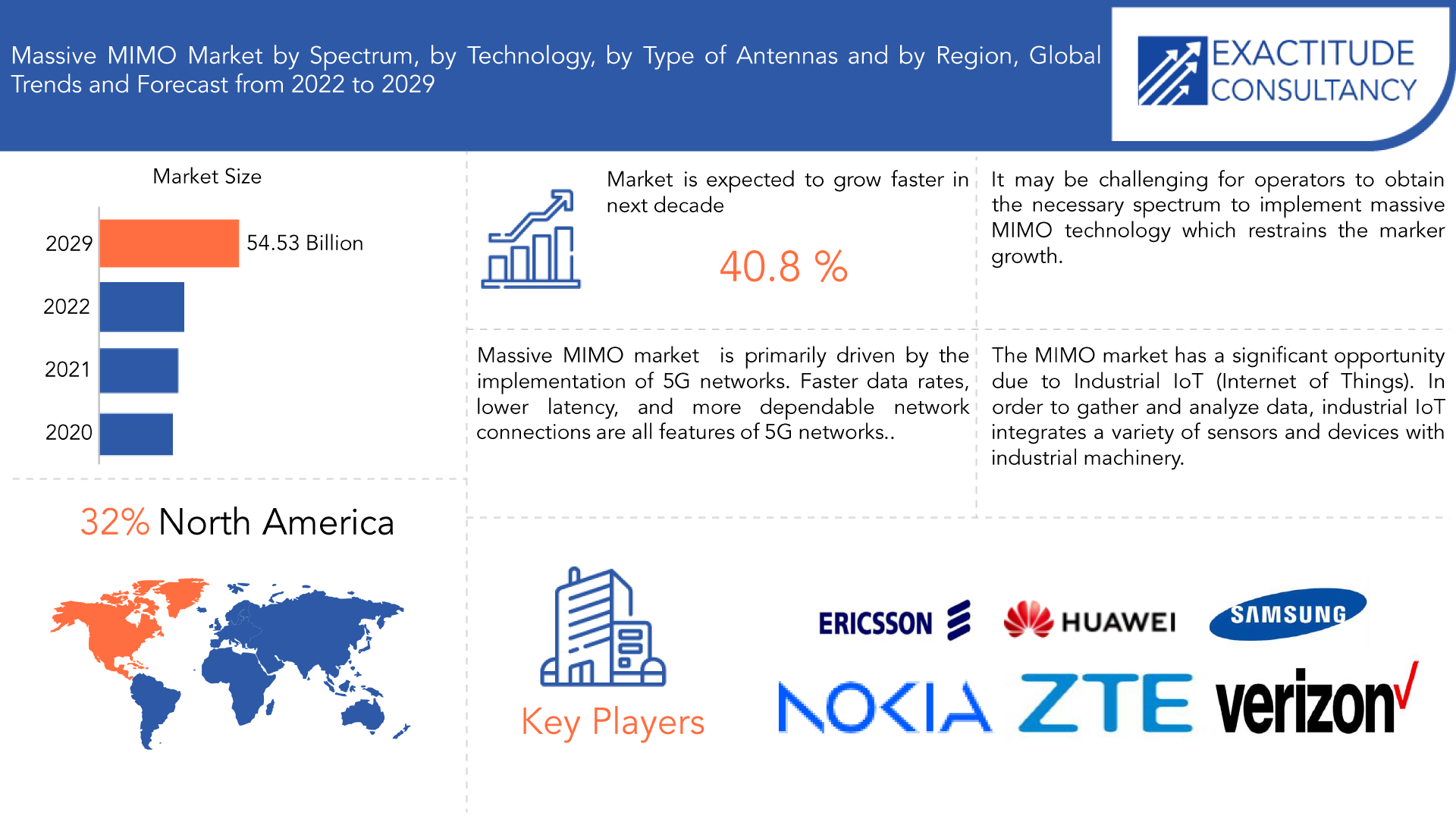
Si prevede che il massiccio mercato MIMO crescerà al 40,8% di CAGR dal 2022 al 2029. Si prevede che raggiungerà oltre 54,53 miliardi di USD entro il 2029 dai 3,53 miliardi di USD del 2021.
MIMO sta per Multiple-input, multiple-output. Nonostante implichi diverse tecnologie, MIMO è una rete wireless che consente la trasmissione e la ricezione simultanea di più segnali dati su un singolo canale radio. Nelle reti MIMO standard vengono solitamente utilizzate due o quattro antenne. D'altro canto, massive MIMO si riferisce a un sistema MIMO con un numero particolarmente elevato di antenne. Sebbene non vi sia un numero predeterminato di antenne che compongono una configurazione massive MIMO, il termine viene solitamente utilizzato per descrivere sistemi che hanno decine o addirittura centinaia di antenne. Ad esempio, sistemi Massive MIMO con un numero di antenne compreso tra 96 e 128 sono stati presentati da Huawei, ZTE e Facebook.
Una rete MIMO ha il vantaggio rispetto a una tradizionale di poter aumentare la capacità di una connessione wireless senza usare onde radio extra. Secondo i report, ci sono stati significativi miglioramenti della capacità, che potrebbero alla fine portare a un aumento di 50 volte. Il trasmettitore/ricevitore delle prestazioni in termini di velocità dei dati e affidabilità del collegamento migliora con il numero di antenne di cui è dotato, poiché più antenne aumentano il numero di potenziali percorsi del segnale.
| ATTRIBUTO | DETTAGLI |
| Periodo di studio | 2020-2029 |
| Anno base | 2021 |
| Anno stimato | 2022 |
| Anno previsto | 2022-2029 |
| Periodo storico | 2018-2020 |
| Unità | Valore (miliardi di USD) |
| Segmentazione | Per spettro, per tecnologia, per tipo di antenna |
| Per spettro |
|
| Per tecnologia |
|
| Per tipo di antenna |
|
| Per regione |
|
The massive MIMO market is primarily driven by the implementation of 5G networks. Faster data rates, lower latency, and more dependable network connections are all features of 5G networks. To address the escalating demand for data from consumers and corporations, this is crucial. In comparison to earlier wireless network generations, 5G networks operate in higher frequency ranges. Although there is more spectrum accessible in these higher frequency bands, they also have shorter propagation times and are more prone to interference. By enabling the use of numerous antennas to send and receive signals and so boosting network capacity, massive MIMO technology can increase spectrum efficiency. The internet of things (IoT) and autonomous vehicles are two examples of the new use cases that 5G networks are intended to support. As more antennas can be placed in a given space thanks to massive MIMO technology, coverage and capacity may be increased.
The distribution of spectrum for wireless communications is normally controlled by national governments, and there can be large regional differences in the distribution of spectrum. Because different frequency bands are used in various locations, this could lead to a fragmented market for massive MIMO technology, making it challenging for manufacturers to produce standardized solutions. The demand for wireless data is rising quickly, yet there is a finite quantity of spectrum that may be used for wireless communications. Due to this, it may be challenging for operators to obtain the necessary spectrum to implement massive MIMO technology. Massive MIMO systems might cause interference between various antennas when using many antennas.
The MIMO (Multiple Input Multiple Output) market has a significant opportunity due to Industrial IoT (Internet of Things). In order to gather and analyse data, industrial IoT integrates a variety of sensors and devices with industrial machinery. This allows organizations to make strategic decisions and optimise their operations. Massive MIMO technology can provide the high-speed data connectivity and improved network coverage that the industrial IoT is driving demand for. The capacity and coverage needed to enable industrial IoT applications can be supported by massive MIMO technology, allowing for real-time data processing and decision-making.
La pandemia ha evidenziato l'importanza della trasformazione digitale, in particolare in settori quali sanità, istruzione e commercio al dettaglio. Ciò ha portato a maggiori investimenti in tecnologie quali IoT e AI, che possono essere supportate dalla tecnologia MIMO massiva. Di conseguenza, la pandemia ha creato nuove opportunità per il massiccio mercato MIMO in questi settori. La pandemia ha causato incertezza economica, che ha portato a tagli al budget e a una riduzione degli investimenti in nuove tecnologie in alcuni settori. Ciò ha influenzato la crescita del massiccio mercato MIMO, in particolare nei settori duramente colpiti dalla pandemia, come viaggi e ospitalità. La pandemia ha attirato l'attenzione sul valore dell'IoT (Internet of Things) e dell'AI nelle smart city (intelligenza artificiale).
[caption id="allegato_19542" align="aligncenter" width="1920"]
Frequently Asked Questions
• What is the worth of the massive MIMO market?
The Massive MIMO market is expected to reach above USD 54.53 Billion by 2029 from USD 3.53 Billion in 2021.
• What is the size of the North American massive MIMO industry?
North America held more than 32% of the Massive MIMO market revenue share in 2021 and will witness expansion in the forecast period.
• What are some of the market's driving forces?
The huge MIMO market is primarily driven by the implementation of 5G networks. Faster data rates, lower latency, and more dependable network connections are all features of 5G networks. To address the escalating demand for data from consumers and corporations, this is crucial.
• Which are the top companies to hold the market share in the massive MIMO market?
The massive MIMO market key players include Telefonaktiebolaget L M Ericsson, Huawei Technologies Co., Ltd., Nokia Corporation, Samsung Corporation, ZTE Corporation, Verizon Communications Inc., China Unicom (Hong Kong) Ltd., China Mobile Ltd., Commscope, Inc., Deutsche Telekom.
• Which type of antennas accounts for the highest share of massive MIMO market?
Larger antenna configurations, including 64T64R and 128T128R, are typically anticipated to hold a bigger market share in the huge MIMO industry in the upcoming years. This is due to the fact that these bigger antenna designs can handle faster data rates and more capacity, both of which are crucial as more and more devices are linked to the network.
• Which is the largest regional market for massive MIMO market?
Massive MIMO (Multiple Input Multiple Output) is anticipated to have one of the largest global markets in North America. The demand for high-speed data connectivity is essentially what is fueling the market's expansion, especially with the rising uptake of cutting-edge technologies like 5G, the Internet of Things, and autonomous vehicles.
Massive MIMO Market Segment Analysis
The massive MIMO market is segmented based on spectrum, technology and type of antennas.
The market is divided into TDD and FDD based on spectrum. Due to its fast data rates and enormous capacity for both data and HD voice, the TDD sector is anticipated to hold the greatest market share of the two. Moreover, TDD improves client experience while lowering operator cost per bit. Wireless communication technologies, such as 4G LTE and 5G networks, utilize radio frequency spectrum known as TDD (Time Division Duplexing) spectrum. Using multiple frequency bands for upstream and downstream transmission distinguishes FDD (Frequency Division Duplexing) spectrum from TDD spectrum.
Based on technology massive MIMO market is sub segmented into LTE Advanced, LTE Advanced Pro, 5G .The LTE Advanced technology segment has the biggest market share thanks to its advantages, such as its ability to address bandwidth problems brought on by the presence of millions of users on a single carrier service.
Larger antenna configurations, including 64T64R and 128T128R, are typically anticipated to hold a bigger market share in the huge MIMO industry in the upcoming years. This is due to the fact that these bigger antenna designs can handle faster data rates and more capacity, both of which are crucial as more and more devices are linked to the network.
[caption id="attachment_19553" align="aligncenter" width="1920"]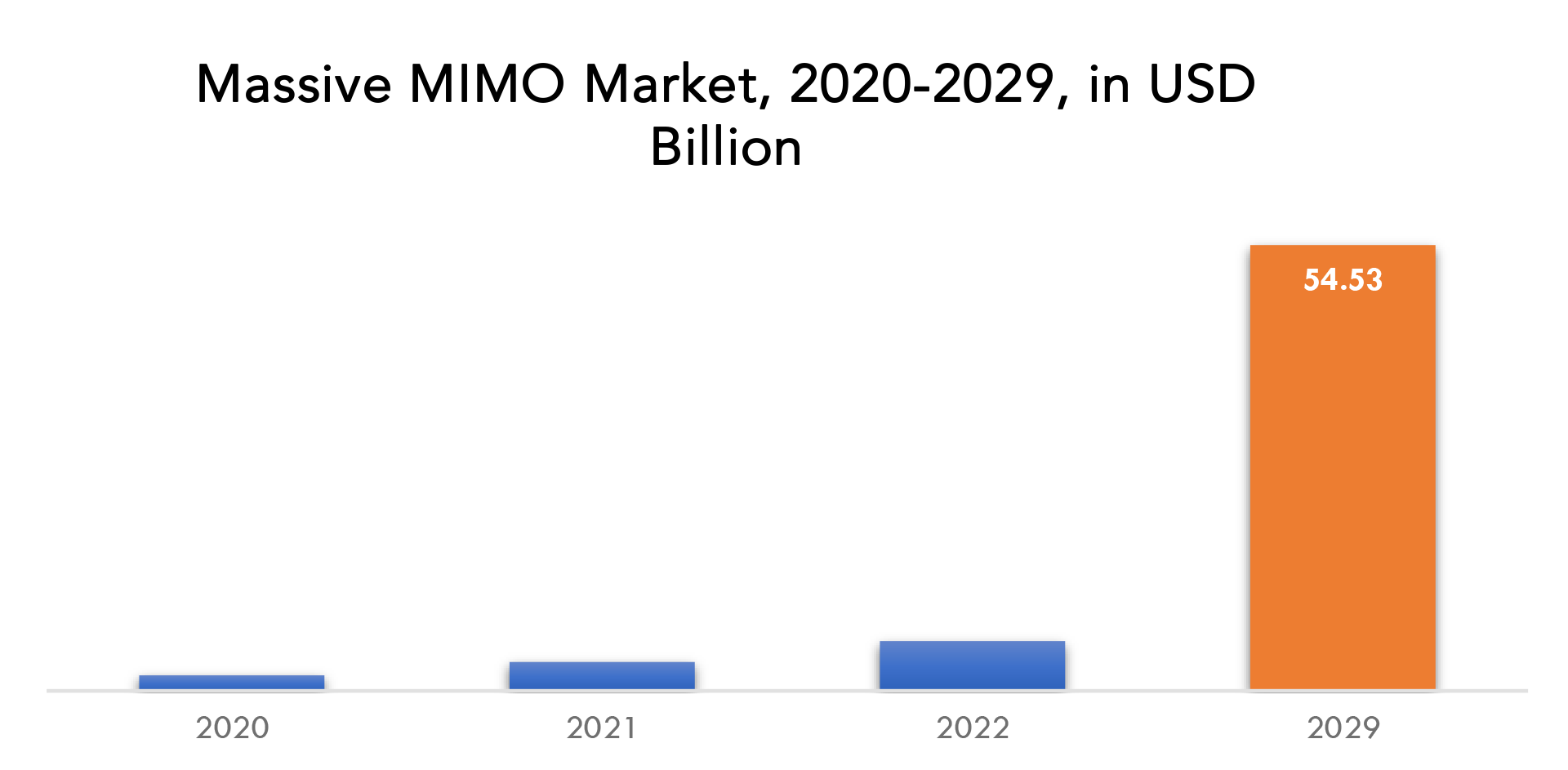
Massive MIMO Market Players
The massive MIMO market key players include L M Ericsson, Huawei Technologies Co., Ltd., Nokia Corporation, Samsung Corporation, Zte Corporation, Verizon Communications Inc., China Unicom (Hong Kong) Ltd., China Mobile Ltd., Commscope, Inc., Deutsche Telekom. March 1, 2023: Chunghwa Telecom (CHT) and Ericsson (NASDAQ: ERIC) inked a Memorandum of Understanding (MoU) at Mobile World Congress 2023 in Barcelona, Spain for cooperation in areas of 5G Advanced and 6G to explore 5G innovative applications. They aim to maximize energy efficiency and to create an energy-efficient network with distinguished mobile experience. September 22, 2022: Huawei started to commercially deploy its third-generation 5G Massive MIMO outside China, with the Philippines being the first major recipient. The major product in the third-generation 5G RAN series, MetaAAU, achieved the best performance and lowest power consumption by applying a wide range of leading wireless technologies and represents a key path for evolution to a 5.5G network.Who Should Buy? Or Key stakeholders
- Massive MIMO Suppliers
- IT and Telecom Companies
- Hardware and software companies
- Research Organizations
- Investors
- Regulatory Authorities
- Others
Massive MIMO Market Regional Analysis
The Massive MIMO market by region includes North America, Asia-Pacific (APAC), Europe, South America, and Middle East & Africa (MEA).
- North America: includes the US, Canada, Mexico
- Asia Pacific: includes China, Japan, South Korea, India, Australia, ASEAN and Rest of APAC
- Europe: includes UK, Germany, France, Italy, Spain, Russia, and Rest of Europe
- South America: includes Brazil, Argentina and Rest of South America
- Middle East & Africa: includes Turkey, UAE, Saudi Arabia, South Africa, and Rest of MEA
Massive MIMO (Multiple Input Multiple Output) is anticipated to have one of the largest global markets in North America. The demand for high-speed data connectivity is essentially what is fueling the market's expansion, especially with the rising uptake of cutting-edge technologies like 5G, the Internet of Things, and autonomous vehicles. Several significant actors in the telecommunications sector are based in North America, including significant mobile network operators, equipment manufacturers, and technology providers. These companies are actively funding the installation of large MIMO systems. The development of novel and cutting-edge massive MIMO solutions is also being fueled by the region's high rate of technology adoption and strong emphasis on innovation. Due to the extensive rollout of 5G networks throughout the nation, the US is anticipated to be the largest market for massive MIMO in North America. Massive MIMO systems are in great demand as a result of the 5G rollout since they are required to support the high data rates and expanded capacity that 5G networks demand.
Massive MIMO (Multiple Input Multiple Output) technology is anticipated to be one of the largest and fastest-growing global markets in the Asia Pacific (APAC) region. The market is expanding as a result of the rising need for high-speed data connectivity, quick urbanization, and the introduction of cutting-edge technologies like 5G, the Internet of Things, and autonomous vehicles.
[caption id="attachment_19556" align="aligncenter" width="1920"]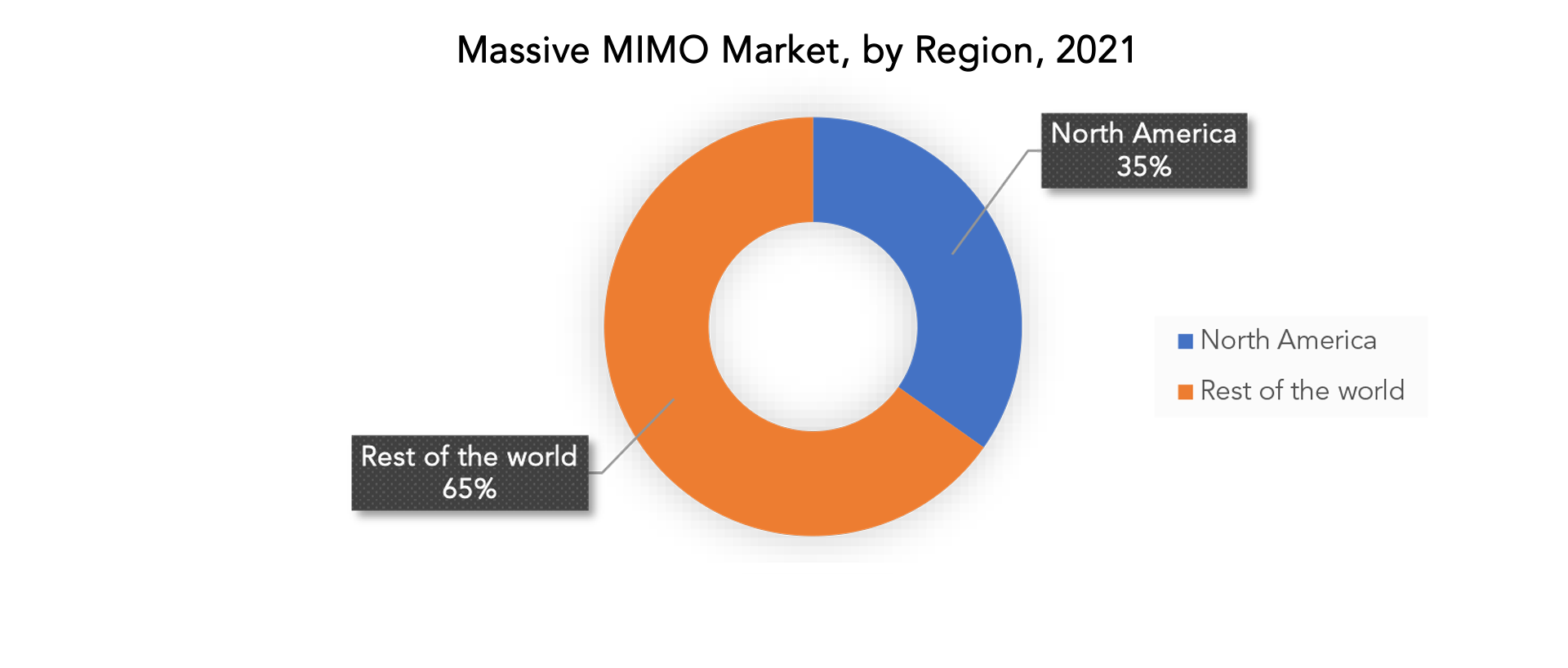
Key Market Segments: Massive MIMO Market
Massive MIMO Market By Spectrum, 2020-2029, (USD Billion)- Time-Division Duplexing (TDD)
- Frequency Division Duplex (FDD)
- LTE Advanced
- LTE Advanced Pro
- 5G
- 8t8r
- 16t16r
- 32t32r
- 64t64r
- 128t128r
- North America
- Asia Pacific
- Europe
- South America
- Middle East And Africa
Key Question Answered
- What is the expected growth rate of the massive MIMO market over the next 7 years?
- Who are the major players in the massive MIMO market and what is their market share?
- What are the end-user industries driving market demand and what is their outlook?
- What are the opportunities for growth in emerging markets such as Asia-Pacific, the Middle East, and Africa?
- How is the economic environment affecting the massive MIMO market, including factors such as interest rates, inflation, and exchange rates?
- What is the expected impact of government policies and regulations on the massive MIMO market?
- What is the current and forecasted size and growth rate of the global massive MIMO market?
- What are the key drivers of growth in the massive MIMO market?
- Who are the major players in the market and what is their market share?
- What are the distribution channels and supply chain dynamics in the massive MIMO market?
- What are the technological advancements and innovations in the massive MIMO market and their impact on product development and growth?
- What are the regulatory considerations and their impact on the market?
- What are the challenges faced by players in the massive MIMO market and how are they addressing these challenges?
- What are the opportunities for growth and expansion in the massive MIMO market?
- What are the service offerings and specifications of leading players in the market?
- INTRODUZIONE
- DEFINIZIONE DI MERCATO
- SEGMENTAZIONE DEL MERCATO
- TEMPI DI RICERCA
- ASSUNZIONI E LIMITAZIONI
- METODOLOGIA DI RICERCA
- ESTRAZIONE DATI
- RICERCA SECONDARIA
- RICERCA PRIMARIA
- PARERI DEGLI ESPERTI IN MATERIA
- CONTROLLI DI QUALITÀ
- RECENSIONE FINALE
- TRIANGOLAZIONE DEI DATI
- APPROCCIO DAL BASSO VERSO L'ALTO
- APPROCCIO TOP-DOWN
- FLUSSO DI RICERCA
- FONTI DEI DATI
- ESTRAZIONE DATI
- SINTESI
- PANORAMICA DEL MERCATO
- PROSPETTIVE DEL MERCATO GLOBALE MIMO MASSIVO
- FATTORI DI MERCATO
- LIMITAZIONI DI MERCATO
- OPPORTUNITÀ DI MERCATO
- IMPATTO DEL COVID-19 SUL MERCATO MIMO MASSICCIO
- MODELLO DELLE CINQUE FORZE DI PORTER
- MINACCIA DAI NUOVI ENTRANSI
- MINACCIA DA SOSTITUTI
- POTERE CONTRATTUALE DEI FORNITORI
- POTERE CONTRATTUALE DEI CLIENTI
- GRADO DI COMPETIZIONE
- ANALISI DELLA CATENA DEL VALORE DEL SETTORE
- PROSPETTIVE DEL MERCATO GLOBALE MIMO MASSIVO
- MERCATO GLOBALE MIMO MASSIVO PER SPETTRO, (MILIARDI DI USD)
- DUPLEXING A DIVISIONE DI TEMPO (TDD)
- DUPLEX A DIVISIONE DI FREQUENZA (FDD)
- MERCATO GLOBALE MIMO MASSIVO PER TECNOLOGIA (MILIARDI DI USD)
- LTE AVANZATO
- LTE AVANZATO PRO
- 5G
- MERCATO GLOBALE MIMO MASSIVO PER TIPO DI ANTENNA, (MILIARDI DI USD)
- 8T8R
- 16T16R
- 32T32R
- 64T64R
- 128T128R
- MERCATO MIMO GLOBALE MASSIVO PER REGIONE (MILIARDI DI USD)
- AMERICA DEL NORD
- NOI
- CANADA
- MESSICO
- SUD AMERICA
- BRASILE
- ARGENTINA
- COLOMBIA
- RESTO DEL SUD AMERICA
- EUROPA
- GERMANIA
- Regno Unito
- FRANCIA
- ITALIA
- SPAGNA
- RUSSIA
- RESTO D'EUROPA
- ASIA PACIFICO
- INDIA
- CINA
- GIAPPONE
- COREA DEL SUD
- AUSTRALIA
- ASIA SUD-ORIENTALE
- RESTO DELL'ASIA PACIFICO
- MEDIO ORIENTE E AFRICA
- Emirati Arabi Uniti
- ARABIA SAUDITA
- SUDAFRICA
- RESTO DEL MEDIO ORIENTE E AFRICA
- AMERICA DEL NORD
- PROFILI AZIENDALI* (PANORAMICA AZIENDALE, PANORAMICA AZIENDALE, PRODOTTI OFFERTI, SVILUPPI RECENTI)
- TELEFONAKTIEBOLAGET LM ERICSSON
- HUAWEI TECHNOLOGIES CO., LTD.
- NOKIA CORPORAZIONE
- SAMSUNG CORPORAZIONE
- ZTE CORPORAZIONE
- Società controllata da VERIZON COMMUNICATIONS INC.
- CHINA UNICOM (HONG KONG) LTD.
- CHINA MOBILE LTD.
- COMMSCOPE, INC.
- DEUTSCHE TELEKOM. *L'ELENCO DELLE AZIENDE È INDICATIVO
ELENCO DELLE TABELLE
TABLE 1 GLOBAL MASSIVE MIMO MARKET BY SPECTRUM (USD BILLION), 2020-2029
TABLE 2 GLOBAL MASSIVE MIMO MARKET BY TECHNOLOGY (USD BILLION), 2020-2029
TABLE 3 GLOBAL MASSIVE MIMO MARKET BY TYPE OF ANTENNA (USD BILLION), 2020-2029
TABLE 4 GLOBAL MASSIVE MIMO MARKET BY REGION (USD BILLION), 2020-2029
TABLE 5 NORTH AMERICA MASSIVE MIMO MARKET BY SPECTRUM (USD BILLION), 2020-2029
TABLE 6 NORTH AMERICA MASSIVE MIMO MARKET BY TECHNOLOGY (USD BILLION), 2020-2029
TABLE 7 NORTH AMERICA MASSIVE MIMO MARKET BY TYPE OF ANTENNA (USD BILLION), 2020-2029
TABLE 8 NORTH AMERICA MASSIVE MIMO MARKET BY COUNTRY (USD BILLION), 2020-2029
TABLE 9 US MASSIVE MIMO MARKET BY SPECTRUM (USD BILLION), 2020-2029
TABLE 10 US MASSIVE MIMO MARKET BY TECHNOLOGY (USD BILLION), 2020-2029
TABLE 11 US MASSIVE MIMO MARKET BY TYPE OF ANTENNA (USD BILLION), 2020-2029
TABLE 12 CANADA MASSIVE MIMO MARKET BY SPECTRUM (BILLION), 2020-2029
TABLE 13 CANADA MASSIVE MIMO MARKET BY TECHNOLOGY (USD BILLION), 2020-2029
TABLE 14 CANADA MASSIVE MIMO MARKET BY TYPE OF ANTENNA (USD BILLION), 2020-2029
TABLE 15 MEXICO MASSIVE MIMO MARKET BY SPECTRUM (USD BILLION), 2020-2029
TABLE 16 MEXICO MASSIVE MIMO MARKET BY TECHNOLOGY (USD BILLION), 2020-2029
TABLE 17 MEXICO MASSIVE MIMO MARKET BY TYPE OF ANTENNA (USD BILLION), 2020-2029
TABLE 18 SOUTH AMERICA MASSIVE MIMO MARKET BY SPECTRUM (USD BILLION), 2020-2029
TABLE 19 SOUTH AMERICA MASSIVE MIMO MARKET BY TECHNOLOGY (USD BILLION), 2020-2029
TABLE 20 SOUTH AMERICA MASSIVE MIMO MARKET BY TYPE OF ANTENNA (USD BILLION), 2020-2029
TABLE 21 SOUTH AMERICA MASSIVE MIMO MARKET BY COUNTRY (USD BILLION), 2020-2029
TABLE 22 BRAZIL MASSIVE MIMO MARKET BY SPECTRUM (USD BILLION), 2020-2029
TABLE 23 BRAZIL MASSIVE MIMO MARKET BY TECHNOLOGY (USD BILLION), 2020-2029
TABLE 24 BRAZIL MASSIVE MIMO MARKET BY TYPE OF ANTENNA (USD BILLION), 2020-2029
TABLE 25 ARGENTINA MASSIVE MIMO MARKET BY SPECTRUM (USD BILLION), 2020-2029
TABLE 26 ARGENTINA MASSIVE MIMO MARKET BY TECHNOLOGY (USD BILLION), 2020- 2029
TABLE 27 ARGENTINA MASSIVE MIMO MARKET BY TYPE OF ANTENNA (USD BILLION), 2020-2029
TABLE 28 COLOMBIA MASSIVE MIMO MARKET BY SPECTRUM (USD BILLION), 2020-2029
TABLE 29 COLOMBIA MASSIVE MIMO MARKET BY TECHNOLOGY (USD BILLION), 2020-2029
TABLE 30 COLOMBIA MASSIVE MIMO MARKET BY TYPE OF ANTENNA (USD BILLION), 2020-2029
TABLE 31 REST OF SOUTH AMERICA MASSIVE MIMO MARKET BY SPECTRUM (USD BILLION), 2020-2029
TABLE 32 REST OF SOUTH AMERICA MASSIVE MIMO MARKET BY TECHNOLOGY (USD BILLION), 2020-2029
TABLE 33 REST OF SOUTH AMERICA MASSIVE MIMO MARKET BY TYPE OF ANTENNA (USD BILLION), 2020-2029
TABLE 34 ASIA-PACIFIC MASSIVE MIMO MARKET BY SPECTRUM (USD BILLION), 2020-2029
TABLE 35 ASIA-PACIFIC MASSIVE MIMO MARKET BY TECHNOLOGY (USD BILLION), 2020-2029
TABLE 36 ASIA-PACIFIC MASSIVE MIMO MARKET BY TYPE OF ANTENNA (USD BILLION), 2020-2029
TABLE 37 ASIA-PACIFIC MASSIVE MIMO MARKET BY COUNTRY (USD BILLION), 2020-2029
TABLE 38 INDIA MASSIVE MIMO MARKET BY SPECTRUM (USD BILLION), 2020-2029
TABLE 39 INDIA MASSIVE MIMO MARKET BY TECHNOLOGY (USD BILLION), 2020-2029
TABLE 40 INDIA MASSIVE MIMO MARKET BY TYPE OF ANTENNA (USD BILLION), 2020-2029
TABLE 41 CHINA MASSIVE MIMO MARKET BY SPECTRUM (USD BILLION), 2020-2029
TABLE 42 CHINA MASSIVE MIMO MARKET BY TECHNOLOGY (USD BILLION), 2020-2029
TABLE 43 CHINA MASSIVE MIMO MARKET BY TYPE OF ANTENNA (USD BILLION), 2020-2029
TABLE 44 JAPAN MASSIVE MIMO MARKET BY SPECTRUM (USD BILLION), 2020-2029
TABLE 45 JAPAN MASSIVE MIMO MARKET BY TECHNOLOGY (USD BILLION), 2020-2029
TABLE 46 JAPAN MASSIVE MIMO MARKET BY TYPE OF ANTENNA (USD BILLION), 2020-2029
TABLE 47 SOUTH KOREA MASSIVE MIMO MARKET BY SPECTRUM (USD BILLION), 2020-2029
TABLE 48 SOUTH KOREA MASSIVE MIMO MARKET BY TECHNOLOGY (USD BILLION), 2020-2029
TABLE 49 SOUTH KOREA MASSIVE MIMO MARKET BY TYPE OF ANTENNA (USD BILLION), 2020-2029
TABLE 50 AUSTRALIA MASSIVE MIMO MARKET BY SPECTRUM (USD BILLION), 2020-2029
TABLE 51 AUSTRALIA MASSIVE MIMO MARKET BY TECHNOLOGY (USD BILLION), 2020-2029
TABLE 52 AUSTRALIA MASSIVE MIMO MARKET BY TYPE OF ANTENNA (USD BILLION), 2020-2029
TABLE 53 SOUTH EAST ASIA MASSIVE MIMO MARKET BY SPECTRUM (USD BILLION), 2020-2029
TABLE 54 SOUTH EAST ASIA MASSIVE MIMO MARKET BY TECHNOLOGY (USD BILLION), 2020-2029
TABLE 55 SOUTH EAST ASIA MASSIVE MIMO MARKET BY TYPE OF ANTENNA (USD BILLION), 2020-2029
TABLE 56 REST OF ASIA PACIFIC MASSIVE MIMO MARKET BY SPECTRUM (USD BILLION), 2020-2029
TABLE 57 REST OF ASIA PACIFIC MASSIVE MIMO MARKET BY TECHNOLOGY (USD BILLION), 2020-2029
TABLE 58 REST OF ASIA PACIFIC MASSIVE MIMO MARKET BY TYPE OF ANTENNA (USD BILLION), 2020-2029
TABLE 59 EUROPE MASSIVE MIMO MARKET BY SPECTRUM (USD BILLION), 2020-2029
TABLE 60 EUROPE MASSIVE MIMO MARKET BY TECHNOLOGY (USD BILLION), 2020-2029
TABLE 61 EUROPE MASSIVE MIMO MARKET BY TYPE OF ANTENNA (USD BILLION), 2020-2029
TABLE 62 EUROPE MASSIVE MIMO MARKET BY COUNTRY (USD BILLION), 2020-2029
TABLE 63 GERMANY MASSIVE MIMO MARKET BY SPECTRUM (USD BILLION), 2020-2029
TABLE 64 GERMANY MASSIVE MIMO MARKET BY TECHNOLOGY (USD BILLION), 2020-2029
TABLE 65 GERMANY MASSIVE MIMO MARKET BY TYPE OF ANTENNA (USD BILLION), 2020-2029
TABLE 66 UK MASSIVE MIMO MARKET BY SPECTRUM (USD BILLION), 2020-2029
TABLE 67 UK MASSIVE MIMO MARKET BY TECHNOLOGY (USD BILLION), 2020-2029
TABLE 68 UK MASSIVE MIMO MARKET BY TYPE OF ANTENNA (USD BILLION), 2020-2029
TABLE 69 FRANCE MASSIVE MIMO MARKET BY SPECTRUM (USD BILLION), 2020-2029
TABLE 70 FRANCE MASSIVE MIMO MARKET BY TECHNOLOGY (USD BILLION), 2020-2029
TABLE 71 FRANCE MASSIVE MIMO MARKET BY TYPE OF ANTENNA (USD BILLION), 2020-2029
TABLE 72 ITALY MASSIVE MIMO MARKET BY SPECTRUM (USD BILLION), 2020-2029
TABLE 73 ITALY MASSIVE MIMO MARKET BY TECHNOLOGY (USD BILLION), 2020-2029
TABLE 74 ITALY MASSIVE MIMO MARKET BY TYPE OF ANTENNA (USD BILLION), 2020-2029
TABLE 75 SPAIN MASSIVE MIMO MARKET BY SPECTRUM (USD BILLION), 2020-2029
TABLE 76 SPAIN MASSIVE MIMO MARKET BY TECHNOLOGY (USD BILLION), 2020-2029
TABLE 77 SPAIN MASSIVE MIMO MARKET BY TYPE OF ANTENNA (USD BILLION), 2020-2029
TABLE 78 RUSSIA MASSIVE MIMO MARKET BY SPECTRUM (USD BILLION), 2020-2029
TABLE 79 RUSSIA MASSIVE MIMO MARKET BY TECHNOLOGY (USD BILLION), 2020-2029
TABLE 80 RUSSIA MASSIVE MIMO MARKET BY TYPE OF ANTENNA (USD BILLION), 2020-2029
TABLE 81 REST OF EUROPE MASSIVE MIMO MARKET BY SPECTRUM (USD BILLION), 2020-2029
TABLE 82 REST OF EUROPE MASSIVE MIMO MARKET BY TECHNOLOGY (USD BILLION), 2020-2029
TABLE 83 REST OF EUROPE MASSIVE MIMO MARKET BY TYPE OF ANTENNA (USD BILLION), 2020-2029
TABLE 84 MIDDLE EAST AND AFRICA MASSIVE MIMO MARKET BY SPECTRUM (USD BILLION), 2020-2029
TABLE 85 MIDDLE EAST AND AFRICA MASSIVE MIMO MARKET BY TECHNOLOGY (USD BILLION), 2020-2029
TABLE 86 MIDDLE EAST AND AFRICA MASSIVE MIMO MARKET BY TYPE OF ANTENNA (USD BILLION), 2020-2029
TABLE 87 MIDDLE EAST AND AFRICA MASSIVE MIMO MARKET BY COUNTRY (USD BILLION), 2020-2029
TABLE 88 UAE MASSIVE MIMO MARKET BY SPECTRUM (USD BILLION), 2020-2029
TABLE 89 UAE MASSIVE MIMO MARKET BY TECHNOLOGY (USD BILLION), 2020-2029
TABLE 90 UAE MASSIVE MIMO MARKET BY TYPE OF ANTENNA (USD BILLION), 2020-2029
TABLE 91 SAUDI ARABIA MASSIVE MIMO MARKET BY SPECTRUM (USD BILLION), 2020-2029
TABLE 92 SAUDI ARABIA MASSIVE MIMO MARKET BY TECHNOLOGY (USD BILLION), 2020-2029
TABLE 93 SAUDI ARABIA MASSIVE MIMO MARKET BY TYPE OF ANTENNA (USD BILLION), 2020-2029
TABLE 94 SOUTH AFRICA MASSIVE MIMO MARKET BY SPECTRUM (USD BILLION), 2020-2029
TABLE 95 SOUTH AFRICA MASSIVE MIMO MARKET BY TECHNOLOGY (USD BILLION), 2020-2029
TABLE 96 SOUTH AFRICA MASSIVE MIMO MARKET BY TYPE OF ANTENNA (USD BILLION), 2020-2029
TABLE 97 REST OF MIDDLE EAST AND AFRICA MASSIVE MIMO MARKET BY SPECTRUM (USD BILLION), 2020-2029
TABLE 98 REST OF MIDDLE EAST AND AFRICA MASSIVE MIMO MARKET BY TECHNOLOGY (USD BILLION), 2020-2029
TABLE 99 REST OF MIDDLE EAST AND AFRICA MASSIVE MIMO MARKET BY TYPE OF ANTENNA (USD BILLION), 2020-2029
LIST OF FIGURES
FIGURE 1 MARKET DYNAMICS
FIGURE 2 MARKET SEGMENTATION
FIGURE 3 REPORT TIMELINES: YEARS CONSIDERED
FIGURE 4 DATA TRIANGULATION
FIGURE 5 BOTTOM-UP APPROACH
FIGURE 6 TOP-DOWN APPROACH
FIGURE 7 RESEARCH FLOW
FIGURE 8 GLOBAL MASSIVE MIMO BY SPECTRUM, USD BILLION, 2020-2029
FIGURE 9 GLOBAL MASSIVE MIMO BY TECHNOLOGY, USD BILLION, 2020-2029
FIGURE 10 GLOBAL MASSIVE MIMO BY TYPE OF ANTENNA USD BILLION, 2020-2029
FIGURE 11 GLOBAL MASSIVE MIMO BY REGION, USD BILLION, 2020-2029
FIGURE 12 PORTER’S FIVE FORCES MODEL
FIGURE 13 GLOBAL MASSIVE MIMO MARKET BY REGION 2021
FIGURE 14 GLOBAL MASSIVE MIMO MARKET BY TECHNOLOGY 2021
FIGURE 15 GLOBAL MASSIVE MIMO MARKET BY SPECTRUM 2021
FIGURE 16 GLOBAL MASSIVE MIMO MARKET BY TYPE OF ANTENNA 2021
FIGURE 17 MARKET SHARE ANALYSIS
FIGURE 18 L M ERICSSON: COMPANY SNAPSHOT
FIGURE 19 HUAWEI TECHNOLOGIES CO: COMPANY SNAPSHOT
FIGURE 20 NOKIA CORPORATION: COMPANY SNAPSHOT
FIGURE 21 SAMSUNG CORPORATION: COMPANY SNAPSHOT
FIGURE 22 ZTE CORPORATION: COMPANY SNAPSHOT
FIGURE 23 VERIZON COMMUNICATIONS INC: COMPANY SNAPSHOT
FIGURE 24 CHINA UNICOM (HONG KONG) LTD: COMPANY SNAPSHOT
FIGURE 25 CHINA MOBILE LTD.: COMPANY SNAPSHOT
FIGURE 26 COMMSCOPE: COMPANY SNAPSHOT
FIGURE 27 DEUTSCHE TELEKOM: COMPANY SNAPSHOT
DOWNLOAD FREE SAMPLE REPORT
License Type
SPEAK WITH OUR ANALYST
Want to know more about the report or any specific requirement?
WANT TO CUSTOMIZE THE REPORT?
Our Clients Speak
We asked them to research ‘ Equipment market’ all over the world, and their whole arrangement was helpful to us. thehealthanalytics.com insightful analysis and reports contributed to our current analysis and in creating a future strategy. Besides, the te
Yosuke Mitsui
Senior Associate Construction Equipment Sales & Marketing
We asked them to research ‘Equipment market’ all over the world, and their whole arrangement was helpful to us. thehealthanalytics.com insightful analysis and reports contributed to our current analysis and in creating a future strategy. Besides, the te