

Base Year Value ()
x.x %
x.x %
CAGR ()
x.x %
x.x %
Forecast Year Value ()
x.x %
x.x %
Historical Data Period
Largest Region
Forecast Period
Mercato della fenotipizzazione delle piante per prodotto (attrezzature, software, sensori), servizio (acquisizione dati, analisi, altri), tipo di applicazione (screening ad alto rendimento, identificazione dei tratti, fotosintetico, prestazioni, morfologia, altri), utente finale (serra, laboratorio, campo) per regione (Nord America, Europa, Asia Pacifico, Sud America, Medio Oriente e Africa) Tendenze e previsioni globali dal 2023 al 2029
Instant access to hundreds of data points and trends
- Market estimates from 2014-2029
- Competitive analysis, industry segmentation, financial benchmarks
- Incorporates SWOT, Porter's Five Forces and risk management frameworks
- PDF report or online database with Word, Excel and PowerPoint export options
- 100% money back guarantee
Panoramica del mercato della fenotipizzazione delle piante
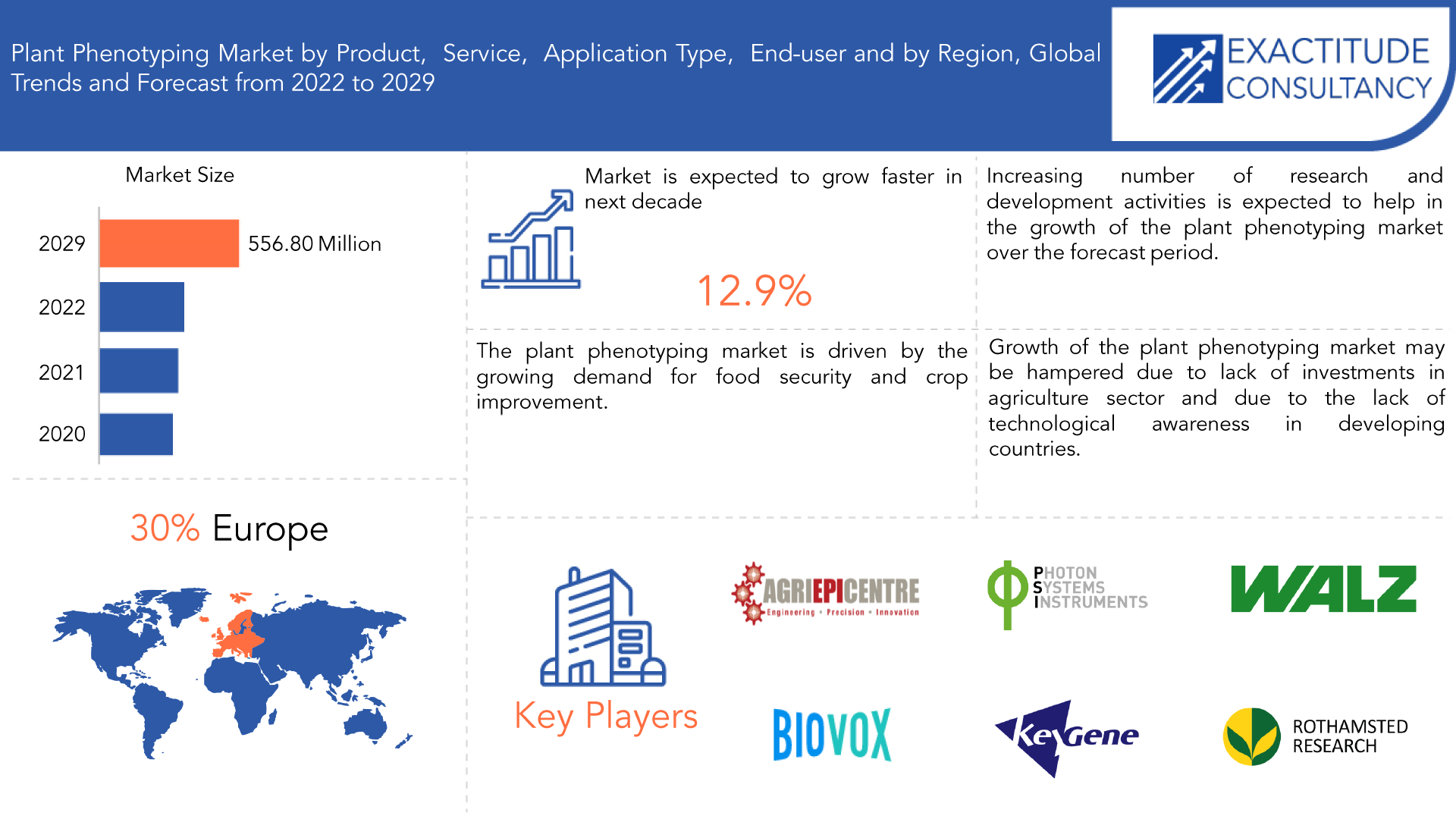
Si prevede che il mercato della fenotipizzazione delle piante crescerà al 12,9% di CAGR dal 2023 al 2029. Si prevede che raggiungerà oltre 556,80 milioni di USD entro il 2029.
La fenotipizzazione delle piante si riferisce al processo di misurazione e analisi delle proprietà fisiche e biochimiche delle piante per comprendere le loro risposte alle condizioni ambientali, alla genetica e alle pratiche di gestione. Ciò include lo studio di tratti delle piante come morfologia, fisiologia, crescita, sviluppo e metabolismo, utilizzando varie tecniche e strumenti. I dati ottenuti dalla fenotipizzazione delle piante possono aiutare nei programmi di allevamento, nel miglioramento delle colture e nella comprensione delle interazioni tra le piante e il loro ambiente.
La fenotipizzazione delle piante può fornire informazioni preziose sulle prestazioni delle colture in diverse condizioni ambientali, come temperatura, umidità e disponibilità di nutrienti. Può aiutare agricoltori e ricercatori a ottimizzare le loro pratiche di gestione delle colture, come densità di piantagione, fertilizzazione e irrigazione, e a sviluppare nuove varietà di colture con caratteristiche desiderabili, come resistenza a parassiti e malattie o tolleranza allo stress ambientale. Raccogliendo dati su un'ampia gamma di caratteristiche delle piante, come accumulo di biomassa, area fogliare, efficienza fotosintetica e architettura delle radici, ricercatori e agricoltori possono ottenere informazioni preziose sulle prestazioni delle colture in diverse condizioni ambientali.
| ATTRIBUTO | DETTAGLI |
| Periodo di studio | 2023-2029 |
| Anno base | 2021 |
| Anno stimato | 2022 |
| Anno previsto | 2023-2029 |
| Periodo storico | 2018-2020 |
| Unità | Valore (milioni di USD) |
| Segmentazione | Per prodotto, servizio, tipo di applicazione, utente finale, regione. |
| Per Prodotto |
|
| Per servizio |
|
| Per tipo di applicazione |
|
| Per uso finale |
|
| Per regione |
|
La crescita del mercato della fenotipizzazione delle piante è guidata da diversi fattori chiave. In primo luogo, c'è una tendenza crescente di espansioni e investimenti in questo campo nelle regioni sviluppate, che sta contribuendo all'espansione del mercato. In secondo luogo, ci sono stati progressi significativi nei sensori di imaging, con conseguente aumento dell'automazione e della raccolta di dati ad alta produttività, che ha aumentato la crescita del mercato. Inoltre, la crescente incidenza di malattie trasmesse dai semi è un altro fattore che guida il mercato della fenotipizzazione delle piante. Inoltre, l'uso di strumenti di telerilevamento per la fenotipizzazione sul campo sta creando nuove opportunità, così come lo sviluppo di associazioni di ricerca nelle economie emergenti. Si prevede che questi fattori, tra gli altri, guideranno la crescita del mercato della fenotipizzazione delle piante nel periodo di previsione.
[caption id="allegato_20581" align="aligncenter" width="1920"]
Frequently Asked Questions
• What is the worth of global plant phenotyping market?
The Plant Phenotyping market size had crossed USD 187 Million in 2020 and will observe a CAGR of more than 12.9% up to 2029
• Which market segments are covered in the report on the plant phenotyping market?
Based on product, service, application type, end-user, the plant phenotyping market report's divisions are broken down
• What is the CAGR of Plant Phenotyping market?
The global plant phenotyping market registered a CAGR of 12.9% from 2022 to 2029. The industry segment was the highest revenue contributor to the market.
• Which are the top companies to hold the market share in Plant Phenotyping market?
Key players profiled in the report include Agri-EPI Centre Ltd, BioVox, CropDesign, Delta-T Devices, Heinz Walz, Hiphen, KeyGene, LemnaTec, Pheno-Inspect GmbH, Phenomix, Phenospex, Photon System Republic, Plant-DiTech LTD, Quibit Phenomics, Rothamstad Research Limited and others.
• Which is the largest regional market for plant phenotyping market?
Europe is the largest regional market for plant phenotyping market.
Plant Phenotyping Market Segment Analysis
The global plant phenotyping market is segmented into product, service, application type, end-user and Region.
The plant phenotyping market is categorized into different product segments, including equipment, software, and sensors. Equipment is further divided into several sub-segments, such as site, platform/carrier, level of automation, analysis system, and application. Software is also segmented into various categories, such as data acquisition, image analysis, system control, data management, schedule assistant, experiment design, and database configuration. Additionally, sensors are divided into image sensors, normalized difference vegetation index (NDVI) sensors, temperature sensors, humidity sensors, and ultrasonic distance sensors. The equipment segment is expected to dominate the plant phenotyping market, while the sensors segment is expected to have the highest growth rate. The rise in accessibility and affordability of imaging equipment has led to an increasing number of plant breeders and researchers using this technology for plant phenotyping, while the demand for more accurate and efficient data collection is driving the growth of the sensors segment.
On the basis of service, the plant phenotyping market is segmented into Data Acquisition, Analysis, and others. Data Acquisition services typically involve the collection of data on plant growth and development using various sensors and imaging technologies. This data is then processed and analyzed to extract relevant information about plant traits and characteristics. Analysis services, on the other hand, involve the interpretation and analysis of plant phenotyping data to extract meaningful insights and draw conclusions. This can involve the use of advanced software tools and algorithms to identify patterns and relationships within the data. Other service category, involves consulting and training services, custom software development, and technical support services. These services can help to support the development, deployment, and use of plant phenotyping technologies in a wide range of applications, such as crop breeding, plant research, and product development.
Based on application type, the plant phenotyping market is segmented high-Throughput Screening, Trait Identification, Photosynthetic, Performance, Morphology, and others. In recent years, there has been a growing interest in high-throughput screening as a means of rapidly and efficiently identifying plants with desirable traits. This suggests that the high-throughput screening segment may be gaining momentum in the plant phenotyping market. Trait identification involves the use of plant phenotyping technology to identify specific traits, such as root length, leaf area, and biomass, that are important for crop performance. Photosynthetic performance is another important application of plant phenotyping, as it provides information on the efficiency of photosynthesis in plants, which is crucial for plant growth and development. Morphology is another important application of plant phenotyping that involves the measurement and analysis of plant structure, such as stem diameter, leaf angle, and plant height.
Based on end-users, the plant phenotyping market is segmented into greenhouse, laboratory and field. The greenhouse segment is expected to be the largest and grow at the fastest CAGR during the forecast period. Greenhouse phenotyping involves conducting experiments in a controlled environment that mimics natural conditions. This provides researchers with precise control over environmental factors such as temperature, humidity, light intensity, and CO2 concentration. Laboratories are another important end-user segment of the plant phenotyping market. Laboratory-based plant phenotyping involves the use of controlled environments and advanced imaging and analytical tools to study plant growth and development. This can be particularly useful for studying plant responses to specific environmental stimuli, such as temperature, light, and nutrient availability. Field-based plant phenotyping is another important end-user segment of the market, as it involves the study of plant growth and development in natural environments, such as farms and fields. This can provide valuable insights into the performance of crops under different environmental conditions and can help farmers to optimize their crop management practices.
[caption id="attachment_20586" align="aligncenter" width="1920"]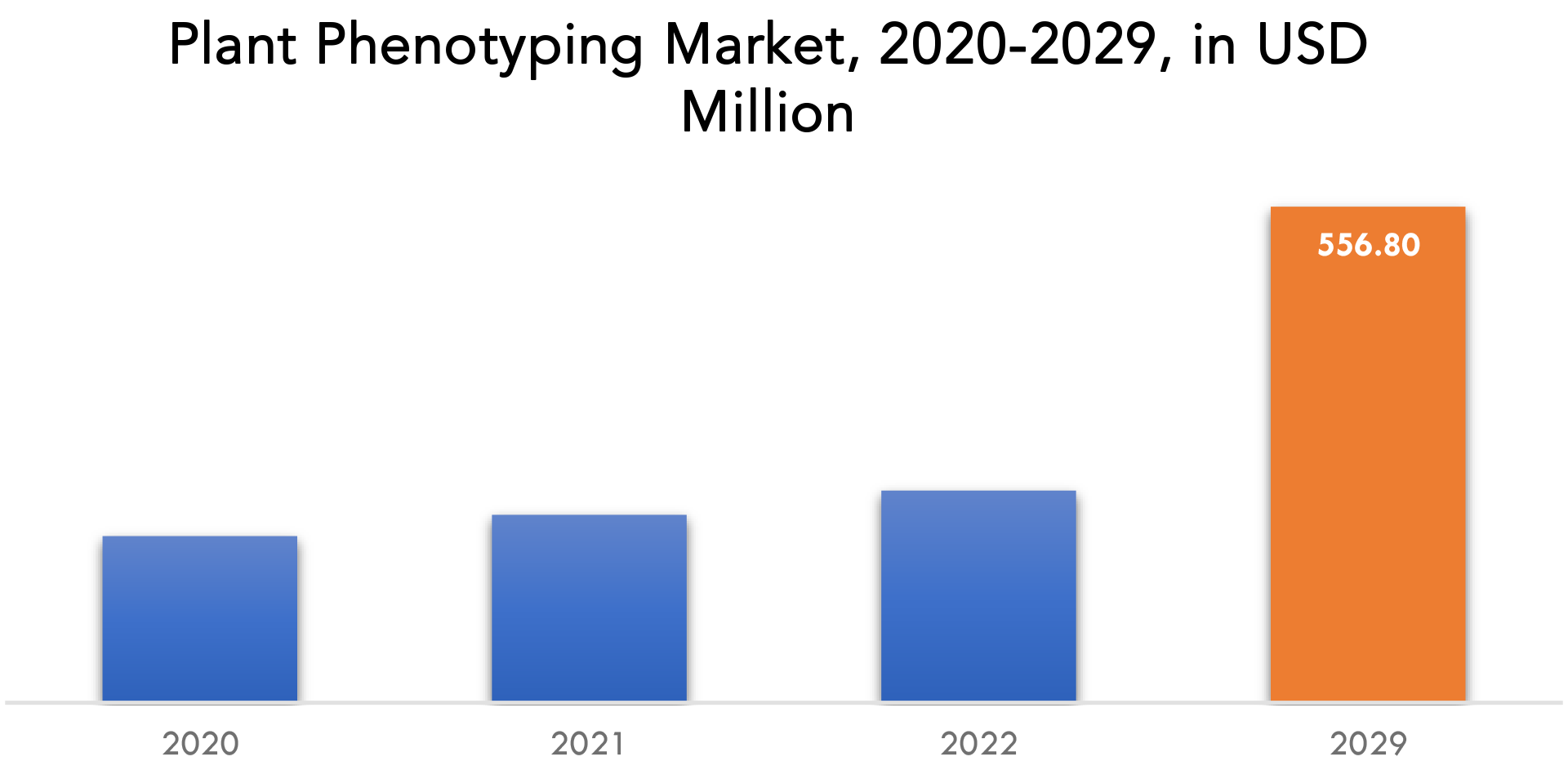 Plant
PlantPlant Phenotyping Market Players
The major players operating in the global Plant Phenotyping industry include Agri-EPI Centre Ltd, BioVox, CropDesign, Delta-T Devices, Heinz Walz, Hiphen, KeyGene, LemnaTec, Pheno-Inspect GmbH, Phenomix, Phenospex, Photon System Republic, Plant-DiTech LTD, Quibit Phenomics, Rothamstad Research Limited and others.
November 22, 2022: BGI-Sanya and KeyGene started its collaboration on spatial transcriptomics for fast identification of lead genes associated with important crop traits. March 3, 2022: Royal Van Zanten and KeyGene started their partnership to accelerate the breeding of ornamental crops.Plant Phenotyping Market Regional Analysis
Geographically, the Plant Phenotyping market is segmented into North America, South America, Europe, APAC and MEA.
- North America: includes the US, Canada, Mexico
- Europe: includes UK, Germany, France, Italy, Spain, Russia, and Rest of Europe
- Asia Pacific: includes China, Japan, South Korea, India, Australia, ASEAN and Rest of APAC
- South America: includes Brazil, Argentina and Rest of South America
- Middle East & Africa: includes Turkey, UAE, Saudi Arabia, South Africa, and Rest of MEA
Europe currently leads the world in plant phenotyping production, with European products exported globally. Europe held around 30% market share in the global plant phenotyping market. The industry offers a diverse range of products, from native to modified services, that can be applied as functional ingredients in various industries including food, non-food, and feed. While no particular end-use application industry dominates, the food industry is expected to experience the highest growth due to the emergence of newer plant phenotyping variations, products, and applications.
Additionally, Europe's plant phenotyping industry has been driven by the increasing demand for high-quality and sustainable agricultural practices. The adoption of precision agriculture and the development of novel phenotyping technologies have also contributed to the growth of the European plant phenotyping market.
Furthermore, there are many countries and regions around the world that are actively engaged in plant phenotyping research and development, including the United States, Australia, China, and several countries in Africa and South America. These regions have also made significant contributions to the field of plant phenotyping and have many companies and research institutions engaged in the production of plant phenotyping technologies.
[caption id="attachment_20587" align="aligncenter" width="1920"]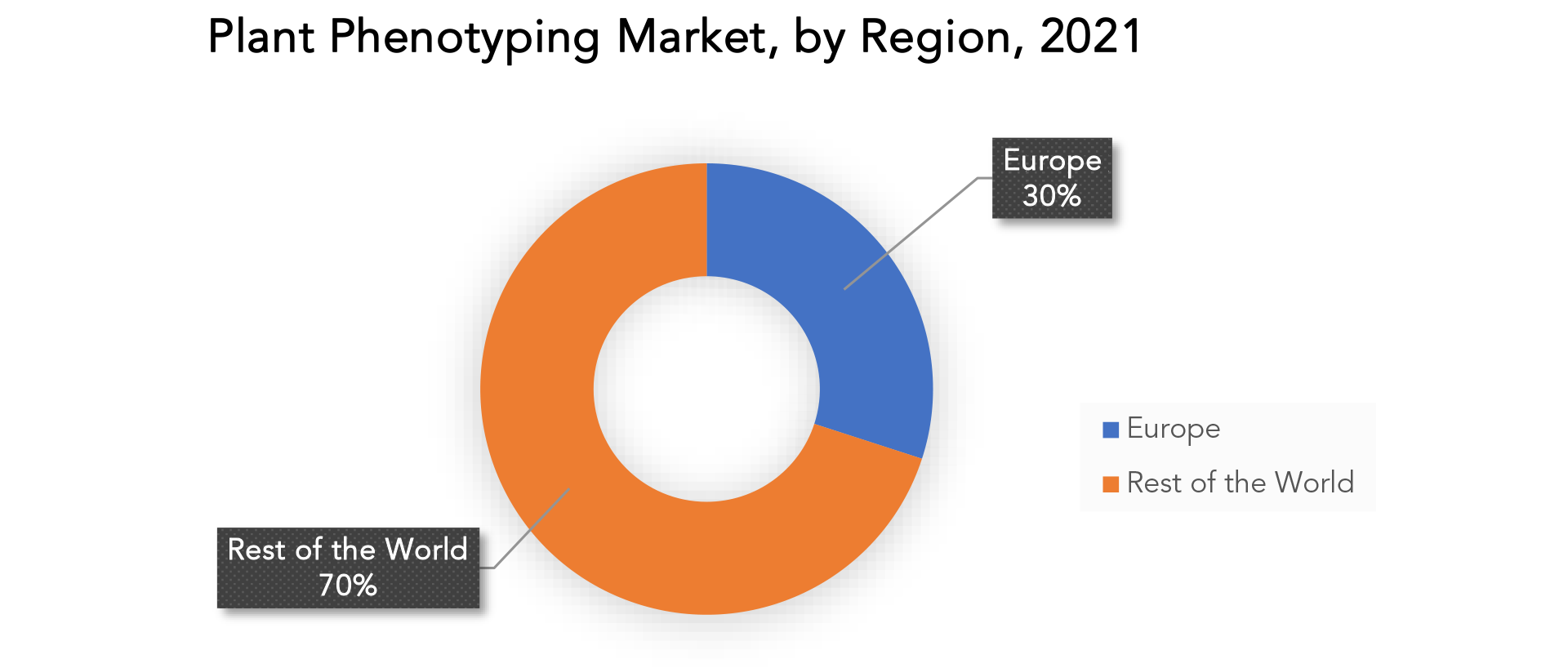
Key Market Segments: Plant Phenotyping Market
Plant Phenotyping Market By Product, (USD Million)- Equipment
- Software
- Sensors
- Data Acquisition
- Analysis
- Others
- High-Throughput Screening
- Trait Identification
- Photosynthetic Performance
- Morphology
- Others
- Greenhouse
- Laboratory
- Field
- North America
- Europe
- Asia Pacific
- South America
- Middle East And Africa
Exactitude Consultancy Services Key Objectives
- Increasing sales and market share
- Developing new technology
- Improving profitability
- Entering new markets
- Enhancing brand reputation
Key Question Answered
- What is the expected growth rate of the plant phenotyping market over the next 7 years?
- Who are the major players in the plant phenotyping market and what is their market share?
- What are the end-user industries driving demand for market and what is their outlook?
- What are the opportunities for growth in emerging markets such as Asia-Pacific, Middle East, and Africa?
- How is the economic environment affecting the plant phenotyping market, including factors such as interest rates, inflation, and exchange rates?
- What is the expected impact of government policies and regulations on the plant phenotyping market?
- What is the current and forecasted size and growth rate of the global plant phenotyping market?
- What are the key drivers of growth in the plant phenotyping market?
- What are the distribution channels and supply chain dynamics in the plant phenotyping market?
- What are the technological advancements and innovations in the plant phenotyping market and their impact on product development and growth?
- What are the regulatory considerations and their impact on the market?
- What are the challenges faced by players in the plant phenotyping market and how are they addressing these challenges?
- What are the opportunities for growth and expansion in the plant phenotyping market?
- What are the service offerings and specifications of leading players in the market?
- Introduzione
- Definizione di mercato
- Segmentazione del mercato
- Cronologie della ricerca
- Presupposti e limitazioni
- Metodologia di ricerca
- Estrazione dei dati
- Ricerca secondaria
- Ricerca primaria
- Consigli degli esperti in materia
- Controlli di qualità
- Revisione finale
- Triangolazione dei dati
- Approccio dal basso verso l'alto
- Approccio dall'alto verso il basso
- Flusso di ricerca
- Fonti dei dati
- Estrazione dei dati
- Sintesi
- Panoramica del mercato
- Prospettive di mercato globali della fenotipizzazione delle piante
- Fattori trainanti del mercato
- Limitazioni di mercato
- Opportunità di mercato
- Impatto del Covid-19 sul mercato globale della fenotipizzazione delle piante
- Prospettive di mercato globali della fenotipizzazione delle piante
- Mercato globale della fenotipizzazione delle piante per prodotto (milioni di USD)
- Attrezzatura
- Software
- Sensori
- Mercato globale della fenotipizzazione delle piante per servizio (milioni di USD)
- Acquisizione dati
- Analisi
- Altri
- Mercato globale della fenotipizzazione delle piante per tipo di applicazione, (milioni di USD)
- Screening ad alta produttività
- Identificazione dei tratti
- Prestazioni fotosintetiche
- Morfologia
- Altri
- Mercato globale della fenotipizzazione delle piante per utente finale (milioni di USD)
- Serra
- Laboratorio
- Campo
- Mercato globale della fenotipizzazione delle piante per regione (milioni di USD)
- Introduzione
- Asia-Pacifico
- Cina
- India
- Giappone
- Corea del Sud
- Australia
- Asia sud-orientale
- Resto dell'Asia-Pacifico
- America del Nord
- Stati Uniti
- Canada
- Messico
- Europa
- Germania
- Regno Unito
- Francia
- Italia
- Spagna
- Russia
- Resto d'Europa
- Sud America
- Brasile
- Argentina
- Colombia
- Resto del Sud America
- Medio Oriente e Africa
- Emirati Arabi Uniti
- Arabia Saudita
- Sudafrica
- Resto del Medio Oriente e Africa
- Profili aziendali*
(Panoramica aziendale, istantanea aziendale, prodotti offerti, sviluppi recenti)
- Centro Agri-EPI Ltd
- BioVox
- Progettazione delle colture
- Dispositivi Delta-T
- Heinz Valzer
- Ippopotamo
- Gene chiave
- LemnaTec
- Azienda
- Fenomiscela
- Fenospex
- Repubblica del sistema fotonico
- Pianta-DiTech LTD
- Fenomenologia Quibit
- Ricerca limitata di Rothamstad
- Altri
*L'elenco delle aziende è indicativo
ELENCO DELLE TABELLE
TABLE 1 GLOBAL PLANT PHENOTYPING MARKET BY PRODUCT (USD MILLION) 2020-2029
TABLE 2 GLOBAL PLANT PHENOTYPING MARKET BY SERVICE (USD MILLION) 2020-2029
TABLE 3 GLOBAL PLANT PHENOTYPING MARKET BY APPLICATION TYPE (USD MILLION) 2020-2029
TABLE 4 GLOBAL PLANT PHENOTYPING MARKET BY END-USER (USD MILLION) 2020-2029
TABLE 5 NORTH AMERICA PLANT PHENOTYPING MARKET BY COUNTRY (USD MILLION) 2020-2029
TABLE 6 NORTH AMERICAPLANT PHENOTYPING MARKET BY PRODUCT (USD MILLION) 2020-2029
TABLE 7 NORTH AMERICAPLANT PHENOTYPING MARKET BY SERVICE (USD MILLION) 2020-2029
TABLE 8 NORTH AMERICAPLANT PHENOTYPING MARKET BY APPLICATION TYPE (USD MILLION) 2020-2029
TABLE 9 NORTH AMERICAPLANT PHENOTYPING MARKET BY END-USER (USD MILLION) 2020-2029
TABLE 10 US PLANT PHENOTYPING MARKET BY PRODUCT (USD MILLION) 2020-2029
TABLE 11 US PLANT PHENOTYPING MARKET BY SERVICE (USD MILLION) 2020-2029
TABLE 12 US PLANT PHENOTYPING MARKET BY APPLICATION TYPE (USD MILLION) 2020-2029
TABLE 13 US PLANT PHENOTYPING MARKET BY END-USER (USD MILLION) 2020-2029
TABLE 14 CANADA PLANT PHENOTYPING MARKET BY PRODUCT (USD MILLION) 2020-2029
TABLE 15 CANADA PLANT PHENOTYPING MARKET BY SERVICE (USD MILLION) 2020-2029
TABLE 16 CANADA PLANT PHENOTYPING MARKET BY APPLICATION TYPE (USD MILLION) 2020-2029
TABLE 17 CANADA PLANT PHENOTYPING MARKET BY END-USER (USD MILLION) 2020-2029
TABLE 18 MEXICO PLANT PHENOTYPING MARKET BY PRODUCT (USD MILLION) 2020-2029
TABLE 19 MEXICO PLANT PHENOTYPING MARKET BY SERVICE (USD MILLION) 2020-2029
TABLE 20 MEXICO PLANT PHENOTYPING MARKET BY APPLICATION TYPE (USD MILLION) 2020-2029
TABLE 21 MEXICO PLANT PHENOTYPING MARKET BY END-USER (USD MILLION) 2020-2029
TABLE 22 SOUTH AMERICA PLANT PHENOTYPING MARKET BY COUNTRY (USD MILLION) 2020-2029
TABLE 23 SOUTH AMERICA PLANT PHENOTYPING MARKET BY PRODUCT (USD MILLION) 2020-2029
TABLE 24 SOUTH AMERICA PLANT PHENOTYPING MARKET BY SERVICE (USD MILLION) 2020-2029
TABLE 25 SOUTH AMERICA PLANT PHENOTYPING MARKET BY APPLICATION TYPE (USD MILLION) 2020-2029
TABLE 26 SOUTH AMERICA PLANT PHENOTYPING MARKET BY END-USER (USD MILLION) 2020-2029
TABLE 27 BRAZIL PLANT PHENOTYPING MARKET BY PRODUCT (USD MILLION) 2020-2029
TABLE 28 BRAZIL PLANT PHENOTYPING MARKET BY SERVICE (USD MILLION) 2020-2029
TABLE 29 BRAZIL PLANT PHENOTYPING MARKET BY APPLICATION TYPE (USD MILLION) 2020-2029
TABLE 30 BRAZIL PLANT PHENOTYPING MARKET BY END-USER (USD MILLION) 2020-2029
TABLE 31 ARGENTINA PLANT PHENOTYPING MARKET BY PRODUCT (USD MILLION) 2020-2029
TABLE 32 ARGENTINA PLANT PHENOTYPING MARKET BY SERVICE (USD MILLION) 2020-2029
TABLE 33 ARGENTINA PLANT PHENOTYPING MARKET BY APPLICATION TYPE (USD MILLION) 2020-2029
TABLE 34 ARGENTINA PLANT PHENOTYPING MARKET BY END-USER (USD MILLION) 2020-2029
TABLE 35 COLOMBIA PLANT PHENOTYPING MARKET BY PRODUCT (USD MILLION) 2020-2029
TABLE 36 COLOMBIA PLANT PHENOTYPING MARKET BY SERVICE (USD MILLION) 2020-2029
TABLE 37 COLOMBIA PLANT PHENOTYPING MARKET BY APPLICATION TYPE (USD MILLION) 2020-2029
TABLE 38 COLOMBIA PLANT PHENOTYPING MARKET BY END-USER (USD MILLION) 2020-2029
TABLE 39 REST OF SOUTH AMERICA PLANT PHENOTYPING MARKET BY PRODUCT (USD MILLION) 2020-2029
TABLE 40 REST OF SOUTH AMERICA PLANT PHENOTYPING MARKET BY SERVICE (USD MILLION) 2020-2029
TABLE 41 REST OF SOUTH AMERICA PLANT PHENOTYPING MARKET BY APPLICATION TYPE (USD MILLION) 2020-2029
TABLE 42 REST OF SOUTH AMERICA PLANT PHENOTYPING MARKET BY END-USER (USD MILLION) 2020-2029
TABLE 43 ASIA-PACIFIC PLANT PHENOTYPING MARKET BY COUNTRY (USD MILLION) 2020-2029
TABLE 44 ASIA-PACIFIC PLANT PHENOTYPING MARKET BY PRODUCT (USD MILLION) 2020-2029
TABLE 45 ASIA-PACIFICPLANT PHENOTYPING MARKET BY SERVICE (USD MILLION) 2020-2029
TABLE 46 ASIA-PACIFICPLANT PHENOTYPING MARKET BY APPLICATION TYPE (USD MILLION) 2020-2029
TABLE 47 ASIA-PACIFICPLANT PHENOTYPING MARKET BY END-USER (USD MILLION) 2020-2029
TABLE 48 INDIA PLANT PHENOTYPING MARKET BY PRODUCT (USD MILLION) 2020-2029
TABLE 49 INDIA PLANT PHENOTYPING MARKET BY SERVICE (USD MILLION) 2020-2029
TABLE 50 INDIA PLANT PHENOTYPING MARKET BY APPLICATION TYPE (USD MILLION) 2020-2029
TABLE 51 INDIA PLANT PHENOTYPING MARKET BY END-USER (USD MILLION) 2020-2029
TABLE 52 CHINA PLANT PHENOTYPING MARKET BY PRODUCT (USD MILLION) 2020-2029
TABLE 53 CHINA PLANT PHENOTYPING MARKET BY SERVICE (USD MILLION) 2020-2029
TABLE 54 CHINA PLANT PHENOTYPING MARKET BY APPLICATION TYPE (USD MILLION) 2020-2029
TABLE 55 CHINA PLANT PHENOTYPING MARKET BY END-USER (USD MILLION) 2020-2029
TABLE 56 JAPAN PLANT PHENOTYPING MARKET BY PRODUCT (USD MILLION) 2020-2029
TABLE 57 JAPAN PLANT PHENOTYPING MARKET BY SERVICE (USD MILLION) 2020-2029
TABLE 58 JAPAN PLANT PHENOTYPING MARKET BY APPLICATION TYPE (USD MILLION) 2020-2029
TABLE 59 JAPAN PLANT PHENOTYPING MARKET BY END-USER (USD MILLION) 2020-2029
TABLE 60 SOUTH KOREA PLANT PHENOTYPING MARKET BY PRODUCT (USD MILLION) 2020-2029
TABLE 61 SOUTH KOREA PLANT PHENOTYPING MARKET BY SERVICE (USD MILLION) 2020-2029
TABLE 62 SOUTH KOREA PLANT PHENOTYPING MARKET BY APPLICATION TYPE (USD MILLION) 2020-2029
TABLE 63 SOUTH KOREA PLANT PHENOTYPING MARKET BY END-USER (USD MILLION) 2020-2029
TABLE 64 AUSTRALIA PLANT PHENOTYPING MARKET BY PRODUCT (USD MILLION) 2020-2029
TABLE 65 AUSTRALIA PLANT PHENOTYPING MARKET BY SERVICE (USD MILLION) 2020-2029
TABLE 66 AUSTRALIA PLANT PHENOTYPING MARKET BY APPLICATION TYPE (USD MILLION) 2020-2029
TABLE 67 AUSTRALIA PLANT PHENOTYPING MARKET BY END-USER (USD MILLION) 2020-2029
TABLE 68 SOUTH-EAST ASIA PLANT PHENOTYPING MARKET BY PRODUCT (USD MILLION) 2020-2029
TABLE 69 SOUTH-EAST ASIA PLANT PHENOTYPING MARKET BY SERVICE (USD MILLION) 2020-2029
TABLE 70 SOUTH-EAST ASIA PLANT PHENOTYPING MARKET BY APPLICATION TYPE (USD MILLION) 2020-2029
TABLE 71 SOUTH-EAST ASIA PLANT PHENOTYPING MARKET BY END-USER (USD MILLION) 2020-2029
TABLE 72 REST OF ASIA PACIFIC PLANT PHENOTYPING MARKET BY PRODUCT (USD MILLION) 2020-2029
TABLE 73 REST OF ASIA PACIFIC PLANT PHENOTYPING MARKET BY SERVICE (USD MILLION) 2020-2029
TABLE 74 REST OF ASIA PACIFIC PLANT PHENOTYPING MARKET BY APPLICATION TYPE (USD MILLION) 2020-2029
TABLE 75 REST OF ASIA PACIFIC PLANT PHENOTYPING MARKET BY END-USER (USD MILLION) 2020-2029
TABLE 76 EUROPE PLANT PHENOTYPING MARKET BY COUNTRY (USD MILLION) 2020-2029
TABLE 77 EUROPE PLANT PHENOTYPING MARKET BY PRODUCT (USD MILLION) 2020-2029
TABLE 78 EUROPE PLANT PHENOTYPING MARKET BY SERVICE (USD MILLION) 2020-2029
TABLE 79 EUROPE PLANT PHENOTYPING MARKET BY APPLICATION TYPE (USD MILLION) 2020-2029
TABLE 80 EUROPE PLANT PHENOTYPING MARKET BY END-USER (USD MILLION) 2020-2029
TABLE 81 GERMANY PLANT PHENOTYPING MARKET BY PRODUCT (USD MILLION) 2020-2029
TABLE 82 GERMANY PLANT PHENOTYPING MARKET BY SERVICE (USD MILLION) 2020-2029
TABLE 83 GERMANY PLANT PHENOTYPING MARKET BY APPLICATION TYPE (USD MILLION) 2020-2029
TABLE 84 GERMANY PLANT PHENOTYPING MARKET BY END-USER (USD MILLION) 2020-2029
TABLE 85 UK PLANT PHENOTYPING MARKET BY PRODUCT (USD MILLION) 2020-2029
TABLE 86 UK PLANT PHENOTYPING MARKET BY SERVICE (USD MILLION) 2020-2029
TABLE 87 UK PLANT PHENOTYPING MARKET BY APPLICATION TYPE (USD MILLION) 2020-2029
TABLE 88 UK PLANT PHENOTYPING MARKET BY END-USER (USD MILLION) 2020-2029
TABLE 89 FRANCE PLANT PHENOTYPING MARKET BY PRODUCT (USD MILLION) 2020-2029
TABLE 90 FRANCE PLANT PHENOTYPING MARKET BY SERVICE (USD MILLION) 2020-2029
TABLE 91 FRANCE PLANT PHENOTYPING MARKET BY APPLICATION TYPE (USD MILLION) 2020-2029
TABLE 92 FRANCE PLANT PHENOTYPING MARKET BY END-USER (USD MILLION) 2020-2029
TABLE 93 ITALY PLANT PHENOTYPING MARKET BY PRODUCT (USD MILLION) 2020-2029
TABLE 94 ITALY PLANT PHENOTYPING MARKET BY SERVICE (USD MILLION) 2020-2029
TABLE 95 ITALY PLANT PHENOTYPING MARKET BY APPLICATION TYPE (USD MILLION) 2020-2029
TABLE 96 ITALY PLANT PHENOTYPING MARKET BY END-USER (USD MILLION) 2020-2029
TABLE 97 SPAIN PLANT PHENOTYPING MARKET BY PRODUCT (USD MILLION) 2020-2029
TABLE 98 SPAIN PLANT PHENOTYPING MARKET BY SERVICE (USD MILLION) 2020-2029
TABLE 99 SPAIN PLANT PHENOTYPING MARKET BY APPLICATION TYPE (USD MILLION) 2020-2029
TABLE 100 SPAIN PLANT PHENOTYPING MARKET BY END-USER (USD MILLION) 2020-2029
TABLE 101 RUSSIA PLANT PHENOTYPING MARKET BY PRODUCT (USD MILLION) 2020-2029
TABLE 102 RUSSIA PLANT PHENOTYPING MARKET BY SERVICE (USD MILLION) 2020-2029
TABLE 103 RUSSIA PLANT PHENOTYPING MARKET BY APPLICATION TYPE (USD MILLION) 2020-2029
TABLE 104 RUSSIA PLANT PHENOTYPING MARKET BY END-USER (USD MILLION) 2020-2029
TABLE 105 REST OF EUROPE PLANT PHENOTYPING MARKET BY PRODUCT (USD MILLION) 2020-2029
TABLE 106 REST OF EUROPE PLANT PHENOTYPING MARKET BY SERVICE (USD MILLION) 2020-2029
TABLE 107 REST OF EUROPE PLANT PHENOTYPING MARKET BY APPLICATION TYPE (USD MILLION) 2020-2029
TABLE 108 REST OF EUROPE PLANT PHENOTYPING MARKET BY END-USER (USD MILLION) 2020-2029
TABLE 109 MIDDLE EAST AND AFRICA PLANT PHENOTYPING MARKET BY COUNTRY (USD MILLION) 2020-2029
TABLE 110 MIDDLE EAST AND AFRICA PLANT PHENOTYPING MARKET BY PRODUCT (USD MILLION) 2020-2029
TABLE 111 MIDDLE EAST AND AFRICA PLANT PHENOTYPING MARKET BY SERVICE (USD MILLION) 2020-2029
TABLE 112 MIDDLE EAST AND AFRICA PLANT PHENOTYPING MARKET BY APPLICATION TYPE (USD MILLION) 2020-2029
TABLE 113 MIDDLE EAST AND AFRICA PLANT PHENOTYPING MARKET BY END-USER (USD MILLION) 2020-2029
TABLE 114 UAE PLANT PHENOTYPING MARKET BY PRODUCT (USD MILLION) 2020-2029
TABLE 115 UAE PLANT PHENOTYPING MARKET BY SERVICE (USD MILLION) 2020-2029
TABLE 116 UAE PLANT PHENOTYPING MARKET BY APPLICATION TYPE (USD MILLION) 2020-2029
TABLE 117 UAE PLANT PHENOTYPING MARKET BY END-USER (USD MILLION) 2020-2029
TABLE 118 SAUDI ARABIA PLANT PHENOTYPING MARKET BY PRODUCT (USD MILLION) 2020-2029
TABLE 119 SAUDI ARABIA PLANT PHENOTYPING MARKET BY SERVICE (USD MILLION) 2020-2029
TABLE 120 SAUDI ARABIA PLANT PHENOTYPING MARKET BY APPLICATION TYPE (USD MILLION) 2020-2029
TABLE 121 SAUDI ARABIA PLANT PHENOTYPING MARKET BY END-USER (USD MILLION) 2020-2029
TABLE 122 SOUTH AFRICA PLANT PHENOTYPING MARKET BY PRODUCT (USD MILLION) 2020-2029
TABLE 123 SOUTH AFRICA PLANT PHENOTYPING MARKET BY SERVICE (USD MILLION) 2020-2029
TABLE 124 SOUTH AFRICA PLANT PHENOTYPING MARKET BY APPLICATION TYPE (USD MILLION) 2020-2029
TABLE 125 SOUTH AFRICA PLANT PHENOTYPING MARKET BY END-USER (USD MILLION) 2020-2029
TABLE 126 REST OF MIDDLE EAST AND AFRICA PLANT PHENOTYPING MARKET BY PRODUCT (USD MILLION) 2020-2029
TABLE 127 REST OF MIDDLE EAST AND AFRICA PLANT PHENOTYPING MARKET BY SERVICE (USD MILLION) 2020-2029
TABLE 128 REST OF MIDDLE EAST AND AFRICA PLANT PHENOTYPING MARKET BY APPLICATION TYPE (USD MILLION) 2020-2029
TABLE 129 REST OF MIDDLE EAST AND AFRICA PLANT PHENOTYPING MARKET BY END-USER (USD MILLION) 2020-2029
LIST OF FIGURES
FIGURE 1 MARKET DYNAMICS
FIGURE 2 MARKET SEGMENTATION
FIGURE 3 REPORT TIMELINES: YEARS CONSIDERED
FIGURE 4 DATA TRIANGULATION
FIGURE 5 BOTTOM-UP APPROACH
FIGURE 6 TOP-DOWN APPROACH
FIGURE 7 RESEARCH FLOW
FIGURE 8 GLOBAL PLANT PHENOTYPING MARKET BY PRODUCT, USD MILLION, 2020-2029
FIGURE 9 GLOBAL PLANT PHENOTYPING MARKET BY SERVICE, USD MILLION, 2020-2029
FIGURE 10 GLOBAL PLANT PHENOTYPING MARKET BY APPLICATION TYPE, USD MILLION, 2020-2029
FIGURE 11 GLOBAL PLANT PHENOTYPING MARKET BY END-USER, USD MILLION, 2020-2029
FIGURE 12 GLOBAL PLANT PHENOTYPING MARKET BY REGION, USD MILLION, 2020-2029
FIGURE 13 PORTER’S FIVE FORCES MODEL
FIGURE 14 GLOBAL PLANT PHENOTYPING MARKET BY PRODUCT, 2021
FIGURE 15 GLOBAL PLANT PHENOTYPING MARKET BY SERVICE, 2021
FIGURE 16 GLOBAL PLANT PHENOTYPING MARKET BY APPLICATION TYPE, 2021
FIGURE 17 GLOBAL PLANT PHENOTYPING MARKET BY END-USER, 2021
FIGURE 18 PLANT PHENOTYPING MARKET BY REGION, 2021
FIGURE 19 MARKET SHARE ANALYSIS
FIGURE 20 AGRI-EPI CENTRE LTD: COMPANY SNAPSHOT
FIGURE 21 BIOVOX: COMPANY SNAPSHOT
FIGURE 22 CROPDESIGN: COMPANY SNAPSHOT
FIGURE 23 DELTA-T DEVICES: COMPANY SNAPSHOT
FIGURE 24 HEINZ WALZ: COMPANY SNAPSHOT
FIGURE 25 HIPHEN: COMPANY SNAPSHOT
FIGURE 26 KEYGENE: COMPANY SNAPSHOT
FIGURE 27 LEMNATEC: COMPANY SNAPSHOT
FIGURE 28 PHENO-INSPECT GMBH: COMPANY SNAPSHOT
FIGURE 29 PHENOMIX: COMPANY SNAPSHOT
FIGURE 30 PHENOSPEX: COMPANY SNAPSHOT
FIGURE 31 PHOTON SYSTEM REPUBLIC: COMPANY SNAPSHOT
FIGURE 32 PLANT-DITECH LTD: COMPANY SNAPSHOT
FIGURE 33 QUIBIT PHENOMICS: COMPANY SNAPSHOT
FIGURE 34 ROTHAMSTAD RESEARCH LIMITED: COMPANY SNAPSHOT
DOWNLOAD FREE SAMPLE REPORT
License Type
SPEAK WITH OUR ANALYST
Want to know more about the report or any specific requirement?
WANT TO CUSTOMIZE THE REPORT?
Our Clients Speak
We asked them to research ‘ Equipment market’ all over the world, and their whole arrangement was helpful to us. thehealthanalytics.com insightful analysis and reports contributed to our current analysis and in creating a future strategy. Besides, the te
Yosuke Mitsui
Senior Associate Construction Equipment Sales & Marketing
We asked them to research ‘Equipment market’ all over the world, and their whole arrangement was helpful to us. thehealthanalytics.com insightful analysis and reports contributed to our current analysis and in creating a future strategy. Besides, the te