

Base Year Value ()
x.x %
x.x %
CAGR ()
x.x %
x.x %
Forecast Year Value ()
x.x %
x.x %
Historical Data Period
Largest Region
Forecast Period
Mercato della poliammide per prodotto (poliammide 6, poliammide 66, poliammide di origine biologica, poliammide speciale), applicazione (materie plastiche tecniche, fibre), utente finale (settore automobilistico, elettrico ed elettronico, tessile, edilizia, imballaggio, beni di consumo, altri) e per regione Tendenze e previsioni globali dal 2022 al 2029
Instant access to hundreds of data points and trends
- Market estimates from 2014-2029
- Competitive analysis, industry segmentation, financial benchmarks
- Incorporates SWOT, Porter's Five Forces and risk management frameworks
- PDF report or online database with Word, Excel and PowerPoint export options
- 100% money back guarantee
Panoramica del mercato della poliammide
Si prevede che il mercato globale della poliammide raggiungerà i 48,74 miliardi di dollari entro il 2029, rispetto ai 30,36 miliardi di dollari del 2020, con un CAGR del 6,6% dal 2022 al 2029.
La poliammide è un polimero flessibile che si trova in natura sotto forma di lana e seta. L'articolo è prodotto artificialmente ed è ampiamente utilizzato in una varietà di settori, tra cui automotive, tessuti, imballaggi , componenti elettronici, macchinari e rivestimenti . La poliammide è nota per la sua resistenza all'acqua. Le poliammidi si trovano in natura in lana e seta e sono sintetizzate come nylon, poliammide 6 e aramide, tra gli altri materiali. Resistenza all'usura, elevata resistenza meccanica, bassa permeabilità ai gas e stabilità chimica sono tutte caratteristiche delle poliammidi sintetiche. Le poliammidi di origine biologica stanno guadagnando popolarità grazie alla loro responsabilità ambientale.
[caption id="allegato_25780" align="aligncenter" width="1920"]
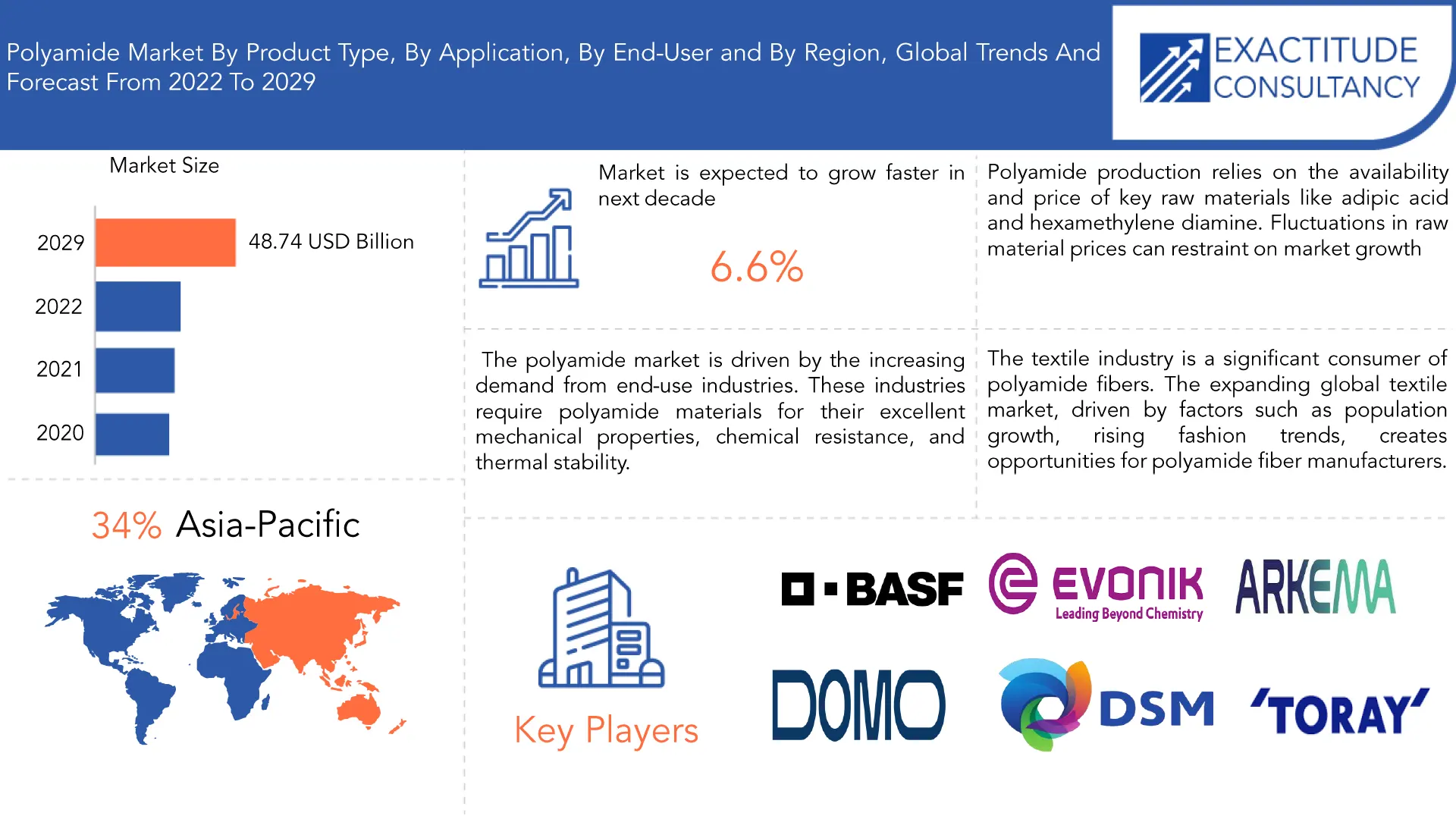
Molte industrie impiegano tessuti in poliammide impermeabili in una vasta gamma di prodotti. Viene impiegato principalmente nella produzione di abbigliamento sportivo e outdoor grazie alle sue caratteristiche impermeabili. Anche l'industria tessile trae notevoli vantaggi dalla poliammide. La sua eccezionale resistenza e durevolezza la rendono una scelta eccellente per la produzione di fibre utilizzate in abbigliamento, tappeti e tappezzeria. I tessuti in poliammide offrono una resistenza all'abrasione superiore e proprietà traspiranti, garantendo longevità e comfort in varie applicazioni.
Le poliammidi dimostrano anche una buona stabilità termica , il che significa che possono mantenere la loro integrità strutturale anche a temperature elevate. Questa proprietà consente loro di resistere al calore senza deformarsi o perdere le loro proprietà meccaniche. Di conseguenza, le poliammidi trovano applicazioni in ambienti ad alta temperatura, come componenti di motori per automobili, connettori elettrici e macchinari industriali.
Si prevede che la crescente popolarità della poliammide come plastica ingegneristica in vari settori di utilizzo finale come l'automotive e l'industria/macchinari, tra gli altri, stimolerà la crescita del mercato mondiale. Inoltre, è probabile che la crescente domanda di poliammide nei settori elettrico ed elettronico e degli imballaggi stimoli la crescita del mercato globale nei prossimi anni. Inoltre, è probabile che una sostanziale espansione nei settori dei beni di consumo e degli elettrodomestici alimenterà la potenziale crescita del mercato nei prossimi anni. La crescente domanda di questi articoli sia nelle economie emergenti che in quelle consolidate è un altro fattore che dovrebbe stimolare l'espansione del mercato mondiale.
La volatilità dei prezzi delle materie prime è una delle principali limitazioni nel mercato della poliammide. Le poliammidi sono generate da materie prime petrolchimiche e le variazioni nei prezzi del petrolio greggio e di altre materie prime possono avere un'influenza diretta sul costo di produzione dei materiali in poliammide. Questa volatilità presenta problemi per i produttori poiché potrebbe portare a margini di profitto imprevedibili e alterare le strategie di prezzo.
Anche le preoccupazioni ambientali e i problemi di sostenibilità presentano delle limitazioni per il mercato della poliammide. Le poliammidi sono in genere derivate da risorse non rinnovabili e non sono facilmente biodegradabili. Ciò solleva preoccupazioni in merito al loro impatto ambientale a lungo termine, in particolare in termini di gestione dei rifiuti e smaltimento a fine vita. Poiché la sostenibilità sta diventando un fattore sempre più importante per i consumatori e gli enti normativi, l'industria della poliammide sta attivamente esplorando e sviluppando alternative più sostenibili, come le poliammidi di origine biologica e le tecnologie di riciclaggio.
La crescente domanda di materiali leggeri nell'industria automobilistica, le poliammidi offrono una soluzione convincente per la riduzione del peso e una migliore efficienza del carburante . La spinta verso la sostenibilità crea opportunità per le poliammidi di origine biologica derivate da risorse rinnovabili. Il settore elettrico ed elettronico cerca poliammidi con eccellenti proprietà di isolamento elettrico.
| ATTRIBUTO | DETTAGLI |
| Periodo di studio | 2022-2029 |
| Anno base | 2022 |
| Anno stimato | 2023 |
| Anno previsto | 2023-2029 |
| Periodo storico | 2018-2022 |
| Unità | Valore (miliardi di USD) Volume (chilotoni) |
| Segmentazione | Per prodotto, per applicazione, per utente finale, per regione |
| Per Prodotto |
|
| Per applicazione |
|
| Da parte dell'utente finale |
|
| Per regione |
|
Frequently Asked Questions
• What is the worth of the polyamide market?
The global polyamide market is projected to reach USD 48.74 billion by 2029 from USD 30.36 billion in 2020, at a CAGR of 6.6 % from 2022 to 2029.
• What is the share of the Asia Pacific polyamide industry?
Asia Pacific dominates the polyamide market, with a market share of over 34%.
• Which are the top companies to hold the market share in the polyamide market?
BASF SE, DowDuPont Inc., Lanxess AG, Solvay S.A., Avient, Evonik Industries AG, Asahi Kasei Corporation, Arkema SA, Domo Chemical, Honeywell, Royal DSM, Toray Industries Inc., KOLON PLASTIC INC, AdvanSix are among the leading players in the global polyamide market.
• What is the CAGR of polyamide market?
The global polyamide market registered a CAGR of 6.6 % from 2022 to 2029.
• What are the key factors driving the market?
Increasing demand from the automotive sector, expansion in electrical and electronics applications, investments and R&D in bio-based and specialized polyamides, and an increase in disposable income are all projected to fuel polyamide adoption.
Polyamide Market Segment Analysis
The global polyamide market is segmented by product, application, end-user and region.
Based on product, the polyamide market is segmented into Polyamide 6, Polyamide 66, Bio-based Polyamide, Specialty Polyamide. Polyamide 6 segmental growth will account for the majority of market share. Its unique qualities make it a suitable product substitution for steel, bronze, brass, gunmetal, aluminium, and plastics, among others. Electrical protection device producers will also be able to expand into new markets. Furthermore, the incorporation of PA 6 from the luxury carpet sector, fishing nets, and travel accessories would boost polyamide 6 demand throughout the projection period.
[caption id="attachment_25781" align="aligncenter" width="1920"]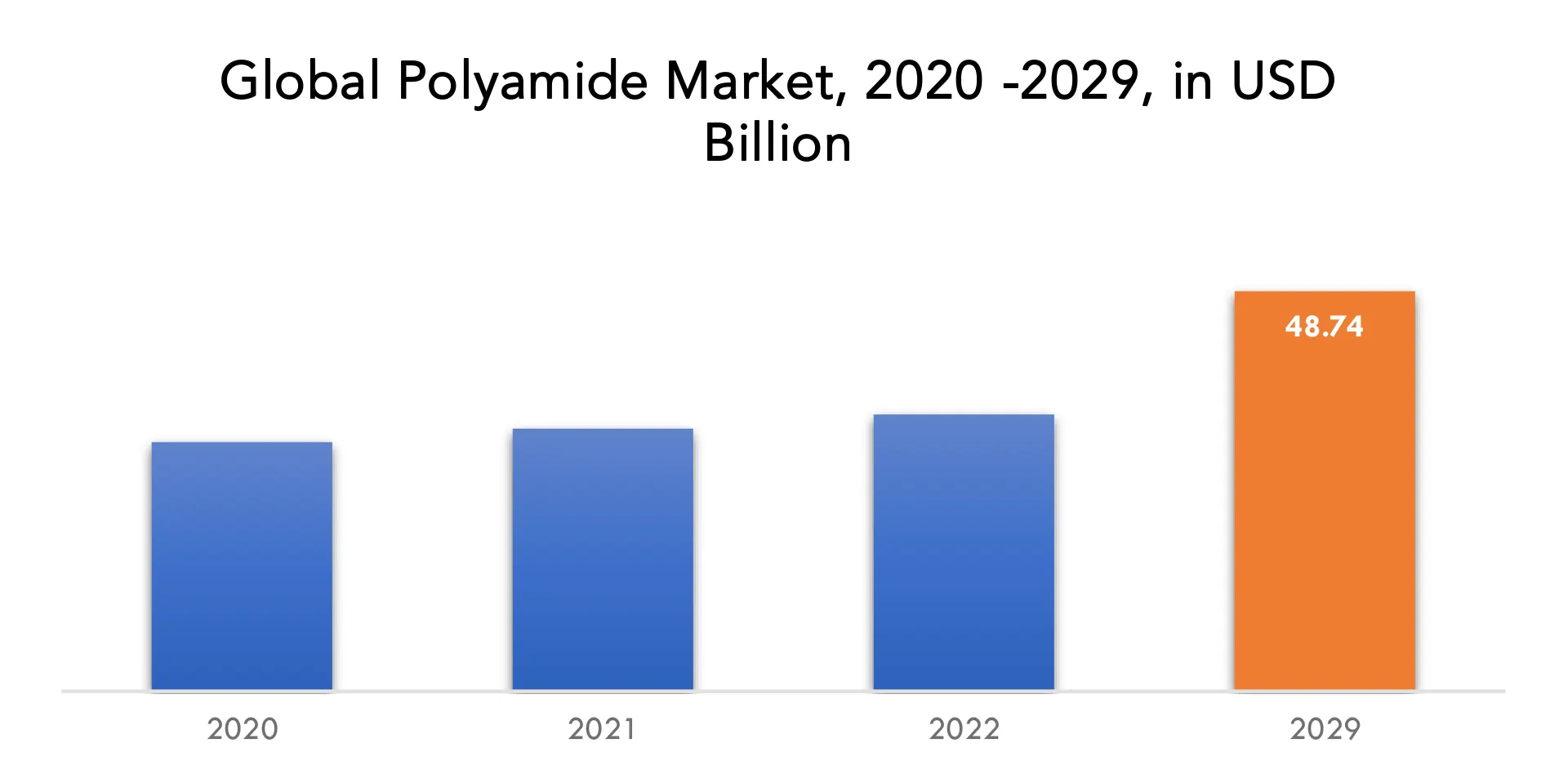
Based on application, the polyamide market is segmented into Engineering Plastics, Fibers. The engineering plastics can be further distributed across automotive, electronics and electrical, consumer goods and appliances, packaging, and others, while the fibers segment can be broken down into textile, carpet, and others. Engineering plastics will account for the largest segmental growth. Engineering plastics are a versatile group of materials known for their exceptional mechanical, thermal, and chemical properties. Polyamides, commonly referred to as nylons, are widely used in engineering plastics due to their high strength, toughness, and resistance to wear and abrasion.
Polyamide fibers, commonly known as nylon fibers, are widely used in the textile industry due to their exceptional strength, durability, and abrasion resistance. These fibers find applications in various textile products, including apparel, active wear, hosiery, industrial fabrics, and carpets.Based on end-user, the polyamide market is segmented into automotive, electrical & electronics, textile, construction, packaging, consumer goods, others. Automotive will account for the largest segmental growth. Polyamide integration in hydraulic clutch lines, headlamp bezels, automotive cooling systems, air intake manifolds, and airbag containers will increase the market value of the global polyamide market share. Furthermore, factors such as high mechanical qualities, wear resistance, and the growing need for lightweight automobiles will boost the market forward.
The electrical and electronics industry utilizes polyamides in engineering plastics and fibers. In engineering plastics, polyamides are used for electrical connectors, circuit boards, and other components due to their excellent electrical insulation and heat resistance properties. In the form of fibers, polyamides find applications in wire and cable insulation, protective coatings, and electronic device components.
Polyamide Market Key Players
The global polyamide market key players include BASF SE, DowDuPont Inc., Lanxess AG, Solvay S.A., Avient, Evonik Industries AG, Asahi Kasei Corporation, Arkema SA, Domo Chemical, Honeywell, Royal DSM, Toray Industries Inc., KOLON PLASTIC INC., AdvanSix. Recent News: April 27, 2023: Asahi Kasei and Microwave Chemical launched a joint demonstration project in April 2023 with the objective of commercializing a chemical recycling process for polyamide 661 (PA66, also called nylon 66) using microwave technology. December 12, 2022 – Avient Corporation announced an expansion to its range of polyketone (PK) based materials with new Comple PKE long fiber reinforced engineered thermoplastics. The new formulations broaden options for customers looking for strong mechanical performance to support demanding applications, even in cold environments.Polyamide Market Regional Analysis
The polyamide market by region includes North America, Asia-Pacific (APAC), Europe, South America, and Middle East & Africa (MEA).
- North America: includes the US, Canada, Mexico
- Asia Pacific: includes China, Japan, South Korea, India, Australia, ASEAN and Rest of APAC
- Europe: includes UK, Germany, France, Italy, Spain, Russia, and Rest of Europe
- South America: includes Brazil, Argentina and Rest of South America
- Middle East & Africa: includes Turkey, UAE, Saudi Arabia, South Africa, and Rest of MEA
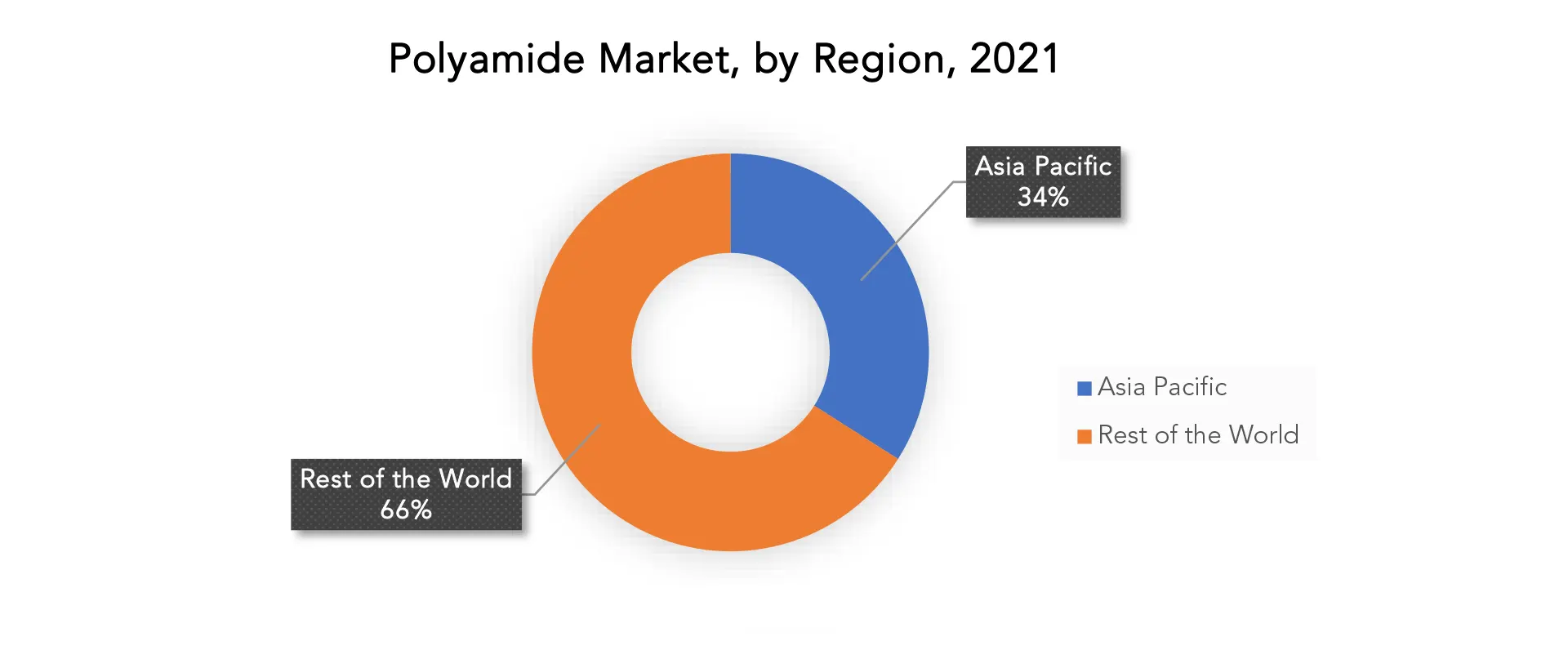
The Asia-Pacific region has seen the most development in the polyamide market, with rising usage in industries like as automotive, consumer products, and electrical and electronics. The region has seen a growth in demand for luxury automobiles as customers' spending power has improved, resulting in higher polyamide consumption in this area. China, as the major consumer, has considerably contributed to the rise of polyamides in the Asia-Pacific area.
Polyamide demand is increasing in the North and South American regions due to its use in the vehicle and electronics markets. North America is one of the world's most technologically sophisticated areas, particularly in terms of consumer electronics and other electronic items. Recent advancements have contributed in the expansion of the polyamide market in the electrical and electronics segment in North America.
Europe, the Middle East, and Africa are likely to expand faster in the next years as a result of increasing automotive sales; the government has intensified infrastructure construction operations. In Europe, the increased need for high-quality, long-lasting consumer electronics is driving up demand for polyamides. The electronics industry dominates the European polyamide market, followed by consumer products and appliances.
Key Market Segments: Polyamide Market
Polyamide Market by Product 2022-2029, (USD Billion) (Kilotons)- Polyamide 6
- Polyamide 66
- Bio-based Polyamide
- Specialty Polyamide
- Engineering Plastics
- Automotive
- Electronic and Electrical
- Consumer Goods and Appliances
- Packaging
- Others
- Fibers
- Textile
- Carpet
- Others
- Automotive
- Electrical & Electronics
- Textile
- Construction
- Packaging
- Consumer Goods
- Others
- North America
- Europe
- Asia Pacific
- South America
- MEA
Who Should Buy? Or Key stakeholders
- Polyamide Manufacturers
- Polyamide Traders, Suppliers, and Distributors
- Government and Research Organizations
- Material R&D Companies
- Associations and Industrial Bodies
- Feedstock Suppliers and Distributors
- Industry Associations
Key Question Answered
- What is the expected growth rate of the polyamide market over the next 7 years?
- Who are the major players in the polyamide market and what is their market share?
- What are the end-user industries driving demand for market and what is their outlook?
- What are the opportunities for growth in emerging markets such as Asia-Pacific, Middle East, and Africa?
- How is the economic environment affecting the polyamide market, including factors such as interest rates, inflation, and exchange rates?
- What is the expected impact of government policies and regulations on the polyamide market?
- What is the current and forecasted size and growth rate of the global polyamide market?
- What are the key drivers of growth in the polyamide market?
- What are the distribution channels and supply chain dynamics in the polyamide market?
- What are the technological advancements and innovations in the polyamide market and their impact on product development and growth?
- What are the regulatory considerations and their impact on the market?
- What are the challenges faced by players in the polyamide market and how are they addressing these challenges?
- What are the opportunities for growth and expansion in the polyamide market?
- What are the product offerings and specifications of leading players in the market?
- What is the pricing trend of polyamide in the market and what is the impact of raw material prices on the price trend?
Exactitude Consultancy Services Key Objectives:
- Increasing sales and market share
- Developing new technology
- Improving profitability
- Entering new markets
- Enhancing brand reputation
- INTRODUZIONE
- DEFINIZIONE DI MERCATO
- SEGMENTAZIONE DEL MERCATO
- TEMPI DI RICERCA
- ASSUNZIONI E LIMITAZIONI
- METODOLOGIA DI RICERCA
- ESTRAZIONE DATI
- RICERCA SECONDARIA
- RICERCA PRIMARIA
- PARERI DEGLI ESPERTI IN MATERIA
- CONTROLLI DI QUALITÀ
- RECENSIONE FINALE
- TRIANGOLAZIONE DEI DATI
- APPROCCIO DAL BASSO VERSO L'ALTO
- APPROCCIO TOP-DOWN
- FLUSSO DI RICERCA
- FONTI DEI DATI
- ESTRAZIONE DATI
- SINTESI
- PANORAMICA DEL MERCATO
- GLOBAL POLYAMIDE MARKET OUTLOOK
- MARKET DRIVERS
- MARKET RESTRAINTS
- MARKET OPPORTUNITIES
- IMPACT OF COVID-19 ON POLYAMIDE MARKET
- PORTER’S FIVE FORCES MODEL
- THREAT FROM NEW ENTRANTS
- THREAT FROM SUBSTITUTES
- BARGAINING POWER OF SUPPLIERS
- BARGAINING POWER OF CUSTOMERS
- DEGREE OF COMPETITION
- INDUSTRY VALUE CHAIN ANALYSIS
- GLOBAL POLYAMIDE MARKET OUTLOOK
- GLOBAL POLYAMIDE MARKET BY PRODUCT TYPE, 2020-2029, (USD BILLION) (KILOTONS)
- POLYAMIDE 6
- POLYAMIDE 66
- BIO-BASED POLYAMIDE
- SPECIALTY POLYAMIDE
- GLOBAL POLYAMIDE MARKET BY APPLICATION, 2020-2029, (USD BILLION) (KILOTONS)
- ENGINEERING PLASTICS
- AUTOMOTIVE
- ELECTRONIC AND ELECTRICAL
- CONSUMER GOODS AND APPLIANCES
- PACKAGING
- OTHERS
- FIBERS
- TEXTILE
- CARPET
- OTHERS
- ENGINEERING PLASTICS
- GLOBAL POLYAMIDE MARKET BY END-USER, 2020-2029, (USD BILLION) (KILOTONS)
- AUTOMOTIVE
- ELECTRICAL & ELECTRONICS
- TEXTILE
- CONSTRUCTION
- PACKAGING
- CONSUMER GOODS
- OTHERS
- GLOBAL POLYAMIDE MARKET BY REGION, 2020-2029, (USD BILLION) (KILOTONS)
- NORTH AMERICA
- US
- CANADA
- MEXICO
- SOUTH AMERICA
- BRAZIL
- ARGENTINA
- COLOMBIA
- REST OF SOUTH AMERICA
- EUROPE
- GERMANY
- UK
- FRANCE
- ITALY
- SPAIN
- RUSSIA
- REST OF EUROPE
- ASIA PACIFIC
- INDIA
- CHINA
- JAPAN
- SOUTH KOREA
- AUSTRALIA
- SOUTH-EAST ASIA
- REST OF ASIA PACIFIC
- MIDDLE EAST AND AFRICA
- UAE
- SAUDI ARABIA
- SOUTH AFRICA
- REST OF MIDDLE EAST AND AFRICA
- NORTH AMERICA
- COMPANY PROFILES* (BUSINESS OVERVIEW, COMPANY SNAPSHOT, PRODUCT OFFERED, RECENT DEVELOPMENTS)
- BASF SE
- SOLVAY SA
- DOWDUPONT INC.
- EVONIK INDUSTRIES
- LANXESS AG
- AVIENT
- ASAHI KASEI CORPORATION
- ARKEMA SA
- DOMO CHEMICAL
- HONEYWELL
- ROYAL DSM
- TORAY INDUSTRIES INC.
- KOLON PLASTIC INC *THE COMPANY LIST IS INDICATIVE
LIST OF TABLES
TABLE 1 GLOBAL POLYAMIDE MARKET BY PRODUCT TYPE (USD BILLION) 2020-2029
TABLE 2 GLOBAL POLYAMIDE MARKET BY PRODUCT TYPE (KILOTONS) 2020-2029
TABLE 3 GLOBAL POLYAMIDE MARKET BY APPLICATION (USD BILLION) 2020-2029
TABLE 4 GLOBAL POLYAMIDE MARKET BY APPLICATION (KILOTONS) 2020-2029
TABLE 5 GLOBAL POLYAMIDE MARKET BY END-USER (USD BILLION) 2020-2029
TABLE 6 GLOBAL POLYAMIDE MARKET BY END-USER (KILOTONS) 2020-2029
TABLE 7 GLOBAL POLYAMIDE MARKET BY REGION (USD BILLION) 2020-2029
TABLE 8 GLOBAL POLYAMIDE MARKET BY REGION (KILOTONS) 2020-2029
TABLE 9 NORTH AMERICA POLYAMIDE MARKET BY COUNTRY (USD BILLION) 2020-2029
TABLE 10 NORTH AMERICA POLYAMIDE MARKET BY COUNTRY (KILOTONS) 2020-2029
TABLE 11 NORTH AMERICA POLYAMIDE MARKET BY PRODUCT TYPE (USD BILLION) 2020-2029
TABLE 12 NORTH AMERICA POLYAMIDE MARKET BY PRODUCT TYPE (KILOTONS) 2020-2029
TABLE 13 NORTH AMERICA POLYAMIDE MARKET BY APPLICATION (USD BILLION) 2020-2029
TABLE 14 NORTH AMERICA POLYAMIDE MARKET BY APPLICATION (KILOTONS) 2020-2029
TABLE 15 NORTH AMERICA POLYAMIDE MARKET BY END-USER (USD BILLION) 2020-2029
TABLE 16 NORTH AMERICA POLYAMIDE MARKET BY END-USER (KILOTONS) 2020-2029
TABLE 17 US POLYAMIDE MARKET BY PRODUCT TYPE (USD BILLION) 2020-2029
TABLE 18 US POLYAMIDE MARKET BY PRODUCT TYPE (KILOTONS) 2020-2029
TABLE 19 US POLYAMIDE MARKET BY APPLICATION (USD BILLION) 2020-2029
TABLE 20 US POLYAMIDE MARKET BY APPLICATION (KILOTONS) 2020-2029
TABLE 21 US POLYAMIDE MARKET BY END-USER (USD BILLION) 2020-2029
TABLE 22 US POLYAMIDE MARKET BY END-USER (KILOTONS) 2020-2029
TABLE 23 CANADA POLYAMIDE MARKET BY PRODUCT TYPE (USD BILLION) 2020-2029
TABLE 24 CANADA POLYAMIDE MARKET BY PRODUCT TYPE (KILOTONS) 2020-2029
TABLE 25 CANADA POLYAMIDE MARKET BY APPLICATION (USD BILLION) 2020-2029
TABLE 26 CANADA POLYAMIDE MARKET BY APPLICATION (KILOTONS) 2020-2029
TABLE 27 CANADA POLYAMIDE MARKET BY END-USER (USD BILLION) 2020-2029
TABLE 28 CANADA POLYAMIDE MARKET BY END-USER (KILOTONS) 2020-2029
TABLE 29 MEXICO POLYAMIDE MARKET BY PRODUCT TYPE (USD BILLION) 2020-2029
TABLE 30 MEXICO POLYAMIDE MARKET BY PRODUCT TYPE (KILOTONS) 2020-2029
TABLE 31 MEXICO POLYAMIDE MARKET BY APPLICATION (USD BILLION) 2020-2029
TABLE 32 MEXICO POLYAMIDE MARKET BY APPLICATION (KILOTONS) 2020-2029
TABLE 33 MEXICO POLYAMIDE MARKET BY END-USER (USD BILLION) 2020-2029
TABLE 34 MEXICO POLYAMIDE MARKET BY END-USER (KILOTONS) 2020-2029
TABLE 35 SOUTH AMERICA POLYAMIDE MARKET BY COUNTRY (USD BILLION) 2020-2029
TABLE 36 SOUTH AMERICA POLYAMIDE MARKET BY COUNTRY (KILOTONS) 2020-2029
TABLE 37 SOUTH AMERICA POLYAMIDE MARKET BY PRODUCT TYPE (USD BILLION) 2020-2029
TABLE 38 SOUTH AMERICA POLYAMIDE MARKET BY PRODUCT TYPE (KILOTONS) 2020-2029
TABLE 39 SOUTH AMERICA POLYAMIDE MARKET BY APPLICATION (USD BILLION) 2020-2029
TABLE 40 SOUTH AMERICA POLYAMIDE MARKET BY APPLICATION (KILOTONS) 2020-2029
TABLE 41 SOUTH AMERICA POLYAMIDE MARKET BY END-USER (USD BILLION) 2020-2029
TABLE 42 SOUTH AMERICA POLYAMIDE MARKET BY END-USER (KILOTONS) 2020-2029
TABLE 43 BRAZIL POLYAMIDE MARKET BY PRODUCT TYPE (USD BILLION) 2020-2029
TABLE 44 BRAZIL POLYAMIDE MARKET BY PRODUCT TYPE (KILOTONS) 2020-2029
TABLE 45 BRAZIL POLYAMIDE MARKET BY APPLICATION (USD BILLION) 2020-2029
TABLE 46 BRAZIL POLYAMIDE MARKET BY APPLICATION (KILOTONS) 2020-2029
TABLE 47 BRAZIL POLYAMIDE MARKET BY END-USER (USD BILLION) 2020-2029
TABLE 48 BRAZIL POLYAMIDE MARKET BY END-USER (KILOTONS) 2020-2029
TABLE 49 ARGENTINA POLYAMIDE MARKET BY PRODUCT TYPE (USD BILLION) 2020-2029
TABLE 50 ARGENTINA POLYAMIDE MARKET BY PRODUCT TYPE (KILOTONS) 2020-2029
TABLE 51 ARGENTINA POLYAMIDE MARKET BY APPLICATION (USD BILLION) 2020-2029
TABLE 52 ARGENTINA POLYAMIDE MARKET BY APPLICATION (KILOTONS) 2020-2029
TABLE 53 ARGENTINA POLYAMIDE MARKET BY END-USER (USD BILLION) 2020-2029
TABLE 54 ARGENTINA POLYAMIDE MARKET BY END-USER (KILOTONS) 2020-2029
TABLE 55 COLOMBIA POLYAMIDE MARKET BY PRODUCT TYPE (USD BILLION) 2020-2029
TABLE 56 COLOMBIA POLYAMIDE MARKET BY PRODUCT TYPE (KILOTONS) 2020-2029
TABLE 57 COLOMBIA POLYAMIDE MARKET BY APPLICATION (USD BILLION) 2020-2029
TABLE 58 COLOMBIA POLYAMIDE MARKET BY APPLICATION (KILOTONS) 2020-2029
TABLE 59 COLOMBIA POLYAMIDE MARKET BY END-USER (USD BILLION) 2020-2029
TABLE 60 COLOMBIA POLYAMIDE MARKET BY END-USER (KILOTONS) 2020-2029
TABLE 61 REST OF SOUTH AMERICA POLYAMIDE MARKET BY PRODUCT TYPE (USD BILLION) 2020-2029
TABLE 62 REST OF SOUTH AMERICA POLYAMIDE MARKET BY PRODUCT TYPE (KILOTONS) 2020-2029
TABLE 63 REST OF SOUTH AMERICA POLYAMIDE MARKET BY APPLICATION (USD BILLION) 2020-2029
TABLE 64 REST OF SOUTH AMERICA POLYAMIDE MARKET BY APPLICATION (KILOTONS) 2020-2029
TABLE 65 REST OF SOUTH AMERICA POLYAMIDE MARKET BY END-USER (USD BILLION) 2020-2029
TABLE 66 REST OF SOUTH AMERICA POLYAMIDE MARKET BY END-USER (KILOTONS) 2020-2029
TABLE 67 ASIA-PACIFIC POLYAMIDE MARKET BY COUNTRY (USD BILLION) 2020-2029
TABLE 68 ASIA-PACIFIC POLYAMIDE MARKET BY COUNTRY (KILOTONS) 2020-2029
TABLE 69 ASIA-PACIFIC POLYAMIDE MARKET BY PRODUCT TYPE (USD BILLION) 2020-2029
TABLE 70 ASIA-PACIFIC POLYAMIDE MARKET BY PRODUCT TYPE (KILOTONS) 2020-2029
TABLE 71 ASIA-PACIFIC POLYAMIDE MARKET BY APPLICATION (USD BILLION) 2020-2029
TABLE 72 ASIA-PACIFIC POLYAMIDE MARKET BY APPLICATION (KILOTONS) 2020-2029
TABLE 73 ASIA-PACIFIC POLYAMIDE MARKET BY END-USER (USD BILLION) 2020-2029
TABLE 74 ASIA-PACIFIC POLYAMIDE MARKET BY END-USER (KILOTONS) 2020-2029
TABLE 75 INDIA POLYAMIDE MARKET BY PRODUCT TYPE (USD BILLION) 2020-2029
TABLE 76 INDIA POLYAMIDE MARKET BY PRODUCT TYPE (KILOTONS) 2020-2029
TABLE 77 INDIA POLYAMIDE MARKET BY APPLICATION (USD BILLION) 2020-2029
TABLE 78 INDIA POLYAMIDE MARKET BY APPLICATION (KILOTONS) 2020-2029
TABLE 79 INDIA POLYAMIDE MARKET BY END-USER (USD BILLION) 2020-2029
TABLE 80 INDIA POLYAMIDE MARKET BY END-USER (KILOTONS) 2020-2029
TABLE 81 CHINA POLYAMIDE MARKET BY PRODUCT TYPE (USD BILLION) 2020-2029
TABLE 82 CHINA POLYAMIDE MARKET BY PRODUCT TYPE (KILOTONS) 2020-2029
TABLE 83 CHINA POLYAMIDE MARKET BY APPLICATION (USD BILLION) 2020-2029
TABLE 84 CHINA POLYAMIDE MARKET BY APPLICATION (KILOTONS) 2020-2029
TABLE 85 CHINA POLYAMIDE MARKET BY END-USER (USD BILLION) 2020-2029
TABLE 86 CHINA POLYAMIDE MARKET BY END-USER (KILOTONS) 2020-2029
TABLE 87 JAPAN POLYAMIDE MARKET BY PRODUCT TYPE (USD BILLION) 2020-2029
TABLE 88 JAPAN POLYAMIDE MARKET BY PRODUCT TYPE (KILOTONS) 2020-2029
TABLE 89 JAPAN POLYAMIDE MARKET BY APPLICATION (USD BILLION) 2020-2029
TABLE 90 JAPAN POLYAMIDE MARKET BY APPLICATION (KILOTONS) 2020-2029
TABLE 91 JAPAN POLYAMIDE MARKET BY END-USER (USD BILLION) 2020-2029
TABLE 92 JAPAN POLYAMIDE MARKET BY END-USER (KILOTONS) 2020-2029
TABLE 93 SOUTH KOREA POLYAMIDE MARKET BY PRODUCT TYPE (USD BILLION) 2020-2029
TABLE 94 SOUTH KOREA POLYAMIDE MARKET BY PRODUCT TYPE (KILOTONS) 2020-2029
TABLE 95 SOUTH KOREA POLYAMIDE MARKET BY APPLICATION (USD BILLION) 2020-2029
TABLE 96 SOUTH KOREA POLYAMIDE MARKET BY APPLICATION (KILOTONS) 2020-2029
TABLE 97 SOUTH KOREA POLYAMIDE MARKET BY END-USER (USD BILLION) 2020-2029
TABLE 98 SOUTH KOREA POLYAMIDE MARKET BY END-USER (KILOTONS) 2020-2029
TABLE 99 AUSTRALIA POLYAMIDE MARKET BY PRODUCT TYPE (USD BILLION) 2020-2029
TABLE 100 AUSTRALIA POLYAMIDE MARKET BY PRODUCT TYPE (KILOTONS) 2020-2029
TABLE 101 AUSTRALIA POLYAMIDE MARKET BY APPLICATION (USD BILLION) 2020-2029
TABLE 102 AUSTRALIA POLYAMIDE MARKET BY APPLICATION (KILOTONS) 2020-2029
TABLE 103 AUSTRALIA POLYAMIDE MARKET BY END-USER (USD BILLION) 2020-2029
TABLE 104 AUSTRALIA POLYAMIDE MARKET BY END-USER (KILOTONS) 2020-2029
TABLE 105 SOUTH-EAST ASIA POLYAMIDE MARKET BY PRODUCT TYPE (USD BILLION) 2020-2029
TABLE 106 SOUTH-EAST ASIA POLYAMIDE MARKET BY PRODUCT TYPE (KILOTONS) 2020-2029
TABLE 107 SOUTH-EAST ASIA POLYAMIDE MARKET BY APPLICATION (USD BILLION) 2020-2029
TABLE 108 SOUTH-EAST ASIA POLYAMIDE MARKET BY APPLICATION (KILOTONS) 2020-2029
TABLE 109 SOUTH-EAST ASIA POLYAMIDE MARKET BY END-USER (USD BILLION) 2020-2029
TABLE 110 SOUTH-EAST ASIA POLYAMIDE MARKET BY END-USER (KILOTONS) 2020-2029
TABLE 111 REST OF ASIA PACIFIC POLYAMIDE MARKET BY PRODUCT TYPE (USD BILLION) 2020-2029
TABLE 112 REST OF ASIA PACIFIC POLYAMIDE MARKET BY PRODUCT TYPE (KILOTONS) 2020-2029
TABLE 113 REST OF ASIA PACIFIC POLYAMIDE MARKET BY APPLICATION (USD BILLION) 2020-2029
TABLE 114 REST OF ASIA PACIFIC POLYAMIDE MARKET BY APPLICATION (KILOTONS) 2020-2029
TABLE 115 REST OF ASIA PACIFIC POLYAMIDE MARKET BY END-USER (USD BILLION) 2020-2029
TABLE 116 REST OF ASIA PACIFIC POLYAMIDE MARKET BY END-USER (KILOTONS) 2020-2029
TABLE 117 EUROPE POLYAMIDE MARKET BY COUNTRY (USD BILLION) 2020-2029
TABLE 118 EUROPE POLYAMIDE MARKET BY COUNTRY (KILOTONS) 2020-2029
TABLE 119 EUROPE POLYAMIDE MARKET BY PRODUCT TYPE (USD BILLION) 2020-2029
TABLE 120 EUROPE POLYAMIDE MARKET BY PRODUCT TYPE (KILOTONS) 2020-2029
TABLE 121 EUROPE POLYAMIDE MARKET BY APPLICATION (USD BILLION) 2020-2029
TABLE 122 EUROPE POLYAMIDE MARKET BY APPLICATION (KILOTONS) 2020-2029
TABLE 123 EUROPE POLYAMIDE MARKET BY END-USER (USD BILLION) 2020-2029
TABLE 124 EUROPE POLYAMIDE MARKET BY END-USER (KILOTONS) 2020-2029
TABLE 125 GERMANY POLYAMIDE MARKET BY PRODUCT TYPE (USD BILLION) 2020-2029
TABLE 126 GERMANY POLYAMIDE MARKET BY PRODUCT TYPE (KILOTONS) 2020-2029
TABLE 127 GERMANY POLYAMIDE MARKET BY APPLICATION (USD BILLION) 2020-2029
TABLE 128 GERMANY POLYAMIDE MARKET BY APPLICATION (KILOTONS) 2020-2029
TABLE 129 GERMANY POLYAMIDE MARKET BY END-USER (USD BILLION) 2020-2029
TABLE 130 GERMANY POLYAMIDE MARKET BY END-USER (KILOTONS) 2020-2029
TABLE 131 UK POLYAMIDE MARKET BY PRODUCT TYPE (USD BILLION) 2020-2029
TABLE 132 UK POLYAMIDE MARKET BY PRODUCT TYPE (KILOTONS) 2020-2029
TABLE 133 UK POLYAMIDE MARKET BY APPLICATION (USD BILLION) 2020-2029
TABLE 134 UK POLYAMIDE MARKET BY APPLICATION (KILOTONS) 2020-2029
TABLE 135 UK POLYAMIDE MARKET BY END-USER (USD BILLION) 2020-2029
TABLE 136 UK POLYAMIDE MARKET BY END-USER (KILOTONS) 2020-2029
TABLE 137 FRANCE POLYAMIDE MARKET BY PRODUCT TYPE (USD BILLION) 2020-2029
TABLE 138 FRANCE POLYAMIDE MARKET BY PRODUCT TYPE (KILOTONS) 2020-2029
TABLE 139 FRANCE POLYAMIDE MARKET BY APPLICATION (USD BILLION) 2020-2029
TABLE 140 FRANCE POLYAMIDE MARKET BY APPLICATION (KILOTONS) 2020-2029
TABLE 141 FRANCE POLYAMIDE MARKET BY END-USER (USD BILLION) 2020-2029
TABLE 142 FRANCE POLYAMIDE MARKET BY END-USER (KILOTONS) 2020-2029
TABLE 143 ITALY POLYAMIDE MARKET BY PRODUCT TYPE (USD BILLION) 2020-2029
TABLE 144 ITALY POLYAMIDE MARKET BY PRODUCT TYPE (KILOTONS) 2020-2029
TABLE 145 ITALY POLYAMIDE MARKET BY APPLICATION (USD BILLION) 2020-2029
TABLE 146 ITALY POLYAMIDE MARKET BY APPLICATION (KILOTONS) 2020-2029
TABLE 147 ITALY POLYAMIDE MARKET BY END-USER (USD BILLION) 2020-2029
TABLE 148 ITALY POLYAMIDE MARKET BY END-USER (KILOTONS) 2020-2029
TABLE 149 SPAIN POLYAMIDE MARKET BY PRODUCT TYPE (USD BILLION) 2020-2029
TABLE 150 SPAIN POLYAMIDE MARKET BY PRODUCT TYPE (KILOTONS) 2020-2029
TABLE 151 SPAIN POLYAMIDE MARKET BY APPLICATION (USD BILLION) 2020-2029
TABLE 152 SPAIN POLYAMIDE MARKET BY APPLICATION (KILOTONS) 2020-2029
TABLE 153 SPAIN POLYAMIDE MARKET BY END-USER (USD BILLION) 2020-2029
TABLE 154 SPAIN POLYAMIDE MARKET BY END-USER (KILOTONS) 2020-2029
TABLE 155 RUSSIA POLYAMIDE MARKET BY PRODUCT TYPE (USD BILLION) 2020-2029
TABLE 156 RUSSIA POLYAMIDE MARKET BY PRODUCT TYPE (KILOTONS) 2020-2029
TABLE 157 RUSSIA POLYAMIDE MARKET BY APPLICATION (USD BILLION) 2020-2029
TABLE 158 RUSSIA POLYAMIDE MARKET BY APPLICATION (KILOTONS) 2020-2029
TABLE 159 RUSSIA POLYAMIDE MARKET BY END-USER (USD BILLION) 2020-2029
TABLE 160 RUSSIA POLYAMIDE MARKET BY END-USER (KILOTONS) 2020-2029
TABLE 161 REST OF EUROPE POLYAMIDE MARKET BY PRODUCT TYPE (USD BILLION) 2020-2029
TABLE 162 REST OF EUROPE POLYAMIDE MARKET BY PRODUCT TYPE (KILOTONS) 2020-2029
TABLE 163 REST OF EUROPE POLYAMIDE MARKET BY APPLICATION (USD BILLION) 2020-2029
TABLE 164 REST OF EUROPE POLYAMIDE MARKET BY APPLICATION (KILOTONS) 2020-2029
TABLE 165 REST OF EUROPE POLYAMIDE MARKET BY END-USER (USD BILLION) 2020-2029
TABLE 166 REST OF EUROPE POLYAMIDE MARKET BY END-USER (KILOTONS) 2020-2029
TABLE 167 MIDDLE EAST AND AFRICA POLYAMIDE MARKET BY COUNTRY (USD BILLION) 2020-2029
TABLE 168 MIDDLE EAST AND AFRICA POLYAMIDE MARKET BY COUNTRY (KILOTONS) 2020-2029
TABLE 169 MIDDLE EAST AND AFRICA POLYAMIDE MARKET BY PRODUCT TYPE (USD BILLION) 2020-2029
TABLE 170 MIDDLE EAST AND AFRICA POLYAMIDE MARKET BY PRODUCT TYPE (KILOTONS) 2020-2029
TABLE 171 MIDDLE EAST AND AFRICA POLYAMIDE MARKET BY APPLICATION (USD BILLION) 2020-2029
TABLE 172 MIDDLE EAST AND AFRICA POLYAMIDE MARKET BY APPLICATION (KILOTONS) 2020-2029
TABLE 173 MIDDLE EAST AND AFRICA POLYAMIDE MARKET BY END-USER (USD BILLION) 2020-2029
TABLE 174 MIDDLE EAST AND AFRICA POLYAMIDE MARKET BY END-USER (KILOTONS) 2020-2029
TABLE 175 UAE POLYAMIDE MARKET BY PRODUCT TYPE (USD BILLION) 2020-2029
TABLE 176 UAE POLYAMIDE MARKET BY PRODUCT TYPE (KILOTONS) 2020-2029
TABLE 177 UAE POLYAMIDE MARKET BY APPLICATION (USD BILLION) 2020-2029
TABLE 178 UAE POLYAMIDE MARKET BY APPLICATION (KILOTONS) 2020-2029
TABLE 179 UAE POLYAMIDE MARKET BY END-USER (USD BILLION) 2020-2029
TABLE 180 UAE POLYAMIDE MARKET BY END-USER (KILOTONS) 2020-2029
TABLE 181 SAUDI ARABIA POLYAMIDE MARKET BY PRODUCT TYPE (USD BILLION) 2020-2029
TABLE 182 SAUDI ARABIA POLYAMIDE MARKET BY PRODUCT TYPE (KILOTONS) 2020-2029
TABLE 183 SAUDI ARABIA POLYAMIDE MARKET BY APPLICATION (USD BILLION) 2020-2029
TABLE 184 SAUDI ARABIA POLYAMIDE MARKET BY APPLICATION (KILOTONS) 2020-2029
TABLE 185 SAUDI ARABIA POLYAMIDE MARKET BY END-USER (USD BILLION) 2020-2029
TABLE 186 SAUDI ARABIA POLYAMIDE MARKET BY END-USER (KILOTONS) 2020-2029
TABLE 187 SOUTH AFRICA POLYAMIDE MARKET BY PRODUCT TYPE (USD BILLION) 2020-2029
TABLE 188 SOUTH AFRICA POLYAMIDE MARKET BY PRODUCT TYPE (KILOTONS) 2020-2029
TABLE 189 SOUTH AFRICA POLYAMIDE MARKET BY APPLICATION (USD BILLION) 2020-2029
TABLE 190 SOUTH AFRICA POLYAMIDE MARKET BY APPLICATION (KILOTONS) 2020-2029
TABLE 191 SOUTH AFRICA POLYAMIDE MARKET BY END-USER (USD BILLION) 2020-2029
TABLE 192 SOUTH AFRICA POLYAMIDE MARKET BY END-USER (KILOTONS) 2020-2029
TABLE 193 REST OF MIDDLE EAST AND AFRICA POLYAMIDE MARKET BY PRODUCT TYPE (USD BILLION) 2020-2029
TABLE 194 REST OF MIDDLE EAST AND AFRICA POLYAMIDE MARKET BY PRODUCT TYPE (KILOTONS) 2020-2029
TABLE 195 REST OF MIDDLE EAST AND AFRICA POLYAMIDE MARKET BY APPLICATION (USD BILLION) 2020-2029
TABLE 196 REST OF MIDDLE EAST AND AFRICA POLYAMIDE MARKET BY APPLICATION (KILOTONS) 2020-2029
TABLE 197 REST OF MIDDLE EAST AND AFRICA POLYAMIDE MARKET BY END-USER (USD BILLION) 2020-2029
TABLE 198 REST OF MIDDLE EAST AND AFRICA POLYAMIDE MARKET BY END-USER (KILOTONS) 2020-2029
LIST OF FIGURES
FIGURE 1 MARKET DYNAMICS
FIGURE 2 MARKET SEGMENTATION
FIGURE 3 REPORT TIMELINES: YEARS CONSIDERED
FIGURE 4 DATA TRIANGULATION
FIGURE 5 BOTTOM-UP APPROACH
FIGURE 6 TOP-DOWN APPROACH
FIGURE 7 RESEARCH FLOW
FIGURE 8 GLOBAL POLYAMIDE MARKET BY PRODUCT TYPE (USD BILLION) 2020-2029
FIGURE 9 GLOBAL POLYAMIDE MARKET BY APPLICATION (USD BILLION) 2020-2029
FIGURE 10 GLOBAL POLYAMIDE MARKET BY END-USER (USD BILLION) 2020-2029
FIGURE 11 GLOBAL POLYAMIDE MARKET BY REGION (USD BILLION) 2020-2029
FIGURE 12 PORTER’S FIVE FORCES MODEL
FIGURE 13 GLOBAL POLYAMIDE MARKET BY PRODUCT TYPE (USD BILLION) 2021
FIGURE 14 GLOBAL POLYAMIDE MARKET BY APPLICATION (USD BILLION) 2021
FIGURE 15 GLOBAL POLYAMIDE MARKET BY END-USER (USD BILLION) 2021
FIGURE 16 GLOBAL POLYAMIDE MARKET BY REGION (USD BILLION) 2021
FIGURE 17 MARKET SHARE ANALYSIS
FIGURE 18 BASF SE: COMPANY SNAPSHOT
FIGURE 19 DOWDUPONT INC.: COMPANY SNAPSHOT
FIGURE 20 LANXESS AG: COMPANY SNAPSHOT
FIGURE 21 SOLVAY S.A.: COMPANY SNAPSHOT
FIGURE 22 AVIENT: COMPANY SNAPSHOT
FIGURE 23 EVONIK INDUSTRIES AG: COMPANY SNAPSHOT
FIGURE 24 ASAHI KASEI CORPORATION: COMPANY SNAPSHOT
FIGURE 25 ARKEMA SA: COMPANY SNAPSHOT
FIGURE 26 DOMO CHEMICAL: COMPANY SNAPSHOT
FIGURE 27 HONEYWELL: COMPANY SNAPSHOT
FIGURE 28 ROYAL DSM: COMPANY SNAPSHOT
FIGURE 29 TORAY INDUSTRIES INC.: COMPANY SNAPSHOT
FIGURE 30 KOLON PLASTIC INC: COMPANY SNAPSHOT
DOWNLOAD FREE SAMPLE REPORT
License Type
SPEAK WITH OUR ANALYST
Want to know more about the report or any specific requirement?
WANT TO CUSTOMIZE THE REPORT?
Our Clients Speak
We asked them to research ‘ Equipment market’ all over the world, and their whole arrangement was helpful to us. thehealthanalytics.com insightful analysis and reports contributed to our current analysis and in creating a future strategy. Besides, the te
Yosuke Mitsui
Senior Associate Construction Equipment Sales & Marketing
We asked them to research ‘Equipment market’ all over the world, and their whole arrangement was helpful to us. thehealthanalytics.com insightful analysis and reports contributed to our current analysis and in creating a future strategy. Besides, the te