

Base Year Value ()
x.x %
x.x %
CAGR ()
x.x %
x.x %
Forecast Year Value ()
x.x %
x.x %
Historical Data Period
Largest Region
Forecast Period
Mercato dell'elettrificazione dei veicoli per tipo di prodotto (sistema di avvio/arresto, servosterzo elettrico (EPS), compressore elettrico del climatizzatore, pompa per vuoto elettrica, pompa elettrica dell'olio, pompa elettrica dell'acqua, riscaldatore di liquidi PTC, generatore di avviamento integrato (ISG), motorino di avviamento, alternatore, attuatore), grado di ibridazione (motore a combustione interna (ICE) e veicolo micro-ibrido, veicolo elettrico ibrido (HEV), veicolo elettrico ibrido plug-in (PHEV), veicolo elettrico a batteria (BEV), 48 V) e per regione Tendenze e previsioni globali dal 2022 al 2029
Instant access to hundreds of data points and trends
- Market estimates from 2014-2029
- Competitive analysis, industry segmentation, financial benchmarks
- Incorporates SWOT, Porter's Five Forces and risk management frameworks
- PDF report or online database with Word, Excel and PowerPoint export options
- 100% money back guarantee
Panoramica del mercato dell'elettrificazione dei veicoli
Si prevede che il mercato globale dell'elettrificazione dei veicoli raggiungerà i 157,75 miliardi di dollari entro il 2029, rispetto ai 65,28 miliardi di dollari del 2020, con un CAGR dell'11,8% dal 2022 al 2029.
L'elettrificazione dei veicoli si riferisce al processo di transizione dei veicoli dall'uso di motori a combustione interna tradizionali (ICE) che si basano su combustibili fossili a fonti di energia elettrica. Comporta la sostituzione o l'integrazione del motore a combustione con motori elettrici e l'utilizzo di batterie o altri dispositivi di accumulo di energia per fornire energia per la propulsione.
La crescente elettrificazione dei veicoli a motore è il motore fondamentale della significativa transizione nel settore automobilistico. La necessità di elettrificazione dei veicoli è guidata da un aumento della produzione di automobili e da una crescita globale delle vendite di veicoli. Sta diventando sempre più popolare come alternativa ai sistemi idraulici e meccanici più tradizionali. Migliora il risparmio di carburante e riduce le emissioni dei veicoli. Grazie alla crescente tendenza all'elettrificazione delle automobili, i produttori di apparecchiature originali (OEM) hanno assistito a una significativa riduzione del peso dei componenti automobilistici. Ciò, a sua volta, aiuta a ridurre il consumo di carburante e aumenta l'efficienza operativa del veicolo.
[caption id="allegato_28092" align="aligncenter" width="1920"]
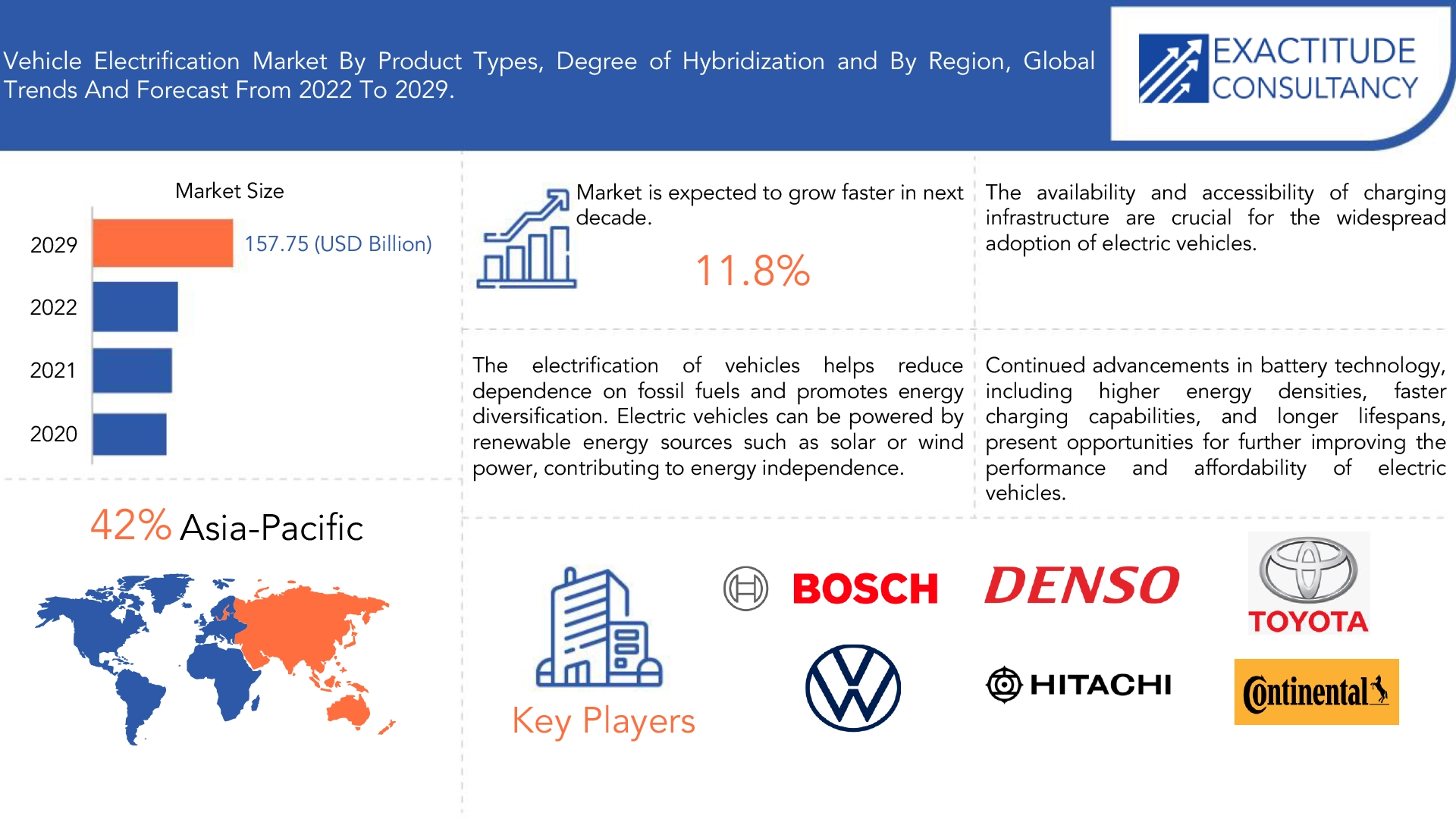
L'elettrificazione dei veicoli ha un immenso potenziale per un impatto ambientale positivo. Sostituendo i motori a combustione interna convenzionali con motori elettrici, questi veicoli producono zero emissioni allo scarico , il che porta a una migliore qualità dell'aria e a una riduzione delle emissioni di anidride carbonica. L'elettrificazione offre anche il vantaggio dell'indipendenza energetica e della diversificazione riducendo la dipendenza dai combustibili fossili importati e promuovendo l'utilizzo di elettricità prodotta a livello nazionale.
Diversi fattori interessanti incoraggiano l'elettrificazione dei veicoli. l'urgente necessità di affrontare le preoccupazioni ambientali, in particolare la riduzione delle emissioni di gas serra. I governi di tutto il mondo stanno emanando rigide normative e politiche per limitare l'inquinamento, stimolando l'adozione di veicoli elettrici. I progressi tecnologici, come i miglioramenti nella tecnologia delle batterie e nelle infrastrutture di ricarica, stanno svolgendo un ruolo fondamentale nel guidare la crescita dell'elettrificazione dei veicoli. Questi progressi stanno gradualmente riducendo i costi dei veicoli elettrici, migliorandone le prestazioni e rendendoli sempre più attraenti per i consumatori. Inoltre, la crescente consapevolezza e domanda di opzioni di trasporto sostenibili stanno alimentando la transizione verso l'elettrificazione, poiché sempre più individui riconoscono i vantaggi della riduzione della propria impronta di carbonio.
Il costo iniziale dei veicoli elettrici, che è spesso più alto di quello dei veicoli normali a causa di fattori come i costi delle batterie, è uno degli ostacoli principali. I veicoli elettrici stanno diventando più accessibili, tuttavia, come risultato di continui sviluppi ed economie di scala. L'infrastruttura inadeguata per la ricarica dei veicoli elettrici è un altro problema che potrebbe rendere i potenziali proprietari di tali veicoli ansiosi della loro autonomia. L'area degli sviluppi tecnici è una delle principali opportunità offerte dall'elettrificazione dei veicoli. L'industria delle auto elettriche sta attraversando una rivoluzione a causa del rapido avanzamento della tecnologia delle batterie. I veicoli possono guidare più a lungo con una singola carica man mano che aumenta la densità energetica della batteria, placando le preoccupazioni sull'ansia da autonomia. Inoltre, i miglioramenti nell'infrastruttura di ricarica , come le reti di ricarica rapida e le tecnologie di ricarica wireless, migliorano l'accessibilità e la praticità per i proprietari di veicoli elettrici. Questi progressi tecnici non solo aumentano l'efficacia e le prestazioni dei veicoli elettrici, ma creano anche nuove opportunità di trasporto.
| ATTRIBUTO | DETTAGLI |
| Periodo di studio | 2022-2029 |
| Anno base | 2022 |
| Anno stimato | 2023 |
| Anno previsto | 2023-2029 |
| Periodo storico | 2018-2022 |
| Unità | Valore (miliardi di USD) Volume (milioni di unità) |
| Segmentazione | Per tipo di prodotto, per grado di ibridazione, per regione |
| Per tipo di prodotto |
|
| Per grado di ibridazione |
|
| Per regione |
|
Frequently Asked Questions
• What is the worth of the vehicle electrification market?
The global vehicle electrification market is projected to reach USD 157.75 billion by 2029 from USD 65.28 billion in 2020, at a CAGR of 11.8 % from 2022 to 2029.
• What is the share of the Asia Pacific vehicle electrification industry?
Asia Pacific dominates the vehicle electrification market, with a market share of over 42%.
• Which are the top companies to hold the market share in the vehicle electrification market?
Robert Bosch GmbH, Continental AG, Denso Corporation, Delphi Automotive PLC, Johnson Electric Holdings Ltd., Volkswagen, Toyota Motor Corporation, Honda Motor Co. Ltd, Mitsubishi Electric Corporation, TRW Automotive Holdings Corp., Hitachi Automotive Systems, BorgWarner Inc., Magna International Inc. are among the leading players in the global vehicle electrification market.
• What is the CAGR of vehicle electrification market?
The global vehicle electrification market registered a CAGR of 11.8 % from 2022 to 2029.
• What are the key factors driving the market?
The global vehicle electrification market has grown at a rapid pace as the automotive industry's technologies have shifted from hydrocarbon energy to electricity. The need for sunlight-weighted vehicles to improve fuel efficiency and lower carbon emissions supports the growth of this industry.
Vehicle Electrification Market Segment Analysis
The global vehicle electrification market is segmented by product type, degree of hybridization and region.
Based on product type, the vehicle electrification market is segmented into Start/Stop System, Electric Power Steering (EPS), Electric Air-Conditioner Compressor, Electric Vacuum Pump, Electric Oil Pump, Electric Water Pump, Liquid Heater PTC, Integrated Starter Generator (ISG), Starter Motor, Alternator, Actuator. The electric power steering sector led the market, with a market share of 23% in 2021. The EPS sector is more popular among end users than other steering approaches. It offers several benefits, including energy savings, less mechanical troubles, and the ability to customize a more user-friendly interface. EPS is a more energy-efficient vehicle option than HPS since it is smaller and lighter. The demand for more dependability in hydraulic power steering promotes market growth.
The electric hoover pump segment is expected to increase rapidly during the forecast period. As engines are becoming more energy-efficient, advances in vehicle technology are being developed to conserve gasoline. The consistent operation of electric vacuum pumps in automobiles supports automakers in satisfying stricter emission limits by delivering the vacuum required for the brake booster. The rising popularity of electric hoover pumps can be attributed to their ability to provide customers with a consistent and soft break-pedal experience.
Based on degree of hybridization, the vehicle electrification market is segmented into Internal Combustion Engine (ICE) & Micro-Hybrid Vehicle, Hybrid Electric Vehicle (HEV), Plug-In Hybrid Electric Vehicle (PHEV), Battery Electric Vehicle (BEV), 48 V. Plug-In Hybrid Electric Vehicles (PHEV) are expected to grow at a greater CAGR of 12.3% than other hybridization types over the forecast period. The present technology and mechanical integration prospects within autos provide the consumer with the most efficient solution. The increased customer desire for the benefits of fuel efficiency and low vehicle operational and maintenance costs is related to the expanding demand for PHEVs.
Battery Electric Vehicle (BEV) sales are expected to expand at a strong 10.3% CAGR during the forecast period. The segment's expansion is due to shifting environmental rules across all governments. The goal of reducing the impact of global carbon footprints is expected to boost market demand within the business.
[caption id="attachment_28105" align="aligncenter" width="1920"]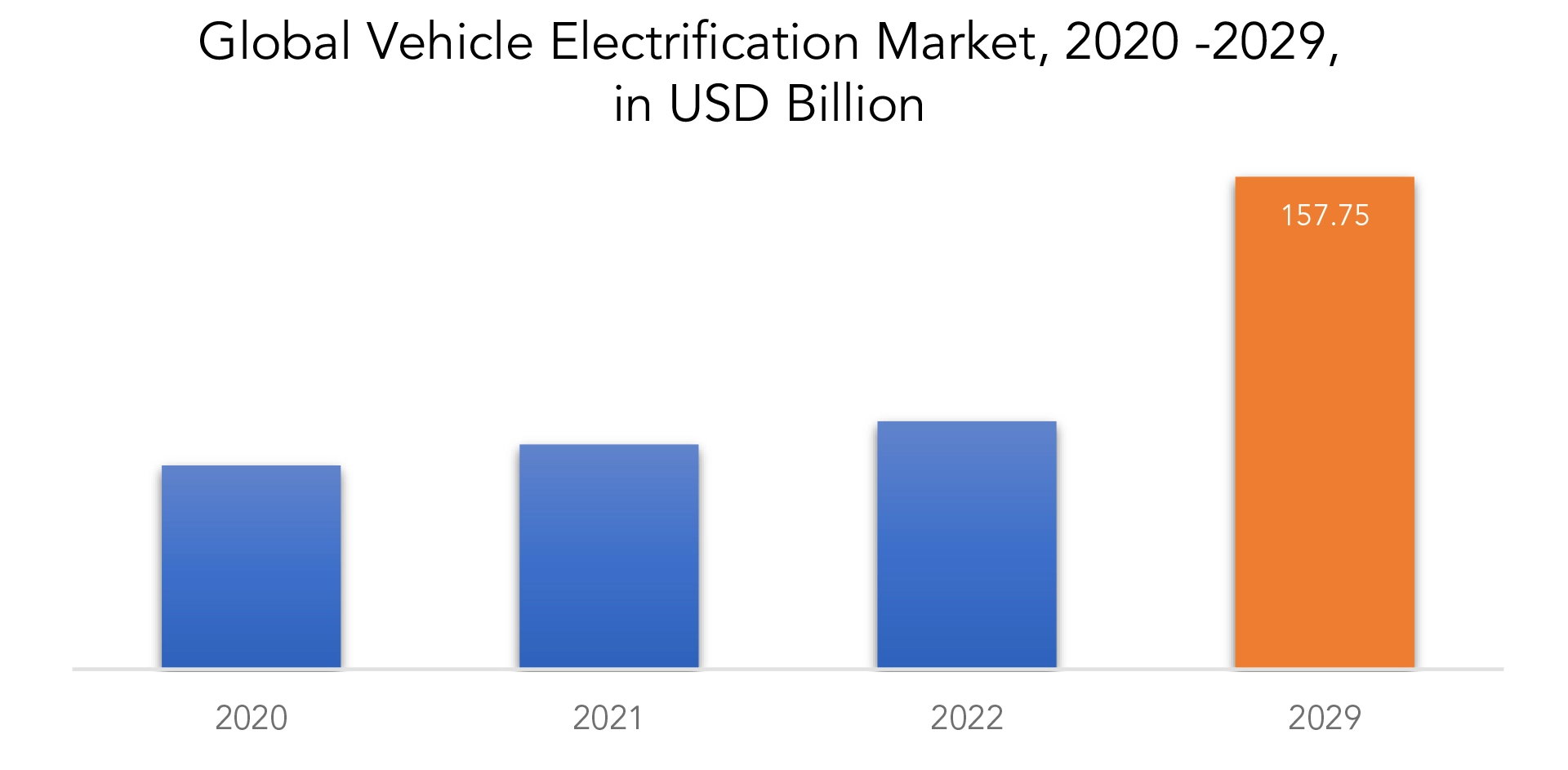
Vehicle Electrification Market Players
The global vehicle electrification market key players include Robert Bosch GmbH, Continental AG, Denso Corporation, Delphi Automotive PLC, Johnson Electric Holdings Ltd., Volkswagen, Toyota Motor Corporation, Honda Motor Co. Ltd, Mitsubishi Electric Corporation, TRW Automotive Holdings Corp., Hitachi Automotive Systems, BorgWarner Inc., Magna International Inc.
May 17, 2023: The new generation of conventional electronic brake systems, the so-called MK 120 ESC, has been firstly put into production in the Chinese market by Continental’s company.
April 18, 2023: Mitsubishi Electric Corporation today that it has developed a technology to detect serious physical conditions experienced by people driving automobiles, such as loss of consciousness, by estimating pulse rate, changes in blood pressure and other biometric data collected with a contactless Driver Monitoring System (DMS) camera, which the company has already launched to detect driver distractions and drowsiness.
Who Should Buy? Or Key stakeholders
- Automotive Manufacturers
- Government Organizations
- Charging Infrastructure Providers
- Energy Suppliers
- Fleet Operators
- Financial Institutions
- Environmental Organizations
Vehicle Electrification Market Regional Analysis
The vehicle electrification market by region includes North America, Asia-Pacific (APAC), Europe, South America, and Middle East & Africa (MEA).
- North America: includes the US, Canada, Mexico
- Asia Pacific: includes China, Japan, South Korea, India, Australia, ASEAN and Rest of APAC
- Europe: includes UK, Germany, France, Italy, Spain, Russia, and Rest of Europe
- South America: includes Brazil, Argentina and Rest of South America
- Middle East & Africa: includes Turkey, UAE, Saudi Arabia, South Africa, and Rest of MEA
Asia-Pacific held the largest market share, valued at USD 40.36 billion in 2021. The government's attempts to encourage electric vehicles and provide incentives for revenue are fuelling demand in this region. The expanding population in the countries, together with rising per capita income, drives demand for personal transportation automobiles that are environmentally friendly. Due to the government's emphasis on implementing sustainable infrastructure expansion, Europe is projected to witness significant growth in the vehicle electrification business. Furthermore, future investment as a result of government assistance is likely to drive the growth of the vehicle electrification market throughout the forecast period.
North America is expected to be the fastest-growing vehicle electrification market. Growing charging infrastructure and major expenditures by OEMs in the development of car electrification are driving growth in this area. The United States is about to dominate the North American market, with the highest market share in the future.
[caption id="attachment_28107" align="aligncenter" width="1920"]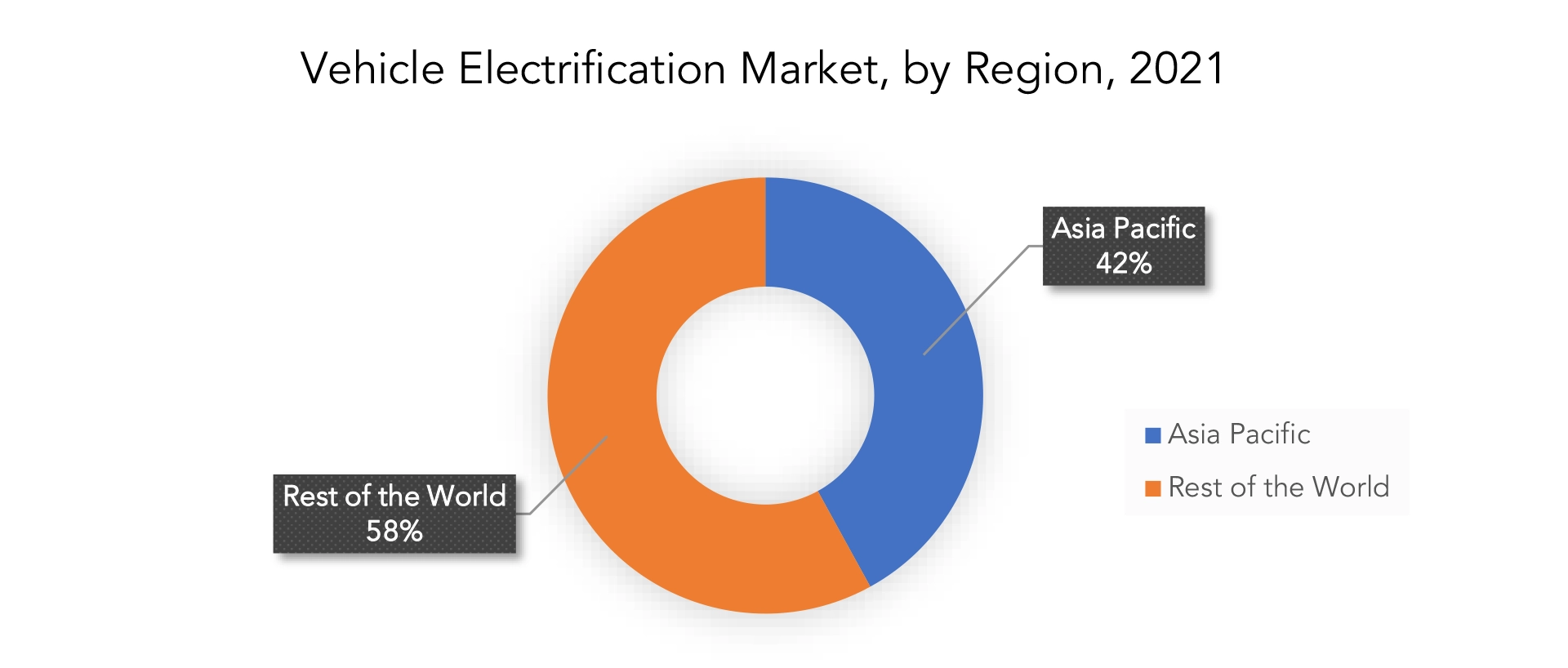
Key Market Segments: Vehicle Electrification Market
Vehicle Electrification Market by Product Type 2022-2029, (USD Billion) (Million Units)- Start/Stop System
- Electric Power Steering (EPS)
- Electric Air-Conditioner Compressor
- Electric Vacuum Pump
- Electric Oil Pump
- Electric Water Pump
- Liquid Heater PTC
- Integrated Starter Generator (ISG)
- Starter Motor
- Alternator
- Actuator
- Internal Combustion Engine (ICE) & Micro-Hybrid Vehicle
- Hybrid Electric Vehicle (HEV)
- Plug-In Hybrid Electric Vehicle (PHEV)
- Battery Electric Vehicle (BEV)
- 48 V
- North America
- Europe
- Asia Pacific
- South America
- Middle East and Africa
Exactitude Consultancy Services Key Objectives:
- Increasing sales and market share
- Developing new technology
- Improving profitability
- Entering new markets
- Enhancing brand reputation
Key Question Answered
- What is the expected growth rate of the vehicle electrification market over the next 7 years?
- Who are the major players in the vehicle electrification market and what is their market share?
- What are the end-user industries driving demand for market and what is their outlook?
- What are the opportunities for growth in emerging markets such as Asia-Pacific, Middle East, and Africa?
- How is the economic environment affecting the vehicle electrification market, including factors such as interest rates, inflation, and exchange rates?
- What is the expected impact of government policies and regulations on the vehicle electrification market?
- What is the current and forecasted size and growth rate of the global vehicle electrification market?
- What are the key drivers of growth in the vehicle electrification market?
- What are the distribution channels and supply chain dynamics in the vehicle electrification market?
- What are the technological advancements and innovations in the vehicle electrification market and their impact on product development and growth?
- What are the regulatory considerations and their impact on the market?
- What are the challenges faced by players in the vehicle electrification market and how are they addressing these challenges?
- What are the opportunities for growth and expansion in the vehicle electrification market?
- What are the product offerings and specifications of leading players in the market?
- What is the pricing trend of vehicle electrification in the market and what is the impact of raw material prices on the price trend?
- INTRODUZIONE
- DEFINIZIONE DI MERCATO
- SEGMENTAZIONE DEL MERCATO
- TEMPI DI RICERCA
- ASSUNZIONI E LIMITAZIONI
- METODOLOGIA DI RICERCA
- ESTRAZIONE DATI
- RICERCA SECONDARIA
- RICERCA PRIMARIA
- PARERI DEGLI ESPERTI IN MATERIA
- CONTROLLI DI QUALITÀ
- RECENSIONE FINALE
- TRIANGOLAZIONE DEI DATI
- BOTTOM-UP APPROACH
- TOP-DOWN APPROACH
- RESEARCH FLOW
- DATA SOURCES
- ESTRAZIONE DATI
- EXECUTIVE SUMMARY
- MARKET OVERVIEW
- GLOBAL VEHICLE ELECTRIFICATION MARKET OUTLOOK
- MARKET DRIVERS
- MARKET RESTRAINTS
- MARKET OPPORTUNITIES
- IMPACT OF COVID-19 ON VEHICLE ELECTRIFICATION MARKET
- PORTER’S FIVE FORCES MODEL
- THREAT FROM NEW ENTRANTS
- THREAT FROM SUBSTITUTES
- BARGAINING POWER OF SUPPLIERS
- BARGAINING POWER OF CUSTOMERS
- DEGREE OF COMPETITION
- INDUSTRY VALUE CHAIN ANALYSIS
- GLOBAL VEHICLE ELECTRIFICATION MARKET OUTLOOK
- GLOBAL VEHICLE ELECTRIFICATION MARKET BY PRODUCT TYPE, 2020-2029, (USD BILLION) (MILLION UNITS)
- START/STOP SYSTEM
- ELECTRIC POWER STEERING (EPS)
- ELECTRIC AIR-CONDITIONER COMPRESSOR
- ELECTRIC VACUUM PUMP
- ELECTRIC OIL PUMP
- ELECTRIC WATER PUMP
- LIQUID HEATER PTC
- INTEGRATED STARTER GENERATOR (ISG)
- STARTER MOTOR
- ALTERNATOR
- ACTUATOR
- GLOBAL VEHICLE ELECTRIFICATION MARKET BY DEGREE OF HYBRIDIZATION, 2020-2029, (USD BILLION) (MILLION UNITS)
- INTERNAL COMBUSTION ENGINE (ICE) & MICRO-HYBRID VEHICLE
- HYBRID ELECTRIC VEHICLE (HEV)
- PLUG-IN HYBRID ELECTRIC VEHICLE (PHEV)
- BATTERY ELECTRIC VEHICLE (BEV)
- 48 V
- GLOBAL VEHICLE ELECTRIFICATION MARKET BY REGION, 2020-2029, (USD BILLION) (MILLION UNITS)
- NORTH AMERICA
- US
- CANADA
- MEXICO
- SOUTH AMERICA
- BRAZIL
- ARGENTINA
- COLOMBIA
- REST OF SOUTH AMERICA
- EUROPE
- GERMANY
- UK
- FRANCE
- ITALY
- SPAIN
- RUSSIA
- REST OF EUROPE
- ASIA PACIFIC
- INDIA
- CHINA
- JAPAN
- SOUTH KOREA
- AUSTRALIA
- SOUTH-EAST ASIA
- REST OF ASIA PACIFIC
- MIDDLE EAST AND AFRICA
- UAE
- SAUDI ARABIA
- SOUTH AFRICA
- REST OF MIDDLE EAST AND AFRICA
- NORTH AMERICA
- COMPANY PROFILES*
(BUSINESS OVERVIEW, COMPANY SNAPSHOT, PRODUCTS OFFERED, RECENT DEVELOPMENTS)
8.1. ROBERT BOSCH GMBH
8.2. CONTINENTAL AG
8.3. DENSO CORPORATION
8.4. DELPHI AUTOMOTIVE PLC
8.5. JOHNSON ELECTRIC HOLDINGS LTD.
8.6. VOLKSWAGEN
8.7. TOYOTA MOTOR CORPORATION
8.8. HONDA MOTOR CO. LTD
8.9. MITSUBISHI ELECTRIC CORPORATION
8.10. TRW AUTOMOTIVE HOLDINGS CORP.
8.11. HITACHI AUTOMOTIVE SYSTEMS
8.12. BORGWARNER INC.
8.13. MAGNA INTERNATIONAL INC.
*THE COMPANY LIST IS INDICATIVE
LIST OF TABLES
TABLE 1 GLOBAL VEHICLE ELECTRIFICATION MARKET BY PRODUCT TYPE (USD BILLION) 2020-2029
TABLE 2 GLOBAL VEHICLE ELECTRIFICATION MARKET BY PRODUCT TYPE (MILLION UNITS) 2020-2029
TABLE 3 GLOBAL VEHICLE ELECTRIFICATION MARKET BY DEGREE OF HYBRIDIZATION (USD BILLION) 2020-2029
TABLE 4 GLOBAL VEHICLE ELECTRIFICATION MARKET BY DEGREE OF HYBRIDIZATION (MILLION UNITS) 2020-2029
TABLE 5 GLOBAL VEHICLE ELECTRIFICATION MARKET BY REGION (USD BILLION) 2020-2029
TABLE 6 GLOBAL VEHICLE ELECTRIFICATION MARKET BY REGION (MILLION UNITS) 2020-2029
TABLE 7 NORTH AMERICA VEHICLE ELECTRIFICATION MARKET BY COUNTRY (USD BILLION) 2020-2029
TABLE 8 NORTH AMERICA VEHICLE ELECTRIFICATION MARKET BY COUNTRY (MILLION UNITS) 2020-2029
TABLE 9 NORTH AMERICA VEHICLE ELECTRIFICATION MARKET BY PRODUCT TYPE (USD BILLION) 2020-2029
TABLE 10 NORTH AMERICA VEHICLE ELECTRIFICATION MARKET BY PRODUCT TYPE (MILLION UNITS) 2020-2029
TABLE 11 NORTH AMERICA VEHICLE ELECTRIFICATION MARKET BY DEGREE OF HYBRIDIZATION (USD BILLION) 2020-2029
TABLE 12 NORTH AMERICA VEHICLE ELECTRIFICATION MARKET BY DEGREE OF HYBRIDIZATION (MILLION UNITS) 2020-2029
TABLE 13 US VEHICLE ELECTRIFICATION MARKET BY PRODUCT TYPE (USD BILLION) 2020-2029
TABLE 14 US VEHICLE ELECTRIFICATION MARKET BY PRODUCT TYPE (MILLION UNITS) 2020-2029
TABLE 15 US VEHICLE ELECTRIFICATION MARKET BY DEGREE OF HYBRIDIZATION (USD BILLION) 2020-2029
TABLE 16 US VEHICLE ELECTRIFICATION MARKET BY DEGREE OF HYBRIDIZATION (MILLION UNITS) 2020-2029
TABLE 17 CANADA VEHICLE ELECTRIFICATION MARKET BY PRODUCT TYPE (USD BILLION) 2020-2029
TABLE 18 CANADA VEHICLE ELECTRIFICATION MARKET BY PRODUCT TYPE (MILLION UNITS) 2020-2029
TABLE 19 CANADA VEHICLE ELECTRIFICATION MARKET BY DEGREE OF HYBRIDIZATION (USD BILLION) 2020-2029
TABLE 20 CANADA VEHICLE ELECTRIFICATION MARKET BY DEGREE OF HYBRIDIZATION (MILLION UNITS) 2020-2029
TABLE 21 MEXICO VEHICLE ELECTRIFICATION MARKET BY PRODUCT TYPE (USD BILLION) 2020-2029
TABLE 22 MEXICO VEHICLE ELECTRIFICATION MARKET BY PRODUCT TYPE (MILLION UNITS) 2020-2029
TABLE 23 MEXICO VEHICLE ELECTRIFICATION MARKET BY DEGREE OF HYBRIDIZATION (USD BILLION) 2020-2029
TABLE 24 MEXICO VEHICLE ELECTRIFICATION MARKET BY DEGREE OF HYBRIDIZATION (MILLION UNITS) 2020-2029
TABLE 25 SOUTH AMERICA VEHICLE ELECTRIFICATION MARKET BY COUNTRY (USD BILLION) 2020-2029
TABLE 26 SOUTH AMERICA VEHICLE ELECTRIFICATION MARKET BY COUNTRY (MILLION UNITS) 2020-2029
TABLE 27 SOUTH AMERICA VEHICLE ELECTRIFICATION MARKET BY PRODUCT TYPE (USD BILLION) 2020-2029
TABLE 28 SOUTH AMERICA VEHICLE ELECTRIFICATION MARKET BY PRODUCT TYPE (MILLION UNITS) 2020-2029
TABLE 29 SOUTH AMERICA VEHICLE ELECTRIFICATION MARKET BY DEGREE OF HYBRIDIZATION (USD BILLION) 2020-2029
TABLE 30 SOUTH AMERICA VEHICLE ELECTRIFICATION MARKET BY DEGREE OF HYBRIDIZATION (MILLION UNITS) 2020-2029
TABLE 31 BRAZIL VEHICLE ELECTRIFICATION MARKET BY PRODUCT TYPE (USD BILLION) 2020-2029
TABLE 32 BRAZIL VEHICLE ELECTRIFICATION MARKET BY PRODUCT TYPE (MILLION UNITS) 2020-2029
TABLE 33 BRAZIL VEHICLE ELECTRIFICATION MARKET BY DEGREE OF HYBRIDIZATION (USD BILLION) 2020-2029
TABLE 34 BRAZIL VEHICLE ELECTRIFICATION MARKET BY DEGREE OF HYBRIDIZATION (MILLION UNITS) 2020-2029
TABLE 35 ARGENTINA VEHICLE ELECTRIFICATION MARKET BY PRODUCT TYPE (USD BILLION) 2020-2029
TABLE 36 ARGENTINA VEHICLE ELECTRIFICATION MARKET BY PRODUCT TYPE (MILLION UNITS) 2020-2029
TABLE 37 ARGENTINA VEHICLE ELECTRIFICATION MARKET BY DEGREE OF HYBRIDIZATION (USD BILLION) 2020-2029
TABLE 38 ARGENTINA VEHICLE ELECTRIFICATION MARKET BY DEGREE OF HYBRIDIZATION (MILLION UNITS) 2020-2029
TABLE 39 COLOMBIA VEHICLE ELECTRIFICATION MARKET BY PRODUCT TYPE (USD BILLION) 2020-2029
TABLE 40 COLOMBIA VEHICLE ELECTRIFICATION MARKET BY PRODUCT TYPE (MILLION UNITS) 2020-2029
TABLE 41 COLOMBIA VEHICLE ELECTRIFICATION MARKET BY DEGREE OF HYBRIDIZATION (USD BILLION) 2020-2029
TABLE 42 COLOMBIA VEHICLE ELECTRIFICATION MARKET BY DEGREE OF HYBRIDIZATION (MILLION UNITS) 2020-2029
TABLE 43 REST OF SOUTH AMERICA VEHICLE ELECTRIFICATION MARKET BY PRODUCT TYPE (USD BILLION) 2020-2029
TABLE 44 REST OF SOUTH AMERICA VEHICLE ELECTRIFICATION MARKET BY PRODUCT TYPE (MILLION UNITS) 2020-2029
TABLE 45 REST OF SOUTH AMERICA VEHICLE ELECTRIFICATION MARKET BY DEGREE OF HYBRIDIZATION (USD BILLION) 2020-2029
TABLE 46 REST OF SOUTH AMERICA VEHICLE ELECTRIFICATION MARKET BY DEGREE OF HYBRIDIZATION (MILLION UNITS) 2020-2029
TABLE 47 ASIA-PACIFIC VEHICLE ELECTRIFICATION MARKET BY COUNTRY (USD BILLION) 2020-2029
TABLE 48 ASIA-PACIFIC VEHICLE ELECTRIFICATION MARKET BY COUNTRY (MILLION UNITS) 2020-2029
TABLE 49 ASIA-PACIFIC VEHICLE ELECTRIFICATION MARKET BY PRODUCT TYPE (USD BILLION) 2020-2029
TABLE 50 ASIA-PACIFIC VEHICLE ELECTRIFICATION MARKET BY PRODUCT TYPE (MILLION UNITS) 2020-2029
TABLE 51 ASIA-PACIFIC VEHICLE ELECTRIFICATION MARKET BY DEGREE OF HYBRIDIZATION (USD BILLION) 2020-2029
TABLE 52 ASIA-PACIFIC VEHICLE ELECTRIFICATION MARKET BY DEGREE OF HYBRIDIZATION (MILLION UNITS) 2020-2029
TABLE 53 INDIA VEHICLE ELECTRIFICATION MARKET BY PRODUCT TYPE (USD BILLION) 2020-2029
TABLE 54 INDIA VEHICLE ELECTRIFICATION MARKET BY PRODUCT TYPE (MILLION UNITS) 2020-2029
TABLE 55 INDIA VEHICLE ELECTRIFICATION MARKET BY DEGREE OF HYBRIDIZATION (USD BILLION) 2020-2029
TABLE 56 INDIA VEHICLE ELECTRIFICATION MARKET BY DEGREE OF HYBRIDIZATION (MILLION UNITS) 2020-2029
TABLE 57 CHINA VEHICLE ELECTRIFICATION MARKET BY PRODUCT TYPE (USD BILLION) 2020-2029
TABLE 58 CHINA VEHICLE ELECTRIFICATION MARKET BY PRODUCT TYPE (MILLION UNITS) 2020-2029
TABLE 59 CHINA VEHICLE ELECTRIFICATION MARKET BY DEGREE OF HYBRIDIZATION (USD BILLION) 2020-2029
TABLE 60 CHINA VEHICLE ELECTRIFICATION MARKET BY DEGREE OF HYBRIDIZATION (MILLION UNITS) 2020-2029
TABLE 61 JAPAN VEHICLE ELECTRIFICATION MARKET BY PRODUCT TYPE (USD BILLION) 2020-2029
TABLE 62 JAPAN VEHICLE ELECTRIFICATION MARKET BY PRODUCT TYPE (MILLION UNITS) 2020-2029
TABLE 63 JAPAN VEHICLE ELECTRIFICATION MARKET BY DEGREE OF HYBRIDIZATION (USD BILLION) 2020-2029
TABLE 64 JAPAN VEHICLE ELECTRIFICATION MARKET BY DEGREE OF HYBRIDIZATION (MILLION UNITS) 2020-2029
TABLE 65 SOUTH KOREA VEHICLE ELECTRIFICATION MARKET BY PRODUCT TYPE (USD BILLION) 2020-2029
TABLE 66 SOUTH KOREA VEHICLE ELECTRIFICATION MARKET BY PRODUCT TYPE (MILLION UNITS) 2020-2029
TABLE 67 SOUTH KOREA VEHICLE ELECTRIFICATION MARKET BY DEGREE OF HYBRIDIZATION (USD BILLION) 2020-2029
TABLE 68 SOUTH KOREA VEHICLE ELECTRIFICATION MARKET BY DEGREE OF HYBRIDIZATION (MILLION UNITS) 2020-2029
TABLE 69 AUSTRALIA VEHICLE ELECTRIFICATION MARKET BY PRODUCT TYPE (USD BILLION) 2020-2029
TABLE 70 AUSTRALIA VEHICLE ELECTRIFICATION MARKET BY PRODUCT TYPE (MILLION UNITS) 2020-2029
TABLE 71 AUSTRALIA VEHICLE ELECTRIFICATION MARKET BY DEGREE OF HYBRIDIZATION (USD BILLION) 2020-2029
TABLE 72 AUSTRALIA VEHICLE ELECTRIFICATION MARKET BY DEGREE OF HYBRIDIZATION (MILLION UNITS) 2020-2029
TABLE 73 SOUTH-EAST ASIA VEHICLE ELECTRIFICATION MARKET BY PRODUCT TYPE (USD BILLION) 2020-2029
TABLE 74 SOUTH-EAST ASIA VEHICLE ELECTRIFICATION MARKET BY PRODUCT TYPE (MILLION UNITS) 2020-2029
TABLE 75 SOUTH-EAST ASIA VEHICLE ELECTRIFICATION MARKET BY DEGREE OF HYBRIDIZATION (USD BILLION) 2020-2029
TABLE 76 SOUTH-EAST ASIA VEHICLE ELECTRIFICATION MARKET BY DEGREE OF HYBRIDIZATION (MILLION UNITS) 2020-2029
TABLE 77 REST OF ASIA PACIFIC VEHICLE ELECTRIFICATION MARKET BY PRODUCT TYPE (USD BILLION) 2020-2029
TABLE 78 REST OF ASIA PACIFIC VEHICLE ELECTRIFICATION MARKET BY PRODUCT TYPE (MILLION UNITS) 2020-2029
TABLE 79 REST OF ASIA PACIFIC VEHICLE ELECTRIFICATION MARKET BY DEGREE OF HYBRIDIZATION (USD BILLION) 2020-2029
TABLE 80 REST OF ASIA PACIFIC VEHICLE ELECTRIFICATION MARKET BY DEGREE OF HYBRIDIZATION (MILLION UNITS) 2020-2029
TABLE 81 EUROPE VEHICLE ELECTRIFICATION MARKET BY COUNTRY (USD BILLION) 2020-2029
TABLE 82 EUROPE VEHICLE ELECTRIFICATION MARKET BY COUNTRY (MILLION UNITS) 2020-2029
TABLE 83 EUROPE VEHICLE ELECTRIFICATION MARKET BY PRODUCT TYPE (USD BILLION) 2020-2029
TABLE 84 EUROPE VEHICLE ELECTRIFICATION MARKET BY PRODUCT TYPE (MILLION UNITS) 2020-2029
TABLE 85 EUROPE VEHICLE ELECTRIFICATION MARKET BY DEGREE OF HYBRIDIZATION (USD BILLION) 2020-2029
TABLE 86 EUROPE VEHICLE ELECTRIFICATION MARKET BY DEGREE OF HYBRIDIZATION (MILLION UNITS) 2020-2029
TABLE 87 GERMANY VEHICLE ELECTRIFICATION MARKET BY PRODUCT TYPE (USD BILLION) 2020-2029
TABLE 88 GERMANY VEHICLE ELECTRIFICATION MARKET BY PRODUCT TYPE (MILLION UNITS) 2020-2029
TABLE 89 GERMANY VEHICLE ELECTRIFICATION MARKET BY DEGREE OF HYBRIDIZATION (USD BILLION) 2020-2029
TABLE 90 GERMANY VEHICLE ELECTRIFICATION MARKET BY DEGREE OF HYBRIDIZATION (MILLION UNITS) 2020-2029
TABLE 91 UK VEHICLE ELECTRIFICATION MARKET BY PRODUCT TYPE (USD BILLION) 2020-2029
TABLE 92 UK VEHICLE ELECTRIFICATION MARKET BY PRODUCT TYPE (MILLION UNITS) 2020-2029
TABLE 93 UK VEHICLE ELECTRIFICATION MARKET BY DEGREE OF HYBRIDIZATION (USD BILLION) 2020-2029
TABLE 94 UK VEHICLE ELECTRIFICATION MARKET BY DEGREE OF HYBRIDIZATION (MILLION UNITS) 2020-2029
TABLE 95 FRANCE VEHICLE ELECTRIFICATION MARKET BY PRODUCT TYPE (USD BILLION) 2020-2029
TABLE 96 FRANCE VEHICLE ELECTRIFICATION MARKET BY PRODUCT TYPE (MILLION UNITS) 2020-2029
TABLE 97 FRANCE VEHICLE ELECTRIFICATION MARKET BY DEGREE OF HYBRIDIZATION (USD BILLION) 2020-2029
TABLE 98 FRANCE VEHICLE ELECTRIFICATION MARKET BY DEGREE OF HYBRIDIZATION (MILLION UNITS) 2020-2029
TABLE 99 ITALY VEHICLE ELECTRIFICATION MARKET BY PRODUCT TYPE (USD BILLION) 2020-2029
TABLE 100 ITALY VEHICLE ELECTRIFICATION MARKET BY PRODUCT TYPE (MILLION UNITS) 2020-2029
TABLE 101 ITALY VEHICLE ELECTRIFICATION MARKET BY DEGREE OF HYBRIDIZATION (USD BILLION) 2020-2029
TABLE 102 ITALY VEHICLE ELECTRIFICATION MARKET BY DEGREE OF HYBRIDIZATION (MILLION UNITS) 2020-2029
TABLE 103 SPAIN VEHICLE ELECTRIFICATION MARKET BY PRODUCT TYPE (USD BILLION) 2020-2029
TABLE 104 SPAIN VEHICLE ELECTRIFICATION MARKET BY PRODUCT TYPE (MILLION UNITS) 2020-2029
TABLE 105 SPAIN VEHICLE ELECTRIFICATION MARKET BY DEGREE OF HYBRIDIZATION (USD BILLION) 2020-2029
TABLE 106 SPAIN VEHICLE ELECTRIFICATION MARKET BY DEGREE OF HYBRIDIZATION (MILLION UNITS) 2020-2029
TABLE 107 RUSSIA VEHICLE ELECTRIFICATION MARKET BY PRODUCT TYPE (USD BILLION) 2020-2029
TABLE 108 RUSSIA VEHICLE ELECTRIFICATION MARKET BY PRODUCT TYPE (MILLION UNITS) 2020-2029
TABLE 109 RUSSIA VEHICLE ELECTRIFICATION MARKET BY DEGREE OF HYBRIDIZATION (USD BILLION) 2020-2029
TABLE 110 RUSSIA VEHICLE ELECTRIFICATION MARKET BY DEGREE OF HYBRIDIZATION (MILLION UNITS) 2020-2029
TABLE 111 REST OF EUROPE VEHICLE ELECTRIFICATION MARKET BY PRODUCT TYPE (USD BILLION) 2020-2029
TABLE 112 REST OF EUROPE VEHICLE ELECTRIFICATION MARKET BY PRODUCT TYPE (MILLION UNITS) 2020-2029
TABLE 113 REST OF EUROPE VEHICLE ELECTRIFICATION MARKET BY DEGREE OF HYBRIDIZATION (USD BILLION) 2020-2029
TABLE 114 REST OF EUROPE VEHICLE ELECTRIFICATION MARKET BY DEGREE OF HYBRIDIZATION (MILLION UNITS) 2020-2029
TABLE 115 MIDDLE EAST AND AFRICA VEHICLE ELECTRIFICATION MARKET BY COUNTRY (USD BILLION) 2020-2029
TABLE 116 MIDDLE EAST AND AFRICA VEHICLE ELECTRIFICATION MARKET BY COUNTRY (MILLION UNITS) 2020-2029
TABLE 117 MIDDLE EAST AND AFRICA VEHICLE ELECTRIFICATION MARKET BY PRODUCT TYPE (USD BILLION) 2020-2029
TABLE 118 MIDDLE EAST AND AFRICA VEHICLE ELECTRIFICATION MARKET BY PRODUCT TYPE (MILLION UNITS) 2020-2029
TABLE 119 MIDDLE EAST AND AFRICA VEHICLE ELECTRIFICATION MARKET BY DEGREE OF HYBRIDIZATION (USD BILLION) 2020-2029
TABLE 120 MIDDLE EAST AND AFRICA VEHICLE ELECTRIFICATION MARKET BY DEGREE OF HYBRIDIZATION (MILLION UNITS) 2020-2029
TABLE 121 UAE VEHICLE ELECTRIFICATION MARKET BY PRODUCT TYPE (USD BILLION) 2020-2029
TABLE 122 UAE VEHICLE ELECTRIFICATION MARKET BY PRODUCT TYPE (MILLION UNITS) 2020-2029
TABLE 123 UAE VEHICLE ELECTRIFICATION MARKET BY DEGREE OF HYBRIDIZATION (USD BILLION) 2020-2029
TABLE 124 UAE VEHICLE ELECTRIFICATION MARKET BY DEGREE OF HYBRIDIZATION (MILLION UNITS) 2020-2029
TABLE 125 SAUDI ARABIA VEHICLE ELECTRIFICATION MARKET BY PRODUCT TYPE (USD BILLION) 2020-2029
TABLE 126 SAUDI ARABIA VEHICLE ELECTRIFICATION MARKET BY PRODUCT TYPE (MILLION UNITS) 2020-2029
TABLE 127 SAUDI ARABIA VEHICLE ELECTRIFICATION MARKET BY DEGREE OF HYBRIDIZATION (USD BILLION) 2020-2029
TABLE 128 SAUDI ARABIA VEHICLE ELECTRIFICATION MARKET BY DEGREE OF HYBRIDIZATION (MILLION UNITS) 2020-2029
TABLE 129 SOUTH AFRICA VEHICLE ELECTRIFICATION MARKET BY PRODUCT TYPE (USD BILLION) 2020-2029
TABLE 130 SOUTH AFRICA VEHICLE ELECTRIFICATION MARKET BY PRODUCT TYPE (MILLION UNITS) 2020-2029
TABLE 131 SOUTH AFRICA VEHICLE ELECTRIFICATION MARKET BY DEGREE OF HYBRIDIZATION (USD BILLION) 2020-2029
TABLE 132 SOUTH AFRICA VEHICLE ELECTRIFICATION MARKET BY DEGREE OF HYBRIDIZATION (MILLION UNITS) 2020-2029
TABLE 133 REST OF MIDDLE EAST AND AFRICA VEHICLE ELECTRIFICATION MARKET BY PRODUCT TYPE (USD BILLION) 2020-2029
TABLE 134 REST OF MIDDLE EAST AND AFRICA VEHICLE ELECTRIFICATION MARKET BY PRODUCT TYPE (MILLION UNITS) 2020-2029
TABLE 135 REST OF MIDDLE EAST AND AFRICA VEHICLE ELECTRIFICATION MARKET BY DEGREE OF HYBRIDIZATION (USD BILLION) 2020-2029
TABLE 136 REST OF MIDDLE EAST AND AFRICA VEHICLE ELECTRIFICATION MARKET BY DEGREE OF HYBRIDIZATION (MILLION UNITS) 2020-2029
LIST OF FIGURES
FIGURE 1 MARKET DYNAMICS
FIGURE 2 MARKET SEGMENTATION
FIGURE 3 REPORT TIMELINES: YEARS CONSIDERED
FIGURE 4 DATA TRIANGULATION
FIGURE 5 BOTTOM-UP APPROACH
FIGURE 6 TOP-DOWN APPROACH
FIGURE 7 RESEARCH FLOW
FIGURE 8 GLOBAL VEHICLE ELECTRIFICATION MARKET BY PRODUCT TYPE (USD BILLION) 2020-2029
FIGURE 9 GLOBAL VEHICLE ELECTRIFICATION MARKET BY DEGREE OF HYBRIDIZATION (USD BILLION) 2020-2029
FIGURE 11 GLOBAL VEHICLE ELECTRIFICATION MARKET BY REGION (USD BILLION) 2020-2029
FIGURE 12 PORTER’S FIVE FORCES MODEL
FIGURE 13 GLOBAL VEHICLE ELECTRIFICATION MARKET BY PRODUCT TYPE (USD BILLION) 2021
FIGURE 14 GLOBAL VEHICLE ELECTRIFICATION MARKET BY DEGREE OF HYBRIDIZATION (USD BILLION) 2021
FIGURE 16 GLOBAL VEHICLE ELECTRIFICATION MARKET BY REGION (USD BILLION) 2021
FIGURE 17 MARKET SHARE ANALYSIS
FIGURE 18 ROBERT BOSCH GMBH: COMPANY SNAPSHOT
FIGURE 19 CONTINENTAL AG: COMPANY SNAPSHOT
FIGURE 20 DENSO CORPORATION: COMPANY SNAPSHOT
FIGURE 21 DELPHI AUTOMOTIVE PLC: COMPANY SNAPSHOT
FIGURE 22 JOHNSON ELECTRIC HOLDINGS LTD.: COMPANY SNAPSHOT
FIGURE 23 VOLKSWAGEN: COMPANY SNAPSHOT
FIGURE 24 TOYOTA MOTOR CORPORATION: COMPANY SNAPSHOT
FIGURE 25 HONDA MOTOR CO. LTD: COMPANY SNAPSHOT
FIGURE 26 MITSUBISHI ELECTRIC CORPORATION: COMPANY SNAPSHOT
FIGURE 27 TRW AUTOMOTIVE HOLDINGS CORP.: COMPANY SNAPSHOT
FIGURE 28 HITACHI AUTOMOTIVE SYSTEMS: COMPANY SNAPSHOT
FIGURE 29 BORGWARNER INC.: COMPANY SNAPSHOT
FIGURE 30 MAGNA INTERNATIONAL INC.: COMPANY SNAPSHOT
DOWNLOAD FREE SAMPLE REPORT
License Type
SPEAK WITH OUR ANALYST
Want to know more about the report or any specific requirement?
WANT TO CUSTOMIZE THE REPORT?
Our Clients Speak
We asked them to research ‘ Equipment market’ all over the world, and their whole arrangement was helpful to us. thehealthanalytics.com insightful analysis and reports contributed to our current analysis and in creating a future strategy. Besides, the te
Yosuke Mitsui
Senior Associate Construction Equipment Sales & Marketing
We asked them to research ‘Equipment market’ all over the world, and their whole arrangement was helpful to us. thehealthanalytics.com insightful analysis and reports contributed to our current analysis and in creating a future strategy. Besides, the te