

Base Year Value ()
x.x %
x.x %
CAGR ()
x.x %
x.x %
Forecast Year Value ()
x.x %
x.x %
Historical Data Period
Largest Region
Forecast Period
Mercato dei pannelli isolanti strutturali per prodotto (polistirene, poliuretano, poliisocianurato), applicazione (pareti e pavimenti, tetti, celle frigorifere) e regione, tendenze globali e previsioni dal 2022 al 2029
Instant access to hundreds of data points and trends
- Market estimates from 2014-2029
- Competitive analysis, industry segmentation, financial benchmarks
- Incorporates SWOT, Porter's Five Forces and risk management frameworks
- PDF report or online database with Word, Excel and PowerPoint export options
- 100% money back guarantee
Panoramica del mercato dei pannelli isolanti strutturali
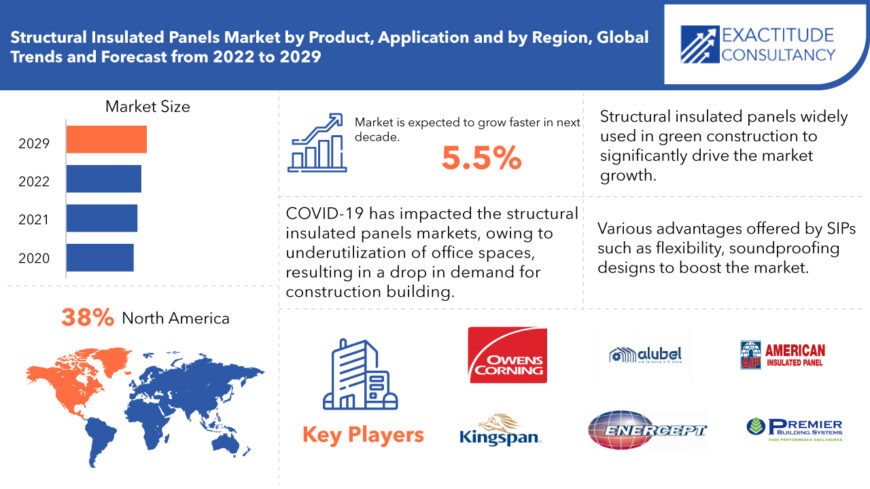
Si prevede che il mercato globale dei pannelli isolanti strutturali crescerà al 5,5% di CAGR dal 2020 al 2029. Si prevede che raggiungerà oltre 13,34 miliardi di USD entro il 2029 dagli 8,52 miliardi di USD del 2020.
I pannelli strutturali isolati (SIP) sono materiali da costruzione compositi utilizzati nell'edilizia , in genere costituiti da un'anima in schiuma inserita tra due rivestimenti strutturali, come pannelli a scaglie orientate (OSB) o compensato. Questi pannelli offrono proprietà isolanti superiori, un elevato rapporto resistenza/peso e tempi di costruzione più rapidi rispetto ai metodi di costruzione tradizionali. Il mercato dei SIP è guidato da una crescente domanda di soluzioni di costruzione sostenibili ed efficienti dal punto di vista energetico in tutto il mondo. Con la crescente consapevolezza delle problematiche ambientali e la necessità di ridurre le emissioni di carbonio , i SIP stanno guadagnando popolarità in quanto contribuiscono a migliorare l'efficienza energetica e a ridurre le emissioni di gas serra durante il ciclo di vita di un edificio.
| ATTRIBUTO | DETTAGLI |
| Periodo di studio | 2020-2029 |
| Anno base | 2021 |
| Anno stimato | 2022 |
| Anno previsto | 2022-2029 |
| Periodo storico | 2018-2020 |
| Unità | Valore (miliardi di USD), (migliaia di unità) |
| Segmentazione | Per prodotto, per applicazione, per regione |
| Per Prodotto |
|
| Per applicazione |
|
| Per regione |
|
I principali fattori trainanti che alimentano la crescita del mercato dei SIP includono rigidi codici e regolamenti energetici per gli edifici volti a ridurre il consumo energetico e a promuovere pratiche di costruzione sostenibili. Governi e organismi di regolamentazione in tutto il mondo stanno introducendo politiche per incentivare l'uso di materiali edilizi efficienti dal punto di vista energetico come i SIP attraverso crediti d'imposta, rimborsi e sovvenzioni. Inoltre, il passaggio del settore edile verso tecniche di prefabbricazione fuori sede e di costruzione modulare sta guidando l'adozione dei SIP grazie alla loro facilità di assemblaggio e alla riduzione dei tempi di costruzione e dei costi di manodopera.
Il panorama normativo globale per i SIP è caratterizzato da un mix di codici edilizi, standard e certificazioni che ne regolano l'uso nei progetti di costruzione. Queste normative variano a seconda del paese e della regione, ma generalmente si concentrano sulla garanzia di integrità strutturale, sicurezza antincendio ed efficienza energetica. Organizzazioni come l'International Code Council (ICC), l'European Committee for Standardization (CEN) e l'ASTM International sviluppano e mantengono standard relativi alla produzione, ai test e all'installazione dei SIP. La conformità a questi standard è essenziale per gli operatori del mercato per ottenere la certificazione del prodotto e garantire l'accettazione nel settore delle costruzioni.
[caption id="allegato_6443" align="aligncenter" width="870"]
Frequently Asked Questions
• What is the worth of global structural insulated panels market?
The structural insulated panels market size had crossed USD 8.52 Billion in 2020 and will observe a CAGR of more than 5.1 % up to 2029 driven by the ability to minimize total construction time, structural insulated panels are commonly employed in the construction of warehouses.
• What is the size of the North America structural insulated panels industry?
North America held more than 38% of the structural insulated panels market revenue share in 2020 and will witness expansion with the Increased demand from the residential sector, a well-developed cold chain and logistics industry, and government attempts to improve social infrastructure are all contributing to market expansion.
• What are the upcoming trends of structural insulated panels market, globally?
Because of a shift in trend (construction of green, energy-efficient buildings) among end-users active in residential and commercial construction, companies in the structural insulated panels market aspire to offer low-cost, energy-efficient, sustainable, and environmentally friendly panels.
• Which are the top companies to hold the market share in structural insulated panels market?
Key players profiled in the report include Owens Corning, Kingspan Group, Enercept, Inc., Alubel SpA, American Insulated Panel Company (AIP), Premier Building Systems, Inc., Extreme Panel Technologies, Inc., T. Clear Corporation, ACME Panel Company, and Ingreen Systems Corp.
• How is the structural insulated panels market aligned?
The market for structural insulated panels is highly fragmented, with a large number of global, regional, and domestic competitors with a significant presence. These companies have well-developed procurement and distribution networks that aid in cost-effective production.
• Which is the largest regional market for structural insulated panels market?
In 2019, the North American area held the greatest market share. The structural insulated panels market in the region is expected to rise due to the retrofit market, the development of green buildings, and rising energy efficiency requirements and construction specifications. Increased focus on energy-efficient buildings, stringent insulation regulations, and new building rules have all raised awareness of the importance of thermal insulation in the region's buildings.
Structural Insulated Panels Market Segment Analysis
The global structural insulated panels market is segmented based on product, application. By product, the market is bifurcated into Polystyrene dominates the market, accounting for more than 72.0 percent of worldwide revenue, and will continue to do so during the projected period. The increasing demand for these items can be attributed to their cost-effectiveness and dust and moisture resistance. Furthermore, polystyrene's robust and durable surface provides greater puncture resistance and quakeproof properties. Polyurethane structural insulated panels are more expensive than polystyrene and glass wool structural insulated panels. Because of their outstanding thermal insulation and vapor diffusion resistance qualities, these panels are widely used in the insulation of cold chain storages. As a result, the increased focus on the development of cold chain infrastructures is likely to stimulate product demand in the coming years.
By application, the market is divided into walls & floors, roof, cold storage. Walls & floors is the market leader, accounting for about 46.0 percent of global revenue. The category is growing as people become more aware of the financial benefits of implementing efficient building insulation. Wall insulation is one of the most important aspects of improving a building's energy efficiency. Insulated walls and floors form a protective envelope that prevents heat transmission from the outside via conduction and convection radiation, lowering energy costs for heating and cooling a structure. The product is widely used in the cold storage industry owing to its superior structural strength and insulation properties.
[caption id="attachment_6455" align="alignnone" width="680"]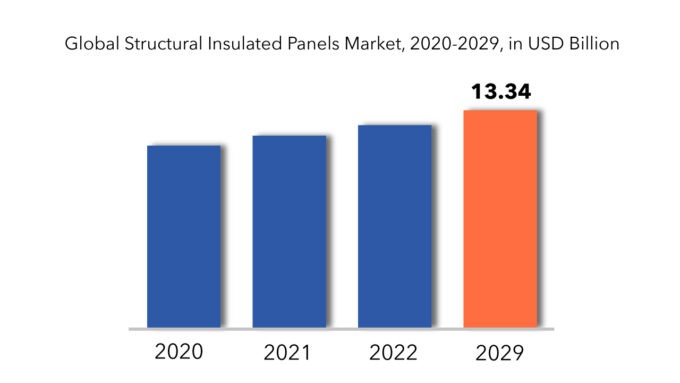
Structural Insulated Panels Market Players
The structural insulated panels market key players include Owens Corning, Kingspan Group, Enercept, Inc., Alubel SpA, American Insulated Panel Company (AIP), Premier Building Systems, Inc., Extreme Panel Technologies, Inc., T. Clear Corporation, ACME Panel Company, and Ingreen Systems Corp.
To increase the market position, these businesses have implemented a variety of growth tactics. These companies are using expansion, new product development, mergers and acquisitions, and collaboration as important growth strategies to improve their product portfolio and geographical presence in order to meet the rising demand for Printing Ink from emerging economies.
Who Should Buy? Or Key Stakeholders
- Structural Insulated Panel Companies
- Research Organizations
- Investors
- Regulatory Authorities
- Others
Structural Insulated Panels Market Regional Analysis
The mineral adsorbent market by region includes North America, Asia-Pacific (APAC), Europe, South America, and Middle East & Africa (MEA).
- North America: includes the US, Canada, Mexico
- Asia Pacific: includes China, Japan, South Korea, India, Australia, ASEAN and Rest of APAC
- Europe: includes UK, Germany, France, Italy, Spain, Russia, and Rest of Europe
- South America: includes Brazil, Argentina and Rest of South America
- Middle East & Africa: includes Turkey, UAE, Saudi Arabia, South Africa, and Rest of MEA
North America is the market leader, accounting for more than 38.0 percent of global sales. Increased demand from the residential sector, a well-developed cold chain and logistics industry, and government attempts to improve social infrastructure are all contributing to market expansion in North America. In the future years, the market is likely to be driven by rising awareness of the benefits of building structure insulation.
Due to the rapid growth of the residential and commercial construction sectors, as well as the implementation of various green building standards, Asia Pacific is likely to be the fastest-growing regional market. Over the projected period, the Middle East and Africa are expected to grow at a high rate. Due to the dry climate and lack of rainfall, the region imports the majority of its food goods from other countries. The UAE has established itself as the region's food import and commerce center. As a result, it is seeing increased investments in cold storage and cold chain logistics, which is driving demand for structural insulated panels.
[caption id="attachment_6456" align="alignnone" width="680"]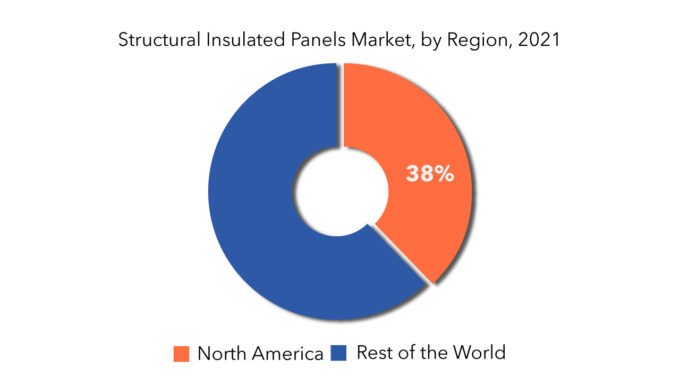
Key Takeaways:
- The global Structural Insulated Panels Market is expected to grow at 5.5 % CAGR.
- Based on products, Polystyrene dominates the market.
- Based on application, Walls & floors is the market leader, accounting for about 46.0 percent of global revenue.
- North America is the market leader, accounting for more than 38.0 percent of global sales.
- The growing preference for sustainable construction methods fuels the expansion of the Structural Insulated Panels (SIPs) market.
Key Market Segments: Structural Insulated Panels Market
Structural Insulated Panels Market by Product, 2020-2029, (USD Billion)- Polystyrene
- Polyurethane
- Polyisocyanurate
- Walls & Floor
- Roofs
- Cold Storage
- North America
- Asia Pacific
- Europe
- Latin America
- Middle East and Africa
Key Question Answered
- What is the current size of the structural insulated panels market?
- What are the key factors influencing the growth of structural insulated panels?
- What are the major applications for structural insulated panels?
- Who are the major key players in the structural insulated panels market?
- Which region will provide more business opportunities for structural insulated panels in future?
- Which segment holds the maximum share of the structural insulated panels market?
- Introduzione
- Definizione di mercato
- Segmentazione del mercato
- Cronologie della ricerca
- Presupposti e limitazioni
- Metodologia di ricerca
- Estrazione dei dati
- Ricerca secondaria
- Ricerca primaria
- Consigli degli esperti in materia
- Controlli di qualità
- Revisione finale
- Triangolazione dei dati
- Approccio dal basso verso l'alto
- Approccio dall'alto verso il basso
- Flusso di ricerca
- Fonti dei dati
- Estrazione dei dati
- Sintesi
- Panoramica del mercato
- Prospettive di mercato globali dei pannelli strutturali isolati
- Fattori trainanti del mercato
- Limitazioni di mercato
- Opportunità di mercato
- Impatto del Covid-19 sul mercato dei pannelli isolanti strutturali
- Modello delle cinque forze di Porter
- Minaccia da parte dei nuovi entranti
- Minaccia da sostituti
- Potere contrattuale dei fornitori
- Potere contrattuale dei clienti
- Grado di concorrenza
- Analisi della catena del valore del settore
- Prospettive di mercato globali dei pannelli strutturali isolati
- Mercato globale dei pannelli strutturali isolati per prodotto, 2020-2029, (MILIONI DI USD), (MIGLIAIA DI UNITÀ)
- Polistirolo
- Poliuretano
- Poliisocianurato
- Mercato globale dei pannelli strutturali isolati per applicazione, 2020-2029, (MILIONI DI USD), (MIGLIAIA DI UNITÀ)
- Pareti e pavimenti
- Tetti
- Conservazione a freddo
- Mercato globale dei pannelli strutturali isolati per regione, 2020-2029, (MILIONI DI USD), (MIGLIAIA DI UNITÀ)
- America del Nord
- NOI
- Canada
- Messico
- Sud America
- Brasile
- Argentina
- Colombia
- Resto del Sud America
- Europa
- Germania
- Regno Unito
- Francia
- Italia
- Spagna
- Russia
- Resto d'Europa
- Asia Pacifico
- India
- Cina
- Giappone
- Corea del Sud
- Australia
- Asia sud-orientale
- Resto dell'Asia Pacifica
- Medio Oriente e Africa
- Emirati Arabi Uniti
- Arabia Saudita
- Sudafrica
- Resto del Medio Oriente e Africa
- America del Nord
- Profili aziendali* (panoramica aziendale, istantanea aziendale, prodotti offerti, sviluppi recenti)
8.1. Owens Corning 8.2. Kingspan Group 8.3. Enercept 8.4. Alubel SpA 8.5. American Insulated Panel Company (AIP) 8.6. Premier Building Systems, Inc. 8.7. Extreme Panel Technologies, Inc 8.8. T. Clear Corporation 8.9. ACME Panel Company 8.10. Ingreen Systems Corp. *L'elenco delle aziende è indicativo
ELENCO DELLE TABELLE
TABLE 1 GLOBAL STRUCTURAL INSULATED PANELS MARKET BY PRODUCT (USD MILLIONS) 2020-2029
TABLE 2 GLOBAL STRUCTURAL INSULATED PANELS MARKET BY PRODUCT (THOUSAND UNITS) 2020-2029
TABLE 3 GLOBAL STRUCTURAL INSULATED PANELS MARKET BY APPLICATION (USD MILLIONS) 2020-2029
TABLE 4 GLOBAL STRUCTURAL INSULATED PANELS MARKET BY APPLICATION (THOUSAND UNITS) 2020-2029
TABLE 5 GLOBAL STRUCTURAL INSULATED PANELS MARKET BY REGION (USD MILLIONS) 2020-2029
TABLE 6 GLOBAL STRUCTURAL INSULATED PANELS MARKET BY REGION (THOUSAND UNITS) 2020-2029
TABLE 7 US STRUCTURAL INSULATED PANELS MARKET BY PRODUCT (USD MILLIONS) 2020-2029
TABLE 8 US STRUCTURAL INSULATED PANELS MARKET BY PRODUCT (THOUSAND UNITS) 2020-2029
TABLE 9 US STRUCTURAL INSULATED PANELS MARKET BY APPLICATION (USD MILLIONS) 2020-2029
TABLE 10 US STRUCTURAL INSULATED PANELS MARKET BY APPLICATION (THOUSAND UNITS) 2020-2029
TABLE 11 CANADA STRUCTURAL INSULATED PANELS MARKET BY PRODUCT (USD MILLIONS) 2020-2029
TABLE 12 CANADA STRUCTURAL INSULATED PANELS MARKET BY PRODUCT (THOUSAND UNITS) 2020-2029
TABLE 13 CANADA STRUCTURAL INSULATED PANELS MARKET BY APPLICATION (USD MILLIONS) 2020-2029
TABLE 14 CANADA STRUCTURAL INSULATED PANELS MARKET BY APPLICATION (THOUSAND UNITS) 2020-2029
TABLE 15 MEXICO STRUCTURAL INSULATED PANELS MARKET BY PRODUCT (USD MILLIONS) 2020-2029
TABLE 16 MEXICO STRUCTURAL INSULATED PANELS MARKET BY PRODUCT (THOUSAND UNITS) 2020-2029
TABLE 17 MEXICO STRUCTURAL INSULATED PANELS MARKET BY APPLICATION (USD MILLIONS) 2020-2029
TABLE 18 MEXICO STRUCTURAL INSULATED PANELS MARKET BY APPLICATION (THOUSAND UNITS) 2020-2029
TABLE 19 BRAZIL STRUCTURAL INSULATED PANELS MARKET BY PRODUCT (USD MILLIONS) 2020-2029
TABLE 20 BRAZIL STRUCTURAL INSULATED PANELS MARKET BY PRODUCT (THOUSAND UNITS) 2020-2029
TABLE 21 BRAZIL STRUCTURAL INSULATED PANELS MARKET BY APPLICATION (USD MILLIONS) 2020-2029
TABLE 22 BRAZIL STRUCTURAL INSULATED PANELS MARKET BY APPLICATION (THOUSAND UNITS) 2020-2029
TABLE 23 ARGENTINA STRUCTURAL INSULATED PANELS MARKET BY PRODUCT (USD MILLIONS) 2020-2029
TABLE 24 ARGENTINA STRUCTURAL INSULATED PANELS MARKET BY PRODUCT (THOUSAND UNITS) 2020-2029
TABLE 25 ARGENTINA STRUCTURAL INSULATED PANELS MARKET BY APPLICATION (USD MILLIONS) 2020-2029
TABLE 26 ARGENTINA STRUCTURAL INSULATED PANELS MARKET BY APPLICATION (THOUSAND UNITS) 2020-2029
TABLE 27 COLOMBIA STRUCTURAL INSULATED PANELS MARKET BY PRODUCT (USD MILLIONS) 2020-2029
TABLE 28 COLOMBIA STRUCTURAL INSULATED PANELS MARKET BY PRODUCT (THOUSAND UNITS) 2020-2029
TABLE 29 COLOMBIA STRUCTURAL INSULATED PANELS MARKET BY APPLICATION (USD MILLIONS) 2020-2029
TABLE 30 COLOMBIA STRUCTURAL INSULATED PANELS MARKET BY APPLICATION (THOUSAND UNITS) 2020-2029
TABLE 31 REST OF SOUTH AMERICA STRUCTURAL INSULATED PANELS MARKET BY PRODUCT (USD MILLIONS) 2020-2029
TABLE 32 REST OF SOUTH AMERICA STRUCTURAL INSULATED PANELS MARKET BY PRODUCT (THOUSAND UNITS) 2020-2029
TABLE 33 REST OF SOUTH AMERICA STRUCTURAL INSULATED PANELS MARKET BY APPLICATION (USD MILLIONS) 2020-2029
TABLE 34 REST OF SOUTH AMERICA STRUCTURAL INSULATED PANELS MARKET BY APPLICATION (THOUSAND UNITS) 2020-2029
TABLE 35 INDIA STRUCTURAL INSULATED PANELS MARKET BY PRODUCT (USD MILLIONS) 2020-2029
TABLE 36 INDIA STRUCTURAL INSULATED PANELS MARKET BY PRODUCT (THOUSAND UNITS) 2020-2029
TABLE 37 INDIA STRUCTURAL INSULATED PANELS MARKET BY APPLICATION (USD MILLIONS) 2020-2029
TABLE 38 INDIA STRUCTURAL INSULATED PANELS MARKET BY APPLICATION (THOUSAND UNITS) 2020-2029
TABLE 39 CHINA STRUCTURAL INSULATED PANELS MARKET BY PRODUCT (USD MILLIONS) 2020-2029
TABLE 40 CHINA STRUCTURAL INSULATED PANELS MARKET BY PRODUCT (THOUSAND UNITS) 2020-2029
TABLE 41 CHINA STRUCTURAL INSULATED PANELS MARKET BY APPLICATION (USD MILLIONS) 2020-2029
TABLE 42 CHINA STRUCTURAL INSULATED PANELS MARKET BY APPLICATION (THOUSAND UNITS) 2020-2029
TABLE 43 JAPAN STRUCTURAL INSULATED PANELS MARKET BY PRODUCT (USD MILLIONS) 2020-2029
TABLE 44 JAPAN STRUCTURAL INSULATED PANELS MARKET BY PRODUCT (THOUSAND UNITS) 2020-2029
TABLE 45 JAPAN STRUCTURAL INSULATED PANELS MARKET BY APPLICATION (USD MILLIONS) 2020-2029
TABLE 46 JAPAN STRUCTURAL INSULATED PANELS MARKET BY APPLICATION (THOUSAND UNITS) 2020-2029
TABLE 47 SOUTH KOREA STRUCTURAL INSULATED PANELS MARKET BY PRODUCT (USD MILLIONS) 2020-2029
TABLE 48 SOUTH KOREA STRUCTURAL INSULATED PANELS MARKET BY PRODUCT (THOUSAND UNITS) 2020-2029
TABLE 49 SOUTH KOREA STRUCTURAL INSULATED PANELS MARKET BY APPLICATION (USD MILLIONS) 2020-2029
TABLE 50 SOUTH KOREA STRUCTURAL INSULATED PANELS MARKET BY APPLICATION (THOUSAND UNITS) 2020-2029
TABLE 51 AUSTRALIA STRUCTURAL INSULATED PANELS MARKET BY PRODUCT (USD MILLIONS) 2020-2029
TABLE 52 AUSTRALIA STRUCTURAL INSULATED PANELS MARKET BY PRODUCT (THOUSAND UNITS) 2020-2029
TABLE 53 AUSTRALIA STRUCTURAL INSULATED PANELS MARKET BY APPLICATION (USD MILLIONS) 2020-2029
TABLE 54 AUSTRALIA STRUCTURAL INSULATED PANELS MARKET BY APPLICATION (THOUSAND UNITS) 2020-2029
TABLE 55 SOUTH-EAST ASIA STRUCTURAL INSULATED PANELS MARKET BY PRODUCT (USD MILLIONS) 2020-2029
TABLE 56 SOUTH-EAST ASIA STRUCTURAL INSULATED PANELS MARKET BY PRODUCT (THOUSAND UNITS) 2020-2029
TABLE 57 SOUTH-EAST ASIA STRUCTURAL INSULATED PANELS MARKET BY APPLICATION (USD MILLIONS) 2020-2029
TABLE 58 SOUTH-EAST ASIA STRUCTURAL INSULATED PANELS MARKET BY APPLICATION (THOUSAND UNITS) 2020-2029
TABLE 59 REST OF ASIA PACIFIC STRUCTURAL INSULATED PANELS MARKET BY PRODUCT (USD MILLIONS) 2020-2029
TABLE 60 REST OF ASIA PACIFIC STRUCTURAL INSULATED PANELS MARKET BY PRODUCT (THOUSAND UNITS) 2020-2029
TABLE 61 REST OF ASIA PACIFIC STRUCTURAL INSULATED PANELS MARKET BY APPLICATION (USD MILLIONS) 2020-2029
TABLE 62 REST OF ASIA PACIFIC STRUCTURAL INSULATED PANELS MARKET BY APPLICATION (THOUSAND UNITS) 2020-2029
TABLE 63 GERMANY STRUCTURAL INSULATED PANELS MARKET BY PRODUCT (USD MILLIONS) 2020-2029
TABLE 64 GERMANY STRUCTURAL INSULATED PANELS MARKET BY PRODUCT (THOUSAND UNITS) 2020-2029
TABLE 65 GERMANY STRUCTURAL INSULATED PANELS MARKET BY APPLICATION (USD MILLIONS) 2020-2029
TABLE 66 GERMANY STRUCTURAL INSULATED PANELS MARKET BY APPLICATION (THOUSAND UNITS) 2020-2029
TABLE 67 UK STRUCTURAL INSULATED PANELS MARKET BY PRODUCT (USD MILLIONS) 2020-2029
TABLE 68 UK STRUCTURAL INSULATED PANELS MARKET BY PRODUCT (THOUSAND UNITS) 2020-2029
TABLE 69 UK STRUCTURAL INSULATED PANELS MARKET BY APPLICATION (USD MILLIONS) 2020-2029
TABLE 70 UK STRUCTURAL INSULATED PANELS MARKET BY APPLICATION (THOUSAND UNITS) 2020-2029
TABLE 71 FRANCE STRUCTURAL INSULATED PANELS MARKET BY PRODUCT (USD MILLIONS) 2020-2029
TABLE 72 FRANCE STRUCTURAL INSULATED PANELS MARKET BY PRODUCT (THOUSAND UNITS) 2020-2029
TABLE 73 FRANCE STRUCTURAL INSULATED PANELS MARKET BY APPLICATION (USD MILLIONS) 2020-2029
TABLE 74 FRANCE STRUCTURAL INSULATED PANELS MARKET BY APPLICATION (THOUSAND UNITS) 2020-2029
TABLE 75 ITALY STRUCTURAL INSULATED PANELS MARKET BY PRODUCT (USD MILLIONS) 2020-2029
TABLE 76 ITALY STRUCTURAL INSULATED PANELS MARKET BY PRODUCT (THOUSAND UNITS) 2020-2029
TABLE 77 ITALY STRUCTURAL INSULATED PANELS MARKET BY APPLICATION (USD MILLIONS) 2020-2029
TABLE 78 ITALY STRUCTURAL INSULATED PANELS MARKET BY APPLICATION (THOUSAND UNITS) 2020-2029
TABLE 79 SPAIN STRUCTURAL INSULATED PANELS MARKET BY PRODUCT (USD MILLIONS) 2020-2029
TABLE 80 SPAIN STRUCTURAL INSULATED PANELS MARKET BY PRODUCT (THOUSAND UNITS) 2020-2029
TABLE 81 SPAIN STRUCTURAL INSULATED PANELS MARKET BY APPLICATION (USD MILLIONS) 2020-2029
TABLE 82 SPAIN STRUCTURAL INSULATED PANELS MARKET BY APPLICATION (THOUSAND UNITS) 2020-2029
TABLE 83 RUSSIA STRUCTURAL INSULATED PANELS MARKET BY PRODUCT (USD MILLIONS) 2020-2029
TABLE 84 RUSSIA STRUCTURAL INSULATED PANELS MARKET BY PRODUCT (THOUSAND UNITS) 2020-2029
TABLE 85 RUSSIA STRUCTURAL INSULATED PANELS MARKET BY APPLICATION (USD MILLIONS) 2020-2029
TABLE 86 RUSSIA STRUCTURAL INSULATED PANELS MARKET BY APPLICATION (THOUSAND UNITS) 2020-2029
TABLE 87 REST OF EUROPE STRUCTURAL INSULATED PANELS MARKET BY PRODUCT (USD MILLIONS) 2020-2029
TABLE 88 REST OF EUROPE STRUCTURAL INSULATED PANELS MARKET BY PRODUCT (THOUSAND UNITS) 2020-2029
TABLE 89 REST OF EUROPE STRUCTURAL INSULATED PANELS MARKET BY APPLICATION (USD MILLIONS) 2020-2029
TABLE 90 REST OF EUROPE STRUCTURAL INSULATED PANELS MARKET BY APPLICATION (THOUSAND UNITS) 2020-2029
TABLE 91 UAE STRUCTURAL INSULATED PANELS MARKET BY PRODUCT (USD MILLIONS) 2020-2029
TABLE 92 UAE STRUCTURAL INSULATED PANELS MARKET BY PRODUCT (THOUSAND UNITS) 2020-2029
TABLE 93 UAE STRUCTURAL INSULATED PANELS MARKET BY APPLICATION (USD MILLIONS) 2020-2029
TABLE 94 UAE STRUCTURAL INSULATED PANELS MARKET BY APPLICATION (THOUSAND UNITS) 2020-2029
TABLE 95 SAUDI ARABIA STRUCTURAL INSULATED PANELS MARKET BY PRODUCT (USD MILLIONS) 2020-2029
TABLE 96 SAUDI ARABIA STRUCTURAL INSULATED PANELS MARKET BY PRODUCT (THOUSAND UNITS) 2020-2029
TABLE 97 SAUDI ARABIA STRUCTURAL INSULATED PANELS MARKET BY APPLICATION (USD MILLIONS) 2020-2029
TABLE 98 SAUDI ARABIA STRUCTURAL INSULATED PANELS MARKET BY APPLICATION (THOUSAND UNITS) 2020-2029
TABLE 99 SOUTH AFRICA STRUCTURAL INSULATED PANELS MARKET BY PRODUCT (USD MILLIONS) 2020-2029
TABLE 100 SOUTH AFRICA STRUCTURAL INSULATED PANELS MARKET BY PRODUCT (THOUSAND UNITS) 2020-2029
TABLE 101 SOUTH AFRICA STRUCTURAL INSULATED PANELS MARKET BY APPLICATION (USD MILLIONS) 2020-2029
TABLE 102 SOUTH AFRICA STRUCTURAL INSULATED PANELS MARKET BY APPLICATION (THOUSAND UNITS) 2020-2029
TABLE 103 REST OF MIDDLE EAST AND AFRICA STRUCTURAL INSULATED PANELS MARKET BY PRODUCT (USD MILLIONS) 2020-2029
TABLE 104 REST OF MIDDLE EAST AND AFRICA STRUCTURAL INSULATED PANELS MARKET BY PRODUCT (THOUSAND UNITS) 2020-2029
TABLE 105 REST OF MIDDLE EAST AND AFRICA STRUCTURAL INSULATED PANELS MARKET BY APPLICATION (USD MILLIONS) 2020-2029
TABLE 106 REST OF MIDDLE EAST AND AFRICA STRUCTURAL INSULATED PANELS MARKET BY APPLICATION (THOUSAND UNITS) 2020-2029
LIST OF FIGURES
FIGURE 1 MARKET DYNAMICS
FIGURE 2 MARKET SEGMENTATION
FIGURE 3 REPORT TIMELINES: YEARS CONSIDERED
FIGURE 4 DATA TRIANGULATION
FIGURE 5 BOTTOM-UP APPROACH
FIGURE 6 TOP-DOWN APPROACH
FIGURE 7 RESEARCH FLOW
FIGURE 8 GLOBAL STRUCTURAL INSULATED PANELS MARKET BY PRODUCT, USD MILLION, 2020-2029
FIGURE 9 GLOBAL STRUCTURAL INSULATED PANELS MARKET BY APPLICATION, USD MILLION, 2020-2029
FIGURE 10 GLOBAL STRUCTURAL INSULATED PANELS MARKET BY REGION, USD MILLION, 2020-2029
FIGURE 11 PORTER’S FIVE FORCES MODEL
FIGURE 12 NORTH AMERICA STRUCTURAL INSULATED PANELS MARKET SNAPSHOT
FIGURE 13 EUROPE STRUCTURAL INSULATED PANELS MARKET SNAPSHOT
FIGURE 14 SOUTH AMERICA STRUCTURAL INSULATED PANELS MARKET SNAPSHOT
FIGURE 15 ASIA PACIFIC STRUCTURAL INSULATED PANELS MARKET SNAPSHOT
FIGURE 16 MIDDLE EAST ASIA AND AFRICA STRUCTURAL INSULATED PANELS MARKET SNAPSHOT
FIGURE 17 MARKET SHARE ANALYSIS
FIGURE 18 OWENS CORNING: COMPANY SNAPSHOT
FIGURE 19 KINGSPAN GROUP: COMPANY SNAPSHOT
FIGURE 20 ENERCEPT: COMPANY SNAPSHOT
FIGURE 21 ALUBEL SPA: COMPANY SNAPSHOT
FIGURE 22 AMERICAN INSULATED PANEL COMPANY (AIP): COMPANY SNAPSHOT
FIGURE 23 PREMIER BUILDING SYSTEMS, INC.: COMPANY SNAPSHOT
FIGURE 24 EXTREME PANEL TECHNOLOGIES, INC: COMPANY SNAPSHOT
FIGURE 25 T. CLEAR CORPORATION: COMPANY SNAPSHOT
FIGURE 26 ACME PANEL COMPANY: COMPANY SNAPSHOT
FIGURE 27 INGREEN SYSTEMS CORP.: COMPANY SNAPSHOT
DOWNLOAD FREE SAMPLE REPORT
License Type
SPEAK WITH OUR ANALYST
Want to know more about the report or any specific requirement?
WANT TO CUSTOMIZE THE REPORT?
Our Clients Speak
We asked them to research ‘ Equipment market’ all over the world, and their whole arrangement was helpful to us. thehealthanalytics.com insightful analysis and reports contributed to our current analysis and in creating a future strategy. Besides, the te
Yosuke Mitsui
Senior Associate Construction Equipment Sales & Marketing
We asked them to research ‘Equipment market’ all over the world, and their whole arrangement was helpful to us. thehealthanalytics.com insightful analysis and reports contributed to our current analysis and in creating a future strategy. Besides, the te