

Base Year Value ()
x.x %
x.x %
CAGR ()
x.x %
x.x %
Forecast Year Value ()
x.x %
x.x %
Historical Data Period
Largest Region
Forecast Period
Mercato dei sensori monouso per dispositivi medici per prodotto (biosensore, sensore di immagine, accelerometro, sensori di pressione, sensori di temperatura, sensori di immagine, altri sensori), tipo (sensori a striscia, sensori invasivi, sensori indossabili, sensori ingeribili), applicazione (test diagnostici, terapia, monitoraggio dei pazienti, imaging) e regione (Asia-Pacifico, Nord America, Europa, Sud America, Medio Oriente e Africa) - Previsioni globali dal 2022 al 2029
Instant access to hundreds of data points and trends
- Market estimates from 2014-2029
- Competitive analysis, industry segmentation, financial benchmarks
- Incorporates SWOT, Porter's Five Forces and risk management frameworks
- PDF report or online database with Word, Excel and PowerPoint export options
- 100% money back guarantee
Panoramica del mercato dei sensori monouso per dispositivi medici
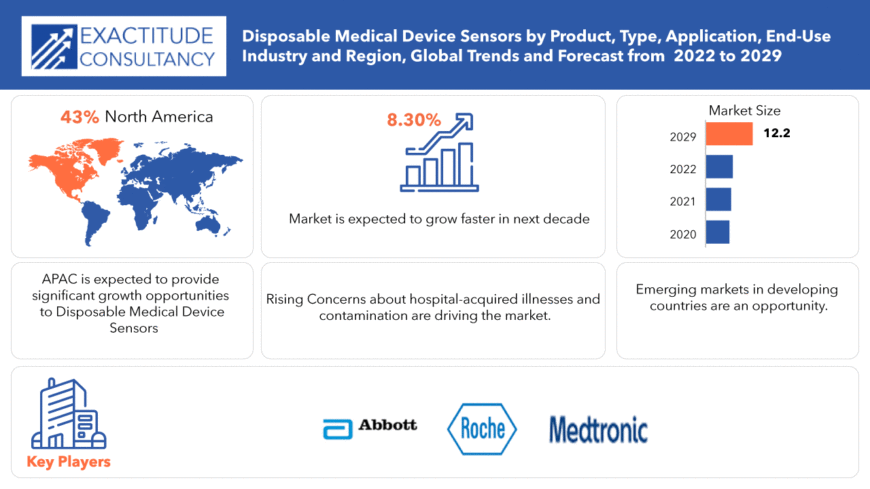
Il mercato globale dei sensori monouso per dispositivi medici ammonta a 6,06 miliardi di USD nel 2020 e si prevede che crescerà fino a 12,20 miliardi di USD entro il 2029, con un tasso di crescita annuale composto (CAGR) dell'8,30%.
Dispositivi medici che vengono gettati via I sensori sono apparecchiature di scansione portatili o palmari utilizzate per monitorare, diagnosticare e curare i pazienti. Con questi dispositivi vengono monitorati gli indicatori vitali di base. Scanadu, un sensore palmare compatto che viene posizionato sulla fronte del paziente per rilevare la frequenza cardiaca, la frequenza respiratoria, i livelli di ossigenazione del sangue, il tempo di trasmissione del polso e le temperature, è uno dei dispositivi di rilevamento più ampiamente utilizzati. Scanadu è un dispositivo che utilizza elettrodi per effettuare misurazioni ed è utilizzato insieme a un'app mobile. Il QuantuMDx Group sta lavorando a un laboratorio di DNA portatile per diagnosticare i sintomi della malaria. Entro poche ore dall'ottenimento del campione di sangue di un paziente, Ibis Biosciences ha creato un sistema in grado di rilevare in modo affidabile fino a 1.000 dei batteri, funghi e virus patogeni più diffusi. Le misurazioni vengono effettuate confrontando le impronte genetiche dei patogeni con un database di patogeni noti.
In recent years, hospital-acquired infections (HAIs) have become a major concern for hospitals and the medical community. The extensive use of reusable medical equipment, such as sphygmomanometer cuffs, thermometers, catheters, and stethoscopes, has played a significant role in the growth in HAI prevalence during the last two decades. The use of contaminated medical equipment in hospitals has also been linked to an increase in HAIs, notably among neonates and other inpatients. As a result, morbidity and mortality rates are greater, hospital stays are longer, and healthcare and patient costs are higher. The Centers for Disease Control and Prevention (CDC) estimates that up to 1.7 million hospitalized patients in the United States contract healthcare-associated infections (HCAIs) each year while being treated for other illnesses, with more than 98,000 of these patients (one in 17) dying as a result of HCAIs. In the United States, urinary tract infections account for 32% of all HAIs, surgical-site infections for 22%, lung (pneumonia) infections for 15%, and bloodstream infections for 14%.
| ATTRIBUTE | DETAILS |
| Study period | 2020-2029 |
| Base year | 2021 |
| Estimated year | 2022 |
| Forecasted year | 2022-2029 |
| Historical period | 2018-2020 |
| Unit | Value (USD Million) |
| Segmentation | By product, By Type, By Application, By region |
| By Product |
|
| By Type |
|
| By Application |
|
| By Region |
|
Data security and privacy have become major issues for consumers and healthcare professionals as the global deployment of wireless medical devices grows. The expansion of the disposable medical device sensors market is hampered by the vulnerability of connected medical devices in terms of personal data leakage.
As the usage of connected medical equipment based on the Internet of Things develops in the global healthcare business, these devices are becoming increasingly vulnerable to hackers. Medical devices are prone to hacking due to their networked nature. As a result, manufacturers of these medical devices must adhere to stringent guidelines in order to protect the privacy and security of patient data.
COVID-19 has already spread to major Asian, European, and North American nations, posing a threat to the digitally printed wallpaper sector, as most global companies have operations in these regions. COVID-19 had interrupted the supply chain, halting market development due to a paucity of raw materials and manpower. Production facilities for wallpaper substrates and other raw materials were shut down as a result of the pandemic's lockdown in major countries, as they were not considered crucial products.
A seguito dell'epidemia di COVID-19, i gusti e le priorità dei consumatori sono cambiati, con una nuova enfasi sull'uso della tecnologia e sulla terapia senza contatto. I consumatori stanno sempre più optando per servizi sanitari a distanza, a cui possono accedere dal comfort e dalla privacy delle proprie case. Durante l'attuale epidemia, i ricercatori di tutto il mondo si sono affrettati a sviluppare nuovi approcci basati su biosensori affidabili ed efficienti per la diagnosi precoce del SARS-CoV-2. I gadget di monitoraggio della salute e diagnostica personale più popolari acquistati sono stati pulsossimetri, misuratori della pressione sanguigna, termometri digitali e glucometri. Poiché le persone sono diffidenti nel recarsi in ospedale a causa dell'incertezza della pandemia, le vendite di strumenti diagnostici basati sulla casa sono aumentate.
[caption id="allegato_8139" align="aligncenter" width="870"]
Frequently Asked Questions
• Who are the top companies in the market for disposable medical device sensors?
The major players in the global disposable medical device sensors market are Abbott (US), F. Hoffmann-La Roche Ltd. (Switzerland), Medtronic (Ireland), Texas Instrument (US), Platinum Equity Advisors LLC (US), NXP Semiconductors (Netherlands), General Electric Company (US), and TE Connectivity (Switzerland).
• Which section of the worldwide disposable medical device sensors market is to expand the fastest?
During the forecast period, the ingestible sensors sector is expected to increase at the fastest rate.
• What product category has the most market share?
The global disposable medical device sensors market was dominated by biosensors. This is due to the rising prevalence of target illnesses such as diabetes, cardiovascular disease, and infectious diseases throughout the world.
• What is the Size of global Disposable Medical Device Sensors Market?
The Disposable Medical Device Sensors Market had crossed USD 6.06 Billion in 2020 and is expected to grow till USD 12.20 Billion by 2029.
• What is the CAGR of Disposable Medical Device Sensors Market?
The global Disposable Medical Device Sensors Market registered a CAGR of 8.30% from 2022 to 2029.
Disposable Medical Device Sensors Market Segment Analysis
The disposable medical device sensors market is segmented by product, type and application.
On the basis of Product, global Disposable Medical Device Sensors market is segmented into Biosensor, Image sensor, Accelerometer, Pressure Sensors, Temperature Sensors, Image Sensors, Other Sensors. The biosensors sector had the greatest proportion of the market. The widespread use of these sensors in glucose test strips, infectious disease test strips, pregnancy test strips, drug and alcohol test strips, and continuous blood glucose monitoring accounts for the huge proportion of this market.
On the basis of type, global Disposable Medical Device Sensors market is segmented into Strip Sensors, Invasive Sensors, Wearable Sensors, Ingestible sensors. The fastest-growing sensors were ingestible sensors. The rising demand for technologically improved smart pills and capsule endoscopy for diagnostic applications is one of the primary drivers driving growth.
On the basis of Application, global Disposable Medical Device Sensors market is segmented into Diagnostic Testing, Therapeutics, Patient Monitoring, Imaging. The diagnostic testing category had the highest proportion of the market. The growing prevalence of lifestyle illnesses throughout the world is mostly to blame for the significant proportion of this application category. Another factor driving market expansion is the extensive use of glucose test strips, infectious disease test strips, and pregnancy test strips in both homes and clinics.
[caption id="attachment_8141" align="alignnone" width="680"]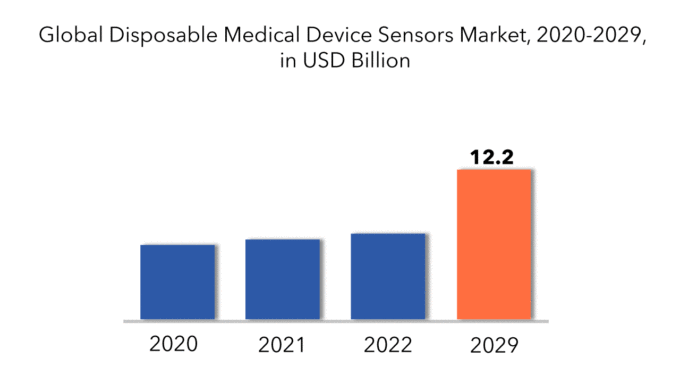
Disposable Medical Device Sensors Market Players
The Key Players in Disposable Medical Device Sensors Market are Abbott (US), F. Hoffmann-La Roche Ltd. (Switzerland), and Medtronic (US).
- Abbott was the market leader in the disposable medical device sensors market in 2020.
- Biosensors are offered by the corporation, which are widely utilized for diagnostic testing and patient monitoring by individuals all over the world. In 2020,
- F. Hoffmann-La Roche Ltd. was ranked second in the disposable medical device sensors market.
Who Should Buy? Or Key Stakeholders
- Industry and consulting firms
- State and national regulatory authorities
- Investors
- Suppliers and Distributors
- Research Institutes
Disposable Medical Device Sensors Market Regional Analysis
Geographically, Disposable Medical Device Sensors market is segmented into North America, Europe, Asia Pacific, and Rest of the world.
- North America: includes the US, Canada, Mexico
- Europe: includes UK, Germany, France, Italy, Spain, Russia, and Rest of Europe
- Asia Pacific: includes China, Japan, South Korea, India, Australia, ASEAN and Rest of APAC
North America, Europe, Asia Pacific, and the Rest of the World are the five regions that make up the disposable medical device sensors market. The disposable medical device sensors market was led by North America. The increased prevalence of HAIs and chronic illnesses in the region is largely responsible for the region's substantial proportion. Furthermore, the presence of significant players in the North American area contributes to the availability of technologically sophisticated sensor-based disposable medical devices, which supports market growth.
[caption id="attachment_8142" align="alignnone" width="680"]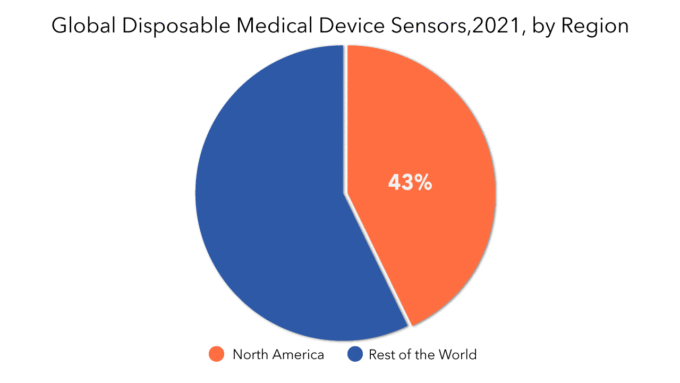
Key Market Segments: Disposable Medical Device Sensors Market
Disposable Medical Device Sensors Market by Product, 2020-2029, (USD Millions)- Biosensor
- Image Sensor
- Accelerometer
- Pressure Sensors
- Temperature Sensors
- Image Sensors
- Other Sensors
- Strip Sensors
- Invasive Sensors
- Wearable Sensors
- Ingestible Sensors
- Diagnostic Testing
- Therapeutics
- Patient Monitoring
- Imaging
- North America
- Europe
- APAC
- MEA
- Latin America
Key Question Answered
- What is the current market size of this high growth market?
- What is the overall growth rate?
- What are the key growth areas, applications, end uses and types?
- Key reasons for growth
- Challenges for growth
- What technological developments are happening in this area?
- Introduzione
- Definizione di mercato
- Segmentazione del mercato
- Cronologie della ricerca
- Presupposti e limitazioni
- Metodologia di ricerca
- Estrazione dei dati
- Ricerca secondaria
- Ricerca primaria
- Consigli degli esperti in materia
- Controlli di qualità
- Revisione finale
- Triangolazione dei dati
- Approccio dal basso verso l'alto
- Approccio dall'alto verso il basso
- Flusso di ricerca
- Fonti dei dati
- Estrazione dei dati
- Sintesi
- Panoramica del mercato
- Prospettive del mercato globale dei sensori per dispositivi medici monouso
- Fattori trainanti del mercato
- Limitazioni di mercato
- Opportunità di mercato
- Impatto del Covid-19 sul mercato globale dei sensori monouso per dispositivi medici
- Prospettive del mercato globale dei sensori per dispositivi medici monouso
- Mercato globale dei sensori per dispositivi medici monouso per prodotto (milioni di USD)
- Biosensore
- Sensore di immagine
- Accelerometro
- Sensori di pressione
- Sensori di temperatura
- Sensori di immagine
- Altri sensori
- Mercato globale dei sensori per dispositivi medici monouso per tipo, (milioni di USD )
- Sensori a strisce
- Sensori invasivi
- Sensori indossabili
- Sensori ingeribili
- Mercato globale dei sensori per dispositivi medici monouso per applicazione (milioni di USD)
- Test diagnostici
- Terapia
- Monitoraggio del paziente
- Immagine
- Mercato globale dei sensori per dispositivi medici monouso per regione (milioni di USD)
- Introduzione
- Asia-Pacifico
- Cina
- India
- Giappone
- Corea del Sud
- Australia
- Asia sud-orientale
- Resto dell'Asia-Pacifico
- America del Nord
- Stati Uniti
- Canada
- Messico
- Europa
- Germania
- Regno Unito
- Francia
- Italia
- Spagna
- Russia
- Resto d'Europa
- Sud America
- Brasile
- Argentina
- Colombia
- Resto del Sud America
- Medio Oriente e Africa
- Emirati Arabi Uniti
- Arabia Saudita
- Sudafrica
- Resto del Medio Oriente e Africa
- Profili aziendali* (panoramica aziendale, istantanea aziendale, prodotti offerti, sviluppi recenti)
- Abate
- La Hoffmann-La Roche Ltd.
- *L'elenco delle aziende è indicativo
ELENCO DELLE TABELLE
TABLE 1 GLOBAL DISPOSABLE MEDICAL DEVICE SENSORS MARKET BY PRODUCT (USD MILLIONS) 2020-2029
TABLE 2 GLOBAL DISPOSABLE MEDICAL DEVICE SENSORS MARKET BY TYPE (USD MILLIONS) 2020-2029
TABLE 3 GLOBAL DISPOSABLE MEDICAL DEVICE SENSORS MARKET BY APPLICATION (USD MILLIONS) 2020-2029
TABLE 4 GLOBAL DISPOSABLE MEDICAL DEVICE SENSORS MARKET BY REGION (USD MILLIONS) 2020-2029
TABLE 5 US DISPOSABLE MEDICAL DEVICE SENSORS MARKET BY PRODUCT (USD MILLIONS) 2020-2029
TABLE 6 US DISPOSABLE MEDICAL DEVICE SENSORS MARKET BY TYPE (USD MILLIONS) 2020-2029
TABLE 7 US DISPOSABLE MEDICAL DEVICE SENSORS MARKET BY APPLICATION (USD MILLIONS) 2020-2029
TABLE 8 CANADA DISPOSABLE MEDICAL DEVICE SENSORS MARKET BY PRODUCT (USD MILLIONS) 2020-2029
TABLE 9 CANADA DISPOSABLE MEDICAL DEVICE SENSORS MARKET BY TYPE (USD MILLIONS) 2020-2029
TABLE 10 CANADA DISPOSABLE MEDICAL DEVICE SENSORS MARKET BY APPLICATION (USD MILLIONS) 2020-2029
TABLE 11 MEXICO DISPOSABLE MEDICAL DEVICE SENSORS MARKET BY PRODUCT (USD MILLIONS) 2020-2029
TABLE 12 MEXICO DISPOSABLE MEDICAL DEVICE SENSORS MARKET BY TYPE (USD MILLIONS) 2020-2029
TABLE 13 MEXICO DISPOSABLE MEDICAL DEVICE SENSORS MARKET BY APPLICATION (USD MILLIONS) 2020-2029
TABLE 14 BRAZIL DISPOSABLE MEDICAL DEVICE SENSORS MARKET BY PRODUCT (USD MILLIONS) 2020-2029
TABLE 15 BRAZIL DISPOSABLE MEDICAL DEVICE SENSORS MARKET BY TYPE (USD MILLIONS) 2020-2029
TABLE 16 BRAZIL DISPOSABLE MEDICAL DEVICE SENSORS MARKET BY APPLICATION (USD MILLIONS) 2020-2029
TABLE 17 ARGENTINA DISPOSABLE MEDICAL DEVICE SENSORS MARKET BY PRODUCT (USD MILLIONS) 2020-2029
TABLE 18 ARGENTINA DISPOSABLE MEDICAL DEVICE SENSORS MARKET BY TYPE (USD MILLIONS) 2020-2029
TABLE 19 ARGENTINA DISPOSABLE MEDICAL DEVICE SENSORS MARKET BY APPLICATION (USD MILLIONS) 2020-2029
TABLE 20 COLOMBIA DISPOSABLE MEDICAL DEVICE SENSORS MARKET BY PRODUCT (USD MILLIONS) 2020-2029
TABLE 21 COLOMBIA DISPOSABLE MEDICAL DEVICE SENSORS MARKET BY TYPE (USD MILLIONS) 2020-2029
TABLE 22 COLOMBIA DISPOSABLE MEDICAL DEVICE SENSORS MARKET BY APPLICATION (USD MILLIONS) 2020-2029
TABLE 23 REST OF SOUTH AMERICA DISPOSABLE MEDICAL DEVICE SENSORS MARKET BY PRODUCT (USD MILLIONS) 2020-2029
TABLE 24 REST OF SOUTH AMERICA DISPOSABLE MEDICAL DEVICE SENSORS MARKET BY TYPE (USD MILLIONS) 2020-2029
TABLE 25 REST OF SOUTH AMERICA DISPOSABLE MEDICAL DEVICE SENSORS MARKET BY APPLICATION (USD MILLIONS) 2020-2029
TABLE 26 INDIA DISPOSABLE MEDICAL DEVICE SENSORS MARKET BY PRODUCT (USD MILLIONS) 2020-2029
TABLE 27 INDIA DISPOSABLE MEDICAL DEVICE SENSORS MARKET BY TYPE (USD MILLIONS) 2020-2029
TABLE 28 INDIA DISPOSABLE MEDICAL DEVICE SENSORS MARKET BY APPLICATION (USD MILLIONS) 2020-2029
TABLE 29 CHINA DISPOSABLE MEDICAL DEVICE SENSORS MARKET BY PRODUCT (USD MILLIONS) 2020-2029
TABLE 30 CHINA DISPOSABLE MEDICAL DEVICE SENSORS MARKET BY TYPE (USD MILLIONS) 2020-2029
TABLE 31 CHINA DISPOSABLE MEDICAL DEVICE SENSORS MARKET BY APPLICATION (USD MILLIONS) 2020-2029
TABLE 32 JAPAN DISPOSABLE MEDICAL DEVICE SENSORS MARKET BY PRODUCT (USD MILLIONS) 2020-2029
TABLE 33 JAPAN DISPOSABLE MEDICAL DEVICE SENSORS MARKET BY TYPE (USD MILLIONS) 2020-2029
TABLE 34 JAPAN DISPOSABLE MEDICAL DEVICE SENSORS MARKET BY APPLICATION (USD MILLIONS) 2020-2029
TABLE 35 SOUTH KOREA DISPOSABLE MEDICAL DEVICE SENSORS MARKET BY PRODUCT (USD MILLIONS) 2020-2029
TABLE 36 SOUTH KOREA DISPOSABLE MEDICAL DEVICE SENSORS MARKET BY TYPE (USD MILLIONS) 2020-2029
TABLE 37 SOUTH KOREA DISPOSABLE MEDICAL DEVICE SENSORS MARKET BY APPLICATION (USD MILLIONS) 2020-2029
TABLE 38 AUSTRALIA DISPOSABLE MEDICAL DEVICE SENSORS MARKET BY PRODUCT (USD MILLIONS) 2020-2029
TABLE 39 AUSTRALIA DISPOSABLE MEDICAL DEVICE SENSORS MARKET BY TYPE (USD MILLIONS) 2020-2029
TABLE 40 AUSTRALIA DISPOSABLE MEDICAL DEVICE SENSORS MARKET BY APPLICATION (USD MILLIONS) 2020-2029
TABLE 41 SOUTH-EAST ASIA DISPOSABLE MEDICAL DEVICE SENSORS MARKET BY PRODUCT (USD MILLIONS) 2020-2029
TABLE 42 SOUTH-EAST ASIA DISPOSABLE MEDICAL DEVICE SENSORS MARKET BY TYPE (USD MILLIONS) 2020-2029
TABLE 43 SOUTH-EAST ASIA DISPOSABLE MEDICAL DEVICE SENSORS MARKET BY APPLICATION (USD MILLIONS) 2020-2029
TABLE 44 REST OF ASIA PACIFIC DISPOSABLE MEDICAL DEVICE SENSORS MARKET BY PRODUCT (USD MILLIONS) 2020-2029
TABLE 45 REST OF ASIA PACIFIC DISPOSABLE MEDICAL DEVICE SENSORS MARKET BY TYPE (USD MILLIONS) 2020-2029
TABLE 46 REST OF ASIA PACIFIC DISPOSABLE MEDICAL DEVICE SENSORS MARKET BY APPLICATION (USD MILLIONS) 2020-2029
TABLE 47 GERMANY DISPOSABLE MEDICAL DEVICE SENSORS MARKET BY PRODUCT (USD MILLIONS) 2020-2029
TABLE 48 GERMANY DISPOSABLE MEDICAL DEVICE SENSORS MARKET BY TYPE (USD MILLIONS) 2020-2029
TABLE 49 GERMANY DISPOSABLE MEDICAL DEVICE SENSORS MARKET BY APPLICATION (USD MILLIONS) 2020-2029
TABLE 50 UK DISPOSABLE MEDICAL DEVICE SENSORS MARKET BY PRODUCT (USD MILLIONS) 2020-2029
TABLE 51 UK DISPOSABLE MEDICAL DEVICE SENSORS MARKET BY TYPE (USD MILLIONS) 2020-2029
TABLE 52 UK DISPOSABLE MEDICAL DEVICE SENSORS MARKET BY APPLICATION (USD MILLIONS) 2020-2029
TABLE 53 FRANCE DISPOSABLE MEDICAL DEVICE SENSORS MARKET BY PRODUCT (USD MILLIONS) 2020-2029
TABLE 54 FRANCE DISPOSABLE MEDICAL DEVICE SENSORS MARKET BY TYPE (USD MILLIONS) 2020-2029
TABLE 55 FRANCE DISPOSABLE MEDICAL DEVICE SENSORS MARKET BY APPLICATION (USD MILLIONS) 2020-2029
TABLE 56 ITALY DISPOSABLE MEDICAL DEVICE SENSORS MARKET BY PRODUCT (USD MILLIONS) 2020-2029
TABLE 57 ITALY DISPOSABLE MEDICAL DEVICE SENSORS MARKET BY TYPE (USD MILLIONS) 2020-2029
TABLE 58 ITALY DISPOSABLE MEDICAL DEVICE SENSORS MARKET BY APPLICATION (USD MILLIONS) 2020-2029
TABLE 59 SPAIN DISPOSABLE MEDICAL DEVICE SENSORS MARKET BY PRODUCT (USD MILLIONS) 2020-2029
TABLE 60 SPAIN DISPOSABLE MEDICAL DEVICE SENSORS MARKET BY TYPE (USD MILLIONS) 2020-2029
TABLE 61 SPAIN DISPOSABLE MEDICAL DEVICE SENSORS MARKET BY APPLICATION (USD MILLIONS) 2020-2029
TABLE 62 RUSSIA DISPOSABLE MEDICAL DEVICE SENSORS MARKET BY PRODUCT (USD MILLIONS) 2020-2029
TABLE 63 RUSSIA DISPOSABLE MEDICAL DEVICE SENSORS MARKET BY TYPE (USD MILLIONS) 2020-2029
TABLE 64 RUSSIA DISPOSABLE MEDICAL DEVICE SENSORS MARKET BY APPLICATION (USD MILLIONS) 2020-2029
TABLE 65 REST OF EUROPE DISPOSABLE MEDICAL DEVICE SENSORS MARKET BY PRODUCT (USD MILLIONS) 2020-2029
TABLE 66 REST OF EUROPE DISPOSABLE MEDICAL DEVICE SENSORS MARKET BY TYPE (USD MILLIONS) 2020-2029
TABLE 67 REST OF EUROPE DISPOSABLE MEDICAL DEVICE SENSORS MARKET BY APPLICATION (USD MILLIONS) 2020-2029
TABLE 68 UAE DISPOSABLE MEDICAL DEVICE SENSORS MARKET BY PRODUCT (USD MILLIONS) 2020-2029
TABLE 69 UAE DISPOSABLE MEDICAL DEVICE SENSORS MARKET BY TYPE (USD MILLIONS) 2020-2029
TABLE 70 UAE DISPOSABLE MEDICAL DEVICE SENSORS MARKET BY APPLICATION (USD MILLIONS) 2020-2029
TABLE 71 SAUDI ARABIA DISPOSABLE MEDICAL DEVICE SENSORS MARKET BY PRODUCT (USD MILLIONS) 2020-2029
TABLE 72 SAUDI ARABIA DISPOSABLE MEDICAL DEVICE SENSORS MARKET BY TYPE (USD MILLIONS) 2020-2029
TABLE 73 SAUDI ARABIA DISPOSABLE MEDICAL DEVICE SENSORS MARKET BY APPLICATION (USD MILLIONS) 2020-2029
TABLE 74 SOUTH AFRICA DISPOSABLE MEDICAL DEVICE SENSORS MARKET BY PRODUCT (USD MILLIONS) 2020-2029
TABLE 75 SOUTH AFRICA DISPOSABLE MEDICAL DEVICE SENSORS MARKET BY TYPE (USD MILLIONS) 2020-2029
TABLE 76 SOUTH AFRICA DISPOSABLE MEDICAL DEVICE SENSORS MARKET BY APPLICATION (USD MILLIONS) 2020-2029
TABLE 77 REST OF MIDDLE EAST AND AFRICA DISPOSABLE MEDICAL DEVICE SENSORS MARKET BY PRODUCT (USD MILLIONS) 2020-2029
TABLE 78 REST OF MIDDLE EAST AND AFRICA DISPOSABLE MEDICAL DEVICE SENSORS MARKET BY TYPE (USD MILLIONS) 2020-2029
TABLE 79 REST OF MIDDLE EAST AND AFRICA DISPOSABLE MEDICAL DEVICE SENSORS MARKET BY APPLICATION (USD MILLIONS) 2020-2029
LIST OF FIGURES
FIGURE 1 MARKET DYNAMICS
FIGURE 2 MARKET SEGMENTATION
FIGURE 3 REPORT TIMELINES: YEARS CONSIDERED
FIGURE 4 DATA TRIANGULATION
FIGURE 5 BOTTOM-UP APPROACH
FIGURE 6 TOP-DOWN APPROACH
FIGURE 7 RESEARCH FLOW
FIGURE 8 GLOBAL DISPOSABLE MEDICAL DEVICE SENSORS MARKET BY PRODUCT, USD MILLION, 2020-2029
FIGURE 9 GLOBAL DISPOSABLE MEDICAL DEVICE SENSORS MARKET BY TYPE, USD MILLION, 2020-2029
FIGURE 10 GLOBAL DISPOSABLE MEDICAL DEVICE SENSORS MARKET BY REGION, USD MILLION, 2020-2029
FIGURE 11 PORTER’S FIVE FORCES TYPEL
FIGURE 12 GLOBAL DISPOSABLE MEDICAL DEVICE SENSORS MARKET BY PRODUCT, USD MILLION, 2020-2029
FIGURE 13 GLOBAL DISPOSABLE MEDICAL DEVICE SENSORS MARKET BY TYPE, USD MILLION, 2020-2029
FIGURE 14 GLOBAL DISPOSABLE MEDICAL DEVICE SENSORS MARKET BY REGION, USD MILLION, 2020-2029
FIGURE 15 DISPOSABLE MEDICAL DEVICE SENSORS MARKET BY REGION 2020
FIGURE 16 MARKET SHARE ANALYSIS
FIGURE 17 ABBOTT COMPANY SNAPSHOT
FIGURE 18 F. HOFFMANN-LA ROCHE LTD. COMPANY SNAPSHOT
FIGURE 19 MEDTRONIC. COMPANY SNAPSHOT
DOWNLOAD FREE SAMPLE REPORT
License Type
SPEAK WITH OUR ANALYST
Want to know more about the report or any specific requirement?
WANT TO CUSTOMIZE THE REPORT?
Our Clients Speak
We asked them to research ‘ Equipment market’ all over the world, and their whole arrangement was helpful to us. thehealthanalytics.com insightful analysis and reports contributed to our current analysis and in creating a future strategy. Besides, the te
Yosuke Mitsui
Senior Associate Construction Equipment Sales & Marketing
We asked them to research ‘Equipment market’ all over the world, and their whole arrangement was helpful to us. thehealthanalytics.com insightful analysis and reports contributed to our current analysis and in creating a future strategy. Besides, the te