

Base Year Value ()
x.x %
x.x %
CAGR ()
x.x %
x.x %
Forecast Year Value ()
x.x %
x.x %
Historical Data Period
Largest Region
Forecast Period
ポリ乳酸市場:最終用途産業(包装、繊維、農業、電子機器、バイオ医療など)および地域(北米、ヨーロッパ、アジア太平洋、南米、中東、アフリカ)別、2022年から2029年までの世界的な動向と予測
Instant access to hundreds of data points and trends
- Market estimates from 2014-2029
- Competitive analysis, industry segmentation, financial benchmarks
- Incorporates SWOT, Porter's Five Forces and risk management frameworks
- PDF report or online database with Word, Excel and PowerPoint export options
- 100% money back guarantee
ポリ乳酸市場概要
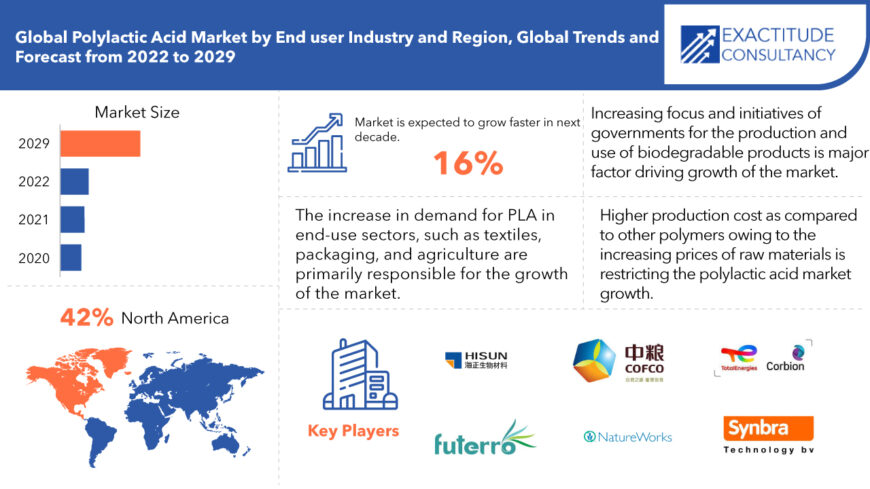
世界のポリ乳酸市場は、2022年から2029年にかけて年平均成長率16%で成長すると予想されています。2020年の5億2,000万米ドルから2029年には19億8,000万米ドルを超えると予想されています。
ポリ乳酸(PLA)材料は、一般に入手可能な熱可塑性ポリマー材料とは異なります。主にトウモロコシデンプンやサトウキビなどの再生可能な資源から得られます。PLAは、他の生分解性ポリマーと比較して比較的安価であり、いくつかの有益な機械的特性を備えているため、人気のある材料となっています。2019年の時点で、PLAの生産能力は約29万トンでした。PLAは、他の生分解性ポリマーと比較して比較的安価であり、いくつかの有益な機械的特性を備えているため、人気のある材料となっています。2019年の時点で、PLAの生産能力は約29万トンでした。PLAの生産は、キャッサバ、ジャガイモ、トウモロコシ、サトウキビなどの植物原料に大きく依存しています。農業副産物、セルロース材料、温室効果ガス(二酸化炭素やメタンなど)などの他の種類の原料も研究され、調査されてきました。しかし、この技術はまだ開発中であり、農産物は当面の間、デンプン混合物や PLA の主な原料として使用され続けると思われます。
繊維、包装、農業などの最終用途部門における PLA の需要増加が、ポリ乳酸市場の成長の主な要因です。さらに、従来のポリマーと比較してポリ乳酸の炭素排出量が少ないことが、世界的な需要を促進しています。さらに、フレキシブル包装製品の需要増加がポリ乳酸市場の成長を後押ししています。包装部門は、包装食品、スナック、すぐに食べられる (RTE) 食事、その他の品目の需要増加により活況を呈しています。その結果、急速に発展する包装業界により、予測期間中に PLA の需要が増加すると予想されます。
| 属性 | 詳細 |
| 研究期間 | 2020-2029 |
| 基準年 | 2021 |
| 推定年 | 2022 |
| 予測年 | 2022-2029 |
| 歴史的時代 | 2018-2020 |
| ユニット | 金額(10億米ドル) 数量(キロトン) |
| セグメンテーション | エンドユーザー別、地域別 |
| エンドユーザー別 |
|
| 地域別 |
|
しかし、原材料価格の高騰により他のポリマーに比べて生産コストが高く、ポリ乳酸市場の成長が制限されています。ポリ乳酸は生分解性で工業的に堆肥化可能なポリマーであり、透明性、光沢、剛性などの機能品質を組み合わせることで現在のポリマーと競合する最初の再生可能ポリマーの1つです。食品包装、使い捨て食器、繊維、石油・ガス、電子機器、自動車、3D印刷は、ポリ乳酸を採用している業界のほんの一部です。ポリ乳酸の用途は多様で適応性が高く、セクター間でのポリ乳酸の使用とポリ乳酸の多機能性により、予測期間中にポリ乳酸市場はかなりの成長機会が見込まれます。
技術の進歩、先進国からの技術移転、発展途上国における高い消費者需要により、包装、繊維、電子産業における新たな事業が今後生まれます。これらの産業におけるポリ乳酸の需要は、発展途上国における市場成長の重要な原動力です。
生分解性製品の生産と使用に対する世界中の政府の関心と取り組みの高まりは、世界のポリ乳酸市場の成長を牽引する主な要因です。さらに、先進国と新興国の政府は、近い将来に対象産業の成長を促進すると予想されるポリ乳酸の生産に補助金を支給しています。さらに、環境安全と汚染防止のために、従来のプラスチックよりもバイオプラスチックを好む利害関係者が増えていることも、予測期間中に世界市場の成長を促進する主な要因の1つです。さらに、シャンプー、クリームなどのパーソナルケア製品の製造のための化粧品業界からのポリ乳酸の需要の高まりは、今後数年間で対象市場の成長をサポートすると予想されます。
[キャプション id="attachment_10379" align="aligncenter" width="870"]
Frequently Asked Questions
• What is the worth of global polylactic acid market?
The polylactic acid market size had crossed USD 0.52 billion in 2020 and will observe a CAGR of more than 16% up to 2029 driven by the increase in demand for PLA in end-use sectors, such as textiles, packaging, and agriculture.
• What is the size of the North America polylactic acid industry?
North America held more than 42% of the polylactic acid market revenue share in 2020 due to the high demand for bioplastics, which is one of the largest markets for PLA. Moreover, several initiatives promoting environmentally-friendly products by the regional government are supporting market growth.
• What are the upcoming trends of polylactic acid market, globally?
The upcoming trends in polylactic acid market are the technological advancement, technological transfer from developed countries and high consumer demand in developing countries.
• What is the CAGR of polylactic acid market?
The global polylactic acid market registered a CAGR of 16% from 2022 to 2029. The packaging segment was the highest revenue contributor to the market, with 0.20 billion in 2020, and is estimated to reach 0.70 billion by 2029, with a CAGR of 15%.
• Which are the top companies to hold the market share in polylactic acid market?
Key players profiled in the report include Total Corbion PLA, Nature Works LLC, COFCO, Futerro, Jiangxi Keyuan Bio-Material Co., Ltd., Zhejiang Hisun Biomaterials Co., Ltd., Shanghai Tong-Jie-Liang Biomaterials Co., Ltd., Corbion Purac, Hisun Biomaterials, Synbra Technology bv.
• What is the leading application of polylactic acid market?
Leading application of polylactic acid market are hospitals. Hospitals hold a significant share of the polylactic acid market due to increasing accessibility and affordability in health care system.
• Which is the largest regional market for polylactic acid market?
North America is expected to hold the largest market share in terms of revenue, during the forecast period. The growth is attributed to high demand for bioplastics, which is one of the largest markets for PLA. Moreover, several initiatives promoting environmentally-friendly products by the regional government are supporting market growth.
Polylactic Acid Market Segment Analysis
The global polylactic acids market is segmented based on end use and region. Based on end user industry, packaging, textile, agricultural, electronics, bio-medical and others. The packaging end-use segment accounted for the largest revenue share of over 36% in 2020, owing to the wide utilization of PLA in the manufacturing of bottles, jars, and containers, as well as in fresh food packaging solutions. The inclination of consumers towards sustainable packaging and rising environmental concerns across the globe are compelling manufacturers to use the product in various packaging solutions.
The packaging industry is one of the major consumers of PLA, especially in the food packaging sector. PLA plastic bottles are durable, disposable, and possess properties such as transparency and gloss. In addition, a strict ban on single-use plastics in many countries, such as the U.K., Zimbabwe, New Zealand, Taiwan, and several states of the U.S. (such as Hawaii, New York, and California), is significantly driving the product demand in the packaging end-use segment.
Moreover, PLA can be easily composted as compared to petroleum-based products and does not emit toxic gases on incineration; thus, its demand in this application area is expected to remain strong over the forecast period. Bioplastic packaging, including rigid packaging and loose-fill packaging, has witnessed considerable regulatory support on account of the need for reducing Greenhouse Gas (GHG) emissions.
Textile is another important sector having high market penetration and a high growth rate as PLA helps in manufacturing smooth fabrics. In addition, PLA provides excellent moisture resistance, drapability, breathability, and durability. These benefits are anticipated to propel its demand in the global textile industry over the forecast period.
[caption id="attachment_10380" align="alignleft" width="680"]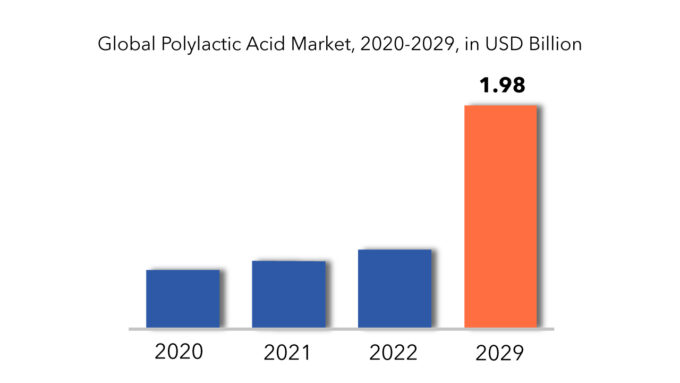
Polylactic Acid Market Players
The Polylactic acid market key players include Total Corbion PLA, Nature Works LLC, COFCO, Futerro, Jiangxi Keyuan Bio-Material Co., Ltd., Zhejiang Hisun Biomaterials Co., Ltd., Shanghai Tong-Jie-Liang Biomaterials Co., Ltd., Corbion Purac, Hisun Biomaterials, Synbra Technology bv.
To increase their market position, these businesses have implemented a variety of growth tactics. These companies are using expansion, new product development, mergers and acquisitions, and collaboration as important growth strategies to improve their product portfolio and geographical presence in order to meet the rising demand for Polylactic acid from emerging economies.
Industry News:- In October 2021, Total Corbion PLA launched recycled PLA range under the brand name Luminy rPLA, which is derived from post-industrial and post-consumer PLA waste. The new product is a chemically recycled product with similar characteristics as the existing Luminy PLA product.
- In April 2021, NatureWorks LLC developed a new PLA grade Ingeo 3D700. The new material is ideal for large-format additive manufacturing, along with the reduction in warping and print failures. Ingeo 3D700 is specially designed for 3D printing, having performance characteristics such as precise detail, good adhesion, reduced warping or curling, and low odor while printing.
- In November 2021, Danimer Scientific and Total Corbion PLA collaborated to manufacture biodegradable PLA. The collaboration will support the production of custom-built resin to meet the customers' requirements for biodegradable and functional aspects of the products.
- In June 2021, NatureWorks LLC is establishing a new fully integrated Ingeo PLA production facility in Thailand. NatureWorks LLC has invested USD 600 million for the new facility, which will have production sites for lactic acid, lactide, and polymer. The plant is expected to become fully operational by 2024, with an annual production capacity of 75,000 tons Ingeo PLA grades.
Who Should Buy? Or Key Stakeholders
- Resin & polymer industries.
- Chemicals & Materials
- Institutional & retail players.
- Investment research firms
Polylactic Acid Market Regional Analysis
The polylactic acid market by region includes North America, Asia-Pacific (APAC), Europe, South America, and Middle East & Africa (MEA).
- North America: includes the US, Canada, Mexico
- Asia Pacific: includes China, Japan, South Korea, India, Australia, ASEAN and Rest of APAC
- Europe: includes UK, Germany, France, Italy, Spain, Russia, and Rest of Europe
- South America: includes Brazil, Argentina and Rest of South America
- Middle East & Africa: includes Turkey, UAE, Saudi Arabia, South Africa, and Rest of MEA
North America accounted for the largest revenue share of over 42% in 2020. This large share is attributed to the high demand for bioplastics, which is one of the largest markets for PLA. Moreover, several initiatives promoting environmentally-friendly products by the regional government are supporting market growth.
Asia Pacific is expected to be the fastest-growing regional market from 2021 to 2028, owing to factors such as increasing demand for PLA from key end-use sectors (automobile, electronics, textile, appliance, and medical) of developing countries like Indonesia and Malaysia, fluctuating petroleum prices, and lack of resources for fossil fuels.
China led the Asia Pacific regional market in 2020. Furthermore, the richness of biomass, research-driven resources, strong downstream industry demand, material supply, and supporting government policies have created significant business opportunities for bioplastic in Thailand. This factor is also likely to drive the regional market of APAC over the forecast years. Moreover, the rapidly expanding food & beverage sector, particularly in India and China, is augmenting the market growth.
[caption id="attachment_10386" align="alignleft" width="680"]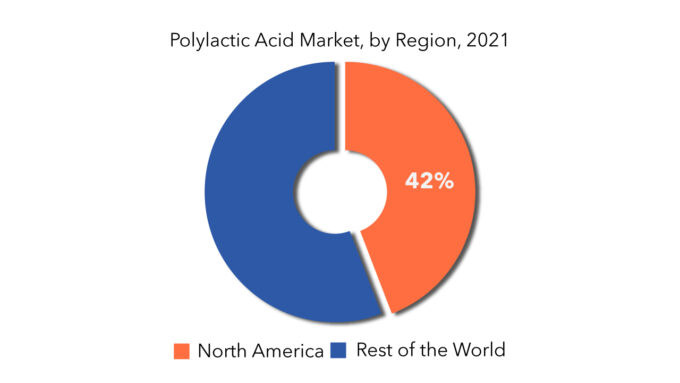
Key Market Segments: Polylactic acid Market
Polylactic Acid Market by End Use Industry, 2020-2029, (USD Million)- Packaging
- Textile
- Agricultural
- Electronics
- Bio-Medical
- Others
- North America
- Europe
- Asia Pacific
- South America
- Middle East and Africa
Key Question Answered
- What is the current size of the polylactic acid market?
- What are the key factors influencing the growth of polylactic acid?
- What are the major applications for polylactic acid?
- Who are the major key players in the polylactic acid market?
- Which region will provide more business opportunities for polylactic acid in future?
- Which segment holds the maximum share of the polylactic acid market?
- 導入
- 市場の定義
- 市場セグメンテーション
- 研究タイムライン
- 前提と制限
- 研究方法
- データマイニング
- 二次調査
- 一次研究
- 専門家のアドバイス
- 品質チェック
- 最終レビュー
- データの三角測量
- ボトムアップアプローチ
- トップダウンアプローチ
- 研究の流れ
- データソース
- データマイニング
- エグゼクティブサマリー
- 市場概要
- 世界のポリ乳酸市場の見通し
- 市場の推進要因
- 市場の制約
- 市場機会
- ポリ乳酸市場へのCOVID-19の影響
- ポーターの5つの力モデル
- 新規参入者からの脅威
- 代替品からの脅威
- サプライヤーの交渉力
- 顧客の交渉力
- 競争の度合い
- 業界バリューチェーン分析
- 世界のポリ乳酸市場の見通し
- 最終用途産業別ポリ乳酸の世界市場
- パッケージ
- 繊維
- 農業
- エレクトロニクス
- バイオメディカル
- その他
- 地域別ポリ乳酸市場
- 北米
- 私たち
- カナダ
- Mexico
- South America
- Brazil
- Argentina
- Colombia
- Chile
- Rest Of South America
- Europe
- Germany
- UK
- France
- Italy
- Spain
- Russia
- Netherlands
- Belgium
- Rest Of Europe
- Asia Pacific
- India
- China
- Japan
- South Korea
- Australia
- New Zealand
- Indonesia
- Taiwan
- Malaysia
- Rest Of Asia Pacific
- Middle East and Africa
- UAE
- Saudi Arabia
- South Africa
- Rest Of Middle East and Africa
- 北米
- Company Profiles* (Business Overview, Company Snapshot, Products Offered, Recent Developments)
- Total Corbion PLA
- Nature Works LLC
- COFCO
- Futerro
- Jiangxi Keyuan Bio-Material Co., Ltd.
- Zhejiang Hisun Biomaterials Co., Ltd.
- Shanghai Tong-Jie-Liang Biomaterials Co., Ltd.
- Corbion Purac
- Hisun Biomaterials
- Synbra Technology *The Company List Is Indicative
LIST OF TABLES
TABLE 1 GLOBAL POLYLACTIC ACID MARKET BY END USERS (USD MILLIONS), 2020-2029
TABLE 2 GLOBAL POLYLACTIC ACID MARKET BY END USERS (THOUSAND UNITS), 2020-2029
TABLE 3 GLOBAL POLYLACTIC ACID MARKET BY REGION (USD MILLIONS), 2020-2029
TABLE 4 GLOBAL POLYLACTIC ACID MARKET BY REGION (THOUSAND UNITS), 2020-2029
TABLE 5 NORTH AMERICA POLYLACTIC ACID MARKET BY END USERS (USD MILLIONS), 2020-2029
TABLE 6 NORTH AMERICA POLYLACTIC ACID MARKET BY END USERS (THOUSAND UNITS), 2020-2029
TABLE 7 US POLYLACTIC ACID MARKET BY END USERS (USD MILLIONS), 2020-2029
TABLE 8 US POLYLACTIC ACID MARKET BY END USERS (THOUSAND UNITS), 2020-2029
TABLE 9 CANADA POLYLACTIC ACID MARKET BY END USERS (USD MILLIONS), 2020-2029
TABLE 10 CANADA POLYLACTIC ACID MARKET BY END USERS (THOUSAND UNITS), 2020-2029
TABLE 11 MEXICO POLYLACTIC ACID MARKET BY END USERS (USD MILLIONS), 2020-2029
TABLE 12 MEXICO POLYLACTIC ACID MARKET BY END USERS (THOUSAND UNITS), 2020-2029
TABLE 13 SOUTH AMERICA POLYLACTIC ACID MARKET BY END USERS (USD MILLIONS), 2020-2029
TABLE 14 SOUTH AMERICA POLYLACTIC ACID MARKET BY END USERS (THOUSAND UNITS), 2020-2029
TABLE 15 BRAZIL POLYLACTIC ACID MARKET BY END USERS (USD MILLIONS), 2020-2029
TABLE 16 BRAZIL POLYLACTIC ACID MARKET BY END USERS (THOUSAND UNITS), 2020-2029
TABLE 17 ARGENTINA POLYLACTIC ACID MARKET BY END USERS (USD MILLIONS), 2020-2029
TABLE 18 ARGENTINA POLYLACTIC ACID MARKET BY END USERS (THOUSAND UNITS), 2020-2029
TABLE 19 COLOMBIA POLYLACTIC ACID MARKET BY END USERS (USD MILLIONS), 2020-2029
TABLE 20 COLOMBIA POLYLACTIC ACID MARKET BY END USERS (THOUSAND UNITS), 2020-2029
TABLE 21 REST OF SOUTH AMERICA POLYLACTIC ACID MARKET BY END USERS (USD MILLIONS), 2020-2029
TABLE 22 REST OF SOUTH AMERICA POLYLACTIC ACID MARKET BY END USERS (THOUSAND UNITS), 2020-2029
TABLE 23 ASIA-PACIFIC POLYLACTIC ACID MARKET BY END USERS (USD MILLIONS), 2020-2029
TABLE 24 ASIA-PACIFIC POLYLACTIC ACID MARKET BY END USERS (THOUSAND UNITS), 2020-2029
TABLE 25 INDIA POLYLACTIC ACID MARKET BY END USERS (USD MILLIONS), 2020-2029
TABLE 26 INDIA POLYLACTIC ACID MARKET BY END USERS (THOUSAND UNITS), 2020-2029
TABLE 27 CHINA POLYLACTIC ACID MARKET BY END USERS (USD MILLIONS), 2020-2029
TABLE 28 CHINA POLYLACTIC ACID MARKET BY END USERS (THOUSAND UNITS), 2020-2029
TABLE 29 JAPAN POLYLACTIC ACID MARKET BY END USERS (USD MILLIONS), 2020-2029
TABLE 30 JAPAN POLYLACTIC ACID MARKET BY END USERS (THOUSAND UNITS), 2020-2029
TABLE 31 SOUTH KOREA POLYLACTIC ACID MARKET BY END USERS (USD MILLIONS), 2020-2029
TABLE 32 SOUTH KOREA POLYLACTIC ACID MARKET BY END USERS (THOUSAND UNITS), 2020-2029
TABLE 33 AUSTRALIA POLYLACTIC ACID MARKET BY END USERS (USD MILLIONS), 2020-2029
TABLE 34 AUSTRALIA POLYLACTIC ACID MARKET BY END USERS (THOUSAND UNITS), 2020-2029
TABLE 35 SOUTH EAST ASIA POLYLACTIC ACID MARKET BY END USERS (USD MILLIONS), 2020-2029
TABLE 36 SOUTH EAST ASIA POLYLACTIC ACID MARKET BY END USERS (THOUSAND UNITS), 2020-2029
TABLE 37 REST OF ASIA PACIFIC POLYLACTIC ACID MARKET BY END USERS (USD MILLIONS), 2020-2029
TABLE 38 REST OF ASIA PACIFIC POLYLACTIC ACID MARKET BY END USERS (THOUSAND UNITS), 2020-2029
TABLE 39 EUROPE POLYLACTIC ACID MARKET BY END USERS (USD MILLIONS), 2020-2029
TABLE 40 EUROPE POLYLACTIC ACID MARKET BY END USERS (THOUSAND UNITS), 2020-2029
TABLE 41 GERMANY POLYLACTIC ACID MARKET BY END USERS (USD MILLIONS), 2020-2029
TABLE 42 GERMANY POLYLACTIC ACID MARKET BY END USERS (THOUSAND UNITS), 2020-2029
TABLE 43 UK POLYLACTIC ACID MARKET BY END USERS (USD MILLIONS), 2020-2029
TABLE 44 UK POLYLACTIC ACID MARKET BY END USERS (THOUSAND UNITS), 2020-2029
TABLE 45 FRANCE POLYLACTIC ACID MARKET BY END USERS (USD MILLIONS), 2020-2029
TABLE 46 FRANCE POLYLACTIC ACID MARKET BY END USERS (THOUSAND UNITS), 2020-2029
TABLE 47 ITALY POLYLACTIC ACID MARKET BY END USERS (USD MILLIONS), 2020-2029
TABLE 48 ITALY POLYLACTIC ACID MARKET BY END USERS (THOUSAND UNITS), 2020-2029
TABLE 49 SPAIN POLYLACTIC ACID MARKET BY END USERS (USD MILLIONS), 2020-2029
TABLE 50 SPAIN POLYLACTIC ACID MARKET BY END USERS (THOUSAND UNITS), 2020-2029
TABLE 51 RUSSIA POLYLACTIC ACID MARKET BY END USERS (USD MILLIONS), 2020-2029
TABLE 52 RUSSIA POLYLACTIC ACID MARKET BY END USERS (THOUSAND UNITS), 2020-2029
TABLE 53 REST OF EUROPE POLYLACTIC ACID MARKET BY END USERS (USD MILLIONS), 2020-2029
TABLE 54 REST OF EUROPE POLYLACTIC ACID MARKET BY END USERS (THOUSAND UNITS), 2020-2029
TABLE 55 MIDDLE EAST AND AFRICA POLYLACTIC ACID MARKET BY END USERS (USD MILLIONS), 2020-2029
TABLE 56 MIDDLE EAST AND AFRICA POLYLACTIC ACID MARKET BY END USERS (THOUSAND UNITS), 2020-2029
TABLE 57 UAE POLYLACTIC ACID MARKET BY END USERS (USD MILLIONS), 2020-2029
TABLE 58 UAE POLYLACTIC ACID MARKET BY END USERS (THOUSAND UNITS), 2020-2029
TABLE 59 SAUDI ARABIA POLYLACTIC ACID MARKET BY END USERS (USD MILLIONS), 2020-2029
TABLE 60 SAUDI ARABIA POLYLACTIC ACID MARKET BY END USERS (THOUSAND UNITS), 2020-2029
TABLE 61 SOUTH AFRICA POLYLACTIC ACID MARKET BY END USERS (USD MILLIONS), 2020-2029
TABLE 62 SOUTH AFRICA POLYLACTIC ACID MARKET BY END USERS (THOUSAND UNITS), 2020-2029
TABLE 63 REST OF MIDDLE EAST AND AFRICA POLYLACTIC ACID MARKET BY END USERS (USD MILLIONS), 2020-2029
TABLE 64 REST OF MIDDLE EAST AND AFRICA POLYLACTIC ACID MARKET BY END USERS (THOUSAND UNITS), 2020-2029
LIST OF FIGURES
FIGURE 1 MARKET DYNAMICS
FIGURE 2 MARKET SEGMENTATION
FIGURE 3 REPORT TIMELINES: YEARS CONSIDERED
FIGURE 4 DATA TRIANGULATION
FIGURE 5 BOTTOM-UP APPROACH
FIGURE 6 TOP-DOWN APPROACH
FIGURE 7 RESEARCH FLOW
FIGURE 8 GLOBAL POLYLACTIC ACID MARKET BY END USERS, USD MILLION, 2020-2029
FIGURE 9 GLOBAL POLYLACTIC ACID MARKET BY REGION, USD MILLION, 2020-2029
FIGURE 10 PORTER’S FIVE FORCES MODEL
FIGURE 11 MARKET SHARE ANALYSIS
FIGURE 12 TOTAL CORBION PLA: COMPANY SNAPSHOT
FIGURE 13 NATURE WORKS LLC: COMPANY SNAPSHOT
FIGURE 14 COFCO: COMPANY SNAPSHOT
FIGURE 15 FUTERRO: COMPANY SNAPSHOT
FIGURE 16 JIANGXI KEYUAN BIO-MATERIAL CO., LTD.: COMPANY SNAPSHOT
FIGURE 17 ZHEJIANG HISUN BIOMATERIALS CO., LTD.: COMPANY SNAPSHOT
FIGURE 18 SHANGHAI TONG-JIE-LIANG BIOMATERIALS CO., LTD.: COMPANY SNAPSHOT
FIGURE 19 CORBION PURAC: COMPANY SNAPSHOT
FIGURE 20 HISUN BIOMATERIALS: COMPANY SNAPSHOT
FIGURE 21 SYNBRA TECHNOLOGY BV: COMPANY SNAPSHOT
DOWNLOAD FREE SAMPLE REPORT
License Type
SPEAK WITH OUR ANALYST
Want to know more about the report or any specific requirement?
WANT TO CUSTOMIZE THE REPORT?
Our Clients Speak
We asked them to research ‘ Equipment market’ all over the world, and their whole arrangement was helpful to us. thehealthanalytics.com insightful analysis and reports contributed to our current analysis and in creating a future strategy. Besides, the te
Yosuke Mitsui
Senior Associate Construction Equipment Sales & Marketing
We asked them to research ‘Equipment market’ all over the world, and their whole arrangement was helpful to us. thehealthanalytics.com insightful analysis and reports contributed to our current analysis and in creating a future strategy. Besides, the te