

Base Year Value ()
x.x %
x.x %
CAGR ()
x.x %
x.x %
Forecast Year Value ()
x.x %
x.x %
Historical Data Period
Largest Region
Forecast Period
ポリオール市場は、製品(ポリエーテル、ポリエステル)、用途(硬質フォーム、フレキシブルフォーム、コーティング、接着剤とシーラント、エラストマー、その他)、地域、世界的傾向、2022年から2029年までの予測によって区分されています。
Instant access to hundreds of data points and trends
- Market estimates from 2014-2029
- Competitive analysis, industry segmentation, financial benchmarks
- Incorporates SWOT, Porter's Five Forces and risk management frameworks
- PDF report or online database with Word, Excel and PowerPoint export options
- 100% money back guarantee
ポリオール市場の概要
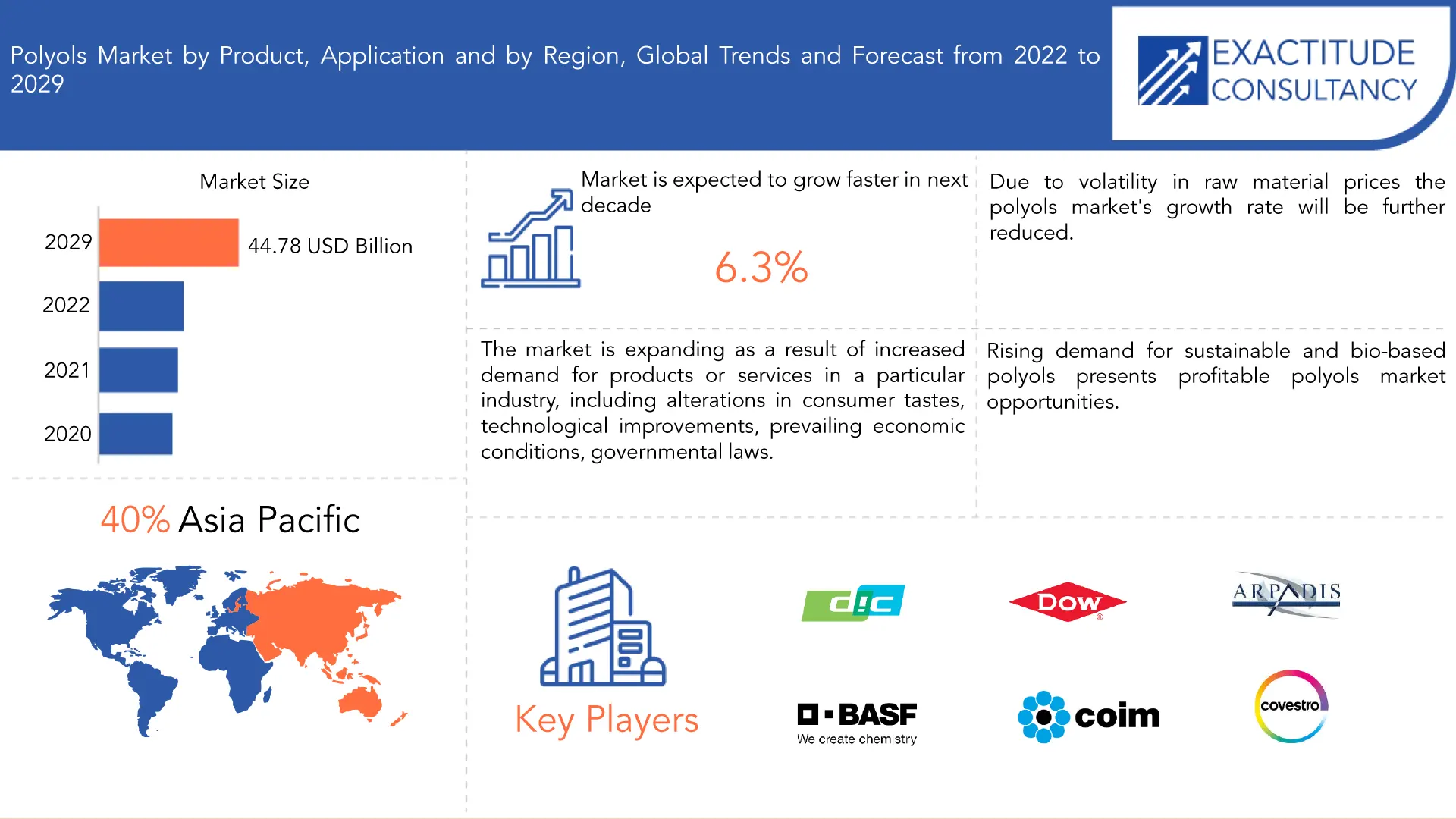
ポリオール市場は、2022年から2029年にかけて6.3%のCAGRで成長すると予想されています。2020年の価値は約258億4,000万ドルでした。2029年までに447億8,000万ドルを超えると予想されています。
市場は、消費者の嗜好の変化、技術の向上、経済状況、政府の法律、人口動態の変化など、特定の業界の製品やサービスの需要の増加の結果として拡大しています。
ポリオール市場とは、ポリオールの生産、流通、消費に関わる世界的な産業を指します。ポリオールは糖アルコールと呼ばれる多用途の化合物の一種で、食品や飲料、医薬品、化粧品、自動車など、さまざまな業界で広く使用されています。製品に甘味、食感、その他の機能特性を与えることができるのが特徴です。ポリオールは、食品や飲料の用途で砂糖の代替品や増量剤として一般的に使用されており、従来の甘味料に比べてカロリーが低くなっています。また、ポリウレタンフォーム、コーティング、接着剤、シーラントの製造にも重要な役割を果たしており、材料の柔軟性、絶縁性、耐久性に貢献しています。医薬品や化粧品業界では、ポリオールは賦形剤や保湿剤として使用され、保湿性と皮膚軟化性を備えています。
[キャプション id="attachment_28232" align="aligncenter" width="1920"]
ポリオールの需要は、消費者の健康意識の高まり、さまざまな業界での用途の増加、持続可能で環境に優しい材料の必要性など、いくつかの要因によって推進されています。ポリオール市場のメーカーは、業界と消費者の進化する需要を満たすために、革新的な生産技術の開発と製品ポートフォリオの拡大に注力しています。市場は、原材料の入手可能性、規制要件、技術の進歩、消費者の好みの変化などの要因の影響を受けます。
The polyols market dynamics are influenced by various factors that shape its growth and development. The increasing demand for healthier and low-calorie food and beverage products has been a significant driver for the polyols market. As consumers become more health-conscious, there is a growing preference for sugar substitutes like polyols, which provide sweetness without the added calories. This has led to the incorporation of polyols in a wide range of food and beverage products, including confectioneries, baked goods, and beverages. The expanding application scope of polyols across industries has contributed to market growth. Polyols are widely used in the production of polyurethane foams, which find applications in construction, automotive, and furniture industries. The rising demand for energy-efficient buildings and lightweight automotive components has driven the use of polyurethane foams, thus increasing the demand for polyols. Additionally, the pharmaceutical and cosmetic industries utilize polyols as excipients and humectants, further driving market growth.
Sustainability and environmental concerns have become prominent factors in the polyols market dynamics. As the demand for eco-friendly and renewable materials increases, there is a growing interest in bio-based polyols derived from renewable feedstocks, such as corn, soybeans, and other crops. These bio-based polyols offer a more sustainable alternative to traditional petroleum-based polyols. Manufacturers in the polyols market are investing in research and development to develop bio-based polyols and reduce their carbon footprint, aligning with global sustainability goals. The polyols market dynamics are driven by factors such as changing consumer preferences, expanding applications, and the focus on sustainability. These factors influence the demand, production, and innovation within the market, shaping its growth trajectory.
| ATTRIBUTE | DETAILS |
| Study period | 2020-2029 |
| Base year | 2021 |
| Estimated year | 2022 |
| Forecasted year | 2022-2029 |
| Historical period | 2018-2020 |
| Unit | Value (USD Billion, Kilotons) |
| Segmentation | By Product, By Application |
| By Product |
|
| By Application |
|
| By Region |
|
Frequently Asked Questions
• What is the worth of the polyols market?
The Polyols market is expected to grow at 6.3 % CAGR from 2022 to 2029. it is expected to reach above USD 44.78 billion by 2029.
• What is the size of the Asia Pacific in the polyols industry?
Asia Pacific held nearly 40% of the polyols market revenue share in 2021 and will witness expansion in the forecast period.
• What are some of the market's driving forces?
The market is expanding as a result of increased demand for products or services in a particular industry, including alterations in consumer tastes, technological improvements, prevailing economic conditions, governmental laws, and demographic shifts.
• Which are the top companies to hold the market share in the polyols market?
DIC Corp., Dow Inc., Arpadis Group, BASF SE, COIM Spa, Covestro AG Evonik Industries AG, N Shashikant and Co., Lanxess AG, Mitsui Chemicals Inc., Koch Industries Inc., POLYOLS and POLYMERS PVT. LTD.
• What is the leading segment of the polyols market?
Coatings, adhesives, and sealants utilize both polyether and polyester polyols to provide enhanced durability, adhesion, and protection to surfaces. Elastomers, produced mainly from polyester polyols, are used in automotive components, footwear, and industrial applications for their excellent resilience and flexibility. Additionally, polyols find application in various other sectors such as textiles, artificial leather, and composite materials, contributing to the market's overall growth and versatility.
Polyols Market Segment Analysis
By product, the market is segmented into polyether and polyester. Polyether and polyester are two important categories of polyols that play a significant role in the market. Polyether polyols are primarily used in the production of flexible polyurethane foams, such as those found in mattresses, cushions, and automotive seating. Their unique properties, including excellent flexibility, resilience, and durability, make them ideal for these applications. On the other hand, polyester polyols are commonly employed in the manufacturing of rigid polyurethane foams, coatings, adhesives, and sealants. They offer superior mechanical strength, chemical resistance, and thermal stability, making them suitable for insulation, construction, and industrial applications. Both polyether and polyester polyols contribute to the versatility and performance of polyurethane-based products, driving their demand in various industries.
[caption id="attachment_28233" align="aligncenter" width="1920"]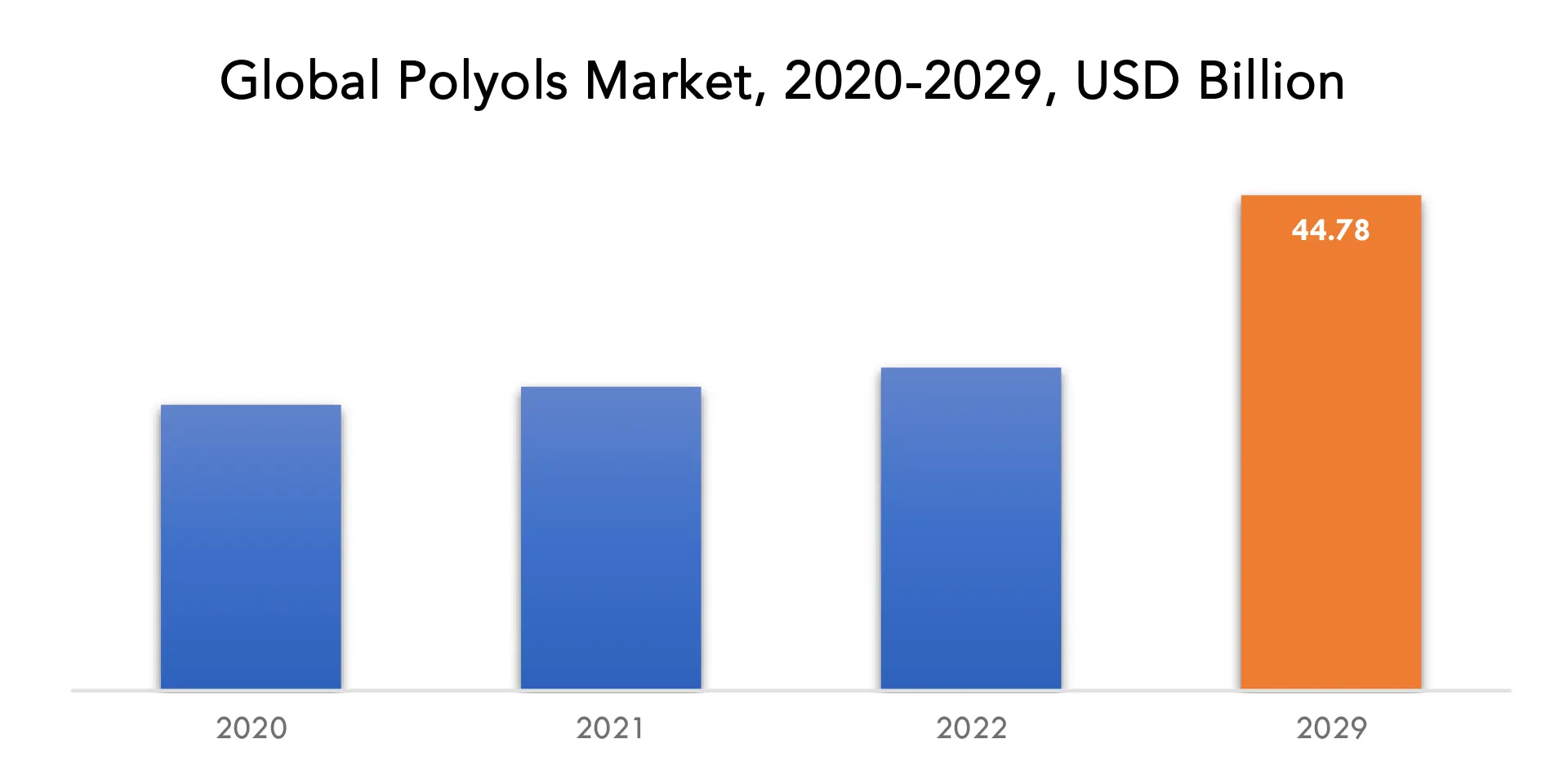
By application, the market is segmented into rigid foam, flexible foam, coatings, adhesives & sealants, elastomers, and others. Rigid foam, made primarily from polyester polyols, is extensively used in insulation applications for buildings and appliances due to its excellent thermal insulation properties. Flexible foam, predominantly produced using polyether polyols, finds wide application in furniture, automotive seating, and bedding due to its high comfort and cushioning characteristics. Coatings, adhesives, and sealants utilize both polyether and polyester polyols to provide enhanced durability, adhesion, and protection to surfaces. Elastomers, produced mainly from polyester polyols, are used in automotive components, footwear, and industrial applications for their excellent resilience and flexibility. Additionally, polyols find application in various other sectors such as textiles, artificial leather, and composite materials, contributing to the market's overall growth and versatility.
Polyols Market Key Players
Polyols market key players include DIC Corp., Dow Inc., Arpadis Group, BASF SE, COIM Spa, Covestro AG Evonik Industries AG, N Shashikant and Co., Lanxess AG, Mitsui Chemicals Inc., Koch Industries Inc., POLYOLS and POLYMERS PVT. LTD.
Recent News: April 11, 2023: DIC Developed WATERSOL®-LB Waterborne Anode Binder for LiBs. May 25, 2023: Dow and New Energy Blue announced a collaboration to develop renewable plastic materials from corn residue.Who Should Buy? Or Key stakeholders
- Manufacturers
- Industries
- Research institutions
- Regulatory authorities
- Distributors and suppliers
- Trade associations
- Consumers
- Investors
- Financial institutions
- Environmental organizations
- Government agencies
- Others
Polyols Market Regional Analysis
Polyols market by region includes North America, Asia-Pacific (APAC), Europe, South America, and Middle East & Africa (MEA).
- North America: includes the US, Canada, Mexico
- Asia Pacific: includes China, Japan, South Korea, India, Australia, ASEAN, and the Rest of APAC
- Europe: includes the UK, Germany, France, Italy, Spain, Russia, and the Rest of Europe
- South America: includes Brazil, Argentina, and the Rest of South America
- Middle East & Africa: includes Turkey, UAE, Saudi Arabia, South Africa, and the Rest of MEA
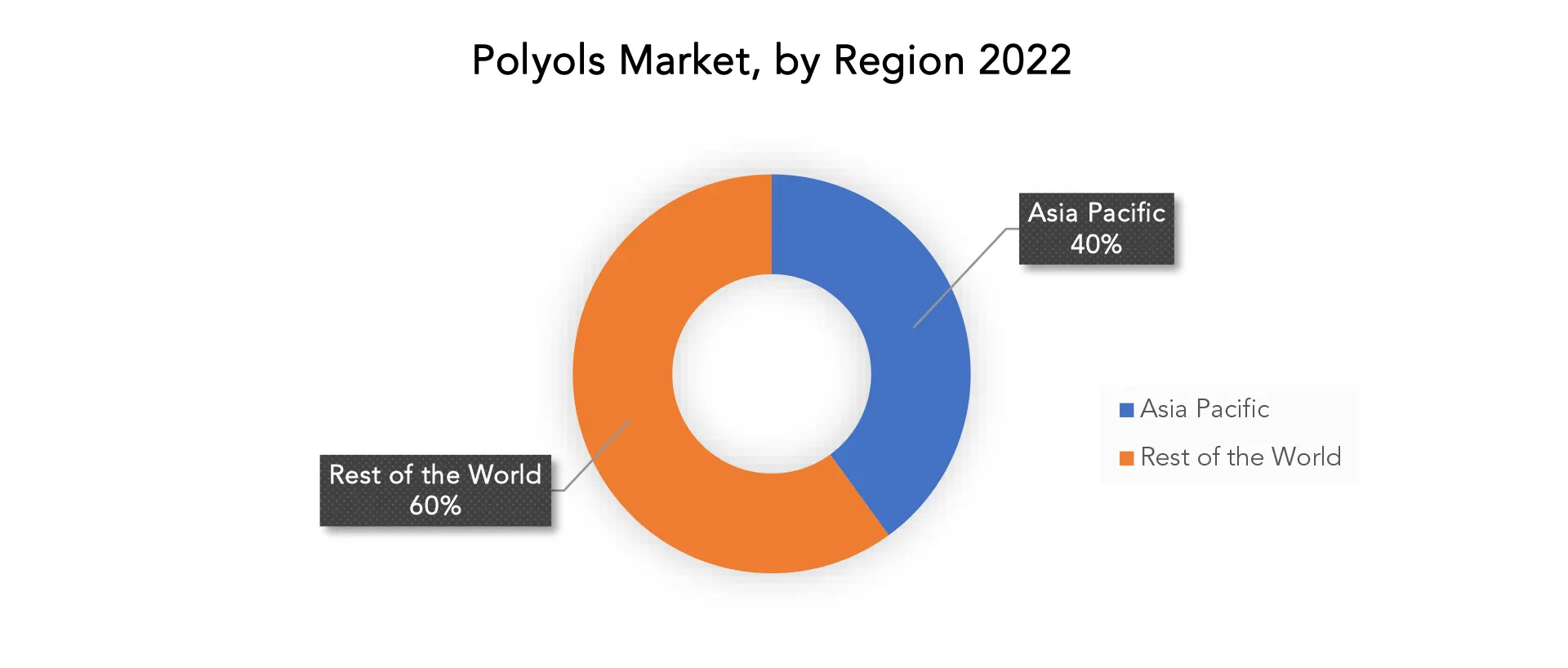
The Asia Pacific region has experienced significant growth in the polyols market. The robust industrialization, urbanization, and rising consumer spending in countries like China, India, and Southeast Asian nations have fueled the demand for polyols in various industries. The construction sector in the region has witnessed substantial growth, driving the need for insulation materials and polyurethane foams, which utilize polyols. Additionally, the automotive industry's expansion, coupled with increasing awareness of energy efficiency and lightweight materials, has boosted the demand for polyols in the production of automotive components. The region's strong manufacturing base, coupled with the growing focus on sustainability and eco-friendly solutions, has also led to the adoption of bio-based polyols. With continued economic development and increasing applications of polyols across industries, the Asia Pacific market is expected to witness sustained growth in the coming years.
The North American market for polyols has been experiencing steady growth. The region has a well-established industrial base and a strong presence in industries such as automotive, construction, furniture, and appliances, which are major consumers of polyols. The rising demand for energy-efficient materials, coupled with stringent regulations regarding environmental sustainability, has driven the adoption of polyurethane foams and coatings, which rely on polyols. Additionally, the increasing consumer preference for low-calorie and healthier food and beverage products has fueled the demand for polyols as sugar substitutes. The North American market is also witnessing advancements in bio-based polyols, addressing the growing demand for sustainable materials. With ongoing investments in research and development, coupled with the region's focus on innovation and sustainability, the polyols market in North America is poised for continued growth in the foreseeable future.
Key Question Answered
- What is the expected growth rate of the Polyols market over the next 7 years?
- Who are the major players in the Polyols market and what is their market share?
- What are the end-user industries driving the market demand and what is their outlook?
- What are the opportunities for growth in emerging markets such as Asia-Pacific, the middle east, and Africa?
- How is the economic environment affecting the Polyols market, including factors such as interest rates, inflation, and exchange rates?
- What is the expected impact of government policies and regulations on the Polyols market?
- What is the current and forecasted size and growth rate of the global Polyols market?
- What are the key drivers of growth in the Polyols market?
- Who are the major players in the market and what is their market share?
- What are the distribution channels and supply chain dynamics in the Polyols market?
- What are the technological advancements and innovations in the Polyols market and their impact on product development and growth?
- What are the regulatory considerations and their impact on the market?
- What are the challenges faced by players in the Polyols market and how are they addressing these challenges?
- What are the opportunities for growth and expansion in the Polyols market?
- What are the product offerings and specifications of leading players in the market?
- What is the pricing trend of Polyols market in the market and what is the impact of raw material prices on the price trend?
Exactitude Consultancy Services Key Objectives:
- Increasing sales and market share
- Developing new technology
- Improving profitability
- Entering new markets
- Enhancing brand reputation
- INTRODUCTION
- MARKET DEFINITION
- MARKET SEGMENTATION
- RESEARCH TIMELINES
- ASSUMPTIONS AND LIMITATIONS
- RESEARCH METHODOLOGY
- DATA MINING
- SECONDARY RESEARCH
- PRIMARY RESEARCH
- SUBJECT-MATTER EXPERTS’ ADVICE
- QUALITY CHECKS
- FINAL REVIEW
- DATA TRIANGULATION
- BOTTOM-UP APPROACH
- TOP-DOWN APPROACH
- RESEARCH FLOW
- DATA SOURCES
- DATA MINING
- EXECUTIVE SUMMARY
- MARKET OVERVIEW
- GLOBAL POLYOLS MARKET OUTLOOK
- MARKET DRIVERS
- MARKET RESTRAINTS
- MARKET OPPORTUNITIES
- IMPACT OF COVID-19 ON POLYOLS MARKET
- PORTER’S FIVE FORCES MODEL
- THREAT FROM NEW ENTRANTS
- THREAT FROM SUBSTITUTES
- BARGAINING POWER OF SUPPLIERS
- BARGAINING POWER OF CUSTOMERS
- DEGREE OF COMPETITION
- INDUSTRY VALUE CHAIN ANALYSIS
- GLOBAL POLYOLS MARKET OUTLOOK
- GLOBAL POLYOLS MARKET BY PRODUCT (USD BILLION, KILOTONS), 2020-2029
- POLYETHER
- POLYESTER
- GLOBAL POLYOLS MARKET BY APPLICATION (USD BILLION, KILOTONS), 2020-2029
- RIGID FOAM
- FLEXIBLE FOAM
- COATINGS
- ADHESIVE & SEALANTS
- ELASTOMERS
- OTHERS
- GLOBAL POLYOLS MARKET BY REGION (USD BILLION, KILOTONS), 2020-2029
- NORTH AMERICA
- US
- CANADA
- MEXICO
- SOUTH AMERICA
- BRAZIL
- ARGENTINA
- COLOMBIA
- REST OF SOUTH AMERICA
- EUROPE
- GERMANY
- UK
- FRANCE
- ITALY
- SPAIN
- RUSSIA
- REST OF EUROPE
- ASIA PACIFIC
- INDIA
- CHINA
- JAPAN
- SOUTH KOREA
- AUSTRALIA
- SOUTH-EAST ASIA
- REST OF ASIA PACIFIC
- MIDDLE EAST AND AFRICA
- UAE
- SAUDI ARABIA
- SOUTH AFRICA
- REST OF MIDDLE EAST AND AFRICA
- NORTH AMERICA
- COMPANY PROFILES* (BUSINESS OVERVIEW, COMPANY SNAPSHOT, PRODUCTS OFFERED, RECENT DEVELOPMENTS)
- DIC CORP.
- DOW INC.
- ARPADIS GROUP
- BASF SE
- COIM SPA
- COVESTRO AG
- EVONIK INDUSTRIES AG
- N SHASHIKANT AND CO.
- LANXESS AG
- MITSUI CHEMICALS INC.
- KOCH INDUSTRIES INC.
- POLYOLS AND POLYMERS PVT. LTD. *THE COMPANY LIST IS INDICATIVE
LIST OF TABLES
TABLE 1 GLOBAL POLYOLS MARKET BY PRODUCT (USD BILLION), 2020-2029
TABLE 2 GLOBAL POLYOLS MARKET BY PRODUCT (KILOTONS), 2020-2029
TABLE 3 GLOBAL POLYOLS MARKET BY APPLICATION (USD BILLION), 2020-2029
TABLE 4 GLOBAL POLYOLS MARKET BY APPLICATION (KILOTONS), 2020-2029
TABLE 5 GLOBAL POLYOLS MARKET BY REGION (USD BILLION), 2020-2029
TABLE 6 GLOBAL POLYOLS MARKET BY REGION (KILOTONS), 2020-2029
TABLE 7 NORTH AMERICA POLYOLS MARKET BY PRODUCT (USD BILLION), 2020-2029
TABLE 8 NORTH AMERICA POLYOLS MARKET BY PRODUCT (KILOTONS), 2020-2029
TABLE 9 NORTH AMERICA POLYOLS MARKET BY APPLICATION (USD BILLION), 2020-2029
TABLE 10 NORTH AMERICA POLYOLS MARKET BY APPLICATION (KILOTONS), 2020-2029
TABLE 11 NORTH AMERICA POLYOLS MARKET BY COUNTRY (USD BILLION), 2020-2029
TABLE 12 NORTH AMERICA POLYOLS MARKET BY COUNTRY (KILOTONS), 2020-2029
TABLE 13 US POLYOLS MARKET BY PRODUCT (USD BILLION), 2020-2029
TABLE 14 US POLYOLS MARKET BY PRODUCT (KILOTONS), 2020-2029
TABLE 15 US POLYOLS MARKET BY APPLICATION (USD BILLION), 2020-2029
TABLE 16 US POLYOLS MARKET BY APPLICATION (KILOTONS), 2020-2029
TABLE 17 CANADA POLYOLS MARKET BY PRODUCT (BILLION), 2020-2029
TABLE 18 CANADA POLYOLS MARKET BY PRODUCT (KILOTONS), 2020-2029
TABLE 19 CANADA POLYOLS MARKET BY APPLICATION (USD BILLION), 2020-2029
TABLE 20 CANADA POLYOLS MARKET BY APPLICATION (KILOTONS), 2020-2029
TABLE 21 MEXICO POLYOLS MARKET BY PRODUCT (USD BILLION), 2020-2029
TABLE 22 MEXICO POLYOLS MARKET BY PRODUCT (KILOTONS), 2020-2029
TABLE 23 MEXICO POLYOLS MARKET BY APPLICATION (USD BILLION), 2020-2029
TABLE 24 MEXICO POLYOLS MARKET BY APPLICATION (KILOTONS), 2020-2029
TABLE 25 SOUTH AMERICA POLYOLS MARKET BY PRODUCT (USD BILLION), 2020-2029
TABLE 26 SOUTH AMERICA POLYOLS MARKET BY PRODUCT (KILOTONS), 2020-2029
TABLE 27 SOUTH AMERICA POLYOLS MARKET BY APPLICATION (USD BILLION), 2020-2029
TABLE 28 SOUTH AMERICA POLYOLS MARKET BY APPLICATION (KILOTONS), 2020-2029
TABLE 29 SOUTH AMERICA POLYOLS MARKET BY COUNTRY (USD BILLION), 2020-2029
TABLE 30 SOUTH AMERICA POLYOLS MARKET BY COUNTRY (KILOTONS), 2020-2029
TABLE 31 BRAZIL POLYOLS MARKET BY PRODUCT (USD BILLION), 2020-2029
TABLE 32 BRAZIL POLYOLS MARKET BY PRODUCT (KILOTONS), 2020-2029
TABLE 33 BRAZIL POLYOLS MARKET BY APPLICATION (USD BILLION), 2020-2029
TABLE 34 BRAZIL POLYOLS MARKET BY APPLICATION (KILOTONS), 2020-2029
TABLE 35 ARGENTINA POLYOLS MARKET BY PRODUCT (USD BILLION), 2020-2029
TABLE 36 ARGENTINA POLYOLS MARKET BY PRODUCT (KILOTONS), 2020-2029
TABLE 37 ARGENTINA POLYOLS MARKET BY APPLICATION (USD BILLION), 2020-2029
TABLE 38 ARGENTINA POLYOLS MARKET BY APPLICATION (KILOTONS), 2020-2029
TABLE 39 COLOMBIA POLYOLS MARKET BY PRODUCT (USD BILLION), 2020-2029
TABLE 40 COLOMBIA POLYOLS MARKET BY PRODUCT (KILOTONS), 2020-2029
TABLE 41 COLOMBIA POLYOLS MARKET BY APPLICATION (USD BILLION), 2020-2029
TABLE 42 COLOMBIA POLYOLS MARKET BY APPLICATION (KILOTONS), 2020-2029
TABLE 43 REST OF SOUTH AMERICA POLYOLS MARKET BY PRODUCT (USD BILLION), 2020-2029
TABLE 44 REST OF SOUTH AMERICA POLYOLS MARKET BY PRODUCT (KILOTONS), 2020-2029
TABLE 45 REST OF SOUTH AMERICA POLYOLS MARKET BY APPLICATION (USD BILLION), 2020-2029
TABLE 46 REST OF THE SOUTH AMERICA POLYOLS MARKET BY APPLICATION (KILOTONS), 2020-2029
TABLE 47 ASIA-PACIFIC POLYOLS MARKET BY PRODUCT (USD BILLION), 2020-2029
TABLE 48 ASIA-PACIFIC POLYOLS MARKET BY PRODUCT (KILOTONS), 2020-2029
TABLE 49 ASIA-PACIFIC POLYOLS MARKET BY APPLICATION (USD BILLION), 2020-2029
TABLE 50 ASIA-PACIFIC POLYOLS MARKET BY APPLICATION (KILOTONS), 2020-2029
TABLE 51 ASIA-PACIFIC POLYOLS MARKET BY COUNTRY (USD BILLION), 2020-2029
TABLE 52 ASIA-PACIFIC POLYOLS MARKET BY COUNTRY (KILOTONS), 2020-2029
TABLE 53 INDIA POLYOLS MARKET BY PRODUCT (USD BILLION), 2020-2029
TABLE 54 INDIA POLYOLS MARKET BY PRODUCT (KILOTONS), 2020-2029
TABLE 55 INDIA POLYOLS MARKET BY APPLICATION (USD BILLION), 2020-2029
TABLE 56 INDIA POLYOLS MARKET BY APPLICATION (KILOTONS), 2020-2029
TABLE 57 CHINA POLYOLS MARKET BY PRODUCT (USD BILLION), 2020-2029
TABLE 58 CHINA POLYOLS MARKET BY PRODUCT (KILOTONS), 2020-2029
TABLE 59 CHINA POLYOLS MARKET BY APPLICATION (USD BILLION), 2020-2029
TABLE 60 CHINA POLYOLS MARKET BY APPLICATION (KILOTONS), 2020-2029
TABLE 61 JAPAN POLYOLS MARKET BY PRODUCT (USD BILLION), 2020-2029
TABLE 62 JAPAN POLYOLS MARKET BY PRODUCT (KILOTONS), 2020-2029
TABLE 63 JAPAN POLYOLS MARKET BY APPLICATION (USD BILLION), 2020-2029
TABLE 64 JAPAN POLYOLS MARKET BY APPLICATION (KILOTONS), 2020-2029
TABLE 65 SOUTH KOREA POLYOLS MARKET BY PRODUCT (USD BILLION), 2020-2029
TABLE 66 SOUTH KOREA POLYOLS MARKET BY PRODUCT (KILOTONS), 2020-2029
TABLE 67 SOUTH KOREA POLYOLS MARKET BY APPLICATION (USD BILLION), 2020-2029
TABLE 68 SOUTH KOREA POLYOLS MARKET BY APPLICATION (KILOTONS), 2020-2029
TABLE 69 AUSTRALIA POLYOLS MARKET BY PRODUCT (USD BILLION), 2020-2029
TABLE 70 AUSTRALIA POLYOLS MARKET BY PRODUCT (KILOTONS), 2020-2029
TABLE 71 AUSTRALIA POLYOLS MARKET BY APPLICATION (USD BILLION), 2020-2029
TABLE 72 AUSTRALIA POLYOLS MARKET BY APPLICATION (KILOTONS), 2020-2029
TABLE 73 SOUTH EAST ASIA POLYOLS MARKET BY PRODUCT (USD BILLION), 2020-2029
TABLE 74 SOUTH EAST ASIA POLYOLS MARKET BY PRODUCT (KILOTONS), 2020-2029
TABLE 75 SOUTH EAST ASIA POLYOLS MARKET BY APPLICATION (USD BILLION), 2020-2029
TABLE 76 SOUTH EAST ASIA POLYOLS MARKET BY APPLICATION (KILOTONS), 2020-2029
TABLE 77 REST OF ASIA PACIFIC POLYOLS MARKET BY PRODUCT (USD BILLION), 2020-2029
TABLE 78 REST OF ASIA PACIFIC POLYOLS MARKET BY PRODUCT (KILOTONS), 2020-2029
TABLE 79 REST OF ASIA PACIFIC POLYOLS MARKET BY APPLICATION (USD BILLION), 2020-2029
TABLE 80 REST OF THE ASIA PACIFIC POLYOLS MARKET BY APPLICATION (KILOTONS), 2020-2029
TABLE 81 EUROPE POLYOLS MARKET BY PRODUCT (USD BILLION), 2020-2029
TABLE 82 EUROPE POLYOLS MARKET BY PRODUCT (KILOTONS), 2020-2029
TABLE 83 EUROPE POLYOLS MARKET BY APPLICATION (USD BILLION), 2020-2029
TABLE 84 EUROPE POLYOLS MARKET BY APPLICATION (KILOTONS), 2020-2029
TABLE 85 EUROPE POLYOLS MARKET BY COUNTRY (USD BILLION), 2020-2029
TABLE 86 EUROPE POLYOLS MARKET BY COUNTRY (KILOTONS), 2020-2029
TABLE 87 GERMANY POLYOLS MARKET BY PRODUCT (USD BILLION), 2020-2029
TABLE 88 GERMANY POLYOLS MARKET BY PRODUCT (KILOTONS), 2020-2029
TABLE 89 GERMANY POLYOLS MARKET BY APPLICATION (USD BILLION), 2020-2029
TABLE 90 GERMANY POLYOLS MARKET BY APPLICATION (KILOTONS), 2020-2029
TABLE 91 UK POLYOLS MARKET BY PRODUCT (USD BILLION), 2020-2029
TABLE 92 UK POLYOLS MARKET BY PRODUCT (KILOTONS), 2020-2029
TABLE 93 UK POLYOLS MARKET BY APPLICATION (USD BILLION), 2020-2029
TABLE 94 UK POLYOLS MARKET BY APPLICATION (KILOTONS), 2020-2029
TABLE 95 FRANCE POLYOLS MARKET BY PRODUCT (USD BILLION), 2020-2029
TABLE 96 FRANCE POLYOLS MARKET BY PRODUCT (KILOTONS), 2020-2029
TABLE 97 FRANCE POLYOLS MARKET BY APPLICATION (USD BILLION), 2020-2029
TABLE 98 FRANCE POLYOLS MARKET BY APPLICATION (KILOTONS), 2020-2029
TABLE 99 ITALY POLYOLS MARKET BY PRODUCT (USD BILLION), 2020-2029
TABLE 100 ITALY POLYOLS MARKET BY PRODUCT (KILOTONS), 2020-2029
TABLE 101 ITALY POLYOLS MARKET BY APPLICATION (USD BILLION), 2020-2029
TABLE 102 ITALY POLYOLS MARKET BY APPLICATION (KILOTONS), 2020-2029
TABLE 103 SPAIN POLYOLS MARKET BY PRODUCT (USD BILLION), 2020-2029
TABLE 104 SPAIN POLYOLS MARKET BY PRODUCT (KILOTONS), 2020-2029
TABLE 105 SPAIN POLYOLS MARKET BY APPLICATION (USD BILLION), 2020-2029
TABLE 106 SPAIN POLYOLS MARKET BY APPLICATION (KILOTONS), 2020-2029
TABLE 107 RUSSIA POLYOLS MARKET BY PRODUCT (USD BILLION), 2020-2029
TABLE 108 RUSSIA POLYOLS MARKET BY PRODUCT (KILOTONS), 2020-2029
TABLE 109 RUSSIA POLYOLS MARKET BY APPLICATION (USD BILLION), 2020-2029
TABLE 110 RUSSIA POLYOLS MARKET BY APPLICATION (KILOTONS), 2020-2029
TABLE 111 REST OF EUROPE POLYOLS MARKET BY PRODUCT (USD BILLION), 2020-2029
TABLE 112 REST OF EUROPE POLYOLS MARKET BY PRODUCT (KILOTONS), 2020-2029
TABLE 113 REST OF EUROPE POLYOLS MARKET BY APPLICATION (USD BILLION), 2020-2029
TABLE 114 REST OF EUROPE POLYOLS MARKET BY APPLICATION (KILOTONS), 2020-2029
TABLE 115 MIDDLE EAST AND AFRICA POLYOLS MARKET BY PRODUCT (USD BILLION), 2020-2029
TABLE 116 MIDDLE EAST AND AFRICA POLYOLS MARKET BY PRODUCT (KILOTONS), 2020-2029
TABLE 117 MIDDLE EAST AND AFRICA POLYOLS MARKET BY APPLICATION (USD BILLION), 2020-2029
TABLE 118 MIDDLE EAST AND AFRICA POLYOLS MARKET BY APPLICATION (KILOTONS), 2020-2029
TABLE 119 MIDDLE EAST AND AFRICA POLYOLS MARKET BY COUNTRY (USD BILLION), 2020-2029
TABLE 120 MIDDLE EAST AND AFRICA POLYOLS MARKET BY COUNTRY (KILOTONS), 2020-2029
TABLE 121 UAE POLYOLS MARKET BY PRODUCT (USD BILLION), 2020-2029
TABLE 122 UAE POLYOLS MARKET BY PRODUCT (KILOTONS), 2020-2029
TABLE 123 UAE POLYOLS MARKET BY APPLICATION (USD BILLION), 2020-2029
TABLE 124 UAE POLYOLS MARKET BY APPLICATION (KILOTONS), 2020-2029
TABLE 125 SAUDI ARABIA POLYOLS MARKET BY PRODUCT (USD BILLION), 2020-2029
TABLE 126 SAUDI ARABIA POLYOLS MARKET BY PRODUCT (KILOTONS), 2020-2029
TABLE 127 SAUDI ARABIA POLYOLS MARKET BY APPLICATION (USD BILLION), 2020-2029
TABLE 128 SAUDI ARABIA POLYOLS MARKET BY APPLICATION (KILOTONS), 2020-2029
TABLE 129 SOUTH AFRICA POLYOLS MARKET BY PRODUCT (USD BILLION), 2020-2029
TABLE 130 SOUTH AFRICA POLYOLS MARKET BY PRODUCT (KILOTONS), 2020-2029
TABLE 131 SOUTH AFRICA POLYOLS MARKET BY APPLICATION (USD BILLION), 2020-2029
TABLE 132 SOUTH AFRICA POLYOLS MARKET BY APPLICATION (KILOTONS), 2020-2029
TABLE 133 REST OF MIDDLE EAST AND AFRICA POLYOLS MARKET BY PRODUCT (USD BILLION), 2020-2029
TABLE 134 REST OF THE MIDDLE EAST AND AFRICA POLYOLS MARKET BY PRODUCT (KILOTONS), 2020-2029
TABLE 135 REST OF MIDDLE EAST AND AFRICA POLYOLS MARKET BY APPLICATION (USD BILLION), 2020-2029
TABLE 136 REST OF THE MIDDLE EAST AND AFRICA POLYOLS MARKET BY APPLICATION (KILOTONS), 2020-2029
LIST OF FIGURES
FIGURE 1 MARKET DYNAMICS
FIGURE 2 MARKET SEGMENTATION
FIGURE 3 REPORT TIMELINES: YEARS CONSIDERED
FIGURE 4 DATA TRIANGULATION
FIGURE 5 BOTTOM-UP APPROACH
FIGURE 6 TOP-DOWN APPROACH
FIGURE 7 RESEARCH FLOW
FIGURE 8 GLOBAL POLYOLS BY PRODUCT, USD BILLION, 2020-2029
FIGURE 9 GLOBAL POLYOLS BY APPLICATION, USD BILLION, 2020-2029
FIGURE 10 GLOBAL POLYOLS BY REGION, USD BILLION, 2020-2029
FIGURE 11 PORTER’S FIVE FORCES MODEL
FIGURE 12 GLOBAL POLYOLS BY PRODUCT, USD BILLION, 2021
FIGURE 13 GLOBAL POLYOLS BY APPLICATION, USD BILLION, 2021
FIGURE 14 GLOBAL POLYOLS BY REGION, USD BILLION, 2021
FIGURE 15 MARKET SHARE ANALYSIS
FIGURE 16 DIC CORP: COMPANY SNAPSHOT
FIGURE 17 DOW INC: COMPANY SNAPSHOT
FIGURE 18 ARPADIS GROUP: COMPANY SNAPSHOT
FIGURE 19 BASF SE: COMPANY SNAPSHOT
FIGURE 20 COIM SPA: COMPANY SNAPSHOT
FIGURE 21 COVESTRO AG: COMPANY SNAPSHOT
FIGURE 22 N SHASHIKANT AND CO: COMPANY SNAPSHOT
FIGURE 23 LANXESS AG: COMPANY SNAPSHOT
FIGURE 24 MITSUI CHEMICALS INC: COMPANY SNAPSHOT
FIGURE 25 KOCH INDUSTRIES INC: COMPANY SNAPSHOT
FIGURE 26 POLYOLS AND POLYMERS PVT. LTD: COMPANY SNAPSHOT
FIGURE 27 EVONIK INDUSTRIES AG: COMPANY SNAPSHOT
DOWNLOAD FREE SAMPLE REPORT
License Type
SPEAK WITH OUR ANALYST
Want to know more about the report or any specific requirement?
WANT TO CUSTOMIZE THE REPORT?
Our Clients Speak
We asked them to research ‘ Equipment market’ all over the world, and their whole arrangement was helpful to us. thehealthanalytics.com insightful analysis and reports contributed to our current analysis and in creating a future strategy. Besides, the te
Yosuke Mitsui
Senior Associate Construction Equipment Sales & Marketing
We asked them to research ‘Equipment market’ all over the world, and their whole arrangement was helpful to us. thehealthanalytics.com insightful analysis and reports contributed to our current analysis and in creating a future strategy. Besides, the te