

Base Year Value ()
x.x %
x.x %
CAGR ()
x.x %
x.x %
Forecast Year Value ()
x.x %
x.x %
Historical Data Period
Largest Region
Forecast Period
서비스(포집, 수송, 저장), 응용 분야(EOR 공정, 산업, 농업, 기타) 및 지역(북미, 아시아 태평양, 유럽, 남미, 중동 및 아프리카)별 탄소 포집 및 저장 시장 2022년부터 2029년까지의 글로벌 트렌드 및 예측
Instant access to hundreds of data points and trends
- Market estimates from 2014-2029
- Competitive analysis, industry segmentation, financial benchmarks
- Incorporates SWOT, Porter's Five Forces and risk management frameworks
- PDF report or online database with Word, Excel and PowerPoint export options
- 100% money back guarantee
탄소 포집 및 저장 시장 개요
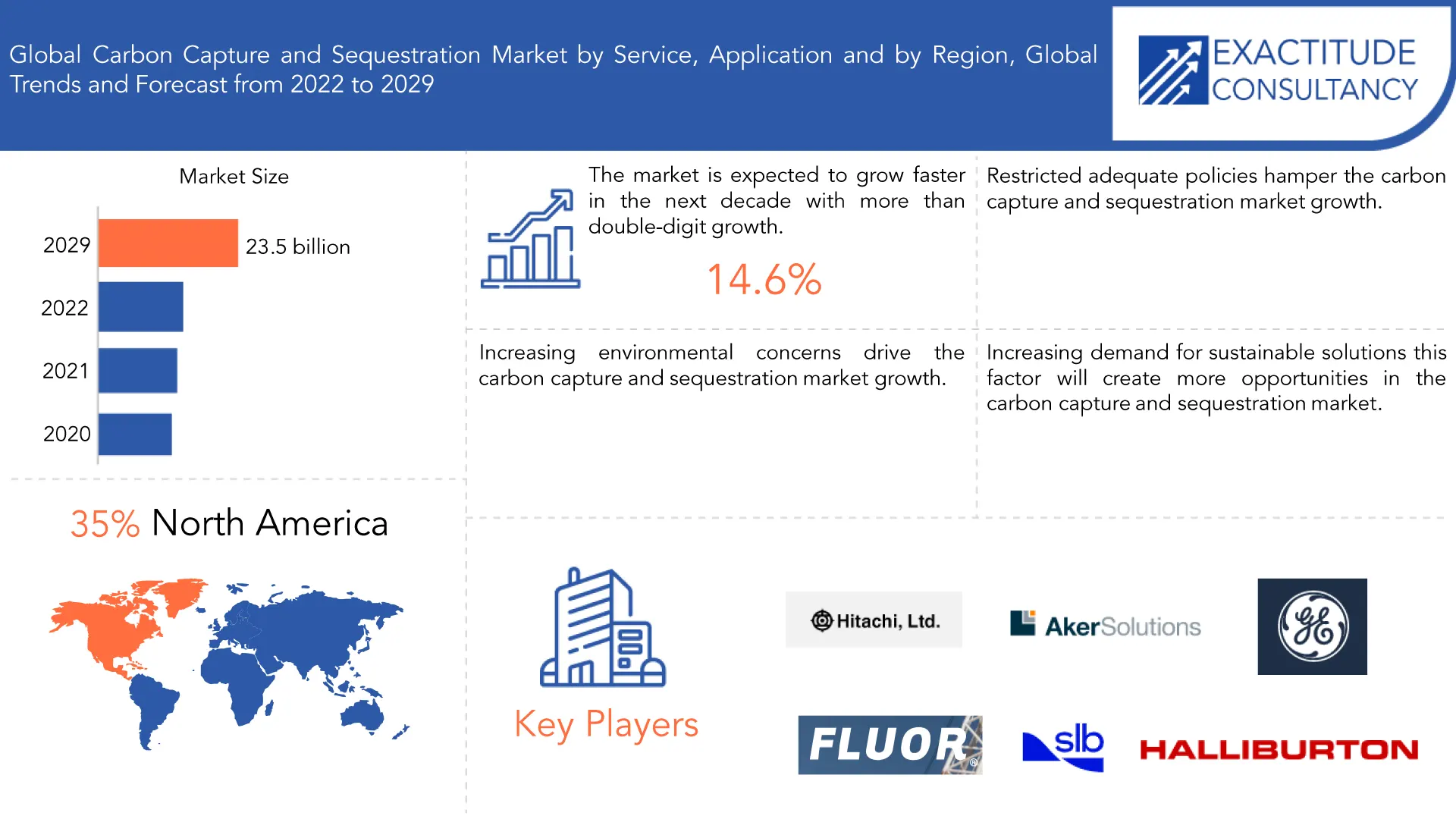
글로벌 탄소 포집 및 저장 시장은 2020년부터 2029년까지 14.6%의 CAGR로 성장할 것으로 예상됩니다. 2020년 71억 달러에서 2029년까지 235억 달러를 넘어설 것으로 예상됩니다.
탄소 포집 및 저장(CCS)은 기후 변화에 기여하지 않는 방식으로 포집 및 저장하여 대기 중으로 방출되는 이산화탄소(CO2)의 양을 줄이는 것을 목표로 하는 프로세스입니다. CCS는 세 가지 주요 단계로 구성됩니다. CO2 배출을 포집하고, 포집된 CO2를 저장 장소로 운반하고, 안전하고 보안된 방식으로 저장합니다.
[캡션 id="attachment_28422" 정렬="정렬센터" 너비="1920"]
CO2 배출물을 포집하는 방법은 연소 후 포집, 연소 전 포집, 산소 연료 연소 등 여러 가지가 있습니다. 연소 후 포집은 석탄 이나 천연 가스와 같은 화석 연료의 연소 중에 방출되는 CO2를 포집하는 것을 포함합니다. 연소 전 포집은 화석 연료를 에너지로 연소시킬 수 있는 가스로 전환하는 과정에서 생성되는 CO2를 포집하는 것을 포함합니다. 산소 연료 연소는 산소와 재활용된 CO2의 혼합물에서 화석 연료를 연소시키는 것을 포함하며, 이를 통해 CO2를 더 쉽게 포집할 수 있습니다. CO2를 포집한 후 일반적으로 고갈된 석유 또는 가스 저장소, 염분층 또는 석탄층과 같은 지질 형성물인 저장 장소로 운반합니다. 그런 다음 CO2를 형성물에 주입하여 대기로 다시 빠져나가지 못하도록 저장합니다. 이는 CO2를 암석의 기공에 가두거나 형성물 유체에 용해시키는 것과 같은 여러 가지 메커니즘을 통해 달성할 수 있습니다.
CCS는 발전소 와 기타 산업 시설 에서 발생하는 CO2 배출량을 크게 줄여 기후 변화를 완화하는 데 도움이 될 수 있는 잠재력이 있습니다. 그러나 높은 비용, 기술적 어려움, 저장된 CO2의 장기적 안전 및 보안에 대한 우려를 포함한 여러 가지 과제에도 직면해 있습니다.
The Carbon Capture and Sequestration (CCS) market is increasing due to a combination of factors, including growing global concern about climate change and the need to reduce greenhouse gas emissions, as well as government policies and incentives that encourage investment in CCS technologies. Many countries have set ambitious targets to reduce their greenhouse gas emissions, and CCS is seen as a key technology to help meet these targets. In addition, CCS can be used to reduce emissions from a variety of industrial processes, such as cement production and steel manufacturing, which are difficult to decarbonize using other methods. Governments around the world have introduced policies and incentives to support the development and deployment of CCS technologies.
Another factor driving the growth of the CCS market is the increasing availability of funding and investment from both public and private sources. This includes funding from governments, development banks, and private investors, as well as partnerships between companies and research institutions. Advancements in CCS technology have also contributed to the growth of the market.
| ATTRIBUTE | DETAILS |
| Study period | 2020-2029 |
| Base year | 2021 |
| Estimated year | 2022 |
| Forecasted year | 2022-2029 |
| Historical period | 2018-2020 |
| Unit | Value (USD Billion) |
| Segmentation | By Service, By Application, By Region |
| By Service |
|
| By Application |
|
| By Region |
|
Frequently Asked Questions
What is the worth of the global Carbon Capture and Sequestration market?
The global carbon capture and sequestration market is expected to grow at 14.6 % CAGR from 2020 to 2029. It is expected to reach above USD 23.5 Billion by 2029 from USD 7.1 Billion in 2020.
What is the size of North America in the Carbon Capture and Sequestration industry?
North America accounted for the largest market in the Carbon Capture and Sequestration market. North America held more than 35 % of the Carbon Capture and Sequestration market revenue share in 2020.
What is the prime factor to drive the global carbon capture and sequestration market ahead?
Increasing environmental concerns and growing demand for co2-EOR techniques drives the carbon capture and sequestration market growth.
What are the opportunities in the carbon capture and sequestration market?
CCS presents a significant opportunity to reduce greenhouse gas emissions from various sectors, including power, cement, steel, and oil and gas. With many countries and companies setting ambitious climate targets, CCS can help accelerate the transition to a low-carbon economy. CCS can also provide economic benefits, such as job creation and economic growth. CCS projects require a skilled workforce to design, build, and operate the facilities, creating employment opportunities in local communities. In addition, CCS can stimulate economic growth by supporting the development of new industries, such as carbon capture technology and storage services.
Carbon Capture and Sequestration Market Segment Analysis
The global Carbon Capture and Sequestration market is segmented based on service, application and region. By service, the market is bifurcated into capture, transportation, and storage. By application, the market is bifurcated into EOR process, industrial, agriculture, and others.
By service transportation segment dominating in the carbon capture and sequestration market. Transportation of CO2 can be done via pipeline, ship, or truck. Pipelines are the most commonly used method of transporting CO2, as they are efficient and cost-effective for transporting large volumes of CO2 over long distances. Ships and trucks are typically used for shorter distances or when there is no pipeline infrastructure available. The transportation segment of the CCS market is dominated by pipeline companies that specialize in the transport of CO2. These companies have significant expertise and experience in the design, construction, and operation of CO2 pipelines, and they have established networks of pipelines that can transport CO2 to storage sites In addition to pipeline companies, there are also companies that provide services related to CO2 transport, such as storage and handling, as well as engineering and construction firms that design and build CO2 transport infrastructure.
[caption id="attachment_28423" align="aligncenter" width="1920"]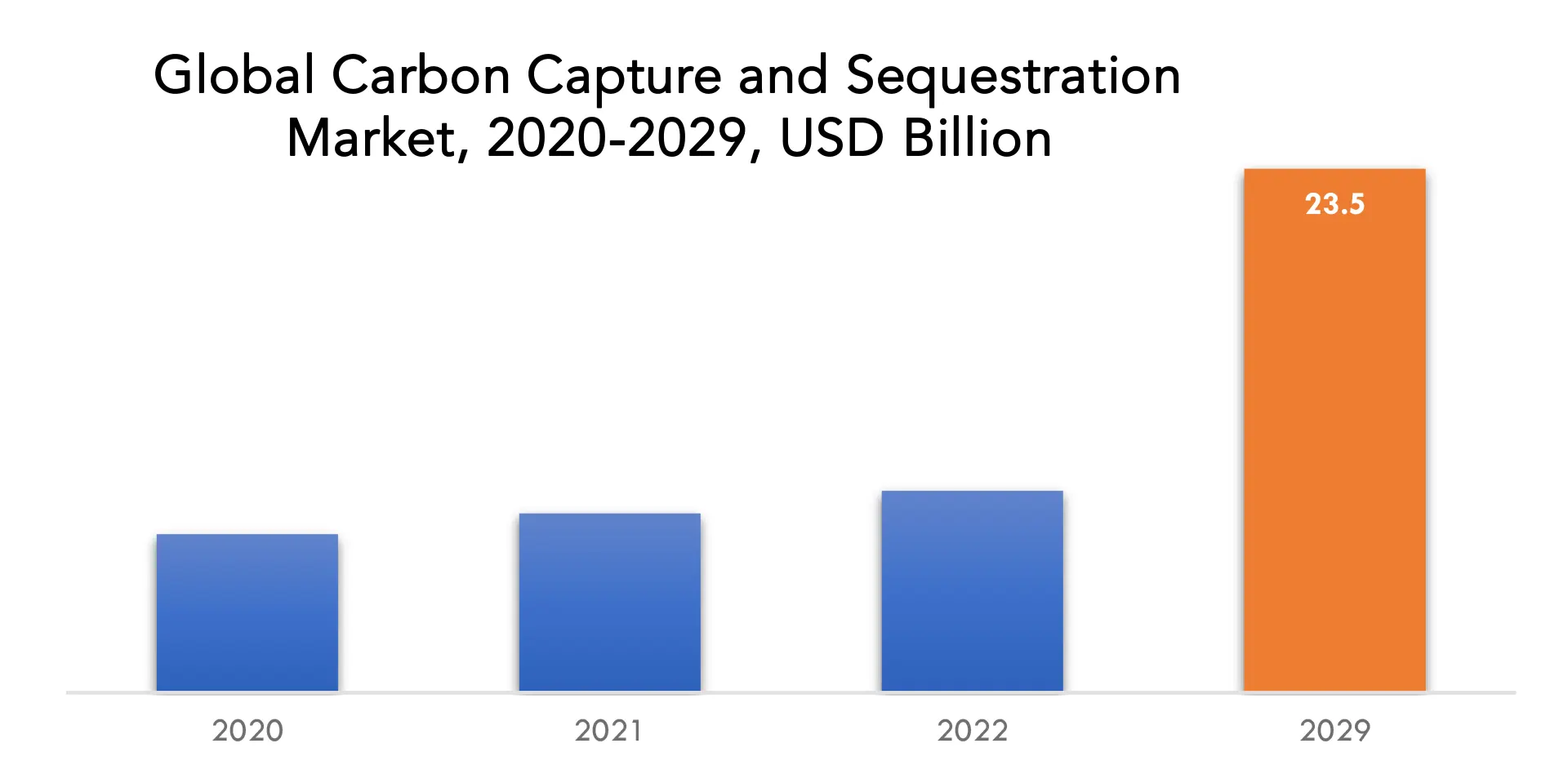
By application industrial segment dominating the carbon capture and sequestration market. Due to its being the largest source of carbon dioxide (CO2) emissions globally. The industrial sector includes a wide range of industries, such as power generation, cement production, iron and steel manufacturing, and chemical production, which all emit significant amounts of CO2. CCS technologies are particularly well-suited to reducing emissions from the industrial sector as many of these industries have few viable alternatives for reducing their emissions. For example, in power generation, CCS can be used to capture CO2 emissions from coal-fired power plants, which are still widely used in many countries, especially in developing economies. In addition to power generation, CCS can also be used to reduce emissions from other industrial processes, such as cement production and steel manufacturing, which are particularly difficult to decarbonize using other methods.
Carbon Capture and Sequestration Market Key Players
The Carbon Capture and Sequestration market key players include Aker Solutions, Fluor Corporation, Hitachi Ltd., Linde AG, Mitsubishi Heavy Industries, ExxonMobil Corporation, General Electric, Halliburton, Honeywell International Inc., Schlumberger Limited, Shell Global, Siemens AG.
Recent Developments: In Alberta, Canada, Shell revealed its plans to build a sizable carbon capture and storage (CCS) complex. Over the course of ts existence, the plant is expected to capture 300 million tonnes of carbon dioxide from its chemical and refinery plant storage. Carbon Engineering and Storegga announced plans for the first significant direct air capture (DAC) facility in the United Kingdom, which is expected to have a 0.5–1 MTPA capacity.Who Should Buy? Or Key stakeholders
- Research Organizations
- Investors
- Transportation Industry
- Academic & Research Institutes
- Government Organization
- Regulatory Authorities
- Others
Carbon Capture and Sequestration Market Regional Analysis
The Carbon Capture and Sequestration market by region includes North America, Asia-Pacific (APAC), Europe, South America, and Middle East & Africa (MEA).
- North America: includes the US, Canada, Mexico
- Asia Pacific: includes China, Japan, South Korea, India, Australia, ASEAN, and the Rest of APAC
- Europe: includes the UK, Germany, France, Italy, Spain, Russia, the and Rest of Europe
- South America: includes Brazil, Argentina, and the Rest of South America
- Middle East & Africa: includes Turkey, UAE, Saudi Arabia, South Africa, and the Rest of MEA
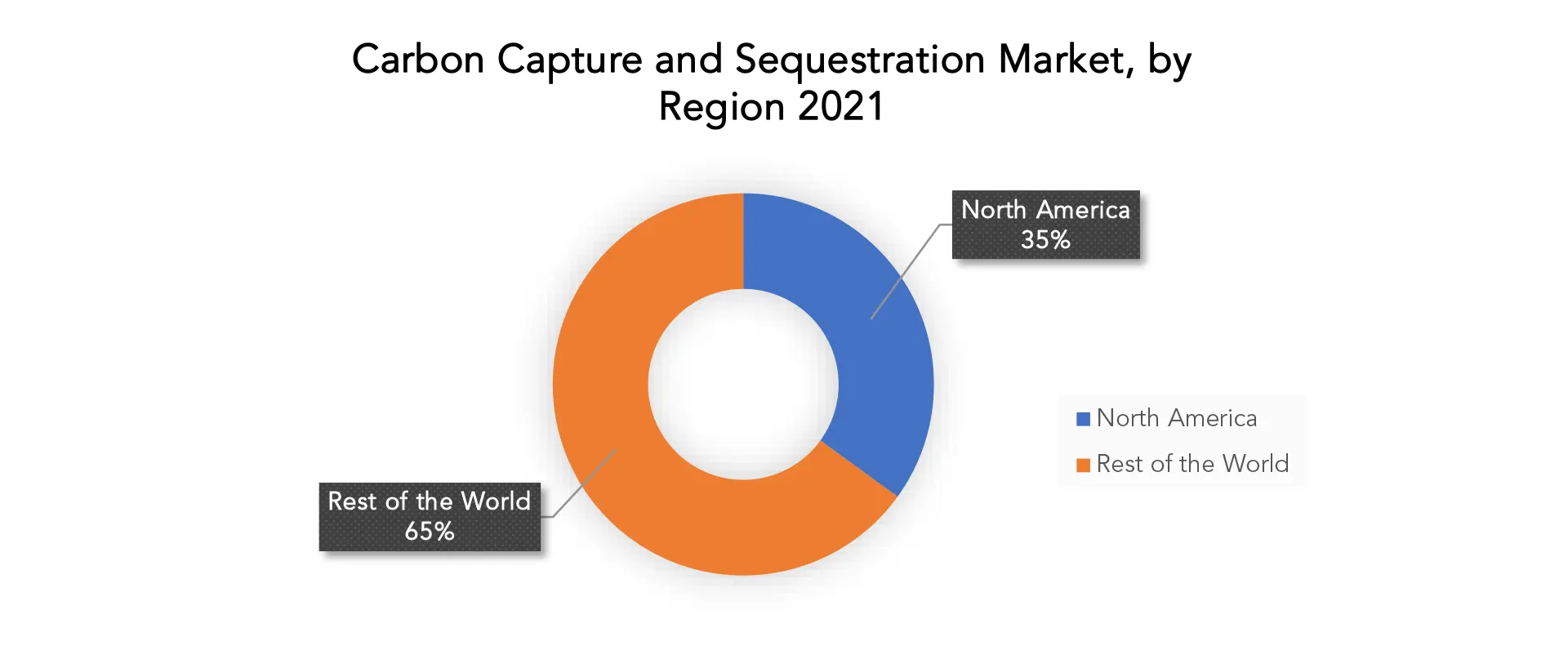
The United States has been a leader in CCS research and development, with numerous demonstration projects and research initiatives over the past decade. The U.S. government has also provided significant funding and support for CCS technologies, including tax credits, grants, and loan guarantees. The oil and gas industry in North America has been a major driver of CCS technology, particularly in Canada. In Canada, the oil sands industry is a significant source of greenhouse gas emissions, and companies have been exploring CCS as a way to reduce their carbon footprint. The Canadian government has also provided funding and incentives for CCS projects, particularly in the oil and gas industry.
The power sector in North America is a significant source of CO2 emissions, and many utilities in the region are exploring CCS as a way to reduce their carbon footprint. In particular, the use of coal-fired power plants in the United States has declined in recent years, but many existing plants still emit significant amounts of CO2. CCS can be used to capture CO2 emissions from these plants and store them underground. The regulatory environment in North America has been favorable to CCS, with supportive policies and regulations at both the federal and state/provincial levels. For example, in the United States, the Environmental Protection Agency's Clean Air Act allows for the regulation of CO2 emissions, which has encouraged utilities and industrial companies to explore CCS as a compliance option.
Key Market Segments: Carbon Capture And Sequestration Market
Carbon Capture And Sequestration Market By Service, 2020-2029, (USD Billion)- Capture
- Transportation
- Storage
- EOR Process
- Industrial
- Agriculture
- Others
- North America
- Asia Pacific
- Europe
- South America
- Middle East And Africa
Exactitude Consultancy Services Key Objectives:
- Increasing sales and market share
- Developing new technology
- Improving profitability
- Entering new markets
- Enhancing brand reputation
Key Question Answered
- What is the current size of the carbon capture and sequestration market?
- What is the expected growth rate of the carbon capture and sequestration market over the next 5 years?
- Who are the major players in the carbon capture and sequestration market and what is their market share?
- What are the end-user industries driving demand for the market and what is their outlook?
- What are the opportunities for growth in emerging markets such as Asia-pacific, the middle east, and Africa?
- How is the economic environment affecting the carbon capture and sequestration market, including factors such as interest rates, inflation, and exchange rates?
- What is the expected impact of government policies and regulations on the carbon capture and sequestration market?
- What is the current and forecasted size and growth rate of the global carbon capture and sequestration market?
- What are the key drivers of growth in the carbon capture and sequestration market?
- Who are the major players in the market and what is their market share?
- What are the distribution channels and supply chain dynamics in the carbon capture and sequestration market?
- What are the technological advancements and innovations in the carbon capture and sequestration market and their impact on product development and growth?
- What are the regulatory considerations and their impact on the market?
- What are the challenges faced by players in the carbon capture and sequestration market and how are they addressing these challenges?
- What are the opportunities for growth and expansion in the carbon capture and sequestration market?
- What are the service offerings specifications of leading players in the market?
- What is the pricing trend of carbon capture and sequestrations in the market?
- INTRODUCTION
- MARKET DEFINITION
- MARKET SEGMENTATION
- RESEARCH TIMELINES
- ASSUMPTIONS AND LIMITATIONS
- RESEARCH METHODOLOGY
- DATA MINING
- SECONDARY RESEARCH
- PRIMARY RESEARCH
- SUBJECT-MATTER EXPERTS’ ADVICE
- QUALITY CHECKS
- FINAL REVIEW
- DATA TRIANGULATION
- BOTTOM-UP APPROACH
- TOP-DOWN APPROACH
- RESEARCH FLOW
- DATA SOURCES
- DATA MINING
- EXECUTIVE SUMMARY
- MARKET OVERVIEW
- GLOBAL CARBON CAPTURE AND SEQUESTRATION MARKET OUTLOOK
- MARKET DRIVERS
- MARKET RESTRAINTS
- MARKET OPPORTUNITIES
- IMPACT OF COVID-19 ON THE CARBON CAPTURE AND SEQUESTRATION MARKET
- PORTER’S FIVE FORCES MODEL
- THREAT FROM NEW ENTRANTS
- THREAT FROM SUBSTITUTES
- BARGAINING POWER OF SUPPLIERS
- BARGAINING POWER OF CUSTOMERS
- DEGREE OF COMPETITION
- INDUSTRY VALUE CHAIN ANALYSIS
- GLOBAL CARBON CAPTURE AND SEQUESTRATION MARKET OUTLOOK
- GLOBAL CARBON CAPTURE AND SEQUESTRATION MARKET BY SERVICE, 2020-2029, (USD BILLION)
- CAPTURE
- TRANSPORTATION
- STORAGE
- GLOBAL CARBON CAPTURE AND SEQUESTRATION MARKET BY APPLICATION, 2020-2029, (USD BILLION)
- EOR PROCESS
- INDUSTRIAL
- AGRICULTURE
- OTHERS
- GLOBAL CARBON CAPTURE AND SEQUESTRATION MARKET BY REGION, 2020-2029, (USD BILLION)
- NORTH AMERICA
- US
- CANADA
- MEXICO
- SOUTH AMERICA
- BRAZIL
- ARGENTINA
- COLOMBIA
- REST OF SOUTH AMERICA
- EUROPE
- GERMANY
- UK
- FRANCE
- ITALY
- SPAIN
- RUSSIA
- REST OF EUROPE
- ASIA PACIFIC
- INDIA
- CHINA
- JAPAN
- SOUTH KOREA
- AUSTRALIA
- SOUTH-EAST ASIA
- REST OF ASIA PACIFIC
- MIDDLE EAST AND AFRICA
- UAE
- SAUDI ARABIA
- SOUTH AFRICA
- REST OF MIDDLE EAST AND AFRICA
- NORTH AMERICA
- COMPANY PROFILES* (BUSINESS OVERVIEW, COMPANY SNAPSHOT, PRODUCTS OFFERED, RECENT DEVELOPMENTS)
- AKER SOLUTIONS
- FLUOR CORPORATION
- HITACHI LTD
- LINDE AG
- MITSUBISHI HEAVY INDUSTRIES
- EXXONMOBIL CORPORATION
- GENERAL ELECTRIC
- HALLIBURTON
- HONEYWELL INTERNATIONAL INC
- SCHLUMBERGER LIMITED *THE COMPANY LIST IS INDICATIVE
LIST OF TABLES
TABLE 1 GLOBAL CARBON CAPTURE SEQUESTRATION MARKET BY APPLICATION (USD BILLION) 2020-2029
TABLE 2 GLOBAL CARBON CAPTURE SEQUESTRATION MARKET BY SERVICE (USD BILLION) 2020-2029
TABLE 3 GLOBAL CARBON CAPTURE SEQUESTRATION MARKET BY REGION (USD BILLION) 2020-2029
TABLE 4 NORTH AMERICA CARBON CAPTURE SEQUESTRATION MARKET BY COUNTRY (USD BILLION) 2020-2029
TABLE 5 NORTH AMERICA CARBON CAPTURE SEQUESTRATION MARKET BY APPLICATION (USD BILLION) 2020-2029
TABLE 6 NORTH AMERICA CARBON CAPTURE SEQUESTRATION MARKET BY SERVICE (USD BILLION) 2020-2029
TABLE 7 US CARBON CAPTURE SEQUESTRATION MARKET BY APPLICATION (USD BILLION) 2020-2029
TABLE 8 US CARBON CAPTURE SEQUESTRATION MARKET BY SERVICE (USD BILLION) 2020-2029
TABLE 9 CANADA CARBON CAPTURE SEQUESTRATION MARKET BY APPLICATION (USD BILLION) 2020-2029
TABLE 10 CANADA CARBON CAPTURE SEQUESTRATION MARKET BY SERVICE (USD BILLION) 2020-2029
TABLE 11 MEXICO CARBON CAPTURE SEQUESTRATION MARKET BY APPLICATION (USD BILLION) 2020-2029
TABLE 12 MEXICO CARBON CAPTURE SEQUESTRATION MARKET BY SERVICE (USD BILLION) 2020-2029
TABLE 13 SOUTH AMERICA CARBON CAPTURE SEQUESTRATION MARKET BY COUNTRY (USD BILLION) 2020-2029
TABLE 14 SOUTH AMERICA CARBON CAPTURE SEQUESTRATION MARKET BY APPLICATION (USD BILLION) 2020-2029
TABLE 15 SOUTH AMERICA CARBON CAPTURE SEQUESTRATION MARKET BY SERVICE (USD BILLION) 2020-2029
TABLE 16 BRAZIL CARBON CAPTURE SEQUESTRATION MARKET BY APPLICATION (USD BILLION) 2020-2029
TABLE 17 BRAZIL CARBON CAPTURE SEQUESTRATION MARKET BY SERVICE (USD BILLION) 2020-2029
TABLE 18 ARGENTINA CARBON CAPTURE SEQUESTRATION MARKET BY APPLICATION (USD BILLION) 2020-2029
TABLE 19 ARGENTINA CARBON CAPTURE SEQUESTRATION MARKET BY SERVICE (USD BILLION) 2020-2029
TABLE 20 COLOMBIA CARBON CAPTURE SEQUESTRATION MARKET BY APPLICATION (USD BILLION) 2020-2029
TABLE 21 COLOMBIA CARBON CAPTURE SEQUESTRATION MARKET BY SERVICE (USD BILLION) 2020-2029
TABLE 22 REST OF SOUTH AMERICA CARBON CAPTURE SEQUESTRATION MARKET BY APPLICATION (USD BILLION) 2020-2029
TABLE 23 REST OF SOUTH AMERICA CARBON CAPTURE SEQUESTRATION MARKET BY SERVICE (USD BILLION) 2020-2029
TABLE 24 ASIA-PACIFIC CARBON CAPTURE SEQUESTRATION MARKET BY COUNTRY (USD BILLION) 2020-2029
TABLE 25 ASIA-PACIFIC CARBON CAPTURE SEQUESTRATION MARKET BY APPLICATION (USD BILLION) 2020-2029
TABLE 26 ASIA-PACIFIC CARBON CAPTURE SEQUESTRATION MARKET BY SERVICE (USD BILLION) 2020-2029
TABLE 27 INDIA CARBON CAPTURE SEQUESTRATION MARKET BY APPLICATION (USD BILLION) 2020-2029
TABLE 28 INDIA CARBON CAPTURE SEQUESTRATION MARKET BY SERVICE (USD BILLION) 2020-2029
TABLE 29 CHINA CARBON CAPTURE SEQUESTRATION MARKET BY APPLICATION (USD BILLION) 2020-2029
TABLE 30 CHINA CARBON CAPTURE SEQUESTRATION MARKET BY SERVICE (USD BILLION) 2020-2029
TABLE 31 JAPAN CARBON CAPTURE SEQUESTRATION MARKET BY APPLICATION (USD BILLION) 2020-2029
TABLE 32 JAPAN CARBON CAPTURE SEQUESTRATION MARKET BY SERVICE (USD BILLION) 2020-2029
TABLE 33 SOUTH KOREA CARBON CAPTURE SEQUESTRATION MARKET BY APPLICATION (USD BILLION) 2020-2029
TABLE 34 SOUTH KOREA CARBON CAPTURE SEQUESTRATION MARKET BY SERVICE (USD BILLION) 2020-2029
TABLE 35 AUSTRALIA CARBON CAPTURE SEQUESTRATION MARKET BY APPLICATION (USD BILLION) 2020-2029
TABLE 36 AUSTRALIA CARBON CAPTURE SEQUESTRATION MARKET BY SERVICE (USD BILLION) 2020-2029
TABLE 37 SOUTH-EAST ASIA CARBON CAPTURE SEQUESTRATION MARKET BY APPLICATION (USD BILLION) 2020-2029
TABLE 38 SOUTH-EAST ASIA CARBON CAPTURE SEQUESTRATION MARKET BY SERVICE (USD BILLION) 2020-2029
TABLE 39 REST OF ASIA PACIFIC CARBON CAPTURE SEQUESTRATION MARKET BY APPLICATION (USD BILLION) 2020-2029
TABLE 40 REST OF ASIA PACIFIC CARBON CAPTURE SEQUESTRATION MARKET BY SERVICE (USD BILLION) 2020-2029
TABLE 41 EUROPE CARBON CAPTURE SEQUESTRATION MARKET BY COUNTRY (USD BILLION) 2020-2029
TABLE 42 EUROPE CARBON CAPTURE SEQUESTRATION MARKET BY APPLICATION (USD BILLION) 2020-2029
TABLE 43 EUROPE CARBON CAPTURE SEQUESTRATION MARKET BY SERVICE (USD BILLION) 2020-2029
TABLE 44 GERMANY CARBON CAPTURE SEQUESTRATION MARKET BY APPLICATION (USD BILLION) 2020-2029
TABLE 45 GERMANY CARBON CAPTURE SEQUESTRATION MARKET BY SERVICE (USD BILLION) 2020-2029
TABLE 46 UK CARBON CAPTURE SEQUESTRATION MARKET BY APPLICATION (USD BILLION) 2020-2029
TABLE 47 UK CARBON CAPTURE SEQUESTRATION MARKET BY SERVICE (USD BILLION) 2020-2029
TABLE 48 FRANCE CARBON CAPTURE SEQUESTRATION MARKET BY APPLICATION (USD BILLION) 2020-2029
TABLE 49 FRANCE CARBON CAPTURE SEQUESTRATION MARKET BY SERVICE (USD BILLION) 2020-2029
TABLE 50 ITALY CARBON CAPTURE SEQUESTRATION MARKET BY APPLICATION (USD BILLION) 2020-2029
TABLE 51 ITALY CARBON CAPTURE SEQUESTRATION MARKET BY SERVICE (USD BILLION) 2020-2029
TABLE 52 SPAIN CARBON CAPTURE SEQUESTRATION MARKET BY APPLICATION (USD BILLION) 2020-2029
TABLE 53 SPAIN CARBON CAPTURE SEQUESTRATION MARKET BY SERVICE (USD BILLION) 2020-2029
TABLE 54 RUSSIA CARBON CAPTURE SEQUESTRATION MARKET BY APPLICATION (USD BILLION) 2020-2029
TABLE 55 RUSSIA CARBON CAPTURE SEQUESTRATION MARKET BY SERVICE (USD BILLION) 2020-2029
TABLE 56 REST OF EUROPE CARBON CAPTURE SEQUESTRATION MARKET BY APPLICATION (USD BILLION) 2020-2029
TABLE 57 REST OF EUROPE CARBON CAPTURE SEQUESTRATION MARKET BY SERVICE (USD BILLION) 2020-2029
TABLE 58 MIDDLE EAST AND AFRICA CARBON CAPTURE SEQUESTRATION MARKET BY COUNTRY (USD BILLION) 2020-2029
TABLE 59 MIDDLE EAST AND AFRICA CARBON CAPTURE SEQUESTRATION MARKET BY APPLICATION (USD BILLION) 2020-2029
TABLE 60 MIDDLE EAST AND AFRICA CARBON CAPTURE SEQUESTRATION MARKET BY SERVICE (USD BILLION) 2020-2029
TABLE 61 UAE CARBON CAPTURE SEQUESTRATION MARKET BY APPLICATION (USD BILLION) 2020-2029
TABLE 62 UAE CARBON CAPTURE SEQUESTRATION MARKET BY SERVICE (USD BILLION) 2020-2029
TABLE 63 SAUDI ARABIA CARBON CAPTURE SEQUESTRATION MARKET BY APPLICATION (USD BILLION) 2020-2029
TABLE 64 SAUDI ARABIA CARBON CAPTURE SEQUESTRATION MARKET BY SERVICE (USD BILLION) 2020-2029
TABLE 65 SOUTH AFRICA CARBON CAPTURE SEQUESTRATION MARKET BY APPLICATION (USD BILLION) 2020-2029
TABLE 66 SOUTH AFRICA CARBON CAPTURE SEQUESTRATION MARKET BY SERVICE (USD BILLION) 2020-2029
TABLE 67 REST OF MIDDLE EAST AND AFRICA CARBON CAPTURE SEQUESTRATION MARKET BY APPLICATION (USD BILLION) 2020-2029
TABLE 68 REST OF MIDDLE EAST AND AFRICA CARBON CAPTURE SEQUESTRATION MARKET BY SERVICE (USD BILLION) 2020-2029
LIST OF FIGURES
FIGURE 1 MARKET DYNAMICS
FIGURE 2 MARKET SEGMENTATION
FIGURE 3 REPORT TIMELINES: YEARS CONSIDERED
FIGURE 4 DATA TRIANGULATION
FIGURE 5 BOTTOM-UP APPROACH
FIGURE 6 TOP-DOWN APPROACH
FIGURE 7 RESEARCH FLOW
FIGURE 8 GLOBAL CARBON CAPTURE AND SEQUESTRATION MARKET BY SERVICE, USD BILLION, 2020-2029
FIGURE 9 GLOBAL CARBON CAPTURE AND SEQUESTRATION MARKET BY APPLICATION, USD BILLION, 2020-2029
FIGURE 10 GLOBAL CARBON CAPTURE AND SEQUESTRATION MARKET BY REGION, USD BILLION, 2020-2029
FIGURE 11 PORTER’S FIVE FORCES MODEL
FIGURE 12 GLOBAL CARBON CAPTURE AND SEQUESTRATION MARKET BY SERVICE, USD BILLION, 2020-2029
FIGURE 13 GLOBAL CARBON CAPTURE AND SEQUESTRATION MARKET BY APPLICATION, USD BILLION, 2020-2029
FIGURE 14 NORTH AMERICA CARBON CAPTURE AND SEQUESTRATION MARKET SNAPSHOT
FIGURE 15 EUROPE CARBON CAPTURE AND SEQUESTRATION MARKET SNAPSHOT
FIGURE 16 SOUTH AMERICA CARBON CAPTURE AND SEQUESTRATION MARKET SNAPSHOT
FIGURE 17 ASIA PACIFIC CARBON CAPTURE AND SEQUESTRATION MARKET SNAPSHOT
FIGURE 18 MIDDLE EAST ASIA AND AFRICA CARBON CAPTURE AND SEQUESTRATION MARKET SNAPSHOT
FIGURE 19 MARKET SHARE ANALYSIS
FIGURE 20 GENERAL ELECTRIC: COMPANY SNAPSHOT
FIGURE 21 HALLIBURTON: COMPANY SNAPSHOT
FIGURE 22 HONEYWELL INTERNATIONAL INC: COMPANY SNAPSHOT
FIGURE 21 SCHLUMBERGER LIMITED: COMPANY SNAPSHOT
FIGURE 23 AKER SOLUTIONS: COMPANY SNAPSHOT
FIGURE 23 FLUOR CORPORATION: COMPANY SNAPSHOT
FIGURE 25 HITACHI LTD., COMPANY SNAPSHOT
FIGURE 26 LINDE AG: COMPANY SNAPSHOT
FIGURE 27 MITSUBISHI HEAVY INDUSTRIES: COMPANY SNAPSHOT
FIGURE 28 EXXONMOBIL CORPORATION: COMPANY SNAPSHOT
DOWNLOAD FREE SAMPLE REPORT
License Type
SPEAK WITH OUR ANALYST
Want to know more about the report or any specific requirement?
WANT TO CUSTOMIZE THE REPORT?
Our Clients Speak
We asked them to research ‘ Equipment market’ all over the world, and their whole arrangement was helpful to us. thehealthanalytics.com insightful analysis and reports contributed to our current analysis and in creating a future strategy. Besides, the te
Yosuke Mitsui
Senior Associate Construction Equipment Sales & Marketing
We asked them to research ‘Equipment market’ all over the world, and their whole arrangement was helpful to us. thehealthanalytics.com insightful analysis and reports contributed to our current analysis and in creating a future strategy. Besides, the te