

Base Year Value ()
x.x %
x.x %
CAGR ()
x.x %
x.x %
Forecast Year Value ()
x.x %
x.x %
Historical Data Period
Largest Region
Forecast Period
Bioadhesives Market by Type (Plant based, Animal based), by Application (Paper and packaging, Construction, Woodworking, Personal Care, Medical) and Region, Global trends and forecast from 2023 to 2029
Instant access to hundreds of data points and trends
- Market estimates from 2014-2029
- Competitive analysis, industry segmentation, financial benchmarks
- Incorporates SWOT, Porter's Five Forces and risk management frameworks
- PDF report or online database with Word, Excel and PowerPoint export options
- 100% money back guarantee
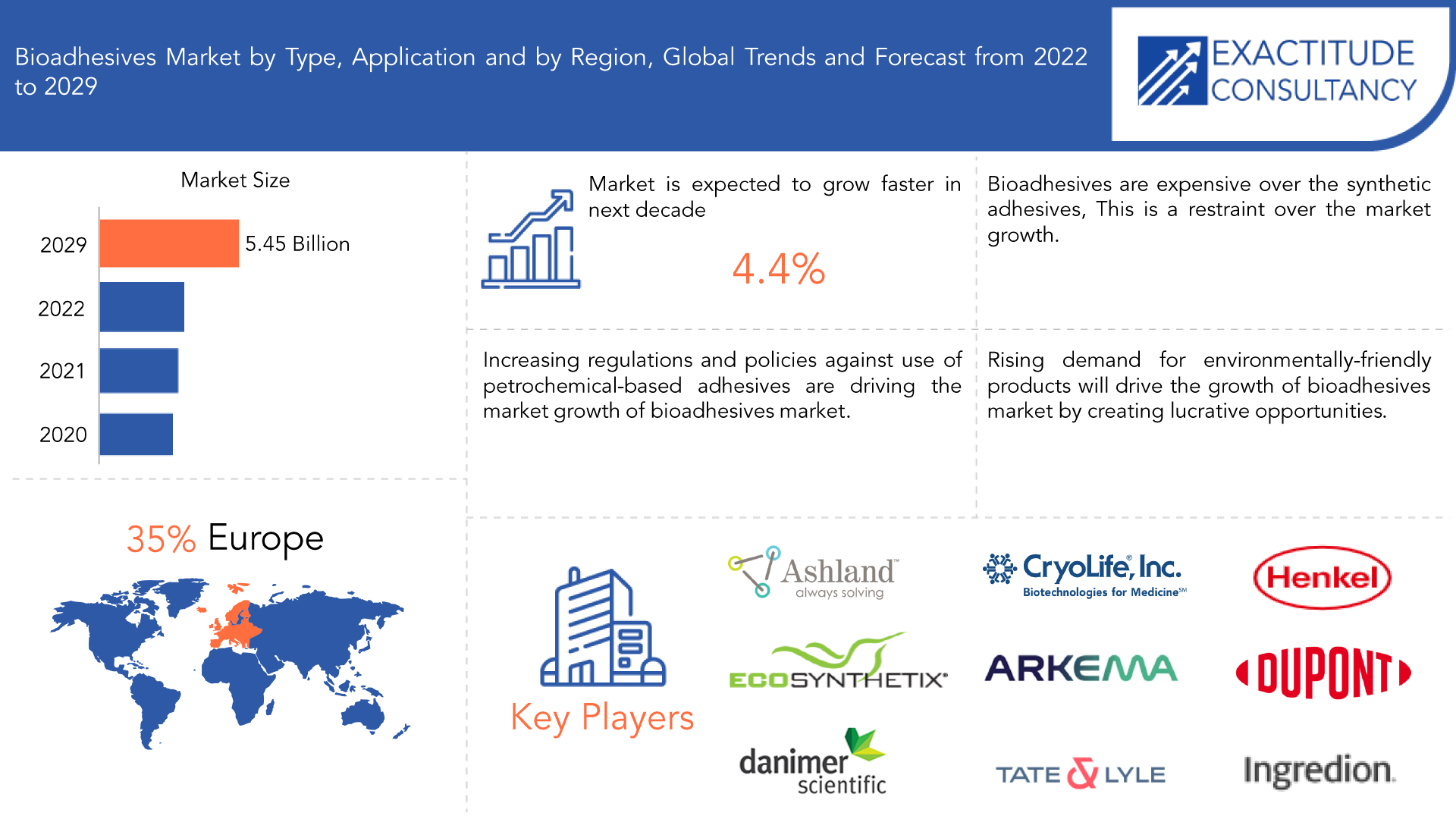
The Bioadhesives market is expected to grow at 4.4 % CAGR from 2023 to 2029. It is expected to reach above USD 5.45 billion by 2029 from USD 3.7 billion in 2020.
Bioadhesives Market Overview
Adhesives that are made from biological renewable sources such as plants and animals are bioadhesives. Sometimes, the term is used more broadly to refer to a synthetic glue made from biological monomers like sugars or to a synthetic substance intended to stick to living tissue. Biological intermediates such as starch, cellulose and gelatin are used to produce them.
They have a wide application in flexible packaging, printed sheet lamination and cigarettes and filters. As the demand for environment friendly products is rising, manufacturers are producing bio-based products. They are used in number of industries from medical to packaging. As there is an increasing demand from frozen food packaging sector, bioadhesive industry is witnessing significant adoption. Because they are frequently biocompatible, or helpful for biomedical applications involving skin or other bodily tissue, bio adhesives are of economic interest. Some can adhere to low surface energy, non-polar materials like plastic, while others can function in damp settings and under water. The synthetic adhesives market has recently been affected by challenges with hazardous components, emissions of volatile organic compounds, and the difficulty of recycling or remediating adhesives made from petrochemical feedstocks. The business interest in biological alternatives to synthetic adhesives may be stimulated because of the rising oil prices.
At present, for various industrial applications synthetics adhesives are most commonly used. As there are rising environmental concerns and regulatory policies, countries have been adopting ecofriendly products. This has led to increased production of bio-based products to ensure safety and avoid health issues and hazards caused by VOC (Volatile Organic compounds) emissions from synthetic or petro- based adhesives.
The fluctuating prices of crude oil is one of the drivers of the bioadhesives market. Synthetic adhesives are produced from petroleum feedstocks and constant variations and rise in the prices of oil has led to the interest in biological adhesives. They are derived from natural sources and hence they are preferred in various end user industries such as medical applications. In the medical industry, bioadhesives are used for surgeries, wound care dressing, transdermal drug delivery and skin-bonded monitoring devices. Surgical bioadhesives are used as substitutes for surgical sutures which will augment the market growth.
| ATTRIBUTE | DETAILS |
| Study period | 2020-2029 |
| Base year | 2021 |
| Estimated year | 2022 |
| Forecasted year | 2022-2029 |
| Historical period | 2018-2020 |
| Unit | Value (USD Billion, KILOTONS) |
| Segmentation | By Type, By Application, By Region |
| By Type
|
|
| By Application
|
|
| By Region
|
|
The frozen food packaging sector has increased the demand for bioadhesives which will positively impact the market growth in the forecast period. For starch, soy, and corn-based adhesives, the availability of plentiful raw materials is anticipated to continue to be a major growth driver.
Bioadhesives are a replacement for the adhesives based on petroleum feedstock. Hence as they are expensive than the synthetically- derived adhesives , the cost is restraining the market growth. The application of bio and green adhesives in diverse applications has been constrained by the bioadhesives' limited capabilities. The performance capabilities of bioadhesives continue to be questioned, which has limited the market's growth.
The companies producing bioadhesives must focus on providing bio-based products at a cheaper rate. This challenge is taken as an opportunity by many market players. Participants in the industry are expected to face difficulties due to a shortage of skilled personnel needed for the development of enhanced products. However, market players are making significant investments in the creation of adhesives that are entirely made of renewable materials. Over the course of the projected period, this is expected to generate enormous potential for market participants.
Due to the rising awareness about environmentally friendly products, the growth of the bioadhesives market will be driven in the future. This creates lucrative opportunities for the market in the forecast period.
Covid-19 had an impact on every industry in most of the countries. The paper and packaging, woodworking, construction, personal care, and medical industries all frequently employ bioadhesive. Additionally, many industries were seeing a slowdown in their rate of growth as a result of the consequences of the nationwide lockdown. Due to the slowdown in several industries, particularly transportation and supply networks, the economy has slowed in several nations. . Due to the lockout, there has been a delay in the rise of the item's demand. In this COVID-19- pandemic, the imbalance between supply and demand, disruptions in the acquisition of raw materials, and price volatility restrained the growth of the chemical sector. The demand for Chinese goods has decreased due to the spread of the pandemic.
[caption id="attachment_14405" align="aligncenter" width="1920"]
Frequently Asked Questions
• What is the worth of Bioadhesives market?
The Bioadhesives market is expected to grow at 4.4 % CAGR from 2022 to 2029. It is expected to reach above USD 5.45 Billion by 2029 from USD 3.7 billion in 2020.
• What is the size of the North America Bioadhesives industry?
Europe held more than 34.5% of the Bioadhesives market revenue share in 2021 and will witness expansion in the forecast period.
• What are some of the market's driving forces?
Factors such as increasing regulations and policies against use of petrochemical-based adhesives are driving the market growth of bioadhesives.
• Which are the top companies to hold the market share in Bioadhesives market?
The Bioadhesives market key players include Ashland Global Holdings Inc., Cryolife Inc., Henkel AG & Company, Ecosynthetix Inc., Arkema S.A., Dupont De Nemours, Inc, Danimer Scientific LLC, Tate & Lyle, Ingredion, Paramelt BV.
• What is the leading application of Bioadhesives market?
Based on the application, market is segmented into paper and packaging, construction, woodworking, personal care, and medical. Among these the packaging and paper segment accounted for the largest share of the bioadhesives market in the year 2020. Bioadhesives find wide applications such as printed sheets lamination, cigarettes, etc. Construction industry was the second largest application. Bioadhesives are used for pipes, cladding panels, waste management systems and pavements.
• Which is the largest regional market for Bioadhesives market?
Europe region accounted for the largest market for the global bioadhesives market with a market share of 34.5%. As there is well-established technological cutting-edge infrastructure, it pushes the market need in the region. Also, the region is expected to continue its dominance over the forecast period because of the strict government regulations regarding synthetic adhesives.
Bioadhesives Market Segment Analysis
The Bioadhesives market is segmented based on type, application and Region, Global trends and forecast.Based on type the market is divided into two segments plant-based and animal-based. The plant-based segment is estimated to account for the larger bioadhesives market. As a replacement for the petro-based raw materials for the manufacturing of adhesives, biodegradable resources are used. As the demand for environmentally-friendly products is rising, this is driving the segment growth.
Based on the application, market is segmented into paper and packaging, construction, woodworking, personal care, and medical. Among these the packaging and paper segment accounted for the largest share of the bioadhesives market in the year 2020. Bioadhesives find wide applications such as printed sheets lamination, cigarettes, etc. Construction industry was the second largest application. Bioadhesives are used for pipes, cladding panels, waste management systems and pavements.
[caption id="attachment_14410" align="aligncenter" width="1920"]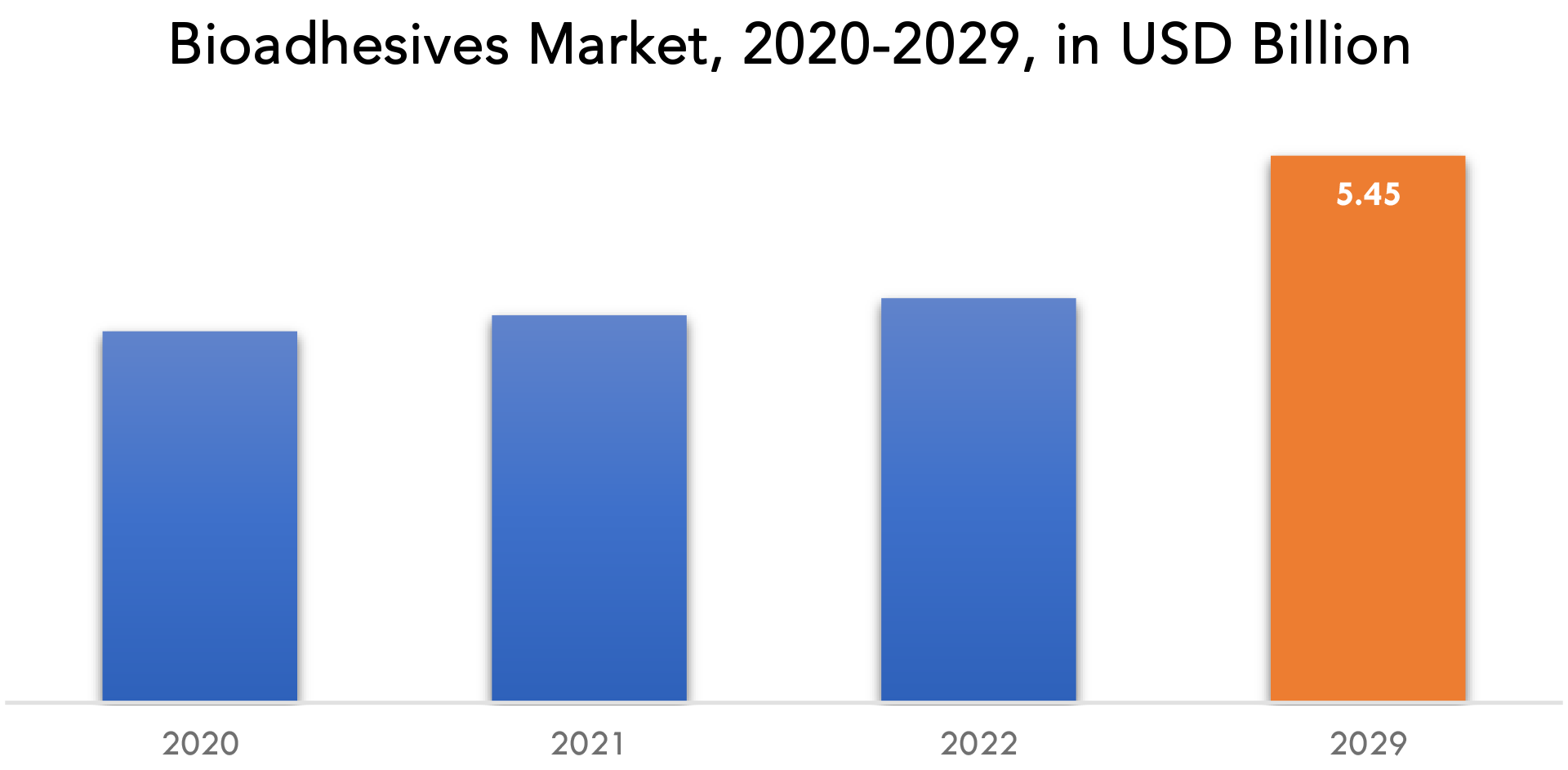
Bioadhesives Market Players
The Bioadhesives market key players include Ashland Global Holdings Inc., Cryolife Inc., Henkel AG & Company, Ecosynthetix Inc., Arkema S.A., Dupont De Nemours Inc., Danimer Scientific LLC, Tate & Lyle, Ingredion, Paramelt BV.
May 2, 2022 : Ashland introduced Vialose trehalose dihydrate, a high purity lyoprotectant and stabilizer for biologic medicines and other parenteral formulations at Excipient world in Kissimmee, Florida.
November 8, 2022 : Henkel maintains growth momentum with double-digit sales increase in the third quarter. Group reported organic sales of +11,3 % to new all-time high of around 6 billion Euros.
Who Should Buy? Or Key Stakeholders
- Bioadhesives Suppliers
- Raw Materials Manufacturers
- Research Organizations
- Investors
- Regulatory Authorities
- Others
Bioadhesives Market Regional Analysis
The Bioadhesives market by region includes North America, Asia-Pacific (APAC), Europe, South America, and Middle East & Africa (MEA).
- North America: includes the US, Canada, Mexico
- Asia Pacific: includes China, Japan, South Korea, India, Australia, ASEAN and Rest of APAC
- Europe: includes UK, Germany, France, Italy, Spain, Russia, and Rest of Europe
- South America: includes Brazil, Argentina and Rest of South America
- Middle East & Africa: includes Turkey, UAE, Saudi Arabia, South Africa, and Rest of MEA
Europe region accounted for the largest market for the global bioadhesives market with a market share of 34.5 %. As there is well-established technological cutting-edge infrastructure, it pushes the market need in the region. Also, the region is expected to continue its dominance over the forecast period because of the strict government regulations regarding synthetic adhesives. There are rapid technological advancements associated with bio-based material usage in the region. The European region has a rising demand from biomedical applications driving the market growth.
The second largest market by region for bioadhesives market was North America. As initiatives are taken by the environment supporters such as Environment Protection Agency (EPA) and the Commission for Environmental Cooperation (CEC), the use of bioadhesives is encouraged over synthetic adhesives.
Asia Pacific region is also expected to witness growth over the forecast period. The product demand is fueled by the growing construction and remodeling activities in the region. Some of the drivers of the market are massive population, rising healthcare awareness regarding diseases and an increase in per capita income.
[caption id="attachment_14411" align="aligncenter" width="1920"]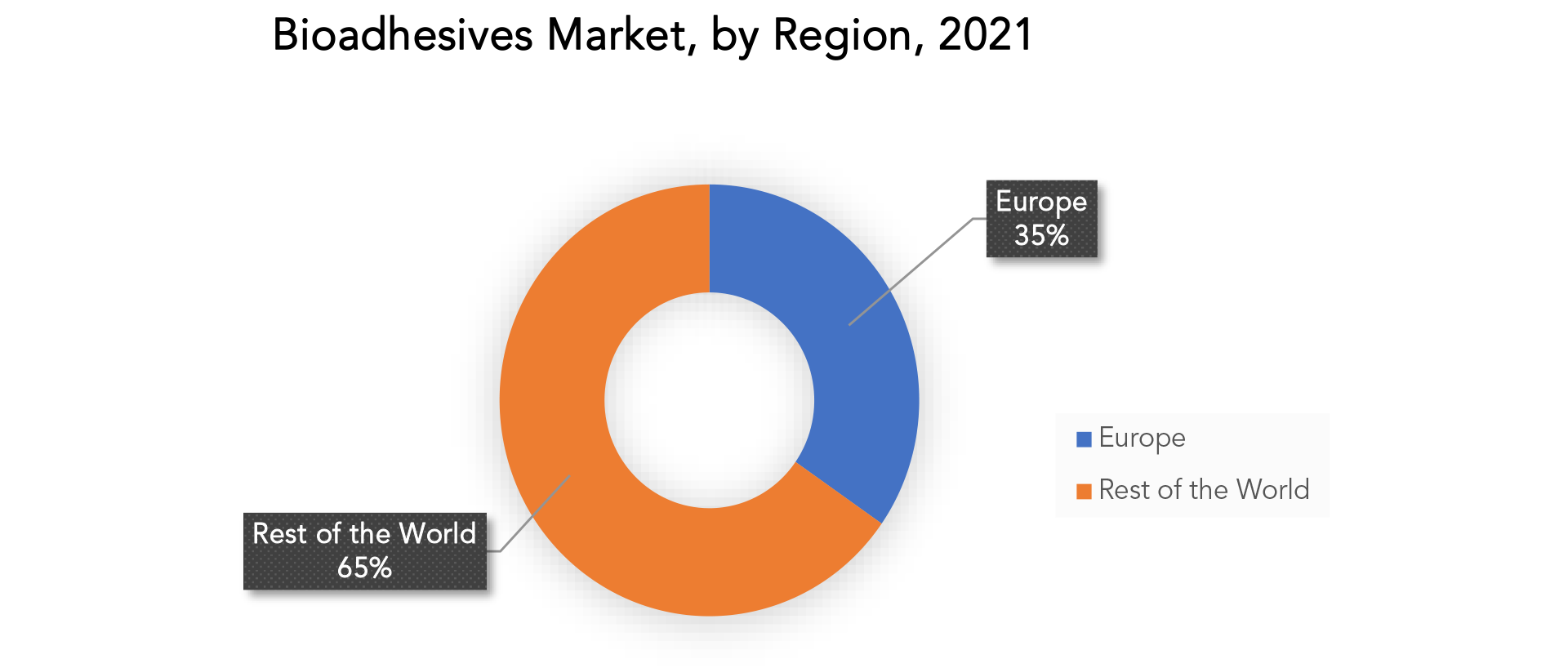
Key Market Segments: Bioadhesives Market
Bioadhesives Market By Type, 2020-2029, (USD Billion, Kilotons)- Plant Based
- Animal Based
- Paper And Packaging
- Construction
- Woodworking
- Personal Care
- Medical
- North America
- Asia Pacific
- Europe
- South America
- Middle East and Africa
Exactitude Consultancy Services Key Objectives:
- Increasing sales and market share
- Developing new technology
- Improving profitability
- Entering new markets
- Enhancing brand reputation
Key Questions Answered: -
- What is the expected growth rate of the bioadhesives market over the next 7 years?
- Who are the major players in the bioadhesives market and what is their market share?
- What are the end-user industries driving demand for market and what is their outlook?
- What are the opportunities for growth in emerging markets such as Asia-Pacific, Middle East, and Africa?
- How is the economic environment affecting the bioadhesives market, including factors such as interest rates, inflation, and exchange rates?
- What is the expected impact of government policies and regulations on the bioadhesives market?
- What is the current and forecasted size and growth rate of the global bioadhesives market?
- What are the key drivers of growth in the bioadhesives market?
- Who are the major players in the market and what is their market share?
- What are the distribution channels and supply chain dynamics in the bioadhesives market?
- What are the technological advancements and innovations in the bioadhesives market and their impact on product development and growth?
- What are the regulatory considerations and their impact on the market?
- What are the challenges faced by players in the bioadhesives market and how are they addressing these challenges?
- What are the opportunities for growth and expansion in the bioadhesives market?
- What are the product offerings and specifications of leading players in the market?
- What is the pricing trend of bioadhesives in the market and what is the impact of raw material prices on the price trend?
- Introduction
- Market Definition
- Market Segmentation
- Research Timelines
- Assumptions and Limitations
- Research Methodology
- Data Mining
- Secondary Research
- Primary Research
- Subject-Matter Experts’ Advice
- Quality Checks
- Final Review
- Data Triangulation
- Bottom-Up Approach
- Top-Down Approach
- Research Flow
- Data Sources
- Data Mining
- Executive Summary
- Market Overview
- Global Bioadhesives outlook
- Market Drivers
- Market Restraints
- Market Opportunities
- Impact of Covid-19 on Bioadhesives Market
- Porter’s five forces model
- Threat from new entrants
- Threat from substitutes
- Bargaining power of suppliers
- Bargaining power of customers
- Degree of competition
- Industry value chain Analysis
- Global Bioadhesives outlook
- GLOBAL BIOADHESIVES MARKET BY TYPE ,2020-2029 (USD Billion, Kilotons)
- Plant based
- Animal based
- GLOBAL BIOADHESIVES MARKET BY APPLICATION , 2020-2029 (USD Billion, Kilotons)
- Paper and packaging
- Construction
- Woodworking
- Personal Care
- Medical
- GLOBAL BIOADHESIVES MARKET BY REGION, 2020-2029 (USD Billion, Kilotons)
- North America
- US
- Canada
- Mexico
- South America
- Brazil
- Argentina
- Colombia
- Rest Of South America
- Europe
- Germany
- UK
- France
- Italy
- Spain
- Russia
- Rest Of Europe
- Asia Pacific
- India
- China
- Japan
- South Korea
- Australia
- South-East Asia
- Rest Of Asia Pacific
- Middle East and Africa
- UAE
- Saudi Arabia
- South Africa
- Rest Of Middle East and Africa
- North America
- Company Profiles*
(Business Overview, Company Snapshot, Products Offered, Recent Developments)
- Ashland Global Holdings Inc.
- Cryolife Inc.
- Henkel AG & Company
- Ecosynthetix Inc.
- Arkema S.A.
- Dupont De Nemours Inc
- Danimer Scientific LLC
- Tate & Lyle
- Ingredion
- Paramelt BV
*The Company List Is Indicative
LIST OF TABLES
TABLE 1 GLOBAL BIOADHESIVES MARKET BY TYPE (USD BILLION ), 2020-2029
TABLE 2 GLOBAL BIOADHESIVES MARKET BY TYPE (KILOTONS ), 2020-2029
TABLE 3 GLOBAL BIOADHESIVES MARKET BY APPLICATION (USD BILLION), 2020-2029
TABLE 4 GLOBAL BIOADHESIVES MARKET BY APPLICATION (KILOTONS), 2020-2029
TABLE 5 GLOBAL BIOADHESIVES MARKET BY REGION (USD BILLION), 2020-2029
TABLE 6 GLOBAL BIOADHESIVES MARKET BY REGION (KILOTONS), 2020-2029
TABLE 7 NORTH AMERICA BIOADHESIVES MARKET BY TYPE (USD BILLION), 2020-2029
TABLE 8 NORTH AMERICA BIOADHESIVES MARKET BY TYPE (KILOTONS), 2020-2029
TABLE 9 NORTH AMERICA BIOADHESIVES MARKET BY APPLICATION (USD BILLION), 2020-2029
TABLE 10 NORTH AMERICA BIOADHESIVES MARKET BY APPLICATION (KILOTONS), 2020-2029
TABLE 11 NORTH AMERICA BIOADHESIVES MARKET BY COUNTRY (USD BILLION), 2020-2029
TABLE 12 NORTH AMERICA BIOADHESIVES MARKET BY COUNTRY (KILOTONS), 2020-2029
TABLE 13 US BIOADHESIVES MARKET BY TYPE (USD BILLION), 2020-2029
TABLE 14 US BIOADHESIVES MARKET BY TYPE (KILOTONS), 2020-2029
TABLE 15 US BIOADHESIVES MARKET BY APPLICATION (USD BILLION), 2020-2029
TABLE 16 US BIOADHESIVES MARKET BY APPLICATION (KILOTONS), 2020-2029
TABLE 17 CANADA BIOADHESIVES MARKET BY TYPE (USD BILLION), 2020-2029
TABLE 18 CANADA BIOADHESIVES MARKET BY TYPE (KILOTONS), 2020-2029
TABLE 19 CANADA BIOADHESIVES MARKET BY APPLICATION (USD BILLION), 2020-2029
TABLE 20 CANADA BIOADHESIVES MARKET BY APPLICATION (KILOTONS), 2020-2029
TABLE 21 MEXICO BIOADHESIVES MARKET BY TYPE (USD BILLION), 2020-2029
TABLE 22 MEXICO BIOADHESIVES MARKET BY TYPE (KILOTONS), 2020-2029
TABLE 23 MEXICO BIOADHESIVES MARKET BY APPLICATION (USD BILLION), 2020-2029
TABLE 24 MEXICO BIOADHESIVES MARKET BY APPLICATION (KILOTONS), 2020-2029
TABLE 25 SOUTH AMERICA BIOADHESIVES MARKET BY TYPE (USD BILLION), 2020-2029
TABLE 26 SOUTH AMERICA BIOADHESIVES MARKET BY TYPE (KILOTONS), 2020-2029
TABLE 27 SOUTH AMERICA BIOADHESIVES MARKET BY APPLICATION (USD BILLION), 2020-2029
TABLE 28 SOUTH AMERICA BIOADHESIVES MARKET BY APPLICATION (KILOTONS), 2020-2029
TABLE 29 SOUTH AMERICA BIOADHESIVES MARKET BY COUNTRY (USD BILLION), 2020-2029
TABLE 30 SOUTH AMERICA BIOADHESIVES MARKET BY COUNTRY (KILOTONS), 2020-2029
TABLE 31 BRAZIL BIOADHESIVES MARKET BY TYPE (USD BILLION), 2020-2029
TABLE 32 BRAZIL BIOADHESIVES MARKET BY TYPE (KILOTONS), 2020-2029
TABLE 33 BRAZIL BIOADHESIVES MARKET BY APPLICATION (USD BILLION), 2020-2029
TABLE 34 BRAZIL BIOADHESIVES MARKET BY APPLICATION (KILOTONS), 2020-2029
TABLE 35 ARGENTINA BIOADHESIVES MARKET BY TYPE (USD BILLION), 2020-2029
TABLE 36 ARGENTINA BIOADHESIVES MARKET BY TYPE (KILOTONS), 2020-2029
TABLE 37 ARGENTINA BIOADHESIVES MARKET BY APPLICATION (USD BILLION), 2020-2029
TABLE 38 ARGENTINA BIOADHESIVES MARKET BY APPLICATION (KILOTONS), 2020-2029
TABLE 39 COLOMBIA BIOADHESIVES MARKET BY TYPE (USD BILLION), 2020-2029
TABLE 40 COLOMBIA BIOADHESIVES MARKET BY TYPE (KILOTONS), 2020-2029
TABLE 41 COLOMBIA BIOADHESIVES MARKET BY APPLICATION (USD BILLION), 2020-2029
TABLE 42 COLOMBIA BIOADHESIVES MARKET BY APPLICATION (KILOTONS), 2020-2029
TABLE 43 REST OF SOUTH AMERICA BIOADHESIVES MARKET BY TYPE (USD BILLION), 2020-2029
TABLE 44 REST OF SOUTH AMERICA BIOADHESIVES MARKET BY TYPE (KILOTONS), 2020-2029
TABLE 45 REST OF SOUTH AMERICA BIOADHESIVES MARKET BY APPLICATION (USD BILLION), 2020-2029
TABLE 46 REST OF SOUTH AMERICA BIOADHESIVES MARKET BY APPLICATION (KILOTONS), 2020-2029
TABLE 47 ASIA-PACIFIC BIOADHESIVES MARKET BY TYPE (USD BILLION), 2020-2029
TABLE 48 ASIA-PACIFIC BIOADHESIVES MARKET BY TYPE (KILOTONS), 2020-2029
TABLE 49 ASIA-PACIFIC BIOADHESIVES MARKET BY APPLICATION (USD BILLION), 2020-2029
TABLE 50 ASIA-PACIFIC BIOADHESIVES MARKET BY APPLICATION (KILOTONS), 2020-2029
TABLE 51 ASIA-PACIFIC BIOADHESIVES MARKET BY COUNTRY (USD BILLION), 2020-2029
TABLE 52 ASIA-PACIFIC BIOADHESIVES MARKET BY COUNTRY (KILOTONS), 2020-2029
TABLE 53 INDIA BIOADHESIVES MARKET BY TYPE (USD BILLION), 2020-2029
TABLE 54 INDIA BIOADHESIVES MARKET BY TYPE (KILOTONS), 2020-2029
TABLE 55 INDIA BIOADHESIVES MARKET BY APPLICATION (USD BILLION), 2020-2029
TABLE 56 INDIA BIOADHESIVES MARKET BY APPLICATION (KILOTONS), 2020-2029
TABLE 57 CHINA BIOADHESIVES MARKET BY TYPE (USD BILLION), 2020-2029
TABLE 58 CHINA BIOADHESIVES MARKET BY TYPE (KILOTONS), 2020-2029
TABLE 59 CHINA BIOADHESIVES MARKET BY APPLICATION (USD BILLION), 2020-2029
TABLE 60 CHINA BIOADHESIVES MARKET BY APPLICATION (KILOTONS), 2020-2029
TABLE 61 JAPAN BIOADHESIVES MARKET BY TYPE (USD BILLION), 2020-2029
TABLE 62 JAPAN BIOADHESIVES MARKET BY TYPE (KILOTONS), 2020-2029
TABLE 63 JAPAN BIOADHESIVES MARKET BY APPLICATION (USD BILLION), 2020-2029
TABLE 64 JAPAN BIOADHESIVES MARKET BY APPLICATION (KILOTONS), 2020-2029
TABLE 65 SOUTH KOREA BIOADHESIVES MARKET BY TYPE (USD BILLION), 2020-2029
TABLE 66 SOUTH KOREA BIOADHESIVES MARKET BY TYPE (KILOTONS), 2020-2029
TABLE 67 SOUTH KOREA BIOADHESIVES MARKET BY APPLICATION (USD BILLION), 2020-2029
TABLE 68 SOUTH KOREA BIOADHESIVES MARKET BY APPLICATION (KILOTONS), 2020-2029
TABLE 69 AUSTRALIA BIOADHESIVES MARKET BY TYPE (USD BILLION), 2020-2029
TABLE 70 AUSTRALIA BIOADHESIVES MARKET BY TYPE (KILOTONS), 2020-2029
TABLE 71 AUSTRALIA BIOADHESIVES MARKET BY APPLICATION (USD BILLION), 2020-2029
TABLE 72 AUSTRALIA BIOADHESIVES MARKET BY APPLICATION (KILOTONS), 2020-2029
TABLE 73 SOUTH EAST ASIA BIOADHESIVES MARKET BY TYPE (USD BILLION), 2020-2029
TABLE 74 SOUTH EAST ASIA BIOADHESIVES MARKET BY TYPE (KILOTONS), 2020-2029
TABLE 75 SOUTH EAST ASIA BIOADHESIVES MARKET BY APPLICATION (USD BILLION), 2020-2029
TABLE 76 SOUTH EAST ASIA BIOADHESIVES MARKET BY APPLICATION (KILOTONS), 2020-2029
TABLE 77 REST OF ASIA PACIFIC BIOADHESIVES MARKET BY TYPE (USD BILLION), 2020-2029
TABLE 78 REST OF ASIA PACIFIC BIOADHESIVES MARKET BY TYPE (KILOTONS), 2020-2029
TABLE 79 REST OF ASIA PACIFIC BIOADHESIVES MARKET BY APPLICATION (USD BILLION), 2020-2029
TABLE 80 REST OF ASIA PACIFIC BIOADHESIVES MARKET BY APPLICATION (KILOTONS), 2020-2029
TABLE 81 EUROPE BIOADHESIVES MARKET BY TYPE (USD BILLION), 2020-2029
TABLE 82 EUROPE BIOADHESIVES MARKET BY TYPE (KILOTONS), 2020-2029
TABLE 83 EUROPE BIOADHESIVES MARKET BY APPLICATION (USD BILLION), 2020-2029
TABLE 84 EUROPE BIOADHESIVES MARKET BY APPLICATION (KILOTONS), 2020-2029
TABLE 85 EUROPE BIOADHESIVES MARKET BY COUNTRY (USD BILLION), 2020-2029
TABLE 86 EUROPE BIOADHESIVES MARKET BY COUNTRY (KILOTONS), 2020-2029
TABLE 87 GERMANY BIOADHESIVES MARKET BY TYPE (USD BILLION), 2020-2029
TABLE 88 GERMANY BIOADHESIVES MARKET BY TYPE (KILOTONS), 2020-2029
TABLE 89 GERMANY BIOADHESIVES MARKET BY APPLICATION (USD BILLION), 2020-2029
TABLE 90 GERMANY BIOADHESIVES MARKET BY APPLICATION (KILOTONS), 2020-2029
TABLE 91 UK BIOADHESIVES MARKET BY TYPE (USD BILLION), 2020-2029
TABLE 92 UK BIOADHESIVES MARKET BY TYPE (KILOTONS), 2020-2029
TABLE 93 UK BIOADHESIVES MARKET BY APPLICATION (USD BILLION), 2020-2029
TABLE 94 UK BIOADHESIVES MARKET BY APPLICATION (KILOTONS), 2020-2029
TABLE 95 FRANCE BIOADHESIVES MARKET BY TYPE (USD BILLION), 2020-2029
TABLE 96 FRANCE BIOADHESIVES MARKET BY TYPE (KILOTONS), 2020-2029
TABLE 97 FRANCE BIOADHESIVES MARKET BY APPLICATION (USD BILLION), 2020-2029
TABLE 98 FRANCE BIOADHESIVES MARKET BY APPLICATION (KILOTONS), 2020-2029
TABLE 99 ITALY BIOADHESIVES MARKET BY TYPE (USD BILLION), 2020-2029
TABLE 100 ITALY BIOADHESIVES MARKET BY TYPE (KILOTONS), 2020-2029
TABLE 101 ITALY BIOADHESIVES MARKET BY APPLICATION (USD BILLION), 2020-2029
TABLE 102 ITALY BIOADHESIVES MARKET BY APPLICATION (KILOTONS), 2020-2029
TABLE 103 SPAIN BIOADHESIVES MARKET BY TYPE (USD BILLION), 2020-2029
TABLE 104 SPAIN BIOADHESIVES MARKET BY TYPE (KILOTONS), 2020-2029
TABLE 105 SPAIN BIOADHESIVES MARKET BY APPLICATION (USD BILLION), 2020-2029
TABLE 106 SPAIN BIOADHESIVES MARKET BY APPLICATION (KILOTONS), 2020-2029
TABLE 107 RUSSIA BIOADHESIVES MARKET BY TYPE (USD BILLION), 2020-2029
TABLE 108 RUSSIA BIOADHESIVES MARKET BY TYPE (KILOTONS), 2020-2029
TABLE 109 RUSSIA BIOADHESIVES MARKET BY APPLICATION (USD BILLION), 2020-2029
TABLE 110 RUSSIA BIOADHESIVES MARKET BY APPLICATION (KILOTONS), 2020-2029
TABLE 111 REST OF EUROPE BIOADHESIVES MARKET BY TYPE (USD BILLION), 2020-2029
TABLE 112 REST OF EUROPE BIOADHESIVES MARKET BY TYPE (KILOTONS), 2020-2029
TABLE 113 REST OF EUROPE BIOADHESIVES MARKET BY APPLICATION (USD BILLION), 2020-2029
TABLE 114 REST OF EUROPE BIOADHESIVES MARKET BY APPLICATION (KILOTONS), 2020-2029
TABLE 115 MIDDLE EAST AND AFRICA BIOADHESIVES MARKET BY TYPE (USD BILLION), 2020-2029
TABLE 116 MIDDLE EAST AND AFRICA BIOADHESIVES MARKET BY TYPE (KILOTONS), 2020-2029
TABLE 117 MIDDLE EAST AND AFRICA BIOADHESIVES MARKET BY APPLICATION (USD BILLION), 2020-2029
TABLE 118 MIDDLE EAST AND AFRICA BIOADHESIVES MARKET BY APPLICATION (KILOTONS), 2020-2029
TABLE 119 MIDDLE EAST AND AFRICA BIOADHESIVES MARKET BY COUNTRY (USD BILLION), 2020-2029
TABLE 120 MIDDLE EAST AND AFRICA BIOADHESIVES MARKET BY COUNTRY (KILOTONS), 2020-2029
TABLE 121 UAE BIOADHESIVES MARKET BY TYPE (USD BILLION), 2020-2029
TABLE 122 UAE BIOADHESIVES MARKET BY TYPE (KILOTONS), 2020-2029
TABLE 123 UAE BIOADHESIVES MARKET BY APPLICATION (USD BILLION), 2020-2029
TABLE 124 UAE BIOADHESIVES MARKET BY APPLICATION (KILOTONS), 2020-2029
TABLE 125 SAUDI ARABIA BIOADHESIVES MARKET BY TYPE (USD BILLION), 2020-2029
TABLE 126 SAUDI ARABIA BIOADHESIVES MARKET BY TYPE (KILOTONS), 2020-2029
TABLE 127 SAUDI ARABIA BIOADHESIVES MARKET BY APPLICATION (USD BILLION), 2020-2029
TABLE 128 SAUDI ARABIA BIOADHESIVES MARKET BY APPLICATION (KILOTONS), 2020-2029
TABLE 129 SOUTH AFRICA BIOADHESIVES MARKET BY TYPE (USD BILLION), 2020-2029
TABLE 130 SOUTH AFRICA BIOADHESIVES MARKET BY TYPE (KILOTONS), 2020-2029
TABLE 131 SOUTH AFRICA BIOADHESIVES MARKET BY APPLICATION (USD BILLION), 2020-2029
TABLE 132 SOUTH AFRICA BIOADHESIVES MARKET BY APPLICATION (KILOTONS), 2020-2029
TABLE 133 REST OF MIDDLE EAST AND AFRICA BIOADHESIVES MARKET BY TYPE (USD BILLION), 2020-2029
TABLE 134 REST OF MIDDLE EAST AND AFRICA BIOADHESIVES MARKET BY TYPE (KILOTONS), 2020-2029
TABLE 135 REST OF MIDDLE EAST AND AFRICA BIOADHESIVES MARKET BY APPLICATION (USD BILLION), 2020-2029
TABLE 136 REST OF MIDDLE EAST AND AFRICA BIOADHESIVES MARKET BY APPLICATION (KILOTONS), 2020-2029
LIST OF FIGURES
FIGURE 1 MARKET DYNAMICS
FIGURE 2 MARKET SEGMENTATION
FIGURE 3 REPORT TIMELINES: YEARS CONSIDERED
FIGURE 4 DATA TRIANGULATION
FIGURE 5 BOTTOM-UP APPROACH
FIGURE 6 TOP-DOWN APPROACH
FIGURE 7 RESEARCH FLOW
FIGURE 8 GLOBAL BIOADHESIVES BY TYPE, USD MILLION, 2020-2029
FIGURE 9 GLOBAL BIOADHESIVES BY APPLICATION, USD MILLION, 2020-2029
FIGURE 10 GLOBAL BIOADHESIVES BY REGION, USD MILLION, 2020-2029
FIGURE 11 PORTER’S FIVE FORCES MODEL
FIGURE 12 GLOBAL BIOADHESIVES BY TYPE, USD MILLION, 2021
FIGURE 13 GLOBAL BIOADHESIVES BY APPLICATION, USD MILLION, 2021
FIGURE 14 GLOBAL BIOADHESIVES BY REGION, USD MILLION, 2021
FIGURE 15 MARKET SHARE ANALYSIS
FIGURE 16 ASHLAND GLOBAL HOLDINGS INC.: COMPANY SNAPSHOT
FIGURE 17 CRYOLIFE INC.: COMPANY SNAPSHOT
FIGURE 18 HENKEL AG AND COMPANY : COMPANY SNAPSHOT
FIGURE 19 ECOSYNTHETIX INC : COMPANY SNAPSHOT
FIGURE 20 ARKEMA S.A.: COMPANY SNAPSHOT
FIGURE 21 DUPONT DE NEMOURS: COMPANY SNAPSHOT
FIGURE 22 DANIMER SCIENTIFIC LLC.: COMPANY SNAPSHOT
FIGURE 23 TATE & LYLE : COMPANY SNAPSHOT
FIGURE 24 INGREDION: COMPANY SNAPSHOT
FIGURE 25 PARAMELT BV: COMPANY SNAPSHOT
DOWNLOAD FREE SAMPLE REPORT
License Type
SPEAK WITH OUR ANALYST
Want to know more about the report or any specific requirement?
WANT TO CUSTOMIZE THE REPORT?
Our Clients Speak
We asked them to research ‘ Equipment market’ all over the world, and their whole arrangement was helpful to us. thehealthanalytics.com insightful analysis and reports contributed to our current analysis and in creating a future strategy. Besides, the te
Yosuke Mitsui
Senior Associate Construction Equipment Sales & Marketing
We asked them to research ‘Equipment market’ all over the world, and their whole arrangement was helpful to us. thehealthanalytics.com insightful analysis and reports contributed to our current analysis and in creating a future strategy. Besides, the te