

Base Year Value ()
x.x %
x.x %
CAGR ()
x.x %
x.x %
Forecast Year Value ()
x.x %
x.x %
Historical Data Period
Largest Region
Forecast Period
Commerce Cloud Market by Component (Platforms, Services), by Organization size (Small and Medium Size Enterprises (SMEs), Large Enterprises), by Application (Electronics, Furniture & Bookstores, Grocery & Pharmaceutical, Fashion & Apparel, Automotive, Travel & Hospitality, Food & Beverages) and Region, Global trends and forecast from 2022 to 2029.
Instant access to hundreds of data points and trends
- Market estimates from 2014-2029
- Competitive analysis, industry segmentation, financial benchmarks
- Incorporates SWOT, Porter's Five Forces and risk management frameworks
- PDF report or online database with Word, Excel and PowerPoint export options
- 100% money back guarantee
Commerce Cloud Market Overview
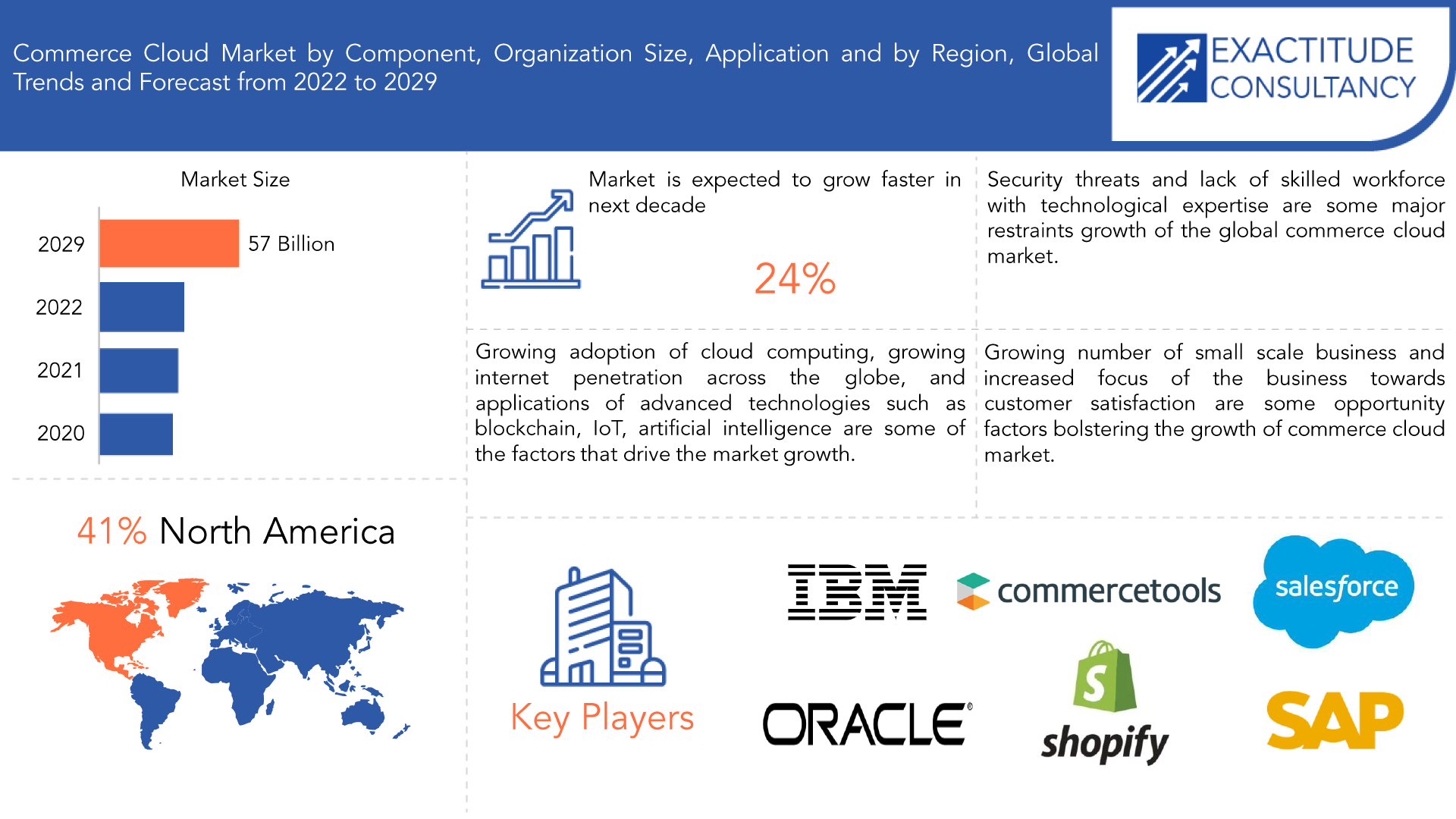
The commerce cloud market is expected to grow at 24% CAGR from 2021 to 2029. It is expected to reach above USD 57 billion by 2029 from USD 8 billion in 2020.
The two most important market trends now being noticed are social media and unified commerce. The propagation of the COVID-19 pandemic is predicted to present this industry with previously unheard-of opportunities in the near future, while the disruption of fifth-generation wireless technology is anticipated to boost the market growth for commerce cloud. OLA Mobility Institute (OMI) research from April 2020 states that gig workers carry necessary goods and services to homes on behalf of the afflicted regions' residents, assuring their safety. According to the report, platform firms and local governments are collaborating and forming social relationships that are essential to crisis management. This study shows that online distribution is anticipated to have a significant influence and that customers would prefer online glossaries, which is projected to increase market acceptance.
With the help of this cloud-based platform, marketers can create seamless shopping and commerce experiences across a variety of digital platforms, including mobile, web, social media, and others. Businesses can guarantee improved customer experiences for their connected customers by utilizing the commerce cloud. In the next five years, there will be a huge increase in demand for commerce cloud solutions due to the growth of eCommerce businesses globally.
| ATTRIBUTE | DETAILS |
| Study period | 2020-2029 |
| Base year | 2021 |
| Estimated year | 2022 |
| Forecasted year | 2022-2029 |
| Historical period | 2018-2020 |
| Unit | Value (USD Billion) |
| Segmentation | By Component, By Organization size, By Application, By Region |
| By Component |
|
| By Organization size |
|
| By Application |
|
| By Region |
|
The transition of Fast-Moving Consumer Goods (FMCG) companies from offline to online platforms will accelerate the development of the cloud-based commerce platform. The COVID-19 pandemic has had a significant negative impact on most of the brick-and-mortar retail industry, resulting in decreased product sales and global company losses.
IT, marketing, sales, executives, and other stakeholders in eCommerce can all be consolidated with the aid of cloud-based commerce solutions. These participants in the whole grocery retail process contribute to a satisfying shopping experience for the online shopper.
Additionally, the popularity of online purchasing had been surging quickly. And this new purchasing craze was sparked by the coronavirus outbreak. Thus, a rise in firms using online shopping promotes the use of commerce clouds.
At the moment, commerce cloud installations offer a number of advantages, such as increased flexibility and efficiency as well as reduced time and expenses. It is projected that an increasing number of internet businesses would present huge market opportunities. In order to compete in the rising markets, established companies are developing new products.
The emergence of the COVID-19 pandemic has had a significant impact on almost all industries worldwide. Even so, the pandemic is anticipated to boost online sales because customers are unable to create immediate transactions as a result of lockdowns announced by governments around the world.
Furthermore, organizations anticipate a shift in consumer preferences and, as a result, anticipate that e-grocery will experience the greatest growth, attempting to invest in accelerating the enterprise's digital transformation.
Furthermore, with an increase in demand for digital products and services to replace brick-and-mortar and in-person touchpoints, there is accelerated implementation of digital technologies in the fields of collaboration, supply chain, commerce, cloud, and others.
[caption id="attachment_16075" align="aligncenter" width="1920"]
Frequently Asked Questions
• What is the worth of Commerce Cloud Market?
The Commerce Cloud Market size had crossed USD 8 billion in 2020 and will observe a CAGR of more than 24% up to 2029.
• What are some of the market's driving forces?
The major drivers of the market include the rising technological advancements, increasing focus of the organizations on optimizing customer experience and operational efficiencies. In addition, an increasing number of businesses shifting to online and growing need to manage multiple storefronts which increases the demand of commerce cloud during the forecast period.
• Which are the top companies to hold the market share in Commerce Cloud Market?
The Commerce Cloud Market key players include IBM, SAP, Salesforce, Apttus, Microsoft, Episerver, Magento, Shopify, BigCommerce, Digital River, Elastic Path, Oracle, Sitecore, VTEX, Kibo, commercetools, HCL.
• Which is the largest regional market for Commerce Cloud Market?
The region's largest share is in North America. Products manufactured in nations like US and Canada that perform similarly and are inexpensively accessible to the general public have led to the increasing appeal.
• What are the key industry trends of the global commerce cloud market?
The commerce cloud market is being aided by enhanced flexibility and efficiency and decreased time and costs provided by the industry.
Commerce Cloud Market Segment Analysis
The Commerce Cloud Market is segmented based on Component, Organization size, Application and Region, Global trends and forecast.
The market has been divided into two components: platforms and services. Commerce Cloud Salesforce, SAP Commerce Cloud (formerly SAP Hybris), and is multichannel commerce software-as-a-service are some of the cloud platforms offered by market players. Businesses use these platforms to provide a complete shopping experience to customers via various channels such as mobile, web, and social media sites. As a result of the easy and scalable access to information, there is a growing market demand for cloud-based solutions.
Along with solutions, market participants provide services. Companies provide consulting services, integration and deployment services, and support and maintenance services. Salesforce.com int, for example, provides integration services that include integrating commerce cloud solutions with an enterprise's existing product management system, ERP system, or third-party platforms. The services segment is expected to grow significantly in the coming years as it adds value to customer interactions while also lowering costs and increasing loyalty.
The market has been divided into small and medium-sized (SMEs) enterprises and large enterprises based on enterprise size. Large enterprises are likely to account for a sizable market share as they continue to invest in sophisticated enterprise IT systems. During the forecast period, the small and mid-sized segment is expected to have the highest CAGR. Small and medium-sized businesses are likely to increase their technology spending on customer relationship management systems, security systems, and financial software, among other things, according to Salesforce's Small & Medium Business Trends Report 2017.
[caption id="attachment_16080" align="aligncenter" width="1920"]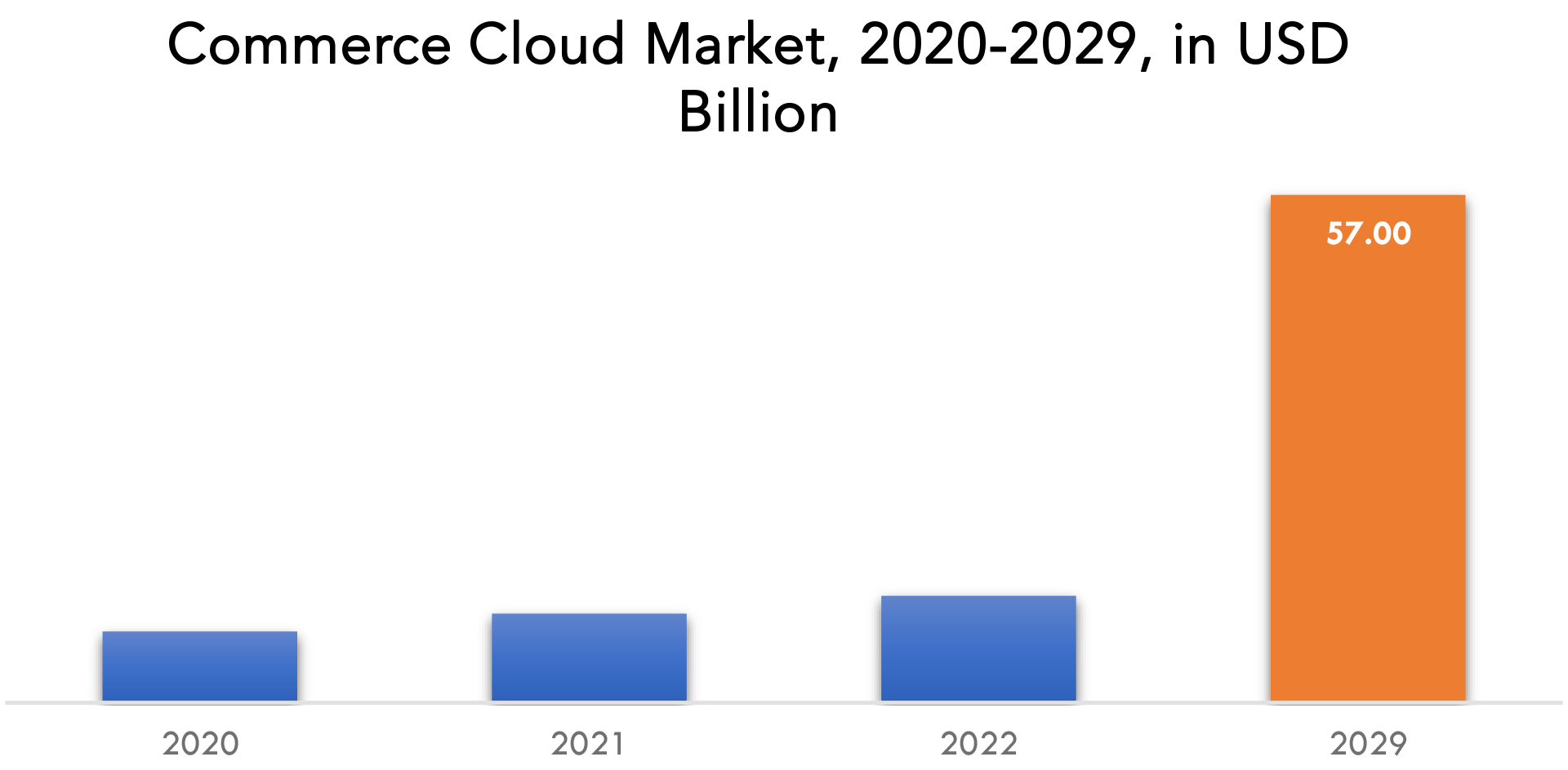
The market has been segmented by application into grocery and pharmaceuticals, fashion and apparel, travel and hospitality, electronics, furniture and bookstore, and others. Cosmetics and restaurant services are included in the others segment. The fashion and apparel segment are expected to have the largest market share, while the travel and hospitality segment is expected to have the highest CAGR.
These solutions enable fashion and apparel brands to deliver personalized content, targeted advertisements and campaigns, recommendations and offers based on browsing history, purchasing patterns, and online channels like social media or the web. These capabilities enable brands to increase digital engagement while also unifying the customer experience across all touchpoints.
Furthermore, cloud-based solutions enable retailers to meet customer demands for omnichannel shopping and delivery experiences. Cloud commerce in grocery addresses specific consumer needs such as weight-based pricing, local delivery, and route optimization, among others. It also includes payment and customer loyalty processes specific to grocery stores. For example, SAP SE provides Grocery Commerce Cloud, which is designed specifically for grocers. Similarly, the pharmaceutical industry is expected to see widespread adoption of cloud-based solutions to improve automation processes.
Because of technological advancements and fluctuating customer demand, the travel and hospitality industry require dynamic computing solutions and services that can support fluctuating customer demands. In recent years, the travel industry has seen widespread adoption of cloud computing solutions, such as discounts on online purchases that can be shared with customers via social media or mobile apps. Implementing advanced commerce solutions enables the travel and hospitality industries to gain actionable insights through the use of business intelligence solutions and improved multichannel management. These factors will almost certainly drive the adoption of cloud start-up solutions across industries.
Furthermore, software-as-a-service platforms are expected to be widely adopted in the furniture and bookstore industries. Some of the factors driving the need for cloud-based commerce services within a bookstore include real-time visibility, increasing demands to eliminate manual processes, and unified platforms. Cosmetics and restaurant services such as quick service restaurants, café chains, and casual dining use cloud commerce platforms to analyze sales and strengthen customer databases. As a result, these factors are likely to contribute to market growth.
Commerce Cloud Market Players
The Commerce Cloud Market key players include IBM, SAP, Salesforce, Apttus, Microsoft, Episerver, Magento, Shopify, BigCommerce, Digital River, Elastic Path, Oracle, Sitecore, VTEX, Kibo, commercetools, HCL. Industry Development:- 12 January, 2023: Salesforce announced a partnership with Walmart Commerce Technologies to provide retailers with technologies and services that power frictionless local pickup and delivery for shoppers everywhere.
- 15 December, 2022: Salesforce launched DevOps center to accelerate development and shorten release cycles. Salesforce announced the general availability of DevOps center to help teams release technology solutions faster.
Who Should Buy? Or Key stakeholders
- Distributors
- Education Sector
- Professional Services
- Manufacturers
- Consumer Goods Packagers
- Retailers
- Regulatory Authorities
- Others
Commerce Cloud Market Regional Analysis
The Commerce Cloud Market by region includes North America, Asia-Pacific (APAC), Europe, South America, and Middle East & Africa (MEA).
- North America: includes the US, Canada, Mexico
- Asia Pacific: includes China, Japan, South Korea, India, Australia, ASEAN and Rest of APAC
- Europe: includes UK, Germany, France, Italy, Spain, Russia, and Rest of Europe
- South America: includes Brazil, Argentina and Rest of South America
- Middle East & Africa: includes Turkey, UAE, Saudi Arabia, South Africa, and Rest of MEA
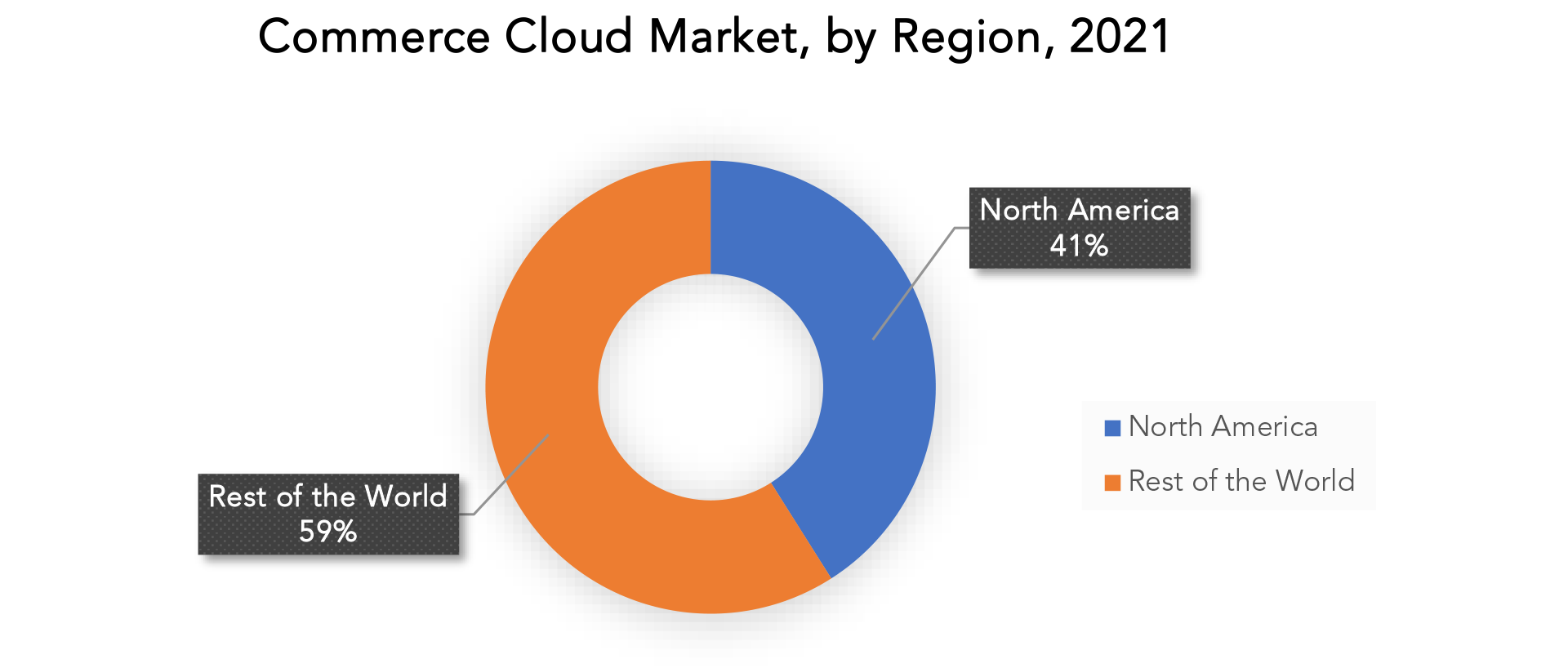
North America, Europe, Asia-Pacific, the Middle East and Africa, and Latin America are the five major regions of the global commerce cloud market. Countries are formed from the regions. North America is expected to take the lead in this market, while Asia-Pacific is expected to grow rapidly.
The availability of digital infrastructure and services, the adoption of digital platforms, a robust innovation ecosystem, and advances in the Internet of Things are all factors driving market growth in North America. According to CipherCloud's Cloud Adoption & Risk Report 2014, North American businesses used 68 analytics cloud applications on average. This data shows that there are significant investments and infrastructure available in North America for the adoption of cloud-based commerce applications. These factors will undoubtedly drive market growth throughout the region.
During the forecast period, the Asia-Pacific market is expected to grow faster, with China playing a significant role in driving regional market growth. Because of the availability of in-country infrastructure provided by established cloud providers such as Amazon Web Services (AWS), IBM Corporation cloud services, and others, Japan has a significant lead in cloud adoption. Government initiatives such as the "Digital India Initiative," which focuses on digitization and cloud infrastructure development, are expected to create unprecedented market opportunities throughout the region.
E-commerce services in Europe are primarily determined by four factors: e-regulations, digital transactions, and Innovations & Ecommerce Trustmark. According to the European E-commerce Report 2019, the percentage of European customers who shop online ranges from 22% to 88%. According to the report, B2C e-commerce growth in the region is expected to increase by 13% in 2019. According to the statistics, the region's market growth has been fueled by the early adoption of cloud-based solutions.
Aside from that, the Middle East and Africa market for this is expected to grow moderately over the forecast period. According to GSMA Intelligence's 2019 mobile internet connectivity report, mobile social media penetration in the Middle East and Africa region was 44% in 2018.
This demonstrates that mobile internet adoption and social media usage are increasing across the region. This will almost certainly result in lucrative market opportunities for the key players. Significant investments by telecom operators have also accelerated 4G coverage, supporting regional market growth. The Latin American market is expected to grow slowly due to inefficiencies in the administrative and ICT infrastructure.
Key Market Segments: Commerce Cloud Market
Commerce Cloud Market By Component, 2020-2029, (USD Billion)- Platforms
- Services
- Small and Medium Size Enterprises
- Large Enterprises
- Electronics, Furniture & Bookstores
- Grocery & Pharmaceutical
- Fashion & Apparel
- Automotive
- Travel & Hospitality
- Food & Beverages
- North America
- Asia Pacific
- Europe
- South America
- Middle East and Africa
Exactitude Consultancy Services Key Objectives:
- Increasing sales and market share
- Developing new technology
- Improving profitability
- Entering new markets
- Enhancing brand reputation
Key Question Answered
- What is the expected growth rate of the commerce cloud market over the next 7 years?
- Who are the major players in the commerce cloud market and what is their market share?
- What are the end-user industries driving demand for market and what is their outlook?
- What are the opportunities for growth in emerging markets such as Asia-Pacific, Middle East, and Africa?
- How is the economic environment affecting the commerce cloud market, including factors such as interest rates, inflation, and exchange rates?
- What is the expected impact of government policies and regulations on the commerce cloud market?
- What is the current and forecasted size and growth rate of the global commerce cloud market?
- What are the key drivers of growth in the commerce cloud market?
- Who are the major players in the market and what is their market share?
- What are the distribution channels and supply chain dynamics in the commerce cloud market?
- What are the technological advancements and innovations in the commerce cloud market and their impact on product development and growth?
- What are the regulatory considerations and their impact on the market?
- What are the challenges faced by players in the commerce cloud market and how are they addressing these challenges?
- What are the opportunities for growth and expansion in the commerce cloud market?
- What are the service offerings and specifications of leading players in the market?
- INTRODUCTION
- MARKET DEFINITION
- MARKET SEGMENTATION
- RESEARCH TIMELINES
- ASSUMPTIONS AND LIMITATIONS
- RESEARCH METHODOLOGY
- DATA MINING
- SECONDARY RESEARCH
- PRIMARY RESEARCH
- SUBJECT-MATTER EXPERTS’ ADVICE
- QUALITY CHECKS
- FINAL REVIEW
- DATA TRIANGULATION
- BOTTOM-UP APPROACH
- TOP-DOWN APPROACH
- RESEARCH FLOW
- DATA SOURCES
- DATA MINING
- EXECUTIVE SUMMARY
- MARKET OVERVIEW
- GLOBAL COMMERCE CLOUD OUTLOOK
- MARKET DRIVERS
- MARKET RESTRAINTS
- MARKET OPPORTUNITIES
- IMPACT OF COVID-19 ON COMMERCE CLOUD MARKET
- PORTER’S FIVE FORCES MODEL
- THREAT FROM NEW ENTRANTS
- THREAT FROM SUBSTITUTES
- BARGAINING POWER OF SUPPLIERS
- BARGAINING POWER OF CUSTOMERS
- DEGREE OF COMPETITION
- INDUSTRY VALUE CHAIN ANALYSIS
- GLOBAL COMMERCE CLOUD OUTLOOK
- GLOBAL COMMERCE CLOUD MARKET BY COMPONENT (USD BILLION), 2020-2029
- PLATFORMS
- SERVICES
- GLOBAL COMMERCE CLOUD MARKET BY ORGANIZATION SIZE (USD BILLION), 2020-2029
- SMALL & MEDIUM SIZE ENTERPRISES (SMES)
- LARGE ENTERPRISES
- GLOBAL COMMERCE CLOUD MARKET BY APPLICATION (USD BILLION), 2020-2029
- ELECTRONICS, FURNITURE & BOOKSTORES
- GROCERY & PHARMACEUTICAL
- FASHION & APPAREL
- AUTOMOTIVE
- TRAVEL & HOSPITALITY
- FOOD & BEVERAGES
- GLOBAL COMMERCE CLOUD MARKET BY REGION (USD BILLION), 2020-2029
- NORTH AMERICA
- US
- CANADA
- MEXICO
- SOUTH AMERICA
- BRAZIL
- ARGENTINA
- COLOMBIA
- REST OF SOUTH AMERICA
- EUROPE
- GERMANY
- UK
- FRANCE
- ITALY
- SPAIN
- RUSSIA
- REST OF EUROPE
- ASIA PACIFIC
- INDIA
- CHINA
- JAPAN
- SOUTH KOREA
- AUSTRALIA
- SOUTH-EAST ASIA
- REST OF ASIA PACIFIC
- MIDDLE EAST AND AFRICA
- UAE
- SAUDI ARABIA
- SOUTH AFRICA
- REST OF MIDDLE EAST AND AFRICA
- NORTH AMERICA
- COMPANY PROFILES*
(BUSINESS OVERVIEW, COMPANY SNAPSHOT, PRODUCTS OFFERED, RECENT DEVELOPMENTS)
- IBM
- SAP
- SALESFORCE
- APTTUS
- MICROSOFT
- EPISERVER
- MAGENTO
- SHOPIFY
- BIGCOMMERCE
- DIGITAL RIVER
- ELASTIC PATH
- ORACLE
- SITECORE
- VTEX
- KIBO
- COMMERCETOOLS
- HCL
*THE COMPANY LIST IS INDICATIVE
LIST OF TABLES
TABLE 1 GLOBAL COMMERCE CLOUD MARKET BY COMPONENT (USD BILLION), 2020-2029
TABLE 2 GLOBAL COMMERCE CLOUD MARKET BY ORGANIZATION SIZE (USD BILLION), 2020-2029
TABLE 3 GLOBAL COMMERCE CLOUD MARKET BY APPLICATION (USD BILLION), 2020-2029
TABLE 4 GLOBAL COMMERCE CLOUD MARKET BY REGION (USD BILLION), 2020-2029
TABLE 5 NORTH AMERICA COMMERCE CLOUD MARKET BY COMPONENT (USD BILLION), 2020-2029
TABLE 6 NORTH AMERICA COMMERCE CLOUD MARKET BY ORGANIZATION SIZE (USD BILLION), 2020-2029
TABLE 7 NORTH AMERICA COMMERCE CLOUD MARKET BY APPLICATION (USD BILLION), 2020-2029
TABLE 8 NORTH AMERICA COMMERCE CLOUD MARKET BY COUNTRY (USD BILLION), 2020-2029
TABLE 9 US COMMERCE CLOUD MARKET BY COMPONENT (USD BILLION), 2020-2029
TABLE 10 US COMMERCE CLOUD MARKET BY ORGANIZATION SIZE (USD BILLION), 2020-2029
TABLE 11 US COMMERCE CLOUD MARKET BY APPLICATION (USD BILLION), 2020-2029
TABLE 12 CANADA COMMERCE CLOUD MARKET BY COMPONENT (BILLION), 2020-2029
TABLE 13 CANADA COMMERCE CLOUD MARKET BY ORGANIZATION SIZE (USD BILLION), 2020-2029
TABLE 14 CANADA COMMERCE CLOUD MARKET BY APPLICATION (USD BILLION), 2020-2029
TABLE 15 MEXICO COMMERCE CLOUD MARKET BY COMPONENT (USD BILLION), 2020-2029
TABLE 16 MEXICO COMMERCE CLOUD MARKET BY ORGANIZATION SIZE (USD BILLION), 2020-2029
TABLE 17 MEXICO COMMERCE CLOUD MARKET BY APPLICATION (USD BILLION), 2020-2029
TABLE 18 SOUTH AMERICA COMMERCE CLOUD MARKET BY COMPONENT (USD BILLION), 2020-2029
TABLE 19 SOUTH AMERICA COMMERCE CLOUD MARKET BY ORGANIZATION SIZE (USD BILLION), 2020-2029
TABLE 20 SOUTH AMERICA COMMERCE CLOUD MARKET BY APPLICATION (USD BILLION), 2020-2029
TABLE 21 SOUTH AMERICA COMMERCE CLOUD MARKET BY COUNTRY (USD BILLION), 2020-2029
TABLE 22 BRAZIL COMMERCE CLOUD MARKET BY COMPONENT (USD BILLION), 2020-2029
TABLE 23 BRAZIL COMMERCE CLOUD MARKET BY ORGANIZATION SIZE (USD BILLION), 2020-2029
TABLE 24 BRAZIL COMMERCE CLOUD MARKET BY APPLICATION (USD BILLION), 2020-2029
TABLE 25 ARGENTINA COMMERCE CLOUD MARKET BY COMPONENT (USD BILLION), 2020-2029
TABLE 26 ARGENTINA COMMERCE CLOUD MARKET BY ORGANIZATION SIZE (USD BILLION), 2020-2029
TABLE 27 ARGENTINA COMMERCE CLOUD MARKET BY APPLICATION (USD BILLION), 2020-2029
TABLE 28 COLOMBIA COMMERCE CLOUD MARKET BY COMPONENT (USD BILLION), 2020-2029
TABLE 29 COLOMBIA COMMERCE CLOUD MARKET BY ORGANIZATION SIZE (USD BILLION), 2020-2029
TABLE 30 COLOMBIA COMMERCE CLOUD MARKET BY APPLICATION (USD BILLION), 2020-2029
TABLE 31 REST OF SOUTH AMERICA COMMERCE CLOUD MARKET BY COMPONENT (USD BILLION), 2020-2029
TABLE 32 REST OF SOUTH AMERICA COMMERCE CLOUD MARKET BY ORGANIZATION SIZE (USD BILLION), 2020-2029
TABLE 33 REST OF SOUTH AMERICA COMMERCE CLOUD MARKET BY APPLICATION (USD BILLION), 2020-2029
TABLE 34 ASIA-PACIFIC COMMERCE CLOUD MARKET BY COMPONENT (USD BILLION), 2020-2029
TABLE 35 ASIA-PACIFIC COMMERCE CLOUD MARKET BY ORGANIZATION SIZE (USD BILLION), 2020-2029
TABLE 36 ASIA-PACIFIC COMMERCE CLOUD MARKET BY APPLICATION (USD BILLION), 2020-2029
TABLE 37 ASIA-PACIFIC COMMERCE CLOUD MARKET BY COUNTRY (USD BILLION), 2020-2029
TABLE 38 INDIA COMMERCE CLOUD MARKET BY COMPONENT (USD BILLION), 2020-2029
TABLE 39 INDIA COMMERCE CLOUD MARKET BY ORGANIZATION SIZE (USD BILLION), 2020-2029
TABLE 40 INDIA COMMERCE CLOUD MARKET BY APPLICATION (USD BILLION), 2020-2029
TABLE 41 CHINA COMMERCE CLOUD MARKET BY COMPONENT (USD BILLION), 2020-2029
TABLE 42 CHINA COMMERCE CLOUD MARKET BY ORGANIZATION SIZE (USD BILLION), 2020-2029
TABLE 43 CHINA COMMERCE CLOUD MARKET BY APPLICATION (USD BILLION), 2020-2029
TABLE 44 JAPAN COMMERCE CLOUD MARKET BY COMPONENT (USD BILLION), 2020-2029
TABLE 45 JAPAN COMMERCE CLOUD MARKET BY ORGANIZATION SIZE (USD BILLION), 2020-2029
TABLE 46 JAPAN COMMERCE CLOUD MARKET BY APPLICATION (USD BILLION), 2020-2029
TABLE 47 SOUTH KOREA COMMERCE CLOUD MARKET BY COMPONENT (USD BILLION), 2020-2029
TABLE 48 SOUTH KOREA COMMERCE CLOUD MARKET BY ORGANIZATION SIZE (USD BILLION), 2020-2029
TABLE 49 SOUTH KOREA COMMERCE CLOUD MARKET BY APPLICATION (USD BILLION), 2020-2029
TABLE 50 AUSTRALIA COMMERCE CLOUD MARKET BY COMPONENT (USD BILLION), 2020-2029
TABLE 51 AUSTRALIA COMMERCE CLOUD MARKET BY ORGANIZATION SIZE (USD BILLION), 2020-2029
TABLE 52 AUSTRALIA COMMERCE CLOUD MARKET BY APPLICATION (USD BILLION), 2020-2029
TABLE 53 SOUTH EAST ASIA COMMERCE CLOUD MARKET BY COMPONENT (USD BILLION), 2020-2029
TABLE 54 SOUTH EAST ASIA COMMERCE CLOUD MARKET BY ORGANIZATION SIZE (USD BILLION), 2020-2029
TABLE 55 SOUTH EAST ASIA COMMERCE CLOUD MARKET BY APPLICATION (USD BILLION), 2020-2029
TABLE 56 REST OF ASIA PACIFIC COMMERCE CLOUD MARKET BY COMPONENT (USD BILLION), 2020-2029
TABLE 57 REST OF ASIA PACIFIC COMMERCE CLOUD MARKET BY ORGANIZATION SIZE (USD BILLION), 2020-2029
TABLE 58 REST OF ASIA PACIFIC COMMERCE CLOUD MARKET BY APPLICATION (USD BILLION), 2020-2029
TABLE 59 EUROPE COMMERCE CLOUD MARKET BY COMPONENT (USD BILLION), 2020-2029
TABLE 60 EUROPE COMMERCE CLOUD MARKET BY ORGANIZATION SIZE (USD BILLION), 2020-2029
TABLE 61 EUROPE COMMERCE CLOUD MARKET BY APPLICATION (USD BILLION), 2020-2029
TABLE 62 EUROPE COMMERCE CLOUD MARKET BY COUNTRY (USD BILLION), 2020-2029
TABLE 63 GERMANY COMMERCE CLOUD MARKET BY COMPONENT (USD BILLION), 2020-2029
TABLE 64 GERMANY COMMERCE CLOUD MARKET BY ORGANIZATION SIZE (USD BILLION), 2020-2029
TABLE 65 GERMANY COMMERCE CLOUD MARKET BY APPLICATION (USD BILLION), 2020-2029
TABLE 66 UK COMMERCE CLOUD MARKET BY COMPONENT (USD BILLION), 2020-2029
TABLE 67 UK COMMERCE CLOUD MARKET BY ORGANIZATION SIZE (USD BILLION), 2020-2029
TABLE 68 UK COMMERCE CLOUD MARKET BY APPLICATION (USD BILLION), 2020-2029
TABLE 69 FRANCE COMMERCE CLOUD MARKET BY COMPONENT (USD BILLION), 2020-2029
TABLE 70 FRANCE COMMERCE CLOUD MARKET BY ORGANIZATION SIZE (USD BILLION), 2020-2029
TABLE 71 FRANCE COMMERCE CLOUD MARKET BY APPLICATION (USD BILLION), 2020-2029
TABLE 72 ITALY COMMERCE CLOUD MARKET BY COMPONENT (USD BILLION), 2020-2029
TABLE 73 ITALY COMMERCE CLOUD MARKET BY ORGANIZATION SIZE (USD BILLION), 2020-2029
TABLE 74 ITALY COMMERCE CLOUD MARKET BY APPLICATION (USD BILLION), 2020-2029
TABLE 75 SPAIN COMMERCE CLOUD MARKET BY COMPONENT (USD BILLION), 2020-2029
TABLE 76 SPAIN COMMERCE CLOUD MARKET BY ORGANIZATION SIZE (USD BILLION), 2020-2029
TABLE 77 SPAIN COMMERCE CLOUD MARKET BY APPLICATION (USD BILLION), 2020-2029
TABLE 78 RUSSIA COMMERCE CLOUD MARKET BY COMPONENT (USD BILLION), 2020-2029
TABLE 79 RUSSIA COMMERCE CLOUD MARKET BY ORGANIZATION SIZE (USD BILLION), 2020-2029
TABLE 80 RUSSIA COMMERCE CLOUD MARKET BY APPLICATION (USD BILLION), 2020-2029
TABLE 81 REST OF EUROPE COMMERCE CLOUD MARKET BY COMPONENT (USD BILLION), 2020-2029
TABLE 82 REST OF EUROPE COMMERCE CLOUD MARKET BY ORGANIZATION SIZE (USD BILLION), 2020-2029
TABLE 83 REST OF EUROPE COMMERCE CLOUD MARKET BY APPLICATION (USD BILLION), 2020-2029
TABLE 84 MIDDLE EAST AND AFRICA COMMERCE CLOUD MARKET BY COMPONENT (USD BILLION), 2020-2029
TABLE 85 MIDDLE EAST AND AFRICA COMMERCE CLOUD MARKET BY ORGANIZATION SIZE (USD BILLION), 2020-2029
TABLE 86 MIDDLE EAST AND AFRICA COMMERCE CLOUD MARKET BY APPLICATION (USD BILLION), 2020-2029
TABLE 87 MIDDLE EAST AND AFRICA COMMERCE CLOUD MARKET BY COUNTRY (USD BILLION), 2020-2029
TABLE 88 UAE COMMERCE CLOUD MARKET BY COMPONENT (USD BILLION), 2020-2029
TABLE 89 UAE COMMERCE CLOUD MARKET BY ORGANIZATION SIZE (USD BILLION), 2020-2029
TABLE 90 UAE COMMERCE CLOUD MARKET BY APPLICATION (USD BILLION), 2020-2029
TABLE 91 SAUDI ARABIA COMMERCE CLOUD MARKET BY COMPONENT (USD BILLION), 2020-2029
TABLE 92 SAUDI ARABIA COMMERCE CLOUD MARKET BY ORGANIZATION SIZE (USD BILLION), 2020-2029
TABLE 93 SAUDI ARABIA COMMERCE CLOUD MARKET BY APPLICATION (USD BILLION), 2020-2029
TABLE 94 SOUTH AFRICA COMMERCE CLOUD MARKET BY COMPONENT (USD BILLION), 2020-2029
TABLE 95 SOUTH AFRICA COMMERCE CLOUD MARKET BY ORGANIZATION SIZE (USD BILLION), 2020-2029
TABLE 96 SOUTH AFRICA COMMERCE CLOUD MARKET BY APPLICATION (USD BILLION), 2020-2029
TABLE 97 REST OF MIDDLE EAST AND AFRICA COMMERCE CLOUD MARKET BY COMPONENT (USD BILLION), 2020-2029
TABLE 98 REST OF MIDDLE EAST AND AFRICA COMMERCE CLOUD MARKET BY ORGANIZATION SIZE (USD BILLION), 2020-2029
TABLE 99 REST OF MIDDLE EAST AND AFRICA COMMERCE CLOUD MARKET BY APPLICATION (USD BILLION), 2020-2029
LIST OF FIGURES
FIGURE 1 MARKET DYNAMICS
FIGURE 2 MARKET SEGMENTATION
FIGURE 3 REPORT TIMELINES: YEARS CONSIDERED
FIGURE 4 DATA TRIANGULATION
FIGURE 5 BOTTOM-UP APPROACH
FIGURE 6 TOP-DOWN APPROACH
FIGURE 7 RESEARCH FLOW
FIGURE 8 GLOBAL COMMERCE CLOUD BY COMPONENT, USD BILLION, 2020-2029
FIGURE 9 GLOBAL COMMERCE CLOUD BY ORGANIZATION SIZE, USD BILLION, 2020-2029
FIGURE 10 GLOBAL COMMERCE CLOUD BY APPLICATION INDUSTRY, USD BILLION, 2020-2029
FIGURE 11 GLOBAL COMMERCE CLOUD BY REGION, USD BILLION, 2020-2029
FIGURE 12 PORTER’S FIVE FORCES MODEL
FIGURE 13 GLOBAL COMMERCE CLOUD BY COMPONENT, USD BILLION, 2021
FIGURE 14 GLOBAL COMMERCE CLOUD BY ORGANIZATION SIZE, USD BILLION, 2021
FIGURE 15 GLOBAL COMMERCE CLOUD BY APPLICATION INDUSTRY, USD BILLION, 2021
FIGURE 16 GLOBAL COMMERCE CLOUD MARKET BY REGION 2021
FIGURE 17 MARKET SHARE ANALYSIS
FIGURE 18 IBM: COMPANY SNAPSHOT
FIGURE 19 SAP: COMPANY SNAPSHOT
FIGURE 20 SALESFORCE: COMPANY SNAPSHOT
FIGURE 21 APTTUS: COMPANY SNAPSHOT
FIGURE 22 MICROSOFT: COMPANY SNAPSHOT
FIGURE 23 EPISERVER: COMPANY SNAPSHOT
FIGURE 24 MAGENTO: COMPANY SNAPSHOT
FIGURE 25 SHOPIFY: COMPANY SNAPSHOT
FIGURE 27 BIGCOMMERCE: COMPANY SNAPSHOT
FIGURE 28 DIGITAL RIVER: COMPANY SNAPSHOT
FIGURE 29 ELASTIC PATH: COMPANY SNAPSHOT
FIGURE 30 ORACLE: COMPANY SNAPSHOT
FIGURE 31 SITECORE: COMPANY SNAPSHOT
FIGURE 32 VTEX: COMPANY SNAPSHOT
FIGURE 33 KIBO: COMPANY SNAPSHOT
FIGURE 34 COMMERCETOOLS: COMPANY SNAPSHOT
FIGURE 35 HCL: COMPANY SNAPSHOT
FIGURE 36 ANHUI XINYUAN CHEMICAL CO. LTD.: COMPANY SNAPSHOT
FIGURE 37 SIR INDUSTRIALE: COMPANY SNAPSHOT
FIGURE 38 LANXESS: COMPANY SNAPSHOT
DOWNLOAD FREE SAMPLE REPORT
License Type
SPEAK WITH OUR ANALYST
Want to know more about the report or any specific requirement?
WANT TO CUSTOMIZE THE REPORT?
Our Clients Speak
We asked them to research ‘ Equipment market’ all over the world, and their whole arrangement was helpful to us. thehealthanalytics.com insightful analysis and reports contributed to our current analysis and in creating a future strategy. Besides, the te
Yosuke Mitsui
Senior Associate Construction Equipment Sales & Marketing
We asked them to research ‘Equipment market’ all over the world, and their whole arrangement was helpful to us. thehealthanalytics.com insightful analysis and reports contributed to our current analysis and in creating a future strategy. Besides, the te