

Base Year Value ()
x.x %
x.x %
CAGR ()
x.x %
x.x %
Forecast Year Value ()
x.x %
x.x %
Historical Data Period
Largest Region
Forecast Period
Lab Automation Market by Product (Product Type, Software & Solutions), Application (Drug Discovery, Diagnostics, Genomic Solutions), End User (Biotechnology and pharmaceutical companies, Hospital and diagnostic laboratories, Research and academic institutes, Forensic laboratories, Environmental and testing laboratories, Food, and beverage industry), and Region, Global trends and forecast from 2022 to 2029
Instant access to hundreds of data points and trends
- Market estimates from 2014-2029
- Competitive analysis, industry segmentation, financial benchmarks
- Incorporates SWOT, Porter's Five Forces and risk management frameworks
- PDF report or online database with Word, Excel and PowerPoint export options
- 100% money back guarantee
Lab Automation Market Overview
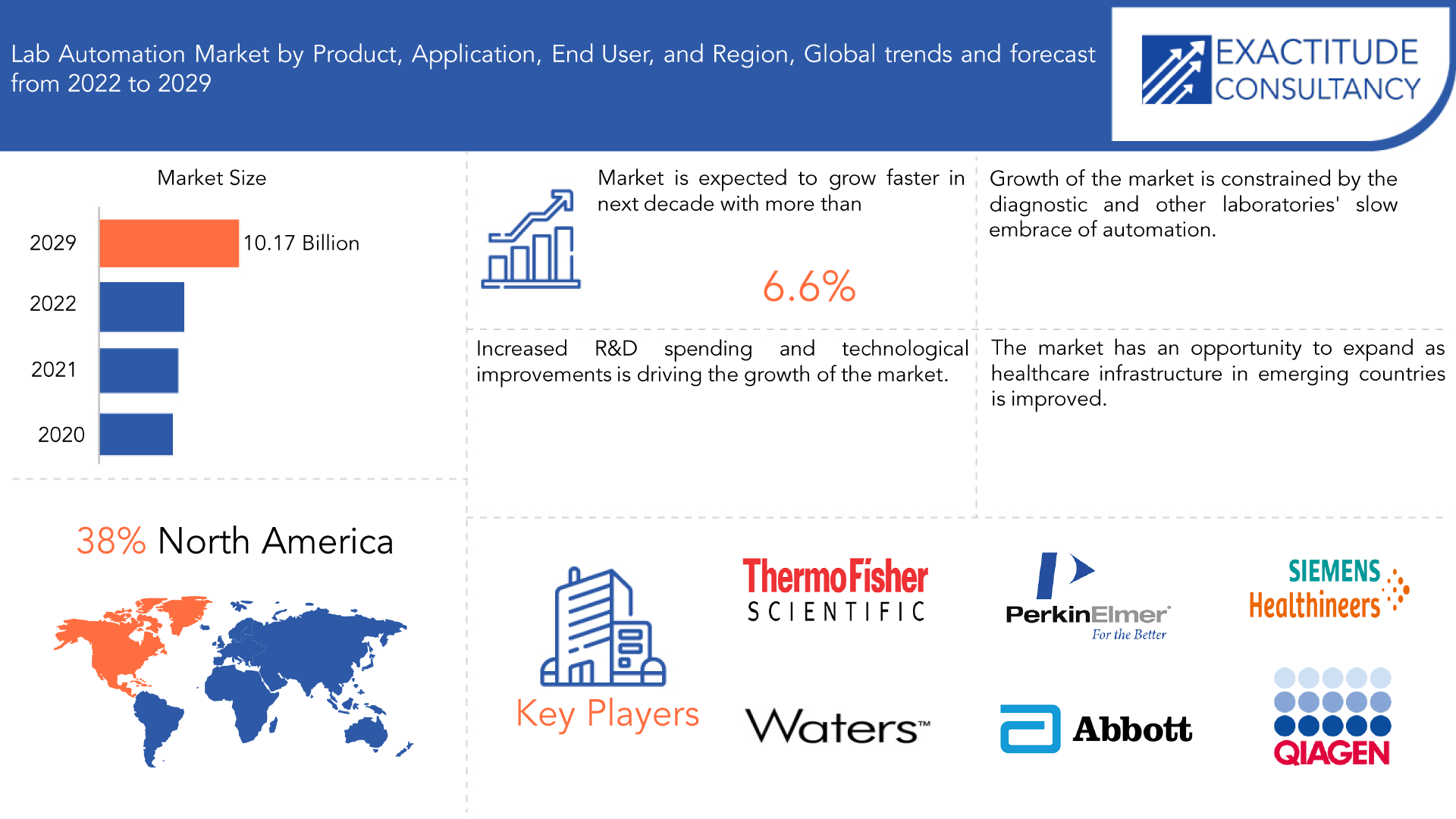
The lab automation market is expected to grow at 6.6% CAGR from 2022 to 2029. It is expected to reach above USD 10.17 billion by 2029 from USD 5.16 billion in 2020.
Automation in the laboratory refers to the use of technology to enhance existing procedures and enable new, more effective ones. Better accuracy, quality, and consistency can be attained in clinical, nonclinical, and industrial settings thanks to laboratory automation. Using laboratory automation boosts productivity by enhancing experimental data quality and assisting in shortening overall lab process durations. A laboratory automation system is made up of several different parts, including computer hardware and software, robotics, conveyor systems, and machine vision.
For laboratories to stay competitive in the market today, lab automation is becoming a more viable choice and a necessary solution. The use of contemporary automation technology spares researchers from doing tedious chores. Automation in the lab assists by enabling lab staff to control the influx of samples and, as a result, optimizing workflow to deliver patient findings on time. The lab automation solution is also having a favorable effect on the healthcare sector.
| ATTRIBUTE | DETAILS |
| Study period | 2020-2029 |
| Base year | 2021 |
| Estimated year | 2022 |
| Forecasted year | 2022-2029 |
| Historical period | 2018-2020 |
| Unit | Value (USD Billion) |
| Segmentation | Application, End User, and Region |
| By Application |
|
| By End User |
|
| By Region |
|
The expansion of benefits provided by lab automation is one of the elements anticipated to boost market growth in the upcoming years. Lab automation reduces and minimizes the physical strain caused by manual activities, making it easier to use laboratory equipment for repetitive work. It also lowers expenses and frees up lab space. It is anticipated that both small and large laboratories would be motivated to deploy these workstations due to the multiple advantages afforded by automated systems.
In order to ensure that work is finished quickly and accurately, laboratory automation is essential in maximizing the accuracy of laboratory results and reducing human error. Additionally, it enables the laboratory to produce reports rapidly, guaranteeing that reviewers will have access to actionable data immediately. Laboratories can reduce manual labor by using automation. Several testing procedures that would ordinarily require a sizable amount of manual labor can be completed by automation systems. A sizeable portion of the total lab expenses go for labor. Automation solutions also increase lab productivity and lower potential cost increases brought on by waste.
The productivity of the drug discovery process has significantly increased as a result of the use of automated systems. These systems can run continuously with little supervision and guidance. They also provide researchers more time to concentrate on their main projects and spend less time on repetitive work. Data protection and easy accessibility for lab workers are made possible by automated testing systems. These systems also increase lab teams' efficiency by allowing them to view a sample's whole history and trace everything that occurs to it.
[caption id="attachment_17520" align="aligncenter" width="1920"]
Frequently Asked Questions
• What is the worth of lab automation market?
The Lab automation market is expected to grow at 6.6% CAGR from 2022 to 2029. It is expected to reach above USD 10.17 billion by 2029 from USD 5.16 billion in 2020.
• What is the size of the North America lab automation market industry?
North America held more than 38% of the lab automation market revenue share in 2020 and will witness expansion in the forecast period.
• What are the main driving forces behind the lab automation market's expansion?
Due to technical advancements in laboratory equipment and a rise in the usage of automated laboratory equipment in pharmaceutical and R&D organizations, the laboratory automation market is predicted to increase over the forecast period. Increased demand for miniature process equipment also contributes to the market's expansion.
• Which are the top companies to hold the market share in lab automation market?
The top companies to hold the market share in Lab automation market are Thermo Fisher Scientific, Tecan Group, Danaher Corporation, Agilent Technologies, F. Hoffmann-La Roche, PerkinElmer, Eppendorf, Becton, Dickinson and Company, Waters Corporation, Siemens Healthineers, Abbott Laboratories, bioMérieux, Endress+Hauser Group, Hamilton Company, and Hudson Robotics, and others.
• Which is the largest regional market for lab automation market?
North America is the largest regional market for lab automation market.
Lab Automation Segment Analysis
The lab automation market is segmented into automated workstations, automated work cells that are readily available off the shelf, robotic systems, automated storage and retrieval systems, and others based on product. The largest portion of the global market is accounted by the automated workstation segment. Workstations decrease turnaround times, increase efficiency, and lower expenses. These are the main elements fueling market expansion.
Lab automation is divided into various types depending on the application, including drug discovery, diagnostics, genomics solutions, proteomics solutions, microbiology, and other applications. Throughout the projection period, the diagnostics segment is anticipated to experience considerable expansion. Radiation therapy, proton therapy, and precision therapy are examples of cancer treatments that target the area of the body where tumors are located. The market for this application segment is predicted to expand due to rising demographics, urbanization, penetration, and affordability.
The hospital & diagnostic laboratories, biotechnology & pharmaceutical firms, research & academic institutes, forensic laboratories, environmental & testing laboratories, and the food & beverage industry are the end user segments of the worldwide lab automation market. Automation makes it possible for hospital and diagnostic laboratories to transport, track, and produce precise results from patient samples in the least amount of time. Rapid illness detection makes preventative treatment easier to provide, and it also boosts productivity, increases patient safety, and lowers healthcare costs. Moreover, automation software enables hospitals to track patient data and keep a patient registry system to recall data whenever required quickly and conveniently.
[caption id="attachment_17521" align="aligncenter" width="1920"]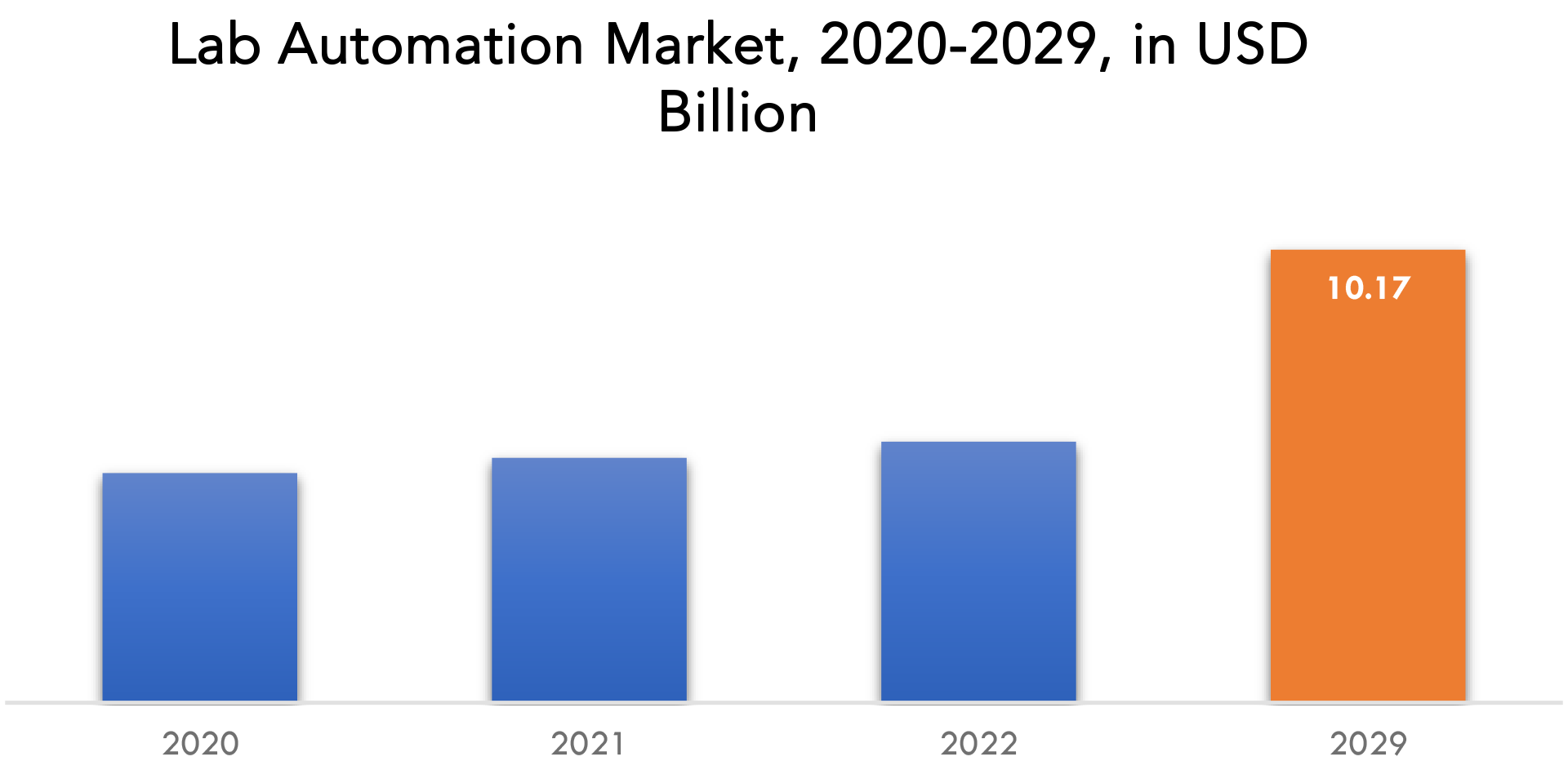
Lab Automation Market Key Players
The Lab automation market key players include Thermo Fisher Scientific, Tecan Group, Danaher Corporation, Agilent Technologies, F. Hoffmann-La Roche, PerkinElmer, Eppendorf, Becton, Dickinson and Company, Waters Corporation, Siemens Healthineers, Abbott Laboratories, bioMérieux, Endress+Hauser Group, Hamilton Company, and Hudson Robotics, and others. Recent News In June 2022, BD announced that it had successfully acquired privately held Straub Medical AG. The company has expanded its product line and gained the valuable expertise and experience of Straub Medical AG through this acquisition. QIAGEN announced in January 2022 that it has established collaborations with Atlia Biosystems to provide non-invasive prenatal testing solutions.Who Should Buy? Or Key stakeholders
- Suppliers of lab automation market
- Distributors of lab automation market
- Healthcare Industry
- Research Organizations
- Investors
- Regulatory Authorities
- Others
Lab Automation Market Regional Analysis
The Lab automation market by region includes North America, Asia-Pacific (APAC), Europe, South America, and Middle East & Africa (MEA).
- North America: includes the US, Canada, Mexico
- Asia Pacific: includes China, Japan, South Korea, India, Australia, ASEAN, and Rest of APAC
- Europe: includes UK, Germany, France, Italy, Spain, Russia, and Rest of Europe
- South America: includes Brazil, Argentina, and Rest of South America
- Middle East & Africa: includes Turkey, UAE, Saudi Arabia, South Africa, and Rest of MEA
In terms of revenue share, North America dominated the lab automation market in 2020 and is anticipated to hold that position during the forecast period. The expansion is ascribed to the region's increased adoption of lab automation technology as a result of the region's established healthcare infrastructure. Also, the local presence of significant firms and the favorable reimbursement system in this area are promoting the market adoption of new solutions.
Due to the rising need for lab automation in developing countries like China and India, the market in Asia Pacific is anticipated to rise at an exponential rate during the forecast period. This region's profitable expansion is also believed to be the result of increased efforts by regional and international businesses to make revolutionary lab automation technologies available in these potential markets.
[caption id="attachment_17522" align="aligncenter" width="1920"]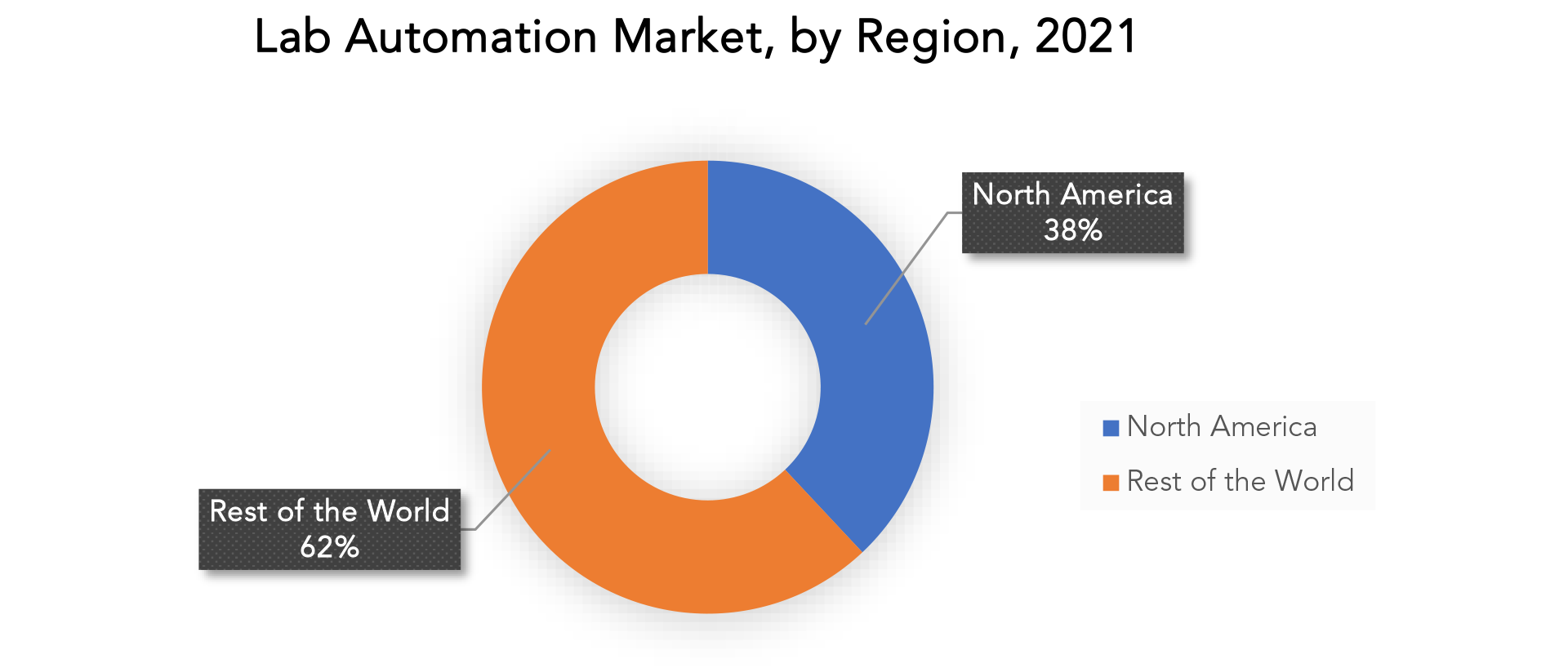
Key Market Segments: Lab automation market
Lab Automation Market By Product, 2020-2029, (USD Billion) By Product Type- Equipment
- Automated Workstations
- Automated Liquid Handling
- Automated Integrated Workstations
- Pipetting Systems
- Reagent Dispensers
- Microplate Washers
- Microplate Readers
- Multi-Mode Microplate Readers
- Single-Mode Microplate Readers
- Automated Elisa Systems
- Automated Nucleic Acid Purification Systems
- Robotic Systems
- Robotic Arm
- Track Robots
- Others
- Software & Informatics
- Workstation/Unit Automation Software
- Laboratory Information Management System Lims
- Electronic Laboratory Notebook
- Drug Discovery
- ADME Screening
- High Throughput Screening
- Compound Management
- Compound Weighing And Dissolution
- Other Drug Discovery Application
- Diagnostics
- Pre-Analytics/Sample Preparation
- Sample Distribution, Splitting and Archiving
- EIA
- Genomic Solutions
- Proteomics Solutions
- Microbiology
- Other Applications
- Biotechnology And Pharmaceutical Companies
- Hospital And Diagnostic Laboratories
- Research And Academic Institutes
- Forensic Laboratories
- Environmental And Testing Laboratories
- Food And Beverage Industry
- North America
- Europe
- Asia Pacific
- South America
- Middle East And Africa
Exactitude Consultancy Services Key Objectives
- Increasing sales and market share
- Developing new technology
- Improving profitability
- Entering new markets
- Enhancing brand reputation
Key Questions Answered
- What is the expected growth rate of the lab automation market over the next 7 years?
- Who are the major players in the lab automation market and what is their market share?
- What are the end-user industries driving demand for market and what is their outlook?
- What are the opportunities for growth in emerging markets such as Asia-Pacific, Middle East, and Africa?
- How is the economic environment affecting the lab automation market, including factors such as interest rates, inflation, and exchange rates?
- What is the expected impact of government policies and regulations on the lab automation market?
- What is the current and forecasted size and growth rate of the global lab automation market?
- What are the key drivers of growth in the lab automation market?
- Who are the major players in the market and what is their market share?
- What are the distribution channels and supply chain dynamics in the lab automation market?
- What are the technological advancements and innovations in the lab automation market and their impact on product development and growth?
- What are the regulatory considerations and their impact on the market?
- What are the challenges faced by players in the lab automation market and how are they addressing these challenges?
- What are the opportunities for growth and expansion in the lab automation market?
- What are the service offerings and specifications of leading players in the market?
- INTRODUCTION
- MARKET DEFINITION
- MARKET SEGMENTATION
- RESEARCH TIMELINES
- ASSUMPTIONS AND LIMITATIONS
- RESEARCH METHODOLOGY
- DATA MINING
- SECONDARY RESEARCH
- PRIMARY RESEARCH
- SUBJECT-MATTER EXPERTS’ ADVICE
- QUALITY CHECKS
- FINAL REVIEW
- DATA TRIANGULATION
- BOTTOM-UP APPROACH
- TOP-DOWN APPROACH
- RESEARCH FLOW
- DATA SOURCES
- DATA MINING
- EXECUTIVE SUMMARY
- MARKET OVERVIEW
- GLOBAL LAB AUTOMATION MARKET OUTLOOK
- MARKET DRIVERS
- MARKET RESTRAINTS
- MARKET OPPORTUNITIES
- IMPACT OF COVID-19 ON LAB AUTOMATION MARKET
- PORTER’S FIVE FORCES MODEL
- THREAT FROM NEW ENTRANTS
- THREAT FROM SUBSTITUTES
- BARGAINING POWER OF SUPPLIERS
- BARGAINING POWER OF CUSTOMERS
- DEGREE OF COMPETITION
- INDUSTRY VALUE CHAIN ANALYSIS
- GLOBAL LAB AUTOMATION MARKET OUTLOOK
- GLOBAL LAB AUTOMATION MARKET BY PRODUCT, 2022-2029, (USD BILLION)
- BY PRODUCT TYPE
- EQUIPMENT
- AUTOMATED WORKSTATIONS
- AUTOMATED LIQUID HANDLING
- AUTOMATED INTEGRATED WORKSTATIONS
- PIPETTING SYSTEMS
- REAGENT DISPENSERS
- MICROPLATE WASHERS
- MICROPLATE READERS
- MULTI-MODE MICROPLATE READERS
- SINGLE-MODE MICROPLATE READERS
- AUTOMATED ELISA SYSTEMS
- AUTOMATED NUCLEIC ACID PURIFICATION SYSTEMS
- AUTOMATED WORKSTATIONS
- ROBOTIC SYSTEMS
- ROBOTIC ARM
- TRACK ROBOTS
- OTHERS
- EQUIPMENT
- SOFTWARE & INFORMATICS
- WORKSTATION/UNIT AUTOMATION SOFTWARE
- LABORATORY INFORMATION MANAGEMENT SYSTEM LIMS
- ELECTRONIC LABORATORY NOTEBOOK
- SCIENTIFIC DATA MANAGEMENT SYSTEM
- BY PRODUCT TYPE
- GLOBAL LAB AUTOMATION MARKET BY APPLICATION, 2022-2029, (USD BILLION)
- DRUG DISCOVERY
- ADME SCREENING
- HIGH THROUGHPUT SCREENING
- COMPOUND MANAGEMENT
- COMPOUND WEIGHING AND DISSOLUTION
- OTHER DRUG DISCOVERY APPLICATION
- DIAGNOSTICS
- PRE-ANALYTICS/SAMPLE PREPARATION
- SAMPLE DISTRIBUTION, SPLITTING AND ARCHIVING
- EIA
- GENOMIC SOLUTIONS
- PROTEOMICS SOLUTIONS
- MICROBIOLOGY
- OTHER APPLICATIONS
- DRUG DISCOVERY
- GLOBAL LAB AUTOMATION MARKET BY END USER, 2022-2029, (USD BILLION)
- BIOTECHNOLOGY AND PHARMACEUTICAL COMPANIES
- HOSPITAL AND DIAGNOSTIC LABORATORIES
- RESEARCH AND ACADEMIC INSTITUTES
- FORENSIC LABORATORIES
- ENVIRONMENTAL AND TESTING LABORATORIES
- FOOD AND BEVERAGE INDUSTRY
- GLOBAL LAB AUTOMATION MARKET BY REGION, 2022-2029, (USD BILLION)
- NORTH AMERICA
- US
- CANADA
- MEXICO
- SOUTH AMERICA
- BRAZIL
- ARGENTINA
- COLOMBIA
- REST OF SOUTH AMERICA
- EUROPE
- GERMANY
- UK
- FRANCE
- ITALY
- SPAIN
- RUSSIA
- REST OF EUROPE
- ASIA PACIFIC
- INDIA
- CHINA
- JAPAN
- SOUTH KOREA
- AUSTRALIA
- SOUTH-EAST ASIA
- REST OF ASIA PACIFIC
- MIDDLE EAST AND AFRICA
- UAE
- SAUDI ARABIA
- SOUTH AFRICA
- REST OF MIDDLE EAST AND AFRICA
- NORTH AMERICA
- COMPANY PROFILES* (BUSINESS OVERVIEW, COMPANY SNAPSHOT, PRODUCTS OFFERED, RECENT DEVELOPMENTS)
- THERMO FISHER SCIENTIFIC
- TECAN GROUP
- DANAHER CORPORATION
- AGILENT TECHNOLOGIES
- HOFFMANN-LA ROCHE
- PERKINELMER
- EPPENDORF
- BECTON
- DICKINSON AND COMPANY
- WATERS CORPORATION
- SIEMENS HEALTHINEERS
- ABBOTT LABORATORIES
- BIOMÉRIEUX
- ENDRESS+HAUSER GROUP
- HAMILTON COMPANY
- HUDSON ROBOTICS *THE COMPANY LIST IS INDICATIVE
LIST OF TABLES
TABLE 1 GLOBAL LAB AUTOMATION MARKET BY PRODUCT (USD BILLION) 2020-2029
TABLE 2 GLOBAL LAB AUTOMATION MARKET BY APPLICATION (USD BILLION) 2020-2029
TABLE 3 GLOBAL LAB AUTOMATION MARKET BY END USER (USD BILLION) 2020-2029
TABLE 4 GLOBAL LAB AUTOMATION MARKET BY REGION (USD BILLION) 2020-2029
TABLE 5 NORTH AMERICA LAB AUTOMATION MARKET BY COUNTRY (USD BILLION) 2020-2029
TABLE 6 NORTH AMERICA LAB AUTOMATION MARKET BY PRODUCT (USD BILLION) 2020-2029
TABLE 7 NORTH AMERICA LAB AUTOMATION MARKET BY APPLICATION (USD BILLION) 2020-2029
TABLE 8 NORTH AMERICA LAB AUTOMATION MARKET BY END USER (USD BILLION) 2020-2029
TABLE 9 US LAB AUTOMATION MARKET BY PRODUCT (USD BILLION) 2020-2029
TABLE 10 US LAB AUTOMATION MARKET BY APPLICATION (USD BILLION) 2020-2029
TABLE 11 US LAB AUTOMATION MARKET BY END USER (USD BILLION) 2020-2029
TABLE 12 CANADA LAB AUTOMATION MARKET BY PRODUCT (USD BILLION) 2020-2029
TABLE 13 CANADA LAB AUTOMATION MARKET BY APPLICATION (USD BILLION) 2020-2029
TABLE 14 CANADA LAB AUTOMATION MARKET BY END USER (USD BILLION) 2020-2029
TABLE 15 MEXICO LAB AUTOMATION MARKET BY PRODUCT (USD BILLION) 2020-2029
TABLE 16 MEXICO LAB AUTOMATION MARKET BY APPLICATION (USD BILLION) 2020-2029
TABLE 17 MEXICO LAB AUTOMATION MARKET BY END USER (USD BILLION) 2020-2029
TABLE 18 SOUTH AMERICA LAB AUTOMATION MARKET BY COUNTRY (USD BILLION) 2020-2029
TABLE 19 SOUTH AMERICA LAB AUTOMATION MARKET BY PRODUCT (USD BILLION) 2020-2029
TABLE 20 SOUTH AMERICA LAB AUTOMATION MARKET BY APPLICATION (USD BILLION) 2020-2029
TABLE 21 SOUTH AMERICA LAB AUTOMATION MARKET BY END USER (USD BILLION) 2020-2029
TABLE 22 BRAZIL LAB AUTOMATION MARKET BY PRODUCT (USD BILLION) 2020-2029
TABLE 23 BRAZIL LAB AUTOMATION MARKET BY APPLICATION (USD BILLION) 2020-2029
TABLE 24 BRAZIL LAB AUTOMATION MARKET BY END USER (USD BILLION) 2020-2029
TABLE 25 ARGENTINA LAB AUTOMATION MARKET BY PRODUCT (USD BILLION) 2020-2029
TABLE 26 ARGENTINA LAB AUTOMATION MARKET BY APPLICATION (USD BILLION) 2020-2029
TABLE 27 ARGENTINA LAB AUTOMATION MARKET BY END USER (USD BILLION) 2020-2029
TABLE 28 COLOMBIA LAB AUTOMATION MARKET BY PRODUCT (USD BILLION) 2020-2029
TABLE 29 COLOMBIA LAB AUTOMATION MARKET BY APPLICATION (USD BILLION) 2020-2029
TABLE 30 COLOMBIA LAB AUTOMATION MARKET BY END USER (USD BILLION) 2020-2029
TABLE 31 REST OF SOUTH AMERICA LAB AUTOMATION MARKET BY PRODUCT (USD BILLION) 2020-2029
TABLE 32 REST OF SOUTH AMERICA LAB AUTOMATION MARKET BY APPLICATION (USD BILLION) 2020-2029
TABLE 33 REST OF SOUTH AMERICA LAB AUTOMATION MARKET BY END USER (USD BILLION) 2020-2029
TABLE 34 ASIA-PACIFIC LAB AUTOMATION MARKET BY COUNTRY (USD BILLION) 2020-2029
TABLE 35 ASIA-PACIFIC LAB AUTOMATION MARKET BY PRODUCT (USD BILLION) 2020-2029
TABLE 36 ASIA-PACIFIC LAB AUTOMATION MARKET BY APPLICATION (USD BILLION) 2020-2029
TABLE 37 ASIA-PACIFIC LAB AUTOMATION MARKET BY END USER (USD BILLION) 2020-2029
TABLE 38 INDIA LAB AUTOMATION MARKET BY PRODUCT (USD BILLION) 2020-2029
TABLE 39 INDIA LAB AUTOMATION MARKET BY APPLICATION (USD BILLION) 2020-2029
TABLE 40 INDIA LAB AUTOMATION MARKET BY END USER (USD BILLION) 2020-2029
TABLE 41 CHINA LAB AUTOMATION MARKET BY PRODUCT (USD BILLION) 2020-2029
TABLE 42 CHINA LAB AUTOMATION MARKET BY APPLICATION (USD BILLION) 2020-2029
TABLE 43 CHINA LAB AUTOMATION MARKET BY END USER (USD BILLION) 2020-2029
TABLE 44 JAPAN LAB AUTOMATION MARKET BY PRODUCT (USD BILLION) 2020-2029
TABLE 45 JAPAN LAB AUTOMATION MARKET BY APPLICATION (USD BILLION) 2020-2029
TABLE 46 JAPAN LAB AUTOMATION MARKET BY END USER (USD BILLION) 2020-2029
TABLE 47 SOUTH KOREA LAB AUTOMATION MARKET BY PRODUCT (USD BILLION) 2020-2029
TABLE 48 SOUTH KOREA LAB AUTOMATION MARKET BY APPLICATION (USD BILLION) 2020-2029
TABLE 49 SOUTH KOREA LAB AUTOMATION MARKET BY END USER (USD BILLION) 2020-2029
TABLE 50 AUSTRALIA LAB AUTOMATION MARKET BY PRODUCT (USD BILLION) 2020-2029
TABLE 51 AUSTRALIA LAB AUTOMATION MARKET BY APPLICATION (USD BILLION) 2020-2029
TABLE 52 AUSTRALIA LAB AUTOMATION MARKET BY END USER (USD BILLION) 2020-2029
TABLE 53 SOUTH-EAST ASIA LAB AUTOMATION MARKET BY PRODUCT (USD BILLION) 2020-2029
TABLE 54 SOUTH-EAST ASIA LAB AUTOMATION MARKET BY APPLICATION (USD BILLION) 2020-2029
TABLE 55 SOUTH-EAST ASIA LAB AUTOMATION MARKET BY END USER (USD BILLION) 2020-2029
TABLE 56 REST OF ASIA PACIFIC LAB AUTOMATION MARKET BY PRODUCT (USD BILLION) 2020-2029
TABLE 57 REST OF ASIA PACIFIC LAB AUTOMATION MARKET BY APPLICATION (USD BILLION) 2020-2029
TABLE 58 REST OF ASIA PACIFIC LAB AUTOMATION MARKET BY END USER (USD BILLION) 2020-2029
TABLE 59 EUROPE LAB AUTOMATION MARKET BY COUNTRY (USD BILLION) 2020-2029
TABLE 60 ASIA-PACIFIC LAB AUTOMATION MARKET BY PRODUCT (USD BILLION) 2020-2029
TABLE 61 ASIA-PACIFIC LAB AUTOMATION MARKET BY APPLICATION (USD BILLION) 2020-2029
TABLE 62 ASIA-PACIFIC LAB AUTOMATION MARKET BY END USER (USD BILLION) 2020-2029
TABLE 63 GERMANY LAB AUTOMATION MARKET BY PRODUCT (USD BILLION) 2020-2029
TABLE 64 GERMANY LAB AUTOMATION MARKET BY APPLICATION (USD BILLION) 2020-2029
TABLE 65 GERMANY LAB AUTOMATION MARKET BY END USER (USD BILLION) 2020-2029
TABLE 66 UK LAB AUTOMATION MARKET BY PRODUCT (USD BILLION) 2020-2029
TABLE 67 UK LAB AUTOMATION MARKET BY APPLICATION (USD BILLION) 2020-2029
TABLE 68 UK LAB AUTOMATION MARKET BY END USER (USD BILLION) 2020-2029
TABLE 69 FRANCE LAB AUTOMATION MARKET BY PRODUCT (USD BILLION) 2020-2029
TABLE 70 FRANCE LAB AUTOMATION MARKET BY APPLICATION (USD BILLION) 2020-2029
TABLE 71 FRANCE LAB AUTOMATION MARKET BY END USER (USD BILLION) 2020-2029
TABLE 72 ITALY LAB AUTOMATION MARKET BY PRODUCT (USD BILLION) 2020-2029
TABLE 73 ITALY LAB AUTOMATION MARKET BY APPLICATION (USD BILLION) 2020-2029
TABLE 74 ITALY LAB AUTOMATION MARKET BY END USER (USD BILLION) 2020-2029
TABLE 75 SPAIN LAB AUTOMATION MARKET BY PRODUCT (USD BILLION) 2020-2029
TABLE 76 SPAIN LAB AUTOMATION MARKET BY APPLICATION (USD BILLION) 2020-2029
TABLE 77 SPAIN LAB AUTOMATION MARKET BY END USER (USD BILLION) 2020-2029
TABLE 78 RUSSIA LAB AUTOMATION MARKET BY PRODUCT (USD BILLION) 2020-2029
TABLE 79 RUSSIA LAB AUTOMATION MARKET BY APPLICATION (USD BILLION) 2020-2029
TABLE 80 RUSSIA LAB AUTOMATION MARKET BY END USER (USD BILLION) 2020-2029
TABLE 81 REST OF EUROPE LAB AUTOMATION MARKET BY PRODUCT (USD BILLION) 2020-2029
TABLE 82 REST OF EUROPE LAB AUTOMATION MARKET BY APPLICATION (USD BILLION) 2020-2029
TABLE 83 REST OF EUROPE LAB AUTOMATION MARKET BY END USER (USD BILLION) 2020-2029
TABLE 84 MIDDLE EAST AND AFRICA LAB AUTOMATION MARKET BY COUNTRY (USD BILLION) 2020-2029
TABLE 85 MIDDLE EAST AND AFRICA LAB AUTOMATION MARKET BY PRODUCT (USD BILLION) 2020-2029
TABLE 86 MIDDLE EAST AND AFRICA LAB AUTOMATION MARKET BY APPLICATION (USD BILLION) 2020-2029
TABLE 87 MIDDLE EAST AND AFRICA LAB AUTOMATION MARKET BY END USER (USD BILLION) 2020-2029
TABLE 88 UAE LAB AUTOMATION MARKET BY PRODUCT (USD BILLION) 2020-2029
TABLE 89 UAE LAB AUTOMATION MARKET BY APPLICATION (USD BILLION) 2020-2029
TABLE 90 UAE LAB AUTOMATION MARKET BY END USER (USD BILLION) 2020-2029
TABLE 91 SAUDI ARABIA LAB AUTOMATION MARKET BY PRODUCT (USD BILLION) 2020-2029
TABLE 92 SAUDI ARABIA LAB AUTOMATION MARKET BY APPLICATION (USD BILLION) 2020-2029
TABLE 93 SAUDI ARABIA LAB AUTOMATION MARKET BY END USER (USD BILLION) 2020-2029
TABLE 94 SOUTH AFRICA LAB AUTOMATION MARKET BY PRODUCT (USD BILLION) 2020-2029
TABLE 95 SOUTH AFRICA LAB AUTOMATION MARKET BY APPLICATION (USD BILLION) 2020-2029
TABLE 96 SOUTH AFRICA LAB AUTOMATION MARKET BY END USER (USD BILLION) 2020-2029
TABLE 97 REST OF MIDDLE EAST AND AFRICA LAB AUTOMATION MARKET BY PRODUCT (USD BILLION) 2020-2029
TABLE 98 REST OF MIDDLE EAST AND AFRICA LAB AUTOMATION MARKET BY APPLICATION (USD BILLION) 2020-2029
TABLE 99 REST OF MIDDLE EAST AND AFRICA LAB AUTOMATION MARKET BY END USER (USD BILLION) 2020-2029
LIST OF FIGURES
FIGURE 1 MARKET DYNAMICS
FIGURE 2 MARKET SEGMENTATION
FIGURE 3 REPORT TIMELINES: YEARS CONSIDERED
FIGURE 4 DATA TRIANGULATION
FIGURE 5 BOTTOM-UP APPROACH
FIGURE 6 TOP-DOWN APPROACH
FIGURE 7 RESEARCH FLOW
FIGURE 8 GLOBAL LAB AUTOMATION MARKET BY PRODUCT, USD BILLION, 2022-2029
FIGURE 9 GLOBAL LAB AUTOMATION MARKET BY APPLICATION, USD BILLION, 2022-2029
FIGURE 10 GLOBAL LAB AUTOMATION MARKET BY END USER, USD BILLION, 2022-2029
FIGURE 11 GLOBAL LAB AUTOMATION MARKET BY REGION, USD BILLION, 2022-2029
FIGURE 12 PORTER’S FIVE FORCES MODEL
FIGURE 13 GLOBAL LAB AUTOMATION MARKET BY PRODUCT, USD BILLION, 2021
FIGURE 14 GLOBAL LAB AUTOMATION MARKET BY APPLICATION, USD BILLION, 2021
FIGURE 15 GLOBAL LAB AUTOMATION MARKET BY END USER, USD BILLION, 2021
FIGURE 16 GLOBAL LAB AUTOMATION MARKET BY REGION, USD BILLION, 2021
FIGURE 17 MARKET SHARE ANALYSIS
FIGURE 18 THERMO FISHER SCIENTIFIC: COMPANY SNAPSHOT
FIGURE 19 TECAN GROUP: COMPANY SNAPSHOT
FIGURE 20 DANAHER CORPORATION: COMPANY SNAPSHOT
FIGURE 21 AGILENT TECHNOLOGIES: COMPANY SNAPSHOT
FIGURE 22 F. HOFFMANN-LA ROCHE: COMPANY SNAPSHOT
FIGURE 23 PERKINELMER: COMPANY SNAPSHOT
FIGURE 24 EPPENDORF: COMPANY SNAPSHOT
FIGURE 25 BECTON: COMPANY SNAPSHOT
FIGURE 26 DICKINSON AND COMPANY: COMPANY SNAPSHOT
FIGURE 27 WATERS CORPORATION: COMPANY SNAPSHOT
FIGURE 28 SIEMENS HEALTHINEERS: COMPANY SNAPSHOT
FIGURE 29 ABBOTT LABORATORIES: COMPANY SNAPSHOT
FIGURE 30 BIOMÉRIEUX: COMPANY SNAPSHOT
FIGURE 31 ENDRESS+HAUSER GROUP: COMPANY SNAPSHOT
FIGURE 32 HAMILTON COMPANY: COMPANY SNAPSHOT
FIGURE 33 HUDSON ROBOTICS: COMPANY SNAPSHOT
DOWNLOAD FREE SAMPLE REPORT
License Type
SPEAK WITH OUR ANALYST
Want to know more about the report or any specific requirement?
WANT TO CUSTOMIZE THE REPORT?
Our Clients Speak
We asked them to research ‘ Equipment market’ all over the world, and their whole arrangement was helpful to us. thehealthanalytics.com insightful analysis and reports contributed to our current analysis and in creating a future strategy. Besides, the te
Yosuke Mitsui
Senior Associate Construction Equipment Sales & Marketing
We asked them to research ‘Equipment market’ all over the world, and their whole arrangement was helpful to us. thehealthanalytics.com insightful analysis and reports contributed to our current analysis and in creating a future strategy. Besides, the te