

Base Year Value ()
x.x %
x.x %
CAGR ()
x.x %
x.x %
Forecast Year Value ()
x.x %
x.x %
Historical Data Period
Largest Region
Forecast Period
Low Migration Inks Market by Process (Gravure, Flexography, Off-set, Digital), by Application (Food & Beverage, Pharmaceuticals, Cosmetics) and Region, Global trends and forecast from 2022 to 2029
Instant access to hundreds of data points and trends
- Market estimates from 2014-2029
- Competitive analysis, industry segmentation, financial benchmarks
- Incorporates SWOT, Porter's Five Forces and risk management frameworks
- PDF report or online database with Word, Excel and PowerPoint export options
- 100% money back guarantee
Low Migration Inks Market Overview
The Low Migration Inks Market Is Expected To Grow At 7% CAGR From 2022 To 2029. It Is Expected To Reach Above USD 3.49 Billion By 2029 From USD 1.9 Billion In 2020.
Low migration inks are those specialized inks that are made specifically to reduce ink migration in particular packaging conditions, such as cosmetics and personal care, pharmaceuticals, food and beverages, among others, where ink migration could risk contaminating the products or contents inside the packaging if they come into contact with conventional inks. When the ink printed on the substrates transfers to the other side, it is due to the presence of external gases, heat exposure, water contamination, and moisture.
The widespread use of these inks in products such packaged foods, cosmetics, and pharmaceuticals as well as the rising public awareness of the problems associated with ink migration in these products are the main factors propelling the market for low migration inks. Low migration inks are being more widely used by businesses as a result of laws on printing inks that aim to protect customers from potential health hazards associated with contamination from printed food products and other chemicals.
The consumer demand for lightweight food and beverage packaging has an impact on the market for low migration inks. Additionally, the market for low migration inks is positively impacted by rising awareness, changing lifestyles, increased disposable income, rapid growth in packaged food and beverages, rising demand for cosmetics and personal care products, and global food safety requirements. Additionally, the market for low migration inks has lucrative potential due to rising use in digital printing processes and the implementation of strict rules on personal care and cosmetics items. On the other side, the high cost of low migration inks, their restricted availability, and fluctuating raw material prices are the factors anticipated to restrain the market's expansion.
| ATTRIBUTE | DETAILS |
| Study period | 2020-2029 |
| Base year | 2022 |
| Estimated year | 2022 |
| Forecasted year | 2022-2029 |
| Historical period | 2018-2020 |
| Unit | Value (USD Billion) (Kilotons) |
| Segmentation | By Process, By Application, By Region |
| By Process |
|
| By Application |
|
| By Region |
|
An increasing number of consumers are becoming aware of the possible health hazards caused by dangerous chemicals migrating from packaging materials into food and beverages, which is driving the demand for low migration inks globally. As a result, governments and regulatory agencies have put strict rules into place that demand the use of low migration inks for packaging applications. Globally, the demand for low migration inks is anticipated to increase over the upcoming years due to rising public awareness of the possible health hazards provided by the migration of dangerous chemicals from packing materials, as well as the implementation of strict legislation requiring their use.
The COVID-19 pandemic has had a conflicting effect on the market for low migration inks. On the one hand, the need for low migration inks has grown as a result of people staying at home and avoiding restaurants and other public spaces, as well as the rising consumption of packaged foods and beverages. The manufacture of food and beverage packaging has increased as a result, which has raised the demand for low migration inks. On the other hand, because of the pandemic's disruption of global supply lines, low migration ink production is suffering from a lack of raw materials and other inputs. Low migration ink prices have increased as a result, and delivery times have gotten longer. This has had an impact on both the affordability of clients and the profitability of producers. Also, the pandemic has caused a shift in consumer preferences towards environmentally friendly and sustainable packaging materials, which has raised the demand for low migration inks that are chemically free and biodegradable. The COVID-19 pandemic has had a conflicting effect on the market for low migration inks, but it has brought attention to the value of packaging sustainability and safety, which is anticipated to fuel demand for low migration inks in the years to come.
[caption id="attachment_17563" align="aligncenter" width="1920"]

Frequently Asked Questions
• What is the worth of Low Migration Inks Market?
The Low Migration Inks Market is expected to grow at 7% CAGR from 2022 to 2029. It is expected to reach above USD 3.49 Billion by 2029 from USD 1.9 Billion in 2020.
• What is the size of the Europe in Low Migration Inks Market?
Europe held more than 39% of the Low Migration Inks Market revenue share in 2021 and will witness expansion in the forecast period.
• What are some of the Low Migration Inks Market's driving forces?
The consumer demand for lightweight food and beverage packaging has an impact on the market for low migration inks. Additionally, the market for low migration inks is positively impacted by rising awareness, changing lifestyles, increased disposable income, rapid growth in packaged food and beverages, rising demand for cosmetics and personal care products, and global food safety requirements. Additionally, the market for low migration inks has lucrative potential due to rising use in digital printing processes and the implementation of strict rules on personal care and cosmetics items.
• Which are the top companies to hold the Market share in Low Migration Inks Market?
The Market research report covers the analysis of Market players. Key companies profiled in the report include Toyo Printing Inks, Inc., Gallus, FlintGroup, Kao Corporation, Zeller, Huber Group, Altana Group, Sun Chemical, Nazdar, Durst.
• Which is the largest regional Market for Low Migration Inks Market?
The greatest revenue share was accounted for by Europe. The use of toxic printing inks for food packaging, labelling, and other applications is prohibited by laws and regulations, which has an effect on the region's rising demand for low migration inks. Low migration inks are in demand in this area because to their attractiveness and traits like little diffusion with packed items. The food and beverage industry is growing swiftly across Europe as a result of a number of factors, such as a high demand for packaged food items, an increase in frozen food production, and a growth in the popularity of ready-to-eat foods. Due to the food and beverage industry's explosive growth, there is a rising need for low migration inks for a variety of food packaging, labelling, and other applications.
Low Migration Inks Market Segment Analysis
Low migration inks market is segmented based on process, application, and region
Based on process, a significant portion of the market was made up of flexography. Because to its outstanding qualities, including affordability, speed, a broad range of applications, and non-toxicity, flexography printing is favored over other techniques. In contrast to other printing methods, this procedure uses flexible polymers and rubber plates for high-quality image. Flexography is increasingly being used in a variety of packaging materials, including paper and plastic containers, metal foils, envelopes, tape, and others, due to its effectiveness and cost-effectiveness. The applicability of flexography is expanding across industries as a result of its many advantages over other printing processes and the strong need for bulk printing techniques. These factors indicate that the flexography market will expand quickly throughout the projected period.
Based on application, a significant portion of the market was made up of food and beverages. Throughout the projected period, factors such as numerous guidelines pertaining to the usage of low migration inks in packaged food products and rising packaged food sales globally are anticipated to promote market growth. Due to their outstanding qualities, such as little printing ink transfer, look & taste maintenance, and adherence, low migration inks are in high demand for packaging applications. This increases demand for low migration inks across key sectors, including the food and beverage and pharmaceutical industries.
[caption id="attachment_17572" align="aligncenter" width="1920"]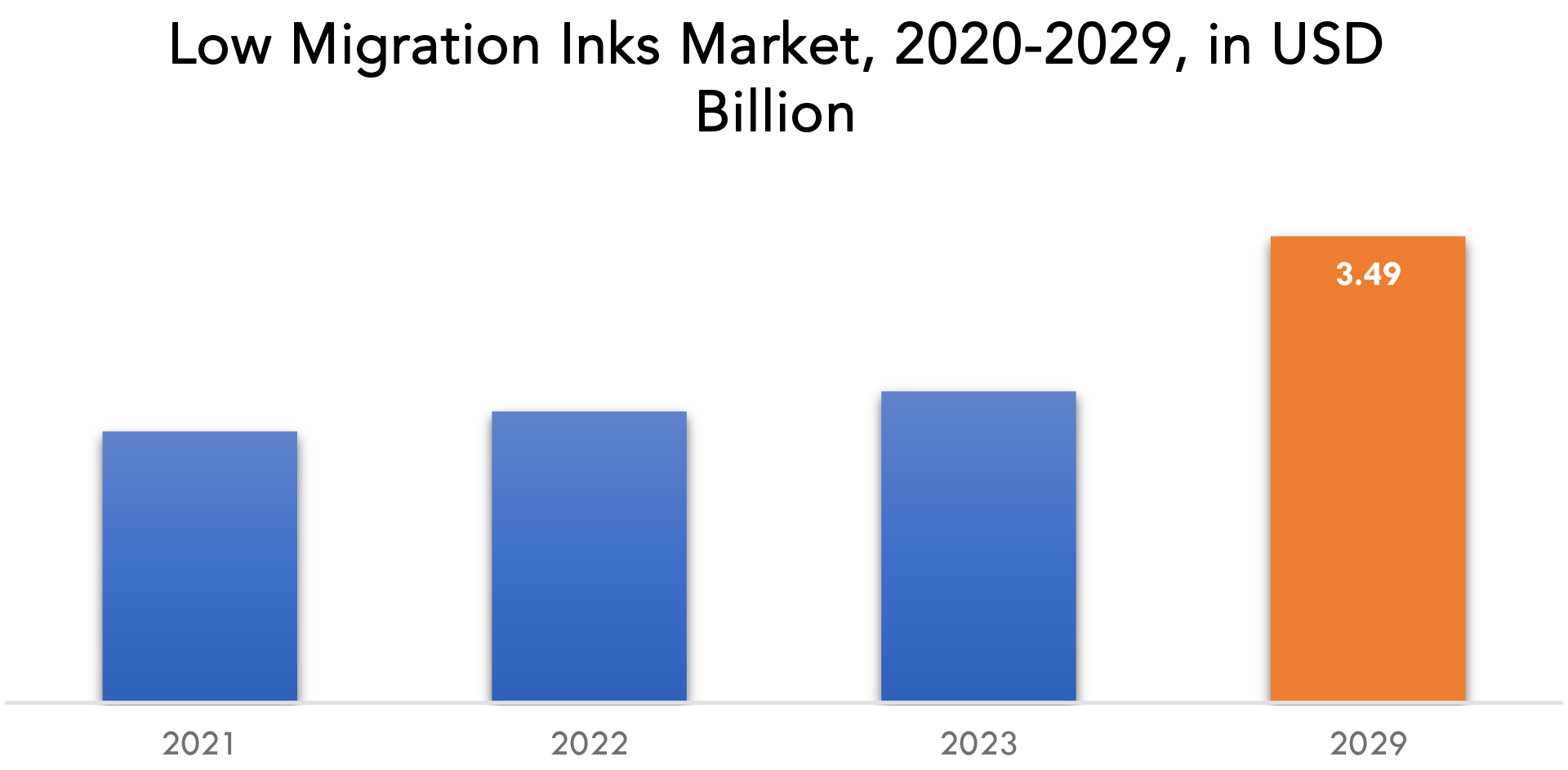
Low Migration Inks Market Players
The Market research report covers the analysis of Market players. Key companies profiled in the report include Toyo Printing Inks, Inc., Gallus, FlintGroup, Kao Corporation, Zeller, Huber Group, Altana Group, Sun Chemical, Nazdar, Durst. Recent Development:- In April 2022, Toyo Printing Inks, Inc. announced that its LP-9000 TOYO LIFE PREMIUM FOOD LO/LM series of offset passed the INGEDE drinkability criteria. Therefore, it is suitable for food, cosmetic and pharmaceuticals applications.
- In September 2021, Gallus and Heidelberg developed the Labelfire UVLM ink series, which is suitable for food contact packaging. The UV curing technology of the Labelfire was optimized for the improvement of migration properties of the ink film.
Who Should Buy? Or Key stakeholders
- Low migration inks manufacturers
- Traders
- Research and development institutes
- Raw material suppliers
- Nationalized laboratories
- Potential investors
Low Migration Inks Market Regional Analysis
The Low Migration Inks Market by region includes North America, Asia-Pacific (APAC), Europe, South America, and Middle East & Africa (MEA).
- North America: includes the US, Canada, Mexico
- Asia Pacific: includes China, Japan, South Korea, India, Australia, ASEAN and Rest of APAC
- Europe: includes UK, Germany, France, Italy, Spain, Russia, and Rest of Europe
- South America: includes Brazil, Argentina and Rest of South America
- Middle East & Africa: includes Turkey, UAE, Saudi Arabia, South Africa, and Rest of MEA
The greatest revenue share in 2021 over 39% was accounted for by Europe. Restrictions and rules against the use of toxic printing inks for food packaging, labelling, and other purposes have an impact on the increased demand for low migration inks in this region. The popularity of low migration inks because of their characteristics, such as minimal diffusion with packaged goods, drives their demand in this region. Also, due to factors including a strong demand for packaged food products, rising frozen food production, and a rise in the popularity of ready-to-eat foods, the food and beverage business is expanding quickly throughout Europe. The demand for low migration inks for diverse food packaging, labelling, and other applications is rapidly increasing due to the surging growth of the food and beverage industry. Thus, it is projected that throughout the forecast period, the market in Europe would rise because to the high demand for Low Migration Inks for food and beverage.
[caption id="attachment_17576" align="aligncenter" width="1920"]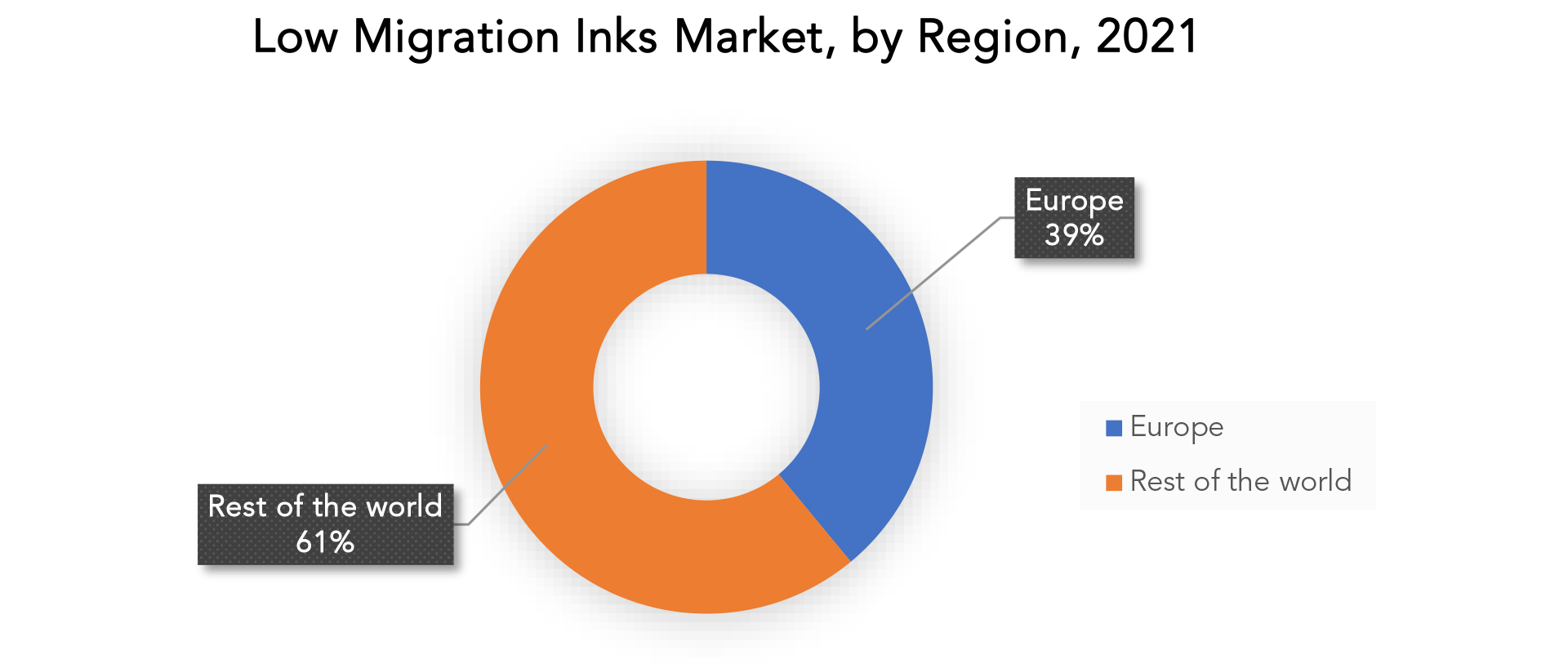
Key Market Segments: Low Migration Inks Market
Low Migration Inks Market By Process, 2020-2029, (USD Billion), (Kilotons)- Gravure
- Flexography
- Off-Set
- Digital
- Food & Beverage
- Pharmaceuticals
- Cosmetics
- North America
- Asia Pacific
- Europe
- South America
- Middle East And Africa
Exactitude Consultancy Services Key Objectives:
- Increasing sales and Market share
- Developing new technology
- Improving profitability
- Entering new markets
- Enhancing brand reputation
Key Question Answered
- What is the expected growth rate of the low migration inks market over the next 7 years?
- Who are the major players in the low migration inks market and what is their market share?
- What are the end-user industries driving demand for market and what is their outlook?
- What are the opportunities for growth in emerging markets such as asia-pacific, middle east, and africa?
- How is the economic environment affecting the low migration inks market, including factors such as interest rates, inflation, and exchange rates?
- What is the expected impact of government policies and regulations on the low migration inks market?
- What is the current and forecasted size and growth rate of the global low migration inks market?
- What are the key drivers of growth in the low migration inks market?
- Who are the major players in the market and what is their market share?
- What are the distribution channels and supply chain dynamics in the low migration inks market?
- What are the technological advancements and innovations in the low migration inks market and their impact on product development and growth?
- What are the regulatory considerations and their impact on the market?
- What are the challenges faced by players in the low migration inks market and how are they addressing these challenges?
- What are the opportunities for growth and expansion in the low migration inks market?
- What are the products offerings and specifications of leading players in the market?
- INTRODUCTION
- MARKET DEFINITION
- MARKET SEGMENTATION
- RESEARCH TIMELINES
- ASSUMPTIONS AND LIMITATIONS
- RESEARCH METHODOLOGY
- DATA MINING
- SECONDARY RESEARCH
- PRIMARY RESEARCH
- SUBJECT-MATTER EXPERTS’ ADVICE
- QUALITY CHECKS
- FINAL REVIEW
- DATA TRIANGULATION
- BOTTOM-UP APPROACH
- TOP-DOWN APPROACH
- RESEARCH FLOW
- DATA SOURCES
- DATA MINING
- EXECUTIVE SUMMARY
- MARKET OVERVIEW
- GLOBAL LOW MIGRATION INKS MARKET OUTLOOK
- MARKET DRIVERS
- MARKET RESTRAINTS
- MARKET OPPORTUNITIES
- IMPACT OF COVID-19 ON LOW MIGRATION INKS MARKET
- PORTER’S FIVE FORCES MODEL
- THREAT FROM NEW ENTRANTS
- THREAT FROM SUBSTITUTES
- BARGAINING POWER OF SUPPLIERS
- BARGAINING POWER OF CUSTOMERS
- DEGREE OF COMPETITION
- INDUSTRY VALUE CHAIN ANALYSIS
- GLOBAL LOW MIGRATION INKS MARKET OUTLOOK
- GLOBAL LOW MIGRATION INKS MARKET BY PROCESS, 2020-2029, (USD BILLION), (KILOTONS)
- PORTABLE BATTERY
- STATIONARY BATTERY
- GLOBAL LOW MIGRATION INKS MARKET BY APPLICATION, 2020-2029, (USD BILLION), (KILOTONS)
- AUTOMOTIVE
- INDUSTRIAL
- ENERGY STORAGE SYSTEM
- CONSUMER ELECTRONICS
- GLOBAL LOW MIGRATION INKS MARKET BY REGION, 2020-2029, (USD BILLION), (KILOTONS)
- NORTH AMERICA
- US
- CANADA
- MEXICO
- SOUTH AMERICA
- BRAZIL
- ARGENTINA
- COLOMBIA
- REST OF SOUTH AMERICA
- EUROPE
- GERMANY
- UK
- FRANCE
- ITALY
- SPAIN
- RUSSIA
- REST OF EUROPE
- ASIA PACIFIC
- INDIA
- CHINA
- JAPAN
- SOUTH KOREA
- AUSTRALIA
- SOUTH-EAST ASIA
- REST OF ASIA PACIFIC
- MIDDLE EAST AND AFRICA
- UAE
- SAUDI ARABIA
- SOUTH AFRICA
- REST OF MIDDLE EAST AND AFRICA
- NORTH AMERICA
- COMPANY PROFILES* (BUSINESS OVERVIEW, COMPANY SNAPSHOT, PRODUCTS OFFERED, RECENT DEVELOPMENTS)
- TOYO PRINTING INKS, INC.,
- GALLUS
- FLINTGROUP
- KAO CORPORATION,
- ZELLER
- HUBER GROUP
- ALTANA GROUP
- SUN CHEMICAL
- NAZDAR
- DURST *THE COMPANY LIST IS INDICATIVE
LIST OF TABLES
TABLE 1 GLOBAL LOW MIGRATION INKS MARKET BY PROCESS (USD BILLION), 2020-2029
TABLE 2 GLOBAL LOW MIGRATION INKS MARKET BY PROCESS (KILOTONS), 2020-2029
TABLE 3 GLOBAL LOW MIGRATION INKS MARKET BY APPLICATION (USD BILLION), 2020-2029
TABLE 4 GLOBAL LOW MIGRATION INKS MARKET BY APPLICATION (KILOTONS), 2020-2029
TABLE 5 GLOBAL LOW MIGRATION INKS MARKET BY REGION (USD BILLION), 2020-2029
TABLE 6 GLOBAL LOW MIGRATION INKS MARKET BY REGION (KILOTONS), 2020-2029
TABLE 7 NORTH AMERICA LOW MIGRATION INKS MARKET BY PROCESS (USD BILLION), 2020-2029
TABLE 8 NORTH AMERICA LOW MIGRATION INKS MARKET BY PROCESS (KILOTONS), 2020-2029
TABLE 9 NORTH AMERICA LOW MIGRATION INKS MARKET BY APPLICATION (USD BILLION), 2020-2029
TABLE 10 NORTH AMERICA LOW MIGRATION INKS MARKET BY APPLICATION (KILOTONS), 2020-2029
TABLE 11 NORTH AMERICA LOW MIGRATION INKS MARKET BY COUNTRY (USD BILLION), 2020-2029
TABLE 12 NORTH AMERICA LOW MIGRATION INKS MARKET BY COUNTRY (KILOTONS), 2020-2029
TABLE 13 US LOW MIGRATION INKS MARKET BY PROCESS (USD BILLION), 2020-2029
TABLE 14 US LOW MIGRATION INKS MARKET BY PROCESS (KILOTONS), 2020-2029
TABLE 15 US LOW MIGRATION INKS MARKET BY APPLICATION (USD BILLION), 2020-2029
TABLE 16 US LOW MIGRATION INKS MARKET BY APPLICATION (KILOTONS), 2020-2029
TABLE 17 CANADA LOW MIGRATION INKS MARKET BY PROCESS (USD BILLION), 2020-2029
TABLE 18 CANADA LOW MIGRATION INKS MARKET BY PROCESS (KILOTONS), 2020-2029
TABLE 19 CANADA LOW MIGRATION INKS MARKET BY APPLICATION (USD BILLION), 2020-2029
TABLE 20 CANADA LOW MIGRATION INKS MARKET BY APPLICATION (KILOTONS), 2020-2029
TABLE 21 MEXICO LOW MIGRATION INKS MARKET BY PROCESS (USD BILLION), 2020-2029
TABLE 22 MEXICO LOW MIGRATION INKS MARKET BY PROCESS (KILOTONS), 2020-2029
TABLE 23 MEXICO LOW MIGRATION INKS MARKET BY APPLICATION (USD BILLION), 2020-2029
TABLE 24 MEXICO LOW MIGRATION INKS MARKET BY APPLICATION (KILOTONS), 2020-2029
TABLE 25 SOUTH AMERICA LOW MIGRATION INKS MARKET BY PROCESS (USD BILLION), 2020-2029
TABLE 26 SOUTH AMERICA LOW MIGRATION INKS MARKET BY PROCESS (KILOTONS), 2020-2029
TABLE 27 SOUTH AMERICA LOW MIGRATION INKS MARKET BY APPLICATION (USD BILLION), 2020-2029
TABLE 28 SOUTH AMERICA LOW MIGRATION INKS MARKET BY APPLICATION (KILOTONS), 2020-2029
TABLE 29 SOUTH AMERICA LOW MIGRATION INKS MARKET BY COUNTRY (USD BILLION), 2020-2029
TABLE 30 SOUTH AMERICA LOW MIGRATION INKS MARKET BY COUNTRY (KILOTONS), 2020-2029
TABLE 31 BRAZIL LOW MIGRATION INKS MARKET BY PROCESS (USD BILLION), 2020-2029
TABLE 32 BRAZIL LOW MIGRATION INKS MARKET BY PROCESS (KILOTONS), 2020-2029
TABLE 33 BRAZIL LOW MIGRATION INKS MARKET BY APPLICATION (USD BILLION), 2020-2029
TABLE 34 BRAZIL LOW MIGRATION INKS MARKET BY APPLICATION (KILOTONS), 2020-2029
TABLE 35 ARGENTINA LOW MIGRATION INKS MARKET BY PROCESS (USD BILLION), 2020-2029
TABLE 36 ARGENTINA LOW MIGRATION INKS MARKET BY PROCESS (KILOTONS), 2020-2029
TABLE 37 ARGENTINA LOW MIGRATION INKS MARKET BY APPLICATION (USD BILLION), 2020-2029
TABLE 38 ARGENTINA LOW MIGRATION INKS MARKET BY APPLICATION (KILOTONS), 2020-2029
TABLE 39 COLOMBIA LOW MIGRATION INKS MARKET BY PROCESS (USD BILLION), 2020-2029
TABLE 40 COLOMBIA LOW MIGRATION INKS MARKET BY PROCESS (KILOTONS), 2020-2029
TABLE 41 COLOMBIA LOW MIGRATION INKS MARKET BY APPLICATION (USD BILLION), 2020-2029
TABLE 42 COLOMBIA LOW MIGRATION INKS MARKET BY APPLICATION (KILOTONS), 2020-2029
TABLE 43 REST OF SOUTH AMERICA LOW MIGRATION INKS MARKET BY PROCESS (USD BILLION), 2020-2029
TABLE 44 REST OF SOUTH AMERICA LOW MIGRATION INKS MARKET BY PROCESS (KILOTONS), 2020-2029
TABLE 45 REST OF SOUTH AMERICA LOW MIGRATION INKS MARKET BY APPLICATION (USD BILLION), 2020-2029
TABLE 46 REST OF SOUTH AMERICA LOW MIGRATION INKS MARKET BY APPLICATION (KILOTONS), 2020-2029
TABLE 47 ASIA-PACIFIC LOW MIGRATION INKS MARKET BY PROCESS (USD BILLION), 2020-2029
TABLE 48 ASIA-PACIFIC LOW MIGRATION INKS MARKET BY PROCESS (KILOTONS), 2020-2029
TABLE 49 ASIA-PACIFIC LOW MIGRATION INKS MARKET BY APPLICATION (USD BILLION), 2020-2029
TABLE 50 ASIA-PACIFIC LOW MIGRATION INKS MARKET BY APPLICATION (KILOTONS), 2020-2029
TABLE 51 ASIA-PACIFIC LOW MIGRATION INKS MARKET BY COUNTRY (USD BILLION), 2020-2029
TABLE 52 ASIA-PACIFIC LOW MIGRATION INKS MARKET BY COUNTRY (KILOTONS), 2020-2029
TABLE 53 INDIA LOW MIGRATION INKS MARKET BY PROCESS (USD BILLION), 2020-2029
TABLE 54 INDIA LOW MIGRATION INKS MARKET BY PROCESS (KILOTONS), 2020-2029
TABLE 55 INDIA LOW MIGRATION INKS MARKET BY APPLICATION (USD BILLION), 2020-2029
TABLE 56 INDIA LOW MIGRATION INKS MARKET BY APPLICATION (KILOTONS), 2020-2029
TABLE 57 CHINA LOW MIGRATION INKS MARKET BY PROCESS (USD BILLION), 2020-2029
TABLE 58 CHINA LOW MIGRATION INKS MARKET BY PROCESS (KILOTONS), 2020-2029
TABLE 59 CHINA LOW MIGRATION INKS MARKET BY APPLICATION (USD BILLION), 2020-2029
TABLE 60 CHINA LOW MIGRATION INKS MARKET BY APPLICATION (KILOTONS), 2020-2029
TABLE 61 JAPAN LOW MIGRATION INKS MARKET BY PROCESS (USD BILLION), 2020-2029
TABLE 62 JAPAN LOW MIGRATION INKS MARKET BY PROCESS (KILOTONS), 2020-2029
TABLE 63 JAPAN LOW MIGRATION INKS MARKET BY APPLICATION (USD BILLION), 2020-2029
TABLE 64 JAPAN LOW MIGRATION INKS MARKET BY APPLICATION (KILOTONS), 2020-2029
TABLE 65 SOUTH KOREA LOW MIGRATION INKS MARKET BY PROCESS (USD BILLION), 2020-2029
TABLE 66 SOUTH KOREA LOW MIGRATION INKS MARKET BY PROCESS (KILOTONS), 2020-2029
TABLE 67 SOUTH KOREA LOW MIGRATION INKS MARKET BY APPLICATION (USD BILLION), 2020-2029
TABLE 68 SOUTH KOREA LOW MIGRATION INKS MARKET BY APPLICATION (KILOTONS), 2020-2029
TABLE 69 AUSTRALIA LOW MIGRATION INKS MARKET BY PROCESS (USD BILLION), 2020-2029
TABLE 70 AUSTRALIA LOW MIGRATION INKS MARKET BY PROCESS (KILOTONS), 2020-2029
TABLE 71 AUSTRALIA LOW MIGRATION INKS MARKET BY APPLICATION (USD BILLION), 2020-2029
TABLE 72 AUSTRALIA LOW MIGRATION INKS MARKET BY APPLICATION (KILOTONS), 2020-2029
TABLE 73 SOUTH EAST ASIA LOW MIGRATION INKS MARKET BY PROCESS (USD BILLION), 2020-2029
TABLE 74 SOUTH EAST ASIA LOW MIGRATION INKS MARKET BY PROCESS (KILOTONS), 2020-2029
TABLE 75 SOUTH EAST ASIA LOW MIGRATION INKS MARKET BY APPLICATION (USD BILLION), 2020-2029
TABLE 76 SOUTH EAST ASIA LOW MIGRATION INKS MARKET BY APPLICATION (KILOTONS), 2020-2029
TABLE 77 REST OF ASIA PACIFIC LOW MIGRATION INKS MARKET BY PROCESS (USD BILLION), 2020-2029
TABLE 78 REST OF ASIA PACIFIC LOW MIGRATION INKS MARKET BY PROCESS (KILOTONS), 2020-2029
TABLE 79 REST OF ASIA PACIFIC LOW MIGRATION INKS MARKET BY APPLICATION (USD BILLION), 2020-2029
TABLE 80 REST OF ASIA PACIFIC LOW MIGRATION INKS MARKET BY APPLICATION (KILOTONS), 2020-2029
TABLE 81 EUROPE LOW MIGRATION INKS MARKET BY PROCESS (USD BILLION), 2020-2029
TABLE 82 EUROPE LOW MIGRATION INKS MARKET BY PROCESS (KILOTONS), 2020-2029
TABLE 83 EUROPE LOW MIGRATION INKS MARKET BY APPLICATION (USD BILLION), 2020-2029
TABLE 84 EUROPE LOW MIGRATION INKS MARKET BY APPLICATION (KILOTONS), 2020-2029
TABLE 85 EUROPE LOW MIGRATION INKS MARKET BY COUNTRY (USD BILLION), 2020-2029
TABLE 86 EUROPE LOW MIGRATION INKS MARKET BY COUNTRY (KILOTONS), 2020-2029
TABLE 87 GERMANY LOW MIGRATION INKS MARKET BY PROCESS (USD BILLION), 2020-2029
TABLE 88 GERMANY LOW MIGRATION INKS MARKET BY PROCESS (KILOTONS), 2020-2029
TABLE 89 GERMANY LOW MIGRATION INKS MARKET BY APPLICATION (USD BILLION), 2020-2029
TABLE 90 GERMANY LOW MIGRATION INKS MARKET BY APPLICATION (KILOTONS), 2020-2029
TABLE 91 UK LOW MIGRATION INKS MARKET BY PROCESS (USD BILLION), 2020-2029
TABLE 92 UK LOW MIGRATION INKS MARKET BY PROCESS (KILOTONS), 2020-2029
TABLE 93 UK LOW MIGRATION INKS MARKET BY APPLICATION (USD BILLION), 2020-2029
TABLE 94 UK LOW MIGRATION INKS MARKET BY APPLICATION (KILOTONS), 2020-2029
TABLE 95 FRANCE LOW MIGRATION INKS MARKET BY PROCESS (USD BILLION), 2020-2029
TABLE 96 FRANCE LOW MIGRATION INKS MARKET BY PROCESS (KILOTONS), 2020-2029
TABLE 97 FRANCE LOW MIGRATION INKS MARKET BY APPLICATION (USD BILLION), 2020-2029
TABLE 98 FRANCE LOW MIGRATION INKS MARKET BY APPLICATION (KILOTONS), 2020-2029
TABLE 99 ITALY LOW MIGRATION INKS MARKET BY PROCESS (USD BILLION), 2020-2029
TABLE 100 ITALY LOW MIGRATION INKS MARKET BY PROCESS (KILOTONS), 2020-2029
TABLE 101 ITALY LOW MIGRATION INKS MARKET BY APPLICATION (USD BILLION), 2020-2029
TABLE 102 ITALY LOW MIGRATION INKS MARKET BY APPLICATION (KILOTONS), 2020-2029
TABLE 103 SPAIN LOW MIGRATION INKS MARKET BY PROCESS (USD BILLION), 2020-2029
TABLE 104 SPAIN LOW MIGRATION INKS MARKET BY PROCESS (KILOTONS), 2020-2029
TABLE 105 SPAIN LOW MIGRATION INKS MARKET BY APPLICATION (USD BILLION), 2020-2029
TABLE 106 SPAIN LOW MIGRATION INKS MARKET BY APPLICATION (KILOTONS), 2020-2029
TABLE 107 RUSSIA LOW MIGRATION INKS MARKET BY PROCESS (USD BILLION), 2020-2029
TABLE 108 RUSSIA LOW MIGRATION INKS MARKET BY PROCESS (KILOTONS), 2020-2029
TABLE 109 RUSSIA LOW MIGRATION INKS MARKET BY APPLICATION (USD BILLION), 2020-2029
TABLE 110 RUSSIA LOW MIGRATION INKS MARKET BY APPLICATION (KILOTONS), 2020-2029
TABLE 111 REST OF EUROPE LOW MIGRATION INKS MARKET BY PROCESS (USD BILLION), 2020-2029
TABLE 112 REST OF EUROPE LOW MIGRATION INKS MARKET BY PROCESS (KILOTONS), 2020-2029
TABLE 113 REST OF EUROPE LOW MIGRATION INKS MARKET BY APPLICATION (USD BILLION), 2020-2029
TABLE 114 REST OF EUROPE LOW MIGRATION INKS MARKET BY APPLICATION (KILOTONS), 2020-2029
TABLE 115 MIDDLE EAST AND AFRICA LOW MIGRATION INKS MARKET BY PROCESS (USD BILLION), 2020-2029
TABLE 116 MIDDLE EAST AND AFRICA LOW MIGRATION INKS MARKET BY PROCESS (KILOTONS), 2020-2029
TABLE 117 MIDDLE EAST AND AFRICA LOW MIGRATION INKS MARKET BY APPLICATION (USD BILLION), 2020-2029
TABLE 118 MIDDLE EAST AND AFRICA LOW MIGRATION INKS MARKET BY APPLICATION (KILOTONS), 2020-2029
TABLE 119 MIDDLE EAST AND AFRICA LOW MIGRATION INKS MARKET BY COUNTRY (USD BILLION), 2020-2029
TABLE 120 MIDDLE EAST AND AFRICA LOW MIGRATION INKS MARKET BY COUNTRY (KILOTONS), 2020-2029
TABLE 121 UAE LOW MIGRATION INKS MARKET BY PROCESS (USD BILLION), 2020-2029
TABLE 122 UAE LOW MIGRATION INKS MARKET BY PROCESS (KILOTONS), 2020-2029
TABLE 123 UAE LOW MIGRATION INKS MARKET BY APPLICATION (USD BILLION), 2020-2029
TABLE 124 UAE LOW MIGRATION INKS MARKET BY APPLICATION (KILOTONS), 2020-2029
TABLE 125 SAUDI ARABIA LOW MIGRATION INKS MARKET BY PROCESS (USD BILLION), 2020-2029
TABLE 126 SAUDI ARABIA LOW MIGRATION INKS MARKET BY PROCESS (KILOTONS), 2020-2029
TABLE 127 SAUDI ARABIA LOW MIGRATION INKS MARKET BY APPLICATION (USD BILLION), 2020-2029
TABLE 128 SAUDI ARABIA LOW MIGRATION INKS MARKET BY APPLICATION (KILOTONS), 2020-2029
TABLE 129 SOUTH AFRICA LOW MIGRATION INKS MARKET BY PROCESS (USD BILLION), 2020-2029
TABLE 130 SOUTH AFRICA LOW MIGRATION INKS MARKET BY PROCESS (KILOTONS), 2020-2029
TABLE 131 SOUTH AFRICA LOW MIGRATION INKS MARKET BY APPLICATION (USD BILLION), 2020-2029
TABLE 132 SOUTH AFRICA LOW MIGRATION INKS MARKET BY APPLICATION (KILOTONS), 2020-2029
TABLE 133 REST OF MIDDLE EAST AND AFRICA LOW MIGRATION INKS MARKET BY PROCESS (USD BILLION), 2020-2029
TABLE 134 REST OF MIDDLE EAST AND AFRICA LOW MIGRATION INKS MARKET BY PROCESS (KILOTONS), 2020-2029
TABLE 135 REST OF MIDDLE EAST AND AFRICA LOW MIGRATION INKS MARKET BY APPLICATION (USD BILLION), 2020-2029
TABLE 136 REST OF MIDDLE EAST AND AFRICA LOW MIGRATION INKS MARKET BY APPLICATION (KILOTONS), 2020-2029
LIST OF FIGURES
FIGURE 1 MARKET DYNAMICS
FIGURE 2 MARKET SEGMENTATION
FIGURE 3 REPORT TIMELINES: YEARS CONSIDERED
FIGURE 4 DATA TRIANGULATION
FIGURE 5 BOTTOM-UP APPROACH
FIGURE 6 TOP-DOWN APPROACH
FIGURE 7 RESEARCH FLOW
FIGURE 8 GLOBAL LOW MIGRATION INKS MARKET BY PROCESS, USD BILLION, 2020-2029
FIGURE 9 GLOBAL LOW MIGRATION INKS MARKET BY APPLICATION, USD BILLION, 2020-2029
FIGURE 10 GLOBAL LOW MIGRATION INKS MARKET BY REGION, USD BILLION, 2020-2029
FIGURE 11 PORTER’S FIVE FORCES MODEL
FIGURE 12 GLOBAL LOW MIGRATION INKS MARKET BY PROCESS, USD BILLION, 2021
FIGURE 13 GLOBAL LOW MIGRATION INKS MARKET BY APPLICATION, USD BILLION, 2021
FIGURE 14 GLOBAL LOW MIGRATION INKS MARKET BY REGION, USD BILLION, 2021
FIGURE 15 MARKET SHARE ANALYSIS
FIGURE 16 TOYO PRINTING INKS, INC.: COMPANY SNAPSHOT
FIGURE 17 GALLUS: COMPANY SNAPSHOT
FIGURE 18 FLINTGROUP: COMPANY SNAPSHOT
FIGURE 19 KAO CORPORATION: COMPANY SNAPSHOT
FIGURE 20 ZELLER: COMPANY SNAPSHOT
FIGURE 21 HUBER GROUP: COMPANY SNAPSHOT
FIGURE 22 ALTANA GROUP: COMPANY SNAPSHOT
FIGURE 23 SUN CHEMICAL: COMPANY SNAPSHOT
FIGURE 24 NAZDAR: COMPANY SNAPSHOT
FIGURE 25 DURST: COMPANY SNAPSHOT
DOWNLOAD FREE SAMPLE REPORT
License Type
SPEAK WITH OUR ANALYST
Want to know more about the report or any specific requirement?
WANT TO CUSTOMIZE THE REPORT?
Our Clients Speak
We asked them to research ‘ Equipment market’ all over the world, and their whole arrangement was helpful to us. thehealthanalytics.com insightful analysis and reports contributed to our current analysis and in creating a future strategy. Besides, the te
Yosuke Mitsui
Senior Associate Construction Equipment Sales & Marketing
We asked them to research ‘Equipment market’ all over the world, and their whole arrangement was helpful to us. thehealthanalytics.com insightful analysis and reports contributed to our current analysis and in creating a future strategy. Besides, the te