

Base Year Value ()
x.x %
x.x %
CAGR ()
x.x %
x.x %
Forecast Year Value ()
x.x %
x.x %
Historical Data Period
Largest Region
Forecast Period
Shape Memory Alloys Market by Type (Nitinol, Copper-Based, Iron-Manganese Silicon), by End-Use Industry (Biomedical, Aerospace & Defense, Automotive, Consumer Electronics, Others) and Region, Global trends and forecast from 2023 to 2029
Instant access to hundreds of data points and trends
- Market estimates from 2014-2029
- Competitive analysis, industry segmentation, financial benchmarks
- Incorporates SWOT, Porter's Five Forces and risk management frameworks
- PDF report or online database with Word, Excel and PowerPoint export options
- 100% money back guarantee
Shape Memory Alloys Market Overview
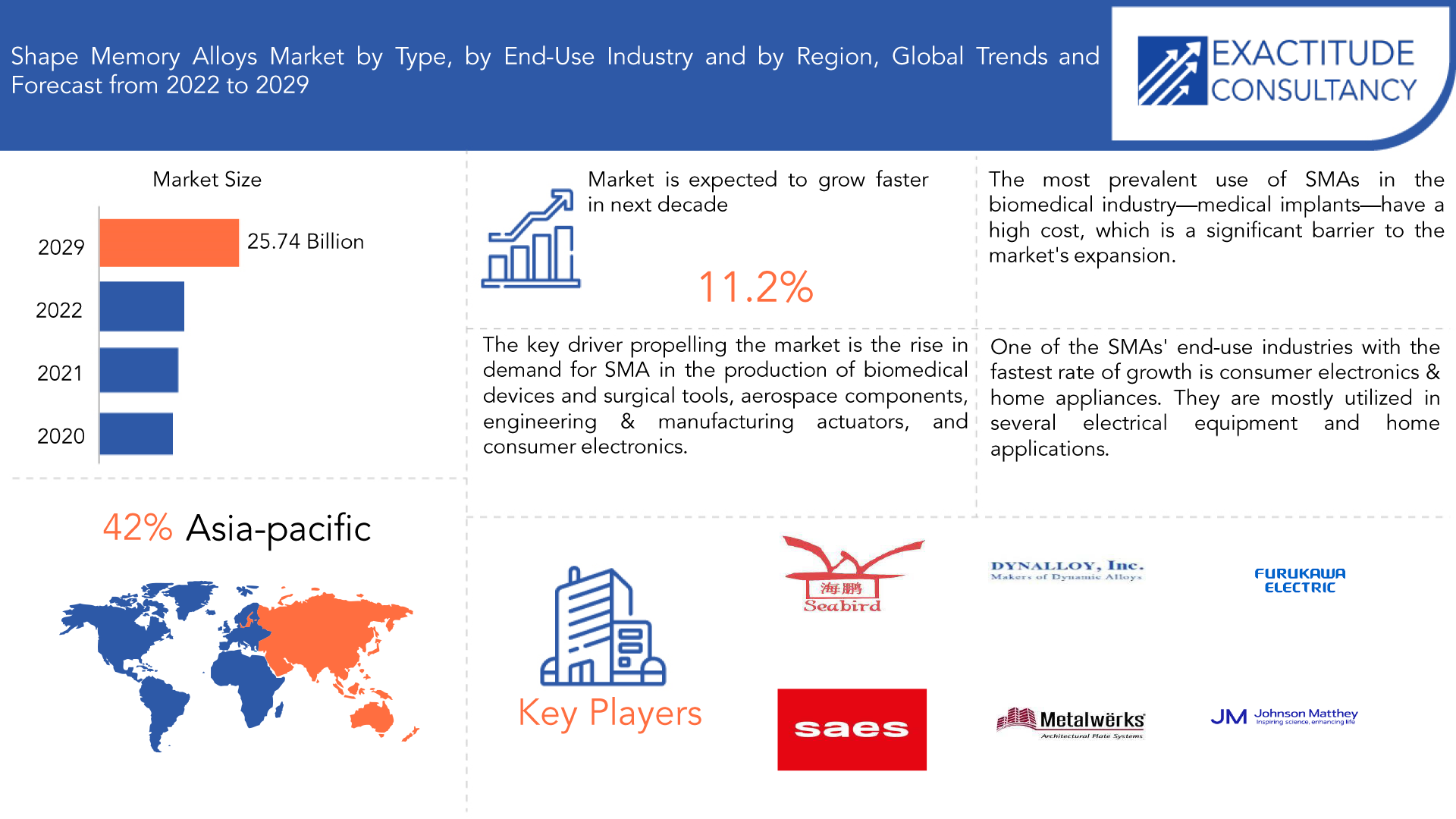
The shape memory alloys market is expected to grow at 11.2% CAGR from 2022 to 2029. It is expected to reach above USD 25.74 Billion by 2029 from USD 9.9 Billion in 2020.
Heat can be used to deform shape memory alloys, which will then return to their original shape. Shape memory alloys experience a phase transition in their crystal structure when they cool from their stronger, high-temperature form (austenite) to their weaker, low-temperature form (martensite) (martensite). The inherent phase transition of these alloys is what gives them unique properties like shape memory and super elasticity. It is quite simple to bend a shape memory alloy into a new shape while it is in the martensitic condition. Alloy transforms at its transformation temperatures and returns to its original shape with great force. The term "shape memory" refers to this transforming process.
The rising automotive industry is one of the key reasons propelling the shape memory alloy market. Shape memory alloy demand is further boosted by significant developments in other industries like civil, robotics, defense, biomedicine, and aerospace. Shape memory alloys, which can be bent or stretched to match the needs of the user, are growing in favour as consumer electronics become more widely used. The market for shape memory alloys is also being driven by the growing popularity of nitinol alloys. Medical implants including stents, dental wires, orthopaedic screws, and other surgical supplies are made with shape memory metals. The market for shape memory alloys is anticipated to see certain growth restrictions due to a few issues. Due to the high price of these alloys and the sensitivity of material qualities throughout the manufacturing process, the market is constrained. One of the shape memory alloys' end-use industries with the fastest rate of growth is consumer electronics & home appliances. Shape memory alloys are frequently utilized in the production of cellular phones, air conditioners, coffee makers, cameras, personal accessories, and rice cookers. These alloys are preferred because of their improved elasticity, prolonged fatigue life, and resistance to corrosion. They are mostly utilized as actuators and sensors in several electrical equipment and home application applications.
| ATTRIBUTE | DETAILS |
| Study period | 2020-2029 |
| Base year | 2021 |
| Estimated year | 2022 |
| Forecasted year | 2022-2029 |
| Historical period | 2018-2020 |
| Unit | Value (USD Billion) (Kilotons) |
| Segmentation | By Type, By End-Use Industry, By Region |
| By Type
|
|
| By End-Use Industry
|
|
| By Region
|
|
Technology advances, rising R&D efforts, and rising demand for minimally invasive medical devices are the main drivers of market expansion. Shape memory alloys (SMA) are becoming more and more necessary in the production of consumer electronics, aviation components, engineering and manufacturing actuators, and biomedical devices and surgical equipment. Global market expansion can be attributed to the rise in demand for premium life-saving medical devices as well as improved automotive and aerospace components.
The COVID-19 epidemic has had a conflicting effect on the world market for shape memory alloys (SMAs). On the one hand, the pandemic has caused a reduction in demand from several end-use industries, like aerospace and automotive, because of the slowdown in the economy and the disruption of the supply chain. In contrast, the healthcare sector has seen a rise in demand for medical tools and supplies, particularly SMAs, in response to the pandemic. Due to the rising incidence of COVID-19 cases and the demand for medical solutions, the demand for SMAs used in medical devices such stents, orthopaedic implants, and surgical instruments has greatly increased. However, the pandemic's effects on the manufacturing and supply chain have resulted in some delays in the production and delivery of these devices, which could have an immediate effect on the market. Governments now place more emphasis on meeting fundamental human needs than on building infrastructure, which drives rising demand for shape memory alloys from the civil construction industry.
[caption id="attachment_17653" align="aligncenter" width="1920"]
Frequently Asked Questions
• What is the worth of Shape Memory Alloys Market?
The Shape Memory Alloys Market is expected to grow at 11.2% CAGR from 2022 to 2029. It is expected to reach above USD 25.74 Billion by 2029 from USD 9.9 Billion in 2020.
• What is the size of the Asia Pacific in Shape Memory Alloys Market?
Asia Pacific held more than 42% of the Shape Memory Alloys Market revenue share in 2021 and will witness expansion in the forecast period.
• What are some of the Shape Memory Alloys Market's driving forces?
One of the main factors driving the market for shape memory alloys is the expanding automotive sector. Significant advancements in various sectors as civil, robotics, defense, medical, and aerospace have further increased demand for shape memory alloy. Since consumer electronics are used increasingly frequently, shape memory alloys, which can be bent or stretched to suit the needs of the user, are becoming more popular. The rising demand for nitinol alloys is another factor driving the market for shape memory alloys.
• Which are the top companies to hold the Market share in Shape Memory Alloys Market?
The Market research report covers the analysis of Market players. Key companies profiled in the report include Seabird Metal, Saes Gaetters, Dynalloyinc, Metalwerks Inc., Furukawa, Johnson Mattey, XSMA Inc., Nippon Steel, Nippon Seisen, ATI.
• Which is the largest regional Market for Shape Memory Alloys Market?
The greatest revenue share was accounted for by Asia Pacific. The region is home to among of the world's largest and fastest-growing markets for SMAs due to the presence of significant producers and expanding demand from several end-use industries. Due to the growing need for high-strength, lightweight materials, the market for shape-memory alloys (SMA) is rapidly growing in countries like China, Japan, South Korea, and India. The healthcare industry is the main end-user of SMAs in the Asia-Pacific region, mainly because of the rise in the frequency of chronic illnesses and the demand for minimally invasive surgical procedures. In the region, the aircraft industry is also experiencing rapid growth. SMAs are employed in a wide range of applications in the aerospace industry, including actuation systems, smart materials, and structural components.
Shape Memory Alloys Market Segment Analysis
Shape memory alloys market is segmented based on type, end-use industry, and region.
Based on type, a significant portion of the market was made up of nitinol. Nitinol alloys have exceptional shape memory and superelasticity characteristics, which make them perfect for a variety of applications in the automotive, aerospace, consumer electronics, and medical fields. The majority of demand for nitinol alloys comes from the medical devices sector, which is also one of its biggest end users. Because to its biocompatibility, corrosion resistance, and superior mechanical qualities, nitinol alloys are widely utilized in medical devices like stents, orthopaedic implants, and surgical equipment.
Based on end-use industry, a significant portion of the market was made up of biomedical. This is explained by shape memory alloys' superior biocompatibility and compatibility with computer tomography. The segment is being driven by an increase in demand for shape memory alloys in orthopaedics, neurosurgery, endodontics, and orthodontics. Also, over the forecast period, category expansion would be aided by rising healthcare expenditures globally. Nitinol alloys, in particular, are widely employed in the biomedical industry. Because of their shape memory and superelasticity, nitinol alloys are frequently utilized in medical devices like stents, orthopaedic implants, and surgical instruments.
[caption id="attachment_17657" align="aligncenter" width="1920"]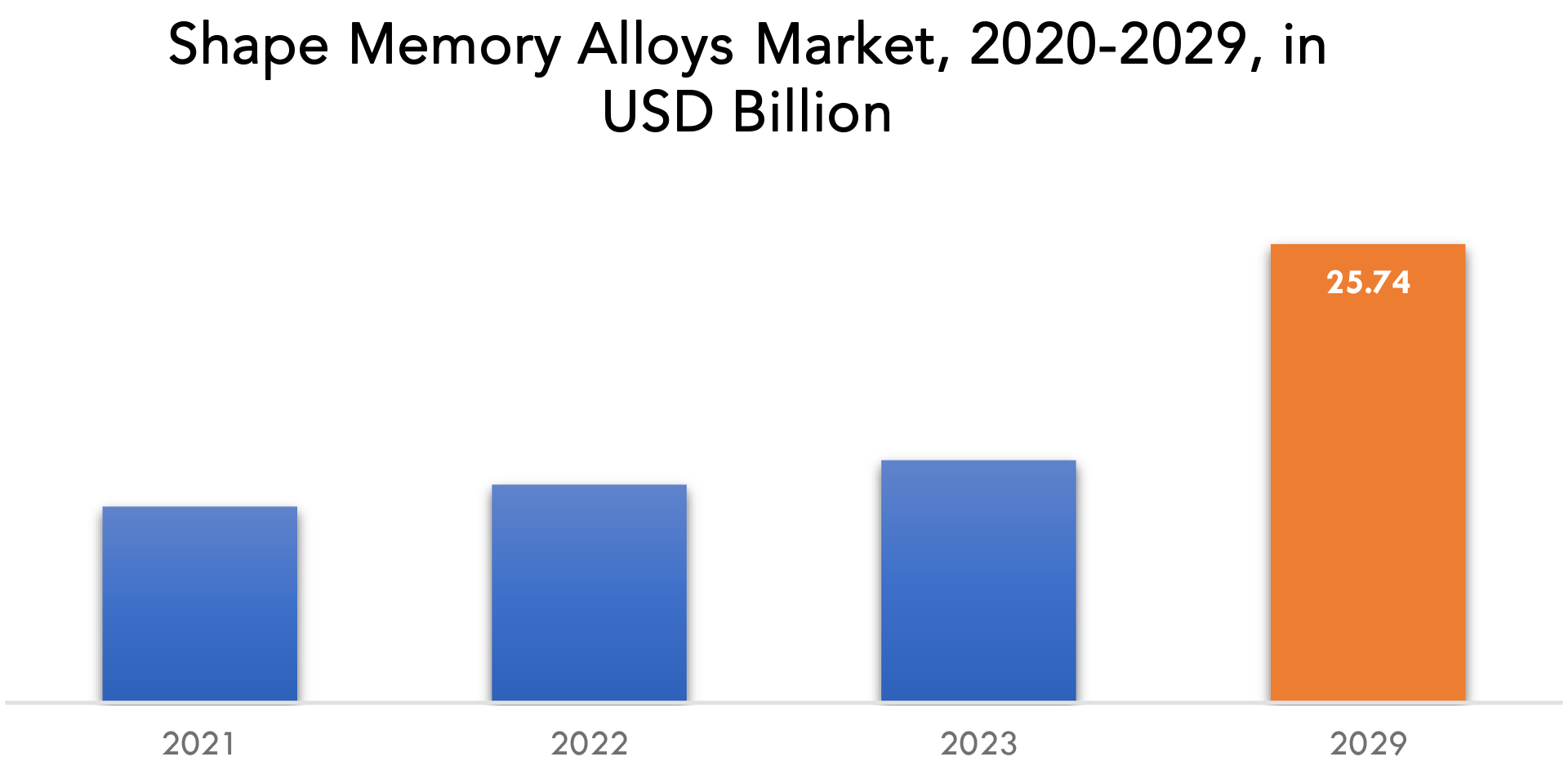
Shape Memory Alloys Market Players
The Market research report covers the analysis of Market players. Key companies profiled in the report include Seabird Metal, Saes Gaetters, Dynalloyinc, Metalwerks Inc., Furukawa, Johnson Mattey, XSMA Inc., Nippon Steel, Nippon Seisen, ATI.
- In February 2023, Nippon Steel enters into agreement with Teck Resources Limited to acquire equity and royalty interests in Elk Valley Resources Ltd.
- In January 2023, SAES announces the signing of a binding agreement for the divestiture of the nitinol business
Who Should Buy? Or Key Stakeholders
- Research and Development Institutes
- Aerospace & Defense Companies
- Automotive Companies
- Oil & Gas players
- Potential Investors
- Others
Shape Memory Alloys Market Regional Analysis
The Shape Memory Alloys Market by region includes North America, Asia-Pacific (APAC), Europe, South America, and Middle East & Africa (MEA).
- North America: includes the US, Canada, Mexico
- Asia Pacific: includes China, Japan, South Korea, India, Australia, ASEAN and Rest of APAC
- Europe: includes UK, Germany, France, Italy, Spain, Russia, and Rest of Europe
- South America: includes Brazil, Argentina and Rest of South America
- Middle East & Africa: includes Turkey, UAE, Saudi Arabia, South Africa, and Rest of MEA
The greatest revenue share in 2021 over 42% was accounted for by Asia Pacific. The presence of important producers and rising demand from numerous end-use sectors make the area the largest and fastest-growing market for SMAs globally. The market for shape-memory alloys (SMA) is expanding significantly in nations like China, Japan, South Korea, and India as a result of the rising need for high-strength, lightweight materials. The Asia-Pacific region's major end-user of SMAs is the healthcare sector, primarily as a result of the rise in chronic illness prevalence and the desire for minimally invasive surgical procedures. The aerospace sector, where SMAs are used in a variety of applications including actuation systems, smart materials, and structural components, is also expanding significantly in the region. The need for SMAs is also being driven by the region's consumer electronics market, especially as a result of the growing popularity of wearable technology and smart home products.
[caption id="attachment_17658" align="aligncenter" width="1920"]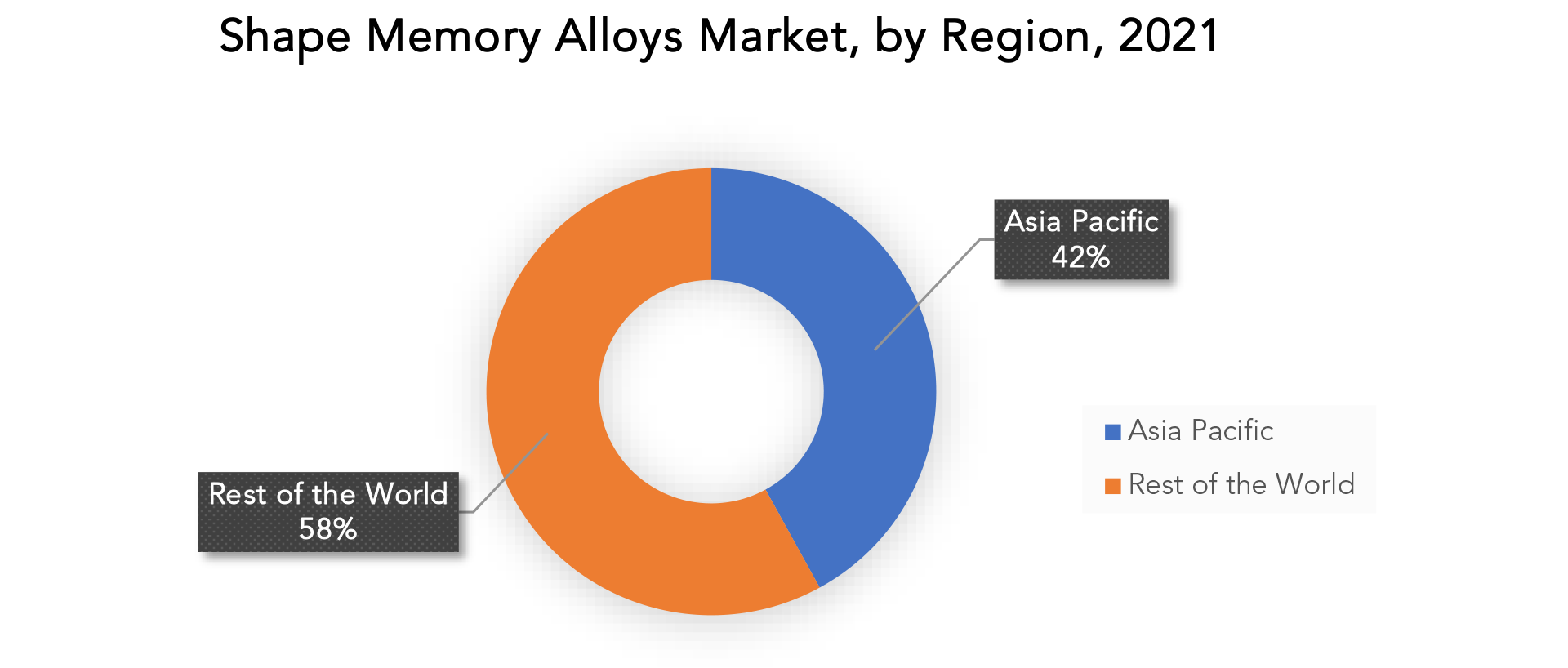
Key Market Segments: Shape Memory Alloys Market
Shape Memory Alloys Market By Type, 2020-2029, (USD Billion), (Kilotons)- Nitinol
- Copper-Based
- Iron-Manganese Silicon
- Biomedical
- Aerospace & Defense
- Automotive
- Consumer Electronics
- Others
- North America
- Asia Pacific
- Europe
- South America
- Middle East And Africa
Exactitude Consultancy Services Key Objectives:
- Increasing sales and Market share
- Developing new technology
- Improving profitability
- Entering new markets
- Enhancing brand reputation
Key Question Answered
- What is the expected growth rate of the shape memory alloys market over the next 7 years?
- Who are the major players in the shape memory alloys market and what is their market share?
- What are the end-user industries driving demand for market and what is their outlook?
- What are the opportunities for growth in emerging markets such as asia-pacific, middle east, and africa?
- How is the economic environment affecting the shape memory alloys market, including factors such as interest rates, inflation, and exchange rates?
- What is the expected impact of government policies and regulations on the shape memory alloys market?
- What is the current and forecasted size and growth rate of the global shape memory alloys market?
- What are the key drivers of growth in the shape memory alloys market?
- Who are the major players in the market and what is their market share?
- What are the distribution channels and supply chain dynamics in the shape memory alloys market?
- What are the technological advancements and innovations in the shape memory alloys market and their impact on product development and growth?
- What are the regulatory considerations and their impact on the market?
- What are the challenges faced by players in the shape memory alloys market and how are they addressing these challenges?
- What are the opportunities for growth and expansion in the shape memory alloys market?
- What are the products offerings and specifications of leading players in the market?
- Introduction
- Market Definition
- Market Segmentation
- Research Timelines
- Assumptions and Limitations
- Research Methodology
- Data Mining
- Secondary Research
- Primary Research
- Subject-Matter Experts’ Advice
- Quality Checks
- Final Review
- Data Triangulation
- Bottom-Up Approach
- Top-Down Approach
- Research Flow
- Data Sources
- Data Mining
- Executive Summary
- Market Overview
- Global Shape Memory Alloys Market outlook
- Market Drivers
- Market Restraints
- Market Opportunities
- Impact of Covid-19 on Shape Memory Alloys Market
- Porter’s five forces model
- Threat from new entrants
- Threat from substitutes
- Bargaining power of suppliers
- Bargaining power of customers
- Degree of competition
- Industry value chain Analysis
- Global Shape Memory Alloys Market outlook
- GLOBAL SHAPE MEMORY ALLOYS MARKET BY TYPE, 2020-2029, (USD BILLION), (KILOTONS)
- Nitinol
- Copper-Based
- Iron-Manganese Silicon
- GLOBAL SHAPE MEMORY ALLOYS MARKET BY END-USE INDUSTRY, 2020-2029, (USD BILLION), (KILOTONS)
- Biomedical
- Aerospace & Defense
- Automotive
- Consumer Electronics
- Others
- GLOBAL SHAPE MEMORY ALLOYS MARKET BY REGION, 2020-2029, (USD BILLION), (KILOTONS)
- North America
- US
- Canada
- Mexico
- South America
- Brazil
- Argentina
- Colombia
- Rest Of South America
- Europe
- Germany
- UK
- France
- Italy
- Spain
- Russia
- Rest Of Europe
- Asia Pacific
- India
- China
- Japan
- South Korea
- Australia
- South-East Asia
- Rest Of Asia Pacific
- Middle East and Africa
- UAE
- Saudi Arabia
- South Africa
- Rest Of Middle East and Africa
- North America
- Company Profiles*
(Business Overview, Company Snapshot, Products Offered, Recent Developments)
- Seabird Metal
- Saes Gaetters
- Dynalloyinc
- Metalwerks Inc.
- Furukawa
- Johnson Mattey
- XSMA Inc.
- Nippon Steel
- Nippon Seisen
- ATI
*The Company List Is Indicative
LIST OF TABLES
TABLE 1 GLOBAL SHAPE MEMORY ALLOYS MARKET BY TYPE (USD BILLION), 2020-2029
TABLE 2 GLOBAL SHAPE MEMORY ALLOYS MARKET BY TYPE (KILOTONS), 2020-2029
TABLE 3 GLOBAL SHAPE MEMORY ALLOYS MARKET BY END-USE INDUSTRY (USD BILLION), 2020-2029
TABLE 4 GLOBAL SHAPE MEMORY ALLOYS MARKET BY END-USE INDUSTRY (KILOTONS), 2020-2029
TABLE 5 GLOBAL SHAPE MEMORY ALLOYS MARKET BY REGION (USD BILLION), 2020-2029
TABLE 6 GLOBAL SHAPE MEMORY ALLOYS MARKET BY REGION (KILOTONS), 2020-2029
TABLE 7 NORTH AMERICA SHAPE MEMORY ALLOYS MARKET BY TYPE (USD BILLION), 2020-2029
TABLE 8 NORTH AMERICA SHAPE MEMORY ALLOYS MARKET BY TYPE (KILOTONS), 2020-2029
TABLE 9 NORTH AMERICA SHAPE MEMORY ALLOYS MARKET BY END-USE INDUSTRY (USD BILLION), 2020-2029
TABLE 10 NORTH AMERICA SHAPE MEMORY ALLOYS MARKET BY END-USE INDUSTRY (KILOTONS), 2020-2029
TABLE 11 NORTH AMERICA SHAPE MEMORY ALLOYS MARKET BY COUNTRY (USD BILLION), 2020-2029
TABLE 12 NORTH AMERICA SHAPE MEMORY ALLOYS MARKET BY COUNTRY (KILOTONS), 2020-2029
TABLE 13 US SHAPE MEMORY ALLOYS MARKET BY TYPE (USD BILLION), 2020-2029
TABLE 14 US SHAPE MEMORY ALLOYS MARKET BY TYPE (KILOTONS), 2020-2029
TABLE 15 US SHAPE MEMORY ALLOYS MARKET BY END-USE INDUSTRY (USD BILLION), 2020-2029
TABLE 16 US SHAPE MEMORY ALLOYS MARKET BY END-USE INDUSTRY (KILOTONS), 2020-2029
TABLE 17 CANADA SHAPE MEMORY ALLOYS MARKET BY TYPE (USD BILLION), 2020-2029
TABLE 18 CANADA SHAPE MEMORY ALLOYS MARKET BY TYPE (KILOTONS), 2020-2029
TABLE 19 CANADA SHAPE MEMORY ALLOYS MARKET BY END-USE INDUSTRY (USD BILLION), 2020-2029
TABLE 20 CANADA SHAPE MEMORY ALLOYS MARKET BY END-USE INDUSTRY (KILOTONS), 2020-2029
TABLE 21 MEXICO SHAPE MEMORY ALLOYS MARKET BY TYPE (USD BILLION), 2020-2029
TABLE 22 MEXICO SHAPE MEMORY ALLOYS MARKET BY TYPE (KILOTONS), 2020-2029
TABLE 23 MEXICO SHAPE MEMORY ALLOYS MARKET BY END-USE INDUSTRY (USD BILLION), 2020-2029
TABLE 24 MEXICO SHAPE MEMORY ALLOYS MARKET BY END-USE INDUSTRY (KILOTONS), 2020-2029
TABLE 25 SOUTH AMERICA SHAPE MEMORY ALLOYS MARKET BY TYPE (USD BILLION), 2020-2029
TABLE 26 SOUTH AMERICA SHAPE MEMORY ALLOYS MARKET BY TYPE (KILOTONS), 2020-2029
TABLE 27 SOUTH AMERICA SHAPE MEMORY ALLOYS MARKET BY END-USE INDUSTRY (USD BILLION), 2020-2029
TABLE 28 SOUTH AMERICA SHAPE MEMORY ALLOYS MARKET BY END-USE INDUSTRY (KILOTONS), 2020-2029
TABLE 29 SOUTH AMERICA SHAPE MEMORY ALLOYS MARKET BY COUNTRY (USD BILLION), 2020-2029
TABLE 30 SOUTH AMERICA SHAPE MEMORY ALLOYS MARKET BY COUNTRY (KILOTONS), 2020-2029
TABLE 31 BRAZIL SHAPE MEMORY ALLOYS MARKET BY TYPE (USD BILLION), 2020-2029
TABLE 32 BRAZIL SHAPE MEMORY ALLOYS MARKET BY TYPE (KILOTONS), 2020-2029
TABLE 33 BRAZIL SHAPE MEMORY ALLOYS MARKET BY END-USE INDUSTRY (USD BILLION), 2020-2029
TABLE 34 BRAZIL SHAPE MEMORY ALLOYS MARKET BY END-USE INDUSTRY (KILOTONS), 2020-2029
TABLE 35 ARGENTINA SHAPE MEMORY ALLOYS MARKET BY TYPE (USD BILLION), 2020-2029
TABLE 36 ARGENTINA SHAPE MEMORY ALLOYS MARKET BY TYPE (KILOTONS), 2020-2029
TABLE 37 ARGENTINA SHAPE MEMORY ALLOYS MARKET BY END-USE INDUSTRY (USD BILLION), 2020-2029
TABLE 38 ARGENTINA SHAPE MEMORY ALLOYS MARKET BY END-USE INDUSTRY (KILOTONS), 2020-2029
TABLE 39 COLOMBIA SHAPE MEMORY ALLOYS MARKET BY TYPE (USD BILLION), 2020-2029
TABLE 40 COLOMBIA SHAPE MEMORY ALLOYS MARKET BY TYPE (KILOTONS), 2020-2029
TABLE 41 COLOMBIA SHAPE MEMORY ALLOYS MARKET BY END-USE INDUSTRY (USD BILLION), 2020-2029
TABLE 42 COLOMBIA SHAPE MEMORY ALLOYS MARKET BY END-USE INDUSTRY (KILOTONS), 2020-2029
TABLE 43 REST OF SOUTH AMERICA SHAPE MEMORY ALLOYS MARKET BY TYPE (USD BILLION), 2020-2029
TABLE 44 REST OF SOUTH AMERICA SHAPE MEMORY ALLOYS MARKET BY TYPE (KILOTONS), 2020-2029
TABLE 45 REST OF SOUTH AMERICA SHAPE MEMORY ALLOYS MARKET BY END-USE INDUSTRY (USD BILLION), 2020-2029
TABLE 46 REST OF SOUTH AMERICA SHAPE MEMORY ALLOYS MARKET BY END-USE INDUSTRY (KILOTONS), 2020-2029
TABLE 47 ASIA-PACIFIC SHAPE MEMORY ALLOYS MARKET BY TYPE (USD BILLION), 2020-2029
TABLE 48 ASIA-PACIFIC SHAPE MEMORY ALLOYS MARKET BY TYPE (KILOTONS), 2020-2029
TABLE 49 ASIA-PACIFIC SHAPE MEMORY ALLOYS MARKET BY END-USE INDUSTRY (USD BILLION), 2020-2029
TABLE 50 ASIA-PACIFIC SHAPE MEMORY ALLOYS MARKET BY END-USE INDUSTRY (KILOTONS), 2020-2029
TABLE 51 ASIA-PACIFIC SHAPE MEMORY ALLOYS MARKET BY COUNTRY (USD BILLION), 2020-2029
TABLE 52 ASIA-PACIFIC SHAPE MEMORY ALLOYS MARKET BY COUNTRY (KILOTONS), 2020-2029
TABLE 53 INDIA SHAPE MEMORY ALLOYS MARKET BY TYPE (USD BILLION), 2020-2029
TABLE 54 INDIA SHAPE MEMORY ALLOYS MARKET BY TYPE (KILOTONS), 2020-2029
TABLE 55 INDIA SHAPE MEMORY ALLOYS MARKET BY END-USE INDUSTRY (USD BILLION), 2020-2029
TABLE 56 INDIA SHAPE MEMORY ALLOYS MARKET BY END-USE INDUSTRY (KILOTONS), 2020-2029
TABLE 57 CHINA SHAPE MEMORY ALLOYS MARKET BY TYPE (USD BILLION), 2020-2029
TABLE 58 CHINA SHAPE MEMORY ALLOYS MARKET BY TYPE (KILOTONS), 2020-2029
TABLE 59 CHINA SHAPE MEMORY ALLOYS MARKET BY END-USE INDUSTRY (USD BILLION), 2020-2029
TABLE 60 CHINA SHAPE MEMORY ALLOYS MARKET BY END-USE INDUSTRY (KILOTONS), 2020-2029
TABLE 61 JAPAN SHAPE MEMORY ALLOYS MARKET BY TYPE (USD BILLION), 2020-2029
TABLE 62 JAPAN SHAPE MEMORY ALLOYS MARKET BY TYPE (KILOTONS), 2020-2029
TABLE 63 JAPAN SHAPE MEMORY ALLOYS MARKET BY END-USE INDUSTRY (USD BILLION), 2020-2029
TABLE 64 JAPAN SHAPE MEMORY ALLOYS MARKET BY END-USE INDUSTRY (KILOTONS), 2020-2029
TABLE 65 SOUTH KOREA SHAPE MEMORY ALLOYS MARKET BY TYPE (USD BILLION), 2020-2029
TABLE 66 SOUTH KOREA SHAPE MEMORY ALLOYS MARKET BY TYPE (KILOTONS), 2020-2029
TABLE 67 SOUTH KOREA SHAPE MEMORY ALLOYS MARKET BY END-USE INDUSTRY (USD BILLION), 2020-2029
TABLE 68 SOUTH KOREA SHAPE MEMORY ALLOYS MARKET BY END-USE INDUSTRY (KILOTONS), 2020-2029
TABLE 69 AUSTRALIA SHAPE MEMORY ALLOYS MARKET BY TYPE (USD BILLION), 2020-2029
TABLE 70 AUSTRALIA SHAPE MEMORY ALLOYS MARKET BY TYPE (KILOTONS), 2020-2029
TABLE 71 AUSTRALIA SHAPE MEMORY ALLOYS MARKET BY END-USE INDUSTRY (USD BILLION), 2020-2029
TABLE 72 AUSTRALIA SHAPE MEMORY ALLOYS MARKET BY END-USE INDUSTRY (KILOTONS), 2020-2029
TABLE 73 SOUTH EAST ASIA SHAPE MEMORY ALLOYS MARKET BY TYPE (USD BILLION), 2020-2029
TABLE 74 SOUTH EAST ASIA SHAPE MEMORY ALLOYS MARKET BY TYPE (KILOTONS), 2020-2029
TABLE 75 SOUTH EAST ASIA SHAPE MEMORY ALLOYS MARKET BY END-USE INDUSTRY (USD BILLION), 2020-2029
TABLE 76 SOUTH EAST ASIA SHAPE MEMORY ALLOYS MARKET BY END-USE INDUSTRY (KILOTONS), 2020-2029
TABLE 77 REST OF ASIA PACIFIC SHAPE MEMORY ALLOYS MARKET BY TYPE (USD BILLION), 2020-2029
TABLE 78 REST OF ASIA PACIFIC SHAPE MEMORY ALLOYS MARKET BY TYPE (KILOTONS), 2020-2029
TABLE 79 REST OF ASIA PACIFIC SHAPE MEMORY ALLOYS MARKET BY END-USE INDUSTRY (USD BILLION), 2020-2029
TABLE 80 REST OF ASIA PACIFIC SHAPE MEMORY ALLOYS MARKET BY END-USE INDUSTRY (KILOTONS), 2020-2029
TABLE 81 EUROPE SHAPE MEMORY ALLOYS MARKET BY TYPE (USD BILLION), 2020-2029
TABLE 82 EUROPE SHAPE MEMORY ALLOYS MARKET BY TYPE (KILOTONS), 2020-2029
TABLE 83 EUROPE SHAPE MEMORY ALLOYS MARKET BY END-USE INDUSTRY (USD BILLION), 2020-2029
TABLE 84 EUROPE SHAPE MEMORY ALLOYS MARKET BY END-USE INDUSTRY (KILOTONS), 2020-2029
TABLE 85 EUROPE SHAPE MEMORY ALLOYS MARKET BY COUNTRY (USD BILLION), 2020-2029
TABLE 86 EUROPE SHAPE MEMORY ALLOYS MARKET BY COUNTRY (KILOTONS), 2020-2029
TABLE 87 GERMANY SHAPE MEMORY ALLOYS MARKET BY TYPE (USD BILLION), 2020-2029
TABLE 88 GERMANY SHAPE MEMORY ALLOYS MARKET BY TYPE (KILOTONS), 2020-2029
TABLE 89 GERMANY SHAPE MEMORY ALLOYS MARKET BY END-USE INDUSTRY (USD BILLION), 2020-2029
TABLE 90 GERMANY SHAPE MEMORY ALLOYS MARKET BY END-USE INDUSTRY (KILOTONS), 2020-2029
TABLE 91 UK SHAPE MEMORY ALLOYS MARKET BY TYPE (USD BILLION), 2020-2029
TABLE 92 UK SHAPE MEMORY ALLOYS MARKET BY TYPE (KILOTONS), 2020-2029
TABLE 93 UK SHAPE MEMORY ALLOYS MARKET BY END-USE INDUSTRY (USD BILLION), 2020-2029
TABLE 94 UK SHAPE MEMORY ALLOYS MARKET BY END-USE INDUSTRY (KILOTONS), 2020-2029
TABLE 95 FRANCE SHAPE MEMORY ALLOYS MARKET BY TYPE (USD BILLION), 2020-2029
TABLE 96 FRANCE SHAPE MEMORY ALLOYS MARKET BY TYPE (KILOTONS), 2020-2029
TABLE 97 FRANCE SHAPE MEMORY ALLOYS MARKET BY END-USE INDUSTRY (USD BILLION), 2020-2029
TABLE 98 FRANCE SHAPE MEMORY ALLOYS MARKET BY END-USE INDUSTRY (KILOTONS), 2020-2029
TABLE 99 ITALY SHAPE MEMORY ALLOYS MARKET BY TYPE (USD BILLION), 2020-2029
TABLE 100 ITALY SHAPE MEMORY ALLOYS MARKET BY TYPE (KILOTONS), 2020-2029
TABLE 101 ITALY SHAPE MEMORY ALLOYS MARKET BY END-USE INDUSTRY (USD BILLION), 2020-2029
TABLE 102 ITALY SHAPE MEMORY ALLOYS MARKET BY END-USE INDUSTRY (KILOTONS), 2020-2029
TABLE 103 SPAIN SHAPE MEMORY ALLOYS MARKET BY TYPE (USD BILLION), 2020-2029
TABLE 104 SPAIN SHAPE MEMORY ALLOYS MARKET BY TYPE (KILOTONS), 2020-2029
TABLE 105 SPAIN SHAPE MEMORY ALLOYS MARKET BY END-USE INDUSTRY (USD BILLION), 2020-2029
TABLE 106 SPAIN SHAPE MEMORY ALLOYS MARKET BY END-USE INDUSTRY (KILOTONS), 2020-2029
TABLE 107 RUSSIA SHAPE MEMORY ALLOYS MARKET BY TYPE (USD BILLION), 2020-2029
TABLE 108 RUSSIA SHAPE MEMORY ALLOYS MARKET BY TYPE (KILOTONS), 2020-2029
TABLE 109 RUSSIA SHAPE MEMORY ALLOYS MARKET BY END-USE INDUSTRY (USD BILLION), 2020-2029
TABLE 110 RUSSIA SHAPE MEMORY ALLOYS MARKET BY END-USE INDUSTRY (KILOTONS), 2020-2029
TABLE 111 REST OF EUROPE SHAPE MEMORY ALLOYS MARKET BY TYPE (USD BILLION), 2020-2029
TABLE 112 REST OF EUROPE SHAPE MEMORY ALLOYS MARKET BY TYPE (KILOTONS), 2020-2029
TABLE 113 REST OF EUROPE SHAPE MEMORY ALLOYS MARKET BY END-USE INDUSTRY (USD BILLION), 2020-2029
TABLE 114 REST OF EUROPE SHAPE MEMORY ALLOYS MARKET BY END-USE INDUSTRY (KILOTONS), 2020-2029
TABLE 115 MIDDLE EAST AND AFRICA SHAPE MEMORY ALLOYS MARKET BY TYPE (USD BILLION), 2020-2029
TABLE 116 MIDDLE EAST AND AFRICA SHAPE MEMORY ALLOYS MARKET BY TYPE (KILOTONS), 2020-2029
TABLE 117 MIDDLE EAST AND AFRICA SHAPE MEMORY ALLOYS MARKET BY END-USE INDUSTRY (USD BILLION), 2020-2029
TABLE 118 MIDDLE EAST AND AFRICA SHAPE MEMORY ALLOYS MARKET BY END-USE INDUSTRY (KILOTONS), 2020-2029
TABLE 119 MIDDLE EAST AND AFRICA SHAPE MEMORY ALLOYS MARKET BY COUNTRY (USD BILLION), 2020-2029
TABLE 120 MIDDLE EAST AND AFRICA SHAPE MEMORY ALLOYS MARKET BY COUNTRY (KILOTONS), 2020-2029
TABLE 121 UAE SHAPE MEMORY ALLOYS MARKET BY TYPE (USD BILLION), 2020-2029
TABLE 122 UAE SHAPE MEMORY ALLOYS MARKET BY TYPE (KILOTONS), 2020-2029
TABLE 123 UAE SHAPE MEMORY ALLOYS MARKET BY END-USE INDUSTRY (USD BILLION), 2020-2029
TABLE 124 UAE SHAPE MEMORY ALLOYS MARKET BY END-USE INDUSTRY (KILOTONS), 2020-2029
TABLE 125 SAUDI ARABIA SHAPE MEMORY ALLOYS MARKET BY TYPE (USD BILLION), 2020-2029
TABLE 126 SAUDI ARABIA SHAPE MEMORY ALLOYS MARKET BY TYPE (KILOTONS), 2020-2029
TABLE 127 SAUDI ARABIA SHAPE MEMORY ALLOYS MARKET BY END-USE INDUSTRY (USD BILLION), 2020-2029
TABLE 128 SAUDI ARABIA SHAPE MEMORY ALLOYS MARKET BY END-USE INDUSTRY (KILOTONS), 2020-2029
TABLE 129 SOUTH AFRICA SHAPE MEMORY ALLOYS MARKET BY TYPE (USD BILLION), 2020-2029
TABLE 130 SOUTH AFRICA SHAPE MEMORY ALLOYS MARKET BY TYPE (KILOTONS), 2020-2029
TABLE 131 SOUTH AFRICA SHAPE MEMORY ALLOYS MARKET BY END-USE INDUSTRY (USD BILLION), 2020-2029
TABLE 132 SOUTH AFRICA SHAPE MEMORY ALLOYS MARKET BY END-USE INDUSTRY (KILOTONS), 2020-2029
TABLE 133 REST OF MIDDLE EAST AND AFRICA SHAPE MEMORY ALLOYS MARKET BY TYPE (USD BILLION), 2020-2029
TABLE 134 REST OF MIDDLE EAST AND AFRICA SHAPE MEMORY ALLOYS MARKET BY TYPE (KILOTONS), 2020-2029
TABLE 135 REST OF MIDDLE EAST AND AFRICA SHAPE MEMORY ALLOYS MARKET BY END-USE INDUSTRY (USD BILLION), 2020-2029
TABLE 136 REST OF MIDDLE EAST AND AFRICA SHAPE MEMORY ALLOYS MARKET BY END-USE INDUSTRY (KILOTONS), 2020-2029
LIST OF FIGURES
FIGURE 1 MARKET DYNAMICS
FIGURE 2 MARKET SEGMENTATION
FIGURE 3 REPORT TIMELINES: YEARS CONSIDERED
FIGURE 4 DATA TRIANGULATION
FIGURE 5 BOTTOM-UP APPROACH
FIGURE 6 TOP-DOWN APPROACH
FIGURE 7 RESEARCH FLOW
FIGURE 8 GLOBAL SHAPE MEMORY ALLOYS MARKET BY TYPE, USD BILLION, 2020-2029
FIGURE 9 GLOBAL SHAPE MEMORY ALLOYS MARKET BY END-USE INDUSTRY, USD BILLION, 2020-2029
FIGURE 10 GLOBAL SHAPE MEMORY ALLOYS MARKET BY REGION, USD BILLION, 2020-2029
FIGURE 11 PORTER’S FIVE FORCES MODEL
FIGURE 12 GLOBAL SHAPE MEMORY ALLOYS MARKET BY TYPE, USD BILLION, 2021
FIGURE 13 GLOBAL SHAPE MEMORY ALLOYS MARKET BY END-USE INDUSTRY, USD BILLION, 2021
FIGURE 14 GLOBAL SHAPE MEMORY ALLOYS MARKET BY REGION, USD BILLION, 2021
FIGURE 15 MARKET SHARE ANALYSIS
FIGURE 16 SEABIRD METAL: COMPANY SNAPSHOT
FIGURE 17 SAES GAETTERS: COMPANY SNAPSHOT
FIGURE 18 DYNALLOYINC: COMPANY SNAPSHOT
FIGURE 19 METALWERKS INC.: COMPANY SNAPSHOT
FIGURE 20 FURUKAWA: COMPANY SNAPSHOT
FIGURE 21 JOHNSON MATTEY: COMPANY SNAPSHOT
FIGURE 22 XSMA INC.: COMPANY SNAPSHOT
FIGURE 23 NIPPON STEEL: COMPANY SNAPSHOT
FIGURE 24 NIPPON SEISEN: COMPANY SNAPSHOT
FIGURE 25 ATI: COMPANY SNAPSHOT
DOWNLOAD FREE SAMPLE REPORT
License Type
SPEAK WITH OUR ANALYST
Want to know more about the report or any specific requirement?
WANT TO CUSTOMIZE THE REPORT?
Our Clients Speak
We asked them to research ‘ Equipment market’ all over the world, and their whole arrangement was helpful to us. thehealthanalytics.com insightful analysis and reports contributed to our current analysis and in creating a future strategy. Besides, the te
Yosuke Mitsui
Senior Associate Construction Equipment Sales & Marketing
We asked them to research ‘Equipment market’ all over the world, and their whole arrangement was helpful to us. thehealthanalytics.com insightful analysis and reports contributed to our current analysis and in creating a future strategy. Besides, the te