

Base Year Value ()
x.x %
x.x %
CAGR ()
x.x %
x.x %
Forecast Year Value ()
x.x %
x.x %
Historical Data Period
Largest Region
Forecast Period
Precious Metal Catalysts Market By Type (Platinum, Palladium, Rhodium, Iridium, Ruthenium), By End User (Automobile, Pharmaceutical, Refinery) and Region, Global Trends and Forecast from 2023 to 2029
Instant access to hundreds of data points and trends
- Market estimates from 2014-2029
- Competitive analysis, industry segmentation, financial benchmarks
- Incorporates SWOT, Porter's Five Forces and risk management frameworks
- PDF report or online database with Word, Excel and PowerPoint export options
- 100% money back guarantee
Precious Metal Catalysts Market Overview
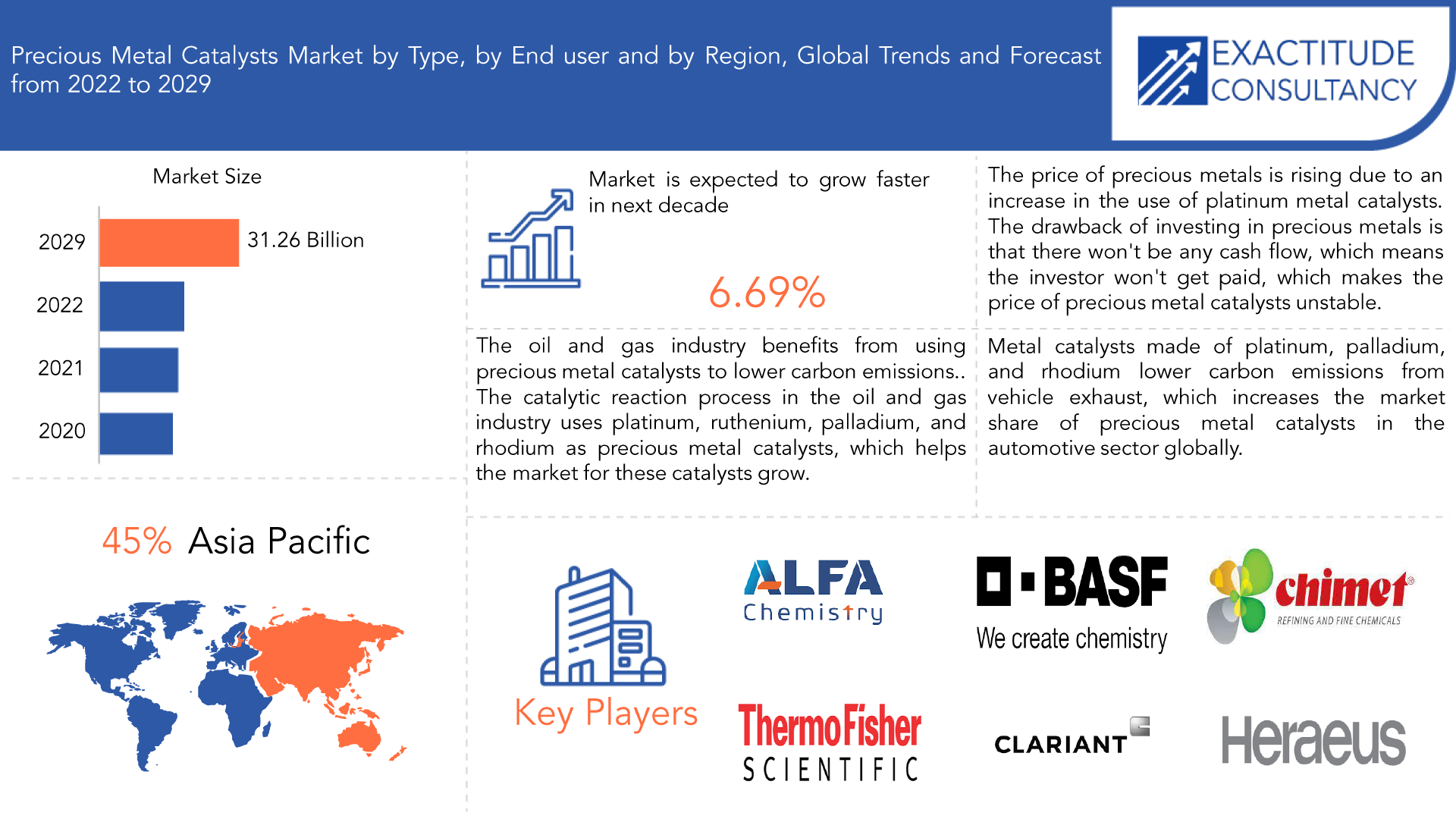
The precious metal catalysts market is expected to grow at 6.69% CAGR from 2023 to 2029. It is expected to reach above USD 31.26 Billion by 2029 from USD 18.62 Billion in 2022.
In order to produce precious metal catalysts, carrier materials such as platinum and palladium are added to. Active carbon or aluminum oxide are two often utilized carrier materials. Catalysts made of precious metals are employed in a variety of industries, including the automotive sector as catalytic converters. To make harmful vehicle emissions into less harmful pollutants, catalytic converters are utilized. Catalytic converters frequently use the valuable metals platinum, palladium, and rhodium. Many pharmaceutical active components, including acetaminophen, L-dopa, carbapenam, and tetracycline, are synthesized in the presence of precious metal catalysts in the pharmaceutical industry. These catalysts are employed in the production of chemical compounds in bulk, including ammonia, hydrogen peroxide, phenols, and anilines. In the production of synthetic fibers like nylon and polyester as well as polymers like vinyl chloride and methyl methacrylate, they are also employed. They are also employed in the refinement of hydrocarbons. For example, platinum impregnated on silica-alumina base is utilized in the process of hydrocracking in refineries whereas platinum and palladium impregnated on alumina base is used to produce high-octane gasoline. In petrochemical industries, they are employed in the hydro purification process. In refineries, volatile organic compound (VOC) emissions are also reduced using precious metal catalysts. Due to their use in several industries and severe pollution control laws, precious metal catalysts are becoming more and more in demand.
Many pharmaceutical, automotive, aerospace, oil & gas, agrochemical, and other industries employ precious metal catalysts. Globally, sustainability is rising as a result of new technology. In their manufacturing procedures, businesses are implementing sustainable requirements. In an effort to increase sustainability, businesses have discovered that investing in supplier training and sustainability improvements has a positive financial impact. To increase sustainability, businesses have been switching from chemical to precious metal catalysts. The market for precious metal catalysts will rise as a result.
The oil and gas industry benefits from using precious metal catalysts to lower carbon emissions. Catalysts are necessary for hydrocarbons to be cracked and transformed into lighter molecules during the conversion process of oil refining. The catalytic reaction process in the oil and gas industry uses platinum, ruthenium, palladium, and rhodium as precious metal catalysts, which helps the market for these catalysts grow. Environmental deterioration and biodiversity loss are results of the rising demand for fossil fuels and natural resources. In the water sector, dumping industrial and human waste—including pharmaceutical and personal care products—into the water is also contributing to higher contamination levels. The COVID-19 epidemic has also brought attention to the dangers of air pollution and dangerous chemicals. Even the government has imposed restrictions on air pollution and established legal requirements. Because of this, a number of businesses have increased the use of polyolefin catalysts made of precious metals in their manufacturing, which reduces carbon emissions.
| ATTRIBUTE | DETAILS |
| Study period | 2020-2029 |
| Base year | 2021 |
| Estimated year | 2022 |
| Forecasted year | 2022-2029 |
| Historical period | 2018-2020 |
| Unit | Value (USD BILLION), (Kilotons). |
| Segmentation | By Type, By End user, By Region |
| By Type
|
|
| By End user
|
|
| By Region
|
|
Due to improved and quicker performance during chemical processing and to reduce the expensive cost of noble elements, the use of nano-particle catalysts manufactured from these materials has grown. Hydrogen and oxygen are easily absorbed into the environment by the nanoscale metal particles present in precious metal catalysts. In typical circumstances, absorbed hydrogen and oxygen react quickly with a wide range of replacements. In order to achieve a relatively high product yield, by-product generation must be minimized and reaction conditions must be kept moderate. The creation of precious metal catalysts has advanced thanks to recent developments in nanotechnology. Energy has been conserved, productivity has grown, and production costs have come down as a result.
For businesses who operate in the market for precious metal catalysts, price volatility is a significant concern. According to secondary data from Heraeus Holding, these are the constraints that have an impact on a company's ability to succeed, such as competitiveness, capital commitment, and profitability. It is quite important to manage this volatility in the price of precious metals. It needs the correct circumstances, including knowledge, time, and experience. Because platinum and other metals are more expensive than gold, they are rarer. Also, platinum is used extensively in the jewellery sector, and the automobile industry is using it more and more to cut down on carbon emissions from cars. Companies concentrate on reducing carbon emissions as a result of changing government laws regarding emissions of carbon dioxide. As a result, the price of precious metals is rising due to an increase in the use of platinum metal catalysts. The drawback of investing in precious metals is that there won't be any cash flow, which means the investor won't get paid, which makes the price of precious metal catalysts unstable.
For operating automobiles, combustion engines are essential in the automotive industry. The fuel in combustion engines is utilized to generate a lot of energy. The combustion engine primarily uses hydrocarbons as fuel. Hydrocarbons contain hazardous compounds including carbon monoxide and nitrogen oxide, which are pollutants and byproducts of combustion engines. Metal catalysts made of platinum, palladium, and rhodium lower carbon emissions from vehicle exhaust, which increases the market share of precious metal catalysts in the automotive sector globally.
The COVID-19 pandemic's aftereffects had a detrimental effect on the metal catalysts business. The global market was negatively impacted by fluctuations in metal prices. Also, the market has been significantly impacted by declines in the automobile and metal industries' prospective sales. For instance, India's output of crude steel is predicted to decline 10.6% to 99.6 million tons in 2020, according to a January 2021 article from The Economics Times. The metal cutting gas market, however, was supported in 2021 by rising demand for manufacturing, automotive, and construction projects as well as growing attention to a global economic recovery. The market has been propelled post-COVID-19 by a rise in the automobile and chemical industries' projected 2021 sales. In Canada, for instance, the automobile industry grew by about 6.5% in 2021 compared to 2020, StatCan data show, as a result of higher import and export activity.
[caption id="attachment_18568" align="aligncenter" width="1920"]
Frequently Asked Questions
• What is the worth of precious metal catalysts market?
The precious metal catalysts market is expected to grow at 6.69% CAGR from 2022 to 2029. It is expected to reach above USD 31.26 Billion by 2029 from USD 18.62 Billion in 2020.
• What is the size of the Asia Pacific precious metal catalysts industry?
Asia Pacific held more than 44.46 % of the precious metal catalysts market revenue share in 2021 and will witness expansion in the forecast period.
• What are some of the market's driving forces?
Due to improved and quicker performance during chemical processing and to reduce the expensive cost of noble elements, the use of nano-particle catalysts manufactured from these materials has grown. Hydrogen and oxygen are easily absorbed into the environment by the nanoscale metal particles present in precious metal catalysts. In typical circumstances, absorbed hydrogen and oxygen react quickly with a wide range of replacements. In order to achieve a relatively high product yield, by-product generation must be minimized and reaction conditions must be kept moderate. The creation of precious metal catalysts has advanced thanks to recent developments in nanotechnology. Energy has been conserved, productivity has grown, and production costs have come down as a result.
• Which are the top companies to hold the market share in precious metal catalysts market?
The precious metal catalysts market key players includes Alfa Chemistry, BASF SE, Chimet S.p.A., heraeus holding gmbh, Clariant AG, Alfa Aesar, Thermo Fisher Scientific, Johnson Matthey plc, Vineeth Precious Catalysts Pvt. Ltd., AMERICAN ELEMENTS, Evonik Industries AG.
• What is the leading type segment of precious metal catalysts market?
The market for platinum precious metal catalysts, which currently has the greatest market share, is anticipated to reach USD 8.52 billion by 2029. Chemically speaking, platinum is an element and a metal from the platinum group. The earth's crust contains platinum, a rare metal. The platinum metal is in very high demand as a result of these characteristics. The catalysts that are most effective in oxidation reactions are made of platinum. It is utilized in motor vehicles to stop carbon emissions from the exhaust of combustion engines. According to information from the US Department of Energy, palladium is the second most common precious metal catalysts used globally. Palladium is employed as a catalysts for hydrocracking in the oil and gas sector. Carbon emissions from the automobile industry are decreased using palladium metal catalysts. In the combustion engine's exhaust, it absorbs dangerous particles. Alkaline medium are subjected to oxidation during the manufacture of alcohol.
• Which is the largest regional market for precious metal catalysts market?
With a value share of 44.46%, APAC dominates the global market for precious metal catalysts. China, India, Japan, South Korea, and other countries in the region are the most profitable, and precious metal catalysts penetration there is very strong. The region's growth is fueled by its fast building infrastructure, steadily rising population, and rising demand from a variety of sectors, including the oil & gas, automobile, and pharmaceutical industries.
Precious Metal Catalysts Market Segment Analysis
The precious metal catalysts market is segmented based on type, end user, and region.
The market for platinum precious metal catalysts, which currently has the greatest market share, is anticipated to reach USD 8.52 billion by 2029. Chemically speaking, platinum is an element and a metal from the platinum group. The earth's crust contains platinum, a rare metal. The platinum metal is in very high demand as a result of these characteristics. The catalysts that are most effective in oxidation reactions are made of platinum. It is utilized in motor vehicles to stop carbon emissions from the exhaust of combustion engines. According to information from the US Department of Energy, palladium is the second most common precious metal catalysts used globally. Palladium is employed as a catalysts for hydrocracking in the oil and gas sector. Carbon emissions from the automobile industry are decreased using palladium metal catalysts. In the combustion engine's exhaust, it absorbs dangerous particles. Alkaline medium are subjected to oxidation during the manufacture of alcohol.
With a CAGR of 6.84% throughout the forecast period, the global market for pharmaceutical precious metal catalysts is the largest end-use market segment. The demand for pharmaceutical items is anticipated to increase significantly during the forecast period, which is what accounts for the large share of the pharmaceutical category. In addition to using supplements for deficiencies, the pharmaceutical sector also utilizes catalysts for molecular biology, extraction substances with significant medical applications, diagnostic techniques, and chemical pharmaceutical manufacture. The precious metal catalysts required to make the drugs used to treat infectious diseases are in extremely high demand. In addition, as the population is expanding quickly and chronic diseases are evolving, there is a growing need for pharmaceutical items. In 2021, the market for oil and gas precious metal catalysts was worth USD 3.718 billion. Following the COVID-19 outbreak, the sector is expanding quickly. Due to its use in numerous industries, there is an extremely strong demand for gasoline oil globally. In addition, the oil and gas industry uses catalysts made of palladium, platinum, ruthenium, and rhodium for catalytic reactions. Catalysts are essential in the process of extracting gasoline from heavier oils.
[caption id="attachment_18573" align="aligncenter" width="1920"]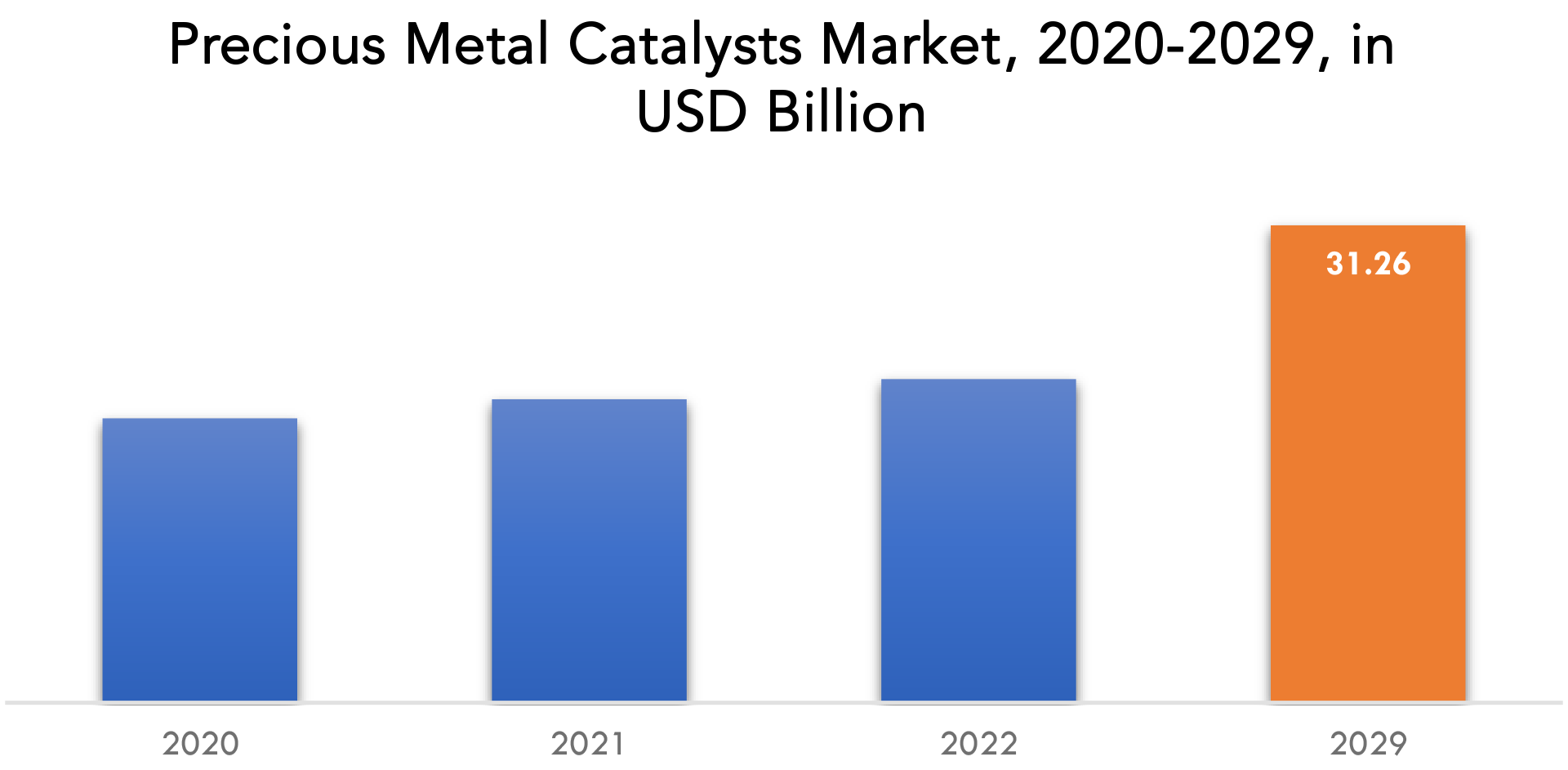
Precious Metal Catalysts Market Player
The precious metal catalysts market key players includes Alfa Chemistry, BASF SE, Chimet S.p.A., heraeus holding gmbh, Clariant AG, Alfa Aesar, Thermo Fisher Scientific, Johnson Matthey plc, Vineeth Precious Catalysts Pvt. Ltd., AMERICAN ELEMENTS, Evonik Industries AG.
17 January 2023: BASF announced an investment in the capacity expansion of polymer dispersions at its production site in Merak, Indonesia. The expansion is in line with the growing trend of high-quality packaging in ASEAN where key paper and board manufacturers are located.
8 December 2022: BASF’s ColorBrite® Airspace Blue ReSource basecoat, certified by REDcert² according to a biomass balance approach, made its debut in China. This is the first time BASF’s biomass balance automotive OEM coatings were introduced to Asia since the official launch in Europe in May of this year.
Who Should Buy? Or Key Stakeholders
- Precious metal catalysts unit producers
- Raw material producers and suppliers
- Precious metal producers and suppliers
- Precious metal catalysts distributors and traders
- End-use sectors
- Governments and R&D institutions
- Market research and consulting firms
- Associations and industry bodies
- Investors
- Regulatory Authorities
- Others
Precious Metal Catalysts Market Regional Analysis
The precious metal catalysts market by region includes North America, Asia-Pacific (APAC), Europe, South America, and Middle East & Africa (MEA).
- North America: includes the US, Canada, Mexico
- Asia Pacific: includes China, Japan, South Korea, India, Australia, ASEAN and Rest of APAC
- Europe: includes UK, Germany, France, Italy, Spain, Russia, and Rest of Europe
- South America: includes Brazil, Argentina and Rest of South America
- Middle East & Africa: includes Turkey, UAE, Saudi Arabia, South Africa, and Rest of MEA
With a value share of 44.46%, APAC dominates the global market for precious metal catalysts. China, India, Japan, South Korea, and other countries in the region are the most profitable, and precious metal catalysts penetration there is very strong. The region's growth is fueled by its fast building infrastructure, steadily rising population, and rising demand from a variety of sectors, including the oil & gas, automobile, and pharmaceutical industries.
The second-largest industry in 2021, North America's precious metal catalysts market was valued at USD 3.4 billion. The area is among the biggest makers of automobiles. The two biggest markets in the world for automobiles are the US and Canada. As a result, the demand in the region for platinum and palladium catalysts is fast rising. Producing platinum and palladium catalysts for use in agricultural chemicals are important businesses Alfa Chemical and Sabin Metal Corporation. The market for precious metal catalysts in Europe is expected to expand at a CAGR of 5.38 over the projected period. Leading the region were nations such as Germany, France, Italy, Spain, the UK, and others. The spread of infectious diseases in Europe is driving up demand for pharmaceutical products, which is driving up demand for precious metal catalysts in the region.
[caption id="attachment_18582" align="aligncenter" width="1920"]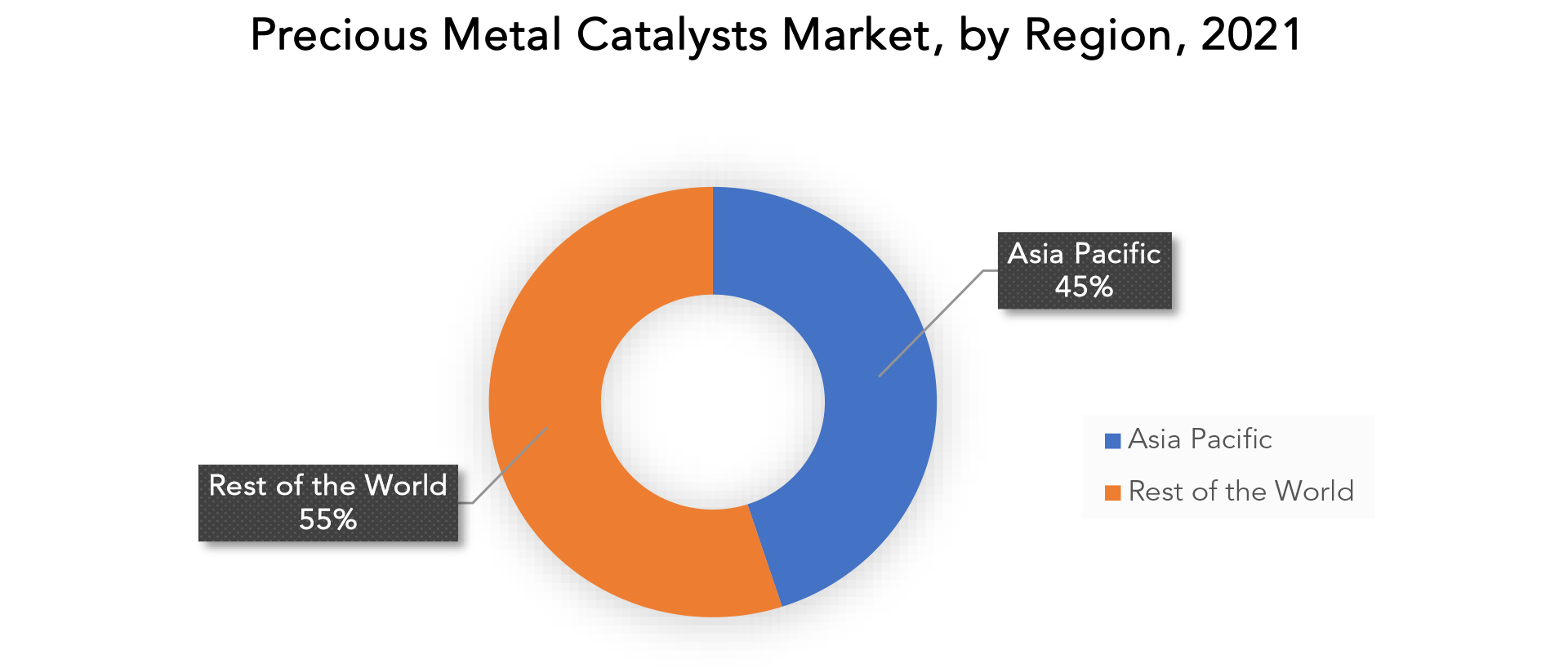
Key Market Segments: Precious Metal Catalysts Market
Precious Metal Catalysts Market By Type, 2020-2029, (USD Billion), (Kilotons).- Platinum
- Palladium
- Rhodium
- Iridium
- Ruthenium
- Automobile
- Pharmaceutical
- Refinery
- North America
- Asia Pacific
- Europe
- South America
- Middle East And Africa
Exactitude Consultancy Services Key Objectives:
- Increasing sales and market share
- Developing new technology
- Improving profitability
- Entering new markets
- Enhancing brand reputation
Key Question Answered
- What is the expected growth rate of the precious metal catalysts market over the next 7 years?
- Who are the major players in the precious metal catalysts market and what is their market share?
- What are the end-user industries driving demand for market and what is their outlook?
- What are the opportunities for growth in emerging markets such As Asia-Pacific, Middle East, and Africa?
- How is the economic environment affecting the precious metal catalysts market, including factors such as interest rates, inflation, and exchange rates?
- What is the expected impact of government policies and regulations on the precious metal catalysts market?
- What is the current and forecasted size and growth rate of the global precious metal catalysts market?
- What are the key drivers of growth in the precious metal catalysts market?
- What are the distribution channels and supply chain dynamics in the precious metal catalysts market?
- What are the technological advancements and innovations in the precious metal catalysts market and their impact on form development and growth?
- What are the regulatory considerations and their impact on the market?
- What are the challenges faced by players in the precious metal catalysts market and how are they addressing these challenges?
- What are the opportunities for growth and expansion in the precious metal catalysts market?
- What are the end user offerings and specifications of leading players in the market?
- What is the pricing trend of precious metal catalysts in the market and what is the impact of raw type prices on the price trend?
- Introduction
- Market Definition
- Market Segmentation
- Research Timelines
- Assumptions and Limitations
- Research Methodology
- Data Mining
- Secondary Research
- Primary Research
- Subject-Matter Experts’ Advice
- Quality Checks
- Final Review
- Data Triangulation
- Bottom-Up Approach
- Top-Down Approach
- Research Flow
- Data Sources
- Data Mining
- Executive Summary
- Market Overview
- Global Precious Metal Catalysts Market Outlook
- Market Drivers
- Market Restraints
- Market Opportunities
- Impact Of Covid-19 On Precious Metal Catalysts Market
- Porter’s Five Forces Model
- Threat from new entrants
- Threat from substitutes
- Bargaining power of suppliers
- Bargaining power of customers
- Degree of competition
- Industry Value Chain Analysis
- Global Precious Metal Catalysts Market Outlook
- Global Precious Metal Catalysts Market By Type, 2020-2029, (USD Billion), (Kilotons).
- Platinum
- Palladium
- Rhodium
- Iridium
- Ruthenium
- Global Precious Metal Catalysts Market By End User, 2020-2029, (USD Billion), (Kilotons).
- Automobile
- Pharmaceutical
- Refinery
- Global Precious Metal Catalysts Market By Region, 2020-2029, (USD Billion), (Kilotons).
- North America
- US
- Canada
- Mexico
- South America
- Brazil
- Argentina
- Colombia
- Rest Of South America
- Europe
- Germany
- UK
- France
- Italy
- Spain
- Russia
- Rest Of Europe
- Asia Pacific
- India
- China
- Japan
- South Korea
- Australia
- South-East Asia
- Rest Of Asia Pacific
- Middle East and Africa
- UAE
- Saudi Arabia
- South Africa
- Rest Of Middle East and Africa
- North America
- Company Profiles*
(Business Overview, Company Snapshot, Products Offered, Recent Developments)
- Alfa Chemistry
- BASF SE
- Chimet S.p.A.
- heraeus holding gmbh
- Clariant AG
- Alfa Aesar
- Thermo Fisher Scientific
- Johnson Matthey plc
- Vineeth Precious Catalysts Pvt. Ltd.
- AMERICAN ELEMENTS
- Evonik Industries AG.
*The Company List Is Indicative
LIST OF TABLES
TABLE 1 GLOBAL PRECIOUS METAL CATALYSTS MARKET BY TYPE (USD BILLION), 2020-2029
TABLE 2 GLOBAL PRECIOUS METAL CATALYSTS MARKET BY TYPE (KILOTONS), 2020-2029
TABLE 3 GLOBAL PRECIOUS METAL CATALYSTS MARKET BY END USER (USD BILLION), 2020-2029
TABLE 4 GLOBAL PRECIOUS METAL CATALYSTS MARKET BY END USER (KILOTONS), 2020-2029
TABLE 5 GLOBAL PRECIOUS METAL CATALYSTS MARKET BY REGION (USD BILLION), 2020-2029
TABLE 6 GLOBAL PRECIOUS METAL CATALYSTS MARKET BY REGION (KILOTONS), 2020-2029
TABLE 7 NORTH AMERICA PRECIOUS METAL CATALYSTS MARKET BY TYPE (USD BILLION), 2020-2029
TABLE 8 NORTH AMERICA PRECIOUS METAL CATALYSTS MARKET BY TYPE (KILOTONS), 2020-2029
TABLE 9 NORTH AMERICA PRECIOUS METAL CATALYSTS MARKET BY END USER (USD BILLION), 2020-2029
TABLE 10 NORTH AMERICA PRECIOUS METAL CATALYSTS MARKET BY END USER (KILOTONS), 2020-2029
TABLE 11 NORTH AMERICA PRECIOUS METAL CATALYSTS MARKET BY COUNTRY (USD BILLION), 2020-2029
TABLE 12 NORTH AMERICA PRECIOUS METAL CATALYSTS MARKET BY COUNTRY (KILOTONS), 2020-2029
TABLE 13 US PRECIOUS METAL CATALYSTS MARKET BY TYPE (USD BILLION), 2020-2029
TABLE 14 US PRECIOUS METAL CATALYSTS MARKET BY TYPE (KILOTONS), 2020-2029
TABLE 15 US PRECIOUS METAL CATALYSTS MARKET BY END USER (USD BILLION), 2020-2029
TABLE 16 US PRECIOUS METAL CATALYSTS MARKET BY END USER (KILOTONS), 2020-2029
TABLE 17 CANADA PRECIOUS METAL CATALYSTS MARKET BY TYPE (USD BILLION), 2020-2029
TABLE 18 CANADA PRECIOUS METAL CATALYSTS MARKET BY TYPE (KILOTONS), 2020-2029
TABLE 19 CANADA PRECIOUS METAL CATALYSTS MARKET BY END USER (USD BILLION), 2020-2029
TABLE 20 CANADA PRECIOUS METAL CATALYSTS MARKET BY END USER (KILOTONS), 2020-2029
TABLE 21 MEXICO PRECIOUS METAL CATALYSTS MARKET BY TYPE (USD BILLION), 2020-2029
TABLE 22 MEXICO PRECIOUS METAL CATALYSTS MARKET BY TYPE (KILOTONS), 2020-2029
TABLE 23 MEXICO PRECIOUS METAL CATALYSTS MARKET BY END USER (USD BILLION), 2020-2029
TABLE 24 MEXICO PRECIOUS METAL CATALYSTS MARKET BY END USER (KILOTONS), 2020-2029
TABLE 25 SOUTH AMERICA PRECIOUS METAL CATALYSTS MARKET BY TYPE (USD BILLION), 2020-2029
TABLE 26 SOUTH AMERICA PRECIOUS METAL CATALYSTS MARKET BY TYPE (KILOTONS), 2020-2029
TABLE 27 SOUTH AMERICA PRECIOUS METAL CATALYSTS MARKET BY END USER (USD BILLION), 2020-2029
TABLE 28 SOUTH AMERICA PRECIOUS METAL CATALYSTS MARKET BY END USER (KILOTONS), 2020-2029
TABLE 29 SOUTH AMERICA PRECIOUS METAL CATALYSTS MARKET BY COUNTRY (KILOTONS), 2020-2029
TABLE 30 SOUTH AMERICA PRECIOUS METAL CATALYSTS MARKET BY COUNTRY (KILOTONS), 2020-2029
TABLE 31 BRAZIL PRECIOUS METAL CATALYSTS MARKET BY TYPE (USD BILLION), 2020-2029
TABLE 32 BRAZIL PRECIOUS METAL CATALYSTS MARKET BY TYPE (KILOTONS), 2020-2029
TABLE 33 BRAZIL PRECIOUS METAL CATALYSTS MARKET BY END USER (USD BILLION), 2020-2029
TABLE 34 BRAZIL PRECIOUS METAL CATALYSTS MARKET BY END USER (KILOTONS), 2020-2029
TABLE 35 ARGENTINA PRECIOUS METAL CATALYSTS MARKET BY TYPE (USD BILLION), 2020-2029
TABLE 36 ARGENTINA PRECIOUS METAL CATALYSTS MARKET BY TYPE (KILOTONS), 2020-2029
TABLE 37 ARGENTINA PRECIOUS METAL CATALYSTS MARKET BY END USER (USD BILLION), 2020-2029
TABLE 38 ARGENTINA PRECIOUS METAL CATALYSTS MARKET BY END USER (KILOTONS), 2020-2029
TABLE 39 COLOMBIA PRECIOUS METAL CATALYSTS MARKET BY TYPE (USD BILLION), 2020-2029
TABLE 40 COLOMBIA PRECIOUS METAL CATALYSTS MARKET BY TYPE (KILOTONS), 2020-2029
TABLE 41 COLOMBIA PRECIOUS METAL CATALYSTS MARKET BY END USER (USD BILLION), 2020-2029
TABLE 42 COLOMBIA PRECIOUS METAL CATALYSTS MARKET BY END USER (KILOTONS), 2020-2029
TABLE 43 REST OF SOUTH AMERICA PRECIOUS METAL CATALYSTS MARKET BY TYPE (USD BILLION), 2020-2029
TABLE 44 REST OF SOUTH AMERICA PRECIOUS METAL CATALYSTS MARKET BY TYPE (KILOTONS), 2020-2029
TABLE 45 REST OF SOUTH AMERICA PRECIOUS METAL CATALYSTS MARKET BY END USER (USD BILLION), 2020-2029
TABLE 46 REST OF SOUTH AMERICA PRECIOUS METAL CATALYSTS MARKET BY END USER (KILOTONS), 2020-2029
TABLE 47 ASIA-PACIFIC PRECIOUS METAL CATALYSTS MARKET BY TYPE (USD BILLION), 2020-2029
TABLE 48 ASIA-PACIFIC PRECIOUS METAL CATALYSTS MARKET BY TYPE (KILOTONS), 2020-2029
TABLE 49 ASIA-PACIFIC PRECIOUS METAL CATALYSTS MARKET BY END USER (USD BILLION), 2020-2029
TABLE 50 ASIA-PACIFIC PRECIOUS METAL CATALYSTS MARKET BY END USER (KILOTONS), 2020-2029
TABLE 51 ASIA-PACIFIC PRECIOUS METAL CATALYSTS MARKET BY COUNTRY (USD BILLION), 2020-2029
TABLE 52 ASIA-PACIFIC PRECIOUS METAL CATALYSTS MARKET BY COUNTRY (KILOTONS), 2020-2029
TABLE 53 INDIA PRECIOUS METAL CATALYSTS MARKET BY TYPE (USD BILLION), 2020-2029
TABLE 54 INDIA PRECIOUS METAL CATALYSTS MARKET BY TYPE (KILOTONS), 2020-2029
TABLE 55 INDIA PRECIOUS METAL CATALYSTS MARKET BY END USER (USD BILLION), 2020-2029
TABLE 56 INDIA PRECIOUS METAL CATALYSTS MARKET BY END USER (KILOTONS), 2020-2029
TABLE 57 CHINA PRECIOUS METAL CATALYSTS MARKET BY TYPE (USD BILLION), 2020-2029
TABLE 58 CHINA PRECIOUS METAL CATALYSTS MARKET BY TYPE (KILOTONS), 2020-2029
TABLE 59 CHINA PRECIOUS METAL CATALYSTS MARKET BY END USER (USD BILLION), 2020-2029
TABLE 60 CHINA PRECIOUS METAL CATALYSTS MARKET BY END USER (KILOTONS), 2020-2029
TABLE 61 JAPAN PRECIOUS METAL CATALYSTS MARKET BY TYPE (USD BILLION), 2020-2029
TABLE 62 JAPAN PRECIOUS METAL CATALYSTS MARKET BY TYPE (KILOTONS), 2020-2029
TABLE 63 JAPAN PRECIOUS METAL CATALYSTS MARKET BY END USER (USD BILLION), 2020-2029
TABLE 64 JAPAN PRECIOUS METAL CATALYSTS MARKET BY END USER (KILOTONS), 2020-2029
TABLE 65 SOUTH KOREA PRECIOUS METAL CATALYSTS MARKET BY TYPE (USD BILLION), 2020-2029
TABLE 66 SOUTH KOREA PRECIOUS METAL CATALYSTS MARKET BY TYPE (KILOTONS), 2020-2029
TABLE 67 SOUTH KOREA PRECIOUS METAL CATALYSTS MARKET BY END USER (USD BILLION), 2020-2029
TABLE 68 SOUTH KOREA PRECIOUS METAL CATALYSTS MARKET BY END USER (KILOTONS), 2020-2029
TABLE 69 AUSTRALIA PRECIOUS METAL CATALYSTS MARKET BY TYPE (USD BILLION), 2020-2029
TABLE 70 AUSTRALIA PRECIOUS METAL CATALYSTS MARKET BY TYPE (KILOTONS), 2020-2029
TABLE 71 AUSTRALIA PRECIOUS METAL CATALYSTS MARKET BY END USER (USD BILLION), 2020-2029
TABLE 72 AUSTRALIA PRECIOUS METAL CATALYSTS MARKET BY END USER (KILOTONS), 2020-2029
TABLE 73 SOUTH EAST ASIA PRECIOUS METAL CATALYSTS MARKET BY TYPE (USD BILLION), 2020-2029
TABLE 74 SOUTH EAST ASIA PRECIOUS METAL CATALYSTS MARKET BY TYPE (KILOTONS), 2020-2029
TABLE 75 SOUTH EAST ASIA PRECIOUS METAL CATALYSTS MARKET BY END USER (USD BILLION), 2020-2029
TABLE 76 SOUTH EAST ASIA PRECIOUS METAL CATALYSTS MARKET BY END USER (KILOTONS), 2020-2029
TABLE 77 REST OF ASIA PACIFIC PRECIOUS METAL CATALYSTS MARKET BY TYPE (USD BILLION), 2020-2029
TABLE 78 REST OF ASIA PACIFIC PRECIOUS METAL CATALYSTS MARKET BY TYPE (KILOTONS), 2020-2029
TABLE 79 REST OF ASIA PACIFIC PRECIOUS METAL CATALYSTS MARKET BY END USER (USD BILLION), 2020-2029
TABLE 80 REST OF ASIA PACIFIC PRECIOUS METAL CATALYSTS MARKET BY END USER (KILOTONS), 2020-2029
TABLE 81 EUROPE PRECIOUS METAL CATALYSTS MARKET BY TYPE (USD BILLION), 2020-2029
TABLE 82 EUROPE PRECIOUS METAL CATALYSTS MARKET BY TYPE (KILOTONS), 2020-2029
TABLE 83 EUROPE PRECIOUS METAL CATALYSTS MARKET BY END USER (USD BILLION), 2020-2029
TABLE 84 EUROPE PRECIOUS METAL CATALYSTS MARKET BY END USER (KILOTONS), 2020-2029
TABLE 85 EUROPE PRECIOUS METAL CATALYSTS MARKET BY COUNTRY (USD BILLION), 2020-2029
TABLE 86 EUROPE PRECIOUS METAL CATALYSTS MARKET BY COUNTRY (KILOTONS), 2020-2029
TABLE 87 GERMANY PRECIOUS METAL CATALYSTS MARKET BY TYPE (USD BILLION), 2020-2029
TABLE 88 GERMANY PRECIOUS METAL CATALYSTS MARKET BY TYPE (KILOTONS), 2020-2029
TABLE 89 GERMANY PRECIOUS METAL CATALYSTS MARKET BY END USER (USD BILLION), 2020-2029
TABLE 90 GERMANY PRECIOUS METAL CATALYSTS MARKET BY END USER (KILOTONS), 2020-2029
TABLE 91 UK PRECIOUS METAL CATALYSTS MARKET BY TYPE (USD BILLION), 2020-2029
TABLE 92 UK PRECIOUS METAL CATALYSTS MARKET BY TYPE (KILOTONS), 2020-2029
TABLE 93 UK PRECIOUS METAL CATALYSTS MARKET BY END USER (USD BILLION), 2020-2029
TABLE 94 UK PRECIOUS METAL CATALYSTS MARKET BY END USER (KILOTONS), 2020-2029
TABLE 95 FRANCE PRECIOUS METAL CATALYSTS MARKET BY TYPE (USD BILLION), 2020-2029
TABLE 96 FRANCE PRECIOUS METAL CATALYSTS MARKET BY TYPE (KILOTONS), 2020-2029
TABLE 97 FRANCE PRECIOUS METAL CATALYSTS MARKET BY END USER (USD BILLION), 2020-2029
TABLE 98 FRANCE PRECIOUS METAL CATALYSTS MARKET BY END USER (KILOTONS), 2020-2029
TABLE 99 ITALY PRECIOUS METAL CATALYSTS MARKET BY TYPE (USD BILLION), 2020-2029
TABLE 100 ITALY PRECIOUS METAL CATALYSTS MARKET BY TYPE (KILOTONS), 2020-2029
TABLE 101 ITALY PRECIOUS METAL CATALYSTS MARKET BY END USER (USD BILLION), 2020-2029
TABLE 102 ITALY PRECIOUS METAL CATALYSTS MARKET BY END USER (KILOTONS), 2020-2029
TABLE 103 SPAIN PRECIOUS METAL CATALYSTS MARKET BY TYPE (USD BILLION), 2020-2029
TABLE 104 SPAIN PRECIOUS METAL CATALYSTS MARKET BY TYPE (KILOTONS), 2020-2029
TABLE 105 SPAIN PRECIOUS METAL CATALYSTS MARKET BY END USER (USD BILLION), 2020-2029
TABLE 106 SPAIN PRECIOUS METAL CATALYSTS MARKET BY END USER (KILOTONS), 2020-2029
TABLE 107 RUSSIA PRECIOUS METAL CATALYSTS MARKET BY TYPE (USD BILLION), 2020-2029
TABLE 108 RUSSIA PRECIOUS METAL CATALYSTS MARKET BY TYPE (KILOTONS), 2020-2029
TABLE 109 RUSSIA PRECIOUS METAL CATALYSTS MARKET BY END USER (USD BILLION), 2020-2029
TABLE 110 RUSSIA PRECIOUS METAL CATALYSTS MARKET BY END USER (KILOTONS), 2020-2029
TABLE 111 REST OF EUROPE PRECIOUS METAL CATALYSTS MARKET BY TYPE (USD BILLION), 2020-2029
TABLE 112 REST OF EUROPE PRECIOUS METAL CATALYSTS MARKET BY TYPE (KILOTONS), 2020-2029
TABLE 113 REST OF EUROPE PRECIOUS METAL CATALYSTS MARKET BY END USER (USD BILLION), 2020-2029
TABLE 114 REST OF EUROPE PRECIOUS METAL CATALYSTS MARKET BY END USER (KILOTONS), 2020-2029
TABLE 115 MIDDLE EAST AND AFRICA PRECIOUS METAL CATALYSTS MARKET BY TYPE (USD BILLION), 2020-2029
TABLE 116 MIDDLE EAST AND AFRICA PRECIOUS METAL CATALYSTS MARKET BY TYPE (KILOTONS), 2020-2029
TABLE 117 MIDDLE EAST AND AFRICA PRECIOUS METAL CATALYSTS MARKET BY END USER (USD BILLION), 2020-2029
TABLE 118 MIDDLE EAST AND AFRICA PRECIOUS METAL CATALYSTS MARKET BY END USER (KILOTONS), 2020-2029
TABLE 119 MIDDLE EAST AND AFRICA PRECIOUS METAL CATALYSTS MARKET BY COUNTRY (USD BILLION), 2020-2029
TABLE 120 MIDDLE EAST AND AFRICA PRECIOUS METAL CATALYSTS MARKET BY COUNTRY (KILOTONS), 2020-2029
TABLE 121 UAE PRECIOUS METAL CATALYSTS MARKET BY TYPE (USD BILLION), 2020-2029
TABLE 122 UAE PRECIOUS METAL CATALYSTS MARKET BY TYPE (KILOTONS), 2020-2029
TABLE 123 UAE PRECIOUS METAL CATALYSTS MARKET BY END USER (USD BILLION), 2020-2029
TABLE 124 UAE PRECIOUS METAL CATALYSTS MARKET BY END USER (KILOTONS), 2020-2029
TABLE 125 SAUDI ARABIA PRECIOUS METAL CATALYSTS MARKET BY TYPE (USD BILLION), 2020-2029
TABLE 126 SAUDI ARABIA PRECIOUS METAL CATALYSTS MARKET BY TYPE (KILOTONS), 2020-2029
TABLE 127 SAUDI ARABIA PRECIOUS METAL CATALYSTS MARKET BY END USER (USD BILLION), 2020-2029
TABLE 128 SAUDI ARABIA PRECIOUS METAL CATALYSTS MARKET BY END USER (KILOTONS), 2020-2029
TABLE 129 SOUTH AFRICA PRECIOUS METAL CATALYSTS MARKET BY TYPE (USD BILLION), 2020-2029
TABLE 130 SOUTH AFRICA PRECIOUS METAL CATALYSTS MARKET BY TYPE (KILOTONS), 2020-2029
TABLE 131 SOUTH AFRICA PRECIOUS METAL CATALYSTS MARKET BY END USER (USD BILLION), 2020-2029
TABLE 132 SOUTH AFRICA PRECIOUS METAL CATALYSTS MARKET BY END USER (KILOTONS), 2020-2029
TABLE 133 REST OF MIDDLE EAST AND AFRICA PRECIOUS METAL CATALYSTS MARKET BY TYPE (USD BILLION), 2020-2029
TABLE 134 REST OF MIDDLE EAST AND AFRICA PRECIOUS METAL CATALYSTS MARKET BY TYPE (KILOTONS), 2020-2029
TABLE 135 REST OF MIDDLE EAST AND AFRICA PRECIOUS METAL CATALYSTS MARKET BY END USER (USD BILLION), 2020-2029
TABLE 136 REST OF MIDDLE EAST AND AFRICA PRECIOUS METAL CATALYSTS MARKET BY END USER (KILOTONS), 2020-2029
LIST OF FIGURES
FIGURE 1 MARKET DYNAMICS
FIGURE 2 MARKET SEGMENTATION
FIGURE 3 REPORT TIMELINES: YEARS CONSIDERED
FIGURE 4 DATA TRIANGULATION
FIGURE 5 BOTTOM-UP APPROACH
FIGURE 6 TOP-DOWN APPROACH
FIGURE 7 RESEARCH FLOW
FIGURE 8 GLOBAL PRECIOUS METAL CATALYSTS BY TYPE, USD BILLION, 2020-2029
FIGURE 9 GLOBAL PRECIOUS METAL CATALYSTS BY END USER, USD BILLION, 2020-2029
FIGURE 10 GLOBAL PRECIOUS METAL CATALYSTS BY REGION, USD BILLION, 2020-2029
FIGURE 11 PORTER’S FIVE FORCES MODEL
FIGURE 12 GLOBAL PRECIOUS METAL CATALYSTS BY TYPE, USD BILLION, 2021
FIGURE 13 GLOBAL PRECIOUS METAL CATALYSTS BY END USER, USD BILLION, 2021
FIGURE 14 GLOBAL PRECIOUS METAL CATALYSTS BY REGION, USD BILLION, 2021
FIGURE 15 MARKET SHARE ANALYSIS
FIGURE 16 ALFA CHEMISTRY: COMPANY SNAPSHOT
FIGURE 17 BASF SE: COMPANY SNAPSHOT
FIGURE 18 CHIMET S.P.A.: COMPANY SNAPSHOT
FIGURE 19 HERAEUS HOLDING GMBH: COMPANY SNAPSHOT
FIGURE 20 CLARIANT AG: COMPANY SNAPSHOT
FIGURE 21 ALFA AESAR: COMPANY SNAPSHOT
FIGURE 22 THERMO FISHER SCIENTIFIC: COMPANY SNAPSHOT
FIGURE 23 JOHNSON MATTHEY PLC: COMPANY SNAPSHOT
FIGURE 24 VINEETH PRECIOUS CATALYSTS PVT. LTD.: COMPANY SNAPSHOT
FIGURE 25 AMERICAN ELEMENTS: COMPANY SNAPSHOT
FIGURE 26 EVONIK INDUSTRIES AG: COMPANY SNAPSHOT
DOWNLOAD FREE SAMPLE REPORT
License Type
SPEAK WITH OUR ANALYST
Want to know more about the report or any specific requirement?
WANT TO CUSTOMIZE THE REPORT?
Our Clients Speak
We asked them to research ‘ Equipment market’ all over the world, and their whole arrangement was helpful to us. thehealthanalytics.com insightful analysis and reports contributed to our current analysis and in creating a future strategy. Besides, the te
Yosuke Mitsui
Senior Associate Construction Equipment Sales & Marketing
We asked them to research ‘Equipment market’ all over the world, and their whole arrangement was helpful to us. thehealthanalytics.com insightful analysis and reports contributed to our current analysis and in creating a future strategy. Besides, the te