

Base Year Value ()
x.x %
x.x %
CAGR ()
x.x %
x.x %
Forecast Year Value ()
x.x %
x.x %
Historical Data Period
Largest Region
Forecast Period
Propylene Oxide Market by Application (Polyether Polyols, Propylene Glycols), Production Process (Chlorohydrin, Styrene Monomer, Cumene Based), End-Use Industry (Automotive, Building & Construction), And Region, Global Trends and Forecast From 2023 To 2029
Instant access to hundreds of data points and trends
- Market estimates from 2014-2029
- Competitive analysis, industry segmentation, financial benchmarks
- Incorporates SWOT, Porter's Five Forces and risk management frameworks
- PDF report or online database with Word, Excel and PowerPoint export options
- 100% money back guarantee
Propylene Oxide Market Overview
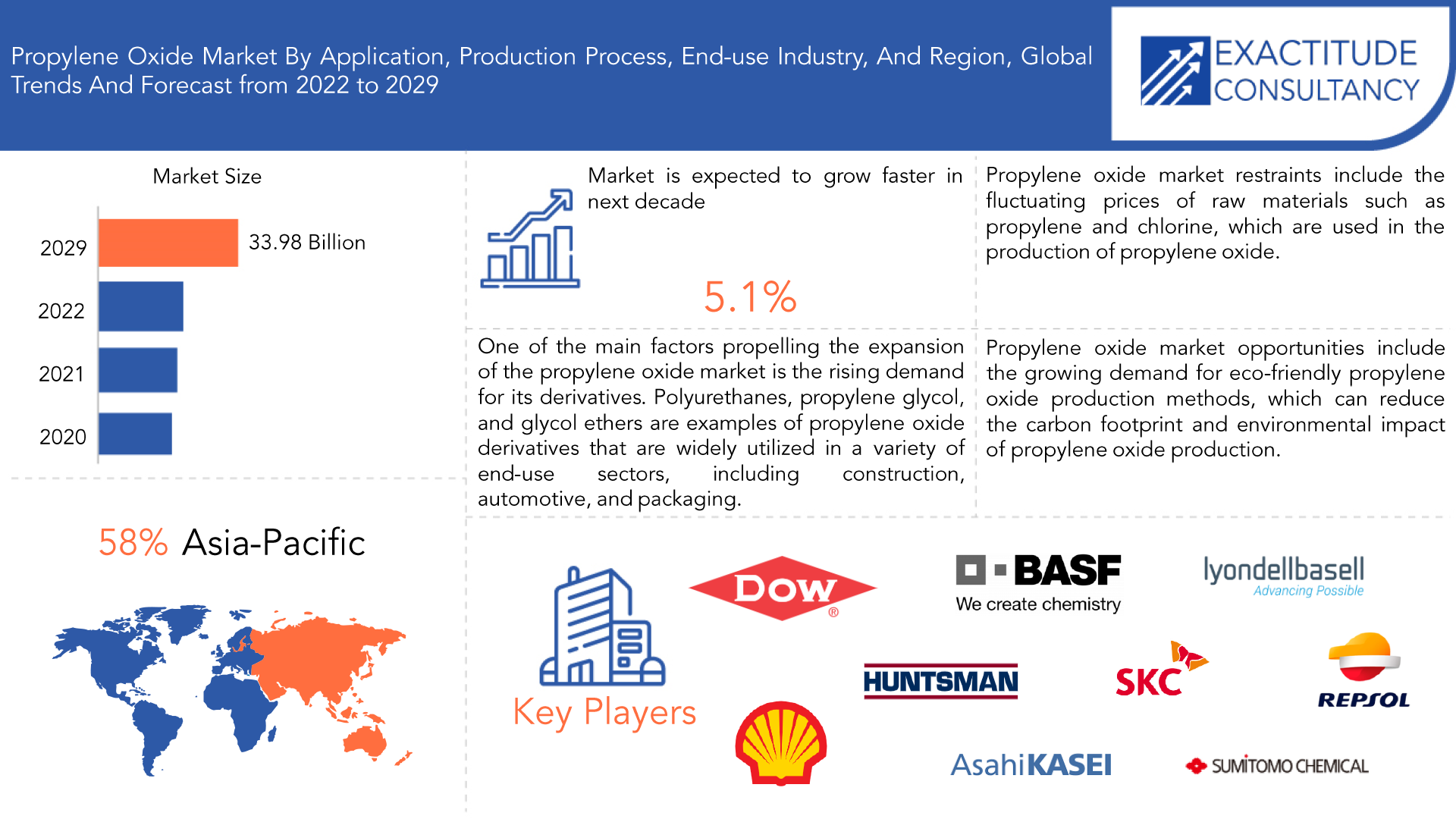
The propylene oxide market is expected to grow at 5.1% CAGR from 2023 to 2029. It is expected to reach above USD 33.98 billion by 2029 from USD 21.7 billion in 2022.
The global propylene oxide market is expected to rise at a considerable rate during the forecast period. In 2021, the market is growing steadily and is expected to rise above the projected horizon due to the strategy adopted by key players.
Propylene oxide is a colorless and highly reactive organic compound used in the production of polyurethanes, propylene glycol, and glycol ethers. It is a versatile chemical with a wide range of applications in various end-use industries such as construction, automotive, and packaging. The increasing demand for propylene oxide derivatives and the growth of these industries are driving the demand for propylene oxide globally.
The increasing demand for propylene oxide derivatives is one of the primary drivers of propylene oxide market growth. Propylene oxide derivatives such as polyurethanes, propylene glycol, and glycol ethers are widely used in various end-use industries such as construction, automotive, and packaging. For instance, polyurethanes are used in the production of foams, coatings, adhesives, and sealants, while propylene glycol is used in the production of antifreeze, food, and pharmaceuticals. The growing demand for these end-use products is driving the demand for propylene oxide derivatives, which, in turn, is driving the propylene oxide market growth.
The development of environmentally friendly propylene oxide production techniques has also resulted from the growing awareness of environmental rules and sustainability, which is anticipated to further fuel market expansion in the coming years.
Propylene oxide market opportunities include the growing demand for eco-friendly propylene oxide production methods, which can reduce the carbon footprint and environmental impact of propylene oxide production. The increasing demand for bio-based propylene oxide and green chemistry processes presents an opportunity for companies to develop sustainable and environmentally friendly production methods. Additionally, the growing demand for propylene oxide derivatives in emerging economies such as China, India, and Southeast Asia presents an opportunity for market expansion in these regions. The increasing application of propylene oxide derivatives in the healthcare industry to produce pharmaceuticals, medical devices, and personal care products also presents significant growth opportunities for the propylene oxide market. Furthermore, the increasing investment in research and development for the development of new and innovative products is expected to drive market growth and create new opportunities in the propylene oxide market.
| ATTRIBUTE | DETAILS |
| Study period | 2020-2029 |
| Base year | 2021 |
| Estimated year | 2022 |
| Forecasted year | 2022-2029 |
| Historical period | 2018-2020 |
| Unit | Value (USD BILLION), (KILOTONS) |
| Segmentation | By type, by route, by facility of use, by region |
| By Application
|
|
| By Production Process
|
|
| By End-Use Industry
|
|
| By Region
|
|
Propylene oxide market restraints include the fluctuating prices of raw materials such as propylene and chlorine, which are used in the production of propylene oxide. The volatility in prices can affect the profit margins of propylene oxide manufacturers and create uncertainty in the market. Additionally, the increasing competition from alternative products such as ethylene oxide and bio-based propylene oxide can restrain the market growth. The stringent regulations related to the use of propylene oxide due to its harmful effects on human health and the environment can also restrict market growth. Moreover, the capital-intensive nature of the propylene oxide production process and the high initial investment required can act as a restraint for small and medium-sized enterprises. Finally, the impact of the COVID-19 pandemic on the global economy and supply chain disruptions has led to a decrease in demand for propylene oxide derivatives, which has affected the overall market growth in the short term.
The COVID-19 pandemic had a significant impact on the global propylene oxide market. Propylene oxide is an important chemical intermediate used in the production of various products, including polyurethanes, propylene glycol, polyphenylene and glycol ethers. With the disruption caused by the pandemic, the demand for these products fluctuated, which resulted in a significant impact on the propylene oxide market.
One of the primary factors that have affected the propylene oxide market is the slowdown in industrial activities due to the pandemic. The lockdown measures implemented by various governments worldwide led to the closure of factories and manufacturing units, which resulted in a decline in the demand for propylene oxide. As a result, many propylene oxide manufacturers experienced a decline in their sales and revenue.
Another factor that impacted the propylene oxide market is the disruption in the global supply chain. The pandemic caused significant disruptions in transportation, logistics, and international trade, which affected the availability of raw materials and the distribution of finished products. This resulted in delays and shortages in the supply of propylene oxide.
Furthermore, the pandemic also affected the demand for end-use products that rely on propylene oxide. For instance, the demand for polyurethane foams and coatings used in the construction industry declined due to the slowdown in construction activities. Similarly, the demand for propylene glycol, which is used in the production of hand sanitizers and disinfectants, has increased significantly due to the pandemic.
In conclusion, the COVID-19 pandemic has significantly impacted the global propylene oxide market. The decline in industrial activities, disruption in the global supply chain, and fluctuations in demand for end-use products have all contributed to the market's instability. It is expected that the market will gradually recover as the pandemic subsides and industrial activities return to normal.
[caption id="attachment_18610" align="aligncenter" width="1920"]
Frequently Asked Questions
• What is the worth of propylene oxide market?
The propylene oxide market is expected to grow at 5.1% CAGR from 2022 to 2029. It is expected to reach above USD 33.98 billion by 2029 from USD 21.7 billion in 2020.
• What is the size of the Asia-Pacific propylene oxide industry?
In 2020, the Asia-Pacific propylene oxide market was estimated to be worth USD 9.6 billion. By 2026, it is expected to have grown to USD 15.8 billion, with a CAGR of 8.2%.
• What are some of the market's driving forces?
One of the main factors propelling the expansion of the propylene oxide market is the rising demand for its derivatives. Polyurethanes, propylene glycol, and glycol ethers are examples of propylene oxide derivatives that are widely utilised in a variety of end-use sectors, including construction, automotive, and packaging. For instance, propylene glycol is used to make antifreeze, food, and medications, whereas polyurethanes are used to make foams, coatings, adhesives, and sealants.
• Which are the top companies to hold the market share in propylene oxide market?
The major players in the propylene oxide market include Dow Chemical Company, BASF SE, Royal Dutch Shell PLC, Huntsman Corporation, LyondellBasell Industries Holdings B.V., Asahi Kasei Corporation, SKC Co., Ltd., Sumitomo Chemical Co., Ltd., Repsol S.A., PCC Rokita SA
• What is the leading application of propylene oxide?
Propylene oxide has several applications across various industries, including automotive, construction, packaging, and textiles. However, one of the leading applications of propylene oxide is in the production of polyether polyols, which are used in the manufacturing of polyurethane foam. Polyurethane foam is used in a wide range of applications, including cushioning for furniture, bedding, and automotive interiors, as well as insulation for buildings and appliances. Polyether polyols produced using propylene oxide have excellent properties, such as high tensile strength, good elasticity, and resistance to heat and chemicals, which make them highly desirable for use in the production of polyurethane foam.
• Which is the largest regional market for propylene oxide market?
The Asia Pacific propylene oxide market is one of the fastest-growing markets in the world. The region accounted for the largest share of the global propylene oxide market in 2020 and is expected to continue its dominance during the forecast period. The growing demand for propylene oxide in various end-use industries, including automotive, construction, and furniture, is a major driving factor for the market in the Asia Pacific region.
Propylene Oxide Market Segment Analysis
The propylene oxide market is segmented based on application, production process, end-use industry, and region.
By application the market is bifurcated into polyether polyols and propylene glycols.
Because they are one of the main raw ingredients used in the production of polyurethane foam, polyether polyols have the biggest application-based market share for propylene oxide. Several industries, including building, automotive, furniture, and packaging, use polyurethane foam extensively. The need for polyurethane foam is rising because of, among other things, its high insulation capabilities, durability, and light weight. Polyether polyols, a crucial component in the creation of polyurethane foam, are produced using propylene oxide. Consequently, the need for propylene oxide, notably in the form of polyether polyols, is being driven by the increasing demand for polyurethane foam in a variety of industries.
By production process the market is divided into chlorohydrin, styrene monomer and cumene based.
Throughout the projected period, the market for propylene oxide is dominated by the manufacturing of chlorohydrin. A substantial portion of the world's supply of propylene oxide is produced using the chlorohydrin process, which is a popular approach. Because to its high yield, high purity, and accessibility of raw materials, the chlorohydrin process is well-liked.
By end-use industry the market is divided into automotive and building & construction.
The automotive sector is the largest end-use industrial category for the propylene oxide market. The creation of polyurethane foam, which is used in automobile seats, cushions, and interior parts, is the main usage of ethylene oxide, which has many other uses in the automotive sector. The demand for propylene oxide in the automotive industry is anticipated to rise in the next years because of rising consumer demand for lightweight, fuel-efficient automobiles and the expanding trend of vehicle electrification. Another significant end-use industry for propylene oxide is the construction sector, which is driven by the rising need for sealants, adhesives, and insulation materials.
[caption id="attachment_18617" align="aligncenter" width="1920"]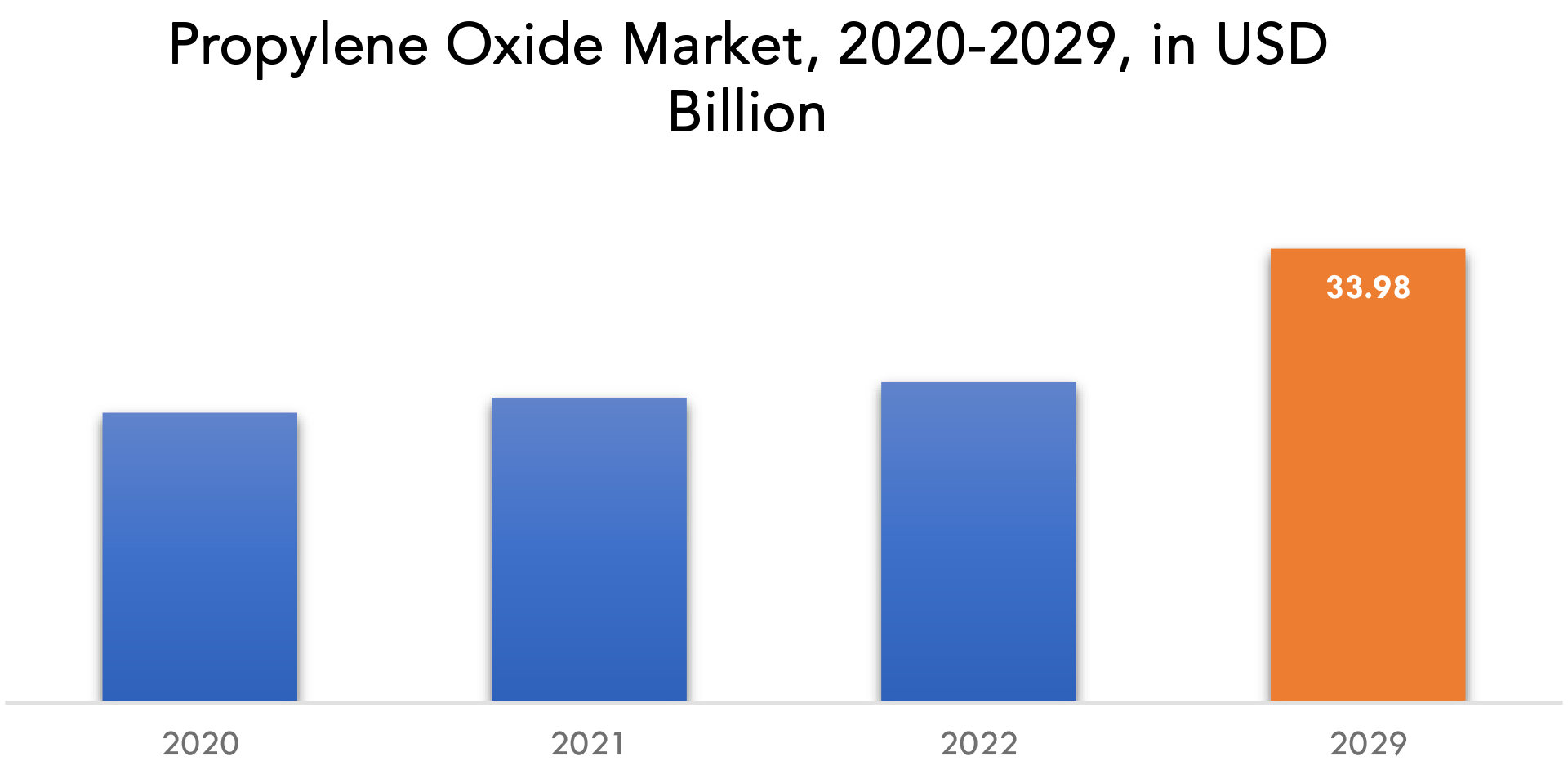
Propylene Oxide Market Key Market Players
The major players in the propylene oxide market include Dow Chemical Company, BASF SE, Royal Dutch Shell PLC, Huntsman Corporation, LyondellBasell Industries Holdings B.V., Asahi Kasei Corporation, SKC Co., Ltd., Sumitomo Chemical Co., Ltd., Repsol S.A., PCC Rokita SA
March 6, 2023; Dow announced the expansion of its silicone sealant products to offer photovoltaic (PV) module assembly materials, furthering the global movement toward renewable energy. The newly launched DOWSIL™ PV Product Line with six silicone-based sealants and adhesives solutions can be used to deliver durability and proven performance for frame sealing, rail bonding, junction box bonding and potting, and building integrated photovoltaics (BIPV) installation materials. The global transition to carbon neutrality and the desire for new and local energy sources to ensure reliable supply are creating a demand surge for high-performing, affordable, and renewable energy solutions throughout the supply chain. As the market for PV module assembly evolves to meet the rising demand for integrated building and infrastructure solar solutions, as well as large-scale solar power plants, the launch of the DOWSIL™ PV Product Line will provide customers reliable solutions with proven performance.
March 1, 2023; Dow (NYSE: DOW), the world’s leading materials science company, and X-Energy Reactor Company, LLC (“X-energy”), a leading developer of advanced nuclear reactors and fuel technology for clean energy generation, announced their entry into a joint development agreement (“JDA”) to demonstrate the first grid-scale advanced nuclear reactor for an industrial site in North America. As a sub awardee under the U.S. Department of Energy’s (“DOE”) Advanced Reactor Demonstration Program (“ARDP”) Cooperative Agreement with X-energy, Dow intended to work with X-energy to install their Xe-100 high-temperature gas-cooled reactor (“HTGR”) plant at one of Dow’s U.S. Gulf Coast sites, providing the site with safe, reliable, low-carbon power and steam within this decade. The JDA includes up to $50 million in engineering work, up to half of which is eligible to be funded through ARDP, and the other half by Dow. The JDA work scope also included the preparation and submission of a Construction Permit application to the U.S. Nuclear Regulatory Commission (“NRC”).
Who Should Buy? Or Key Stakeholders
- Investors
- Institutional & retail players.
- Chemical Industry
- Investment research firms
- Manufacturing companies
- Government Institution
- Research Organizations
- Environment, Health, and Safety Professionals
- Regulatory Authorities
- End-User Companies
- Others
Propylene Oxide Market Regional Analysis
The propylene oxide market by region includes North America, Asia-Pacific (APAC), Europe, South America, and Middle East & Africa (MEA).
- North America: includes the US, Canada, Mexico
- Asia Pacific: includes China, Japan, South Korea, India, Australia, ASEAN and Rest of APAC
- Europe: includes UK, Germany, France, Italy, Spain, Russia, and Rest of Europe
- South America: includes Brazil, Argentina, and Rest of South America
- Middle East & Africa: includes Turkey, UAE, Saudi Arabia, South Africa, and Rest of MEA
The Asia Pacific propylene oxide market is one of the fastest-growing markets in the world. The region accounted for the largest share of the global propylene oxide market in 2020 and is expected to continue its dominance during the forecast period. The growing demand for propylene oxide in various end-use industries, including automotive, construction, and furniture, is a major driving factor for the market in the Asia Pacific region.
China is the largest consumer of propylene oxide in the region, accounting for a significant share of the market. The country's increasing demand for propylene oxide is driven by the growth of the automotive industry and the construction industry, among others. India and Japan are also significant consumers of propylene oxide in the region, driven by the growing demand for polyurethane foam in various end-use applications.
The Asia Pacific region is also witnessing an increasing focus on sustainability and eco-friendliness, leading to a growing demand for bio-based polyols, which are produced from renewable sources. This trend is expected to drive the demand for propylene oxide in the region further, particularly in the form of bio-based polyols.
However, the Asia Pacific Propylene Oxide market also faces challenges, such as the volatility of raw material prices and environmental concerns associated with the production of propylene oxide. Additionally, the presence of stringent government regulations related to the production and use of propylene oxide is a major challenge for the market in the region.
Overall, the Asia Pacific Propylene Oxide market is expected to witness significant growth in the coming years, driven by the growing demand for propylene oxide in various end-use industries and the increasing focus on sustainability and eco-friendliness.
[caption id="attachment_18619" align="aligncenter" width="1920"]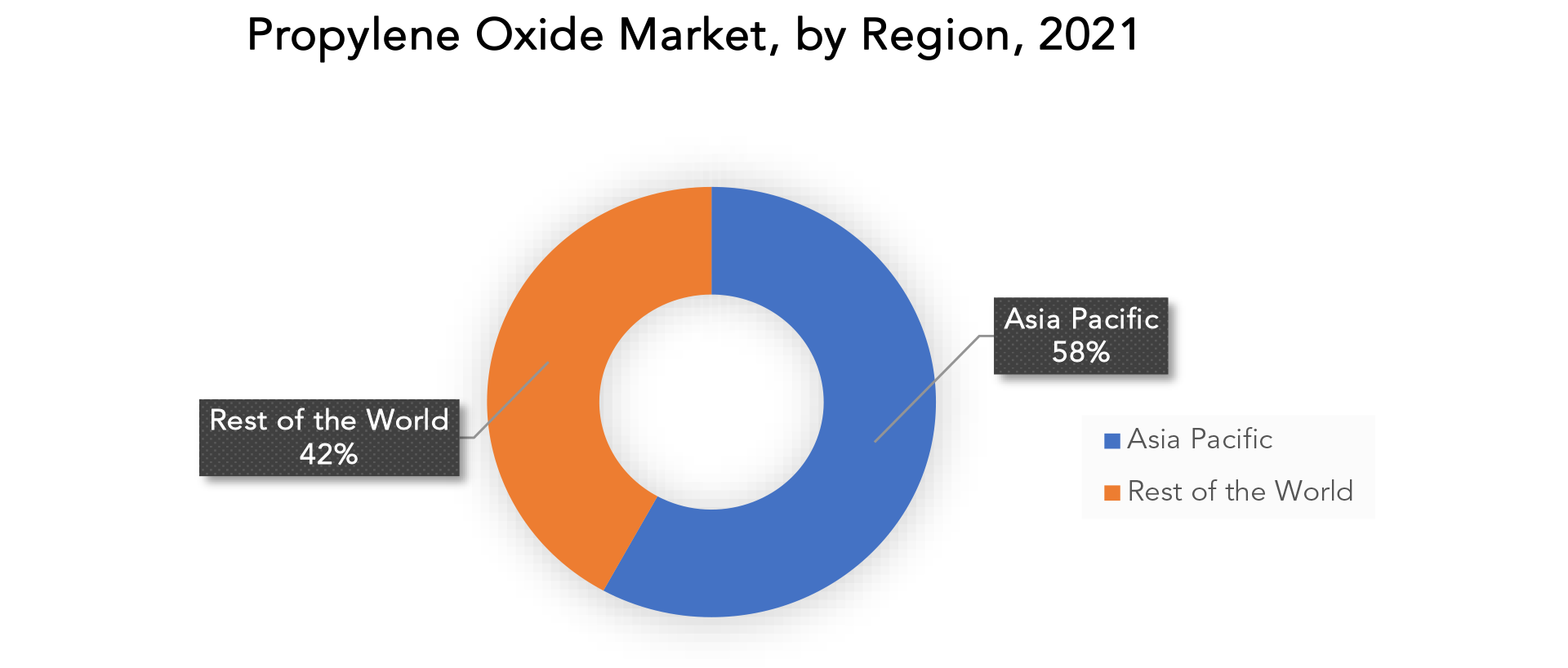
Key Market Segments: Propylene oxide Market
Propylene Oxide Market By Application, 2020-2029, (USD Billion), (Kilotons)- Polyether Polyols
- Propylene Glycols
- Chlorohydrin
- Styrene Monomer
- Cumene Based
- Automotive
- Building & Construction
- North America
- Asia Pacific
- Europe
- South America
- Middle East And Africa
Exactitude Consultancy Services Key Objectives:
- Increasing sales and market share
- Developing new technology
- Improving profitability
- Entering new markets
- Enhancing brand reputation
Key Question Answered
- What is the expected growth rate of the propylene oxide market over the next 7 years?
- Who are the major players in the propylene oxide market and what is their market share?
- What are the end-user industries driving demand for market and what is their outlook?
- What are the opportunities for growth in emerging markets such as Asia-Pacific, Middle East, and Africa?
- How is the economic environment affecting the propylene oxide market, including factors such as interest rates, inflation, and exchange rates?
- What is the expected impact of government policies and regulations on the propylene oxide market?
- What is the current and forecasted size and growth rate of the global propylene oxide market?
- What are the key drivers of growth in the propylene oxide market?
- Who are the major players in the market and what is their market share?
- What are the distribution channels and supply chain dynamics in the propylene oxide market?
- What are the technological advancements and innovations in the propylene oxide market and their impact on product development and growth?
- What are the regulatory considerations and their impact on the market?
- What are the challenges faced by players in the propylene oxide market and how are they addressing these challenges?
- What are the opportunities for growth and expansion in the propylene oxide market?
- What are the product applications and specifications of leading players in the market?
- Introduction
- Market Definition
- Market Segmentation
- Research Timelines
- Assumptions and Limitations
- Research Methodology
- Data Mining
- Secondary Research
- Primary Research
- Subject-Matter Experts’ Advice
- Quality Checks
- Final Review
- Data Triangulation
- Bottom-Up Approach
- Top-Down Approach
- Research Flow
- Data Sources
- Data Mining
- Executive Summary
- Market Overview
- Global Propylene Oxide Market outlook
- Market Drivers
- Market Restraints
- Market Opportunities
- Impact of Covid-19 on Propylene Oxide Market
- Porter’s five forces model
- Threat from new entrants
- Threat from substitutes
- Bargaining power of suppliers
- Bargaining power of customers
- Degree of competition
- Industry value chain Analysis
- Global Propylene Oxide Market outlook
- GLOBAL PROPYLENE OXIDE MARKET BY APPLICATION, (USD BILLION), KILOTONS, 2020-2029
- Polyether Polyols
- Propylene Glycols
- GLOBAL PROPYLENE OXIDE MARKET BY PRODUCTION PROCESS (USD BILLION), KILOTONS, 2020-2029
- Chlorohydrin
- Styrene Monomer
- Cumene Based
- GLOBAL PROPYLENE OXIDE MARKET BY END-USE INDUSTRY (USD BILLION), KILOTONS, 2020-2029
- Automotive
- Building & Construction
- GLOBAL PROPYLENE OXIDE MARKET BY REGION (USD BILLION), KILOTONS, 2020-2029
- North America
- US
- Canada
- Mexico
- South America
- Brazil
- Argentina
- Colombia
- Rest Of South America
- Europe
- Germany
- UK
- France
- Italy
- Spain
- Russia
- Rest Of Europe
- Asia Pacific
- India
- China
- Japan
- South Korea
- Australia
- South-East Asia
- Rest Of Asia Pacific
- Middle East and Africa
- UAE
- Saudi Arabia
- South Africa
- Rest Of Middle East and Africa
- North America
- Company Profiles*
(Business Overview, Company Snapshot, Products Offered, Recent Developments)
- Dow Chemical Company
- BASF SE
- Royal Dutch Shell PLC
- Huntsman Corporation
- LyondellBasell Industries Holdings B.V.
- Asahi Kasei Corporation
- SKC Co., Ltd.
- Sumitomo Chemical Co.
- Repsol S.A.
- PCC Rokita SA
*The Company List Is Indicative
LIST OF TABLES
TABLE 1 GLOBAL PROPYLENE OXIDE MARKET BY APPLICATION (USD BILLION), 2020-2029
TABLE 2 GLOBAL PROPYLENE OXIDE MARKET BY APPLICATION (KILOTONS), 2020-2029
TABLE 3 GLOBAL PROPYLENE OXIDE MARKET BY PRODUCTION PROCESS (USD BILLION), 2020-2029
TABLE 4 GLOBAL PROPYLENE OXIDE MARKET BY PRODUCTION PROCESS (KILOTONS), 2020-2029
TABLE 5 GLOBAL PROPYLENE OXIDE MARKET BY END-USE INDUSTRY (USD BILLION), 2020-2029
TABLE 6 GLOBAL PROPYLENE OXIDE MARKET BY END-USE INDUSTRY (KILOTONS), 2020-2029
TABLE 7 GLOBAL PROPYLENE OXIDE MARKET BY REGION (KILOTONS), 2020-2029
TABLE 8 GLOBAL PROPYLENE OXIDE MARKET BY REGION (KILOTONS), 2020-2029
TABLE 9 NORTH AMERICA PROPYLENE OXIDE MARKET BY COUNTRY (USD BILLION), 2020-2029
TABLE 10 NORTH AMERICA PROPYLENE OXIDE MARKET BY COUNTRY (KILOTONS), 2020-2029
TABLE 11 NORTH AMERICA PROPYLENE OXIDE MARKET BY APPLICATION (USD BILLION), 2020-2029
TABLE 12 NORTH AMERICA PROPYLENE OXIDE MARKET BY APPLICATION (KILOTONS), 2020-2029
TABLE 13 NORTH AMERICA PROPYLENE OXIDE MARKET BY PRODUCTION PROCESS (USD BILLION), 2020-2029
TABLE 14 NORTH AMERICA PROPYLENE OXIDE MARKET BY PRODUCTION PROCESS (KILOTONS), 2020-2029
TABLE 15 NORTH AMERICA PROPYLENE OXIDE MARKET BY END-USE INDUSTRY (USD BILLION), 2020-2029
TABLE 16 NORTH AMERICA PROPYLENE OXIDE MARKET BY END-USE INDUSTRY (KILOTONS), 2020-2029
TABLE 17 US PROPYLENE OXIDE MARKET BY APPLICATION (USD BILLION), 2020-2029
TABLE 18 US PROPYLENE OXIDE MARKET BY APPLICATION (KILOTONS), 2020-2029
TABLE 19 US PROPYLENE OXIDE MARKET BY PRODUCTION PROCESS (USD BILLION), 2020-2029
TABLE 20 US PROPYLENE OXIDE MARKET BY PRODUCTION PROCESS (KILOTONS), 2020-2029
TABLE 21 US PROPYLENE OXIDE MARKET BY END-USE INDUSTRY (USD BILLION), 2020-2029
TABLE 22 US PROPYLENE OXIDE MARKET BY END-USE INDUSTRY (KILOTONS), 2020-2029
TABLE 23 CANADA PROPYLENE OXIDE MARKET BY APPLICATION (BILLION), 2020-2029
TABLE 24 CANADA PROPYLENE OXIDE MARKET BY APPLICATION (KILOTONS), 2020-2029
TABLE 25 CANADA PROPYLENE OXIDE MARKET BY PRODUCTION PROCESS (USD BILLION), 2020-2029
TABLE 26 CANADA PROPYLENE OXIDE MARKET BY PRODUCTION PROCESS (KILOTONS), 2020-2029
TABLE 27 CANADA PROPYLENE OXIDE MARKET BY END-USE INDUSTRY (USD BILLION), 2020-2029
TABLE 28 CANADA PROPYLENE OXIDE MARKET BY END-USE INDUSTRY (KILOTONS), 2020-2029
TABLE 29 MEXICO PROPYLENE OXIDE MARKET BY APPLICATION (USD BILLION), 2020-2029
TABLE 30 MEXICO PROPYLENE OXIDE MARKET BY APPLICATION (KILOTONS), 2020-2029
TABLE 31 MEXICO PROPYLENE OXIDE MARKET BY PRODUCTION PROCESS (USD BILLION), 2020-2029
TABLE 32 MEXICO PROPYLENE OXIDE MARKET BY PRODUCTION PROCESS (KILOTONS), 2020-2029
TABLE 33 MEXICO PROPYLENE OXIDE MARKET BY END-USE INDUSTRY (USD BILLION), 2020-2029
TABLE 34 MEXICO PROPYLENE OXIDE MARKET BY END-USE INDUSTRY (KILOTONS), 2020-2029
TABLE 35 SOUTH AMERICA PROPYLENE OXIDE MARKET BY COUNTRY (USD BILLION), 2020-2029
TABLE 36 SOUTH AMERICA PROPYLENE OXIDE MARKET BY COUNTRY (KILOTONS), 2020-2029
TABLE 37 SOUTH AMERICA PROPYLENE OXIDE MARKET BY APPLICATION (USD BILLION), 2020-2029
TABLE 38 SOUTH AMERICA PROPYLENE OXIDE MARKET BY APPLICATION (KILOTONS), 2020-2029
TABLE 39 SOUTH AMERICA PROPYLENE OXIDE MARKET BY PRODUCTION PROCESS (USD BILLION), 2020-2029
TABLE 40 SOUTH AMERICA PROPYLENE OXIDE MARKET BY PRODUCTION PROCESS (KILOTONS), 2020-2029
TABLE 41 SOUTH AMERICA PROPYLENE OXIDE MARKET BY END-USE INDUSTRY (USD BILLION), 2020-2029
TABLE 42 SOUTH AMERICA PROPYLENE OXIDE MARKET BY END-USE INDUSTRY (KILOTONS), 2020-2029
TABLE 43 BRAZIL PROPYLENE OXIDE MARKET BY APPLICATION (USD BILLION), 2020-2029
TABLE 44 BRAZIL PROPYLENE OXIDE MARKET BY APPLICATION (KILOTONS), 2020-2029
TABLE 45 BRAZIL PROPYLENE OXIDE MARKET BY PRODUCTION PROCESS (USD BILLION), 2020-2029
TABLE 46 BRAZIL PROPYLENE OXIDE MARKET BY PRODUCTION PROCESS (KILOTONS), 2020-2029
TABLE 47 BRAZIL PROPYLENE OXIDE MARKET BY END-USE INDUSTRY (USD BILLION), 2020-2029
TABLE 48 BRAZIL PROPYLENE OXIDE MARKET BY END-USE INDUSTRY (KILOTONS), 2020-2029
TABLE 49 ARGENTINA PROPYLENE OXIDE MARKET BY APPLICATION (USD BILLION), 2020-2029
TABLE 50 ARGENTINA PROPYLENE OXIDE MARKET BY APPLICATION (KILOTONS), 2020-2029
TABLE 51 ARGENTINA PROPYLENE OXIDE MARKET BY PRODUCTION PROCESS (USD BILLION), 2020-2029
TABLE 52 ARGENTINA PROPYLENE OXIDE MARKET BY PRODUCTION PROCESS (KILOTONS), 2020-2029
TABLE 53 ARGENTINA PROPYLENE OXIDE MARKET BY END-USE INDUSTRY (USD BILLION), 2020-2029
TABLE 54 ARGENTINA PROPYLENE OXIDE MARKET BY END-USE INDUSTRY (KILOTONS), 2020-2029
TABLE 55 COLOMBIA PROPYLENE OXIDE MARKET BY APPLICATION (USD BILLION), 2020-2029
TABLE 56 COLOMBIA PROPYLENE OXIDE MARKET BY APPLICATION (KILOTONS), 2020-2029
TABLE 57 COLOMBIA PROPYLENE OXIDE MARKET BY PRODUCTION PROCESS (USD BILLION), 2020-2029
TABLE 58 COLOMBIA PROPYLENE OXIDE MARKET BY PRODUCTION PROCESS (KILOTONS), 2020-2029
TABLE 59 COLOMBIA PROPYLENE OXIDE MARKET BY END-USE INDUSTRY (USD BILLION), 2020-2029
TABLE 60 COLOMBIA PROPYLENE OXIDE MARKET BY END-USE INDUSTRY (KILOTONS), 2020-2029
TABLE 61 REST OF SOUTH AMERICA PROPYLENE OXIDE MARKET BY APPLICATION (USD BILLION), 2020-2029
TABLE 62 REST OF SOUTH AMERICA PROPYLENE OXIDE MARKET BY APPLICATION (KILOTONS), 2020-2029
TABLE 63 REST OF SOUTH AMERICA PROPYLENE OXIDE MARKET BY PRODUCTION PROCESS (USD BILLION), 2020-2029
TABLE 64 REST OF SOUTH AMERICA PROPYLENE OXIDE MARKET BY PRODUCTION PROCESS (KILOTONS), 2020-2029
TABLE 65 REST OF SOUTH AMERICA PROPYLENE OXIDE MARKET BY END-USE INDUSTRY (USD BILLION), 2020-2029
TABLE 66 REST OF SOUTH AMERICA PROPYLENE OXIDE MARKET BY END-USE INDUSTRY (KILOTONS), 2020-2029
TABLE 67 ASIA-PACIFIC PROPYLENE OXIDE MARKET BY COUNTRY (USD BILLION), 2020-2029
TABLE 68 ASIA-PACIFIC PROPYLENE OXIDE MARKET BY COUNTRY (KILOTONS), 2020-2029
TABLE 69 ASIA-PACIFIC PROPYLENE OXIDE MARKET BY APPLICATION (USD BILLION), 2020-2029
TABLE 70 ASIA-PACIFIC PROPYLENE OXIDE MARKET BY APPLICATION (KILOTONS), 2020-2029
TABLE 71 ASIA-PACIFIC PROPYLENE OXIDE MARKET BY PRODUCTION PROCESS (USD BILLION), 2020-2029
TABLE 72 ASIA-PACIFIC PROPYLENE OXIDE MARKET BY PRODUCTION PROCESS (KILOTONS), 2020-2029
TABLE 73 ASIA-PACIFIC PROPYLENE OXIDE MARKET BY END-USE INDUSTRY (USD BILLION), 2020-2029
TABLE 74 ASIA-PACIFIC PROPYLENE OXIDE MARKET BY END-USE INDUSTRY (KILOTONS), 2020-2029
TABLE 75 INDIA PROPYLENE OXIDE MARKET BY APPLICATION (USD BILLION), 2020-2029
TABLE 76 INDIA PROPYLENE OXIDE MARKET BY APPLICATION (KILOTONS), 2020-2029
TABLE 77 INDIA PROPYLENE OXIDE MARKET BY PRODUCTION PROCESS (USD BILLION), 2020-2029
TABLE 78 INDIA PROPYLENE OXIDE MARKET BY PRODUCTION PROCESS (KILOTONS), 2020-2029
TABLE 79 INDIA PROPYLENE OXIDE MARKET BY END-USE INDUSTRY (USD BILLION), 2020-2029
TABLE 80 INDIA PROPYLENE OXIDE MARKET BY END-USE INDUSTRY (KILOTONS), 2020-2029
TABLE 81 CHINA PROPYLENE OXIDE MARKET BY APPLICATION (USD BILLION), 2020-2029
TABLE 82 CHINA PROPYLENE OXIDE MARKET BY APPLICATION (KILOTONS), 2020-2029
TABLE 83 CHINA PROPYLENE OXIDE MARKET BY PRODUCTION PROCESS (USD BILLION), 2020-2029
TABLE 84 CHINA PROPYLENE OXIDE MARKET BY PRODUCTION PROCESS (KILOTONS), 2020-2029
TABLE 85 CHINA PROPYLENE OXIDE MARKET BY END-USE INDUSTRY (USD BILLION), 2020-2029
TABLE 86 CHINA PROPYLENE OXIDE MARKET BY END-USE INDUSTRY (KILOTONS), 2020-2029
TABLE 87 JAPAN PROPYLENE OXIDE MARKET BY APPLICATION (USD BILLION), 2020-2029
TABLE 88 JAPAN PROPYLENE OXIDE MARKET BY APPLICATION (KILOTONS), 2020-2029
TABLE 89 JAPAN PROPYLENE OXIDE MARKET BY PRODUCTION PROCESS (USD BILLION), 2020-2029
TABLE 90 JAPAN PROPYLENE OXIDE MARKET BY PRODUCTION PROCESS (KILOTONS), 2020-2029
TABLE 91 JAPAN PROPYLENE OXIDE MARKET BY END-USE INDUSTRY (USD BILLION), 2020-2029
TABLE 92 JAPAN PROPYLENE OXIDE MARKET BY END-USE INDUSTRY (KILOTONS), 2020-2029
TABLE 93 SOUTH KOREA PROPYLENE OXIDE MARKET BY APPLICATION (USD BILLION), 2020-2029
TABLE 94 SOUTH KOREA PROPYLENE OXIDE MARKET BY APPLICATION (KILOTONS), 2020-2029
TABLE 95 SOUTH KOREA PROPYLENE OXIDE MARKET BY PRODUCTION PROCESS (USD BILLION), 2020-2029
TABLE 96 SOUTH KOREA PROPYLENE OXIDE MARKET BY PRODUCTION PROCESS (KILOTONS), 2020-2029
TABLE 97 SOUTH KOREA PROPYLENE OXIDE MARKET BY END-USE INDUSTRY (USD BILLION), 2020-2029
TABLE 98 SOUTH KOREA PROPYLENE OXIDE MARKET BY END-USE INDUSTRY (KILOTONS), 2020-2029
TABLE 99 AUSTRALIA PROPYLENE OXIDE MARKET BY APPLICATION (USD BILLION), 2020-2029
TABLE 100 AUSTRALIA CONNECTED TRUCKBY APPLICATION (KILOTONS), 2020-2029
TABLE 101 AUSTRALIA PROPYLENE OXIDE MARKET BY PRODUCTION PROCESS (USD BILLION), 2020-2029
TABLE 102 AUSTRALIA PROPYLENE OXIDE MARKET BY PRODUCTION PROCESS (KILOTONS), 2020-2029
TABLE 103 AUSTRALIA PROPYLENE OXIDE MARKET BY END-USE INDUSTRY (USD BILLION), 2020-2029
TABLE 104 AUSTRALIA PROPYLENE OXIDE MARKET BY END-USE INDUSTRY (KILOTONS), 2020-2029
TABLE 105 SOUTH EAST ASIA PROPYLENE OXIDE MARKET BY APPLICATION (USD BILLION), 2020-2029
TABLE 106 SOUTH EAST ASIA CONNECTED TRUCKBY APPLICATION (KILOTONS), 2020-2029
TABLE 107 SOUTH EAST ASIA PROPYLENE OXIDE MARKET BY PRODUCTION PROCESS (USD BILLION), 2020-2029
TABLE 108 SOUTH EAST ASIA PROPYLENE OXIDE MARKET BY PRODUCTION PROCESS (KILOTONS), 2020-2029
TABLE 109 SOUTH EAST ASIA PROPYLENE OXIDE MARKET BY END-USE INDUSTRY (USD BILLION), 2020-2029
TABLE 110 SOUTH EAST ASIA PROPYLENE OXIDE MARKET BY END-USE INDUSTRY (KILOTONS), 2020-2029
TABLE 111 REST OF ASIA PACIFIC PROPYLENE OXIDE MARKET BY APPLICATION (USD BILLION), 2020-2029
TABLE 112 REST OF ASIA PACIFIC CONNECTED TRUCKBY APPLICATION (KILOTONS), 2020-2029
TABLE 113 REST OF ASIA PACIFIC PROPYLENE OXIDE MARKET BY PRODUCTION PROCESS (USD BILLION), 2020-2029
TABLE 114 REST OF ASIA PACIFIC PROPYLENE OXIDE MARKET BY PRODUCTION PROCESS (KILOTONS), 2020-2029
TABLE 115 REST OF ASIA PACIFIC PROPYLENE OXIDE MARKET BY END-USE INDUSTRY (USD BILLION), 2020-2029
TABLE 116 REST OF ASIA PACIFIC PROPYLENE OXIDE MARKET BY END-USE INDUSTRY (KILOTONS), 2020-2029
TABLE 117 EUROPE PROPYLENE OXIDE MARKET BY COUNTRY (USD BILLION), 2020-2029
TABLE 118 EUROPE PROPYLENE OXIDE MARKET BY COUNTRY APPLICATION (KILOTONS), 2020-2029
TABLE 119 EUROPE PROPYLENE OXIDE MARKET BY APPLICATION (USD BILLION), 2020-2029
TABLE 120 EUROPE PROPYLENE OXIDE MARKET BY APPLICATION (KILOTONS), 2020-2029
TABLE 121 EUROPE PROPYLENE OXIDE MARKET BY PRODUCTION PROCESS (USD BILLION), 2020-2029
TABLE 122 EUROPE PROPYLENE OXIDE MARKET BY PRODUCTION PROCESS (KILOTONS), 2020-2029
TABLE 123 EUROPE PROPYLENE OXIDE MARKET BY END-USE INDUSTRY (USD BILLION), 2020-2029
TABLE 124 EUROPE PROPYLENE OXIDE MARKET BY END-USE INDUSTRY (KILOTONS), 2020-2029
TABLE 125 GERMANY PROPYLENE OXIDE MARKET BY APPLICATION (USD BILLION), 2020-2029
TABLE 126 GERMANY PROPYLENE OXIDE MARKET BY APPLICATION (KILOTONS), 2020-2029
TABLE 127 GERMANY PROPYLENE OXIDE MARKET BY PRODUCTION PROCESS (USD BILLION), 2020-2029
TABLE 128 GERMANY PROPYLENE OXIDE MARKET BY PRODUCTION PROCESS (KILOTONS), 2020-2029
TABLE 129 GERMANY PROPYLENE OXIDE MARKET BY END-USE INDUSTRY (USD BILLION), 2020-2029
TABLE 130 GERMANY PROPYLENE OXIDE MARKET BY END-USE INDUSTRY (KILOTONS), 2020-2029
TABLE 131 UK PROPYLENE OXIDE MARKET BY APPLICATION (USD BILLION), 2020-2029
TABLE 132 UK PROPYLENE OXIDE MARKET BY APPLICATION (KILOTONS), 2020-2029
TABLE 133 UK PROPYLENE OXIDE MARKET BY PRODUCTION PROCESS (USD BILLION), 2020-2029
TABLE 134 UK PROPYLENE OXIDE MARKET BY PRODUCTION PROCESS (KILOTONS), 2020-2029
TABLE 135 UK PROPYLENE OXIDE MARKET BY END-USE INDUSTRY (USD BILLION), 2020-2029
TABLE 136 UK PROPYLENE OXIDE MARKET BY END-USE INDUSTRY (KILOTONS), 2020-2029
TABLE 137 FRANCE PROPYLENE OXIDE MARKET BY APPLICATION (USD BILLION), 2020-2029
TABLE 138 FRANCE PROPYLENE OXIDE MARKET BY APPLICATION (KILOTONS), 2020-2029
TABLE 139 FRANCE PROPYLENE OXIDE MARKET BY PRODUCTION PROCESS (USD BILLION), 2020-2029
TABLE 140 FRANCE PROPYLENE OXIDE MARKET BY PRODUCTION PROCESS (KILOTONS), 2020-2029
TABLE 141 FRANCE PROPYLENE OXIDE MARKET BY END-USE INDUSTRY (USD BILLION), 2020-2029
TABLE 142 FRANCE PROPYLENE OXIDE MARKET BY END-USE INDUSTRY (KILOTONS), 2020-2029
TABLE 143 ITALY PROPYLENE OXIDE MARKET BY APPLICATION (USD BILLION), 2020-2029
TABLE 144 ITALY PROPYLENE OXIDE MARKET BY APPLICATION (KILOTONS), 2020-2029
TABLE 145 ITALY PROPYLENE OXIDE MARKET BY PRODUCTION PROCESS (USD BILLION), 2020-2029
TABLE 146 ITALY PROPYLENE OXIDE MARKET BY PRODUCTION PROCESS (KILOTONS), 2020-2029
TABLE 147 ITALY PROPYLENE OXIDE MARKET BY END-USE INDUSTRY (USD BILLION), 2020- 2029
TABLE 148 ITALY PROPYLENE OXIDE MARKET BY END-USE INDUSTRY (KILOTONS), 2020-2029
TABLE 149 SPAIN PROPYLENE OXIDE MARKET BY APPLICATION (USD BILLION), 2020-2029
TABLE 150 SPAIN PROPYLENE OXIDE MARKET BY APPLICATION (KILOTONS), 2020-2029
TABLE 151 SPAIN PROPYLENE OXIDE MARKET BY PRODUCTION PROCESS (USD BILLION), 2020-2029
TABLE 152 SPAIN PROPYLENE OXIDE MARKET BY PRODUCTION PROCESS (KILOTONS), 2020-2029
TABLE 153 SPAIN PROPYLENE OXIDE MARKET BY END-USE INDUSTRY (USD BILLION), 2020-2029
TABLE 154 SPAIN PROPYLENE OXIDE MARKET BY END-USE INDUSTRY (KILOTONS), 2020-2029
TABLE 155 RUSSIA PROPYLENE OXIDE MARKET BY APPLICATION (USD BILLION), 2020-2029
TABLE 156 RUSSIA PROPYLENE OXIDE MARKET BY APPLICATION (KILOTONS), 2020-2029
TABLE 157 RUSSIA PROPYLENE OXIDE MARKET BY PRODUCTION PROCESS (USD BILLION), 2020-2029
TABLE 158 RUSSIA PROPYLENE OXIDE MARKET BY PRODUCTION PROCESS (KILOTONS), 2020-2029
TABLE 159 RUSSIA PROPYLENE OXIDE MARKET BY END-USE INDUSTRY (USD BILLION), 2020-2029
TABLE 160 RUSSIA PROPYLENE OXIDE MARKET BY END-USE INDUSTRY (KILOTONS), 2020-2029
TABLE 161 REST OF EUROPE PROPYLENE OXIDE MARKET BY APPLICATION (USD BILLION), 2020-2029
TABLE 162 REST OF EUROPE PROPYLENE OXIDE MARKET BY APPLICATION (KILOTONS), 2020-2029
TABLE 163 REST OF EUROPE PROPYLENE OXIDE MARKET BY PRODUCTION PROCESS (USD BILLION), 2020-2029
TABLE 164 REST OF EUROPE PROPYLENE OXIDE MARKET BY PRODUCTION PROCESS (KILOTONS), 2020-2029
TABLE 165 REST OF EUROPE PROPYLENE OXIDE MARKET BY END-USE INDUSTRY (USD BILLION), 2020-2029
TABLE 166 REST OF EUROPE PROPYLENE OXIDE MARKET BY END-USE INDUSTRY (KILOTONS), 2020-2029
TABLE 167 MIDDLE EAST AND AFRICA PROPYLENE OXIDE MARKET BY COUNTRY (USD BILLION), 2020-2029
TABLE 168 MIDDLE EAST AND AFRICA PROPYLENE OXIDE MARKET BY COUNTRY (KILOTONS), 2020-2029
TABLE 169 MIDDLE EAST AND AFRICA PROPYLENE OXIDE MARKET BY APPLICATION (USD BILLION), 2020-2029
TABLE 170 MIDDLE EAST AND AFRICA PROPYLENE OXIDE MARKET BY APPLICATION (KILOTONS), 2020-2029
TABLE 171 MIDDLE EAST AND AFRICA PROPYLENE OXIDE MARKET BY PRODUCTION PROCESS (USD BILLION), 2020-2029
TABLE 172 MIDDLE EAST AND AFRICA PROPYLENE OXIDE MARKET BY PRODUCTION PROCESS (KILOTONS), 2020-2029
TABLE 173 MIDDLE EAST AND AFRICA PROPYLENE OXIDE MARKET BY END-USE INDUSTRY (USD BILLION), 2020-2029
TABLE 174 MIDDLE EAST AND AFRICA PROPYLENE OXIDE MARKET BY END-USE INDUSTRY (KILOTONS), 2020-2029
TABLE 175 UAE PROPYLENE OXIDE MARKET BY APPLICATION (USD BILLION), 2020-2029
TABLE 176 UAE PROPYLENE OXIDE MARKET BY APPLICATION (KILOTONS), 2020-2029
TABLE 177 UAE PROPYLENE OXIDE MARKET BY PRODUCTION PROCESS (USD BILLION), 2020-2029
TABLE 178 UAE PROPYLENE OXIDE MARKET BY PRODUCTION PROCESS (KILOTONS), 2020-2029
TABLE 179 UAE PROPYLENE OXIDE MARKET BY END-USE INDUSTRY (USD BILLION), 2020-2029
TABLE 180 UAE PROPYLENE OXIDE MARKET BY END-USE INDUSTRY (KILOTONS), 2020-2029
TABLE 181 SAUDI ARABIA PROPYLENE OXIDE MARKET BY APPLICATION (USD BILLION), 2020-2029
TABLE 182 SAUDI ARABIA PROPYLENE OXIDE MARKET BY APPLICATION (KILOTONS), 2020-2029
TABLE 183 SAUDI ARABIA PROPYLENE OXIDE MARKET BY PRODUCTION PROCESS (USD BILLION), 2020-2029
TABLE 184 SAUDI ARABIA PROPYLENE OXIDE MARKET BY PRODUCTION PROCESS (KILOTONS), 2020-2029
TABLE 185 SAUDI ARABIA PROPYLENE OXIDE MARKET BY END-USE INDUSTRY (USD BILLION), 2020-2029
TABLE 186 SAUDI ARABIA PROPYLENE OXIDE MARKET BY END-USE INDUSTRY (KILOTONS), 2020-2029
TABLE 187 SOUTH AFRICA PROPYLENE OXIDE MARKET BY APPLICATION (USD BILLION), 2020-2029
TABLE 188 SOUTH AFRICA PROPYLENE OXIDE MARKET BY APPLICATION (KILOTONS), 2020-2029
TABLE 189 SOUTH AFRICA PROPYLENE OXIDE MARKET BY PRODUCTION PROCESS (USD BILLION), 2020-2029
TABLE 190 SOUTH AFRICA PROPYLENE OXIDE MARKET BY PRODUCTION PROCESS (KILOTONS), 2020-2029
TABLE 191 SOUTH AFRICA PROPYLENE OXIDE MARKET BY END-USE INDUSTRY (USD BILLION), 2020-2029
TABLE 192 SOUTH AFRICA PROPYLENE OXIDE MARKET BY END-USE INDUSTRY (KILOTONS), 2020-2029
TABLE 193 REST OF MIDDLE EAST AND AFRICA PROPYLENE OXIDE MARKET BY APPLICATION (USD BILLION), 2020-2029
TABLE 194 REST OF MIDDLE EAST AND AFRICA PROPYLENE OXIDE MARKET BY APPLICATION (KILOTONS), 2020-2029
TABLE 195 REST OF MIDDLE EAST AND AFRICA PROPYLENE OXIDE MARKET BY PRODUCTION PROCESS (USD BILLION), 2020-2029
TABLE 196 REST OF MIDDLE EAST AND AFRICA PROPYLENE OXIDE MARKET BY PRODUCTION PROCESS (KILOTONS), 2020-2029
TABLE 197 REST OF MIDDLE EAST AND AFRICA PROPYLENE OXIDE MARKET BY END-USE INDUSTRY (USD BILLION), 2020-2029
TABLE 198 REST OF MIDDLE EAST AND AFRICA PROPYLENE OXIDE MARKET BY END-USE INDUSTRY (KILOTONS), 2020-2029
LIST OF FIGURES
FIGURE 1 MARKET DYNAMICS
FIGURE 2 MARKET SEGMENTATION
FIGURE 3 REPORT TIMELINES: YEARS CONSIDERED
FIGURE 4 DATA TRIANGULATION
FIGURE 5 BOTTOM-UP APPROACH
FIGURE 6 TOP-DOWN APPROACH
FIGURE 7 RESEARCH FLOW
FIGURE 8 GLOBAL PROPYLENE OXIDE MARKET BY APPLICATION, USD BILLION, 2020-2029
FIGURE 9 GLOBAL PROPYLENE OXIDE MARKET BY PRODUCTION PROCESS, USD BILLION, 2020-2029
FIGURE 10 GLOBAL PROPYLENE OXIDE MARKET BY END-USE INDUSTRY, USD BILLION, 2020-2029
FIGURE 11 GLOBAL PROPYLENE OXIDE MARKET REGION, USD BILLION, 2020-2029
FIGURE 12 PORTER’S FIVE FORCES MODEL
FIGURE 13 GLOBAL PROPYLENE OXIDE MARKET BY APPLICATION, USD BILLION, 2021
FIGURE 14 GLOBAL PROPYLENE OXIDE MARKET BY PRODUCTION PROCESS, USD BILLION, 2021
FIGURE 15 GLOBAL PROPYLENE OXIDE MARKET BY END-USE INDUSTRY, USD BILLION, 2021
FIGURE 16 GLOBAL PROPYLENE OXIDE MARKET BY REGION, USD BILLION, 2021
FIGURE 17 MARKET SHARE ANALYSIS
FIGURE 18 DOW CHEMICAL COMPANY: COMPANY SNAPSHOT
FIGURE 19 BASF SE: COMPANY SNAPSHOT
FIGURE 20 ROYAL DUTCH SHELL PLC: COMPANY SNAPSHOT
FIGURE 21 HUNTSMAN CORPORATION: COMPANY SNAPSHOT
FIGURE 22 LYONDELLBASELL INDUSTRIES HOLDINGS B.V.: COMPANY SNAPSHOT
FIGURE 23 ASAHI KASEI CORPORATION: COMPANY SNAPSHOT
FIGURE 24 SKC CO.LTD.: COMPANY SNAPSHOT
FIGURE 25 SUMITOMO CHEMICAL CO., LTD.: COMPANY SNAPSHOT
FIGURE 26 REPSOL S.A.: COMPANY SNAPSHOT
FIGURE 27 PCC ROKITA SA: COMPANY SNAPSHOT
FIGURE 28 VALVOLINE INC.: COMPANY SNAPSHOT
DOWNLOAD FREE SAMPLE REPORT
License Type
SPEAK WITH OUR ANALYST
Want to know more about the report or any specific requirement?
WANT TO CUSTOMIZE THE REPORT?
Our Clients Speak
We asked them to research ‘ Equipment market’ all over the world, and their whole arrangement was helpful to us. thehealthanalytics.com insightful analysis and reports contributed to our current analysis and in creating a future strategy. Besides, the te
Yosuke Mitsui
Senior Associate Construction Equipment Sales & Marketing
We asked them to research ‘Equipment market’ all over the world, and their whole arrangement was helpful to us. thehealthanalytics.com insightful analysis and reports contributed to our current analysis and in creating a future strategy. Besides, the te