

Base Year Value ()
x.x %
x.x %
CAGR ()
x.x %
x.x %
Forecast Year Value ()
x.x %
x.x %
Historical Data Period
Largest Region
Forecast Period
Compound Semiconductor Market By Type (Gallium Arsenide (GaAs), Gallium Nitride (GaN), Gallium Phosphide (GaP), Silicon Carbide (SiC), Others), Product (LED, RF, Optoelectronics, Power Electronics, Others), Application (Telecommunications, Information & Communication Technology, Defense & Aerospace, Consumer Electronics, Healthcare, Automotive, Others) And Region, Global Trends And Forecast From 2022 To 2029
Instant access to hundreds of data points and trends
- Market estimates from 2014-2029
- Competitive analysis, industry segmentation, financial benchmarks
- Incorporates SWOT, Porter's Five Forces and risk management frameworks
- PDF report or online database with Word, Excel and PowerPoint export options
- 100% money back guarantee
Compound Semiconductor Market Overview
The compound semiconductor market is expected to grow at 5.9% CAGR from 2022 to 2029. It is expected to reach above USD 55.57 billion by 2029 from USD 35.13 billion in 2021.
Compound semiconductors are substances made of two or more elements from various periodic table groups. Compound semiconductors, as opposed to elemental semiconductors like silicon or germanium, offer distinctive qualities and characteristics that make them suitable for a variety of applications. Compound semiconductors are the best choice for high-speed and high-frequency devices as they have superior electronic characteristics like high electron mobility and high carrier velocities. Additionally, they have a broad energy band gap, allowing for effective operation at higher temperatures and power levels. Numerous industries, including telecommunications, optoelectronics, power electronics, and solar energy, use these materials. Compound semiconductors are made into high-frequency transistors, lasers, and photo detectors for optical communication systems in the telecommunications industry.
For the conversion of solar energy, compound semiconductors are also used in photovoltaic cells. Some materials, such as gallium arsenide (GaAs) and cadmium telluride (CdTe), are better at absorbing light and converting it into electricity than silicon-based solar cells. Compound semiconductors, in summary, are cutting-edge materials with distinctive electronic properties that enable high-performance devices in applications such as solar energy, optoelectronics, power electronics, and communications. They are an essential part of contemporary technology due to their adaptability and superior qualities.
Increasing product demand for light-emitting diode (LED) applications around the world is encouraging market expansion. Compound semiconductors are frequently used in general lighting and sign displays to detect and emit various colored lights. Additionally, the market growth is being aided by the electronics industry's rapid expansion, which is widely used in optical, informational, and high-frequency devices. Additionally, the growing use of technologies for the production of compound semiconductors, such as machine learning (ML), artificial intelligence (AI), and the Internet of Things (IoT), is boosting market expansion. These technologies help with inventory control monitoring, quality improvement, and maximum operational effectiveness. Additionally, the market growth is being positively impacted by the rising product demand in the automotive sector for autonomous and electric vehicles.
[caption id="attachment_24994" align="aligncenter" width="1920"]
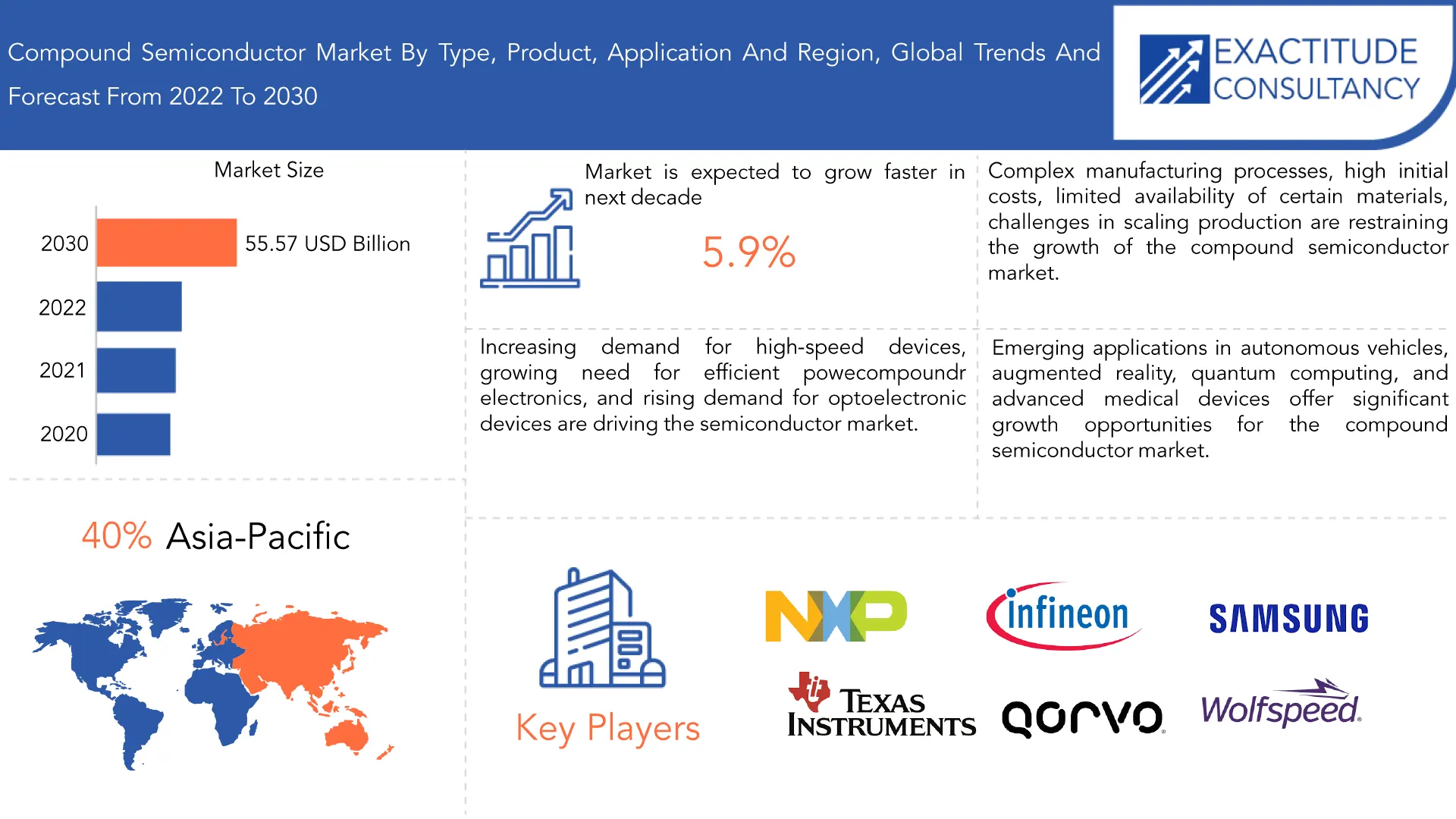
There are a number of obstacles that the market for compound semiconductors must overcome in order to develop and grow. When compared to elemental semiconductors like silicon, compound semiconductors frequently require intricate manufacturing procedures, such as epitaxy and specialized wafer fabrication techniques, which can raise production costs. Some compound semiconductors depend on rare or pricey components, which could cause supply chain issues and raise material costs. Comparatively to elemental semiconductors, the manufacturing of compound semiconductors can be more complex and difficult, requiring specialized knowledge and tools. Due to differences in material properties, thermal management, and compatibility with established manufacturing processes, integrating compound semiconductor devices with existing technologies can be difficult.
Through developing applications in autonomous vehicles, augmented reality, virtual reality, quantum computing, cutting-edge medical devices, and advanced sensor technologies, the compound semiconductor market offers significant growth opportunities. Compound semiconductors' potential is further expanded by the rise in demand for 5G networks, IoT devices, and renewable energy systems. High-speed data processing is also in higher demand.
Due to a significant impact on key players in the supply chain, the COVID-19 outbreak will have a significant impact on the growth of the compound semiconductor market in 2020. However, one of the key factors driving the market growth during the COVID-19 pandemic is the increase in demand for compound semiconductors such as power semiconductors, transistors, and integrated circuits (ICs) solutions across key sectors. Instead, the COVID-19 pandemic caused a number of challenges for the market, including a shortage of skilled workers and delays or cancellations of projects due to partial or total lockdowns around the world. Additionally, the market opportunity for compound semiconductors after COVID-19 is anticipated to be strengthened by the surge in demand for industrial and consumer electronics solutions.
| ATTRIBUTE | DETAILS |
| Study period | 2020-2029 |
| Base year | 2021 |
| Estimated year | 2022 |
| Forecasted year | 2022-2029 |
| Historical period | 2018-2020 |
| Unit | Value (USD Billion) |
| Segmentation | By type, by product, by application, by region |
| By Type |
|
| By Product |
|
| By Application |
|
Frequently Asked Questions
• What is the projected market size & growth rate of the compound semiconductor market?
Compound semiconductor market was valued at USD 35.13 billion in 2022 and is projected to reach USD 55.57 billion by 2029, growing at a CAGR of 5.9% from 2022 to 2029.
• What are the factors driving the compound semiconductor market?
The rising utilization of compound semiconductors in various industries, such as telecommunications, defense, aerospace, etc., owing to their advantageous properties, including high electron mobility and bandgap, enhanced frequency, better current and voltage holding capacity, etc., is primarily driving the global compound semiconductor market.
• What are the top players operating in the compound semiconductor market?
The major players of compound semiconductor market include NXP Semiconductors., STMicroelectronics, NICHIA CORPORATION, Renesas Electronics Corporation., Qorvo Inc, WOLFSPEED INC., Samsung Electronics Co Ltd, Texas Instruments Inc., Taiwan Semiconductor Manufacturing Company Limited, Infineon Technologies AG.
• What segments are covered in the compound semiconductor market report?
The global compound semiconductor market is segmented on the type, product, application and geography.
• Which region held the largest share of compound semiconductor market in 2021?
Asia Pacific held the largest share of compound semiconductor market in 2021.
Compound Semiconductor Market Segment Analysis
The compound semiconductor market is segmented based on type, product, application and region. By type market is segmented into gallium arsenide (GaAs), gallium nitride (GaN), gallium phosphide (GaP), silicon carbide (SiC), others. By product market is segmented into LED, RF, optoelectronics, power electronics, others. By application market is segmented into telecommunications, information & communication technology, defense & aerospace, consumer electronics, healthcare, automotive, others.
In 2021, GaN will rule the market for compound semiconductors. During the forecast period, the same trend is anticipated to continue. GaN is capable of high-speed switching and device miniaturization due to its high breakdown voltage and low conduction resistance properties. GaN devices are small (low parasitic capacitance), allowing for high-speed switching, high electron mobility and density, and easy miniaturization. In contrast to conventional silicon devices, which need a larger chip area to reduce on-resistance, GaN devices can be easily miniaturized.
In 2021, the market was dominated by the power electronics category, and over the following few years, it is anticipated that this trend will continue. This is a result of compound semiconductors' expanding use in high-tech consumer electronics and smart home appliances. Since they can handle high voltages and currents, compound semiconductors are ideal for power electronics applications. They are utilized in industrial machinery, electric vehicles, motor drives, renewable energy systems, and power conversion systems.
In 2021, the telecommunications category had the largest market share, and it is anticipated that it will continue to hold the top spot in the coming years. The market is expanding due to the rising use of compound semiconductors like GaAs, InP, SiGe, and GaN in mobile devices and other wireless communication platforms. The growing demand for 5G networks, which will revolutionize the wireless communication industry, is to blame for this in and of itself. The boom in mobile data usage is driving up demand for higher bandwidths, putting more strain on networks and the wireless spectrum's availability. By 2025, it is anticipated that monthly mobile data traffic will amount to 160 Exabytes.
[caption id="attachment_25004" align="aligncenter" width="1920"]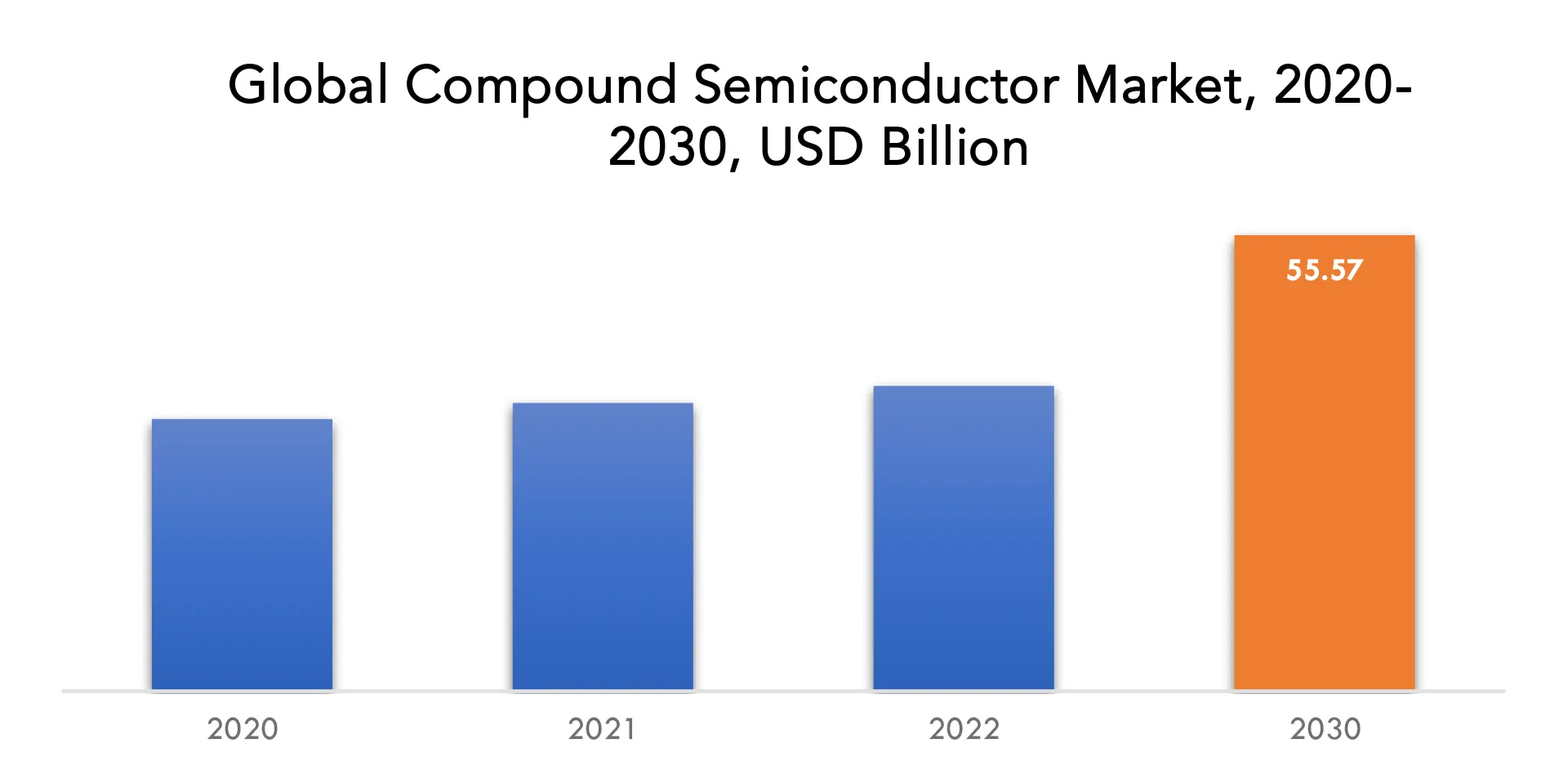
Compound Semiconductor Market Players
The compound semiconductor market key players include NXP Semiconductors., STMicroelectronics, NICHIA CORPORATION, Renesas Electronics Corporation., Qorvo Inc, WOLFSPEED INC., Samsung Electronics Co Ltd, Texas Instruments Inc., Taiwan Semiconductor Manufacturing Company Limited, Infineon Technologies AG, and others. Recent Developments:- 09 May 2023: Infineon Technologies AG and Hon Hai Technology Group established a long-term partnership in the field of electric vehicles (EV) to jointly develop advanced electromobility with efficient and intelligent features.
- 07 March 2023: Infineon Technologies AG and United Microelectronics Corporation announced a long-term strategic cooperation agreement to multiply capacity for the production of Infineon automotive microcontroller in order to serve the rapidly expanding automotive market.
Who Should Buy? Or Key Stakeholders
- Manufacturers
- Chemical Industry
- End users companies
- Government organizations
- Research organizations
- Investment research firms
- Others
Compound Semiconductor Market Regional Analysis
The compound semiconductor market by region includes North America, Asia-Pacific (APAC), Europe, South America, and Middle East & Africa (MEA).
- North America: includes the US, Canada, Mexico, Rest of North America
- Asia Pacific: includes China, Japan, South Korea, India, Australia, and Rest of APAC
- Europe: includes UK, Germany, France, Italy, Russia, Spain, and Rest of Europe
- South America: includes Brazil, Argentina, Colombia and Rest of South America
- Middle East & Africa: includes UAE, Saudi Arabia, South Africa, and Rest of MEA
In 2021, the Asia Pacific region held a 40% share of the market, dominating it. The Asia Pacific region is most likely to dominate the compound semiconductor market as the majority of industry vendors are based in South Korea, China, and Taiwan. The area has a wide range of suppliers of raw materials in addition to low labor costs. In order to meet stringent high-performance, high-power, and long-life cycle requirements, gallium nitride technology is swiftly being used in radar, electronic warfare, and communication systems in the defense industry, thus replacing lateral MOSFET components. Asian nations are making significant investments in the defense industry to update their machinery with cutting-edge technology. As industrial automation has increased, so has the use of computers and other devices for the effective and efficient control of systems. Compound semiconductor devices, which can withstand high voltages and temperatures, are essential for ensuring effective power usage in smaller applications.
[caption id="attachment_25011" align="aligncenter" width="1920"]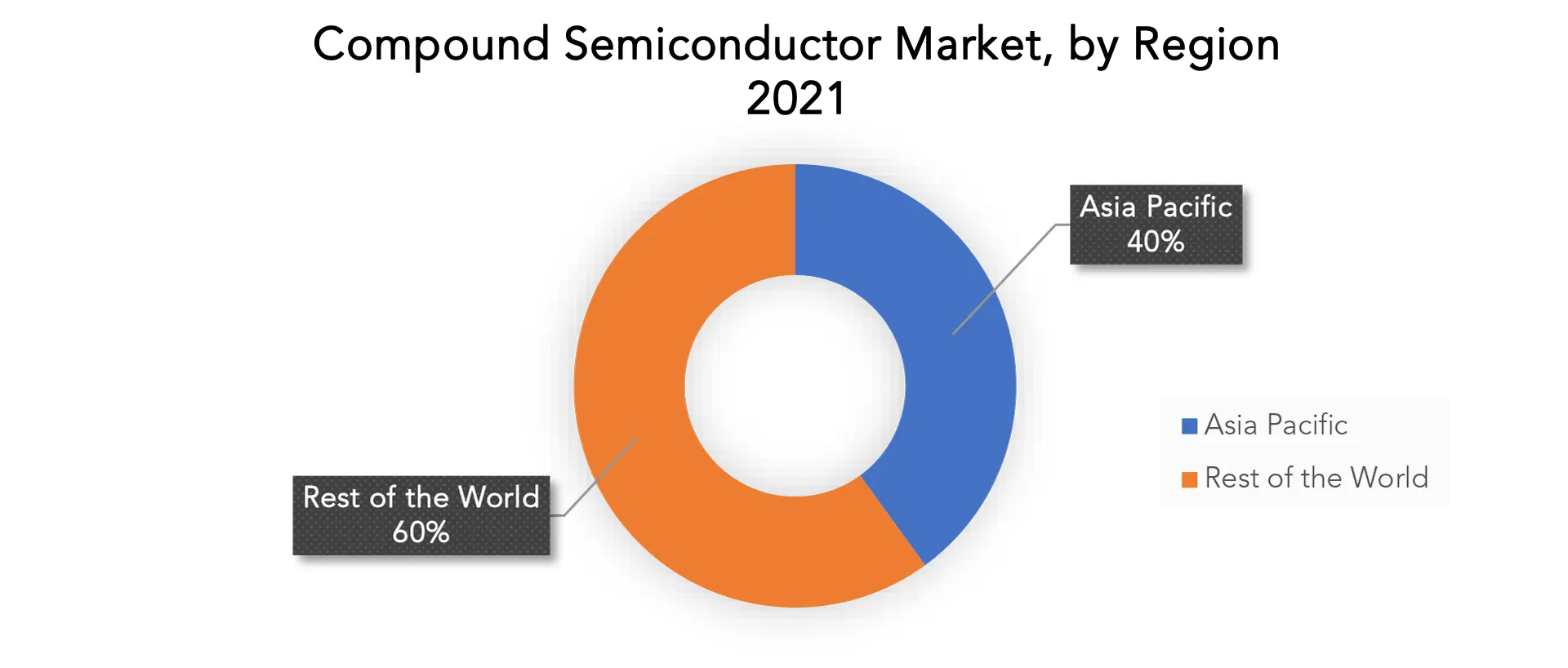
Key Market Segments: Compound Semiconductor Market
Compound Semiconductor Market By Type, 2020-2029, (USD Billion)- Gallium Arsenide (GaAs)
- Gallium Nitride (GaN)
- Gallium Phosphide (GaP)
- Silicon Carbide (SiC)
- Others
- LED
- RF
- Optoelectronics
- Power Electronics
- Others
- Telecommunications
- Information & Communication Technology
- Defense & Aerospace
- Consumer Electronics
- Healthcare
- Automotive
- Others
- North America
- Asia Pacific
- Europe
- South America
- Middle East And Africa
Exactitude Consultancy Services Key Objectives:
- Increasing sales and market share
- Developing new technology
- Improving profitability
- Entering new markets
- Enhancing brand reputation
Key Question Answered
- What is the expected growth rate of the compound semiconductor market over the next 7 years?
- What are the end user industries driving demand for market and what is their outlook?
- What are the opportunities for growth in emerging markets such as asia-pacific, middle east, and Africa?
- How is the economic environment affecting the compound semiconductor market, including factors such as interest rates, inflation, and exchange rates?
- What is the expected impact of government policies and regulations on the compound semiconductor market?
- What is the current and forecasted size and growth rate of the global compound semiconductor market?
- What are the key drivers of growth in the compound semiconductor market?
- Who are the major players in the market and what is their market share?
- What are the distribution channels and supply chain dynamics in the compound semiconductor market?
- What are the technological advancements and innovations in the compound semiconductor market and their impact on product development and growth?
- What are the regulatory considerations and their impact on the market?
- What are the challenges faced by players in the compound semiconductor market and how are they addressing these challenges?
- What are the opportunities for growth and expansion in the compound semiconductor market?
- What are the service offerings and specifications of leading players in the market?
- INTRODUCTION
- MARKET DEFINITION
- MARKET SEGMENTATION
- RESEARCH TIMELINES
- ASSUMPTIONS AND LIMITATIONS
- RESEARCH METHODOLOGY
- DATA MINING
- SECONDARY RESEARCH
- PRIMARY RESEARCH
- SUBJECT-MATTER EXPERTS’ ADVICE
- QUALITY CHECKS
- FINAL REVIEW
- DATA TRIANGULATION
- BOTTOM-UP APPROACH
- TOP-DOWN APPROACH
- RESEARCH FLOW
- DATA SOURCES
- DATA MINING
- EXECUTIVE SUMMARY
- MARKET OVERVIEW
- GLOBAL COMPOUND SEMICONDUCTOR MARKET OUTLOOK
- MARKET DRIVERS
- MARKET RESTRAINTS
- MARKET OPPORTUNITIES
- IMPACT OF COVID-19 ON COMPOUND SEMICONDUCTOR MARKET
- PORTER’S FIVE FORCES MODEL
- THREAT FROM NEW ENTRANTS
- THREAT FROM SUBSTITUTES
- BARGAINING POWER OF SUPPLIERS
- BARGAINING POWER OF CUSTOMERS
- DEGREE OF COMPETITION
- INDUSTRY VALUE CHAIN ANALYSIS
- GLOBAL COMPOUND SEMICONDUCTOR MARKET OUTLOOK
- GLOBAL COMPOUND SEMICONDUCTOR MARKET BY TYPE (USD BILLION), 2020-2029
- GALLIUM ARSENIDE (GAAS)
- GALLIUM NITRIDE (GAN)
- GALLIUM PHOSPHIDE (GAP)
- SILICON CARBIDE (SIC)
- OTHERS
- GLOBAL COMPOUND SEMICONDUCTOR MARKET BY PRODUCT (USD BILLION), 2020-2029
- LED
- RF
- OPTOELECTRONICS
- POWER ELECTRONICS
- OTHERS
- GLOBAL COMPOUND SEMICONDUCTOR MARKET BY APPLICATION (USD BILLION), 2020-2029
- TELECOMMUNICATIONS
- INFORMATION & COMMUNICATION TECHNOLOGY
- DEFENSE & AEROSPACE
- CONSUMER ELECTRONICS
- HEALTHCARE
- AUTOMOTIVE
- OTHERS
- GLOBAL COMPOUND SEMICONDUCTOR MARKET BY REGION (USD BILLION), 2020-2029
- NORTH AMERICA
- US
- CANADA
- MEXICO
- SOUTH AMERICA
- BRAZIL
- ARGENTINA
- COLOMBIA
- REST OF SOUTH AMERICA
- EUROPE
- GERMANY
- UK
- FRANCE
- ITALY
- SPAIN
- RUSSIA
- REST OF EUROPE
- ASIA PACIFIC
- INDIA
- CHINA
- JAPAN
- SOUTH KOREA
- AUSTRALIA
- REST OF ASIA PACIFIC
- MIDDLE EAST AND AFRICA
- UAE
- SAUDI ARABIA
- SOUTH AFRICA
- REST OF MIDDLE EAST AND AFRICA
- NORTH AMERICA
- COMPANY PROFILES*
(BUSINESS OVERVIEW, COMPANY SNAPSHOT, PRODUCTS OFFERED, RECENT DEVELOPMENTS)
- NXP SEMICONDUCTORS
- STMICROELECTRONICS
- NICHIA CORPORATION
- RENESAS ELECTRONICS CORPORATION
- QORVO INC
- WOLFSPEED INC.
- SAMSUNG ELECTRONICS CO LTD
- TEXAS INSTRUMENTS INC.
- TAIWAN SEMICONDUCTOR MANUFACTURING COMPANY LIMITED
- INFINEON TECHNOLOGIES AG
*THE COMPANY LIST IS INDICATIVE
LIST OF TABLES
TABLE 1 GLOBAL COMPOUND SEMICONDUCTOR MARKET BY TYPE (USD BILLION), 2020-2029
TABLE 2 GLOBAL COMPOUND SEMICONDUCTOR MARKET BY PRODUCT (USD BILLION), 2020-2029
TABLE 3 GLOBAL COMPOUND SEMICONDUCTOR MARKET BY APPLICATION (USD BILLION), 2020-2029
TABLE 4 GLOBAL COMPOUND SEMICONDUCTOR MARKET BY REGION (USD BILLION), 2020-2029
TABLE 5 NORTH AMERICA COMPOUND SEMICONDUCTOR MARKET BY TYPE (USD BILLION), 2020-2029
TABLE 6 NORTH AMERICA COMPOUND SEMICONDUCTOR MARKET BY PRODUCT (USD BILLION), 2020-2029
TABLE 7 NORTH AMERICA COMPOUND SEMICONDUCTOR MARKET BY APPLICATION (USD BILLION), 2020-2029
TABLE 8 NORTH AMERICA COMPOUND SEMICONDUCTOR MARKET BY COUNTRY (USD BILLION), 2020-2029
TABLE 9 US COMPOUND SEMICONDUCTOR MARKET BY TYPE (USD BILLION), 2020-2029
TABLE 10 US COMPOUND SEMICONDUCTOR MARKET BY PRODUCT (USD BILLION), 2020-2029
TABLE 11 US COMPOUND SEMICONDUCTOR MARKET BY APPLICATION (USD BILLION), 2020-2029
TABLE 12 CANADA COMPOUND SEMICONDUCTOR MARKET BY TYPE (BILLION), 2020-2029
TABLE 13 CANADA COMPOUND SEMICONDUCTOR MARKET BY PRODUCT (USD BILLION), 2020-2029
TABLE 14 CANADA COMPOUND SEMICONDUCTOR MARKET BY APPLICATION (USD BILLION), 2020-2029
TABLE 15 MEXICO COMPOUND SEMICONDUCTOR MARKET BY TYPE (USD BILLION), 2020-2029
TABLE 16 MEXICO COMPOUND SEMICONDUCTOR MARKET BY PRODUCT (USD BILLION), 2020-2029
TABLE 17 MEXICO COMPOUND SEMICONDUCTOR MARKET BY APPLICATION (USD BILLION), 2020-2029
TABLE 18 REST OF NORTH AMERICA COMPOUND SEMICONDUCTOR MARKET BY TYPE (USD BILLION), 2020-2029
TABLE 19 REST OF NORTH AMERICA COMPOUND SEMICONDUCTOR MARKET BY PRODUCT (USD BILLION), 2020-2029
TABLE 20 REST OF NORTH AMERICA COMPOUND SEMICONDUCTOR MARKET BY APPLICATION (USD BILLION), 2020-2029
TABLE 21 SOUTH AMERICA COMPOUND SEMICONDUCTOR MARKET BY TYPE (USD BILLION), 2020-2029
TABLE 22 SOUTH AMERICA COMPOUND SEMICONDUCTOR MARKET BY PRODUCT (USD BILLION), 2020-2029
TABLE 23 SOUTH AMERICA COMPOUND SEMICONDUCTOR MARKET BY APPLICATION (USD BILLION), 2020-2029
TABLE 24 SOUTH AMERICA COMPOUND SEMICONDUCTOR MARKET BY COUNTRY (USD BILLION), 2020-2029
TABLE 25 BRAZIL COMPOUND SEMICONDUCTOR MARKET BY TYPE (USD BILLION), 2020-2029
TABLE 26 BRAZIL COMPOUND SEMICONDUCTOR MARKET BY PRODUCT (USD BILLION), 2020-2029
TABLE 27 BRAZIL COMPOUND SEMICONDUCTOR MARKET BY APPLICATION (USD BILLION), 2020-2029
TABLE 28 ARGENTINA COMPOUND SEMICONDUCTOR MARKET BY TYPE (USD BILLION), 2020-2029
TABLE 29 ARGENTINA COMPOUND SEMICONDUCTOR MARKET BY PRODUCT (USD BILLION), 2020-2029
TABLE 30 ARGENTINA COMPOUND SEMICONDUCTOR MARKET BY APPLICATION (USD BILLION), 2020-2029
TABLE 31 COLOMBIA COMPOUND SEMICONDUCTOR MARKET BY TYPE (USD BILLION), 2020-2029
TABLE 32 COLOMBIA COMPOUND SEMICONDUCTOR MARKET BY PRODUCT (USD BILLION), 2020-2029
TABLE 33 COLOMBIA COMPOUND SEMICONDUCTOR MARKET BY APPLICATION (USD BILLION), 2020-2029
TABLE 34 REST OF SOUTH AMERICA COMPOUND SEMICONDUCTOR MARKET BY TYPE (USD BILLION), 2020-2029
TABLE 35 REST OF SOUTH AMERICA COMPOUND SEMICONDUCTOR MARKET BY PRODUCT (USD BILLION), 2020-2029
TABLE 36 REST OF SOUTH AMERICA COMPOUND SEMICONDUCTOR MARKET BY APPLICATION (USD BILLION), 2020-2029
TABLE 37 ASIA-PACIFIC COMPOUND SEMICONDUCTOR MARKET BY TYPE (USD BILLION), 2020-2029
TABLE 38 ASIA-PACIFIC COMPOUND SEMICONDUCTOR MARKET BY PRODUCT (USD BILLION), 2020-2029
TABLE 39 ASIA-PACIFIC COMPOUND SEMICONDUCTOR MARKET BY APPLICATION (USD BILLION), 2020-2029
TABLE 40 ASIA-PACIFIC COMPOUND SEMICONDUCTOR MARKET BY COUNTRY (USD BILLION), 2020-2029
TABLE 41 INDIA COMPOUND SEMICONDUCTOR MARKET BY TYPE (USD BILLION), 2020-2029
TABLE 42 INDIA COMPOUND SEMICONDUCTOR MARKET BY PRODUCT (USD BILLION), 2020-2029
TABLE 43 INDIA COMPOUND SEMICONDUCTOR MARKET BY APPLICATION (USD BILLION), 2020-2029
TABLE 44 CHINA COMPOUND SEMICONDUCTOR MARKET BY TYPE (USD BILLION), 2020-2029
TABLE 45 CHINA COMPOUND SEMICONDUCTOR MARKET BY PRODUCT (USD BILLION), 2020-2029
TABLE 46 CHINA COMPOUND SEMICONDUCTOR MARKET BY APPLICATION (USD BILLION), 2020-2029
TABLE 47 JAPAN COMPOUND SEMICONDUCTOR MARKET BY TYPE (USD BILLION), 2020-2029
TABLE 48 JAPAN COMPOUND SEMICONDUCTOR MARKET BY PRODUCT (USD BILLION), 2020-2029
TABLE 49 JAPAN COMPOUND SEMICONDUCTOR MARKET BY APPLICATION (USD BILLION), 2020-2029
TABLE 50 SOUTH KOREA COMPOUND SEMICONDUCTOR MARKET BY TYPE (USD BILLION), 2020-2029
TABLE 51 SOUTH KOREA COMPOUND SEMICONDUCTOR MARKET BY PRODUCT (USD BILLION), 2020-2029
TABLE 52 SOUTH KOREA COMPOUND SEMICONDUCTOR MARKET BY APPLICATION (USD BILLION), 2020-2029
TABLE 53 AUSTRALIA COMPOUND SEMICONDUCTOR MARKET BY TYPE (USD BILLION), 2020-2029
TABLE 54 AUSTRALIA COMPOUND SEMICONDUCTOR MARKET BY PRODUCT (USD BILLION), 2020-2029
TABLE 55 AUSTRALIA COMPOUND SEMICONDUCTOR MARKET BY APPLICATION (USD BILLION), 2020-2029
TABLE 56 REST OF ASIA PACIFIC COMPOUND SEMICONDUCTOR MARKET BY TYPE (USD BILLION), 2020-2029
TABLE 57 REST OF ASIA PACIFIC COMPOUND SEMICONDUCTOR MARKET BY PRODUCT (USD BILLION), 2020-2029
TABLE 58 REST OF ASIA PACIFIC COMPOUND SEMICONDUCTOR MARKET BY APPLICATION (USD BILLION), 2020-2029
TABLE 59 EUROPE COMPOUND SEMICONDUCTOR MARKET BY TYPE (USD BILLION), 2020-2029
TABLE 60 EUROPE COMPOUND SEMICONDUCTOR MARKET BY PRODUCT (USD BILLION), 2020-2029
TABLE 61 EUROPE COMPOUND SEMICONDUCTOR MARKET BY APPLICATION (USD BILLION), 2020-2029
TABLE 62 EUROPE COMPOUND SEMICONDUCTOR MARKET BY COUNTRY (USD BILLION), 2020-2029
TABLE 63 GERMANY COMPOUND SEMICONDUCTOR MARKET BY TYPE (USD BILLION), 2020-2029
TABLE 64 GERMANY COMPOUND SEMICONDUCTOR MARKET BY PRODUCT (USD BILLION), 2020-2029
TABLE 65 GERMANY COMPOUND SEMICONDUCTOR MARKET BY APPLICATION (USD BILLION), 2020-2029
TABLE 66 UK COMPOUND SEMICONDUCTOR MARKET BY TYPE (USD BILLION), 2020-2029
TABLE 67 UK COMPOUND SEMICONDUCTOR MARKET BY PRODUCT (USD BILLION), 2020-2029
TABLE 68 UK COMPOUND SEMICONDUCTOR MARKET BY APPLICATION (USD BILLION), 2020-2029
TABLE 69 FRANCE COMPOUND SEMICONDUCTOR MARKET BY TYPE (USD BILLION), 2020-2029
TABLE 70 FRANCE COMPOUND SEMICONDUCTOR MARKET BY PRODUCT (USD BILLION), 2020-2029
TABLE 71 FRANCE COMPOUND SEMICONDUCTOR MARKET BY APPLICATION (USD BILLION), 2020-2029
TABLE 72 ITALY COMPOUND SEMICONDUCTOR MARKET BY TYPE (USD BILLION), 2020-2029
TABLE 73 ITALY COMPOUND SEMICONDUCTOR MARKET BY PRODUCT (USD BILLION), 2020-2029
TABLE 74 ITALY COMPOUND SEMICONDUCTOR MARKET BY APPLICATION (USD BILLION), 2020-2029
TABLE 75 SPAIN COMPOUND SEMICONDUCTOR MARKET BY TYPE (USD BILLION), 2020-2029
TABLE 76 SPAIN COMPOUND SEMICONDUCTOR MARKET BY PRODUCT (USD BILLION), 2020-2029
TABLE 77 SPAIN COMPOUND SEMICONDUCTOR MARKET BY APPLICATION (USD BILLION), 2020-2029
TABLE 78 RUSSIA COMPOUND SEMICONDUCTOR MARKET BY TYPE (USD BILLION), 2020-2029
TABLE 79 RUSSIA COMPOUND SEMICONDUCTOR MARKET BY PRODUCT (USD BILLION), 2020-2029
TABLE 80 RUSSIA COMPOUND SEMICONDUCTOR MARKET BY APPLICATION (USD BILLION), 2020-2029
TABLE 81 REST OF EUROPE COMPOUND SEMICONDUCTOR MARKET BY TYPE (USD BILLION), 2020-2029
TABLE 82 REST OF EUROPE COMPOUND SEMICONDUCTOR MARKET BY PRODUCT (USD BILLION), 2020-2029
TABLE 83 REST OF EUROPE COMPOUND SEMICONDUCTOR MARKET BY APPLICATION (USD BILLION), 2020-2029
TABLE 84 MIDDLE EAST AND AFRICA COMPOUND SEMICONDUCTOR MARKET BY TYPE (USD BILLION), 2020-2029
TABLE 85 MIDDLE EAST AND AFRICA COMPOUND SEMICONDUCTOR MARKET BY PRODUCT (USD BILLION), 2020-2029
TABLE 86 MIDDLE EAST AND AFRICA COMPOUND SEMICONDUCTOR MARKET BY APPLICATION (USD BILLION), 2020-2029
TABLE 87 MIDDLE EAST AND AFRICA COMPOUND SEMICONDUCTOR MARKET BY COUNTRY (USD BILLION), 2020-2029
TABLE 88 UAE COMPOUND SEMICONDUCTOR MARKET BY TYPE (USD BILLION), 2020-2029
TABLE 89 UAE COMPOUND SEMICONDUCTOR MARKET BY PRODUCT (USD BILLION), 2020-2029
TABLE 90 UAE COMPOUND SEMICONDUCTOR MARKET BY APPLICATION (USD BILLION), 2020-2029
TABLE 91 SAUDI ARABIA COMPOUND SEMICONDUCTOR MARKET BY TYPE (USD BILLION), 2020-2029
TABLE 92 SAUDI ARABIA COMPOUND SEMICONDUCTOR MARKET BY PRODUCT (USD BILLION), 2020-2029
TABLE 93 SAUDI ARABIA COMPOUND SEMICONDUCTOR MARKET BY APPLICATION (USD BILLION), 2020-2029
TABLE 94 SOUTH AFRICA COMPOUND SEMICONDUCTOR MARKET BY TYPE (USD BILLION), 2020-2029
TABLE 95 SOUTH AFRICA COMPOUND SEMICONDUCTOR MARKET BY PRODUCT (USD BILLION), 2020-2029
TABLE 96 SOUTH AFRICA COMPOUND SEMICONDUCTOR MARKET BY APPLICATION (USD BILLION), 2020-2029
TABLE 97 REST OF MIDDLE EAST AND AFRICA COMPOUND SEMICONDUCTOR MARKET BY TYPE (USD BILLION), 2020-2029
TABLE 98 REST OF MIDDLE EAST AND AFRICA COMPOUND SEMICONDUCTOR MARKET BY PRODUCT (USD BILLION), 2020-2029
TABLE 99 REST OF MIDDLE EAST AND AFRICA COMPOUND SEMICONDUCTOR MARKET BY APPLICATION (USD BILLION), 2020-2029
LIST OF FIGURES
FIGURE 1 MARKET DYNAMICS
FIGURE 2 MARKET SEGMENTATION
FIGURE 3 REPORT TIMELINES: YEARS CONSIDERED
FIGURE 4 DATA TRIANGULATION
FIGURE 5 BOTTOM-UP APPROACH
FIGURE 6 TOP-DOWN APPROACH
FIGURE 7 RESEARCH FLOW
FIGURE 8 GLOBAL COMPOUND SEMICONDUCTOR MARKET BY TYPE, USD BILLION, 2020-2029
FIGURE 9 GLOBAL COMPOUND SEMICONDUCTOR MARKET BY PRODUCT, USD BILLION, 2020-2029
FIGURE 10 GLOBAL COMPOUND SEMICONDUCTOR MARKET BY APPLICATION, USD BILLION, 2020-2029
FIGURE 11 GLOBAL COMPOUND SEMICONDUCTOR MARKET BY REGION, USD BILLION, 2020-2029
FIGURE 12 PORTER’S FIVE FORCES MODEL
FIGURE 13 GLOBAL COMPOUND SEMICONDUCTOR MARKET BY REGION, USD BILLION, 2021
FIGURE 14 GLOBAL COMPOUND SEMICONDUCTOR MARKET BY TYPE, USD BILLION, 2021
FIGURE 15 GLOBAL COMPOUND SEMICONDUCTOR MARKET BY PRODUCT, USD BILLION, 2021
FIGURE 16 COMPOUND SEMICONDUCTOR MARKET BY APPLICATION, USD BILLION, 2021
FIGURE 17 MARKET SHARE ANALYSIS
FIGURE 18 NXP SEMICONDUCTORS: COMPANY SNAPSHOT
FIGURE 19 STMICROELECTRONICS: COMPANY SNAPSHOT
FIGURE 20 NICHIA CORPORATION: COMPANY SNAPSHOT
FIGURE 21 RENESAS ELECTRONICS CORPORATION: COMPANY SNAPSHOT
FIGURE 22 QORVO INC.: COMPANY SNAPSHOT
FIGURE 23 WOLFSPEED INC.: COMPANY SNAPSHOT
FIGURE 24 SAMSUNG ELECTRONICS CO LTD.: COMPANY SNAPSHOT
FIGURE 25 TEXAS INSTRUMENTS INC.: COMPANY SNAPSHOT
FIGURE 26 TAIWAN SEMICONDUCTOR MANUFACTURING COMPANY LIMITED: COMPANY SNAPSHOT
FIGURE 27 INFINEON TECHNOLOGIES AG: COMPANY SNAPSHOT
DOWNLOAD FREE SAMPLE REPORT
License Type
SPEAK WITH OUR ANALYST
Want to know more about the report or any specific requirement?
WANT TO CUSTOMIZE THE REPORT?
Our Clients Speak
We asked them to research ‘ Equipment market’ all over the world, and their whole arrangement was helpful to us. thehealthanalytics.com insightful analysis and reports contributed to our current analysis and in creating a future strategy. Besides, the te
Yosuke Mitsui
Senior Associate Construction Equipment Sales & Marketing
We asked them to research ‘Equipment market’ all over the world, and their whole arrangement was helpful to us. thehealthanalytics.com insightful analysis and reports contributed to our current analysis and in creating a future strategy. Besides, the te