

Base Year Value ()
x.x %
x.x %
CAGR ()
x.x %
x.x %
Forecast Year Value ()
x.x %
x.x %
Historical Data Period
Largest Region
Forecast Period
Electric VTOL Vehicle Market by Type (Multicopter, Fixed Wing, Tilt Rotor, Tilt Wing), by Application (Passenger, Cargo Transportation, Military, Personal Use) and Region, Global trends and forecast from 2022 to 2029.
Instant access to hundreds of data points and trends
- Market estimates from 2014-2029
- Competitive analysis, industry segmentation, financial benchmarks
- Incorporates SWOT, Porter's Five Forces and risk management frameworks
- PDF report or online database with Word, Excel and PowerPoint export options
- 100% money back guarantee
Electric VTOL Vehicle Market Overview
The electric VTOL vehicle market is expected to grow at 15.1% CAGR from 2022 to 2029. It is expected to reach above USD 26.3 billion by 2029 from USD 7.3 billion in 2020.
An aircraft that can take off and land vertically, like a helicopter, is referred to as an Electric VTOL (Vertical Take-Off and Landing) vehicle. Electric motors are used in place of internal combustion engines to power these aircraft. Compared to conventional airplanes, the use of electric motors enables higher efficiency, lower noise levels, and lower pollutants. Electric VTOL aircraft can be multicopter, fixed-wing, tilt-rotor, or tilt-wing in design. Depending on the intended use and operating needs, each design has its own advantages and disadvantages.
For a variety of uses, including passenger and cargo transportation, military and defense, emergency medical services, and personal usage, electric VTOL vehicles are being developed. They present the possibility of more efficient, practical, and environmentally friendly modes of transportation, particularly in cities. The development of electric VTOL vehicles is considered a crucial component of the future of urban air mobility since it provides a means of easing traffic and boosting the effectiveness of transportation networks. Although the sector is still in its infancy, significant development is anticipated over the next few years as the technology develops and becomes more readily available for commercial use.
There is an increasing need for alternate forms of transportation that can offer faster and more efficient mobility as cities become more populous and traffic congestion worsens. This issue may have a solution in the form of a quicker and more practical ground transportation alternative in the form of electric VTOL vehicles. A lot of governments are putting laws and programs into place to support sustainable aviation, including financial incentives for the creation and usage of electric aircraft. This is anticipated to enhance investment in the market for electric VTOLs and boost consumer demand for them.
[caption id="attachment_27123" align="aligncenter" width="1920"]
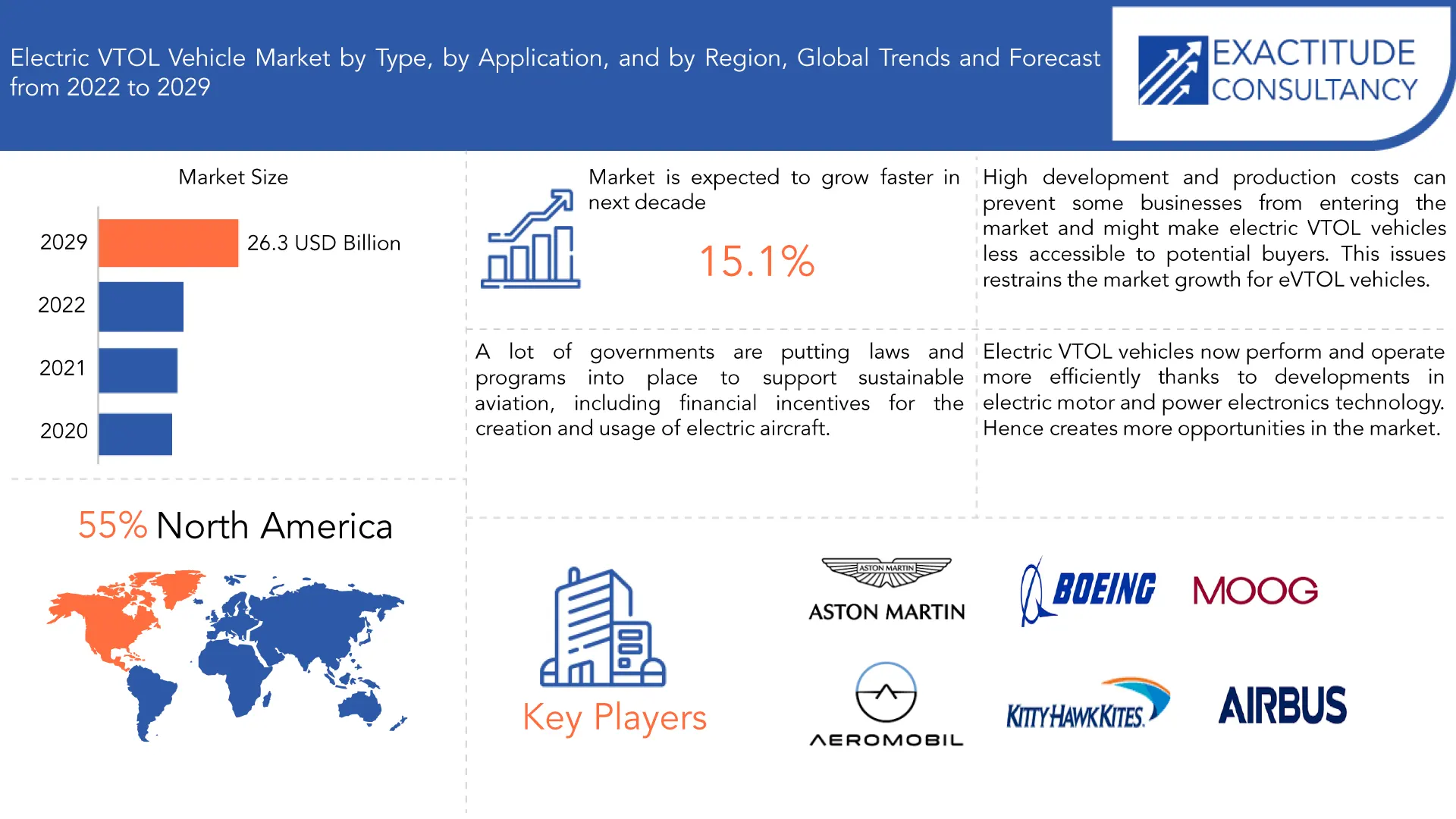
When compared to conventional helicopters, which are expensive to operate and maintain, electric VTOL aircraft have the potential to provide significant cost reductions. Electric motors are more reliable and efficient since they have fewer moving components, which lowers maintenance expenses. Electric VTOL vehicles now perform and operate more efficiently thanks to developments in electric motor and power electronics technology. As a result, they are more reliable and practical than earlier versions, and they can travel farther and faster.
Urban Air Transportation, Freight Delivery, Military and Defense, Emergency Medical Services, Personal Usage, and Advances in Battery Technology are just a few of the prospects the Electric VTOL Vehicle industry offers businesses and investors. These prospects are probably going to become more significant and have a bigger influence as the technology develops and becomes more commercially feasible.
High development and production costs can prevent some businesses from entering the market and might make electric VTOL vehicles less accessible to potential buyers. Regulatory agencies will closely monitor the dependability and safety of these vehicles, and any hiccups in the certification procedure could impede the market's expansion. Governments, businesses, and other stakeholders will need to coordinate heavily in order to build this infrastructure. These restraints are some.
The electric VTOL (Vertical Take-Off and Landing) vehicle sector, as well as the aviation industry as a whole, have been significantly impacted by the COVID-19 pandemic. The pandemic has hampered the development of new technology, disrupted supply networks, and decreased demand for transportation and air travel. Due to travel limitations, social distance rules, and other safety precautions, numerous businesses have been forced to reduce or delay their plans. This has caused delays in the introduction of air taxi services as well as the commercialization of electric VTOL vehicles.
| ATTRIBUTE | DETAILS |
| Study period | 2020-2029 |
| Base year | 2021 |
| Estimated year | 2022 |
| Forecasted year | 2022-2029 |
| Historical period | 2018-2020 |
| Unit | Value (USD Billion), (Thousand Units). |
| Segmentation | By Type, By Application, By Region |
| By Type |
|
| By Application |
|
| By Region |
|
Frequently Asked Questions
What is the worth of Electric VTOL Vehicle market?
The Electric VTOL Vehicle market is expected to grow at 15.1% CAGR from 2022 to 2029. It is expected to reach above USD 26.3 billion by 2029 from USD 7.3 billion in 2020.
What is the size of the North America Electric VTOL Vehicle industry?
North America held more than 55% of the Electric VTOL Vehicle market revenue share in 2021 and will witness expansion in the forecast period.
What are some of the market's driving forces?
There is an increasing need for alternate forms of transportation that can offer faster and more efficient mobility as cities become more populous and traffic congestion worsens. This issue may have a solution in the form of a quicker and more practical ground transportation alternative in the form of electric VTOL vehicles.
Which are the top companies to hold the market share in Electric VTOL Vehicle market?
The Electric VTOL Vehicle Market key players AeroMobil, Aston Martin, Boeing, Kitty hawk, Moog, Airbus, Ehang, Lilium, WatFly, Bell Textron, Vertical Aerospace, Joby Aviation.
What is the leading Type of Electric VTOL Vehicle market?
Based on Type, Multicopter Several rotors are used by electric VTOL vehicles to achieve lift and control. Although they are reasonably easy to use and maintain, they are less effective at high speeds and need more power to hover. In order to achieve vertical takeoff and landing, fixed-wing electric VTOL vehicles typically have a single big rotor or a group of smaller rotors. Wings provide the lift for these vehicles. Electric VTOL vehicles with wings that can tilt from a vertical position for takeoff and landing to a horizontal position for forward flight, rotors that can tilt from a vertical position to a horizontal position for takeoff and landing.
Which is the largest regional market for Electric VTOL Vehicle market?
The market for Electric VTOL Vehicle in North America is sizable and expanding holds 55% of total market size. In North America, the market for electric VTOL (vertical take-off and landing) vehicles is expanding quickly.
Electric VTOL Vehicle Market Segment Analysis
The electric VTOL vehicle market is segmented based on type, application and region.Based on Type, Multicopter Several rotors are used by electric VTOL vehicles to achieve lift and control. Although they are reasonably easy to use and maintain, they are less effective at high speeds and need more power to hover. In order to achieve vertical takeoff and landing, fixed-wing electric VTOL vehicles typically have a single big rotor or a group of smaller rotors. Wings provide the lift for these vehicles. Electric VTOL vehicles with wings that can tilt from a vertical position for takeoff and landing to a horizontal position for forward flight, rotors that can tilt from a vertical position to a horizontal position for takeoff and landing.
By the application, Transportation of passengers: Electric VTOL vehicles are being created for use as air taxis, providing a quicker and more practical substitute for conventional ground transportation. For the transfer of cargo, particularly in metropolitan regions where traffic jams can delay deliveries of products, electric VTOL vehicles are being developed. For military and defense uses such aerial reconnaissance, surveillance, and troop and supply transportation, electric VTOL vehicles are currently being developed. For personal use, such as leisure flying or as a means of transportation for people who live in isolated places, electric VTOL vehicles are being developed.
[caption id="attachment_27124" align="aligncenter" width="1920"]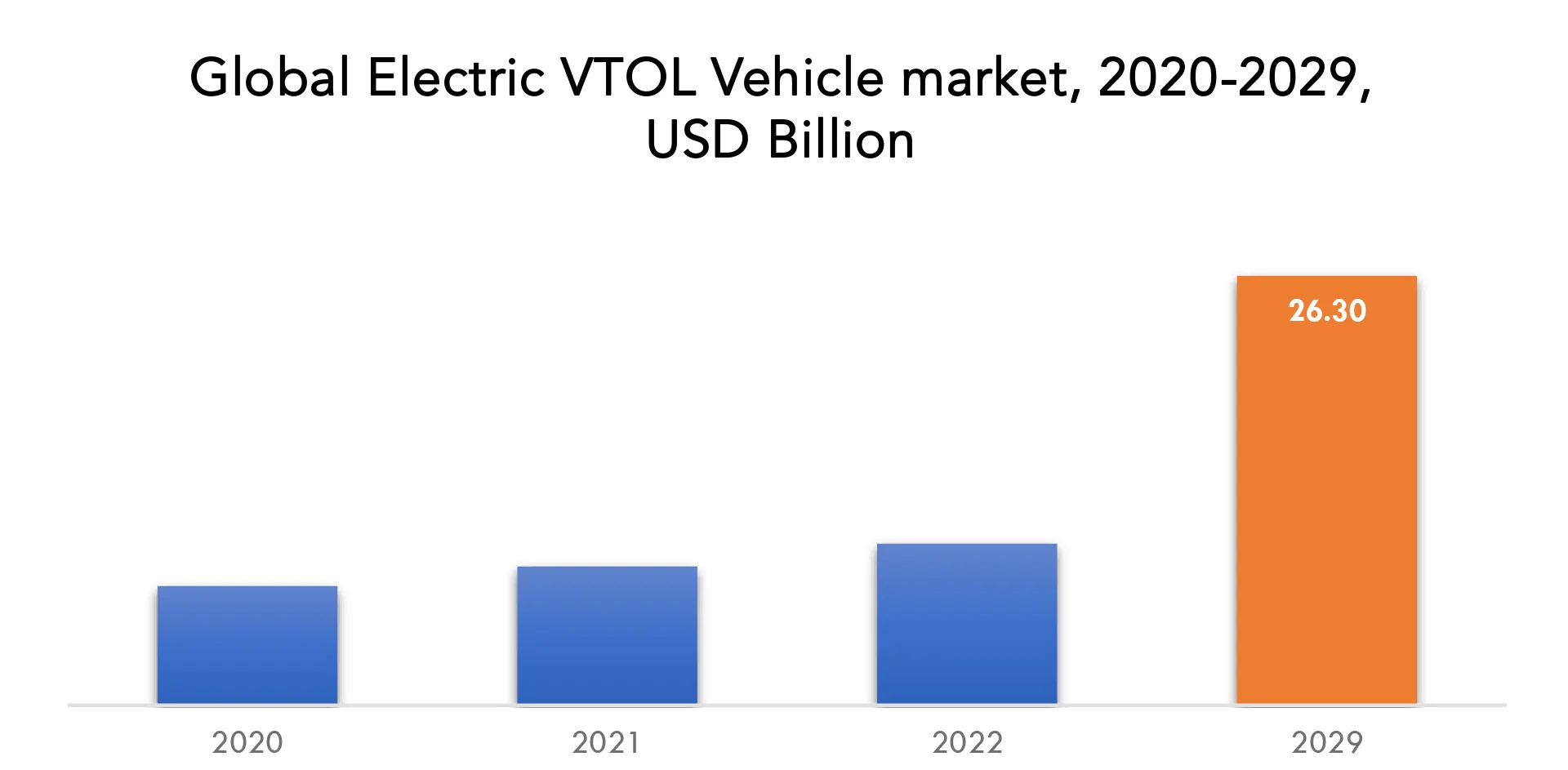
Electric VTOL Vehicle Market Players
The Electric VTOL Vehicle Market key players AeroMobil, Aston Martin, Boeing, Kitty hawk, Moog, Airbus, Ehang, Lilium, WatFly, Bell Textron, Vertical Aerospace, Joby Aviation. Recent News- 06-04-2023: - During a French state visit to China, Airbus signed new cooperation agreements with China Aviation industry partner.
- 07-03-2023: Airbus Helicopters has launched the development of an Instrument Flight Rules (IFR) capability for the H125 in partnership with Genesys Aerosystems which will be available in the second half of 2024 from the Airbus Helicopters´ final assembly line in Columbus, Mississippi. It will consist of an upgraded cockpit, a new autopilot along with redundant hydraulic and electrical systems.
Who Should Buy? Or Key stakeholders
- Information and Technology
- Aircraft
- Investors
- Government Agencies
- Military
- Research
- Retailers
Electric VTOL Vehicle Market Regional Analysis
The Electric VTOL Vehicle market by region includes North America, Asia-Pacific (APAC), Europe, South America, and Middle East & Africa (MEA).- North America: includes the US, Canada, Mexico
- Asia Pacific: includes China, Japan, South Korea, India, Australia, ASEAN and Rest of APAC
- Europe: includes UK, Germany, France, Italy, Spain, Russia, and Rest of Europe
- South America: includes Brazil, Argentina and Rest of South America
- Middle East & Africa: includes Turkey, UAE, Saudi Arabia, South Africa, and Rest of MEA
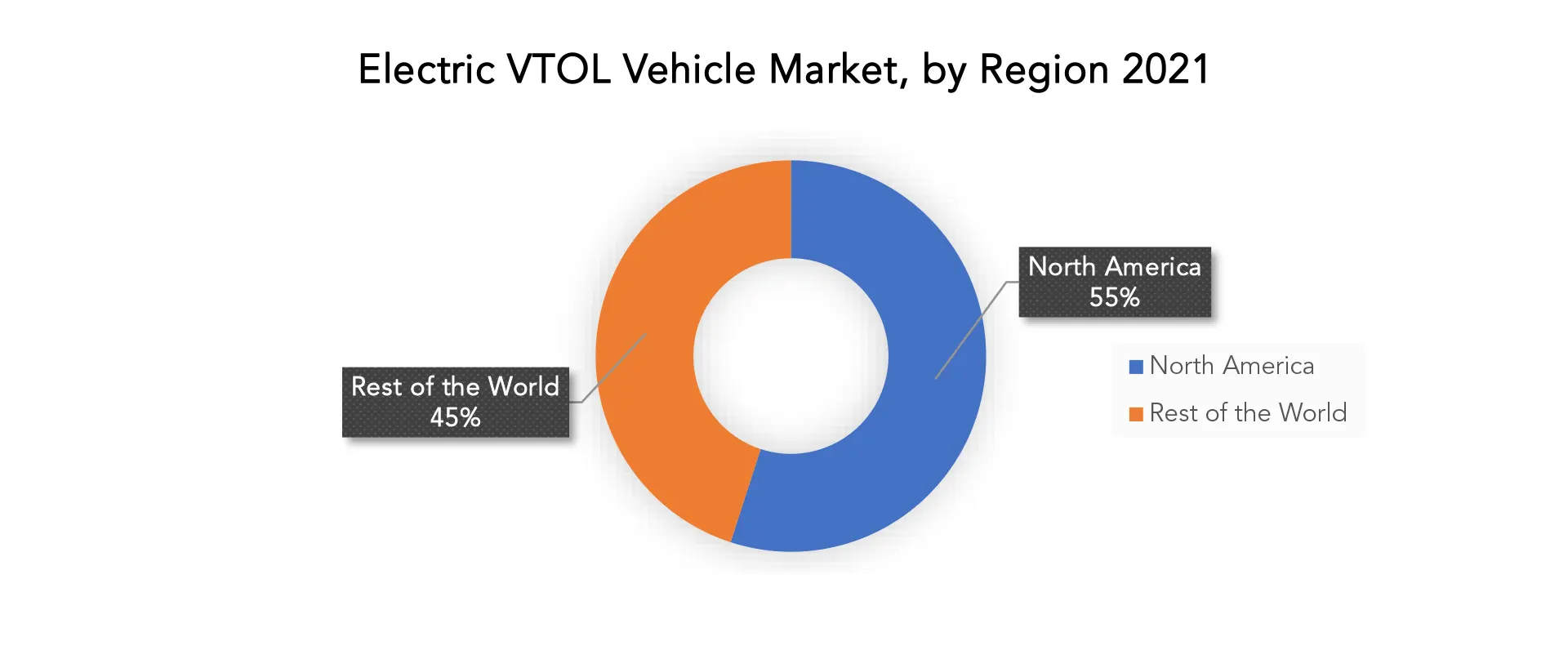
The market for Electric VTOL Vehicle in North America is sizable and expanding holds 55% of total market size. In North America, the market for electric VTOL (vertical take-off and landing) vehicles is expanding quickly, and many businesses are creating and putting prototypes through testing. The market is fueled by a number of factors, including the desire for urban air mobility solutions, improvements in electric motor and battery technology, and the need for more sustainable and efficient transportation options. Due to the existence of significant players, a supportive regulatory environment, and rising investments in the infrastructure for urban air transportation.
A major market for electric VTOL vehicles is anticipated to be in the Asia-Pacific area because of its enormous population and quickly expanding economies. China is anticipated to be a particularly significant market, as many Chinese firms—including Ehang and Xpeng—are developing electric VTOL technology. Also, nations with strong aviation industries, including Japan and South Korea, are funding the advancement of electric VTOL technology.
Key Market Segments: Electric VTOL Vehicle Market
Electric VTOL Vehicle Market by Type, 2020-2029, (USD Billion), (Thousand Units).- Multicopter
- Fixed Wing
- Tilt Rotor
- Tilt Wing
- Passenger
- Cargo Transportation
- Military
- Personal Use
- North America
- Asia Pacific
- Europe
- South America
- Middle East and Africa
Exactitude Consultancy Services Key Objectives
- Increasing sales and market share
- Developing new technology
- Improving profitability
- Entering new markets
- Enhancing brand reputation
Key Question Answered
- what is the expected growth rate of the electric VTOL vehicle market over the next 7 years?
- who are the major players in the electric VTOL vehicle market and what is their market share?
- what are the application industries driving demand for market and what is their outlook?
- what are the opportunities for growth in emerging markets such As Asia-Pacific, Middle East, And Africa?
- how is the economic environment affecting the electric VTOL vehicle market, including factors such as interest rates, inflation, and exchange rates?
- what is the expected impact of government policies and regulations on the electric VTOL vehicle market?
- what is the current and forecasted size and growth rate of the global electric VTOL vehicle market?
- what are the key drivers of growth in the electric VTOL vehicle market?
- what are the distribution channels and supply chain dynamics in the electric VTOL vehicle market?
- what are the technological advancements and innovations in the electric VTOL vehicle market and their impact on type development and growth?
- what are the regulatory considerations and their impact on the market?
- what are the challenges faced by players in the electric VTOL vehicle market and how are they addressing these challenges?
- what are the opportunities for growth and expansion in the electric VTOL vehicle market?
- what are the types offerings and specifications of leading players in the market?
- what is the pricing trend of electric VTOL vehicle in the market and what is the impact of raw material prices on the price trend?
- INTRODUCTION
- MARKET DEFINITION
- MARKET SEGMENTATION
- RESEARCH TIMELINES
- ASSUMPTIONS AND LIMITATIONS
- RESEARCH METHODOLOGY
- DATA MINING
- SECONDARY RESEARCH
- PRIMARY RESEARCH
- SUBJECT-MATTER EXPERTS’ ADVICE
- QUALITY CHECKS
- FINAL REVIEW
- DATA TRIANGULATION
- BOTTOM-UP APPROACH
- TOP-DOWN APPROACH
- RESEARCH FLOW
- DATA SOURCES
- DATA MINING
- EXECUTIVE SUMMARY
- MARKET OVERVIEW
- GLOBAL ELECTRIC VTOL VEHICLE MARKET OUTLOOK
- MARKET DRIVERS
- MARKET RESTRAINTS
- MARKET OPPORTUNITIES
- IMPACT OF COVID-19 ON ELECTRIC VTOL VEHICLE MARKET
- PORTER’S FIVE FORCES MODEL
- THREAT FROM NEW ENTRANTS
- THREAT FROM SUBSTITUTES
- BARGAINING POWER OF SUPPLIERS
- BARGAINING POWER OF CUSTOMERS
- DEGREE OF COMPETITION
- INDUSTRY VALUE CHAIN ANALYSIS
- GLOBAL ELECTRIC VTOL VEHICLE MARKET OUTLOOK
- GLOBAL ELECTRIC VTOL VEHICLE MARKET BY TYPE (USD BILLION, THOUSAND UNITS)
- MULTICOPTER
- FIXED WING
- TILT ROTOR
- TILT WING
- GLOBAL ELECTRIC VTOL VEHICLE MARKET BY APPLICATION (USD BILLION, THOUSAND UNITS)
- PASSENGER
- CARGO TRANSPORTATION
- MILITARY
- PERSONAL USE
- GLOBAL ELECTRIC VTOL VEHICLE MARKET BY REGION (USD BILLION, THOUSAND UNITS)
- NORTH AMERICA
- US
- CANADA
- MEXICO
- SOUTH AMERICA
- BRAZIL
- ARGENTINA
- COLOMBIA
- REST OF SOUTH AMERICA
- EUROPE
- GERMANY
- UK
- FRANCE
- ITALY
- SPAIN
- RUSSIA
- REST OF EUROPE
- ASIA PACIFIC
- INDIA
- CHINA
- JAPAN
- SOUTH KOREA
- AUSTRALIA
- SOUTH-EAST ASIA
- REST OF ASIA PACIFIC
- MIDDLE EAST AND AFRICA
- UAE
- SAUDI ARABIA
- SOUTH AFRICA
- REST OF MIDDLE EAST AND AFRICA
- NORTH AMERICA
- COMPANY PROFILES*(BUSINESS OVERVIEW, COMPANY SNAPSHOT, PRODUCTS OFFERED, RECENT DEVELOPMENTS)
- AEROMOBIL
- ASTON MARTIN
- BOEING
- KITTY HAWK
- MOOG
- AIRBUS
- EHANG
- LILIUM
- WATFLY
- BELL TEXTRON
- VERTICAL AEROSPACE*THE COMPANY LIST IS INDICATIVE
LIST OF TABLES
TABLE 1 GLOBAL ELECTRIC VTOL VEHICLE MARKET BY TYPE (USD BILLION), 2020-2029
TABLE 2 GLOBAL ELECTRIC VTOL VEHICLE MARKET BY TYPE (THOUSAND UNITS), 2020-2029
TABLE 3 GLOBAL ELECTRIC VTOL VEHICLE MARKET BY APPLICATION (USD BILLION), 2020-2029
TABLE 4 GLOBAL ELECTRIC VTOL VEHICLE MARKET BY APPLICATION (THOUSAND UNITS), 2020-2029
TABLE 5 GLOBAL ELECTRIC VTOL VEHICLE MARKET BY REGION (USD BILLION), 2020-2029
TABLE 6 GLOBAL ELECTRIC VTOL VEHICLE MARKET BY REGION (THOUSAND UNITS), 2020-2029
TABLE 7 NORTH AMERICA ELECTRIC VTOL VEHICLE MARKET BY TYPE (USD BILLION), 2020-2029
TABLE 8 NORTH AMERICA ELECTRIC VTOL VEHICLE MARKET BY TYPE (THOUSAND UNITS), 2020-2029
TABLE 9 NORTH AMERICA ELECTRIC VTOL VEHICLE MARKET BY APPLICATION (USD BILLION), 2020-2029
TABLE 10 NORTH AMERICA ELECTRIC VTOL VEHICLE MARKET BY APPLICATION (THOUSAND UNITS), 2020-2029
TABLE 11 NORTH AMERICA ELECTRIC VTOL VEHICLE MARKET BY COUNTRY (USD BILLION), 2020-2029
TABLE 12 NORTH AMERICA ELECTRIC VTOL VEHICLE MARKET BY COUNTRY (THOUSAND UNITS), 2020-2029
TABLE 13 US ELECTRIC VTOL VEHICLE MARKET BY TYPE (USD BILLION), 2020-2029
TABLE 14 US ELECTRIC VTOL VEHICLE MARKET BY TYPE (THOUSAND UNITS), 2020-2029
TABLE 15 US ELECTRIC VTOL VEHICLE MARKET BY APPLICATION (USD BILLION), 2020-2029
TABLE 16 US ELECTRIC VTOL VEHICLE MARKET BY APPLICATION (THOUSAND UNITS), 2020-2029
TABLE 17 CANADA ELECTRIC VTOL VEHICLE MARKET BY TYPE (USD BILLION), 2020-2029
TABLE 18 CANADA ELECTRIC VTOL VEHICLE MARKET BY TYPE (THOUSAND UNITS), 2020-2029
TABLE 19 CANADA ELECTRIC VTOL VEHICLE MARKET BY APPLICATION (USD BILLION), 2020-2029
TABLE 20 CANADA ELECTRIC VTOL VEHICLE MARKET BY APPLICATION (THOUSAND UNITS), 2020-2029
TABLE 21 MEXICO ELECTRIC VTOL VEHICLE MARKET BY TYPE (USD BILLION), 2020-2029
TABLE 22 MEXICO ELECTRIC VTOL VEHICLE MARKET BY TYPE (THOUSAND UNITS), 2020-2029
TABLE 23 MEXICO ELECTRIC VTOL VEHICLE MARKET BY APPLICATION (USD BILLION), 2020-2029
TABLE 24 MEXICO ELECTRIC VTOL VEHICLE MARKET BY APPLICATION (THOUSAND UNITS), 2020-2029
TABLE 25 SOUTH AMERICA ELECTRIC VTOL VEHICLE MARKET BY TYPE (USD BILLION), 2020-2029
TABLE 26 SOUTH AMERICA ELECTRIC VTOL VEHICLE MARKET BY TYPE (THOUSAND UNITS), 2020-2029
TABLE 27 SOUTH AMERICA ELECTRIC VTOL VEHICLE MARKET BY APPLICATION (USD BILLION), 2020-2029
TABLE 28 SOUTH AMERICA ELECTRIC VTOL VEHICLE MARKET BY APPLICATION (THOUSAND UNITS), 2020-2029
TABLE 29 SOUTH AMERICA ELECTRIC VTOL VEHICLE MARKET BY COUNTRY (USD BILLION), 2020-2029
TABLE 30 SOUTH AMERICA ELECTRIC VTOL VEHICLE MARKET BY COUNTRY (THOUSAND UNITS), 2020-2029
TABLE 31 BRAZIL ELECTRIC VTOL VEHICLE MARKET BY TYPE (USD BILLION), 2020-2029
TABLE 32 BRAZIL ELECTRIC VTOL VEHICLE MARKET BY TYPE (THOUSAND UNITS), 2020-2029
TABLE 33 BRAZIL ELECTRIC VTOL VEHICLE MARKET BY APPLICATION (USD BILLION), 2020-2029
TABLE 34 BRAZIL ELECTRIC VTOL VEHICLE MARKET BY APPLICATION (THOUSAND UNITS), 2020-2029
TABLE 35 ARGENTINA ELECTRIC VTOL VEHICLE MARKET BY TYPE (USD BILLION), 2020-2029
TABLE 36 ARGENTINA ELECTRIC VTOL VEHICLE MARKET BY TYPE (THOUSAND UNITS), 2020-2029
TABLE 37 ARGENTINA ELECTRIC VTOL VEHICLE MARKET BY APPLICATION (USD BILLION), 2020-2029
TABLE 38 ARGENTINA ELECTRIC VTOL VEHICLE MARKET BY APPLICATION (THOUSAND UNITS), 2020-2029
TABLE 39 COLOMBIA ELECTRIC VTOL VEHICLE MARKET BY TYPE (USD BILLION), 2020-2029
TABLE 40 COLOMBIA ELECTRIC VTOL VEHICLE MARKET BY TYPE (THOUSAND UNITS), 2020-2029
TABLE 41 COLOMBIA ELECTRIC VTOL VEHICLE MARKET BY APPLICATION (USD BILLION), 2020-2029
TABLE 42 COLOMBIA ELECTRIC VTOL VEHICLE MARKET BY APPLICATION (THOUSAND UNITS), 2020-2029
TABLE 43 REST OF SOUTH AMERICA ELECTRIC VTOL VEHICLE MARKET BY TYPE (USD BILLION), 2020-2029
TABLE 44 REST OF SOUTH AMERICA ELECTRIC VTOL VEHICLE MARKET BY TYPE (THOUSAND UNITS), 2020-2029
TABLE 45 REST OF SOUTH AMERICA ELECTRIC VTOL VEHICLE MARKET BY APPLICATION (USD BILLION), 2020-2029
TABLE 46 REST OF SOUTH AMERICA ELECTRIC VTOL VEHICLE MARKET BY APPLICATION (THOUSAND UNITS), 2020-2029
TABLE 47 ASIA-PACIFIC ELECTRIC VTOL VEHICLE MARKET BY TYPE (USD BILLION), 2020-2029
TABLE 48 ASIA-PACIFIC ELECTRIC VTOL VEHICLE MARKET BY TYPE (THOUSAND UNITS), 2020-2029
TABLE 49 ASIA-PACIFIC ELECTRIC VTOL VEHICLE MARKET BY APPLICATION (USD BILLION), 2020-2029
TABLE 50 ASIA-PACIFIC ELECTRIC VTOL VEHICLE MARKET BY APPLICATION (THOUSAND UNITS), 2020-2029
TABLE 51 ASIA-PACIFIC ELECTRIC VTOL VEHICLE MARKET BY COUNTRY (USD BILLION), 2020-2029
TABLE 52 ASIA-PACIFIC ELECTRIC VTOL VEHICLE MARKET BY COUNTRY (THOUSAND UNITS), 2020-2029
TABLE 53 INDIA ELECTRIC VTOL VEHICLE MARKET BY TYPE (USD BILLION), 2020-2029
TABLE 54 INDIA ELECTRIC VTOL VEHICLE MARKET BY TYPE (THOUSAND UNITS), 2020-2029
TABLE 55 INDIA ELECTRIC VTOL VEHICLE MARKET BY APPLICATION (USD BILLION), 2020-2029
TABLE 56 INDIA ELECTRIC VTOL VEHICLE MARKET BY APPLICATION (THOUSAND UNITS), 2020-2029
TABLE 57 CHINA ELECTRIC VTOL VEHICLE MARKET BY TYPE (USD BILLION), 2020-2029
TABLE 58 CHINA ELECTRIC VTOL VEHICLE MARKET BY TYPE (THOUSAND UNITS), 2020-2029
TABLE 59 CHINA ELECTRIC VTOL VEHICLE MARKET BY APPLICATION (USD BILLION), 2020-2029
TABLE 60 CHINA ELECTRIC VTOL VEHICLE MARKET BY APPLICATION (THOUSAND UNITS), 2020-2029
TABLE 61 JAPAN ELECTRIC VTOL VEHICLE MARKET BY TYPE (USD BILLION), 2020-2029
TABLE 62 JAPAN ELECTRIC VTOL VEHICLE MARKET BY TYPE (THOUSAND UNITS), 2020-2029
TABLE 63 JAPAN ELECTRIC VTOL VEHICLE MARKET BY APPLICATION (USD BILLION), 2020-2029
TABLE 64 JAPAN ELECTRIC VTOL VEHICLE MARKET BY APPLICATION (THOUSAND UNITS), 2020-2029
TABLE 65 SOUTH KOREA ELECTRIC VTOL VEHICLE MARKET BY TYPE (USD BILLION), 2020-2029
TABLE 66 SOUTH KOREA ELECTRIC VTOL VEHICLE MARKET BY TYPE (THOUSAND UNITS), 2020-2029
TABLE 67 SOUTH KOREA ELECTRIC VTOL VEHICLE MARKET BY APPLICATION (USD BILLION), 2020-2029
TABLE 68 SOUTH KOREA ELECTRIC VTOL VEHICLE MARKET BY APPLICATION (THOUSAND UNITS), 2020-2029
TABLE 69 AUSTRALIA ELECTRIC VTOL VEHICLE MARKET BY TYPE (USD BILLION), 2020-2029
TABLE 70 AUSTRALIA ELECTRIC VTOL VEHICLE MARKET BY TYPE (THOUSAND UNITS), 2020-2029
TABLE 71 AUSTRALIA ELECTRIC VTOL VEHICLE MARKET BY APPLICATION (USD BILLION), 2020-2029
TABLE 72 AUSTRALIA ELECTRIC VTOL VEHICLE MARKET BY APPLICATION (THOUSAND UNITS), 2020-2029
TABLE 73 SOUTH EAST ASIA ELECTRIC VTOL VEHICLE MARKET BY TYPE (USD BILLION), 2020-2029
TABLE 74 SOUTH EAST ASIA ELECTRIC VTOL VEHICLE MARKET BY TYPE (THOUSAND UNITS), 2020-2029
TABLE 75 SOUTH EAST ASIA ELECTRIC VTOL VEHICLE MARKET BY APPLICATION (USD BILLION), 2020-2029
TABLE 76 SOUTH EAST ASIA ELECTRIC VTOL VEHICLE MARKET BY APPLICATION (THOUSAND UNITS), 2020-2029
TABLE 77 REST OF ASIA PACIFIC ELECTRIC VTOL VEHICLE MARKET BY TYPE (USD BILLION), 2020-2029
TABLE 78 REST OF ASIA PACIFIC ELECTRIC VTOL VEHICLE MARKET BY TYPE (THOUSAND UNITS), 2020-2029
TABLE 79 REST OF ASIA PACIFIC ELECTRIC VTOL VEHICLE MARKET BY APPLICATION (USD BILLION), 2020-2029
TABLE 80 REST OF ASIA PACIFIC ELECTRIC VTOL VEHICLE MARKET BY APPLICATION (THOUSAND UNITS), 2020-2029
TABLE 81 EUROPE ELECTRIC VTOL VEHICLE MARKET BY TYPE (USD BILLION), 2020-2029
TABLE 82 EUROPE ELECTRIC VTOL VEHICLE MARKET BY TYPE (THOUSAND UNITS), 2020-2029
TABLE 83 EUROPE ELECTRIC VTOL VEHICLE MARKET BY APPLICATION (USD BILLION), 2020-2029
TABLE 84 EUROPE ELECTRIC VTOL VEHICLE MARKET BY APPLICATION (THOUSAND UNITS), 2020-2029
TABLE 85 EUROPE ELECTRIC VTOL VEHICLE MARKET BY COUNTRY (USD BILLION), 2020-2029
TABLE 86 EUROPE ELECTRIC VTOL VEHICLE MARKET BY COUNTRY (THOUSAND UNITS), 2020-2029
TABLE 87 GERMANY ELECTRIC VTOL VEHICLE MARKET BY TYPE (USD BILLION), 2020-2029
TABLE 88 GERMANY ELECTRIC VTOL VEHICLE MARKET BY TYPE (THOUSAND UNITS), 2020-2029
TABLE 89 GERMANY ELECTRIC VTOL VEHICLE MARKET BY APPLICATION (USD BILLION), 2020-2029
TABLE 90 GERMANY ELECTRIC VTOL VEHICLE MARKET BY APPLICATION (THOUSAND UNITS), 2020-2029
TABLE 91 UK ELECTRIC VTOL VEHICLE MARKET BY TYPE (USD BILLION), 2020-2029
TABLE 92 UK ELECTRIC VTOL VEHICLE MARKET BY TYPE (THOUSAND UNITS), 2020-2029
TABLE 93 UK ELECTRIC VTOL VEHICLE MARKET BY APPLICATION (USD BILLION), 2020-2029
TABLE 94 UK ELECTRIC VTOL VEHICLE MARKET BY APPLICATION (THOUSAND UNITS), 2020-2029
TABLE 95 FRANCE ELECTRIC VTOL VEHICLE MARKET BY TYPE (USD BILLION), 2020-2029
TABLE 96 FRANCE ELECTRIC VTOL VEHICLE MARKET BY TYPE (THOUSAND UNITS), 2020-2029
TABLE 97 FRANCE ELECTRIC VTOL VEHICLE MARKET BY APPLICATION (USD BILLION), 2020-2029
TABLE 98 FRANCE ELECTRIC VTOL VEHICLE MARKET BY APPLICATION (THOUSAND UNITS), 2020-2029
TABLE 99 ITALY ELECTRIC VTOL VEHICLE MARKET BY TYPE (USD BILLION), 2020-2029
TABLE 100 ITALY ELECTRIC VTOL VEHICLE MARKET BY TYPE (THOUSAND UNITS), 2020-2029
TABLE 101 ITALY ELECTRIC VTOL VEHICLE MARKET BY APPLICATION (USD BILLION), 2020-2029
TABLE 102 ITALY ELECTRIC VTOL VEHICLE MARKET BY APPLICATION (THOUSAND UNITS), 2020-2029
TABLE 103 SPAIN ELECTRIC VTOL VEHICLE MARKET BY TYPE (USD BILLION), 2020-2029
TABLE 104 SPAIN ELECTRIC VTOL VEHICLE MARKET BY TYPE (THOUSAND UNITS), 2020-2029
TABLE 105 SPAIN ELECTRIC VTOL VEHICLE MARKET BY APPLICATION (USD BILLION), 2020-2029
TABLE 106 SPAIN ELECTRIC VTOL VEHICLE MARKET BY APPLICATION (THOUSAND UNITS), 2020-2029
TABLE 107 RUSSIA ELECTRIC VTOL VEHICLE MARKET BY TYPE (USD BILLION), 2020-2029
TABLE 108 RUSSIA ELECTRIC VTOL VEHICLE MARKET BY TYPE (THOUSAND UNITS), 2020-2029
TABLE 109 RUSSIA ELECTRIC VTOL VEHICLE MARKET BY APPLICATION (USD BILLION), 2020-2029
TABLE 110 RUSSIA ELECTRIC VTOL VEHICLE MARKET BY APPLICATION (THOUSAND UNITS), 2020-2029
TABLE 111 REST OF EUROPE ELECTRIC VTOL VEHICLE MARKET BY TYPE (USD BILLION), 2020-2029
TABLE 112 REST OF EUROPE ELECTRIC VTOL VEHICLE MARKET BY TYPE (THOUSAND UNITS), 2020-2029
TABLE 113 REST OF EUROPE ELECTRIC VTOL VEHICLE MARKET BY APPLICATION (USD BILLION), 2020-2029
TABLE 114 REST OF EUROPE ELECTRIC VTOL VEHICLE MARKET BY APPLICATION (THOUSAND UNITS), 2020-2029
TABLE 115 MIDDLE EAST AND AFRICA ELECTRIC VTOL VEHICLE MARKET BY TYPE (USD BILLION), 2020-2029
TABLE 116 MIDDLE EAST AND AFRICA ELECTRIC VTOL VEHICLE MARKET BY TYPE (THOUSAND UNITS), 2020-2029
TABLE 117 MIDDLE EAST AND AFRICA ELECTRIC VTOL VEHICLE MARKET BY APPLICATION (USD BILLION), 2020-2029
TABLE 118 MIDDLE EAST AND AFRICA ELECTRIC VTOL VEHICLE MARKET BY APPLICATION (THOUSAND UNITS), 2020-2029
TABLE 119 MIDDLE EAST AND AFRICA ELECTRIC VTOL VEHICLE MARKET BY COUNTRY (USD BILLION), 2020-2029
TABLE 120 MIDDLE EAST AND AFRICA ELECTRIC VTOL VEHICLE MARKET BY COUNTRY (THOUSAND UNITS), 2020-2029
TABLE 121 UAE ELECTRIC VTOL VEHICLE MARKET BY TYPE (USD BILLION), 2020-2029
TABLE 122 UAE ELECTRIC VTOL VEHICLE MARKET BY TYPE (THOUSAND UNITS), 2020-2029
TABLE 123 UAE ELECTRIC VTOL VEHICLE MARKET BY APPLICATION (USD BILLION), 2020-2029
TABLE 124 UAE ELECTRIC VTOL VEHICLE MARKET BY APPLICATION (THOUSAND UNITS), 2020-2029
TABLE 125 SAUDI ARABIA ELECTRIC VTOL VEHICLE MARKET BY TYPE (USD BILLION), 2020-2029
TABLE 126 SAUDI ARABIA ELECTRIC VTOL VEHICLE MARKET BY TYPE (THOUSAND UNITS), 2020-2029
TABLE 127 SAUDI ARABIA ELECTRIC VTOL VEHICLE MARKET BY APPLICATION (USD BILLION), 2020-2029
TABLE 128 SAUDI ARABIA ELECTRIC VTOL VEHICLE MARKET BY APPLICATION (THOUSAND UNITS), 2020-2029
TABLE 129 SOUTH AFRICA ELECTRIC VTOL VEHICLE MARKET BY TYPE (USD BILLION), 2020-2029
TABLE 130 SOUTH AFRICA ELECTRIC VTOL VEHICLE MARKET BY TYPE (THOUSAND UNITS), 2020-2029
TABLE 131 SOUTH AFRICA ELECTRIC VTOL VEHICLE MARKET BY APPLICATION (USD BILLION), 2020-2029
TABLE 132 SOUTH AFRICA ELECTRIC VTOL VEHICLE MARKET BY APPLICATION (THOUSAND UNITS), 2020-2029
TABLE 133 REST OF MIDDLE EAST AND AFRICA ELECTRIC VTOL VEHICLE MARKET BY TYPE (USD BILLION), 2020-2029
TABLE 134 REST OF MIDDLE EAST AND AFRICA ELECTRIC VTOL VEHICLE MARKET BY TYPE (THOUSAND UNITS), 2020-2029
TABLE 135 REST OF MIDDLE EAST AND AFRICA ELECTRIC VTOL VEHICLE MARKET BY APPLICATION (USD BILLION), 2020-2029
TABLE 136 REST OF MIDDLE EAST AND AFRICA ELECTRIC VTOL VEHICLE MARKET BY APPLICATION (THOUSAND UNITS), 2020-2029
LIST OF FIGURES
FIGURE 1 MARKET DYNAMICS
FIGURE 2 MARKET SEGMENTATION
FIGURE 3 REPORT TIMELINES: YEARS CONSIDERED
FIGURE 4 DATA TRIANGULATION
FIGURE 5 BOTTOM-UP APPROACH
FIGURE 6 TOP-DOWN APPROACH
FIGURE 7 RESEARCH FLOW
FIGURE 8 GLOBAL ELECTRIC VTOL VEHICLE MARKET BY TYPE, USD BILLION, 2020-2029
FIGURE 9 GLOBAL ELECTRIC VTOL VEHICLE MARKET BY APPLICATION, USD BILLION, 2020-2029
FIGURE 10 GLOBAL ELECTRIC VTOL VEHICLE MARKET BY REGION, USD BILLION, 2020-2029
FIGURE 11 PORTER’S FIVE FORCES MODEL
FIGURE 12 GLOBAL ELECTRIC VTOL VEHICLE MARKET BY TYPE, USD BILLION, 2021
FIGURE 13 GLOBAL ELECTRIC VTOL VEHICLE MARKET BY APPLICATION, USD BILLION, 2021
FIGURE 14 GLOBAL ELECTRIC VTOL VEHICLE MARKET BY REGION, USD BILLION, 2021
FIGURE 15 MARKET SHARE ANALYSIS
FIGURE 16 AEROMOBIL: COMPANY SNAPSHOT
FIGURE 17 ASTON MARTIN: COMPANY SNAPSHOT
FIGURE 18 BOEING: COMPANY SNAPSHOT
FIGURE 19 KITTY HAWK: COMPANY SNAPSHOT
FIGURE 20 MOOG: COMPANY SNAPSHOT
FIGURE 21 AIRBUS: COMPANY SNAPSHOT
FIGURE 22 EHANG: COMPANY SNAPSHOT
FIGURE 23 LILIUM: COMPANY SNAPSHOT
FIGURE 24 WATFLY: COMPANY SNAPSHOT
FIGURE 25 VERTICAL AEROSPACE: COMPANY SNAPSHOT
DOWNLOAD FREE SAMPLE REPORT
License Type
SPEAK WITH OUR ANALYST
Want to know more about the report or any specific requirement?
WANT TO CUSTOMIZE THE REPORT?
Our Clients Speak
We asked them to research ‘ Equipment market’ all over the world, and their whole arrangement was helpful to us. thehealthanalytics.com insightful analysis and reports contributed to our current analysis and in creating a future strategy. Besides, the te
Yosuke Mitsui
Senior Associate Construction Equipment Sales & Marketing
We asked them to research ‘Equipment market’ all over the world, and their whole arrangement was helpful to us. thehealthanalytics.com insightful analysis and reports contributed to our current analysis and in creating a future strategy. Besides, the te