

Base Year Value ()
x.x %
x.x %
CAGR ()
x.x %
x.x %
Forecast Year Value ()
x.x %
x.x %
Historical Data Period
Largest Region
Forecast Period
Sports Technology Market by Sports (Baseball, Soccer, Basketball, Cricket, Tennis, American Football/Rugby, Others), Technology (Esports, Device, Smart Stadium, Sports Analytics) and by Region Global Trends and Forecast from 2022 to 2029
Instant access to hundreds of data points and trends
- Market estimates from 2014-2029
- Competitive analysis, industry segmentation, financial benchmarks
- Incorporates SWOT, Porter's Five Forces and risk management frameworks
- PDF report or online database with Word, Excel and PowerPoint export options
- 100% money back guarantee
Sports Technology Market Overview
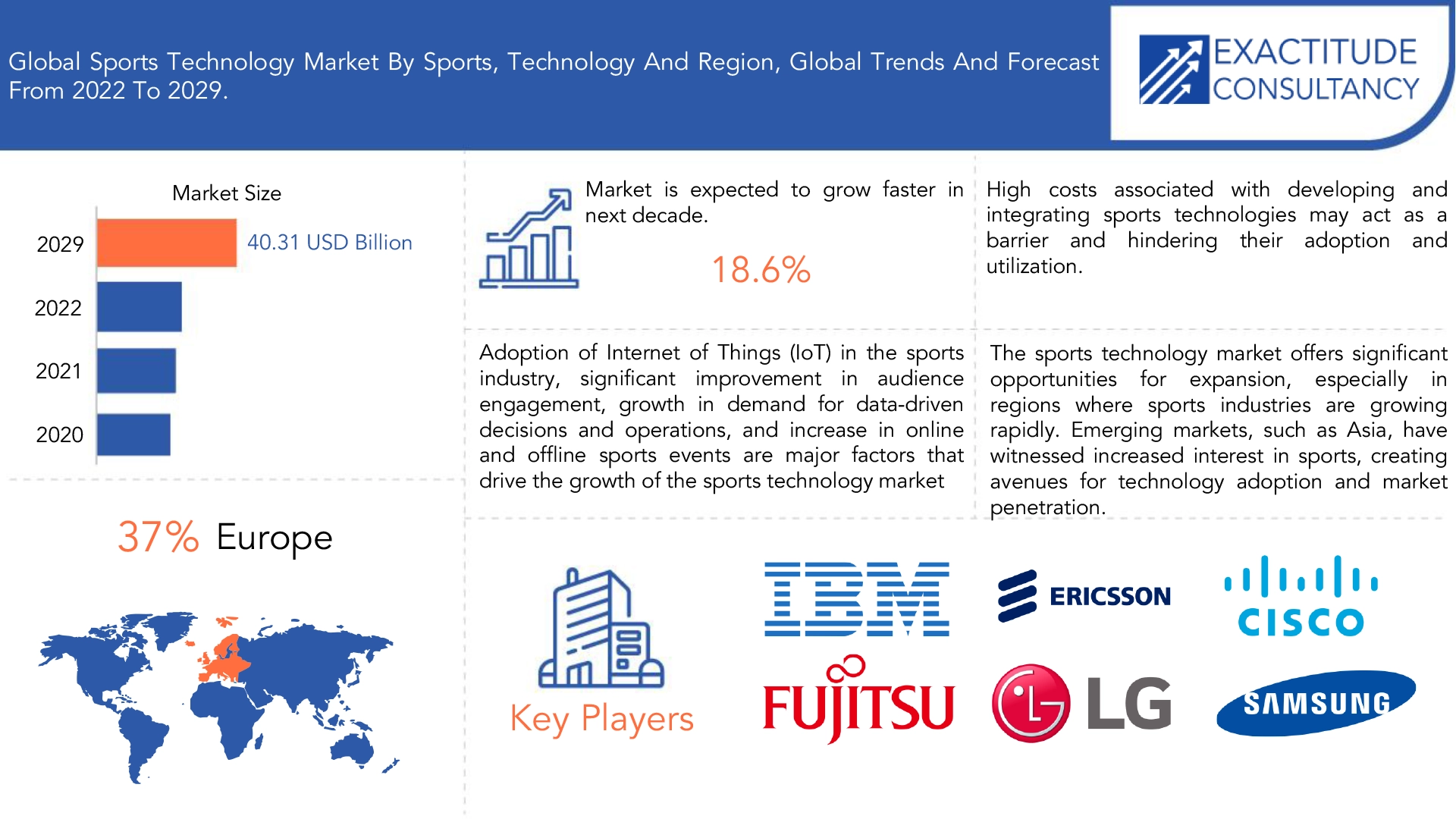
The Global Sports Technology Market Is Projected to Reach USD 40.31 Billion By 2029 From USD 10.34 Billion In 2020, At A CAGR Of 18.6 % From 2022 To 2029.
Sports technology connects the playing qualities of athletic equipment to product design concepts by combining the best aspects of engineering science, measurement and analysis, and sports science. It enables greater performance and simplicity of use in sporting goods by offering up-to-date knowledge about manufacturing techniques and materials. Debatable topics have frequently arisen when new technology is included into a sport. The use of technology has been criticized for slowing down games, but for many individuals, watching games becomes more pleasurable when they witness the right choices being made. The best selections should be made using new technology when it is accessible and has been shown to be correct.
Enhancing athlete performance is one of the main areas where sports technology has had a big influence. Real-time information on an athlete's critical variables, such as heart rate, speed, and movement patterns, is available through wearable technology that is fitted with sensors and monitoring technologies. Athletes and coaches may optimize performance by fine-tuning their training plans, identifying potential improvement areas, and using this plethora of information. In-depth data analysis is done by advanced analytics platforms, which then reveal information on opponent analysis, game strategy, and player performance. Athletes may achieve new heights and push the limits of human potential using data-driven decision-making.
[caption id="attachment_28093" align="aligncenter" width="1920"]
Technology in sports has developed due to technological improvements and a significant demand for it, making tasks simpler and less time-consuming for better administration. The number of sports leagues today is continually growing, creating enormous market opportunities for Sport Technology companies. The Sports Technology market is being driven by an increase in the usage of IoT technologies to aid in the management of stadium infrastructure as a result of the data acquired by various sports sectors. The use of connected devices and the acceptance of wearable equipment by athletes are the factors that are driving the growth of the sport technology market. Automation of ticket sales, enhancement of athlete performance, training, and performance analysis are all made possible with the help of artificial intelligence, all of which support the expansion of the global sports technology market.
Developing, implementing, and maintaining these advanced technologies is the significant restraints in the sports technology market. The development of cutting-edge sports technology solutions requires substantial investment in research, development, and infrastructure. Additionally, organizations may face financial constraints in procuring the necessary equipment and technologies, especially for smaller sports clubs, grassroots organizations, or regions with limited budgets. The high costs involved can act as a barrier, limiting the access and adoption of sports technology.
Delivering personalized fan experiences is the sports technology market's biggest opportunity. Organizations may use analytics and AI-powered algorithms to better understand fan preferences, behaviours, and consumption patterns due to the abundance of data accessible. Organizations may develop more meaningful relationships, boost engagement, and strengthen brand loyalty by customizing content, offers, and interactions for specific followers. Sports technology can improve the fan experience and increase fan happiness in a number of ways, including personalized tickets, customized merchandising, interactive applications, and targeted content suggestions.
| ATTRIBUTE | DETAILS |
| Study period | 2022-2029 |
| Base year | 2022 |
| Estimated year | 2023 |
| Forecasted year | 2023-2029 |
| Historical period | 2018-2022 |
| Unit | Value (USD Billion) |
| Segmentation | By Sports, By Technology, By Region |
| By Sports |
|
| By Technology |
|
| By Region |
|
Frequently Asked Questions
•What is the worth of the sports technology market?
The global sports technology market is projected to reach USD 40.31 billion by 2029 from USD 10.34 billion in 2020, at a CAGR of 18.6 % from 2022 to 2029.
•What is the share of the Europe sports technology industry?
Europe dominates the sports technology market, with a market share of over 37%.
•Which are the top companies to hold the market share in the sports technology market?
IBM, Ericsson, Cisco, Fujitsu, SAP SE, Oracle, NEC Corp., LG, Sharp Corporation, Samsung, Apple Inc., Garmin Ltd., NEC Corp., Sharp Corp are among the leading players in the global sports technology market.
•What is the CAGR of sports technology market?
The global sports technology market registered a CAGR of 18.6 % from 2022 to 2029.
•What are the key factors driving the market?
The expanding number of sports events throughout globe, as well as the increased acceptance of new technologies in the sports business such as big data analytics, artificial intelligence, cloud services, wearables, and drones, are boosting sports technology adoption.
•What are some restraints for growth of the sports technology market?
The risk of technical difficulties and complexity associated in new technologies are some of the limitations to the growth of the sports technology industry.
Sports Technology Market Segment Analysis
The global sports technology market is segmented by sports, technology and region.
Based on sports, the sports technology market is bifurcated into baseball, soccer, basketball, cricket, tennis, american football/rugby, others. The soccer category dominated the sports technology industry in 2020 in terms of revenue. Further developments in the sports sector are being driven by the growing use of video assistant referee solutions in the world of football and other cutting-edge technologies like AI, big data analytics, cloud services, drones, and wearables to improve performance and training in a range of sports. AI-based sports analytics may also help with the creation of scouting plans for emerging players.
A growing number of stadiums with Wi-Fi connectivity aim to give football fans more immersive and richer entertainment experiences. Other variables that are anticipated to boost demand for sports technology in football games include the growing desire to make gaming safer and fairer while also achieving outcomes that may be more profitable. The demand for player monitoring devices which provide service coaches information on the speed and distance travelled by each player on the field is expected to increase in the coming years.
Based on technology, the sports technology market is classified into esports, device, smart stadium, sports analytics. The device segment revenue growth rate is expected to accelerate throughout the projection period. Digital signs, wearables, and cameras are all part of the gadgets area. Adoption of wearables in conjunction with data analytics, AI, and cloud services is a crucial element driving device demand. Wearable solutions such as wristband gadgets, sensor embedded equipment, and smart clothing made of woven or printed electronic materials are driving sales growth in the device market. Increased demand for wearable sports and fitness technologies is also predicted to contribute considerably to the sports industry's total revenue growth. Smart stadium solutions enable stadium operators to connect visitors and spectators with applications that help them locate parking spots and assigned seats using their mobile phones.
[caption id="attachment_28108" align="aligncenter" width="1920"]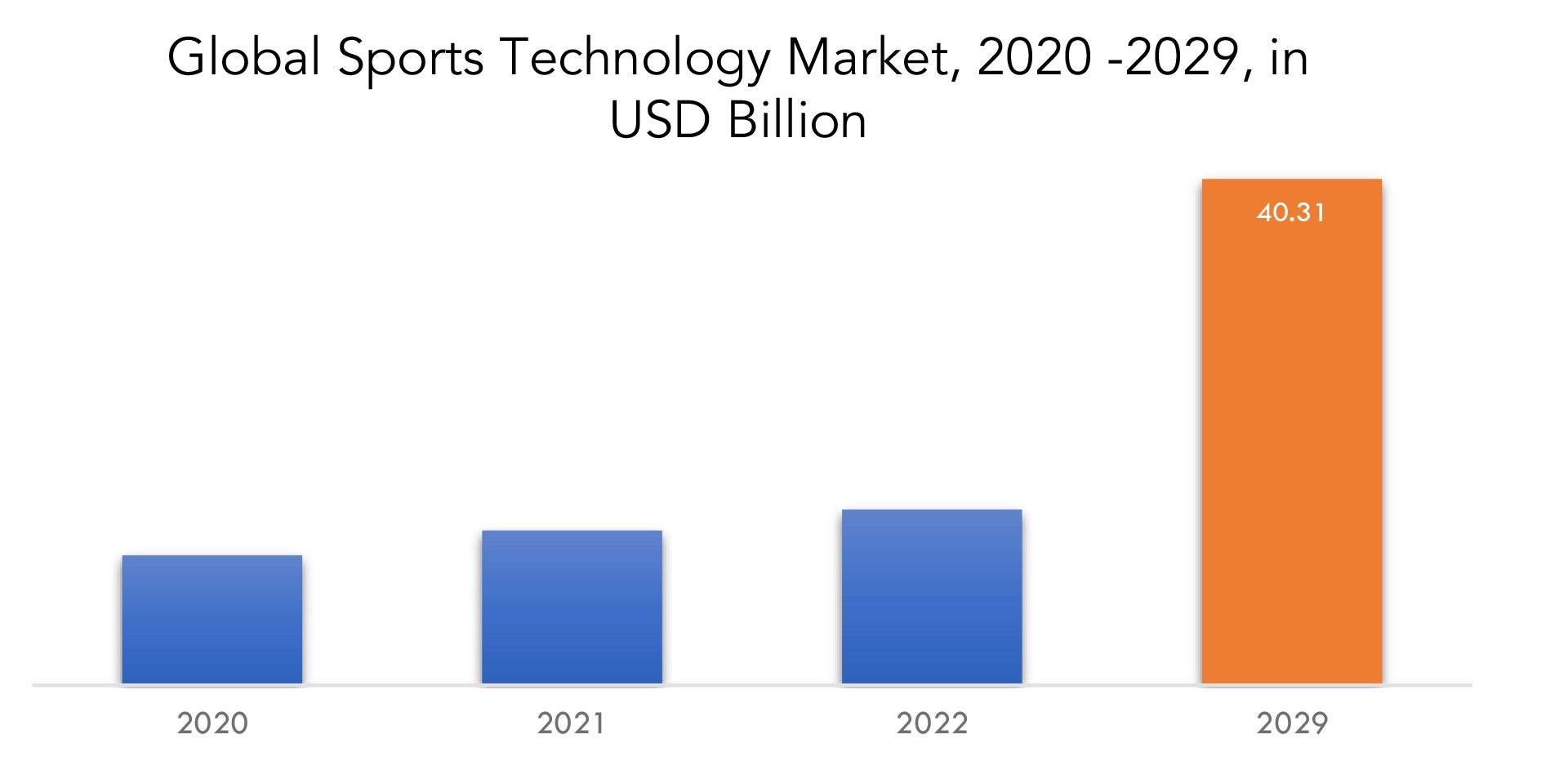
Sports Technology Market Players
The Global Sports Technology Market key players include IBM, Fujitsu, SAP SE, Oracle, NEC Corp., LG, Sharp Corporation, Cisco, Samsung, Apple Inc., Ericsson, Garmin Ltd., NEC Corp., Sharp Corp. Recent Developments: April 20, 2023 — Cisco announced it has been named the Official Network Infrastructure Provider of the FIFA Women’s World Cup 2023™. As an Official Tournament Supporter for the Asia Pacific region, Cisco will deliver a secure network that will connect the entire tournament ecosystem. March 15, 2023: LG Electronics USA announced the launch of its “Game 4 Good” campaign that brings together some of the biggest names in college basketball during the 2023 NCAA March Madness tournaments to highlight the importance of mental health and wellness among student-athletes.Who Should Buy? Or Key Stakeholders
- Sports Organizations and Teams
- Sports Event Organizers
- Sports Facilities and Stadiums
- Sports Broadcasters and Media
- Sports Retailers and Merchandisers
- Fantasy Sports and Gaming Platforms
- Sports Medicine and Rehabilitation Centers
- Sports Governing Bodies and Associations
Sports Technology Market Regional Analysis
The sports technology market by region includes North America, Asia-Pacific (APAC), Europe, South America, and Middle East & Africa (MEA).
- North America: includes the US, Canada, Mexico
- Asia Pacific: includes China, Japan, South Korea, India, Australia, ASEAN and Rest of APAC
- Europe: includes UK, Germany, France, Italy, Spain, Russia, and Rest of Europe
- South America: includes Brazil, Argentina and Rest of South America
- Middle East & Africa: includes Turkey, UAE, Saudi Arabia, South Africa, and Rest of MEA
Europe held the highest revenue share in the global sports technology industry as of 2021 With 38% of the market share. The existence of multiple well-known sports leagues, including the Premier League, English Football League, and LaLiga, is predicted to contribute to the region's continued supremacy during the projection period. The most well-liked sports in the European area include rugby, football, and tennis, which helps the industry expand.
Asia-Pacific is predicted to have a major share and a remarkable CAGR development in the Global Sports Technology Market during the forecast period. The sale of hardware and software, as well as growing investment in sports in countries such as China and India, are driving the Asia Pacific sports technology business. Participation in sports such as cricket, basketball, and baseball has risen in these economies. Furthermore, the Asia Pacific e-sports market is predicted to expand rapidly. The region's new sports leagues are driving demand for smart stadium infrastructure in order to compete with global leagues and establish new revenue streams.
[caption id="attachment_28110" align="aligncenter" width="1920"]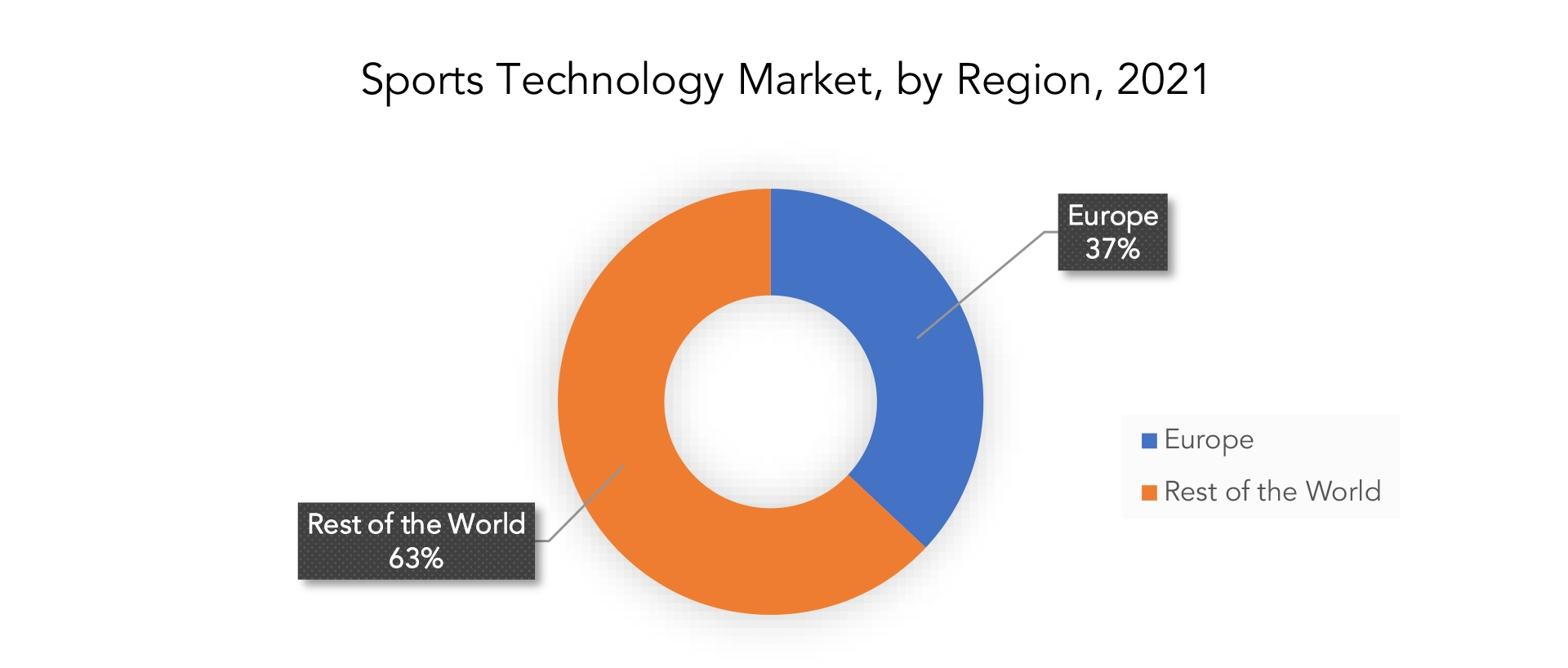
Key Market Segments: Sports Technology Market
Sports Technology Market by Sports 2022-2029, (USD Billion)- Baseball
- Soccer
- Basketball
- Cricket
- Tennis
- American Football/Rugby
- Others
- Esports
- Device
- Smart Stadium
- Sports Analytics
- North America
- Europe
- Asia Pacific
- South America
- Middle East and Africa
Exactitude Consultancy Services Key Objectives
- Increasing sales and market share
- Developing new technology
- Improving profitability
- Entering new markets
- Enhancing brand reputation
Key Question Answered
- What is the expected growth rate of the sports technology market over the next 7 years?
- Who are the major players in the sports technology market and what is their market share?
- What are the end-user industries driving demand for market and what is their outlook?
- What are the opportunities for growth in emerging markets such as Asia-Pacific, Middle East, and Africa?
- How is the economic environment affecting the sports technology market, including factors such as interest rates, inflation, and exchange rates?
- What is the expected impact of government policies and regulations on the sports technology market?
- What is the current and forecasted size and growth rate of the global sports technology market?
- What are the key drivers of growth in the sports technology market?
- What are the distribution channels and supply chain dynamics in the sports technology market?
- What are the technological advancements and innovations in the sports technology market and their impact on product development and growth?
- What are the regulatory considerations and their impact on the market?
- What are the challenges faced by players in the sports technology market and how are they addressing these challenges?
- What are the opportunities for growth and expansion in the sports technology market?
- What are the product offerings and specifications of leading players in the market?
- What is the pricing trend of sports technology in the market and what is the impact of raw material prices on the price trend?
- INTRODUCTION
- MARKET DEFINITION
- MARKET SEGMENTATION
- RESEARCH TIMELINES
- ASSUMPTIONS AND LIMITATIONS
- RESEARCH METHODOLOGY
- DATA MINING
- SECONDARY RESEARCH
- PRIMARY RESEARCH
- SUBJECT-MATTER EXPERTS’ ADVICE
- QUALITY CHECKS
- FINAL REVIEW
- DATA TRIANGULATION
- BOTTOM-UP APPROACH
- TOP-DOWN APPROACH
- RESEARCH FLOW
- DATA SOURCES
- DATA MINING
- EXECUTIVE SUMMARY
- MARKET OVERVIEW
- GLOBAL SPORTS MARKET OUTLOOK
- MARKET DRIVERS
- MARKET RESTRAINTS
- MARKET OPPORTUNITIES
- IMPACT OF COVID-19 ON SPORTS MARKET
- PORTER’S FIVE FORCES MODEL
- THREAT FROM NEW ENTRANTS
- THREAT FROM SUBSTITUTES
- BARGAINING POWER OF SUPPLIERS
- BARGAINING POWER OF CUSTOMERS
- DEGREE OF COMPETITION
- INDUSTRY VALUE CHAIN ANALYSIS
- GLOBAL SPORTS MARKET OUTLOOK
- GLOBAL SPORTS MARKET BY SPORTS, 2020-2029, (USD BILLION)
- BASEBALL
- SOCCER
- BASKETBALL
- CRICKET
- TENNIS
- AMERICAN FOOTBALL/RUGBY
- OTHERS
- GLOBAL SPORTS MARKET BY TECHNOLOGY, 2020-2029, (USD BILLION)
- ESPORTS
- DEVICE
- SMART STADIUM
- SPORTS ANALYTICS
- GLOBAL SPORTS MARKET BY REGION, 2020-2029, (USD BILLION)
- NORTH AMERICA
- US
- CANADA
- MEXICO
- SOUTH AMERICA
- BRAZIL
- ARGENTINA
- COLOMBIA
- REST OF SOUTH AMERICA
- EUROPE
- GERMANY
- UK
- FRANCE
- ITALY
- SPAIN
- RUSSIA
- REST OF EUROPE
- ASIA PACIFIC
- INDIA
- CHINA
- JAPAN
- SOUTH KOREA
- AUSTRALIA
- SOUTH-EAST ASIA
- REST OF ASIA PACIFIC
- MIDDLE EAST AND AFRICA
- UAE
- SAUDI ARABIA
- SOUTH AFRICA
- REST OF MIDDLE EAST AND AFRICA
- NORTH AMERICA
- COMPANY PROFILES* (BUSINESS OVERVIEW, COMPANY SNAPSHOT, PRODUCT OFFERED, RECENT DEVELOPMENTS)
- IBM
- ERICSSON
- CISCO
- FUJITSU
- SAP SE
- ORACLE
- NEC CORP.
- LG
- SHARP CORPORATION
- SAMSUNG
- APPLE INC.
- GARMIN LTD.
- NEC CORP.
- SHARP CORP *THE COMPANY LIST IS INDICATIVE
LIST OF TABLES
TABLE 1 GLOBAL SPORTS MARKET BY SPORTS (USD BILLION) 2020-2029
TABLE 2 GLOBAL SPORTS MARKET BY TECHNOLOGY (USD BILLION) 2020-2029
TABLE 3 GLOBAL SPORTS MARKET BY REGION (USD BILLION) 2020-2029
TABLE 4 NORTH AMERICA SPORTS MARKET BY COUNTRY (USD BILLION) 2020-2029
TABLE 5 NORTH AMERICA SPORTS MARKET BY SPORTS (USD BILLION) 2020-2029
TABLE 6 NORTH AMERICA SPORTS MARKET BY TECHNOLOGY (USD BILLION) 2020-2029
TABLE 7 US SPORTS MARKET BY SPORTS (USD BILLION) 2020-2029
TABLE 8 US SPORTS MARKET BY TECHNOLOGY (USD BILLION) 2020-2029
TABLE 9 CANADA SPORTS MARKET BY SPORTS (USD BILLION) 2020-2029
TABLE 10 CANADA SPORTS MARKET BY TECHNOLOGY (USD BILLION) 2020-2029
TABLE 11 MEXICO SPORTS MARKET BY SPORTS (USD BILLION) 2020-2029
TABLE 12 MEXICO SPORTS MARKET BY TECHNOLOGY (USD BILLION) 2020-2029
TABLE 13 SOUTH AMERICA SPORTS MARKET BY COUNTRY (USD BILLION) 2020-2029
TABLE 14 SOUTH AMERICA SPORTS MARKET BY SPORTS (USD BILLION) 2020-2029
TABLE 15 SOUTH AMERICA SPORTS MARKET BY TECHNOLOGY (USD BILLION) 2020-2029
TABLE 16 BRAZIL SPORTS MARKET BY SPORTS (USD BILLION) 2020-2029
TABLE 17 BRAZIL SPORTS MARKET BY TECHNOLOGY (USD BILLION) 2020-2029
TABLE 18 ARGENTINA SPORTS MARKET BY SPORTS (USD BILLION) 2020-2029
TABLE 19 ARGENTINA SPORTS MARKET BY TECHNOLOGY (USD BILLION) 2020-2029
TABLE 20 COLOMBIA SPORTS MARKET BY SPORTS (USD BILLION) 2020-2029
TABLE 21 COLOMBIA SPORTS MARKET BY TECHNOLOGY (USD BILLION) 2020-2029
TABLE 22 REST OF SOUTH AMERICA SPORTS MARKET BY SPORTS (USD BILLION) 2020-2029
TABLE 23 REST OF SOUTH AMERICA SPORTS MARKET BY TECHNOLOGY (USD BILLION) 2020-2029
TABLE 24 ASIA-PACIFIC SPORTS MARKET BY COUNTRY (USD BILLION) 2020-2029
TABLE 25 ASIA-PACIFIC SPORTS MARKET BY SPORTS (USD BILLION) 2020-2029
TABLE 26 ASIA-PACIFIC SPORTS MARKET BY TECHNOLOGY (USD BILLION) 2020-2029
TABLE 27 INDIA SPORTS MARKET BY SPORTS (USD BILLION) 2020-2029
TABLE 28 INDIA SPORTS MARKET BY TECHNOLOGY (USD BILLION) 2020-2029
TABLE 29 CHINA SPORTS MARKET BY SPORTS (USD BILLION) 2020-2029
TABLE 30 CHINA SPORTS MARKET BY TECHNOLOGY (USD BILLION) 2020-2029
TABLE 31 JAPAN SPORTS MARKET BY SPORTS (USD BILLION) 2020-2029
TABLE 32 JAPAN SPORTS MARKET BY TECHNOLOGY (USD BILLION) 2020-2029
TABLE 33 SOUTH KOREA SPORTS MARKET BY SPORTS (USD BILLION) 2020-2029
TABLE 34 SOUTH KOREA SPORTS MARKET BY TECHNOLOGY (USD BILLION) 2020-2029
TABLE 35 AUSTRALIA SPORTS MARKET BY SPORTS (USD BILLION) 2020-2029
TABLE 36 AUSTRALIA SPORTS MARKET BY TECHNOLOGY (USD BILLION) 2020-2029
TABLE 37 SOUTH-EAST ASIA SPORTS MARKET BY SPORTS (USD BILLION) 2020-2029
TABLE 38 SOUTH-EAST ASIA SPORTS MARKET BY TECHNOLOGY (USD BILLION) 2020-2029
TABLE 39 REST OF ASIA PACIFIC SPORTS MARKET BY SPORTS (USD BILLION) 2020-2029
TABLE 40 REST OF ASIA PACIFIC SPORTS MARKET BY TECHNOLOGY (USD BILLION) 2020-2029
TABLE 41 EUROPE SPORTS MARKET BY COUNTRY (USD BILLION) 2020-2029
TABLE 42 EUROPE SPORTS MARKET BY SPORTS (USD BILLION) 2020-2029
TABLE 43 EUROPE SPORTS MARKET BY TECHNOLOGY (USD BILLION) 2020-2029
TABLE 44 GERMANY SPORTS MARKET BY SPORTS (USD BILLION) 2020-2029
TABLE 45 GERMANY SPORTS MARKET BY TECHNOLOGY (USD BILLION) 2020-2029
TABLE 46 UK SPORTS MARKET BY SPORTS (USD BILLION) 2020-2029
TABLE 47 UK SPORTS MARKET BY TECHNOLOGY (USD BILLION) 2020-2029
TABLE 48 FRANCE SPORTS MARKET BY SPORTS (USD BILLION) 2020-2029
TABLE 49 FRANCE SPORTS MARKET BY TECHNOLOGY (USD BILLION) 2020-2029
TABLE 50 ITALY SPORTS MARKET BY SPORTS (USD BILLION) 2020-2029
TABLE 51 ITALY SPORTS MARKET BY TECHNOLOGY (USD BILLION) 2020-2029
TABLE 52 SPAIN SPORTS MARKET BY SPORTS (USD BILLION) 2020-2029
TABLE 53 SPAIN SPORTS MARKET BY TECHNOLOGY (USD BILLION) 2020-2029
TABLE 54 RUSSIA SPORTS MARKET BY SPORTS (USD BILLION) 2020-2029
TABLE 55 RUSSIA SPORTS MARKET BY TECHNOLOGY (USD BILLION) 2020-2029
TABLE 56 REST OF EUROPE SPORTS MARKET BY SPORTS (USD BILLION) 2020-2029
TABLE 57 REST OF EUROPE SPORTS MARKET BY TECHNOLOGY (USD BILLION) 2020-2029
TABLE 58 MIDDLE EAST AND AFRICA SPORTS MARKET BY COUNTRY (USD BILLION) 2020-2029
TABLE 59 MIDDLE EAST AND AFRICA SPORTS MARKET BY SPORTS (USD BILLION) 2020-2029
TABLE 60 MIDDLE EAST AND AFRICA SPORTS MARKET BY TECHNOLOGY (USD BILLION) 2020-2029
TABLE 61 UAE SPORTS MARKET BY SPORTS (USD BILLION) 2020-2029
TABLE 62 UAE SPORTS MARKET BY TECHNOLOGY (USD BILLION) 2020-2029
TABLE 63 SAUDI ARABIA SPORTS MARKET BY SPORTS (USD BILLION) 2020-2029
TABLE 64 SAUDI ARABIA SPORTS MARKET BY TECHNOLOGY (USD BILLION) 2020-2029
TABLE 65 SOUTH AFRICA SPORTS MARKET BY SPORTS (USD BILLION) 2020-2029
TABLE 66 SOUTH AFRICA SPORTS MARKET BY TECHNOLOGY (USD BILLION) 2020-2029
TABLE 67 REST OF MIDDLE EAST AND AFRICA SPORTS MARKET BY SPORTS (USD BILLION) 2020-2029
TABLE 68 REST OF MIDDLE EAST AND AFRICA SPORTS MARKET BY TECHNOLOGY (USD BILLION) 2020-2029
LIST OF FIGURES
FIGURE 1 MARKET DYNAMICS
FIGURE 2 MARKET SEGMENTATION
FIGURE 3 REPORT TIMELINES: YEARS CONSIDERED
FIGURE 4 DATA TRIANGULATION
FIGURE 5 BOTTOM-UP APPROACH
FIGURE 6 TOP-DOWN APPROACH
FIGURE 7 RESEARCH FLOW
FIGURE 8 GLOBAL SPORTS MARKET BY SPORTS (USD BILLION) 2020-2029
FIGURE 9 GLOBAL SPORTS MARKET BY TECHNOLOGY (USD BILLION) 2020-2029
FIGURE 11 GLOBAL SPORTS MARKET BY REGION (USD BILLION) 2020-2029
FIGURE 12 PORTER’S FIVE FORCES MODEL
FIGURE 13 GLOBAL SPORTS MARKET BY SPORTS (USD BILLION) 2021
FIGURE 14 GLOBAL SPORTS MARKET BY TECHNOLOGY (USD BILLION) 2021
FIGURE 16 GLOBAL SPORTS MARKET BY REGION (USD BILLION) 2021
FIGURE 17 MARKET SHARE ANALYSIS
FIGURE 18 IBM: COMPANY SNAPSHOT
FIGURE 19 ERICSSON: COMPANY SNAPSHOT
FIGURE 20 CISCO: COMPANY SNAPSHOT
FIGURE 21 FUJITSU: COMPANY SNAPSHOT
FIGURE 22 SAP SE: COMPANY SNAPSHOT
FIGURE 23 ORACLE: COMPANY SNAPSHOT
FIGURE 24 NEC CORP.: COMPANY SNAPSHOT
FIGURE 25 LG: COMPANY SNAPSHOT
FIGURE 26 SHARP CORPORATION: COMPANY SNAPSHOT
FIGURE 27 SAMSUNG: COMPANY SNAPSHOT
FIGURE 28 APPLE INC.: COMPANY SNAPSHOT
FIGURE 29 GARMIN LTD.: COMPANY SNAPSHOT
FIGURE 30 NEC CORP.: COMPANY SNAPSHOT
FIGURE 31 SHARP CORP: COMPANY SNAPSHOT
DOWNLOAD FREE SAMPLE REPORT
License Type
SPEAK WITH OUR ANALYST
Want to know more about the report or any specific requirement?
WANT TO CUSTOMIZE THE REPORT?
Our Clients Speak
We asked them to research ‘ Equipment market’ all over the world, and their whole arrangement was helpful to us. thehealthanalytics.com insightful analysis and reports contributed to our current analysis and in creating a future strategy. Besides, the te
Yosuke Mitsui
Senior Associate Construction Equipment Sales & Marketing
We asked them to research ‘Equipment market’ all over the world, and their whole arrangement was helpful to us. thehealthanalytics.com insightful analysis and reports contributed to our current analysis and in creating a future strategy. Besides, the te