

Base Year Value ()
x.x %
x.x %
CAGR ()
x.x %
x.x %
Forecast Year Value ()
x.x %
x.x %
Historical Data Period
Largest Region
Forecast Period
Mercado de imágenes intraoperatorias por producto (arcos C móviles, tomografía computarizada, resonancia magnética intraoperatoria, ultrasonido, rayos X), por aplicación (neurocirugía, atención ortopédica y traumatológica, columna vertebral, enfermedades cardiovasculares, otorrinolaringología, gastroenterología), por usuario final (hospitales, centros de cirugía ambulatoria, academia) y región (América del Norte, Europa, Asia Pacífico, América del Sur, Oriente Medio y África), tendencias globales y pronóstico de 2022 a 2029
Instant access to hundreds of data points and trends
- Market estimates from 2014-2029
- Competitive analysis, industry segmentation, financial benchmarks
- Incorporates SWOT, Porter's Five Forces and risk management frameworks
- PDF report or online database with Word, Excel and PowerPoint export options
- 100% money back guarantee
Panorama del mercado de imágenes intraoperatorias
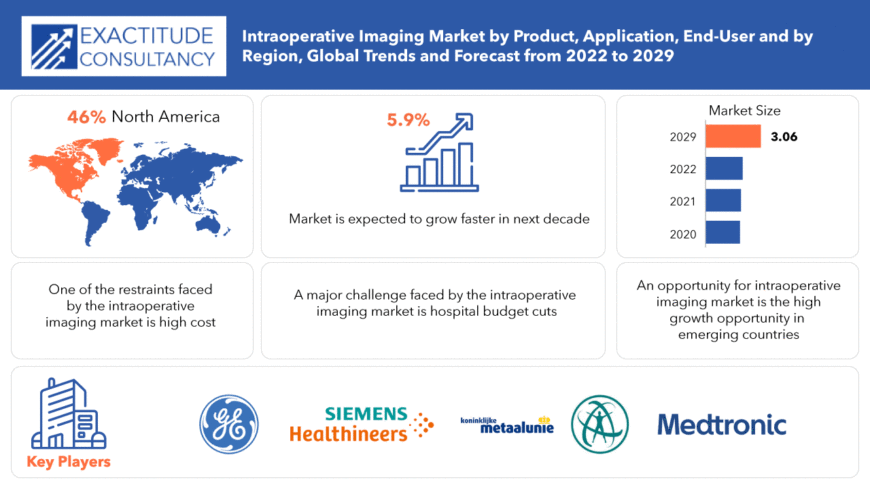
Se espera que el mercado mundial de imágenes intraoperatorias crezca a una tasa anual compuesta del 5,9 % entre 2022 y 2029. Se espera que alcance más de 3060 millones de dólares en 2029, frente a los 1900 millones de dólares de 2020.
Los sistemas de imágenes intraoperatorias son una herramienta indispensable para facilitar los procedimientos mínimamente invasivos, ya que proporcionan imágenes de alta fidelidad y en tiempo real del campo quirúrgico. Se está produciendo un notable cambio de paradigma hacia las intervenciones mínimamente invasivas, impulsado por múltiples ventajas clínicas y económicas, como períodos de recuperación más rápidos, menores costos de tratamiento y duraciones quirúrgicas más breves. Además, la creciente prevalencia de enfermedades crónicas, como las enfermedades cardiovasculares, el cáncer y la diabetes, subraya la creciente demanda de técnicas mínimamente invasivas.
La expansión del mercado en este ámbito se ve impulsada principalmente por la mayor adopción de modalidades quirúrgicas mínimamente invasivas junto con innovaciones tecnológicas. Además, la creciente incidencia de enfermedades crónicas y el creciente envejecimiento demográfico contribuyen significativamente al crecimiento del mercado. La población mundial de ancianos ha experimentado un crecimiento exponencial, lo que los vuelve susceptibles a una gran cantidad de enfermedades. Según la Organización Mundial de la Salud (OMS), las proyecciones indican que para 2030, una de cada seis personas en todo el mundo tendrá 60 años o más.
| ATRIBUTO | DETALLES |
| Periodo de estudio | 2020-2029 |
| Año base | 2021 |
| Año estimado | 2022 |
| Año pronosticado | 2022-2029 |
| Periodo histórico | 2018-2020 |
| Unidad | Valor (miles de millones de USD) |
| Segmentación | Por producto, por aplicación, por usuario final, por región |
| Por producto |
|
| Por aplicación |
|
| Por el usuario final |
|
| Por región |
|
La obtención de imágenes intraoperatorias ha ganado una gran popularidad como herramienta eficaz para facilitar intervenciones quirúrgicas más precisas y eficaces. Este enfoque no solo mejora los resultados de los pacientes, sino que también agiliza los flujos de trabajo y la eficiencia del personal sanitario dentro y fuera del quirófano. Las tecnologías avanzadas de obtención de imágenes intraoperatorias, como la ecografía, el arco en C y la resonancia magnética intraoperatoria, han ampliado notablemente el alcance de las intervenciones quirúrgicas. La capacidad de discernir huesos y tejidos blandos con una precisión incomparable ha revolucionado el tratamiento de diversos trastornos en varias especialidades, como la neurología, la ortopedia, la cardiología, la vascularización y la oncología.
[título id="attachment_9516" align="alignleft" width="870"]
Frequently Asked Questions
• What is the worth of the global Intraoperative Imaging market?
The Intraoperative Imaging market size had crossed USD 1.9 billion in 2020 and will observe a CAGR of more than 5.9% up to 2029 driven by the rising technological advancements.
• What is the size of the North America Intraoperative Imaging industry?
North America held more than 46% of the Intraoperative Imaging market revenue share in 2021 and will witness expansion
• What are the upcoming trends of the Intraoperative Imaging market, globally?
The leading players in the intraoperative imaging market are continuously concentrating on releasing new technologically sophisticated products. In this industry, the focus is on creating cost-effective, technologically sophisticated, and user-friendly intraoperative imaging systems.
• Which are the top companies to hold the market share in the Intraoperative Imaging market?
General Electric Company, Siemens Healthineers AG, Ziehm Imaging GmbH, Medtronic, Koninklijke Philips N.VCanon Healthcare, Stryker (US), Brainlab AG, IMRIS, Shimadzu Corporation, Shenzhen Anke High-tech Co are the key players in the intraoperative imaging market.
• Which is the largest regional market for Intraoperative Imaging market?
North America held the highest share of the global Intraoperative Imaging market. North America is a mature market, with significant penetration of intraoperative imaging technology among major end users and well-established distribution channels for manufacturers and providers of intraoperative imaging products. The intraoperative imaging market in this area is growing due to easy access to and high adoption of modern technology, as well as favorable government policies, owing to the US and Canadian governments' considerable per capita yearly healthcare expenditures.
• Which region is expected to experience the greatest CAGR during the forecast period?
Developing economies such as India, China, Brazil, South Korea, Turkey, Russia, and South Africa offer leading intraoperative imaging market participants significant development prospects. Although cost is an issue in these developing nations, the sheer size of their populations—particularly in India and China—indicates a long-term demand for intraoperative imaging technologies. The increased frequency of chronic illnesses like cancer, stroke, and neurological Surgery, as well as the higher death rates in these nations, highlight the need of early diagnosis.
Intraoperative Imaging Market Segment Analysis
Global Intraoperative Imaging market can be divided on the basis of product are mobile C-arms, CT, intraoperative MRI, ultrasound, X-Ray. A generator, an X-ray source, and an image intensifier or flat-panel detector make up a mobile C-arm, which is a medical imaging device. The image intensifiers or detectors transform the X-rays released by the generator into visible pictures, which are subsequently presented on the monitor. The expanding application frontiers of mobile C-arms are mostly to blame for their rising demand. C-arms, for example, are utilised in a variety of procedures such as cardiovascular surgery, neurosurgery, gastrointestinal surgery, orthopedics, traumatology, and urological diseases. Global intraoperative imaging market can be divided on the basis of end-user into hospitals, ASCs, academia. Hospitals execute a broad range of surgical operations on a regular basis, with the majority of these procedures taking place in in-patient settings. The expanding number of minimally invasive operations and electrosurgery treatments done in hospitals, as well as the adoption of robotic surgical, are driving this segment's growth. Hospitals are more likely to use intraoperative imaging tools because they have more purchasing power and perform more procedures. The rising incidence of road accidents, fall-related injuries, and sports-related injuries has resulted in an increase in the number of orthopedic surgeries performed in hospitals; by increasing the procedural volume, the growing incidence of ailments requiring surgical treatment supports the use of intraoperative imaging devices.
On the basis of application into neurosurgery, orthopedic and trauma care, spine, CVDs, ENT, Gastroenterology. The increasing acceptance of intraoperative imaging products among medical
professionals, owing to technical improvements and greater understanding of intraoperative procedures, is primarily responsible for the growing need for intraoperative imaging solutions in neurosurgery. C-arms with excellent resolution and penetration, for example, are critical for monitoring the placement of screws, tools, implants, and the injected cement. In addition, 3D imaging with navigation improves treatment precision and allows for intraoperative surgical technique assessment. Because of technology improvements that have made detecting and treating disorders simpler than before, the use of C-arms for neurosurgery, particularly spinal procedures, is projected to expand in the future years.
[caption id="attachment_9517" align="alignleft" width="680"]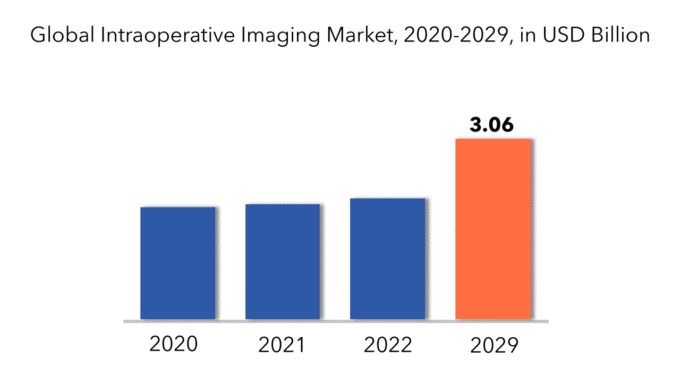
Intraoperative Imaging Market Players
General Electric Company, Siemens Healthineers AG, Ziehm Imaging GmbH, Medtronic, Koninklijke Philips N.V., Canon Healthcare, Stryker (US), Brainlab AG, IMRIS, Shimadzu Corporation, Shenzhen Anke High-tech Co are the key players in the intraoperative imaging market.
- Canon Medical (Japan) introduced Global Illumination next-generation rendering capabilities in 2019, allowing doctors to see and alter photo-realistic anatomical pictures.
- In Bengaluru, India, Siemens AG (Germany) opened a new R&D facility in 2019, offering diagnostic imaging technologies and sophisticated treatments. In India, the facility will produce mobile C-arm devices.
- In 2019, IMRIS, Deerfield Imaging announced a partnership with Saudi Arabia's Prince Sultan Military Medical City and distributor Gulf Medical Company to build the country's first IMRIS Surgical Theatre.
Who Should Buy? Or Key Stakeholders
- Hospitals
- Clinics
- Government Healthcare organisations
- Government healthcare departments
- Information technology companies
- Others
Key Takeaways
- The global intraoperative imaging market is expected to grow at 5.9% CAGR.
- On the basis of product, the mobile c-arm segment is expected to have the largest intraoperative imaging industry share.
- On the basis of application, neurosurgery is the largest application segment of the intraoperative imaging industry.
- North America is the dominating the market in this market.
- The integration of artificial intelligence for real-time image analysis and surgical guidance is a major trend in the intraoperative imaging market.
Intraoperative Imaging Market Regional Analysis
The Intraoperative Imaging market by region includes North America, Asia-Pacific (APAC), Europe, South America, and Middle East & Africa (MEA).
- North America: includes the US, Canada, Mexico
- Asia Pacific: includes China, Japan, South Korea, India, Australia, ASEAN and Rest of APAC
- Europe: includes UK, Germany, France, Italy, Spain, Russia, and Rest of Europe
- South America: includes Brazil, Argentina and Rest of South America
- Middle East & Africa: includes Turkey, UAE, Saudi Arabia, South Africa, and Rest of MEA
Developing economies like as India, China, Brazil, South Korea, Turkey, Russia, and South Africa offer leading intraoperative imaging market participants significant development prospects. Although cost is an issue in these developing nations, the sheer size of their populations—particularly in India and China—indicates a long-term demand for intraoperative imaging technologies. The increased frequency of chronic illnesses like cancer, stroke, and neUrological Surgery, as well as the higher death rates in these nations, highlight the need for early diagnosis. For example, according to GLOBOCAN 2018 data, over half of the world's cancer patients live in poor countries. Furthermore, regulatory regulations in Asia Pacific are more flexible and business-friendly than in Western countries. Manufacturers of intraoperative imaging systems are anticipated to shift their attention to new markets as competition in existing areas heats up.
[caption id="attachment_9518" align="alignleft" width="680"]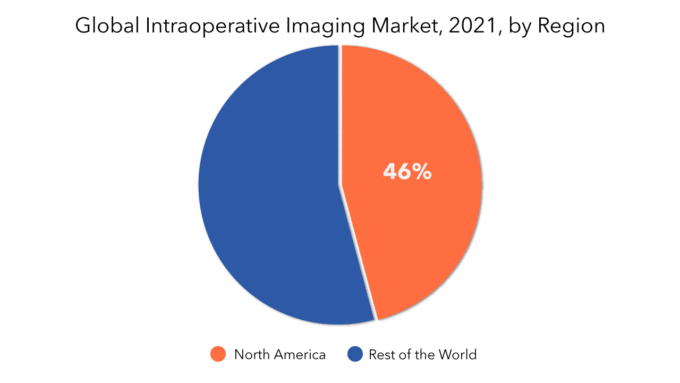
Key Market Segments: Intraoperative Imaging Market
Intraoperative Imaging Market by Product, 2020-2029, (USD Million)- Mobile C-Arms
- CT
- Intraoperative MRI
- Ultrasound
- X Ray
- Neurosurgery
- Orthopedic & Trauma Care
- Spine
- CVDS
- ENT
- Gastroenterology
- Hospitals
- ASCS
- Academia
- North America
- Europe
- Asia Pacific
- South America
- Middle East And Africa
Key Question Answered
- What is the current size of the Intraoperative Imaging market?
- What are the key factors influencing the growth of Intraoperative Imaging?
- What are the major end use industries for Intraoperative Imaging?
- Who are the major key players in the Intraoperative Imaging market?
- Which region will provide more business opportunities for Intraoperative Imaging in future?
- Which segment holds the maximum share of the Intraoperative Imaging market?
- Introducción
- Definición de mercado
- Segmentación del mercado
- Cronología de la investigación
- Supuestos y limitaciones
- Metodología de la investigación
- Minería de datos
- Investigación secundaria
- Investigación primaria
- Asesoramiento de expertos en la materia
- Controles de calidad
- Revisión final
- Triangulación de datos
- Enfoque de abajo hacia arriba
- Enfoque de arriba hacia abajo
- Flujo de investigación
- Fuentes de datos
- Minería de datos
- Resumen ejecutivo
- Descripción general del mercado
- Perspectivas del mercado mundial de imágenes intraoperatorias
- Factores impulsores del mercado
- Restricciones del mercado
- Oportunidades de mercado
- Impacto de Covid-19 en el mercado de imágenes intraoperatorias
- Modelo de las cinco fuerzas de Porter
- Amenaza de nuevos participantes
- Amenaza de sustitutos
- Poder de negociación de los proveedores
- Poder de negociación de los clientes
- Grado de competencia
- Análisis de la cadena de valor de la industria
- Perspectivas del mercado mundial de imágenes intraoperatorias
- Mercado mundial de imágenes intraoperatorias por producto
- Arcos C móviles
- Connecticut
- Resonancia magnética intraoperatoria
- Ultrasonido
- Rayos X
- Mercado mundial de imágenes intraoperatorias por usuario final
- Hospitales
- ASC
- Academia
- Mercado mundial de imágenes intraoperatorias por aplicación
- Neurocirugía
- Atención ortopédica y traumatológica
- Columna vertebral
- ECV
- Otorrinolaringología
- Gastroenterología
- Mercado mundial de imágenes intraoperatorias por región
- América del norte
- A NOSOTROS
- Canadá
- México
- Sudamerica
- Brasil
- Argentina
- Colombia
- Resto de Sudamérica
- Europa
- Alemania
- Reino Unido
- Francia
- Italia
- España
- Rusia
- Resto de Europa
- Asia Pacífico
- India
- Porcelana
- Japón
- Corea del Sur
- Australia
- Sudeste asiático
- Resto de Asia Pacífico
- Oriente Medio y África
- Emiratos Árabes Unidos
- Arabia Saudita
- Sudáfrica
- Resto de Oriente Medio y África
- América del norte
- Perfiles de empresas* (descripción general de la empresa, descripción general de la empresa, productos ofrecidos, desarrollos recientes)
- Compañía General Electric
- Siemens Healthineers AG
- Ziehm Imaging GmbH
- Medtronic
- Philips NV, la línea Koninklijke
- Atención sanitaria Canon
- Stryker
- Laboratorio Brainlab AG
- Sistema de información de información geográfica IMRIS
- Corporación Shimadzu
*La lista de empresas es orientativa
LISTA DE TABLAS
TABLE 1 GLOBAL INTRAOPERATIVE IMAGING MARKET BY PRODUCT (USD MILLIONS) 2020-2029
TABLE 2 GLOBAL INTRAOPERATIVE IMAGING MARKET BY END USER (USD MILLIONS) 2020-2029
TABLE 3 GLOBAL INTRAOPERATIVE IMAGING MARKET BY APPLICATION (USD MILLIONS) 2020-2029
TABLE 4 GLOBAL INTRAOPERATIVE IMAGING MARKET BY REGION (USD MILLIONS) 2020-2029
TABLE 5 US INTRAOPERATIVE IMAGING MARKET BY PRODUCT (USD MILLIONS) 2020-2029
TABLE 6 US INTRAOPERATIVE IMAGING MARKET BY END USER (USD MILLIONS) 2020-2029
TABLE 7 US INTRAOPERATIVE IMAGING MARKET BY APPLICATION (USD MILLIONS) 2020-2029
TABLE 8 CANADA INTRAOPERATIVE IMAGING MARKET BY PRODUCT (USD MILLIONS) 2020-2029
TABLE 9 CANADA INTRAOPERATIVE IMAGING MARKET BY END USER (USD MILLIONS) 2020-2029
TABLE 10 CANADA INTRAOPERATIVE IMAGING MARKET BY APPLICATION (USD MILLIONS) 2020-2029
TABLE 11 MEXICO INTRAOPERATIVE IMAGING MARKET BY PRODUCT (USD MILLIONS) 2020-2029
TABLE 12 MEXICO INTRAOPERATIVE IMAGING MARKET BY END USER (USD MILLIONS) 2020-2029
TABLE 13 MEXICO INTRAOPERATIVE IMAGING MARKET BY APPLICATION (USD MILLIONS) 2020-2029
TABLE 14 BRAZIL INTRAOPERATIVE IMAGING MARKET BY PRODUCT (USD MILLIONS) 2020-2029
TABLE 15 BRAZIL INTRAOPERATIVE IMAGING MARKET BY END USER (USD MILLIONS) 2020-2029
TABLE 16 BRAZIL INTRAOPERATIVE IMAGING MARKET BY APPLICATION (USD MILLIONS) 2020-2029
TABLE 17 ARGENTINA INTRAOPERATIVE IMAGING MARKET BY PRODUCT (USD MILLIONS) 2020-2029
TABLE 18 ARGENTINA INTRAOPERATIVE IMAGING MARKET BY END USER (USD MILLIONS) 2020-2029
TABLE 19 ARGENTINA INTRAOPERATIVE IMAGING MARKET BY APPLICATION (USD MILLIONS) 2020-2029
TABLE 20 COLOMBIA INTRAOPERATIVE IMAGING MARKET BY PRODUCT (USD MILLIONS) 2020-2029
TABLE 21 COLOMBIA INTRAOPERATIVE IMAGING MARKET BY END USER (USD MILLIONS) 2020-2029
TABLE 22 COLOMBIA INTRAOPERATIVE IMAGING MARKET BY APPLICATION (USD MILLIONS) 2020-2029
TABLE 23 REST OF SOUTH AMERICA INTRAOPERATIVE IMAGING MARKET BY PRODUCT (USD MILLIONS) 2020-2029
TABLE 24 REST OF SOUTH AMERICA INTRAOPERATIVE IMAGING MARKET BY END USER (USD MILLIONS) 2020-2029
TABLE 25 REST OF SOUTH AMERICA INTRAOPERATIVE IMAGING MARKET BY APPLICATION (USD MILLIONS) 2020-2029
TABLE 26 INDIA INTRAOPERATIVE IMAGING MARKET BY PRODUCT (USD MILLIONS) 2020-2029
TABLE 27 INDIA INTRAOPERATIVE IMAGING MARKET BY END USER (USD MILLIONS) 2020-2029
TABLE 28 INDIA INTRAOPERATIVE IMAGING MARKET BY APPLICATION (USD MILLIONS) 2020-2029
TABLE 29 CHINA INTRAOPERATIVE IMAGING MARKET BY PRODUCT (USD MILLIONS) 2020-2029
TABLE 30 CHINA INTRAOPERATIVE IMAGING MARKET BY END USER (USD MILLIONS) 2020-2029
TABLE 31 CHINA INTRAOPERATIVE IMAGING MARKET BY APPLICATION (USD MILLIONS) 2020-2029
TABLE 32 JAPAN INTRAOPERATIVE IMAGING MARKET BY PRODUCT (USD MILLIONS) 2020-2029
TABLE 33 JAPAN INTRAOPERATIVE IMAGING MARKET BY END USER (USD MILLIONS) 2020-2029
TABLE 34 JAPAN INTRAOPERATIVE IMAGING MARKET BY APPLICATION (USD MILLIONS) 2020-2029
TABLE 35 SOUTH KOREA INTRAOPERATIVE IMAGING MARKET BY PRODUCT (USD MILLIONS) 2020-2029
TABLE 36 SOUTH KOREA INTRAOPERATIVE IMAGING MARKET BY END USER (USD MILLIONS) 2020-2029
TABLE 37 SOUTH KOREA INTRAOPERATIVE IMAGING MARKET BY APPLICATION (USD MILLIONS) 2020-2029
TABLE 38 AUSTRALIA INTRAOPERATIVE IMAGING MARKET BY PRODUCT (USD MILLIONS) 2020-2029
TABLE 39 AUSTRALIA INTRAOPERATIVE IMAGING MARKET BY END USER (USD MILLIONS) 2020-2029
TABLE 40 AUSTRALIA INTRAOPERATIVE IMAGING MARKET BY APPLICATION (USD MILLIONS) 2020-2029
TABLE 41 SOUTH-EAST ASIA INTRAOPERATIVE IMAGING MARKET BY PRODUCT (USD MILLIONS) 2020-2029
TABLE 42 SOUTH-EAST ASIA INTRAOPERATIVE IMAGING MARKET BY END USER (USD MILLIONS) 2020-2029
TABLE 43 SOUTH-EAST ASIA INTRAOPERATIVE IMAGING MARKET BY APPLICATION (USD MILLIONS) 2020-2029
TABLE 44 REST OF ASIA PACIFIC INTRAOPERATIVE IMAGING MARKET BY PRODUCT (USD MILLIONS) 2020-2029
TABLE 45 REST OF ASIA PACIFIC INTRAOPERATIVE IMAGING MARKET BY END USER (USD MILLIONS) 2020-2029
TABLE 46 REST OF ASIA PACIFIC INTRAOPERATIVE IMAGING MARKET BY APPLICATION (USD MILLIONS) 2020-2029
TABLE 47 GERMANY INTRAOPERATIVE IMAGING MARKET BY PRODUCT (USD MILLIONS) 2020-2029
TABLE 48 GERMANY INTRAOPERATIVE IMAGING MARKET BY END USER (USD MILLIONS) 2020-2029
TABLE 49 GERMANY INTRAOPERATIVE IMAGING MARKET BY APPLICATION (USD MILLIONS) 2020-2029
TABLE 50 UK INTRAOPERATIVE IMAGING MARKET BY PRODUCT (USD MILLIONS) 2020-2029
TABLE 51 UK INTRAOPERATIVE IMAGING MARKET BY END USER (USD MILLIONS) 2020-2029
TABLE 52 UK INTRAOPERATIVE IMAGING MARKET BY APPLICATION (USD MILLIONS) 2020-2029
TABLE 53 FRANCE INTRAOPERATIVE IMAGING MARKET BY PRODUCT (USD MILLIONS) 2020-2029
TABLE 54 FRANCE INTRAOPERATIVE IMAGING MARKET BY END USER (USD MILLIONS) 2020-2029
TABLE 55 FRANCE INTRAOPERATIVE IMAGING MARKET BY APPLICATION (USD MILLIONS) 2020-2029
TABLE 56 ITALY INTRAOPERATIVE IMAGING MARKET BY PRODUCT (USD MILLIONS) 2020-2029
TABLE 57 ITALY INTRAOPERATIVE IMAGING MARKET BY END USER (USD MILLIONS) 2020-2029
TABLE 58 ITALY INTRAOPERATIVE IMAGING MARKET BY APPLICATION (USD MILLIONS) 2020-2029
TABLE 59 SPAIN INTRAOPERATIVE IMAGING MARKET BY PRODUCT (USD MILLIONS) 2020-2029
TABLE 60 SPAIN INTRAOPERATIVE IMAGING MARKET BY END USER (USD MILLIONS) 2020-2029
TABLE 61 SPAIN INTRAOPERATIVE IMAGING MARKET BY APPLICATION (USD MILLIONS) 2020-2029
TABLE 62 RUSSIA INTRAOPERATIVE IMAGING MARKET BY PRODUCT (USD MILLIONS) 2020-2029
TABLE 63 RUSSIA INTRAOPERATIVE IMAGING MARKET BY END USER (USD MILLIONS) 2020-2029
TABLE 64 RUSSIA INTRAOPERATIVE IMAGING MARKET BY APPLICATION (USD MILLIONS) 2020-2029
TABLE 65 REST OF EUROPE INTRAOPERATIVE IMAGING MARKET BY PRODUCT (USD MILLIONS) 2020-2029
TABLE 66 REST OF EUROPE INTRAOPERATIVE IMAGING MARKET BY END USER (USD MILLIONS) 2020-2029
TABLE 67 REST OF EUROPE INTRAOPERATIVE IMAGING MARKET BY APPLICATION (USD MILLIONS) 2020-2029
TABLE 68 UAE INTRAOPERATIVE IMAGING MARKET BY PRODUCT (USD MILLIONS) 2020-2029
TABLE 69 UAE INTRAOPERATIVE IMAGING MARKET BY END USER (USD MILLIONS) 2020-2029
TABLE 70 UAE INTRAOPERATIVE IMAGING MARKET BY APPLICATION (USD MILLIONS) 2020-2029
TABLE 71 SAUDI ARABIA INTRAOPERATIVE IMAGING MARKET BY PRODUCT (USD MILLIONS) 2020-2029
TABLE 72 SAUDI ARABIA INTRAOPERATIVE IMAGING MARKET BY END USER (USD MILLIONS) 2020-2029
TABLE 73 SAUDI ARABIA INTRAOPERATIVE IMAGING MARKET BY APPLICATION (USD MILLIONS) 2020-2029
TABLE 74 SOUTH AFRICA INTRAOPERATIVE IMAGING MARKET BY PRODUCT (USD MILLIONS) 2020-2029
TABLE 75 SOUTH AFRICA INTRAOPERATIVE IMAGING MARKET BY END USER (USD MILLIONS) 2020-2029
TABLE 76 SOUTH AFRICA INTRAOPERATIVE IMAGING MARKET BY APPLICATION (USD MILLIONS) 2020-2029
TABLE 77 REST OF MIDDLE EAST AND AFRICA INTRAOPERATIVE IMAGING MARKET BY PRODUCT (USD MILLIONS) 2020-2029
TABLE 78 REST OF MIDDLE EAST AND AFRICA INTRAOPERATIVE IMAGING MARKET BY END USER (USD MILLIONS) 2020-2029
TABLE 79 REST OF MIDDLE EAST AND AFRICA INTRAOPERATIVE IMAGING MARKET BY APPLICATION (USD MILLIONS) 2020-2029
LIST OF FIGURES
FIGURE 1 MARKET DYNAMICS
FIGURE 2 MARKET SEGMENTATION
FIGURE 3 REPORT TIMELINES: YEARS CONSIDERED
FIGURE 4 DATA TRIANGULATION
FIGURE 5 BOTTOM-UP APPROACH
FIGURE 6 TOP-DOWN APPROACH
FIGURE 7 RESEARCH FLOW
FIGURE 8 GLOBAL INTRAOPERATIVE IMAGING MARKET BY PRODUCT, USD MILLION, 2020-2029
FIGURE 9 GLOBAL INTRAOPERATIVE IMAGING MARKET BY END USER, USD MILLION, 2020-2029
FIGURE 10 GLOBAL INTRAOPERATIVE IMAGING MARKET BY APPLICATION INDUSTRY, USD MILLION, 2020-2029
FIGURE 11 GLOBAL INTRAOPERATIVE IMAGING MARKET BY REGION, USD MILLION, 2020-2029
FIGURE 12 PORTER’S FIVE FORCES MODEL
FIGURE 13 NORTH AMERICA INTRAOPERATIVE IMAGING MARKET SNAPSHOT
FIGURE 14 EUROPE INTRAOPERATIVE IMAGING MARKET SNAPSHOT
FIGURE 15 ASIA PACIFIC INTRAOPERATIVE IMAGING MARKET SNAPSHOT
FIGURE 16 SOUTH AMERICA INTRAOPERATIVE IMAGING MARKET SNAPSHOT
FIGURE 17 MIDDLE EAST & AFRICA INTRAOPERATIVE IMAGING MARKET SNAPSHOT
FIGURE 18 GENERAL ELECTRIC COMPANY: COMPANY SNAPSHOT
FIGURE 19 SIEMENS HEALTHINEERS AG: COMPANY SNAPSHOT
FIGURE 20 ZIEHM IMAGING GMBH: COMPANY SNAPSHOT
FIGURE 21 MEDTRONIC: COMPANY SNAPSHOT
FIGURE 22 KONINKLIJKE PHILIPS N.V.: COMPANY SNAPSHOT
FIGURE 23 CANON HEALTHCARE: COMPANY SNAPSHOT
FIGURE 24 STRYKER: COMPANY SNAPSHOT
FIGURE 25 BRAINLAB AG: COMPANY SNAPSHOT
FIGURE 26 IMRIS: COMPANY SNAPSHOT
FIGURE 27 SHIMADZU CORPORATION: COMPANY SNAPSHOT
DOWNLOAD FREE SAMPLE REPORT
License Type
SPEAK WITH OUR ANALYST
Want to know more about the report or any specific requirement?
WANT TO CUSTOMIZE THE REPORT?
Our Clients Speak
We asked them to research ‘ Equipment market’ all over the world, and their whole arrangement was helpful to us. thehealthanalytics.com insightful analysis and reports contributed to our current analysis and in creating a future strategy. Besides, the te
Yosuke Mitsui
Senior Associate Construction Equipment Sales & Marketing
We asked them to research ‘Equipment market’ all over the world, and their whole arrangement was helpful to us. thehealthanalytics.com insightful analysis and reports contributed to our current analysis and in creating a future strategy. Besides, the te