

Base Year Value ()
x.x %
x.x %
CAGR ()
x.x %
x.x %
Forecast Year Value ()
x.x %
x.x %
Historical Data Period
Largest Region
Forecast Period
Global Isostatic Pressing Market by Type (Hot Isostatic Pressing (HIP), Cold Isostatic Pressing (CIP)), by Offering System (Systems, Service), by Capacity (Small Sized Hip, Medium Sized Hip, Large Sized Hip), by End-User (Manufacturing, Automotive, Electronics & Semiconductor, Medical, Aerospace & Defense, Energy & Power) and by Region, Global trends and forecast from 2022 to 2029
Instant access to hundreds of data points and trends
- Market estimates from 2014-2029
- Competitive analysis, industry segmentation, financial benchmarks
- Incorporates SWOT, Porter's Five Forces and risk management frameworks
- PDF report or online database with Word, Excel and PowerPoint export options
- 100% money back guarantee
Global Isostatic Pressing Market Overview
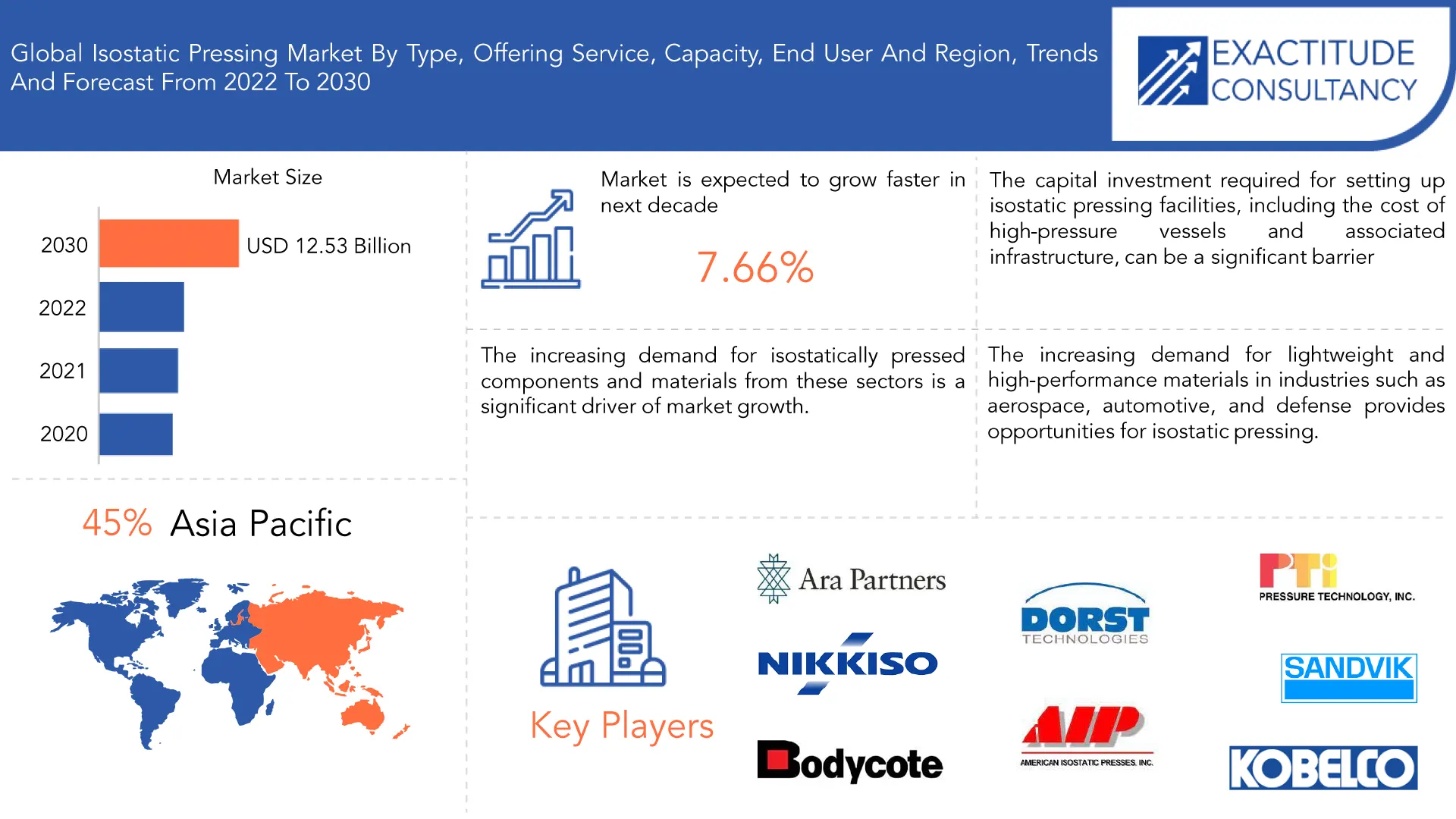
The Global Isostatic Pressing Market size is expected to grow at more than 7.66% CAGR from 2021 to 2029. It is expected to reach above USD 12.53 billion by 2029 from a little above USD 6.45 billion in 2020.
Isostatic pressing, also known as cold isostatic pressing (CIP) or high-pressure processing (HPP), is used in a wide range of industries such as aerospace, automotive, defense, energy, medical, and manufacturing. The increasing demand for isostatically pressed components and materials from these sectors is a significant driver of market growth. Continuous advancements in material science and technology have enabled the development of new materials that can be processed effectively through isostatic pressing. These materials include ceramics, metals, composites, and specialty alloys. The ability of isostatic pressing to produce components with superior properties, such as high strength, improved density, and enhanced fatigue resistance, is driving its adoption across industries. There is a rising demand for engineered components that require precise shaping and consolidation. Isostatic pressing offers an efficient method for producing near-net shape components with minimal material wastage. The demand for engineered components, especially in the aerospace, automotive, and medical sectors, is contributing to the growth of the isostatic pressing market.
Isostatic pressing equipment can be expensive to purchase and maintain. The capital investment required for setting up isostatic pressing facilities, including the cost of high-pressure vessels and associated infrastructure, can be a significant barrier for small and medium-sized enterprises (SMEs) or businesses with limited financial resources. Isostatic pressing is typically suitable for producing smaller to medium-sized components. The size and weight limitations of the equipment can restrict its application in industries that require larger or heavier parts. For such applications, alternative manufacturing processes may be preferred, which can limit the market potential of isostatic pressing.
| ATTRIBUTE | DETAILS |
| Study period | 2020-2029 |
| Base year | 2021 |
| Estimated year | 2022 |
| Forecasted year | 2022-2029 |
| Historical period | 2018-2020 |
| Unit | Value (USD Billion) |
| Segmentation | By Type, By Offering System, By Capacity, By End-User, By Region |
| By Type |
|
| By Offering System |
|
| By Capacity |
|
| By End-User |
|
| By Region |
|
The increasing demand for lightweight and high-performance materials in industries such as aerospace, automotive, and defense provides opportunities for isostatic pressing. Isostatic pressing enables the production of complex shapes and near-net shape components using advanced materials like ceramics, composites, and specialty alloys, which are sought after for their superior properties. Additive manufacturing, or 3D printing, is a rapidly evolving technology that complements isostatic pressing. The combination of isostatic pressing with additive manufacturing techniques, such as powder bed fusion or binder jetting, can enhance the strength, density, and dimensional accuracy of printed components. This integration presents opportunities for hybrid manufacturing processes that leverage the strengths of both technologies. Isostatic pressing has found extensive applications in the medical and healthcare sectors. It is used to produce biomedical implants, dental prosthetics, and pharmaceutical components. With the growing aging population and advancements in medical technology, there are opportunities for isostatic pressing to further penetrate these sectors and cater to the increasing demand for customized, patient-specific solutions.
The COVID-10 outbreak reduced the growth rate in the production and manufacturing sectors in 2020, and it is predicted that the market will continue to grow relatively slowly until the end of 2021. Additionally, the COVID-19 has resulted in a considerable and sustained decline in facilities and travel restrictions, which has kept workers away from their workplaces and affected the market share for isostatic pressing. A number of barriers brought about by the COVID-19 pandemic also had a major impact on industries like automotive, healthcare, and aerospace. The COVID-19 pandemic has, however, led to significant growth in sectors including healthcare and energy & power, which is anticipated to boost demand for isostatic pressing in the upcoming year.
[caption id="attachment_25211" align="aligncenter" width="1920"]
Frequently Asked Questions
• Who are the key players in the global isostatic pressing?
Some key players operating in the global isostatic pressing include America Isostatic Presses, Inc., Ara Partners Group, LLC, Bodycote plc, Dorst Technologies GmbH & Co. KG, Engineered Pressure Systems, Inc., Kennametal Inc., Kobe Steel Ltd., Nikkiso Co. Ltd., Pressure Technology, Inc., Sandvik AB.
• What are the factors driving the global isostatic pressing?
Isostatic pressing, also known as cold isostatic pressing (CIP) or high-pressure processing (HPP), is used in a wide range of industries such as aerospace, automotive, defense, energy, medical, and manufacturing. The increasing demand for isostatically pressed components and materials from these sectors is a significant driver of market growth.
• How big is the global isostatic pressing?
The global isostatic pressing size was estimated at USD 6.94 billion in 2021 and is expected to reach USD 12.53 billion in 2029.
• What is the global isostatic pressing growth?
The global isostatic pressing is expected to grow at a compound annual growth rate of 7.66% from 2022 to 2029 to reach USD 12.53 billion by 2029.
• Which region accounted for the largest global isostatic pressing share?
The Asia Pacific dominated the global isostatic pressing with a share of 45% in 2021.
Global Isostatic Pressing Market Segment Analysis
On the basis of type market is segmented into hot isostatic pressing (HIP) and cold isostatic pressing (CIP). The hot isostatic pressing (HIP) industry held the greatest market share for isostatic pressing globally in 2021. As HIP accomplishes near-net-shape densification of materials, improves density, lowers porosity, and improves mechanical properties, it is gaining popularity and producing components with improved strength and performance. By eliminating residual stresses, enhancing fatigue resistance, enhancing corrosion resistance, and achieving fine-grained microstructures, HIP greatly enhances the material's mechanical, physical, and chemical properties, producing materials with higher performance characteristics. By applying components to high pressure and temperature, HIP also fixes and gets rid of material flaws. It can successfully eliminate voids, fissures, and other interior flaws, enhancing the parts' structural stability and dependability.
On the basis of offering system market is segmented into systems and service. The use of isostatic pressing systems in the manufacturing, automotive, energy & power, and medical sectors is expanding, which is helping the isostatic pressing services market grow. Isostatic pressing systems undergo routine inspections to look for discontinuities, flaws, or other faults that can lower operational reliability and cause failures in order to enhance the quality and dependability of components and configurations.
On the basis of capacity market is segmented into small sized Hip, medium sized Hip, large sized Hip. The CAGR for large-sized HIP during the projection period is the greatest. These huge processing capacities of HIP systems enable the densification of larger products and powder metallurgy batches, lower per-unit processing costs, and support customers in gaining a better competitive edge in the market. This market's expansion is due to the rising demand for HIP in large-size product production applications across a range of industries, including aerospace & defense, automotive, and precision machinery manufacture. Also considered to be a key factor in the market's expansion is HIP's growing acceptance.
On the basis of end-user market is segmented into manufacturing, automotive, electronics & semiconductor, medical, aerospace & defense and energy & power. In 2020, the application segment that holds the largest share belongs to the aerospace and defense industries section. It's since improved isostatic pressing techniques have been widely adopted in the aerospace industry, and since HIP technology is increasingly being used to produce commercial aeroplanes. In addition, Hot Isostatic Pressing (HIP) technology is used to produce stainless steel and nickel-base superalloy, which are used in the aerospace and defense sector to build a variety of missiles and spacecraft.
[caption id="attachment_25212" align="aligncenter" width="1920"]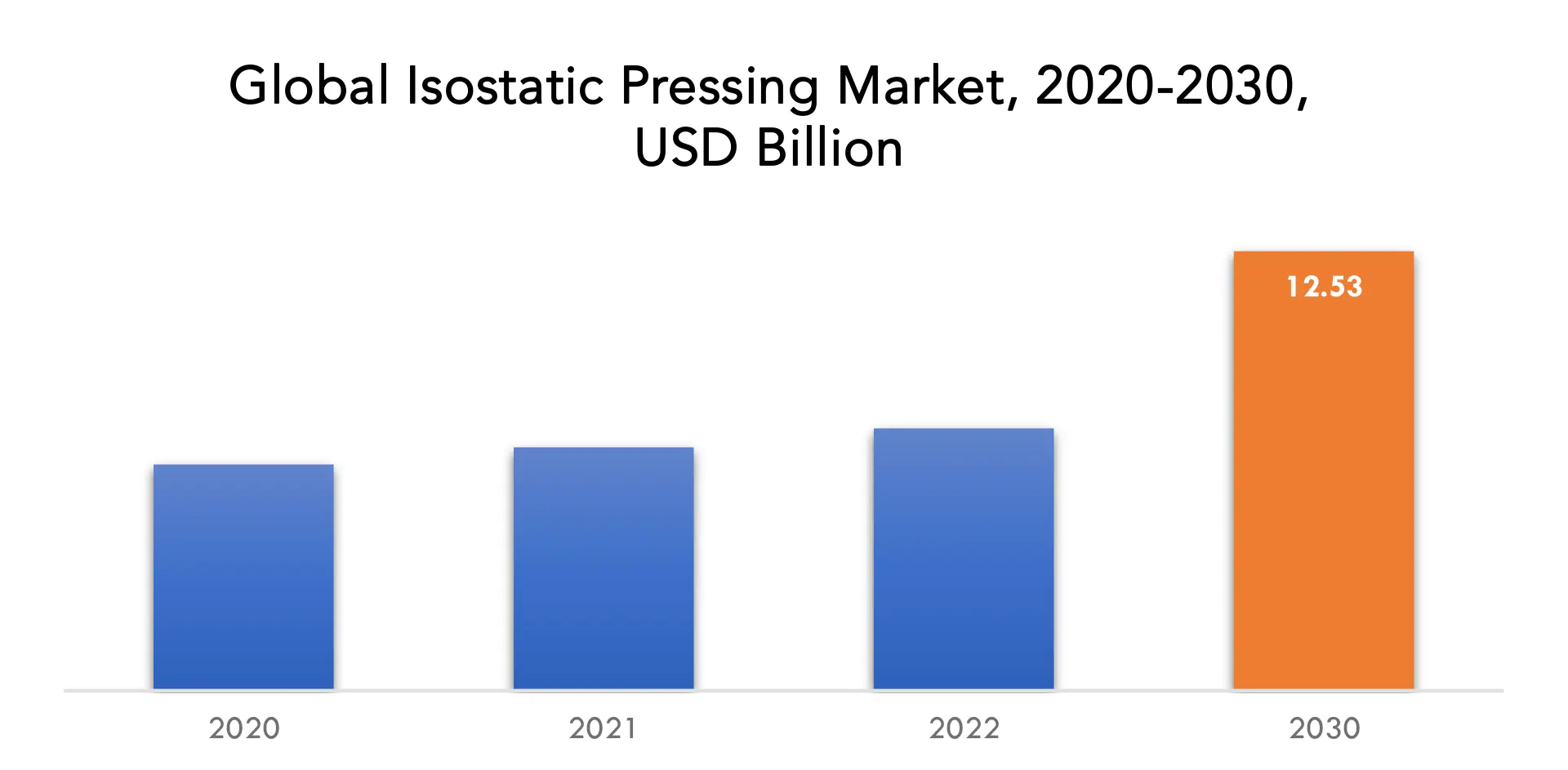
Global Isostatic Pressing Market Players
Key competitors from both domestic and international markets compete fiercely in the worldwide global isostatic pressing industry include America Isostatic Presses, Inc., Ara Partners Group, LLC, Bodycote plc, Dorst Technologies GmbH & Co. KG, Engineered Pressure Systems, Inc., Kennametal Inc., Kobe Steel Ltd., Nikkiso Co. Ltd., Pressure Technology, Inc., Sandvik AB.
Recent News:- 3rd April 2023: Sandvik signed and completed acquisition of MCB Services and Minerals (“MCB”), a seller of mining software and services and exclusive reseller partner of Deswik in Brazil.
- 3rd April 2020: Bodycote, the world’s largest provider of heat treatments and specialist thermal processing services, announced completion of the acquisition of Ellison Surface Technologies.
Who Should Buy? Or Key stakeholders
- Manufacturers
- Automotive Industry
- Medical Industry
- Investors
- Regulatory Authorities
- Government
- Research and Development Organizations
- Others
Global Isostatic Pressing Market Regional Analysis
The global isostatic pressing by region includes North America, Asia-Pacific (APAC), Europe, South America, and Middle East & Africa (MEA).
- North America: includes the US, Canada, Mexico
- Asia Pacific: includes China, Japan, South Korea, India, Australia, ASEAN and Rest of APAC
- Europe: includes UK, Germany, France, Italy, Spain, Russia, and Rest of Europe
- South America: includes Brazil, Argentina and Rest of South America
- Middle East & Africa: includes Turkey, UAE, Saudi Arabia, South Africa, and Rest of MEA
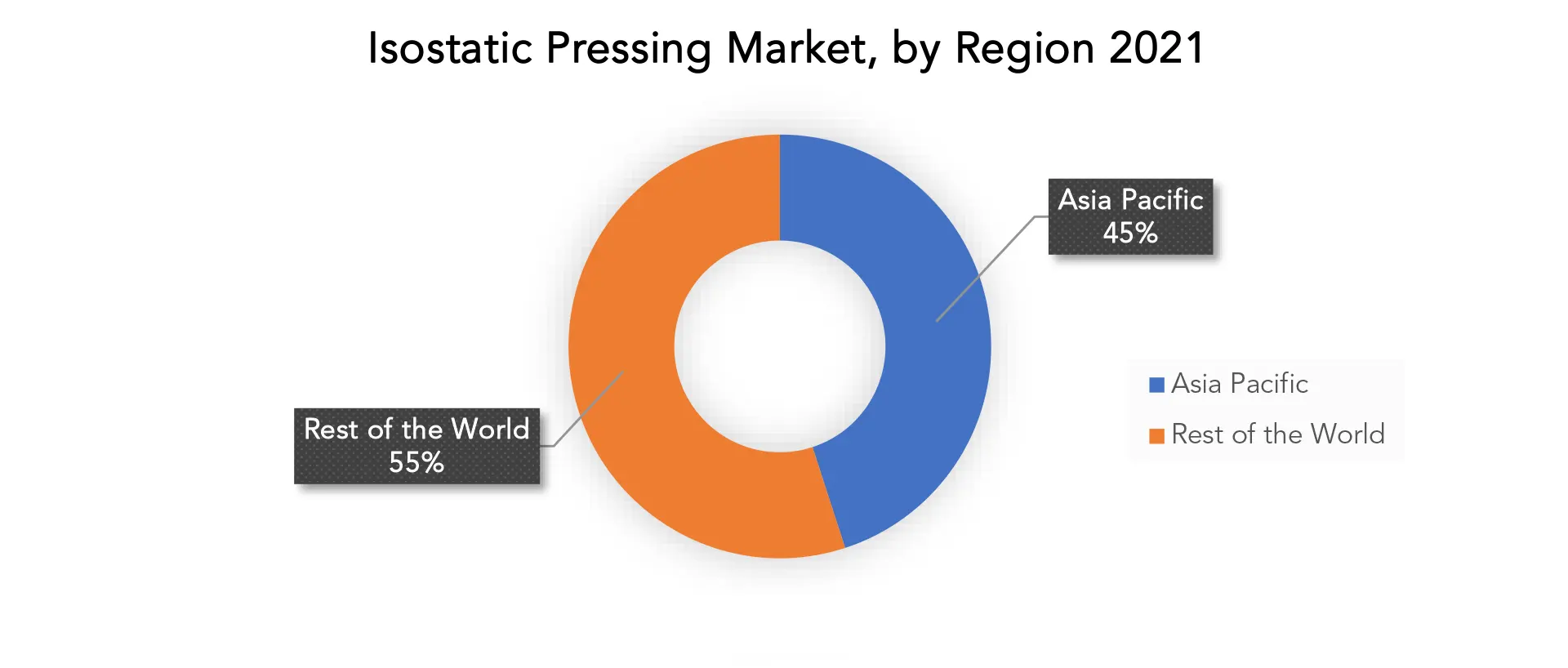
Several important reasons have contributed to the Asia-Pacific region's isostatic pressing market's brisk rise. These include the quickening speed of industrialization, new markets, technological developments, the growing automobile and aerospace industries, the expansion of the electronics manufacturing industry, encouraging government policies, and the growing focus on energy and environmental technology. Additionally, the demand for isostatic pressing in the area is anticipated to rise due to the rise in demand for affordable and dependable metal and ceramic goods for a variety of applications and the rising desire for tailored implants (in medical applications) due to better and more effective recovery. China and Japan make up the bulk of APAC's marketplaces. India is the fastest-growing market in APAC and offers significant growth potential for companies who offer isostatic pressing products and services.
Key Market Segments: Global Isostatic Pressing Market
Global Isostatic Pressing By Type, 2020-2029, (USD Billion)- Hot Isostatic Pressing (HIP)
- Cold Isostatic Pressing (CIP)
- Systems
- Service
- Small Sized Hip
- Medium Sized Hip
- Large Sized Hip
- Manufacturing
- Automotive
- Electronics & Semiconductor
- Medical
- Aerospace & Defense
- Energy & Power
- North America
- Europe
- Asia Pacific
- South America
- Middle East And Africa
Key Question Answered
- What is the expected growth rate of the isostatic pressing over the next 7 years?
- Who are the major players in the isostatic pressing and what is their market share?
- What are the end-user industries driving demand for market and what is their outlook?
- What are the opportunities for growth in emerging markets such as Asia-Pacific, Middle East, and Africa?
- How is the economic environment affecting the Isostatic Pressing, including factors such as interest rates, inflation, and exchange rates?
- What is the expected impact of government policies and regulations on the isostatic pressing?
- What is the current and forecasted size and growth rate of the global isostatic pressing?
- What are the key drivers of growth in the Isostatic Pressing?
- What are the distribution channels and supply chain dynamics in the isostatic pressing?
- What are the technological advancements and innovations in the isostatic pressing and their impact on product development and growth?
- What are the regulatory considerations and their impact on the market?
- What are the challenges faced by players in the isostatic pressing and how are they addressing these challenges?
- What are the opportunities for growth and expansion in the isostatic pressing?
- What are the service offerings and specifications of leading players in the market?
- INTRODUCTION
- MARKET DEFINITION
- MARKET SEGMENTATION
- RESEARCH TIMELINES
- ASSUMPTIONS AND LIMITATIONS
- RESEARCH METHODOLOGY
- DATA MINING
- SECONDARY RESEARCH
- PRIMARY RESEARCH
- SUBJECT-MATTER EXPERTS’ ADVICE
- QUALITY CHECKS
- FINAL REVIEW
- DATA TRIANGULATION
- BOTTOM-UP APPROACH
- TOP-DOWN APPROACH
- RESEARCH FLOW
- DATA SOURCES
- DATA MINING
- EXECUTIVE SUMMARY
- MARKET OVERVIEW
- GLOBAL ISOSTATIC PRESSING MARKET OUTLOOK
- MARKET DRIVERS
- MARKET RESTRAINTS
- MARKET OPPORTUNITIES
- IMPACT OF COVID-19 ON ISOSTATIC PRESSING MARKET
- PORTER’S FIVE FORCES MODEL
- THREAT FROM NEW ENTRANTS
- THREAT FROM SUBSTITUTES
- BARGAINING POWER OF SUPPLIERS
- BARGAINING POWER OF CUSTOMERS
- DEGREE OF COMPETITION
- INDUSTRY VALUE CHAIN ANALYSIS
- GLOBAL ISOSTATIC PRESSING MARKET OUTLOOK
- GLOBAL ISOSTATIC PRESSING MARKET BY TYPE, 2020-2029, (USD BILLION)
- HOT ISOSTATIC PRESSING (HIP)
- COLD ISOSTATIC PRESSING (CIP)
- GLOBAL ISOSTATIC PRESSING MARKET BY OFFERING SYSTEM, 2020-2029, (USD BILLION)
- SYSTEMS
- SERVICE
- GLOBAL ISOSTATIC PRESSING MARKET BY CAPACITY, 2020-2029, (USD BILLION)
- SMALL SIZED HIP
- MEDIUM SIZED HIP
- LARGE SIZED HIP
- GLOBAL ISOSTATIC PRESSING MARKET BY END-USER, 2020-2029, (USD BILLION)
- MANUFACTURING
- AUTOMOTIVE
- ELECTRONICS & SEMICONDUCTOR
- MEDICAL
- AEROSPACE & DEFENSE
- ENERGY & POWER
- GLOBAL ISOSTATIC PRESSING MARKET BY REGION, 2020-2029, (USD BILLION)
- NORTH AMERICA
- US
- CANADA
- MEXICO
- SOUTH AMERICA
- BRAZIL
- ARGENTINA
- COLOMBIA
- REST OF SOUTH AMERICA
- EUROPE
- GERMANY
- UK
- FRANCE
- ITALY
- SPAIN
- RUSSIA
- REST OF EUROPE
- ASIA PACIFIC
- INDIA
- CHINA
- JAPAN
- SOUTH KOREA
- AUSTRALIA
- SOUTH-EAST ASIA
- REST OF ASIA PACIFIC
- MIDDLE EAST AND AFRICA
- UAE
- SAUDI ARABIA
- SOUTH AFRICA
- REST OF MIDDLE EAST AND AFRICA
- NORTH AMERICA
- COMPANY PROFILES*
(BUSINESS OVERVIEW, COMPANY SNAPSHOT, PRODUCTS OFFERED, RECENT DEVELOPMENTS)
-
- AMERICAN ISOSTATIC PRESSES, INC.
- ARA PARTNERS GROUP, LLC
- BODYCOTE PLC
- DORST TECHNOLOGIES GMBH & CO. KG
- ENGINEERED PRESSURE SYSTEMS, INC.
- KENNAMETAL INC.
- KOBE STEEL LTD.
- NIKKISO CO. LTD.
- PRESSURE TECHNOLOGY, INC.
- SANDVIK AB
*THE COMPANY LIST IS INDICATIVE
LIST OF TABLES
TABLE 1 GLOBAL ISOSTATIC PRESSING MARKET BY TYPE (USD BILLION) 2020-2029
TABLE 2 GLOBAL ISOSTATIC PRESSING MARKET BY OFFERING SYSTEM (USD BILLION) 2020-2029
TABLE 3 GLOBAL ISOSTATIC PRESSING MARKET BY CAPACITY (USD BILLION) 2020-2029
TABLE 4 GLOBAL ISOSTATIC PRESSING MARKET BY END-USER (USD BILLION) 2020-2029
TABLE 5 GLOBAL ISOSTATIC PRESSING MARKET BY REGION (USD BILLION) 2020-2029
TABLE 6 NORTH AMERICA ISOSTATIC PRESSING MARKET BY COUNTRY (USD BILLION) 2020-2029
TABLE 7 NORTH AMERICA ISOSTATIC PRESSING MARKET BY TYPE (USD BILLION) 2020-2029
TABLE 8 NORTH AMERICA ISOSTATIC PRESSING MARKET BY OFFERING SYSTEM (USD BILLION) 2020-2029
TABLE 9 NORTH AMERICA ISOSTATIC PRESSING MARKET BY CAPACITY (USD BILLION) 2020-2029
TABLE 10 NORTH AMERICA ISOSTATIC PRESSING MARKET BY END-USER (USD BILLION) 2020-2029
TABLE 11 US ISOSTATIC PRESSING MARKET BY TYPE (USD BILLION) 2020-2029
TABLE 12 US ISOSTATIC PRESSING MARKET BY OFFERING SYSTEM (USD BILLION) 2020-2029
TABLE 13 US ISOSTATIC PRESSING MARKET BY CAPACITY (USD BILLION) 2020-2029
TABLE 14 US ISOSTATIC PRESSING MARKET BY END-USER (USD BILLION) 2020-2029
TABLE 15 CANADA ISOSTATIC PRESSING MARKET BY TYPE (USD BILLION) 2020-2029
TABLE 16 CANADA ISOSTATIC PRESSING MARKET BY OFFERING SYSTEM (USD BILLION) 2020-2029
TABLE 17 CANADA ISOSTATIC PRESSING MARKET BY CAPACITY (USD BILLION) 2020-2029
TABLE 18 CANADA ISOSTATIC PRESSING MARKET BY END-USER (USD BILLION) 2020-2029
TABLE 19 MEXICO ISOSTATIC PRESSING MARKET BY TYPE (USD BILLION) 2020-2029
TABLE 20 MEXICO ISOSTATIC PRESSING MARKET BY OFFERING SYSTEM (USD BILLION) 2020-2029
TABLE 21 MEXICO ISOSTATIC PRESSING MARKET BY CAPACITY (USD BILLION) 2020-2029
TABLE 22 MEXICO ISOSTATIC PRESSING MARKET BY END-USER (USD BILLION) 2020-2029
TABLE 23 SOUTH AMERICA ISOSTATIC PRESSING MARKET BY COUNTRY (USD BILLION) 2020-2029
TABLE 24 SOUTH AMERICA ISOSTATIC PRESSING MARKET BY TYPE (USD BILLION) 2020-2029
TABLE 25 SOUTH AMERICA ISOSTATIC PRESSING MARKET BY OFFERING SYSTEM (USD BILLION) 2020-2029
TABLE 26 SOUTH AMERICA ISOSTATIC PRESSING MARKET BY CAPACITY (USD BILLION) 2020-2029
TABLE 27 SOUTH AMERICA ISOSTATIC PRESSING MARKET BY END-USER (USD BILLION) 2020-2029
TABLE 28 BRAZIL ISOSTATIC PRESSING MARKET BY TYPE (USD BILLION) 2020-2029
TABLE 29 BRAZIL ISOSTATIC PRESSING MARKET BY OFFERING SYSTEM (USD BILLION) 2020-2029
TABLE 30 BRAZIL ISOSTATIC PRESSING MARKET BY CAPACITY (USD BILLION) 2020-2029
TABLE 31 BRAZIL ISOSTATIC PRESSING MARKET BY END-USER (USD BILLION) 2020-2029
TABLE 32 ARGENTINA ISOSTATIC PRESSING MARKET BY TYPE (USD BILLION) 2020-2029
TABLE 33 ARGENTINA ISOSTATIC PRESSING MARKET BY OFFERING SYSTEM (USD BILLION) 2020-2029
TABLE 34 ARGENTINA ISOSTATIC PRESSING MARKET BY CAPACITY (USD BILLION) 2020-2029
TABLE 35 ARGENTINA ISOSTATIC PRESSING MARKET BY END-USER (USD BILLION) 2020-2029
TABLE 36 COLOMBIA ISOSTATIC PRESSING MARKET BY TYPE (USD BILLION) 2020-2029
TABLE 37 COLOMBIA ISOSTATIC PRESSING MARKET BY OFFERING SYSTEM (USD BILLION) 2020-2029
TABLE 38 COLOMBIA ISOSTATIC PRESSING MARKET BY CAPACITY (USD BILLION) 2020-2029
TABLE 39 COLOMBIA ISOSTATIC PRESSING MARKET BY END-USER (USD BILLION) 2020-2029
TABLE 40 REST OF SOUTH AMERICA ISOSTATIC PRESSING MARKET BY TYPE (USD BILLION) 2020-2029
TABLE 41 REST OF SOUTH AMERICA ISOSTATIC PRESSING MARKET BY OFFERING SYSTEM (USD BILLION) 2020-2029
TABLE 42 REST OF SOUTH AMERICA ISOSTATIC PRESSING MARKET BY CAPACITY (USD BILLION) 2020-2029
TABLE 43 REST OF SOUTH AMERICA ISOSTATIC PRESSING MARKET BY END-USER (USD BILLION) 2020-2029
TABLE 44 ASIA-PACIFIC ISOSTATIC PRESSING MARKET BY COUNTRY (USD BILLION) 2020-2029
TABLE 45 ASIA-PACIFIC ISOSTATIC PRESSING MARKET BY TYPE (USD BILLION) 2020-2029
TABLE 46 ASIA-PACIFIC ISOSTATIC PRESSING MARKET BY OFFERING SYSTEM (USD BILLION) 2020-2029
TABLE 47 ASIA-PACIFIC ISOSTATIC PRESSING MARKET BY CAPACITY (USD BILLION) 2020-2029
TABLE 48 ASIA-PACIFIC ISOSTATIC PRESSING MARKET BY END-USER (USD BILLION) 2020-2029
TABLE 49 INDIA ISOSTATIC PRESSING MARKET BY TYPE (USD BILLION) 2020-2029
TABLE 50 INDIA ISOSTATIC PRESSING MARKET BY OFFERING SYSTEM (USD BILLION) 2020-2029
TABLE 51 INDIA ISOSTATIC PRESSING MARKET BY CAPACITY (USD BILLION) 2020-2029
TABLE 52 INDIA ISOSTATIC PRESSING MARKET BY END-USER (USD BILLION) 2020-2029
TABLE 53 CHINA ISOSTATIC PRESSING MARKET BY TYPE (USD BILLION) 2020-2029
TABLE 54 CHINA ISOSTATIC PRESSING MARKET BY OFFERING SYSTEM (USD BILLION) 2020-2029
TABLE 55 CHINA ISOSTATIC PRESSING MARKET BY CAPACITY (USD BILLION) 2020-2029
TABLE 56 CHINA ISOSTATIC PRESSING MARKET BY END-USER (USD BILLION) 2020-2029
TABLE 57 JAPAN ISOSTATIC PRESSING MARKET BY TYPE (USD BILLION) 2020-2029
TABLE 58 JAPAN ISOSTATIC PRESSING MARKET BY OFFERING SYSTEM (USD BILLION) 2020-2029
TABLE 59 JAPAN ISOSTATIC PRESSING MARKET BY CAPACITY (USD BILLION) 2020-2029
TABLE 60 JAPAN ISOSTATIC PRESSING MARKET BY END-USER (USD BILLION) 2020-2029
TABLE 61 SOUTH KOREA ISOSTATIC PRESSING MARKET BY TYPE (USD BILLION) 2020-2029
TABLE 62 SOUTH KOREA ISOSTATIC PRESSING MARKET BY OFFERING SYSTEM (USD BILLION) 2020-2029
TABLE 63 SOUTH KOREA ISOSTATIC PRESSING MARKET BY CAPACITY (USD BILLION) 2020-2029
TABLE 64 SOUTH KOREA ISOSTATIC PRESSING MARKET BY END-USER (USD BILLION) 2020-2029
TABLE 65 AUSTRALIA ISOSTATIC PRESSING MARKET BY TYPE (USD BILLION) 2020-2029
TABLE 66 AUSTRALIA ISOSTATIC PRESSING MARKET BY OFFERING SYSTEM (USD BILLION) 2020-2029
TABLE 67 AUSTRALIA ISOSTATIC PRESSING MARKET BY CAPACITY (USD BILLION) 2020-2029
TABLE 68 AUSTRALIA ISOSTATIC PRESSING MARKET BY END-USER (USD BILLION) 2020-2029
TABLE 69 SOUTH-EAST ASIA ISOSTATIC PRESSING MARKET BY TYPE (USD BILLION) 2020-2029
TABLE 70 SOUTH-EAST ASIA ISOSTATIC PRESSING MARKET BY OFFERING SYSTEM (USD BILLION) 2020-2029
TABLE 71 SOUTH-EAST ASIA ISOSTATIC PRESSING MARKET BY CAPACITY (USD BILLION) 2020-2029
TABLE 72 SOUTH-EAST ASIA ISOSTATIC PRESSING MARKET BY END-USER (USD BILLION) 2020-2029
TABLE 73 REST OF ASIA PACIFIC ISOSTATIC PRESSING MARKET BY TYPE (USD BILLION) 2020-2029
TABLE 74 REST OF ASIA PACIFIC ISOSTATIC PRESSING MARKET BY OFFERING SYSTEM (USD BILLION) 2020-2029
TABLE 75 REST OF ASIA PACIFIC ISOSTATIC PRESSING MARKET BY CAPACITY (USD BILLION) 2020-2029
TABLE 76 REST OF ASIA PACIFIC ISOSTATIC PRESSING MARKET BY END-USER (USD BILLION) 2020-2029
TABLE 77 EUROPE ISOSTATIC PRESSING MARKET BY COUNTRY (USD BILLION) 2020-2029
TABLE 78 ASIA-PACIFIC ISOSTATIC PRESSING MARKET BY TYPE (USD BILLION) 2020-2029
TABLE 79 ASIA-PACIFIC ISOSTATIC PRESSING MARKET BY OFFERING SYSTEM (USD BILLION) 2020-2029
TABLE 80 ASIA-PACIFIC ISOSTATIC PRESSING MARKET BY CAPACITY (USD BILLION) 2020-2029
TABLE 81 ASIA-PACIFIC ISOSTATIC PRESSING MARKET BY END-USER (USD BILLION) 2020-2029
TABLE 82 GERMANY ISOSTATIC PRESSING MARKET BY TYPE (USD BILLION) 2020-2029
TABLE 83 GERMANY ISOSTATIC PRESSING MARKET BY OFFERING SYSTEM (USD BILLION) 2020-2029
TABLE 84 GERMANY ISOSTATIC PRESSING MARKET BY CAPACITY (USD BILLION) 2020-2029
TABLE 85 GERMANY ISOSTATIC PRESSING MARKET BY END-USER (USD BILLION) 2020-2029
TABLE 86 UK ISOSTATIC PRESSING MARKET BY TYPE (USD BILLION) 2020-2029
TABLE 87 UK ISOSTATIC PRESSING MARKET BY OFFERING SYSTEM (USD BILLION) 2020-2029
TABLE 88 UK ISOSTATIC PRESSING MARKET BY CAPACITY (USD BILLION) 2020-2029
TABLE 89 UK ISOSTATIC PRESSING MARKET BY END-USER (USD BILLION) 2020-2029
TABLE 90 FRANCE ISOSTATIC PRESSING MARKET BY TYPE (USD BILLION) 2020-2029
TABLE 91 FRANCE ISOSTATIC PRESSING MARKET BY OFFERING SYSTEM (USD BILLION) 2020-2029
TABLE 92 FRANCE ISOSTATIC PRESSING MARKET BY CAPACITY (USD BILLION) 2020-2029
TABLE 93 FRANCE ISOSTATIC PRESSING MARKET BY END-USER (USD BILLION) 2020-2029
TABLE 94 ITALY ISOSTATIC PRESSING MARKET BY TYPE (USD BILLION) 2020-2029
TABLE 95 ITALY ISOSTATIC PRESSING MARKET BY OFFERING SYSTEM (USD BILLION) 2020-2029
TABLE 96 ITALY ISOSTATIC PRESSING MARKET BY CAPACITY (USD BILLION) 2020-2029
TABLE 97 ITALY ISOSTATIC PRESSING MARKET BY END-USER (USD BILLION) 2020-2029
TABLE 98 SPAIN ISOSTATIC PRESSING MARKET BY TYPE (USD BILLION) 2020-2029
TABLE 99 SPAIN ISOSTATIC PRESSING MARKET BY OFFERING SYSTEM (USD BILLION) 2020-2029
TABLE 100 SPAIN ISOSTATIC PRESSING MARKET BY CAPACITY (USD BILLION) 2020-2029
TABLE 101 SPAIN ISOSTATIC PRESSING MARKET BY END-USER (USD BILLION) 2020-2029
TABLE 102 RUSSIA ISOSTATIC PRESSING MARKET BY TYPE (USD BILLION) 2020-2029
TABLE 103 RUSSIA ISOSTATIC PRESSING MARKET BY OFFERING SYSTEM (USD BILLION) 2020-2029
TABLE 104 RUSSIA ISOSTATIC PRESSING MARKET BY CAPACITY (USD BILLION) 2020-2029
TABLE 105 RUSSIA ISOSTATIC PRESSING MARKET BY END-USER (USD BILLION) 2020-2029
TABLE 106 REST OF EUROPE ISOSTATIC PRESSING MARKET BY TYPE (USD BILLION) 2020-2029
TABLE 107 REST OF EUROPE ISOSTATIC PRESSING MARKET BY OFFERING SYSTEM (USD BILLION) 2020-2029
TABLE 108 REST OF EUROPE ISOSTATIC PRESSING MARKET BY CAPACITY (USD BILLION) 2020-2029
TABLE 109 REST OF EUROPE ISOSTATIC PRESSING MARKET BY END-USER (USD BILLION) 2020-2029
TABLE 110 MIDDLE EAST AND AFRICA ISOSTATIC PRESSING MARKET BY COUNTRY (USD BILLION) 2020-2029
TABLE 111 MIDDLE EAST AND AFRICA ISOSTATIC PRESSING MARKET BY TYPE (USD BILLION) 2020-2029
TABLE 112 MIDDLE EAST AND AFRICA ISOSTATIC PRESSING MARKET BY OFFERING SYSTEM (USD BILLION) 2020-2029
TABLE 113 MIDDLE EAST AND AFRICA ISOSTATIC PRESSING MARKET BY CAPACITY (USD BILLION) 2020-2029
TABLE 114 MIDDLE EAST AND AFRICA ISOSTATIC PRESSING MARKET BY END-USER (USD BILLION) 2020-2029
TABLE 115 UAE ISOSTATIC PRESSING MARKET BY TYPE (USD BILLION) 2020-2029
TABLE 116 UAE ISOSTATIC PRESSING MARKET BY OFFERING SYSTEM (USD BILLION) 2020-2029
TABLE 117 UAE ISOSTATIC PRESSING MARKET BY CAPACITY (USD BILLION) 2020-2029
TABLE 118 UAE ISOSTATIC PRESSING MARKET BY END-USER (USD BILLION) 2020-2029
TABLE 119 SAUDI ARABIA ISOSTATIC PRESSING MARKET BY TYPE (USD BILLION) 2020-2029
TABLE 120 SAUDI ARABIA ISOSTATIC PRESSING MARKET BY OFFERING SYSTEM (USD BILLION) 2020-2029
TABLE 121 SAUDI ARABIA ISOSTATIC PRESSING MARKET BY CAPACITY (USD BILLION) 2020-2029
TABLE 122 SAUDI ARABIA ISOSTATIC PRESSING MARKET BY END-USER (USD BILLION) 2020-2029
TABLE 123 SOUTH AFRICA ISOSTATIC PRESSING MARKET BY TYPE (USD BILLION) 2020-2029
TABLE 124 SOUTH AFRICA ISOSTATIC PRESSING MARKET BY OFFERING SYSTEM (USD BILLION) 2020-2029
TABLE 125 SOUTH AFRICA ISOSTATIC PRESSING MARKET BY CAPACITY (USD BILLION) 2020-2029
TABLE 126 SOUTH AFRICA ISOSTATIC PRESSING MARKET BY END-USER (USD BILLION) 2020-2029
TABLE 127 REST OF MIDDLE EAST AND AFRICA ISOSTATIC PRESSING MARKET BY TYPE (USD BILLION) 2020-2029
TABLE 128 REST OF MIDDLE EAST AND AFRICA ISOSTATIC PRESSING MARKET BY OFFERING SYSTEM (USD BILLION) 2020-2029
TABLE 129 REST OF MIDDLE EAST AND AFRICA ISOSTATIC PRESSING MARKET BY CAPACITY (USD BILLION) 2020-2029
TABLE 130 REST OF MIDDLE EAST AND AFRICA ISOSTATIC PRESSING MARKET BY END-USER (USD BILLION) 2020-2029
LIST OF FIGURES
FIGURE 1 MARKET DYNAMICS
FIGURE 2 MARKET SEGMENTATION
FIGURE 3 REPORT TIMELINES: YEARS CONSIDERED
FIGURE 4 DATA TRIANGULATION
FIGURE 5 BOTTOM-UP APPROACH
FIGURE 6 TOP-DOWN APPROACH
FIGURE 7 RESEARCH FLOW
FIGURE 8 GLOBAL ISOSTATIC PRESSING MARKET BY TYPE, USD BILLION, 2020-2029
FIGURE 9 GLOBAL ISOSTATIC PRESSING MARKET BY OFFERING SYSTEM, USD BILLION, 2020-2029
FIGURE 10 GLOBAL ISOSTATIC PRESSING MARKET BY CAPACITY, USD BILLION, 2020-2029
FIGURE 11 GLOBAL ISOSTATIC PRESSING MARKET BY END-USER, USD BILLION, 2020-2029
FIGURE 12 GLOBAL ISOSTATIC PRESSING MARKET BY REGION, USD BILLION, 2020-2029
FIGURE 13 PORTER’S FIVE FORCES MODEL
FIGURE 14 GLOBAL ISOSTATIC PRESSING MARKET BY TYPE, USD BILLION, 2021
FIGURE 15 GLOBAL ISOSTATIC PRESSING MARKET BY OFFERING SYSTEM, USD BILLION, 2021
FIGURE 16 GLOBAL ISOSTATIC PRESSING MARKET BY CAPACITY, USD BILLION, 2021
FIGURE 17 GLOBAL ISOSTATIC PRESSING MARKET BY END-USER, USD BILLION, 2021
FIGURE 18 GLOBAL ISOSTATIC PRESSING MARKET BY REGION, USD BILLION, 2021
FIGURE 19 NORTH AMERICA ISOSTATIC PRESSING MARKET SNAPSHOT
FIGURE 20 EUROPE ISOSTATIC PRESSING MARKET SNAPSHOT
FIGURE 21 SOUTH AMERICA ISOSTATIC PRESSING MARKET SNAPSHOT
FIGURE 22 ASIA PACIFIC ISOSTATIC PRESSING MARKET SNAPSHOT
FIGURE 23 MIDDLE EAST ASIA AND AFRICA ISOSTATIC PRESSING MARKET SNAPSHOT
FIGURE 24 MARKET SHARE ANALYSIS
FIGURE 25 AMERICAN ISOSTATIC PRESSES, INC.: COMPANY SNAPSHOT
FIGURE 26 ARA PARTNERS GROUP, LLC: COMPANY SNAPSHOT
FIGURE 27 BODYCOTE PLC: COMPANY SNAPSHOT
FIGURE 28 DORST TECHNOLOGIES GMBH & CO. KG: COMPANY SNAPSHOT
FIGURE 29 ENGINEERED PRESSURE SYSTEMS, INC.: COMPANY SNAPSHOT
FIGURE 30 KENNAMETAL INC.: COMPANY SNAPSHOT
FIGURE 31 KOBE STEEL LTD.: COMPANY SNAPSHOT
FIGURE 32 NIKKISO CO. LTD.: COMPANY SNAPSHOT
FIGURE 33 PRESSURE TECHNOLOGY, INC.: COMPANY SNAPSHOT
FIGURE 34 SANDVIK AB: COMPANY SNAPSHOT
DOWNLOAD FREE SAMPLE REPORT
License Type
SPEAK WITH OUR ANALYST
Want to know more about the report or any specific requirement?
WANT TO CUSTOMIZE THE REPORT?
Our Clients Speak
We asked them to research ‘ Equipment market’ all over the world, and their whole arrangement was helpful to us. thehealthanalytics.com insightful analysis and reports contributed to our current analysis and in creating a future strategy. Besides, the te
Yosuke Mitsui
Senior Associate Construction Equipment Sales & Marketing
We asked them to research ‘Equipment market’ all over the world, and their whole arrangement was helpful to us. thehealthanalytics.com insightful analysis and reports contributed to our current analysis and in creating a future strategy. Besides, the te