

Base Year Value ()
x.x %
x.x %
CAGR ()
x.x %
x.x %
Forecast Year Value ()
x.x %
x.x %
Historical Data Period
Largest Region
Forecast Period
Global Optical Encryption Market by Encryption Layer (OTN (Layer 1), MACsec (Layer 2), IPsec (Layer 3)), by Data Rate (Less than 10G, 10G-40G, 40G-100G, Greater Than 100G), by Vertical (BFSI, Government, Healthcare, Data Centre & Cloud, Energy & Utilities) and by Region, Global trends and forecast from 2022 to 2029
Instant access to hundreds of data points and trends
- Market estimates from 2014-2029
- Competitive analysis, industry segmentation, financial benchmarks
- Incorporates SWOT, Porter's Five Forces and risk management frameworks
- PDF report or online database with Word, Excel and PowerPoint export options
- 100% money back guarantee
Global Optical Encryption Market Overview
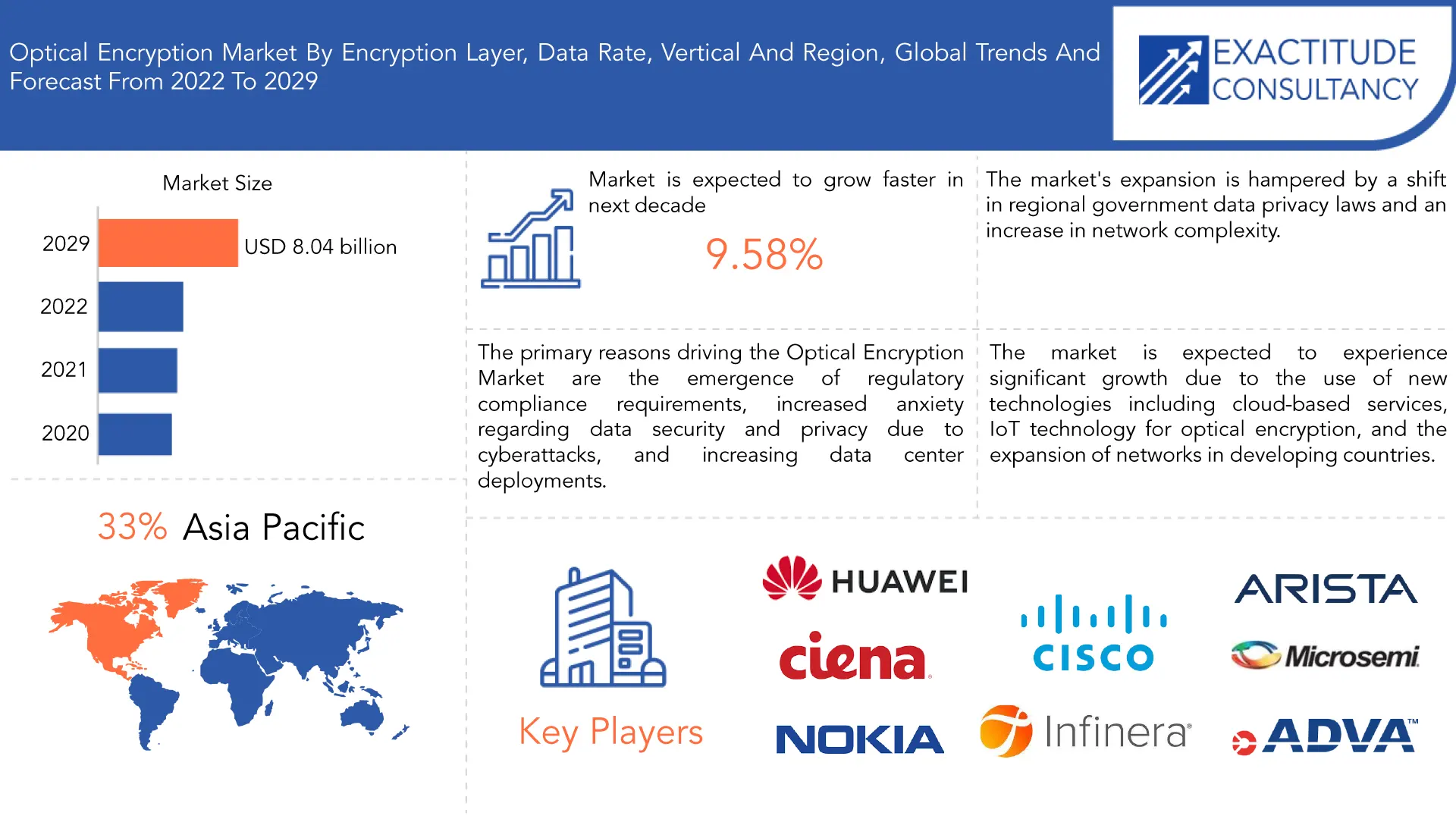
The Global Optical Encryption Market Size Is Expected to Grow at More Than 9.58% CAGR From 2020 To 2029. It Is Expected to Reach Above USD 8.04 Billion By 2029 From A Little Above USD 3.53 Billion In 2020.
With the growing volume of data being transmitted over networks, there is a heightened concern about data breaches and cyber threats. Optical encryption provides a high level of security by encrypting data at the physical layer of optical networks, making it an attractive solution for protecting sensitive information. The widespread adoption of cloud computing and storage services has created a need for secure data transmission between data centers and remote locations. Optical encryption ensures data confidentiality and integrity during transmission, addressing the security requirements of cloud-based applications. High-bandwidth applications such as video streaming, virtual reality, and big data analytics require efficient and secure data transmission. Optical encryption technologies enable secure and high-speed data transfer, ensuring the confidentiality of data without compromising network performance. The proliferation of Internet of Things (IoT) devices and the increasing interconnectivity of various systems have expanded the attack surface for potential cyber threats. Optical encryption provides a robust security mechanism for safeguarding data transmitted between IoT devices and networks.
Optical encryption solutions often require specialized hardware and equipment, which can be expensive to procure and deploy. The initial investment in optical encryption infrastructure can be a significant barrier, particularly for small and medium-sized enterprises (SMEs) or organizations with budget constraints. There is a lack of standardized protocols and interoperability among different optical encryption systems offered by various vendors. This can create compatibility issues and complexities when integrating optical encryption solutions into existing network infrastructures. Interoperability challenges can slow down adoption and limit the choices available to organizations.
[caption id="attachment_25557" align="aligncenter" width="1920"]
The widespread adoption of cloud computing and storage services continues to grow, creating a significant opportunity for optical encryption. As organizations migrate their data and applications to the cloud, the demand for secure and encrypted connections between data centers, cloud providers, and end-users increases. Optical encryption solutions can provide the necessary security measures for data in transit, enabling organizations to embrace cloud services with confidence. Ongoing advancements in optical networking technologies, such as higher data transmission speeds, increased capacity, and improved signal quality, create opportunities for optical encryption. As optical networks evolve, optical encryption solutions can leverage these advancements to provide even faster and more secure data transmission, meeting the demands of next-generation networks. The deployment of 5G networks offers tremendous opportunities for optical encryption. 5G networks require robust security measures to protect the vast amount of data transmitted between network elements. Optical encryption can play a vital role in securing the fronthaul and backhaul connections of 5G networks, enabling secure and high-speed data transmission with low latency.
The COVID-19 pandemic has accelerated the adoption of remote work and digital communication solutions. With more employees working from home and businesses relying heavily on online collaboration tools, there has been a greater need for secure communication channels. This increased demand for secure data transmission could have driven the adoption of optical encryption solutions. The economic slowdown caused by the pandemic may have affected overall IT spending and investments. Organizations facing financial constraints might have prioritized immediate operational needs over deploying new technologies, including optical encryption solutions. The pandemic-induced uncertainties, such as lockdowns, travel restrictions, and budget constraints, may have led to delays or cancellations of infrastructure projects. Organizations might have postponed network upgrades or deployments that could have included optical encryption implementations.
| ATTRIBUTE | DETAILS |
| Study period | 2020-2029 |
| Base year | 2021 |
| Estimated year | 2022 |
| Forecasted year | 2022-2029 |
| Historical period | 2018-2020 |
| Unit | Value (USD Billion) |
| Segmentation | By Encryption Layer, By Data Rate, By Vertical, By Region |
| By Encryption Layer |
|
| By Data Rate |
|
| By Vertical |
|
| By Region |
|
Frequently Asked Questions
• Who are the key players in the global optical encryption market?
Some key players operating in the global optical encryption market include ADVA Optical Networking SE, Ciena Corporation, ECI Telecom Ltd., Nokia Corporation, Huawei Technologies Co. Ltd., Infinera Corporation, Microsemi Corporation, Acacia Communications, Arista Networks, Cisco Systems Inc.
• What are the factors driving the global optical encryption market?
With the growing volume of data being transmitted over networks, there is a heightened concern about data breaches and cyber threats. Optical encryption provides a high level of security by encrypting data at the physical layer of optical networks, making it an attractive solution for protecting sensitive information.
• How big is the global optical encryption market?
The global optical encryption market size was estimated at USD 3.87 billion in 2021 and is expected to reach USD 8.04 billion in 2029.
• What is the global optical encryption market growth?
The global optical encryption market is expected to grow at a compound annual growth rate of 9.58% from 2022 to 2029 to reach USD 8.04 billion by 2029.
• Which region accounted for the largest global optical encryption market share?
The Asia Pacific dominated the global optical encryption market with a share of 33% in 2021.
Global Optical Encryption Market Segment Analysis
Based on the encryption layer, market is segmented into OTN (Layer 1), MACsec (Layer 2), IPsec (Layer 3). The market for optical encryption was dominated in 2021 by IPsec-Layer 3 encryption. Virtual private networks (VPNs) based on the internet are commonly used and acknowledged. There are currently numerous large-scale IPsec deployments running on business and governmental networks. It may be used on networks of all sizes, from local area networks (LAN) to wide area networks (WAN), and it offers seamless security to the application and transport levels. During the forecast period, Layer 1's market is anticipated to develop at the fastest CAGR. The benefits that Layer 1 encryption provides, such as cheaper costs, decreased latency, great bandwidth efficiency, enhanced performance, and high availability, are the cause of this growth.
Based on the data rate, market is segmented into Less than 10G, 10G-40G, 40G-100G, Greater than 100G. The optical encryption business was dominated by the data rate range of 10G to 40G. This is due to optical encryption is widely used in sectors including the BFSI, government, healthcare, and energy and utilities, where the average data transit rate is between 10G and 40G. The market for optical encryption greater than 100G is predicted to expand at the greatest CAGR during the forecast period. In order to satisfy the rising bandwidth demand brought up by cloud services, mobile devices, and significant increases in video traffic, encryption rates must align at speeds greater than 100G for all packet sizes.
By vertical, market is segmented into BFSI, government, healthcare, data center & cloud, energy & utilities. In 2021, the BFSI (banking, financial services, and insurance) vertical held the greatest market share. The BFSI sector is using optical encryption more and more to safeguard their consumers, adhere to government and industry data security compliance standards, simplify security auditing, and prevent reputational harm brought on by data breaches. The data center and cloud vertical's optical encryption market is anticipated to develop at the greatest CAGR throughout the forecast period. A growing number of networked devices, users, and corporate operations in general depend on data centers to provide storage, communications, and networking for IT services. The value and expansion of data centers have increased due to the growing significance of data analytics.
[caption id="attachment_25577" align="aligncenter" width="1920"]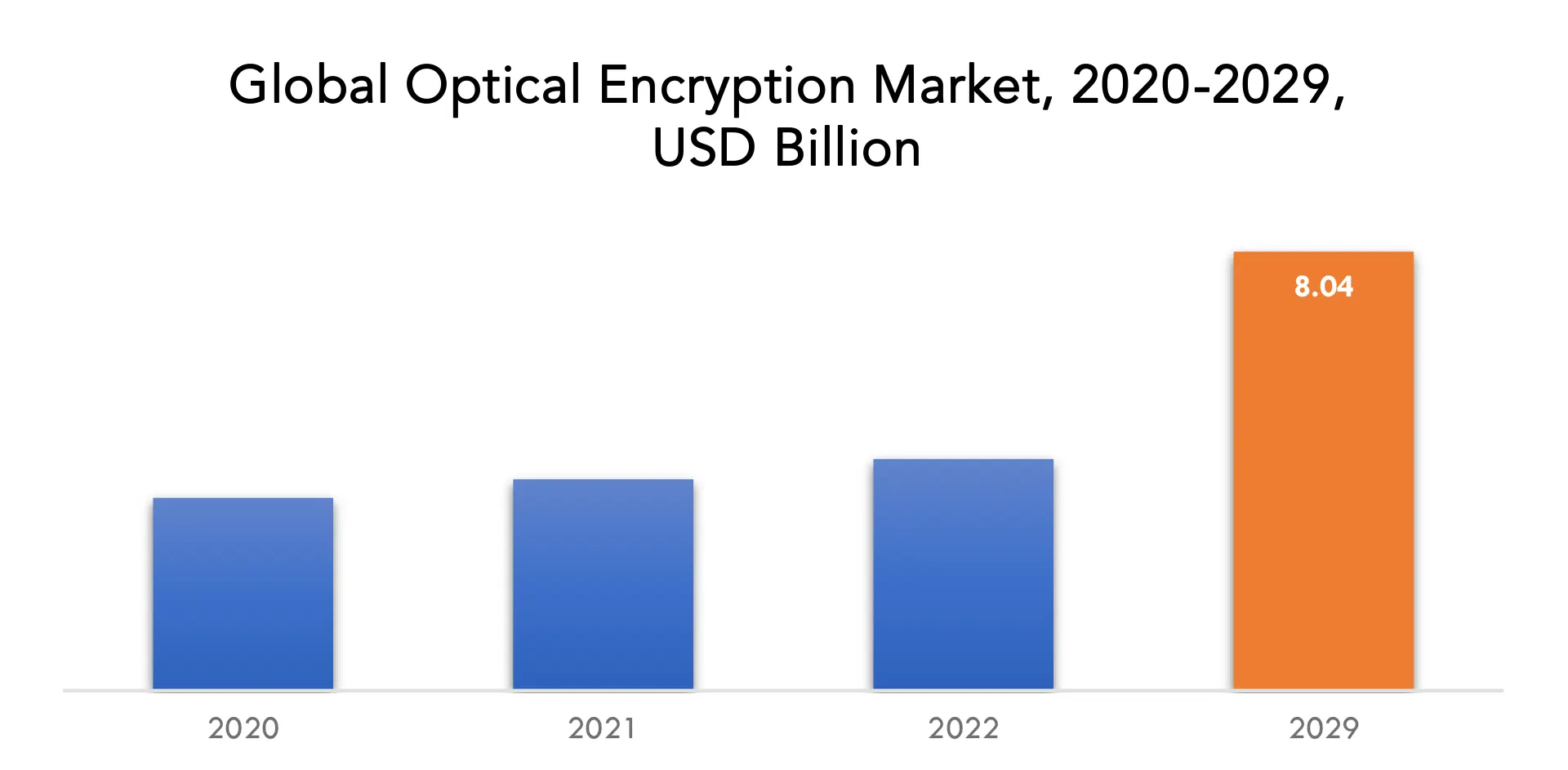
Global Optical Encryption Market Players
Key competitors from both domestic and international markets compete fiercely in the worldwide global optical encryption industry include ADVA Optical Networking SE, Ciena Corporation, ECI Telecom Ltd., Nokia Corporation, Huawei Technologies Co. Ltd., Infinera Corporation, Microsemi Corporation, Acacia Communications, Arista Networks, Cisco Systems Inc. Recent News: 2nd February 2023: Adva Network Security announced that its flagship 10Gbit/s edge solution with ConnectGuard™ Ethernet encryption had been approved for the transmission of classified data by the German Federal Office for Information Security (BSI). 8th June 2023: ADVA announced that the European Commission approved funding by its member states that helped support companies to develop a new generation of microelectronics and communication technologies in Europe.Who Should Buy? Or Key stakeholders
- Optical Encryption Providers
- Solution Providers
- Healthcare Provider
- Distributors
- Regulatory Bodies
- Research and Development Organization
- Government
- Others
Global Optical Encryption Market Regional Analysis
The global optical encryption market by region includes North America, Asia-Pacific (APAC), Europe, South America, and Middle East & Africa (MEA).
- North America: includes the US, Canada, Mexico
- Asia Pacific: includes China, Japan, South Korea, India, Australia, ASEAN and Rest of APAC
- Europe: includes UK, Germany, France, Italy, Spain, Russia, and Rest of Europe
- South America: includes Brazil, Argentina and Rest of South America
- Middle East & Africa: includes Turkey, UAE, Saudi Arabia, South Africa, and Rest of MEA
The Asia-Pacific region is poised to capture a significant market share due to the extensive presence of networks, including 5G, telecommunications, consumer electronics, data centers, and smart city initiatives in countries like China, Malaysia, Thailand, India, and other developing nations within the region. Despite the recent impact of COVID-19, China has maintained its leading position in 5G wireless networks, with over 160,000 5G stations deployed across 50+ cities, as telecom vendors strive to expand standalone 5G coverage and capacity. These networks, along with the establishment of large-scale data centers, are crucial components of China's digital infrastructure. Furthermore, emerging economies like India are leveraging their robust IT industries to establish public cloud-based data centers. With India hosting major private-sector employers, the adoption of data centers has become widespread, meeting the demand for secure and high-speed data transfer and fueling market growth.
[caption id="attachment_25582" align="aligncenter" width="1920"]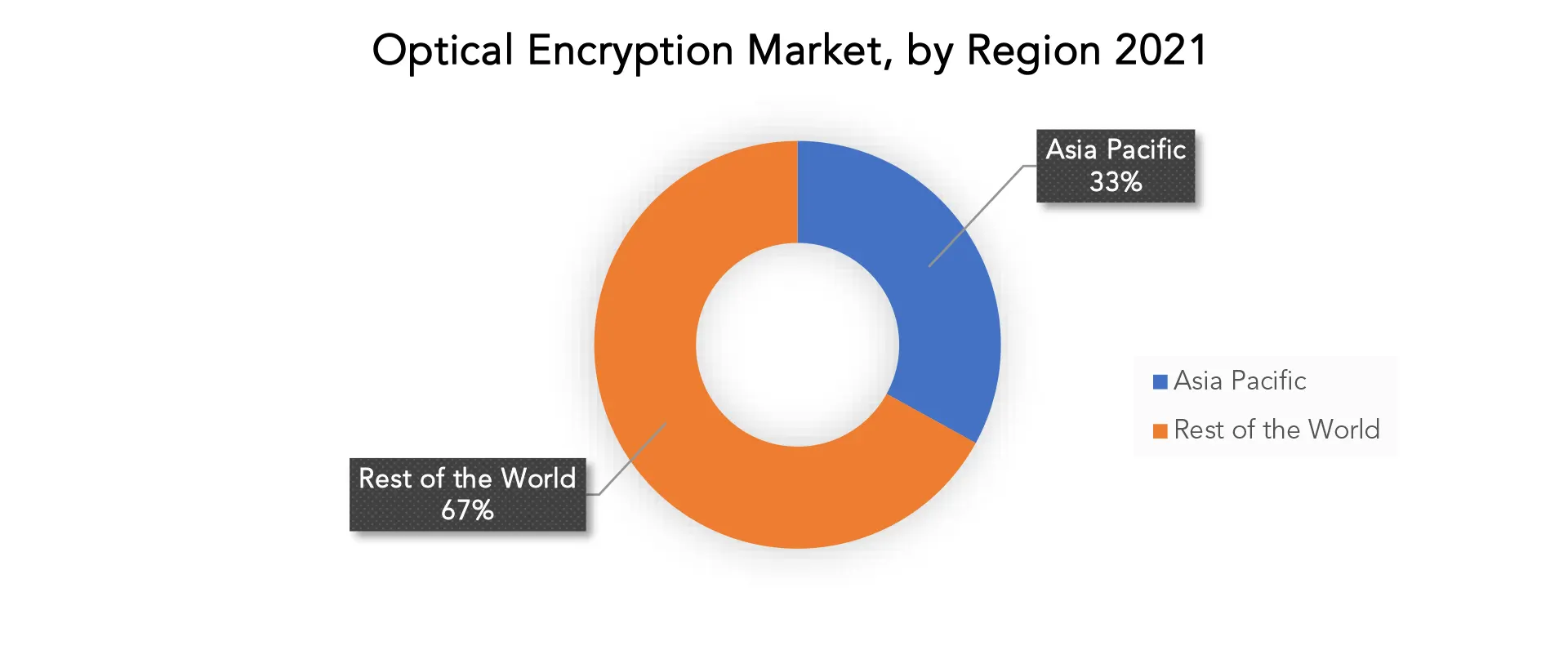
Key Market Segments: Global Optical Encryption Market
Global Optical Encryption Market By Encryption Layer, 2020-2029, (USD Billion)- OTN (Layer 1)
- MACsec (Layer 2)
- IPsec (Layer 3)
- Less than 10G
- 10G-40G
- 40G-100G
- Greater 100G
- BFSI
- Government
- Healthcare
- Data Centre & Cloud
- Energy & Utilities
- North America
- Europe
- Asia Pacific
- South America
- Middle East And Africa
Exactitude Consultancy Services Key Objectives
- Increasing sales and market share
- Developing new technology
- Improving profitability
- Entering new market
- Enhancing brand reputation
Key Question Answered
- What is the expected growth rate of the optical encryption market over the next 7 years?
- Who are the major players in the optical encryption market and what is their market share?
- What are the end-user industries driving demand for market and what is their outlook?
- What are the opportunities for growth in emerging markets such as Asia-Pacific, Middle East, and Africa?
- How is the economic environment affecting the optical encryption market, including factors such as interest rates, inflation, and exchange rates?
- What is the expected impact of government policies and regulations on the optical encryption market?
- What is the current and forecasted size and growth rate of the global optical encryption market?
- What are the key drivers of growth in the optical encryption market?
- What are the distribution channels and supply chain dynamics in the optical encryption market?
- What are the technological advancements and innovations in the optical encryption market and their impact on product development and growth?
- What are the regulatory considerations and their impact on the market?
- What are the challenges faced by players in the optical encryption market and how are they addressing these challenges?
- What are the opportunities for growth and expansion in the optical encryption market?
- What are the service offerings and specifications of leading players in the market?
- INTRODUCTION
- MARKET DEFINITION
- MARKET SEGMENTATION
- RESEARCH TIMELINES
- ASSUMPTIONS AND LIMITATIONS
- RESEARCH METHODOLOGY
- DATA MINING
- SECONDARY RESEARCH
- PRIMARY RESEARCH
- SUBJECT-MATTER EXPERTS’ ADVICE
- QUALITY CHECKS
- FINAL REVIEW
- DATA TRIANGULATION
- BOTTOM-UP APPROACH
- TOP-DOWN APPROACH
- RESEARCH FLOW
- DATA SOURCES
- DATA MINING
- EXECUTIVE SUMMARY
- MARKET OVERVIEW
- GLOBAL OPTICAL ENCRYPTION MARKET OUTLOOK
- MARKET DRIVERS
- MARKET RESTRAINTS
- MARKET OPPORTUNITIES
- IMPACT OF COVID-19 ON OPTICAL ENCRYPTION MARKET
- PORTER’S FIVE FORCES MODEL
- THREAT FROM NEW ENTRANTS
- THREAT FROM SUBSTITUTES
- BARGAINING POWER OF SUPPLIERS
- BARGAINING POWER OF CUSTOMERS
- DEGREE OF COMPETITION
- INDUSTRY VALUE CHAIN ANALYSIS
- GLOBAL OPTICAL ENCRYPTION MARKET OUTLOOK
- GLOBAL OPTICAL ENCRYPTION MARKET BY ENCRYPTION LAYER, 2020-2029, (USD BILLION)
- OTN (LAYER 1)
- MACSEC (LAYER 2)
- IPSEC (LAYER 3)
- GLOBAL OPTICAL ENCRYPTION MARKET BY DATA RATE, 2020-2029, (USD BILLION)
- LESS THAN 10G
- 10G-40G
- 40G-100G
- GREATER THAN 100G
- GLOBAL OPTICAL ENCRYPTION MARKET BY VERTICAL, 2020-2029, (USD BILLION)
- BFSI
- GOVERNMENT
- HEALTHCARE
- DATA CENTRE & CLOUD
- ENERGY & UTILITIES
- GLOBAL OPTICAL ENCRYPTION MARKET BY REGION, 2020-2029, (USD BILLION)
- NORTH AMERICA
- US
- CANADA
- MEXICO
- SOUTH AMERICA
- BRAZIL
- ARGENTINA
- COLOMBIA
- REST OF SOUTH AMERICA
- EUROPE
- GERMANY
- UK
- FRANCE
- ITALY
- SPAIN
- RUSSIA
- REST OF EUROPE
- ASIA PACIFIC
- INDIA
- CHINA
- JAPAN
- SOUTH KOREA
- AUSTRALIA
- SOUTH-EAST ASIA
- REST OF ASIA PACIFIC
- MIDDLE EAST AND AFRICA
- UAE
- SAUDI ARABIA
- SOUTH AFRICA
- REST OF MIDDLE EAST AND AFRICA
- NORTH AMERICA
- COMPANY PROFILES* (BUSINESS OVERVIEW, COMPANY SNAPSHOT, PRODUCTS OFFERED, RECENT DEVELOPMENTS)
- ADVA OPTICAL NETWORKING SE
- CIENA CORPORATION
- ECI TELECOM LTD.
- NOKIA CORPORATION
- HUAWEI TECHNOLOGIES CO, LTD.
- INFINERA CORPORATION
- MICROSEMI CORPORATION
- ACACIA COMMUNICATIONS
- ARISTA NETWORKS
- CISCO SYSTEM, INC. *THE COMPANY LIST IS INDICATIVE
LIST OF TABLES
TABLE 1 GLOBAL OPTICAL ENCRYPTION MARKET BY ENCRYPTION LAYER (USD BILLION) 2020-2029
TABLE 2 GLOBAL OPTICAL ENCRYPTION MARKET BY VERTICAL (USD BILLION) 2020-2029
TABLE 3 GLOBAL OPTICAL ENCRYPTION MARKET BY DATA RATE (USD BILLION) 2020-2029
TABLE 4 GLOBAL OPTICAL ENCRYPTION MARKET BY REGION (USD BILLION) 2020-2029
TABLE 5 NORTH AMERICA OPTICAL ENCRYPTION MARKET BY COUNTRY (USD BILLION) 2020-2029
TABLE 6 NORTH AMERICA OPTICAL ENCRYPTION MARKET BY ENCRYPTION LAYER (USD BILLION) 2020-2029
TABLE 7 NORTH AMERICA OPTICAL ENCRYPTION MARKET BY VERTICAL (USD BILLION) 2020-2029
TABLE 8 NORTH AMERICA OPTICAL ENCRYPTION MARKET BY DATA RATE (USD BILLION) 2020-2029
TABLE 9 US OPTICAL ENCRYPTION MARKET BY ENCRYPTION LAYER (USD BILLION) 2020-2029
TABLE 10 US OPTICAL ENCRYPTION MARKET BY VERTICAL (USD BILLION) 2020-2029
TABLE 11 US OPTICAL ENCRYPTION MARKET BY DATA RATE (USD BILLION) 2020-2029
TABLE 12 CANADA OPTICAL ENCRYPTION MARKET BY ENCRYPTION LAYER (USD BILLION) 2020-2029
TABLE 13 CANADA OPTICAL ENCRYPTION MARKET BY VERTICAL (USD BILLION) 2020-2029
TABLE 14 CANADA OPTICAL ENCRYPTION MARKET BY DATA RATE (USD BILLION) 2020-2029
TABLE 15 MEXICO OPTICAL ENCRYPTION MARKET BY ENCRYPTION LAYER (USD BILLION) 2020-2029
TABLE 16 MEXICO OPTICAL ENCRYPTION MARKET BY VERTICAL (USD BILLION) 2020-2029
TABLE 17 MEXICO OPTICAL ENCRYPTION MARKET BY DATA RATE (USD BILLION) 2020-2029
TABLE 18 SOUTH AMERICA OPTICAL ENCRYPTION MARKET BY COUNTRY (USD BILLION) 2020-2029
TABLE 19 SOUTH AMERICA OPTICAL ENCRYPTION MARKET BY ENCRYPTION LAYER (USD BILLION) 2020-2029
TABLE 20 SOUTH AMERICA OPTICAL ENCRYPTION MARKET BY VERTICAL (USD BILLION) 2020-2029
TABLE 21 SOUTH AMERICA OPTICAL ENCRYPTION MARKET BY DATA RATE (USD BILLION) 2020-2029
TABLE 22 BRAZIL OPTICAL ENCRYPTION MARKET BY ENCRYPTION LAYER (USD BILLION) 2020-2029
TABLE 23 BRAZIL OPTICAL ENCRYPTION MARKET BY VERTICAL (USD BILLION) 2020-2029
TABLE 24 BRAZIL OPTICAL ENCRYPTION MARKET BY DATA RATE (USD BILLION) 2020-2029
TABLE 25 ARGENTINA OPTICAL ENCRYPTION MARKET BY ENCRYPTION LAYER (USD BILLION) 2020-2029
TABLE 26 ARGENTINA OPTICAL ENCRYPTION MARKET BY VERTICAL (USD BILLION) 2020-2029
TABLE 27 ARGENTINA OPTICAL ENCRYPTION MARKET BY DATA RATE (USD BILLION) 2020-2029
TABLE 28 COLOMBIA OPTICAL ENCRYPTION MARKET BY ENCRYPTION LAYER (USD BILLION) 2020-2029
TABLE 29 COLOMBIA OPTICAL ENCRYPTION MARKET BY VERTICAL (USD BILLION) 2020-2029
TABLE 30 COLOMBIA OPTICAL ENCRYPTION MARKET BY DATA RATE (USD BILLION) 2020-2029
TABLE 31 REST OF SOUTH AMERICA OPTICAL ENCRYPTION MARKET BY ENCRYPTION LAYER (USD BILLION) 2020-2029
TABLE 32 REST OF SOUTH AMERICA OPTICAL ENCRYPTION MARKET BY VERTICAL (USD BILLION) 2020-2029
TABLE 33 REST OF SOUTH AMERICA OPTICAL ENCRYPTION MARKET BY DATA RATE (USD BILLION) 2020-2029
TABLE 34 ASIA-PACIFIC OPTICAL ENCRYPTION MARKET BY COUNTRY (USD BILLION) 2020-2029
TABLE 35 ASIA-PACIFIC OPTICAL ENCRYPTION MARKET BY ENCRYPTION LAYER (USD BILLION) 2020-2029
TABLE 36 ASIA-PACIFIC OPTICAL ENCRYPTION MARKET BY VERTICAL (USD BILLION) 2020-2029
TABLE 37 ASIA-PACIFIC OPTICAL ENCRYPTION MARKET BY DATA RATE (USD BILLION) 2020-2029
TABLE 38 INDIA OPTICAL ENCRYPTION MARKET BY ENCRYPTION LAYER (USD BILLION) 2020-2029
TABLE 39 INDIA OPTICAL ENCRYPTION MARKET BY VERTICAL (USD BILLION) 2020-2029
TABLE 40 INDIA OPTICAL ENCRYPTION MARKET BY DATA RATE (USD BILLION) 2020-2029
TABLE 41 CHINA OPTICAL ENCRYPTION MARKET BY ENCRYPTION LAYER (USD BILLION) 2020-2029
TABLE 42 CHINA OPTICAL ENCRYPTION MARKET BY VERTICAL (USD BILLION) 2020-2029
TABLE 43 CHINA OPTICAL ENCRYPTION MARKET BY DATA RATE (USD BILLION) 2020-2029
TABLE 44 JAPAN OPTICAL ENCRYPTION MARKET BY ENCRYPTION LAYER (USD BILLION) 2020-2029
TABLE 45 JAPAN OPTICAL ENCRYPTION MARKET BY VERTICAL (USD BILLION) 2020-2029
TABLE 46 JAPAN OPTICAL ENCRYPTION MARKET BY DATA RATE (USD BILLION) 2020-2029
TABLE 47 SOUTH KOREA OPTICAL ENCRYPTION MARKET BY ENCRYPTION LAYER (USD BILLION) 2020-2029
TABLE 48 SOUTH KOREA OPTICAL ENCRYPTION MARKET BY VERTICAL (USD BILLION) 2020-2029
TABLE 49 SOUTH KOREA OPTICAL ENCRYPTION MARKET BY DATA RATE (USD BILLION) 2020-2029
TABLE 50 AUSTRALIA OPTICAL ENCRYPTION MARKET BY ENCRYPTION LAYER (USD BILLION) 2020-2029
TABLE 51 AUSTRALIA OPTICAL ENCRYPTION MARKET BY VERTICAL (USD BILLION) 2020-2029
TABLE 52 AUSTRALIA OPTICAL ENCRYPTION MARKET BY DATA RATE (USD BILLION) 2020-2029
TABLE 53 SOUTH-EAST ASIA OPTICAL ENCRYPTION MARKET BY ENCRYPTION LAYER (USD BILLION) 2020-2029
TABLE 54 SOUTH-EAST ASIA OPTICAL ENCRYPTION MARKET BY VERTICAL (USD BILLION) 2020-2029
TABLE 55 SOUTH-EAST ASIA OPTICAL ENCRYPTION MARKET BY DATA RATE (USD BILLION) 2020-2029
TABLE 56 REST OF ASIA PACIFIC OPTICAL ENCRYPTION MARKET BY ENCRYPTION LAYER (USD BILLION) 2020-2029
TABLE 57 REST OF ASIA PACIFIC OPTICAL ENCRYPTION MARKET BY VERTICAL (USD BILLION) 2020-2029
TABLE 58 REST OF ASIA PACIFIC OPTICAL ENCRYPTION MARKET BY DATA RATE (USD BILLION) 2020-2029
TABLE 59 EUROPE OPTICAL ENCRYPTION MARKET BY COUNTRY (USD BILLION) 2020-2029
TABLE 60 EUROPE OPTICAL ENCRYPTION MARKET BY ENCRYPTION LAYER (USD BILLION) 2020-2029
TABLE 61 EUROPE OPTICAL ENCRYPTION MARKET BY VERTICAL (USD BILLION) 2020-2029
TABLE 62 EUROPE OPTICAL ENCRYPTION MARKET BY DATA RATE (USD BILLION) 2020-2029
TABLE 63 GERMANY OPTICAL ENCRYPTION MARKET BY ENCRYPTION LAYER (USD BILLION) 2020-2029
TABLE 64 GERMANY OPTICAL ENCRYPTION MARKET BY VERTICAL (USD BILLION) 2020-2029
TABLE 65 GERMANY OPTICAL ENCRYPTION MARKET BY DATA RATE (USD BILLION) 2020-2029
TABLE 66 UK OPTICAL ENCRYPTION MARKET BY ENCRYPTION LAYER (USD BILLION) 2020-2029
TABLE 67 UK OPTICAL ENCRYPTION MARKET BY VERTICAL (USD BILLION) 2020-2029
TABLE 68 UK OPTICAL ENCRYPTION MARKET BY DATA RATE (USD BILLION) 2020-2029
TABLE 69 FRANCE OPTICAL ENCRYPTION MARKET BY ENCRYPTION LAYER (USD BILLION) 2020-2029
TABLE 70 FRANCE OPTICAL ENCRYPTION MARKET BY VERTICAL (USD BILLION) 2020-2029
TABLE 71 FRANCE OPTICAL ENCRYPTION MARKET BY DATA RATE (USD BILLION) 2020-2029
TABLE 72 ITALY OPTICAL ENCRYPTION MARKET BY ENCRYPTION LAYER (USD BILLION) 2020-2029
TABLE 73 ITALY OPTICAL ENCRYPTION MARKET BY VERTICAL (USD BILLION) 2020-2029
TABLE 74 ITALY OPTICAL ENCRYPTION MARKET BY DATA RATE (USD BILLION) 2020-2029
TABLE 75 SPAIN OPTICAL ENCRYPTION MARKET BY ENCRYPTION LAYER (USD BILLION) 2020-2029
TABLE 76 SPAIN OPTICAL ENCRYPTION MARKET BY VERTICAL (USD BILLION) 2020-2029
TABLE 77 SPAIN OPTICAL ENCRYPTION MARKET BY DATA RATE (USD BILLION) 2020-2029
TABLE 78 RUSSIA OPTICAL ENCRYPTION MARKET BY ENCRYPTION LAYER (USD BILLION) 2020-2029
TABLE 79 RUSSIA OPTICAL ENCRYPTION MARKET BY VERTICAL (USD BILLION) 2020-2029
TABLE 80 RUSSIA OPTICAL ENCRYPTION MARKET BY DATA RATE (USD BILLION) 2020-2029
TABLE 81 REST OF EUROPE OPTICAL ENCRYPTION MARKET BY ENCRYPTION LAYER (USD BILLION) 2020-2029
TABLE 82 REST OF EUROPE OPTICAL ENCRYPTION MARKET BY VERTICAL (USD BILLION) 2020-2029
TABLE 83 REST OF EUROPE OPTICAL ENCRYPTION MARKET BY DATA RATE (USD BILLION) 2020-2029
TABLE 84 MIDDLE EAST AND AFRICA OPTICAL ENCRYPTION MARKET BY COUNTRY (USD BILLION) 2020-2029
TABLE 85 MIDDLE EAST AND AFRICA OPTICAL ENCRYPTION MARKET BY ENCRYPTION LAYER (USD BILLION) 2020-2029
TABLE 86 MIDDLE EAST AND AFRICA OPTICAL ENCRYPTION MARKET BY VERTICAL (USD BILLION) 2020-2029
TABLE 87 MIDDLE EAST AND AFRICA OPTICAL ENCRYPTION MARKET BY DATA RATE (USD BILLION) 2020-2029
TABLE 88 UAE OPTICAL ENCRYPTION MARKET BY ENCRYPTION LAYER (USD BILLION) 2020-2029
TABLE 89 UAE OPTICAL ENCRYPTION MARKET BY VERTICAL (USD BILLION) 2020-2029
TABLE 90 UAE OPTICAL ENCRYPTION MARKET BY DATA RATE (USD BILLION) 2020-2029
TABLE 91 SAUDI ARABIA OPTICAL ENCRYPTION MARKET BY ENCRYPTION LAYER (USD BILLION) 2020-2029
TABLE 92 SAUDI ARABIA OPTICAL ENCRYPTION MARKET BY VERTICAL (USD BILLION) 2020-2029
TABLE 93 SAUDI ARABIA OPTICAL ENCRYPTION MARKET BY DATA RATE (USD BILLION) 2020-2029
TABLE 94 SOUTH AFRICA OPTICAL ENCRYPTION MARKET BY ENCRYPTION LAYER (USD BILLION) 2020-2029
TABLE 95 SOUTH AFRICA OPTICAL ENCRYPTION MARKET BY VERTICAL (USD BILLION) 2020-2029
TABLE 96 SOUTH AFRICA OPTICAL ENCRYPTION MARKET BY DATA RATE (USD BILLION) 2020-2029
TABLE 97 REST OF MIDDLE EAST AND AFRICA OPTICAL ENCRYPTION MARKET BY ENCRYPTION LAYER (USD BILLION) 2020-2029
TABLE 98 REST OF MIDDLE EAST AND AFRICA OPTICAL ENCRYPTION MARKET BY VERTICAL (USD BILLION) 2020-2029
TABLE 99 REST OF MIDDLE EAST AND AFRICA OPTICAL ENCRYPTION MARKET BY DATA RATE (USD BILLION) 2020-2029
LIST OF FIGURES
FIGURE 1 MARKET DYNAMICS
FIGURE 2 MARKET SEGMENTATION
FIGURE 3 REPORT TIMELINES: YEARS CONSIDERED
FIGURE 4 DATA TRIANGULATION
FIGURE 5 BOTTOM-UP APPROACH
FIGURE 6 TOP-DOWN APPROACH
FIGURE 7 RESEARCH FLOW
FIGURE 8 GLOBAL OPTICAL ENCRYPTION MARKET BY ENCRYPTION LAYER, USD BILLION, 2020-2029
FIGURE 9 GLOBAL OPTICAL ENCRYPTION MARKET BY DATA RATE, USD BILLION, 2020-2029
FIGURE 10 GLOBAL OPTICAL ENCRYPTION MARKET BY VERTICAL, USD BILLION, 2020-2029
FIGURE 11 GLOBAL OPTICAL ENCRYPTION MARKET BY REGION, USD BILLION, 2020-2029
FIGURE 12 PORTER’S FIVE FORCES MODEL
FIGURE 13 GLOBAL OPTICAL ENCRYPTION MARKET BY ENCRYPTION LAYER, USD BILLION, 2021
FIGURE 14 GLOBAL OPTICAL ENCRYPTION MARKET BY DATA RATE, USD BILLION, 2021
FIGURE 15 GLOBAL OPTICAL ENCRYPTION MARKET BY VERTICAL, USD BILLION, 2021
FIGURE 16 GLOBAL OPTICAL ENCRYPTION MARKET BY REGION, USD BILLION, 2021
FIGURE 17 NORTH AMERICA OPTICAL ENCRYPTION MARKET SNAPSHOT
FIGURE 18 EUROPE OPTICAL ENCRYPTION MARKET SNAPSHOT
FIGURE 19 SOUTH AMERICA OPTICAL ENCRYPTION MARKET SNAPSHOT
FIGURE 20 ASIA PACIFIC OPTICAL ENCRYPTION MARKET SNAPSHOT
FIGURE 21 MIDDLE EAST ASIA AND AFRICA OPTICAL ENCRYPTION MARKET SNAPSHOT
FIGURE 22 MARKET SHARE ANALYSIS
FIGURE 23 ADVA OPTICAL NETWORKING SE: COMPANY SNAPSHOT
FIGURE 24 CIENA CORPORATION: COMPANY SNAPSHOT
FIGURE 25 ECI TELECOM LTD.: COMPANY SNAPSHOT
FIGURE 26 NOKIA CORPORATION: COMPANY SNAPSHOT
FIGURE 27 HUAWEI TECHNOLOGIES CO, LTD.: COMPANY SNAPSHOT
FIGURE 28 INFINERA CORPORATION: COMPANY SNAPSHOT
FIGURE 29 MICROSEMI CORPORATION: COMPANY SNAPSHOT
FIGURE 30 ACACIA COMMUNICATIONS: COMPANY SNAPSHOT
FIGURE 31 ARISTA NETWORKS: COMPANY SNAPSHOT
FIGURE 32 CISCO SYSTEM, INC.: COMPANY SNAPSHOT
DOWNLOAD FREE SAMPLE REPORT
License Type
SPEAK WITH OUR ANALYST
Want to know more about the report or any specific requirement?
WANT TO CUSTOMIZE THE REPORT?
Our Clients Speak
We asked them to research ‘ Equipment market’ all over the world, and their whole arrangement was helpful to us. thehealthanalytics.com insightful analysis and reports contributed to our current analysis and in creating a future strategy. Besides, the te
Yosuke Mitsui
Senior Associate Construction Equipment Sales & Marketing
We asked them to research ‘Equipment market’ all over the world, and their whole arrangement was helpful to us. thehealthanalytics.com insightful analysis and reports contributed to our current analysis and in creating a future strategy. Besides, the te