

Base Year Value ()
x.x %
x.x %
CAGR ()
x.x %
x.x %
Forecast Year Value ()
x.x %
x.x %
Historical Data Period
Largest Region
Forecast Period
Mercato delle schiume elastomeriche per tipo (NBR ed EPDM), per funzione (isolamento termico e isolamento acustico), settore di utilizzo finale (HVAC, refrigerazione, riscaldamento e idraulica e trasporti) e regione, tendenze globali e previsioni dal 2022 al 2029
Instant access to hundreds of data points and trends
- Market estimates from 2014-2029
- Competitive analysis, industry segmentation, financial benchmarks
- Incorporates SWOT, Porter's Five Forces and risk management frameworks
- PDF report or online database with Word, Excel and PowerPoint export options
- 100% money back guarantee
Panoramica del mercato delle schiume elastomeriche
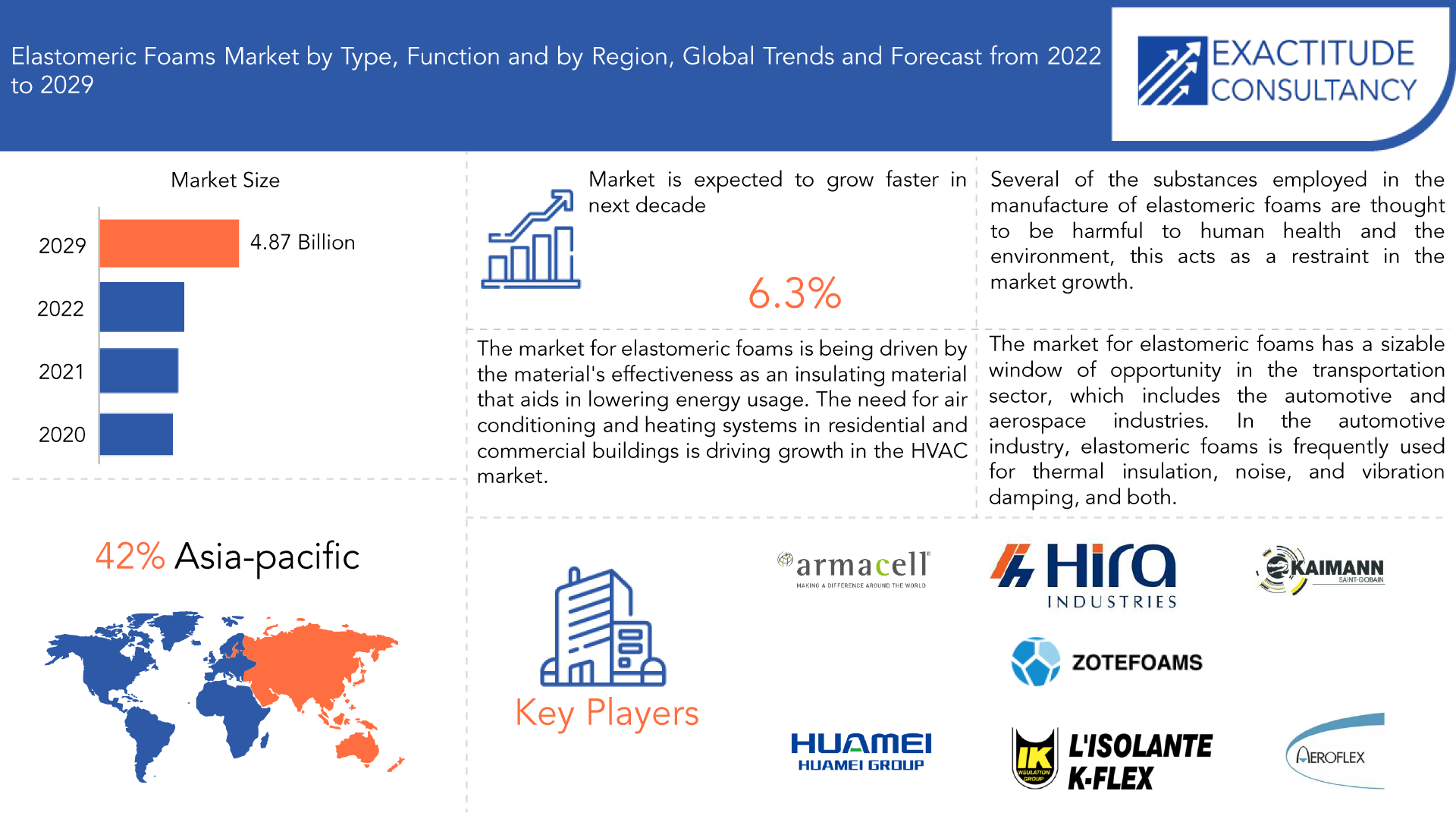
Si prevede che il mercato delle schiume elastomeriche crescerà al 6,3% di CAGR dal 2022 al 2029. Si prevede che raggiungerà oltre 4,87 miliardi di USD entro il 2029 dai 2,81 miliardi di USD del 2020 .
Si prevede che il mercato globale delle schiume elastomeriche crescerà a un ritmo considerevole durante il periodo di previsione. Nel 2021, il mercato sta crescendo costantemente e si prevede che supererà l'orizzonte previsto grazie alla strategia adottata dai principali attori.
La schiuma elastomerica è un tipo di materiale isolante sintetico a base di gomma. Viene spesso utilizzata in applicazioni idrauliche, di refrigerazione e HVAC (riscaldamento, ventilazione e aria condizionata) per fermare la perdita o l'aumento di calore e ridurre la trasmissione del rumore. È composta da schiume di gomma flessibili e durature a celle chiuse che possono tollerare temperature elevate, esposizione ai raggi UV e condizioni meteorologiche avverse. La struttura a celle chiuse della schiuma confina l'aria all'interno delle celle, il che riduce il trasferimento di calore tramite conduzione e rende il materiale un isolante superiore. Possono essere facilmente installati utilizzando nastri adesivi o adesivi liquidi e sono disponibili in molte forme, tra cui fogli, tubi e rotoli. È perfetto per l'uso in situazioni umide perché è anche resistente all'umidità, alla muffa e alla muffa.
| ATTRIBUTO | DETTAGLI |
| Periodo di studio | 2020-2029 |
| Anno base | 2021 |
| Anno stimato | 2022 |
| Anno previsto | 2022-2029 |
| Periodo storico | 2018-2020 |
| Unità | Valore (MILIARDI DI USD), (KILOTONI) |
| Segmentazione | Per tipo, per funzione, per regione |
| Per tipo |
|
| Per funzione |
|
| Per settore di utilizzo finale |
|
| Per regione |
|
Buildings that are energy efficient use less energy for heating and cooling, which increases demand for insulation materials. The market for elastomeric foams is being driven by the material's effectiveness as an insulating material that aids in lowering energy usage. The need for air conditioning and heating systems in residential and commercial buildings is driving growth in the HVAC market. The demand for elastomeric foams is being driven by its widespread use as insulation in HVAC systems. To cut carbon emissions and save money on energy, governments and businesses are supporting the use of energy-efficient materials and technology. The need for elastomeric foams is being driven by the material's energy efficiency, which aids in lowering energy usage. Elastomeric foams is also employed in the expanding automobile sector for thermal insulation, noise and vibration damping, and other purposes. The need for elastomeric foams in the automotive industry is anticipated to rise in response to the rising demand for lightweight and fuel-efficient automobiles. Governments and organizations all around the world are putting more of an emphasis on encouraging energy-efficient buildings, which is boosting demand for insulating materials like elastomeric foams. The creation of novel and sophisticated elastomeric foams products, including as low-smoke and fire-retardant foams, is anticipated to propel market expansion by broadening the material's potential uses.
Due to their rising industrialization and construction activity, emerging economies like China, India, and Southeast Asia present the elastomeric foams market with considerable potential opportunities.
The need for insulation materials like elastomeric foams is anticipated to increase as energy-efficient buildings become more popular. The demand for insulating materials is anticipated to rise as institutions such as governments and businesses continue to advocate for energy-efficient construction. The market for elastomeric foams has a sizable window of opportunity in the transportation sector, which includes the automotive and aerospace industries. In the automotive industry, elastomeric foams is frequently used for thermal insulation, noise, and vibration damping, and both. Elastomeric foams is utilized in the aircraft industry as insulation and heat protection. The market is anticipated to rise as a result of the introduction of new and innovative elastomeric foams products, such as low-smoke and fire-retardant foams, which will broaden the material's potential applications. The development of elastomeric foams products with lower environmental impact is anticipated to be driven by the growing consumer demand for sustainable and eco-friendly products. Products created from recycled materials or foams with increased recycling capabilities could fall under this category.
Le condizioni di mercato e le interruzioni della catena di fornitura possono causare variazioni di prezzo per le materie prime utilizzate per realizzare schiume elastomeriche, come gomma sintetica e prodotti chimici. Ciò potrebbe comportare un aumento dei costi di produzione e avere un impatto sulla redditività dei produttori. Si ritiene che diverse sostanze impiegate nella produzione di schiume elastomeriche siano dannose per la salute umana e l'ambiente. Di conseguenza, le organizzazioni di regolamentazione hanno rafforzato le loro normative e i loro controlli, il che potrebbe limitare la fornitura di alcune forme di schiume elastomeriche e aumentare i prezzi di produzione. Sebbene le schiume elastomeriche siano un materiale isolante efficiente, competono con materiali come fibra di vetro, cellulosa e lana minerale, il che rallenta notevolmente l'espansione del mercato.
L'epidemia di COVID-19 ha avuto un effetto contrastante sul mercato delle schiume elastomeriche. Sebbene la pandemia abbia avuto un effetto negativo su diversi settori, tra cui l'edilizia e l'industria automobilistica, la domanda di isolamento in schiume elastomeriche è rimasta ampiamente stabile perché viene utilizzata in aree critiche come sistemi HVAC, apparecchiature di refrigerazione e dispositivi medici. La domanda a lungo termine di schiume elastomeriche potrebbe essere influenzata dall'enfasi della pandemia sull'uso di materiali isolanti per migliorare la qualità dell'aria interna e arrestare la trasmissione di infezioni trasmesse per via aerea. Una carenza di materie prime e ritardi nelle consegne dovuti alla pandemia potrebbero influenzare la produzione e le vendite di prodotti in schiume elastomeriche. Inoltre, la domanda a breve termine di materiali isolanti potrebbe essere ostacolata dall'attuale stato dell'economia e dal calo delle attività di costruzione in molte aree. Nel complesso, il COVID-19 ha avuto un effetto misto sul business delle schiume elastomeriche, con effetti negativi a breve termine e potenziali opportunità di crescita a lungo termine.
[caption id="allegato_16995" align="aligncenter" width="1920"]
Frequently Asked Questions
• What is the worth of Elastomeric Foams market?
The elastomeric foams market is expected to grow at 6.3 % CAGR from 2022 to 2029. It is expected to reach above USD 4.87 Billion by 2029 from USD 2.81 Billion in 2020.
• What is the size of the Asia-Pacific elastomeric foams industry?
By 2029, the Asia-Pacific elastomeric foams market, which was valued at USD 1.1 billion in 2020, is expected to have grown to USD 2.1 billion, with a CAGR of 7.2%. According to the report, the Asia-Pacific elastomeric foams market is expanding due to the rising demand for energy-efficient insulation materials in the HVAC and construction sectors.
• What are some of the market's driving forces?
The market for elastomeric foams is being driven by the material's effectiveness as an insulating material that aids in lowering energy usage. The need for air conditioning and heating systems in residential and commercial buildings is driving growth in the HVAC market. The demand for elastomeric foams is being driven by its widespread use as insulation in HVAC systems.
• Which are the top companies to hold the market share in elastomeric foams market?
The Elastomeric Foams market key players include Armacell International SA, Hira Industries, Zotefoams PLC, L’Isolante K-Flex S.P.A, Kaimann Insulation, Huamei Energy-saving Technology Group Co., Ltd., Jinan Retek Industries Inc. , Aeroflex , Inc., NMC Insulation (Belgium), and Anavid Insulation Products Kiryat Anavim Ltd.
• What is the leading application of elastomeric foams?
The HVAC (heating, ventilation, and air conditioning) business is one of the main uses for elastomeric foams. Elastomeric foams are used in HVAC systems to insulate pipes, ducts, and machinery including air handlers, chillers, and boilers. It lowers energy use, prevents heat gain or loss, and boosts the system's overall effectiveness. Insulation made of elastomeric foams also aids in reducing condensation on chilled water pipes and hinders the development of mould and bacteria.
• Which is the largest regional market for elastomeric foams market?
Asia-Pacific is the region with the largest elastomeric foams market. The Asia Pacific region's population growth, urbanisation, and industrialisation are all contributing to the industry's rapid expansion. The demand for elastomeric foams is being driven by its widespread use as an insulation material for HVAC (heating, ventilation, and air conditioning) systems in the building sector.
Elastomeric Foams Market Segment Analysis
The elastomeric foams market is segmented by function, by type, by end-use industry, and region.
The market for elastomeric foams is anticipated to be dominated by the thermal insulating segment during the projected period.
The thermal insulation sector is probably going to hold the greatest market share in 2021 when it comes to function. Due to their exceptional qualities, such as fire resistance and ease of installation, thermal insulation is increasingly being used by a variety of end-use industries, including HVAC and heating & plumbing end-use industries. Throughout the projected period, these variables are anticipated to fuel demand.
Over the forecast period, the NBR segment is anticipated to contribute the most in terms of type to the elastomeric foams market.
According to type, the NBR category is probably going to hold the greatest market share in 2021. Due to their exceptional qualities, including resistance to swelling by acids, outstanding fire performance, good fuel resistance, and their moderate cost in contrast to other types of rubbers, this category is expected to rise due to an increase in utilization in various end-use industries. Throughout the projected period, these variables are anticipated to fuel demand.
Throughout the anticipated period, the HVAC end-use industry will represent the greatest market size. The market for elastomeric foams in the HVAC end-use industry is anticipated to grow over the course of the forecast period due to the growing demand for energy savings in the current infrastructure for heating, ventilation, and air conditioning. Also, the growing need for HVAC in the building sector will increase demand.
[caption id="attachment_16996" align="aligncenter" width="1920"]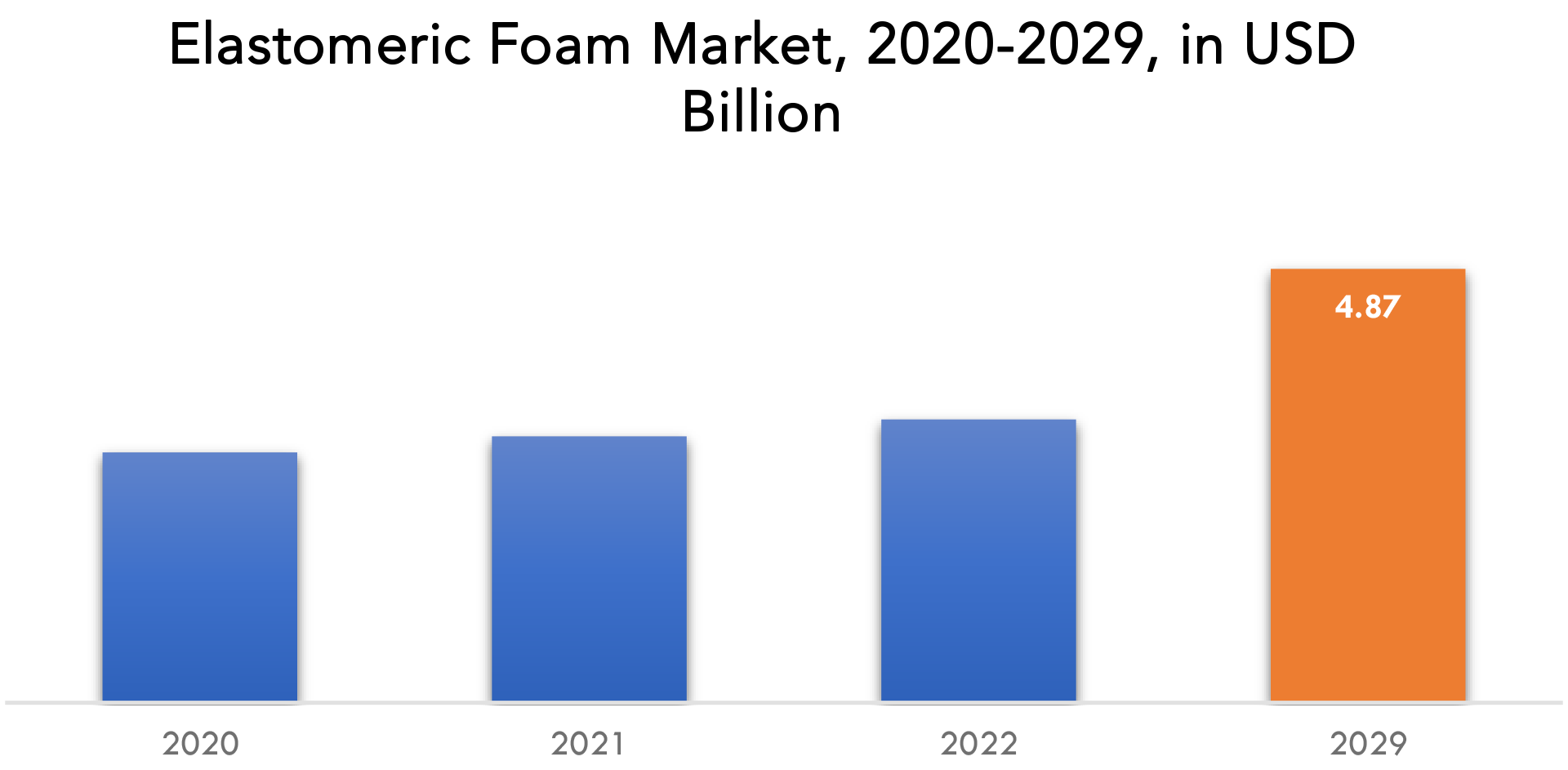
Elastomeric Foams Market Key Market Players
The elastomeric foams market key players include Armacell International SA, Hira Industries, Zotefoams PLC, L’Isolante K-Flex S.P.A, Kaimann Insulation, Huamei Energy-saving Technology Group Co., Ltd., Jinan Retek Industries Inc. , Aeroflex , Inc., NMC Insulation (Belgium), and Anavid Insulation Products Kiryat Anavim Ltd.
Industry Development:
5 September 2022; Armacell, a global leader in energy efficiency, announced the launch of ArmaGel HTL, a unique, non-combustible aerogel blanket specifically engineered for industrial applications where non-combustibility, thermal performance and corrosion under insulation mitigation are essential. 3 August 2020; Armacell, a global leader in energy efficiency, announced the launch of ArmaGel DT, a next generation flexible aerogel blanket for dual-temperature and cryogenic applications. Considered one of the best performing insulation materials available, Armacell’s latest innovation offers exceptionally low thermal conductivity, superior thermal performance and a reduction in insulation thicknesses compared to competing insulation products. It does not shrink at cryogenic temperatures bringing the simplicity and benefits of hot service insulation to cryogenic service temperatures. Plus, its hydrophobicity and flexibility can provide protection against corrosion under insulation extending asset lifetime.Who Should Buy? Or Key stakeholders
- Investors
- Manufacturing companies
- Chemical Industry
- Government Institution
- Research Organizations
- Environment, Health, and Safety Professionals
- Regulatory Authorities
- Others
Elastomeric Foams Market Regional Analysis
The elastomeric foams market by region includes North America, Asia-Pacific (APAC), Europe, South America, and Middle East & Africa (MEA).
- North America: includes the US, Canada, Mexico
- Asia Pacific: includes China, Japan, South Korea, India, Australia, ASEAN and Rest of APAC
- Europe: includes UK, Germany, France, Italy, Spain, Russia, and Rest of Europe
- South America: includes Brazil, Argentina, and Rest of South America
- Middle East & Africa: includes Turkey, UAE, Saudi Arabia, South Africa, and Rest of MEA
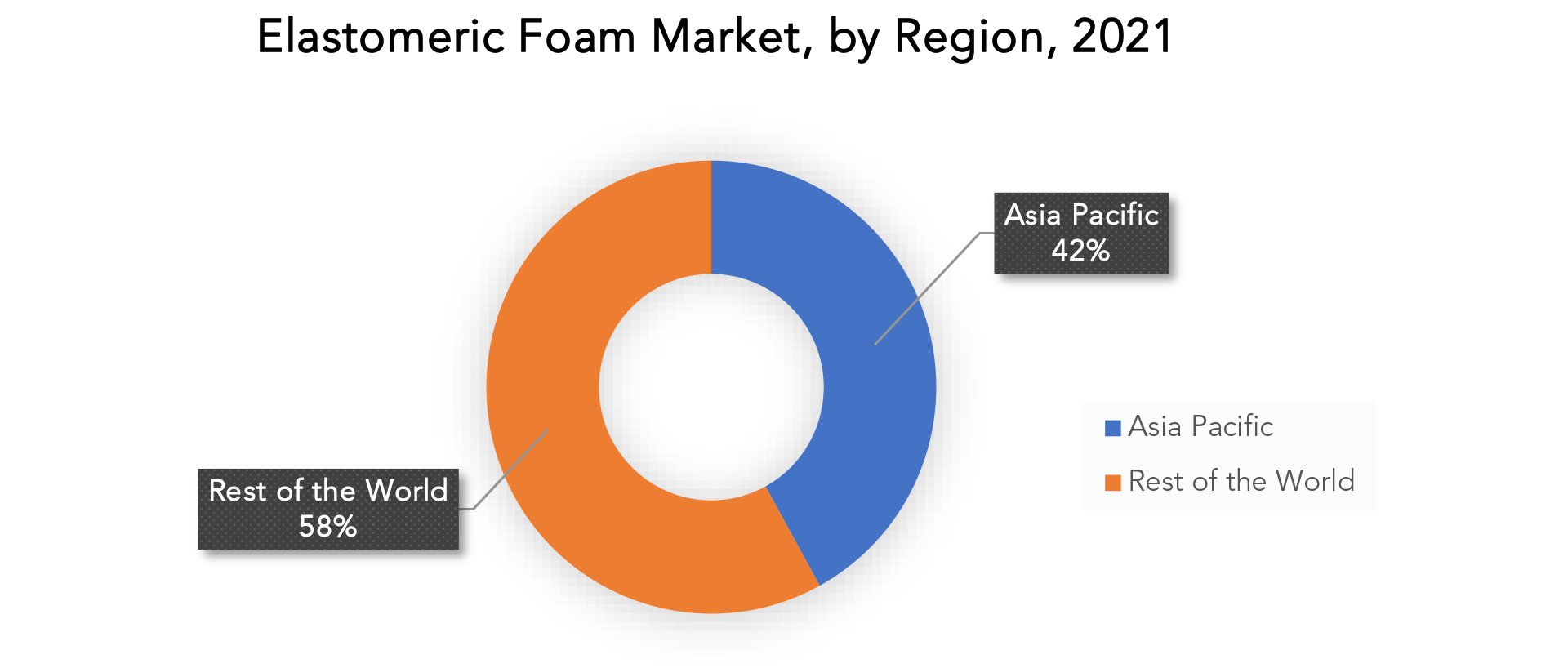
The Asia Pacific region's population growth, urbanization, and industrialization are all contributing to the industry's rapid expansion. The demand for elastomeric foams is being driven by its widespread use as an insulation material for HVAC (heating, ventilation, and air conditioning) systems in the building sector. Also, the Asia Pacific region is becoming more and more aware of the necessity of energy-efficient buildings to cut down on energy use and greenhouse gas emissions. The market for elastomeric foams is being driven by the material's effectiveness as an insulating material that aids in lowering energy usage. Due to the rising demand for automobiles in nations like China and India, the automotive sector in the Asia Pacific area is expanding. The demand for elastomeric foams is being driven by its use in vehicles as an insulating material to lessen vibration and noise. Low labour and production expenses: Elastomeric foams producers are drawn to the Asia Pacific region due to its low labour and production costs. This prompted the construction of additional manufacturing facilities in the area, which further fueled the market's expansion. growing number of government projects To cut carbon emissions and save money on energy, some governments in the Asia-Pacific area are supporting the adoption of energy-efficient products and technologies.
Key Market Segments: Elastomeric Foams Market
Elastomeric Foams Market By Type, 2020-2029, (USD Billion), (Kilotons)- Nbr
- Epdm
- Thermal Insulation
- Acoustic Insulation
- Hvac
- Refrigeration
- Heating & Plumbing
- Transportation
- North America
- Asia Pacific
- Europe
- South America
- Middle East And Africa
Exactitude Consultancy Services Key Objectives:
- Increasing sales and market share
- Developing new technology
- Improving profitability
- Entering new markets
- Enhancing brand reputation
Key Question Answered
- What is the expected growth rate of the elastomeric foams market over the next 7 years?
- Who are the major players in the elastomeric foams market and what is their market share?
- What are the end-user industries driving demand for market and what is their outlook?
- What are the opportunities for growth in emerging markets such as Asia-Pacific, Middle East, and Africa?
- How is the economic environment affecting the elastomeric foams market, including factors such as interest rates, inflation, and exchange rates?
- What is the expected impact of government policies and regulations on the elastomeric foams market?
- What is the current and forecasted size and growth rate of the global elastomeric foams market?
- What are the key drivers of growth in the elastomeric foams market?
- Who are the major players in the market and what is their market share?
- What are the distribution channels and supply chain dynamics in the elastomeric foams market?
- What are the technological advancements and innovations in the elastomeric foams market and their impact on product development and growth?
- What are the regulatory considerations and their impact on the market?
- What are the challenges faced by players in the Elastomeric Foams market and how are they addressing these challenges?
- What are the opportunities for growth and expansion in the Elastomeric Foams market?
- What are the product applications and specifications of leading players in the market?
- INTRODUZIONE
- DEFINIZIONE DI MERCATO
- SEGMENTAZIONE DEL MERCATO
- TEMPI DI RICERCA
- ASSUNZIONI E LIMITAZIONI
- METODOLOGIA DI RICERCA
- ESTRAZIONE DATI
- RICERCA SECONDARIA
- RICERCA PRIMARIA
- PARERI DEGLI ESPERTI IN MATERIA
- CONTROLLI DI QUALITÀ
- RECENSIONE FINALE
- TRIANGOLAZIONE DEI DATI
- APPROCCIO DAL BASSO VERSO L'ALTO
- APPROCCIO TOP-DOWN
- FLUSSO DI RICERCA
- FONTI DEI DATI
- ESTRAZIONE DATI
- SINTESI
- PANORAMICA DEL MERCATO
- PROSPETTIVE DEL MERCATO GLOBALE H
- FATTORI DI MERCATO
- LIMITAZIONI DI MERCATO
- OPPORTUNITÀ DI MERCATO
- IMPATTO DEL COVID-19 SUL MERCATO DELLA SCHIUMA ELASTOMERICA
- MODELLO DELLE CINQUE FORZE DI PORTER
- MINACCIA DAI NUOVI ENTRANSI
- MINACCIA DA SOSTITUTI
- POTERE CONTRATTUALE DEI FORNITORI
- POTERE CONTRATTUALE DEI CLIENTI
- GRADO DI COMPETIZIONE
- ANALISI DELLA CATENA DEL VALORE DEL SETTORE
- PROSPETTIVE DEL MERCATO GLOBALE H
- MERCATO GLOBALE DELLA SCHIUMA ELASTOMERICA PER TIPO, ( MILIARDI DI USD), CHILOTONI, 2020-2029
- NBR
- EPDM
- MERCATO GLOBALE DELLA SCHIUMA ELASTOMERICA PER FUNZIONE ( MILIARDI DI USD), KILOTONI, 2020-2029
- ISOLAMENTO TERMICO
- ISOLAMENTO ACUSTICO
- GLOBAL ELASTOMERIC FOAM MARKET BY END-USE INDUSTRY (USD BILLION), KILOTONS, 2020-2029
- HVAC
- REFRIGERATION
- HEATING & PLUMBING
- TRANSPORTATION
- GLOBAL ELASTOMERIC FOAM MARKET BY REGION (USD BILLION), KILOTONS, 2020-2029
- NORTH AMERICA
- US
- CANADA
- MEXICO
- SOUTH AMERICA
- BRAZIL
- ARGENTINA
- COLOMBIA
- REST OF SOUTH AMERICA
- EUROPE
- GERMANY
- UK
- FRANCE
- ITALY
- SPAIN
- RUSSIA
- REST OF EUROPE
- ASIA PACIFIC
- INDIA
- CHINA
- JAPAN
- SOUTH KOREA
- AUSTRALIA
- SOUTH-EAST ASIA
- REST OF ASIA PACIFIC
- MIDDLE EAST AND AFRICA
- UAE
- SAUDI ARABIA
- SOUTH AFRICA
- REST OF MIDDLE EAST AND AFRICA
- NORTH AMERICA
- COMPANY PROFILES*
(BUSINESS OVERVIEW, COMPANY SNAPSHOT, PRODUCTS OFFERED, RECENT DEVELOPMENTS)
- ARMACELL INTERNATIONAL SA
- HIRA INDUSTRIES
- ZOTEFOAMS PLC
- L’ISOLANTE K-FLEX S.P.A
- KAIMANN INSULATION
- HUAMEI ENERGY-SAVING TECHNOLOGY GROUP CO.
- JINAN RETEK INDUSTRIES INC.
- AEROFLEX , INC.
- NMC INSULATION
- ANAVID INSULATION PRODUCTS KIRYAT ANAVIM LTD.
*THE COMPANY LIST IS INDICATIVE
LIST OF TABLES
TABLE 1 GLOBAL ELASTOMERIC FOAM MARKET BY TYPE (USD BILLION), 2020-2029
TABLE 2 GLOBAL ELASTOMERIC FOAM MARKET BY TYPE (KILOTONS), 2020-2029
TABLE 3 GLOBAL ELASTOMERIC FOAM MARKET BY APPLICATION (USD BILLION), 2020-2029
TABLE 4 GLOBAL ELASTOMERIC FOAM MARKET BY APPLICATION (KILOTONS), 2020-2029
TABLE 5 GLOBAL ELASTOMERIC FOAM MARKET BY END-USE INDUSTRY (USD BILLION), 2020-2029
TABLE 6 GLOBAL ELASTOMERIC FOAM MARKET BY END-USE INDUSTRY (KILOTONS), 2020-2029
TABLE 7 GLOBAL ELASTOMERIC FOAM MARKET BY REGION (KILOTONS), 2020-2029
TABLE 8 GLOBAL ELASTOMERIC FOAM MARKET BY REGION (KILOTONS), 2020-2029
TABLE 9 NORTH AMERICA ELASTOMERIC FOAM MARKET BY COUNTRY (USD BILLION), 2020-2029
TABLE 10 NORTH AMERICA ELASTOMERIC FOAM MARKET BY COUNTRY (KILOTONS), 2020-2029
TABLE 11 NORTH AMERICA ELASTOMERIC FOAM MARKET BY TYPE (USD BILLION), 2020-2029
TABLE 12 NORTH AMERICA ELASTOMERIC FOAM MARKET BY TYPE (KILOTONS), 2020-2029
TABLE 13 NORTH AMERICA ELASTOMERIC FOAM MARKET BY APPLICATION (USD BILLION), 2020-2029
TABLE 14 NORTH AMERICA ELASTOMERIC FOAM MARKET BY APPLICATION (KILOTONS), 2020-2029
TABLE 15 NORTH AMERICA ELASTOMERIC FOAM MARKET BY END-USE INDUSTRY (USD BILLION), 2020-2029
TABLE 16 NORTH AMERICA ELASTOMERIC FOAM MARKET BY END-USE INDUSTRY (KILOTONS), 2020-2029
TABLE 17 US ELASTOMERIC FOAM MARKET BY TYPE (USD BILLION), 2020-2029
TABLE 18 US ELASTOMERIC FOAM MARKET BY TYPE (KILOTONS), 2020-2029
TABLE 19 US ELASTOMERIC FOAM MARKET BY APPLICATION (USD BILLION), 2020-2029
TABLE 20 US ELASTOMERIC FOAM MARKET BY APPLICATION (KILOTONS), 2020-2029
TABLE 21 US ELASTOMERIC FOAM MARKET BY END-USE INDUSTRY (USD BILLION), 2020-2029
TABLE 22 US ELASTOMERIC FOAM MARKET BY END-USE INDUSTRY (KILOTONS), 2020-2029
TABLE 23 CANADA ELASTOMERIC FOAM MARKET BY TYPE (BILLION), 2020-2029
TABLE 24 CANADA ELASTOMERIC FOAM MARKET BY TYPE (KILOTONS), 2020-2029
TABLE 25 CANADA ELASTOMERIC FOAM MARKET BY APPLICATION (USD BILLION), 2020-2029
TABLE 26 CANADA ELASTOMERIC FOAM MARKET BY APPLICATION (KILOTONS), 2020-2029
TABLE 27 CANADA ELASTOMERIC FOAM MARKET BY END-USE INDUSTRY (USD BILLION), 2020-2029
TABLE 28 CANADA ELASTOMERIC FOAM MARKET BY END-USE INDUSTRY (KILOTONS), 2020-2029
TABLE 29 MEXICO ELASTOMERIC FOAM MARKET BY TYPE (USD BILLION), 2020-2029
TABLE 30 MEXICO ELASTOMERIC FOAM MARKET BY TYPE (KILOTONS), 2020-2029
TABLE 31 MEXICO ELASTOMERIC FOAM MARKET BY APPLICATION (USD BILLION), 2020-2029
TABLE 32 MEXICO ELASTOMERIC FOAM MARKET BY APPLICATION (KILOTONS), 2020-2029
TABLE 33 MEXICO ELASTOMERIC FOAM MARKET BY END-USE INDUSTRY (USD BILLION), 2020-2029
TABLE 34 MEXICO ELASTOMERIC FOAM MARKET BY END-USE INDUSTRY (KILOTONS), 2020-2029
TABLE 35 SOUTH AMERICA ELASTOMERIC FOAM MARKET BY COUNTRY (USD BILLION), 2020-2029
TABLE 36 SOUTH AMERICA ELASTOMERIC FOAM MARKET BY COUNTRY (KILOTONS), 2020-2029
TABLE 37 SOUTH AMERICA ELASTOMERIC FOAM MARKET BY TYPE (USD BILLION), 2020-2029
TABLE 38 SOUTH AMERICA ELASTOMERIC FOAM MARKET BY TYPE (KILOTONS), 2020-2029
TABLE 39 SOUTH AMERICA ELASTOMERIC FOAM MARKET BY APPLICATION (USD BILLION), 2020-2029
TABLE 40 SOUTH AMERICA ELASTOMERIC FOAM MARKET BY APPLICATION (KILOTONS), 2020-2029
TABLE 41 SOUTH AMERICA ELASTOMERIC FOAM MARKET BY END-USE INDUSTRY (USD BILLION), 2020-2029
TABLE 42 SOUTH AMERICA ELASTOMERIC FOAM MARKET BY END-USE INDUSTRY (KILOTONS), 2020-2029
TABLE 43 BRAZIL ELASTOMERIC FOAM MARKET BY TYPE (USD BILLION), 2020-2029
TABLE 44 BRAZIL ELASTOMERIC FOAM MARKET BY TYPE (KILOTONS), 2020-2029
TABLE 45 BRAZIL ELASTOMERIC FOAM MARKET BY APPLICATION (USD BILLION), 2020-2029
TABLE 46 BRAZIL ELASTOMERIC FOAM MARKET BY APPLICATION (KILOTONS), 2020-2029
TABLE 47 BRAZIL ELASTOMERIC FOAM MARKET BY END-USE INDUSTRY (USD BILLION), 2020-2029
TABLE 48 BRAZIL ELASTOMERIC FOAM MARKET BY END-USE INDUSTRY (KILOTONS), 2020-2029
TABLE 49 ARGENTINA ELASTOMERIC FOAM MARKET BY TYPE (USD BILLION), 2020-2029
TABLE 50 ARGENTINA ELASTOMERIC FOAM MARKET BY TYPE (KILOTONS), 2020-2029
TABLE 51 ARGENTINA ELASTOMERIC FOAM MARKET BY APPLICATION (USD BILLION), 2020-2029
TABLE 52 ARGENTINA ELASTOMERIC FOAM MARKET BY APPLICATION (KILOTONS), 2020-2029
TABLE 53 ARGENTINA ELASTOMERIC FOAM MARKET BY END-USE INDUSTRY (USD BILLION), 2020-2029
TABLE 54 ARGENTINA ELASTOMERIC FOAM MARKET BY END-USE INDUSTRY (KILOTONS), 2020-2029
TABLE 55 COLOMBIA ELASTOMERIC FOAM MARKET BY TYPE (USD BILLION), 2020-2029
TABLE 56 COLOMBIA ELASTOMERIC FOAM MARKET BY TYPE (KILOTONS), 2020-2029
TABLE 57 COLOMBIA ELASTOMERIC FOAM MARKET BY APPLICATION (USD BILLION), 2020-2029
TABLE 58 COLOMBIA ELASTOMERIC FOAM MARKET BY APPLICATION (KILOTONS), 2020-2029
TABLE 59 COLOMBIA ELASTOMERIC FOAM MARKET BY END-USE INDUSTRY (USD BILLION), 2020-2029
TABLE 60 COLOMBIA ELASTOMERIC FOAM MARKET BY END-USE INDUSTRY (KILOTONS), 2020-2029
TABLE 61 REST OF SOUTH AMERICA ELASTOMERIC FOAM MARKET BY TYPE (USD BILLION), 2020-2029
TABLE 62 REST OF SOUTH AMERICA ELASTOMERIC FOAM MARKET BY TYPE (KILOTONS), 2020-2029
TABLE 63 REST OF SOUTH AMERICA ELASTOMERIC FOAM MARKET BY APPLICATION (USD BILLION), 2020-2029
TABLE 64 REST OF SOUTH AMERICA ELASTOMERIC FOAM MARKET BY APPLICATION (KILOTONS), 2020-2029
TABLE 65 REST OF SOUTH AMERICA ELASTOMERIC FOAM MARKET BY END-USE INDUSTRY (USD BILLION), 2020-2029
TABLE 66 REST OF SOUTH AMERICA ELASTOMERIC FOAM MARKET BY END-USE INDUSTRY (KILOTONS), 2020-2029
TABLE 67 ASIA-PACIFIC ELASTOMERIC FOAM MARKET BY COUNTRY (USD BILLION), 2020-2029
TABLE 68 ASIA-PACIFIC ELASTOMERIC FOAM MARKET BY COUNTRY (KILOTONS), 2020-2029
TABLE 69 ASIA-PACIFIC ELASTOMERIC FOAM MARKET BY TYPE (USD BILLION), 2020-2029
TABLE 70 ASIA-PACIFIC ELASTOMERIC FOAM MARKET BY TYPE (KILOTONS), 2020-2029
TABLE 71 ASIA-PACIFIC ELASTOMERIC FOAM MARKET BY APPLICATION (USD BILLION), 2020-2029
TABLE 72 ASIA-PACIFIC ELASTOMERIC FOAM MARKET BY APPLICATION (KILOTONS), 2020-2029
TABLE 73 ASIA-PACIFIC ELASTOMERIC FOAM MARKET BY END-USE INDUSTRY (USD BILLION), 2020-2029
TABLE 74 ASIA-PACIFIC ELASTOMERIC FOAM MARKET BY END-USE INDUSTRY (KILOTONS), 2020-2029
TABLE 75 INDIA ELASTOMERIC FOAM MARKET BY TYPE (USD BILLION), 2020-2029
TABLE 76 INDIA ELASTOMERIC FOAM MARKET BY TYPE (KILOTONS), 2020-2029
TABLE 77 INDIA ELASTOMERIC FOAM MARKET BY APPLICATION (USD BILLION), 2020-2029
TABLE 78 INDIA ELASTOMERIC FOAM MARKET BY APPLICATION (KILOTONS), 2020-2029
TABLE 79 INDIA ELASTOMERIC FOAM MARKET BY END-USE INDUSTRY (USD BILLION), 2020-2029
TABLE 80 INDIA ELASTOMERIC FOAM MARKET BY END-USE INDUSTRY (KILOTONS), 2020-2029
TABLE 81 CHINA ELASTOMERIC FOAM MARKET BY TYPE (USD BILLION), 2020-2029
TABLE 82 CHINA ELASTOMERIC FOAM MARKET BY TYPE (KILOTONS), 2020-2029
TABLE 83 CHINA ELASTOMERIC FOAM MARKET BY APPLICATION (USD BILLION), 2020-2029
TABLE 84 CHINA ELASTOMERIC FOAM MARKET BY APPLICATION (KILOTONS), 2020-2029
TABLE 85 CHINA ELASTOMERIC FOAM MARKET BY END-USE INDUSTRY (USD BILLION), 2020-2029
TABLE 86 CHINA ELASTOMERIC FOAM MARKET BY END-USE INDUSTRY (KILOTONS), 2020-2029
TABLE 87 JAPAN ELASTOMERIC FOAM MARKET BY TYPE (USD BILLION), 2020-2029
TABLE 88 JAPAN ELASTOMERIC FOAM MARKET BY TYPE (KILOTONS), 2020-2029
TABLE 89 JAPAN ELASTOMERIC FOAM MARKET BY APPLICATION (USD BILLION), 2020-2029
TABLE 90 JAPAN ELASTOMERIC FOAM MARKET BY APPLICATION (KILOTONS), 2020-2029
TABLE 91 JAPAN ELASTOMERIC FOAM MARKET BY END-USE INDUSTRY (USD BILLION), 2020-2029
TABLE 92 JAPAN ELASTOMERIC FOAM MARKET BY END-USE INDUSTRY (KILOTONS), 2020-2029
TABLE 93 SOUTH KOREA ELASTOMERIC FOAM MARKET BY TYPE (USD BILLION), 2020-2029
TABLE 94 SOUTH KOREA ELASTOMERIC FOAM MARKET BY TYPE (KILOTONS), 2020-2029
TABLE 95 SOUTH KOREA ELASTOMERIC FOAM MARKET BY APPLICATION (USD BILLION), 2020-2029
TABLE 96 SOUTH KOREA ELASTOMERIC FOAM MARKET BY APPLICATION (KILOTONS), 2020-2029
TABLE 97 SOUTH KOREA ELASTOMERIC FOAM MARKET BY END-USE INDUSTRY (USD BILLION), 2020-2029
TABLE 98 SOUTH KOREA ELASTOMERIC FOAM MARKET BY END-USE INDUSTRY (KILOTONS), 2020-2029
TABLE 99 AUSTRALIA ELASTOMERIC FOAM MARKET BY TYPE (USD BILLION), 2020-2029
TABLE 100 AUSTRALIA CONNECTED TRUCKBY TYPE (KILOTONS), 2020-2029
TABLE 101 AUSTRALIA ELASTOMERIC FOAM MARKET BY APPLICATION (USD BILLION), 2020-2029
TABLE 102 AUSTRALIA ELASTOMERIC FOAM MARKET BY APPLICATION (KILOTONS), 2020-2029
TABLE 103 AUSTRALIA ELASTOMERIC FOAM MARKET BY END-USE INDUSTRY (USD BILLION), 2020-2029
TABLE 104 AUSTRALIA ELASTOMERIC FOAM MARKET BY END-USE INDUSTRY (KILOTONS), 2020-2029
TABLE 105 SOUTH EAST ASIA ELASTOMERIC FOAM MARKET BY TYPE (USD BILLION), 2020-2029
TABLE 106 SOUTH EAST ASIA CONNECTED TRUCKBY TYPE (KILOTONS), 2020-2029
TABLE 107 SOUTH EAST ASIA ELASTOMERIC FOAM MARKET BY APPLICATION (USD BILLION), 2020-2029
TABLE 108 SOUTH EAST ASIA ELASTOMERIC FOAM MARKET BY APPLICATION (KILOTONS), 2020-2029
TABLE 109 SOUTH EAST ASIA ELASTOMERIC FOAM MARKET BY END-USE INDUSTRY (USD BILLION), 2020-2029
TABLE 110 SOUTH EAST ASIA ELASTOMERIC FOAM MARKET BY END-USE INDUSTRY (KILOTONS), 2020-2029
TABLE 111 REST OF ASIA PACIFIC ELASTOMERIC FOAM MARKET BY TYPE (USD BILLION), 2020-2029
TABLE 112 REST OF ASIA PACIFIC CONNECTED TRUCKBY TYPE (KILOTONS), 2020-2029
TABLE 113 REST OF ASIA PACIFIC ELASTOMERIC FOAM MARKET BY APPLICATION (USD BILLION), 2020-2029
TABLE 114 REST OF ASIA PACIFIC ELASTOMERIC FOAM MARKET BY APPLICATION (KILOTONS), 2020-2029
TABLE 115 REST OF ASIA PACIFIC ELASTOMERIC FOAM MARKET BY END-USE INDUSTRY (USD BILLION), 2020-2029
TABLE 116 REST OF ASIA PACIFIC ELASTOMERIC FOAM MARKET BY END-USE INDUSTRY (KILOTONS), 2020-2029
TABLE 117 EUROPE ELASTOMERIC FOAM MARKET BY COUNTRY (USD BILLION), 2020-2029
TABLE 118 EUROPE ELASTOMERIC FOAM MARKET BY COUNTRY TYPE (KILOTONS), 2020-2029
TABLE 119 EUROPE ELASTOMERIC FOAM MARKET BY TYPE (USD BILLION), 2020-2029
TABLE 120 EUROPE ELASTOMERIC FOAM MARKET BY TYPE (KILOTONS), 2020-2029
TABLE 121 EUROPE ELASTOMERIC FOAM MARKET BY APPLICATION (USD BILLION), 2020-2029
TABLE 122 EUROPE ELASTOMERIC FOAM MARKET BY APPLICATION (KILOTONS), 2020-2029
TABLE 123 EUROPE ELASTOMERIC FOAM MARKET BY END-USE INDUSTRY (USD BILLION), 2020-2029
TABLE 124 EUROPE ELASTOMERIC FOAM MARKET BY END-USE INDUSTRY (KILOTONS), 2020-2029
TABLE 125 GERMANY ELASTOMERIC FOAM MARKET BY TYPE (USD BILLION), 2020-2029
TABLE 126 GERMANY ELASTOMERIC FOAM MARKET BY TYPE (KILOTONS), 2020-2029
TABLE 127 GERMANY ELASTOMERIC FOAM MARKET BY APPLICATION (USD BILLION), 2020-2029
TABLE 128 GERMANY ELASTOMERIC FOAM MARKET BY APPLICATION (KILOTONS), 2020-2029
TABLE 129 GERMANY ELASTOMERIC FOAM MARKET BY END-USE INDUSTRY (USD BILLION), 2020-2029
TABLE 130 GERMANY ELASTOMERIC FOAM MARKET BY END-USE INDUSTRY (KILOTONS), 2020-2029
TABLE 131 UK ELASTOMERIC FOAM MARKET BY TYPE (USD BILLION), 2020-2029
TABLE 132 UK ELASTOMERIC FOAM MARKET BY TYPE (KILOTONS), 2020-2029
TABLE 133 UK ELASTOMERIC FOAM MARKET BY APPLICATION (USD BILLION), 2020-2029
TABLE 134 UK ELASTOMERIC FOAM MARKET BY APPLICATION (KILOTONS), 2020-2029
TABLE 135 UK ELASTOMERIC FOAM MARKET BY END-USE INDUSTRY (USD BILLION), 2020-2029
TABLE 136 UK ELASTOMERIC FOAM MARKET BY END-USE INDUSTRY (KILOTONS), 2020-2029
TABLE 137 FRANCE ELASTOMERIC FOAM MARKET BY TYPE (USD BILLION), 2020-2029
TABLE 138 FRANCE ELASTOMERIC FOAM MARKET BY TYPE (KILOTONS), 2020-2029
TABLE 139 FRANCE ELASTOMERIC FOAM MARKET BY APPLICATION (USD BILLION), 2020-2029
TABLE 140 FRANCE ELASTOMERIC FOAM MARKET BY APPLICATION (KILOTONS), 2020-2029
TABLE 141 FRANCE ELASTOMERIC FOAM MARKET BY END-USE INDUSTRY (USD BILLION), 2020-2029
TABLE 142 FRANCE ELASTOMERIC FOAM MARKET BY END-USE INDUSTRY (KILOTONS), 2020-2029
TABLE 143 ITALY ELASTOMERIC FOAM MARKET BY TYPE (USD BILLION), 2020-2029
TABLE 144 ITALY ELASTOMERIC FOAM MARKET BY TYPE (KILOTONS), 2020-2029
TABLE 145 ITALY ELASTOMERIC FOAM MARKET BY APPLICATION (USD BILLION), 2020-2029
TABLE 146 ITALY ELASTOMERIC FOAM MARKET BY APPLICATION (KILOTONS), 2020-2029
TABLE 147 ITALY ELASTOMERIC FOAM MARKET BY END-USE INDUSTRY (USD BILLION), 2020- 2029
TABLE 148 ITALY ELASTOMERIC FOAM MARKET BY END-USE INDUSTRY (KILOTONS), 2020-2029
TABLE 149 SPAIN ELASTOMERIC FOAM MARKET BY TYPE (USD BILLION), 2020-2029
TABLE 150 SPAIN ELASTOMERIC FOAM MARKET BY TYPE (KILOTONS), 2020-2029
TABLE 151 SPAIN ELASTOMERIC FOAM MARKET BY APPLICATION (USD BILLION), 2020-2029
TABLE 152 SPAIN ELASTOMERIC FOAM MARKET BY APPLICATION (KILOTONS), 2020-2029
TABLE 153 SPAIN ELASTOMERIC FOAM MARKET BY END-USE INDUSTRY (USD BILLION), 2020-2029
TABLE 154 SPAIN ELASTOMERIC FOAM MARKET BY END-USE INDUSTRY (KILOTONS), 2020-2029
TABLE 155 RUSSIA ELASTOMERIC FOAM MARKET BY TYPE (USD BILLION), 2020-2029
TABLE 156 RUSSIA ELASTOMERIC FOAM MARKET BY TYPE (KILOTONS), 2020-2029
TABLE 157 RUSSIA ELASTOMERIC FOAM MARKET BY APPLICATION (USD BILLION), 2020-2029
TABLE 158 RUSSIA ELASTOMERIC FOAM MARKET BY APPLICATION (KILOTONS), 2020-2029
TABLE 159 RUSSIA ELASTOMERIC FOAM MARKET BY END-USE INDUSTRY (USD BILLION), 2020-2029
TABLE 160 RUSSIA ELASTOMERIC FOAM MARKET BY END-USE INDUSTRY (KILOTONS), 2020-2029
TABLE 161 REST OF EUROPE ELASTOMERIC FOAM MARKET BY TYPE (USD BILLION), 2020-2029
TABLE 162 REST OF EUROPE ELASTOMERIC FOAM MARKET BY TYPE (KILOTONS), 2020-2029
TABLE 163 REST OF EUROPE ELASTOMERIC FOAM MARKET BY APPLICATION (USD BILLION), 2020-2029
TABLE 164 REST OF EUROPE ELASTOMERIC FOAM MARKET BY APPLICATION (KILOTONS), 2020-2029
TABLE 165 REST OF EUROPE ELASTOMERIC FOAM MARKET BY END-USE INDUSTRY (USD BILLION), 2020-2029
TABLE 166 REST OF EUROPE ELASTOMERIC FOAM MARKET BY END-USE INDUSTRY (KILOTONS), 2020-2029
TABLE 167 MIDDLE EAST AND AFRICA ELASTOMERIC FOAM MARKET BY COUNTRY (USD BILLION), 2020-2029
TABLE 168 MIDDLE EAST AND AFRICA ELASTOMERIC FOAM MARKET BY COUNTRY (KILOTONS), 2020-2029
TABLE 169 MIDDLE EAST AND AFRICA ELASTOMERIC FOAM MARKET BY TYPE (USD BILLION), 2020-2029
TABLE 170 MIDDLE EAST AND AFRICA ELASTOMERIC FOAM MARKET BY TYPE (KILOTONS), 2020-2029
TABLE 171 MIDDLE EAST AND AFRICA ELASTOMERIC FOAM MARKET BY APPLICATION (USD BILLION), 2020-2029
TABLE 172 MIDDLE EAST AND AFRICA ELASTOMERIC FOAM MARKET BY APPLICATION (KILOTONS), 2020-2029
TABLE 173 MIDDLE EAST AND AFRICA ELASTOMERIC FOAM MARKET BY END-USE INDUSTRY (USD BILLION), 2020-2029
TABLE 174 MIDDLE EAST AND AFRICA ELASTOMERIC FOAM MARKET BY END-USE INDUSTRY (KILOTONS), 2020-2029
TABLE 175 UAE ELASTOMERIC FOAM MARKET BY TYPE (USD BILLION), 2020-2029
TABLE 176 UAE ELASTOMERIC FOAM MARKET BY TYPE (KILOTONS), 2020-2029
TABLE 177 UAE ELASTOMERIC FOAM MARKET BY APPLICATION (USD BILLION), 2020-2029
TABLE 178 UAE ELASTOMERIC FOAM MARKET BY APPLICATION (KILOTONS), 2020-2029
TABLE 179 UAE ELASTOMERIC FOAM MARKET BY END-USE INDUSTRY (USD BILLION), 2020-2029
TABLE 180 UAE ELASTOMERIC FOAM MARKET BY END-USE INDUSTRY (KILOTONS), 2020-2029
TABLE 181 SAUDI ARABIA ELASTOMERIC FOAM MARKET BY TYPE (USD BILLION), 2020-2029
TABLE 182 SAUDI ARABIA ELASTOMERIC FOAM MARKET BY TYPE (KILOTONS), 2020-2029
TABLE 183 SAUDI ARABIA ELASTOMERIC FOAM MARKET BY APPLICATION (USD BILLION), 2020-2029
TABLE 184 SAUDI ARABIA ELASTOMERIC FOAM MARKET BY APPLICATION (KILOTONS), 2020-2029
TABLE 185 SAUDI ARABIA ELASTOMERIC FOAM MARKET BY END-USE INDUSTRY (USD BILLION), 2020-2029
TABLE 186 SAUDI ARABIA ELASTOMERIC FOAM MARKET BY END-USE INDUSTRY (KILOTONS), 2020-2029
TABLE 187 SOUTH AFRICA ELASTOMERIC FOAM MARKET BY TYPE (USD BILLION), 2020-2029
TABLE 188 SOUTH AFRICA ELASTOMERIC FOAM MARKET BY TYPE (KILOTONS), 2020-2029
TABLE 189 SOUTH AFRICA ELASTOMERIC FOAM MARKET BY APPLICATION (USD BILLION), 2020-2029
TABLE 190 SOUTH AFRICA ELASTOMERIC FOAM MARKET BY APPLICATION (KILOTONS), 2020-2029
TABLE 191 SOUTH AFRICA ELASTOMERIC FOAM MARKET BY END-USE INDUSTRY (USD BILLION), 2020-2029
TABLE 192 SOUTH AFRICA ELASTOMERIC FOAM MARKET BY END-USE INDUSTRY (KILOTONS), 2020-2029
TABLE 193 REST OF MIDDLE EAST AND AFRICA ELASTOMERIC FOAM MARKET BY TYPE (USD BILLION), 2020-2029
TABLE 194 REST OF MIDDLE EAST AND AFRICA ELASTOMERIC FOAM MARKET BY TYPE (KILOTONS), 2020-2029
TABLE 195 REST OF MIDDLE EAST AND AFRICA ELASTOMERIC FOAM MARKET BY APPLICATION (USD BILLION), 2020-2029
TABLE 196 REST OF MIDDLE EAST AND AFRICA ELASTOMERIC FOAM MARKET BY APPLICATION (KILOTONS), 2020-2029
TABLE 197 REST OF MIDDLE EAST AND AFRICA ELASTOMERIC FOAM MARKET BY END-USE INDUSTRY (USD BILLION), 2020-2029
TABLE 198 REST OF MIDDLE EAST AND AFRICA ELASTOMERIC FOAM MARKET BY END-USE INDUSTRY (KILOTONS), 2020-2029
LIST OF FIGURES
FIGURE 1 MARKET DYNAMICS
FIGURE 2 MARKET SEGMENTATION
FIGURE 3 REPORT TIMELINES: YEARS CONSIDERED
FIGURE 4 DATA TRIANGULATION
FIGURE 5 BOTTOM-UP APPROACH
FIGURE 6 TOP-DOWN APPROACH
FIGURE 7 RESEARCH FLOW
FIGURE 8 GLOBAL ELASTOMERIC FOAM MARKET BY TYPE, USD BILLION, 2020-2029
FIGURE 9 GLOBAL ELASTOMERIC FOAM MARKET BY FUNCTION, USD BILLION, 2020-2029
FIGURE 10 GLOBAL ELASTOMERIC FOAM MARKET BY END-USE INDUSTRY, USD BILLION, 2020-2029
FIGURE 11 GLOBAL ELASTOMERIC FOAM MARKET REGION, USD BILLION, 2020-2029
FIGURE 12 PORTER’S FIVE FORCES MODEL
FIGURE 13 GLOBAL ELASTOMERIC FOAM MARKET BY TYPE, USD BILLION, 2021
FIGURE 14 GLOBAL ELASTOMERIC FOAM MARKET BY FUNCTION, USD BILLION, 2021
FIGURE 15 GLOBAL ELASTOMERIC FOAM MARKET BY END-USE INDUSTRY, USD BILLION, 2021
FIGURE 16 GLOBAL ELASTOMERIC FOAM MARKET REGION, USD BILLION, 2021
FIGURE 17 MARKET SHARE ANALYSIS
FIGURE 18 ARMACELL INTERNATIONAL SA: COMPANY SNAPSHOT
FIGURE 19 HIRA INDUSTRIES: COMPANY SNAPSHOT
FIGURE 20 ZOTEFOAMS PLC: COMPANY SNAPSHOT
FIGURE 21 L’ISOLANTE K-FLEX S.P.A: COMPANY SNAPSHOT
FIGURE 22 KAIMANN INSULATION: COMPANY SNAPSHOT
FIGURE 23 HUAMEI ENERGY-SAVING TECHNOLOGY GROUP CO.: COMPANY SNAPSHOT
FIGURE 24 JINAN RETEK INDUSTRIES INC.: COMPANY SNAPSHOT
FIGURE 25 AEROFLEX , INC.: COMPANY SNAPSHOT
FIGURE 26 NMC INSULATION: COMPANY SNAPSHOT
FIGURE 27 ANAVID INSULATION PRODUCTS KIRYAT ANAVIM LTD.: COMPANY SNAPSHOT
DOWNLOAD FREE SAMPLE REPORT
License Type
SPEAK WITH OUR ANALYST
Want to know more about the report or any specific requirement?
WANT TO CUSTOMIZE THE REPORT?
Our Clients Speak
We asked them to research ‘ Equipment market’ all over the world, and their whole arrangement was helpful to us. thehealthanalytics.com insightful analysis and reports contributed to our current analysis and in creating a future strategy. Besides, the te
Yosuke Mitsui
Senior Associate Construction Equipment Sales & Marketing
We asked them to research ‘Equipment market’ all over the world, and their whole arrangement was helpful to us. thehealthanalytics.com insightful analysis and reports contributed to our current analysis and in creating a future strategy. Besides, the te